
Tall glass on close-set streets
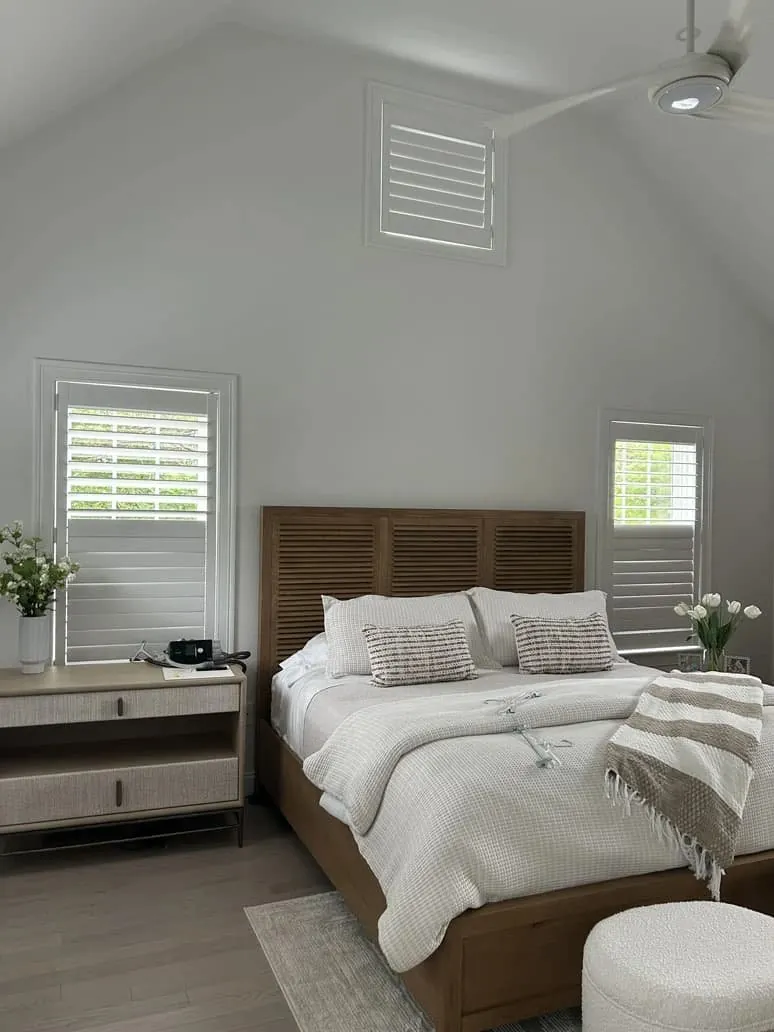
Much of Brockton was built upward rather than outward. Victorians, two-families and three-deckers stand shoulder to shoulder on narrow lots, and their windows follow the height of the rooms: tall, slim double-hung sash under ceilings that go well above what a newer house would have. Out toward the edges of the city the pattern loosens into post-war ranches with lower, wider openings and a little more lawn. Both kinds of house come to us with the same first complaint, which is that someone on the sidewalk can see straight in. That is the problem plantation shutters in Brockton, MA, are usually asked to solve.
A shutter answers it without turning the room dark. The panels fill the window frame, and the louvers inside them tilt, so you decide how much of the street reaches the room and at what angle. On a tall Victorian window that control matters more than on a short one, because there is simply more glass for a passerby to look through.
We plan every one of these windows at the house itself, standing where you stand, so the louver size and the panel layout suit the height of the sash and the closeness of the neighbors.
What we cover when we plan shutters for a Brockton house
Three questions come up on nearly every visit in the city. Each card below is one of them.
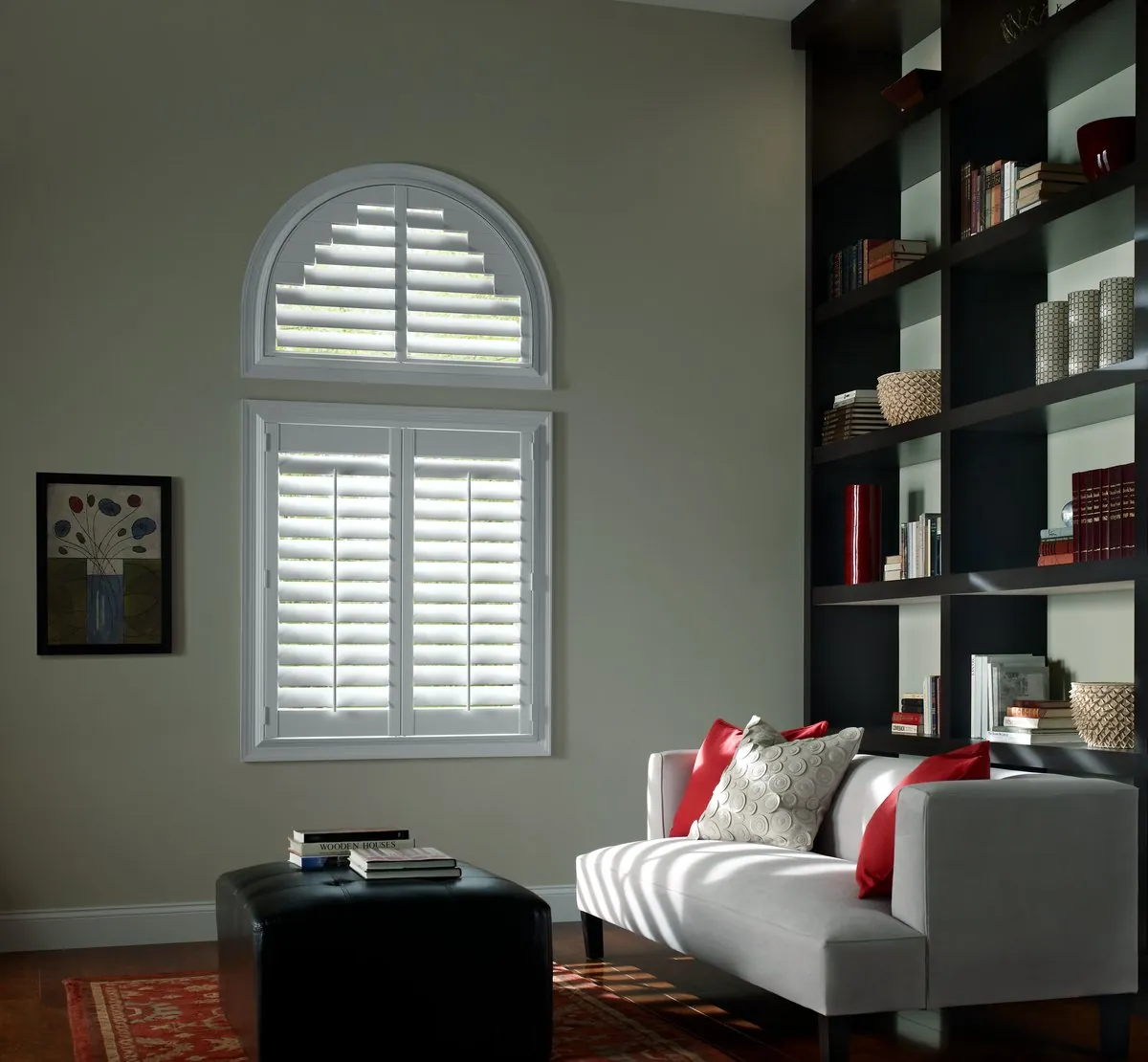
Tall, narrow sash
How to divide a long Victorian window into panels so it reads as one tidy shape from the street and still opens easily from inside.
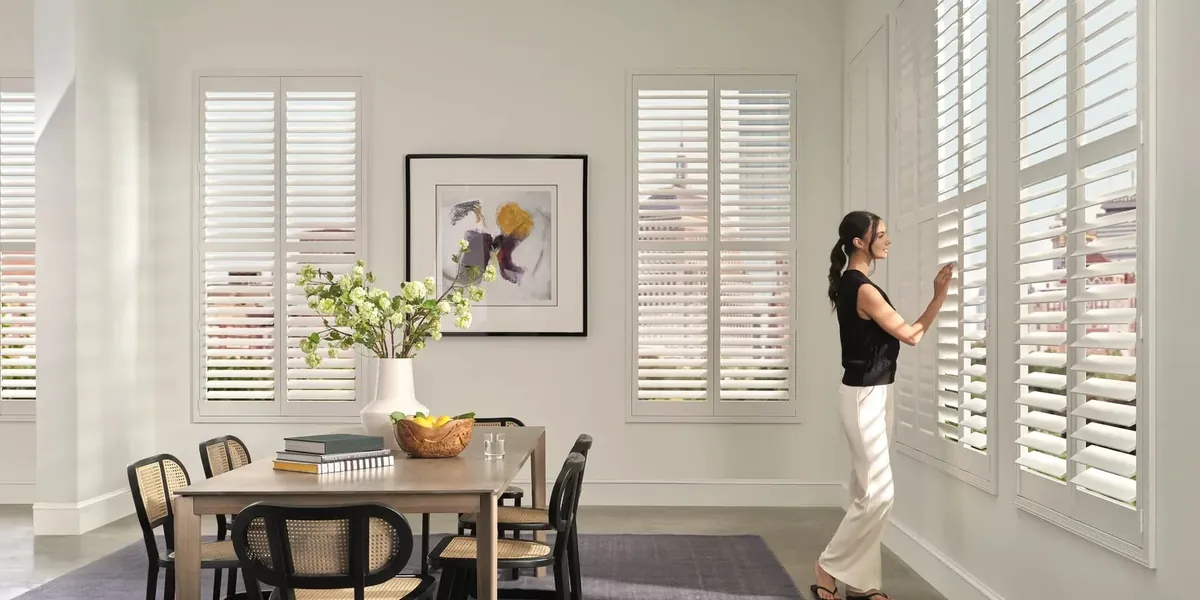
Privacy at street level
Which rooms face the sidewalk and the house next door, and how the louvers can screen those views while the room keeps its daylight.
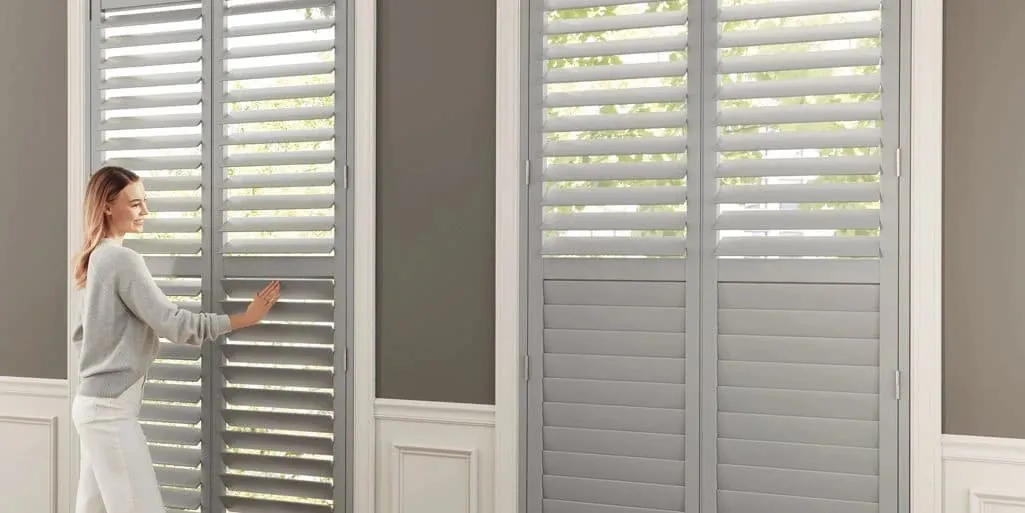
Ranches on the outskirts
Lower, wider openings on the newer houses, where a bigger louver and fewer panels often suit the proportions better.
The visit begins in your parlor, with samples from the van
Brockton is served by our Canton shop-at-home team, so the first step is an in-home consultation rather than a trip anywhere. A consultant drives out with a van of Hunter Douglas samples and brings them into your rooms. The Canton shop-at-home page explains the service. We can bring the showroom to you, and for a house with tall windows that is the right way round, because a shutter sample held up in a store tells you nothing about how it will look against a ceiling that high.
A typical visit runs like this:
- You choose a time through Request a Consultation, or press the call button to arrange one.
- The consultant arrives with shutter samples from all three Hunter Douglas collections.
- You show us the rooms that bother you most, which in Brockton is nearly always the front parlor or the street-side bedroom.
- Samples go up against your actual sash, open and closed, in daylight.
- We measure each window you want covered.
- You receive a free estimate for the windows you chose.
If you would like to read through the visit before booking, our page on what happens at an in-home consultation walks through it.

Why Victorian height changes the plan
A window that is much taller than it is wide behaves differently from an ordinary one. If it is covered with a single panel on each side, those panels become long and narrow, and opening them means swinging a tall leaf out into the room. In a parlor with a radiator under the sill or a sofa near the wall, that can be awkward, so we look at where every panel will swing before anything is settled.
Height also changes how the louvers feel in use. On a short window, a single tilt covers the whole view. On a tall one, the lower glass faces the sidewalk while the upper glass faces the sky and the trees across the street. Most of the time you will keep the louvers angled up, so the slats bounce daylight toward that high ceiling while the view from below lands on the flat faces of the blades. Because there is so much glass, a little tilt goes a long way, and on tall sash you may find you rarely need to close the shutters fully until evening.
Some tall Brockton windows sit in pairs or in a shallow bay. In a bay, each window gets its own panels, and we keep the panel tops and the louver lines level all the way round, so the row reads as one piece from the street. That continuous line is what makes a set of shutters look planned rather than pieced together, and on a Victorian front it is visible from the end of the block.
Plantation shutters in Brockton, MA, on a tall front window are as much about the street face of the house as about the room behind it. We step outside during the visit, if you like, to look at the front as a whole before choosing.
Plantation shutters in Brockton, MA, for a two-family or three-decker
Multi-family houses bring their own wrinkle. Each floor is a separate home with its own windows, and the people on the first floor feel the street far more than the people on the third.
On the first floor, the front rooms often sit only a few steps above the sidewalk, and porch traffic passes right by the glass. Here the louvers do most of their work closed or nearly closed during the day, tilted so the slats send light up toward the ceiling while the view from below meets the flat faces of the blades.
On the upper floors, the concern shifts from the street to the house next door. Side windows on a narrow lot often face another set of side windows across a driveway. A shutter on that side can stay angled for privacy most of the day, while the front windows, which now look over the street rather than into it, can stand open.
When you are planning shutters for more than one unit, it helps to choose the same color and louver size for every front window. The house then looks consistent from the street, even though each floor uses its shutters differently.
Louver size on a tall, slim window
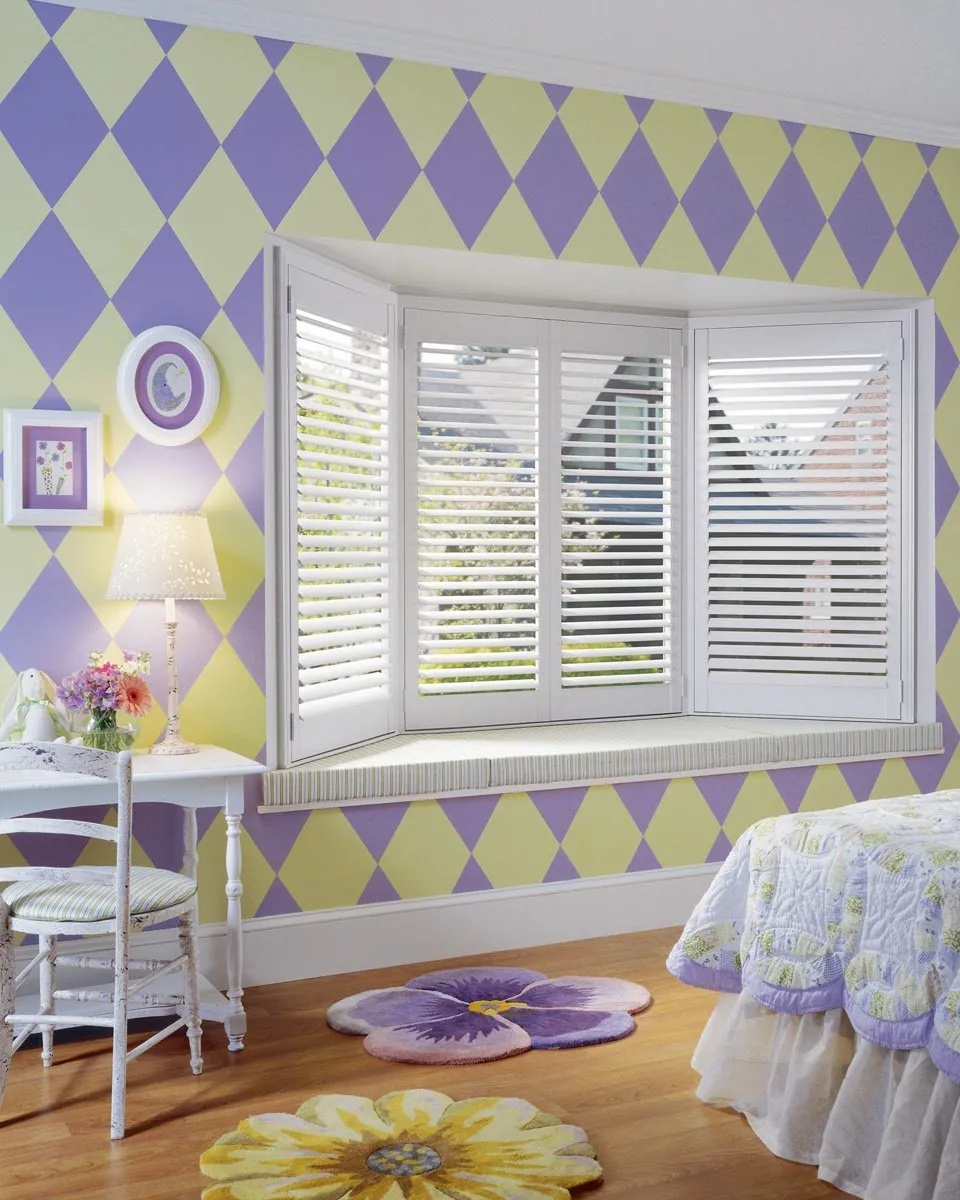
Louvers come in more than one size, and on a Brockton Victorian the choice is less obvious than it looks. A larger louver opens up more of the view when tilted flat and gives a bolder, more modern look. A smaller louver has a finer, more traditional rhythm that often suits the period trim of an older house.
The width of the window matters too. On a narrow sash, a large louver can look heavy, with only a few blades stacked up a tall panel. On the same window, a smaller louver gives you more blades and a finer pattern that echoes the vertical lines of the house. On a ranch window that is wide and low, the reverse is often true, and a bigger louver suits the proportions.
We bring louver samples in more than one size so you can hold each one in the frame and step back across the room. That is usually enough to make the decision obvious.
Frames that respect old trim
The frame is the part of a shutter that surrounds the panels and attaches to the window opening. On a Victorian with deep, decorative casings, the frame style decides whether the shutter looks like it belongs with the original woodwork or sits on top of it.
When the casing is handsome and you want it to stay the star, a slimmer frame lets the trim show. When the old woodwork has been painted many times and is a little uneven, a frame with more presence can give the window a clean edge again. Older openings are rarely perfectly square, which is another reason we look at each frame choice against your real windows during the consultation. Our guide to shutters for older windows goes further into fitting older sash.
On the ranches at the edge of the city, the trim is usually simple builder casing. A modest frame tends to suit it, and the shutter becomes the detail that gives a plain window some character.
High ceilings and the top of the window
Brockton’s older houses often have a transom, a short fixed pane, or simply a stretch of wall above the window head before the ceiling. Shutters cover the operable window itself, and we look at the whole elevation to decide how the top of the shutter should line up with the ceiling, the crown molding and any picture rail.
In practice that means checking that every shutter top in a room aligns, even if the windows themselves were set at slightly different heights a long time ago. It is a small thing, but on a wall that rises well above eye level it is one of the first things you notice.
Where a window has an arched or shaped top, we talk through how to treat it at the visit. Which way the window faces, and how much evening light you want, both shape the answer.
Bathrooms, kitchens and the side of the house
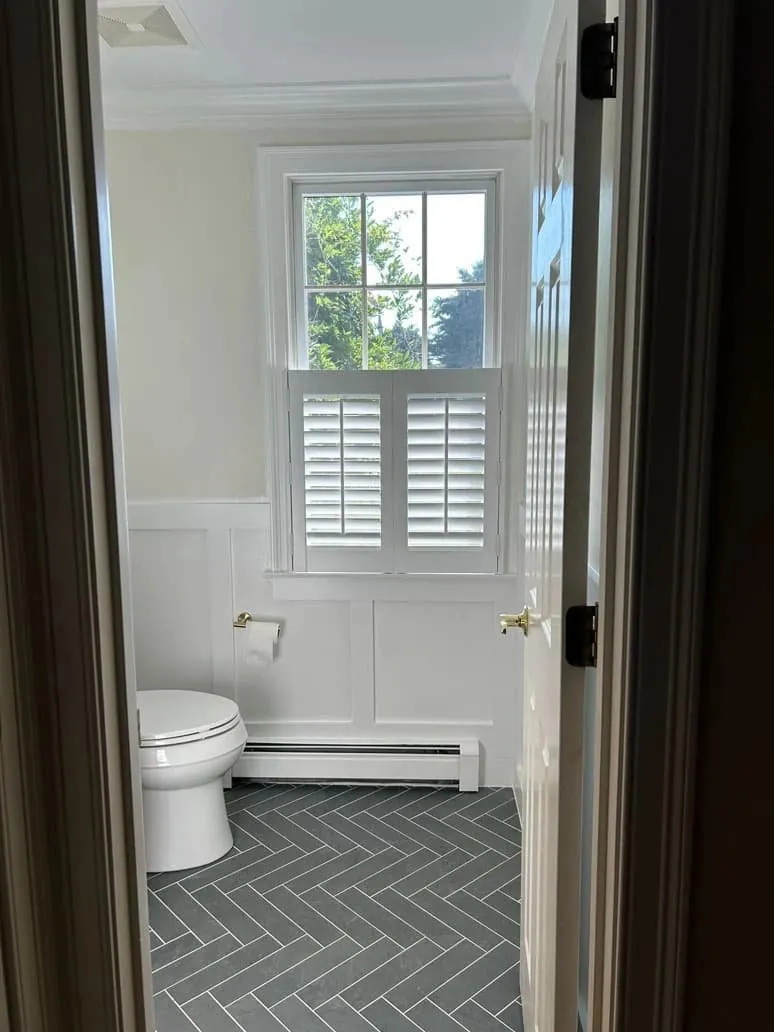
The rooms along the side of a Brockton house, usually the kitchen, a bathroom and perhaps a back bedroom, tend to face the neighbor’s wall across a driveway. They need privacy most of the day, but they also need light, because the sun only reaches them for part of it.
A shutter that covers only the lower part of the window, often called cafe style, is a common answer in a bathroom or kitchen. The lower glass, where the view across the driveway lands, is screened. The upper glass stays open to the sky. In a bedroom on the same side, a full-height shutter with its louvers angled up does a similar job while closing completely at night.
On these side windows we usually lean toward a lighter color, because a pale shutter reflects whatever daylight arrives back into a room that does not get much of it.
The ranches at the edge of the city
Drive out from the center and the houses change. The post-war ranches on the outskirts sit on wider lots, one story tall, with lower ceilings and windows that are wider than they are tall. The street is a little farther away, and a front lawn puts some distance between the living room and the sidewalk.
That shifts the job a shutter does. In a ranch, privacy still matters for the front bedroom and the living room picture window, but the bigger question is often glare: a wide window facing south or west can flood a room with low afternoon sun. Louvers handle that well. Tilted partly closed, they cut the glare on a television or a dining table while leaving the room bright.
A wide ranch window usually takes more panels across, folding back to each side when you want the glass clear. Fewer, broader panels and a bigger louver tend to suit the long, low shape. For plantation shutters in Brockton, MA, on a ranch, the plan is simpler than on a Victorian, and the whole house can often be done in one consistent style from end to end.
Color choices on a city block
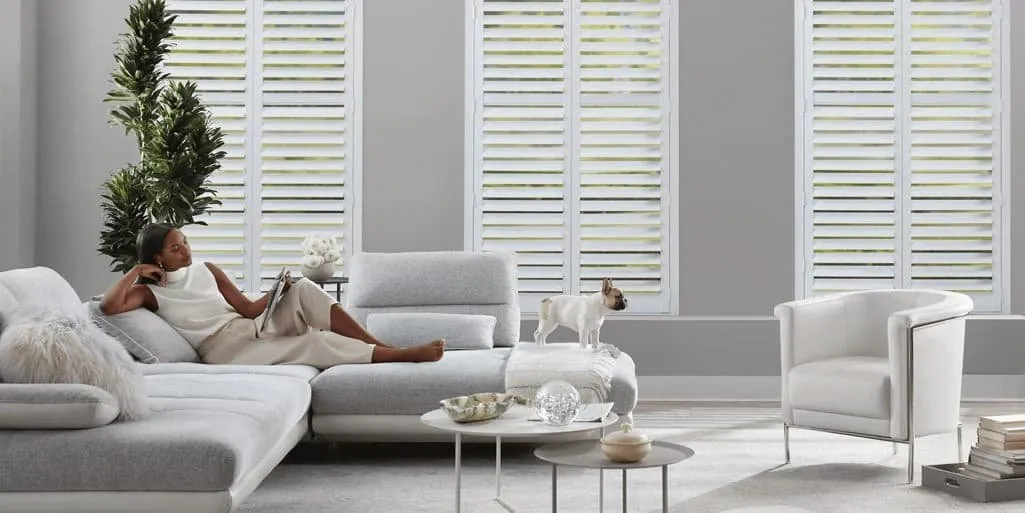
Most shutters we plan in Brockton end up in a shade of white chosen to match the existing trim. On an older house, the trim may have aged to a warmer, creamier white over years of repainting, and a bright white shutter beside it can look stark. A soft white often blends better. Where the trim has been freshly painted, a crisp white matches it.
There are exceptions worth considering. A dining room with dark walls or a den with paneling might suit a painted color, such as the grays and taupes in the Hunter Douglas range. We bring color samples along and compare them against the trim in your own light, which can look very different on a north-facing city block than it does on a sunny ranch lot.
Palm Beach, NewStyle and Heritance compared at the window
Hunter Douglas makes three shutter collections, and we bring all of them on every visit. Rather than describe them in the abstract, we put them side by side in your frame so you can see each one against your trim and your light.
The choice between them often depends on the room. A kitchen or bathroom on the side of the house may suit one collection, while the formal front rooms of a Victorian suit another. We are happy to mix collections through the house if that serves each room best, while keeping the color and louver size consistent where windows can be seen together. The main plantation shutters page has more on each collection.
Gallery dealer, Franklin showroom
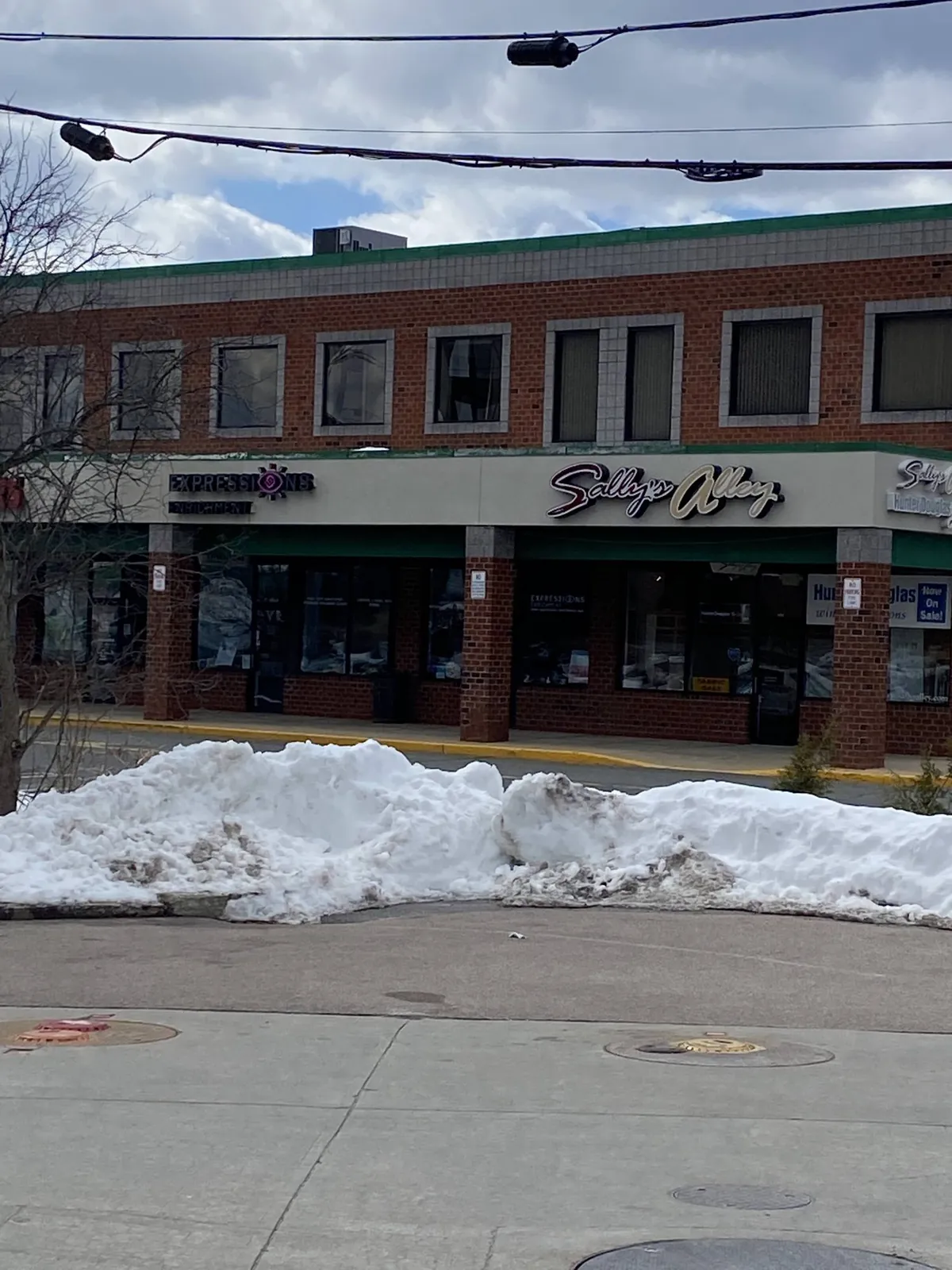
Blinds & Designs is a Hunter Douglas Gallery dealer, and the shutters we sell in Brockton are fitted through certified Hunter Douglas installation. On tall, older openings, getting the fit right is what makes the louvers line up and the panels close evenly.
Most Brockton customers never need to leave home, because the samples come to them. If you would also like to visit a showroom, the nearest one is our Franklin showroom. Beyond shutters, we offer interior design consultations, repairs on blinds and shades you already own, and window covering automation.
Other windows in the same house
Not every room suits a shutter. A bedroom that needs real darkness might be better with cellular shades in Brockton, and a wide back window sometimes suits roman shades. The Brockton page lists everything we offer in the city, and our consultant can suggest a mix during the same visit.
Questions from Brockton
My first-floor windows are right on the sidewalk. Will shutters really give me privacy in daylight?
Yes. With the louvers tilted so the slats point up into the room, light reaches the ceiling while someone outside sees mostly the faces of the blades. Close them fully at night.
Can you shutter very tall, narrow Victorian windows?
Yes. We plan the panel layout around the height of the sash and the way each panel will swing, and the louvers tilt to keep the lower glass private while daylight comes in above.
I own a two-family. Do both units have to match?
They do not have to, but matching the front windows in color and louver size keeps the house looking consistent from the street. Each unit can still use its shutters differently.
Do I need to visit a store to choose?
No. Brockton is covered by our Canton shop-at-home team, who bring samples to your house. If you would like to see a showroom as well, Franklin is the nearest.
What does the estimate cost?
Nothing. We measure the windows you choose and give you a free estimate afterward.
Start with the window that bothers you most
Most Brockton plans begin with one room: the parlor on the sidewalk, or the bedroom that looks into the house next door. Tell us which window that is when you book, and the consultant will start there with samples in hand. From that first window, we can plan plantation shutters in Brockton, MA, for the rest of the house, or just for the rooms that need them, with a free estimate to follow. Press Request a Consultation below, or use the call button if you would rather talk it over first.