
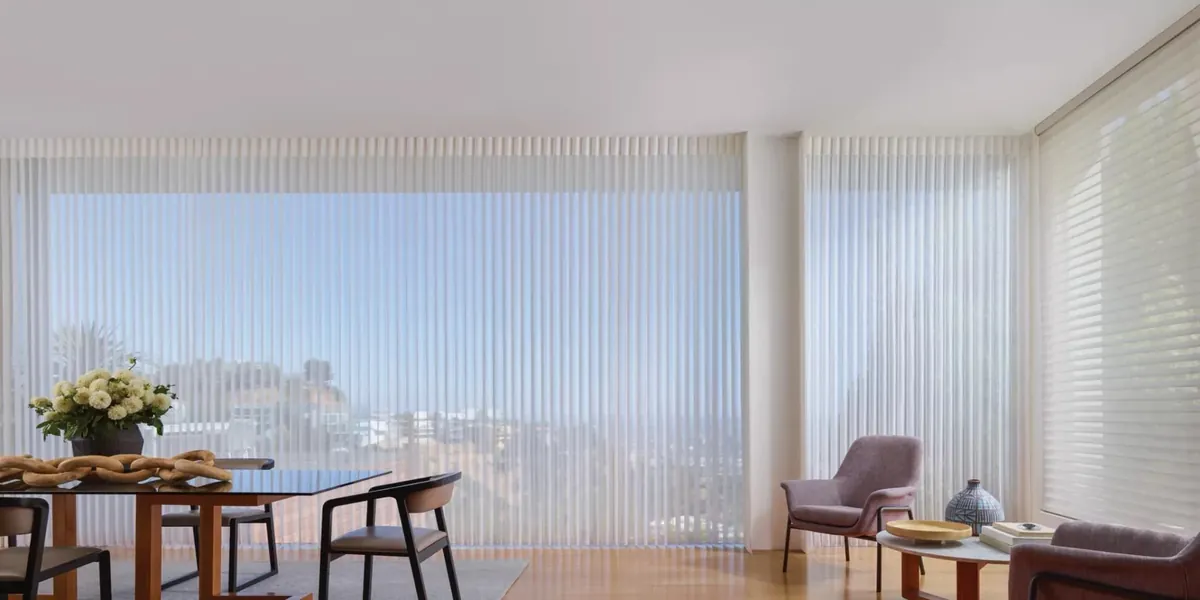
Rooms lit from two and three sides in Freetown
Freetown houses have room to breathe. Capes and ranches sit well back on big wooded lots between the village and Assonet, more of them back up to the edge of the state forest, and the river houses along the Taunton look out across open water. With that much space around each house, rooms are rarely boxed in. A living room might have windows on the front, the side and the back, and the light in it shifts completely from breakfast to supper.
That is the situation motorized blinds in Freetown, MA, are made for. When one room takes sun from two or three directions, no single position for the shades suits the whole day. A Hunter Douglas PowerView motor lets each window, or each side of the room, move on its own: from a handheld remote, from the app on your phone, or on a schedule that follows the sun round the house.
The trees add one more layer. A wooded lot is shaded and dappled in July and wide open to the low sun in January, so the windows that need covering change with the seasons as well as the hours.
What we motorize for Freetown houses
Plans for motorized blinds in Freetown tend to start with the corner rooms, because that is where the light is hardest to manage. These are the shades that come up most, and our vans carry samples of each.
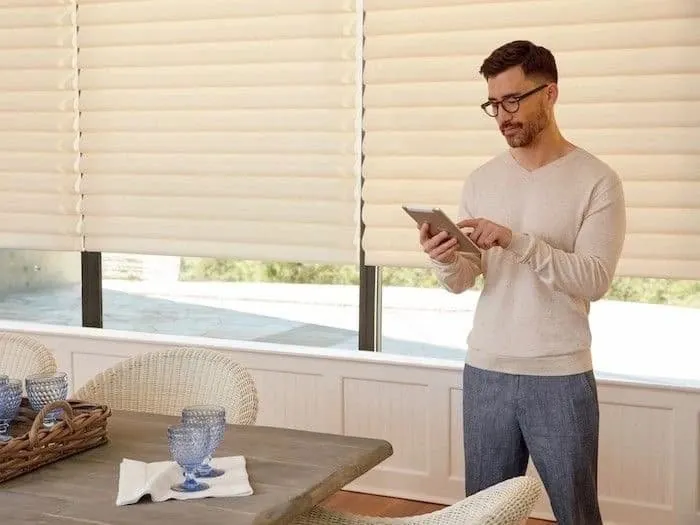
Control from a tablet
Each side of a room can have its own button and its own timing. Set the front, side and back windows separately from one screen.
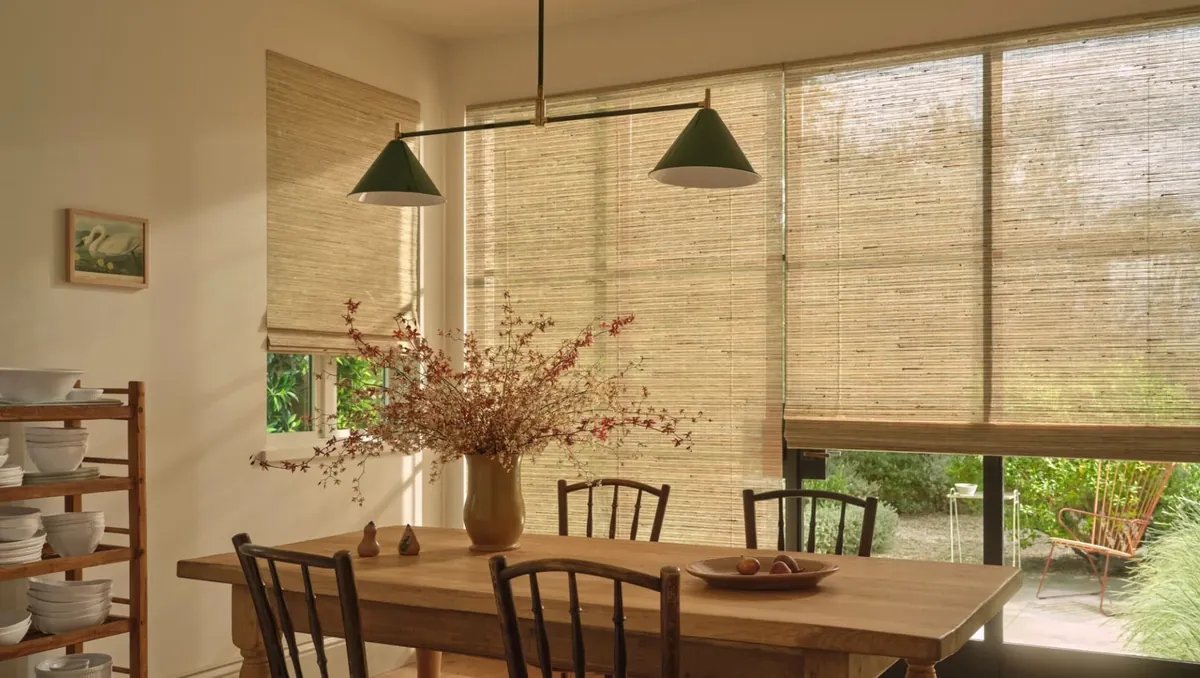
Woven wood for corner windows
Natural texture that suits a house in the woods. On a corner, a motor keeps both shades meeting at the same height.
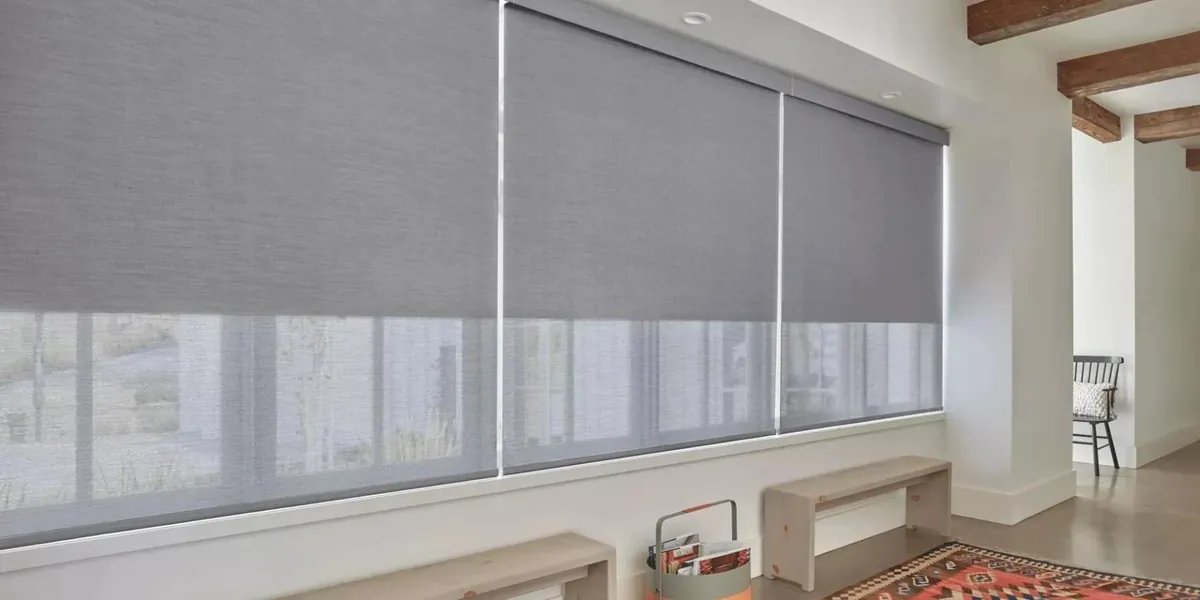
Rollers for a long run of glass
A ranch hallway or a row of back windows can take matching rollers that lower together to one line with a single press.
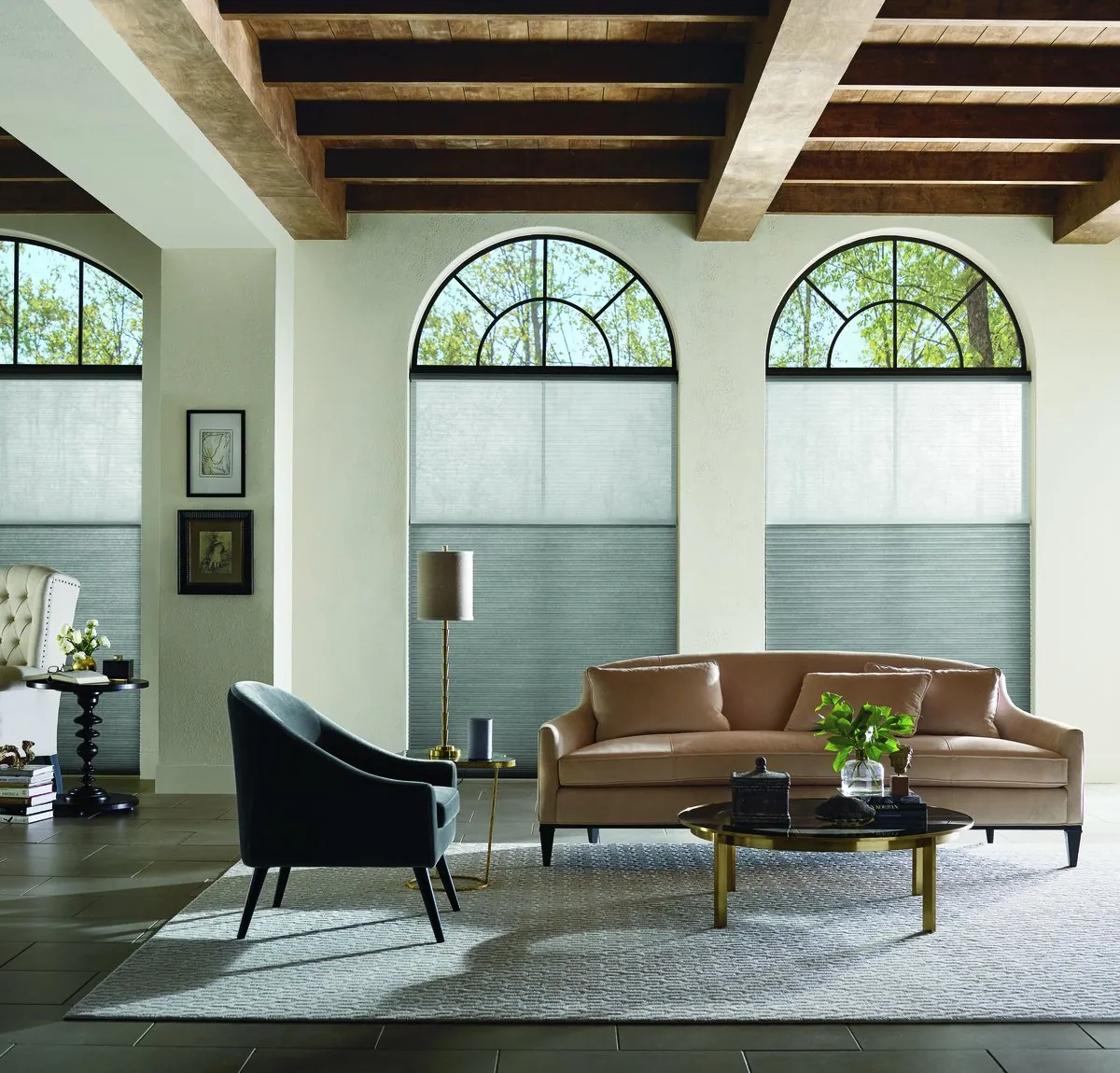
Top-down honeycomb
Drop the shade from the top to bring in the treetops and sky, keep the lower glass covered, and let the cells hold warmth in winter.
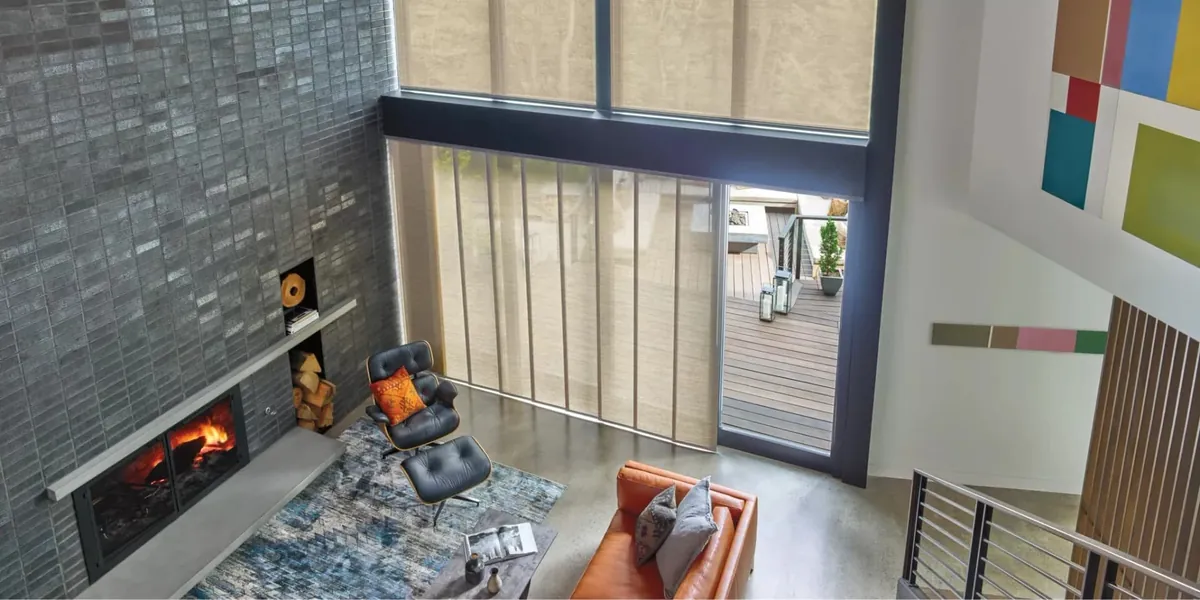
Gliding panels for sliders
Fabric panels that travel side to side across a slider to the deck. We talk through which door treatments suit a motor at the visit.
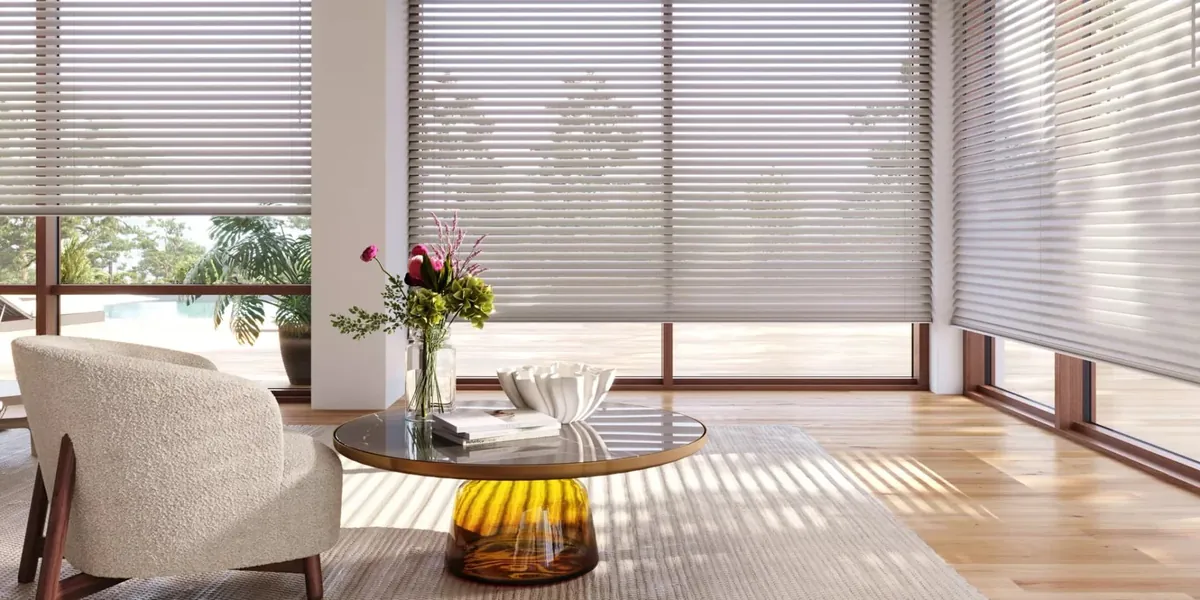
Blinds for a sunny corner
Slats let you angle the light on a bright corner. Tell us if a room wants blinds and we will confirm the right lines and lift for it.
One room, three kinds of light
Think of a typical Freetown family room at the back of a ranch. The front of the house faces the road and gets the morning sun. The side window looks into the trees. The back wall, often a slider or a pair of big windows onto a deck, faces west over the yard. At eight in the morning the sun pours through the front. At noon the side window glows green through the leaves. By five the back wall is glaring and the television screen has disappeared.
Shades that move as a single block cannot handle that. Raise them all and you squint in the evening; lower them all and the room goes dim at lunch. With PowerView, the front, side and back windows become separate groups. The front shades lower a little in the early morning, the back shades come down in the late afternoon, and the side window can stay open all day to keep the view into the woods.
Once it is set up, you rarely think about it again. The room just stays comfortable, and the remote is there whenever you want something different.
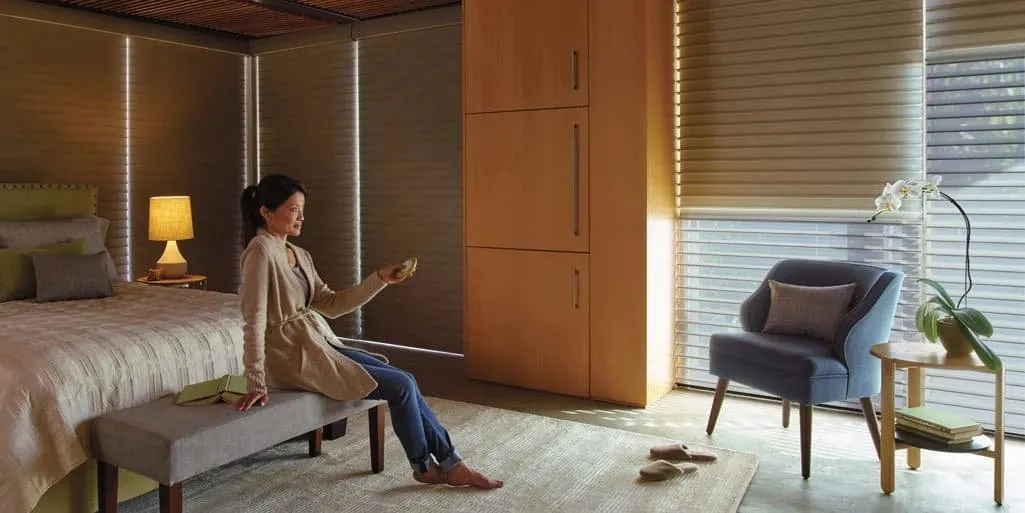
Capes in the woods toward Assonet
The capes on the wooded lots toward Assonet were built simply: a living room and kitchen downstairs, bedrooms up under the roof, and windows on all four walls of a fairly compact footprint. Many have been added to over time, with a family room or a sunroom on the back that brings in larger glass.
Light in these houses is shaped by the trees as much as by the compass. In summer, a canopy of oak and maple filters the sun and many windows barely need covering through the middle of the day. In late autumn the leaves drop and suddenly the low sun comes straight through rooms that were shaded for months. A schedule is easy to change in the app, so you can let the house run on a summer pattern, then switch to a winter pattern once the trees are bare.
Upstairs, the gable-end windows and the small windows in the dormers are where a motor earns its place in a cape. Grouping all the upstairs shades on one button makes bedtime a single press instead of a trip round every room.
Houses at the edge of the state forest
The houses that back onto the state forest have the most private setting in town. There is often nothing behind them but trees, and the back rooms open onto woodland with no other house in view. In those rooms, privacy is not the reason for a shade at all. Light is, and so is warmth.
Under a full canopy, those back rooms can be dim for much of the summer, so the shades there spend most of the day fully raised to let in every bit of light. Raising them all the way and lowering them again at night, across a long back wall of windows, is exactly the kind of small routine a motor takes over. Planning motorized blinds in Freetown for a forest-side house usually means a simple pattern: everything up in the morning, everything down at dusk, with a top-down, bottom-up honeycomb in any room where you want the treetops visible while the lower glass is covered.
In winter, with the leaves down, those same back rooms take more sun than you might expect, and the schedule shifts to match.
Ranches on the larger lots
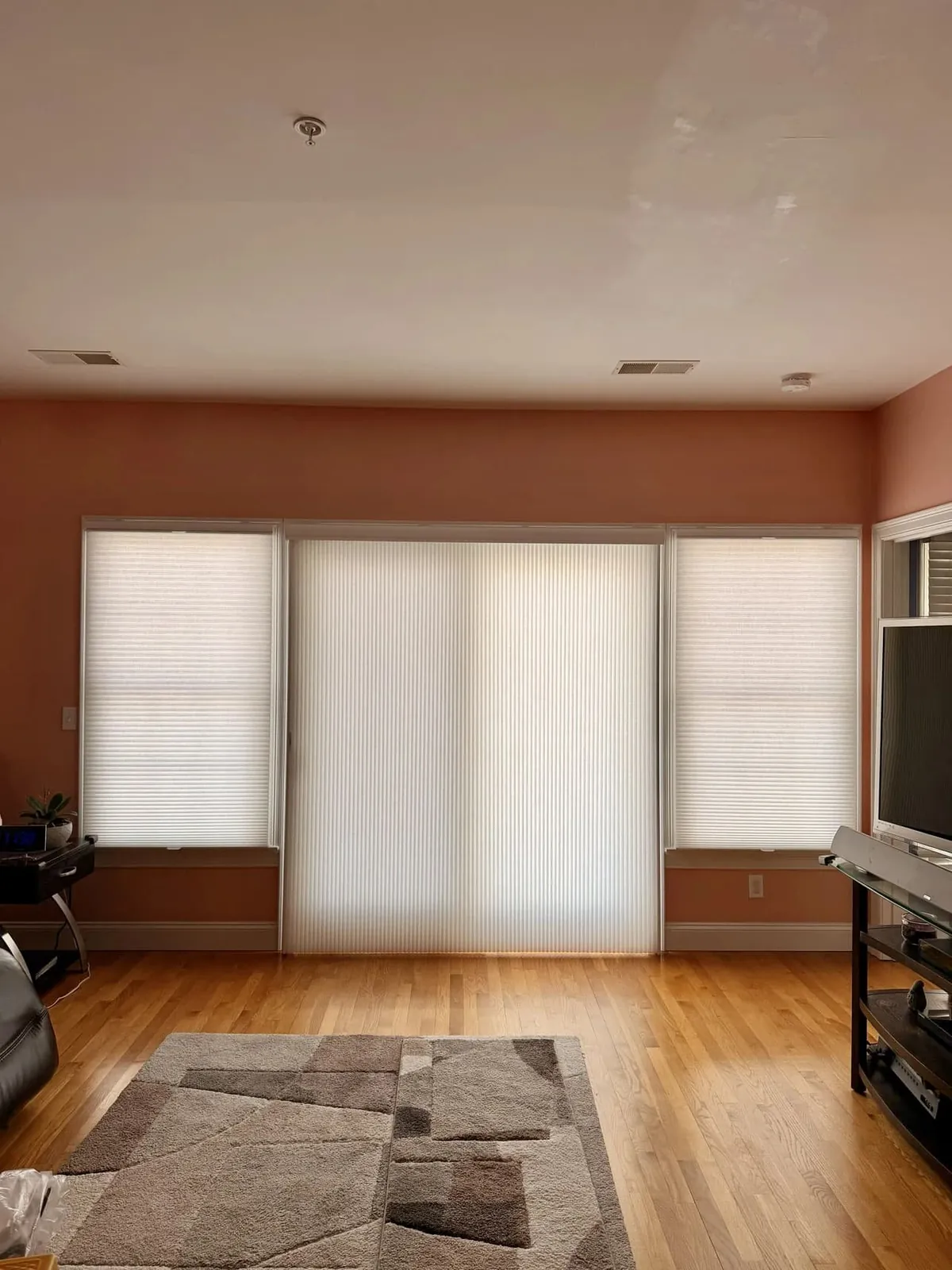
The ranches spread across Freetown’s bigger lots are long and low, with the living spaces at one end and a bedroom wing at the other. That shape means the house has a lot of outside wall and a lot of windows, spread along several directions. The bedroom wing may face east, the living room west, and the kitchen south over the back yard.
A ranch lends itself to motorization because everything is on one floor and the windows tend to come in matching sets. The bedroom windows can be grouped to close together at night and open together in the morning. A big picture window in the living room, too wide for one shade, can be split into two or three shades on one headrail that move as one. And because there are no stairs between the rooms, a single remote in the hall reaches the whole house.
Many ranches also have a slider from the kitchen or dining room to a deck. A vertical honeycomb or gliding fabric panel on that door can join the same group as the windows beside it. When the west sun hits the back of the house, the door and its neighboring windows close together, and the deck stays a step away whenever you want it. On a winter night the same group closes at dusk, so the coldest stretch of glass in the house is covered before the evening chill sets in.
River houses on the Taunton
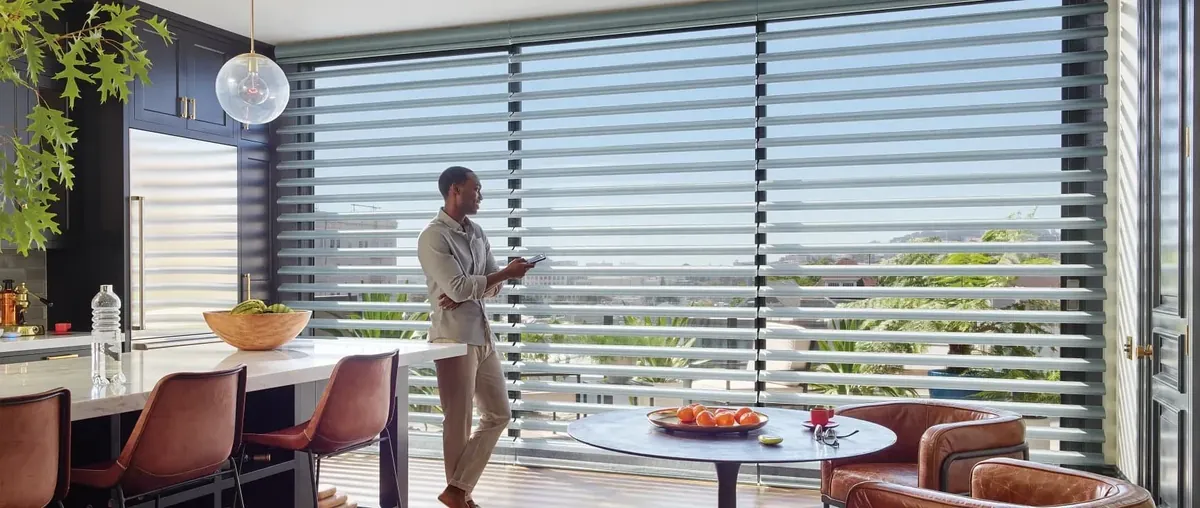
The houses along the Taunton River are a different case. They are built to look at the water, with the main rooms facing the river through large panes of glass, and the river reflects the sun back up into those rooms. In the late afternoon, when the sun drops toward the water, the glare can make a waterside living room hard to sit in, even though the view is the reason the house is there.
Sheer and screen shades are the usual answer. A sheer with soft fabric vanes takes the edge off the reflected light and turns it into a gentle glow while the river stays visible through the fabric. A screen shade keeps the outlook even crisper, and its weave decides how much brightness it cuts. On a schedule, either can lower as the sun comes round to the water and rise again once it has set, so the evening view is yours again.
Damp air off the river is worth thinking about too. With a motorized shade, the lifting parts sit inside the headrail and nobody handles them, so there is no cord to fray and no cord lock to stiffen. Our roller shades in Freetown page explains screen fabrics and openness in more detail.
Following the sun round the house
A house with light on several sides is the best case for schedules, and it is where motorized blinds in Freetown really show what they can do. Here is an example of how one ranch on a wooded lot might be set up. It is only a starting point, and every step can be changed.
- The east-facing bedroom shades stay down at sunrise and rise at the time you wake.
- The kitchen shades open early so the room is bright for breakfast.
- Through the middle of the day, the south windows lower partway to keep the heat off the floors.
- In late afternoon, the west windows and the slider come down to stop the glare across the yard.
- At dusk, the front windows close so the lamps are not on show to the road, and the bedrooms follow later.
If you are going out for the day, or away for the weekend, the schedule carries on without you. The house opens and closes as usual, and the sunny rooms stay shaded through the hottest hours.
How the controls work
There are three ways to run PowerView shades, and most households mix them.
Remote. A small handheld remote, or one fixed to the wall beside the light switch, moves a single shade or a whole group. No phone needed, so it works for everyone in the house.
App. The app on your phone or tablet lists every motorized shade, lets you stop any of them partway, and is where you set up rooms, scenes and schedules. It is especially useful in a house with windows on many sides, because you can see at a glance which shades are open.
Scenes and schedules. A scene stores an arrangement, such as front half open, back closed, bedrooms dark. A schedule runs a scene at a set time each day.
Our guide to how motorized shades are controlled covers each option, and our window covering automation page goes further into scenes and timers.
Winter light and warmth
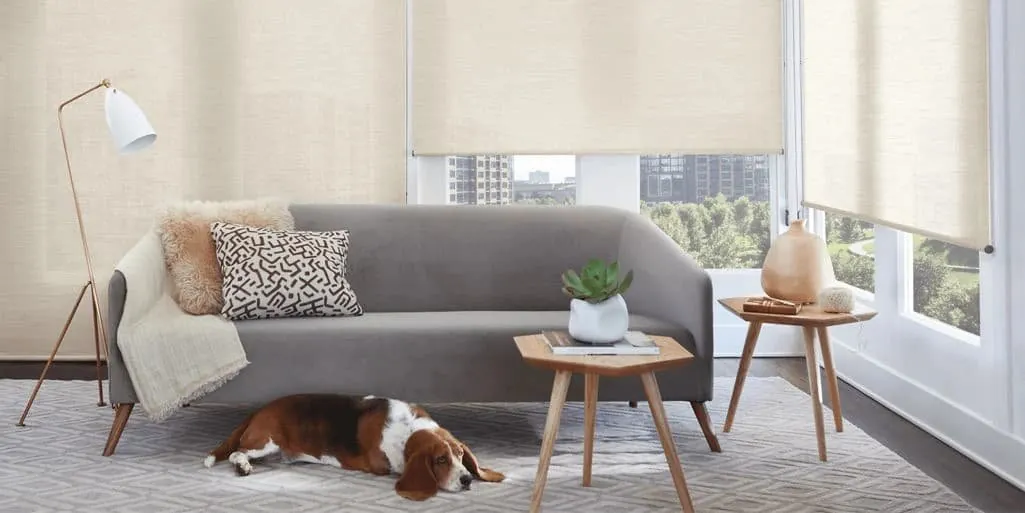
Once the leaves are gone, the low winter sun reaches deep into Freetown houses, and that is welcome on a cold day. A schedule can keep the south-facing shades open through the short afternoon so the sun warms the floors, then close them as soon as it sets.
Closing at dusk matters most with honeycomb shades. The cells hold a layer of still air between the cold glass and the room, which helps a cape or a ranch hold its heat through a long January evening. The shade only helps when it is lowered, and a motor takes the remembering out of it. Our page on cellular shades in Freetown explains how the cells work.
Choosing the right shade for each side
With light coming from several directions, a house often ends up with more than one type of shade, all in the same app.
- West-facing living rooms and river rooms: sheer or screen shades, to cut glare while keeping the view.
- East bedrooms: room-darkening honeycomb or roller fabric, so sunrise does not wake you.
- Corners and sunrooms: top-down, bottom-up honeycomb, or woven shades that suit a wooded setting.
- Kitchens and family rooms: light-filtering fabrics that keep the room bright and private.
- Rooms that want slats: wood or faux wood blinds, after we confirm the right lines and lifts for the window.
A home visit, then installation
Light from three sides can only be judged in the room itself, so we start at your house. Our vans carry samples, which means we bring the showroom to you.
During the visit we walk the house with you, note the direction of every window and talk about how each room is used through the day. You hold samples at your own windows, we measure each opening, and you receive a free estimate for the shades and motors you are considering, with no pressure to decide that day. If you would like help with the look of a whole room, ask about our interior design consultations.
When the shades are ready, our certified Hunter Douglas installers fix the brackets into solid wood, hang and level each shade, set its upper and lower limits, connect it to the controls you chose and set up the first schedules with you. You can read more about what happens at an in-home consultation.
The Gallery dealer advantage
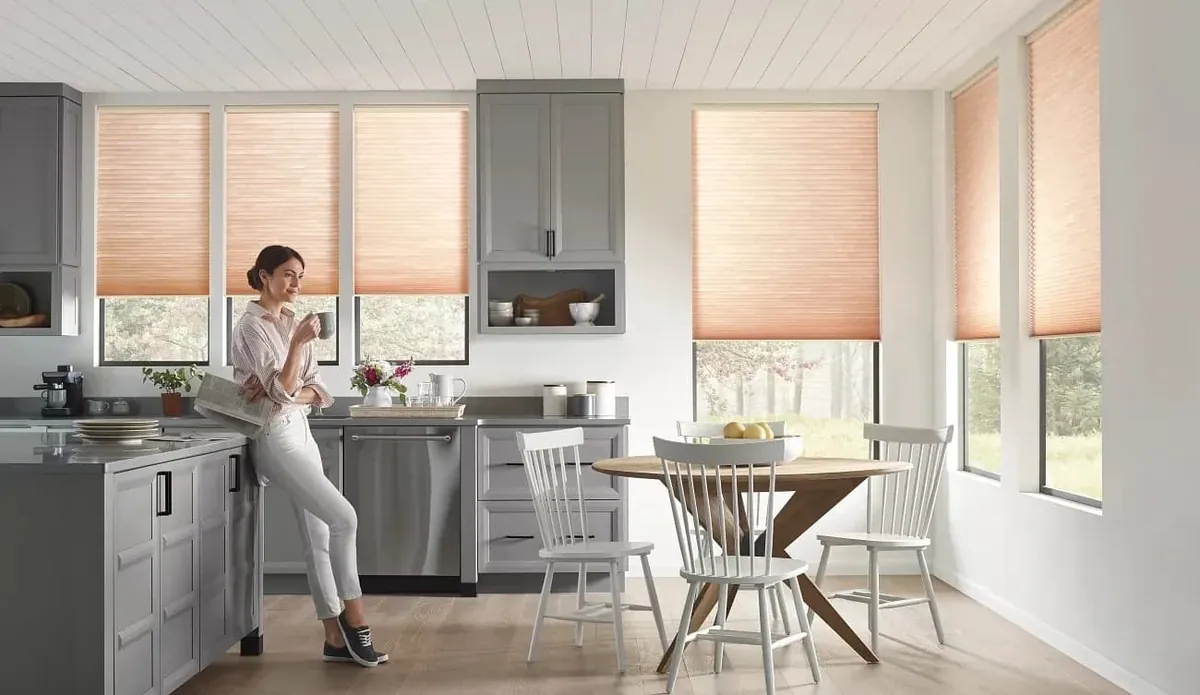
Blinds & Designs is a Hunter Douglas Gallery dealer, a status Hunter Douglas gives dealers who meet its standards. On a motorization project, it means every type of shade is on the table: sheers, screens, honeycombs, rollers, Romans, woven shades and blinds, all able to run on PowerView. We choose the right one for each side of each room.
Installation is certified by Hunter Douglas. We also offer interior design consultations for a room that needs a full plan, and repairs for blinds and shades you already have.
Looking at other rooms? See our plantation shutters in Freetown, roman shades in Freetown or everything we do in town on the Freetown page. The main motorized blinds and shades page covers the range as a whole.
Questions from Freetown
Can windows in the same room move separately?
Yes. Each window, or each side of a room, can be its own group with its own schedule. The front can open in the morning while the back stays closed until evening.
The trees shade my house in summer but not in winter. Can the shades adapt?
Yes. Schedules are easy to change in the app, so you can run a summer pattern while the leaves are out and a winter pattern once they have fallen.
What works best for a river-facing living room?
Sheer or screen shades, which soften glare off the water while keeping the view. A schedule can lower them as the sun reaches the river and lift them after sunset.
Can my slider be motorized along with the windows?
Many door treatments can. We look at the door during the visit and tell you which options suit it and how they would be mounted.
Do you charge for an estimate?
No. We measure your windows at home and give you a free estimate for the shades and motors you are considering.
Your next step
Seeing a sample move at your own corner window, in your own light, is the quickest way to know what will work. Request a consultation and we will bring samples for motorized blinds in Freetown to your house, measure each window and give you a free estimate. Our nearest showroom is in North Dartmouth, and the call button is there if you would rather talk first.