
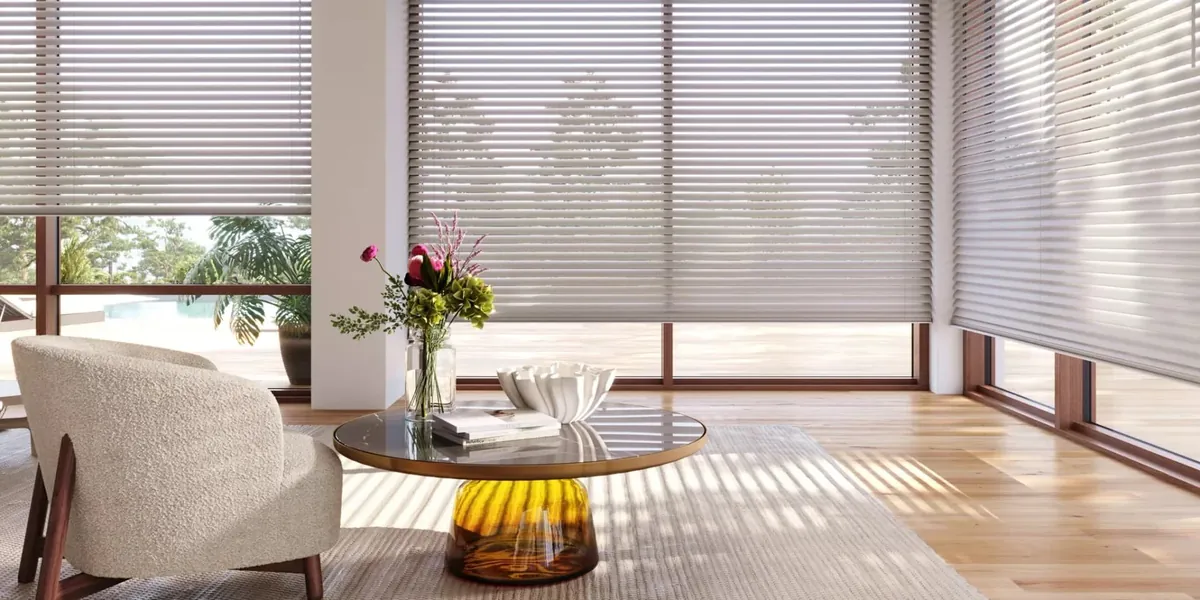
Harbor light and salt air
Around the harbor and out along the road to Ned’s Point, Mattapoisett is a town of shingled cottages. Many began as summer places and have since been winterised and extended into year-round homes, often by adding a big glazed room on the water side. Further inland the houses are larger and newer, with modern windows throughout. Two things run through all of them when we plan custom blinds in Mattapoisett, MA: a lot of glass facing the water, and salt in the air every day of the year.
The glass brings light, and with it glare. A room that faces the harbor gets the sun twice, once from the sky and once bouncing back off the water, and on a bright afternoon it can be hard to read or watch television in. Blinds solve that better than almost anything else, because a slat can be tilted to catch the light and throw it up at the ceiling while you still see out beneath it.
The salt is the other half of the story. A cottage near the water breathes sea air through every open window from spring to autumn, and over time it settles on anything near the sill. The material of the slat and the build of the headrail matter more here than they would a few miles inland.
The blind range for a coastal town
Choosing custom blinds in Mattapoisett starts with matching the material to the room. Here is what we bring to the door and where each one tends to end up.
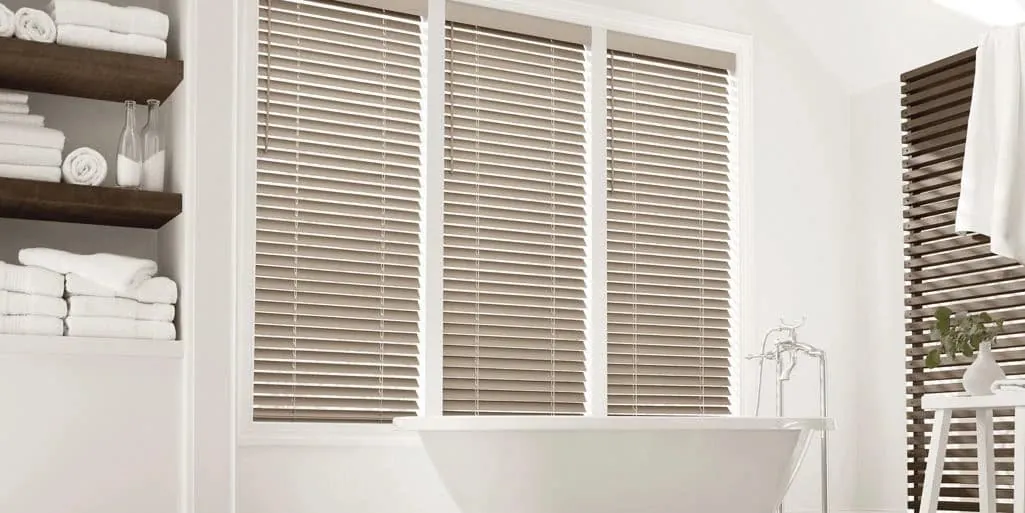
Faux wood for the water side
EverWood faux wood has a painted-wood look and does not mind damp or salt. Our first suggestion for any room facing the harbor.
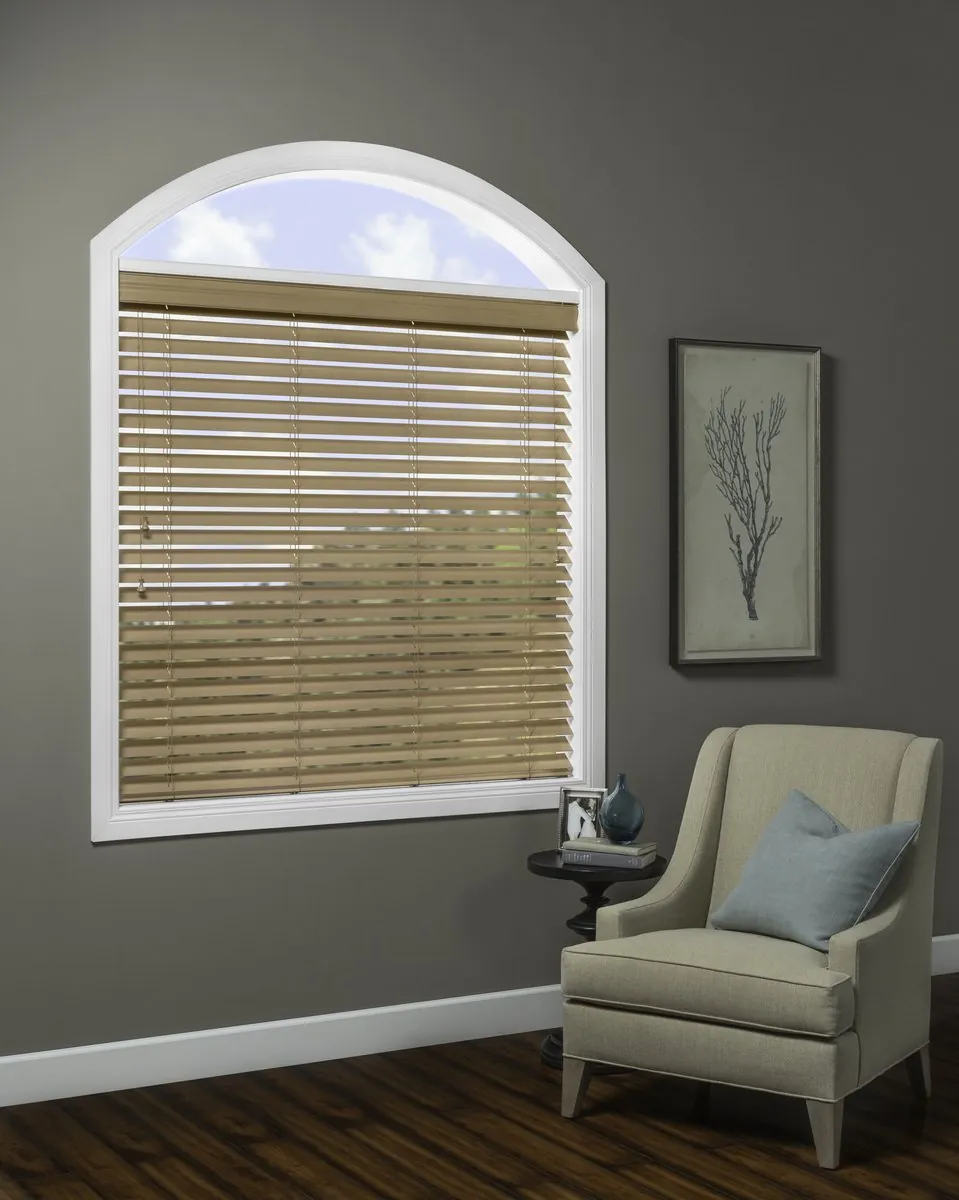
Real wood inland
Parkland wood blinds bring real grain to a dining room or study in a newer inland house, where the air stays drier.
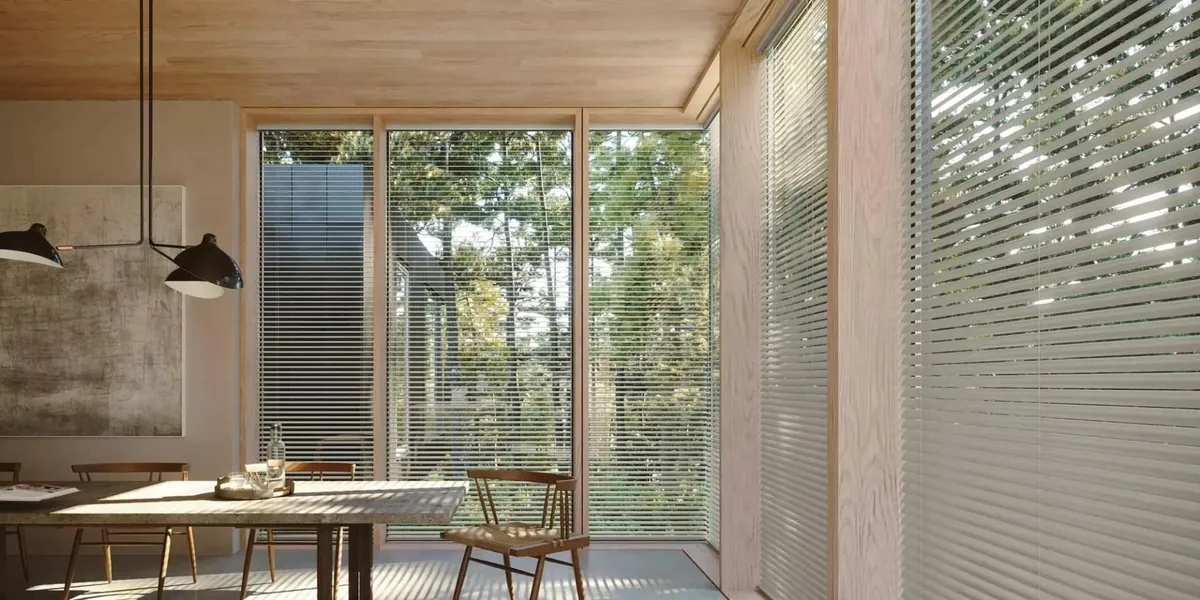
Metal for big modern glass
Slim aluminum slats nearly vanish when open, so a wall of glass keeps its view. We advise on finishes for rooms close to the shore.
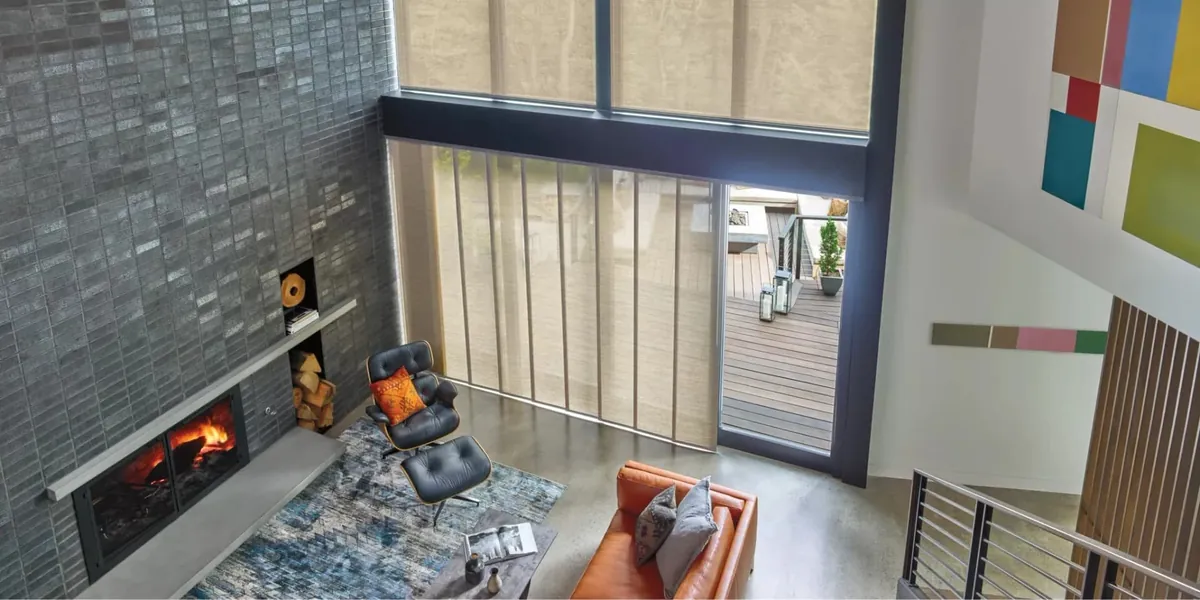
Vertical blinds for sliders
Sliders onto a deck or a porch take vertical blinds or panels that stack to one side. Turn the vanes to cut the late sun off the water.
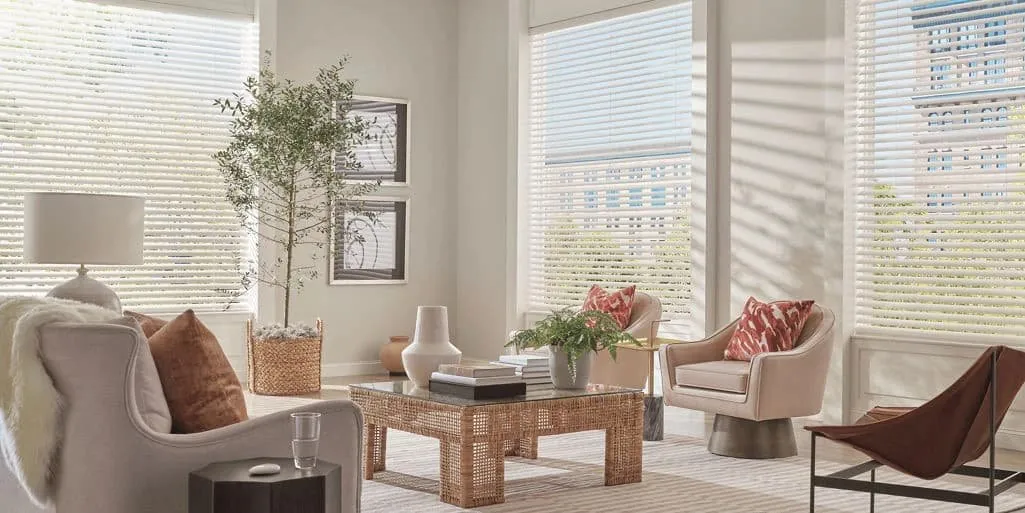
Tilt for glare
Light slats tilted upward bounce reflected light off the ceiling, so a harbor room stays bright without the glare in your eyes.
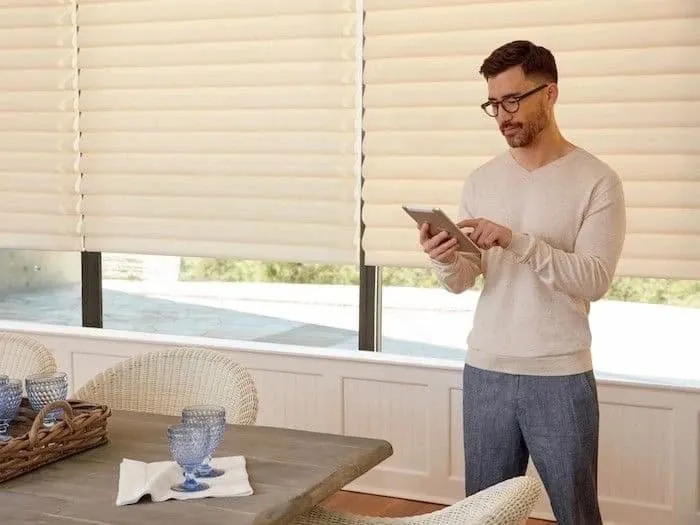
PowerView control
A glazed room can hold a dozen blinds. Tilt them all from a phone, a remote or a timed schedule, instead of one by one.
Cottages that became year-round homes
A summer cottage was built to be lived in with the windows open. The rooms are small, the walls are thin, the windows are simple double-hung or casement sash, and many of the frames were never meant to hold anything heavier than a curtain rod. When a cottage is converted for winter, the walls get insulation and the windows often get replaced, but the openings usually stay the same size. They are small, a little irregular, and close together.
That shapes the blinds in a few ways. Small windows want a compact headrail and a narrow slat, so the raised stack does not swallow the glass. Close-set windows on one wall look best with matching blinds that line up at the same height. And a cottage that has been altered several times may have frames of different depths side by side, which we check one by one before deciding on an inside or outside mount.
Some of these houses still have a sleeping porch or a back room that was closed in later. Those rooms often have a whole wall of small windows in a row, and blinds on each one, all tilting together, give the room a clean finish without closing it in.
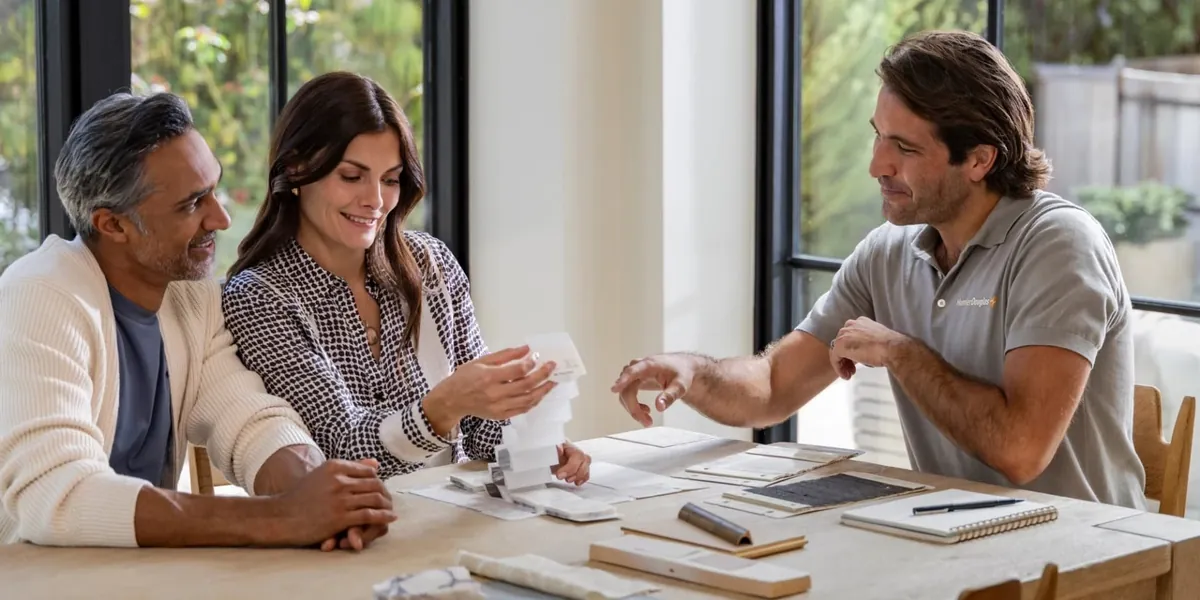
Rooms built around the water
The extensions added to Mattapoisett cottages, and the main rooms of many newer houses near the harbor, are built for one thing: the view. Sofas face the glass, the dining table sits by the windows and there is very little wall between the panes.
That much glass changes how you think about a blind. Privacy is rarely the worry on the water side, because nobody is looking in from the harbor. The worry is the sun. In summer a west-facing room can heat up fast in the late afternoon, and the glare off the water makes a screen or a page hard to see. In winter the low sun reaches far across the floor and fades anything it touches.
A blind gives you three positions to work with. Fully raised, the window is clear. Lowered and tilted open, light and view come through between the slats. Lowered and tilted up, the light is sent to the ceiling and the room stays bright while the direct sun is blocked. With slim metal slats or a wide faux wood slat, the view between them stays surprisingly open.
Large panes can make a single blind heavy, so we usually split a wide window into two or three blinds side by side. Each one can be set on its own, so you can block the sun at the west end of a room and leave the east end open to the harbor.
Why faux wood suits the shore
We are often asked why we keep coming back to faux wood for cottages near the water. The answer is that salt air carries moisture as well as salt. Real wood is a natural material that takes in damp and gives it back again, and over many seasons near the sea that can make a slat cup or bow. A faux wood slat is made to hold its shape whatever the air does.
It also cleans easily. A light film builds up on anything near an open window by the sea, and a faux wood slat wipes down with a damp cloth. In a bathroom, a kitchen or an outdoor shower room, it is the only blind material we would suggest.
None of that rules out real wood. In a newer inland house with modern windows and steady heating, Parkland wood blinds are as practical as anywhere. Many Mattapoisett customers use faux wood on the harbor side of the house and real wood on the drier side, with slats in matching colors so the house looks consistent from room to room.
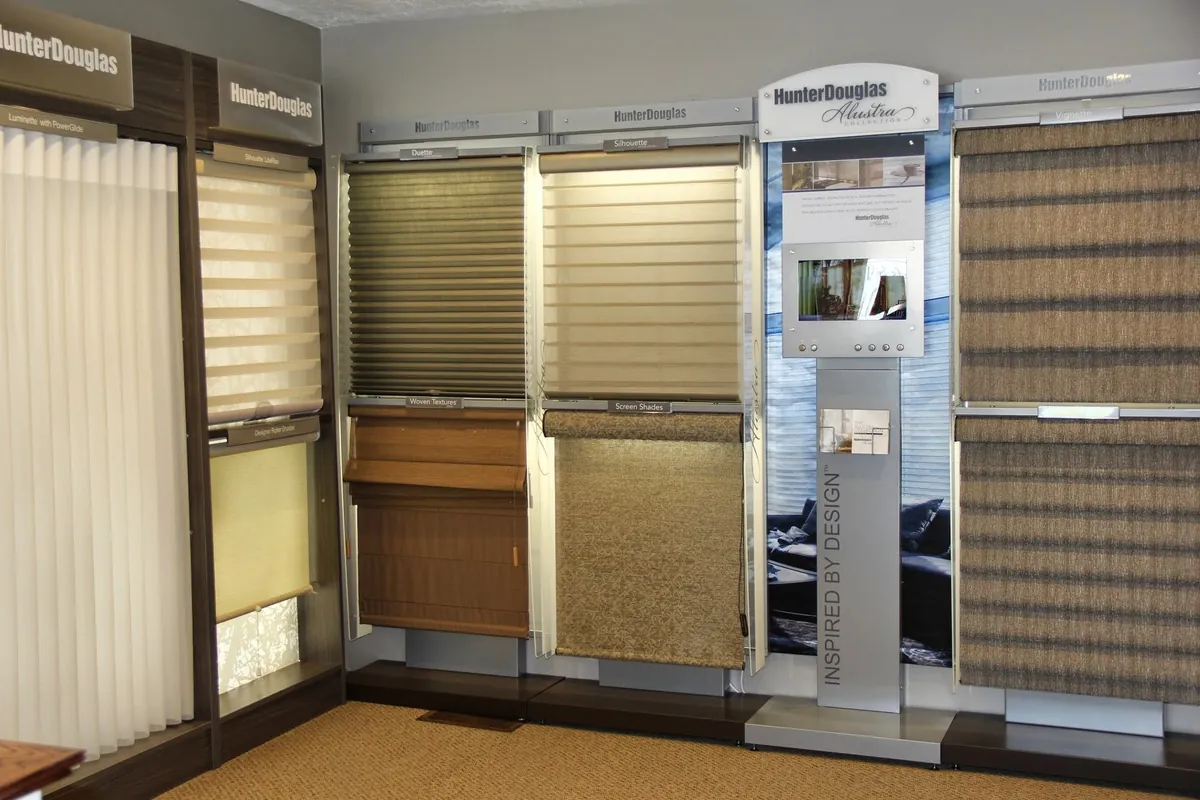
Headrails, cords and the parts salt finds first
On any blind, the slat is only half of it. The headrail holds the tilt and lift mechanism, and the cords or tapes run down through the slats to the bottom rail. In a house by the water, the more of those parts that are enclosed, the better.
Cordless lift helps a great deal. With no cord lock at the side and no loop of cord hanging beside the glass, there is less exposed hardware and nothing to tangle in the wind when a window is open. Lifting the bottom rail raises the blind, and a wand tilts it. For the tall or hard-to-reach windows that newer harbor houses often have, motorized blinds take the cords away entirely. Our page on motorized blinds in Mattapoisett covers how PowerView is controlled.
When we fit the blinds, the brackets go into solid framing so the headrail stays level even on a window that is opened every day all summer.
Close neighbors in the village
Not every Mattapoisett house looks out on open water. In the village streets near the harbor the cottages sit close together, some only a driveway apart, and the side windows of one house often look straight into the side windows of the next. On those walls, privacy matters far more than the view.
Blinds handle that well because you can close them partway. Tilted so the slats face downward toward the room, a blind lets daylight in from above while blocking the line of sight from a neighbor’s window at the same height. At night, with the lamps on, closing the slats flat gives you full privacy. A routeless slat, which has no holes for the lift cords, closes tighter still and is worth considering in a bedroom or bathroom that faces the house next door.
Street-facing rooms in the village have the same need. A front room a few steps from the sidewalk benefits from blinds that can be lowered to just below the top sash, leaving a band of sky clear while the lower part of the window stays covered. Choosing custom blinds in Mattapoisett village houses this way gives each room the balance of light and privacy it needs.
Bedrooms under the eaves
Many cottages have their bedrooms upstairs under a sloping roof, lit by dormers or by small gable-end windows. These rooms catch the first light of the morning, and on the harbor side that light comes in low and bright off the water. A bedroom that faces east can be full daylight well before anyone wants to be up.
Darker slats and a routeless build both help a blind close out more of that light. For a room that needs to be properly dark, we can also talk about a blind paired with a room-darkening shade from another Hunter Douglas range, though for many cottage bedrooms a well-fitted blind is enough. Because dormer windows are small and set deep into the roof, a compact headrail and a narrow slat keep the blind neat and stop it hiding much of the glass when it is raised.
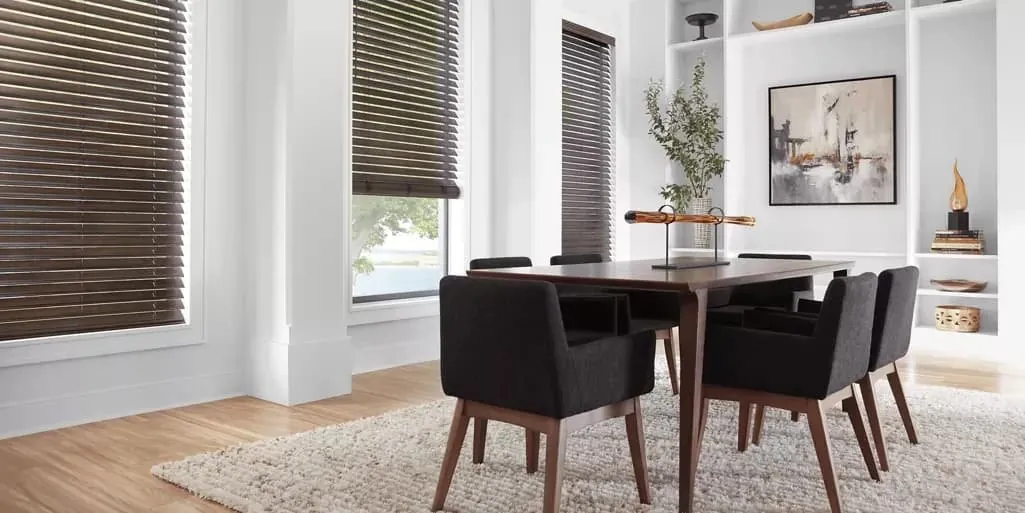
Newer houses inland
Away from the water, Mattapoisett has larger houses on bigger lots, many with modern windows throughout: tall double-hung units, transoms above the doors, wide sliders and the occasional arched or angled window in a great room. These houses bring a different set of choices for custom blinds in Mattapoisett.
The windows are square and regular, so inside mounts usually work well and give a crisp, built-in look. The rooms are larger, so wider slats look in proportion and give a clearer view when open. Real wood suits a formal dining room or a study, faux wood suits the kitchen and baths, and the family room slider takes vertical blinds.
Arched and angled windows need a little more thought. A blind cannot follow the curve of an arch, so the usual answer is a blind on the rectangular part of the window with the arch left open, letting in sky and light above. For a tall window in a two-story room, motorized lift or tilt saves reaching for a pole.
Transoms over doors and the narrow side lights beside a front entry are common in these houses too. A transom usually stays uncovered for the light, but a side light by a front door often needs a slim blind for privacy, because it looks straight into the hall. Metal blinds are made in very narrow widths with a low-profile headrail, and they can be fixed top and bottom so they sit flat and do not swing when the door opens and closes. Mudrooms and back entries off the garage, which take a lot of coming and going, are another place a tough aluminum or faux wood blind earns its keep.
Measuring a cottage window
Measuring is where a made-to-measure blind is won or lost, and in an older cottage it takes care.
- We measure each opening across the top, middle and bottom, and use the narrowest figure for an inside mount.
- We take the height at the left, center and right.
- We check the depth of the frame where the headrail will sit, and look for window locks, cranks or sash hardware that could catch a slat.
- We note anything unusual: a frame that leans, a sill that slopes, or two windows on one wall that look alike but are not.
- We confirm the mount, slat size, color and lift for every window with you before the order goes in.
A casement window that cranks outward needs a little extra room for the handle, so we check that the blind clears it when lowered. On an old double-hung with original locks, we make sure the slats sit forward of the latch.
Your visit, start to finish
Most Mattapoisett customers prefer to see the samples at home, where they can judge them against their own light and their own view. Our vans carry the full range of blind samples, so we can bring the showroom to you. We walk through the house together, starting with the rooms where the glare or the privacy is worst, and you hold real slats up to your windows to see how each color and width looks.
Then we measure, and you receive a free estimate for the blinds you are considering. There is no rush to decide that day. If you want help with colors or with the rest of a room, ask about our interior design consultations at the same visit. The guide to what happens at an in-home consultation explains more about how it works.
On fitting day, our certified Hunter Douglas installers put each blind up, check it for level, run it through its full tilt and lift and show you how it all works.
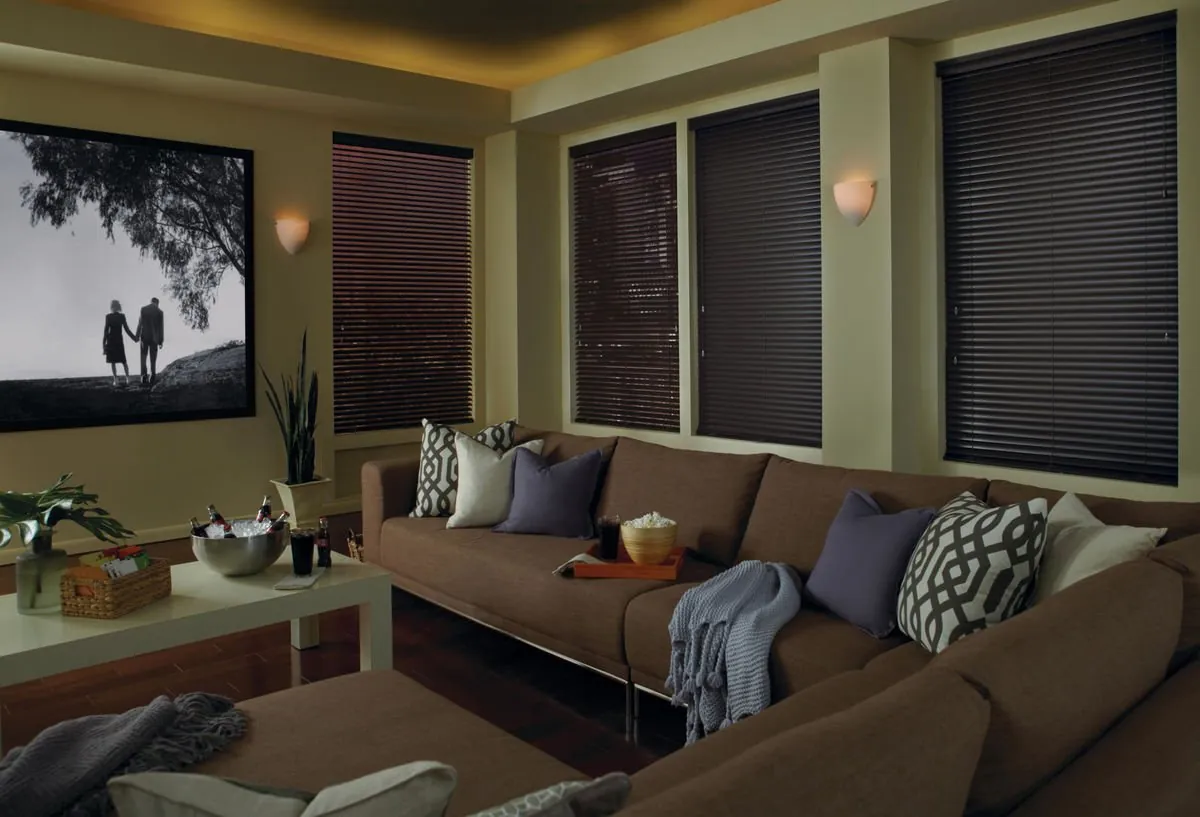

A Hunter Douglas Gallery dealer for the harbor
Blinds & Designs is a Hunter Douglas Gallery dealer, the designation Hunter Douglas gives dealers who meet its standards. In practice it means every blind in the range is open to you through one company: Parkland wood, EverWood faux wood, aluminum blinds and vertical blinds, along with the lift options and PowerView automation.
Our installers are certified by Hunter Douglas, and we handle the job from first visit to final fitting. If a blind needs attention later, we take care of blind and shade repairs too.
The full range is on our Hunter Douglas blinds page, with more detail on faux wood blinds and metal blinds. For a harbor room you might also look at roller shades in Mattapoisett, or see all our work in town on the Mattapoisett page.
Questions from Mattapoisett
Which blind copes with salt air in a cottage close to the harbor?
Faux wood. It keeps its shape in damp, salty air and wipes clean. We usually keep real wood for the drier side of the house or for inland rooms.
Will blinds block my view of the water?
Not if you choose the right slat and tilt. With the slats open you see out between them, and tilted upward they cut the glare while the view below stays clear. Raised fully, the window is completely open.
My converted cottage has windows of all different sizes. Can you match them?
Yes. Each blind is made to its own window, and we can set them all at the same height and in the same color so a wall of mismatched windows looks even.
What do you suggest for a slider onto the deck?
Vertical blinds, or soft vertical panels, which stack to one side to clear the door and turn to block low sun. We bring samples of both.
Is the estimate free?
Yes. After we measure, you receive a free estimate for the blinds you are considering.
Ready to see the samples by your own windows
Seeing how custom blinds in Mattapoisett, MA, handle your harbor light is easiest at home. Request a consultation and we will bring the samples, measure every window and leave a free estimate with you. If you would like to look at the range first, the North Dartmouth showroom is the nearest to Mattapoisett, or use the call button to ask a question.