
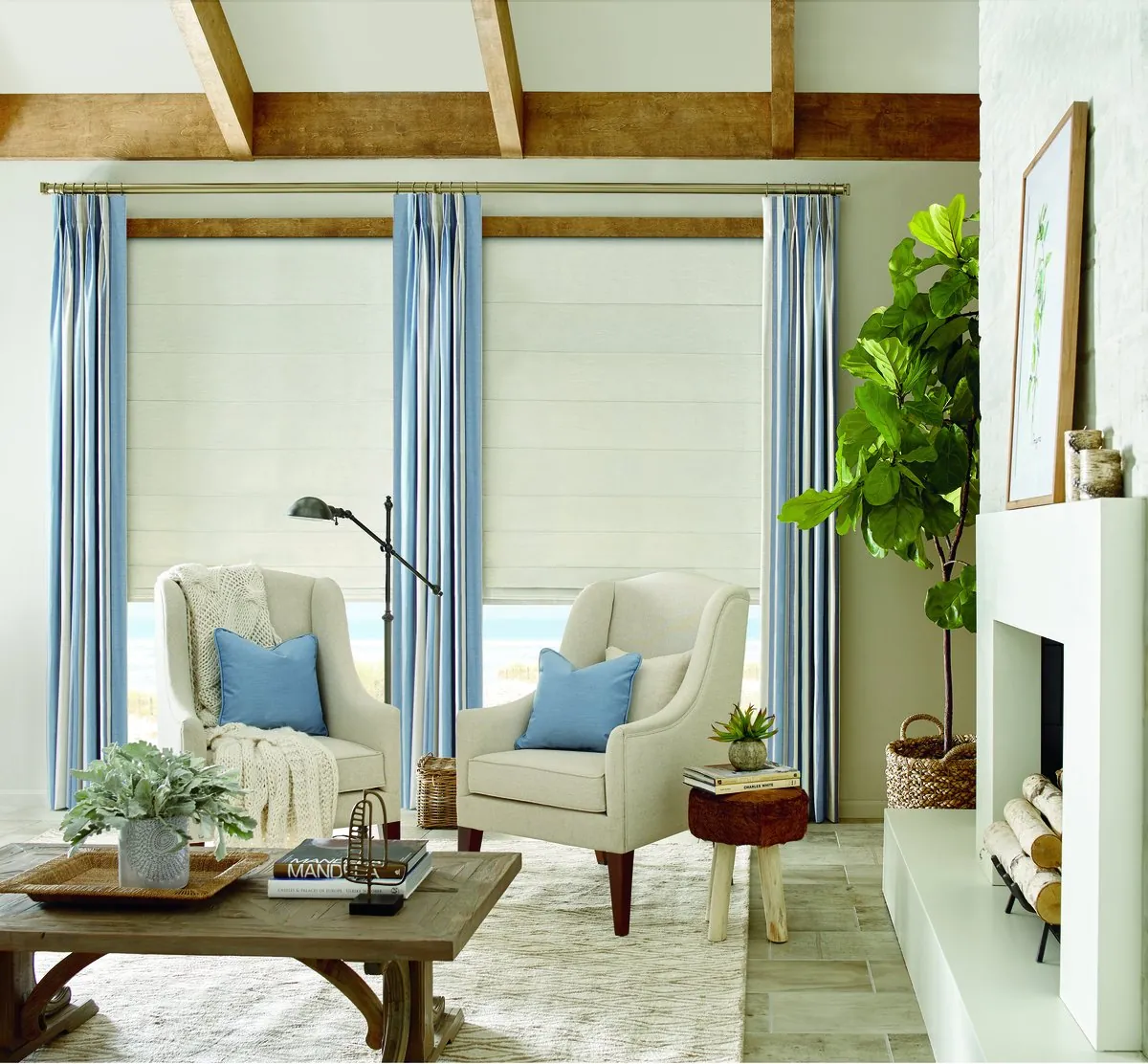
Old sash, close to the sidewalk
The antique colonials and Victorians through Dedham Village and Oakdale were built with tall, narrow sash, and many of them stand only a few steps from the street. That pairing shapes almost every decision when we plan roman shades in Dedham, MA. The window is long and slim, so the fold has a long way to travel. And the house is close to passers-by, so whatever hangs in the front rooms is seen from the sidewalk every day.
These houses also carry historic expectations. A front elevation that has looked much the same for a very long time deserves window coverings that look calm from outside: the same color facing the street in every opening, hems that stop at the same height, nothing that fights the trim. Fabric shades suit that brief well, because a folded panel inside a period frame reads as part of the window rather than something added to it.
Toward Riverdale the picture changes. Post-war capes and ranches there have simpler openings, and their rooms ask for softness and ease more than period detail. We cover both kinds of house with the same two Hunter Douglas lines, Vignette and Carole Fabrics, in flat and folded styles.
Three looks for a Dedham window
These are the three styles we show most often for roman shades in Dedham, MA. Every one travels with us on the sample van, so the choice is made against your own walls, floors and woodwork rather than in a catalog.
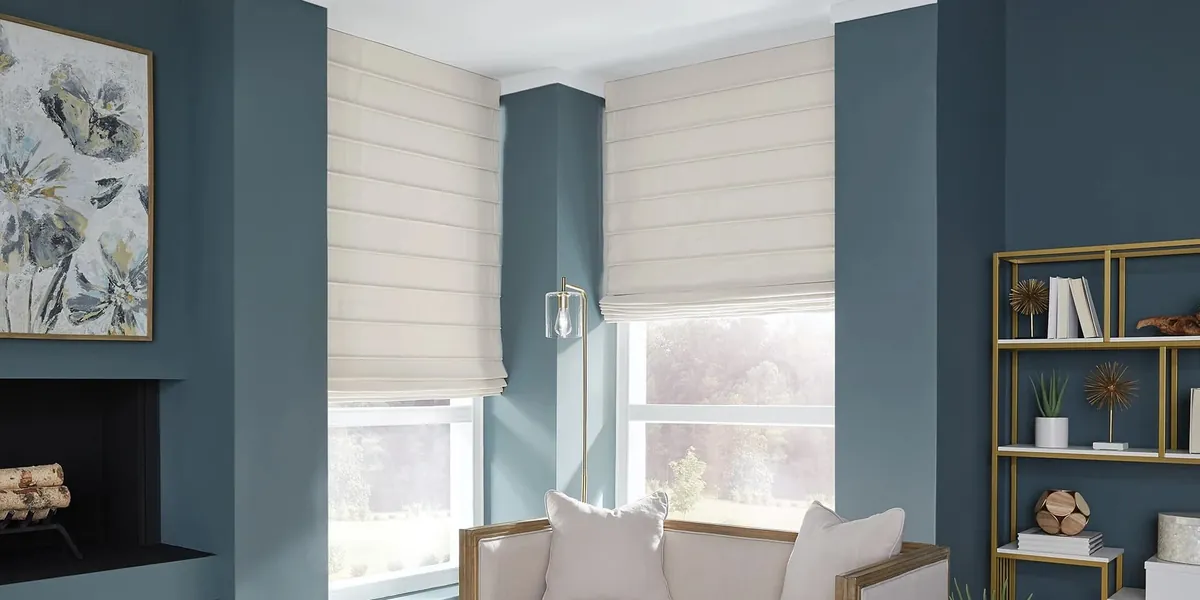
Carole flat style
A smooth panel when lowered that gathers into neat, stacked folds as it rises. The tailored choice for a formal front parlor, and the one that shows a printed fabric at its best.
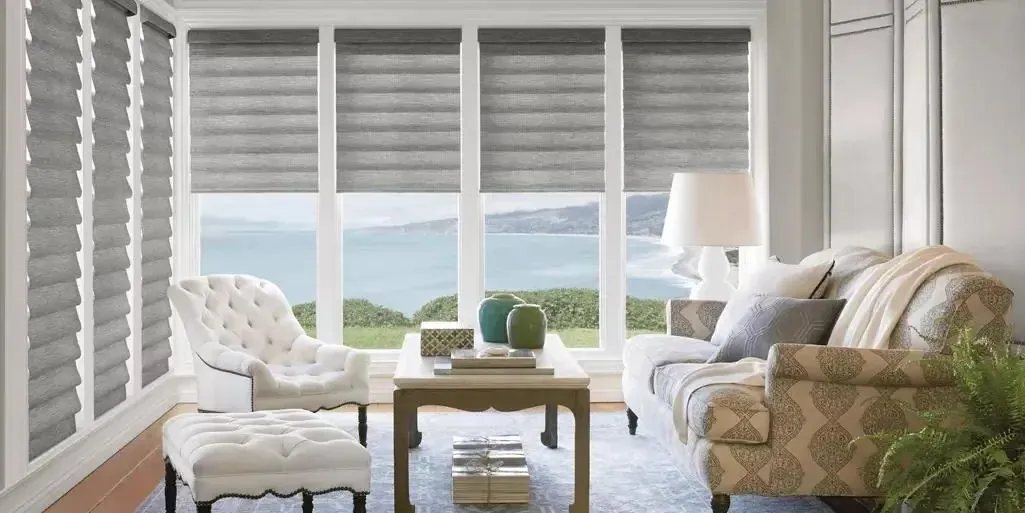
Carole folded style
Soft loops that stay in the fabric even when the shade is down. A gentler, more traditional face for a Victorian sitting room or a bedroom under the eaves.
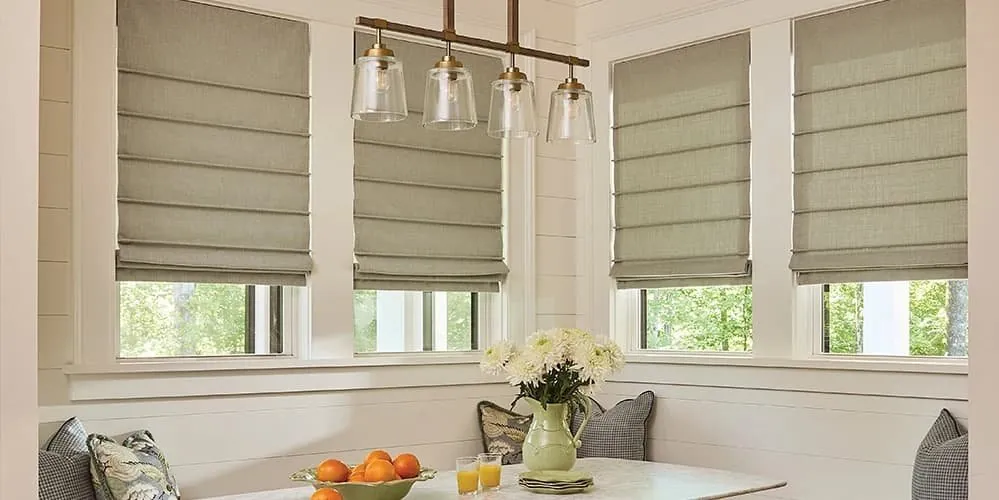
Vignette
The Hunter Douglas modern roman shade, with even, orderly folds. It suits the plainer rooms of a Riverdale cape or a kitchen that has been updated.
What historic expectations mean at the window
A house in the village is judged first from the street. Inside, each room can have its own fabric and its own character, but from the sidewalk the windows read as one set. When we plan the front of an antique colonial, we usually start from the outside: which color faces the street, whether the shades will be raised to the same height during the day, and how the hem sits against the meeting rail of the sash. Getting those three things right keeps the elevation quiet, which is what an old house wants.
Trim matters just as much. Many of these houses still have their original casings, often wide and molded, and covering them would undo part of what makes the room. Where the window frame is deep enough, a roman shade can sit within the opening and leave every inch of woodwork on show. Where the frame is shallow, or an old sash has a stop or pulley in the way, the headrail goes just above the glass on the face of the casing instead. We look at each window on its own, because two openings side by side in a house this old are rarely identical.
There is a softer side to historic expectations too. Old plaster walls, painted woodwork and wide floorboards look at home beside natural-looking fabrics: linen textures, quiet stripes, small prints. Very glossy or very modern fabrics can look out of place in a room like that, and we will say so if we think a choice will fight the house.
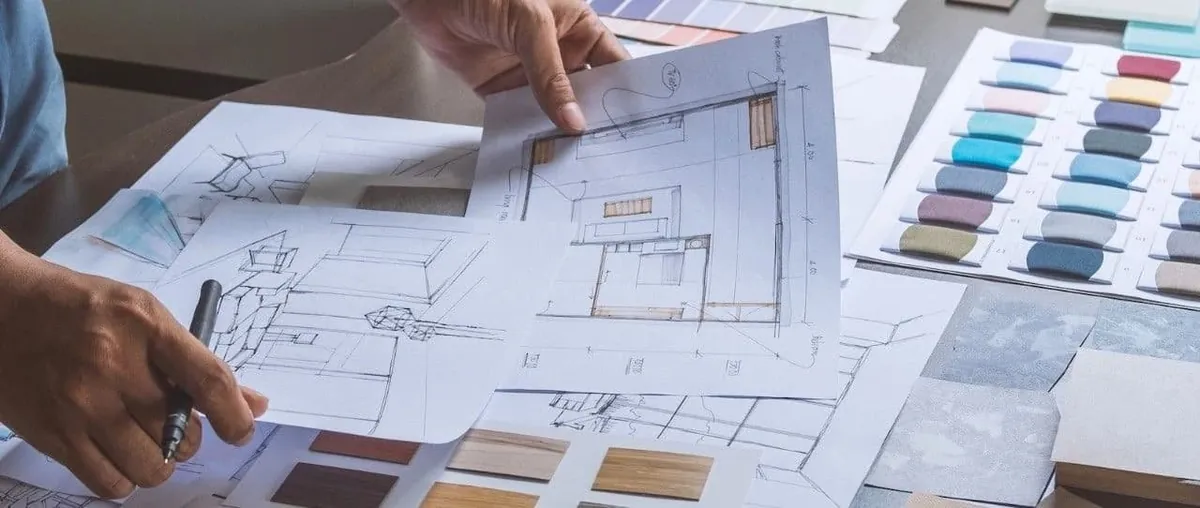
Getting the proportion right on tall, narrow sash
A long window and a narrow width change how a fabric shade behaves. On a squat window the raised folds take up a large share of the glass. On a tall Dedham Village sash they take up a small share, which leaves more daylight in the room when the shade is up and lets the folds be spaced more generously when it is down.
That length is also why the choice between flat and folded matters more here than in a newer house. A flat style on a tall window looks like a long, clean panel, and a pattern runs uninterrupted from top to bottom. A folded style on the same window becomes a column of soft loops, more decorative and more traditional. Neither is right or wrong; it depends on whether the window is meant to be a quiet frame or a feature of the room. In a double parlor with two tall windows on each wall, we often hold up both styles side by side so you can see the difference at full height before deciding.
Narrow widths need a little care in fabric choice as well. A busy print on a slim panel can look cramped, while a stripe running vertically makes a tall window look taller still. The sample books let you test that at the window itself rather than guessing from a swatch on a table.
Front rooms near the street
Because the village houses sit close to the road, the front rooms carry the most need for privacy. In the evening, with lamps on, a front parlor is easy to see into from the sidewalk. A roman shade lowered fully gives that room back, and when it is raised during the day it stacks neatly at the top of the window and leaves the sash clear.
Some front rooms only need cover on the lower part of the glass, where the view in from the sidewalk is most direct. A roman shade lowered partway does exactly that: the bottom of the window stays covered while the top lets in daylight. For a dining room that faces the street, that halfway position is often where the shade spends most of the day.
Side windows can matter as much as the front ones. Where two old houses stand close together, a side window may look straight into the neighbor’s kitchen. We treat those openings with the same fabric as the front so the house looks consistent all the way round.
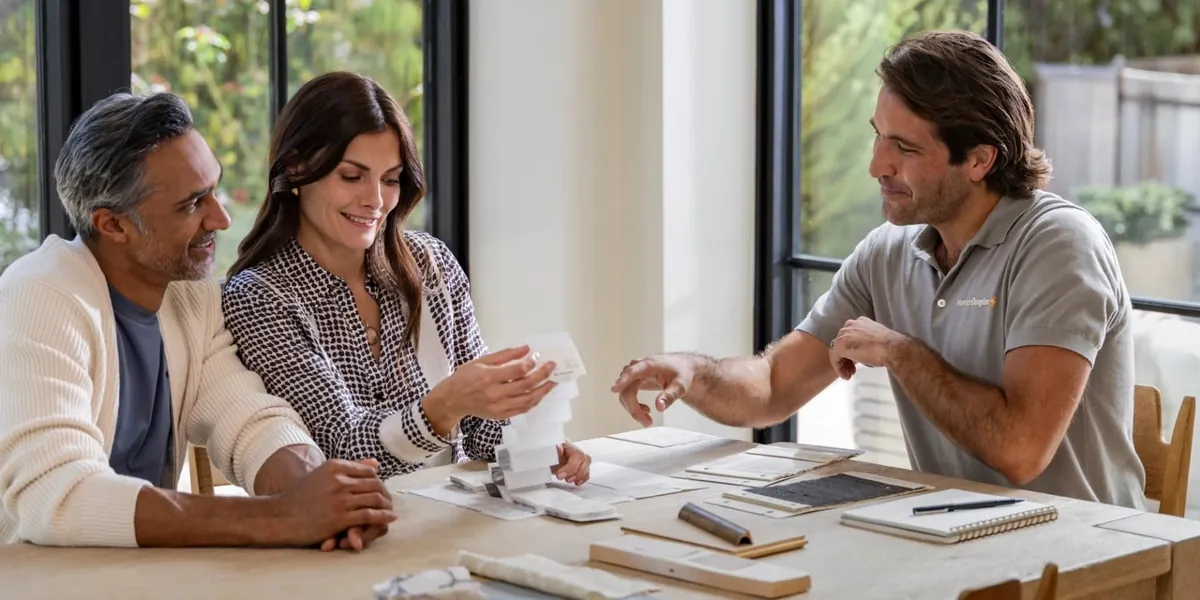
The capes and ranches toward Riverdale
The post-war capes and ranches toward Riverdale are a different job from the village houses, and an easier one. Their openings are simpler, their frames are usually square and true, and the rooms are more modest in scale. A cape typically has a window on either side of its front door and dormers above; a ranch has a broad living room window and a row of smaller bedroom windows down the side.
In these houses roman shades in Dedham, MA, are often chosen for what they do to a room rather than to a facade. Hard floors and plain walls can make a small room feel bare, and fabric at the window adds warmth and softness without the bulk of floor-length curtains. Vignette works well here, with its tidy, even folds, and a plain or lightly textured Carole flat style suits a kitchen or a home office.
Dormers deserve a word. They are short windows set into the roof, and a fabric shade on a short window has to fold up into a compact stack so it does not block much of the glass. We plan the fold and the fabric weight with that in mind, and we show you how much of the dormer stays clear when the shade is raised. Ranch bedrooms raise the opposite question: a row of matching windows down one side of the house, where the shades should share one fabric and one height so the long side of the house looks orderly from the yard and the street.
How an in-home consultation runs
Dedham is served by our shop-at-home service, run from Canton. Instead of asking you to travel, we bring the showroom to you: the vans carry the sample books, and every choice is made in the room where the shade will hang. Here is the usual order of a visit.
- You request a consultation online or tap the call button, and we agree on a time that suits you.
- A consultant arrives with the Vignette and Carole Fabrics sample books.
- We walk the house together, starting with the windows that bother you most, often the front rooms or a tall sash in the parlor.
- Fabrics are held up at the window so you see their color in your own light, against your own trim.
- Each window is measured, and we note where the headrail will sit and where the raised folds will rest.
- You receive a free estimate, room by room, to think over in your own time.
Our shop-at-home service from Canton explains how the vans work, and our guide to what happens at an in-home consultation answers the questions people tend to ask before we arrive.
Pattern, plain or stripe
The fabric is where most of the personality of a roman shade lives, and the old rooms of the village give it plenty of scope. A print on a flat style turns a tall window into a long, framed panel of pattern, which can carry a whole room if the walls are plain. A stripe adds height. A plain linen texture lets the woodwork and the shape of the fold do the talking.
Color works differently in an old house. North-facing rooms behind deep casings can be dim, and a pale fabric keeps them from feeling closed in when the shade is down. A sunny south-facing room can take a richer color. If you are weighing one fabric against another for a bright room, our guide to choosing fabric for a sunny room is worth a read first.
For a fuller plan, with the walls, upholstery and window fabrics pulled together, our interior design consultations take the same approach across the whole house.
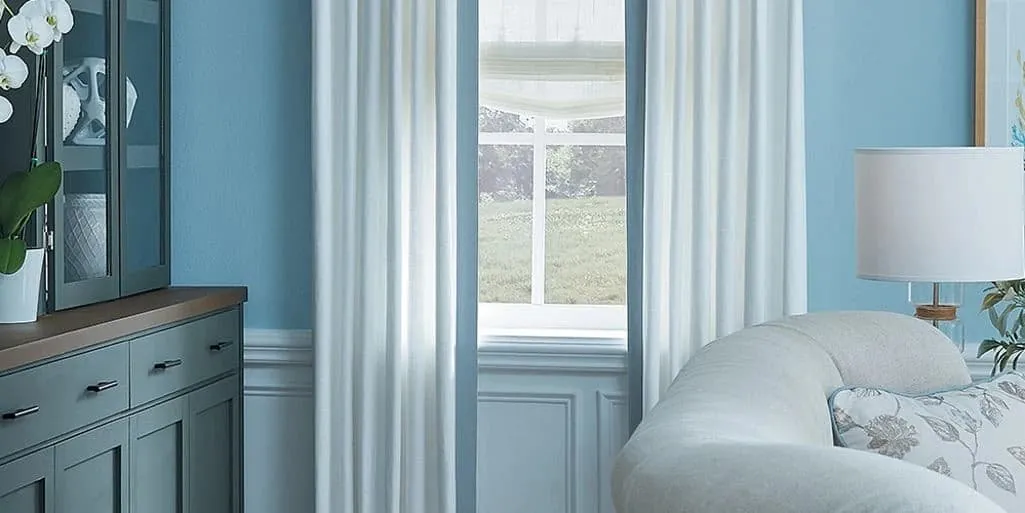
Matching the line to the house
Most Dedham orders split along the same line as the housing. The antique colonials and Victorians of the village and Oakdale tend to lean toward Carole Fabrics, because the flat and folded styles in a natural-looking fabric sit comfortably beside old trim and plaster. The capes and ranches toward Riverdale lean toward Vignette, whose regular folds suit plainer, squarer rooms. That is a tendency, not a rule. A Victorian with a kitchen that was opened up and modernized may want Vignette there and Carole in the parlor, and a ranch with a collection of antiques may suit a soft folded style throughout.
What matters is that the choice is made room by room, with the fabric at the window. Our main roman shades page sets the two lines side by side if you would like to read about them before we visit.
Installation day in an older house
Fitting shades in a house of this age takes patience. Plaster can be hard and brittle, old casings may have been painted many times over, and a window that looks square may be a little wider at the top than at the bottom. Our installation is certified Hunter Douglas installation, and the installers set each headrail level even where the frame itself is not, so the hems line up across the front of the house. Before they leave, every shade is raised and lowered to make sure it runs smoothly and rests where it was planned. Our guide to what happens on installation day explains the visit in more detail, so you know what to expect when roman shades in Dedham, MA, go up in your own rooms.
A shade within a pair of panels
Tall ceilings in the village houses can carry a second layer. A fabric shade within the frame does the daily work of light and privacy, and a pair of Hunter Douglas drapery panels hung outside the frame adds height and frames the window. The panels are rarely drawn; they are there for proportion. We choose the two fabrics together so they complement each other, and the shade still raises and lowers on its own.
PowerView on hard-to-reach windows
Not every window is easy to reach. A tall sash behind a sofa, a stair landing window or a high window in a renovated room can all be awkward to raise by hand. PowerView motorization lets a roman shade move from a remote, from an app on your phone, or on a schedule you set, and several shades in one room can move together. We plan how each motor is powered at the visit. Our page on motorized blinds in Dedham covers automation across the house, and the guide to how motorized shades are controlled explains the options in plain terms.
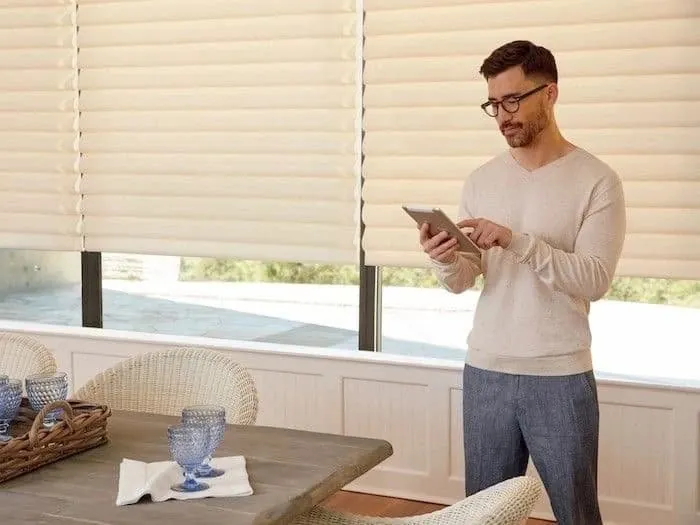
Other rooms, other shades
A whole-house plan does not have to be all fabric. Bedrooms in a Riverdale ranch may suit cellular shades in Dedham, and a bathroom or kitchen in a village house may suit plantation shutters in Dedham. We bring samples of the wider Hunter Douglas range on the same visit, so one consultation can cover every room. Our Dedham page lists everything we offer in town.
Our Gallery dealer status, and the Franklin showroom
Blinds & Designs is a Hunter Douglas Gallery dealer. For a Dedham house that means the full range of Vignette and Carole Fabrics roman shades is open to you, along with Hunter Douglas blinds, shutters, other shades and drapery when a room suits something else.
Every shade gets certified Hunter Douglas installation, with the headrail set level in frames that are not always square. Estimates are free. If a blind or shade you already own needs attention, our blind and shade repair service can look at it.
The in-home consultation is the usual starting point for Dedham. If you would rather come to us, our nearest showroom is in Franklin.
Questions from Dedham
My windows are original and not quite square. Can a fabric shade still fit?
Usually, yes. Each window is measured on its own, and where an old frame is out of true or shallow, the headrail can sit on the face of the casing above the glass instead of inside the opening.
Will the shades look right from the street on an antique house?
That is where we start. We plan the color that faces out and the height the shades rest at during the day, so the front of the house reads as one calm set.
Is a flat or folded style better for a tall sash?
Both work. A flat style reads as a long, clean panel and shows a pattern well; a folded style adds soft loops for a more traditional look. We hold both up at full height so you can compare.
Do I have to travel to choose?
No. Dedham is covered by our shop-at-home service, so the samples come to your house. If you prefer, our nearest showroom is in Franklin.
What does the estimate cost?
Nothing. After measuring, you get a free estimate for each window to consider at your own pace.
Start with a visit to your house
The quickest way to know how a fabric will look on a tall village sash, or in a Riverdale dormer, is to see it there. Request a consultation and we will bring the Vignette and Carole Fabrics sample books to your door, measure every window you want covered, and leave a free estimate behind. Choosing roman shades in Dedham, MA, begins in your own front room, with the light you actually live with. If you would like to ask a question first, the call button reaches us directly.