
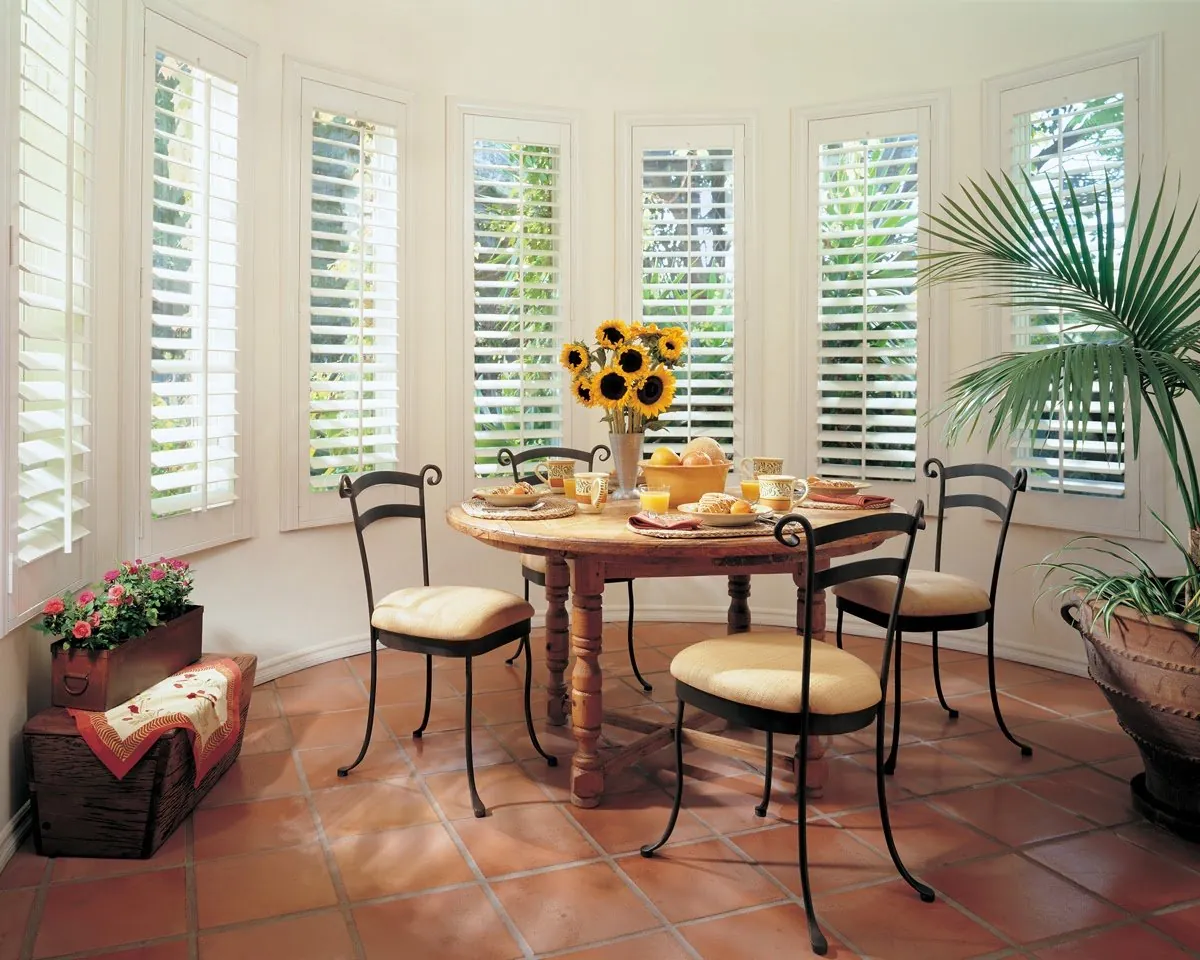
Very small windows, very tall ones
Medway’s houses pull in two directions at once. Near the village, antique colonials keep their oldest windows: very small sash, set deep into thick walls, with a sill wide enough to hold a row of books. Across the subdivisions off Holliston Street, large newer colonials open their front halls with two-story foyer glass that rises from the door to the ceiling. Plantation shutters in Medway, MA, have to look as natural in one as in the other.
A shutter is a good answer for both because it is built to the exact opening. A tiny antique sash gets a frame made for it alone, with louvers sized to the glass. A tall foyer window gets panels laid out so the part you can reach works by hand and the part you cannot is planned around.
Everything in between, the bedrooms, the family room, the kitchen and the baths, follows from those two ends. Once the smallest and the tallest windows are solved, the rest of the house usually falls into place.
Shutters for Medway’s two kinds of house
These are the three situations that shape most of our shutter orders in town. Samples for each come with us on the visit.
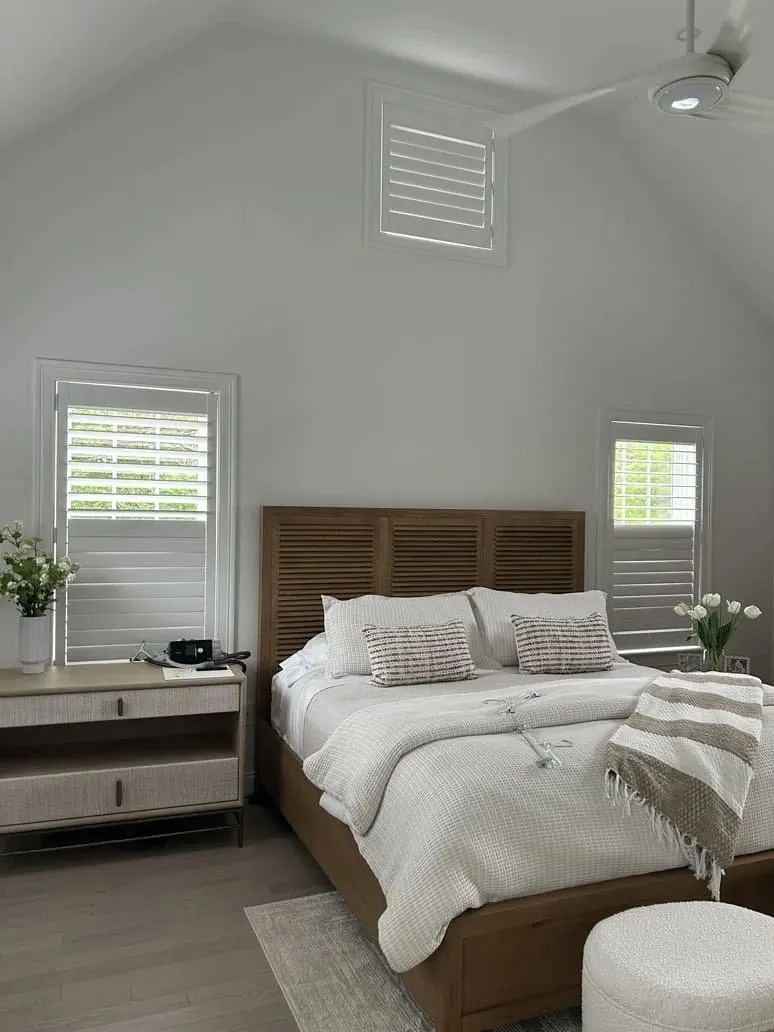
Deep-set antique sash
Small openings in thick walls suit an inside frame and a slim louver, so the shutter sits back in the reveal and the old casing stays on show.
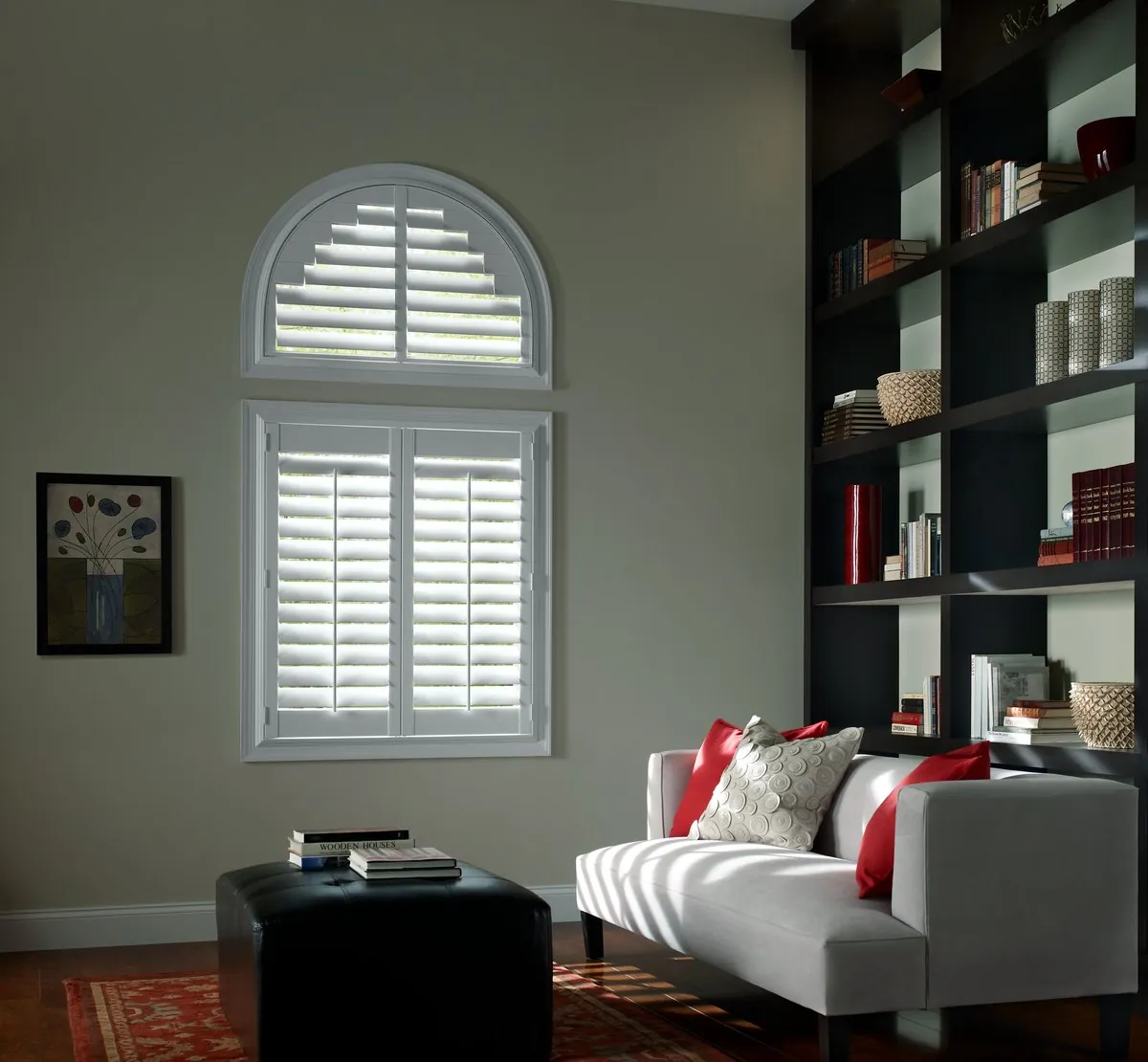
Two-story foyer glass
Tall openings are laid out in stacked panels, with the reachable part working by hand and shaped panels following any arch at the top.
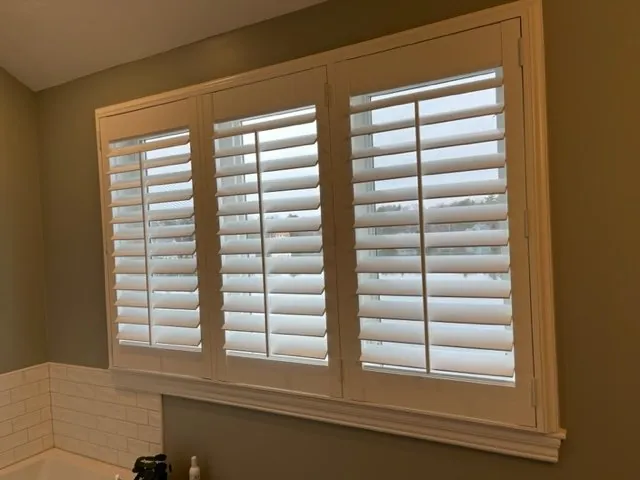
Baths and laundry rooms
Palm Beach polysatin holds its shape in steam and damp, and can be painted to match the shutters in the rest of the house.
The village colonials and their deep sills
The oldest houses near the village were built with heavy timber frames and thick walls, and their windows sit well back from the room. The sash is often small, sometimes much smaller than anything a modern builder would put in, and the reveal around it is deep. Inside, that depth makes a little alcove at every window, with a wide stool at the bottom.
Those openings are some of the most rewarding in town to shutter. The depth that makes a shade awkward is exactly what a shutter frame wants. The frame sits inside the reveal, the panels close level with the face of the casing, and when the louvers are open the window looks almost untouched. The wide sill stays clear for a lamp or a plant.
Size is the thing to watch. On a very small sash, a wide louver would leave only a few blades across the glass and look clumsy. A slim louver keeps the shutter in proportion. Some of the smallest windows take a single panel rather than a pair, hinged to swing to one side, so there is no center stile cutting across a narrow pane.
Fitting a frame into an old, thick wall
Old walls move. Over a long life a timber-framed house settles, and the openings in it drift out of square. Two windows in the same room may differ in size, and a single opening can be wider at the top than at the bottom.
We measure each window as its own job. Width at the top, middle and bottom; height at the left, center and right; both diagonals; and the depth of the reveal at several points. If the opening has racked, the frame is built to absorb it, so the panels still meet evenly and the louvers sit level even when the wall around them does not.
The other thing we look for is anything that sticks out into the reveal: an old sash lock, a lift, a storm window clip or a stop that has been painted over many times. Louvers need room to tilt. If they would catch, we either choose a frame that sets the panel slightly forward or suggest an outside mount on the casing. For more on how we handle older openings, see our guide to shutters for older windows.
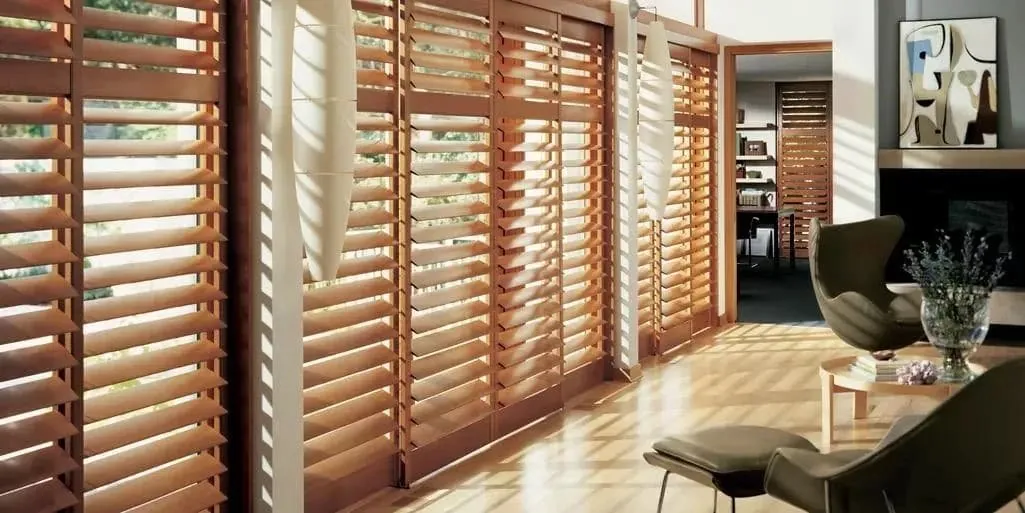
Foyer glass in the subdivisions off Holliston Street
The newer colonials in the subdivisions are generous houses, and the foyer is where they show it. A two-story front hall, a staircase rising to a balcony landing, and a tall window or a stack of windows above the door that fill the hall with light.
That light is welcome in the morning and less welcome in the evening, when a lit foyer shows the whole staircase to the street. It can also throw hard sun across the landing at certain times of year. A shutter there gives you control without closing off the light altogether.
There are a few ways to lay one out:
- Full height in tiers. The opening is divided into two or three stacked rows of panels. Each row is a working shutter, and the bottom row opens and tilts from the floor.
- Tier on tier. Two independent sets of panels, one above the other, so you can fold the top set back for light while the lower set stays closed.
- Shutters below, shaped panel above. The rectangular part of the window takes hinged panels; an arch or half-round at the top takes a fixed shaped panel that follows the curve.
Divider rails keep long panels from looking stretched and let the louvers above and below the rail tilt separately.
What goes above the reach line
Every two-story window has a line above which nobody is going to reach without a ladder. Below it, the shutter can do everything a shutter does. Above it, the question is what you want that glass to do day to day.
Often the answer is simply to let it light the hall while hiding it from outside. A panel with its louvers set at one fixed angle does that quietly, with nothing to adjust. Where you want the upper glass to open and close, a Hunter Douglas shade with PowerView motorization can cover that part of the window and move on a schedule or from your phone, while shutters cover the lower part. We bring both options and show you how each would look from the hall and from the landing.
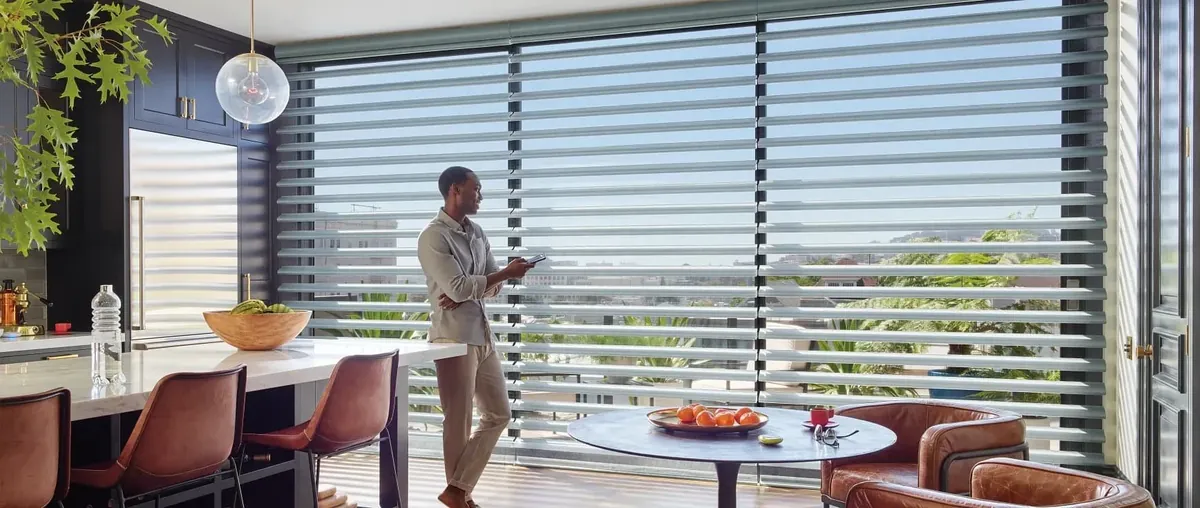
Louver width for small windows and tall ones
The width of the blades is one of the easiest choices to get wrong, because it depends on the size of the window as much as on taste.
On the small antique sash near the village, slim louvers keep the shutter in scale and leave more of the old glass visible between the blades. On the tall foyer glass, wider louvers look right from across the hall and give a clearer view when they are open. In between, on the standard double-hungs in a newer colonial’s bedrooms, a medium blade suits most rooms.
The good news is that you do not need one size for the whole house. As long as the color matches, a slim blade in the old part of a house and a wider one in a newer addition look intentional. When we plan plantation shutters in Medway, MA, for a house that mixes old and new, we usually choose the louver room by room.
Bedrooms and family rooms in the newer colonials
Past the foyer, the newer colonials off Holliston Street are full of good, regular windows: matching double-hungs along each bedroom wall, a family room at the back with a row of glass or a slider, and a kitchen with a window over the sink and often a bay at the breakfast table. These are the rooms where a whole-house look comes together most easily.
Bedrooms usually take a medium louver and a pair of panels per window, with a divider rail if the windows are tall. Closed, the louvers darken the room well for sleeping; tilted up, they let in daylight while keeping the room private from the house next door. Matching every bedroom upstairs means the house looks tidy from the street too.
The family room often has the widest run of glass in the house. Shutters on each window, joined by slim posts, line up across the whole wall, and a slider takes panels on a track that glide aside when you want to step out. A breakfast bay takes a shutter on each face, set so the louvers line up around the angle. Whole-house orders for plantation shutters in Medway, MA, are often planned from this room outward, because it is the one you live in most.
Old glass, new glass and the view through it
The two kinds of house in town also differ in what you look at through the window. In the antique colonials the glass itself is often part of the charm: small panes, sometimes with a slight ripple, set in muntins that divide the view. In the newer houses the glass is large and clear, and the view of the yard is the point.
Shutters can respect both. On divided-light antique sash, we line up the louvers or the divider rail with the muntins where we can, so the shutter echoes the pattern of the window rather than fighting it. On the big modern panes, wider louvers and a hidden tilt keep the face of the shutter clean, and when the blades are open flat the view comes through with very little in the way.
It is a small detail, but it is the kind that makes plantation shutters in Medway, MA, look as though they were planned for that window and no other.
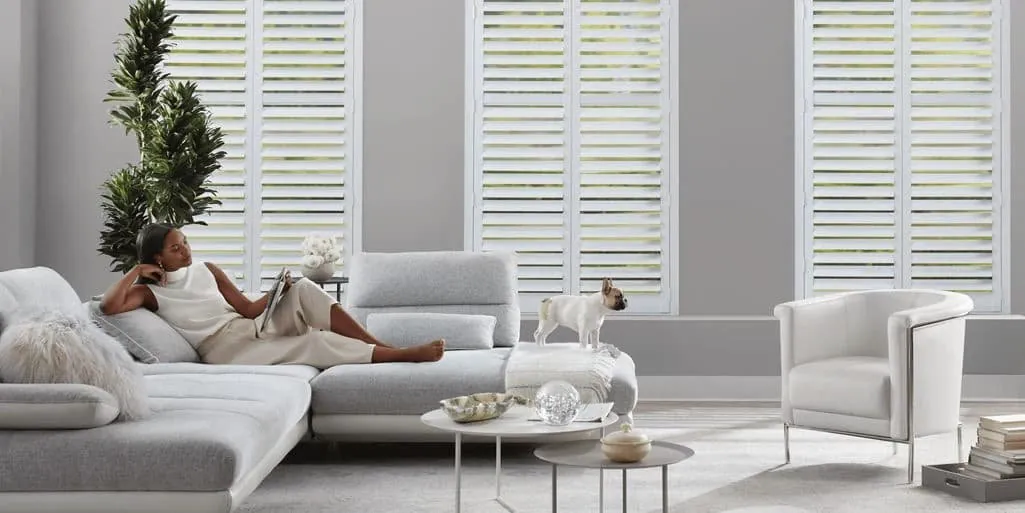
Palm Beach, NewStyle and Heritance, plainly compared
All three are true shutters: hinged panels of louvers in a fitted frame. What separates them is the material, and that decides where each one belongs.
- Palm Beach is polysatin with no wood inside. It is the one for bathrooms, laundry rooms and the window over the kitchen sink, where water and steam are part of daily life.
- NewStyle is a hybrid that looks like painted wood. It handles large panels well, which makes it a natural fit for the bedrooms and family rooms of a newer colonial.
- Heritance is real hardwood, painted or stained, with the widest range of finishes. In an antique colonial with original woodwork, a stained Heritance shutter can pick up the color of the old trim and floors.
A typical Medway order uses two of the three. The main plantation shutters page has more on each.
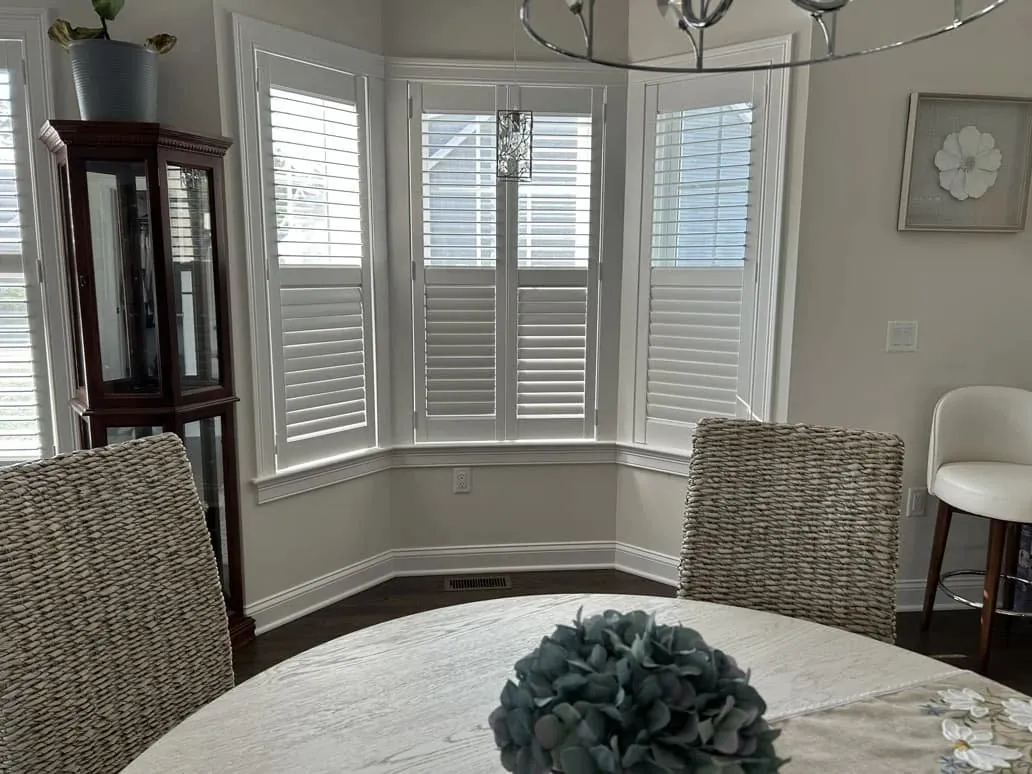
Frames that suit each house
The frame is the part that meets your wall, and it is chosen as carefully as the louvers.
In the antique houses, an inside frame tucked into the deep reveal is usually the best look, because it leaves the original casing completely visible. Where the reveal is shallow or crowded with hardware, a slim frame mounted on the face of the casing still keeps the trim on show around it.
In the newer colonials the trim is often simple and flat. A frame with a decorative edge adds a little profile around each window, so the shutter looks like part of the architecture rather than something added later. On the foyer glass, the frame is planned so its lines run straight across the tiers and around any arch at the top.
Color matters here too. White suits most trim and keeps a foyer bright. Off-whites sit better beside old painted woodwork that has softened in tone, and stains let the grain show where the trim is natural wood. Choosing plantation shutters in Medway, MA, with the right frame and finish is what makes them look as though they came with the house.
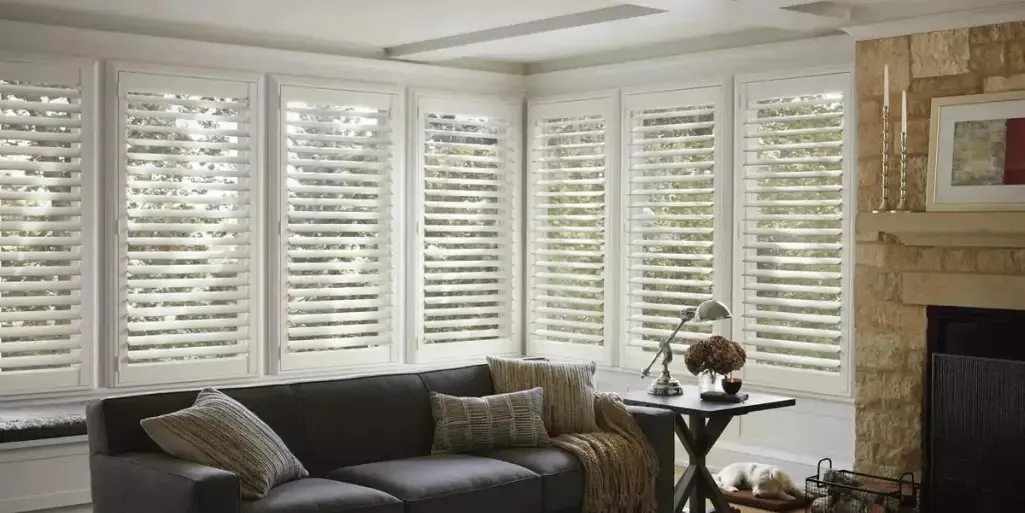
Kitchens and baths, old and new
The wet rooms are different in each kind of Medway house. In an antique colonial the bathroom was often carved out of a bedroom or a back hall long after the house was built, so its window may be a small original sash in a thick wall, now facing a shower. In a newer colonial there is usually a large primary bath with a big window over the tub, a hall bath for the bedrooms and a laundry room near the garage.
In both, Palm Beach is the material to choose. It does not mind steam or splashes, and it wipes clean. In the old houses, a Palm Beach shutter can sit inside the deep reveal just as a hardwood one would, with a slim louver to suit the small pane. In the new ones, a wide window over the tub can take a three-panel layout, or a cafe arrangement on the lower sash if you want daylight from the top.
The kitchen sink window is the other everyday splash zone. A cafe shutter on the lower half keeps the counter private from the yard or the street while the top of the window stays open to light.
A home visit, start to finish
Our vans carry shutter samples in all three collections, the louver sizes and the frame styles, so we can bring the showroom to you. The visit is unhurried and goes at your pace. We look at the windows that matter most to you first, talk about light, privacy and how the room is used, and let you hold samples against your own casings.
Measuring is the heart of the visit. For each window we:
- Measure the width at three heights and the height at three points across.
- Check both diagonals to see how far the opening is out of square.
- Measure the depth of the reveal and note any locks, lifts or stops in the way.
- Agree the collection, louver size, frame and tilt style with you.
You then receive a free estimate for the shutters you are considering, and the decision is yours to make in your own time. To read more before we come, see what happens at an in-home consultation. If you would also like help with color and the rest of the room, ask about our interior design consultations.

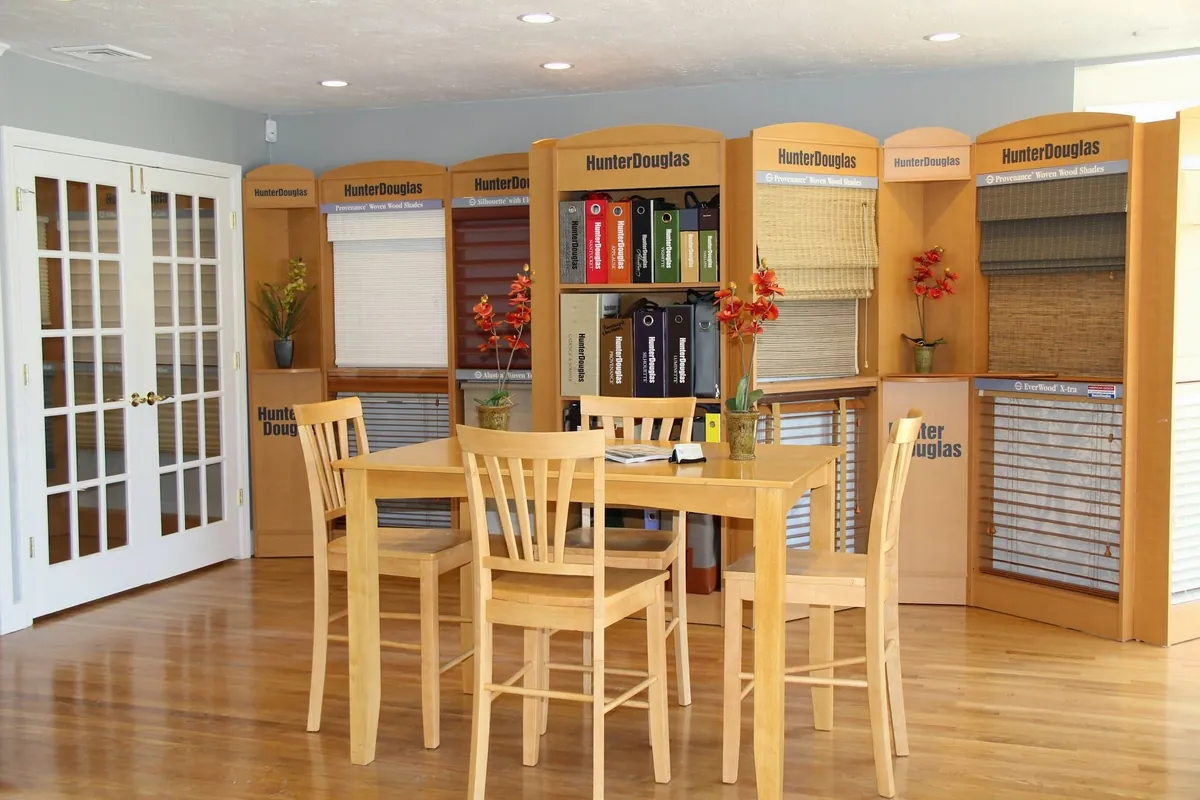
A Gallery dealer with certified installers
Blinds & Designs is a Hunter Douglas Gallery dealer, the brand’s own title for dealers who meet its standards. For shutters that means every collection, louver size, frame and finish is available from one consultation.
Our installers are certified by Hunter Douglas. On the day, they check each frame against its window, set it square even where the wall is not, hang the panels, adjust the hinges and make sure every louver closes flush. If anything in the house ever needs attention later, we also handle repairs on blinds and shades.
Shutters are one of several things we carry. For other rooms, see our roller shades in Medway or motorized blinds in Medway, or everything we offer on our Medway page.
Questions from Medway
My antique windows are very small and deep. Will shutters work?
They are often the best fit. A deep reveal suits an inside frame, and a slim louver keeps the shutter in proportion to a small pane. The smallest openings can take a single panel, so nothing cuts across the glass.
How do you shutter a two-story foyer window?
We divide it into stacked panels. The bottom row works from the floor, the upper rows can be hinged or fixed, and an arch at the top gets a shaped panel. Divider rails keep tall panels in proportion.
Can the top of the foyer window be motorized?
A shutter is worked by hand, but a PowerView shade can cover the upper glass and open or close from your phone or on a schedule, while shutters cover the lower part.
What if my old windows are out of square?
That is common in the oldest houses. We check the diagonals at every window, and the frame is made to take up the difference, so the panels still close evenly.
Do you charge to quote?
No. The estimate is free once we have measured, and there is no obligation.
When you are ready to see samples
Request a consultation and we will bring the shutter samples to your house, measure every window and give you a free estimate. If you would rather talk first, the call button reaches us, and the Franklin showroom is the nearest one to Medway.