
Wide lots, open views and old sash
Along New Bedford Road and around Snipatuit Pond, a house can sit on so much land that the nearest neighbor is a roofline across a field. Some properties front the cranberry bogs, with open ground running right up to the yard. That changes the usual conversation about window treatments in Rochester, MA. With nobody next door to screen out, the questions are about light, warmth, glare across open land and how the house feels at night.
The houses themselves split into two camps. The antique colonials and farmhouses have small, deep-set sash in thick walls, with old trim that most owners want to keep on show. The newer builds have modern glass: larger openings, sliders, sometimes a wall of windows facing the pond or the bog. One street can hold both, and the right answer for one is often wrong for the other.
So we start every Rochester job by walking the house, looking at which way each room faces and what it looks out on, and only then talking about products.
Window treatments in Rochester, MA: what we offer in town
Every service here has a separate Rochester page with more detail. Read up on the one you need, or plan the whole house in a single consultation.
Wood and faux wood blinds
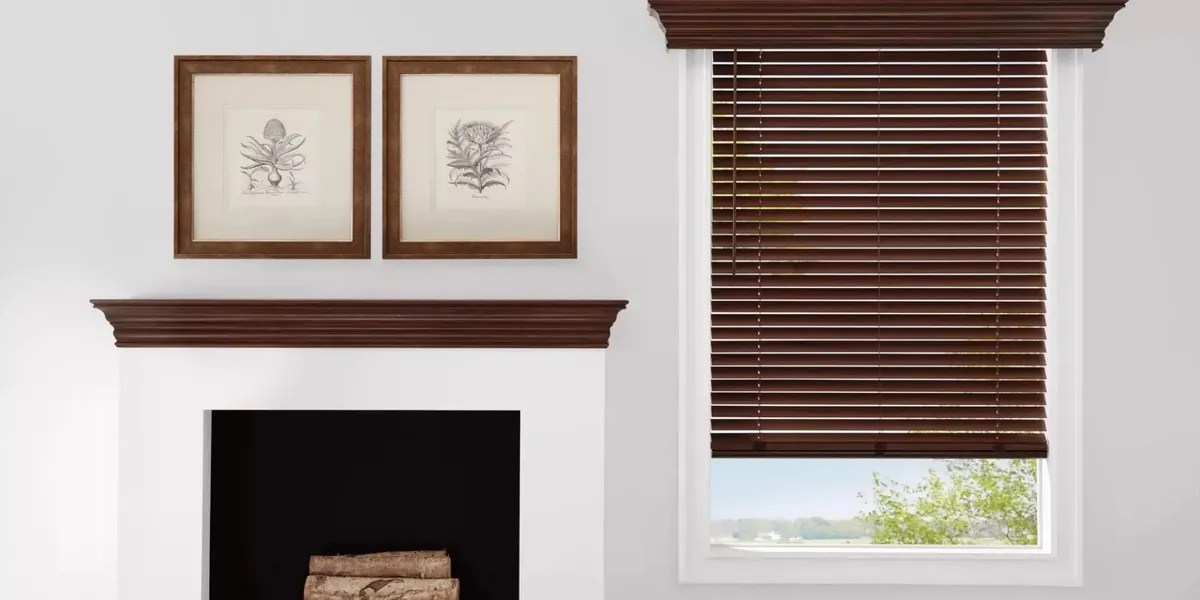
Real wood slats suit an antique colonial’s front rooms; faux wood, metal and verticals handle kitchens, baths and sliders.
Cellular for cold sash
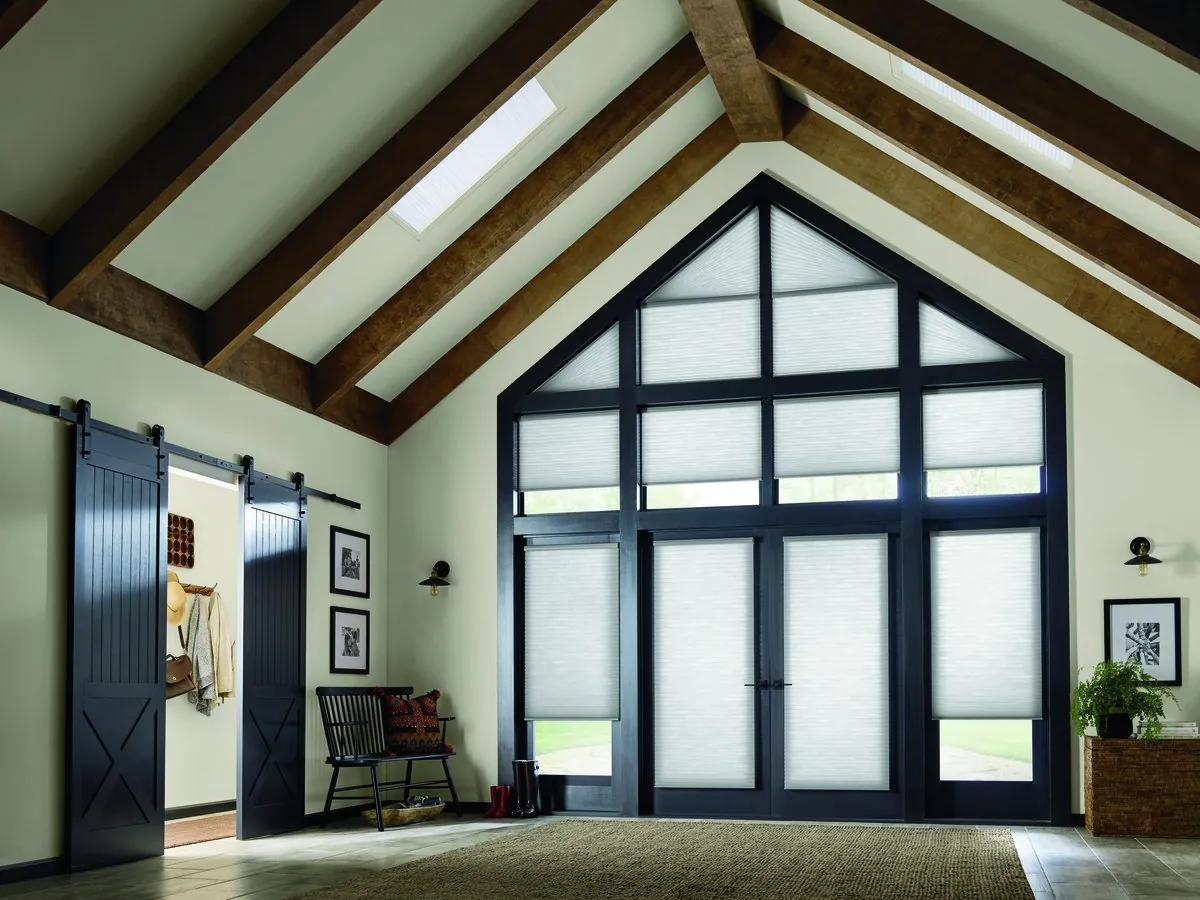
Duette and Applause honeycomb holds a layer of air at the glass, which an old single-pane farmhouse window badly needs in winter.
Rollers and solar screens
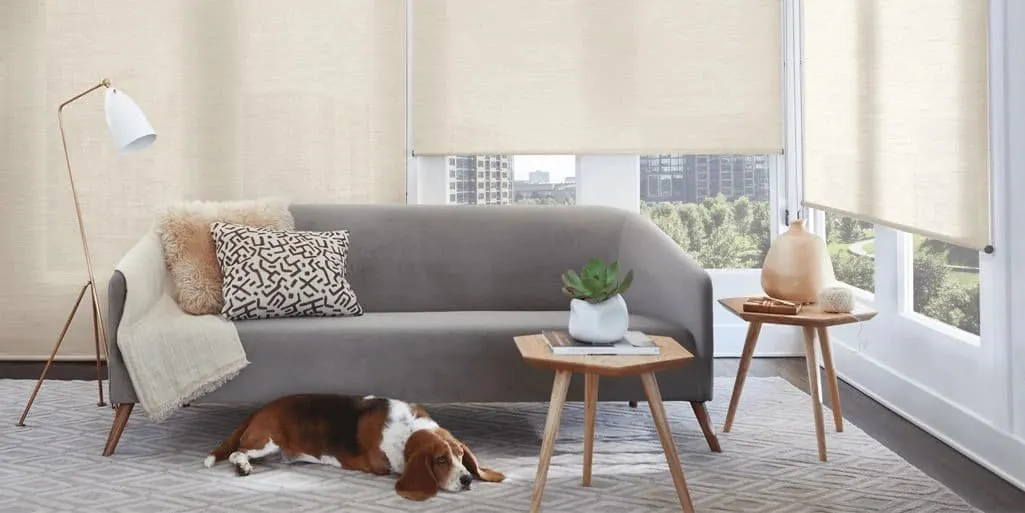
Designer and Alustra rollers. Screen fabrics cut the low sun across the bog while the open land stays in view.
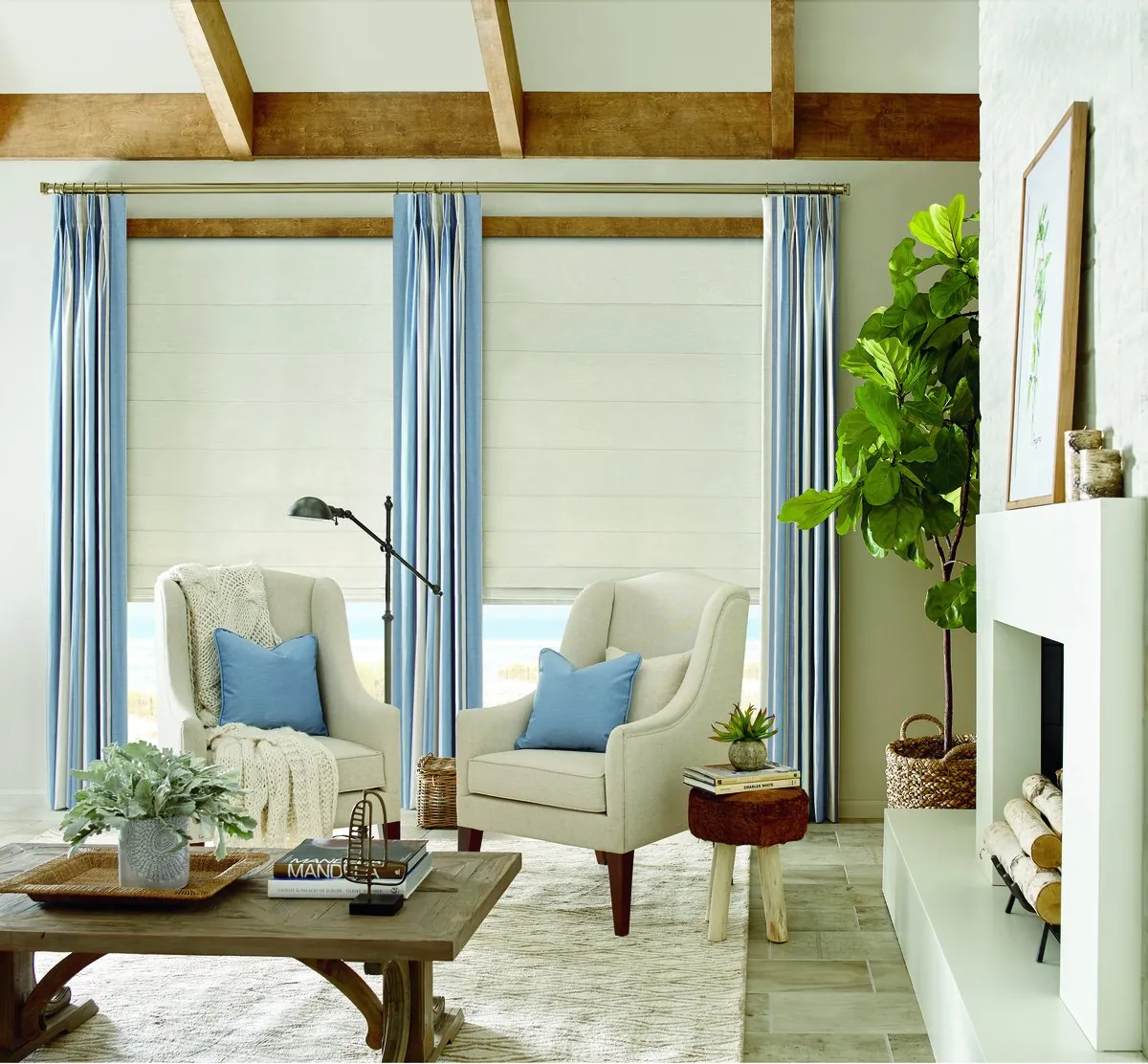
Roman shades
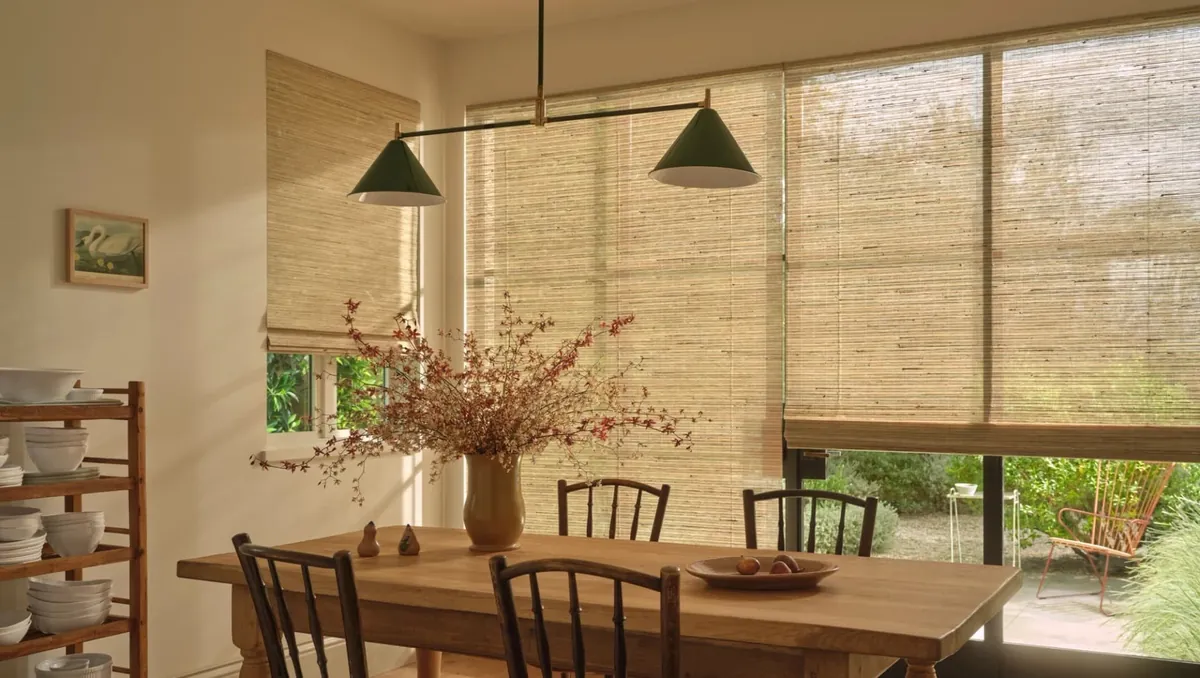
Vignette and Carole Fabrics, flat or folded. A soft fold looks at home under the beams of an old keeping room.
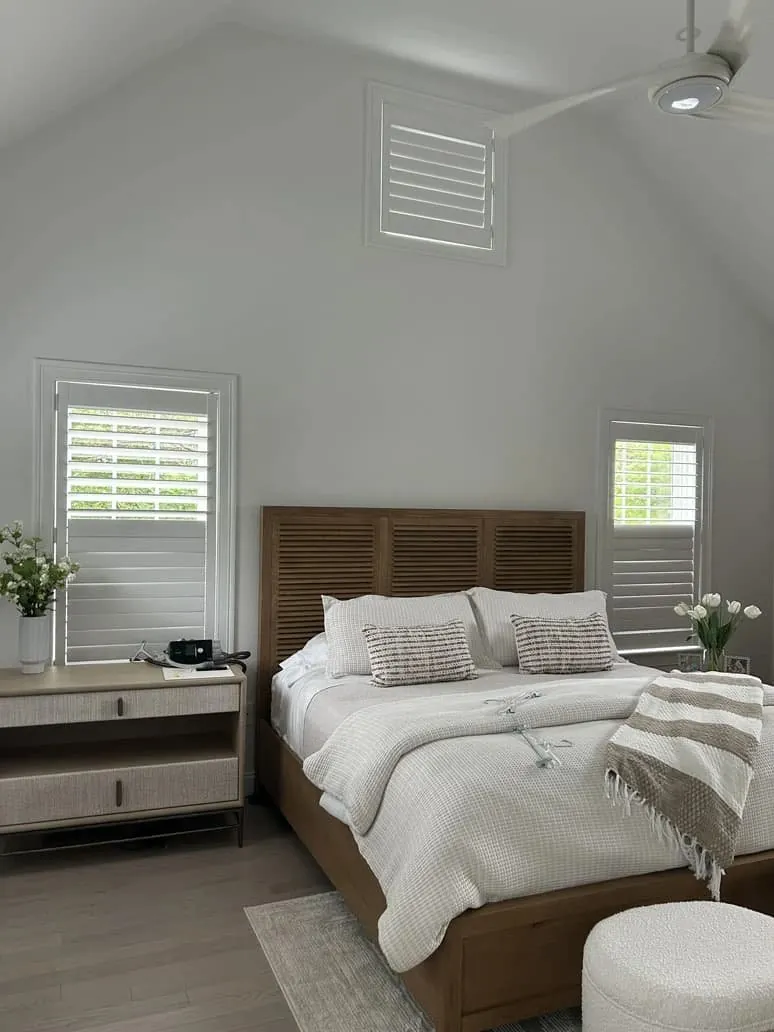
Shutters for antique rooms
Palm Beach, NewStyle and Heritance, with frames that can work inside a deep reveal or sit on the face of old trim.
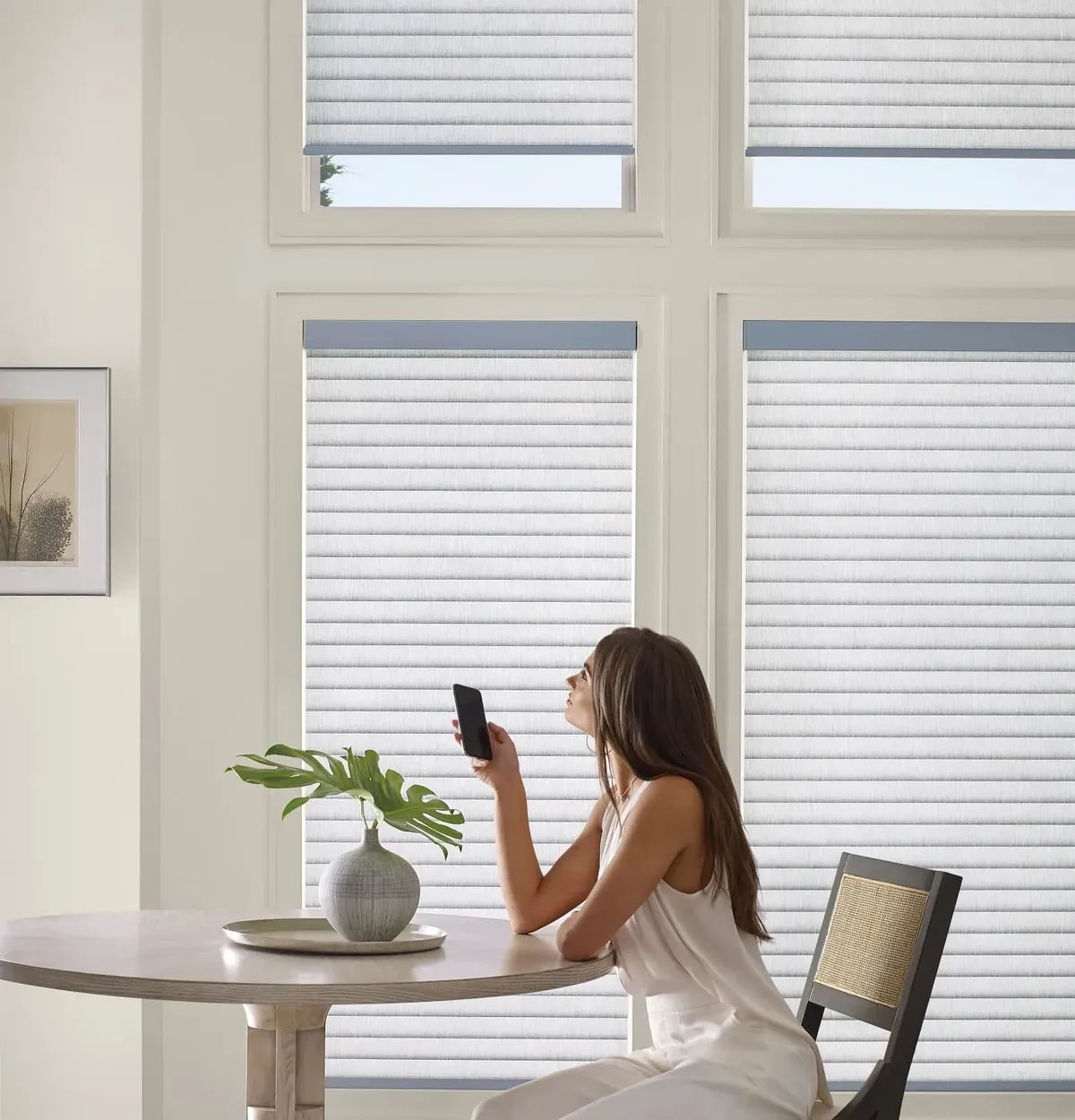
Motorized shades
PowerView, run from a remote, the app or a schedule. Useful on the tall glass of a newer build or a window over a deep sill.

Hunter Douglas Gallery dealer
The whole Hunter Douglas line from one Gallery dealer, with certified Hunter Douglas installers doing the fitting.
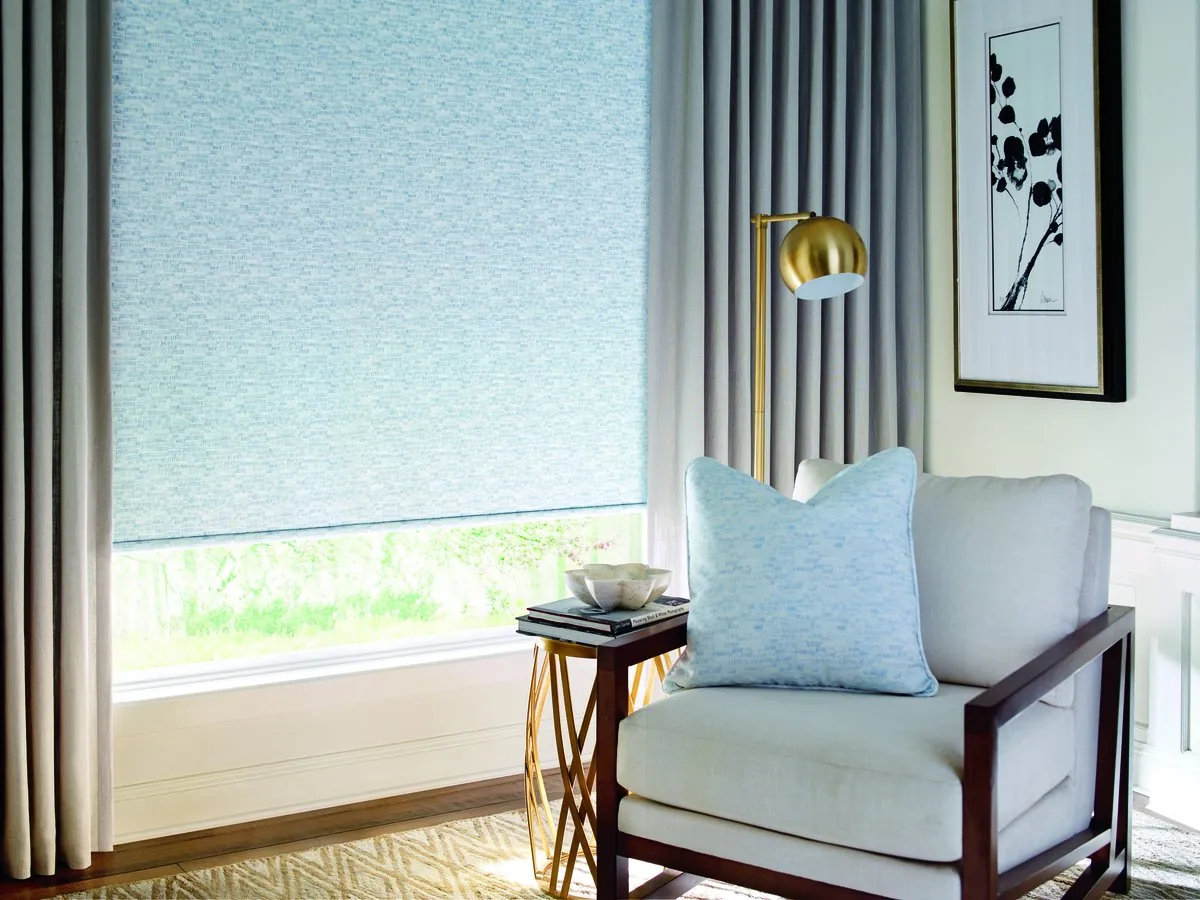
Drapery
Hunter Douglas drapery for a formal parlor or a big newer living room, layered over a shade for warmth.
When privacy is not the main question
In a village or a suburb, the first thing most window coverings do is keep the neighbors from seeing in. On a big Rochester lot with fields or bog beyond the yard, that job almost disappears in daytime. You can leave a kitchen window bare all day and see nobody.
That frees you to choose for other reasons. The main ones we hear are glare, because open land lets the sun reach the house low and unbroken; heat, because a south or west room with no trees in front of it warms fast in summer; cold, because old sash leaks warmth all winter; and the look of the room, because in an antique house the windows are part of the character.
It also means many rooms can do with a lighter treatment than you might expect. A roller or roman that stays raised most of the day, a cellular shade that only comes down at dusk, or a shutter left open with the louvers tilted can be all a room needs. The heavier, darker options go where they earn it: bedrooms, a media room, and the west glass on a summer afternoon.
Night is the exception. Out in the country, a lit room shows from far away across open ground, so even a house with no neighbors usually wants something it can close in the evening.
Deep-set sash in an antique colonial
The oldest houses in town have thick walls, and the windows sit well back from the room in a deep reveal. The sash are small, often with several panes each, and the trim around them is old wood that has been painted many times or stripped back to the grain.
A deep reveal is good news for an inside mount. There is usually room for a cellular shade, a roller or a shutter to sit right inside the opening, flush or close to it, so the trim stays fully on view. With the shade raised, the window looks almost untouched.
The catch is that an old reveal is rarely square or straight. Plaster returns bulge, the sill dips and the head can be lower at one side. We measure each opening at several points and use the tightest one, so the treatment clears the whole way down. Where a window is too far out to look right inside, an outside mount on the trim hides the irregularity instead.
Small sash also mean a small stack matters. Cellular and roller shades gather into a narrow band when raised. Shutters swing clear of the glass altogether. A roman, which stacks deeper, works best where it can be set to rise above the glass line.
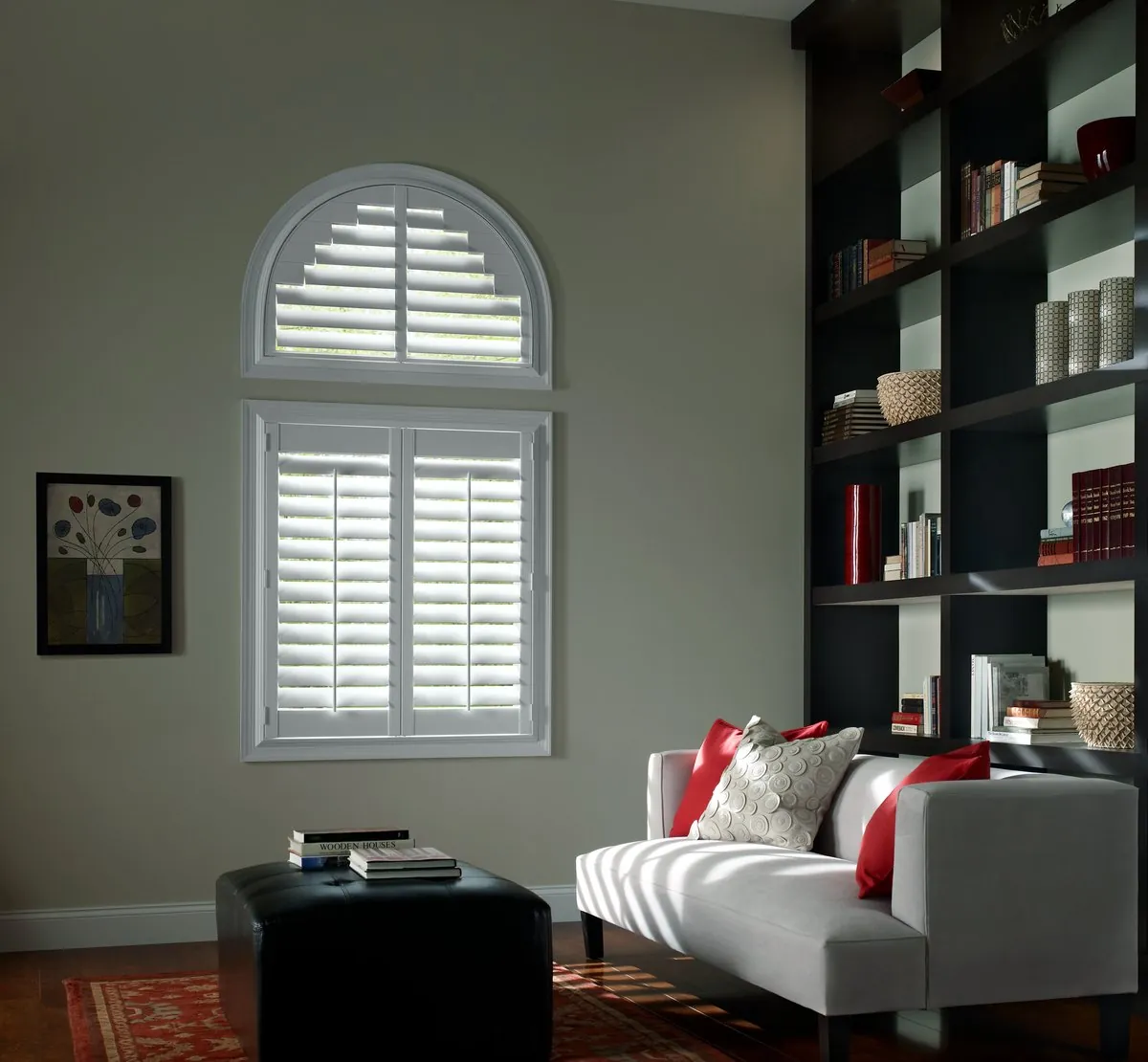
Farmhouse kitchens and keeping rooms
The working rooms of an old farmhouse were placed for light: a kitchen at the back catching the morning, a keeping room with a big hearth and windows on two sides. Today they are usually the rooms where everyone ends up, and the windows get more use than any others in the house.
Practical choices pay off here. Faux wood blinds and many roller fabrics wipe clean and do not mind steam from the stove. A cafe-style shutter on the lower sash over the sink covers the part of the window closest to you and leaves the upper glass open to the yard. A cordless lift keeps a shade easy to reach across a counter or a deep sill.
In a keeping room with beams overhead and wide boards underfoot, wood blinds in a warm stain or a roman shade in a plain linen-look fabric suit the room. Many keeping rooms also have a later addition beside them, often a family room with bigger glass, so we plan the two together and keep the colors related.
Looking across the bogs
Houses that front the cranberry bogs have a view few towns can offer, and it comes with a particular kind of light. The bogs are flat and open, so a low sun in the early morning or late afternoon crosses them with nothing to stop it and lands straight in the room. In harvest season the color outside is worth keeping in sight; on a bright summer evening the glare can make a west room hard to use.
Solar screen roller shades suit this well. They are woven to a set openness, so you keep the view through the fabric while the glare drops. A more open weave keeps more of the bog in sight and stops less glare; a tighter weave does the reverse. We hold several samples at the window so you can judge the balance yourself.
For rooms where the view matters only part of the day, a top-down, bottom-up cellular shade is a good companion: lower it from the top to block a low sun while the lower glass stays open. Blinds work too, with the slats tilted to send the light up toward the ceiling.
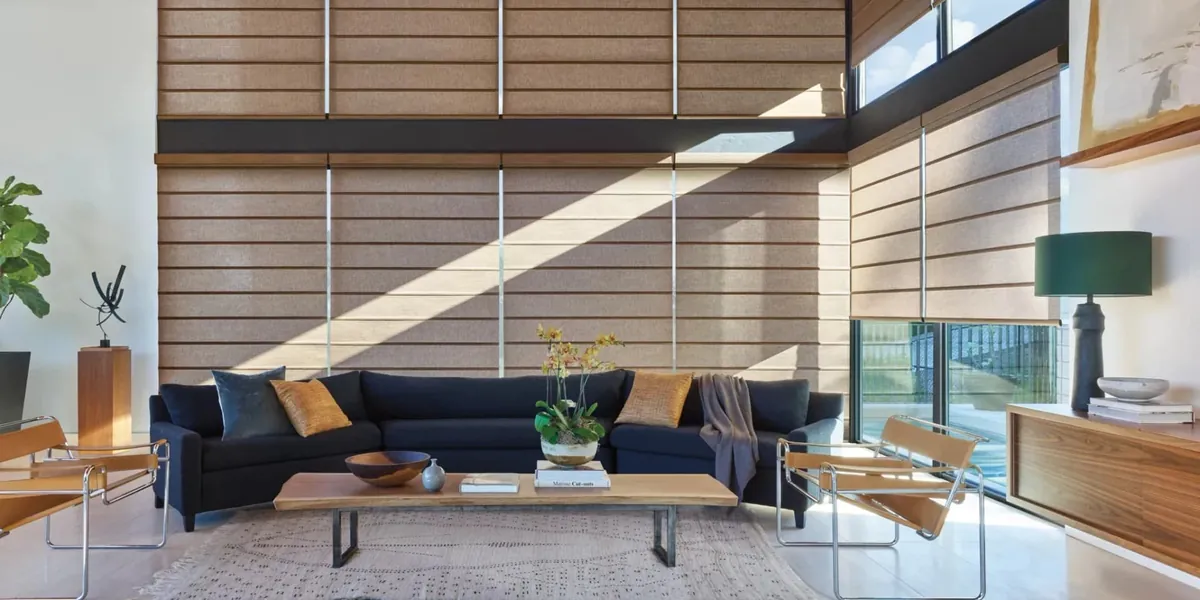
Rooms facing Snipatuit Pond
Around Snipatuit Pond the houses are built around the water, and the pond-side rooms usually hold the biggest windows on the property. As with the bogs, the water reflects the sun back into the house, so those rooms catch light from above and below.
The aim is to keep the pond in view as much of the day as possible. Treatments that raise fully out of the way, such as rollers, cellular shades and soft romans, leave the glass clear when you want it. Sheer shades with soft fabric vanes are another option: with the vanes open you see out through the sheer, and with them closed the room is private for the evening.
Pond-side rooms also often open onto a deck or a porch through a slider or French doors. For the slider, choose something that gathers at one jamb, such as sideways-travelling cellular fabric, gliding panels or verticals. On French doors, shutters fixed to each leaf swing with it.
Modern glass in the newer builds
The newer houses in Rochester are a different job from the antiques. Openings are larger and closer to square, ceilings are higher, and there is often a great room with windows on two levels, a wide kitchen window over the sink and a slider to the patio.
Tall windows are where PowerView makes the most sense. A motorized shade on a window above a door or a stair runs from a handheld remote, the app or a schedule, so nobody climbs anything to close it. In a two-story room, upper and lower shades can move together for an even line or separately as the sun moves round.
A large picture window is usually split into two or three shades on one headrail, so each can be raised on its own. For warmth, cellular shades are the strongest choice on big glass; for a clean modern look, a roller in a slim cassette suits the newer architecture. Drapery panels can frame a wide opening that would otherwise look bare.
Newer builds also tend to have more bathrooms and bedrooms with standard windows, which suit cordless cellular shades, faux wood blinds or shutters, chosen room by room.
Heat on the open side of the house
Without trees between the house and the sun, a south or west room can heat up quickly in July. Old farmhouses had shade trees and deep porches for this; many newer builds on cleared land have neither.
The most effective answer is to stop the sun before it fills the room. A solar screen lowered on a hot afternoon cuts a good share of the heat at the glass while keeping the view. A light-filtering cellular shade holds back heat as well as cold. Shutters closed with the louvers angled down keep direct sun off the floor.
Motorization helps if nobody is home in the afternoon. A PowerView schedule can lower the west shades before the hottest part of the day and raise them again in the evening, so the room is cooler when you get home. Our guide to the best shades for sun and glare compares the options.
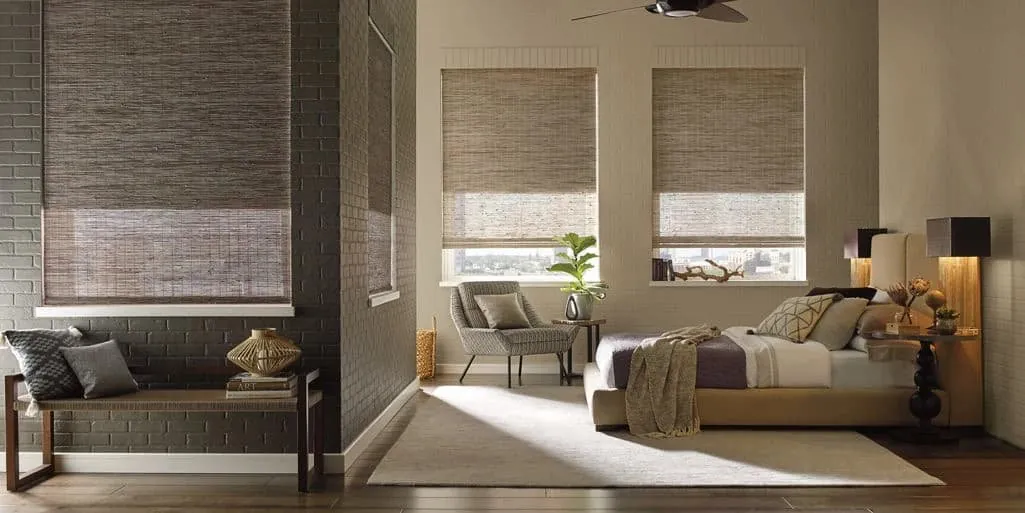
Bedrooms and the summer dawn
Country nights are dark, but summer mornings arrive early, and on an open lot the first light reaches an east bedroom with nothing to soften it. For anyone who wants to sleep past sunrise, the bedroom is where we recommend the most blocking.
Room-darkening cellular shades and blackout rollers both do the job, and the fit is what makes the difference. In a deep antique reveal, an inside mount can hug the frame closely; in a newer room, channels down each side, or a shade wide enough to overlap the casing, stop the bright edges. Panels drawn over the top deal with whatever still leaks round.
If you prefer to wake with the light, a light-filtering fabric spreads the morning evenly rather than letting it land in a hard patch. A motorized shade can also be set to open gently at the time you choose.
Your consultation, step by step
A house with deep old reveals on one side and modern glass on the other is hard to plan from a catalog. That is why our consultants come to you with the samples on board.
- Request a consultation online or reach us through the call button.
- Your consultant arrives with fabrics, slats, louvers and drapery swatches in the van.
- Together you walk the house, from the antique front rooms to the newest addition, and note what each room needs.
- Samples are tried at the windows themselves, in the light each room really gets.
- The consultant measures every opening, including the depth of each reveal.
- You receive a free estimate and make your decision in your own time.
The appointment is described in full under what happens at an in-home consultation. When choosing colors for a farmhouse and its wing feels like too much, book one of our interior design consultations.
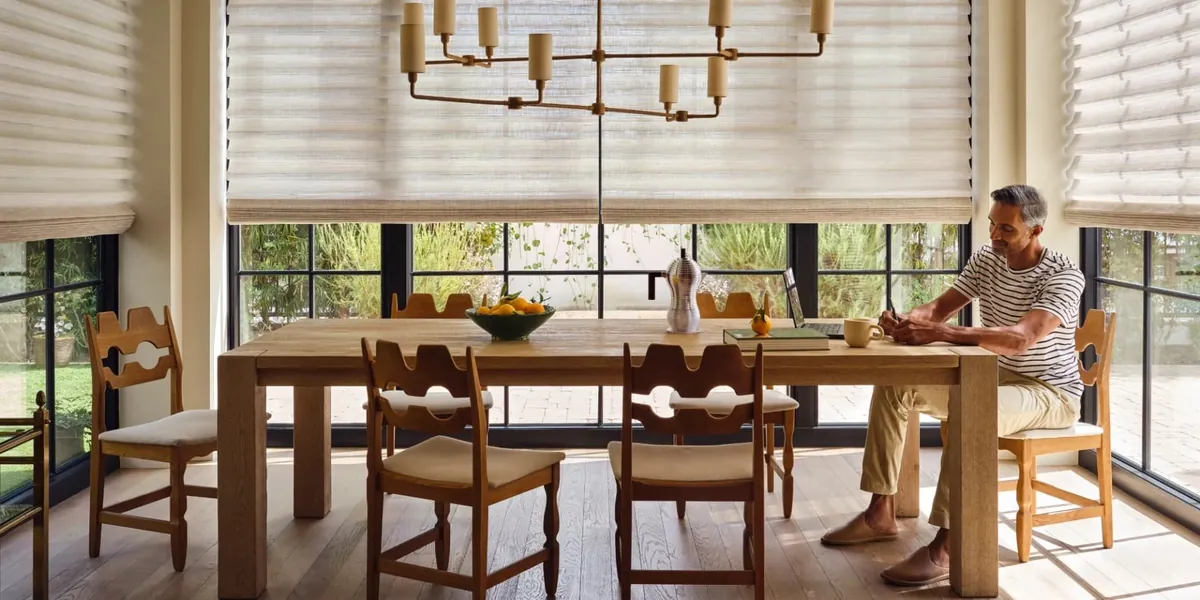
Finishes that respect an old house
In an antique colonial the treatment should look as though it belongs. That usually means letting the trim and the old glass lead, and choosing finishes that sit quietly beside them.
Painted white shutters suit a house with painted trim. Stained wood blinds or shutters suit one where the woodwork has been stripped to the grain. For shades, a white or warm neutral facing the glass looks right from the road, while the room side can pick up the color of the walls. Woven wood shades bring a natural texture that suits wide boards and beams.
When an old house has a modern addition, we often keep the same glass-side color across both parts and change only the product, so window treatments for a Rochester farmhouse and its newer wing still look like one property from New Bedford Road. Window treatments in Rochester, MA, rarely need to match room for room; they need to agree from outside. For more on the range, see our window treatments page.

What a Gallery dealer means for an old house
Hunter Douglas gives Gallery status to dealers who carry its full range, and Blinds & Designs is one. For a Rochester property that might need a shutter in an antique reveal, a screen shade on bog-facing glass and motorized shades on a two-story window, that means one consultation and one source.
Certified Hunter Douglas installers fit each piece, which matters in a crooked old opening. Design consultations help with color, and a tired cord on an older shade is a repair we welcome. The Hunter Douglas page tells the brand’s side.
The showroom nearest Rochester
Head south toward the coast and North Dartmouth has the showroom nearest to Rochester. Most farmhouse and pond projects get decided at the kitchen table with swatches against the actual sash, though a visit first is always welcome.
Start where you like: one crew takes it from the tape measure to the last bracket, and you pay nothing for the estimate.
Rochester questions
Will a shade fit inside the deep reveal of my antique window?
Usually, yes. A deep reveal leaves room for cellular shades, rollers and shutters to sit inside the opening. Old reveals are rarely square, so we measure at several points and suggest an outside mount if one fits better.
Our house faces the bog. How do we cut the evening glare and keep the view?
A solar screen roller is the usual choice, in an openness that keeps the view you want. A top-down, bottom-up cellular shade or tilted blinds also block a low sun. We bring samples to compare at the window.
With no neighbors, do we need window treatments at all?
In the daytime, many rooms can stay open. Most houses still want something to close at night, plus glare and heat control in sunny rooms and warmth on old glass in winter.
Is motorization worth it on a newer build?
Mostly on the glass you cannot reach. A PowerView shade over a stair or high in a great room saves a ladder every evening, and a timed scene can drop the west shades before a hot afternoon.
Can one plan cover an antique house and its new addition?
Yes. We plan both parts together, usually with the same color facing the glass, and choose the product that suits each room.
Start with one visit
Old reveal or new slider, the decision comes easier with swatches held to the glass at the hour it matters. Ask for a consultation, and we will measure each opening, talk through the bog light and the cold sash, and write a free estimate for window treatments in Rochester, MA. For a quick question first, use the call button.