
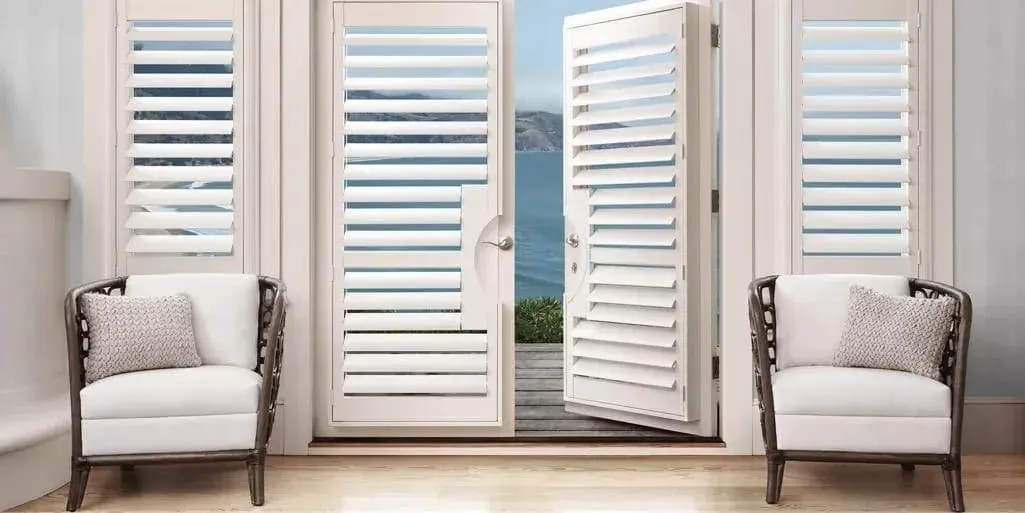
Built around the harbor, open to the weather
Scituate’s shoreline is one of the most exposed on the South Shore. The shingled houses along the harbor and out toward Minot and Peggotty Beach face straight into it, taking storms straight off the open Atlantic and a fine salt haze for much of the year. Many of their best rooms were built around the view: a living room that looks across the moorings, a bedroom with the beach in its window, a kitchen that catches the morning light off the water.
Inland, the picture is calmer. Newer colonials sit back from the coast on quieter roads, with regular modern windows, larger rooms and the usual two floors.
Choosing a Hunter Douglas dealer in Scituate, MA comes down to understanding both. A harbor room needs something that keeps the view and handles the glare and the weather. A colonial bedroom needs darkness and warmth. Blinds & Designs carries Gallery status with Hunter Douglas, which puts the complete catalog at your disposal, and Hunter Douglas has certified our installers.
The Hunter Douglas families for harbor and inland houses
From the shingled houses on the water to the colonials further back, a Hunter Douglas dealer in Scituate has to cover a lot of ground. Six families carry most of the load; tap any card for our Scituate page on it.
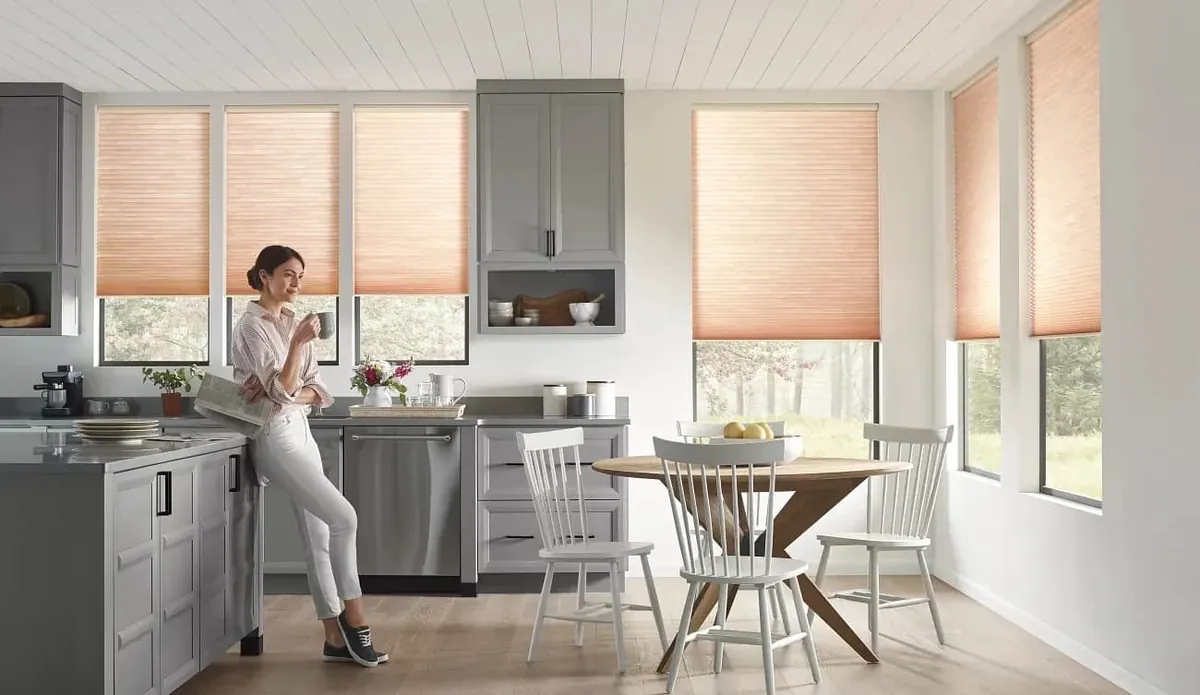
Honeycomb shades
Duette and Applause pleats trap pockets of air, taking the edge off a room that faces the gales.
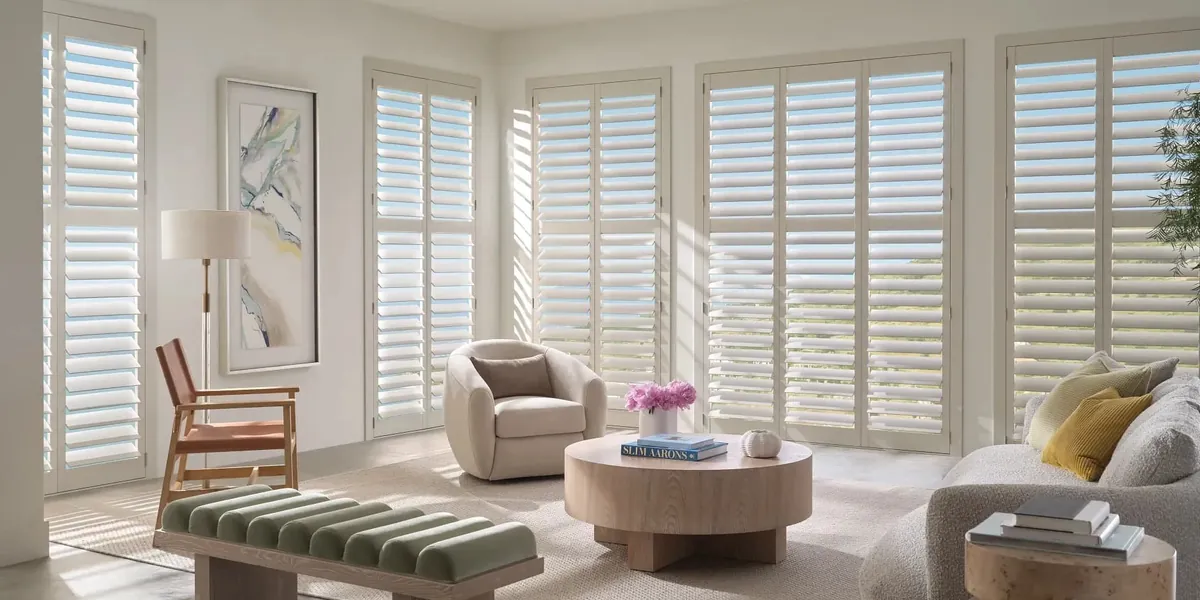
Shutters
Palm Beach polysatin stays straight in salt air; Heritance and NewStyle suit the drier rooms of an inland house.
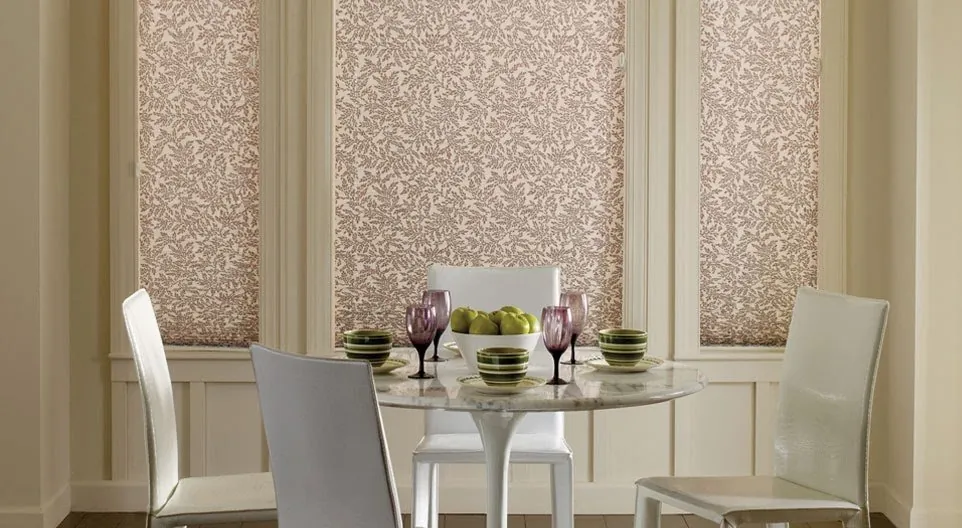
Patterned and plain rollers
Designer rollers and screens, and Alustra, from plain glare control to a patterned fabric that becomes part of the room.

Sheers for a view
Silhouette and Pirouette horizontally, Luminette on a door: the glare softens and the moorings stay visible.
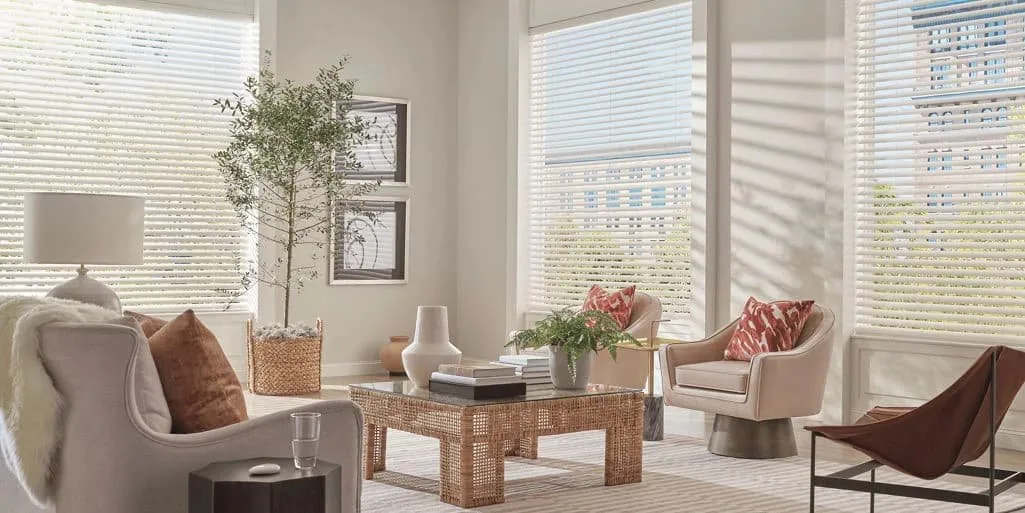
Blinds
Faux wood slats from EverWood near the water; Parkland hardwood or slim metal back from it.
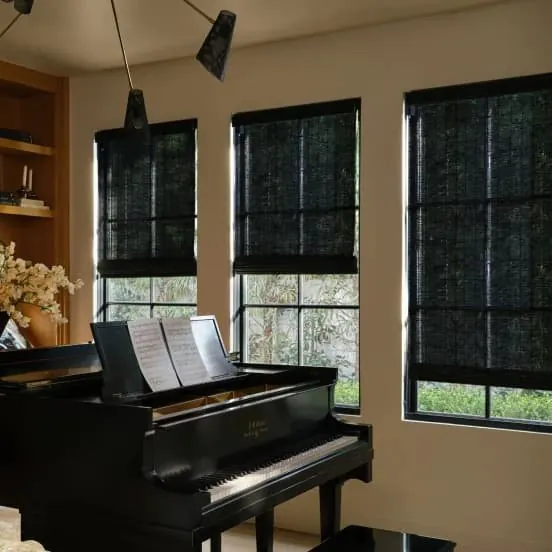
Folds and weaves
Vignette, Carole Roman and natural woven shades for texture in a den, a dining room or a quiet study.
Harbor rooms: the view decides
On the harbor, the window is the reason the room exists. Owners have usually spent a lot on the glass, and they want to see out of it. So the first rule for a harbor-facing room is that whatever goes on the window should disappear, or nearly so, when you want the view.
Several Hunter Douglas lines can do that. A roller or screen shade winds away into a slim cassette and all but vanishes when it is up. A honeycomb shade stacks into a narrow band. Shutters swing fully open, so the glass is completely clear. Sheer shades with fabric vanes can be raised out of sight, or left down with the vanes open so the harbor shows through a soft veil.
The second rule is that the room still has to be comfortable at the worst hour. On the harbor that is often late morning or afternoon, when the sun reflects off the water and comes in from below as well as above. Screen fabrics and sheer shades are the best tools for that, because they tame the glare without closing the view. We bring a range of screen openness levels, from fairly open to tight, so you can see how much harbor each one keeps.
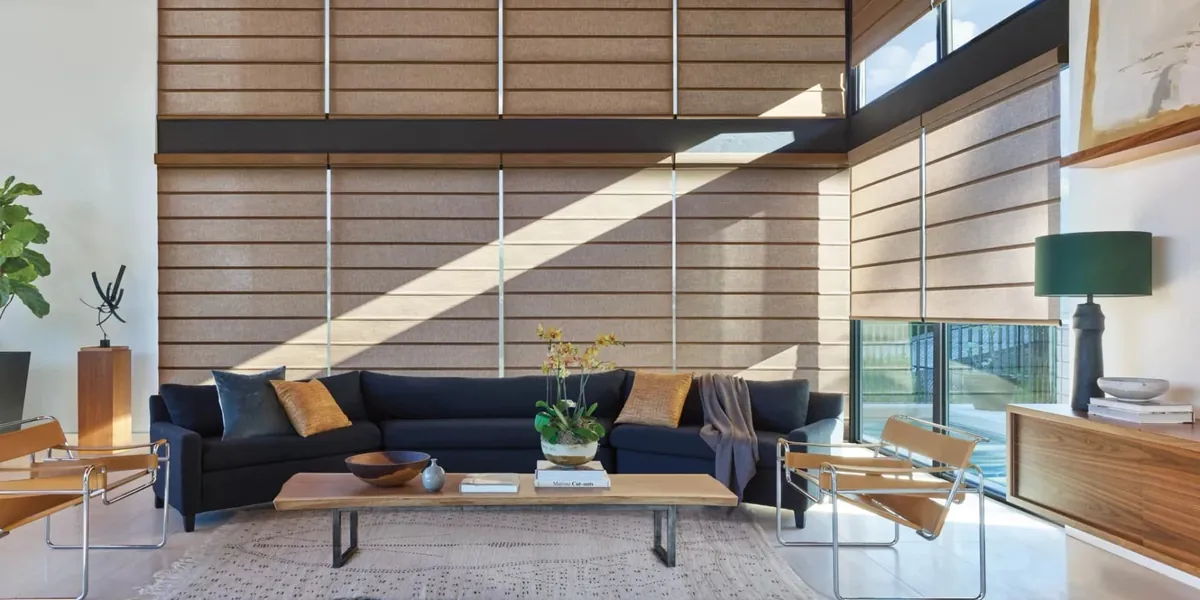
Out toward Minot
The shingled houses toward Minot sit right on one of the most exposed parts of the coast. Wind, spray and storms are part of life, and the houses show it: weathered shingles, sturdy trim, windows that take a battering every winter. Inside, the sea is close and loud, and the light is big and bright when the weather is clear.
That exposure shapes our suggestions. We lean toward shades whose workings are sealed away up top, which leaves almost nothing metal for the spray to find. For a hard surface, polysatin shutters and faux wood slats ignore the damp and need only a damp cloth after a blow. Lifting by the bottom rail, with no cord at all, removes another part that salt would otherwise attack. And because sunlight bouncing off open sea is fierce, pale fabrics are the ones that look fresh longest on those elevations.
We also pay attention to how things are fixed. A window on an exposed elevation may be opened in a summer breeze and rattled by a winter gale, so every bracket is driven into the structure behind the trim and each shade is checked for any play.
Peggotty Beach and the rooms by the sand
Houses near Peggotty Beach have their own feel. They sit close to the sand, often close to each other, with beach-facing rooms that are bright all day and side windows that face a neighbor across a narrow gap. Privacy and light have to be balanced in nearly every room.
Light-filtering fabrics do a lot of the work, because they let the daylight in while blurring the view from outside. A honeycomb that drops from the top screens the bottom half, where walkers glance in, and keeps sea and sky in the top half. Louvers tipped skyward do the same trick on a shutter, bouncing daylight off the ceiling while the path sees nothing. After dark, with the lights on inside, a denser fabric earns its keep.
Sand gets everywhere near the beach, so easy-clean surfaces matter. Faux wood and polysatin wipe down quickly, and roller fabrics can be brushed off without fuss.
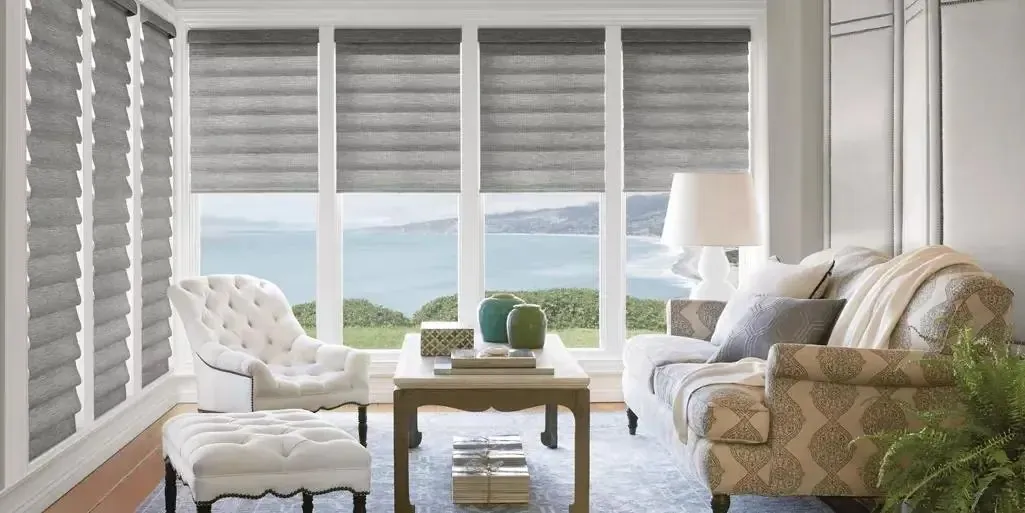
Shingled houses and older frames
Some of the shingled houses near the harbor are old, and their windows have the quirks of age: frames that have moved, sash that sits slightly out of square, trim that has been painted many times. Others were rebuilt or expanded with modern windows behind the traditional shingle. Often the same house has both.
On older frames we measure carefully, at the top, middle and bottom of each window, and check the depth in several places before we recommend an inside mount. Where the depth is there, an inside mount keeps the trim visible and looks built in. Where it is not, a neat outside mount on the casing is the right answer. On the newer windows, nearly any product mounts inside cleanly. Keeping the two looking related is a matter of color and style: one shutter finish throughout, or one honeycomb color with different opacities, ties old and new together.
Keeping warm on the most exposed coast
A house on an exposed stretch of shore loses heat at the glass, and a winter storm off the water makes it plain. The rooms facing the sea, with the largest windows, are often the coldest on a January night.
Of everything Hunter Douglas makes, honeycomb does the most for that problem. The pleated cells hold a layer of air that barely moves, and that layer is what stands between a storm-chilled pane and your armchair. A two-cell fabric adds a second layer. Pull the shades down as the light goes and a draughty sea wall becomes somewhere you can sit. The winter heat guide explains the cells in more detail.
Drapery adds another layer for the coldest rooms. Panels drawn across a honeycomb shade in the evening give the room a softer look and one more barrier to the cold.
The colonials inland
Back from the water, the newer colonials pose gentler questions. Their frames are regular, true and roomy, so every line in the range can sit within the opening. Out front you usually find an even march of double-hung units; out back, a family room opening onto the yard through glass doors; upstairs, the bedrooms.
Here the plan tends to start with consistency. Matching every street-side window in line and color keeps the facade orderly. Behind that, each room gets the fabric it needs: room-darkening in the bedrooms, light-filtering in the living spaces, something moisture-tolerant in the kitchen and baths. The family room slider gets a vertical shade, Luminette sheers or vertical blinds that stack clear of the door. A tall foyer window gets PowerView.
Real wood is happiest in these inland rooms, where the air holds less salt and damp. A Hunter Douglas dealer in Scituate will often steer the shore house toward polysatin and keep hardwood for the colonial. Heritance shutters and Parkland wood blinds bring warmth to a den or dining room.
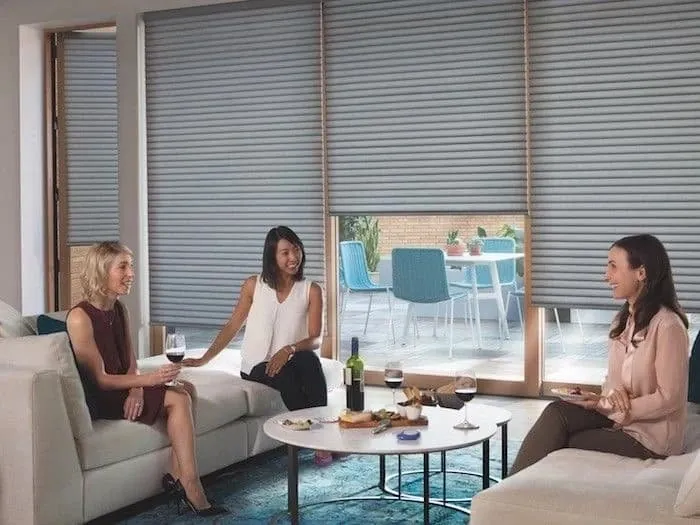
A visit, step by step
Light on the harbor and light a mile inland behave like two different things, so we choose at your glass, not from a brochure. The vans are stocked with samples: the showroom comes to your door.
- Book through the Request a Consultation form, or tap to call.
- First stop is whichever room has the view, and we talk through what it has to cope with.
- Screen weaves, honeycomb opacities, shutter paints and roller fabrics are held up one after another so you can compare them in place.
- Each opening is measured, older ones at several points, with depth checked for the mount.
- You receive a free estimate and answer when you are ready.
Design help for a whole room, color and fabric included, is available through our interior design consultations, and the in-home consultation guide walks through the visit.
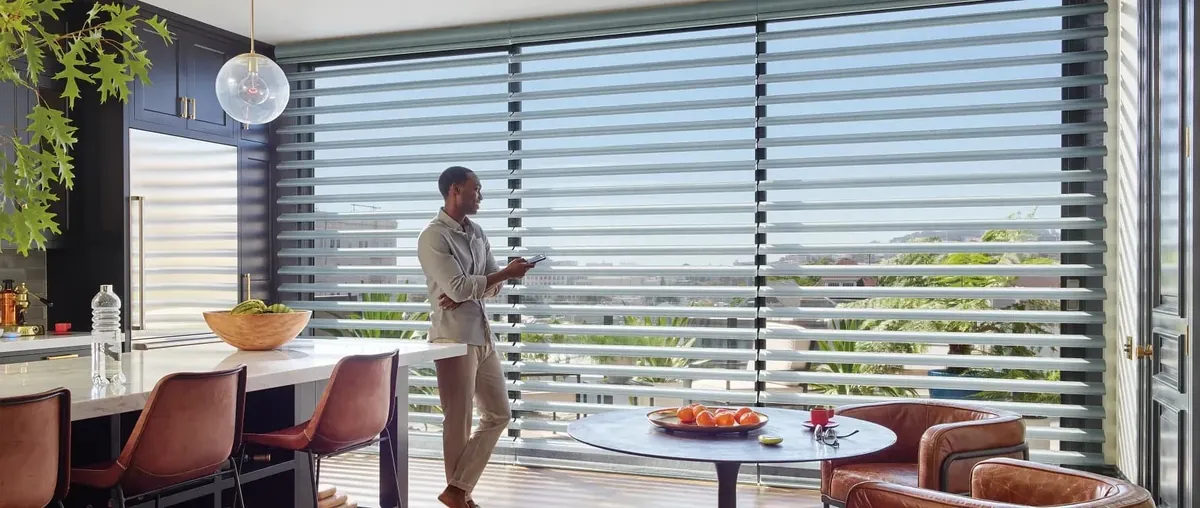
PowerView on a wall of harbor glass
Big harbor windows and a sun that moves across the water make a strong case for motorization. With PowerView, a wall of shades can drop when the glare peaks and rise again when the light softens, on a schedule or at a tap on your phone. You keep the view for most of the day without getting up every hour to adjust it.
It also helps with windows that are hard to reach: a high transom above harbor glass, a stair window, a shade behind a sofa. Link the shades on the view wall and they travel together; split them and each room runs on its own. Honeycomb, rollers, screens and sheers can all be fitted with motors.
Motor choice, switch positions and power for each shade are agreed during the visit. Motorized blinds in Scituate has the detail.
Porches and sunrooms that face the sea
Plenty of harbor and beach houses have a glassed porch or a sunroom on the water side, and in summer it is where the household lives. Glass on three sides means sun from morning to evening, and the evening sun, low over the water, is the hardest to sit in. A solar screen fabric lowered around the room cuts that light and some of its heat while the horizon stays in view. Where the room is used through the shoulder seasons as well, light-filtering honeycomb is the better match, because it also slows the chill off the glass on a cool September night.
These rooms often have many narrow windows side by side. We set every shade so its bottom rail stops at the same height, which keeps a long run of glass looking calm rather than ragged. If the porch roof slopes and the upper panes are out of reach, motorizing that row is often worth it, so the whole room can be shaded with one press as the sun drops toward the water.
Kitchens, baths and the outdoor shower
Kitchens near the shore deal with cooking steam on top of damp sea air, so the window over the sink is a job for faux wood slats or polysatin shutters, both of which wipe clean. A Roman fold or a woven shade can dress the other kitchen windows, away from the splash zone.
Bathrooms are similar. A cafe shutter across the lower sash gives privacy and lets the top pane bring in the morning, and polysatin does not mind a fogged room. Small windows beside an outdoor shower or along a side path are worth covering with a light-filtering fabric, so they stay bright but private.
Bedrooms by the water and inland
A bedroom on the harbor often faces east or south over the water, and the light arrives early and bright. A room-darkening honeycomb shade blocks the glow and still holds air against the glass on a cold night. A room-darkening roller shade behind a sheer gives a soft look by day and a dark room at night, and a top-down shade can leave a strip of sky open if you like to wake with the light. In the inland colonials, bedrooms are more standard, and room-darkening fabrics in the same color as the rest of the house keep the front elevation even.
Fitting on the coast and inland
Hunter Douglas has certified the crew who fit your order. By the water, the job is about holding fast: fixings into the frame of a weather-beaten wall, rails trued on openings that have shifted, shades that stay put on windows flung open all summer. Inland, the job is about straight lines: rails level from one end of the facade to the other, door shades parked clear of the handle, motors paired and their schedules loaded.
Nothing is left until it has been run and you have had a short demonstration. Later on, if something wears, our blind and shade repair service looks after coverings you already own, whoever supplied them.

A Gallery dealer for an exposed coast
Gallery is a title Hunter Douglas keeps for a select set of its dealers. What it gives a Scituate house is freedom: a house at Minot and a colonial a few roads back want very different things, and with the whole catalog open, each room gets what suits it rather than what happens to be in stock.
As a Hunter Douglas dealer in Scituate we also offer estimates at no charge, design consultations and Carole drapery, covered on custom drapery in Scituate. The brand is set out on our Hunter Douglas page, and our other work in town on the Scituate page. Sagamore is the showroom closest to you.
Questions from Scituate
How do I keep my harbor view and still cut the glare?
Screen shades and sheer shades. Screen fabrics come in different openness levels, and sheer shades let the view show through tilted vanes. Because reflected light rises from the harbor, we test several weaves in the room itself.
Which products cope with salt spray?
Anything with its workings sealed in the headrail, plus polysatin shutters and faux wood slats, which shrug off damp. A cordless lift leaves out the one part salt likes most.
Will a shade disappear when I want the view?
Rollers roll into a slim cassette, honeycomb stacks into a narrow band and shutters swing fully open. Each leaves the glass almost entirely clear.
Will shutters or shades suit the old frames in a shingled harbor house?
Yes. We measure each window at several points and check its depth. Where an inside mount fits we use one; where it does not, a neat outside mount on the casing is the better choice.
Is the estimate free?
It is. The figure comes after we measure, costs nothing and does not commit you.
See the samples against your view
Book a visit through Request a Consultation and the samples travel to you, whether the house looks over the harbor, sits by the sand or stands inland. Every opening gets measured and a free estimate follows. Questions before then? The call button reaches Sagamore. Keeping the view while taming the weather is exactly what a Hunter Douglas dealer in Scituate, MA is for.