
Rooms built around the pond
Drive the roads that wind between Pembroke’s ponds and you pass one post-war ranch or cape after another, many of them turned to face the water. The living room, the kitchen or a back porch that was closed in years ago is often arranged around a single view, with the biggest windows in the house pointed straight at the pond. Newer colonials off Route 14 and Center Street follow a different plan, two full stories with bedrooms upstairs and an open kitchen and family room below. Most of these houses share one practical advantage: their windows are standard modern sizes. That makes roller shades in Pembroke, MA, a straightforward fit, and it lets the conversation move quickly to what really matters, which is the light.
A pond is a mirror. On a clear afternoon it throws sunlight back up into the house, so a room facing the water can be brighter at four o’clock than at noon. The job of a shade on those windows is to tame that glare while keeping the pond in view, which is exactly what a solar screen does.
On the other side of the same house, bedrooms want the opposite: a fabric that shuts the light out completely. A good plan treats each room on its own terms.
Three roller families for Pembroke houses
Each of these is a Hunter Douglas shade, and we bring samples of all three to your door.
Solar screen
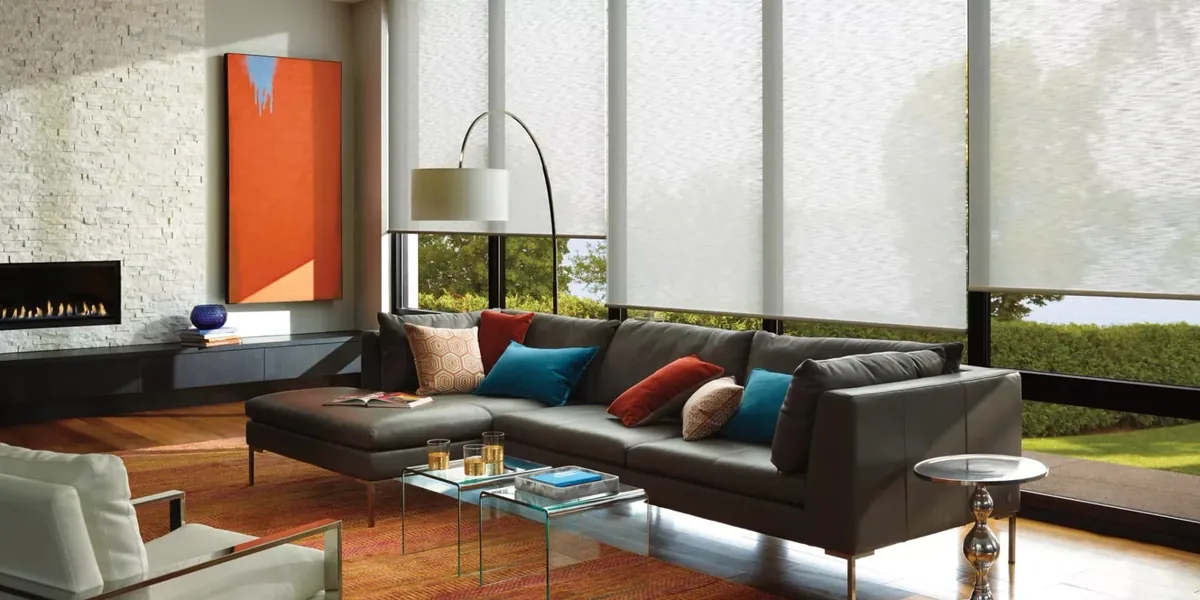
A woven Designer Screen fabric that cuts glare off the water and keeps the pond visible. Openness factor sets how much view comes through.
Cellular roller
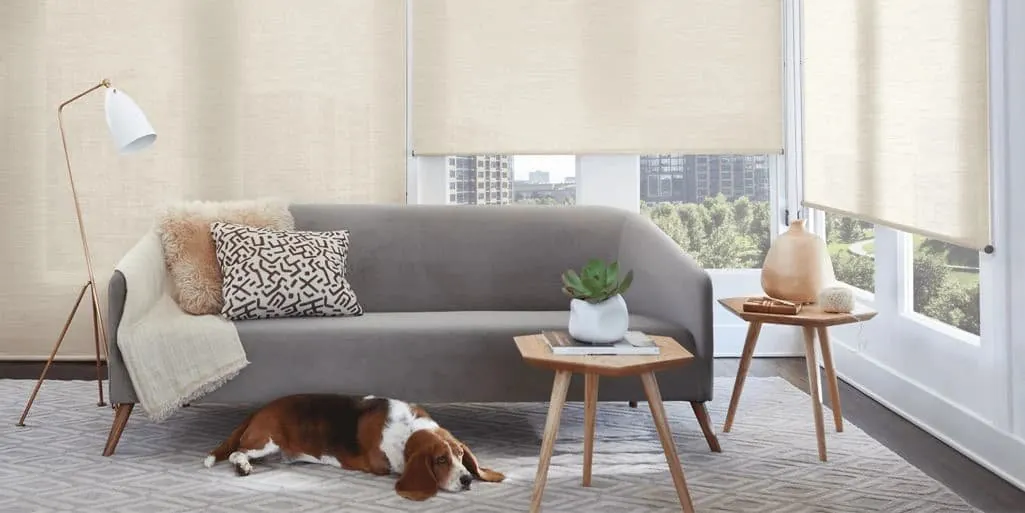
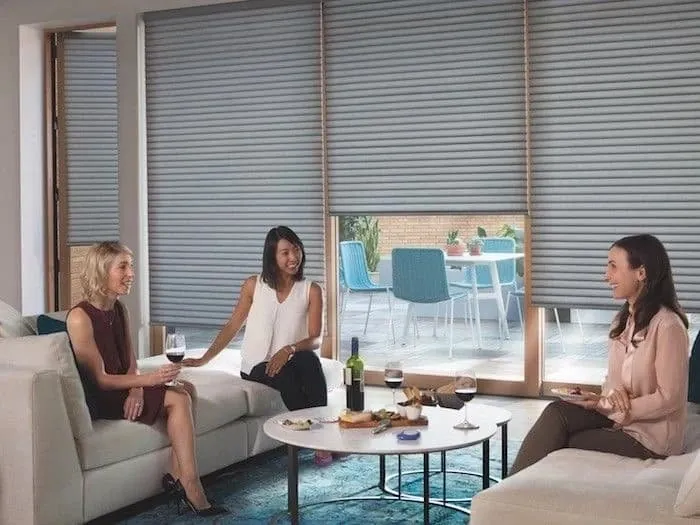
Sonnette rolls up like a roller but has a curved cell built into the fabric, which gives a softer, fuller face on a living room window.
Banded shade
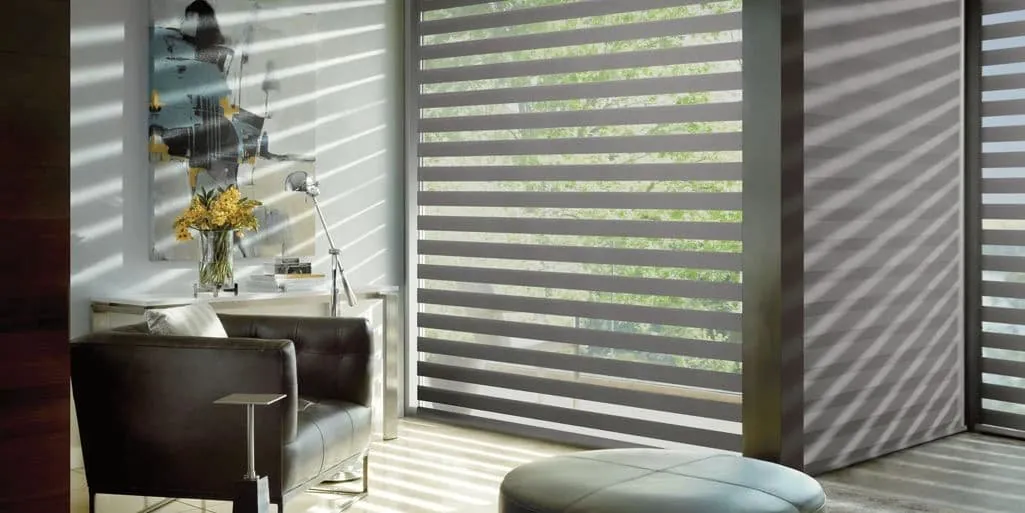
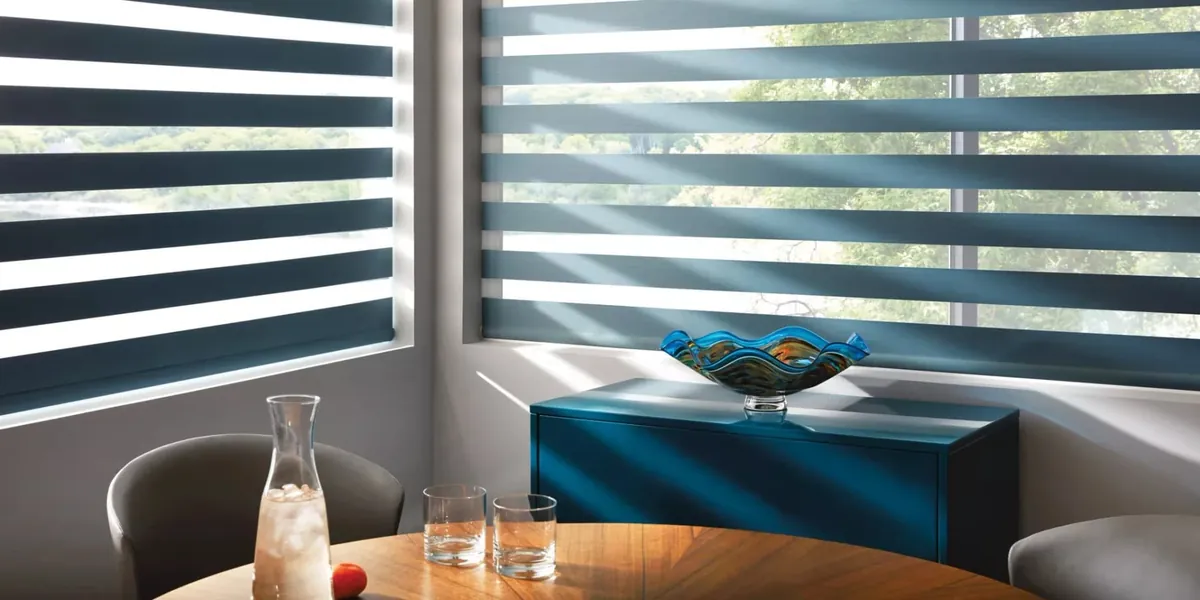
Alternating sheer and solid stripes slide past each other, so you can open the view or close the room without lifting the shade.
Glare off the water, and the openness factor
The term you will hear most when we talk about solar screens is openness factor. It describes how much of the fabric is open weave, and it is the single biggest decision on a pond-facing window.
Think of it as a dial between glare control and clarity. A tighter weave blocks more of the reflected light and gives more privacy during the day, but the pond looks softer through it. A more open weave keeps the shoreline and the trees sharp, while still knocking down the harsh brightness that bounces off the water late in the day. Neither is right for every room. A kitchen where you want to watch the water while you cook may suit an open weave. A family room with a television on the wall facing the windows often does better with a tighter one.
Color changes the picture as well. Darker screens tend to be easier to see through, because the dark threads do not catch the light the way pale ones do. Lighter screens read brighter from inside and reflect more of the sun. At the visit we hang both against your window at the time of day when the glare is worst, and you choose with your own eyes.
One thing to know before you decide: screens are a daytime fabric. Once the lamps go on inside, a screen lets you be seen from outside, and a lit room facing the water is visible from across the pond. For rooms you use in the evening, we often pair a screen with an opaque roller on a second bracket, or recommend a banded shade that can close fully.
Closed-in porches and three-season rooms
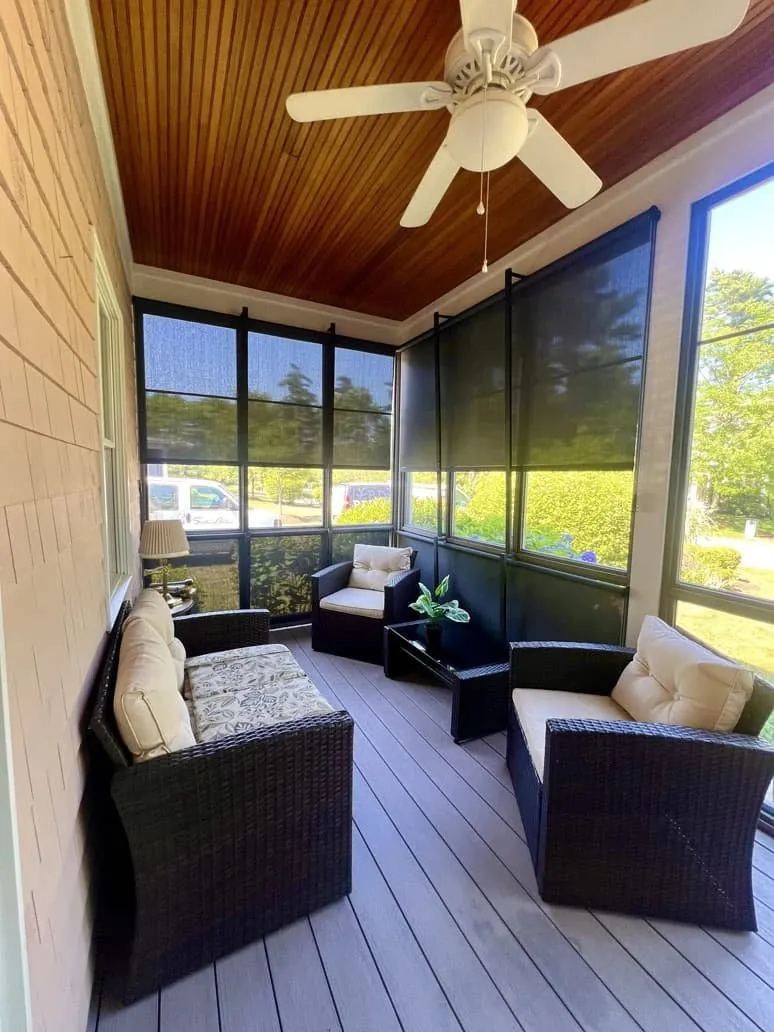
Many of the ranches near the ponds have a porch that was enclosed at some point, or a three-season room added on the water side. These rooms tend to be mostly glass, often on three walls, and they heat up fast on a summer afternoon.
Rollers suit them well. A screen fabric on every opening keeps the room usable through the hottest part of the day while the view stays open on all sides. Because a roller winds away into its headrail, the shades disappear almost completely when you raise them in the evening, and the room goes back to feeling like a porch.
Where a porch has a long run of identical windows, we line the shades up so every hem stops at the same height and every headrail sits on the same line. On a room of glass, those small details are the difference between tidy and busy.
Ranches and capes: standard openings, simple choices
A post-war ranch or cape usually has a living room picture window, a kitchen window over the sink, a slider to the back and bedrooms with double-hung windows of a regular size. Standard openings like these make measuring and mounting simple, which is good news. It means the time at the visit goes into fabrics and lifts, not into working around awkward frames.
A few things still deserve attention in these houses.
- The picture window. Often wider than one shade should be. We split it into two or three rollers on a shared bracket so they move together, or set them to move separately if you want light at one end and privacy at the other.
- The kitchen sink window. Hard to reach across a counter. A cordless lift or a motor saves a stretch every morning.
- The slider. A roller can cover a slider well if the door has room above it for the headrail and the handle sits clear of the fabric.
- Bedrooms. Room darkening or blackout fabric, with an outside mount if you want the edges sealed.
Newer colonials off Route 14 and Center Street
The colonials built more recently follow a familiar layout: a front living room, an open kitchen and family room across the back, and bedrooms upstairs. Windows are larger than in the older ranches and there are more of them, and many of these houses have a two-story foyer with glass high above the door.
For the open back of the house, where the kitchen and family room run together, we usually suggest one fabric across all the windows so the space reads as a single room. A light filtering roller is a common choice here, giving privacy from the neighbors while keeping the room bright for most of the day. If the family room faces west, a screen in the same color can take its place on just those windows.
Upstairs, bedrooms tend to want darkness, and children’s rooms want shades with no cord at all. A cordless roller lifts by hand from the bottom rail, with nothing hanging at the side. For the foyer glass, the only practical answer is a motor.
PowerView in a Pembroke house
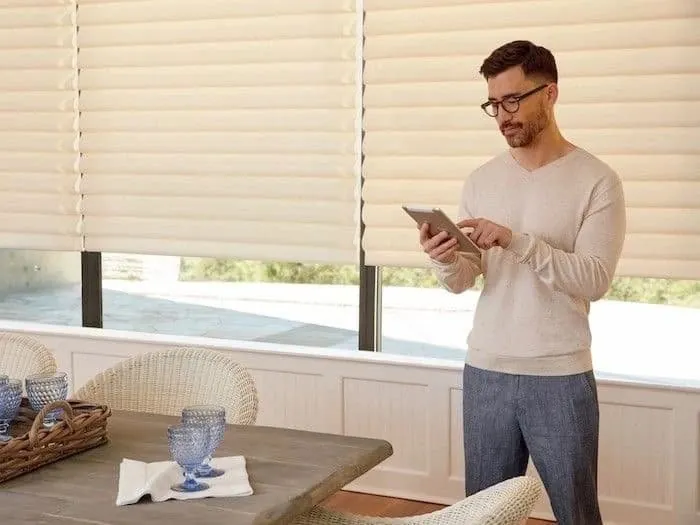
PowerView motorization puts a quiet motor inside the roller tube and lets you move the shade from a handheld remote, an app or a schedule. It started as the answer for windows out of reach, and it still is: a foyer transom, a high gable over a pond-side great room, a window behind a deep kitchen counter.
Schedules are where motorization starts to make the most sense on the water side. You can set the screens on the pond windows to come down as the afternoon reflection builds and go back up after sunset, whether you are home or not. Upstairs, bedroom shades can lower at dusk on their own.
At the visit we plan how each motor is powered and talk through which windows really benefit. Plenty of houses end up with a mix, motors on the hard-to-reach glass and cordless lifts everywhere else. More on controls is on our motorized blinds in Pembroke page.
From first call to finished windows
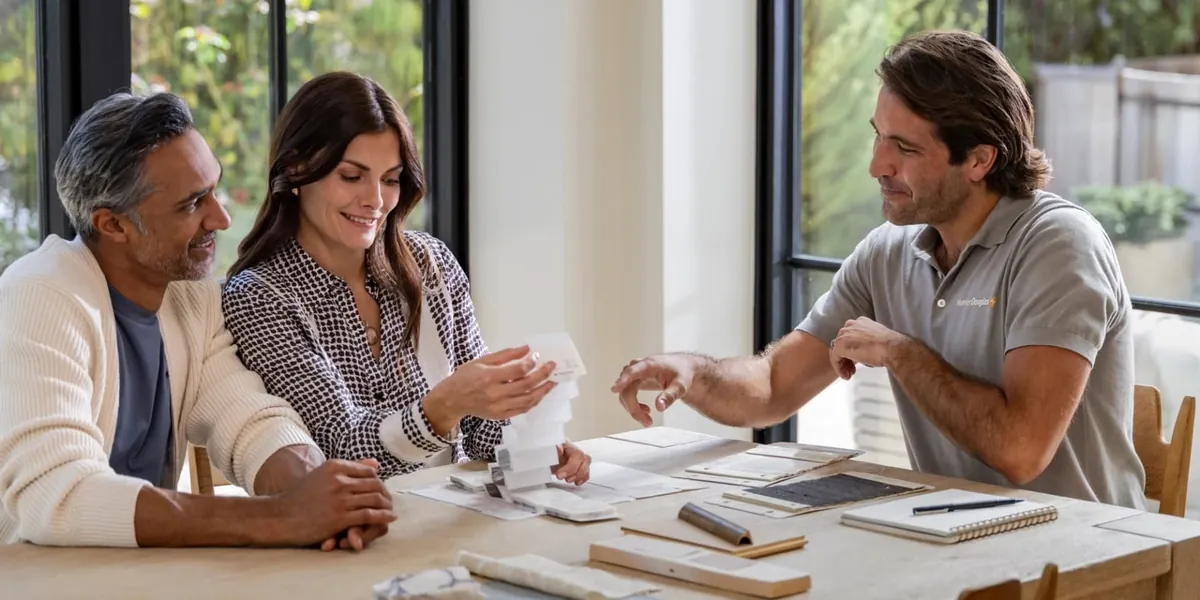
A home visit is where most orders start, because only your own windows show how a fabric behaves with the pond light behind it. Our vans carry the samples, so we bring the showroom to you.
- Request a consultation online or with the call button, and choose a time that suits you.
- We tour the house with you, room by room, and ask what each space needs: view, glare control, privacy or darkness.
- You compare screen, light filtering and blackout samples against your own glass, ideally including the pond side in the afternoon.
- We talk through mounts, lifts and any motorization, and point out where a split shade or a paired shade makes sense.
- We measure each window for width, height and depth.
- You receive a free estimate, and you decide in your own time.
If you also want help pulling a room together, our interior design consultations cover color, fabric and how the shades sit with the rest of the room. For a fuller picture before we come, read what happens at an in-home consultation.
Light filtering, room darkening or blackout
Outside the screen family, roller fabrics run along a scale of how much light they let through, and the right place on that scale changes from one room to the next.
Light filtering fabrics are the everyday choice. They glow when the sun is on them, so the room stays bright, but they hide what is inside from the road. Room darkening fabrics take the light down far enough for an afternoon nap or a television wall without making the room pitch black. Blackout fabrics stop the light through the cloth itself.
How dark a bedroom really gets depends on the mount as much as the fabric. Inside the frame, a roller leaves a narrow gap at each side where light leaks past. Mounted outside the frame, overlapping the trim, it closes most of that gap. In standard ranch and colonial bedrooms the outside mount is usually easy and looks tidy, so it is the common choice when real darkness matters.
Designer, Alustra and the rest of the range
Roller shades in Pembroke can come from several Hunter Douglas lines, each with its own character. Designer Roller is the backbone, with a broad choice of plain and textured fabrics in every opacity. Designer Screen is the solar screen family. Designer Banded is the stripe shade, and Sonnette is the cellular roller with its curved profile.
Alustra sits above them with more elaborate fabrics, including detailed weaves and the Alustra Woven Textures roller, which brings a natural woven look to a roller format. It suits a front living room or dining room where the shade is part of the decoration rather than simply a tool.
You do not need to settle on one line for the whole house. A common Pembroke plan pairs Designer Screen on the water side with Designer Roller in light filtering or blackout everywhere else. The roller shades page sets out the whole range, and the Alustra page covers the premium fabrics.
Treating the whole house at once
Because Pembroke houses mostly have standard openings, it is easy to order shades for every room in one go, and many customers do. Doing it that way lets us keep the colors consistent from room to room and the headrails at matching heights across each side of the house, so the windows look right from the yard as well as from inside.
It also means you can mix treatments where it makes sense. A front room might take plantation shutters in Pembroke, a cold back bedroom cellular shades in Pembroke, and the rest of the house rollers. One visit covers it all. Our Pembroke page shows every service we offer in town.
The small details that finish a roller
Once the fabric and the opacity are settled, a handful of smaller choices decide how the shade looks on the wall. They are easy to overlook in a catalog and easy to see once the shade is up, so we go through them at the visit.
The first is roll direction. Normally the fabric hangs from the back of the tube, close to the glass. On a window with a crank, a lock or a handle that sticks out, it can instead roll off the front of the tube so it clears the hardware. The second is the top treatment. A bare tube suits a clean, modern room, while a fascia or cassette hides the roll behind a neat cover that matches the fabric or the trim. The third is the hem: the bar at the bottom of the shade that keeps the fabric hanging straight, which can be slim and almost invisible or wrapped in the same fabric as the shade.
None of these change how the shade works. They change how it sits in the room, and in a pond-side living room where the windows are the focal point, that is worth a few minutes of thought. We bring examples of each so you can see them against your own trim before choosing roller shades for Pembroke rooms that are on show.
Hunter Douglas, from a Gallery dealer
Blinds & Designs is a Hunter Douglas Gallery dealer, the designation Hunter Douglas reserves for dealers who meet its standards. In practice that means the whole roller range is available through us: Designer Roller, Designer Screen, Designer Banded, Sonnette, Alustra and PowerView, along with Hunter Douglas blinds, shutters, cellular and roman shades and drapery.
The shades are fitted by our own installers, certified by Hunter Douglas. They fix every bracket into solid framing, level each headrail and run every shade through its full travel before they leave. If a shade ever needs work later on, we take care of blind and shade repairs as well.
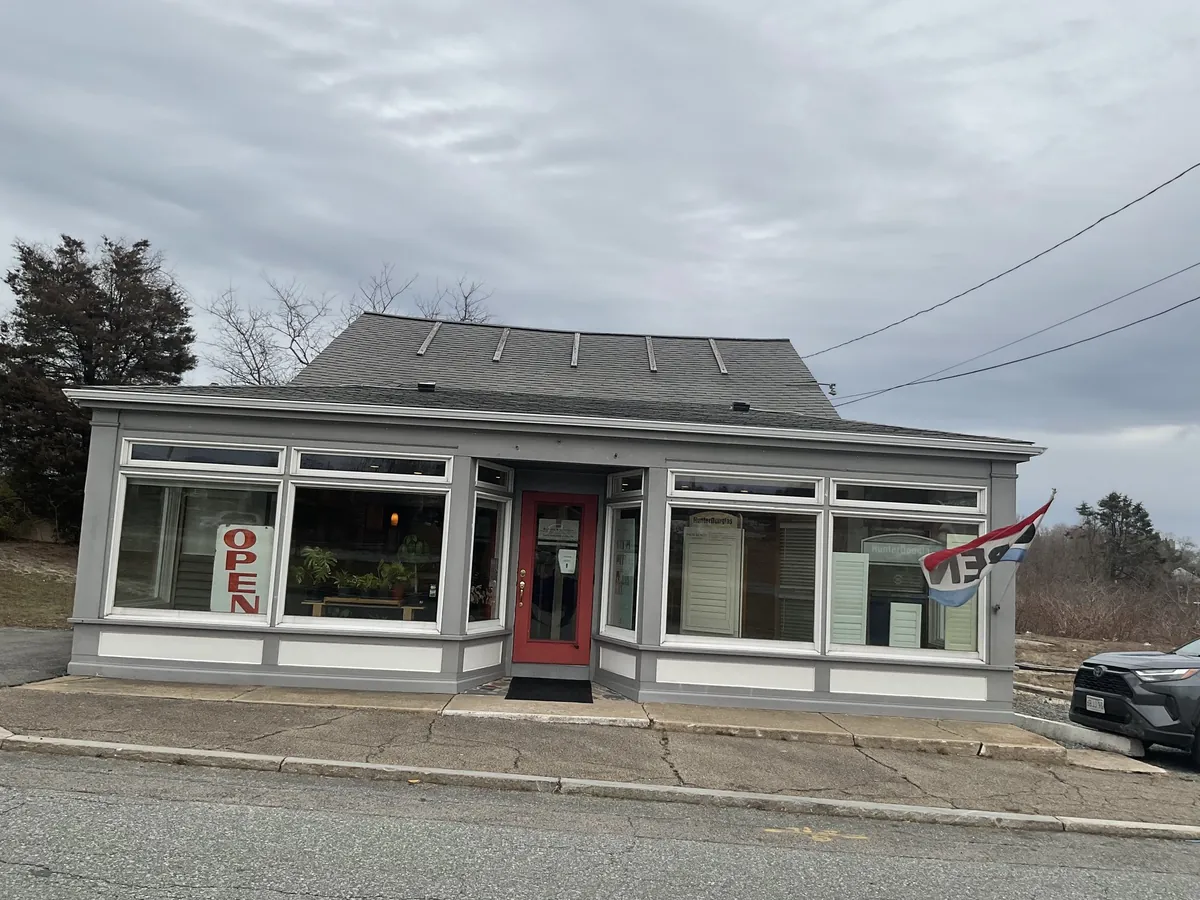
Our nearest showroom
The closest Blinds & Designs showroom to Pembroke is in Sagamore. If you would like to see roller fabrics before a home visit, or after one to settle a final choice, the Sagamore showroom page lists the address and opening hours.
Even so, most people choosing roller shades in Pembroke, MA, find the home visit settles more questions, because the pond light and your own rooms only exist at your house.
Questions from Pembroke
Which shade keeps my pond view but cuts the afternoon glare?
A solar screen roller. The woven fabric softens the reflected light while you still see the water through it. A more open weave keeps the view clearer, and a tighter weave blocks more glare. We bring several so you can compare them at your window.
Will a roller work on my slider?
Usually, yes, as long as there is room above the door for the headrail and the handle sits clear of the fabric. If the door is very wide or the handle is in the way, we may suggest a different treatment for that one opening.
Can I get darkness in a bedroom with a roller shade?
Yes. Choose a blackout or room darkening fabric, and mount the shade outside the frame so it overlaps the trim. That closes most of the light gaps at the sides.
Are there roller shades without cords for a child’s room?
Yes. A cordless roller lifts and lowers by hand from the bottom rail, with nothing hanging at the side. PowerView motorization is another cord-free option.
Is there a charge for the estimate?
No. After we measure, you receive a free estimate for the shades you are considering.
Your next step
Choosing roller shades in Pembroke, MA, is easiest with the samples in front of your own windows and the pond light behind them. Request a consultation and we will bring the fabrics, measure every window and give you a free estimate. If you would like to talk first, use the call button or visit our Sagamore showroom.