
Hard outer Cape light on old and new glass
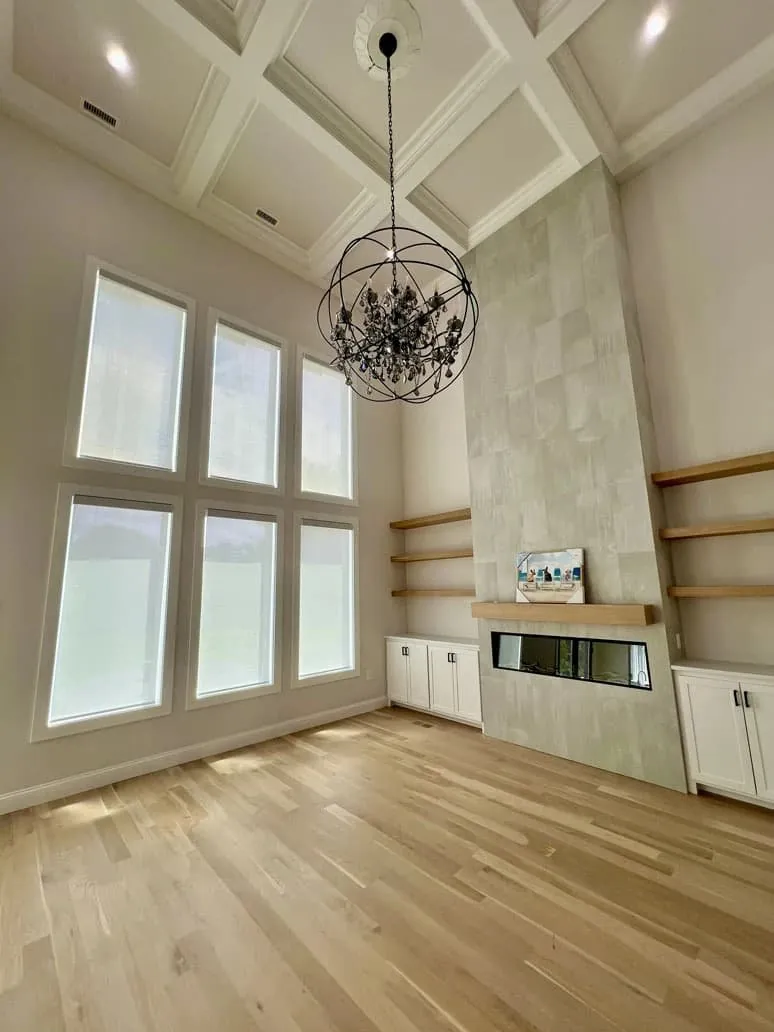
Out past the elbow, the light changes. There is less land around you and more sky and water, and on a clear day the sun in Orleans is hard and direct, with very little haze to soften it. Near the village center that light falls on antique capes with small, old sash and low ceilings. Out toward Nauset and Pleasant Bay it pours through newer houses where the bay-facing glass runs from floor to ceiling. Roller shades in Orleans, MA, have to work in both settings.
Two other facts shape our advice. Much of the housing in town is seasonal, lived in through the summer and closed for long stretches the rest of the year. And the newer builds were designed for the view across the bay or the marsh, so whatever goes on those big windows must leave that view alone for most of the day. A good roller plan for an Orleans house protects the rooms while they are empty, controls the glare while they are full, and keeps the outlook clear.
Roller shades in Orleans, MA, by type of window
Three Hunter Douglas roller options cover most of what we fit in town, from a cape’s front room to a wall of glass facing Pleasant Bay.
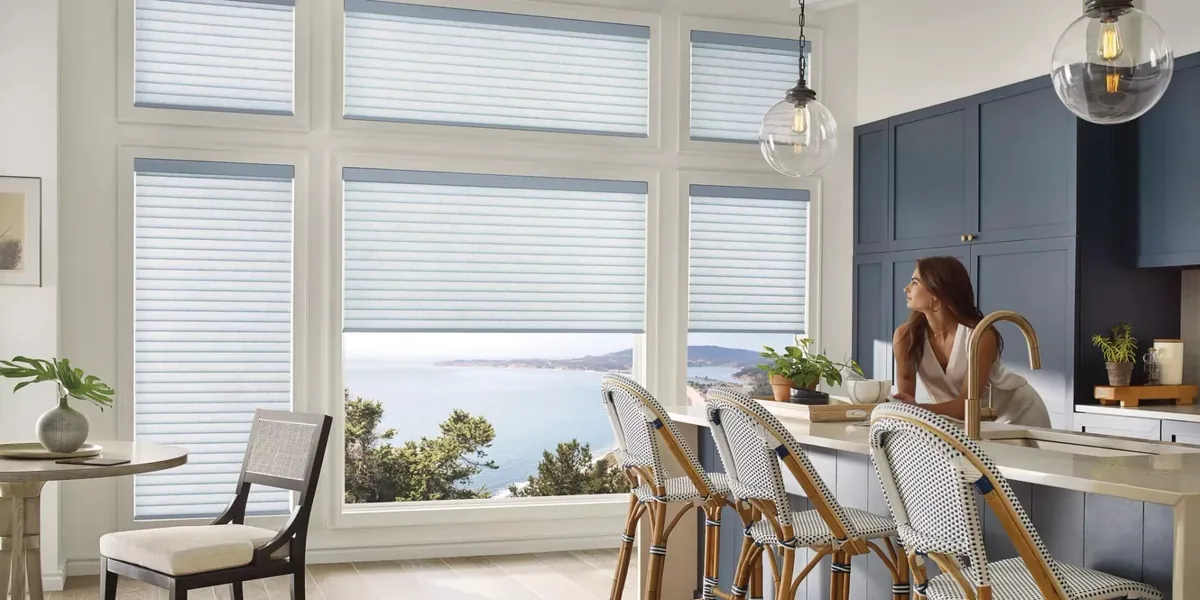
Floor-to-ceiling bay glass
Designer Screen keeps the water in sight through the weave while it softens the hard, direct light and protects the floor.
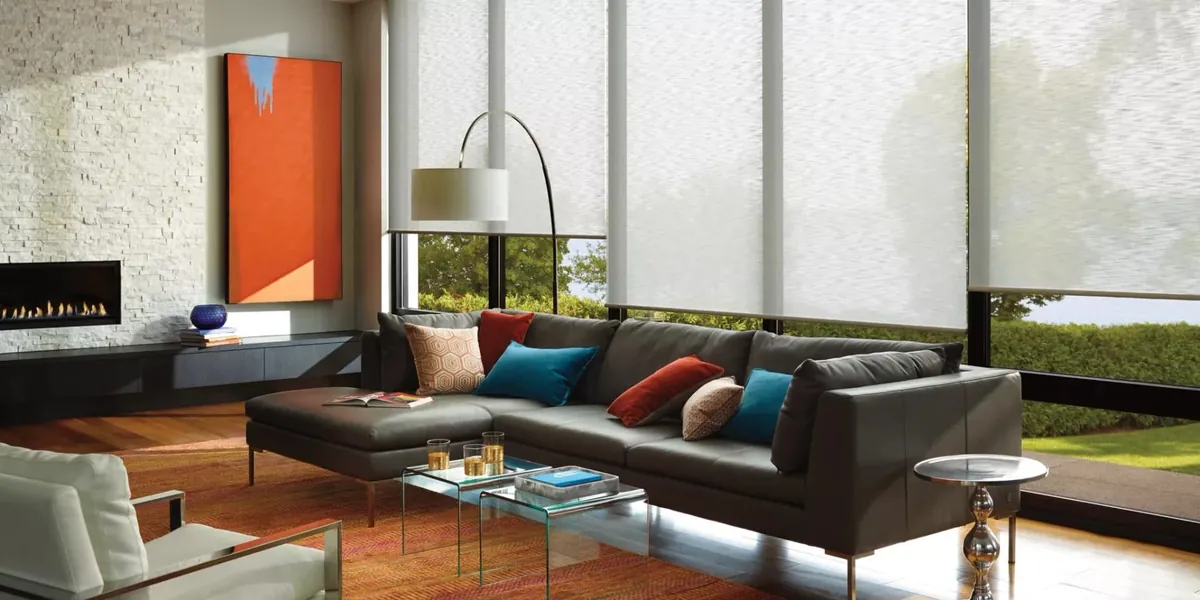
Small sash in an antique cape
A light filtering Designer Roller in a pale fabric gives privacy without stealing light from a small, low room.
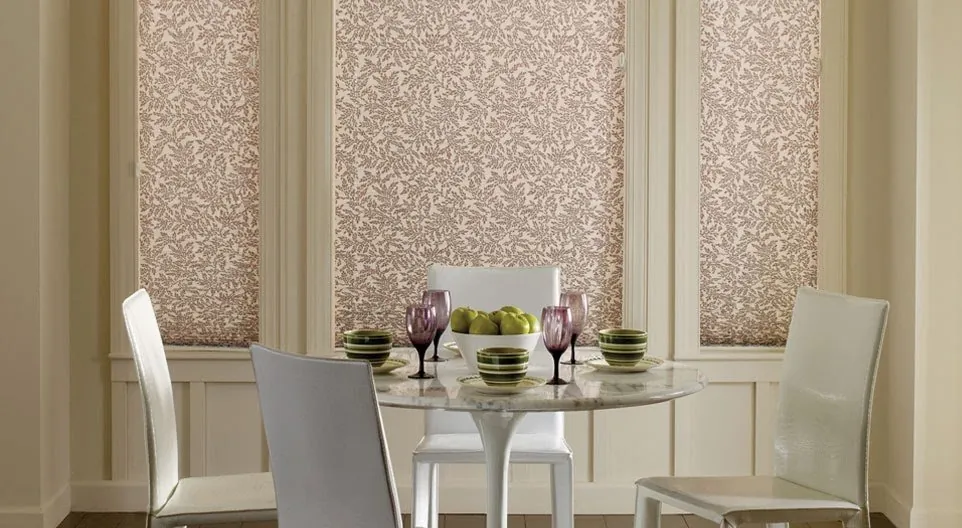
Pattern for a dining room
Alustra and Designer both offer patterned and textured fabrics for a room where the shade is meant to be noticed.
What floor-to-ceiling glass asks of a shade
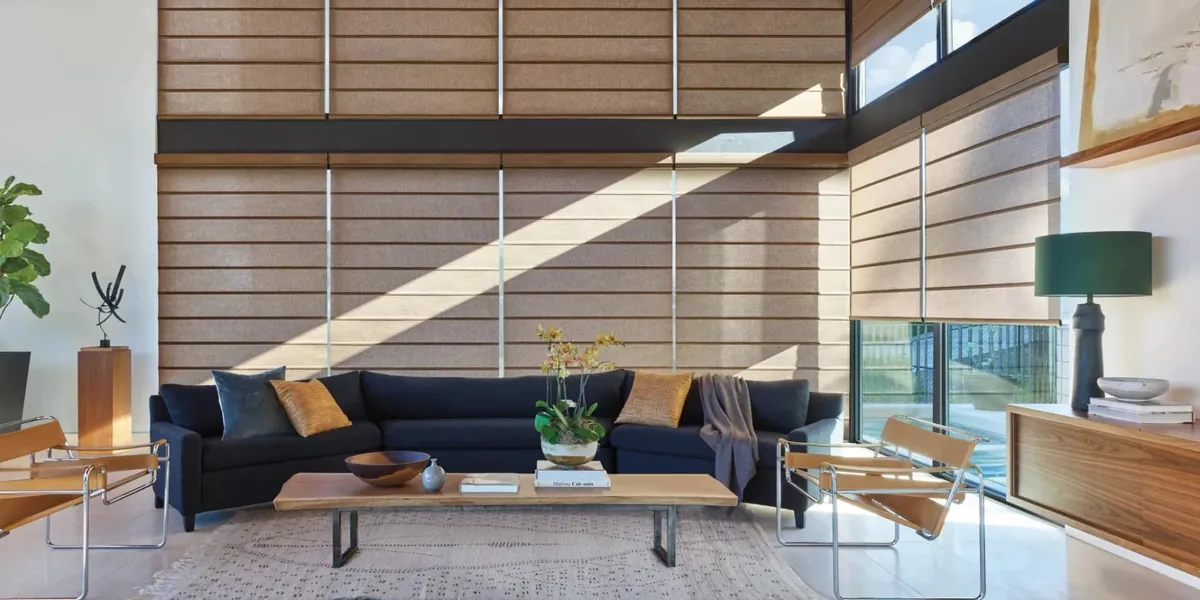
The newer houses out toward Nauset and Pleasant Bay often have one main room that is almost all window on the bay side. Glass runs from the floor to the ceiling, sometimes in a single tall pane, sometimes in a grid of panes and mullions, sometimes as a run of sliders. It is a wonderful way to live with the view, and a hard one to live with at three in the afternoon in July.
With glass that reaches the floor, the sun lands not only on furniture but on the floor itself, across the whole width of the room. Wood floors and rugs fade unevenly, leaving a pale band near the glass. Glare off the water bounces into the room at a low angle, so even when the sun is high overhead, you may still be squinting at the far end.
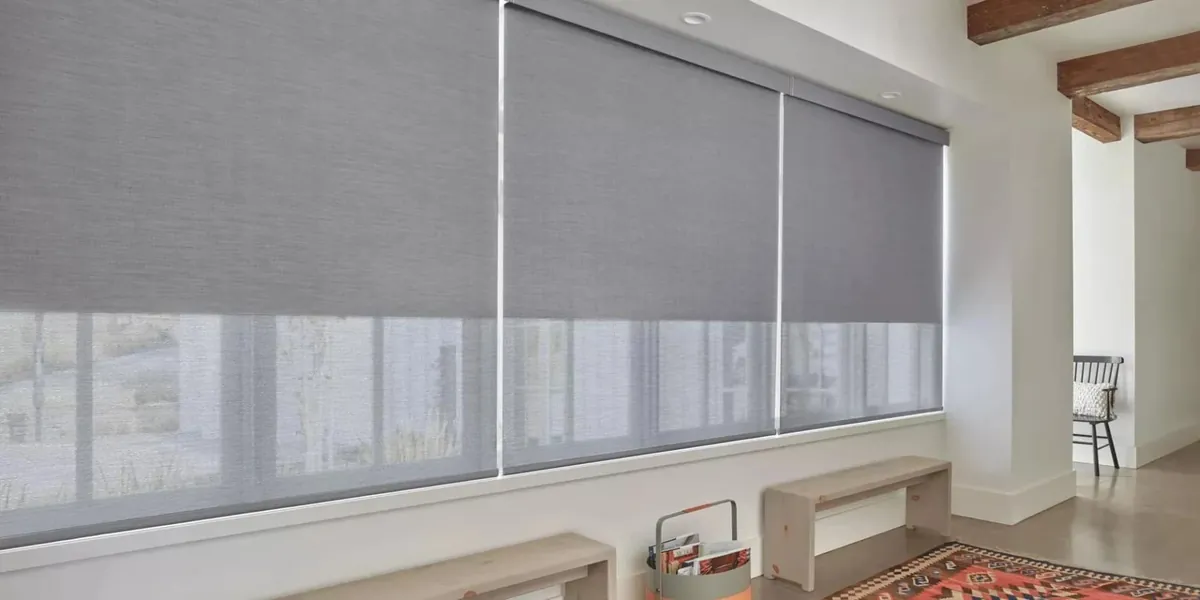
A solar screen roller is built for this. Its fine, open weave lets you see out while it cuts down the glare and the light that does the fading. How open the weave is sets the balance, which the trade calls the openness factor: a looser weave keeps the view sharper, a closer weave blocks more sun but blurs the view slightly. The color of the screen changes the result as much as the weave. A dark screen is surprisingly easy to look through because it does not catch the light in front of you, while a pale screen brightens the room but makes the outlook a little milkier.
On the bay side we usually start with a charcoal or gray screen in a medium weave and adjust from there, holding the samples at the glass at the time of day the sun is worst. The guide to the best shades for sun and glare compares roller screens with the other options.
Planning a tall window wall
A tall bay-facing wall is more than one big window, and a little planning makes the shades look as though they were designed with the house.
- Follow the frame. Where the glass is divided by mullions, a separate roller for each section looks tidy and lets you lower only the panes the sun is hitting.
- Decide on the top glass. Transoms and clerestory windows high above the main glass often stay uncovered. If they let in too much sun, they can take their own fixed or motorized shade.
- Keep a common hem height. When several shades are lowered part way, matching hems make the wall look calm from inside and from the water.
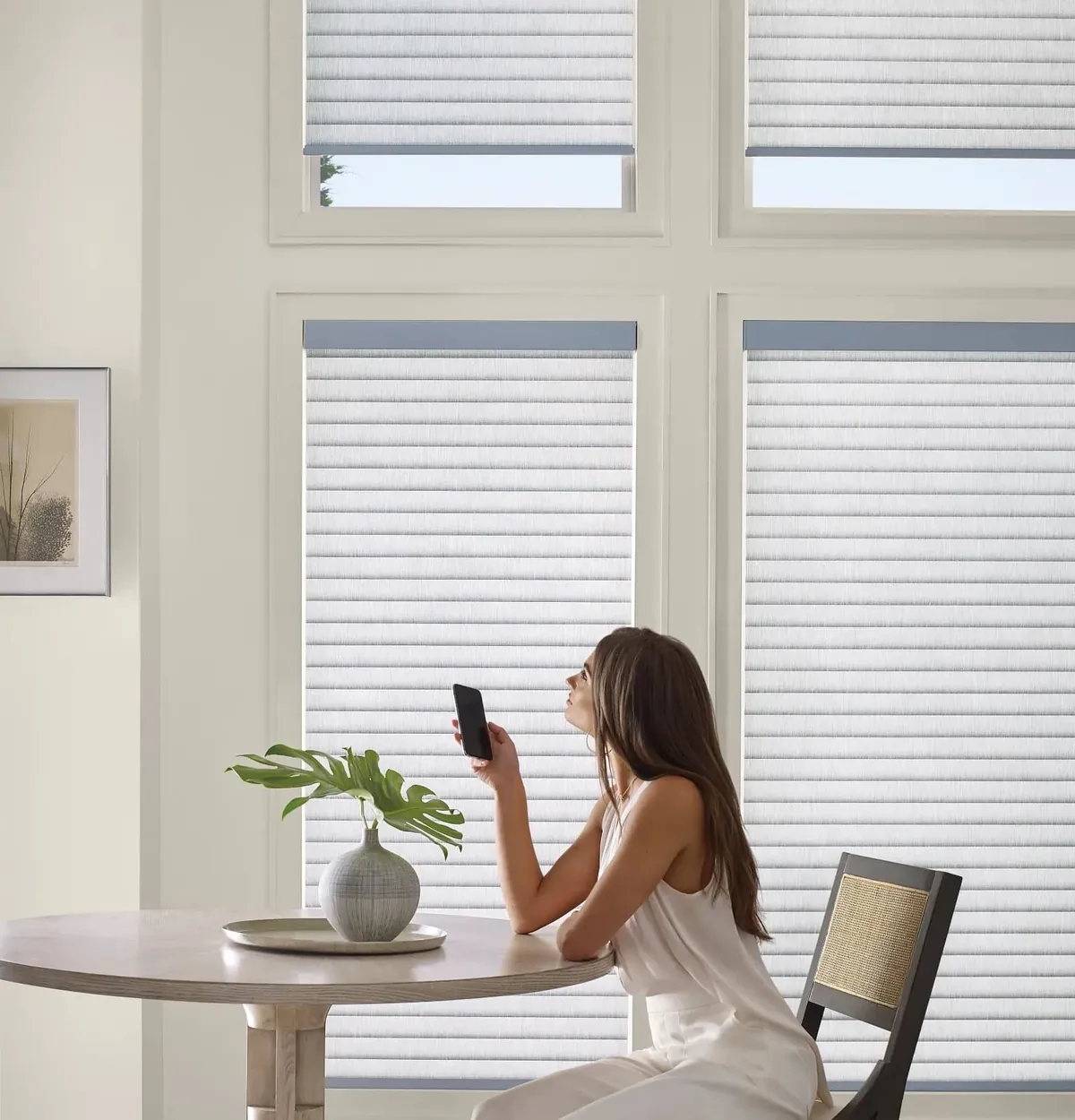
- Think about reach. A very tall shade is hard to raise by hand. PowerView raises and lowers a whole wall from a remote, an app or a schedule.
- Mind the sliders. Doors in the run get a shade mounted above the frame, so the fabric clears the handle when it is up.
We plan this together at the visit, standing in the room. More on remote and scheduled control is in how motorized shades are controlled.
Antique capes near the village center
Closer to the village center, the older houses are mostly antique capes: low, compact, with a central chimney and small windows set in thick frames. The rooms are snug, the ceilings are low and the window heads sit close to the ceiling, which leaves little room above the glass.
A roller suits a cape better than most treatments. The roll is compact, and inside a frame it sits right at the head of the window, so it does not crowd the ceiling. When it is raised, it covers only a sliver of glass, which matters in a room that relies on one or two small windows for all its daylight. Lowered, it is a single plain surface that does not fight with the grid of panes or the old trim.
Old frames are rarely square, so measuring takes care. We take the width in three places and the height on both sides, check the depth along the head, and order to the tightest figure so the fabric runs freely. Where a frame is too shallow or too far out of true for an inside mount, a slim mount on the face of the casing works well and still looks neat.
In a cape’s upstairs rooms, tucked under the roof with dormers or gable windows, a room-darkening roller is often the best choice for summer bedrooms, since the outer Cape sun arrives early.
A seasonal house and its shades
A lot of Orleans houses are opened in late spring and closed in the autumn. The months in between are when a house is most at risk from the sun, because nobody is there to draw a shade.
Rollers handle that well. Before you leave, you lower them, and the rooms sit in soft or dim light until you come back. There is very little on a roller to go slack or tangle while it hangs unused for months, so it is ready to work on the day you return.
Choose the fabric with those empty months in mind. A light filtering roller is lovely while you are there, but it still lets a fair amount of light through. For the sunniest rooms on the bay side, a dual roller that pairs a screen for summer days with a room-darkening fabric for closing up gives the best of both. PowerView can also run the shades on a schedule while the house stands empty, raising them in the morning and lowering them in the afternoon so the place does not look shut up from the road. We plan how each motor is powered when we see the windows.
Rooms that change with the season
A seasonal house is used differently from one that is lived in all year, and the shades can reflect that. In high summer the bay-side rooms are full from morning until late evening, the doors are open and the light is at its strongest. In the shoulder months, when the house may be used only at weekends, the sun is lower and reaches further into the rooms, but there is less heat behind it.
That is one reason we like dual rollers for the main rooms in town. The screen does the work through the long summer days, when you want the view and a comfortable room. The solid fabric behind it comes down for evenings, for guests sleeping late and for the weeks the house is closed. Both share one bracket and one neat roll at the head of the window, so the glass still looks uncluttered.
When we plan roller shades in Orleans, MA, for a house like this, we ask how and when you use each room before we suggest a fabric. A guest room used a few weeks a year needs something very different from the kitchen you live in every summer morning.
Front rooms close to the road
Near the village center, the older capes often sit close to the street, and their front rooms face passers-by. Privacy there matters more than glare. A pale light filtering roller on those windows keeps the room bright and hides what is inside during the day, and a room-darkening fabric does the same after dark. Choosing one outward-facing color for every front window lets the house look orderly from the road, while each room keeps its own color on the inside face. Plenty of roller shades in Orleans, MA, are ordered just this way: plain and quiet at the front, screens on the bay side behind.

Fabrics that hold up in strong sun
Hard, direct light is tough on fabric as well as on the furniture behind it. Some colors and materials keep their look in strong sun better than others, and on a bay-facing window that takes sun every day, the choice matters.
Screen fabrics are made for constant sun, which is one reason they are so common on the outer Cape. For light filtering and room-darkening fabrics, lighter neutral colors generally hold up best on a window that takes the full afternoon. Rich, deep colors can look wonderful in a north-facing room or a cape front room shaded by the house next door, where the sun is less severe.
Our guide to choosing fabric for a sunny room goes further, and during the consultation we will point out the fabrics we would trust on your sunniest windows.
Banded and Sonnette shades
Two more members of the roller family earn a look in Orleans houses.
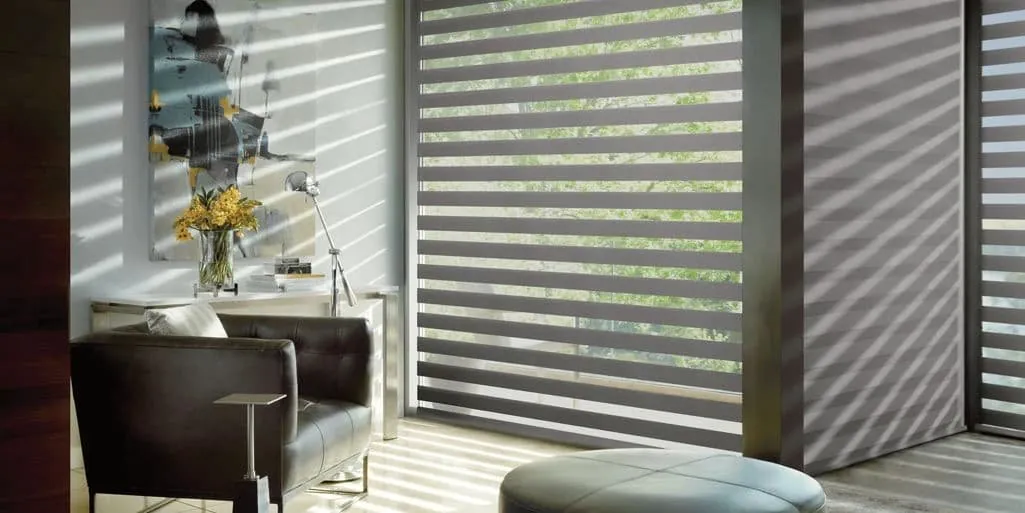
Designer Banded shades carry alternating sheer and solid stripes on a continuous loop of fabric. A short pull slides the stripes past each other: aligned, they let light and some view through; offset, they close the room. That makes them handy in a kitchen or breakfast room on the bay side, where you want to trim the morning glare without raising anything.
Sonnette is a cellular roller. Its fabric has a gentle curve with a pocket of air behind it, so it rolls up like any roller but looks softer and fuller at the window. In an antique cape bedroom, with painted beams and a low ceiling, that softness often suits the room better than a perfectly flat fabric.
See Designer Banded and Sonnette cellular for more.
Bedrooms that face the bay
In the newer houses, the main bedroom often shares the bay view, with tall windows or a slider onto a balcony. Sunrise over the water is beautiful and arrives very early in summer.
A blackout roller is the usual answer. On an inside mount, any roller leaves a thin gap at each side where light can creep in, so in a bedroom that needs to stay dark we often mount the shade on the wall or trim, slightly wider than the opening, to close those gaps. A dual roller pairs the blackout fabric with a screen on one bracket, so you can enjoy the view through the day and shut out the dawn at night. With PowerView, the blackout layer can rise on a schedule, which is a gentle way to wake up.
The consultation, at your house
Hard outer Cape light makes fabric look very different at the window than in a book, so we bring the range to you. Our vans carry samples of every roller type.
- Ask for a visit through Request a Consultation or the call button, and choose a day that suits your time in town.
- We tour the house with you and note which windows take the morning and afternoon sun.
- You hold screens, light filtering, room-darkening and banded samples at the glass and see them against the view.
- We measure every opening, including the tall glass and any transoms, and check frame depths in the older rooms.
- We recommend a fabric, a mount and a lift for each window, and show where PowerView would help.
- You get a free estimate to consider at your own pace.
There is more detail in what happens at an in-home consultation.
Designer or Alustra in an Orleans house
Hunter Douglas splits its rollers into two collections. Designer is the broad range: every opacity, every screen, plain, textured and patterned fabrics, and all the lift systems. Alustra is smaller and dressier, with richer materials and tailored finishes at the hem and the head.
A newer house on the bay usually runs on Designer, with screens on the big glass and room-darkening fabrics in the bedrooms, perhaps with an Alustra fabric in a dining room or study. An antique cape may favour Alustra in the front rooms, where the shade sits beside old woodwork. When we bring roller shades in Orleans, MA, to your door, both collections come with us. The main roller shades page covers the family.
Gallery dealer, nearest showroom in Sagamore
Blinds & Designs is a Hunter Douglas Gallery dealer, so every screen, roller, banded and Sonnette fabric and PowerView is available at one consultation. Our installers are certified by Hunter Douglas: on a tall window wall they fix brackets into solid framing and level every shade so the wall reads as one.
We also offer interior design consultations and repair blinds and shades you already own. The Sagamore showroom is the closest to Orleans if you would like to see working shades before we visit.
For other rooms, see cellular shades in Orleans, motorized blinds in Orleans or everything we offer on the Orleans page.
Questions from Orleans
What goes on floor-to-ceiling glass facing the bay?
Usually a solar screen roller, one per section of glass, in a darker color and medium weave. It cuts the glare and protects the floor while keeping the bay in view.
Do I need to cover the high transom windows too?
Not always. Many households leave them clear. If they let in too much sun, they can take their own shade, often motorized because they are out of reach.
Will a roller fit the small windows of an antique cape?
In most cases. The roll is compact and suits low window heads. Where an old frame is too shallow or out of square, we mount the shade on the face of the casing instead.
How should I leave the shades when the house is closed?
Lowered. A room-darkening or dual roller gives the best protection while you are away, and PowerView can run them on a schedule.
Is the estimate free?
Yes. We measure at your home and give you a free estimate for the shades you are considering.
Take the next step
Choosing a screen for a wall of bay glass is far easier with the samples in your hand and the water behind them. Request a consultation and we will bring the range to Orleans, measure every window and leave you with a free estimate. You can also visit the Sagamore showroom or use the call button.