
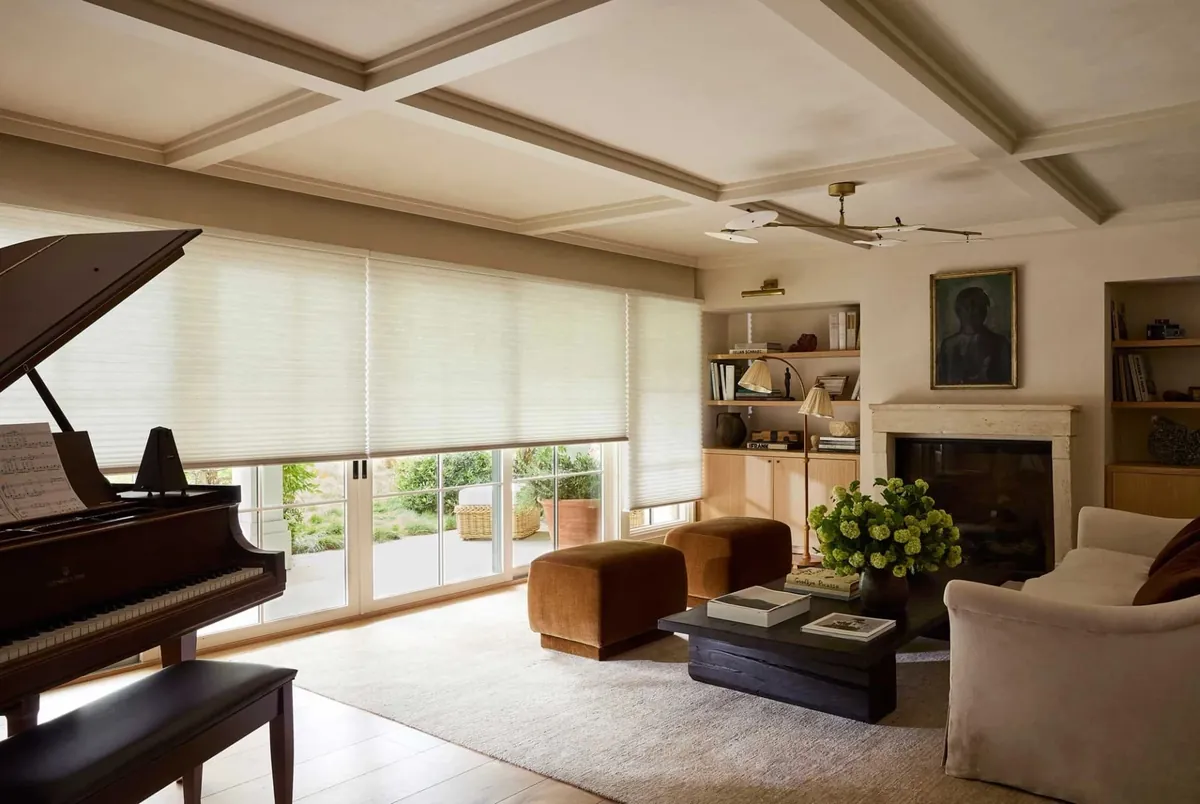
Keeping the pond in view
Around Assawompset and Long Pond, the houses turn toward the water. Some started life as summer camps and have been converted for year-round living; others are newer colonials on larger lots set back from the shore. In almost all of them, the rooms on the pond side were built for the view, with wide windows and doors that open onto the lawn or a deck. Anything heavy on that glass would defeat the point of the room. That is the brief we work to when we plan cellular shades in Lakeville, MA.
A honeycomb shade is about as light as a window covering gets. Raised, it gathers into a narrow band at the top of the frame and the whole pane is clear. Lowered, it is a single soft layer of fabric, not a bulky curtain or a slatted blind that chops the view into stripes.
Light as it looks, it works hard. The pleats are folded into hollow cells, and each one holds a pocket of air between the glass and the room. That is what keeps a pond-side room warm on a winter night, when the water has been sending cold air against the windows all day.
Light choices for cellular shades in Lakeville houses
These three are where most Lakeville conversations end up. Our vans carry samples of each so you can see them against your own view.
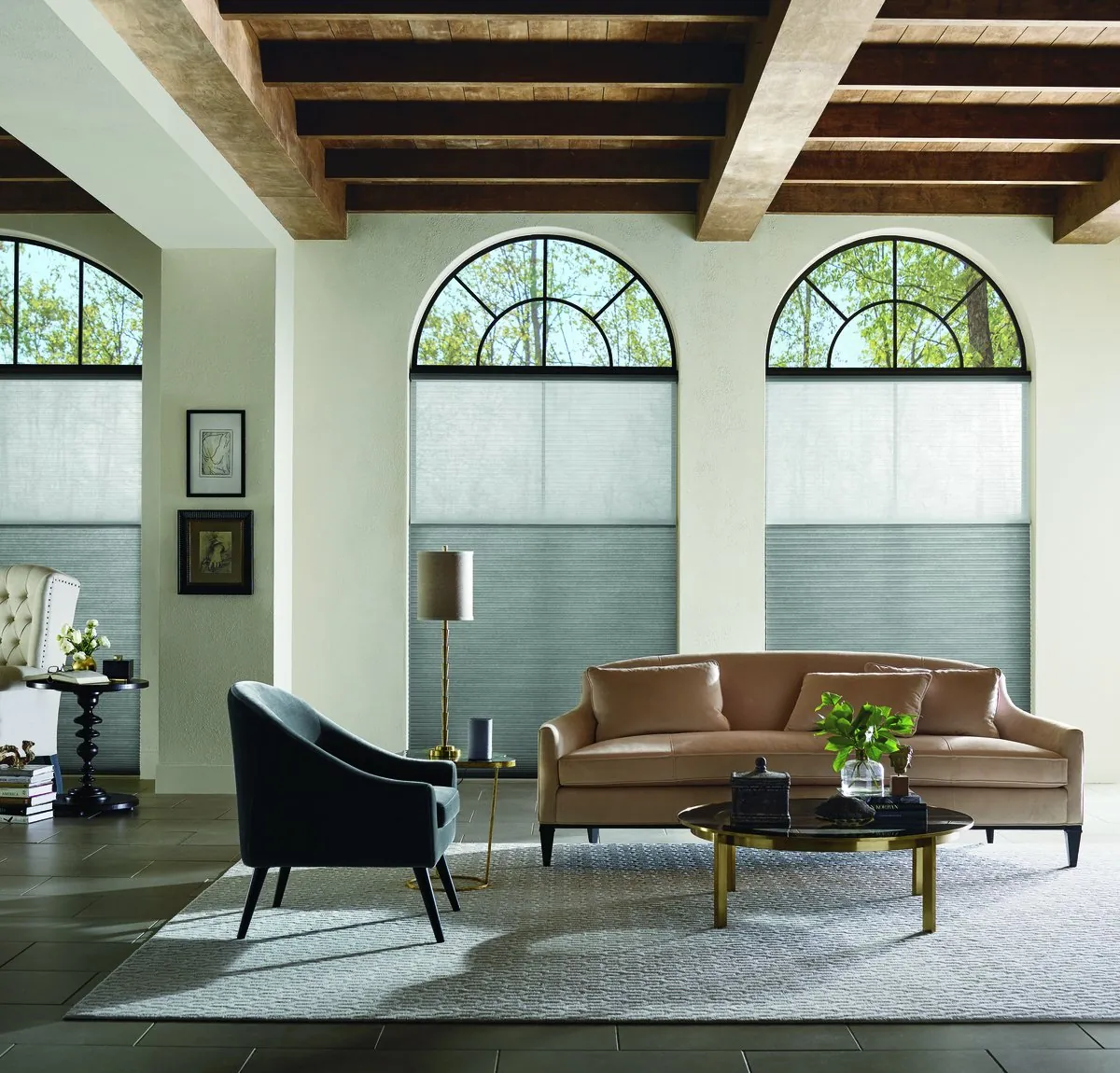
Top-down, bottom-up
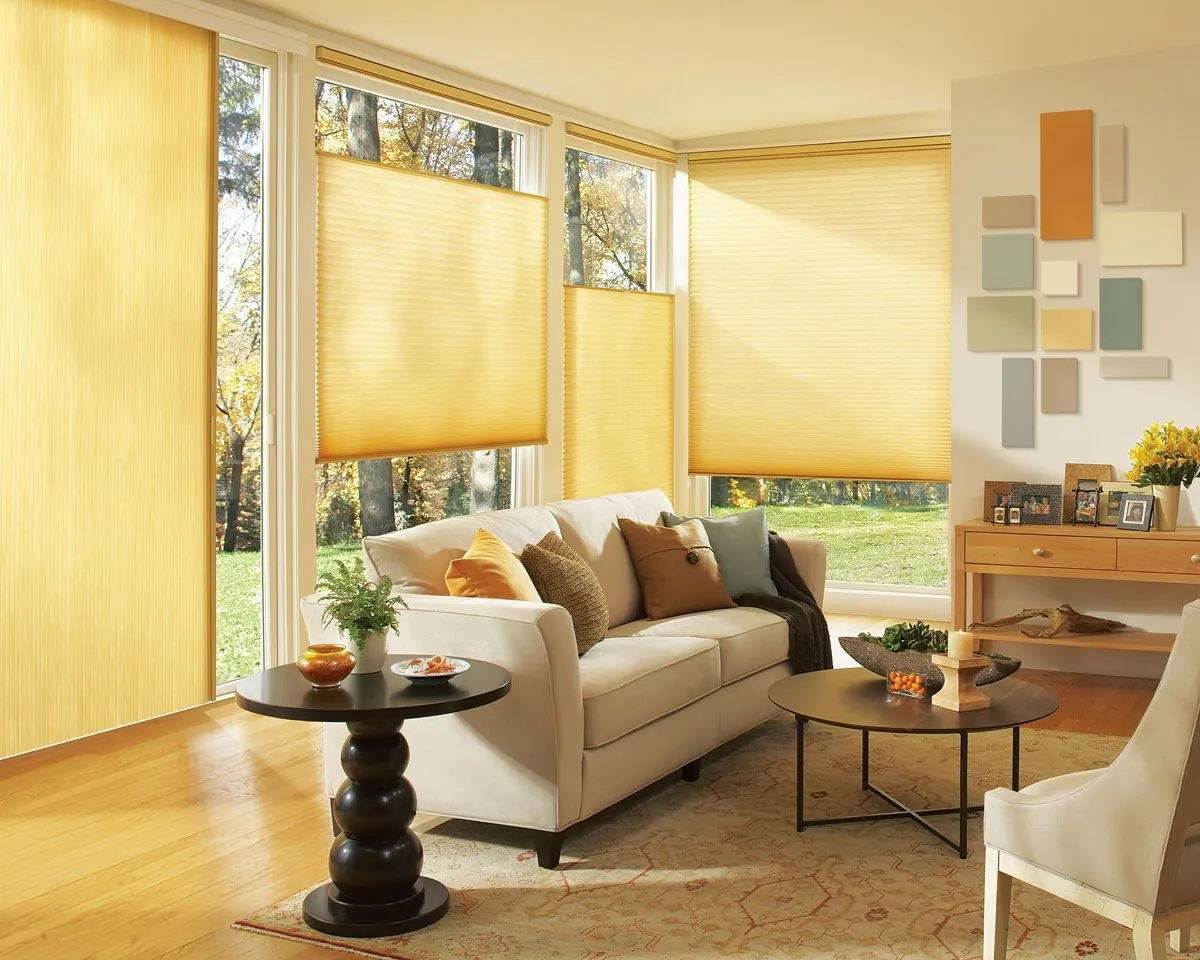
The shade lowers from the top as well as rising from the bottom. Drop the top edge and the treeline and sky over the pond stay in view while the lower glass is covered.
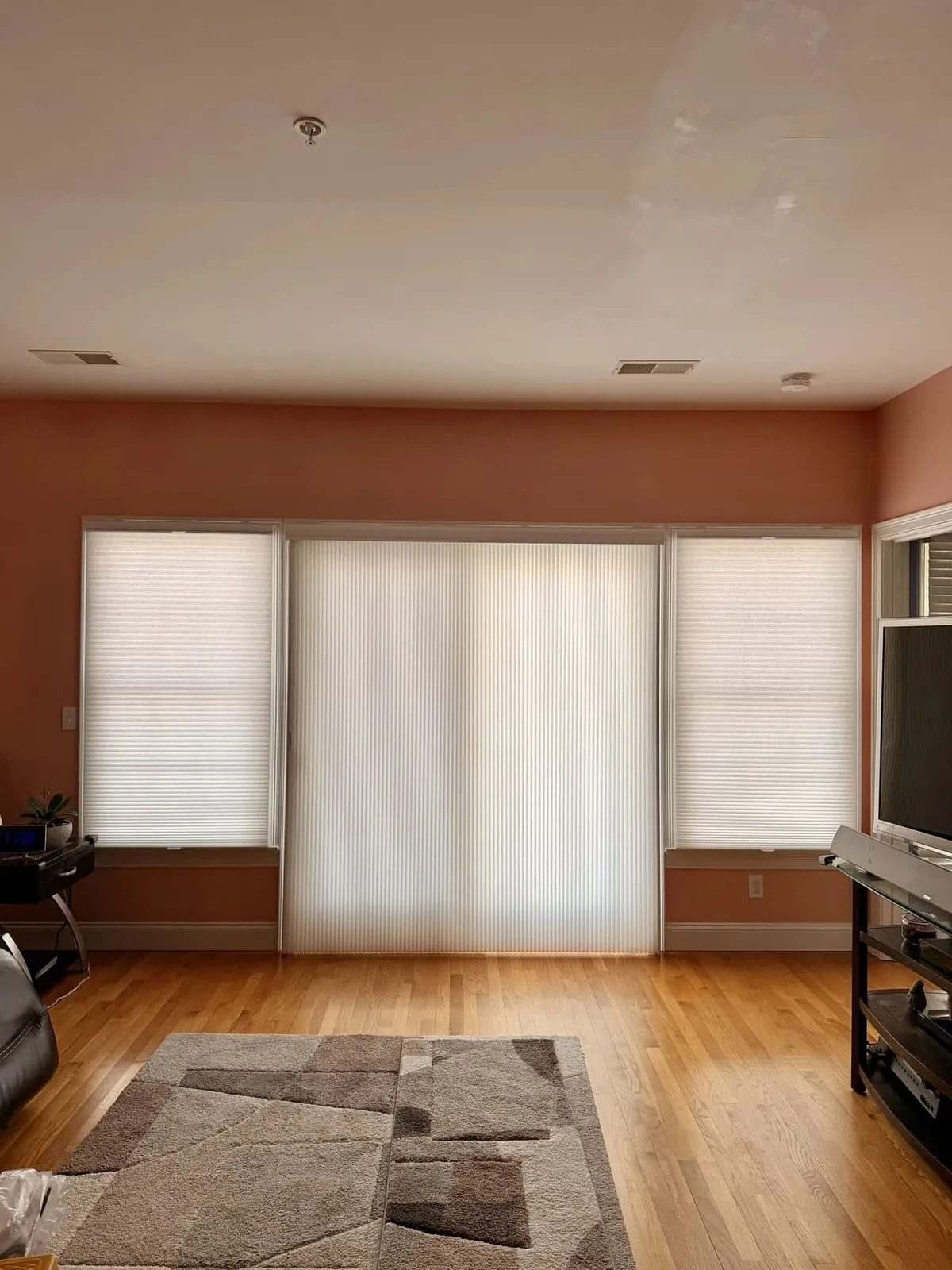
Vertical honeycomb for doors to the deck
A honeycomb shade that travels sideways across a slider and folds neatly to one side, so the door to the lawn opens freely.
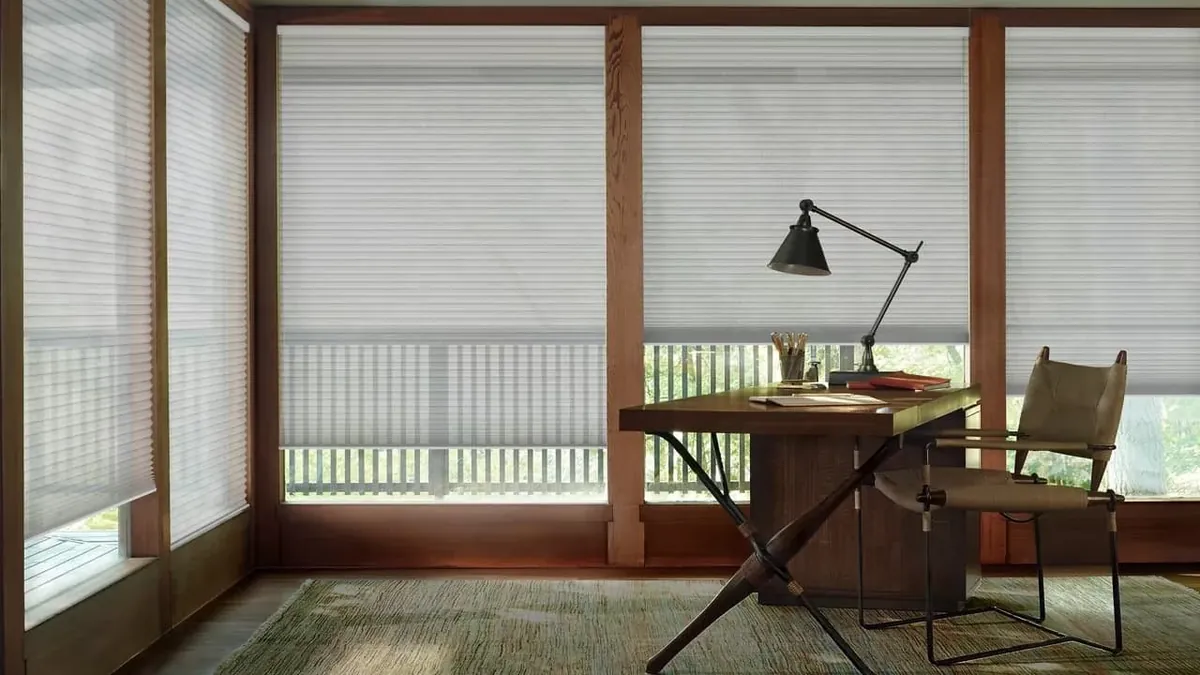
Sheer and light-filtering fabrics
Fabrics that let daylight and a soft impression of the view through, while still adding the honeycomb’s layer of trapped air at the glass.
Why heavy coverings do not suit a pond room
A pond room is designed around one thing: what you see through the glass. Lined drapery, heavy valances and deep wood blinds all fight it, either by blocking part of the window even when open or by filling the room with fabric. Owners who have tried them often end up leaving the windows bare instead, and then put up with a cold room in winter and a hot one in July.
Honeycomb shades avoid that trap. There is no stack of fabric at the sides of the window, and the raised shade takes up only a narrow strip at the top. A slim headrail sits inside the frame where possible, so the casing and the glass are what you notice. When the shade comes down, the fabric is smooth and even, and with a sheer or light-filtering cloth the room keeps its light.
That is also why we spend time on the mount. On a wide picture window, an inside mount keeps everything within the frame. On a slider or French doors, we plan where the shade stacks so that, fully open, it leaves the full width of the glass clear.
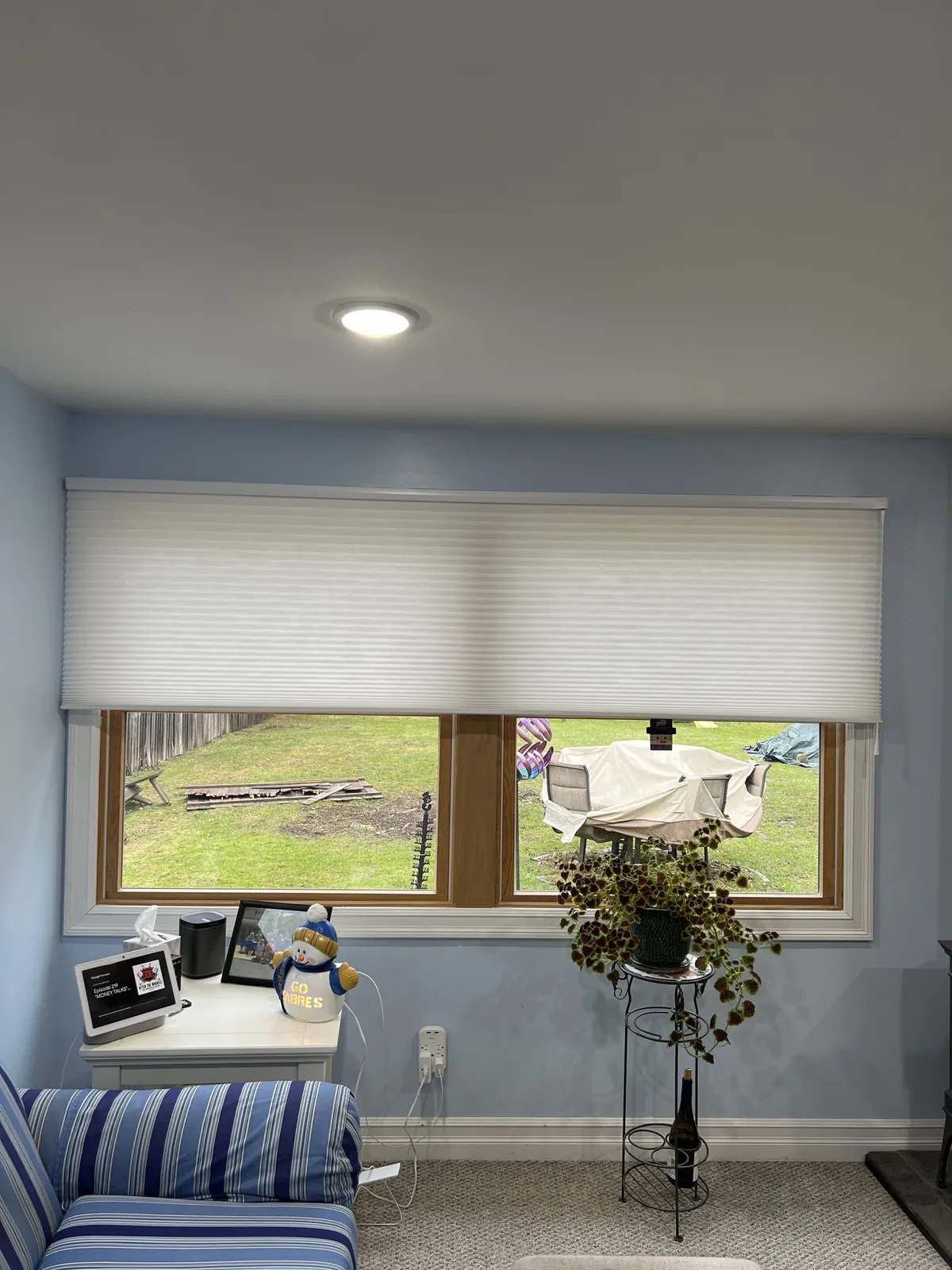
Converted camps near the shore
The older camps around the ponds were built for summer weekends. Many have since been insulated, re-roofed and turned into year-round houses, but they kept their camp layout: low ceilings, small rooms, and windows on almost every wall to catch the breeze. Some still have original wood windows that have been painted many times, alongside newer replacement units added during the conversion.
In a converted camp, the windows are often the weak point. Even with new walls and roof, a room with glass on three sides can feel cold by the windows on a January evening. A honeycomb shade adds insulation right where it is needed, without taking up any of the limited floor space or making a low room feel smaller.
Camp windows are rarely a standard size, and after many seasons by the water they are not always square either. Every shade is made to measure, so a run of slightly different windows can wear matching shades that each fit their own opening. On the lower ceilings typical of a camp, a cordless lift keeps things tidy, with no cords hanging down the window.
Long Pond and Assawompset: the water side
The sides of these houses that face the ponds take two kinds of light. On a calm morning or a late afternoon, sun reflects off the water and brightens the room far beyond what the window alone would let in. On gray days, the same rooms can feel flat and dim. A good fabric has to cope with both.
A light-filtering honeycomb fabric is the usual answer on the pond side. In bright sun it spreads the light and takes the edge off the glare without darkening the room. On a dull day, it can simply be raised. A top-down, bottom-up shade lets you cut the strip of glare at the top of the window while you keep looking out at the water below it.
In winter the ponds bring cold. Wind across open ice presses against the water-facing glass, and the room on that side often feels several degrees cooler than the rest of the house. Lowered at dusk, a honeycomb shade holds a steady layer of air at the window, so that side of the room stays comfortable through the evening.
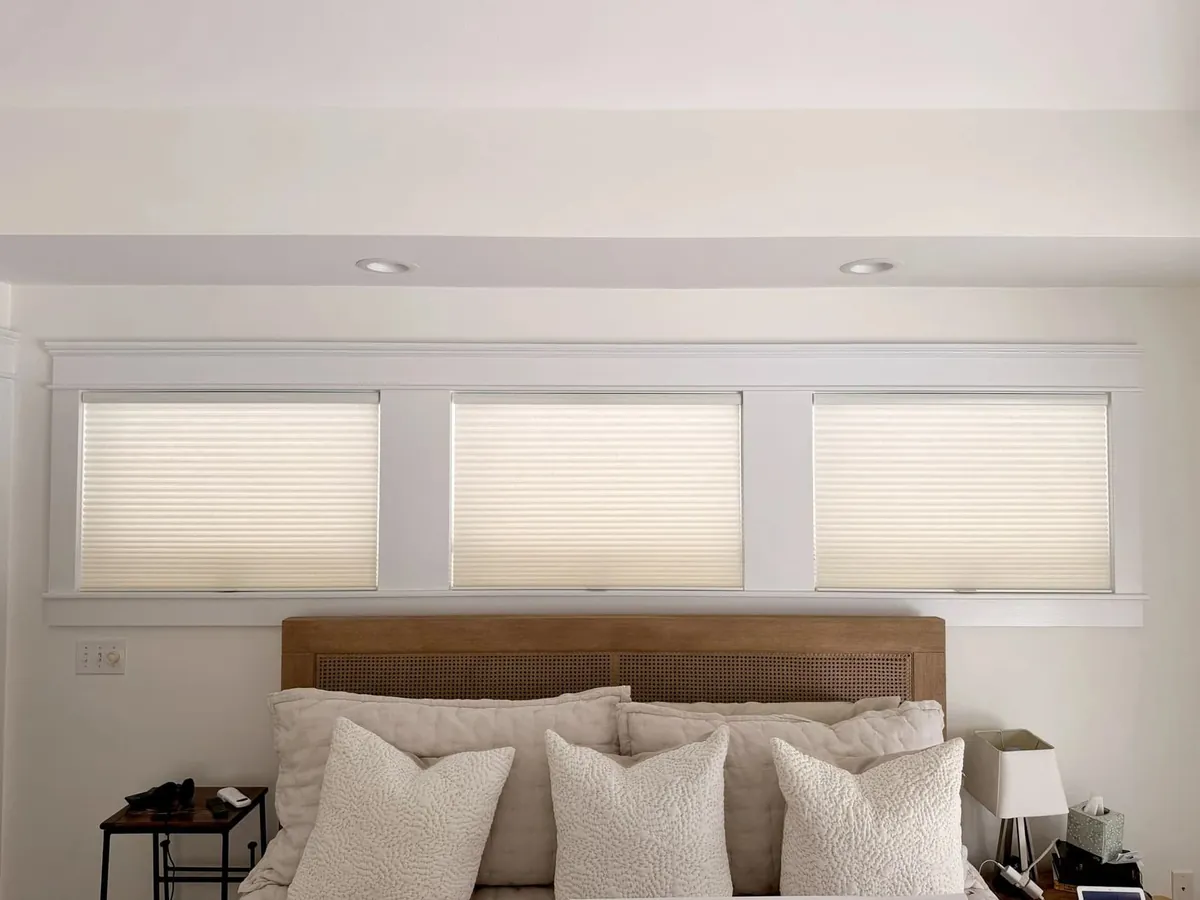
Newer colonials on larger lots
Further back from the shore, Lakeville’s newer colonials follow a familiar plan: a center hall, rooms either side, bedrooms upstairs, and an open kitchen and family room at the back. The windows are regular, double-hung units, usually in matching sizes across the front of the house, with a larger window or a slider at the back.
That regularity makes cellular shades straightforward to plan. Matching fabric and backing color across the front windows keep the house looking crisp from the road. Inside, each room can take its own fabric and opacity: light-filtering in the living and dining rooms, room-darkening in the bedrooms, and something easy to wipe down in a kitchen or mudroom.
Some colonials have a two-story family room or entry with windows stacked one above the other. Duette is made in large sizes, and for the upper windows PowerView motorization lowers and raises the shades from a remote or your phone, so nobody needs a ladder. Our page on motorized blinds in Lakeville covers how that is set up.
Bedrooms that wake with the water
A bedroom on the pond side of the house is a lovely room until the sun rises across the water in June. The light reflects off the surface and floods in long before anyone wants to be awake. A room-darkening honeycomb fabric deals with that: the room stays dim until you raise the shade, and the cells keep holding air against the glass, so the same shade keeps the room warmer on a winter night.
Some people would rather wake to a soft light than a dark room. In that case a light-filtering fabric on a top-down, bottom-up rail is a good compromise. The bottom of the shade stays closed for privacy from the shore path or a passing boat, and the top can be opened a little to let in the morning. With PowerView, the bedroom shades can rise on a schedule at the time you choose. When we plan cellular shades in Lakeville bedrooms, we ask which way each room faces and how you like to wake before we suggest a fabric.
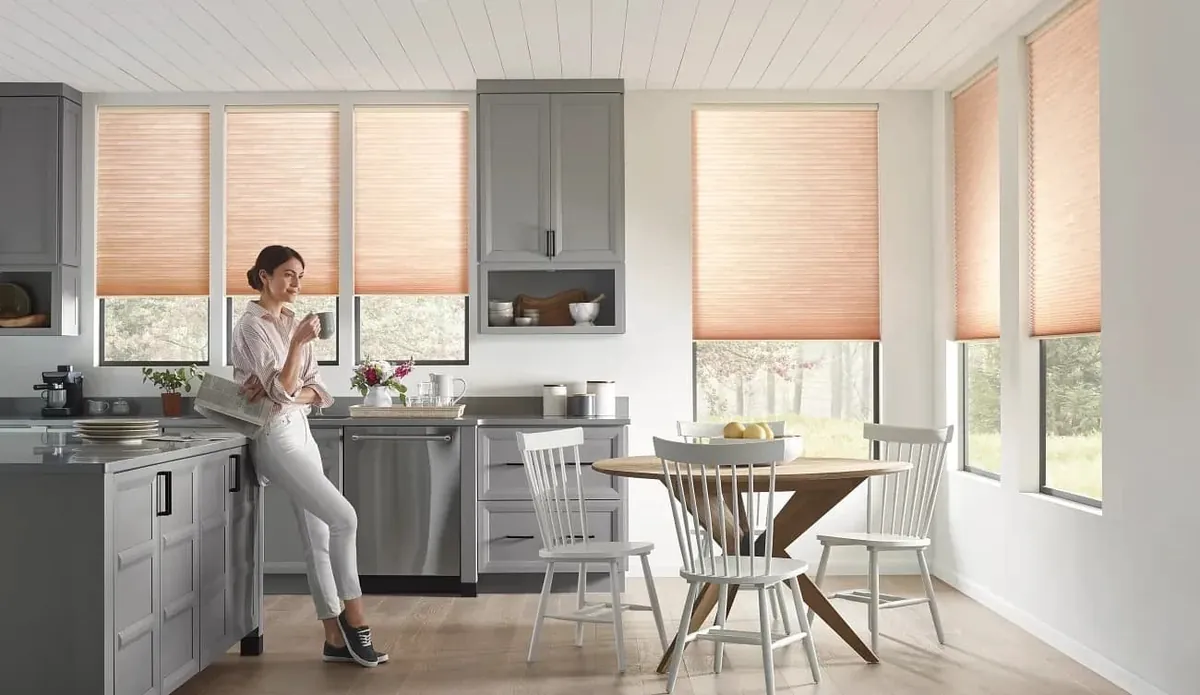
Kitchens, baths and the small back rooms of a camp
Converted camps often keep their kitchens and bathrooms in the original footprint, which usually means small rooms with a window over the sink or the tub, set close to the neighboring camp or the road. Those windows need privacy as much as warmth, and they deal with steam and splashes every day.
A light-filtering honeycomb shade gives daytime privacy while letting the light in, and a top-down, bottom-up rail lets you open the top of a bathroom window while the lower half stays covered. Over a kitchen sink, where the window is hard to reach across the counter, a cordless lift or a motorized shade saves leaning over the taps. These small windows are often where cellular shades in Lakeville camps make the quickest difference, because they are the rooms most often left with a cheap blind or nothing at all.
How the honeycomb keeps the cold out
Seen side on, a honeycomb shade is a row of hollow tubes running across the window. Close it, and every tube holds a slice of air that barely moves. Because still air passes heat along so slowly, cold radiating from the glass reaches the room more gradually, and the room’s warmth escapes to the glass more slowly too.
Duette adds fabrics with a cell inside the cell, and double-cell shades with two rows of tubes. Both increase the amount of trapped air. For a pond room that takes the full force of the winter wind, a double-cell fabric is worth considering, and we can show you the difference in thickness and light at the consultation.
The shade works best when it fits closely. A made-to-measure shade sits with only a narrow gap at the edges, so less air slips around the sides. That is one more reason off-the-shelf sizes rarely suit a converted camp’s windows. A shade bought to the nearest standard width leaves a strip of bare glass down one side, which lets in a line of light at night and a ribbon of cold air in winter. Made to the opening, the shade closes both.
Measuring for a clear view
Our measurements always start from the view. On a pond-side window we check how far the raised shade will drop into the glass, how much depth the frame offers for an inside mount, and whether a crank handle, lock or sash stop is in the way. Width is taken at the top, middle and bottom, and height on both sides and in the middle, because older camp windows in particular are often out of square. On sliders and French doors we plan which way the shade will stack and confirm it clears the handle.
Every mount, fabric and lift is agreed with you window by window before anything is ordered. When the shades arrive, our certified Hunter Douglas installers fit the brackets into solid wood, level each headrail and run every shade with you so you know how it works.
Your consultation, step by step
A pond view changes the way a fabric looks, so the only fair test is at your own window. That is why our vans bring the samples to Lakeville houses instead of asking you to choose from a book.
- Use Request a Consultation or the call button to set a time.
- We look first at the rooms that face the pond and talk about what you want from each: view, glare control, warmth, privacy.
- You hold sheer, light-filtering and room-darkening honeycomb fabrics up at the glass and watch how each handles the light off the water.
- Every window is measured, and we explain inside and outside mounts as we go.
- We go over lifts and motorization for the windows that are high, wide or hard to reach.
- You get a free estimate for the shades you are considering and decide in your own time.
If you want help with colors and fabrics across a whole room, our interior design consultations are available too. For more detail, read what happens at an in-home consultation.
Lifts that keep the window clean
On a window built around a view, the last thing you want is a cord dangling down the glass. A cordless lift removes it entirely: you lift or lower the shade by its bottom rail and it stays where you leave it. It is also the safer choice with children and pets in the house.
Top-down, bottom-up rails are the most useful option on the pond side, for the reasons above. For a two-story window, or a house you close up midweek, PowerView motorization is worth a look. Schedules can raise the shades in the morning, lower the pond-side ones during the brightest hours of a summer afternoon and close everything at dusk in winter. You can change any of it from the app.
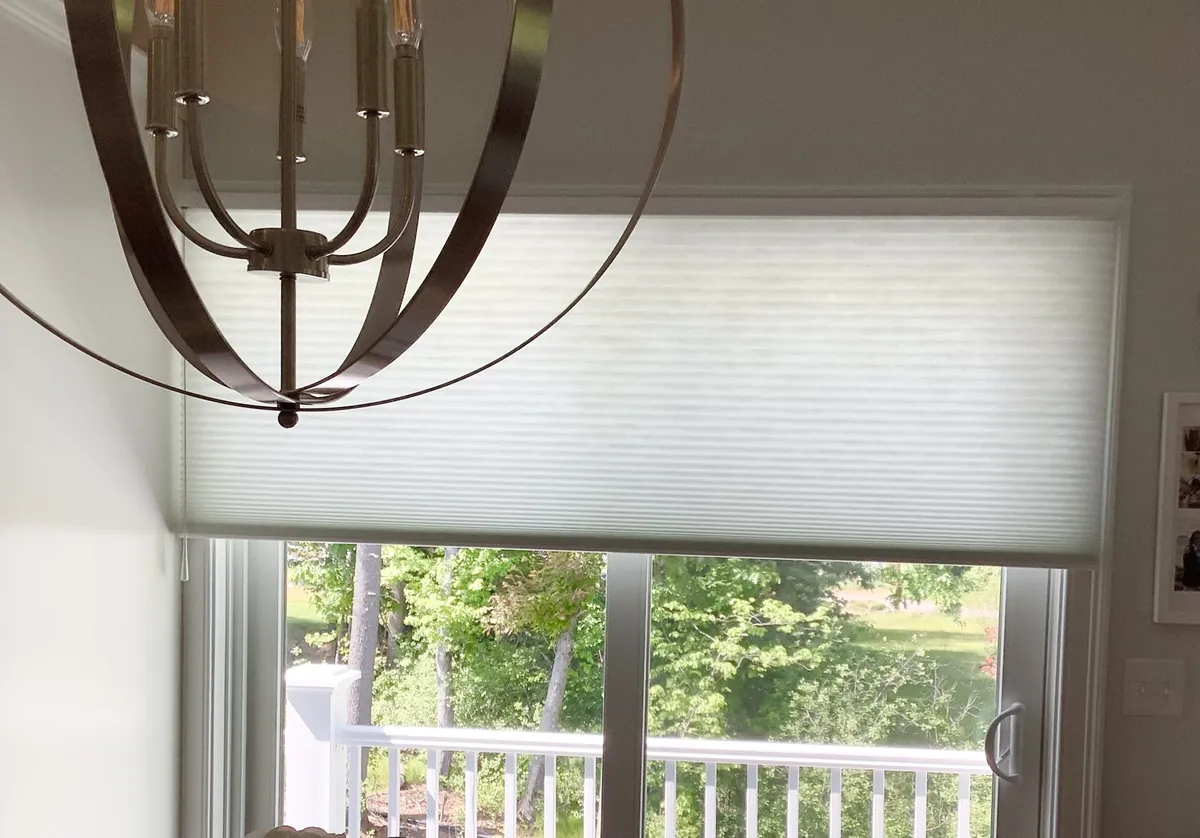
Duette and Applause in a pond house
Both lines are Hunter Douglas honeycomb shades, and both hold air in their cells. Duette offers the widest choice of fabrics, textures, sizes and shapes, including the vertical shade for sliders. Applause has its own palette and suits regular windows well.
A Lakeville order often uses Duette on the wide pond-facing glass and the deck door, where size and fabric choice matter most, and Applause in the bedrooms and back rooms. Our Duette honeycomb shades and Applause honeycomb shades pages describe each, and the cellular shades page shows the whole range.
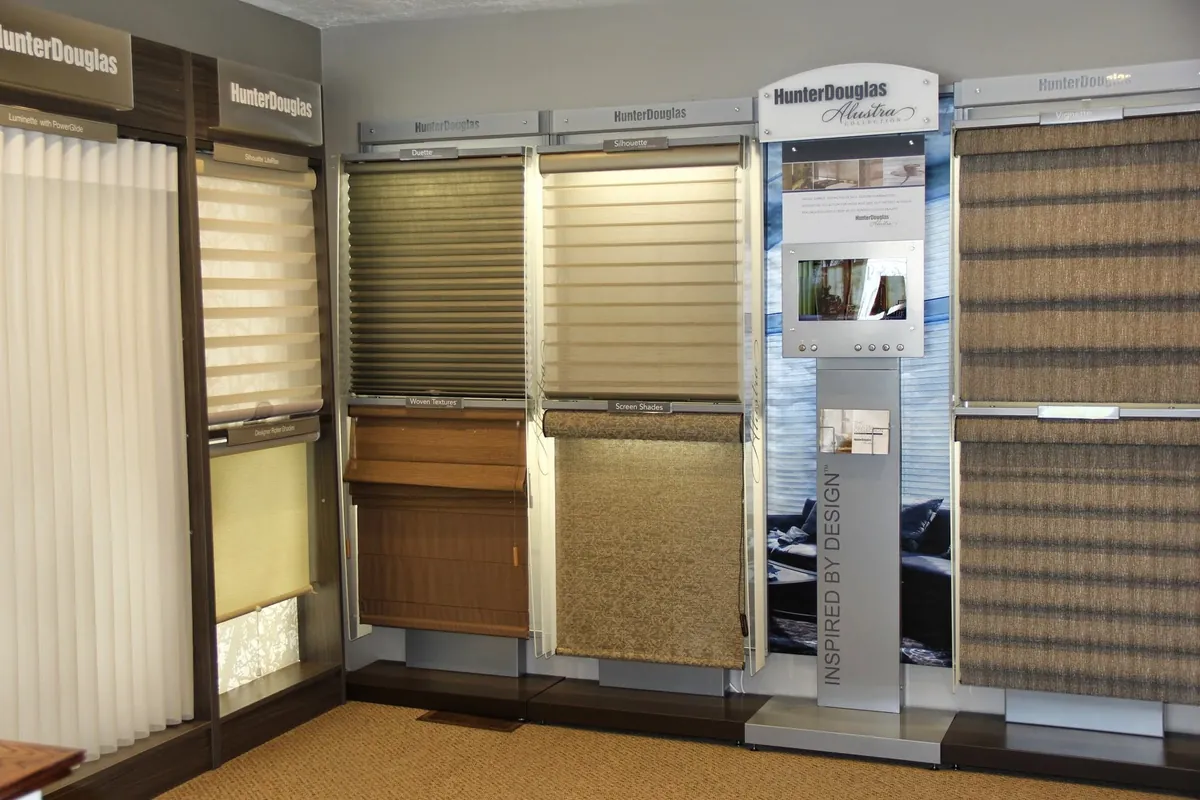
Working with a Hunter Douglas Gallery dealer
Hunter Douglas gives the Gallery title to dealers who meet its standards, and Blinds & Designs is one. You can choose from the whole honeycomb range through us, along with Hunter Douglas sheer shades, roller shades, shutters and drapery.
Certified Hunter Douglas installers fit every shade we sell, and we also offer blind and shade repairs, including on coverings already in the house when you bought it. If you are converting a camp, that can be a good way to rescue a shade that is worth keeping.
For other rooms, see our roller shades in Lakeville for a screened porch or our roman shades in Lakeville for a dining room. Everything we do in town is on the Lakeville page.
Questions from Lakeville
Will a honeycomb shade spoil my view of the pond?
No. Fully raised, it folds into a slim band at the top of the window. A top-down, bottom-up shade can also lower from the top, so the water stays in view while the lower glass is covered.
My camp has old windows of all different sizes. Can you still fit shades?
Yes. Every shade is made to its own measurements, so mismatched windows each get a shade that fits. We measure each one in several places to allow for frames that have moved.
What fabric handles the glare off the water?
A light-filtering honeycomb fabric spreads bright reflected light evenly without darkening the room. Sheer fabrics keep more of the view; room-darkening fabrics suit pond-facing bedrooms.
Can I cover the tall windows in my family room?
Yes. Duette is made in large sizes, and PowerView motorization raises and lowers shades on upper windows from a remote or the app.
Do I pay anything for the estimate?
No, the estimate is free. We work it out after measuring at the consultation, with the samples there so you can settle on fabrics too.
Bring the samples to the water’s edge
To see how cellular shades in Lakeville will look against your own view, have us bring the honeycomb range to the house. Request a consultation and we will measure your windows and leave you with a free estimate. To talk it through first, use the call button, or drive over to the North Dartmouth showroom, our nearest location.