
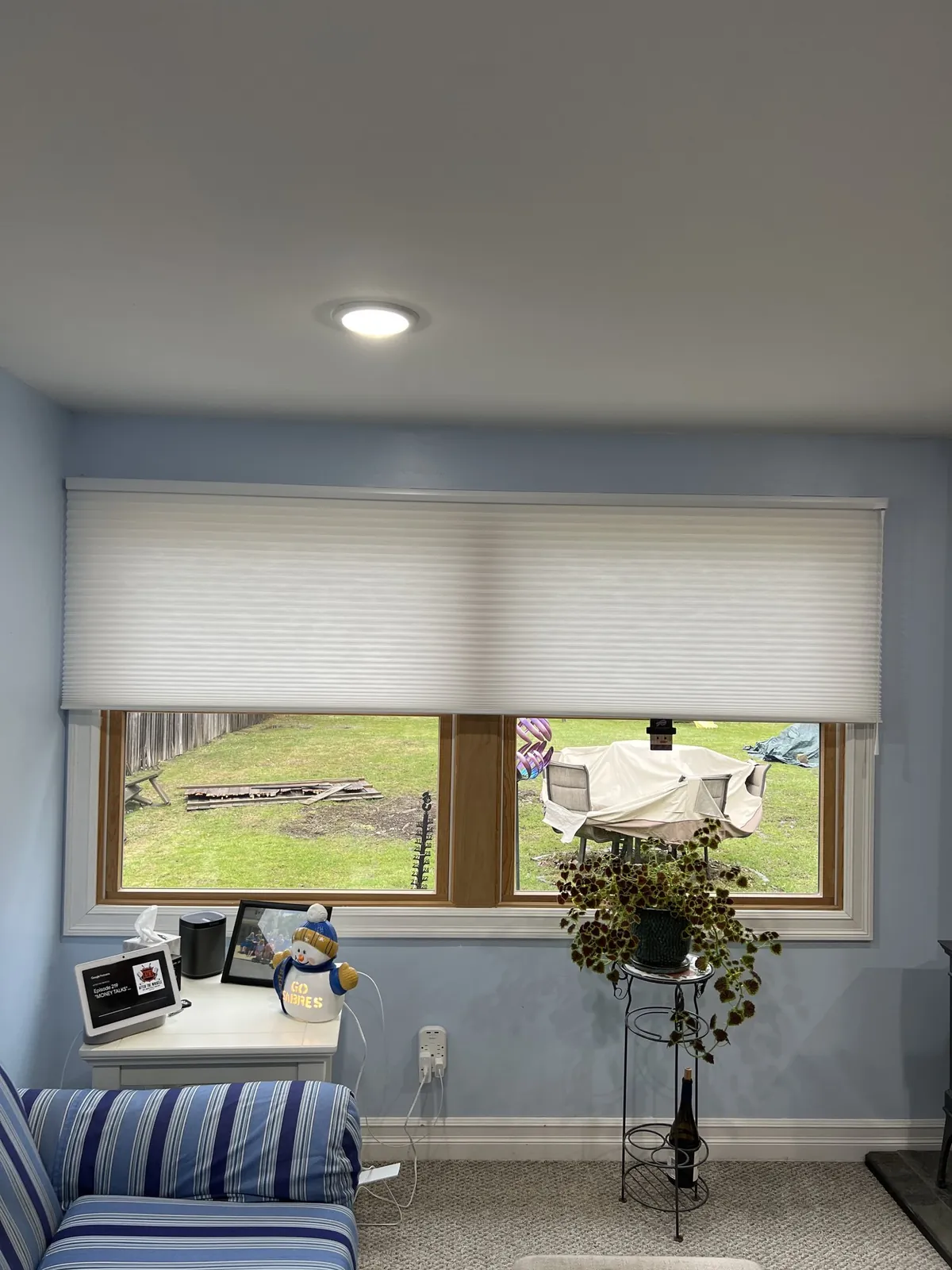
Close neighbors, plain openings and a few tall old windows
Most of Stoughton is capes, ranches and two-families on modest lots, with a cluster of Victorians near the town center. The window openings across most of that housing are standard modern sizes, and around the center the older houses keep their tall, narrow sash. Lots are compact, so a side window often looks straight across a driveway at the house next door. Put those together and you have the everyday case for cellular shades in Stoughton, MA: warmth at the glass, privacy from close neighbors, and a tidy fit on ordinary windows.
The warmth comes from the shape. Seen end-on, a honeycomb shade is a row of six-sided pockets formed between two layers of fabric. Lowered, those pockets are full of air with nowhere to go, and air that stays put is a poor carrier of heat. So the chill near a window on a February evening eases, and the afternoon sun through a west window in August does less to heat the room.
The privacy comes from the fabric and from how the shade opens, which we cover further down. And the fit comes from the fact that every shade is made to the measurements we take at your windows.
The three shades we fit most in Stoughton
Most rooms in a Stoughton cape, ranch or two-family are served well by one of these when we plan cellular shades in Stoughton, MA.
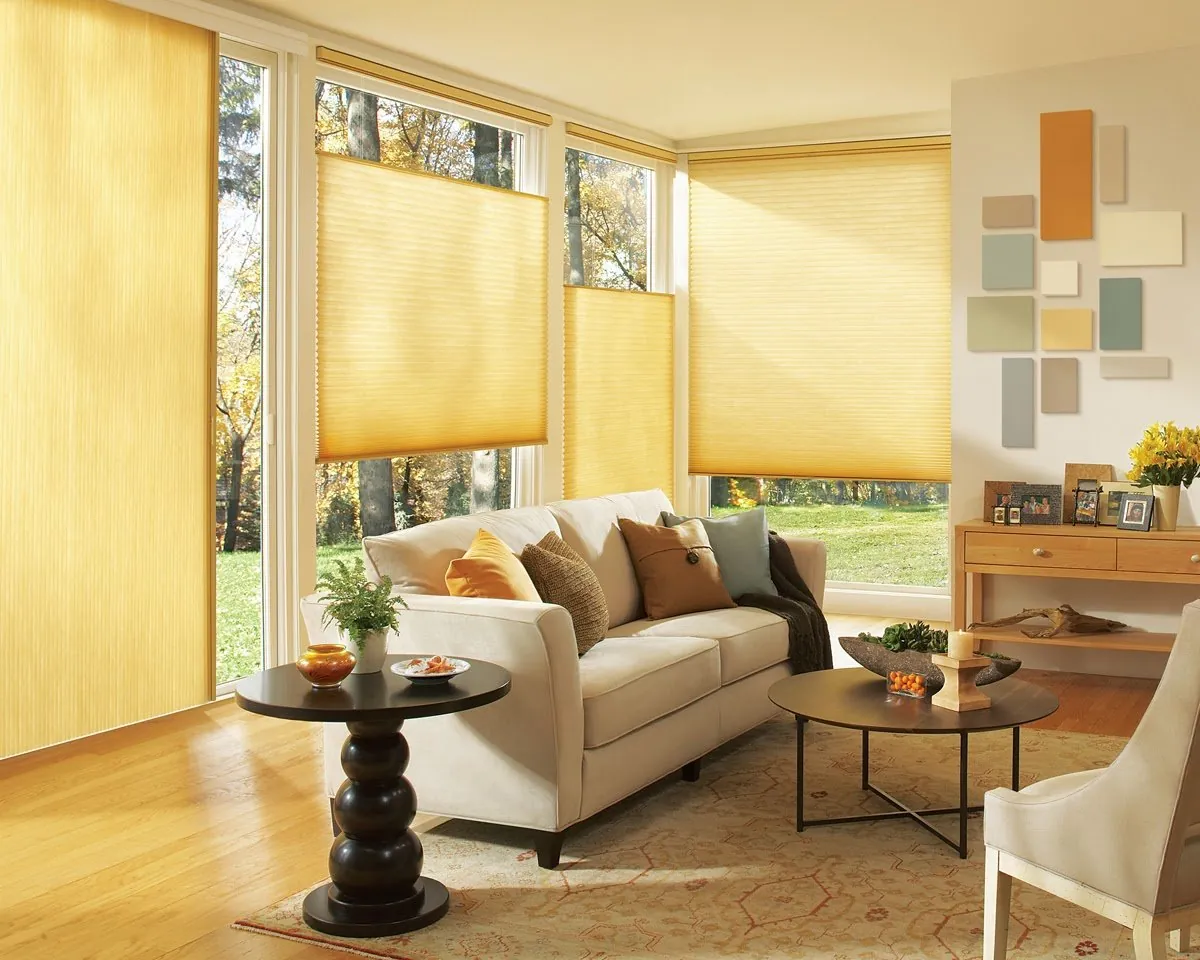
Top-down, bottom-up
Drop the shade from the top for daylight while the lower half blocks the view from next door. The answer for a side window across a narrow driveway.
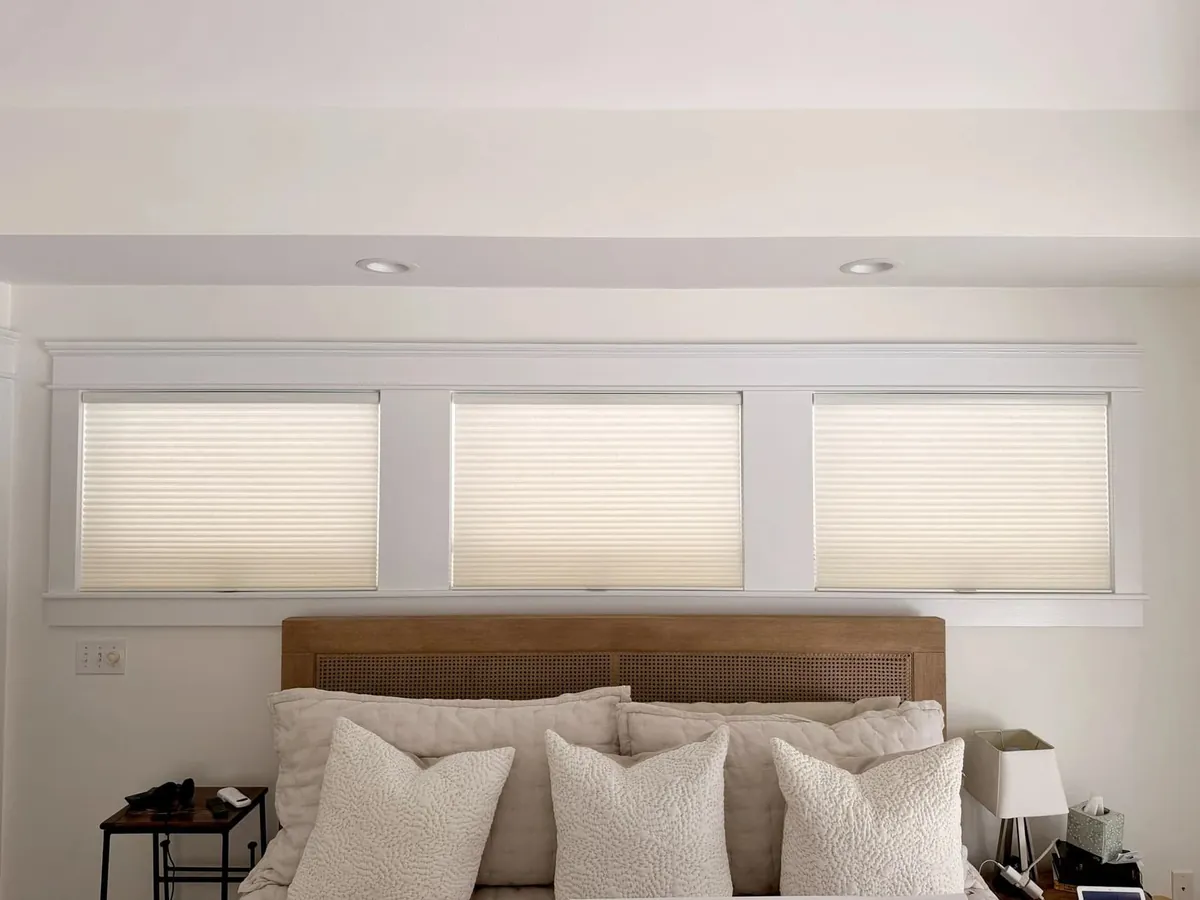
Room-darkening bedrooms
Fabric that shuts out streetlights and early sun, so bedrooms on a busy street or a bright side of the house stay dark.
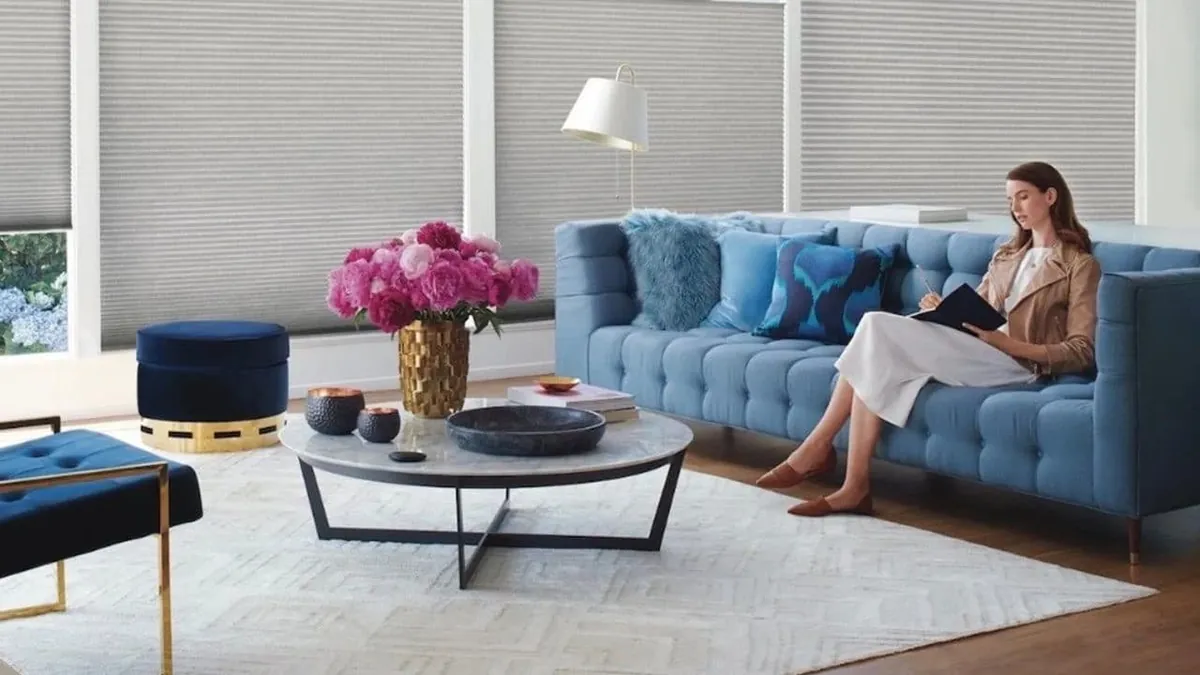
Light-filtering living rooms
The room stays bright and the fabric glows, while outlines inside are softened from the street.
Two-families: two households, one set of windows
Stoughton has a good number of two-family houses, and they bring a particular set of questions. Typically each unit occupies a full floor, with matching windows stacked one above the other, front, back and sides. Each household lives with its own rooms and its own light, but from the street the house reads as a single building.
That makes consistency worth thinking about. If both units choose honeycomb shades, keeping the outward-facing color similar, usually a soft white or a light neutral, means the front of the house looks orderly from the road, while each unit picks whatever color and opacity it likes on the inside. We can show you how the back of each fabric looks from outside so you can judge that.
The upper unit usually has more light and more sky; the lower one often has the most to think about for privacy, especially on the side facing the neighboring house. A top-down, bottom-up shade on the lower floor’s side windows is often the most useful single choice in the house. Many two-families also have back porches on each floor, sometimes enclosed, and an enclosed porch with windows on three sides is the room where a honeycomb shade does the most for comfort.
Whether you own the whole building or one unit, the consultation works the same way. We look at the rooms you are doing now, note the window sizes, and keep a record so that later rooms, or the other unit, can match.
Capes and ranches on modest lots
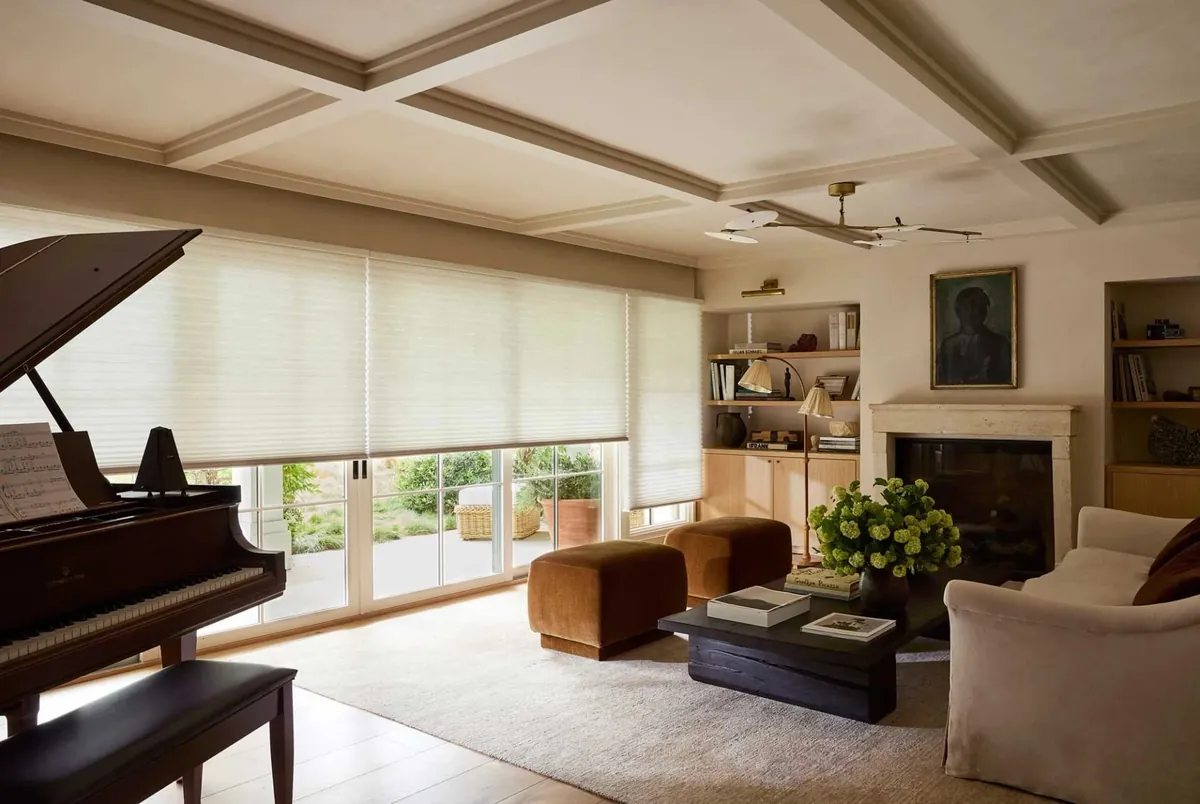
The capes and ranches that make up so much of Stoughton have simple, sensible windows. Openings are usually standard sizes, many of them replacement units, and many rooms share the same size of window. That suits honeycomb shades well, and it makes it straightforward to give the whole house a consistent look from the street.
In a cape, the bedrooms upstairs sit under the slope of the roof and are lit by dormers. Those rooms are often the warmest in summer and the coolest in winter, and the dormer window is usually small and set back in a recess. A honeycomb shade fitted inside that recess, where the depth allows, folds up out of the way during the day and closes off the glass at night.
In a ranch, the front living room usually has the largest window in the house. Splitting a wide window into two or three shades on one headrail lets you open one end and keep the rest closed, and a top-down, bottom-up design on each panel gives you light from the top with privacy below.
On replacement windows, we always check the depth. A shallow frame with locks close to the front may not clear a headrail inside the opening, and in that case we mount the shade just above the frame and size it a little wider, which also hides the gaps of light at the edges.
Privacy across a narrow side yard
On a modest lot, the windows down the side of the house may be only a driveway’s width from the neighbors’ windows. That is where most of the privacy questions in Stoughton come from, and it is the reason top-down, bottom-up shades are so popular here.
Lower the top of the shade and you get sky and daylight through the upper glass. Keep the bottom raised to the sill and the lower glass, the part that lines up with the window opposite, stays covered. During the day, a light-filtering fabric also helps, because it glows when the light hits it and hides what is behind it. At night, with lamps on inside, the balance shifts, and a heavier light-filtering or room-darkening fabric keeps the room private.
Bathrooms on the side of the house are the clearest case. A top-down shade lets in light and air while the room stays private, and the cells help keep a small bathroom warmer on a cold morning. Side-window privacy is the single most common reason we are asked about cellular shades in Stoughton houses, and it is usually solved with nothing more than the right way of opening the shade.
Tall sash in the Victorians near the center
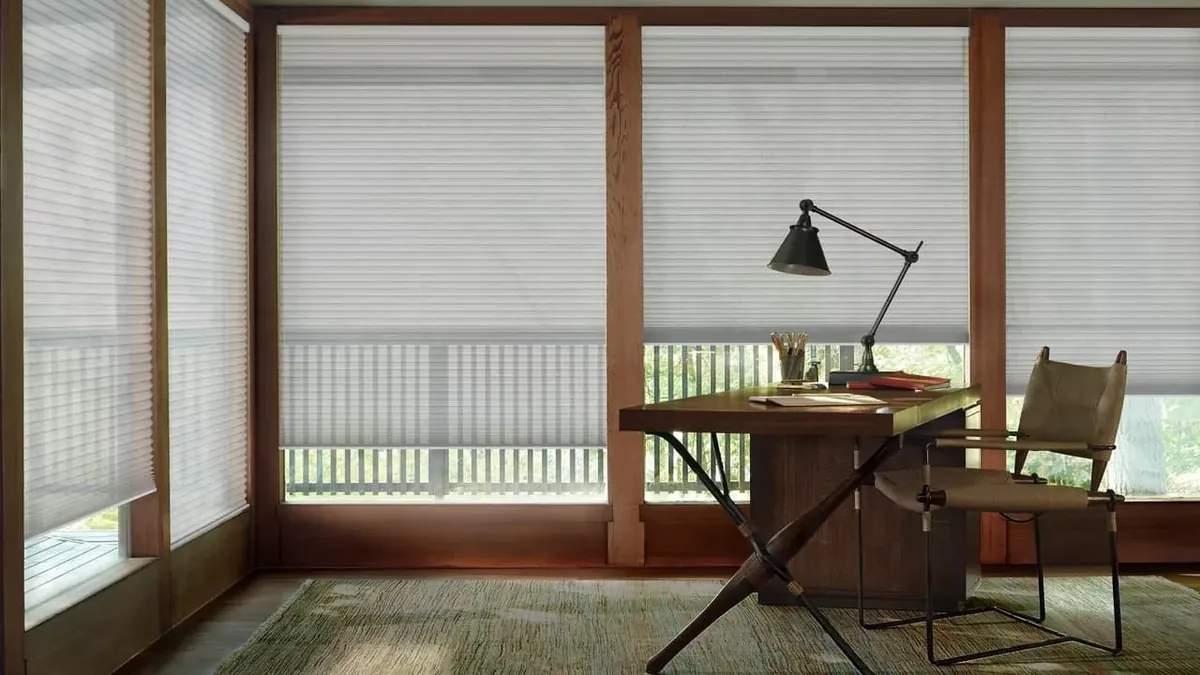
The Victorians near Stoughton’s town center have the tallest windows in town, with long, narrow sash and the kind of trim that is worth keeping on show. For those windows, honeycomb shades can be made tall and slim, and mounted inside the frame so the casing stays fully visible.
Old frames need careful measuring. After a long life, a window frame is seldom perfectly square, and the hardware for the old sash can leave less depth than you would expect. We measure at the top, middle and bottom, and check the depth at more than one point, before suggesting an inside mount or a mount on the face of the casing. Either way, the aim is for the shade to look as though it belongs to the window.
The tops of these tall windows can be hard to reach. A cordless lift makes the shade easy to move from the bottom rail, and for the tallest windows PowerView motorization lets you raise and lower them from a remote, your phone or a schedule.

Samples at your door
For Stoughton, we usually start with a visit to your home. Our vans carry samples, so we can bring the showroom to you, and you choose with your own windows, your own light and your own neighbors’ house in view.
That is the only real way to judge privacy. A fabric that looks opaque in a sample book can glow more than you expect on a sunny side of the house, and a light color that seems right in one room can look different in the next. We hold the samples up at each window so you can see.
Read more about how our in-home consultations work. We measure every window you want covered, and the estimate is free.
Picking a Hunter Douglas honeycomb line
We fit both Hunter Douglas honeycomb collections. They keep rooms comfortable the same way, through the air inside the cells, and they differ mainly in the breadth of choice.
- Duette has the biggest collection of fabrics and textures, very tall and very wide sizes, specialty shapes and a vertical shade for sliders. It suits the tall sash of the Victorians near the center and any big picture window.
- Applause has a palette of its own and is a natural match for the standard openings in capes, ranches and two-families.
- Both come in light-filtering and room-darkening fabrics, in single-cell and double-cell versions, and with cordless or motorized lifts.
A typical Stoughton order might use Duette in a living room picture window and Applause in every bedroom. You can read about each line on the Duette honeycomb shades and Applause honeycomb shades pages, and the cellular shades page shows the full range.
Bedrooms, streetlights and early sun
On a modest lot, a bedroom window is often near a streetlight, a neighbor’s porch light or a busy road. Those small sources of light at night can be just as unwelcome as the sun at five in the morning. A room-darkening honeycomb fabric handles both. The cells still hold air, so the room also stays warmer on a winter night.
If you want the room as dark as possible, an outside mount, set just above and beyond the frame, cuts the slivers of light that slip around the edges of an inside-mounted shade. In a child’s room, a cordless lift keeps the window free of hanging cords. And for a bedroom where you like light in the day but darkness at night, a top-down, bottom-up shade gives you flexibility without a second covering.
When to add motors
Most windows in a Stoughton cape or ranch are easy to reach, and a cordless lift is all they need. Motorization is worth considering for a few windows: the tall Victorian sash near the center, a window behind a kitchen counter, or a run of living room shades you would like to move together.
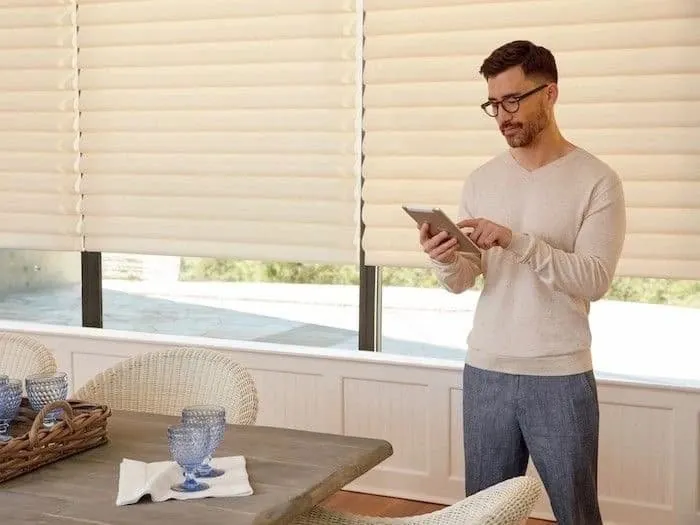
With PowerView, motorized shades work from a remote, from the app on your phone or on a schedule you set. A common setup is for the bedroom shades to rise gently in the morning and the living room shades to close at dusk. If you think you may want motors later, mention it at the start so the shades you buy now match. Our page on motorized blinds in Stoughton goes further.
Enclosed porches and three-season rooms
Plenty of Stoughton houses, two-families especially, have a porch that was closed in at some point, with a run of windows across the front and down both sides. Some are used all year, some only from spring to autumn. Either way, they are the rooms that feel the weather most: a wall of glass on three sides means the sun bakes them on a summer afternoon and the cold pours in on a winter evening.
That is exactly the room cellular shades in Stoughton are best at. A shade on every window, all built to the same drop so the bottom rails line up around the room, turns a porch that was only pleasant on mild days into somewhere you can sit for much more of the year. Double cells are worth considering if the porch is used through the winter. A light-filtering fabric keeps the room bright, and top-down, bottom-up shades let you keep the street side covered while the upper glass stays open to the sky.
Porch windows are often a mix of sizes, added in different years, and some sit on low knee walls. We measure each one on its own, and the shades are made to their own sizes, so the room still reads as one set.
From the first visit to the last bracket
The visit itself is relaxed and unhurried. Tell us which rooms you are thinking about, and we look at each window with you, holding up honeycomb fabrics so you can see how each one behaves in that room’s light, and how much each one hides from the house next door. We talk about mounts, lifts and whether motors make sense anywhere, then measure.
- Each window’s width is recorded in three places and its height in three, and the depth of the frame is checked, whether it is a shallow replacement unit or an old Victorian jamb.
- You get a free estimate for what you have chosen and take as long as you like to decide.
- Once you go ahead, each window’s fabric, mount and lift is confirmed in writing before the order is placed.
- On the day, our certified Hunter Douglas installers put up the brackets, hang and level every shade, try each one up and down and set up any PowerView controls.
- Before they go, they show you how everything operates.
For advice on color and fabric across a whole room, ask about our interior design consultations, and see what happens at an in-home consultation for the common questions.
The Gallery dealer advantage
Being a Hunter Douglas Gallery dealer puts Blinds & Designs in a select group, and for a Stoughton house it means choice. Nothing in the honeycomb range is off the table: any Duette or Applause fabric, the sideways shade for a slider, motorized PowerView shades for the tall sash near the center.
Hunter Douglas has certified the installers who hang them. When the rest of the house needs something different, we have blinds, shutters, roller and roman shades and drapery as well, and if an older shade or blind is misbehaving, we offer blind and shade repair in Stoughton. Everything we do in town is on our Stoughton page, and custom blinds in Stoughton may suit a kitchen or bathroom.
Questions from Stoughton
How do I keep privacy on a side window close to the neighbors?
A top-down, bottom-up honeycomb shade lowered from the top gives you light through the upper glass while the lower part stays covered. A light-filtering fabric adds daytime privacy, and a heavier fabric helps at night.
We own a two-family. Should both units match?
They do not have to, but keeping the outward-facing color similar makes the house look orderly from the street. Each unit can still choose its own colors inside. We keep a record of the sizes and fabrics so the second unit can match later.
Will honeycomb shades fit my replacement windows?
Usually. We check the depth of each frame, because some replacement units are shallow. Where an inside mount will not clear the hardware, the shade mounts just above the opening.
Can you darken a bedroom near a streetlight?
Yes. A room-darkening honeycomb fabric blocks most of the light, and an outside mount that overlaps the frame cuts the light at the edges.
Where can I see the shades in person?
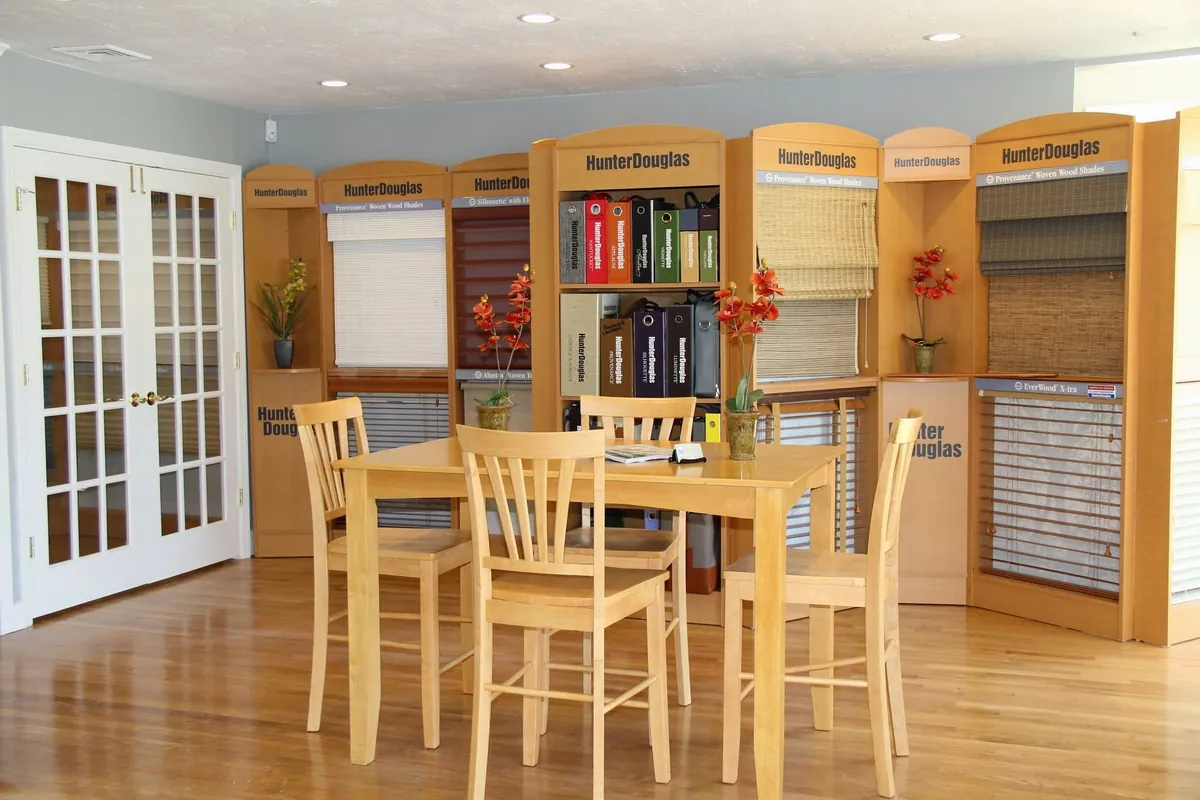
We bring samples to your home. If you would like to see the shades in a showroom, our Franklin showroom is the nearest.
Start with a visit
Seeing honeycomb fabric at your own windows answers most questions about cellular shades in Stoughton, MA, in one go. Ask for a consultation and the samples come to your door, every window gets measured and the estimate costs nothing. Want a word first? Tap the call button. The Franklin showroom is the nearest place to see the shades in person.