
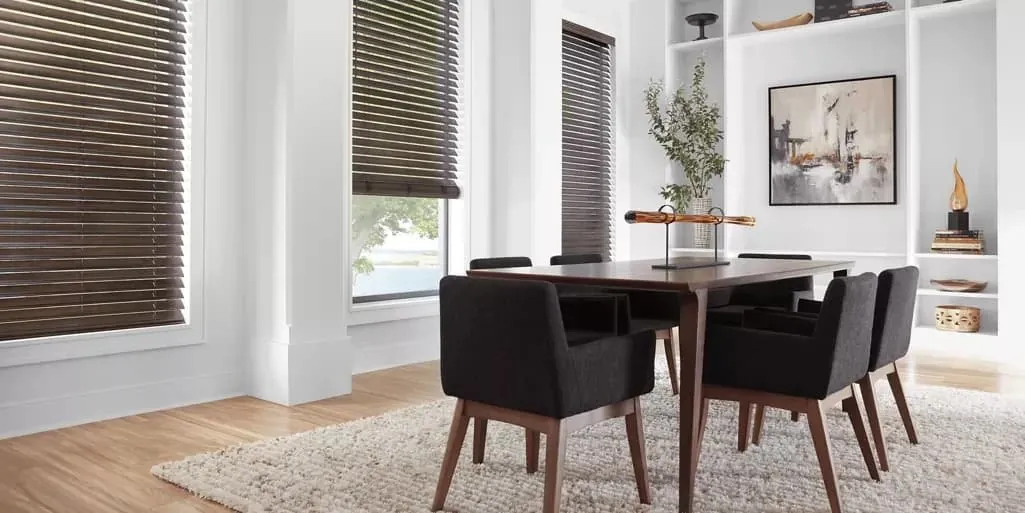
Tall windows, deep reveals and a historic city
New Bedford’s housing was built for a working port and the mills that followed it. Through the North End and the West End the streets are lined with triple-deckers, three flats stacked one above the other, each with its own run of windows front and back. Above the waterfront, the historic district holds Federal houses with formal, evenly spaced façades. What they share is height: tall, narrow double-hung windows and generous ceilings. That is the starting point for custom blinds in New Bedford, MA.
A tall, slim window changes the way a blind works. The slats are short, the blind is long, and when it is raised, the stack of slats at the top has to sit somewhere without covering half the glass. The reveal, the depth of the opening between the face of the wall and the sash, decides whether the blind can sit neatly inside the frame or has to be mounted on the trim in front of it.
In the historic district there is one more thing to weigh: how the windows look from the street. A row of Federal façades reads as a single composition, and coverings that are calm and consistent from outside suit it best.
Blinds for New Bedford’s older housing
Hunter Douglas blinds come in wood, faux wood, metal and vertical styles. These three cover most of what custom blinds in New Bedford, MA need to do in a city house, and we bring samples of all of them.
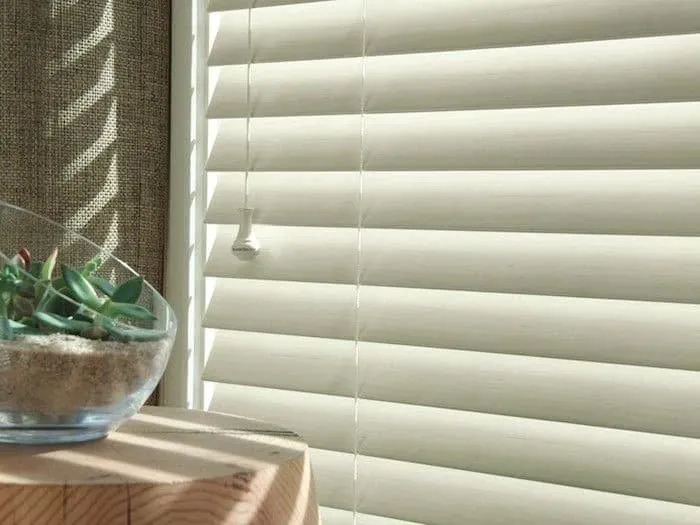
Wood and faux wood
Real wood for a Federal parlor, faux wood for kitchens and baths that take steam. Both come in painted whites that look right behind old sash from the sidewalk.
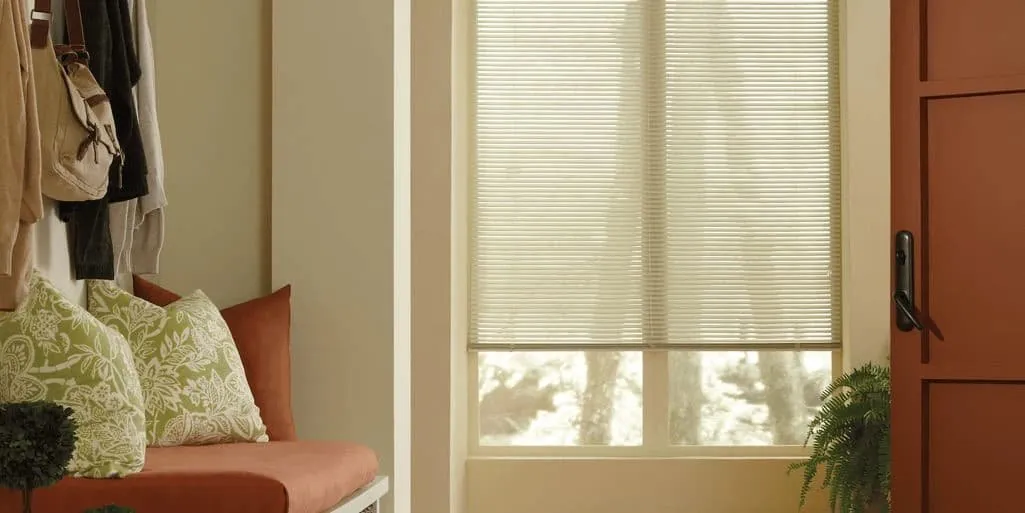
Metal blinds
Light and slim, which matters on a long blind you raise every day. A good fit for shallow reveals, where a thin headrail sits inside a frame that a bulkier one would not.
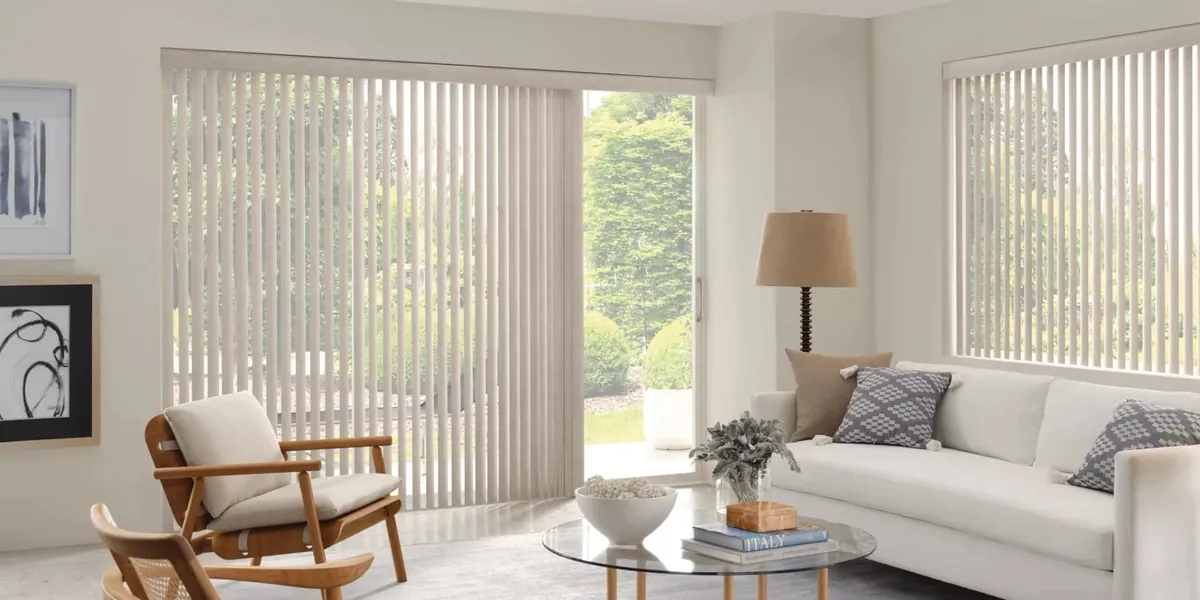
Vertical blinds
For a back-porch door or a slider added in a renovation. The vanes draw aside, and they turn to block a neighbor’s view across a narrow lot.
The long blind on a tall, narrow sash
Most of the windows in a triple-decker or a Federal house are taller than they are wide by a good margin. That proportion is handsome, but it makes a few demands on a blind.
First, weight. A long blind has more slats, and every one adds to what you lift. On the tallest windows, lighter materials or a lift system that does the work for you make daily use easier. Cordless lift suits a medium window. For a very tall one, especially in a high-ceilinged front room, motorized lift through Hunter Douglas PowerView takes the effort away entirely.
Second, the stack. When a long blind is fully raised, all those slats gather at the top. On a narrow window that bundle can be deeper than you expect and can cover a real slice of the upper sash. Wider slats mean fewer of them, so the stack is shallower. Narrower slats look finer and give more control, but gather into a taller bundle. We hold both up at your window so you can judge it for yourself.
Third, the tilt. On a tall blind the tilt mechanism turns every slat at once over a long run, and a well-made headrail keeps them turning together so the bottom slats match the top. A tilt wand at the side is easy to reach on a long blind; a cord tilt high up a tall window is not.
How deep is the reveal
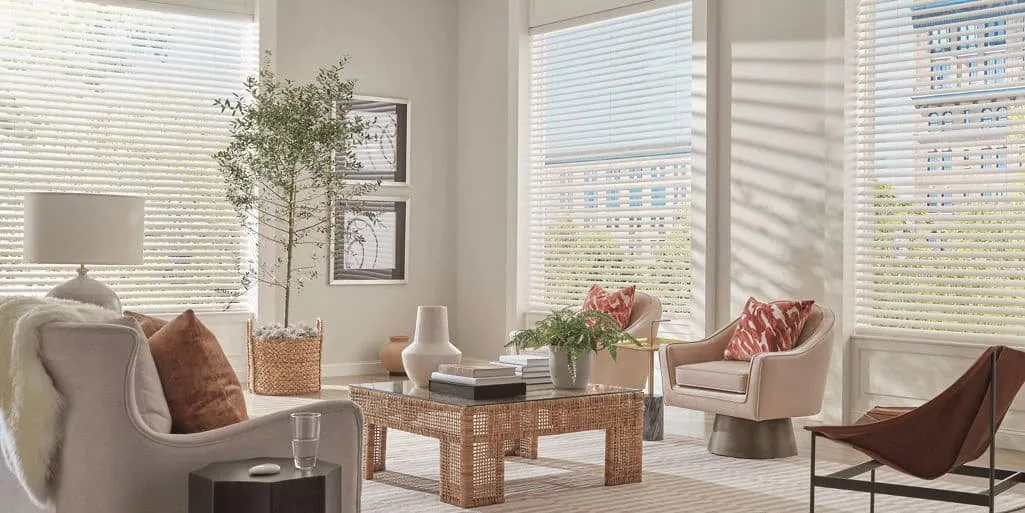
The reveal decides the mount, and New Bedford’s older buildings vary widely here. Some triple-deckers have shallow frames, with the sash close to the face of the wall and little room in front of it. Many Federal houses have deeper openings, with wide interior casings and sometimes paneled reveals.
An inside mount puts the headrail within the opening. It is the neatest look, because the trim stays fully visible and the blind tucks out of sight when raised. It needs enough depth for the headrail and for the slats to tilt without striking the sash locks or the window crank. Where the reveal is generous, an inside mount is almost always our first suggestion.
Where it is shallow, an outside mount on the casing is the honest answer. The blind covers the whole opening, including the gaps at the edges, which also helps when you want a room properly dark. With a valance across the headrail, an outside-mounted blind looks finished rather than added on.
We measure the depth at several points across each window, because an old frame is rarely the same all the way across, and we look for anything that would block the headrail: a sash lock, a pulley housing, a crank, a loose stop.
The historic district and the view from the street
Above the waterfront, the historic district’s houses face the street in neat, symmetrical rows. Whatever goes in the windows becomes part of that view. Keeping blinds consistent across a house’s front windows, the same color and the same slat size at the same height, respects that composition and looks well kept.
White and soft neutral slats usually suit it best, because they read as part of the sash rather than something stuck behind it. Inside, the blinds can be a different finish entirely. Many people choose a painted white blind on the street-facing windows and stained wood on the windows at the back, where nobody sees them from outside.
If your house or building has its own rules or a board that looks at changes to the front, check what they expect before you choose. We are happy to bring samples that make the conversation easier.
Triple-deckers, floor by floor
A triple-decker is three homes in one building, and each flat has the same layout as the one above it: front rooms facing the street, a long middle, a kitchen and back porch at the rear. That repetition makes blinds simple to plan, and it means the whole building can look tidy from outside if the flats coordinate.
Front rooms on a busy street need privacy as much as light. Slats tilted with the rounded side facing in hide the room from the sidewalk while daylight still reaches the ceiling. On the upper floors, where a neighbor’s windows across a narrow side yard can be close enough to see in, the same tilt does the job sideways.
Kitchens at the back take faux wood, which handles steam, splashes and regular wiping. The back-porch door, where there is one, often gets a vertical blind or a blind mounted on the door itself. Bedrooms in the middle of the flat sometimes have only a single window facing the house next door, and a darker slat with an outside mount makes those rooms dimmer for sleeping.
If you own the building, one order can cover every flat with matching blinds on the front windows. If you own one unit, the blinds simply need to suit your rooms. Either way, each window is measured on its own, because no two openings in an old building are quite the same.

Mill-era light, front to back
City lots are narrow and deep, and that shapes the light inside. The front rooms of a triple-decker or a row of Federal houses get the open sky over the street, while the middle rooms look at the side of the next building a few steps away and the back rooms catch whatever comes over the yards and porches. One house can need three different answers.
At the front, the question is usually privacy with daylight. Slats tilted upward send light to the ceiling while the room stays screened from the sidewalk, and an outside mount can stop the glow of a streetlight slipping in around the edges at night. In the middle rooms, where light is scarce, pale slats left open bounce what daylight there is deeper into the room, and a fully raised blind with a shallow stack lets the window give everything it has. At the back, kitchens and porches are about practicality: faux wood that wipes clean, and a blind that stands up to a door opening and closing all day.
That variety is why we plan custom blinds in New Bedford room by room rather than ordering one style for every window. A single slat color across the street-facing front keeps the building tidy from outside, and everything behind it is chosen for the way the room is actually used.
High ceilings and the space above the window
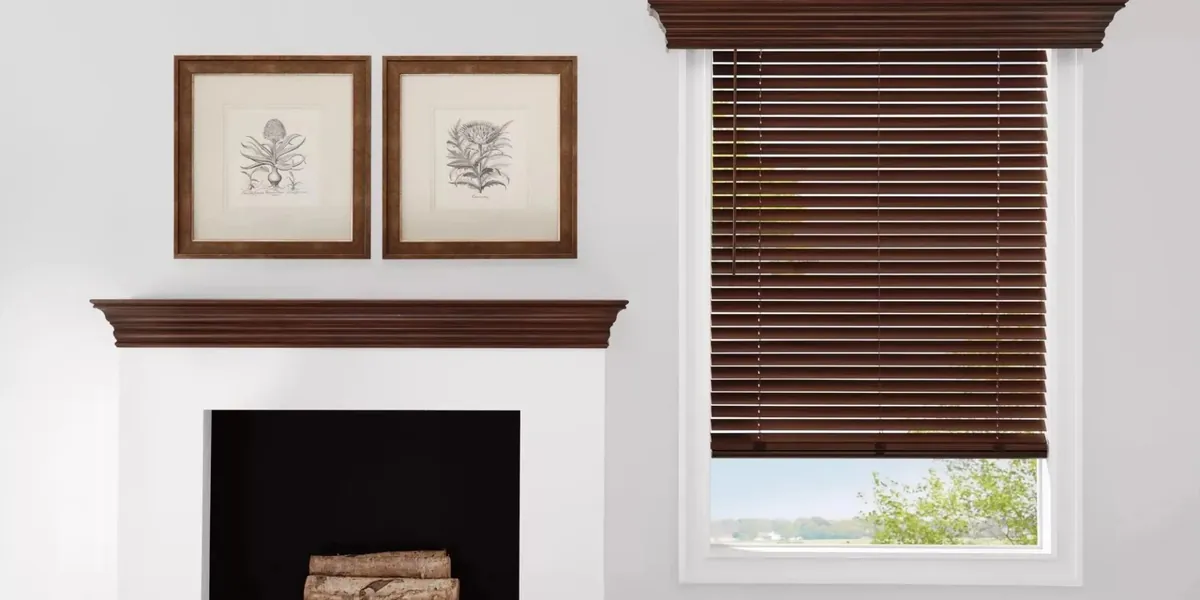
Federal houses in particular tend to have tall ceilings with a stretch of wall between the top of the window and the cornice. A blind mounted at the top of the frame keeps the proportions true. Mounting it higher, on the wall above, can make a window seem taller, though on a narrow sash it can also look stretched. We show you both at your window.
High rooms collect warmth near the ceiling and lose it at the glass, and a closed blind of wood or faux wood adds a layer between the room and a cold pane on a winter night. Tilted closed with the convex side out in summer, it keeps hot afternoon sun off the floor.
Older front doors in the city often carry a transom or narrow side lights, and Federal entries can have both. Those small panes let light into a hall that would otherwise be dark, so most people leave the transom bare and fit slim blinds only to the side lights, where a passer-by can see straight in. Metal or faux wood slats in a narrow width suit these openings, mounted inside the frame so the door trim stays clean.
In-home consultation, step by step
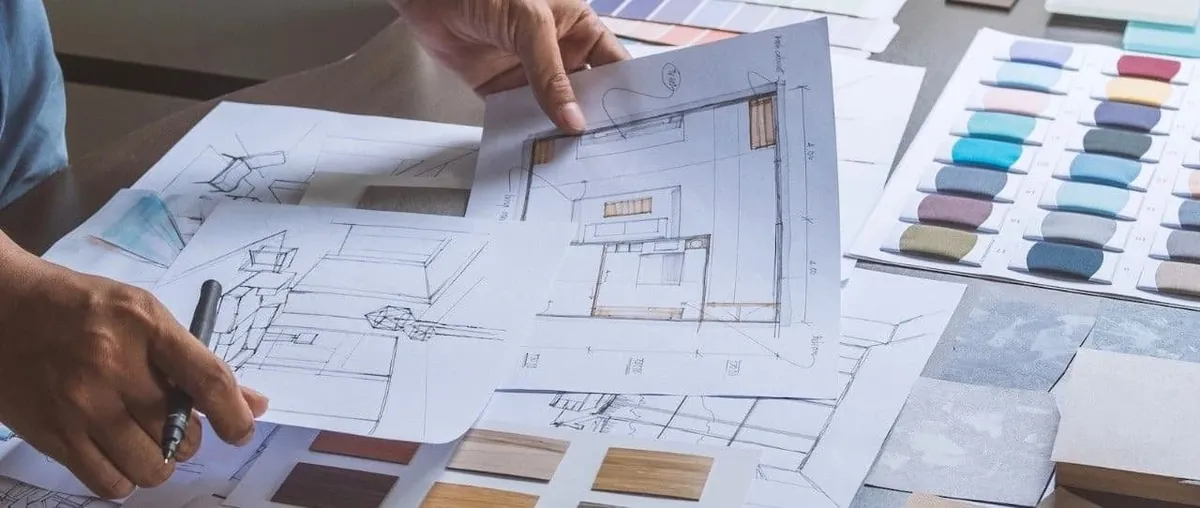
Our vans carry samples of every blind we sell, so we bring the showroom to you. It is the best way to see how a slat looks against your own trim and in your own light, which in a city house can change sharply from front to back.
- Request a consultation online or with the call button and choose a time.
- We arrive with wood, faux wood and metal slats, vertical vanes, valances and tilt and lift options.
- We walk through the rooms with you and talk about what each window needs: privacy, darkness, glare or just a tidier look.
- You try samples at your own windows, including the tallest ones.
- We measure each window, check the reveal depth for an inside mount and note any hardware in the way.
- You receive a free estimate for the blinds you are thinking about, with no pressure to decide that day.
Interior design consultations are also available if you would like help with colors or with how blinds sit next to drapery or shutters in a room. Read more about what happens at an in-home consultation.
Which material goes where
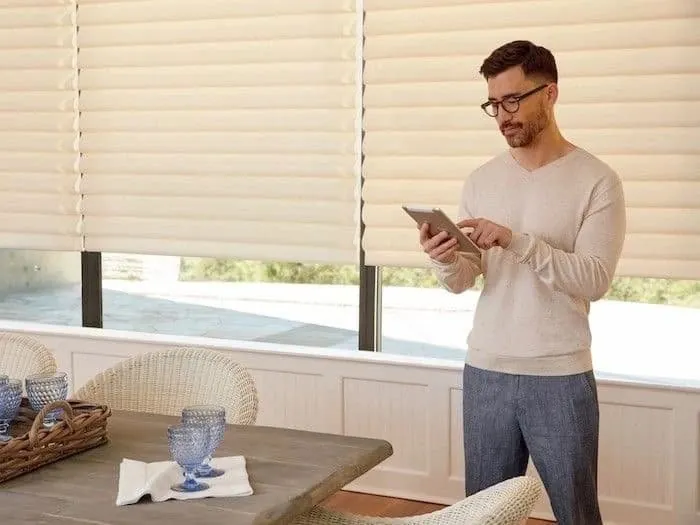
A quick guide to how custom blinds in New Bedford usually divide by room:
- Front parlors and dining rooms: real wood, stained or painted. The wood blinds page covers the Hunter Douglas real wood range.
- Kitchens and bathrooms: faux wood from the EverWood line, which keeps its shape in steam.
- Shallow reveals and long, often-used blinds: metal blinds, light and slim.
- Porch doors and sliders: vertical blinds.
The main custom blinds page shows the full range in one place.
Measuring old openings
Getting the size right is what lets a made-to-measure blind look as though it belongs. In a building that has stood through a long history of weather and renovation, windows that look identical rarely are.
- We measure the width at the top, middle and bottom of each opening and order an inside-mounted blind to the narrowest point.
- We measure the height at the left, center and right, since a long window shows any slope in the sill.
- We check the reveal depth where the headrail will sit, and its clearance from locks and pulleys.
- We confirm every mount, color, slat size and control with you before ordering.
- When the blinds come in, our certified Hunter Douglas installers mount them into solid wood, level each headrail, run every tilt and lift and show you how they work.
Well-measured custom blinds in New Bedford, MA fill the opening edge to edge, sit straight on a frame that may not be, and tilt evenly from top slat to bottom.
What a Hunter Douglas Gallery dealer brings
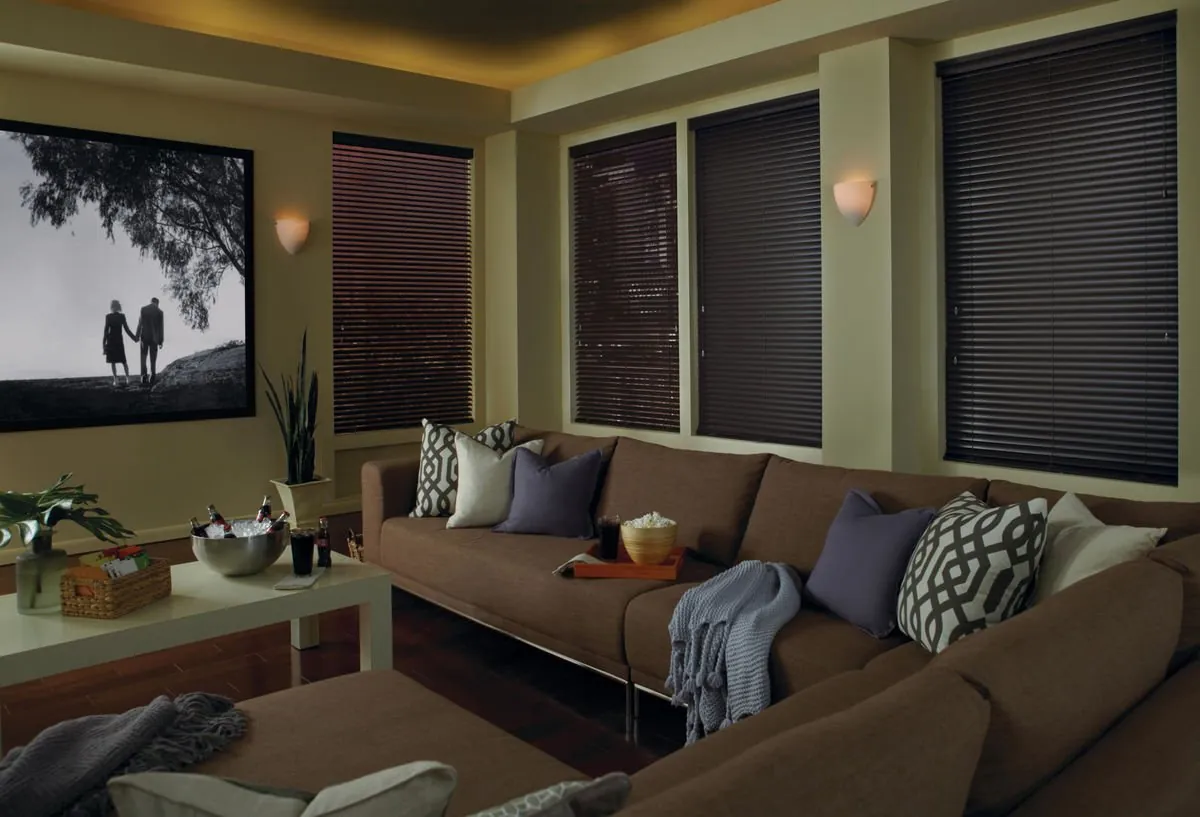
Blinds & Designs is a Hunter Douglas Gallery dealer. Gallery is the designation Hunter Douglas gives dealers who meet its standards, and it means every blind in the range is available through us, in every finish and with every control.
Our installers are certified by Hunter Douglas, so the blinds are hung to the maker’s standard, which matters on long, heavy blinds in old frames. We also repair blinds and shades, including ones you already own, so a worn cord or a stuck tilt can be put right.
We carry Hunter Douglas shades, shutters and drapery too, and window covering automation, so a single visit can cover a whole flat or a whole house. See roman shades in New Bedford or motorized blinds in New Bedford for other rooms, or every service we offer in the city on our New Bedford page.
The North Dartmouth showroom is our nearest location, a short drive west of the city.
Questions from New Bedford
My windows are tall and narrow. Will the raised blind block the top of the glass?
Some of it, because the slats gather at the top. Wider slats make a shallower stack, so they often suit a tall, narrow sash better. We show you both slat sizes at your window before you choose.
Can blinds sit inside a shallow window frame?
It depends on the depth and on what is in the way, such as sash locks or a crank. Where the reveal is too shallow, an outside mount on the casing, with a valance over the headrail, gives a neat finish and better coverage at the edges.
Do you fit matching blinds across all three flats of a triple-decker?
Yes. We measure every window on its own, since old openings vary, and can match color and slat size on the street-facing windows so the building looks consistent from outside.
What works on a very tall window that is hard to reach?
A tilt wand is easier than a cord on a long blind. For the tallest windows, motorized lift and tilt with PowerView lets you work the blind from a remote or the app.
Is the estimate free?
Yes. After we measure your windows you receive a free estimate for the blinds you are considering. Request a consultation to arrange a visit.
Take the next step
Tall sash and deep reveals are easiest to plan with samples in hand. Request a consultation and we will bring every type of blind to your home, measure each opening and give you a free estimate. You can also reach our North Dartmouth showroom with the call button, or call in to see the blinds for yourself.