
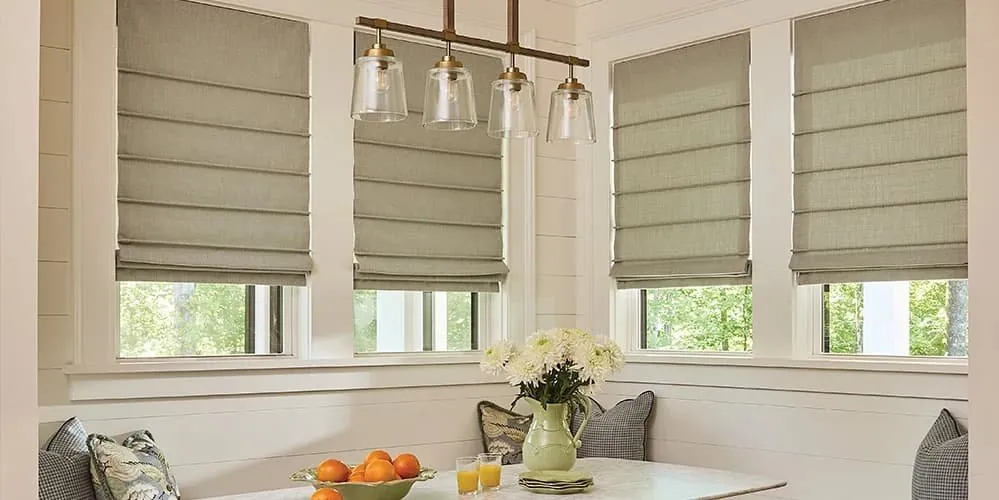
Small old windows deserve a shade cut to fit
Drive Main Street from the village out toward the river and the houses tell you how old the town is. There are farmhouses with an ell added onto the back, capes set close to the road with a chimney in the middle, and, filling the lots in between, the ranches that went up after the war. What most of them share is the size of the windows. The original openings are small, often a little out of square, and rarely a size you can buy off a shelf. That is the starting point whenever we make roman shades in Acushnet, MA.
A roman shade is a single piece of fabric that folds up into neat horizontal pleats when you raise it and lies flat across the glass when you lower it. On a small farmhouse window that matters, because a bulky blind or a heavy curtain swallows the opening and blocks what little daylight it lets in. A fabric shade made to the exact width of the frame keeps the window looking like a window.
The farmhouse kitchen with a sink under a narrow sash, the cape bedroom with a low window under the eave, the ranch living room with one wider pane: each wants a slightly different fold, fabric and mount, and each is made to its own measurements.
The roman styles that suit an older house
Hunter Douglas makes roman shades under two names, Vignette and Carole Fabrics, and between them they cover flat and folded looks in a very wide range of fabrics. These are the three styles of roman shades in Acushnet we show most often on the older stock along the river.
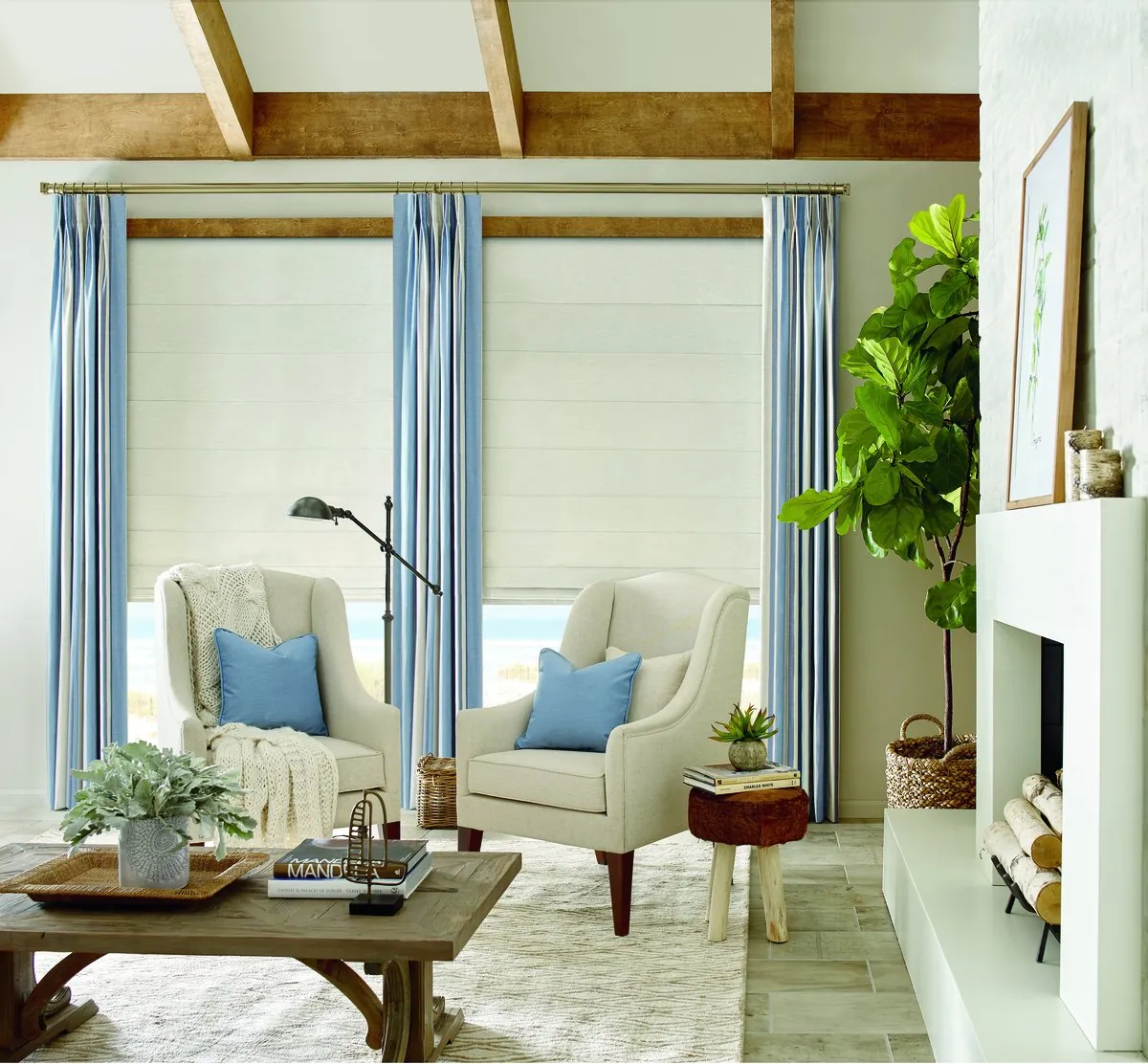
Vignette modern roman
Vignette has no exposed cords on the back and stacks into soft rolled folds. It suits a window where the shade is seen from both sides, such as a cape’s front room facing the road.
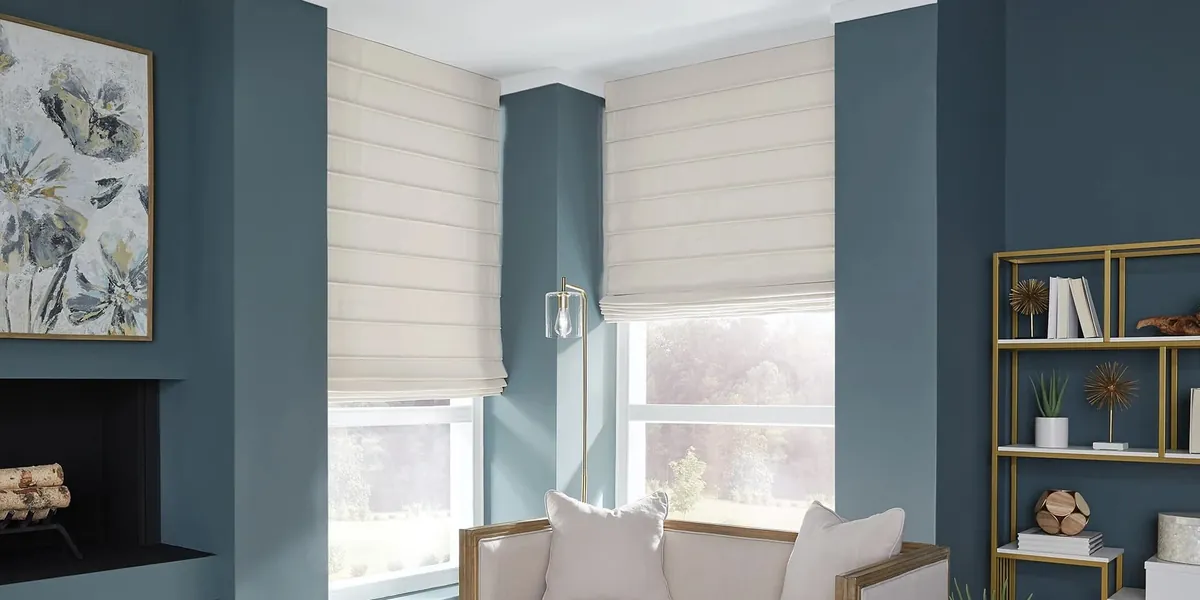
Carole Fabrics flat fold
Crisp, tailored pleats that stack neatly at the top. A clean choice for a farmhouse kitchen or a ranch living room where you want a simple, quiet line.
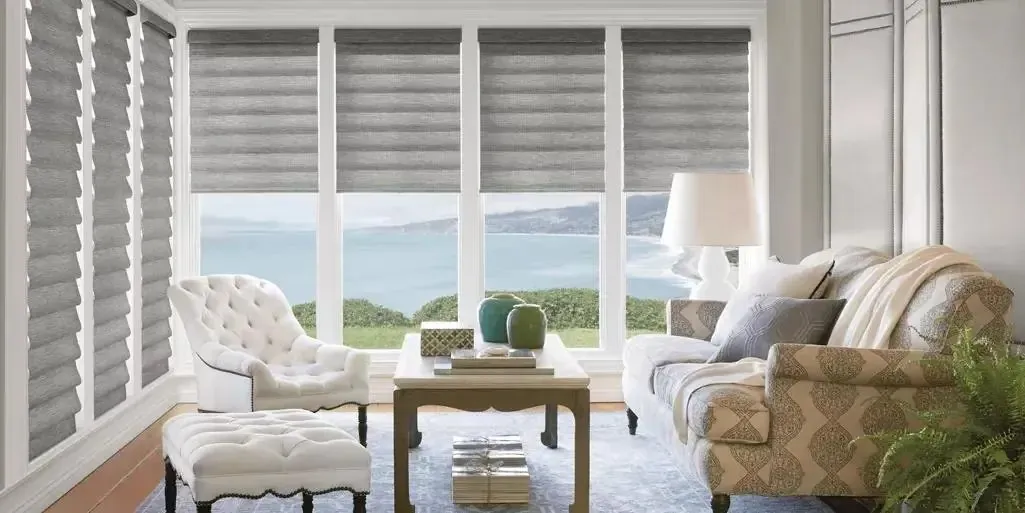
Carole Fabrics soft fold
Looser rounded folds that hang in gentle loops even when the shade is down. It brings a little softness to a plain room and looks at home in an older parlor.
Farmhouses along Main Street
The farmhouses on the older stretch of Main Street were built for working families, and the windows reflect that. They are modest, set into thick walls, and spaced to light a room rather than to frame a view. Over time the frames settle. A window that measured true when the house was new may now be a little wider at the top than at the sill, or a fraction deeper on one side than the other.
That is why we never assume. Every window gets its own set of measurements, and the shade is made to that window and no other. With a fabric shade, a small error shows: a gap of light down one side, or a headrail that rubs the casing when you lift it. Measuring each opening separately avoids both.
The kitchens and back rooms in the ell usually take the hardest daily use. A flat fold in a fabric that wipes clean works well over a sink, and a cordless lift keeps the front edge clear of the counter. In the front rooms, where the house tends to have its best trim, a soft fold or a Vignette shade can carry a richer fabric that you would not want near the dishwater.
Capes near the river
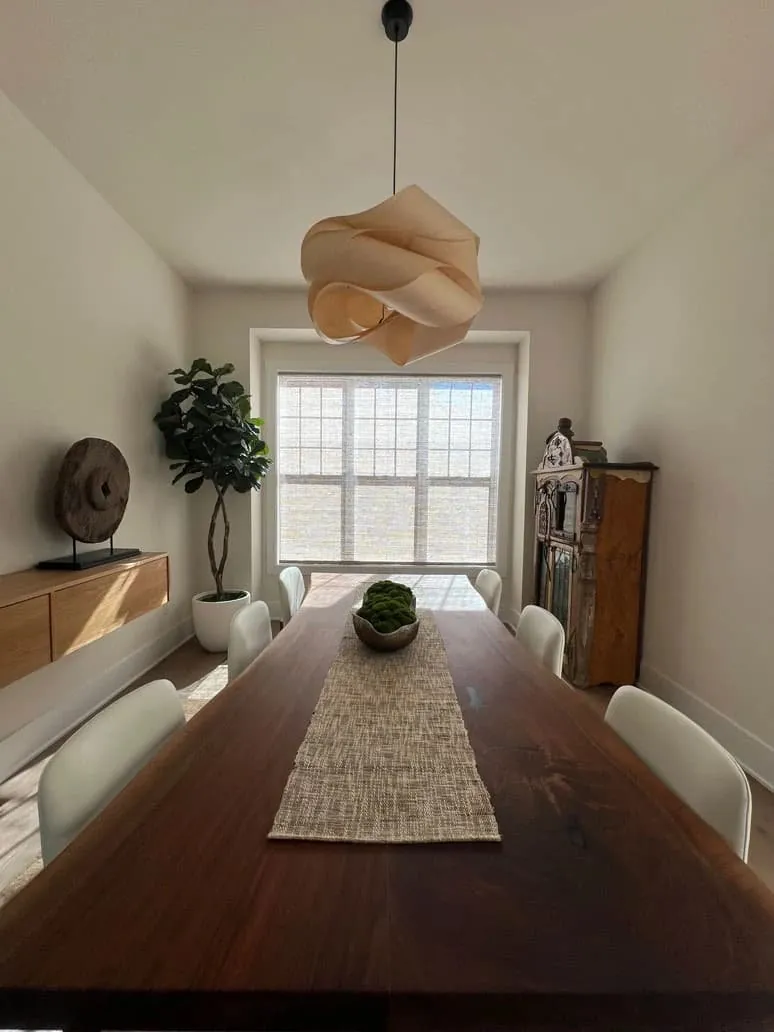
The capes closer to the Acushnet River are compact houses, with rooms tucked under the roof and small windows in the gable ends and dormers. Upstairs, the space between the top of the window and the slope of the ceiling can be tight, and a shade that stacks too tall will hang across the glass even when it is fully raised.
This is where the choice of fold matters. A flat fold stacks into the shallowest bundle, so it clears the window better in a dormer. Vignette’s rolled folds can be set to stack compactly too. When we visit we raise sample shades at the window so you can see exactly how much glass stays covered at the top, before anything is ordered.
Downstairs, the front windows of a cape often sit only a few steps from the road. Here a light-filtering fabric gives you privacy during the day while the room stays bright, and a lined fabric or a darker color keeps the room private once the lamps go on in the evening.
The ranches in between
Among the older houses sit the single-story ranches built after the war, usually on larger lots with a wider window in the living room and a sliding door or a pair of windows at the back. These openings are bigger than anything in a farmhouse, but they still have quirks: a picture window flanked by two narrow side panes, or a run of three windows sharing one long sill.
For those we can make one shade per pane, all on matching headrails so the folds line up, or a single wide shade across the whole run if you would rather raise it as one. Bedrooms in a ranch are often at the end of the house with windows on two walls, and a room-darkening lining helps those rooms stay dim in the early morning.
Bathrooms, stairways and the odd window
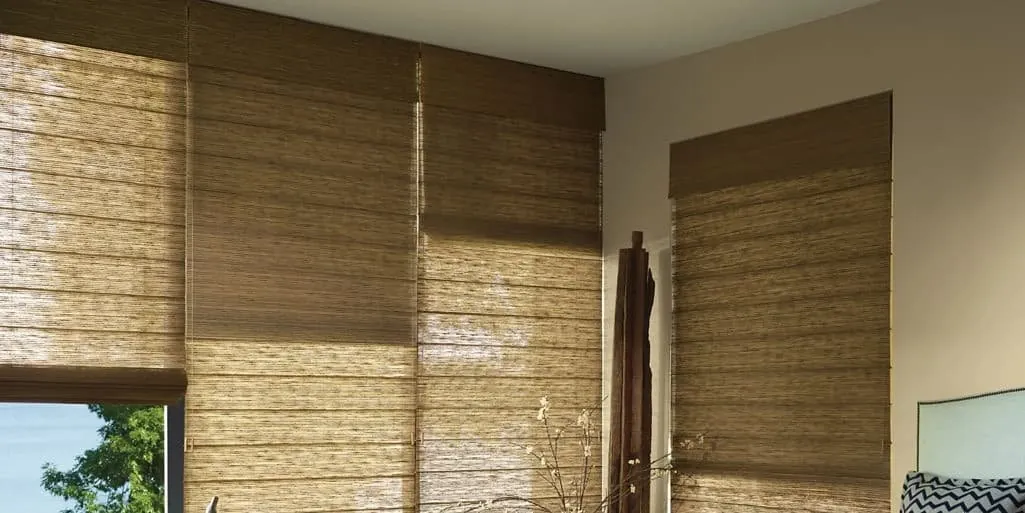
Older houses collect odd windows. A farmhouse that has been added onto over the years might have a small square window in a back stairway, a tiny pane above a bathtub, or a pair of narrow windows flanking a chimney in a cape. These are often the windows that never got covered, because nothing standard would fit them.
A roman shade can be made very small. In a bathroom, a light-filtering fabric gives privacy without making the room dark, and a fabric suited to damp rooms holds its shape better in the steam. On a stairway window, a cordless lift or PowerView saves leaning over the stairs to reach a cord. And for the two narrow windows beside a chimney, matching shades on matching headrails keep the wall balanced when both are lowered.
We look at these small windows during the same visit as the main rooms. Dealing with them at once is what makes roman shades in Acushnet look planned for the house rather than added one window at a time, and it means one measurement visit and one installation for everything.
Made to size, not bought to size
A store-bought shade comes in a handful of widths. The small original openings in an Acushnet house rarely match any of them, which leaves you choosing between a shade that is too narrow, with light leaking down both sides, or one that is too wide and has to go outside the frame. Neither looks right on a window with good old trim.
Custom roman shades in Acushnet, MA solve that by starting from your window. Here is how we take the measurements.
- We measure the width at the top, the middle and the sill of each opening, and the height on the left, in the center and on the right.
- We check the depth of the frame where the headrail would sit, and note any sash locks, latches or old hardware in the way.
- We decide with you whether each shade goes inside the frame or on the casing above it.
- We confirm the fold style, fabric, lining and lift for every window before the order goes in.
An inside mount tucks the shade within the frame and leaves the trim on show, which most owners of older houses prefer. Where the frame is too shallow or too far out of square, a mount on the casing is the honest answer, and we will tell you so at the window.
A visit to your house with the samples
Fabric is hard to judge from a picture or a swatch in someone else’s light. The color you choose under shop lighting can look quite different on a north-facing farmhouse window on a gray afternoon. That is why most people start with an in-home consultation: our vans carry samples, so we can bring the showroom to you.
- You request a consultation online or with the call button, and we settle on a time that works.
- We arrive with roman shade fabrics, lining options and working samples of the different folds and lifts.
- We go room by room with you, beginning with the windows that bother you most.
- You hold fabric up to your own glass and see it in your own light and against your own walls.
- We measure every window you are thinking about.
- You receive a free estimate, and you can take whatever time you need to decide.
If you are not sure what goes with the rest of the room, our interior design consultations can cover color and fabric for the whole space at the same visit. For more on what to expect, read what happens at an in-home consultation.
Fabrics, linings and the light you want
The fabric does most of the work in a roman shade, so this is where you spend most of the visit. Three things decide it: how much light you want through the shade, how much privacy the room needs, and how the color and texture sit with the room.
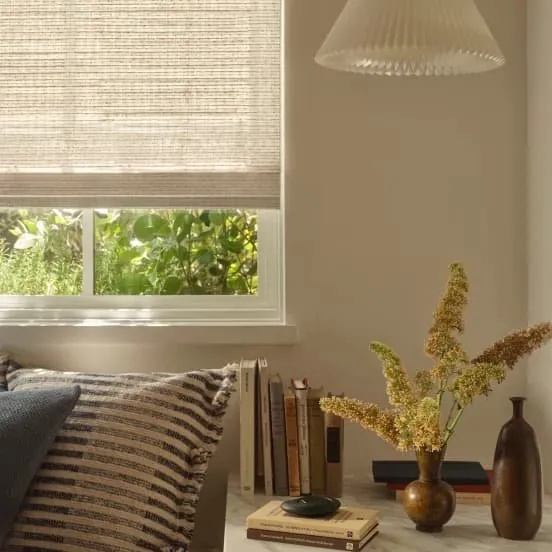
Sheer and light-filtering fabrics soften daylight and still let the room glow. They suit a kitchen, a front hall or a living room where you want the windows covered without losing brightness. Lined fabrics block more light and add a little body to the folds. Room-darkening linings are for bedrooms, especially on the east side of a house where the sun arrives early.
Texture is worth thinking about too. A linen-look weave suits a farmhouse; a smooth solid or a small pattern suits a ranch with plainer trim. If you like the look of natural materials, Hunter Douglas also makes a woven roman in its Alustra Woven Textures line, and we bring samples of that as well.
Cords, cordless lifts and PowerView
How a shade goes up and down matters most on the windows you use every day. A cordless lift has no cord at the side: you lift or lower the bottom rail by hand and it stays where you leave it. That keeps the window tidy and suits a house where small children or pets are around.
Some windows are awkward to reach, such as the one behind a kitchen sink, above a tub, or high in a gable. PowerView motorization raises and lowers the shade from a remote, your phone or a schedule you set, so the bedroom shades can close at dusk without anyone touching them. At the visit we show you the remote and the app on a working sample, and once the shades are up we can help you set the first schedules, so the house opens and closes the way you live in it.
Vignette or Carole Fabrics
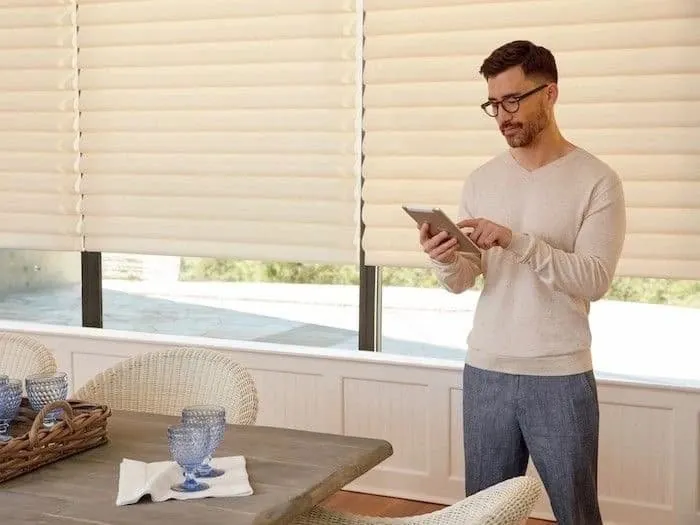
Both lines make a true roman shade, and both are fitted by our certified installers. The difference is mainly in how they fold and what you see from outside. Vignette rolls its fabric into soft folds and has no rear cords, so the back of the shade looks finished from the street. Carole Fabrics offers classic flat and soft folds in a very large fabric library, which helps when you want a particular color or pattern to match a room.
Many orders mix the two. A cape might take Vignette in the front rooms that face the road and Carole Fabrics flat folds in the kitchen and upstairs bedrooms. Our Vignette modern roman shades and Carole roman shades pages describe each line in more detail, and our main roman shades page covers the whole range.
A Gallery dealer for the whole house
Blinds & Designs is a Hunter Douglas Gallery dealer, the designation Hunter Douglas gives dealers who meet its standards. In practice that means the full roman range is available to you: every Vignette and Carole Fabrics style, the lift systems and PowerView.
Our installers are certified by Hunter Douglas, so each shade is mounted the way the maker intends, level in the frame and tested before we leave. If a shade ever needs attention later on, we look after blind and shade repairs too.
The same visit can cover the other rooms. Many Acushnet houses end up with a mix: roman shades in the living areas, cellular shades in Acushnet for a cold bedroom, or plantation shutters in Acushnet in a bathroom. Everything we offer in town is on our Acushnet page.

Seeing the fabric where it will hang
Picking a fabric is easier at home. You can lay a sample over the arm of your own sofa, hold it beside the trim you painted last summer, and look at it in the morning and again at dusk. A farmhouse with rooms facing every direction can make one fabric look like three.
We are glad to come for a single small window over a sink, or for every room in the house. Either way we measure, talk through the choices and leave you with a free estimate.
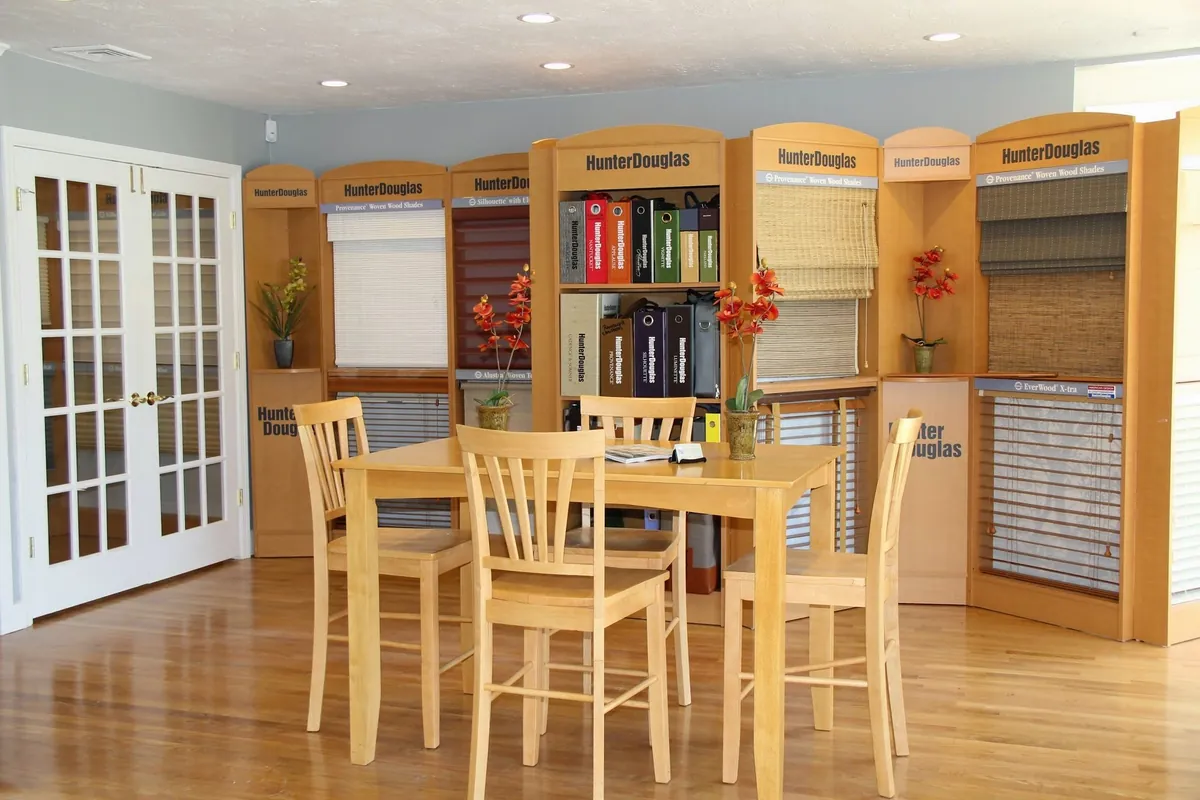
If you would like to see the range in person first, our North Dartmouth showroom is the closest to Acushnet, just over the town line.
Questions from Acushnet
My farmhouse windows are small and not quite square. Can a roman shade still fit inside the frame?
Usually, yes. We measure each opening at several points and the shade is made to the narrowest width, so it clears the frame. If a window is too far out of square or too shallow for the headrail, we mount the shade on the casing above it instead and tell you why at the visit.
Which fold stacks smallest in a cape dormer?
A flat fold makes the tightest stack, so more of the glass is clear when the shade is raised. Vignette can be set to stack compactly as well. We raise sample shades at your window so you can see how much glass stays covered.
Can one shade cover a ranch picture window and its side panes?
It can, or we can make a separate shade for each pane on matching headrails so the folds line up. Separate shades let you raise the side panes for air while the center stays covered.
What is a good choice over a kitchen sink?
A flat fold in an easy-care fabric with a cordless lift keeps the window tidy and the bottom rail clear of the counter. If the window is hard to reach, PowerView lets you raise it from a remote or your phone.
Do you charge for the estimate?
No. After we measure, you get a free estimate for the shades you are considering. Request a consultation and we will arrange a time to bring the samples to your house.
Start with the window you like least
Pick the room that bothers you most, the kitchen with no cover over the sink or the bedroom that brightens too early, and start there. Request a consultation and we will bring Vignette and Carole Fabrics samples to your door, measure every window and leave you with a free estimate for roman shades in Acushnet, MA. If you would rather talk first, use the call button, or stop by the North Dartmouth showroom.