
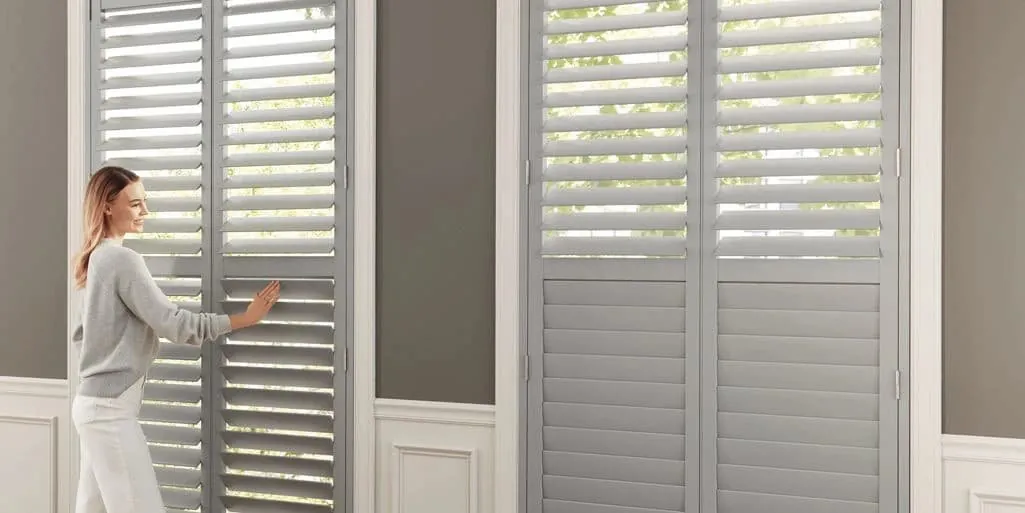
Open ground and deep window openings
Along Main Street and Hartford Avenue the old houses stand well back on big pieces of land. Antique colonials and farmhouses sit on very large lots with fields, lawn or a long drive between them and the road, and newer houses have filled in some of the gaps over time. What that open ground means for the windows is simple: nothing stands nearby to shade them. No close neighbor, often no big tree on the sunny side, just glass facing sky.
The antique houses add a second detail. Their sash is small and set deep into thick walls, so each window sits at the back of a recess. That recess frames the light in a lovely way, and it gives a shutter a good place to live. Most enquiries about plantation shutters in Mendon, MA, start with one of these two things: sun that comes straight in with nothing to stop it, or a deep old opening that someone wants to dress without hiding.
Privacy matters less here than on a crowded street, though bedrooms and baths still need it. The bigger questions are light, glare and how the shutter looks inside an old opening.
Three ways shutters suit these houses
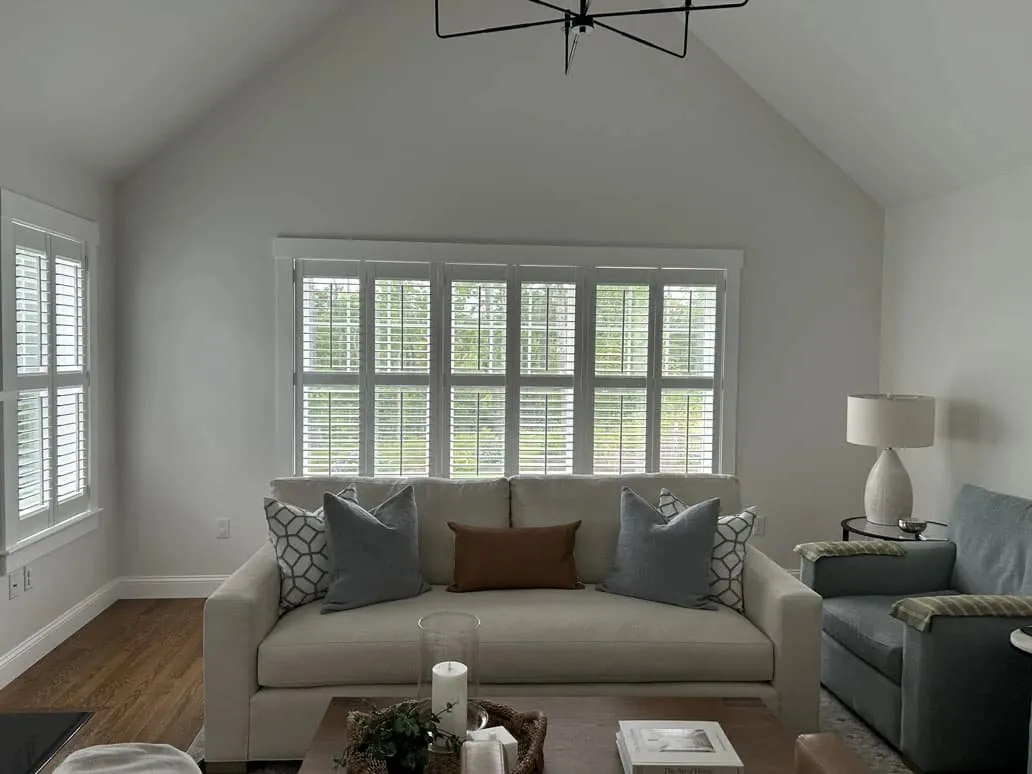
Inside the recess
A deep-set antique sash gives the frame room to sit inside the opening, with space for the louvers to tilt and the old casing still on show.
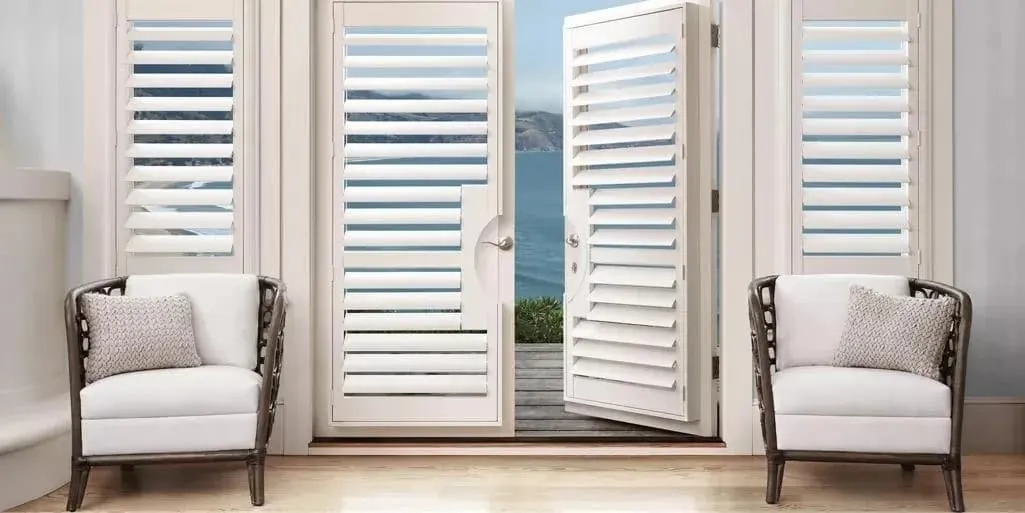
Sun with nothing in its way
On an exposed wall, louvers can be angled through the day to turn the light away from a screen or a chair without shutting it out.
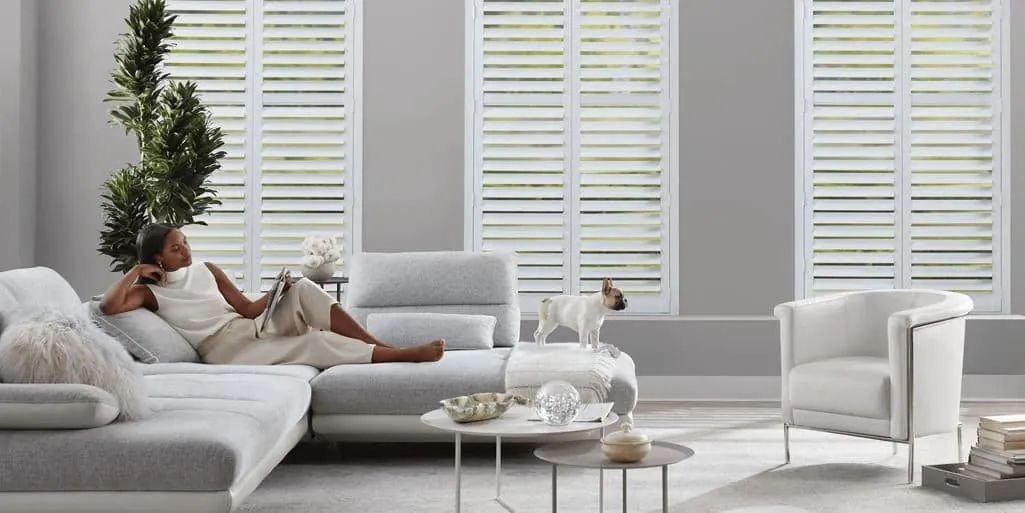
The newer houses between
The newer houses scattered along the main roads have standard openings, so the shutter choice turns on looks and louver size more than fit.
Why exposure changes the plan
On a house with neighbors close by, the sun comes and goes as it passes between buildings. On a farmhouse set in the middle of a big lot, a south or west wall can take sun from mid-morning until evening. Rooms on that side heat up, colors fade, and a television or a desk by the window becomes hard to use for part of the day.
The useful thing about louvers is that they are adjustable in small steps. You do not have to choose between open and closed. Tilt the blades a little and the direct sun hits their faces and bounces up toward the ceiling, so the room stays bright while the glare stops reaching the floor or the sofa. Tilt them a little further in the late afternoon, when the sun is low and coming in nearly flat, and the room calms down without going dark.
On an exposed wall, we often suggest a rail partway up the panel so the top and bottom louvers can be set differently. Upper louvers open for daylight, lower louvers angled against the low sun. It is a simple arrangement that suits a big open lot well.
North-facing rooms on the same house are a different story. They get steady, even light and rarely any glare, so their louvers can stay open most of the day. Planning each side of the house for its own exposure, instead of treating every window the same, is what makes shutters on an open lot work well.
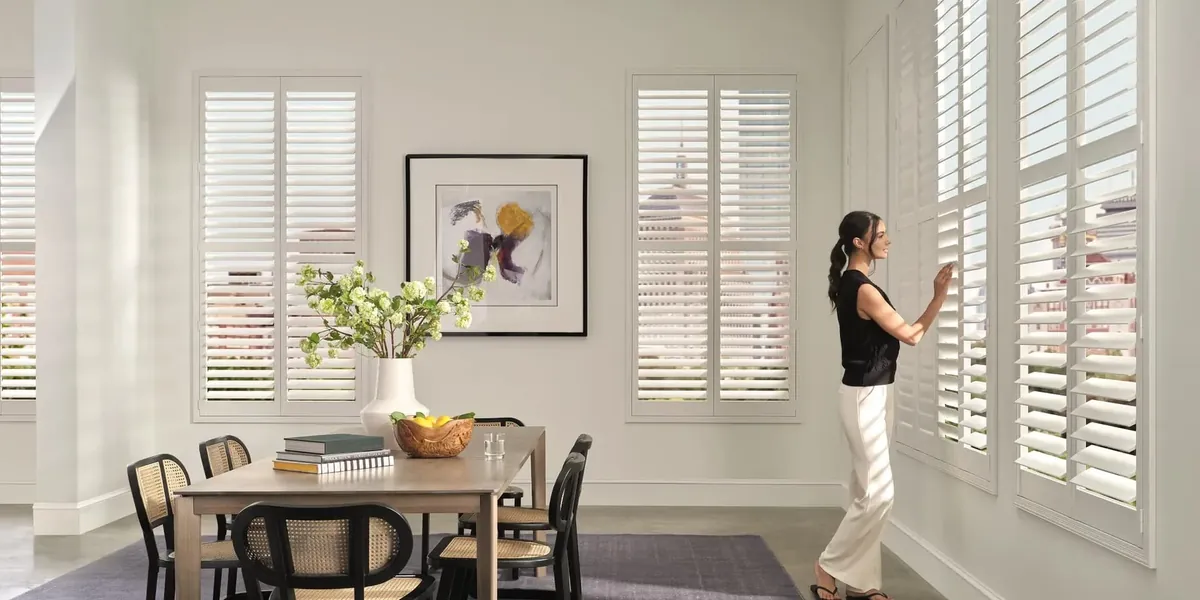
Small sash set deep in old walls
The antique houses along Main Street were built with thick walls, and their windows sit far back from the room. That depth is good news. Shutters need a certain amount of room inside an opening for the louvers to tilt without hitting the glass or the sash locks, and these openings usually give it with plenty to spare.
So an inside mount, with the frame set within the opening, is often possible. It leaves the casing and any old trim fully visible, and the shutter looks as though it belongs to the window rather than sitting in front of it. Where the frame sits in the recess also matters: set toward the room it shows more of the window’s depth from outside; set toward the glass it leaves a deep sill inside for a plant or a lamp. We show you both before deciding.
The sash itself is small, so proportion counts. A slim louver gives enough blades to look right in a small opening. A single panel often beats a pair on the narrowest windows, because a pair leaves two stiles in the middle of very little glass. The good news is that small, deep windows are among the most satisfying to shutter, because the recess does half the framing for you.
Old houses are rarely square
A house that has stood for a long time has moved. Walls bow, floors dip and window openings drift out of true. An antique opening may be wider at the head than at the sill, or one corner may sit a little higher than the other.
Shutters are rigid, so this has to be dealt with at the measuring stage. We measure every opening in more than one place and check the diagonals, then plan the frame to take up the difference, so the panels hang straight and close evenly even when the opening does not. Our guide to shutters for older windows goes into more detail on how a tired opening is handled.
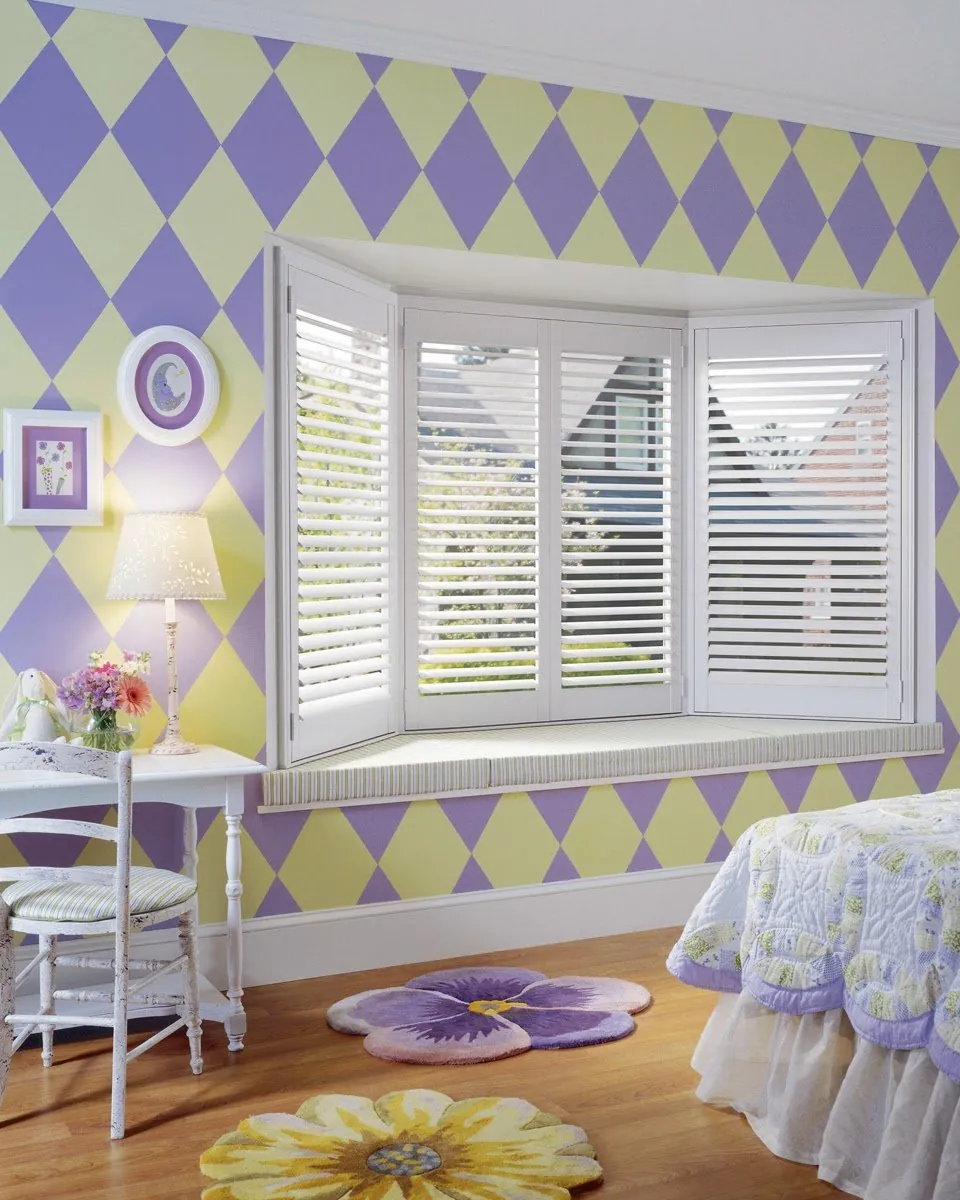
Kitchens and keeping rooms
Farmhouse kitchens are often the busiest room on the property and among the sunniest, with windows over the sink and along the back wall looking out to the yard or the fields. Cafe-height panels on the lower half of the sash are a common answer: they cut the glare across the counter and keep the upper glass clear for daylight and the view.
The low panels also suit the deep sills of the older houses, since they leave the top of the recess open and the room feels larger. In an older keeping room or a family room added on to the back, full-height shutters with a rail may make more sense, so the room can be dimmed for an afternoon film without losing the morning sun.
Palm Beach is often the collection people compare first for a kitchen, though all three are worth seeing at the sink window. You can read about it on our Palm Beach page.
The three collections side by side
Every Mendon project gets the same three Hunter Douglas shutter collections to look at: Palm Beach, NewStyle and Heritance. Each has its own look, finish and range of colors, and the choice is easiest with real samples at your window rather than photos on a screen.
In an antique house with old woodwork, people often hold Heritance samples against the casing to see which finish sits most comfortably with the old trim. In a newer colonial between the old farms, a clean painted finish across the front often wins. There is no need to use one collection for the whole house, but windows seen together should match in color and louver size.
Each collection has its own page: Palm Beach, NewStyle and Heritance.
Frame styles and what they do
The frame is the part of a shutter people notice least and that matters most for fit. It decides how the shutter meets the window and how much of the old casing you see.
- Within the opening: the frame sits inside the recess, which suits the deep antique sash and keeps the trim on show.
- Over the casing: the frame sits on the face of the trim, useful where an opening is too shallow or badly out of square.
- Matched across a wall: whichever style you choose, using the same frame on every window in a room keeps it calm.
We bring frame samples to try at the window, because a frame that looks right on a deep farmhouse opening may look heavy on a shallow modern one, and the other way round.
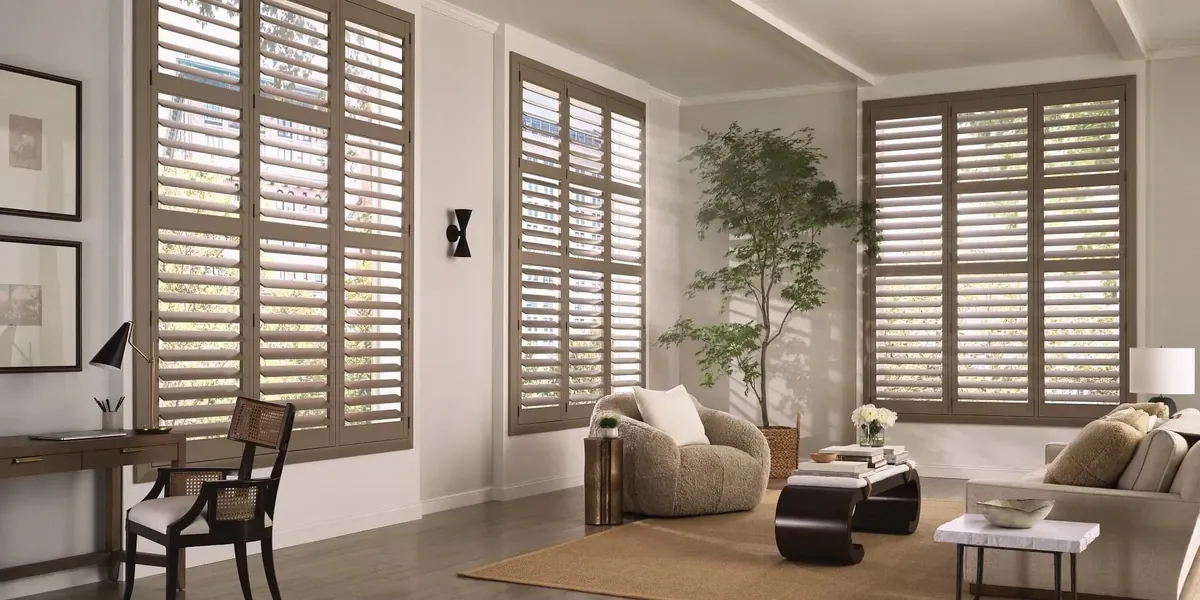
Color inside an old house
Antique interiors often carry many coats of paint on their trim, and the white of one room is rarely the white of the next. A bright white shutter beside cream-colored casing can look stark, while a softer white or an off-white settles in. In rooms where the woodwork has been stripped back or was never painted, a stained finish held against the trim is worth trying.
From the road, the shutters show through the front windows as a band of color behind the glass. On a big lot that view is distant, so the exact shade matters less outside than inside, but matching the front windows to each other still gives the house a calm face. We bring finish samples so you can compare them in daylight at your own windows, which is the only test we trust. When people plan plantation shutters in Mendon for an antique house, color is often the decision that takes longest, and it is worth giving it time.
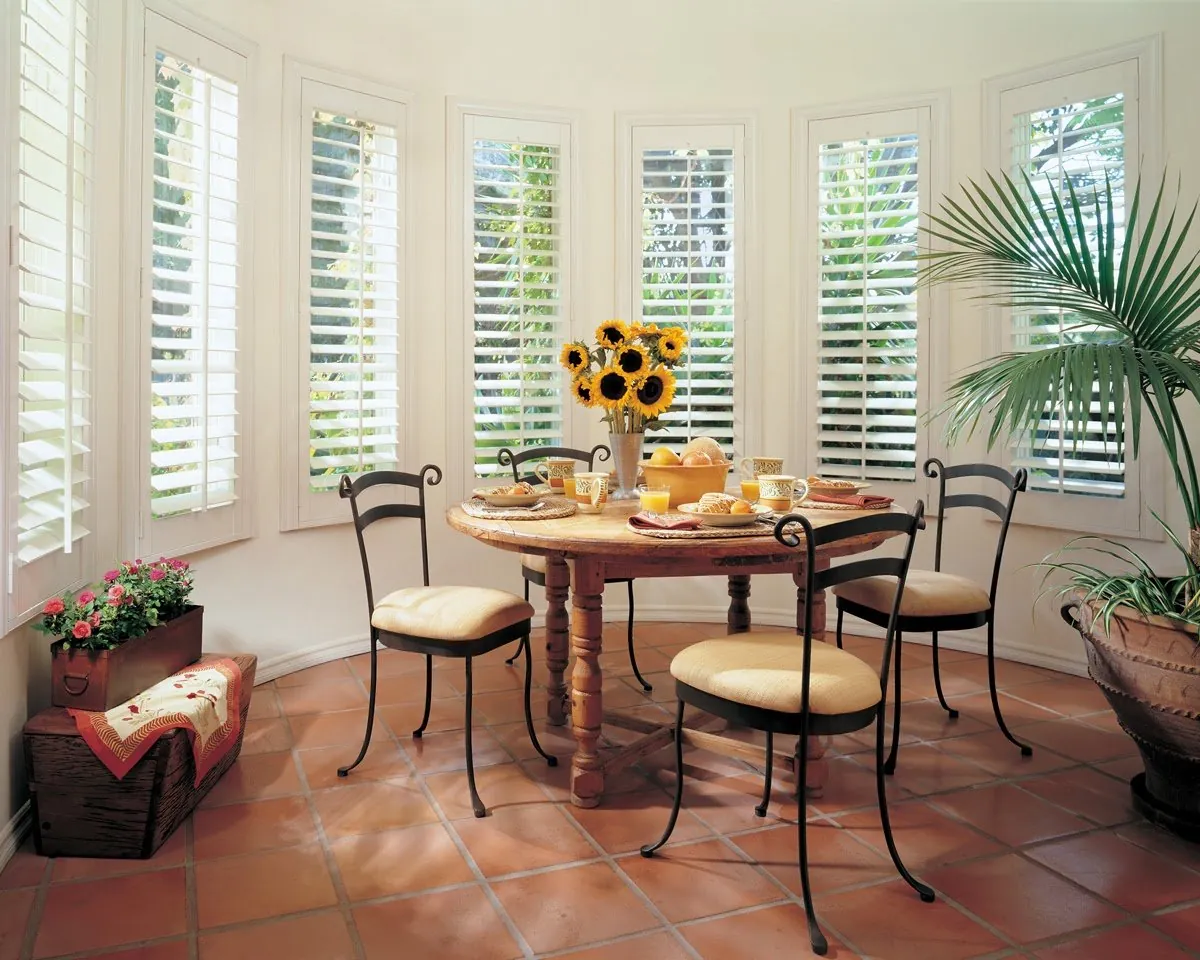
The newer houses along the main roads
Between the old farms, newer houses have gone up on lots that are still generous by most standards. Their windows are standard sizes, the openings are square and the walls are thinner, so the opening may be shallower than in the antique houses. That is no problem for a shutter; it simply shapes the choice of frame and louver.
These houses usually want a consistent look across the front, since the facade is on view from the road even at a distance. A single louver size and color on every front window gives a tidy face. The back rooms, facing open ground, can take wider louvers for the view. Plantation shutters in Mendon for a newer house are often the most straightforward project of all: the questions are mostly about looks.
What the visit involves
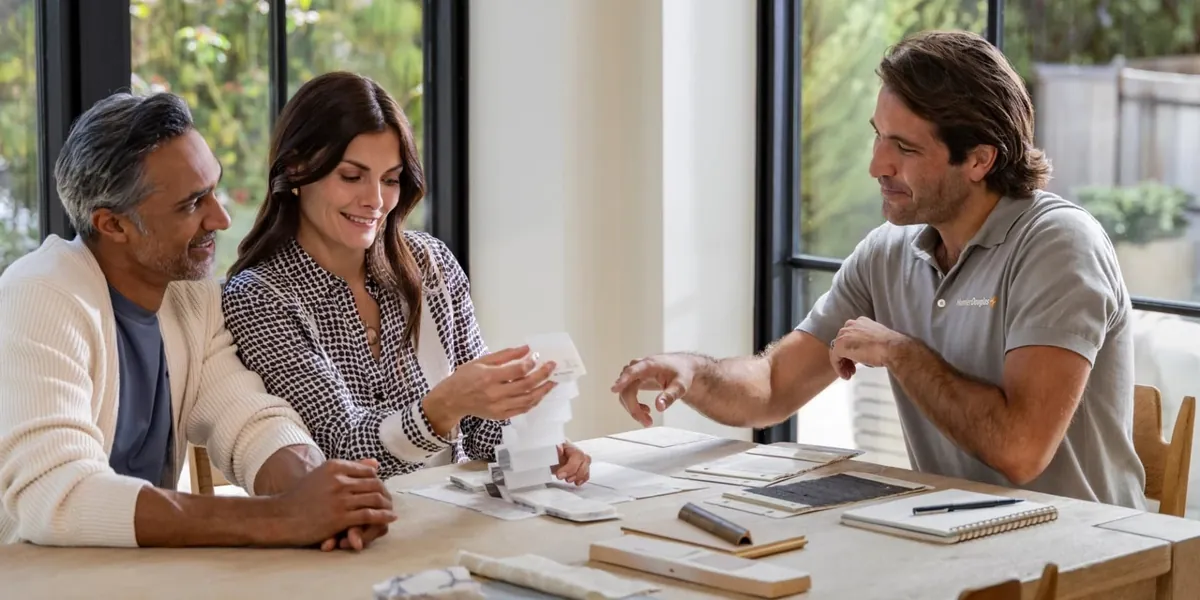
We do most of our shutter work through in-home consultations, and our vans carry samples of all three collections, so we can bring the showroom to you. Here is how a typical visit runs.
- Request a consultation online or with the call button.
- We look at the sunniest rooms first, usually the south and west walls with nothing outside to shade them.
- You hold louver and frame samples inside your deepest antique opening and your newest one, to see the difference.
- We measure each window in several places, check its depth and note where it is out of square.
- We go through the collections and finishes, room by room.
- You receive a free estimate, and the decision is yours to make in your own time.
The in-home consultations page says more about what to expect.
Bedrooms on an exposed lot
Bedrooms are where the open land works against you. With no trees or houses to block early light, an east bedroom can fill with sun well before anyone wants to wake. Closed louvers darken a room a great deal, and a rail lets you keep the top open on a dull morning and closed on a bright one.
On the small antique bedroom sash, panels that open fully also matter on a summer evening, when you want air and the view across the field. Hinged panels swing back against the wall and leave the window clear. That is one reason plantation shutters in Mendon, MA, are often planned bedroom by bedroom, with each room set up for the way its windows face.
Baths, stairs and the smaller rooms
Even on a big lot, some windows need privacy every day. A bathroom window, a downstairs powder room, a window on the stair that faces the drive: these are the ones where louvers stay mostly closed. Cafe-height panels on the lower sash work well in a bath, screening the lower half while leaving the top for light. In a small antique bath with a deep recess, the panel can sit well back in the opening and still leave a sill.
Stair windows in the old colonials are often small and set at odd heights between floors. A single panel with louvers set at one angle can stay put for months and still let light reach the stairs. If several of these small windows are the same size, ordering plantation shutters in Mendon for all of them together keeps them matched.
On the day we fit them
When your shutters are ready, our certified installers fit them at the house. Each frame goes into its opening first and is set so the panels hang true, even in a window that has moved over the years. The panels are hung, the hinges adjusted, and every louver is worked through its full tilt to check it closes fully. Before we leave, we show you how the panels open and how any rail works. Our page on what happens on installation day has more.
A Gallery dealer for old houses and new
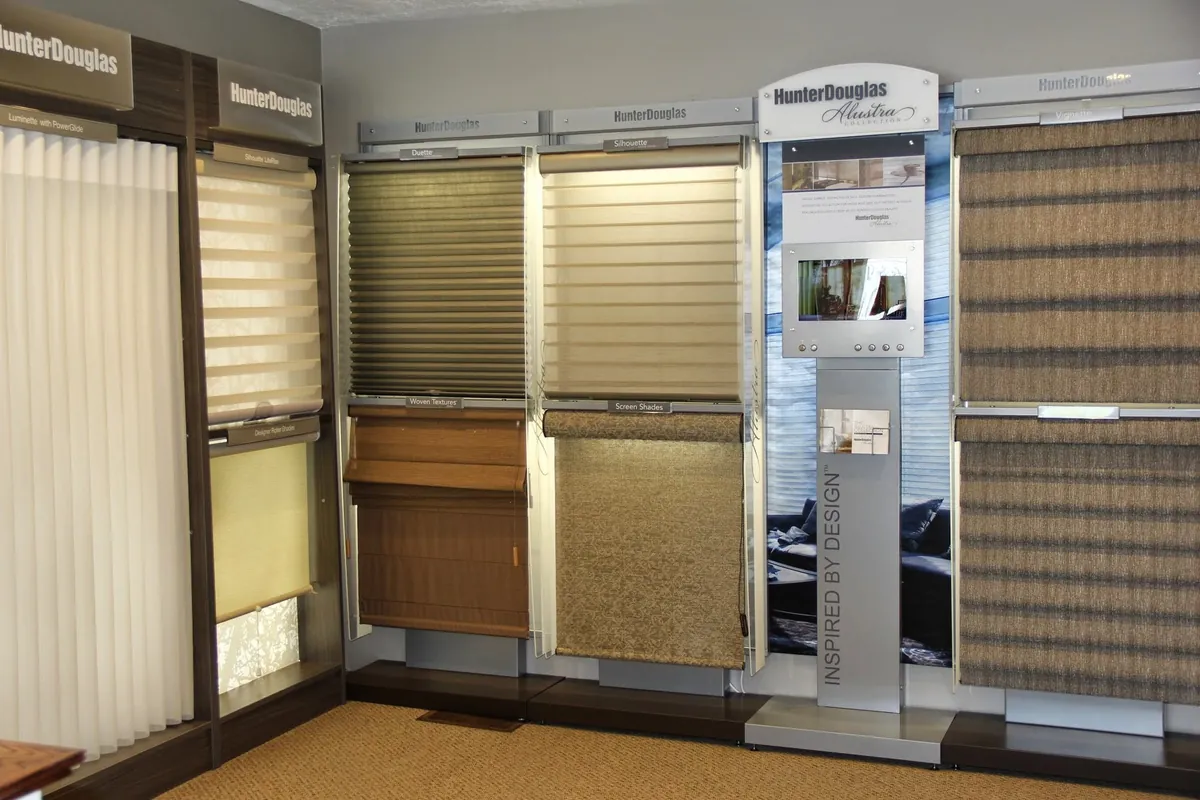
Blinds & Designs is a Hunter Douglas Gallery dealer. That gives you all three shutter collections, and the full choice of louver sizes and finishes, from people who plan shutters for antique and modern openings every week.
Our installers are certified by Hunter Douglas, so each frame is fitted to the opening as it really is. Estimates are free. We also offer interior design consultations when a room needs more than a window covering, and we repair blinds and shades you already own.
For everything else we do in town, see our Mendon page, or look at roller shades in Mendon for sunny rooms where a screen fabric suits better than louvers.

Franklin, the nearest showroom
The Franklin showroom is our closest to Mendon if you would like to see shutters before a visit. Most people still make the final choice at home, where a sample can be set inside their own deep-set sash.
The measuring and the fitting are always done at your house.
Questions from Mendon
Will shutters fit inside the deep windows of an antique colonial?
Usually, yes. The thick walls of the old houses give a deep recess, which leaves room for the louvers to tilt with the frame set inside the opening. We measure each one to confirm.
My farmhouse gets sun all afternoon with nothing to block it. Will shutters help?
Yes. Angle the louvers so the sun strikes the blades and bounces up, and the room stays bright without the glare. A rail lets you set the top and bottom louvers differently.
What if my old window is out of square?
That is common. We measure in several places, check the diagonals and plan the frame to take up the difference, so the panels close evenly.
Do I need the same collection in every room?
No. You can choose by room. Windows seen together, such as the front of the house, should match in color and louver size.
Is there a charge for the estimate?
No. Estimates are free. We measure at your house and then give you an estimate for the shutters you have chosen.
Getting started
The surest way to choose shutters for an antique opening or an exposed wall is to see samples in that exact window. Request a consultation and we will bring all three collections to your house, measure every window and leave you with a free estimate. If you have a quick question, the call button reaches us, and the Franklin showroom is our nearest if you would like to look before we visit. More on each collection is on our main plantation shutters page.