
Houses set back under the trees
Most of Westwood sits under a heavy canopy of trees. The post-war colonials and the larger newer houses stand on wooded lots, set well back from the road, and the windows themselves are standard modern openings: square, regular and deep enough to take a shade inside the frame. That combination shapes what roman shades in Westwood, MA, are asked to do.
With deep setbacks and woods all round, privacy from the road is rarely the main concern. The canopy takes care of much of the harsh midday sun, too. What these houses do need is a way to make rooms feel warm and finished, to handle the hours when low sun breaks through the trunks, to keep bedrooms dark, and to deal with the black, mirror-like glass that a wooded lot produces after nightfall. A fabric shade in a roman fold handles all of that while softening rooms that can feel a little cool and dim.
We begin every Westwood project with a visit to your house, because tree light is impossible to judge anywhere else. The shades are from Hunter Douglas: Vignette, with a modern fold that tucks away as it rises, and Carole Fabrics, cut and stitched to each window in flat or folded styles.
Room by room in a Westwood house
These are the rooms where roman shades do the most good here. Samples for every one come with us on the van.
Living room
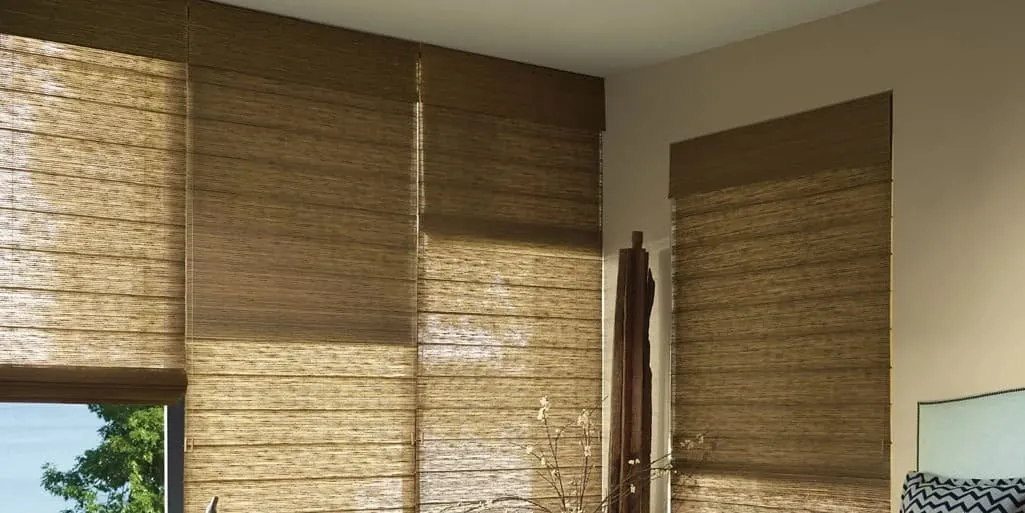
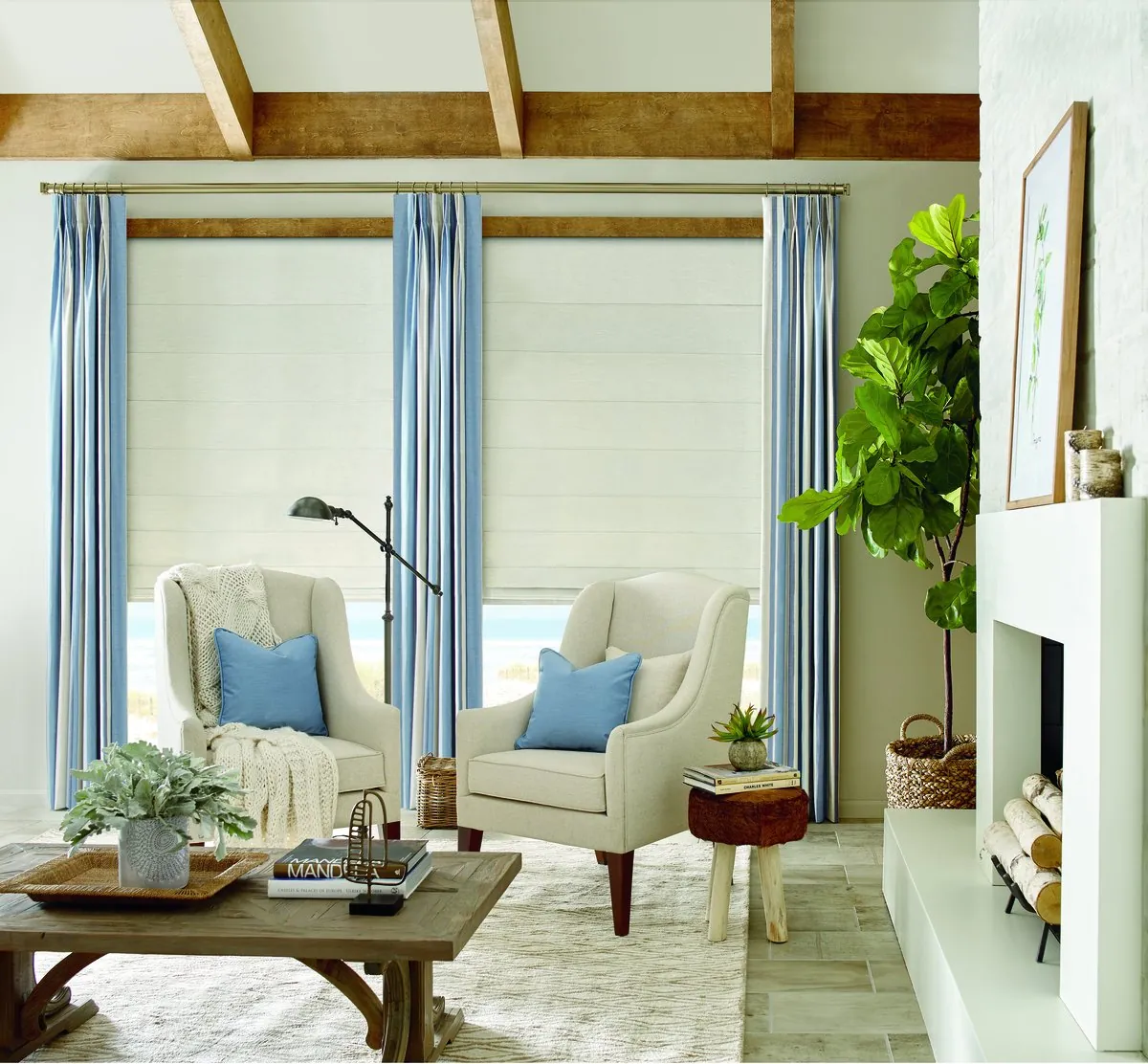
A Carole folded style in a warm, textured cloth makes a shaded room feel comfortable and finished.
Kitchen
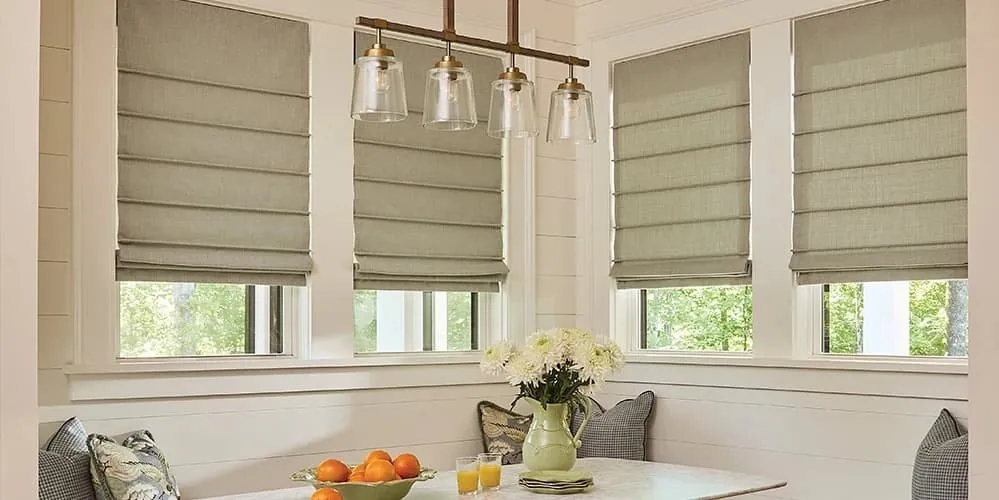
Vignette inside the frame, light and cordless, keeps a counter window tidy and lets in what daylight the trees allow.
Bedrooms
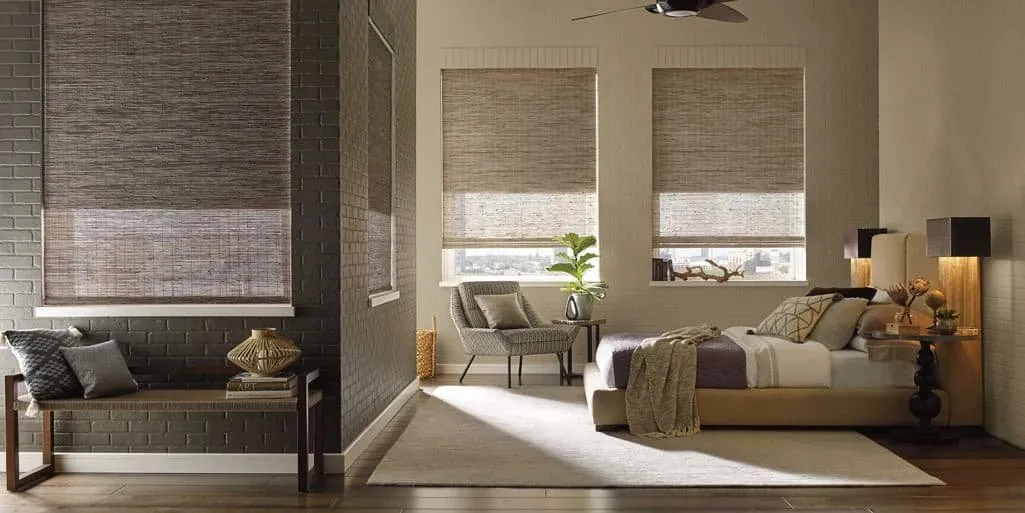
A room-darkening lining holds a bedroom dim when the early sun slips under the canopy.
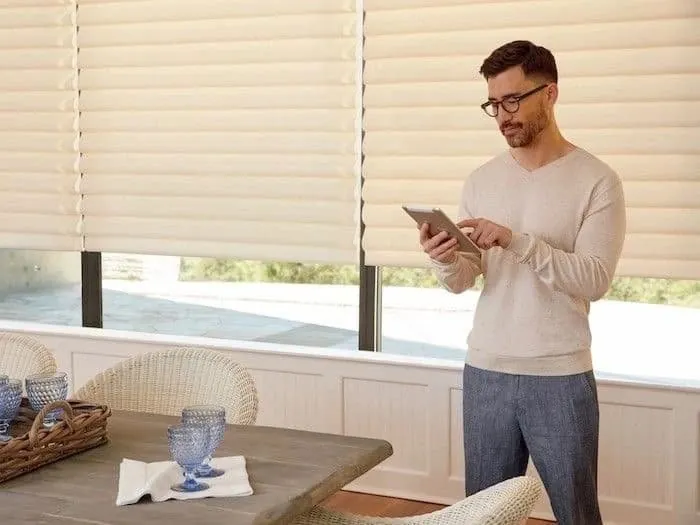
Home office
Lowered partway, a light fabric cuts the glare on a screen when the sun drops low between the trees.
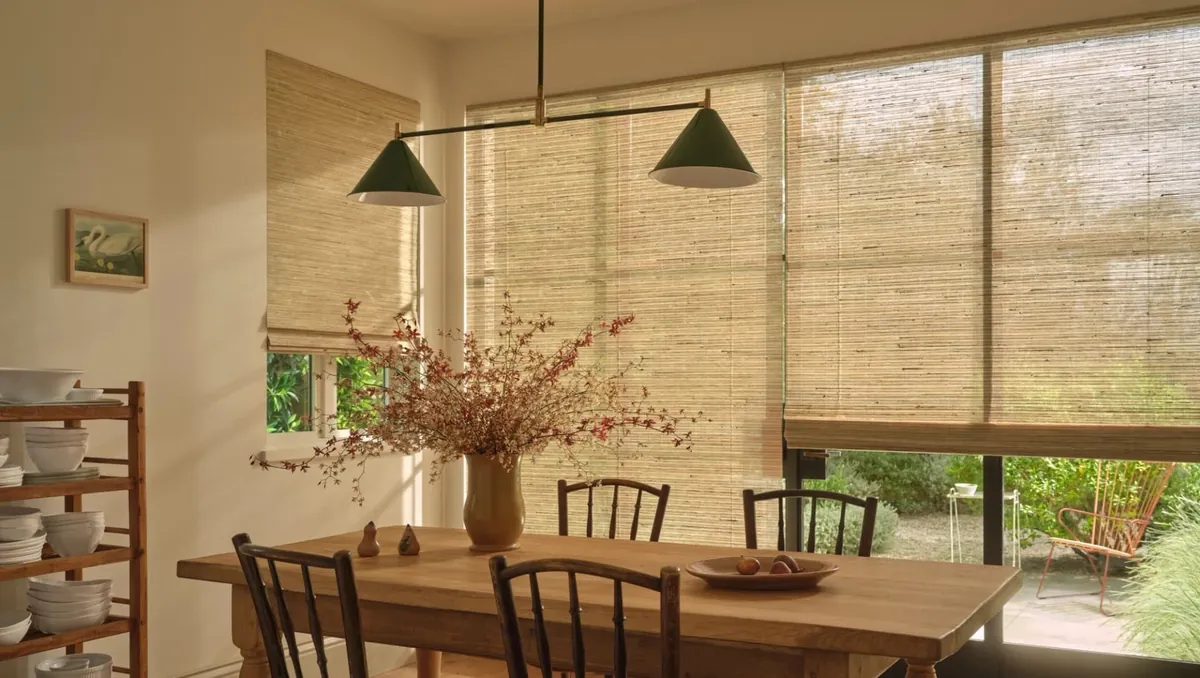
Dining room
The room for pattern or texture: a print on a flat fold, or Alustra Woven Textures for a natural look.
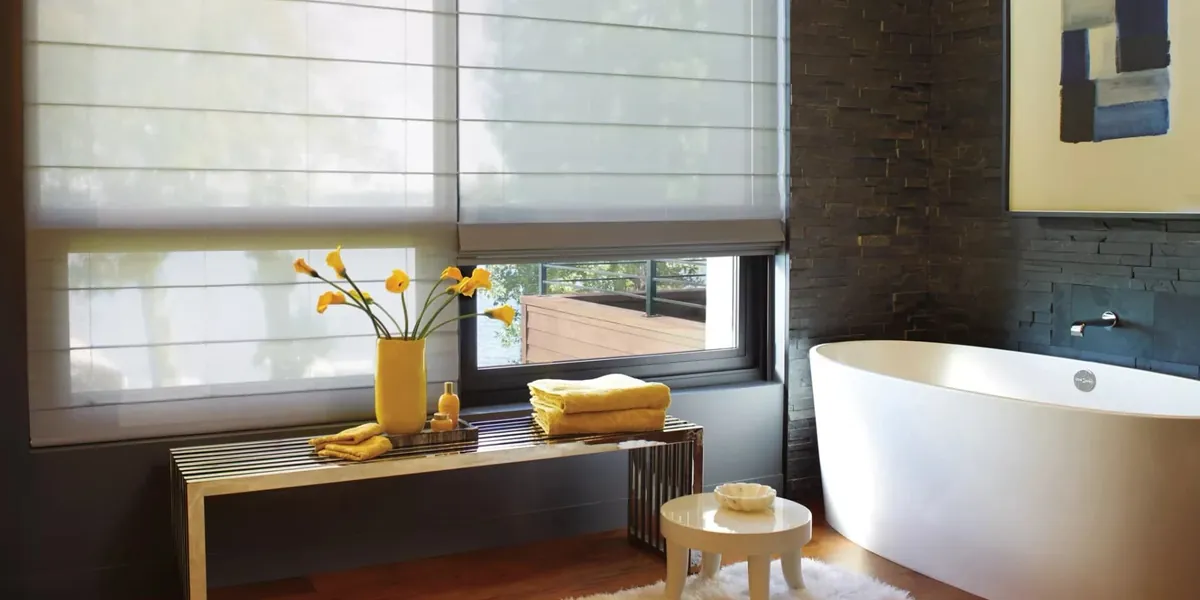
Bathroom
A sheer roman lets light through and blurs the view, enough for a bathroom that looks out into the woods.
Color under a canopy
Light that has passed through leaves is not the same as open daylight. Under a heavy canopy, much of what reaches the windows has been filtered and reflected by green foliage, and it takes on a cool, slightly green cast. Fabric colors shift under it. A crisp white can look gray, a soft beige can look drab, and a cool blue can look colder still.
That is the main reason we bring the samples to Westwood houses rather than asking anyone to choose from a small swatch elsewhere. A fabric has to be seen at the window it will hang on, in the light the trees let through. During the consultation we hold samples up in the shaded rooms and the brighter ones, and very often the color that looked right in the sample book is not the one chosen at the glass.
As a rule of thumb, warmer whites, creams, oatmeals and soft warm grays hold up well in tree-filtered light and keep a room feeling inviting. Texture helps too: a linen or a slub weave catches the low light and gives the shade depth even when the room is dim. Strong color is best saved for a room on the open side of the house, where the light is truer.
When the windows turn into mirrors
A house on a dark, wooded lot has a quirk that town houses rarely notice. After sunset there are no streetlights or neighboring windows outside, so every pane of glass turns black and reflects the room back at you. A living room with a wall of windows can feel exposed and oddly cold in the evening, even though nobody can see in.
Lowering a fabric shade fixes this immediately. The black glass disappears, the room feels enclosed and warm, and the fabric looks soft in lamplight. For this purpose even an unlined, light-filtering fabric is enough, because the goal is not privacy but simply covering the glass. That is useful in a Westwood house, because the same unlined fabric keeps the room bright during the day.
PowerView makes it effortless. Shades in the main rooms can be grouped and set to lower at dusk, adjusting through the year as the evenings change. Our guide to how motorized shades are controlled explains schedules and scenes.
Keeping the woods in view
For many Westwood houses the trees are the view. From a kitchen table or a family room sofa, the windows look straight into the woods, and nobody wants a covering that gets between them and it. The answer is a shade that disappears when raised. Vignette is especially good at this, because its fabric winds up into the headrail and leaves almost nothing across the top of the glass. A Carole shade in a light, unlined fabric folds into a slim stack, and mounting it just above the frame lets that stack sit clear of the window altogether.
On the rooms where the woods matter most, many customers keep the shades fully up through the day and lower them only at dusk or when the sun breaks through low. That is part of why roman shades in Westwood are so often chosen in light, warm fabrics: they are seen mostly in the evening, by lamplight, and the color should feel comfortable then.
The canopy through the year
Tree cover is not constant. Through summer the leaves hold back most of the direct sun, but once they drop, low winter light reaches deep into rooms that were shaded for months. A room that needed nothing in July may want its shades half lowered on a January afternoon to cut the glare across a screen or a television. The right fabric covers both seasons: light enough not to darken a summer room when lowered, substantial enough to soften winter sun. We talk this through window by window, since a room facing a stand of evergreens behaves differently from one facing bare oaks and maples.
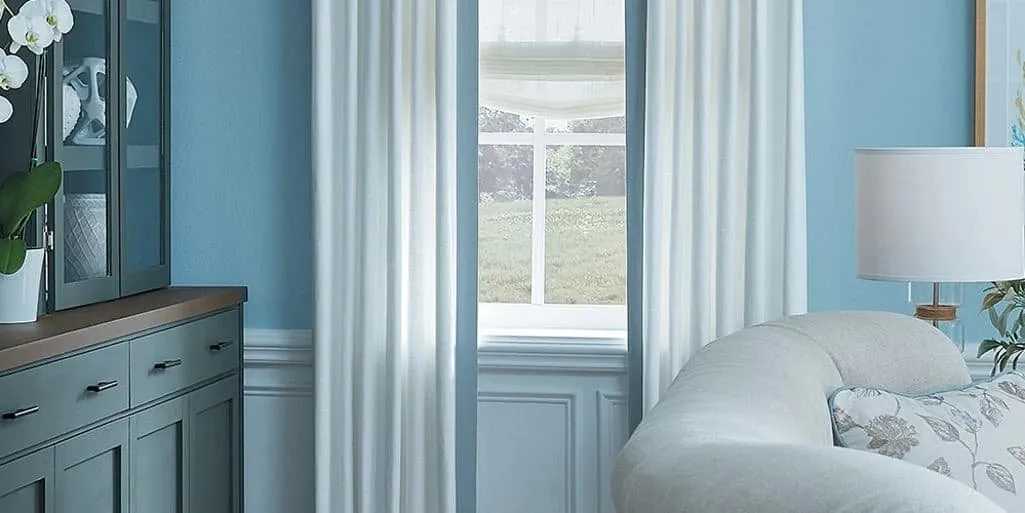
Post-war colonials
The post-war colonials in Westwood are typically two stories with a balanced front: windows evenly spaced either side of the door, and a matching row above. They have standard modern openings, so an inside mount is nearly always possible, and every shade on a floor can stop at the same lowered height. From the long driveway, that even row of shades looks right on a symmetrical house.
Inside, these houses tend to have defined rooms rather than open plans: a living room, a dining room, a den, and bedrooms upstairs. That suits roman shades well, because each room can have its own fabric while the fold and the lowered height stay consistent across the house. A Carole flat fold in the dining room, a folded style in the living room and a lined Vignette in the bedrooms can all sit happily together. Choosing roman shades in Westwood colonials usually starts in the living room and works outward.
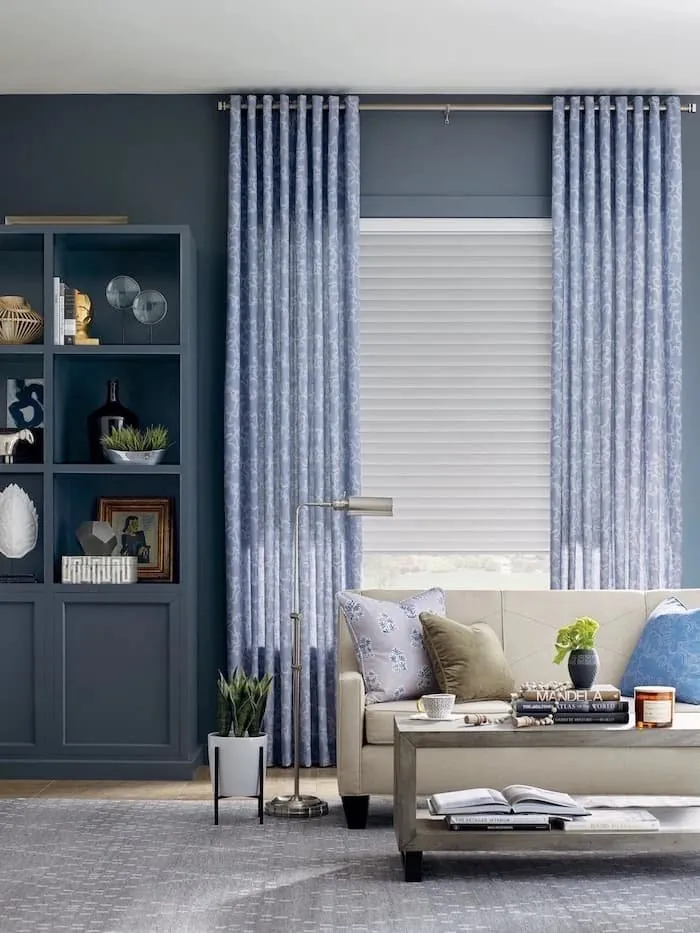
Larger newer houses
The larger newer houses on the wooded lots bring bigger rooms and more glass: an open kitchen and family room with a bank of windows, a primary bedroom with wide openings, sometimes a tall window in the entry. The openings are still standard modern sizes, which keeps fitting simple, but there are more of them and they are often seen together.
In open-plan rooms, a single line and fabric across every window keeps the space calm. Vignette suits this well: its folds are even, it looks neat from outside, and very little fabric is left at the top when the shade is raised, which matters on a kitchen window above a counter. Any window that is hard to reach, such as one high in an entry or above a deep island, is a candidate for PowerView. Our motorized blinds in Westwood page covers what can be automated across the house.
A wide family room window is best split across two or three shades, each easy to lift and able to move independently, with the joins lined up on the window’s own frame divisions.
The open side of the lot
Even on a wooded lot, most houses have one side that is open: the front facing a cleared lawn, the side facing the driveway and garage, or the back facing a patio cut out of the trees. The windows on that side behave like windows anywhere else, catching full sun at certain hours and sometimes the headlights of cars coming up the drive. They are the windows where a privacy or room-darkening lining makes sense, and where pale fabrics hold their color best. It is quite normal for a Westwood house to have lined shades on the open side and unlined ones on the wooded side, chosen in the same color so the rooms still match. We look at each side of the house separately during the consultation, rather than applying one rule to every window. A bedroom on the open side, for instance, may need a full darkening lining, while the bedroom next to it, facing into the trees, is perfectly comfortable with a lighter one.
From first visit to fitted shades
In Westwood we lead with the in-home consultation, because the trees make every house’s light different. Our vans carry the samples, so everything you need to choose comes to your door. The whole process runs like this.
- You request a consultation online or with the call button, and we agree a time.
- A consultant visits with Vignette, Carole Fabrics and Alustra Woven Textures samples, plus linings and lifts.
- Samples go up at your windows in the shaded rooms and the brighter ones, so you can judge color in tree light.
- We agree the fold, fabric, lining and lift for each room, and measure every window, noting mount and depth.
- You receive a free estimate and decide in your own time.
- When the shades are ready, our certified Hunter Douglas installers fit them, level each headrail and test every lift.
- Motorized shades are paired and scheduled, and you are shown how each shade works.
Read more about what happens at an in-home consultation and what happens on installation day.

Light-filtering or lined in a shaded house
In many towns, the default is to line most shades for privacy. In a Westwood house under heavy tree cover, with the road far away, that default often makes rooms darker than they need to be. We usually suggest thinking about each room’s real need.
Living rooms, kitchens, dining rooms and offices often do best with an unlined, light-filtering fabric. It lets the limited daylight through, glows softly in the morning, covers the black glass at night, and still blurs the view in.
Bedrooms are the exception. Even under trees, early sun can slip in under the canopy, and a room-darkening lining keeps a bedroom dim until you choose to raise the shade. Mounting the shade slightly outside the frame reduces the light that creeps in at the sides.
A lining also helps on any window that does catch strong direct sun, such as one facing a clearing, a driveway or a lawn, because it protects the face fabric from fading. Our guide to choosing fabric for a sunny room covers those windows.
Pollen, dust and looking after the fabric
Houses among trees see a lot of pollen in spring and fine debris in autumn, and with windows open some of it settles on the shades. Fabric shades need only gentle care: dust them every so often with a soft brush or a vacuum on a gentle setting with a brush attachment, working along the folds. Raise each shade fully from time to time so the folds hold their shape. Our guide to caring for fabric shades has more detail, and if a lift ever stops working smoothly on any shade you own, we can take a look.
Vignette or Carole Fabrics for your rooms
Both lines make genuine roman shades, and a Westwood house can easily use both.
Vignette’s engineered fold tucks the fabric up into the headrail, giving a modern, even look and a very compact raised shade. It suits the larger newer houses and any open-plan space.
Carole Fabrics shades are stitched to each opening from a wide decorator range. The flat fold suits patterns and formal rooms; the folded style, with soft loops down its length, suits a traditional living room or a bedroom. Both look at home in a post-war colonial.
The Vignette and Carole Fabrics pages describe each line, and our roman shades page compares them with Alustra Woven Textures.
Layering in the bigger rooms
In a large living room or primary bedroom with high ceilings, a roman shade inside the frame paired with drapery panels outside it adds height and warmth. The shade handles the light; the panels frame the window and bring color into a room that the trees keep cool. In smaller rooms, a roman shade on its own is usually enough. Our interior design consultations can help plan fabric, color and layering for a whole room.
Why a Hunter Douglas Gallery dealer
Blinds & Designs is a Hunter Douglas Gallery dealer, the title Hunter Douglas gives dealers who meet its standards. For a Westwood house that means the full range of roman shade fabrics, folds, linings and lifts, plus Hunter Douglas blinds, shutters, other shades and drapery for the rooms that suit them.
Our installers are certified by Hunter Douglas and fit every shade level and working. Estimates are free, and we also look after blind and shade repairs on coverings you already own.
Everything we offer locally is on our Westwood page, and our cellular shades in Westwood page covers a shade often chosen for bedrooms beside roman shades in the main rooms.
Questions from Westwood
My house is shaded by trees. Do I need lined shades?
Usually only in the bedrooms and on any window facing a clearing or lawn. Elsewhere an unlined light-filtering fabric keeps the room bright, covers the dark glass at night and still blurs the view in.
Why do fabric colors look different at my house?
Light filtered through leaves has a cool, green cast that shifts colors. That is why we bring samples to your windows. Warm whites, creams and textured weaves tend to look their best under trees.
My windows look black at night. Will a shade help?
Yes. Lowering a fabric shade covers the dark glass and makes the room feel warm and enclosed. PowerView can lower the main rooms automatically at dusk.
Will roman shades fit inside my window frames?
Almost certainly. Westwood houses mostly have standard modern openings with good depth, so an inside mount is straightforward.
Do you charge for the estimate?
No. The estimate is free, and there is no obligation to order.
Book a visit
To see what roman shades in Westwood, MA, look like in your own tree-filtered light, request a consultation. We will bring the Vignette and Carole Fabrics books to your house, measure every window and give you a free estimate. You can also use the call button.