
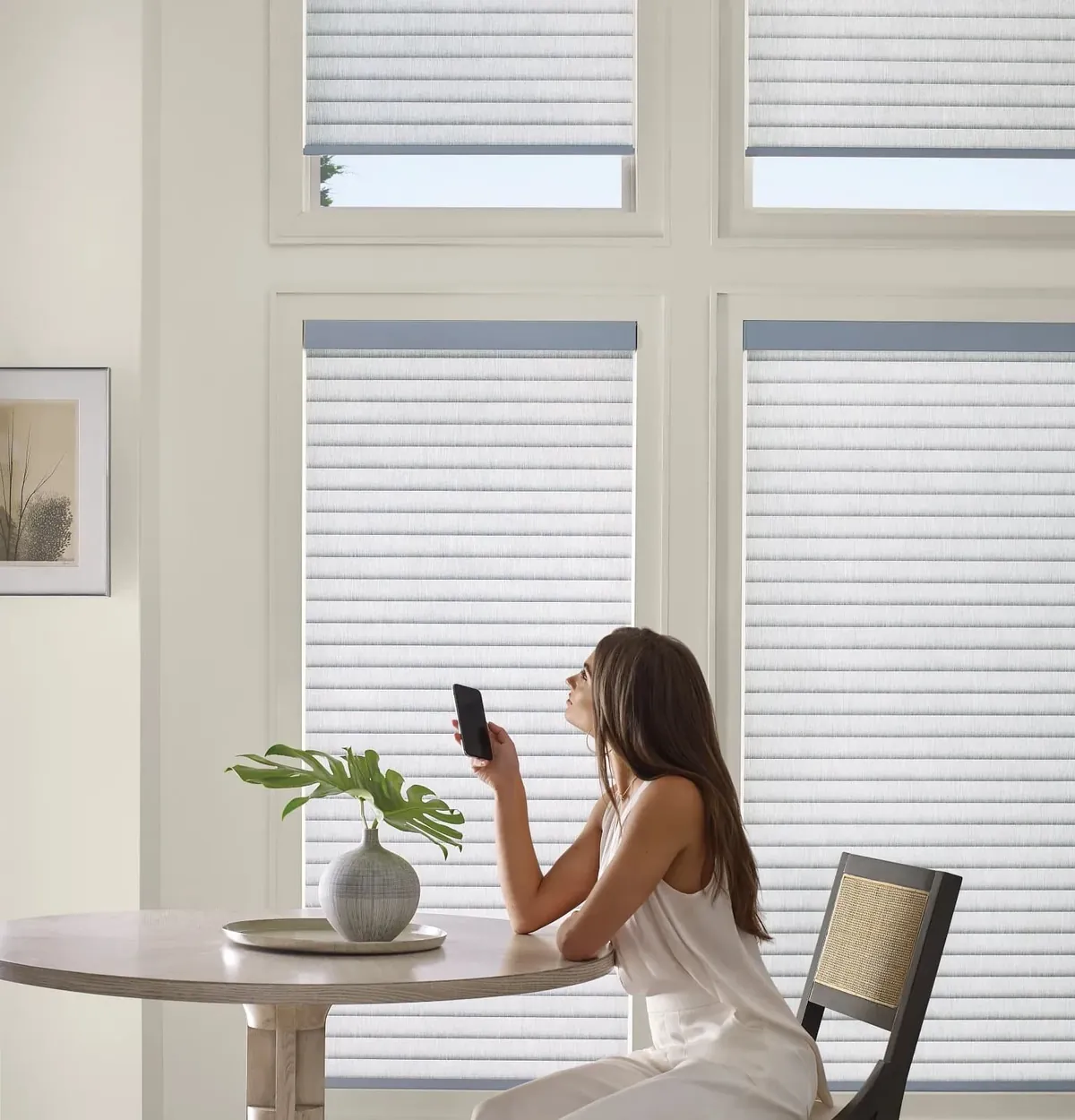
Tall sash, ranch glass and two-story foyers
Mansfield’s housing spans three very different eras, and each one sets its own window problem. Near the center, Victorians keep their tall, narrow sash. Across the subdivisions, post-war ranches sit beside large newer colonials. And the newest builds add something the older houses never had: a two-story foyer with a wall of glass above the front door. Planning cellular shades in Mansfield, MA, means handling all three, sometimes on the same street.
Honeycomb shades suit that range because they are made to order for each opening. A narrow Victorian sash gets a narrow shade. A ranch picture window gets two or three shades lined up on one headrail. Foyer glass high above the floor gets shades that line up pane by pane and move by motor.
What all of them share is the cell. Every pleat of a honeycomb shade is a hollow tube, and the air caught inside sits still between the glass and the room. That still layer is why a cold window stops feeling cold, and why a sunny one stops cooking the room.
Where to start with the range
Three pages go deeper into the parts of the honeycomb range Mansfield houses use most.
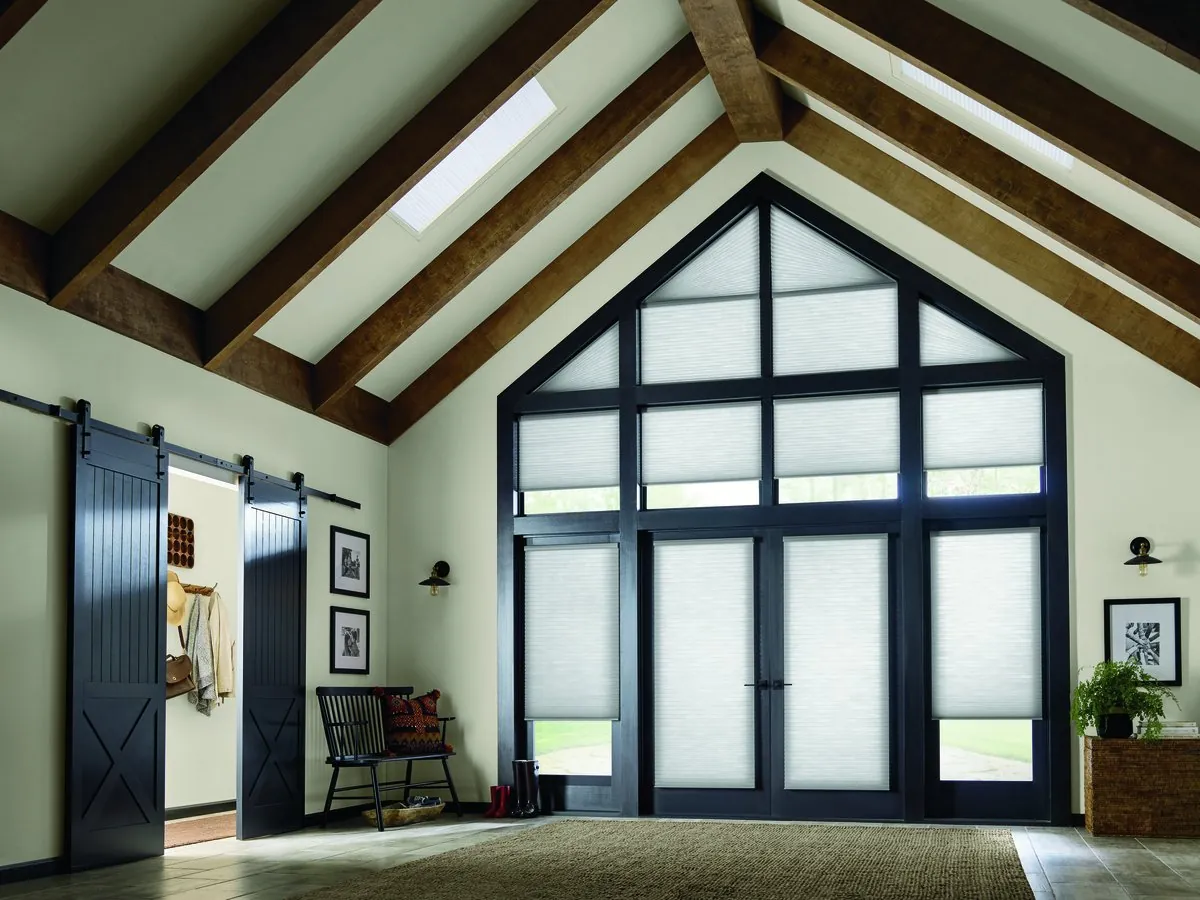
Duette honeycomb shades
The broadest honeycomb collection from Hunter Douglas, with the sizes and fabrics for tall sash, wide ranch glass and every pane of a foyer wall.
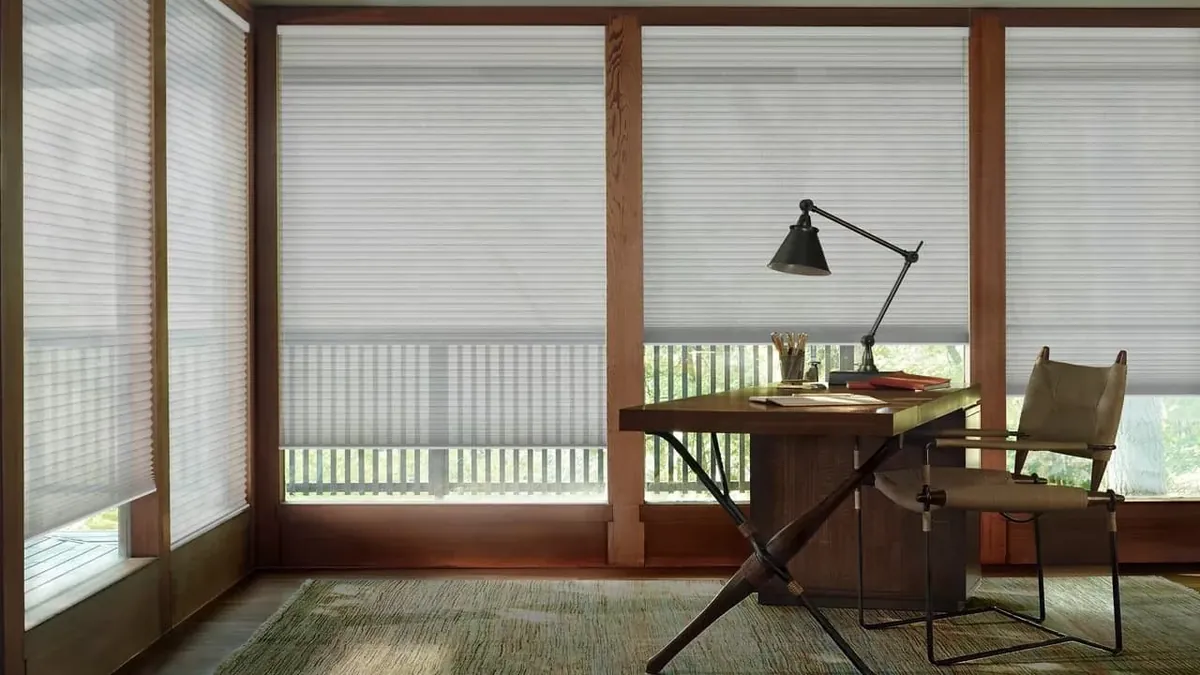
Applause honeycomb shades
A second Hunter Douglas honeycomb line with its own palette, often chosen for bedrooms, kitchens and the standard windows of a large colonial.
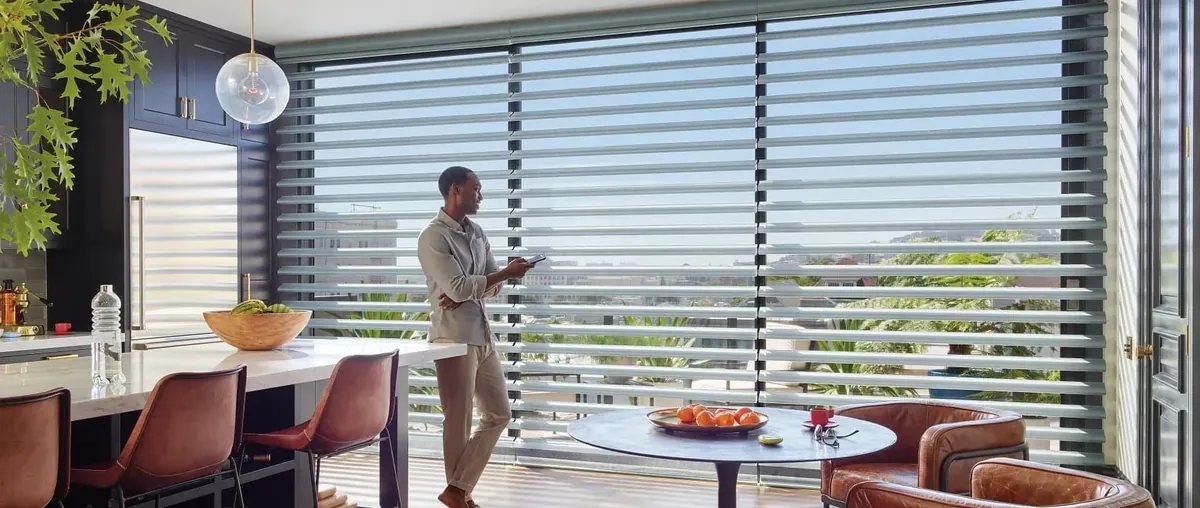
How motorized shades are controlled
PowerView moves the shades you cannot reach, from a phone, a remote or a schedule. The foyer is usually where it starts, and our controls guide walks through them in plain language.
Foyer glass in the newest builds
A two-story foyer is a striking way to enter a house, and a hard space to live with. The tall window wall over the door faces the street, so it takes whatever sun that side of the house gets, and the warm air of the whole ground floor rises straight up past it. In winter the foyer is draughty and cool at floor level. In summer the upper glass can flood the stairs and landing with heat and glare by late morning.
Nobody climbs a ladder to adjust a shade every day, which is why foyer glass sits bare in a lot of newer Mansfield houses. PowerView changes that. Each honeycomb shade on the upper panes runs on a motor, and you control them from a phone, a remote or a wall switch, or let a schedule do it: lowered when the sun reaches that side of the house, raised again in the evening. We work out how each motor is powered during the visit, after we have seen the wall and the space around it.
On a window wall made of several panes, every shade is made to its own pane. We line up the bottom rails across the wall so the glass reads as one composition whether the shades are up or down.
Victorian sash near the center
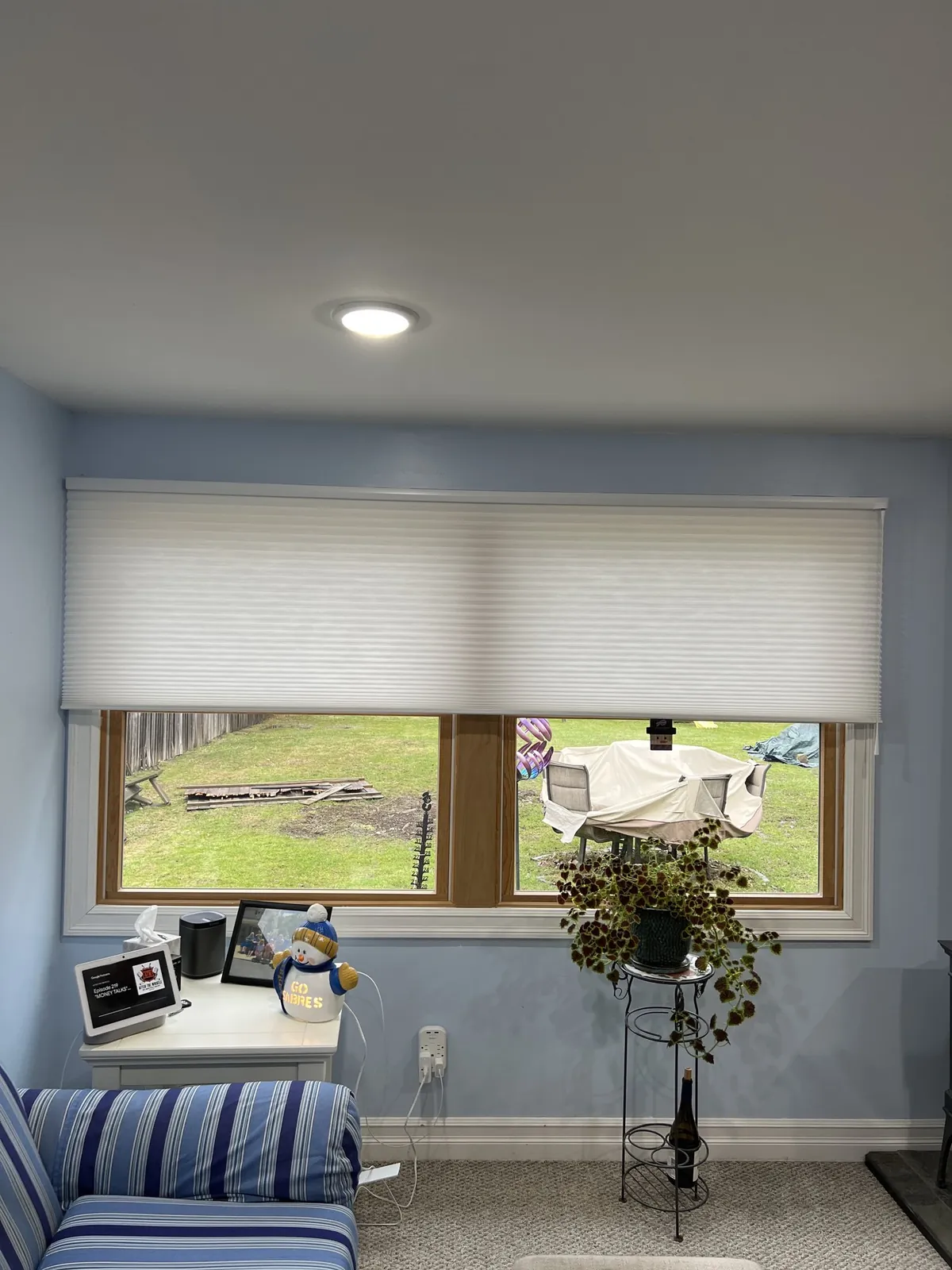
The older houses near the center have windows that are tall in proportion to their width, often with original sash, deep casings and a run of decorative trim. Those proportions are a large part of the charm of the house, and a covering that sits too low or too bulky spoils them.
A honeycomb shade mounted inside the frame keeps the casing and trim visible and stacks into a slim band at the head of the window when raised. On a tall, narrow sash, that matters: the stack sits within the top of the opening rather than cutting across the glass. We check the depth of each frame before suggesting an inside mount, because old sash hardware sometimes takes up more room than it looks. If a window cannot take one cleanly, a neat outside mount on the casing is the right call, and we will say so.
These old sash are also the windows that let the most cold through. A lowered honeycomb shade on a winter evening makes the room by that window noticeably more comfortable, without changing the look of the house from the street.
Post-war ranches across the subdivisions
The ranches built across Mansfield’s subdivisions after the war are simple houses with practical windows. A front picture window, a kitchen window over the sink, a slider out to the back, and a line of bedroom windows along one side. Everything is on one level, which makes it easy to treat the whole house at once.
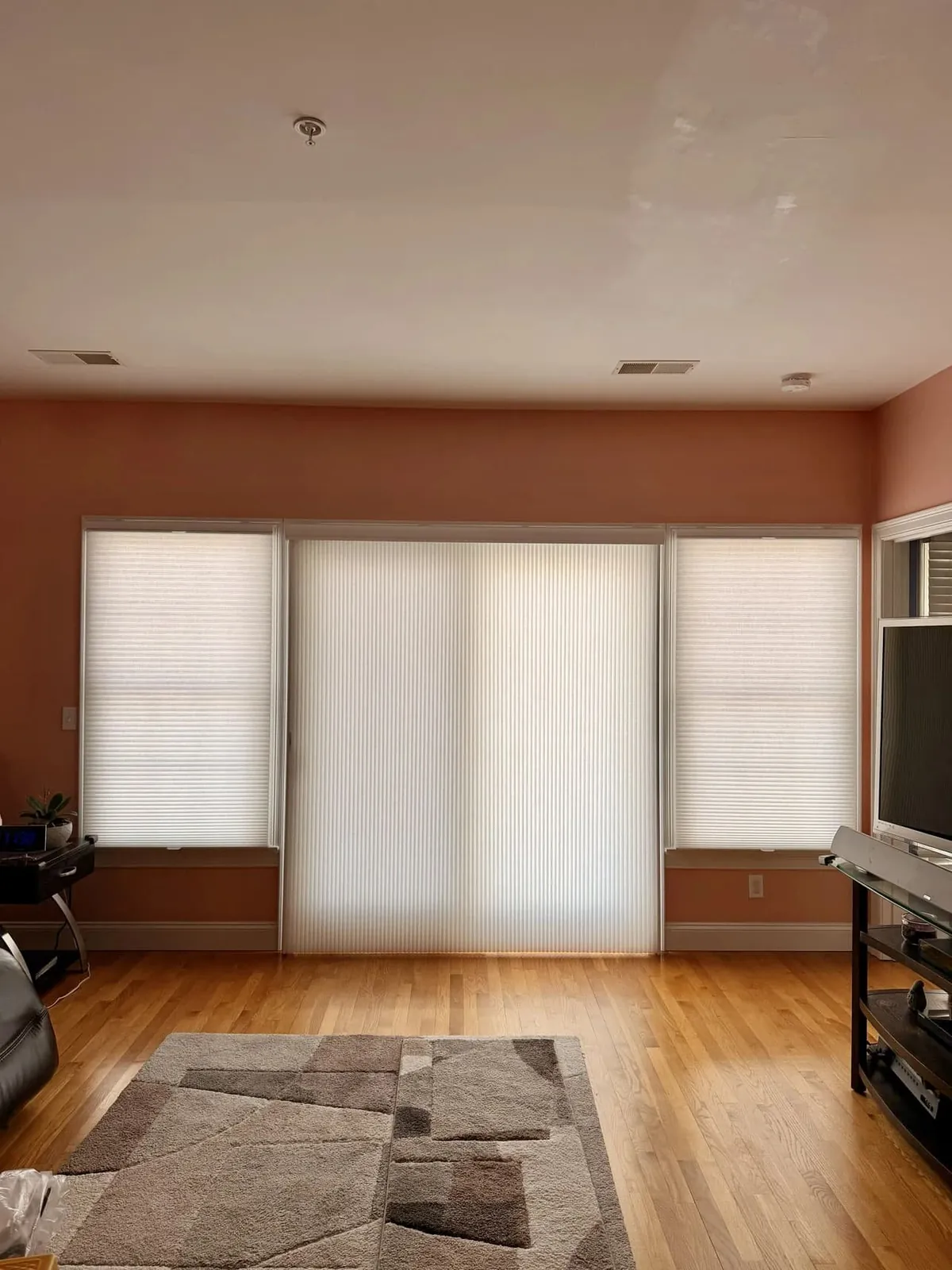
We plan a ranch around the way the sun moves across it. The picture window usually wants a light-filtering fabric that keeps the living room bright while softening glare. Bedrooms take a room-darkening fabric. The slider gets a vertical honeycomb shade that draws to one side so the door is easy to use. And because ranch windows often share sizes, a whole-house order tends to look consistent without extra effort.
Cellular shades in Mansfield, MA, for large newer colonials
The large colonials across the newer subdivisions have the most glass of any Mansfield houses. Tall first-floor windows, a family room that may open to two stories, bedrooms with paired windows, a bonus room over the garage. Standard modern openings make them easy to measure, but the number of windows makes planning important.
The approach that works best is to agree a single outward color for the whole house, so it reads cleanly from the street, then choose opacity room by room. Main living spaces take light-filtering fabrics. Bedrooms and a media room take room-darkening ones. The bonus room, which often has windows on three sides and gets hot in summer, benefits from a honeycomb shade more than almost any other room. On an order of this size, cellular shades in Mansfield are often phased: bedrooms and the foyer first, then the living spaces.
The bonus room over the garage
Many of the newer colonials have a bonus room built over the garage, and it is usually the hardest room in the house to keep comfortable. It sits above an unheated space, it often has windows on two or three sides plus a window in the gable end, and the roof is right overhead. The result is a room that is cold underfoot in winter and stuffy by mid-afternoon in summer.
Honeycomb shades on every window in that room change it more than you might expect. Lowered on winter evenings, they hold a still layer of air against all that glass. Lowered through the sunny hours in summer, they cut the heat coming in from the gable and side windows. If the room doubles as a playroom, a home gym or a place for watching films, a room-darkening fabric lets you control the light as well. A gable window set high in the end wall is a natural candidate for PowerView.
Kitchens and breakfast areas
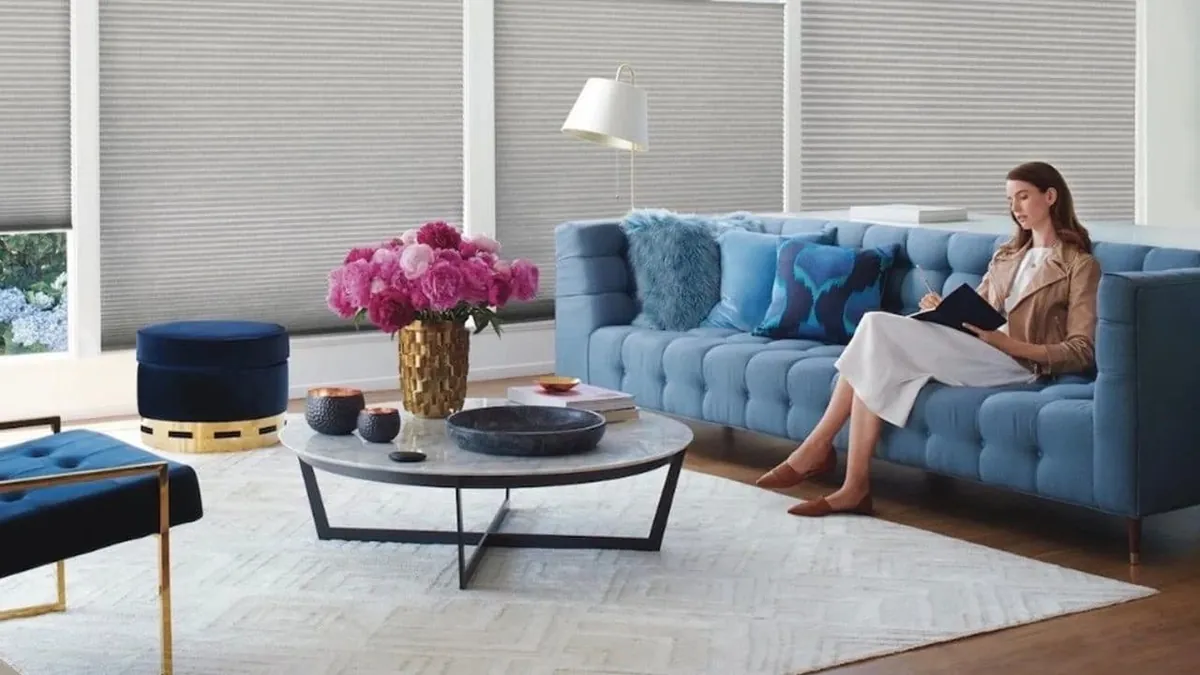
Kitchens in the subdivision houses tend to face the back yard, with a window over the sink and often a bay or a slider in the breakfast area. These windows are opened, closed and looked through all day, so the shade on them needs to be easy to use and kind to the light.
A light-filtering Applause fabric works well here. It keeps the kitchen bright, softens a low sun over the counter, and blurs the view in from the yard after dark. A top-down, bottom-up shade over the sink lets light in from the top while covering the lower glass, which is useful when the neighbor’s deck faces your kitchen. A slider in the breakfast area takes a vertical honeycomb shade in the same fabric, so the whole back wall of the kitchen matches.
How the cells change a room through the year
Think of a honeycomb shade as a thin quilt for the window. On a January night, the cold radiates off the glass and the warm air of the room drifts toward it and cools. With the shade down, the air pocketed inside the cells interrupts that exchange, so less warmth reaches the pane and the room holds its heat for longer.
On a July afternoon the process runs the other way. Sun through the glass warms everything it lands on. A honeycomb shade lowered on the sunny side slows the heat crossing into the room and keeps direct sun off the floors and furniture. In a foyer, a bonus room or a west-facing family room, that is the difference between a room you can use in the afternoon and one you avoid.
Stair landings and upper halls
Between the foyer and the bedrooms there is usually a landing or an upper hall, and in the newer colonials it often has its own window, sometimes a tall one lined up with the foyer glass below. In the Victorians near the center, the stair window is frequently the tallest sash in the house. Either way it is a window most people forget until the hall gets hot on a summer afternoon or cold on a winter night.
Treating it as part of the foyer plan makes sense. The shade on the landing can match the foyer shades in fabric and run on the same PowerView schedule, so the whole stairwell closes together when the sun comes round. Anyone planning cellular shades in Mansfield for a newer house should count that window in from the start.
Picking opacity without guesswork
Rather than choosing a fabric and then asking whether it suits the room, start with the room and ask four questions.
- When is the room used most? A morning kitchen and an evening family room need different things from the same east-facing glass.
- Does it need darkness? Bedrooms, nurseries and media rooms usually do. Room-darkening fabric handles that.
- Is the view worth keeping? If so, a light-filtering fabric or a top-down, bottom-up shade lets daylight in while blurring the view from outside.
- Can you reach the window? If not, PowerView belongs on the plan.
The answers usually point to a clear choice, and we bring enough samples to test it at the window.
Duette and Applause side by side
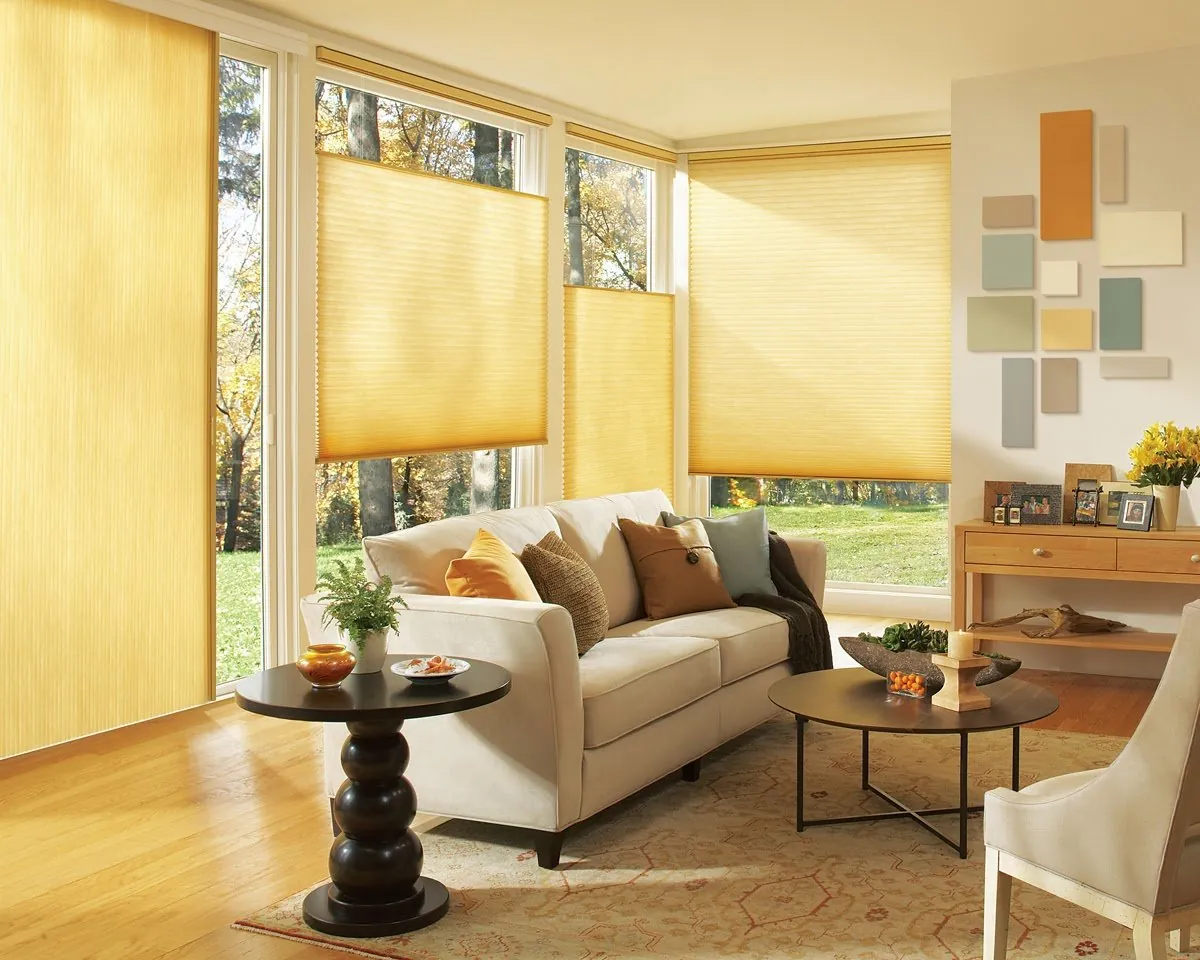
Duette and Applause share the same Hunter Douglas honeycomb principle, so either will hold air in its cells the same way. The choice between them comes down to fabric, texture and size. Duette has the deeper collection and includes the vertical shade for sliders and the sizes a foyer wall can need. Applause offers its own colors and covers most standard bedroom and kitchen windows well.
In a large colonial it is common to use both, with Duette in the foyer and family room and Applause upstairs. On a Victorian, Duette often goes on the tall front sash where the fabric is most visible. The main cellular shades page shows how the whole range fits together.
What the home visit looks like
Our vans carry samples, so we can bring the showroom to you. That matters in Mansfield, where the light in a foyer is nothing like the light in a back bedroom.
- Book through Request a Consultation online, or with the call button.
- We begin with the window that bothers you most, which in newer houses is often the foyer.
- You compare Duette and Applause samples at the glass, in daylight, room by room.
- We measure every opening, including each pane of the foyer wall, and check frame depths on any older sash.
- We talk through PowerView where it would help, and plan how the motors will be powered.
- You leave with a free estimate and time to think it over.
Our page on what happens at an in-home consultation covers the visit in more detail. For help with color and the rest of a room, ask about our interior design consultations.
Measuring tall and high windows
Tall Victorian sash and foyer panes both need careful measuring, for different reasons. Old frames settle, and high panes are hard to check twice.
- Each opening is measured on its own, width at three heights and height at both sides and the center.
- Frame depth is checked for an inside mount, with a note of any sash hardware or trim in the way.
- On a foyer wall, the panes are measured as a set so the shades line up across the whole window.
- You confirm the fabric, opacity and mount for every window before anything is ordered.
- Our certified Hunter Douglas installers fit the shades, set up any PowerView motors and walk you through the controls.
The page on what happens on installation day explains the fitting itself.

Gallery dealer, certified installers
Hunter Douglas calls dealers who meet its standards Gallery dealers, and Blinds & Designs holds that status. For a Mansfield house with a foyer wall, tall sash and a dozen bedroom windows, it means the whole honeycomb collection is on the table, from narrow Duette shades to motorized shades for the high glass.
The shades are fitted by installers certified by Hunter Douglas. We also repair blinds and shades you already have. And we carry Hunter Douglas blinds, shutters, roller and roman shades and drapery, so one visit can plan every room. See plantation shutters in Mansfield, roman shades in Mansfield or our Mansfield page for everything we do in town.

The Franklin showroom is nearest
Franklin is the closest of our showrooms to Mansfield. Some people like to look there first and then book the home visit. Others start at home and never need the trip. Both paths end with the same thing: samples at your windows and a free estimate.
If you do visit, a phone photo of the foyer wall or the tall front sash helps us talk about the right shade on the spot.
Questions from Mansfield
How do you shade foyer glass that nobody can reach?
With PowerView motorization. Each shade on the upper panes runs on a motor you control from a phone, a remote or a schedule. We plan how each motor is powered during the visit.
Will honeycomb shades fit the tall, narrow sash in an older house?
Yes. They are made to the size of each opening, and narrow widths are no problem. We check each frame for depth so the shade can sit inside it, or recommend an outside mount where the old hardware leaves too little room.
Our house looks like the others on the street. Can the shades make it look tidy from outside?
They can. Using one outward-facing fabric color on every window keeps the front of the house calm and consistent, even when the rooms inside take different opacities.
Can I lower the shades while I am away from home?
With PowerView, yes. The app lets you move shades remotely, and schedules can raise and lower them at set times whether anyone is home or not.
Is there a charge to have you measure and quote?
No. We measure at the visit and then give you a free estimate for the shades you chose, with no obligation.
Bring the samples to your foyer
The best way to settle on cellular shades in Mansfield, MA, is to see real fabric against your own glass, from the foyer wall to the bedroom you want darker in the morning. Request a consultation and we will bring the Duette and Applause collections, measure every window and leave you with a free estimate.