
Old houses, open ground, the sea on three sides
Little Compton keeps its old houses. Antique capes and shingled farmhouses stand around the Commons and along the roads running south toward Sakonnet Point, many of them on lots so large that the nearest neighbor is a field away. The sash in those houses is small and original, often with divided panes, and the weather off the water reaches every side of the building. A good share of the houses are lived in only part of the year. Each of those facts shapes how we plan custom blinds in Little Compton, RI.
Start with the openness. A farmhouse in a hayfield near the coast has nothing to shelter it: no trees close by, no other buildings, just wind, salt and a great deal of sky. Light comes in from every direction, and in the late afternoon the sun drops toward the water with nothing to soften it. The rooms are bright, sometimes too bright, and anything left in the sun by a window fades.
Then there are the windows themselves. Small antique sash was made for a house that needed to stay warm, not one that wanted a view. The openings are modest, the frames are old and rarely square, and the trim around them is often the original woodwork. A blind for that window has to be made to measure and has to sit quietly.
Blinds for antique sash and coastal weather
Every blind below comes in sample form to the house, so planning custom blinds in Little Compton happens at the window each one is meant for.
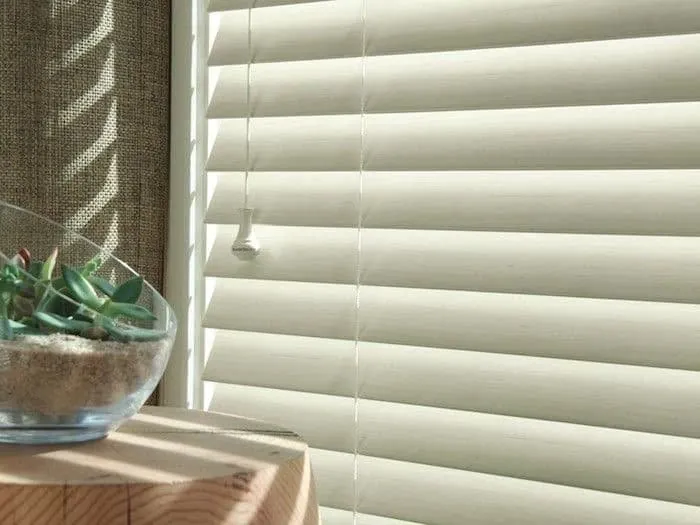
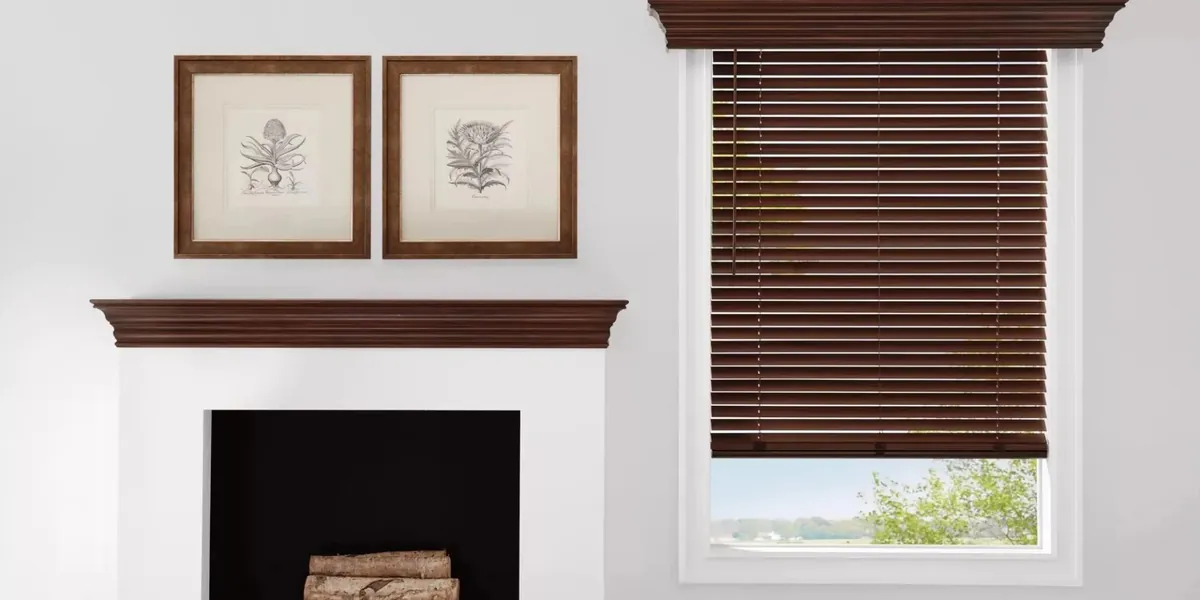
Wood and faux wood
Parkland real wood for the dry front rooms of an antique cape, and EverWood faux wood wherever salt air, steam or a damp season reaches the window.
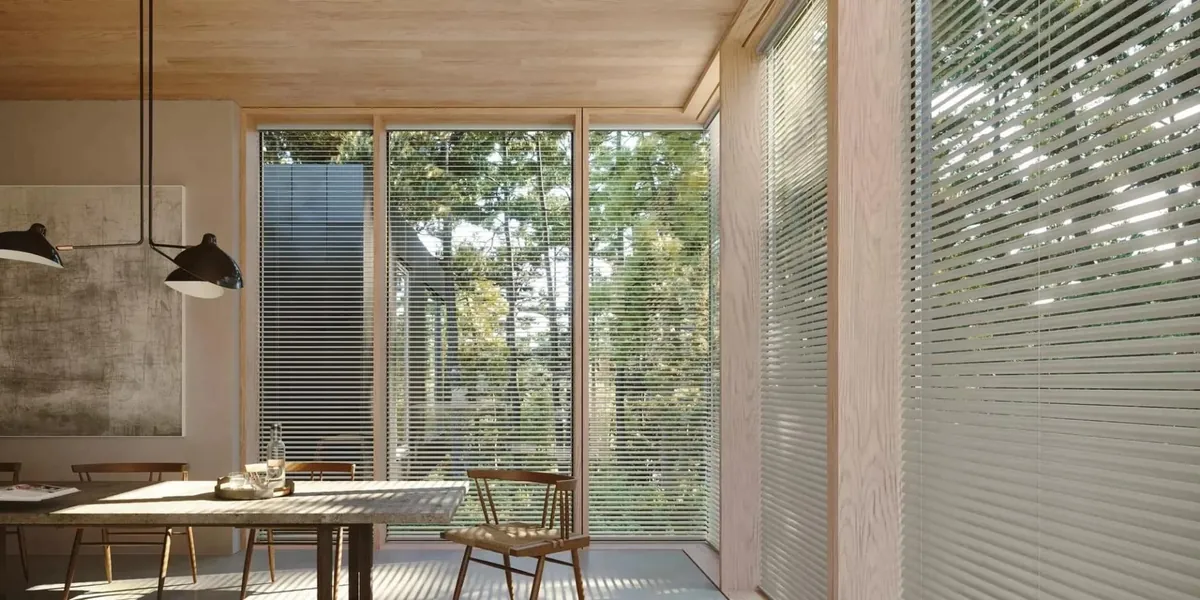
Aluminum blinds
Slim slats on a shallow headrail, for small antique frames with little depth and for the bigger glass in a newer addition.
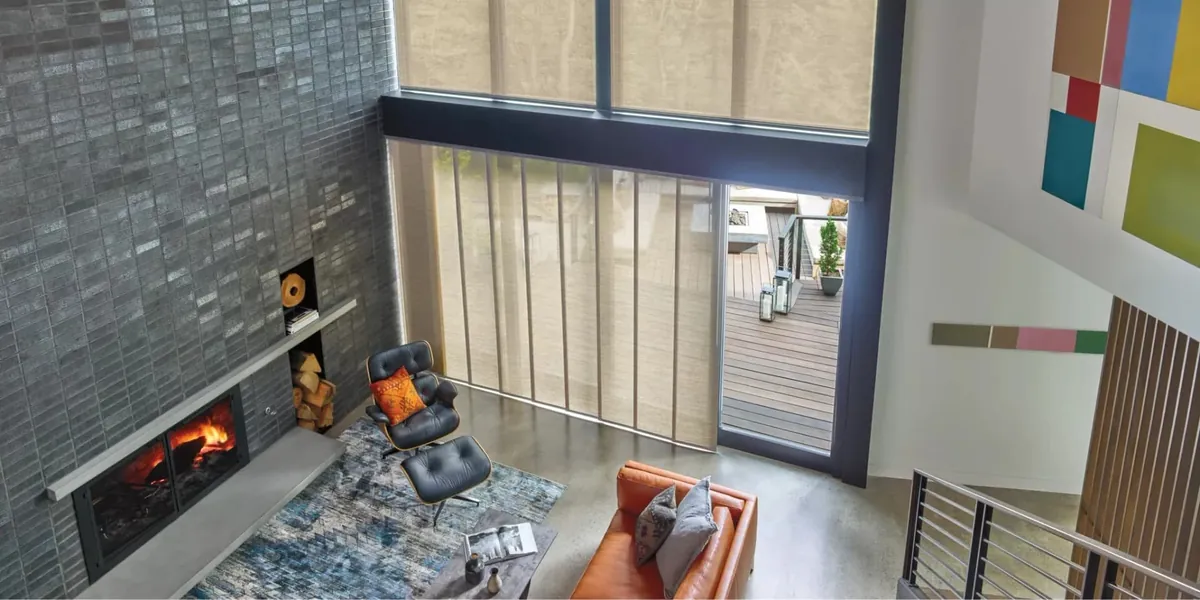
Vertical blinds and panels
For a glass door onto a deck or a terrace facing the water. The panels gather to one side and the opening is clear.
Small sash in an antique cape
Inside an antique Little Compton cape, the windows tell you the age of the house. They are small, often six panes over six or similar, set into heavy timber frames with a deep sill and a plain, thick casing. Over a long life, the house has moved: frames lean, sills slope, and two windows that look alike from outside can differ by a noticeable margin.
A ready-made blind has no chance in a window like that. A made-to-measure blind does, but only if the measuring is done properly. We take the width at three heights and the height at three points across, check the depth of the frame where the headrail will sit, and look for anything that gets in the way: an old sash lock, a stop bead that sits proud, a window that has been painted shut for years.
Where the frame is deep and close to square, an inside mount is ideal. The blind sits back within the opening, the casing and sill stay in full view, and the raised blind tucks into the head of the frame. Where the frame is too shallow or too far out of true, a slim outside mount on the casing is the better choice. It covers the gaps that a crooked frame would leave, and on a window with plain trim it looks neat.
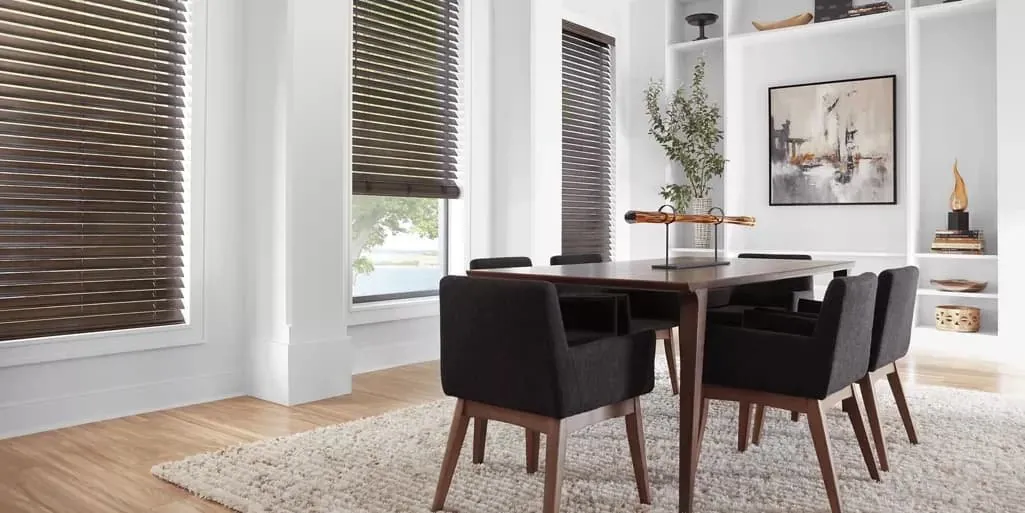
Small sash also wants a small slat. A narrow slat keeps the raised stack to a few inches and stays in proportion with small panes. In white or a soft cream on painted trim, the blind becomes almost invisible, and the muntins of the old window stay the thing you notice.
Shingled farmhouses on open land
The farmhouses scattered across the open land between the Commons and the shore are usually bigger than the capes and have been added to over time: an ell for a kitchen, a wing for bedrooms, a sunroom on the side facing the water. The result is a house with several kinds of window, from small antique sash in the original rooms to larger modern units in the newer parts.
Blinds can tie that together. Using one slat color throughout, with the material changed to suit each room, keeps the look of the house consistent as you move from old to new. The slat width can change with the size of the window and still read as one family. A dining room in the old part might take real wood, the kitchen in the ell faux wood, and the sunroom slim aluminum for the view.
On open land, privacy is rarely the reason for a blind. Light is the reason. A farmhouse in a field gets sun on every side at some point in the day, and rooms facing south and west take the brunt of it. Slats tilted upward send that light to the ceiling, keeping the room bright but cutting the glare and the heat on the furniture.
Weather off the Sakonnet
Toward Sakonnet Point the coast is fully exposed. The wind carries salt for a long way inland, and in a house near the shore it settles on every sill and every slat near a window that has been open. Over seasons, salt and damp are hard on any material that takes up moisture or any metal part left exposed.
That is why faux wood is our first suggestion for the rooms that take the weather. It has the look of painted wood, keeps its shape whatever the air does, and cleans with a damp cloth. Real wood belongs in rooms that are kept heated and dry, which in a part-year house may be fewer rooms than you think. Aluminum blinds are light and slim, and we talk through finishes and placement for the windows that face the sea most directly.
The working parts matter as much as the slats. A well-built headrail keeps the tilt and lift mechanism enclosed. Cordless lift removes the cord lock and the loose cord hanging beside the window. With less hardware exposed, there is less for the salt to find.
Houses that sit empty part of the year
A good share of Little Compton houses are opened in late spring and closed in the autumn, or used on weekends and holidays. That pattern creates needs that a year-round house does not have.
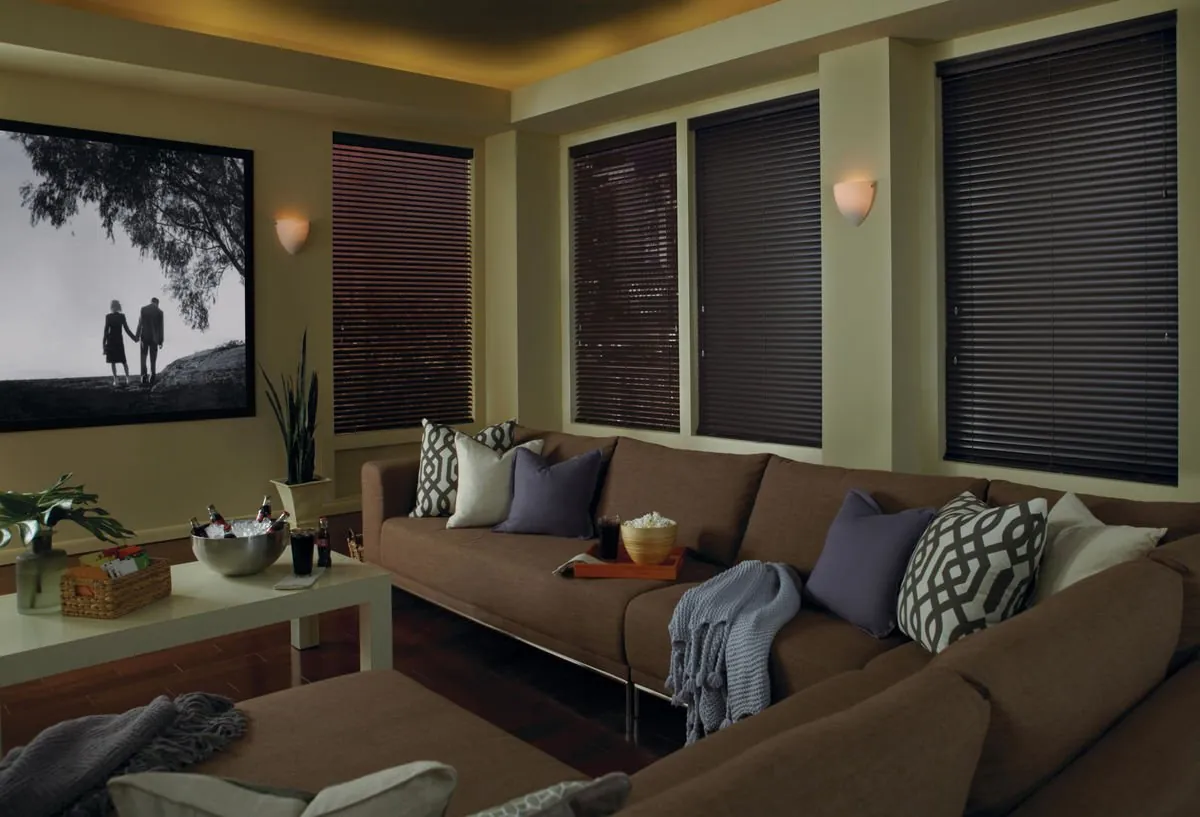
The first is sun. A house closed up for months still gets the sun through its windows every day, and furniture, rugs, floors and artwork near the glass fade while nobody is there. Blinds lowered and closed when you leave protect the rooms, while still letting a little light in so the house does not sit completely dark. A routeless slat closes more tightly for the rooms with the most valuable contents.
The second is appearance. A house that looks closed from the road with every window covered can look unoccupied. Some owners prefer to leave the blinds set partly open, so the house looks lived in, and close only the rooms that take the hardest sun.
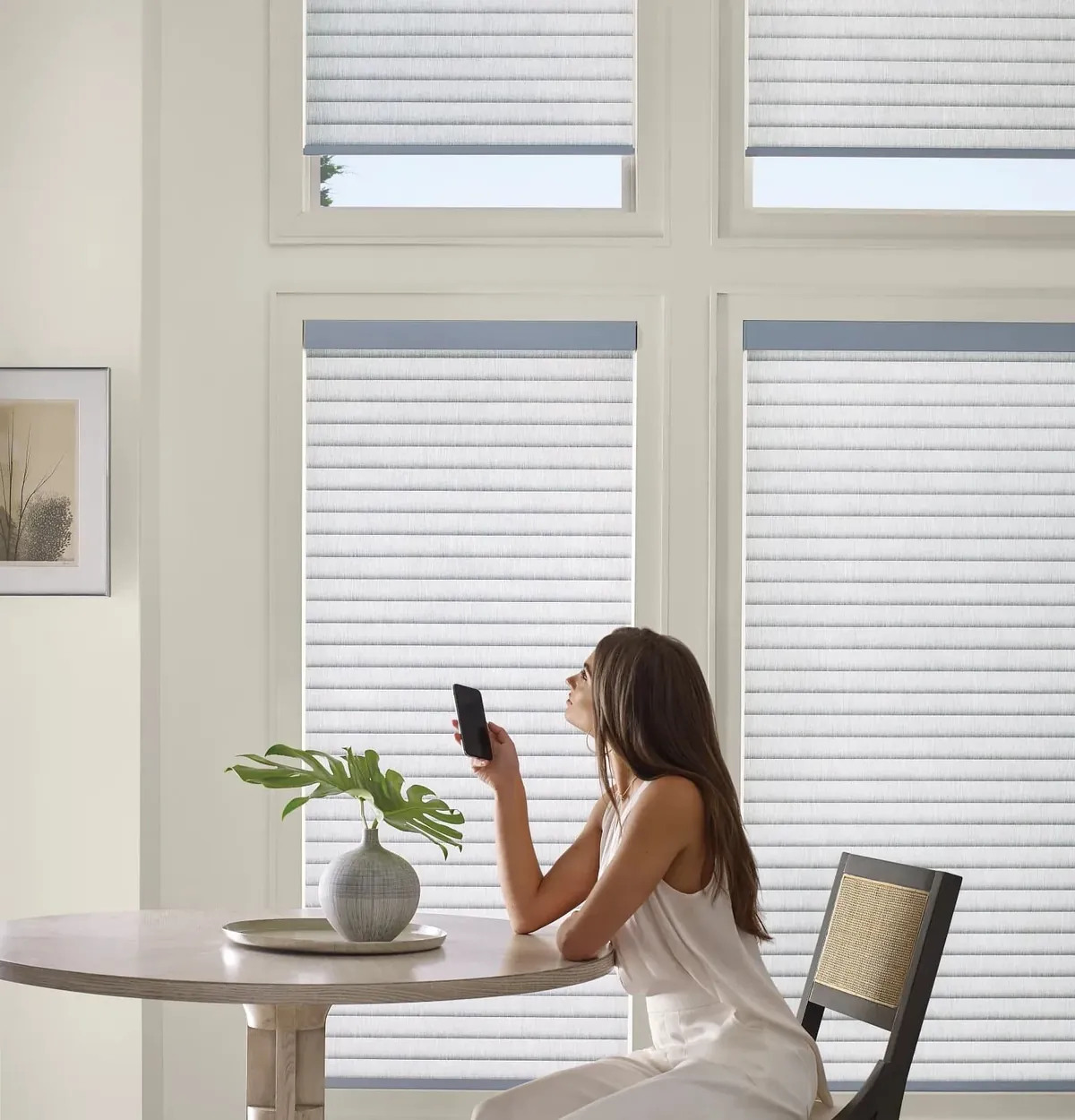
The third is control. Motorized blinds in Little Compton can be set to open and close on a schedule, so the house looks lived in while you are away and the south rooms are shaded in the middle of the day. PowerView blinds can also be worked from your phone, so you can check and change them from wherever you are.
The fourth is durability. Blinds in a house that is heated only part of the year live through damp autumns and cold winters without the steady warmth of a lived-in house. Faux wood and aluminum handle that better than real wood, which is one more reason we steer seasonal houses toward them on the rooms facing the water.
Summer wind through open windows
When a coastal house is in use, the windows are open. Summer in Little Compton means sea breezes moving through the rooms from morning to night, and on the exposed land toward the Point that breeze can turn into a stiff wind with little warning. A blind hanging in front of an open window feels every gust.
There are a few simple ways to live with that. On the windows you open most, the easiest habit is to raise the blind fully while the sash is up, so the slats are tucked away in the head of the frame. Where you want shade and an open window at the same time, a wider, heavier slat moves less in a breeze than a narrow one, and faux wood has a little more weight than aluminum. On a glass door that stays open on a summer afternoon, hold-down brackets at the bottom of the blind stop it swinging and knocking against the frame.
Cords are another thing the wind finds. A loose cord loop beside an open window blows about, tangles and wears. Cordless lift removes it entirely. For the windows you would rather not reach across a sofa or a sink to open and close, motorized blinds can be raised out of the way of the breeze with a tap on a phone.
It is worth thinking about this before the order goes in, because the windows that catch the most wind are usually the ones facing the water, and those are the rooms where a blind earns the most use. When we plan custom blinds in Little Compton houses, we ask which windows you open most and which way the wind usually comes, and suggest the slat and lift to suit.
Around the Commons
The houses close to the Commons are some of the oldest in town, and many have been cared for over a long time. On those houses, a blind has to respect the building. That means an inside mount wherever the frame allows, a slat color chosen to suit the original woodwork, and nothing that changes how the house looks from the road.
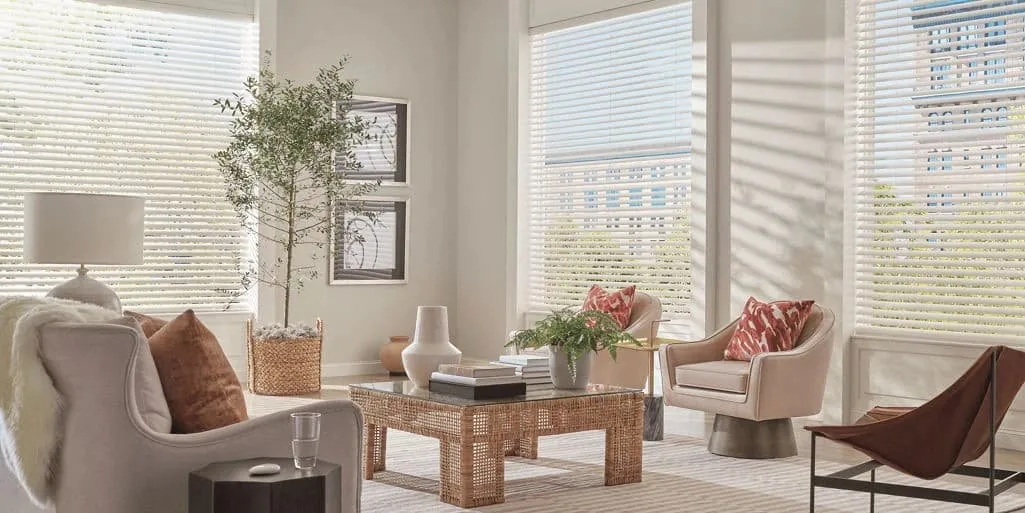
Painted trim usually suits a white or soft cream slat, which disappears against the casing. Stained or natural woodwork may suit a wood blind stained close to it, so the blind looks as though it belongs to the room. Cloth tapes down the front of the slats, in a color picked to go with the trim, add a finished, traditional look in a front parlor or dining room and hide the small holes the lift cords pass through.
Where houses near the Commons sit closer to the road, the front rooms do need some privacy. Tilting the slats so they face down into the room lets daylight in from above while blocking a view from the road. At night, closed flat, they make the room fully private.
Choosing custom blinds in Little Compton, room by room
When we walk through a house here, the plan usually falls like this.
- Front rooms and dining rooms in the antique part of the house, kept warm and dry: Parkland real wood or a white faux wood, with a narrow slat for small sash.
- Kitchens, baths, mudrooms and any room near an outside door: EverWood faux wood.
- Sunrooms and rooms facing the water: faux wood or slim aluminum, for the weather and the view.
- Small or shallow antique frames: aluminum, for its slim headrail.
- Glass doors onto a deck or terrace: vertical blinds or soft gliding panels.
You make the final choices after seeing the samples against your own windows.
A visit to the house
Because a blind in an antique room has to suit old woodwork and very particular light, most customers here choose at home. Our vans carry the full set of samples, so the showroom can come to Little Compton. If you are only in town for part of the year, tell us when you will be there and we will arrange the visit for a day you are at the house.
- Request a consultation online or with the call button.
- A consultant brings slats in every material and the lift and tilt options to try.
- You walk through the house together, old rooms and new, and talk about how each one is used and when.
- Samples go up at the windows so you can compare colors against the trim and in the light off the water.
- Each window is measured at several points, with the depth of the frame noted.
- A free estimate follows for the blinds you have chosen, with no pressure to decide that day.
Interior design consultations are also available at the same visit, if you want help with a whole room. The guide to what happens at an in-home consultation explains more.
Fitting in an old house
On fitting day, our certified Hunter Douglas installers take the care an antique frame needs. Brackets go into sound wood, not crumbling plaster; a headrail is shimmed level where the frame is not; and every blind is checked to make sure the slats clear old sash locks and stops. Each blind is raised, lowered and tilted through its full range before you are shown how it all works.

A Hunter Douglas Gallery dealer for the Sakonnet shore
Blinds & Designs is a Hunter Douglas Gallery dealer, the designation Hunter Douglas gives dealers who meet its standards. For a Little Compton house that means the whole blind range is open to you through one company: Parkland wood, EverWood faux wood, aluminum and vertical blinds, and the PowerView controls that suit a part-year house.
We measure, order and fit, with installers certified by Hunter Douglas, and we handle blind and shade repairs later if one needs attention.
See the range on our Hunter Douglas blinds page, with more on faux wood blinds. For other rooms, see plantation shutters in Little Compton or roller shades in Little Compton, or find all our services in town on the Little Compton page.
Questions from Little Compton
Will a blind fit the small original sash in my antique cape?
Yes, if it is made to measure. We measure each window at several points because old frames lean and taper, and choose an inside or outside mount to suit each one.
How do I protect my furniture while the house is closed for the winter?
Lower and close the blinds before you leave, especially on the south and west sides. Motorized blinds can also open and close on a schedule, so the house looks lived in while the sunny rooms stay shaded.
Which material lasts best close to the water?
Faux wood. It holds its shape in salt air and through a damp, unheated season, and wipes clean. Real wood is better kept for heated, dry rooms.
Can blinds keep the look of an old house from the road?
They can. An inside mount and a slat color matched to the trim keep the blind quiet, and from outside the house looks the way it always has.
Do you charge for an estimate?
No. We measure your windows and give you a free estimate for the blinds you are considering.
Plan your blinds
The surest way to choose custom blinds in Little Compton, RI, is with the samples in your hand and the light off the water in the room. Request a consultation and we will bring the range to the house, measure each window and leave you a free estimate. If you prefer to see the blinds first, the North Dartmouth showroom is our nearest location, or press the call button to ask a question.