
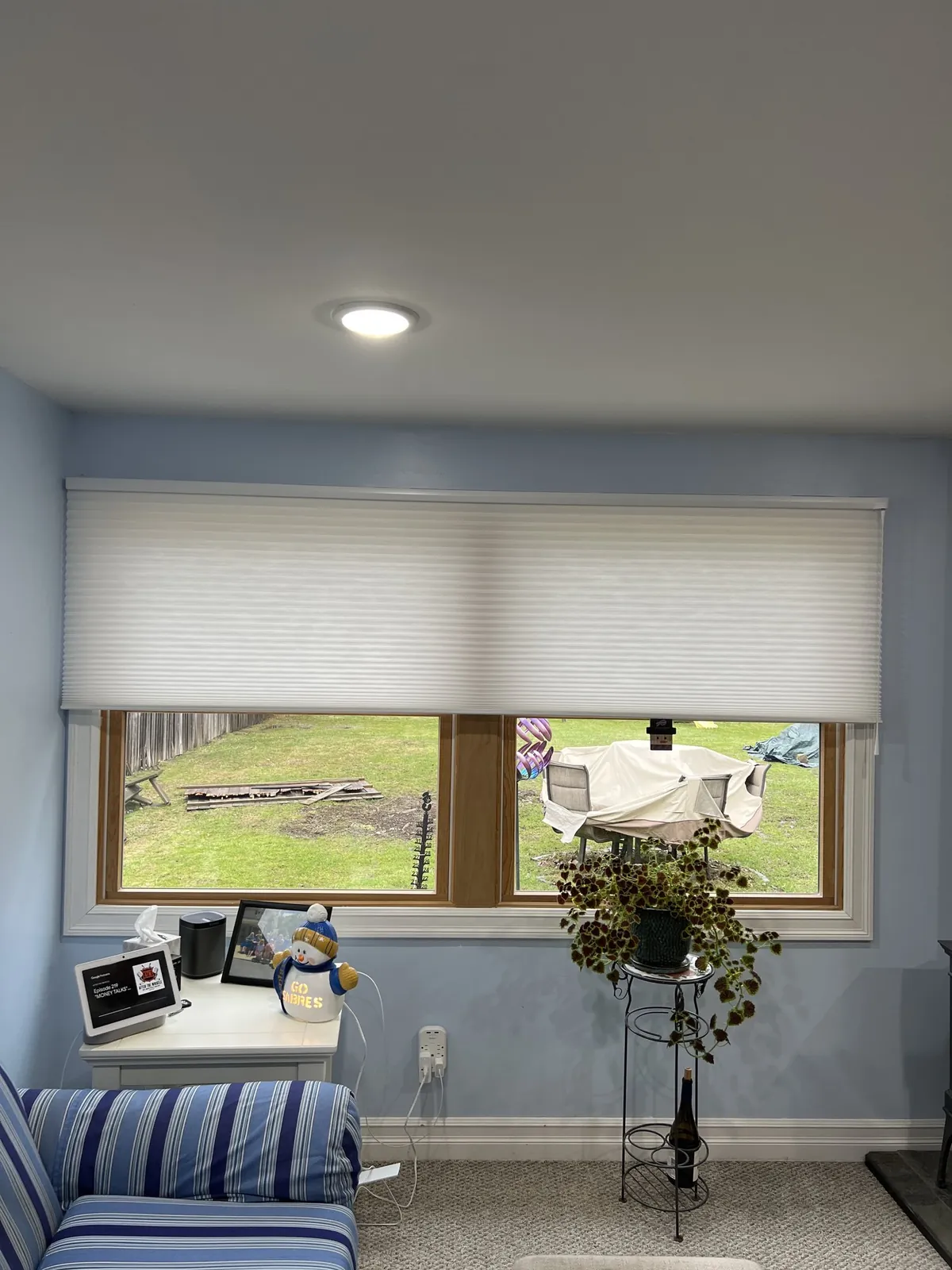
Tall windows, high ceilings and a cold draught
New Bedford was built upward. The mill-era triple-deckers of the North End and the West End stack three households on a narrow lot, and the Federal houses in the historic district above the waterfront rise two and three floors with generous ceiling heights. Both share the same kind of window: tall, narrow double-hung sash, often with deep reveals and original trim. When we fit cellular shades in New Bedford, MA, those windows set the terms.
High ceilings and tall glass are lovely in July and hard work in January. Warm air rises toward the ceiling while cold air slides down the long panes and pools along the floor, so a room can feel draughty even with the windows shut tight. A honeycomb shade puts a layer of trapped air across the whole height of the glass, which slows that cold slide and keeps the room more even from floor to ceiling.
The other thing these houses have in common is depth. How deep the window reveal is, and what the historic district expects to see from the street, decide how a shade can be mounted. Getting that right is most of the job.
Three ways to mount cellular shades in New Bedford, MA
The window decides the mount. These are the three approaches we use most in the city’s older houses.
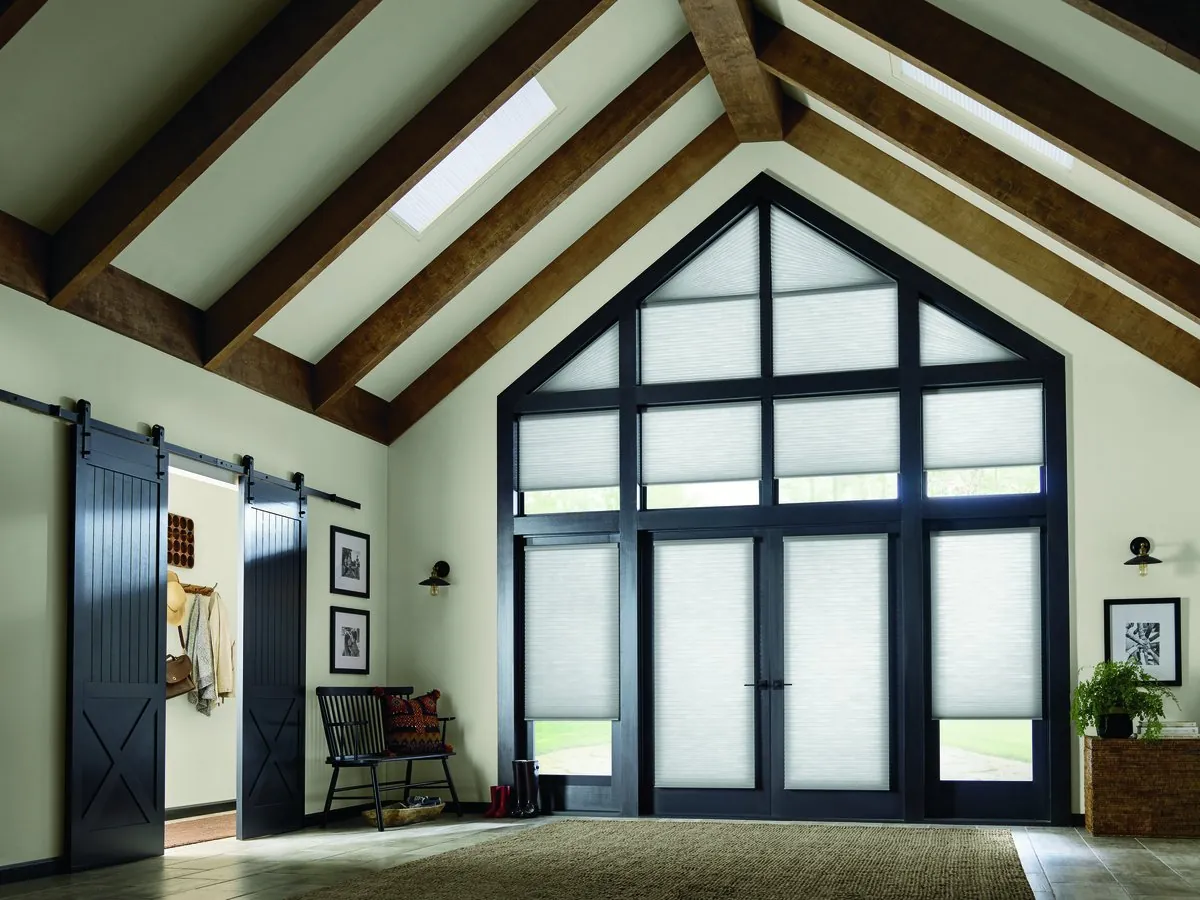
Inside the reveal
Where the reveal is deep enough, the headrail sits inside the opening and the shade disappears into the frame when raised. The original casing stays fully on show, which suits the joinery of a Federal interior.
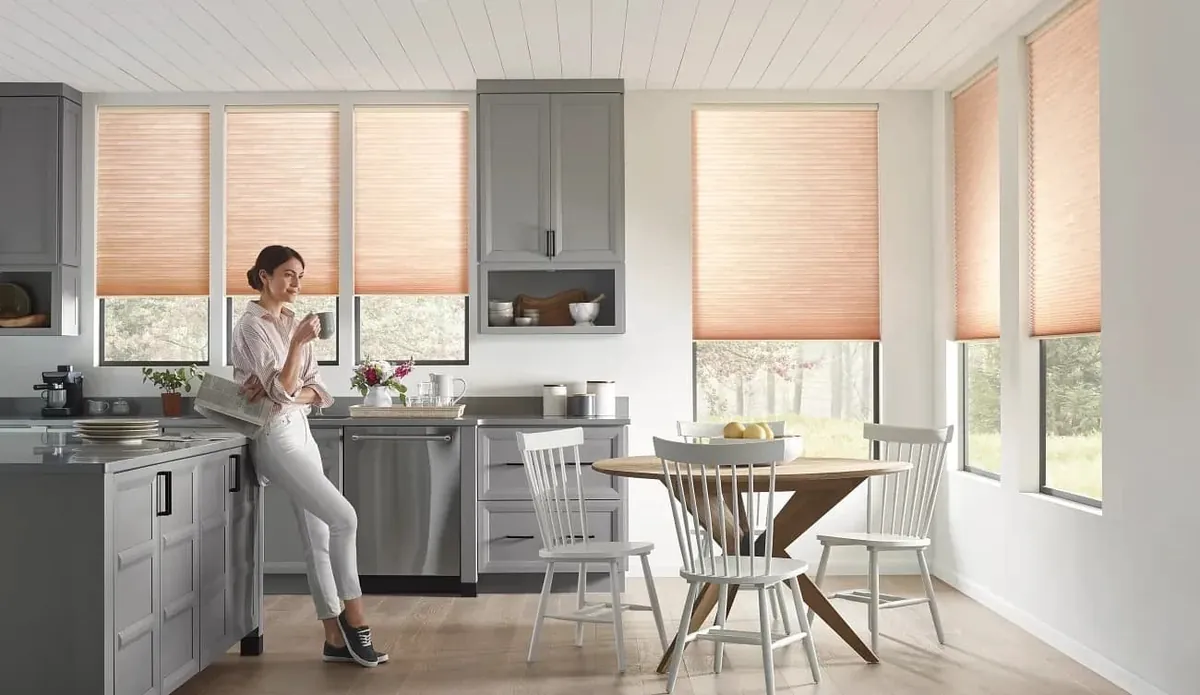
On the casing
When the reveal is shallow, or sash hardware is in the way, the shade mounts on or just above the casing. It overlaps the opening slightly, which also cuts light leaking at the edges.
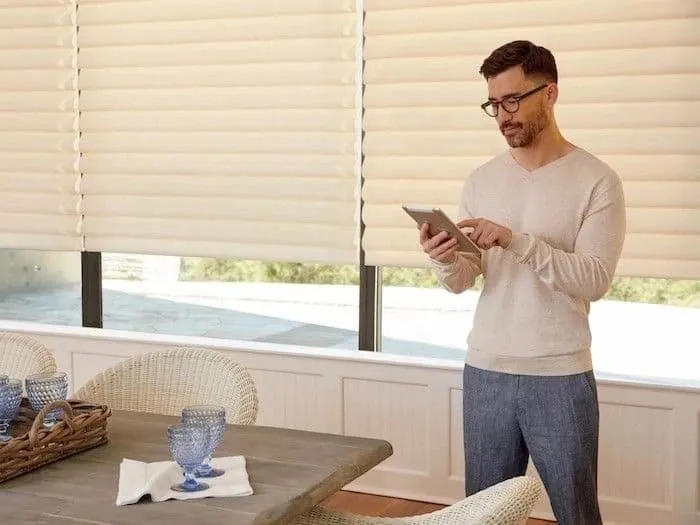
Motorized for the top sash
On a window taller than you can comfortably reach, PowerView raises and lowers the shade from a remote, an app or a schedule, so nobody needs a step stool.
Triple-deckers in the North End and the West End
A triple-decker floor is a long run of rooms, front to back, with windows on both sides and often a bay at the front. The windows are tall and fairly narrow, and many still have their original sash or wood replacements in the original openings. Each floor has its own exposure: the top floor takes the most sun and the most cold, while the first floor sits close to the sidewalk.
That mix makes honeycomb shades a natural fit. A light-filtering fabric on the front bay gives privacy from the street while keeping a long, narrow room bright all the way to the back. In the bedrooms, which often face the side yard and a neighbor’s windows only a few feet away, a room-darkening fabric handles privacy and sleep at once. On the top floor, where the roof gets hot in summer and the windows get cold in winter, a double-cell fabric gives the most insulation.
Bays are worth a mention. The three-sided front bays on many triple-deckers have a wide center window and two narrow side windows. We make a separate shade for each, sized to its own opening, with matching fabric and pleat so the bay looks like one treatment when the shades are lowered together.
Federal houses above the waterfront
The historic district’s Federal houses have some of the finest window joinery in the region: tall six-over-six sash, deep paneled reveals, and interior shutters or shutter pockets in some of the grandest rooms. The proportions are part of what makes the house, and nobody wants a heavy treatment that blurs them.
A honeycomb shade is one of the least intrusive things you can put on a window like that. When raised, it compresses into a slim stack at the top of the opening. When lowered, it reads as a soft, even plane of fabric. Hung inside a deep reveal, it leaves the paneling, the casing and the sill entirely visible. From the street, every shade shows the same neutral backing, so the facade looks orderly and calm.
Ceiling heights in these houses mean very tall windows, and that brings practical questions. A cordless shade on a very tall window may leave the bottom rail out of reach when raised, so a retractable cord or PowerView motorization often makes more sense. We look at each window with you and suggest the lift that suits its height.
Why reveal depth decides so much
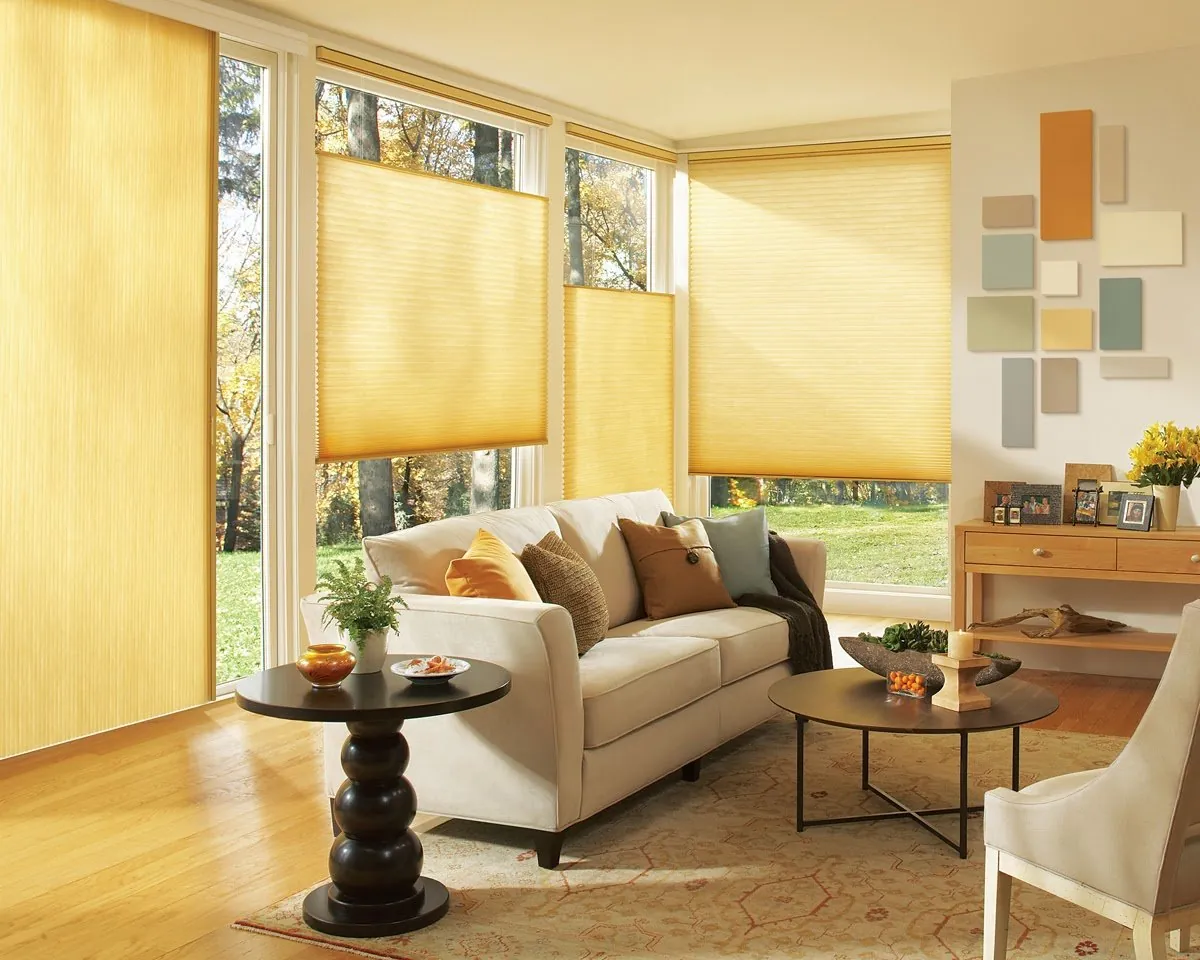
The reveal is the depth of the window opening between the inside face of the wall and the sash. In New Bedford it ranges widely: deep in the brick and the thicker-walled Federal houses, shallower in many frame triple-deckers, and sometimes shallower still where replacement windows have been fitted into old openings.
An inside mount needs enough depth for the headrail to sit within the opening without the shade fabric touching the sash. Some honeycomb headrails need very little depth, others need more, and a top-down, bottom-up design needs a little extra. Sash locks, lift handles and the parting stops between the upper and lower sash can all get in the way.
So we measure depth at several points on each window, note any hardware that projects, and match each window to a shade and mount that will actually fit. Where an inside mount would be tight, we would rather tell you and suggest a casing mount than install a shade that rubs or tilts. You will know the choice for every window before anything is ordered.
Measuring a window that has moved
A house that has stood through more than a century of New England weather has shifted a little. Floors slope, headers sag and a window that was square when the sash was made may now be wider at the top than the bottom. A shade ordered to a single measurement will show it, with a gap on one side or fabric that drags on the other.
- We measure the width of each opening at the top, the middle and the bottom, and order to the narrowest for an inside mount.
- We measure the height on the left, in the center and on the right, so a shade on a sloping sill still closes neatly.
- We check the diagonals on windows that look out of square, which tells us whether a casing mount will hide the difference better.
- We record each window by room and floor so every shade goes back to the opening it was made for.
It takes a few more minutes per window than a quick tape across the middle, and it is the reason a made-to-measure honeycomb shade looks as if it belongs there.
Working with the historic district’s expectations
A house in the historic district is seen as part of a street, so what shows from the sidewalk matters as much as what you see inside. Window treatments are interior work, but a shade is visible through the glass, so it pays to choose one that sits quietly in an old facade.
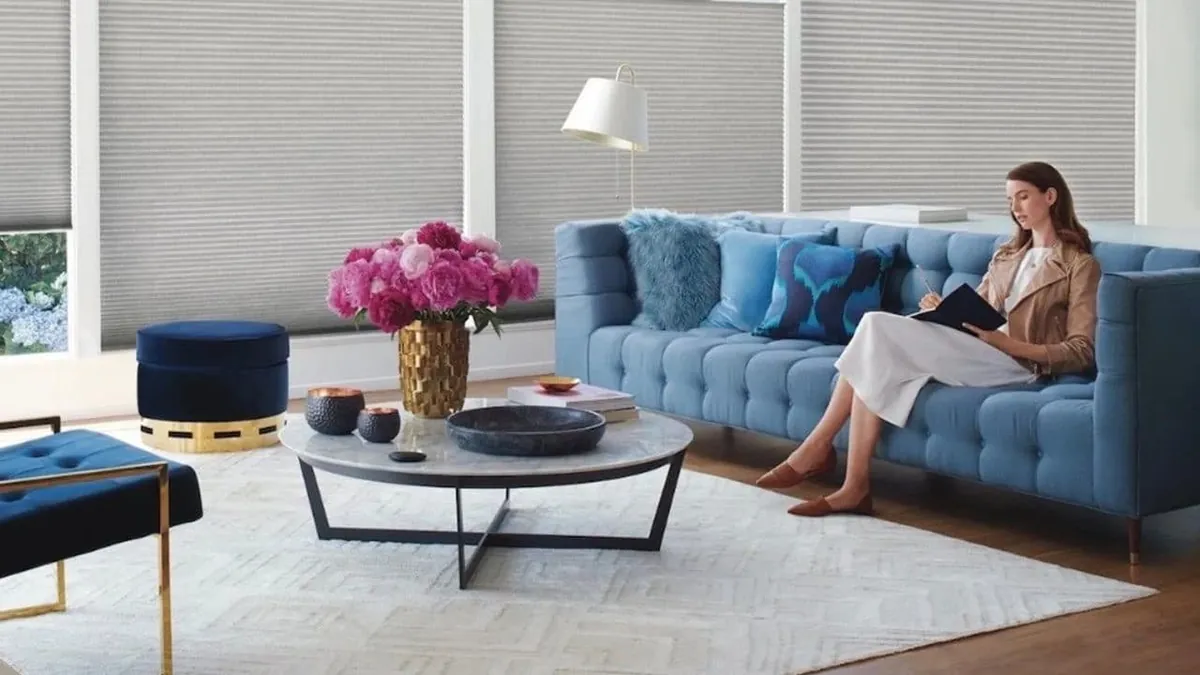
Honeycomb shades suit that well. The backing that faces the street is a consistent white or neutral whichever fabric you pick for the room, so a house with a deep red dining room and a pale blue study still presents a uniform face to the street. Inside mounts keep the shade within the opening, leaving the sash and muntins clear.
If you are unsure what your own house needs, or whether there are particular expectations for your street, mention it when you request a consultation. We will plan the treatment to sit within the window rather than over it, and keep the outside appearance simple.
Light and privacy on close-set streets
Much of New Bedford is built close. Triple-deckers sit a driveway’s width apart, porches face porches, and first-floor windows look straight onto the sidewalk. Privacy is often the first thing a treatment has to solve, closely followed by keeping enough daylight in rooms that only have windows on one or two sides.
A few honeycomb features help.
- Top-down, bottom-up shades cover the lower sash, where a neighbor or a passer-by can see in, while the top of the window stays open to sky and light.
- Light-filtering fabrics give daytime privacy with the shade fully lowered, because the fabric glows rather than revealing the room.
- Room-darkening fabrics give night-time privacy with lamps on, and suit bedrooms on the side facing a neighbor.
- Duolite designs pair a sheer and a darkening layer on one headrail, so one window can do both jobs at different times of day.
On a long triple-decker floor, mixing these from room to room keeps each space private without making the whole apartment dark.
The top floor, winter and summer
On a triple-decker the top floor lives with the roof. In summer the heat builds under it all afternoon, and the west-facing windows add more. In winter the same rooms catch every wind off the harbor, and the tall sash lets the cold straight in.
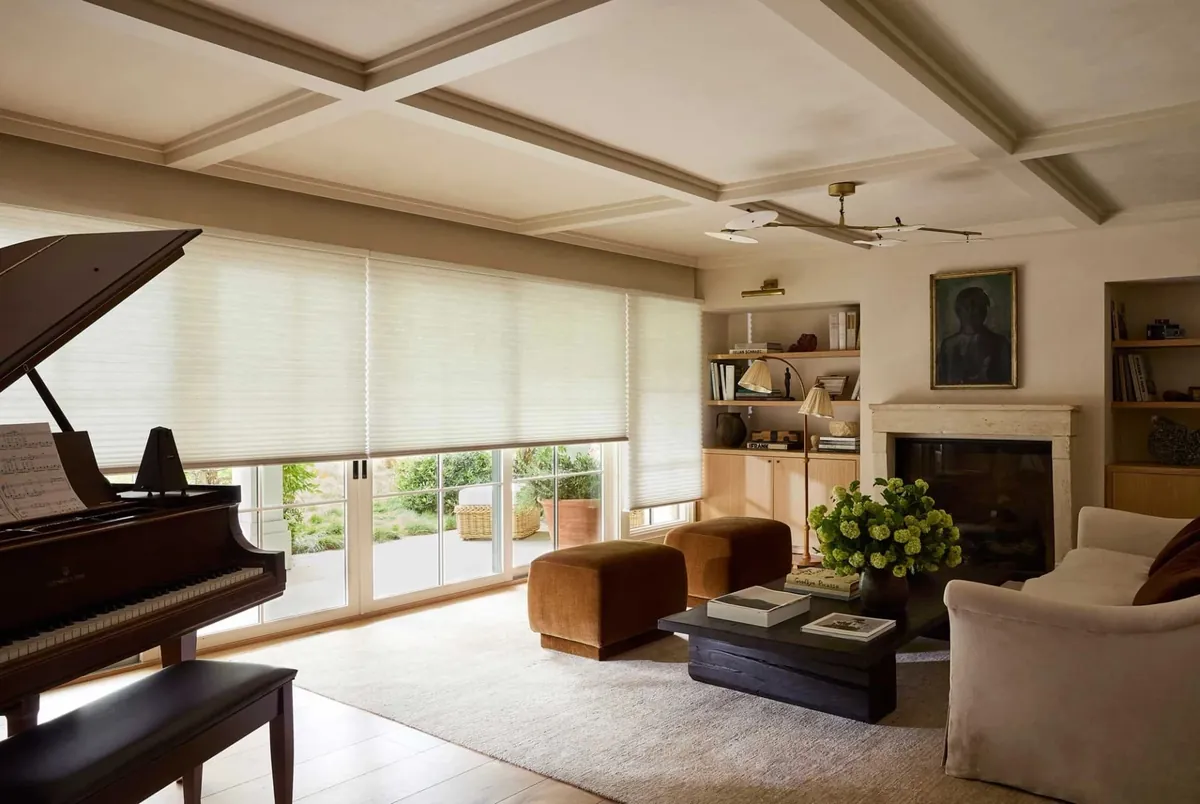
Cellular shades in New Bedford, MA, work hard on that floor in both seasons. Lowered on a summer afternoon, a light-filtering or room-darkening honeycomb slows the heat coming through the glass, so the rooms are not stifling by evening. Lowered on a winter night, the same shade holds a layer of still air against the pane and keeps the warmth in. A double-cell or Architella fabric gives the top-floor bedrooms the most trapped air. Our guide to cellular shades and winter heat explains why that extra layer makes a difference.
Duette, Applause and how to choose
Duette and Applause are both Hunter Douglas honeycomb shades, and both trap air in their cells. Duette has the larger fabric library, specialty shapes for arched transoms and fanlights, Architella fabrics with a cell inside each cell, and the Vertiglide shade for wide doors. Applause has its own palette and suits a straightforward double-hung window very well.
In an older house the choice often splits by room. The front parlor of a Federal house, with its tall sash and a fanlight over the door, might take Duette. The back bedrooms of a triple-decker floor might take Applause. We bring both to your home so you can compare them at the same window. For more on each, see Duette honeycomb shades, Applause honeycomb shades, or the main cellular shades page.
How a home visit runs
Choosing cellular shades in New Bedford is far easier in your own rooms than from a catalog, so we come to you. Our vans carry samples, which means we can bring the showroom to your door.
- You request a consultation and tell us which floor and which rooms you have in mind.
- We arrive with Duette and Applause samples in sheer, light-filtering and room-darkening fabrics.
- You hold the fabrics against your own tall windows and see the light at the top and bottom of the glass.
- We check every reveal for depth and hardware, then measure each window on its own.
- We talk through lift options for the tallest windows, including PowerView.
- You receive a free estimate and decide in your own time.
When you order, our certified Hunter Douglas installers fit each shade, level it, test the lift and show you how it works. You can read more about what happens at an in-home consultation before the visit.
Shades for the rooms that get forgotten
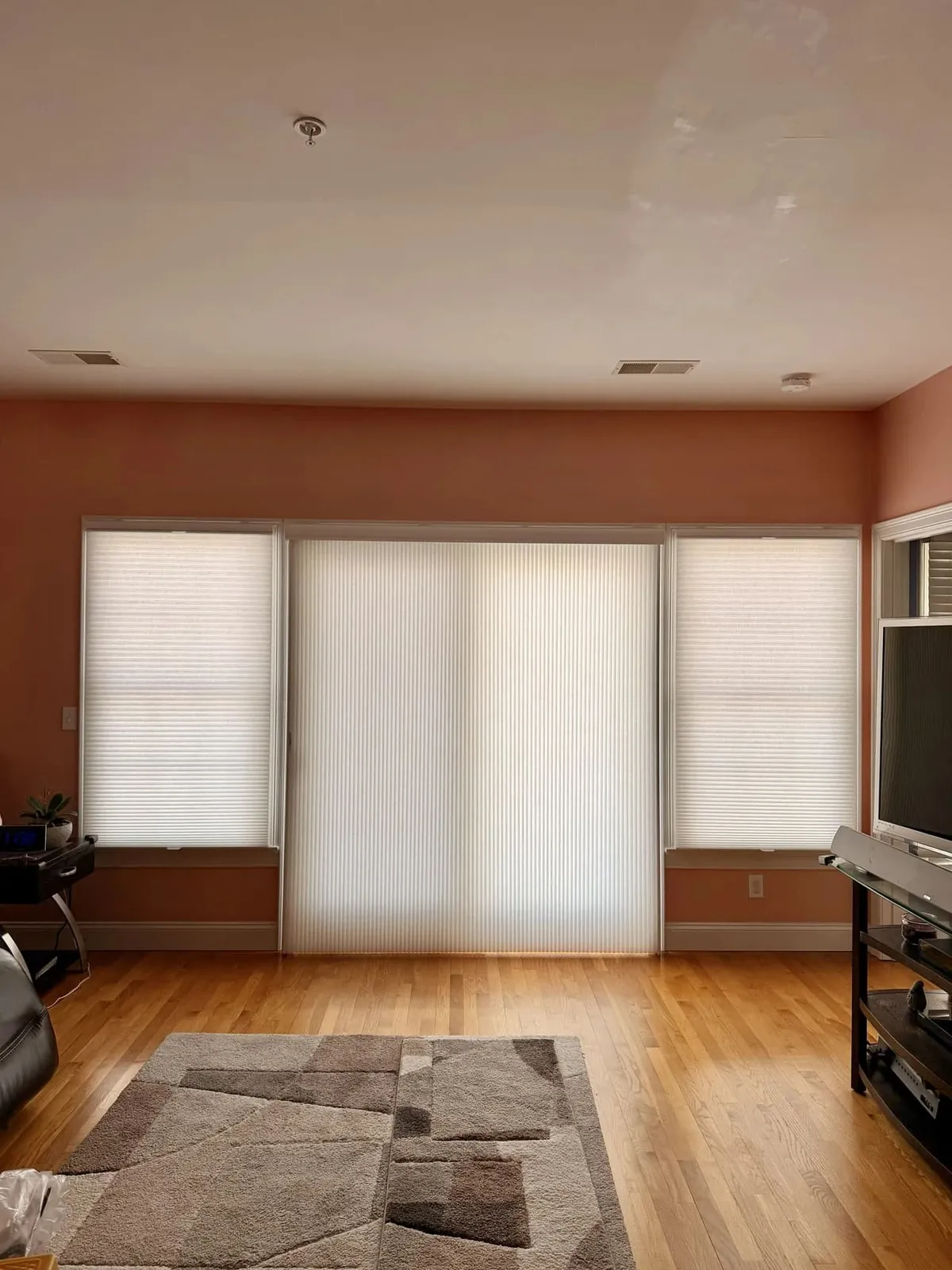
Every New Bedford house seems to have a few awkward windows: the small square window in a back stair, the narrow light beside a front door, the transom over an interior door, the kitchen window behind a deep sink. They are easy to leave bare, and they are often where the cold gets in.
Honeycomb shades can be made very small and very narrow, so these windows can match the rest of the house. A cordless shade suits the stair window. A fixed or motorized shade suits a transom. A window behind the sink, which you cannot reach without leaning across the counter, is a good candidate for PowerView. Treating the forgotten windows along with the main rooms is a small step that makes a noticeable difference in how warm a house feels.

Why buy from a Hunter Douglas Gallery dealer
Blinds & Designs is a Hunter Douglas Gallery dealer, a designation Hunter Douglas gives to dealers who meet its standards. For your house it means the whole honeycomb range is available, including the specialty shapes and fabrics older windows sometimes need.
Our installers are certified by Hunter Douglas, which matters most on exactly the kind of windows New Bedford has: tall, deep and rarely square. We also offer interior design consultations if you want help with fabric and color across a whole floor, and we welcome blind and shade repairs on window coverings you already own.
To see what else we do in the city, from plantation shutters to roller shades, visit our New Bedford page or look at plantation shutters in New Bedford.

Samples at your door, or the showroom nearby
Most New Bedford projects start with a home visit, because tall windows and deep reveals are best judged in place. We bring every honeycomb sample you need and measure while we are there.
If you would like to see honeycomb shades before booking, our nearest location is the North Dartmouth showroom, just west of the city. Bring a photo of your windows and a rough idea of their size, and we can talk through the options.
Questions from New Bedford
My windows are very tall. Can a honeycomb shade cover them?
Yes. Honeycomb shades are made to measure and can be built for tall windows. On the tallest ones we usually suggest a retractable cord or PowerView motorization, so the shade is easy to raise and lower without reaching.
Will an inside mount fit my old window reveal?
It depends on the depth and on any sash hardware in the way. We measure each reveal at several points. If an inside mount is too tight, we suggest a casing mount, which also helps block light at the edges.
Do honeycomb shades suit a house in the historic district?
They are one of the least intrusive choices for an old window. Mounted inside the reveal, they leave the trim visible, and the side facing the street is a neutral color whatever fabric faces the room.
How do I get privacy on a first floor close to the sidewalk?
A top-down, bottom-up shade covers the lower sash and leaves the top open for daylight. A light-filtering fabric keeps the room private during the day without making it dark.
Is there a charge for the estimate?
No. After we measure, the estimate is free. Request a consultation and we will arrange a time to bring samples to your home.
Book your consultation
The quickest way to see what cellular shades in New Bedford, MA, can do for your tall windows is to try the fabrics at the glass. Request a consultation and we will bring the samples, measure every window and give you a free estimate. You can also use the call button, or visit the North Dartmouth showroom.