
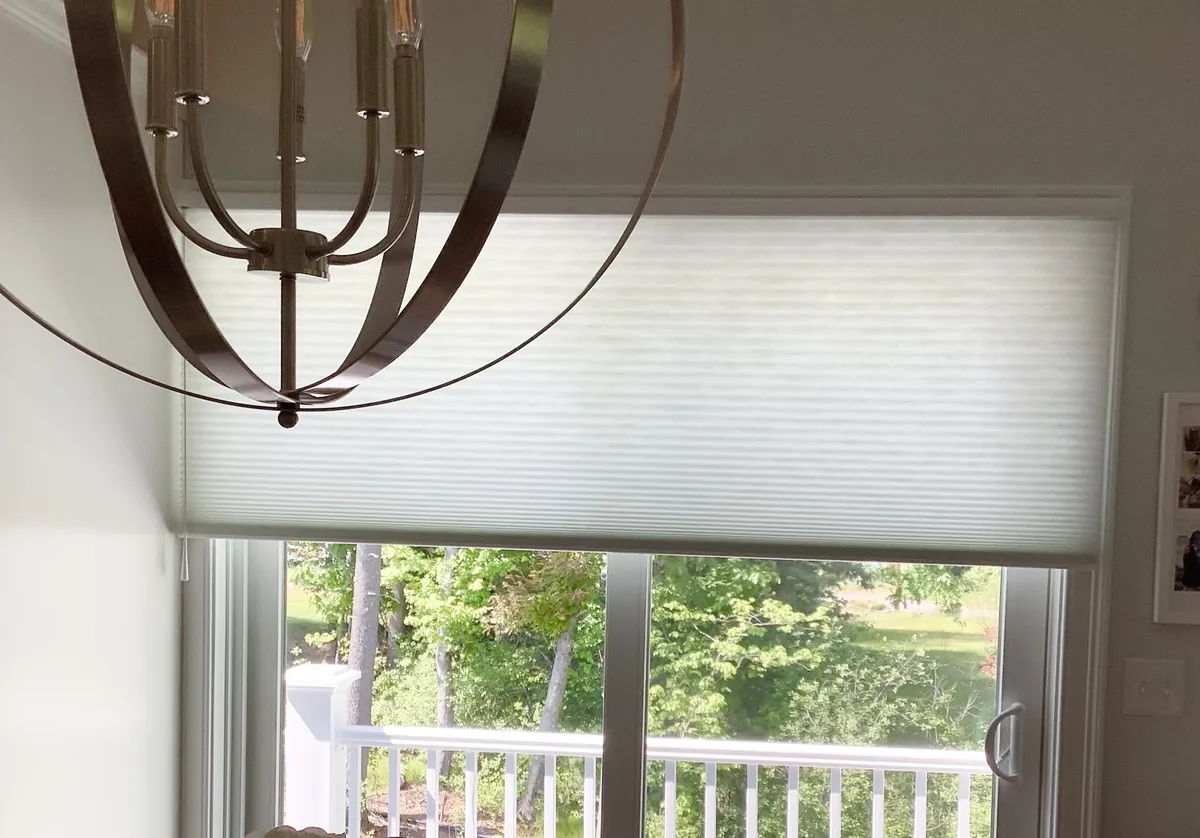
Old village sash and new colonials in the woods
Easton divides neatly into two kinds of house. Near the villages stand antique colonials and Victorians, with tall sash that has seen a great many winters. Off Route 123, newer colonials sit on wooded lots, well back from the road. Through most of the town the lots are generous and the setbacks deep. Put together, that means the usual worries about privacy fade, and the questions that matter are warmth, light and how the shades look in rooms that are often large and open. Those are the questions we answer when we plan cellular shades in Easton, MA.
A honeycomb shade has a simple trick. Its fabric is folded into closed cells, and with the shade lowered each cell holds a pocket of air that hardly moves. Placed between the glass and the room, that air is a brake on heat, so an old parlor holds its warmth into the evening and a newer family room stays cooler when the afternoon sun finds a gap in the trees.
On a deep lot, the shades also become part of how the house looks from the long approach up the drive, so a consistent face across the front windows is worth planning for.
Honeycomb arrangements for Easton houses
Three ways the Hunter Douglas honeycomb range tends to be used here, from a village Victorian to a colonial on a wooded lot. The van carries samples of each.
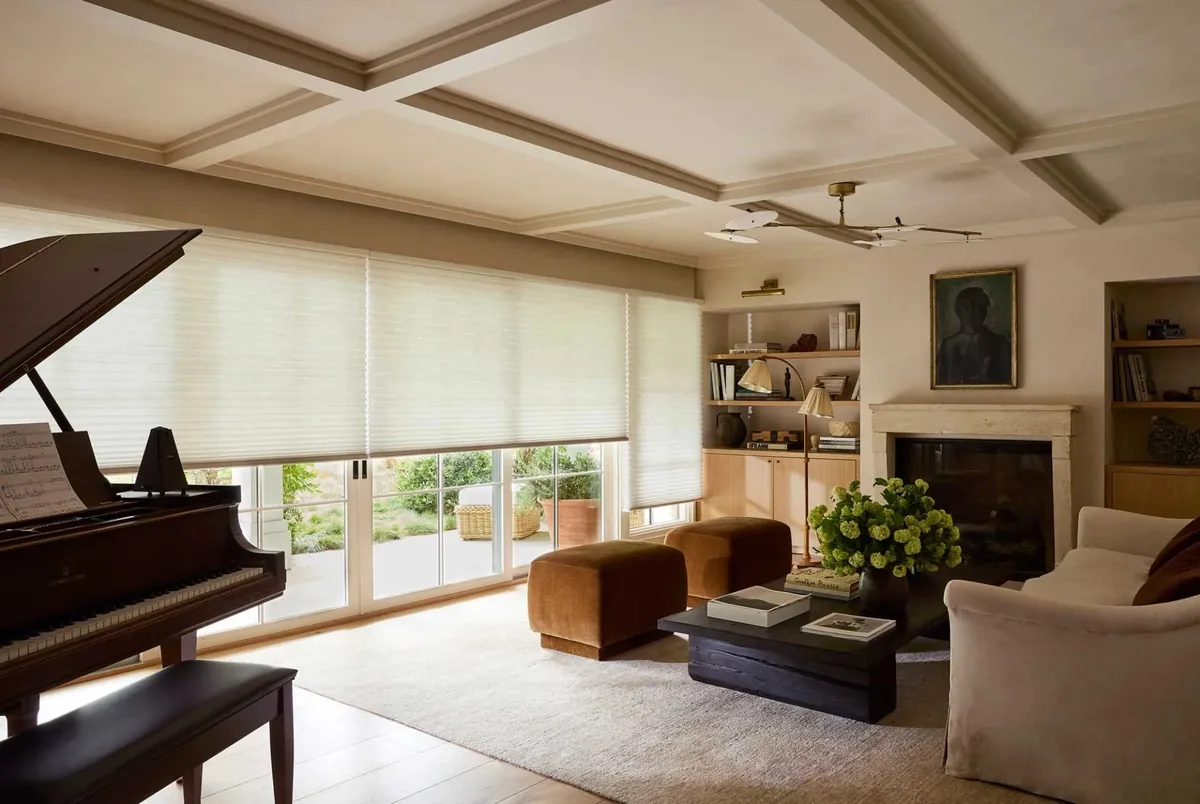
Wide openings in the newer colonials
Family rooms with patio doors and broad windows to the back yard, covered in one fabric so the room reads as a single space.
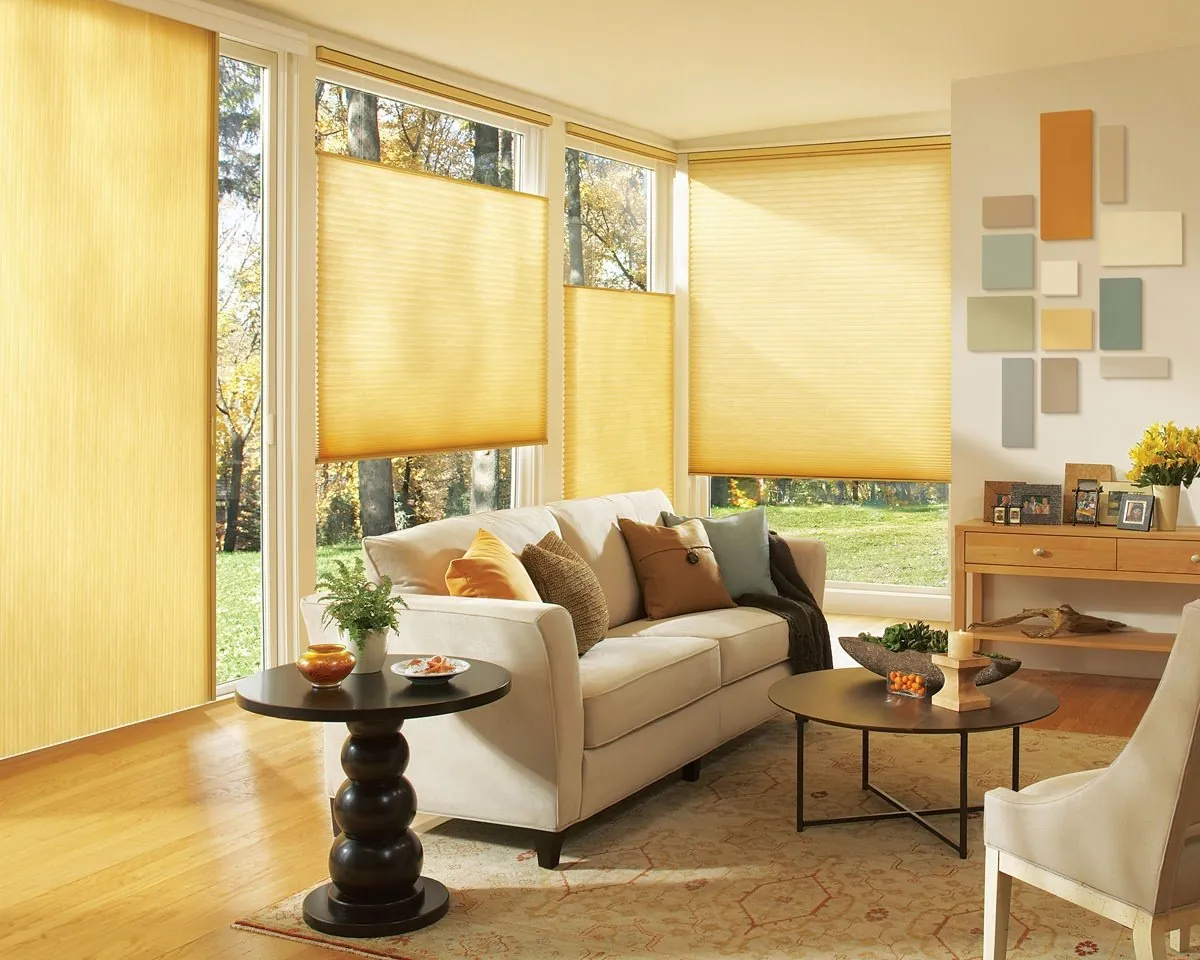
Corner rooms with light on two sides
A corner sitting room or study in a colonial takes light from two directions. Matching shades on both walls balance it and keep the corner warm.
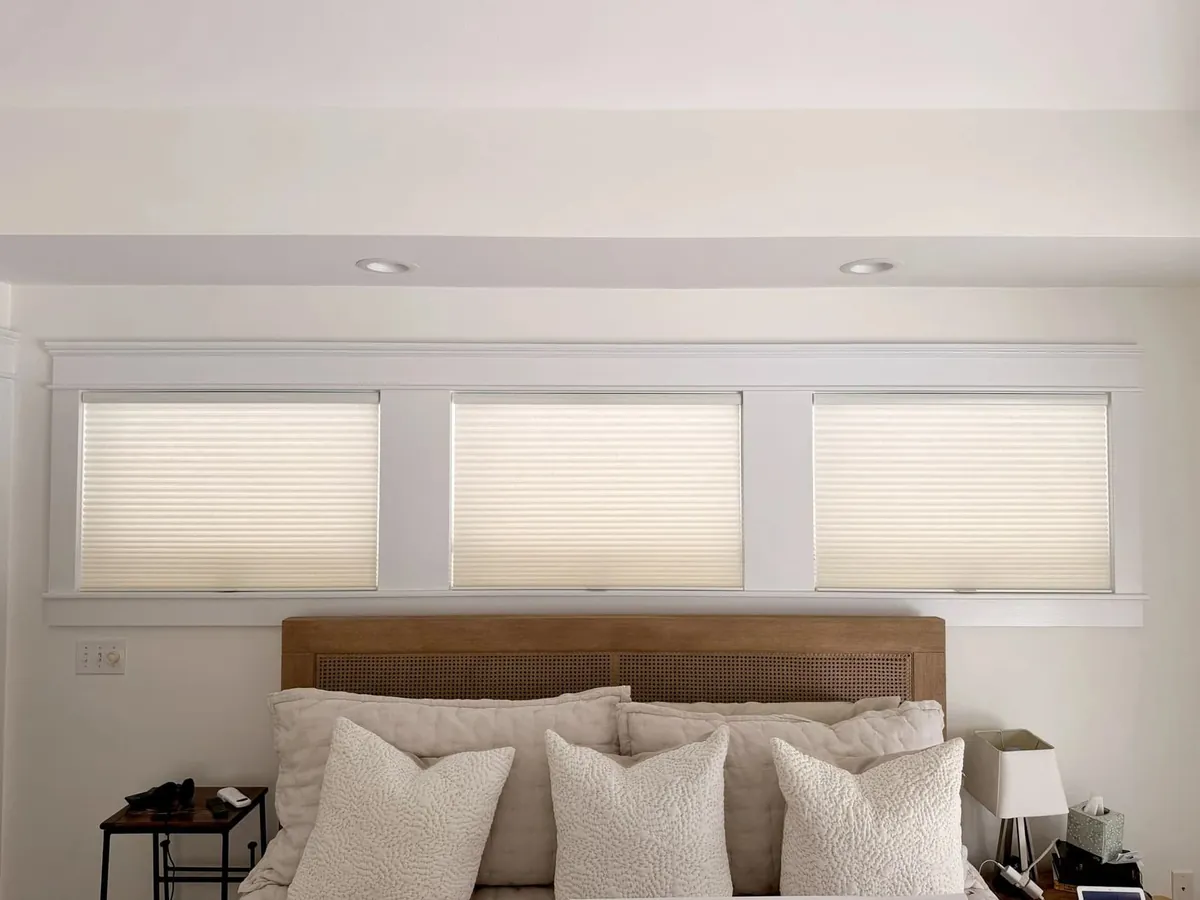
Bedrooms in the old houses
Tall bedroom sash in an antique house, fitted with shades in a heavier fabric to hold warmth at night and keep the room dim at dawn.
Antique colonials and Victorians near the villages
The houses around Easton’s villages are the oldest in town: antique colonials with rows of tall sash across the front and Victorians with bays, side lights and high ceilings. Their windows were made long before standard sizes, and every one is a little different.
That is the first thing to understand about covering them. A pair of windows that look matched from the lawn can differ in width at the top and the bottom, and the depth of the frame can vary from one side to the other. Before suggesting a mount, we measure every opening at three heights across and three points down, and look for sash weights, pulleys and stops near the face of the frame. If the headrail fits within the frame, the shade lives inside the opening and the old casing stays fully visible. If not, the shade goes on the wall just above the window, sized to overlap the opening a little, so it looks intended rather than squeezed.
The second thing is the rooms themselves. Antique houses often have small front rooms with windows on two or three walls, so the cold from the glass is never far from where you sit. A honeycomb shade lowered at dusk turns a parlor you avoid in January into one you use.

Bays, side lights and the details of a Victorian
A Victorian near the villages brings its own set of windows: a bay off the parlor, slim lights either side of the front door, perhaps a stair window on the landing and a small round or arched window in a gable. Each needs its own thought.
In a bay, every face gets its own shade, made to that panel’s width and mounted at one height, so the bay looks like one window when the shades move together. Side lights take very narrow shades, matched in fabric to the rooms beside them. The stair window is often too high to reach comfortably, which makes it a natural place for PowerView. For arched or round tops, we usually suggest covering the rectangular sash below and leaving the shaped glass open to the sky, keeping the outline that gives the window its charm.
Newer colonials on wooded lots off Route 123
The newer colonials off Route 123 are a different proposition. Rooms are larger, the windows are bigger and more regular, and the back of the house often opens up into a kitchen, breakfast area and family room with patio doors onto a deck. Lots are wooded and set back from the road, so the house sits among trees.
Here a whole-house plan works well. The openings repeat, so a fabric chosen for the main living spaces can carry through, with a heavier one upstairs for the bedrooms. In the open family room and kitchen, one fabric across every window and door keeps the space looking calm. Patio doors get a honeycomb arrangement planned around how often you step out and where the furniture sits.
Where a newer colonial has a two-story entry or a window high above the stairs, the shade on it is out of reach from the floor. That is one of the strongest cases for PowerView motorization in a house of this kind.
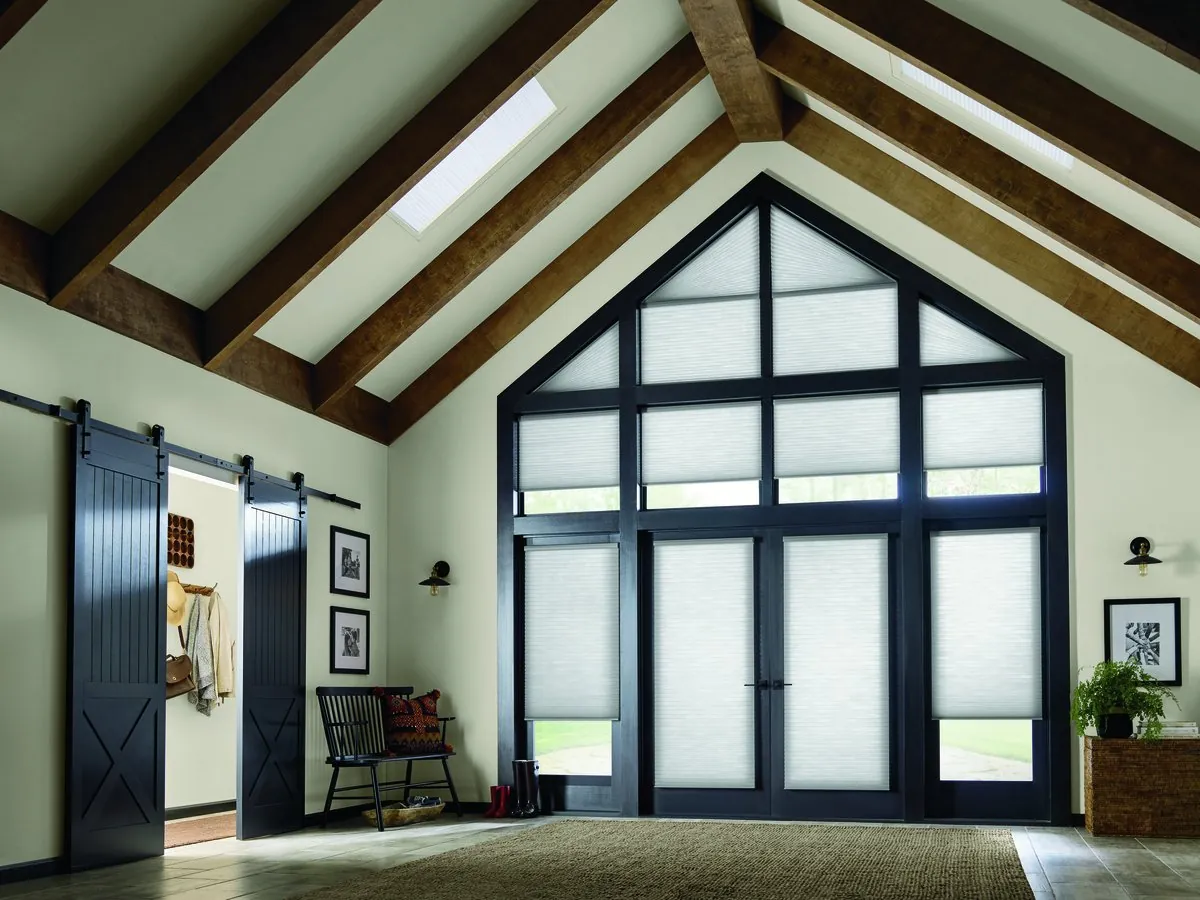
The front of the house, seen from the drive
With a deep setback, the front of an Easton house is seen from a distance: from the road, from the long drive and from the lawn. From that far away, individual fabrics matter less than the overall effect, and a row of windows with shades at different heights and in different colors can make a handsome house look unsettled.
That is why we suggest keeping every street-facing window in one fabric color, usually a soft white or a warm neutral that sits well with the trim. Behind that calm front, the rooms can differ: a heavier fabric in the bedrooms, a warmer color in a study at the back. Choosing cellular shades in Easton with the view from the drive in mind is a small step that makes the whole house look more cared for.
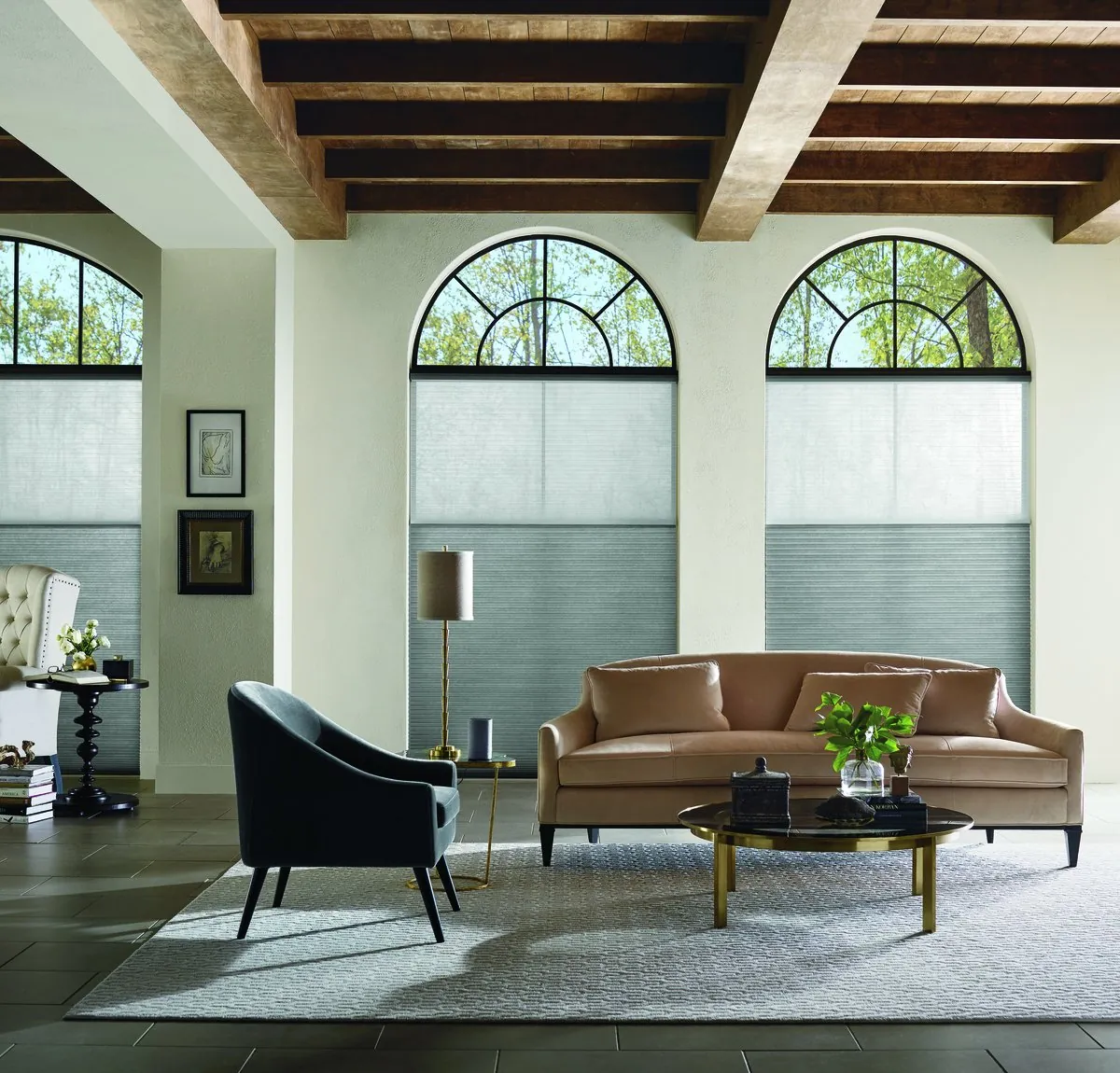
Kitchens that look out on the woods
The kitchen of a newer colonial usually faces the back yard and the woods beyond, often with a window over the sink and a wider window or a set of patio doors by the breakfast table. It is a room where the light changes through the day, from soft morning light through the trees to a low, bright sun in the late afternoon.
A honeycomb shade over the sink should lift well clear of the faucet, and raised, it stacks into a slim band so the view of the trees stays open. Lowered in the late afternoon, a light-filtering fabric takes the glare off the counter without making the room feel closed in. In an antique house, the kitchen is often in a later ell at the back, with windows of a different size from the front rooms; each shade is made to its own opening, in a fabric that ties the ell to the rest of the house.
Deep setbacks: when privacy is not the point
On a generous lot with a deep setback, many Easton rooms are not overlooked at all during the day. That changes the conversation about fabric. Instead of starting with privacy, we start with light: how much of it you want, how bright the room is to begin with and where the sun lands at the times you use the room.
For a living room facing a long lawn or a stand of trees, a light-filtering honeycomb is usually the right call. It softens the bright patches without dimming the room, and it can stay raised for most of the day. For bedrooms, a denser fabric keeps the room dim early in the morning and private at night, when a lit window shows a long way across an open lawn or through bare winter trees.
The result is a house where the shades are chosen for comfort and light first, which is a pleasant way to plan cellular shades in Easton, MA.
Light through the trees off Route 123
Wooded lots bring a particular kind of light. Through the summer, much of what reaches the windows has passed through leaves, and it moves as the branches move. Rooms can be dimmer than their window size suggests, with sharp patches of sun breaking through here and there.
A pale honeycomb fabric that lets light through deals with that neatly. It spreads the light across the room and takes the edge off the patches, without adding shadow of its own. When the leaves fall, the same rooms take low winter sun, and on the south side of the house that sun is welcome warmth; raise the shades through the bright hours and lower them at dusk to hold the warmth in overnight.
Color is worth checking in this light. A fabric that looks warm in a catalog can read cooler under trees, which is one more reason we always hold samples at your windows.
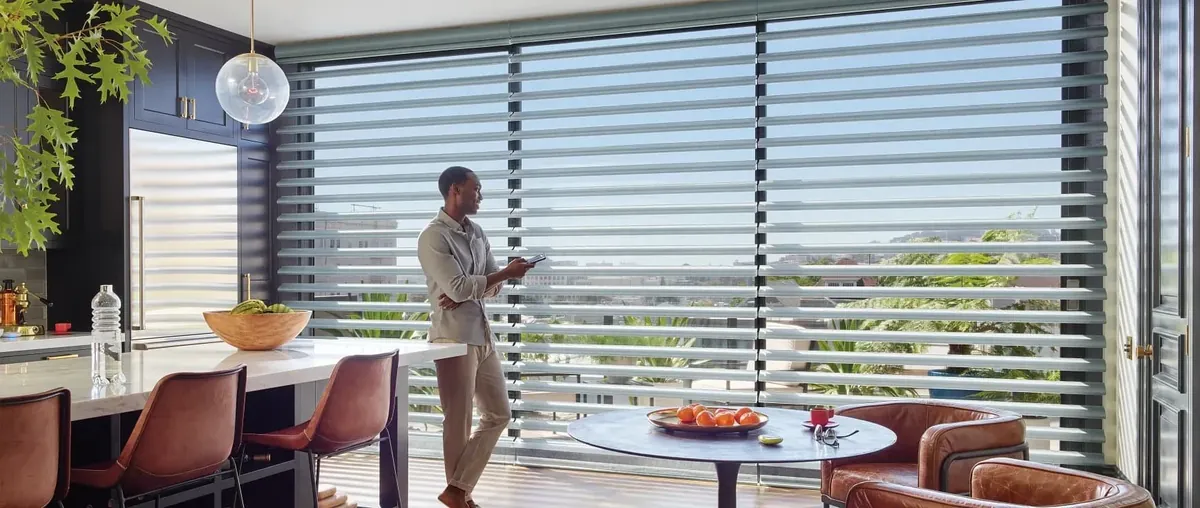
What the honeycomb does in winter and summer
The cellular shape is what sets these shades apart. Look at one from the side and you see a column of hollow cells stretching across the window. Lowered, the cells hold air in place, and air that cannot move does not carry heat well. The shade becomes a quiet buffer between the glass and the room.
In an antique house with old sash, that buffer is felt as the chill near the window easing off. In a newer colonial with big panes facing the back yard, it is felt in summer too, when the sunny side would otherwise heat up through the afternoon. For the details, see our guide on cellular shades and winter heat.
Your consultation: we come to Easton
Easton is covered by our Canton shop-at-home service, so the consultation takes place in your house. The vans carry samples, so we can bring the showroom to you, and on a wooded lot or in an old house with unusual light, seeing the fabric in the room is what makes the decision easy.
- Ask for a visit through Request a Consultation, or reach us with the call button.
- The consultant brings Duette and Applause samples, in a range of colors and in lighter and heavier fabrics.
- You pick the rooms to begin with, perhaps the parlor of an old house or the family room of a newer one.
- Samples are held at the windows in each room, in its own light, so you can compare.
- Every window you want covered is measured, with frame depth noted for the mount.
- A free estimate is left with you, and there is no rush to decide.
If you would like to bring color, fabric and the other window treatments in a room together, ask about our interior design consultations. There is a fuller description in what happens at an in-home consultation.
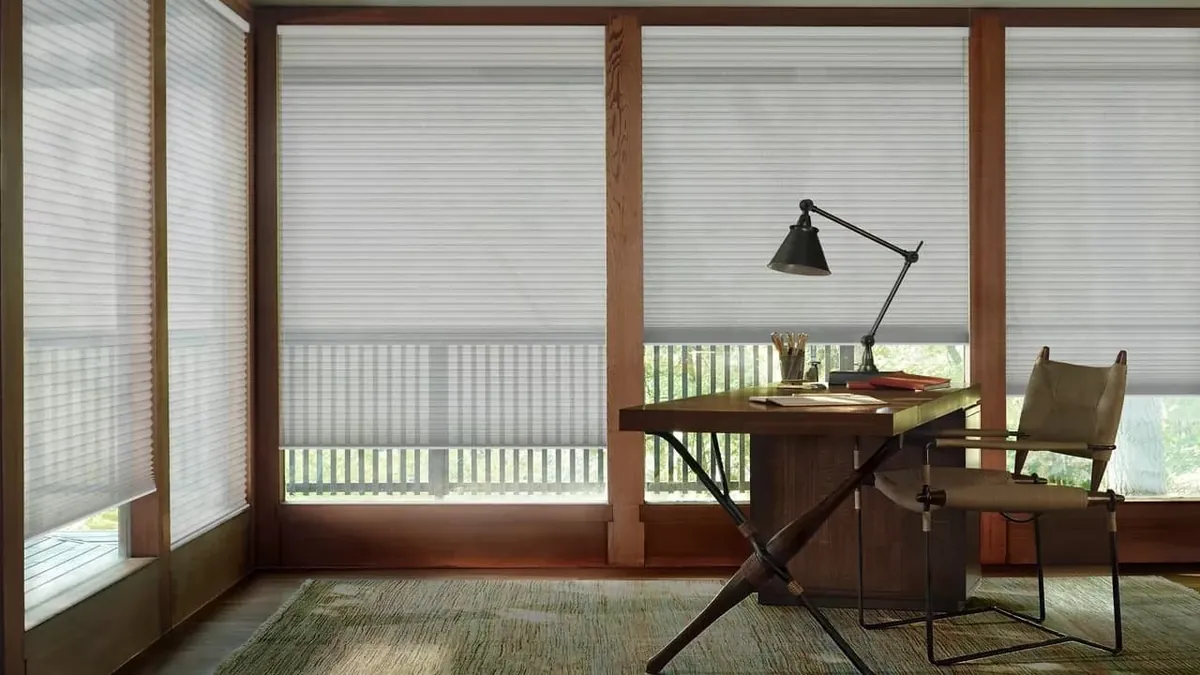
Duette and Applause for old and new houses
The two Hunter Douglas honeycomb lines work in the same way, holding air in their cells. What distinguishes them is the fabric collection. Duette is the more extensive range, with the widest choice of textures and colors, and is frequently chosen for the front rooms of a village house and the family room of a newer colonial. Applause has a palette of its own that suits bedrooms, kitchens and the repeating windows of a larger house.
Many orders for cellular shades in Easton, MA, mix the two lines. Seeing them side by side at your own window makes the choice simple. The Duette honeycomb shades and Applause honeycomb shades pages describe each line, and the main cellular shades page covers the full range.
PowerView in a large house
In a big Easton colonial, PowerView motorization does more than reach the high windows. Shades can be grouped, so all the shades on a floor or in the family room move together from a remote or the app. Schedules can lower the bedroom shades at dusk and raise the living room shades at breakfast, and the house keeps to that routine whether anyone is home or not.
In an antique house, the case for motors is usually the awkward windows: a landing window, a transom above a door or a gable window in an attic room. Start wherever it helps most and add more later. Mention any plans for motors at the visit, and we plan how each motor is powered there and then. Our page on motorized blinds in Easton has more.
The day the shades go up
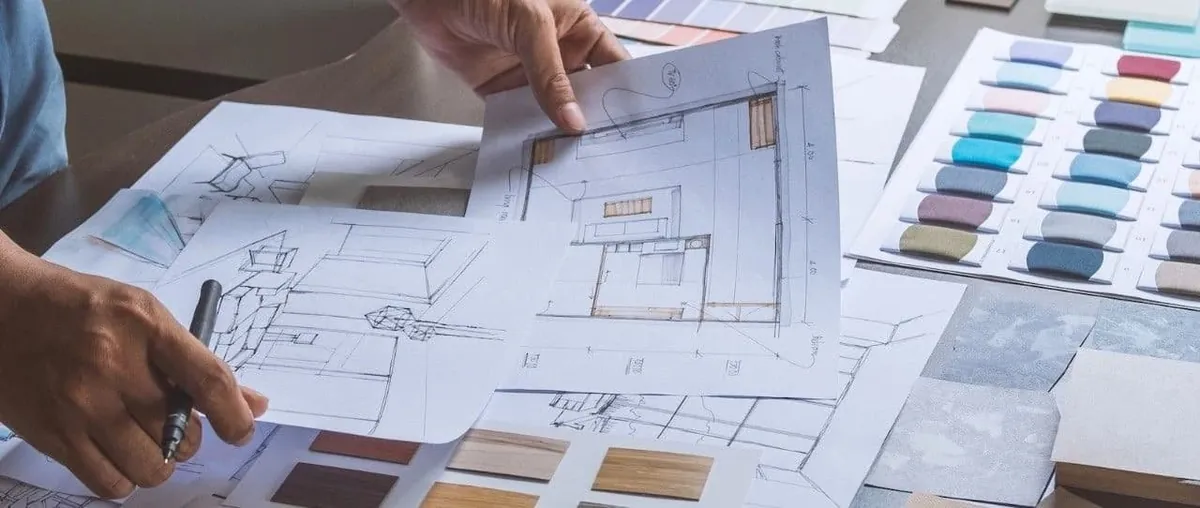
When the shades have been made to your measurements, our certified Hunter Douglas installers come back to hang them.
- Brackets are fixed into sound wood at every window, inside the frame or on the wall above as agreed.
- Each headrail is clipped in and levelled, and grouped shades, such as those in a bay, are lined up.
- Every shade is raised and lowered to check it runs evenly.
- PowerView motors are paired with their remotes and the app, and any schedules you want are set.
- You are shown how everything works before the installers leave.
A shade built to its own opening sits neatly within it, which suits period trim and keeps the side gaps narrow.
A Hunter Douglas Gallery dealer for Easton
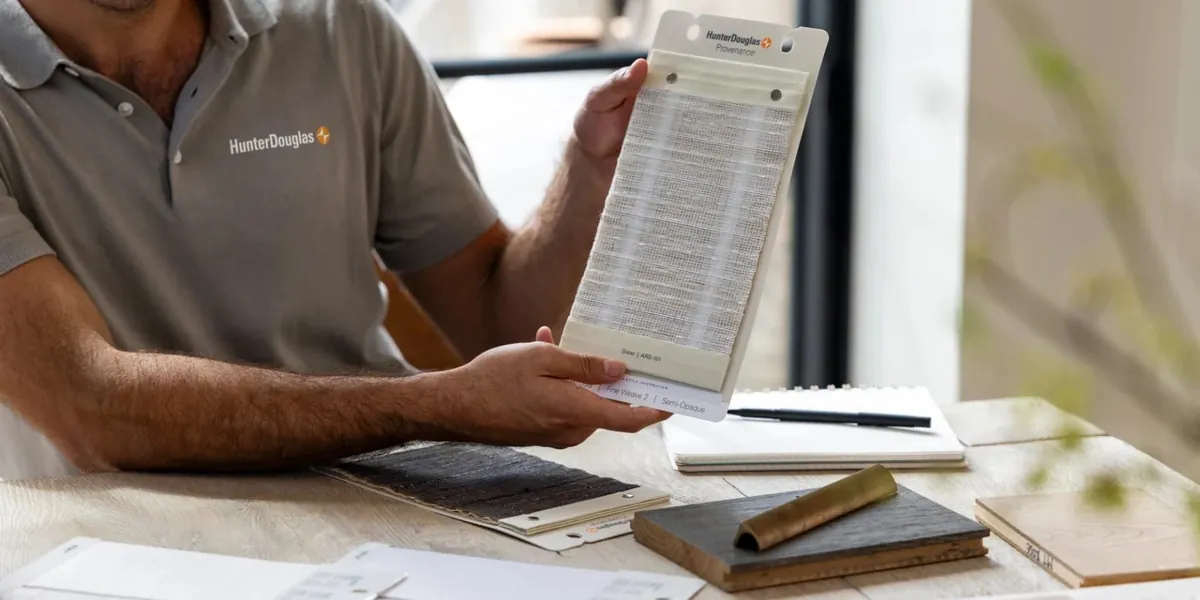
Blinds & Designs is a Hunter Douglas Gallery dealer, and the installers who fit our shades are certified by Hunter Douglas. For an Easton house, old or new, that means every Duette and Applause fabric and PowerView motorization, chosen at home and installed by the company that measured.
The rest of the house can be planned at the same consultation, because we also carry Hunter Douglas blinds, shutters, roller and roman shades and drapery. A village dining room might suit plantation shutters in Easton, and a sunny family room might take roller shades in Easton. See our Easton page for everything we do in town.
The nearest place to see Hunter Douglas products in person is the Franklin showroom.
Questions from Easton
Can honeycomb shades be fitted inside the old sash frames near the villages?
Often. It depends on the frame depth and whether sash weights or stops are in the way. Each window is measured at several points, and where an inside mount will not fit, the shade is mounted on the wall above with a small overlap.
We have a deep setback. Do we need privacy fabrics at all?
In the living spaces by day, often not, and a light-filtering fabric is enough. Bedrooms and bathrooms usually still want a denser fabric, because a lit window can be seen a long way at night.
Will a honeycomb shade darken my rooms under the trees?
Not with a pale fabric that lets light through. It spreads the light and softens bright patches without adding shadow. Holding samples at your windows is the surest way to judge.
What is the best option for the high window over our stairs?
PowerView motorization. The shade moves from a remote, the app or on a schedule, so the window is covered and uncovered without a ladder.
Is there a cost for the estimate?
No. After measuring, we give you a free estimate.
Bring the samples to your windows
An antique colonial near the villages and a newer house off Route 123 need different things from a shade, and both are easiest to plan in the rooms themselves. Request a consultation and we will come to your house with the honeycomb range, measure every window you want covered and leave a free estimate for your cellular shades in Easton, MA. If you have a question beforehand, use the call button.