
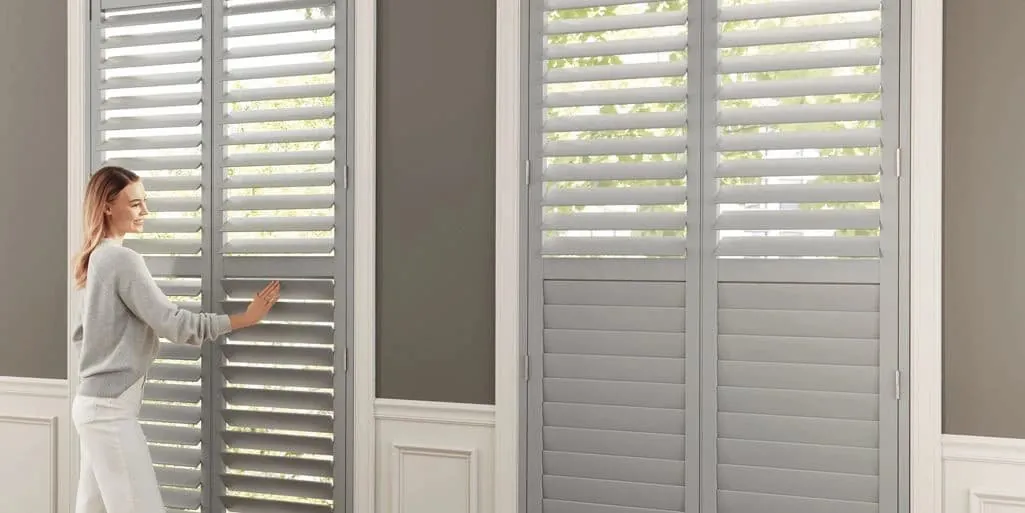
One island, two kinds of light
Portsmouth sits at the top of Aquidneck Island with water on both flanks, the Sakonnet River to the east and Narragansett Bay to the west. Almost every house here ends up with a bright side that faces open water and a shaded side that faces the road, the trees or the next house. That split is the first thing we look at when we plan plantation shutters in Portsmouth, RI, because one window treatment has to work in both conditions.
A shutter suits that job better than most. Tilt the louvers up on the water side and the glare goes to the ceiling instead of across the sofa. Open the panels fully on the shaded side and the room gets every bit of daylight the glass can let in. Close them at night and the house feels private on every side, whether it is a cottage on a tight lot or a bigger house set back from the shore.
The housing changes a lot from one end of town to the other. Small seasonal cottages at Island Park and Common Fence Point, family colonials off East Main Road, and larger, newer houses down toward Carnegie Abbey each ask different things of a shutter, and we fit all three.
Plantation shutters in Portsmouth, RI, in three collections
Hunter Douglas makes three shutter collections, and each earns its place somewhere on the island. We bring samples of all of them to your door.
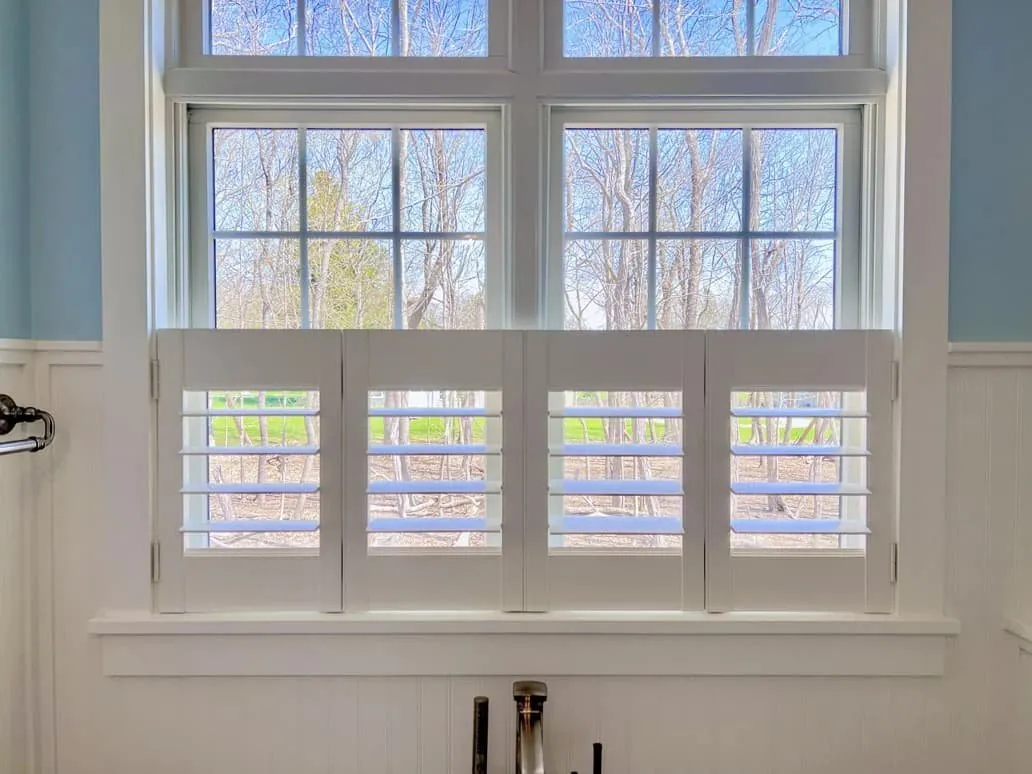
Palm Beach polysatin
A solid polysatin shutter with no wood inside it. It will not warp or swell with steam, so it is the one we suggest over a kitchen sink, in a bathroom or in any room that stays damp.
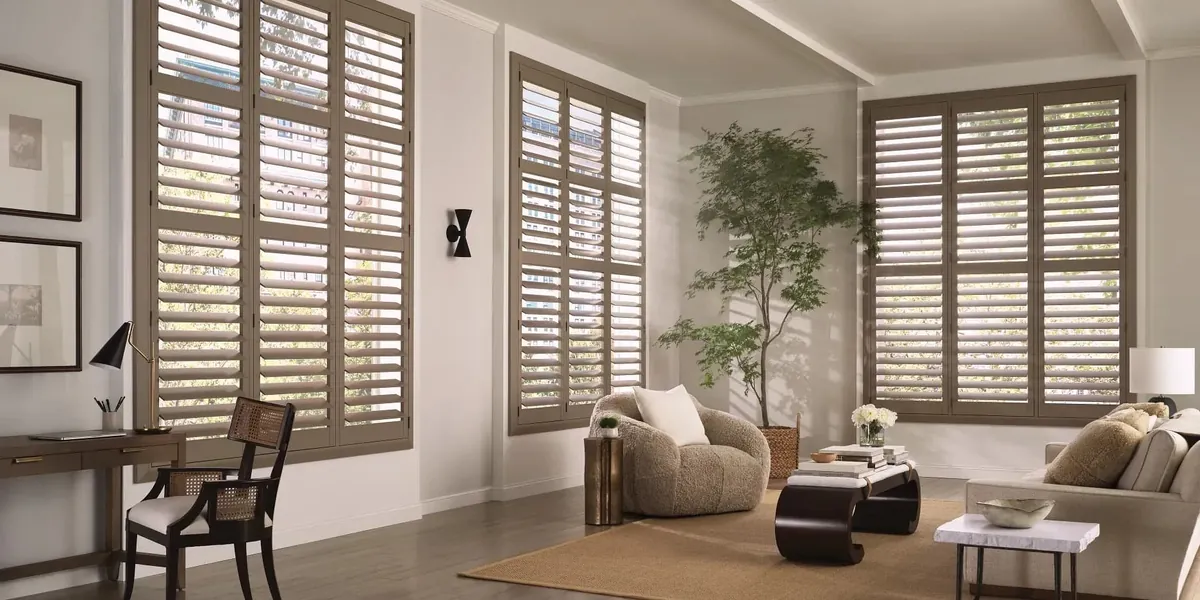
NewStyle hybrid
A composite shutter with the look of painted wood. It keeps a crisp, even finish from room to room, which makes it a common pick for a whole house of matching windows.
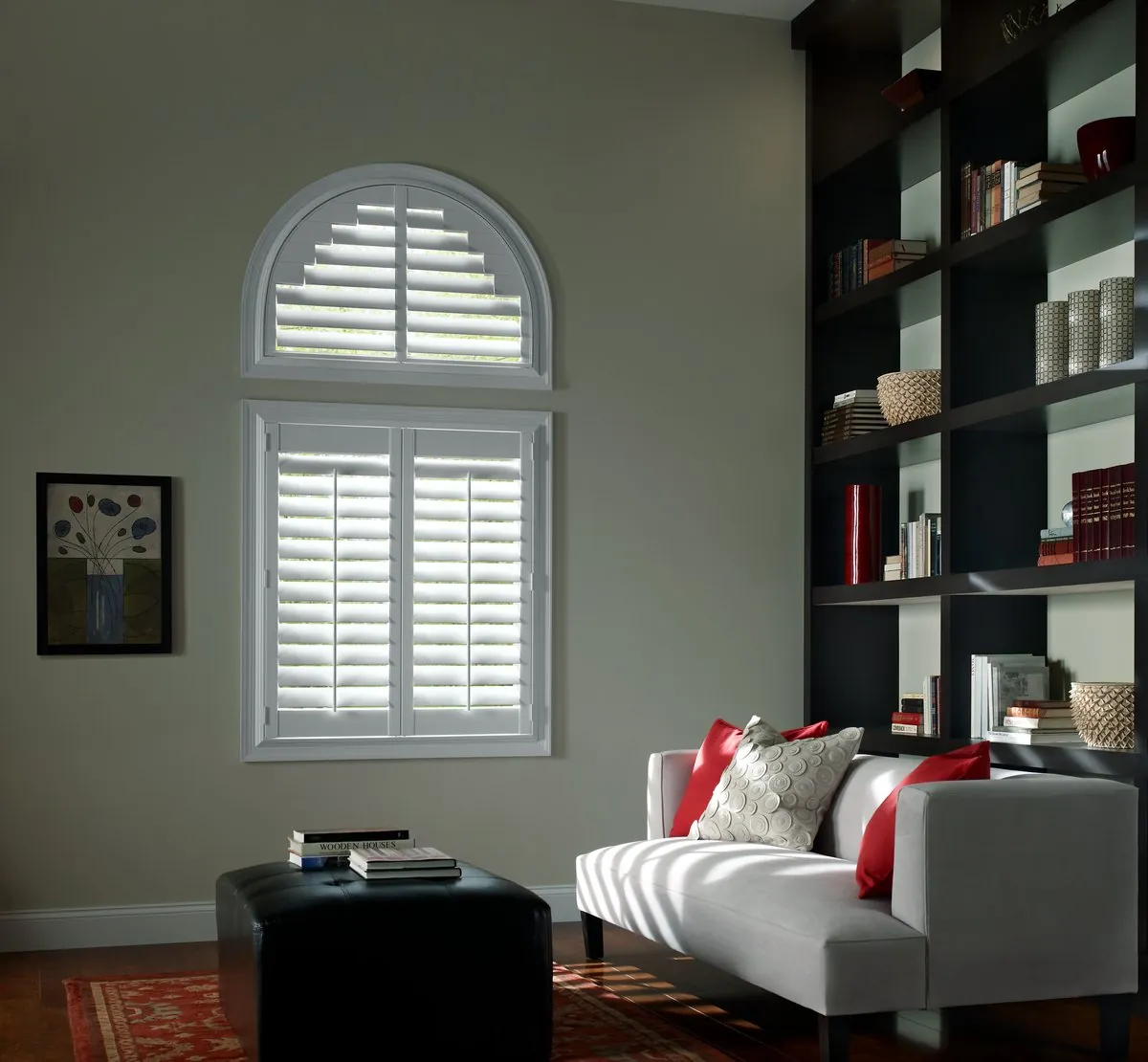
Heritance hardwood
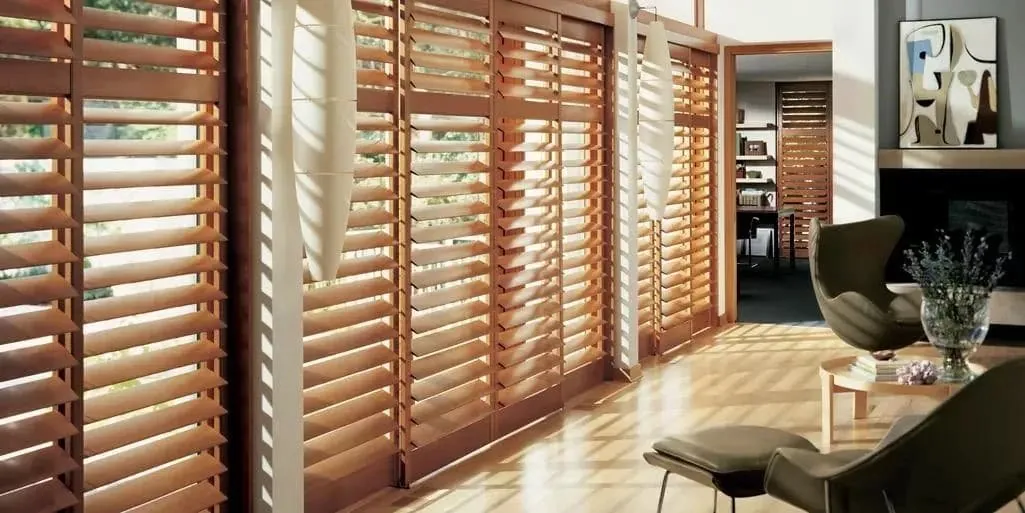
Real hardwood, painted or stained. It brings genuine wood grain into living rooms, dens and studies, and it can be shaped for arches and angled tops.
Working with a bright side and a shaded side
The west-facing rooms that look out over the bay take the late sun hard. On a clear summer evening the light comes in low across the water, and a living room on that side can be too bright to sit in for an hour or two. The east side toward the Sakonnet gets the same thing at breakfast time. The rooms in between, and the ones facing inland, can feel dim by comparison.
Shutters let you treat each side the way it needs without changing the look of the house. On the bright side, the louvers tilt to bounce the light upward so the room stays lit but nobody is squinting. A divider rail across the middle of a tall panel lets you close the lower louvers against the glare while the upper ones stay open to the sky. On the shaded side you can swing the panels right back against the wall and leave the glass clear.
Because every window carries the same frame and finish, the house still looks consistent from the street and from the water. That matters on an island where many houses can be seen from two directions. We plan the louver angle and panel layout room by room at the consultation, standing in each room with you, so the shutters on the bright side and the shaded side are each set up for the light they actually get.
Cottages at Island Park and Common Fence Point
The cottage neighborhoods at the north end of the island were built close together, many of them as summer places that have been winterized and added onto over the years. Windows in these houses are often small and mixed. A front room might have one original double-hung window, a newer slider and a little window over the kitchen sink, all different sizes.
Shutters bring those odd windows together. A single louver size and one painted finish make a patchwork of openings look like they belong to the same house. Narrow louvers sit better in a small window than wide ones, and a single hinged panel often suits a tiny opening better than a pair.
Cottages close to the water also deal with damp air for much of the year. In bathrooms and kitchens, and in any room that was once a porch, Palm Beach is the safer material. We often fit a cottage with Palm Beach in the wet rooms and NewStyle elsewhere, matched in color so nobody can tell the difference from across the room. Where a cottage sits a few steps from its neighbor, cafe shutters on the lower half of the window give privacy at eye level and leave the top of the glass open.
Colonials off East Main Road
Back from the shore, the newer colonials off East Main Road have a more regular plan: rows of double-hung windows of the same size, a family room with a wider window or a slider, and a bonus room over the garage. These are some of the simplest houses to fit, and they show off what a full set of shutters does to a facade.
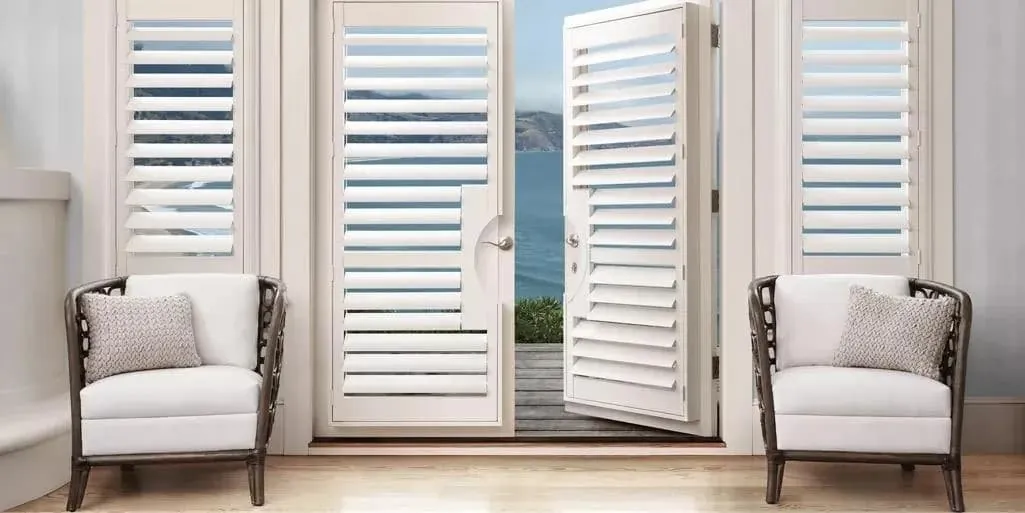
When we measure a colonial for plantation shutters in Portsmouth, RI, most owners pick one louver size and one color for every window. A mid-sized louver is the usual choice for a standard double-hung window, giving a clean view when the louvers are open without looking busy. The front rooms, where the house is on show, sometimes get Heritance hardwood in a paint that matches the trim, while bedrooms and the bonus room take NewStyle. The two collections can be ordered in matching colors, so the street sees one finish.
Family rooms often have a slider out to the yard. That opening can take shutter panels on a track that slide to one side, or a pair of hinged panels if the wall space allows. We look at how the door is used before suggesting either, because a door that is opened many times a day needs a different answer from one that stays shut most of the winter.
Larger houses toward Carnegie Abbey
Toward the south end of town the houses get bigger and the windows get taller. Living rooms may have a full wall of glass toward the water, transoms above the main windows and the odd arched or angled top in a stair hall or a vaulted room. These houses usually have the strongest exposure on the island, open to the bay with nothing to break the sun.
Big windows suit wide louvers. With fewer slats crossing the glass, the view out over the water is clearer when the louvers are open, and the shutters read as modern rather than fussy. A tall window is split into panels hinged together so they fold back in a neat stack, and a divider rail lets the lower and upper sections work separately.
Arches and angled tops can take a shutter made to their shape, fixed or with working louvers. Placed above a rectangular shutter, it carries the same lines up to the top of the window so the whole wall looks finished. For a long run of glass we plan the panel widths so the stiles line up with the window mullions where possible, which keeps the outside view clean from inside and the shutters tidy from outside.
Louver widths, and what each one does
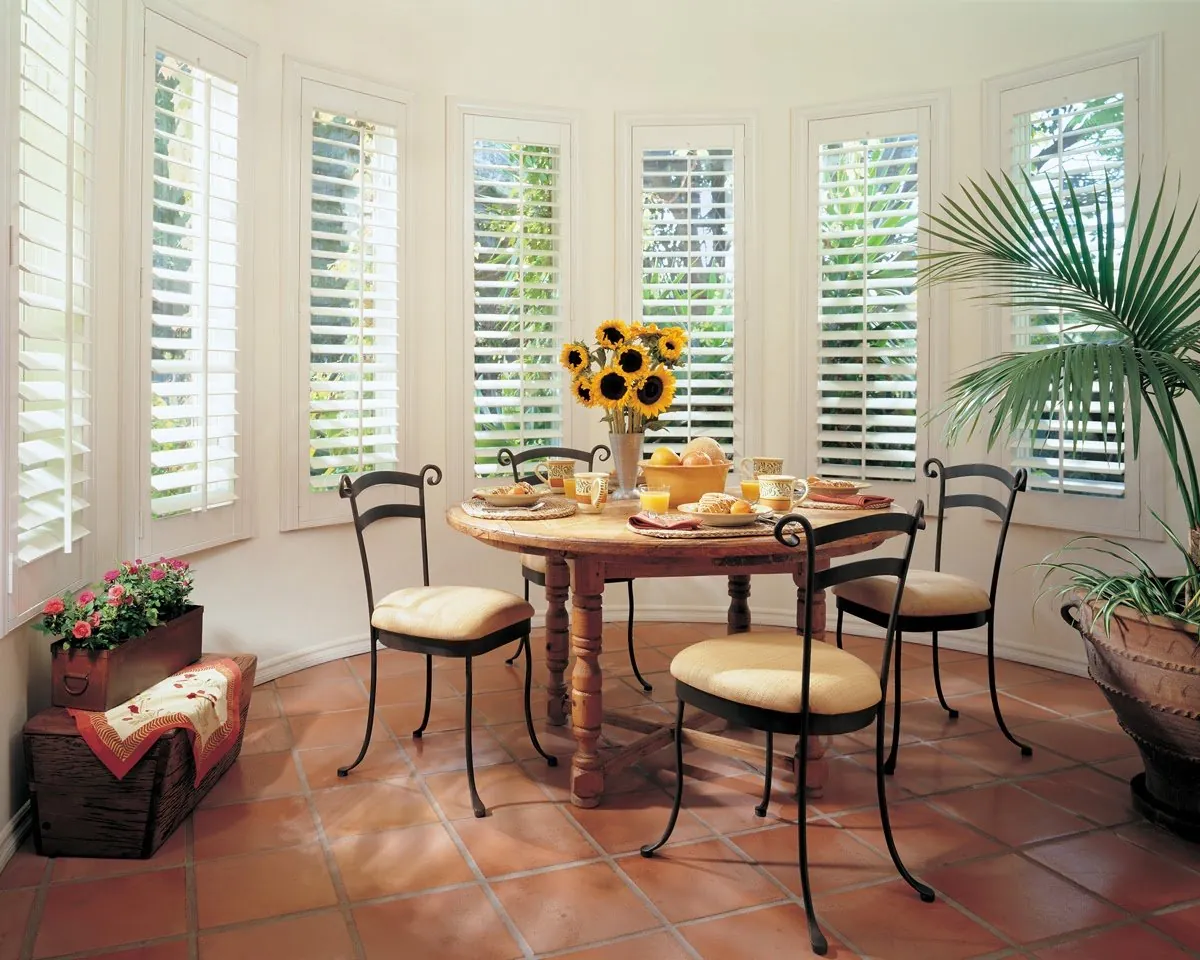
Louver width is the decision that shapes how a shutter looks more than any other. A narrow louver gives a traditional, finely detailed look and suits small windows and older rooms. A wide louver gives a cleaner, more open look and suits large windows, because fewer slats sit across the view.
The size also changes how the room feels when the shutters are closed or half open. Wider louvers let in a broader band of light between each slat when tilted open. Narrower louvers break the light into finer stripes and give a little more privacy at a part-open angle. We bring sample panels in several sizes so you can hold them up at your own windows, on the bright side and the shaded side, and see the difference.
On the island, a lot of houses end up with two sizes: a narrower louver in a cottage section or a small bedroom, and a wider one in the main living space that faces the water. Keeping the same color and frame across both keeps the house looking consistent.
Frame styles and how the panels open
The frame is the part of the shutter that meets your window. An inside mount sits within the window opening, so the casing and trim stay in view and the shutter looks built in. It needs enough depth and a reasonably square opening. An outside mount sits on the wall or casing around the window and frames it, which can hide an opening that is out of square or too shallow.
Frame profiles vary too, from a slim, plain frame that keeps as much glass in view as possible to a deeper frame with a moulded edge that echoes traditional trim. In a cottage with simple trim we tend to suggest the slim frame. In a colonial with moulded casings, a frame with a little more detail can look right.
How the panels open is the last piece. Pairs open from the middle, bifold panels fold back in a stack for a wide window, and sliding panels on a track work for a door. Tilt can be a rod down the face of the panel or hidden at the side. We go through each choice with you at the window, because what looks right depends on how much wall space there is on either side and how you use the room.
Mixing collections without it showing
Very few island houses are one material from end to end, and the shutters do not need to be either. A typical order might put Palm Beach in a bathroom and over the kitchen sink, NewStyle in the bedrooms and Heritance in the living room that looks over the water. Each collection is chosen for the conditions in its room, yet all three can be ordered in matching whites and off-whites with the same louver size and frame profile.
From the street or the shore, the house reads as one finish. Up close, the hardwood in the main room has real grain, and the polysatin in the bath shrugs off steam. That is the practical way to approach plantation shutters in Portsmouth, RI: put the material where it does the most good, and let color and proportion tie the house together. We lay the samples side by side during the visit so you can see how closely they match before anything is ordered.
A consultation at your house
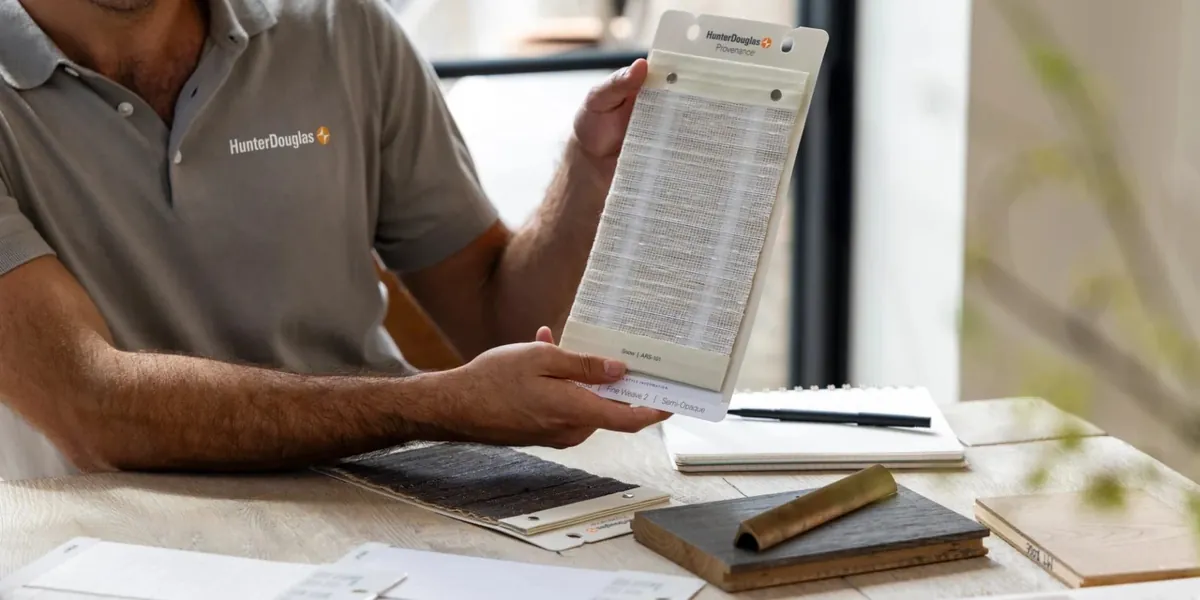
Shutters are easiest to choose in your own rooms, in your own light. Our vans carry shutter samples in each collection, louver size and finish, so we can bring the showroom to you. A visit usually goes like this.
- You request a consultation online or use the call button, and we agree a time.
- We walk through the house with you, starting with the rooms where the light is hardest to live with.
- You hold Palm Beach, NewStyle and Heritance samples against your trim and floors, on both sides of the house.
- We check each opening for depth and square and recommend an inside or outside mount.
- We measure every window you are considering.
- You get a free estimate, with no pressure to decide on the day.
If you want help with the rest of the room, ask about our interior design consultations. You can also read what happens at an in-home consultation before we arrive.
When the shutters arrive
Each shutter is made to the measurements taken at your house, so the fitting is about setting the frame true and adjusting the panels until they close evenly. Our installers are certified by Hunter Douglas. They set each frame level and square in its opening, hang the panels, adjust the hinges so pairs meet cleanly in the middle, and set the louver tension so the louvers stay where you put them.
Before they leave, they show you how to open the panels, tilt the louvers and clean them. A quick dust with a soft cloth is usually all a shutter needs.
A Gallery dealer on the island
Blinds & Designs is a Hunter Douglas Gallery dealer. For a Portsmouth house that means all three shutter collections are on the table at the same visit: polysatin for the cottage bathroom, composite for the colonial bedrooms and hardwood for a living room facing the bay. Nobody has to force one material onto every window.
Installation is done by certified Hunter Douglas installers, which is what makes a shutter work well over time. The same people handle blind and shade repairs later on if anything ever needs attention.
For other rooms, see roman shades in Portsmouth or cellular shades in Portsmouth, or every service on our Portsmouth page. The full collection is on our plantation shutters page.

Our nearest showroom to Portsmouth
The North Dartmouth showroom is our nearest location to Aquidneck Island. It is a good first stop if you like to start with a visit before anyone comes to the house.
Most Portsmouth projects still begin at home, though, because a shutter is made for one window and the right louver and frame depend on how that window sits in the wall and how the light reaches it. An in-home consultation lets us see both sides of the house at the times of day that matter to you.
Questions from Portsmouth
Which collection suits a cottage near the water?
Palm Beach polysatin has no wood inside it, so damp air and steam do not make it swell or warp. We usually suggest it for bathrooms, kitchens and former porch rooms in a waterside cottage, and NewStyle or Heritance in the drier rooms, matched in color.
How do shutters deal with the evening sun off the bay?
Tilt the louvers upward and the low sun is bounced toward the ceiling instead of across the room. A divider rail lets you close the lower louvers against the glare while the upper ones stay open for light.
Can one house have different louver sizes?
Yes. Many houses here use a narrower louver in small cottage windows and a wider one on the large windows facing the water. Keeping the same color and frame keeps the look consistent.
Will shutters fit an arched window in a stair hall?
They can. An arched shutter is made to the shape of the opening and sits above the rectangular shutters below, either fixed or with working louvers.
Is the estimate free?
Yes. After we measure your windows you receive a free estimate for the shutters you are considering. Request a consultation to set up a visit.
The next step for your windows
Pick the room that bothers you most, whether it is the living room that faces the evening sun or the cottage bedroom a few feet from the neighbors, and start there. Request a consultation and we will bring the three collections to your house, measure your windows and give you a free estimate for plantation shutters in Portsmouth, RI. If you would rather ask a question first, use the call button, or visit the North Dartmouth showroom.