
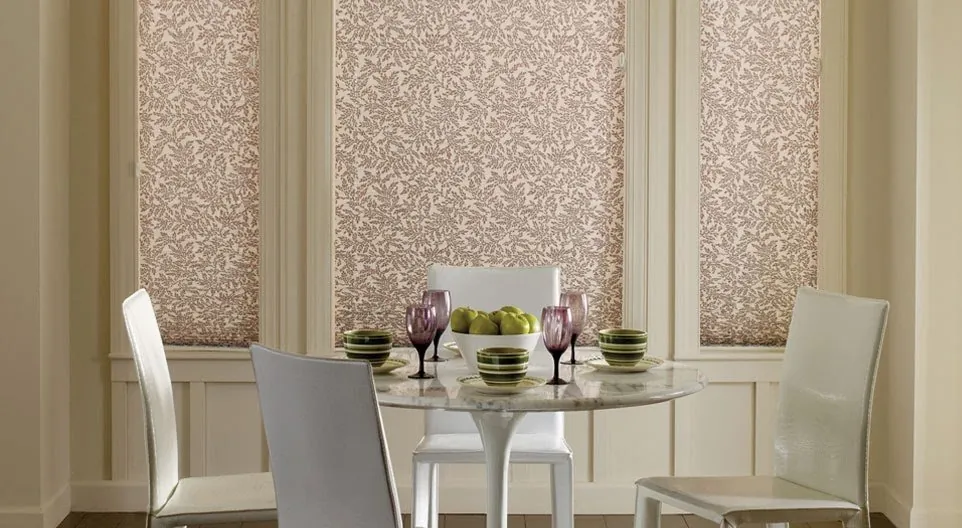
Deep reveals and tall narrow sash in the historic center
Around the center, the antique colonials and Victorians were built with thick walls, and their windows sit well back in them. That depth, the reveal between the face of the wall and the glass, is one of the most useful features a window can have. It gives a shade, blind or shutter a natural pocket to sit in, so the covering can disappear into the frame instead of hanging in front of it. Much of our work on window treatments in Holliston, MA, in the older houses is about using that pocket well.
The sash in those houses is tall and narrow, which adds a second consideration: proportion. A slim window looks best with a slim covering, one that lifts out of the way and does not crowd the glass.
Off Washington Street the picture changes. Newer colonials sit on wooded lots in modern subdivisions with standard window sizes, and the questions there are about light under the trees, consistency across many rooms and how much automation suits the household.
Holliston pages for each service
Each card opens one part of our window treatments in Holliston, MA, on a page of its own, with more on how it suits the historic center and the newer subdivisions.
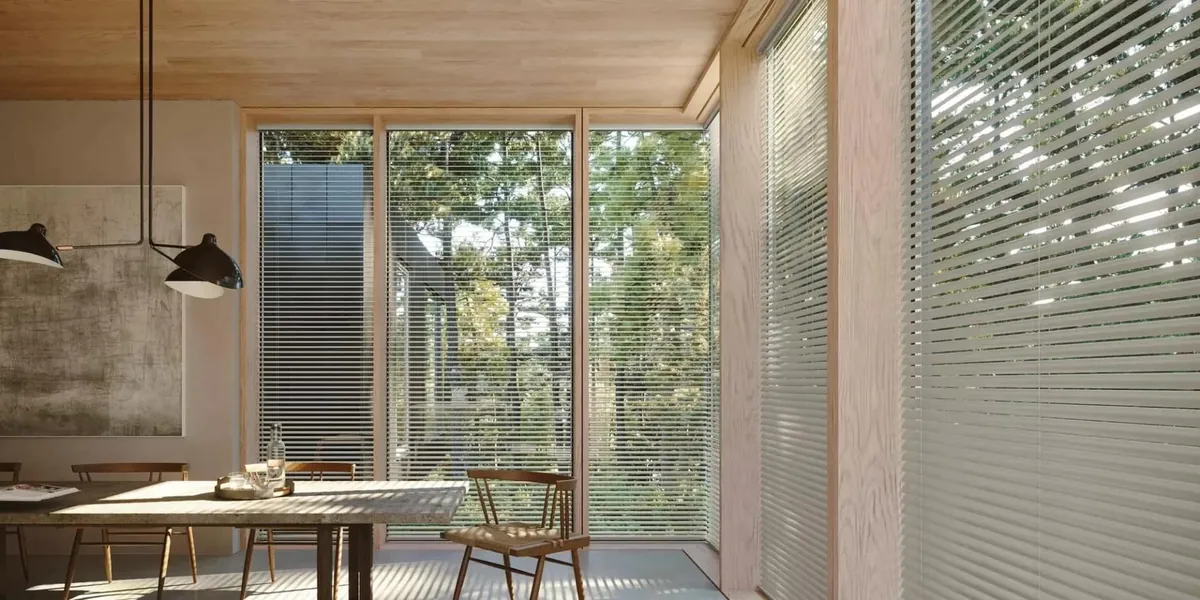
Blinds
Wood, faux wood, metal and verticals. In a deep reveal, a blind sits entirely within the frame.
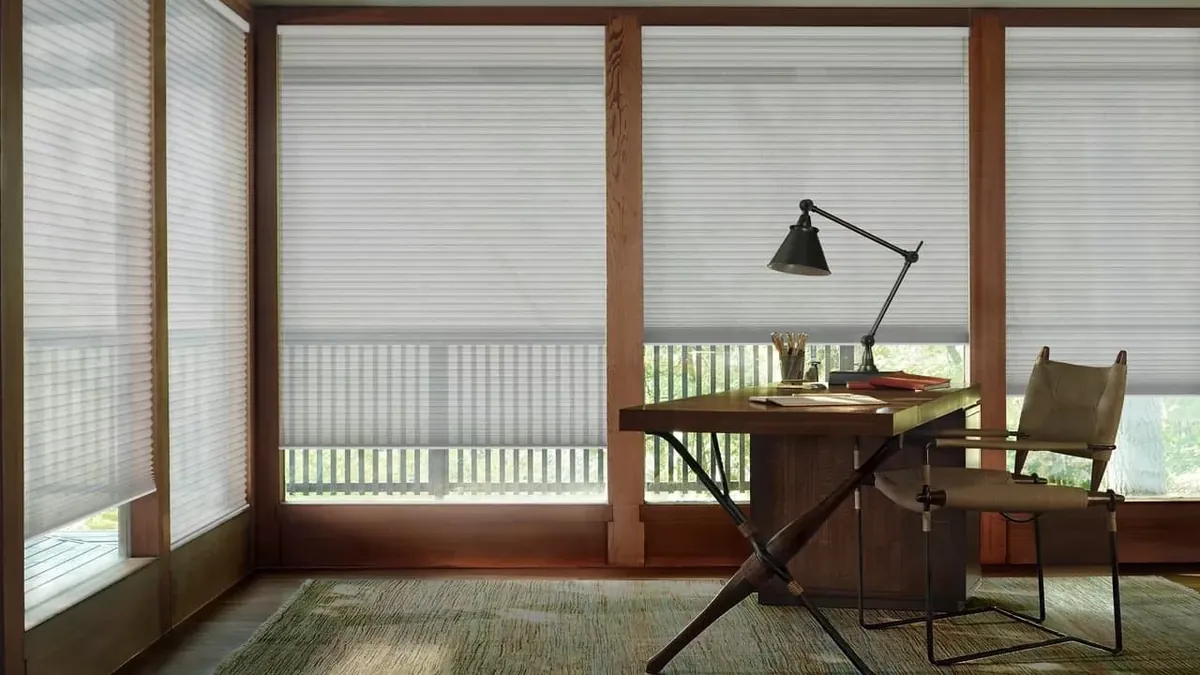
Cellular shades
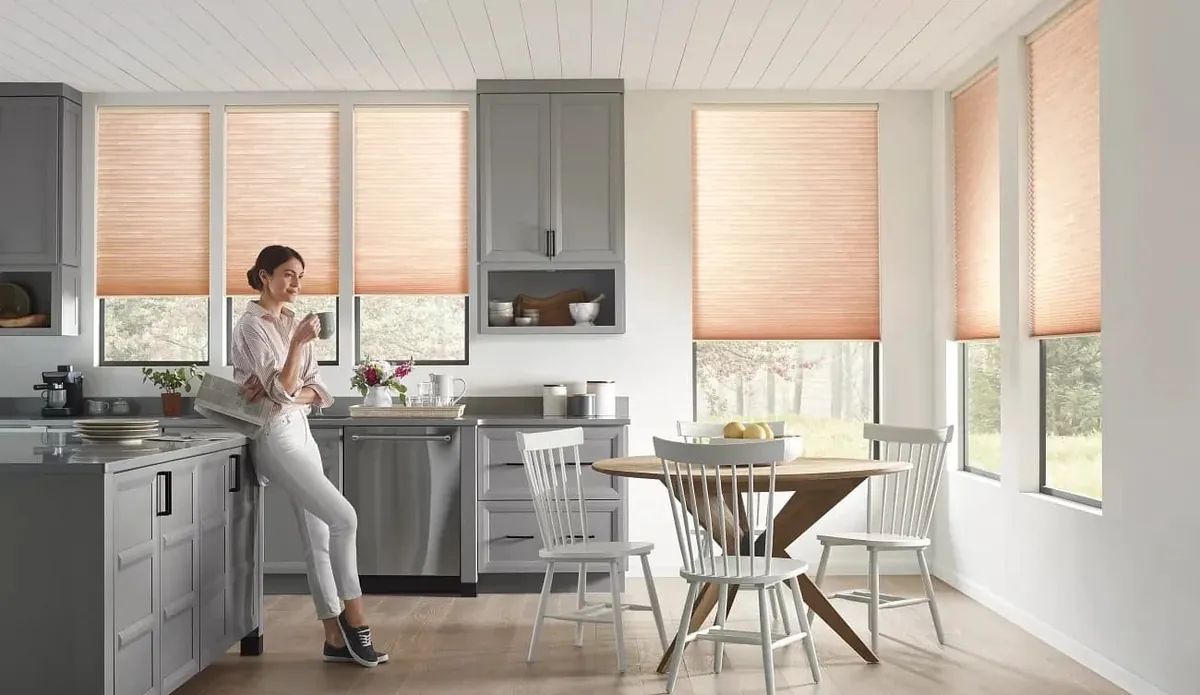
Duette and Applause. Air caught in the cells, set back in a deep frame, makes for a warmer room in winter.
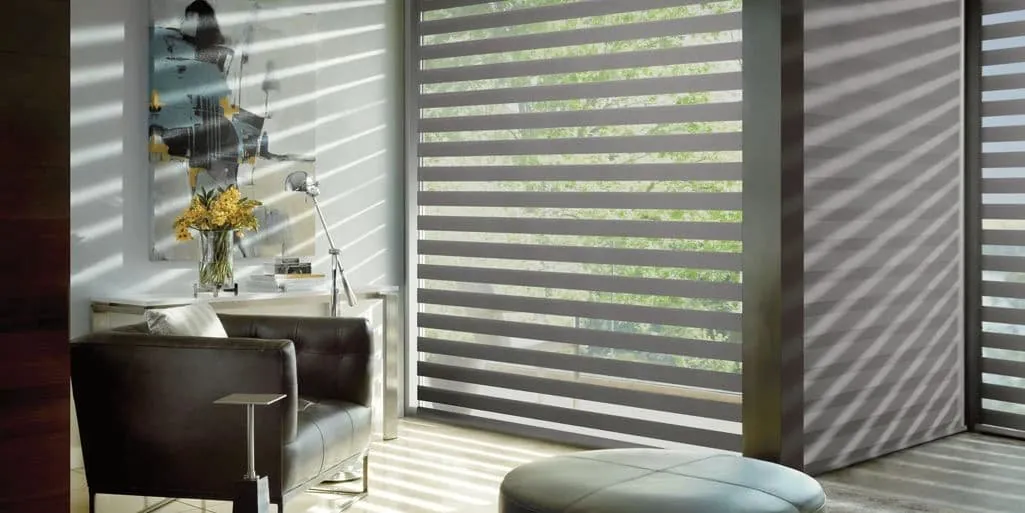
Roller shades
Designer and Alustra rollers, banded shades and screens. Openness sets how much view and glare come through.
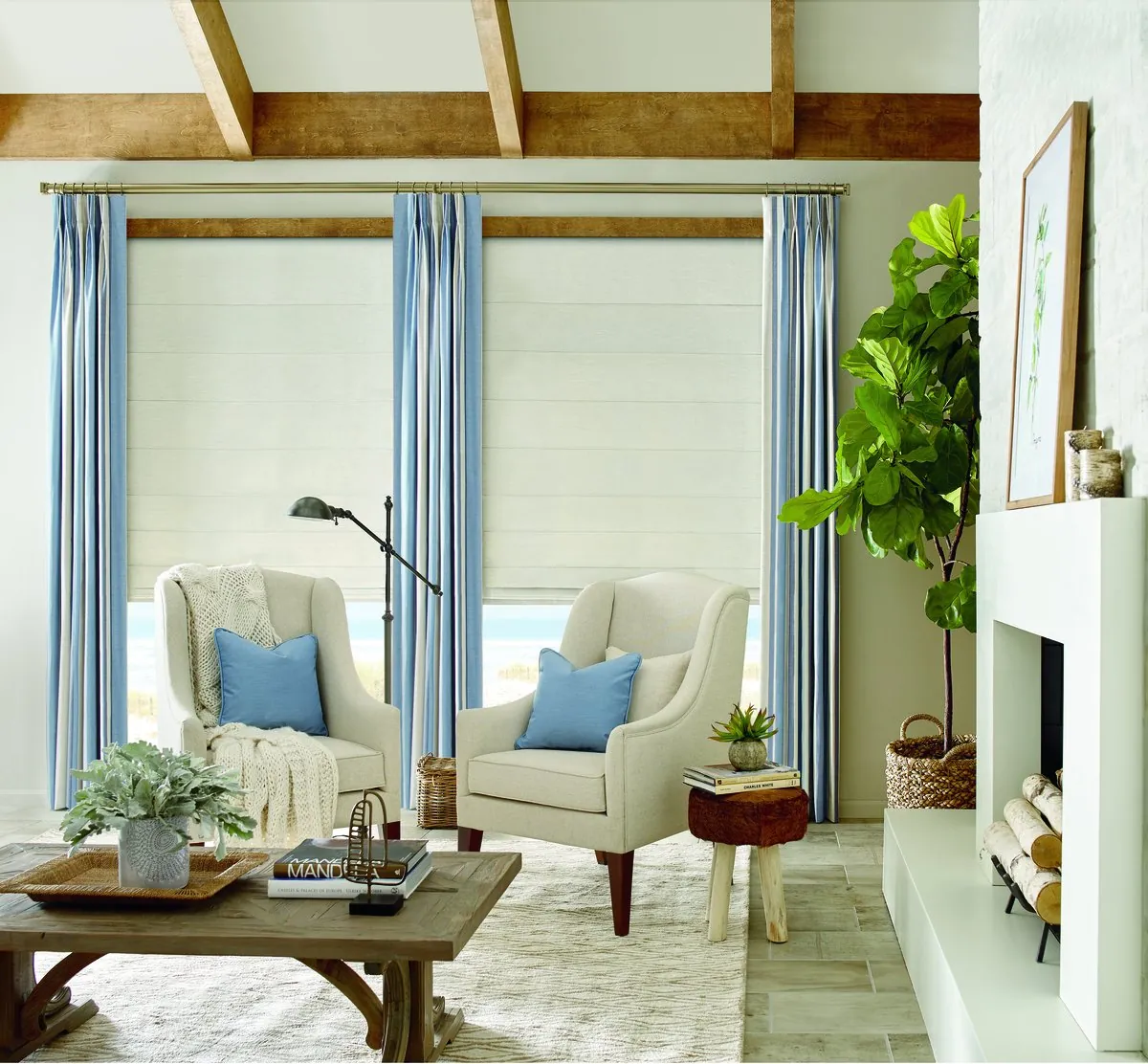
Roman shades
Vignette and Carole Fabrics romans, folded or flat, sized to the width of a narrow sash.
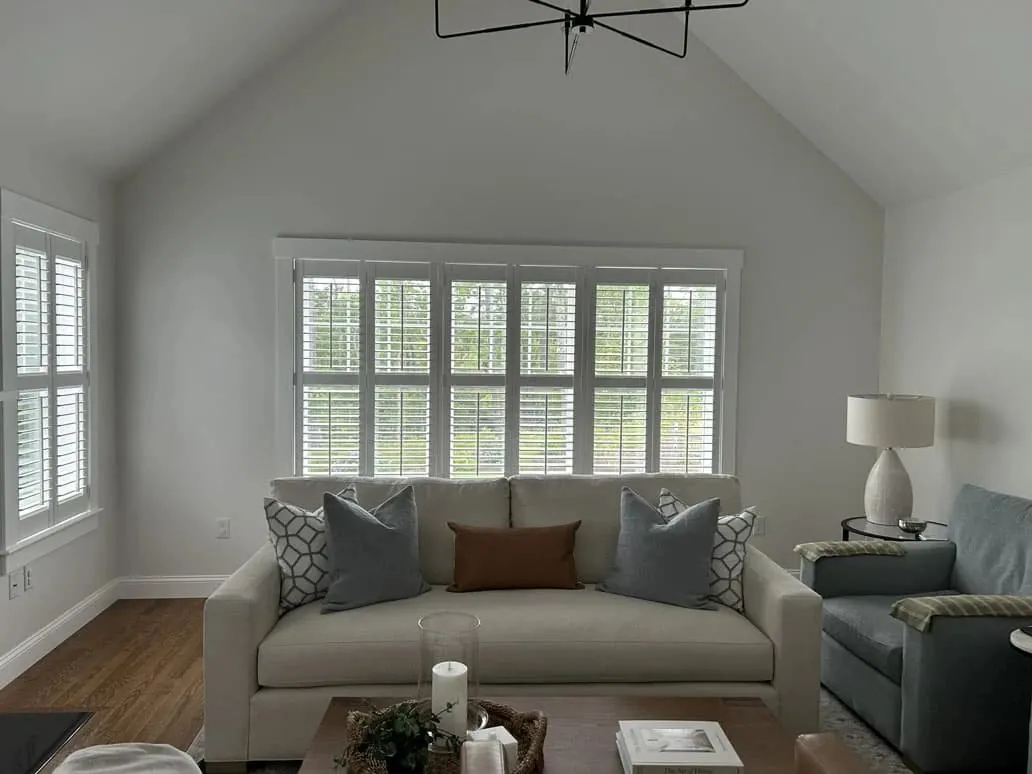
Plantation shutters
Palm Beach, NewStyle and Heritance, with frame style and louver size chosen to sit inside a deep reveal.
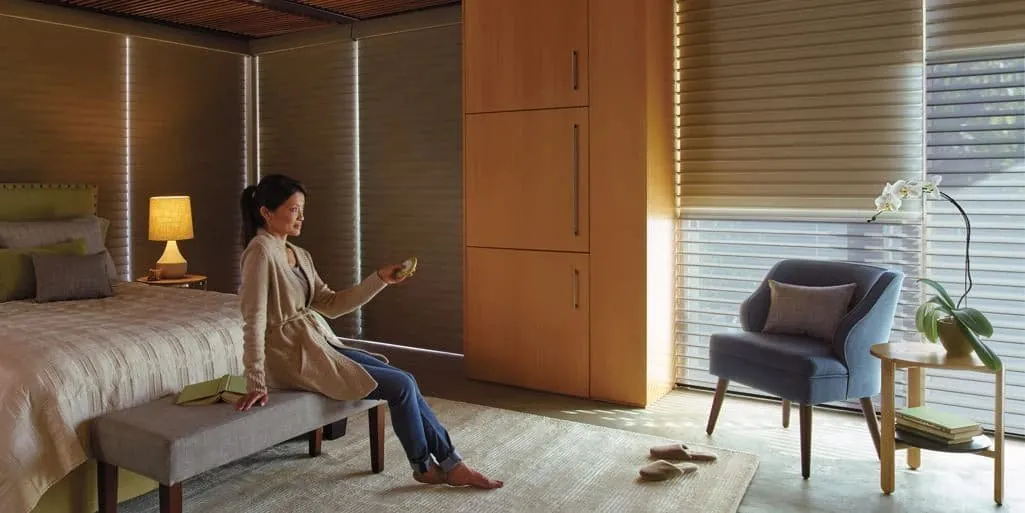
Motorized blinds and shades
PowerView, run by remote, phone or a timetable, for tall sash and for whole houses.

Hunter Douglas dealer
A Hunter Douglas Gallery dealer, with installation by certified Hunter Douglas installers.
What a deep reveal makes possible
Stand at a window in one of the older center houses and look at the side of the opening. The plaster or woodwork runs back a good way before it reaches the glass. That depth is the reveal, and for anyone fitting a covering it is very good news.
With a deep reveal, the headrail of a shade or blind can be mounted fully inside the opening, behind the face of the trim. When the covering is lowered it sits close to the glass, neat and contained. When it is raised it tucks up into the top of the reveal and nearly vanishes. The trim, which in an antique house may be the original woodwork, stays in full view all the time.
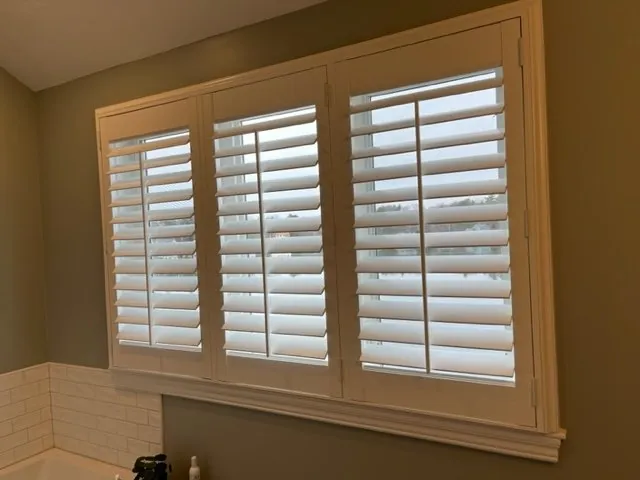
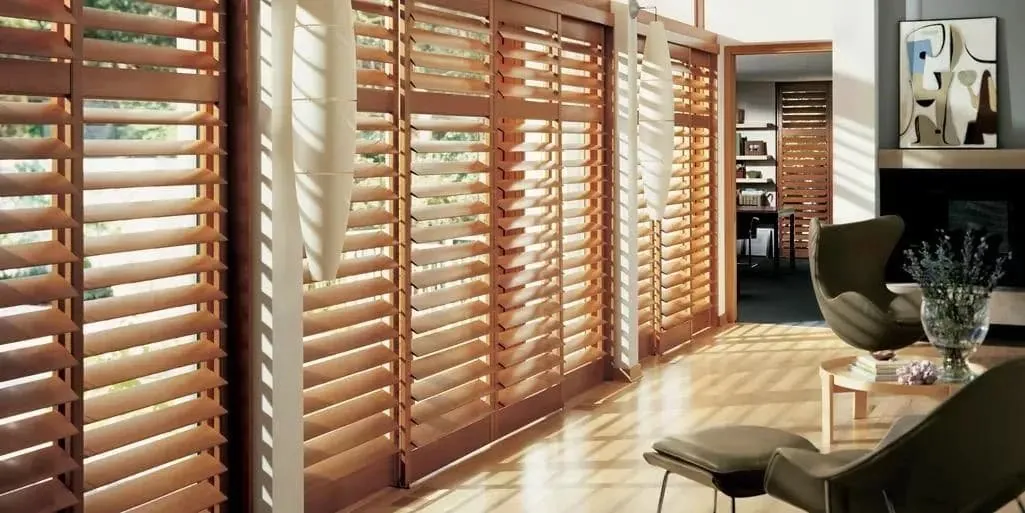
Shutters benefit just as much. A shutter frame set inside a deep reveal looks as though it came with the house. The louvers can tilt fully without catching the wall, and the panels open into the room cleanly.
Deep reveals also help with darkness. Because a shade inside a deep opening sits snugly against the sides, there is less room for light to slip past the edges, which makes bedrooms in these houses easier to darken than you might expect.
Checking the reveal before anything is ordered
A reveal is only useful if we know exactly what is in it. On every older opening we look at:
- The depth, to be sure the chosen headrail or shutter frame fits fully inside.
- Whether the sides are parallel, since walls in an antique house can lean or bow slightly.
- The width at the top, middle and bottom, because old frames are rarely the same size all the way down.
- Obstructions, such as sash locks, lifts or old hardware that a covering has to clear.
- The sill, which in older houses can slope or project, and affects where a shade stops.
The covering is then made to the tightest measurement, so it runs smoothly without rubbing anywhere. If you are curious about the terms we use, window measuring terms explained sets them out.
Tall narrow sash and the question of scale
The sash around the center is tall and slim, sometimes not much wider than a doorway. On a window like that, a covering with a heavy headrail or a deep stack of fabric looks out of place, and it can steal a noticeable part of the glass when raised.
What works is a covering scaled to the opening. A honeycomb or roller tucked inside the reveal gathers into a small band at the top. On blinds, a narrower slat suits a narrow window better than a wide one. On shutters, the louver size is chosen to match the panel width, and a tall window can be split into upper and lower sections so you can open the top for light and keep the bottom closed. A flat roman with folds scaled to the width adds softness without bulk.
These choices sound small, but on a run of tall narrow sash across the front of a Victorian they make the difference between a room that looks fitted and one that looks cluttered. Window treatments in Holliston, MA, in the historic center are mostly about getting that scale right.
Inside the frame or across the trim
Whether a covering goes inside the opening or across the face of the trim is one of the first choices at every window, and in this town the answer often depends on which end of it you live in.
In the historic center, an inside mount is nearly always the right call. The deep reveal gives the headrail somewhere to hide, the woodwork stays visible, and the window keeps its proportions. The only time we suggest otherwise is when a frame is badly out of square, or when you want a room as dark as possible and would rather the covering overlapped the opening entirely.
Off Washington Street, the frames are modern and the reveals shallower, so the choice is more open. An inside mount still looks crisp on a standard frame if there is enough depth. Where there is not, or where a bedroom needs extra darkness, an outside mount across the trim works well and can make a modest window look a little larger. Getting this one decision right for each window is a quiet but important part of window treatments in Holliston, MA, and we will explain our reasoning at each opening as we go.
Antique colonials and Victorians, room by room
The parlors and front rooms of the older houses face the road and get the best of the daylight. A light-filtering honeycomb or a sheer shade with fabric vanes softens the view in from the street and keeps the room bright. Shutters with their louvers turned up send daylight to the ceiling. For evenings, any of them closes fully.
Dining rooms in these houses suit a roman, which brings warmth and a bit of formality. Upstairs bedrooms want darkness at night, and the deep reveals make that easier than in many modern houses. Kitchens and baths want practical coverings: faux wood blinds that tilt, cafe shutters across the lower half of a bath window, or a simple roller over the sink.
Winter by the old sash
Original sash in an antique house can make the air near the glass feel cool on a winter evening. A honeycomb shade lowered at dusk helps, because each cell holds a layer of air between the glass and the room. Set inside a deep reveal, the shade sits close to the window and snug at the sides, which is the best place for it. On a cold night in January, lowering the honeycombs across the front of an old colonial can make the parlor noticeably more comfortable. Read more in our guide to cellular shades and winter heat.
Newer colonials off Washington Street
Off Washington Street, the newer colonials sit on wooded lots in modern subdivisions. Their windows are standard sizes and their frames are square, which makes measuring simple and opens up the whole Hunter Douglas range. The decisions here are about how the rooms are used, how the trees shape the light and how the house looks from the street.
The trees matter more than you might think. In summer the canopy filters the sun, and many rooms are softer and dimmer than the window area suggests. A heavy fabric left half down makes them feel gloomy. Lighter colors, light-filtering fabrics and coverings that lift clear of the glass keep them bright. In winter, with the leaves gone, low sun can reach deep into a family room, and a solar screen or a honeycomb handles the glare.
Bedrooms under the trees
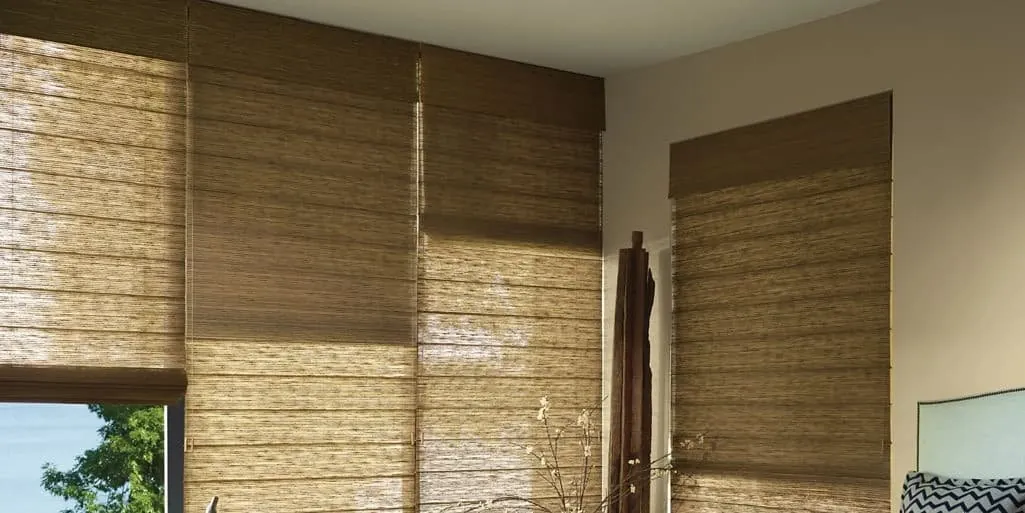
The bedrooms in the newer colonials are often on the second floor, looking straight into the canopy. In summer that gives them a lovely green light and a good deal of privacy from the street. It also means that a light-filtering fabric which works well downstairs may let in too much morning brightness upstairs, once the sun comes up through the leaves.
A room-darkening fabric, in a honeycomb or a roller, solves it for sleep. If you like the room bright during the day, a second, lighter shade or a shade that lowers from the top gives you both. On the side facing the street, the covering also needs to close fully at night, because a lit bedroom shows clearly through the trees after dark. Window treatments in Holliston, MA, for the upstairs rooms usually settle on that pairing of a darker fabric for sleep and a light one for daytime.
Keeping a newer colonial consistent
A two-story colonial has a lot of windows, and the front faces the street. The simplest way to make it look right is to pick one product and one color for most of the house, especially the street side, and to set coverings on windows of the same size at matching heights. Behind that front, rooms can differ where they need to: a darker fabric in the main bedroom, faux wood in the baths, a screen in the family room.
Family rooms at the back often open onto a deck through a slider or French doors. A slider takes a covering that draws to one side, or one that lifts completely clear. French doors take a shade or shutter on each door, so it opens and closes with the door. Window treatments in Holliston, MA, for a newer colonial usually come together quickly once these few choices are made.
Automation for both kinds of house
PowerView is useful at both ends of town. In the older houses, the tops of the tall sash can be hard to reach, and a motor lets you raise and lower a shade from a remote, the app or a schedule without stretching. In the newer colonials, the sheer number of windows makes a schedule worthwhile: shades can be grouped by room, floor or side of the house and set to lower at dusk and rise in the morning, with any one adjusted by hand whenever you like. See how motorized shades are controlled for the options.
Home offices and media rooms
Plenty of houses now have a room set aside for work, and sun across a screen makes it hard to concentrate. A blind with tilting slats or a solar screen keeps the glare off while leaving the room bright. In a media room or den, a room-darkening roller or honeycomb lets you watch in the afternoon. In the older houses, these rooms are often small with one or two tall windows, and an inside mount in the deep reveal keeps them tidy. In the newer colonials, the office may have more glass and a view into the trees, where a PowerView group can close every shade in the room at once.
Help choosing fabric and color
With a house full of tall narrow sash, or a newer colonial with dozens of openings, fabric and color choices can feel like a lot. Our interior design consultations help you settle on a scheme that suits the woodwork, the walls and the light. And if older blinds or shades in the house need attention, we offer blind and shade repair on coverings you already own and will say plainly whether fixing or replacing makes more sense.
What a visit looks like
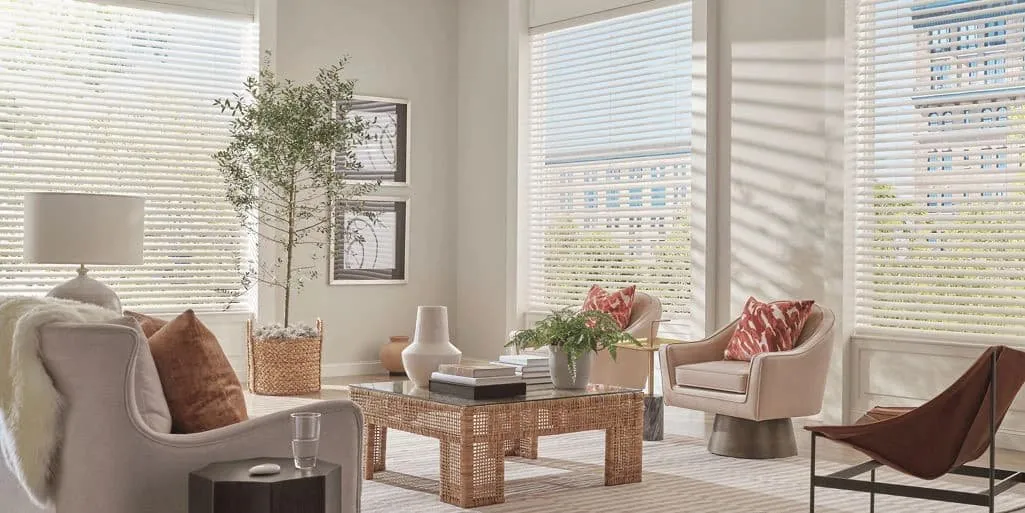
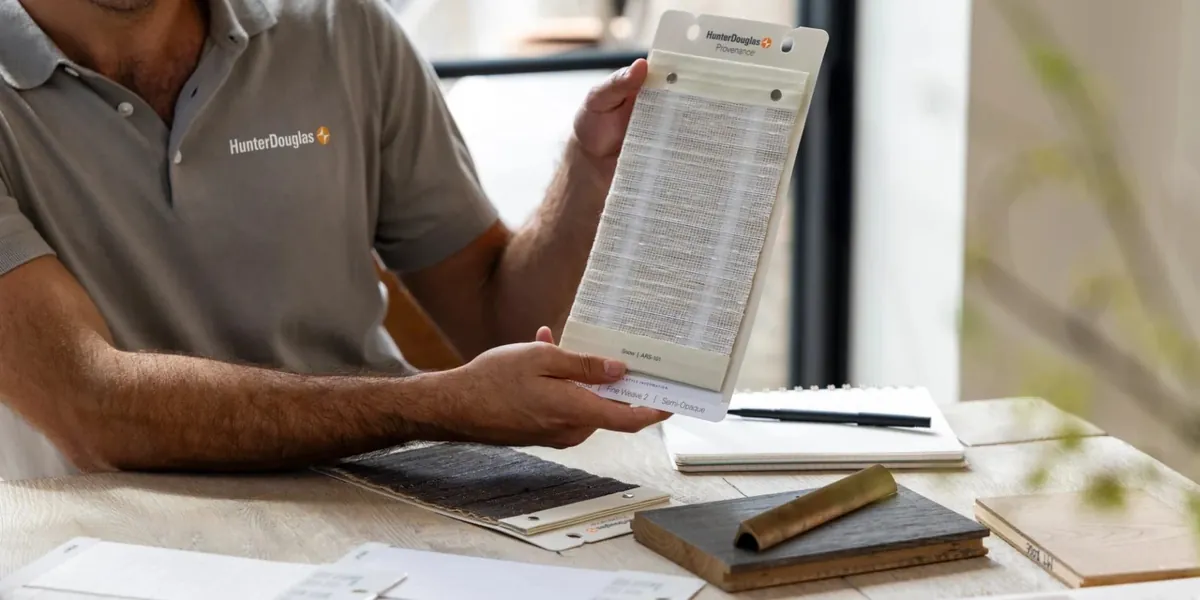
Your consultant comes out in a van carrying samples. We can bring the showroom to you, and in a house with deep reveals that matters, because we want to see the depth of each opening while you see the fabrics in your own light. We go room by room, ask how each one is used, hold samples up to the glass and measure every window, older frames at several points. Before we leave you have a free estimate, set out room by room, to think over in your own time.
When you are ready, Hunter Douglas makes the order to those measurements. Certified installers bring it, set each covering into its frame, check that it runs smoothly and show you how any PowerView motors work. What happens at an in-home consultation and what happens on installation day explain each stage.
A Gallery dealer for old frames and new
Deep reveals in the center, standard frames off Washington Street: the two call for different products. As a Hunter Douglas Gallery dealer, Blinds & Designs brings the entire Hunter Douglas range to one consultation, so every window in the house can be planned together.
What we sell is fitted by certified Hunter Douglas installers. The rest of the service comes with it: home visits with sample vans, free estimates, interior design consultations, window covering automation and repair work.

The nearest showroom is in Franklin
For Holliston, the Blinds & Designs showroom in Franklin is the closest. Calling in can be a good start, especially with a few photos of the windows you are planning around.
Deep reveals and tall narrow sash are best measured and judged in the house, though. Most people start at one and finish at the other.
Questions from Holliston
Our antique house has very deep window openings. Is that a problem?
Quite the opposite. A deep reveal lets a shade, blind or shutter sit fully inside the opening, behind the trim, and leaves less room for light to slip past the edges.
Will a covering look heavy on our tall narrow windows?
Not if it is scaled to the window. A slim stack, a narrower slat or a shutter split into upper and lower panels keeps the proportions right.
Our newer house is shaded by trees. What should we choose?
Lighter colors and fabrics that clear the glass completely. A light-filtering honeycomb or a solar screen also helps with low winter sun once the leaves fall.
Can we automate the tall windows in an older house?
Yes. PowerView shades work from a remote, your phone or a schedule, so the height of the sash does not matter.
How much is an estimate?
There is no charge. You get a free estimate after we have measured.
Getting started
Book through Request a Consultation and we will come to the house, whether it has deep reveals around the center or standard frames off Washington Street. We bring the samples, measure each window and leave you a free estimate. The Franklin showroom is the nearest to visit, and the call button reaches us whenever you have a question.
Every product line we offer is gathered on our window treatments page.