
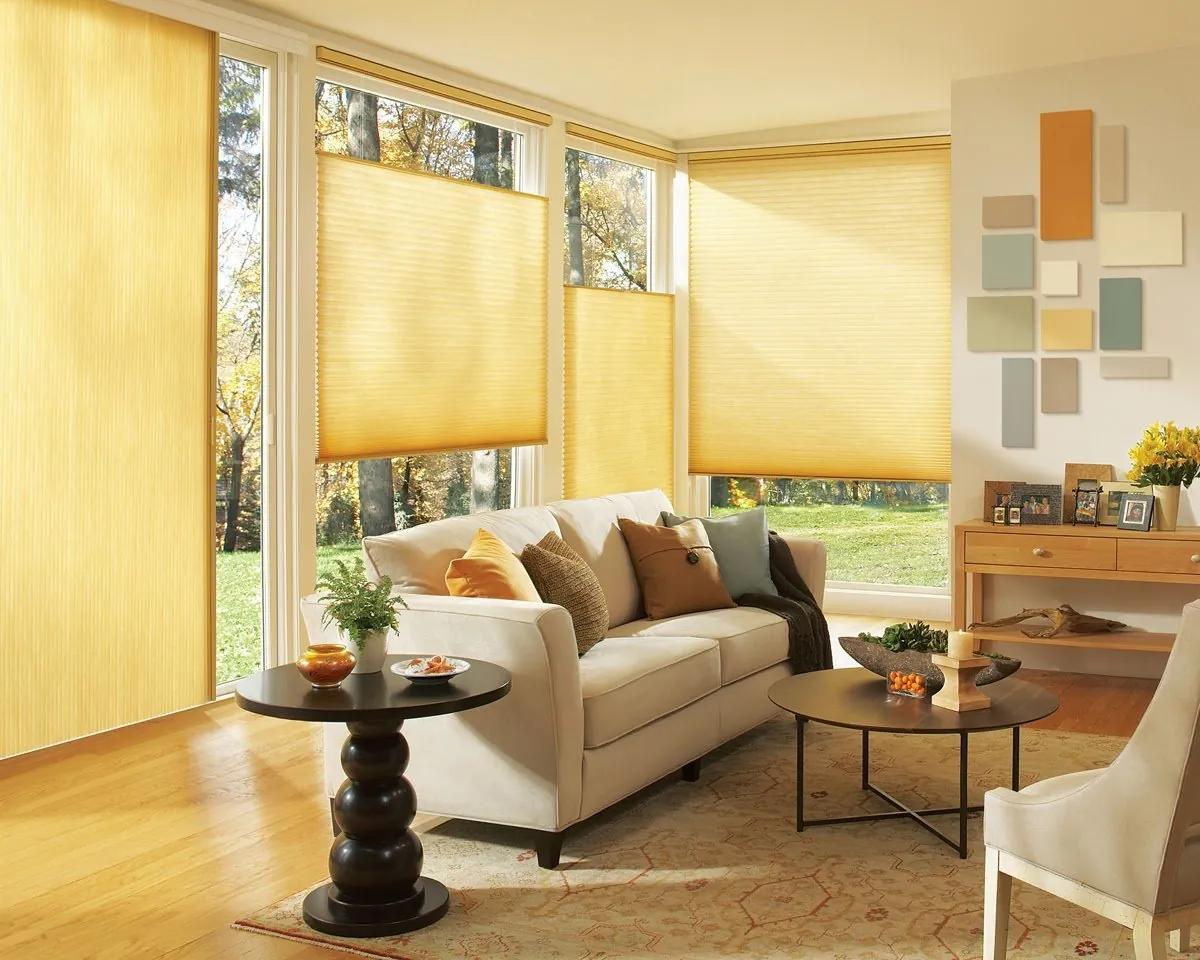
Houses that sit close to the road
Rockland is mostly capes and ranches on modest lots, with a newer run of colonials off Union Street. Across most of town the houses sit only a short way back from the road, so the front windows face the sidewalk and passing cars at close range. The openings themselves are standard modern sizes, square and regular, many of them replacement units. That combination, close to the street but easy to fit, is the starting point for cellular shades in Rockland, MA.
The short setback makes the front of the house the priority. A living room window a few strides from the road wants privacy in the evening, and a front bedroom wants darkness when the headlights sweep past. The standard openings make the work straightforward: shades made to measure for regular windows, matched room to room, so the house looks orderly from outside.
And because the houses here see real New England winters, warmth comes into every conversation. A honeycomb shade holds air in its pockets, and that still air between the glass and the room is why we bring Duette and Applause when a room feels cold.
The honeycomb shades we bring to Rockland
Six things cover most of what we plan for Rockland capes, ranches and colonials.
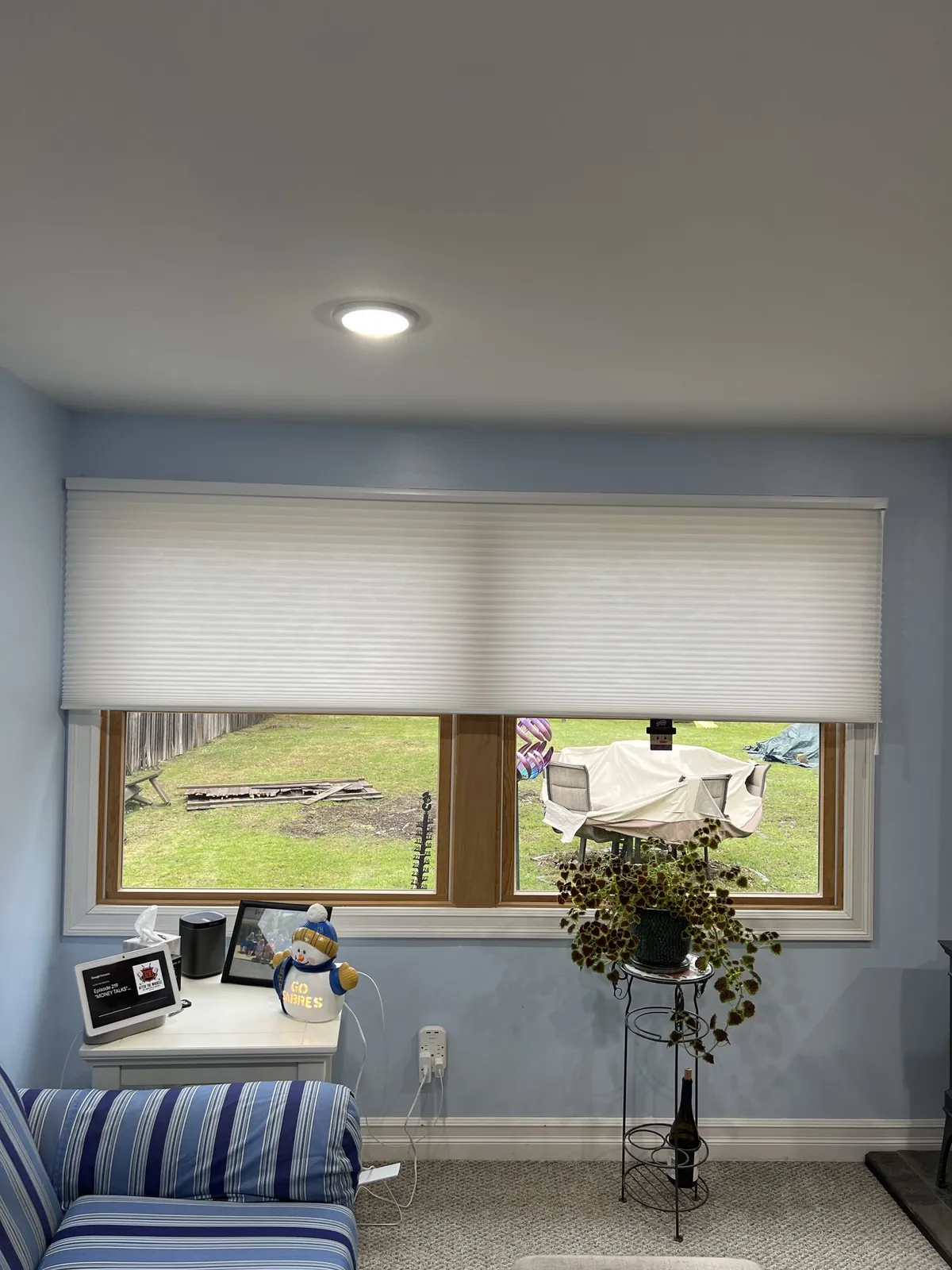
Duette honeycomb shades
The broader of the two Hunter Douglas honeycomb lines, with the most fabrics and colors.
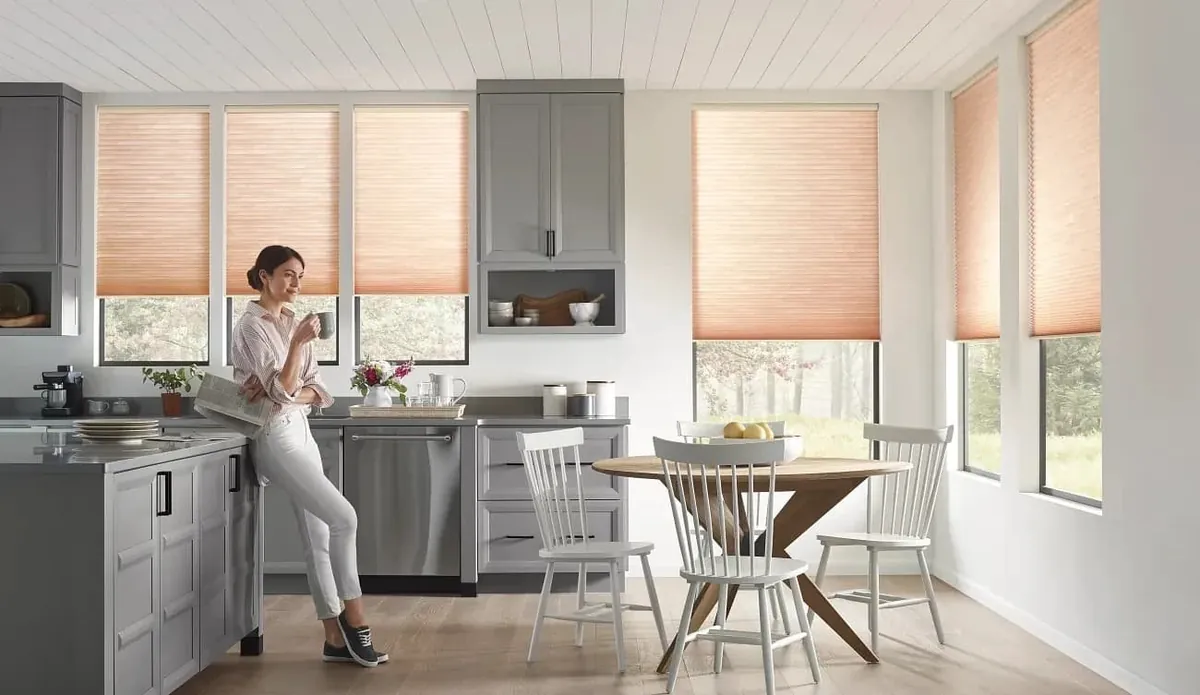
Applause honeycomb shades
A separate honeycomb family with its own palette, well suited to regular, standard-sized windows.
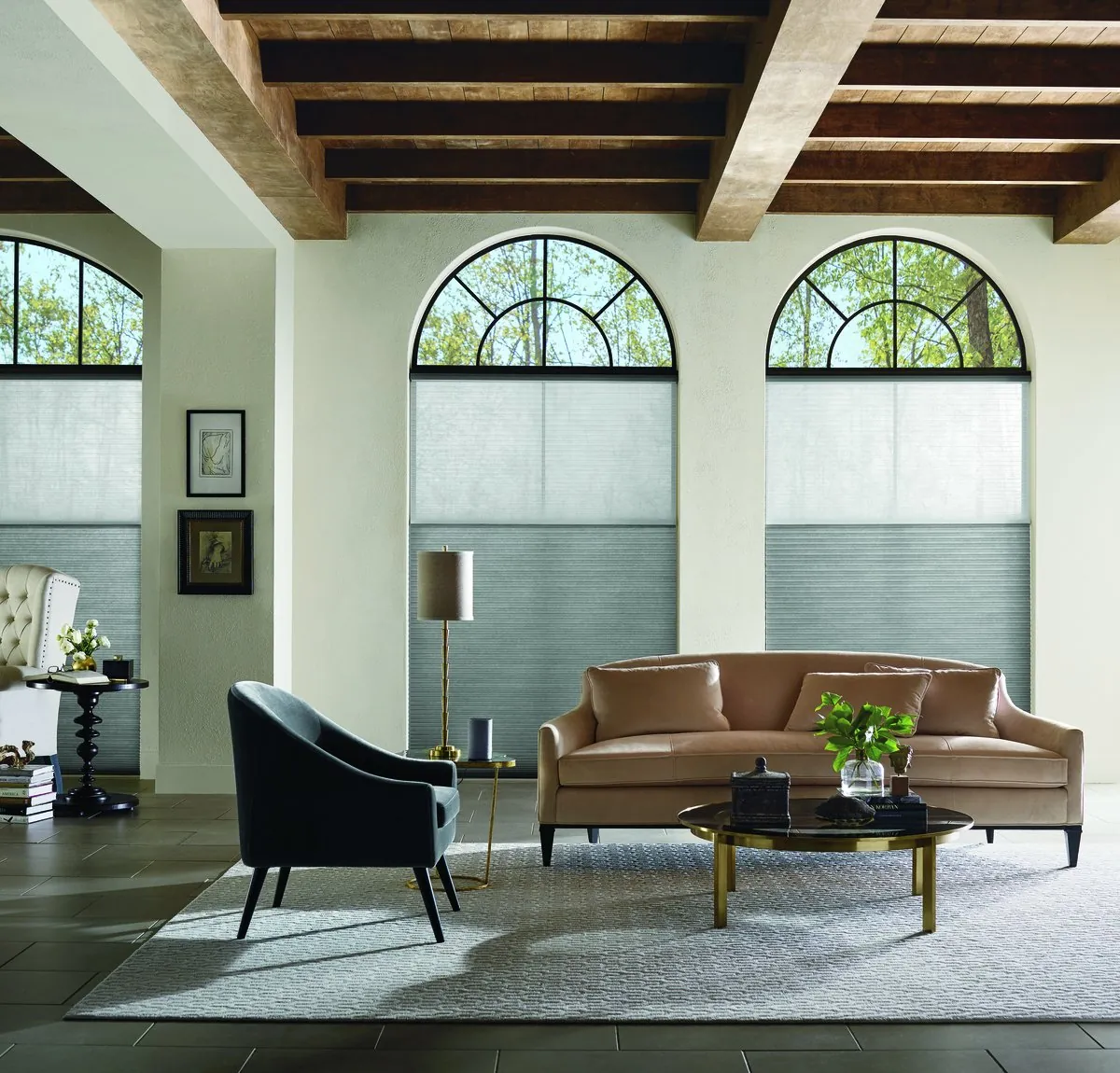
Front-room fabrics
Lighter fabrics glow in daylight and soften the view from the road while the room stays bright.
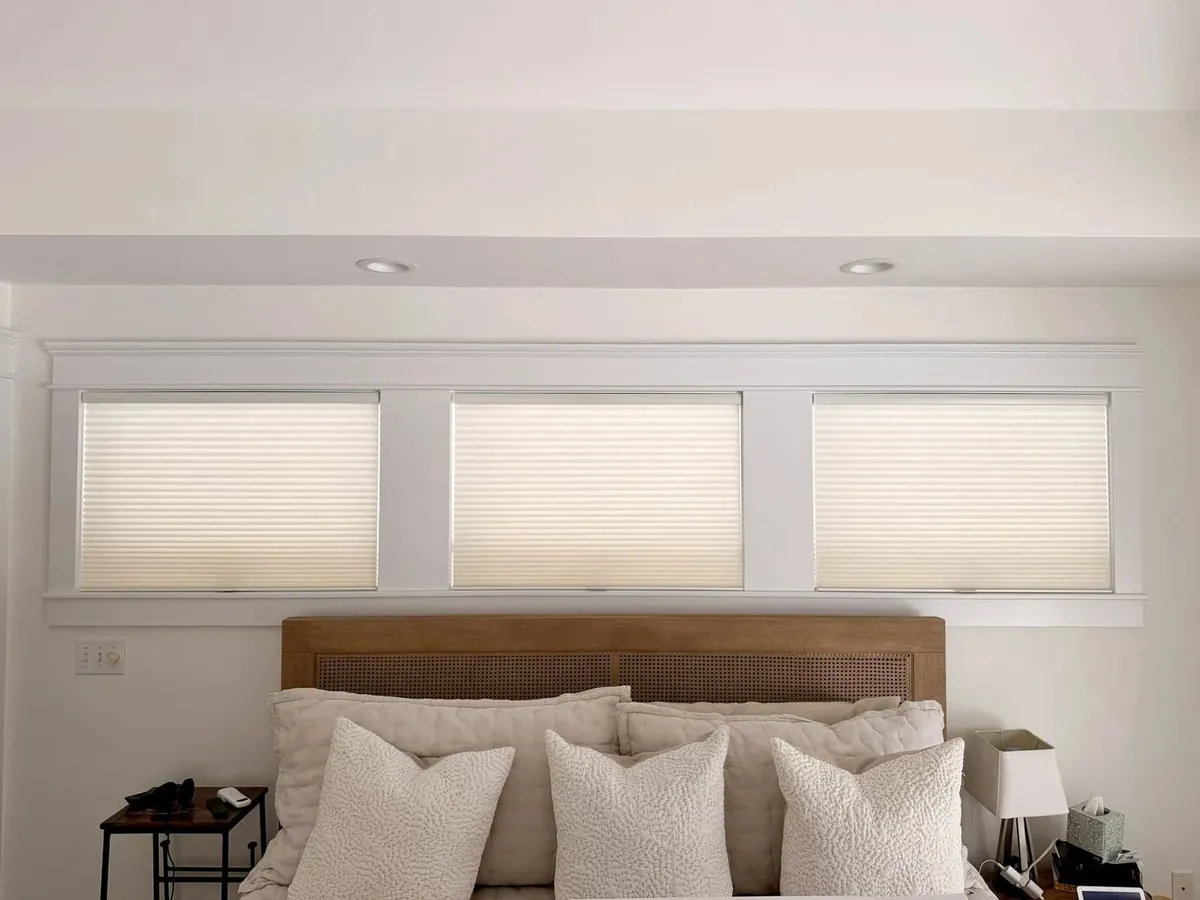
Darker bedroom fabrics
For front bedrooms that catch streetlights and headlights, a denser fabric keeps the room dark.
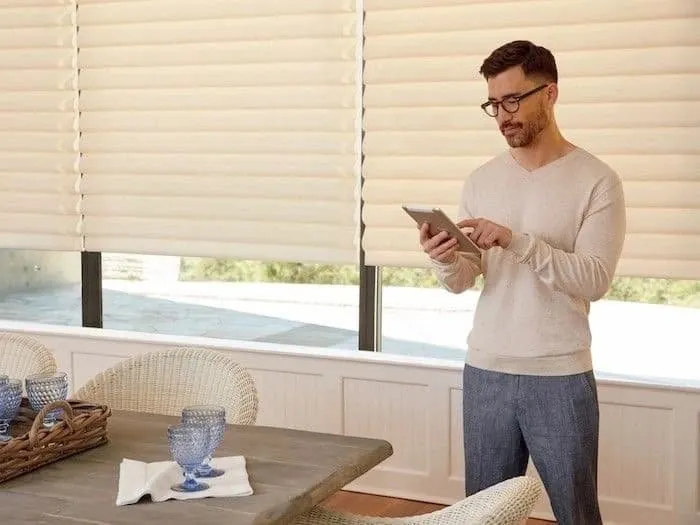
Motorized blinds and shades
PowerView control from a remote, an app or a schedule, for stair windows and whole-house routines.

Interior design consultations
Interior design consultations for color and fabric across a room, at the same visit.
Short setbacks and the front room
In a house set close to the road, the front room is on display. During the day the street is brighter than the room, so passers-by see little. Once evening comes and the lamps go on, the balance tips the other way, and a bare front window shows everything inside. That is usually the moment a Rockland cape or ranch gets its first call about shades.
A honeycomb shade solves it without making the room feel shut. In daylight, a lighter fabric lets the sun through as a soft glow, so the room stays bright and the view in is blurred. In the evening, the same shade lowered fully gives you a screen from the street. For rooms used mostly after dark, a slightly heavier fabric holds that privacy better with the lights on.
There is also the matter of how the house looks from the road. On a short setback the front windows are the face of the house. Choosing one pale color for every front-facing shade keeps that face tidy, and the shades read as part of the house rather than a patchwork of different coverings.
Headlights, streetlights and the bedroom at the front
Many Rockland ranches put a bedroom at the front corner of the house, and capes often have one at the front on the ground floor. Those rooms catch every car that turns into the street at night and the glow of any streetlight nearby. A light-filtering fabric that is perfect for a living room lets too much of that through for sleep.
For these bedrooms we bring room-darkening honeycomb fabrics. They still hold air in their pockets, so the room stays warmer, but the fabric itself blocks the light. Mounting makes a difference too. A shade inside the window frame leaves a narrow gap at each side, and a car’s headlights can find it. A shade mounted just outside the frame, overlapping the edges, closes that gap. On a front bedroom close to the road, that small choice is often what makes the room properly dark.
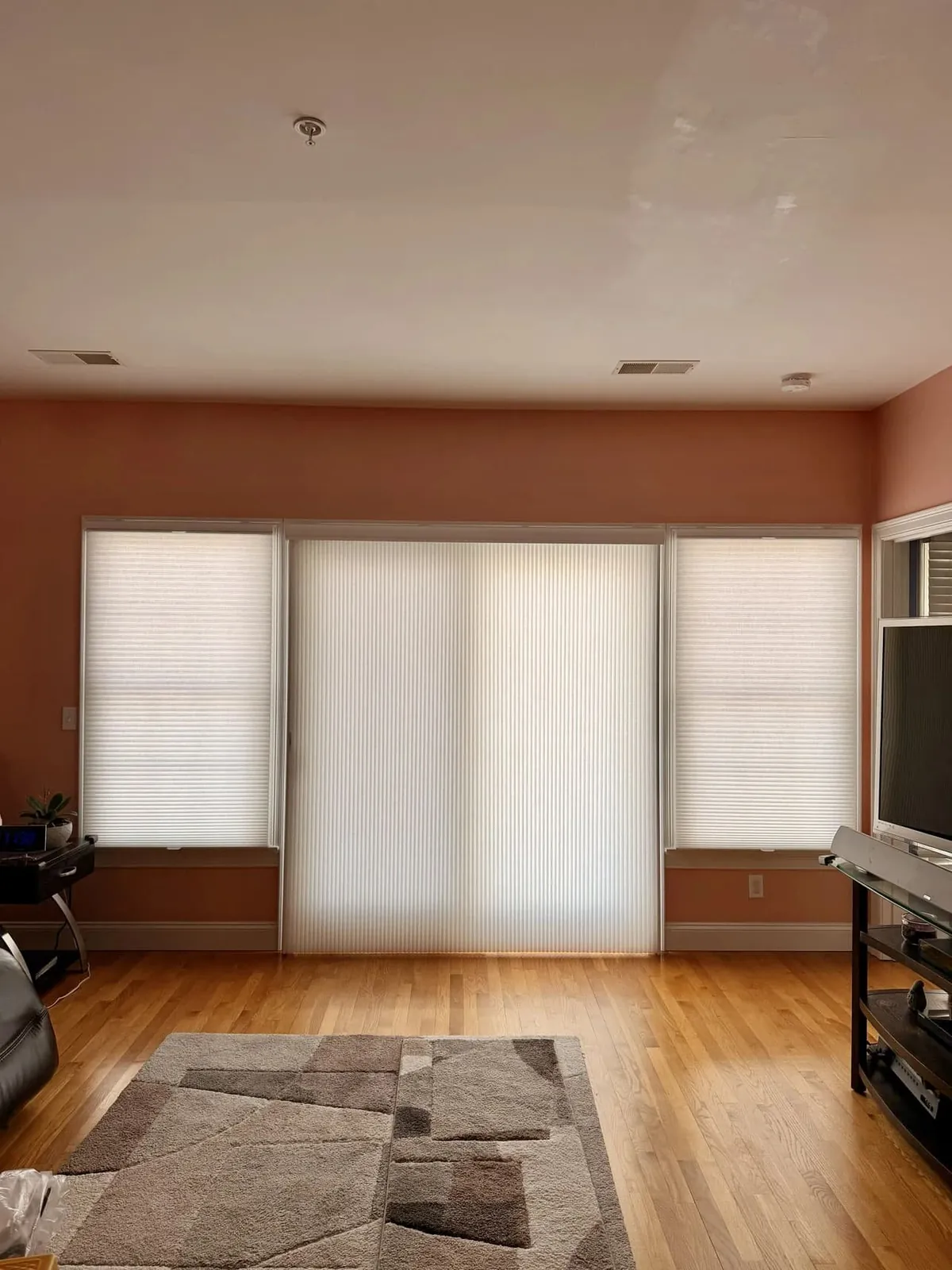
Capes and ranches: the same window, over and over
One of the pleasures of fitting a Rockland cape or ranch is the regularity. Builders used the same few window sizes again and again, so a ranch might have four or five identical bedroom windows and a matching pair in the kitchen. Capes repeat their front windows on either side of the door and their dormers upstairs.
That makes honeycomb shades a natural fit. Matching windows get matching shades, sitting at the same height, in the same fabric, so the house looks consistent inside and out. It also makes it easy to do the house in stages. Measure every window once, order the coldest rooms or the front rooms first, and add the rest later knowing they will match.
Standard does not mean we skip the measuring, though. Replacement windows often have shallow frames, with locks and tilt latches close to the front. We check the depth of each window so that an inside mount clears the hardware, and where it will not, we mount the shade just above the opening. Even two windows that look identical can differ slightly, and each shade is made to its own opening.
Newer colonials off Union Street
The colonials off Union Street are larger and newer than the capes and ranches that make up most of Rockland. They usually have two full floors, more windows on every side, a family room at the back with a slider or French doors, and a stair with a window on the landing.
More windows means a bigger plan, and it is here that the choice of cellular shades in Rockland, MA, often becomes a whole-house project. Bedrooms upstairs take darker fabrics for sleep. The family room takes a lighter fabric so the room stays bright. The slider needs a covering that leaves the door easy to use, which we plan around how you come and go. The stair landing window, often awkward to reach over the stairs, is a good candidate for motorization.
Even in a newer house, the setback is often short, so the front rooms of a colonial face the same privacy question as a cape. And with two floors of bedrooms over a family room, comfort varies a lot from top to bottom: upstairs runs warmer in summer, downstairs cooler in winter. Honeycomb shades help even that out.
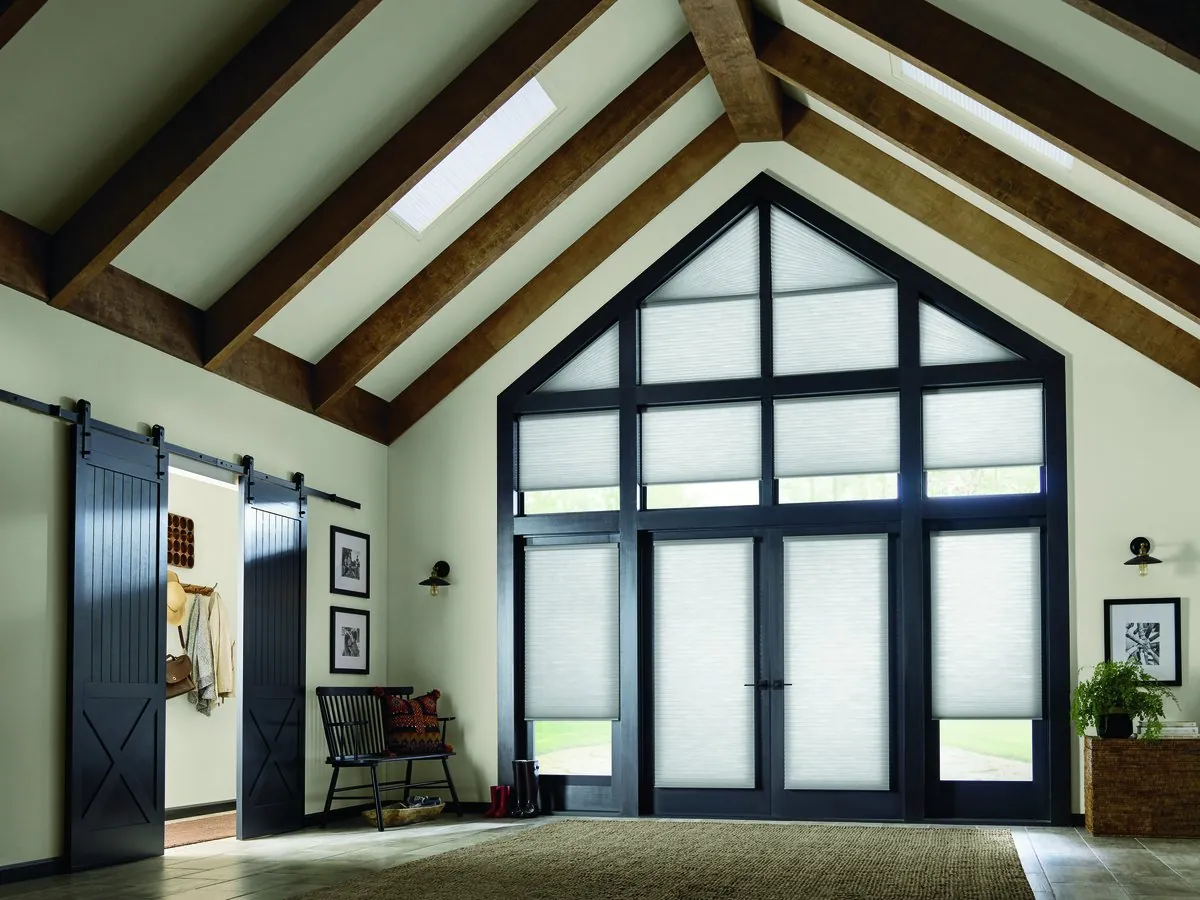
Air in a pocket: why the room stays warmer
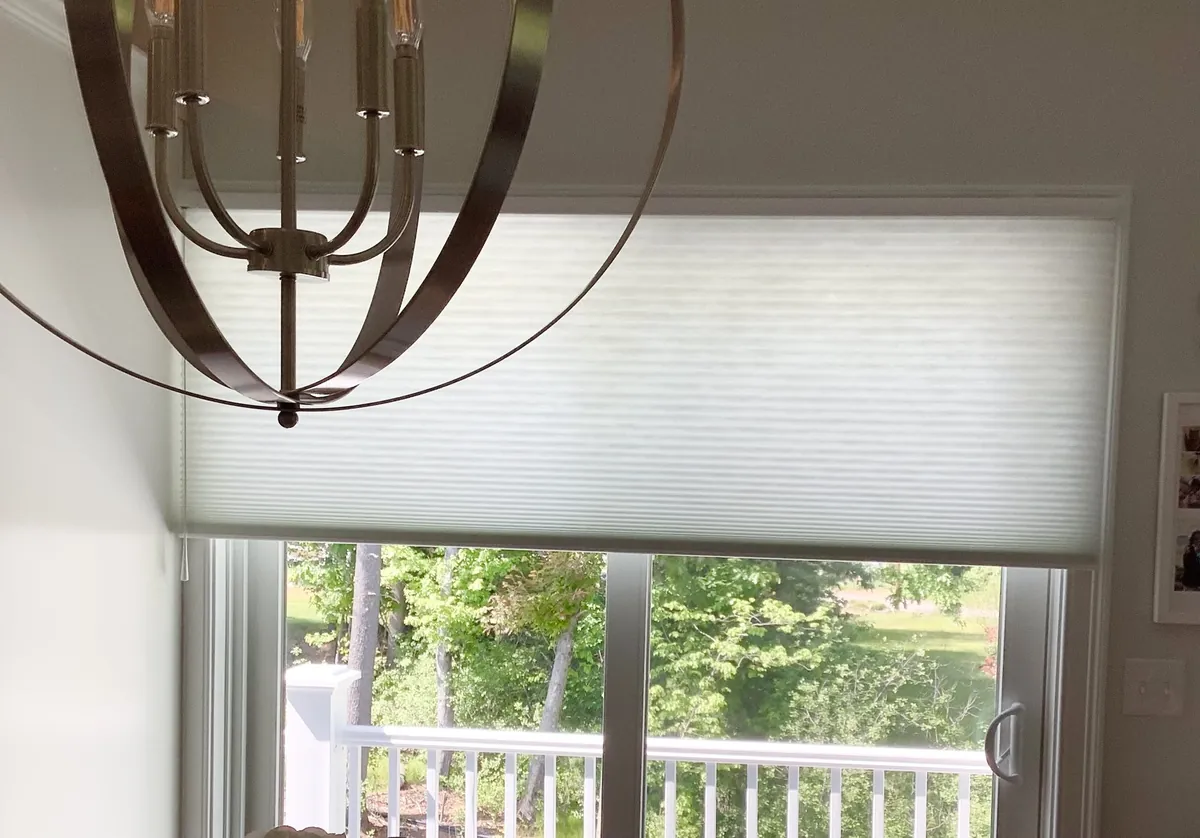
Look at a honeycomb shade from the side and you see a row of six-sided pockets, like a slice through the comb in a hive. Lower the shade and every pocket holds a tube of air that has nowhere to go. That still air is a poor conductor of heat.
On a cold night, it slows the warmth in the room from reaching the glass, and slows the cold off the glass from reaching you. In a ranch with a long run of windows along one wall, or a colonial with glass on every side of a corner room, it is easy to feel. In summer the effect reverses: lowered on the sunny side through the afternoon, the shade slows the sun’s heat coming in, and a lighter fabric keeps the room bright while it does.
That is why we usually suggest starting with the coldest and brightest rooms. A north bedroom that never warms up, or a south living room that overheats by mid-afternoon, is where the change shows first.
The back of the house: kitchens, family rooms and sliders
Short setbacks put the road at the front, but most daily life in a Rockland house happens at the back. The kitchen usually looks onto the yard, a ranch often has its family room or dining area opening onto a deck, and the newer colonials put a family room across the back with a slider or French doors.
These rooms want light above all. The back of the house is where you eat breakfast, where the children do homework, where you watch the yard. Privacy is usually less pressing here than at the front, so the fabrics can be lighter, chosen to soften glare rather than to hide the room. On a south-facing back wall, though, the afternoon sun can make a kitchen or family room uncomfortable by late day, and a honeycomb shade lowered for those hours keeps the heat down without turning the room dark.
The window over the kitchen sink deserves its own thought. It is often hard to reach across the counter, and it is the window you look out of most. A shade sized precisely to that opening, mounted where it will not catch on the faucet, makes it easy to live with. For the back door, we look at which way it swings and how often it gets used before suggesting anything, so the covering never gets in the way. Planning cellular shades in Rockland, MA, for the back of the house is mostly about keeping these busy rooms bright, comfortable and easy to use.
Doing the whole house, or one room at a time
Some people want every window covered at once. Others want to start with the two rooms that bother them most and see how they like it. Both work well in a Rockland house, because the regular window sizes make it easy to match later.
If you are doing the whole house, the visit simply takes a little longer. We go room by room, note which way each faces and how it is used, and you pick fabrics for each. If you are starting small, we still measure every window you might want done later, so that the next order can match the first in color and height. Either way, the outside of the house can look consistent from the first day, because the front windows are usually the first ones people want done.
There is no right order, but a few patterns come up. Front rooms first, for privacy. Bedrooms first, for sleep. Or the coldest room first, to see what difference the cells make before committing to more. Starting with one room and adding the rest after a winter has shown you the difference is a perfectly sensible way to approach cellular shades in Rockland, MA. Pick the same fabric and color for the later rooms and the new shades sit alongside the first ones as a set, so nothing looks added on. If you are not sure where to begin, tell us what bothers you most about the house in winter and in summer, and we will suggest the two or three rooms where honeycomb shades would make the biggest difference first. You can then decide at your own pace whether the rest of the house follows.
Duette or Applause on standard windows
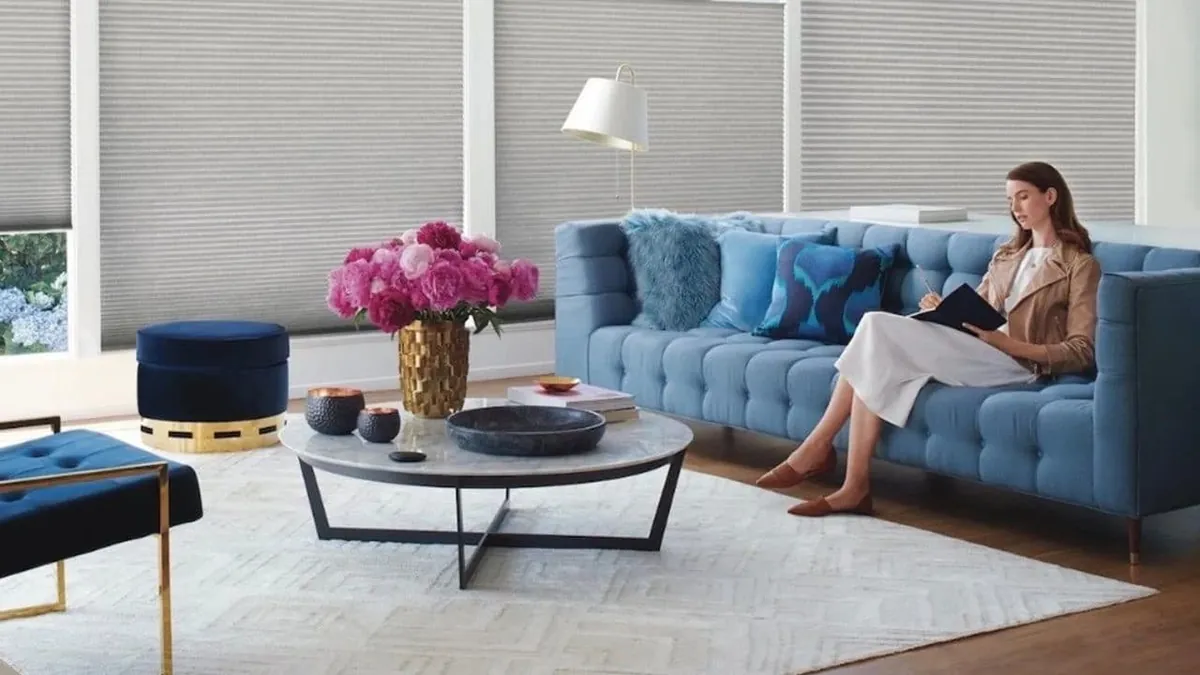
Both are honeycomb shades made by Hunter Douglas, and both hold air in their cells the same way. On Rockland’s standard openings, the choice is usually about fabric and color rather than fit. Duette offers the widest selection. Applause has a palette of its own and covers regular windows very well.
Many houses use both: Duette in the living room where the fabric is on show, Applause in the bedrooms and kitchen. Others pick one line for the whole house so every window matches. The swatches go up on your own windows during the visit so you can compare them in the light you actually live with. The main cellular shades page covers both lines.
How a home visit runs
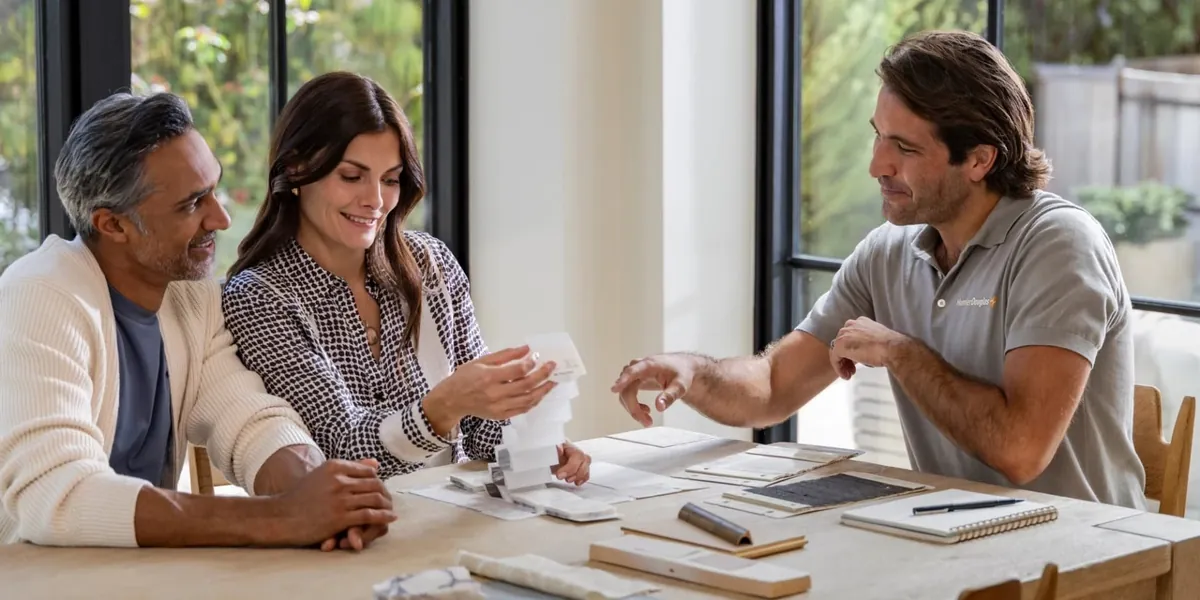
Rockland is served by our shop-at-home team from Canton, so you choose your shades at home, in your own rooms. Our vans carry the samples, so we can bring the showroom to you. A visit usually follows this order:
- Request a consultation online or by the call button, and we set a time.
- A consultant arrives with honeycomb samples across a range of colors and fabric weights.
- We start at the front of the house, where the road is closest, then move to bedrooms and the coldest rooms.
- You compare fabrics at your own windows, in daylight, to see how each one handles your light and your street.
- We measure each window and check frame depth for an inside or outside mount.
- You get a free estimate for the shades you are thinking about. Take as long as you like to decide.
More detail is on our shop-at-home from Canton page and our what happens at an in-home consultation page.
Made to measure, fitted by certified installers
Blinds & Designs is a Hunter Douglas Gallery dealer. Every Duette and Applause fabric is open to you, along with PowerView motorization and the rest of the Hunter Douglas range.
Each shade is made to the measurements we take at your window, then fitted by installers certified by Hunter Douglas. They level each headrail, test every shade and show you how it all works. A shade made to the opening fills it edge to edge, which helps it hold heat and keeps the light from sneaking in at the sides.
If a different window covering suits a room better, we will say so. A bathroom might suit custom blinds in Rockland, a sunroom roller shades in Rockland, a dining room roman shades in Rockland. Everything we do in town is on our Rockland page. We also handle blind and shade repairs on coverings you already own.
Home first, Franklin when you want a store
For a Rockland house close to the road, the best place to choose a shade is at the front window itself, where you can see how a fabric looks with the street outside. That is why the consultation comes to you.
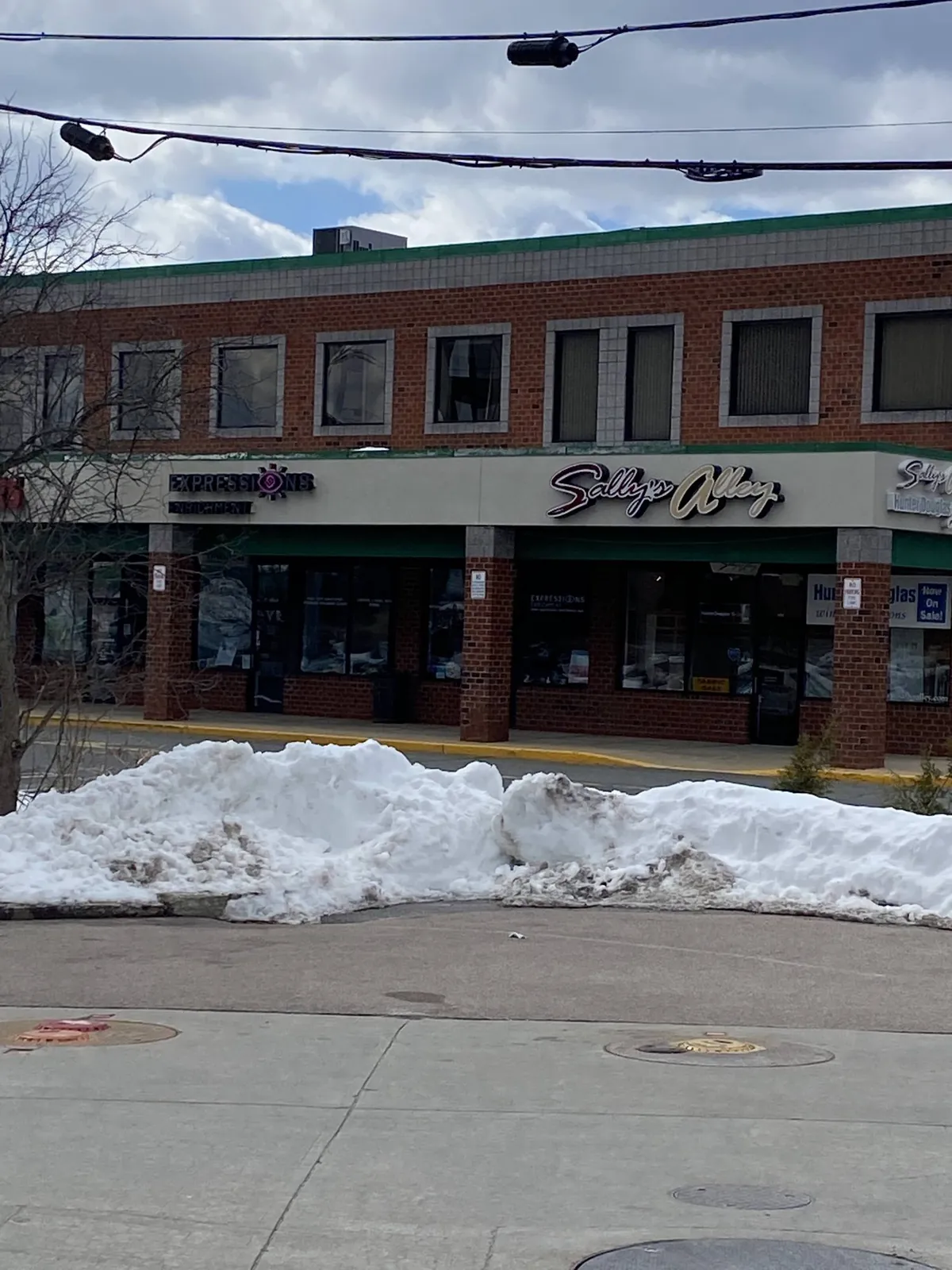
If you would like to look at shades in a store as well, the Franklin showroom is our nearest to Rockland.
Questions from Rockland
My house is close to the road. How do I keep the front room private at night?
Lower a honeycomb shade fully once the lamps are on. For rooms used mostly in the evening, a slightly heavier fabric holds privacy better with the lights on inside, while a lighter one is fine for rooms you use in daylight.
Can you stop headlights coming into a front bedroom?
A room-darkening honeycomb fabric blocks most of the light, and mounting the shade just outside the frame so it overlaps the edges closes the side gaps where headlights get in.
All my windows are the same size. Can I order a few rooms now and the rest later?
Yes. We measure every window at the first visit, so later rooms can be ordered to match in fabric, color and height.
Do newer colonials need anything different?
Mostly more planning, because there are more windows. Upstairs bedrooms often take darker fabrics, the family room a lighter one, and a stair landing window is a good fit for PowerView motorization.
Is there a cost for the estimate?
No. The estimate is free. Request a consultation and we will come to your home with samples and measure.
Let’s look at your windows
The fastest way to settle on cellular shades in Rockland, MA, is a visit at home, where you can see the fabrics against your own windows with the street outside. Request a consultation and we will bring the samples, measure every window and leave you a free estimate. If something needs answering first, the call button is right there.