
River houses below, hillside capes above
Blackstone is a town of two levels. Down by the river, mill-era houses stand close together on the old village streets, many still carrying their original narrow window openings. Up the hillsides, post-war capes and ranches look out over the valley from streets that climb steeply away from the water. A Hunter Douglas dealer in Blackstone, MA has to plan for both, and for the way the slope changes what each window needs.
Steep streets do something flat towns do not. A house on the lower side of a road can have its front windows at the eye level of anyone walking past above, while a house on the upper side looks down over its neighbors’ roofs and into their yards. So a window’s privacy depends not only on how close the next house is, but on whether the view in comes from above, below or straight across.
The mill houses add their own constraint: tight spacing and slim frames, where a covering has to fit a narrow opening and still give privacy from a house only a few steps away.
What we bring to a Blackstone house
Every family of Hunter Douglas products is open to you when you work with a Hunter Douglas dealer in Blackstone. The cards link to the Blackstone page for each one.
Blinds, made to measure
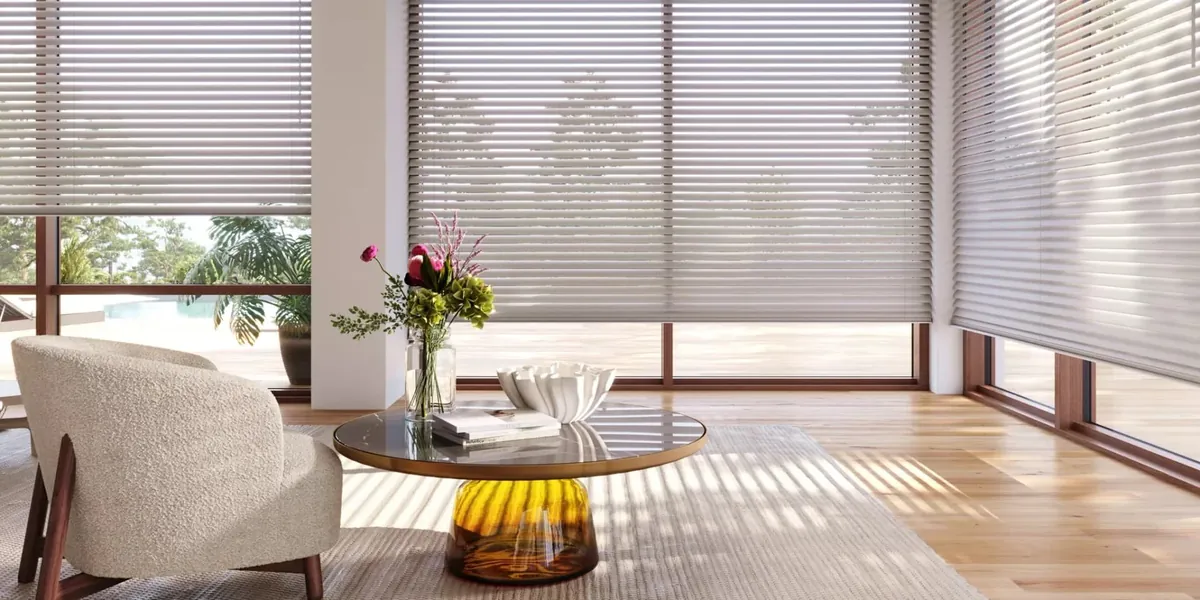
Custom blinds in wood, faux wood, metal and vertical styles, picked by material and by how you like to tilt and raise them.
Honeycomb cellular shades
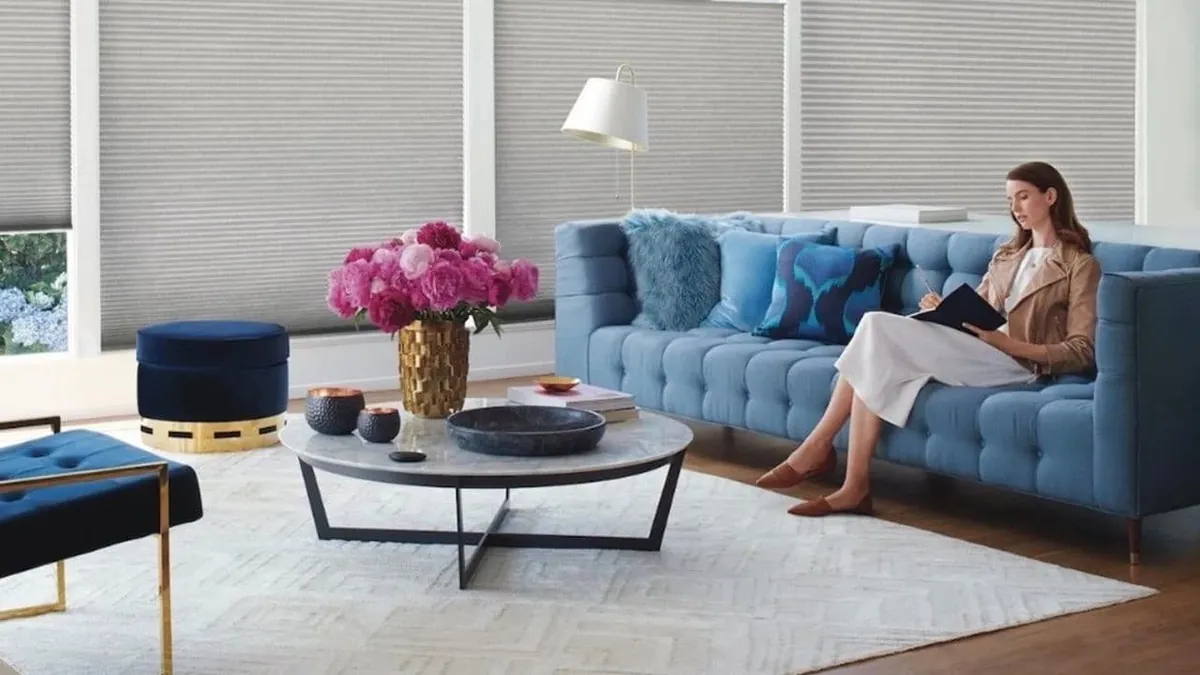
Duette and Applause cellular shades. Air held in the cells is the reason a room with them stays warmer after dark.
Roller and screen shades
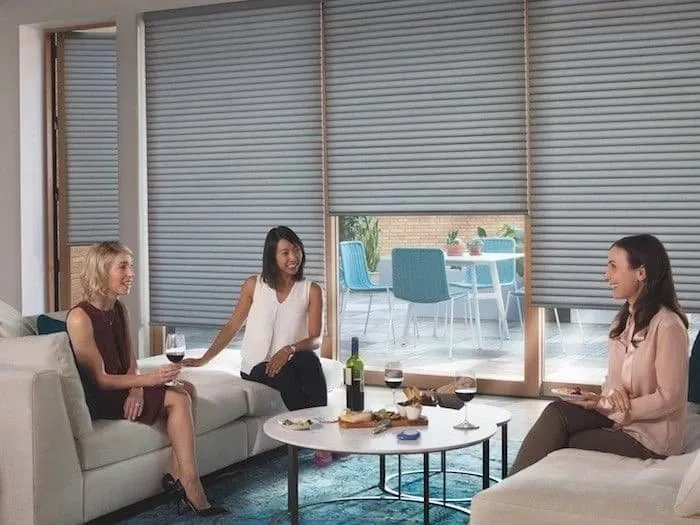
Designer and Alustra roller shades and solar screens. The fabric’s openness decides how much of the valley view stays and how much glare goes.
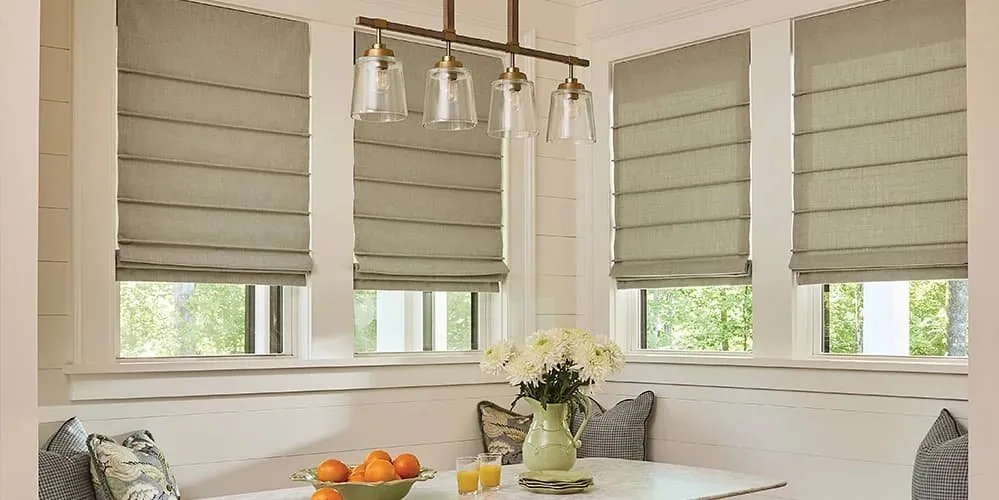
Fabric Roman shades
Vignette and Carole Roman shades, in flat or folded styles, for rooms that want the softness of fabric.
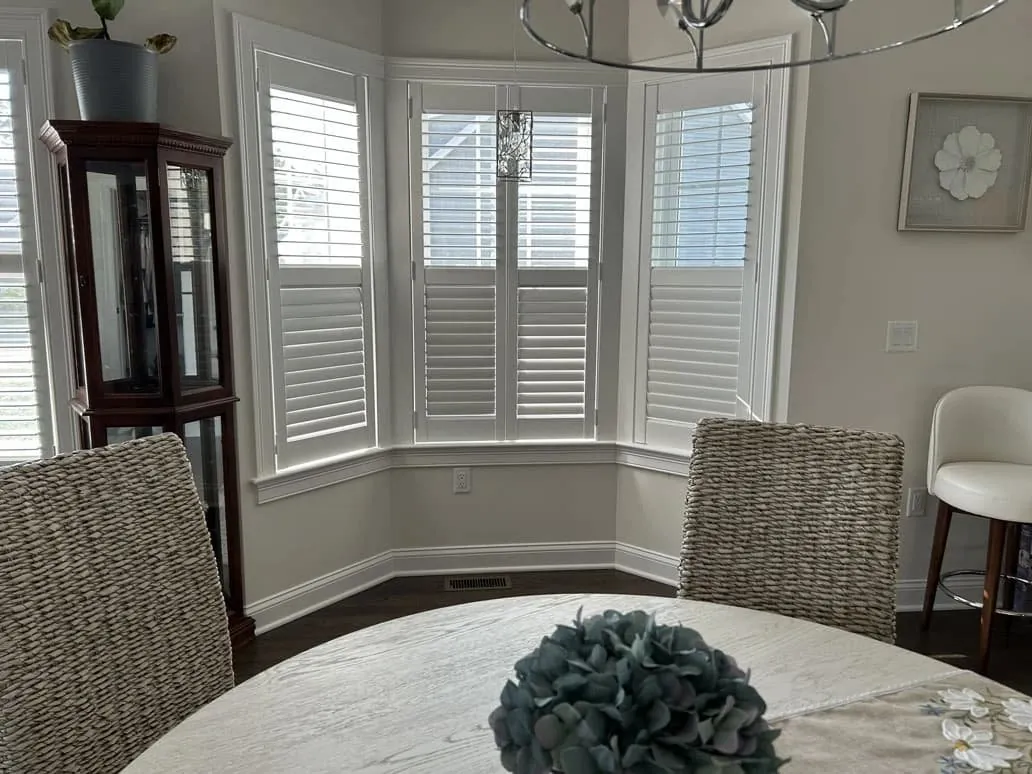
Plantation shutters
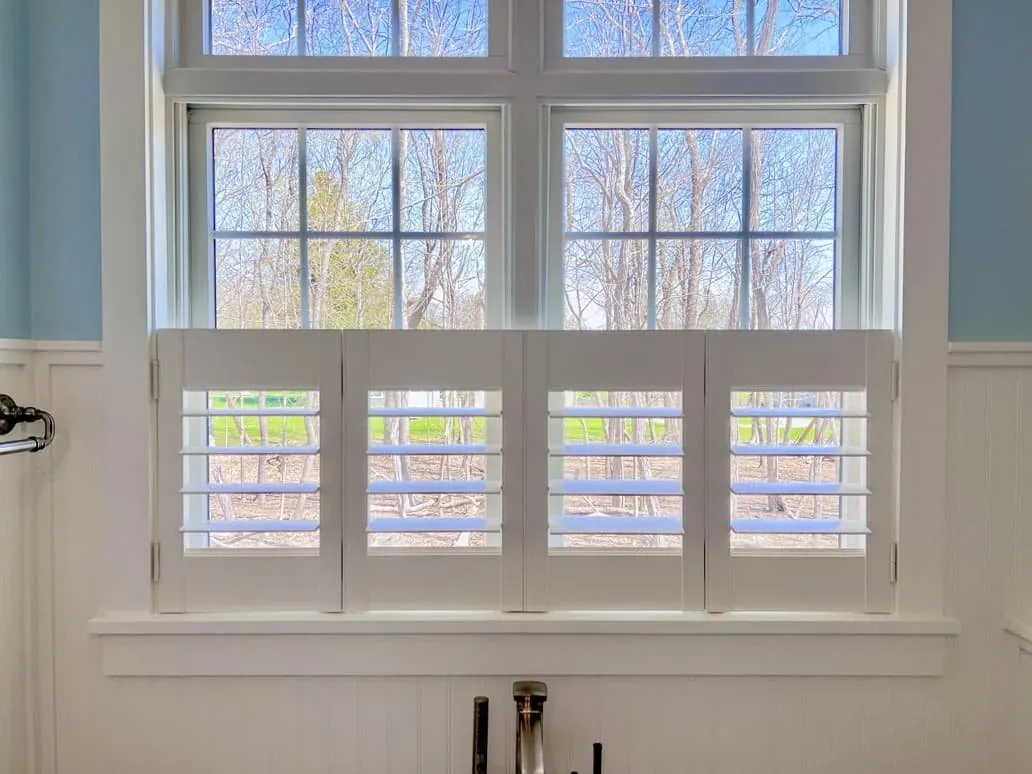
Palm Beach, NewStyle and Heritance shutters, with the louver size and frame style chosen for each opening.
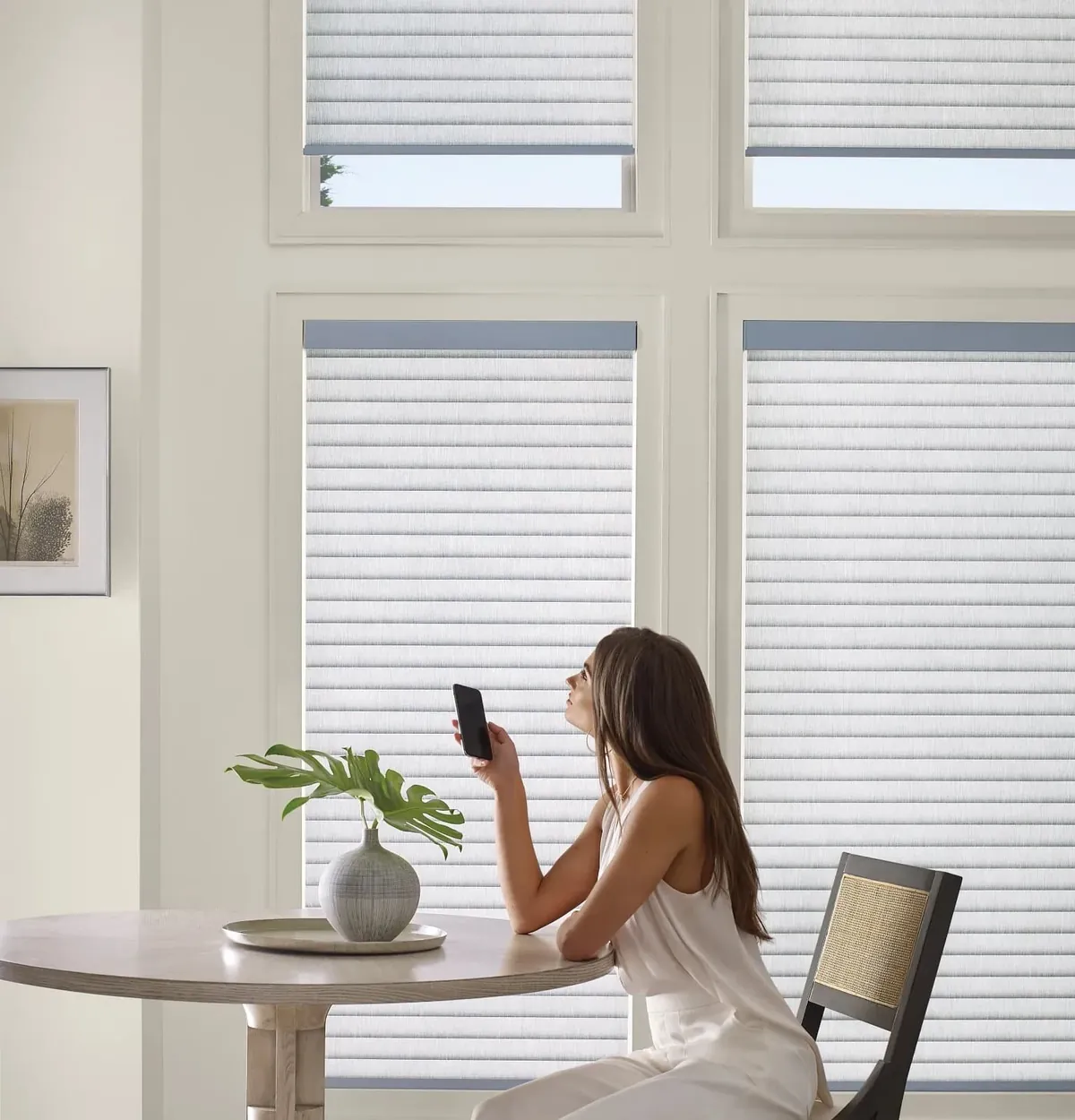
Motorized shades and blinds
PowerView automation: a remote, an app on your phone and schedules that move your shades for you.
When the street is higher than your window
On a hillside road, the houses on the downhill side often sit below the pavement. Their front windows face a sidewalk that runs at the height of the upper sash, or higher, so anyone passing looks down into the room. Covering the bottom half of a window, which works on a flat street, does little here, because the view in comes over the top.
That changes the advice. A covering that controls the angle of sight helps most. Shutters are a strong choice: tilt the louvers upward and the view from above is blocked while light still comes in from below. Blinds work in a similar way, and a blind tilted to face up keeps a downhill front room private from the sidewalk. A light-filtering fabric shade across the whole window gives daytime privacy from any angle, and a room-darkening one closes the room at night.
Each house is different, so as a Hunter Douglas dealer in Blackstone we stand at your window and look out before we suggest anything. Where the sightline comes from tells us more than the size of the frame.
When you look down over the neighbors
Houses on the uphill side have the opposite problem. Their windows look out over lower roofs and into the backyards below, and on a clear day across the valley. Privacy from the street is easier, but the neighbors below can see up into lit rooms after dark, and the view brings plenty of sky and sun with it.
For these rooms, a solar screen or Designer Screen shade keeps the view while taking the edge off the glare, and the openness you choose sets the balance. In the evening, when a lit room shows from below, a light-filtering or room-darkening fabric closes the window. Many uphill living rooms get a mix: screen shades on the view side, softer fabric on the side windows facing the house next door.
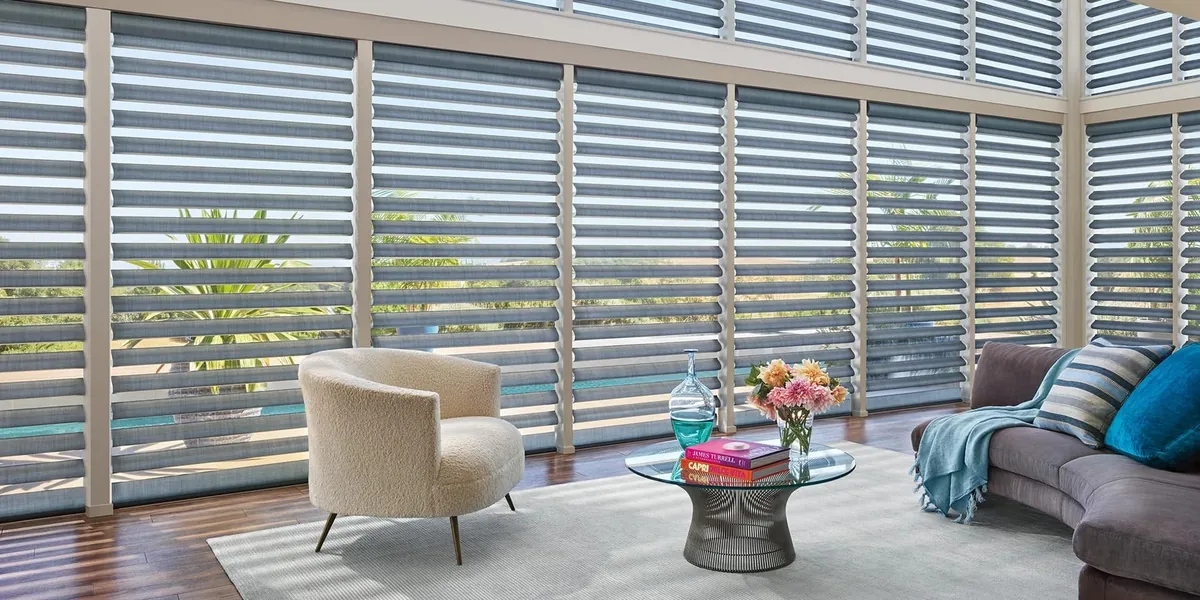
Original narrow openings by the river
Down on the river streets, the mill-era houses still have plenty of their first window openings: slim, upright frames that have shifted along with the house over the years. A narrow frame forgives nothing, so a quick width and height will not do.
We check each one at several heights and several points across, because the top of an old opening is often wider or narrower than the bottom. We note how much depth there is in front of the glass and whether a latch or a sash lift juts out far enough to block a bracket. Only then do we say whether the covering goes inside the frame, where the old woodwork stays visible, or across the face of the casing, where it has more room and makes a skinny window look broader.
Side windows on the river streets
On the river streets the houses stand shoulder to shoulder, and on a slope that can mean the neighbor’s side window is a little above or below yours rather than straight across. A covering that only hides the lower half of the glass may miss the angle entirely.
Fabric that covers the whole window answers that from any height. A light-filtering honeycomb, or a sheer such as Pirouette, keeps daylight coming in while turning the view across the gap into a blur. Where you would rather keep the glass partly open, shutters can be angled to suit whichever direction the neighbor’s window sits. In a bedroom, a room-darkening fabric keeps out the light from next door after dark.
How the row looks from the road matters too. On a river street, matching coverings across the front windows let a plain mill house keep its plain, tidy face.
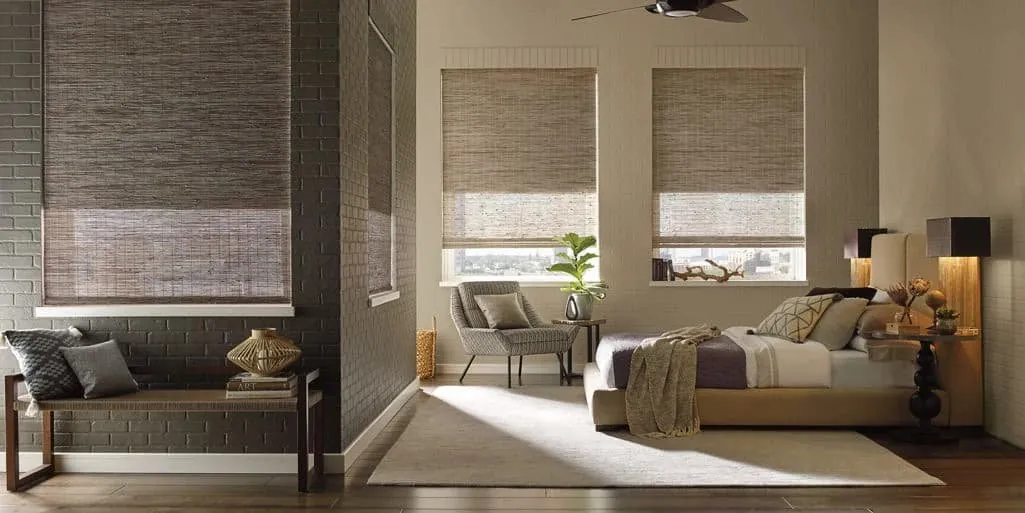
Rear windows that face the river
Some of the mill-era houses back onto the river itself, and their rear windows look out over the water. Those are often the nicest windows in the house, with an outlook you would not want to cover, and on a bright day the water bounces light back into the rooms.
A screen fabric is usually the answer there, keeping the river in view and softening the reflected glare. The openness you choose decides how much of the outlook stays clear. In the evening, the far bank and any path along the river can see into lit rooms, so a light-filtering or room-darkening shade lowered at dusk keeps the house private.
Capes on the hillsides
Up the hill, the post-war capes are built to a pattern most of us know: a window either side of the front door and two dormers in the roof above. On a steep street, the trouble is that those dormers can end up level with the pavement on the road above, putting the upstairs bedrooms in plain view.
A honeycomb shade set into the dormer recess is the usual fix. Chosen in a room-darkening fabric, it shuts the room off from the road at night, and the air in its cells helps a bedroom under the roof stay warmer on a cold night. Shutters are possible in a dormer too, but only when the recess is deep enough for the panels to open without hitting a sloped ceiling, which we measure on the day.
On the ground floor, the two front windows of a cape benefit from angle control. Blinds or shutters tilted upward keep out a view from the road above while still passing light.
Ranches and their big front windows
The hillside ranches are built around one wide front window, and on these streets that window often looks straight out over the valley. It is the best thing in the room and also the source of most of its glare.
A Designer Screen shade lets you keep the outlook and lose the brightness, and its openness decides how much of each. A wide picture window can be split into two or three shades on one headrail so each section moves independently. Round the back, the slider to the deck needs a covering that draws to one side, and we bring a few different styles of that so you can see them on your own door.
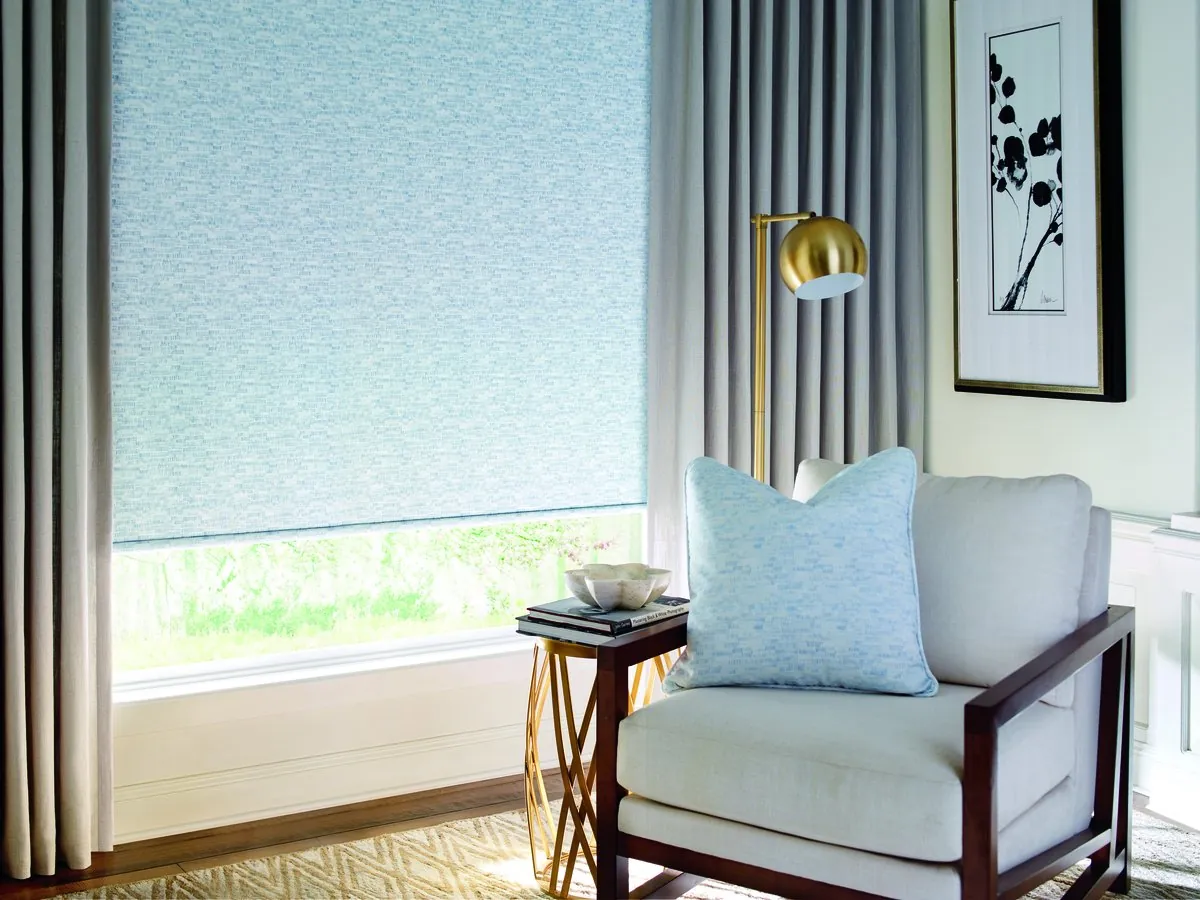
A first visit at your house
Working with a Hunter Douglas dealer in Blackstone usually means choosing in your own rooms, because on a slope the sightlines can only be judged by standing at the glass. The van brings samples from the whole Hunter Douglas range, so the showroom comes up the hill to you.
- Book through Request a Consultation, or use the call button to talk to the Franklin showroom.
- We pick a time together and bring samples suited to each room on your list.
- At each window we look out with you and work out where the view in comes from: above, below or across.
- You try fabrics, slats and shutter finishes in your own light.
- We measure every opening, giving the narrow river-house frames extra readings.
- You get a free estimate and take whatever time you need.
- Hunter Douglas builds the order to our numbers, and our certified installers fit it.
Our in-home consultations page goes into the first visit, and an interior design consultation is there if you want broader help with color and fabric.
Which side of the valley you are on
A hillside house faces one way across the valley, and that direction decides when the sun arrives. A house looking east gets the light first thing, straight into the bedrooms. A house looking west gets it late in the day, low and bright, straight into the living room.
East-facing bedrooms usually want a room-darkening fabric, so the sun does not set the morning alarm. West-facing living rooms want glare control without losing the view, which is where a screen fabric earns its place. In winter, a honeycomb shade on the side away from the sun helps the room hold on to its heat, since the cells keep a layer of air against the glass.
Automation on a steep lot
PowerView suits the windows that are awkward to get to, like one above a split stair, and the rooms that catch the late sun over the valley, where a schedule can drop the shades before the glare starts and lift them again at dusk.
It runs from a remote, an app or schedules. We plan how each motor is powered at the visit. See motorized blinds in Blackstone and window covering automation for more.
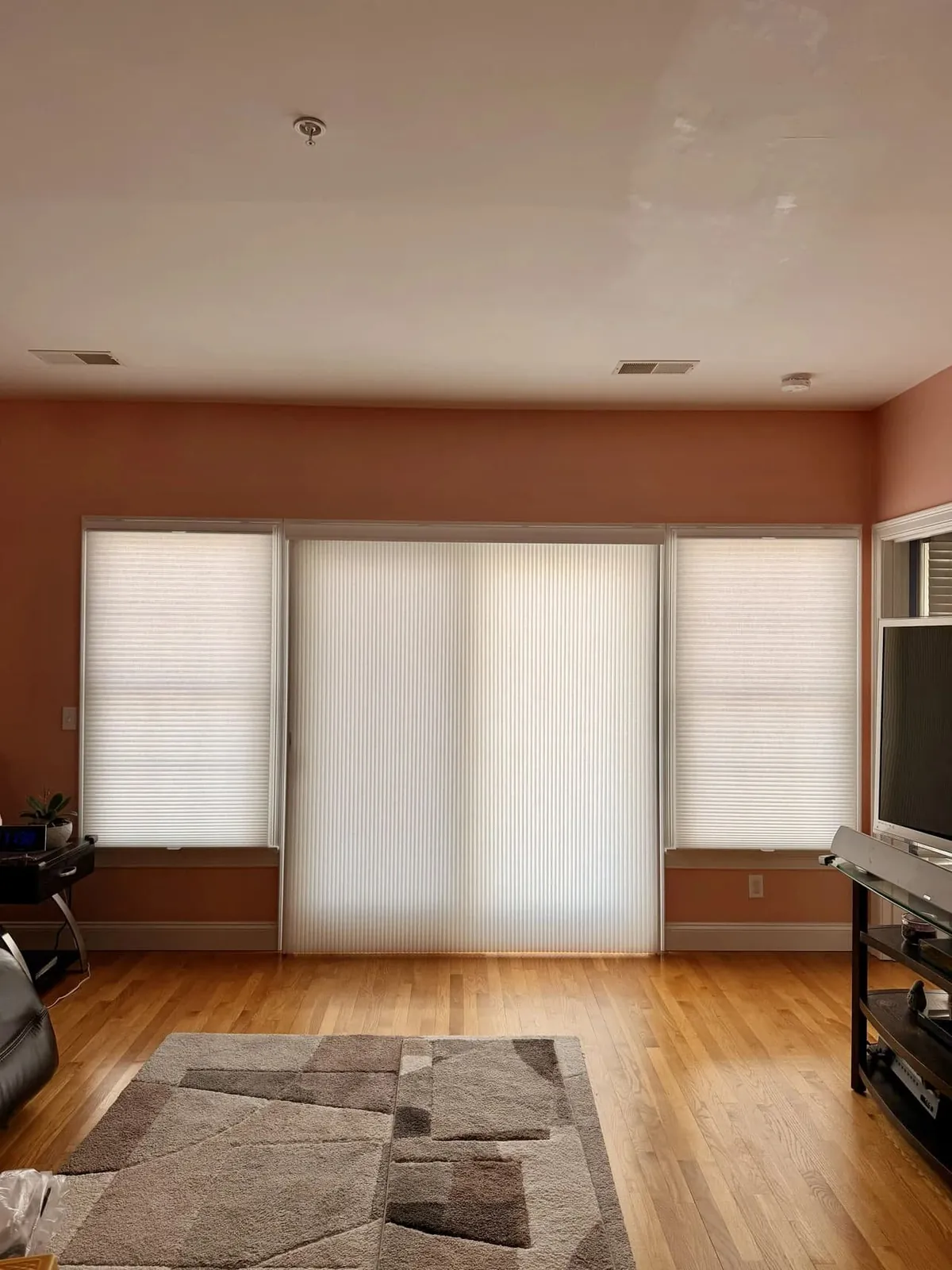
How much light a hillside house really gets
A slope changes daylight as well as privacy. A house on the downhill side of a street sits partly below the road and the houses across it, so its front rooms can get less direct sun than you would expect, and they may need every bit of light the windows let in. A house on the uphill side sits above its surroundings and often gets more sun, and more glare, than a house on flat ground.
That is why we rarely give the same advice on both sides of the same Blackstone street, and why two capes built to the same plan can end up with quite different coverings. A downhill front room usually does better with a light-filtering or sheer fabric that keeps it bright. An uphill living room often needs a screen fabric or a denser shade to tame the sun.
Picking colors for houses seen from above and below
On a sloped street, a house is looked at from the road above, the road below and the yards on either side. So the side of each covering that faces out is on show more than usual.
A pale, even color facing out on every street-side window keeps the house looking calm from any of those angles. The room side is free for whatever you like: a stronger Roman shade fabric in a ranch living room, painted shutters against old river-house trim, a woven wood for texture.
Windows you see from the road below
Houses on the uphill side of a street have one more thing to plan for. Their back and side windows, which feel private from inside, can be in full view from the road further down the hill, particularly at night when the rooms are lit.
Those are easy to forget until the first evening in the house, when someone walking up from the river path can see straight into the kitchen. We walk round and check them at the visit. A light-filtering fabric covers them by day, and a room-darkening one, or shutters closed tight, keeps a lit room out of sight from below after dark.
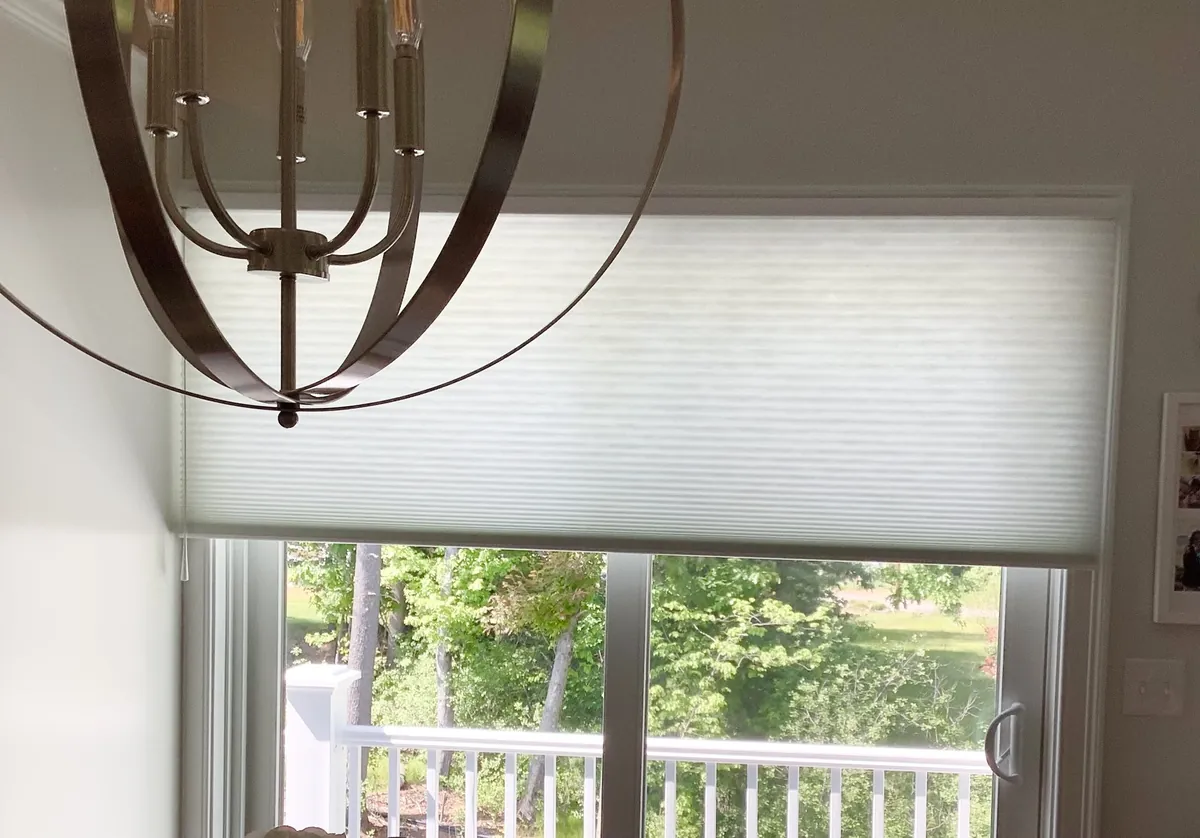
Gallery dealer, certified installers
Blinds & Designs is a Hunter Douglas Gallery dealer, so the whole family comes with us: shades of every kind, blinds in wood, faux wood, metal and vertical styles, the Palm Beach, NewStyle and Heritance shutter lines, drapery and PowerView.
What we sell, our own installers fit, and they carry Hunter Douglas certification. In a river-house opening that has wandered out of square, that means each bracket trued up, every latch cleared and each product tried before the van leaves.
The main Hunter Douglas page says more about the dealer side, and the Hunter Douglas online catalog has the full line-up.
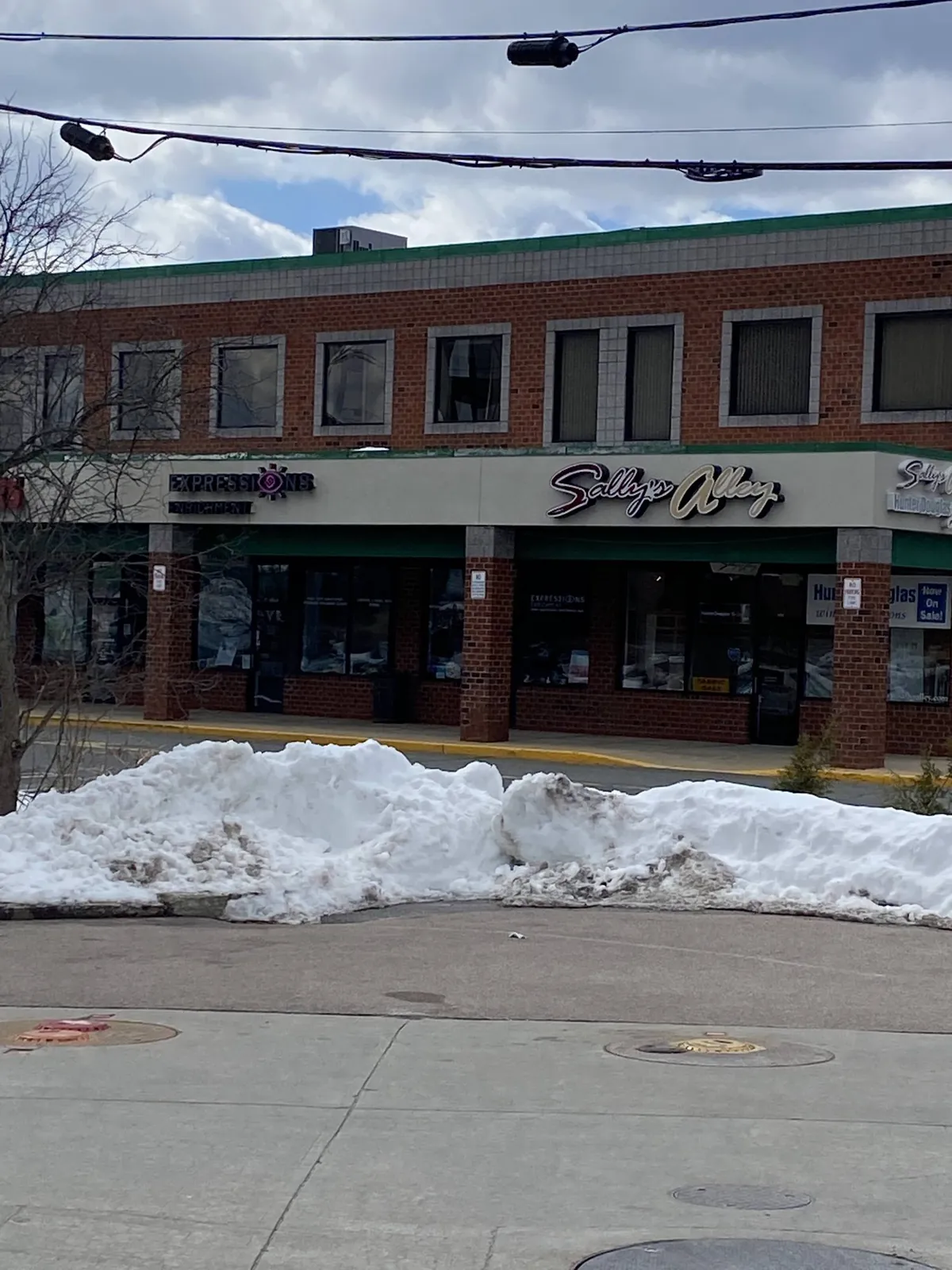
Franklin, our closest showroom
The nearest of our showrooms to Blackstone is in Franklin. Call in if you would like to talk the house over before we drive up.
Choices are still best made on site, where you can see a fabric against your own outlook, whether that is the river street or the valley. Once we have measured, you get a free estimate.
The Franklin showroom page has the address and hours, and the Blackstone page lists everything we offer in town.
Questions from Blackstone
My front windows sit below the sidewalk. How do I keep the room private?
Choose a covering that controls the angle of sight. Shutters or blinds tilted upward block the view from above while letting light in. A light-filtering fabric shade gives privacy from every angle by day.
My hillside ranch looks across the valley. Can I keep the view and lose the glare?
Yes. A solar screen or Designer Screen shade cuts glare and keeps the view. The openness of the fabric sets the balance, and we bring samples to compare at your window.
Will a shade fit the narrow original windows in a river house?
Usually. We measure each frame in several places and check its depth, then suggest an inside or outside mount so the covering fits neatly.
What goes on cape dormers?
Most often a honeycomb shade mounted inside the recess, in a room-darkening fabric for a bedroom. Shutters can work if the recess is deep enough to clear any slope.
What do I pay for the estimate?
Nothing at all. And once you order, our own Hunter Douglas certified installers do the fitting.
Going up or down the hill, start here
Request a consultation with your Hunter Douglas dealer in Blackstone, and we will bring the samples to your door, stand at every window to see what it faces and leave a free estimate behind. If you would rather talk it through first, the call button reaches the Franklin showroom.