
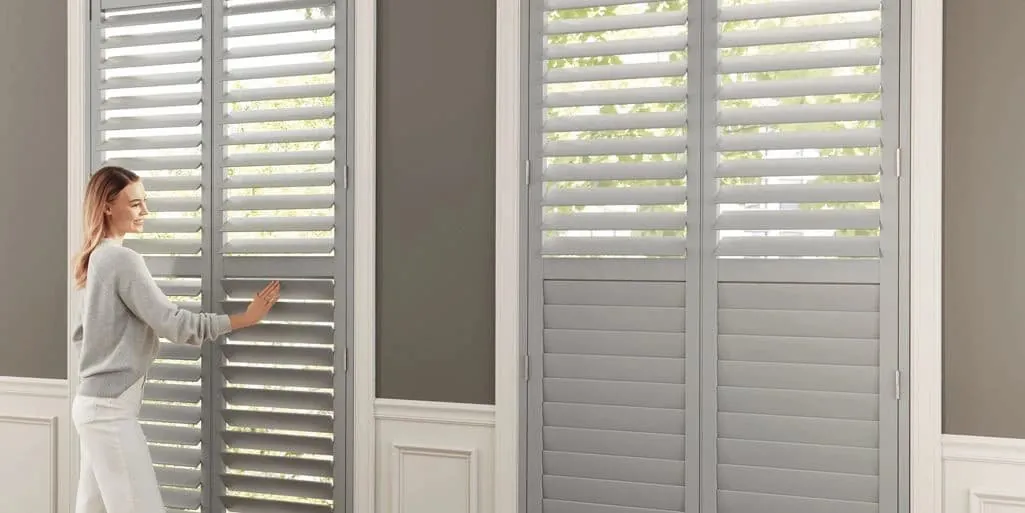
One town, three very different kinds of window
Plymouth covers more ground than any other town in Massachusetts, and its houses vary as much as its landscape. Near the historic center and the waterfront stand antique colonials with small sash set deep into thick walls. In the Pinehills, large newer houses are built around modern glass, including great rooms with windows two stories tall. Between them, across the many villages and neighborhoods, are post-war ranches with a picture window at the front and plain bedroom windows down the side. That is why plantation shutters in Plymouth, MA, never come down to a single recommendation.
A shutter for a deep antique opening needs a slim frame and narrow louvers. A shutter for a wide ranch window wants big louvers that open up the view. And a two-story window may need tall panels split by rails, fixed shapes at the top, or a decision that shutters belong on the lower windows and something else above.
What these houses share is a wish for a covering that lasts, controls light precisely and looks like part of the architecture. Shutters do all three, provided the collection, the louver and the frame are matched to the window in front of you.
The details that make plantation shutters in Plymouth, MA, fit
Beyond the three Hunter Douglas collections, these are the choices that shape a shutter. We bring working examples so you can compare them at your own windows.
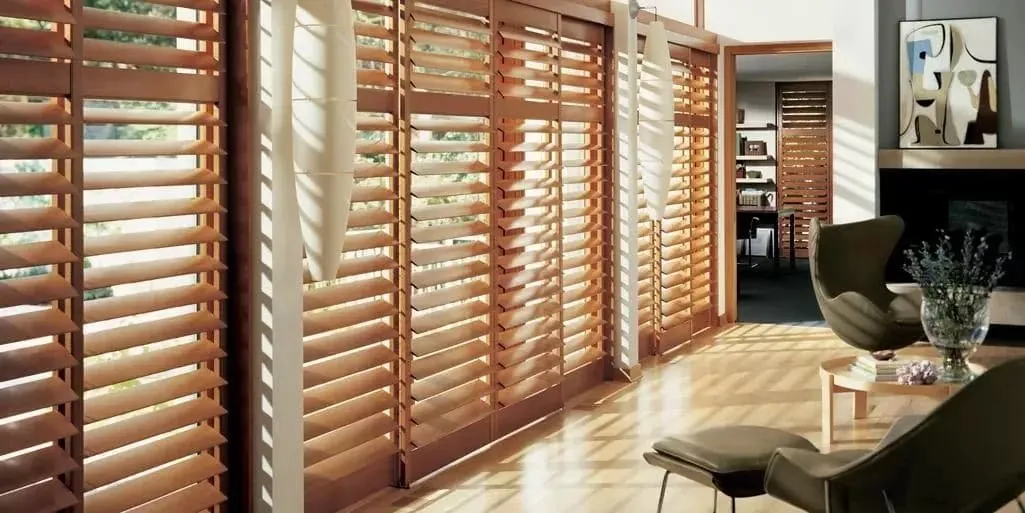
Wide louvers
Fewer slats across the glass, so the view stays open. The usual choice for big ranch windows and modern rooms.
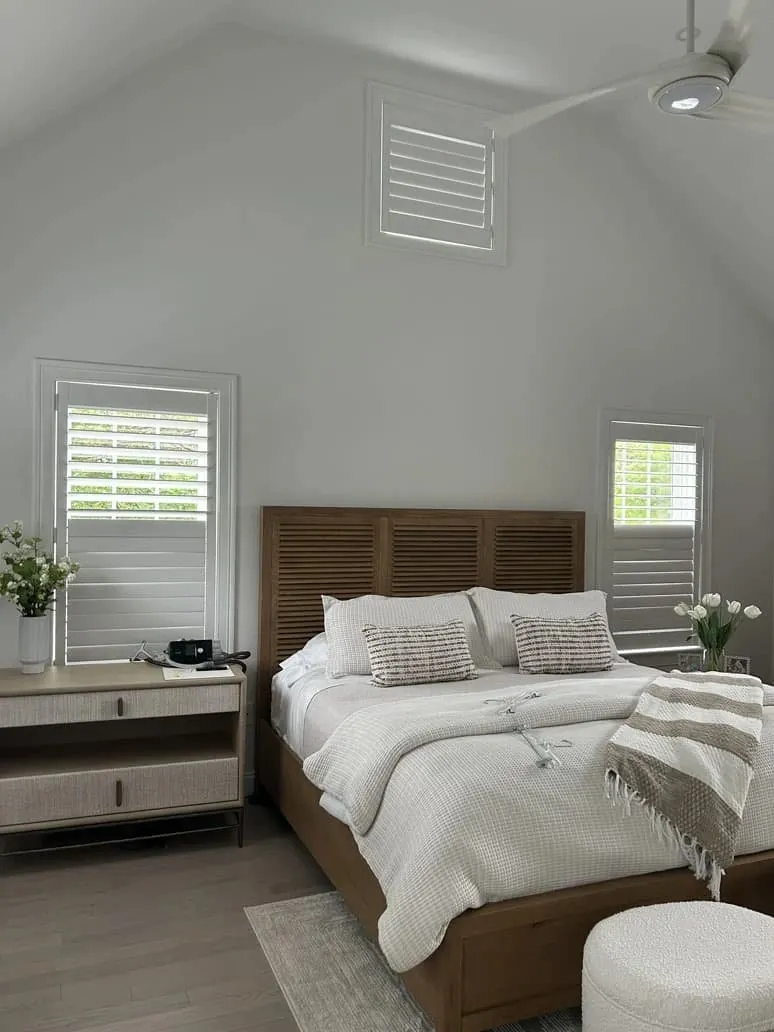
Narrow louvers
In proportion with small sash and traditional rooms, where a wide louver would look oversized.
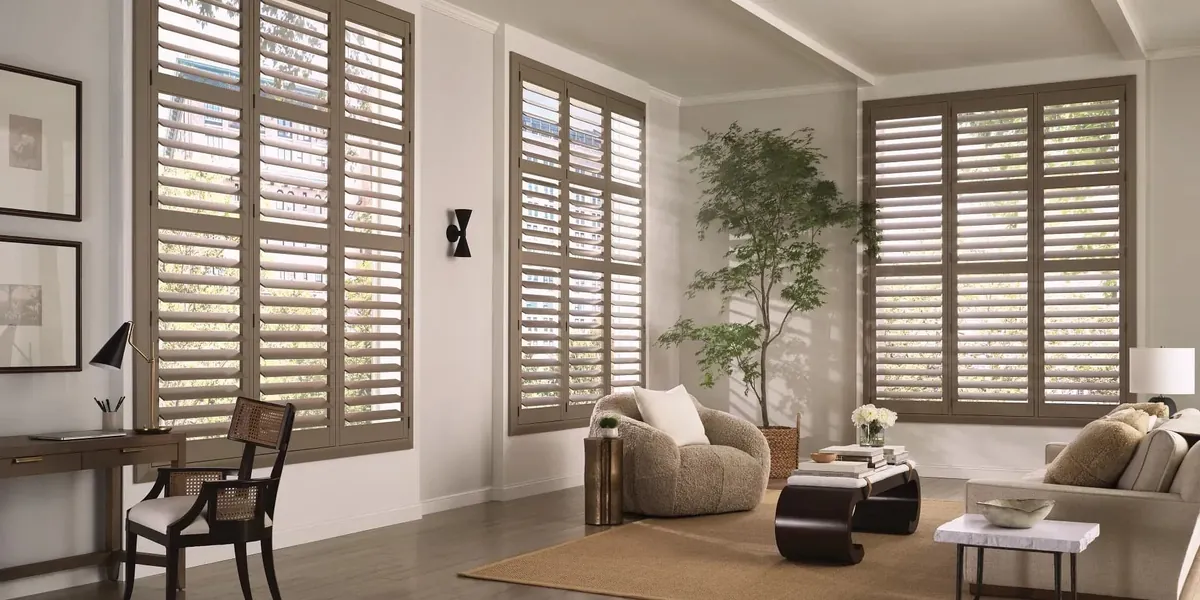
Divider rails
A rail across a tall panel lets the top and bottom louvers tilt separately, so you can screen the lower half and keep the sky.
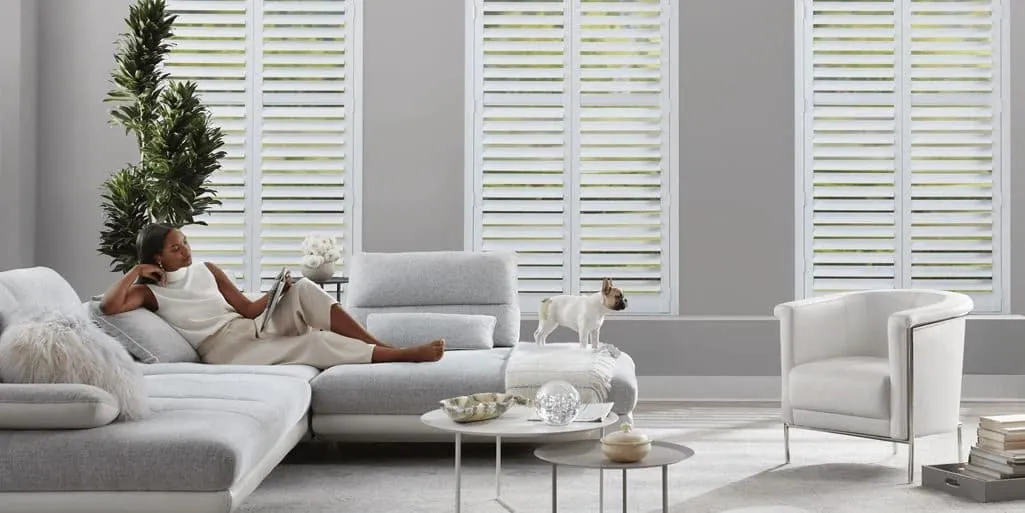
Hidden tilt
The louvers move from a mechanism in the side of the panel, with no rod down the face, for a cleaner look and a tighter close.
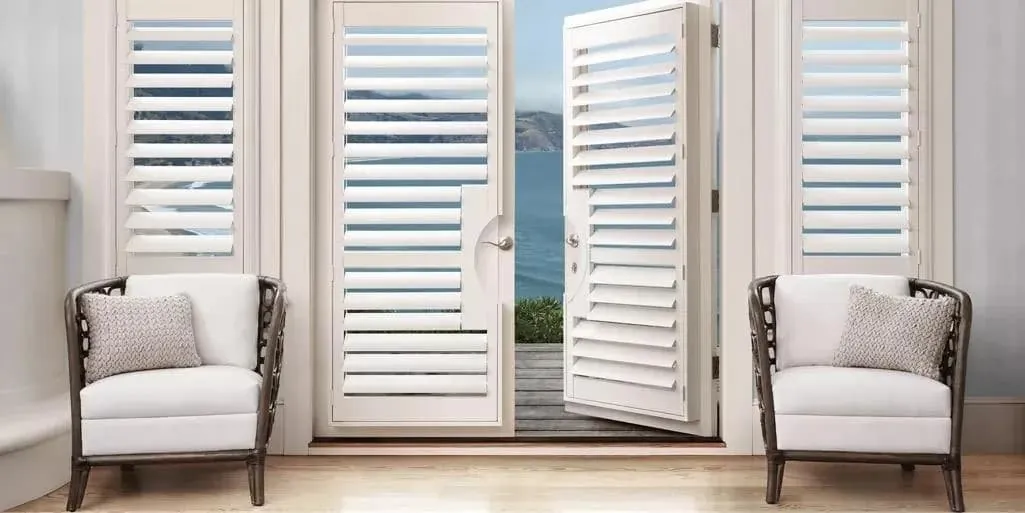
Arches and special shapes
Arched tops, half-rounds, angled windows and French doors can each take a shutter made to their outline.
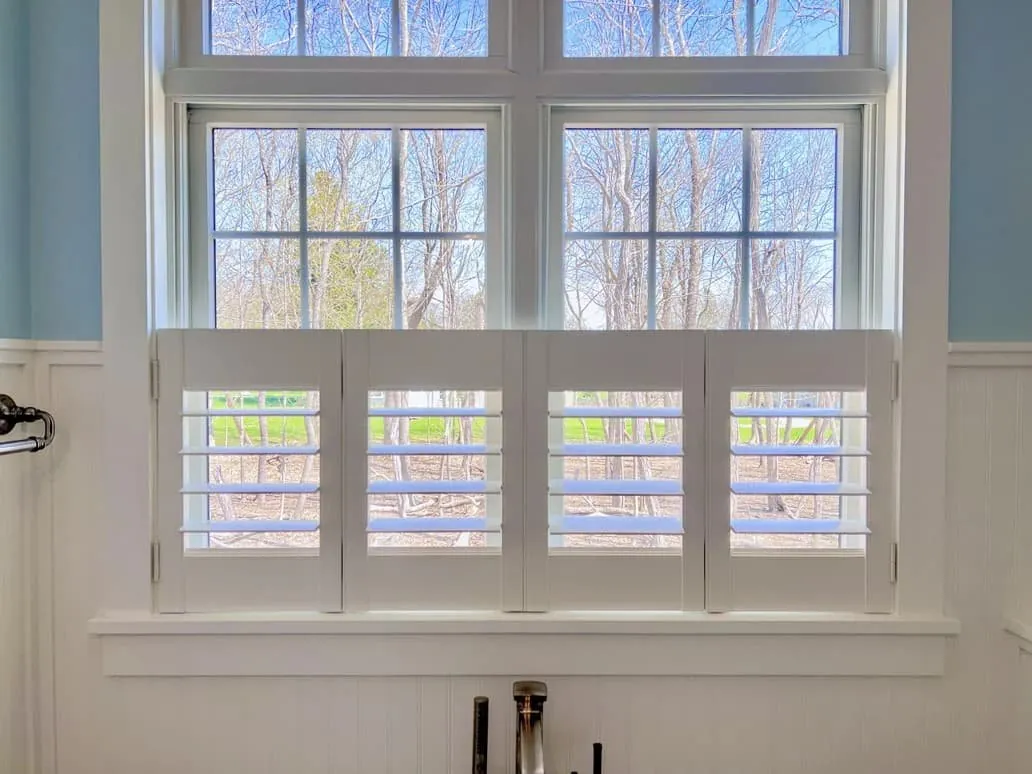
Cafe style
Panels on the lower half only. Privacy at eye level, daylight over the top, popular over a kitchen sink.
Antique colonials in the historic center
The oldest streets near the harbor hold colonials whose windows have been in the wall for a very long time. The sash is small, often with many panes, and it sits deep in a thick frame. The casings may be original, carefully restored or layered with paint, and they are a large part of what makes the room.
The deep opening is a gift for an inside mount. A shutter frame set within the reveal keeps the casing entirely visible and lets the shutter sit back, close to the glass, so it looks like part of the window. We measure the depth at several points, though, because old sash locks, pulley stiles and uneven plaster can intrude, and a frame needs a flat, square seat to hold the panels true. Old openings are rarely square, so we measure the width at the top, middle and bottom and the height at both sides and the center.
Small windows call for small details. Narrow louvers keep the proportions right. A slim frame hides as little glass as possible. A single panel swinging fully open often works better than a pair on a tiny window. Heritance, real hardwood painted to match the trim or stained to match a restored floor, is the collection most owners in these houses choose. Our guide to shutters for older windows has more on fitting antique openings.
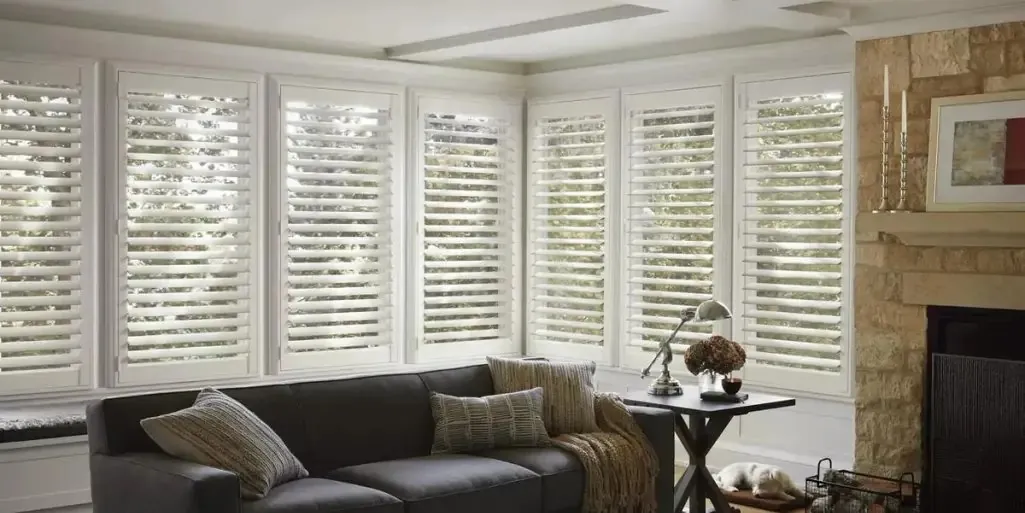
Two-story glass in the Pinehills
The Pinehills houses are a different world. Great rooms rise two stories with walls of glass, transoms above, and sometimes an arched or angled window at the top of the gable. Bedrooms and studies are generous, with big windows facing woods, fairways or ponds. The light in these rooms is wonderful in the morning and can be overwhelming on a summer afternoon.
Shutters can handle much of this. On the lower windows of a great room, tall panels with a divider rail give you control at the level where you sit: close the lower louvers against glare on the television, tilt the upper ones open for light. Wide louvers suit the scale of these rooms and keep the view clear. Transoms and shaped windows above can take shutters made to their outline, usually with fixed louvers since they are out of reach.
We will also be honest where shutters are not the best answer. Very high windows that you want to open and close daily are often better served by a motorized shade, and we can talk through that option in the same visit. Many Pinehills rooms end up with shutters on everything you can reach and a different treatment on the glass far above. In bedrooms and studies, though, shutters are an easy fit, darkening a room fully when closed and looking crisp from outside.
Big windows also mean big panels, and a large shutter needs a well-anchored frame and hinges that carry the weight without sagging. On a wide expanse of glass we often split the opening into more panels than you might expect, so each one stays a manageable size, swings easily and folds back flat. Wider louvers keep that many panels from looking busy. The finish matters in such a bright room too: a crisp white reflects light and keeps the room airy, while a stained Heritance finish can warm up a great room with a lot of white walls and high ceilings.
Post-war ranches across town
Between the historic center and the newest developments are many post-war ranches. Their window plan is simple: a large living room window, sometimes with narrow flankers, a run of bedroom windows, a kitchen window over the sink and often a slider to the yard. These houses suit a whole-house shutter order, because the windows repeat and the result looks tidy inside and from the street.
Wide louvers work well on the big front window, where the view of the yard matters. The window is usually split into several panels hinged in pairs so they fold back cleanly. NewStyle, a composite with the look of painted wood, is the common choice for a ranch, giving every room the same finish. In the kitchen and bathroom, Palm Beach takes over, since steam and splashes will not affect it. Plantation shutters in Plymouth, MA, ranches often go in over a couple of visits, room by room, with the same louver and finish carried through.
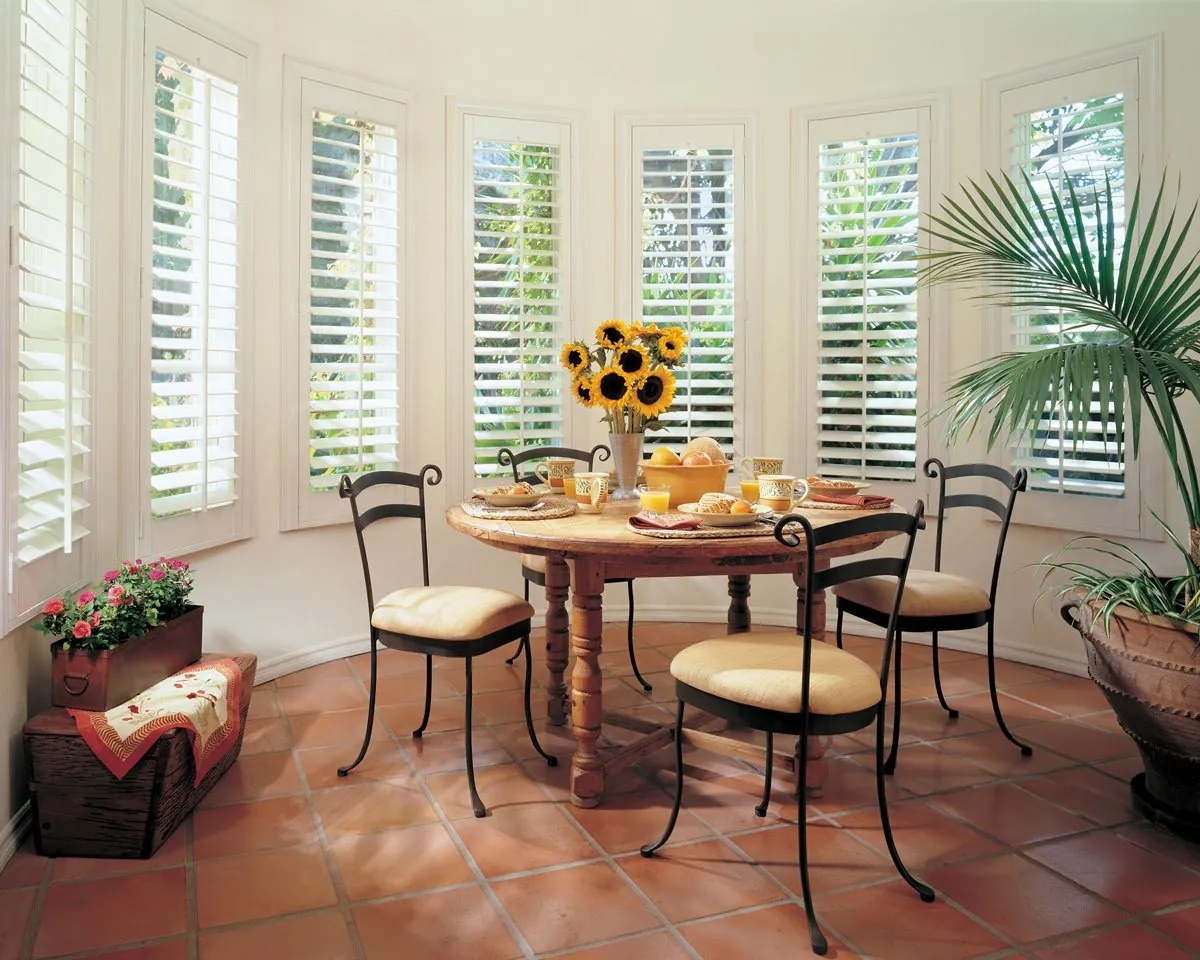
Choosing between the three collections
Hunter Douglas makes three shutter collections. They look similar on the wall, but the material decides which rooms each suits.
Palm Beach is polysatin, with no wood at all. It is the shutter for bathrooms, kitchens, laundry rooms and any room that takes damp air off the water. It holds its shape where wood might swell.
NewStyle is a composite with the appearance of a painted wood shutter. It is a practical choice when you want a consistent painted look across a whole house.
Heritance is genuine hardwood, available in stains as well as paints. It is the one for antique rooms with good woodwork and for anyone who wants the grain to show.
Many Plymouth houses mix them. A colonial might take Heritance in the front parlor and dining room, NewStyle upstairs and Palm Beach in the bathrooms, all in the same white and the same louver size, so the house looks consistent from outside.
Coastal rooms and the waterfront
Some Plymouth houses sit near the harbor or along the shore to the south, and their rooms face open water. The light there comes from two directions: straight from the sky and bounced up off the surface. Louvers tilted upward send that reflected light to the ceiling, brightening the room without glare across the furniture. Closed, they turn a bright room dim enough for an afternoon rest.
Salt air and damp are also part of life near the water. Palm Beach is a strong choice for any waterfront room, not just the bathroom, because the material is unaffected by humidity. A wipe with a damp cloth now and then keeps it clean. There is no fabric to fade in strong sun or to take down and wash. On a deck-side window or a porch door that is opened all summer long, the panels can simply be swung back out of the way and closed again when the evening breeze turns cool off the bay.
Old houses with newer additions
Plenty of the antique colonials have grown over time, with a kitchen ell, a family room or a sunroom added at the back. Those additions bring a mix of windows to one house: small deep sash in the front rooms and wide modern units, sometimes a slider or French doors, at the back. It can feel as though the front and back of the house belong to different eras.
Shutters can bridge that gap. Using the same finish everywhere ties the house together, while the louver size and frame change to suit each part. The antique rooms keep narrow louvers and slim inside-mounted frames; the addition takes wider louvers to open up the view to the yard. French doors and sliders can have their own panels, hinged or on a track, finished to match. When we plan plantation shutters in Plymouth, MA, for a house like this, we look at the front and back together so the whole order reads as one design.
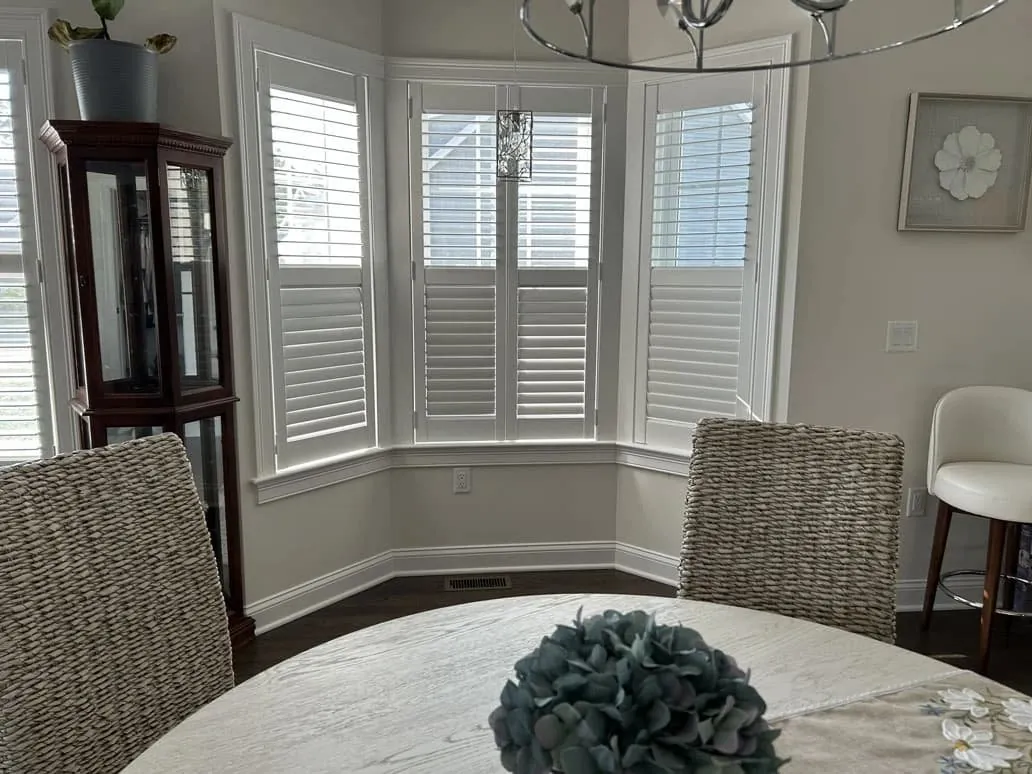
Light and privacy, room by room
Each room asks something slightly different of a shutter. A front room facing the street wants privacy at eye level through the day; a divider rail or cafe-style panels let you keep the lower louvers closed while the top stays open. A bedroom wants darkness on a summer morning, and closed panels with a tight fit do that better than most soft treatments. A home office wants the glare kept off a screen without losing daylight, which is a matter of tilting the louvers to send the sun up to the ceiling.
Kitchens and bathrooms want moisture resistance first. A dining room wants a look that suits the furniture and the trim. Because every shutter is made for its own window, the details can change from room to room while the finish stays the same, and we work through these choices one room at a time during the visit rather than applying one answer everywhere.
Frames and mounting
The frame holds the panels and finishes the window, and it is chosen opening by opening. An inside mount sits within the window and keeps the casing on show; it suits deep antique openings and newer houses with square, well-built frames. An outside mount fixes to the wall around the window and suits shallow openings, windows with cranks or locks in the way, and older windows that have moved out of square, where a frame can give a straight line to the eye.
Frame styles range from slim and plain to deeper profiles with a moulded edge, which can stand in for trim where a casing is missing. Panels can hinge in singles, pairs or folding sets, and on very wide openings or sliders, panels can run on a track. These details are what make a shutter look built for the room.
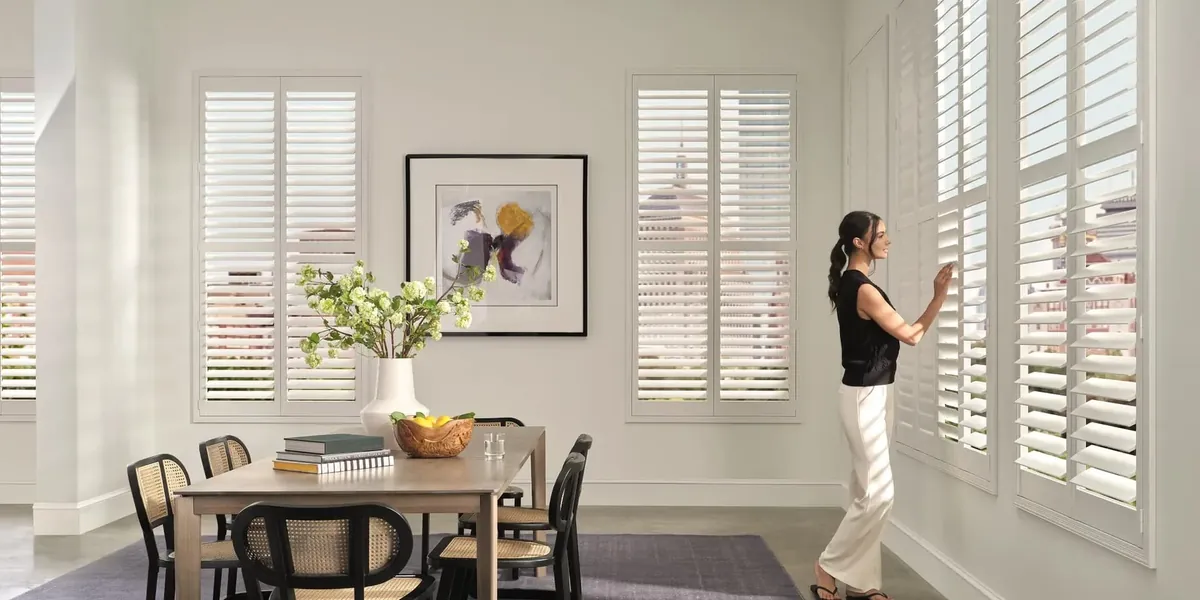
Your consultation at home
Because Plymouth houses differ so much, we nearly always start at your house. Our vans carry samples, so the collections, finishes and louver sizes come to you.
- You request a consultation online or by the call button, and we agree a time.
- We tour the house with you, noting which windows matter most: the sunny ones, the street-facing ones, the damp ones.
- You compare Palm Beach, NewStyle and Heritance at your windows and against your trim.
- We discuss louver size, divider rails, tilt and frame for each room.
- We measure each opening, checking depth and square, and give you a free estimate, with time to think it over.
- When the shutters are ready, certified Hunter Douglas installers fit the frames, hang the panels and adjust every louver.
Read more about what happens at an in-home consultation or about our free estimates.
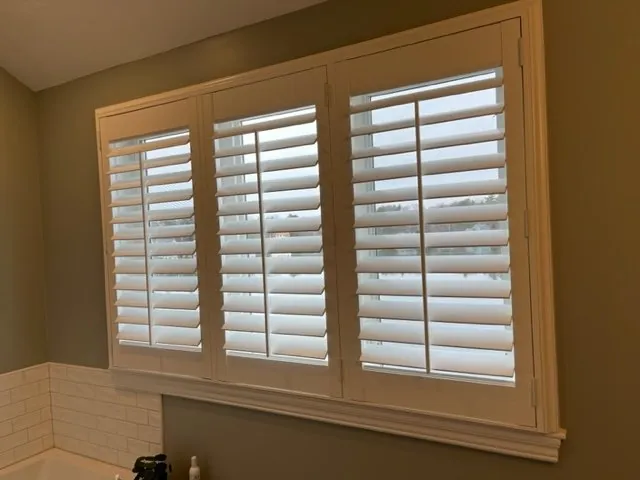
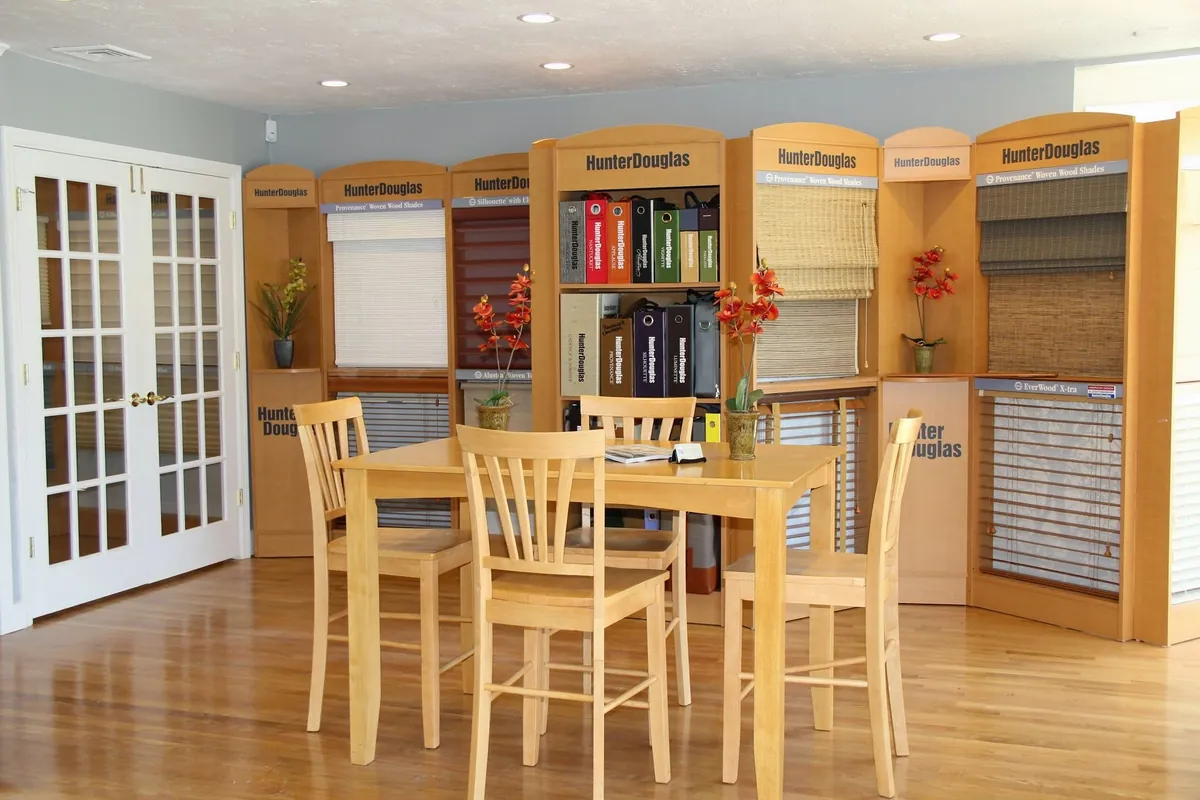
Certified installation from a Gallery dealer
A shutter is only as good as its fit. If the frame is a little out of square, the panels will not meet in the middle and the louvers will not close in a straight line. Every shutter Blinds & Designs sells is fitted by an installer certified by Hunter Douglas, which matters most on exactly the kind of windows Plymouth has plenty of: antique openings that have settled and very large modern ones where small errors show.
As a Hunter Douglas Gallery dealer we offer all three shutter collections and their full finish ranges, plus Hunter Douglas shades, blinds and drapery for the rooms where shutters are not the answer. We also offer interior design consultations, window covering automation and repairs on coverings you already own.
For other rooms, see cellular shades in Plymouth or motorized blinds in Plymouth, or every service on our Plymouth page. Our main plantation shutters page covers the full range.
Questions from Plymouth
Can shutters go on two-story windows?
On the lower windows, yes, usually tall panels with a divider rail. Transoms and shaped windows above can take shutters with fixed louvers. For high glass you want to adjust daily, a motorized shade is often more practical, and we can show both at the same visit.
My colonial’s windows are deep but not square. Can they still have an inside mount?
Often. We measure the opening at several points and check the depth around any old hardware. If the frame cannot sit square inside, an outside mount framed around the opening gives a clean, straight result.
Which collection should I choose for a ranch?
Most ranches take NewStyle for a consistent painted look, with Palm Beach in the kitchen and bathrooms. Wide louvers suit the big front window.
Are shutters a good idea near the water?
Yes. Louvers handle reflected light well, and Palm Beach is unaffected by damp and salt air. A damp cloth is all the cleaning they need.
How do I get an estimate?
Request a consultation. We come to your home with samples, measure the windows and give you a free estimate.
Plan the rooms that matter most
With a house in Plymouth, it often makes sense to start with the room that bothers you most, whether that is the glare in a Pinehills great room or the cold front parlor of an old colonial, and work outward. Request a consultation and we will bring samples, measure each opening and give you a free estimate for plantation shutters in Plymouth, MA. The Sagamore showroom is our nearest location if you would like to see the collections first, and the call button is there for any questions along the way.