
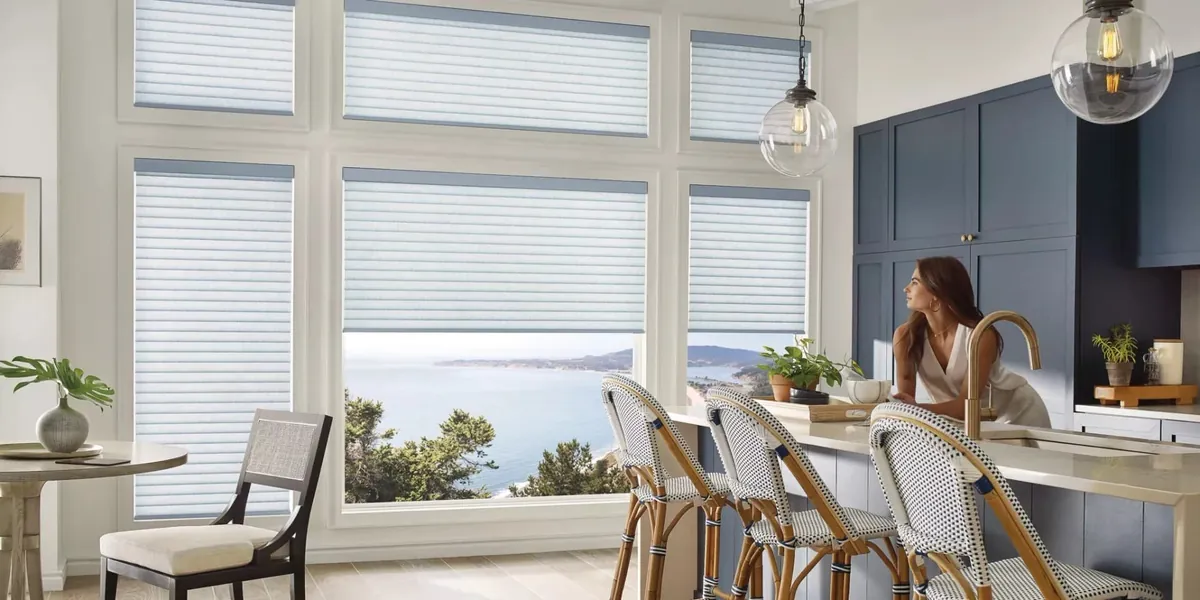
Small old sash, big new glass
Few towns put such different windows within a short walk of each other. Along Washington Street and around the Nook, antique capes and Federal houses keep the small original openings they were built with, often a pane or two wide and set deep in the wall. Out on Powder Point, the rooms that face the water are glazed heavily, with wide runs of glass meant to take in as much of the bay as the frame allows. Inland, larger newer houses sit back on wooded lots where the trees decide how much sun reaches each room. That spread is the first thing we think about when we plan roller shades in Duxbury, MA.
A roller shade is about as simple as a window covering gets: one flat piece of fabric that winds onto a tube hidden in a slim headrail. That simplicity is exactly why it works across all three kinds of house. The same idea can disappear into a tiny antique reveal or stretch across a water-facing wall, and the fabric is what changes, from a light filtering weave to a solar screen to full blackout.
So the question is never whether a roller fits. It is which fabric, which mount and which way of lifting suit each room.
Roller shades in Duxbury, MA: the fabrics and styles we bring
We carry the Hunter Douglas Designer and Alustra roller collections, and the samples ride in our vans so you can try them against your own trim.
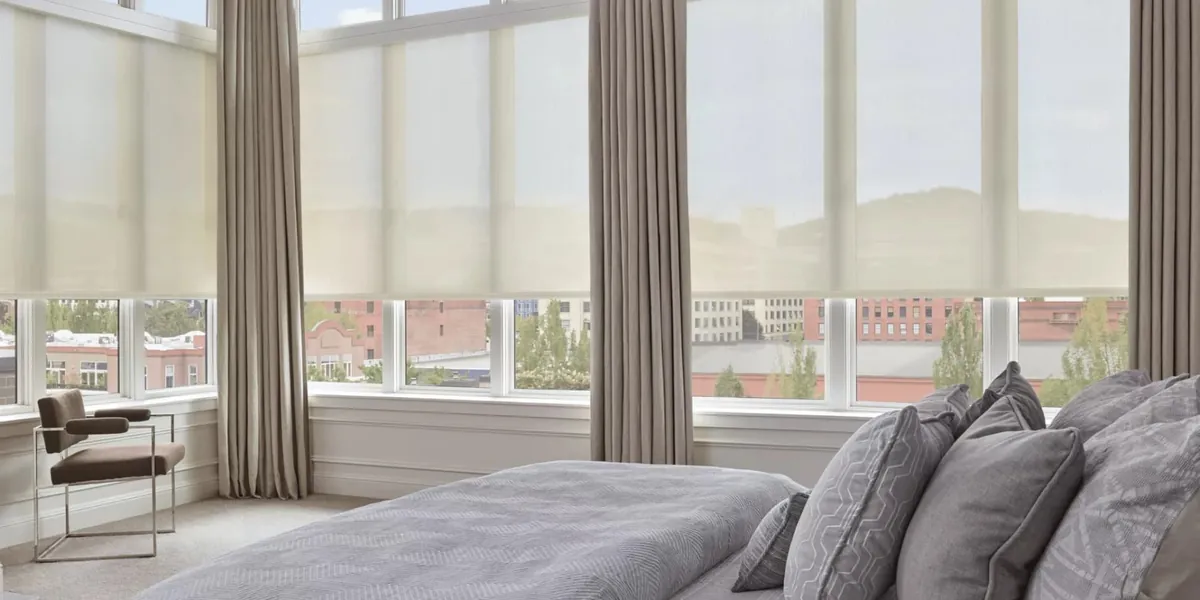
Solar screens for the water side
A Designer Screen fabric cuts glare off the bay while the view stays visible through the weave.
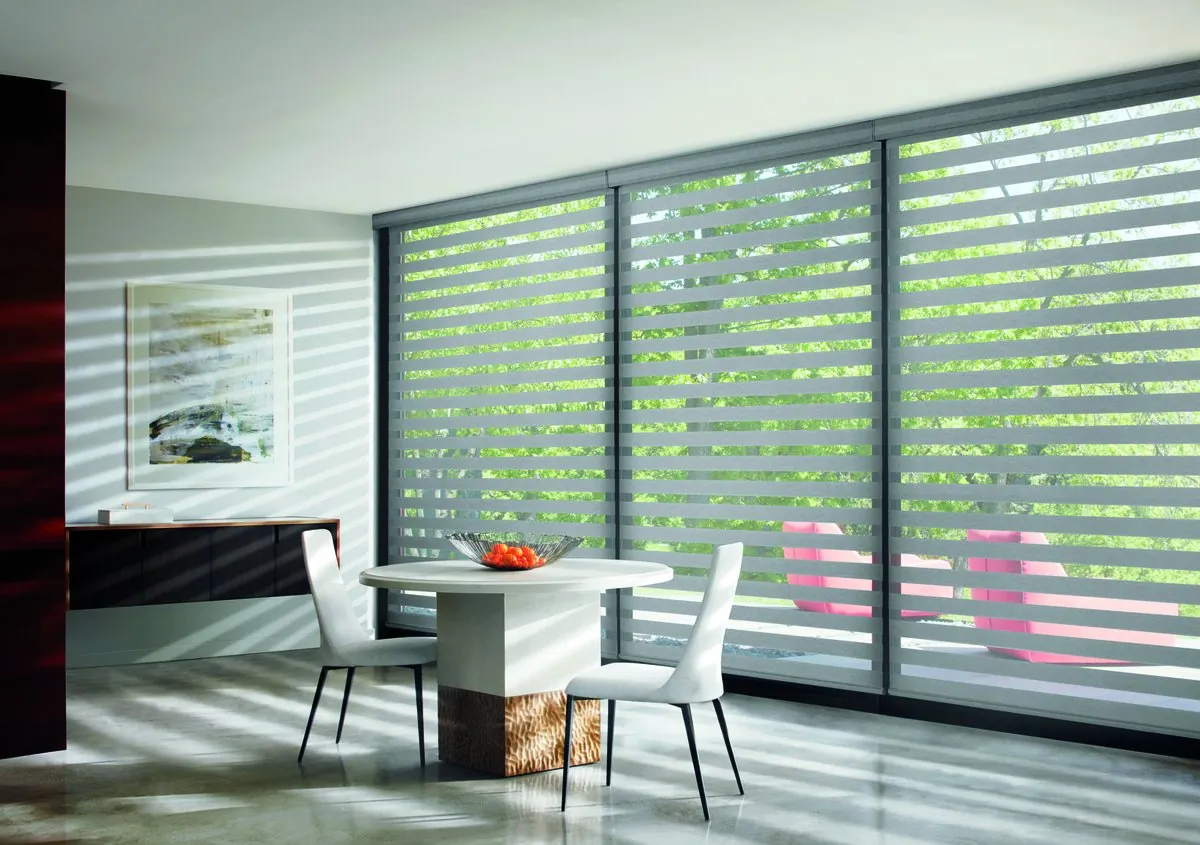
Banded shades
Sheer and solid stripes on a single shade. Shift them to let the view in or close it off without raising anything.
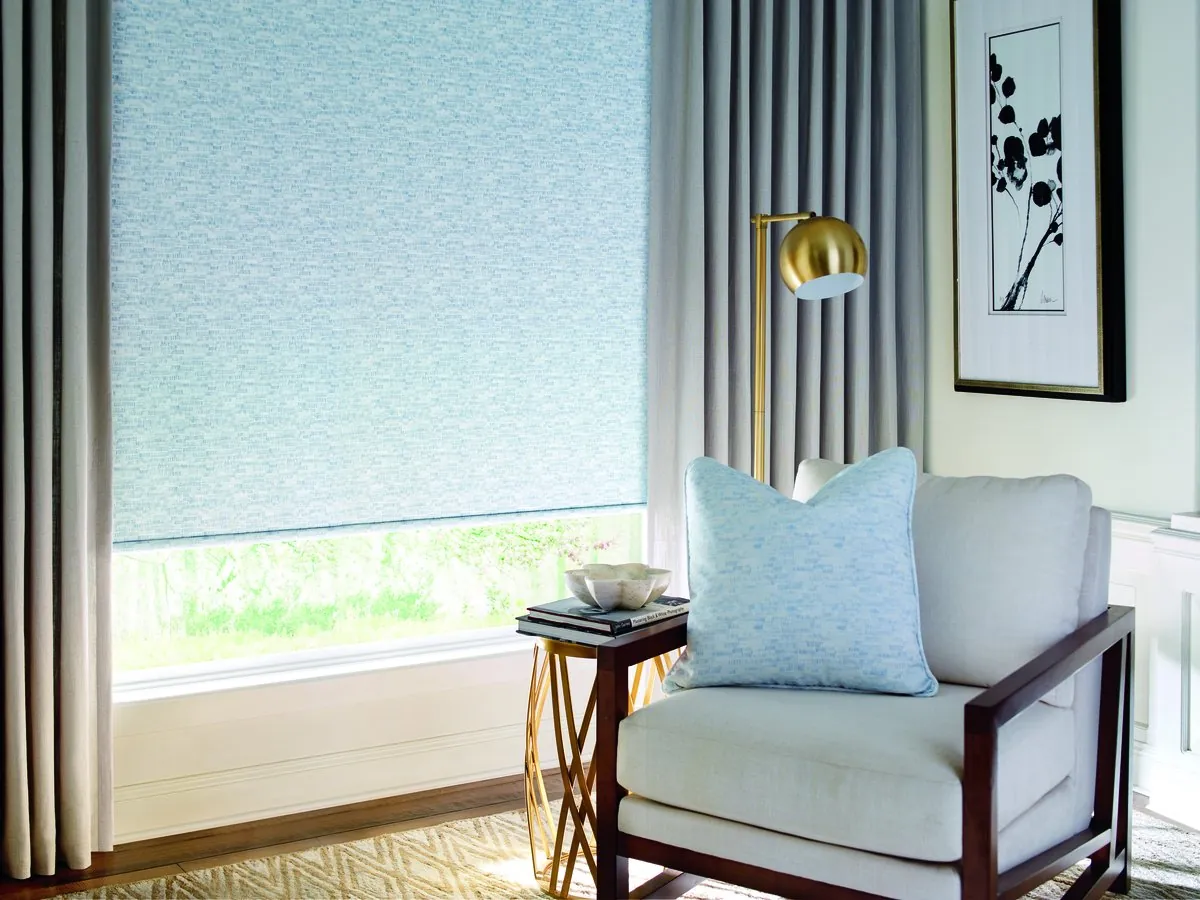
Patterned Alustra fabrics
Richer textures and prints for a Federal front room, where a plain white roller can look too modern.
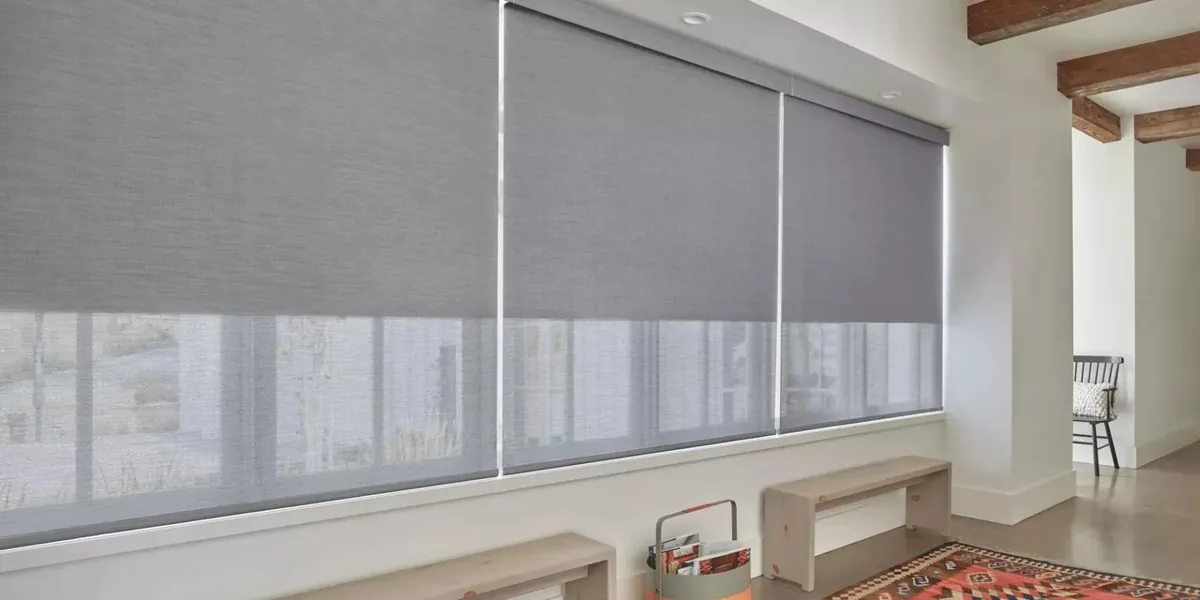
Blackout for sleeping rooms
Opaque Designer Roller fabric for bedrooms that catch the early light coming in off the water.
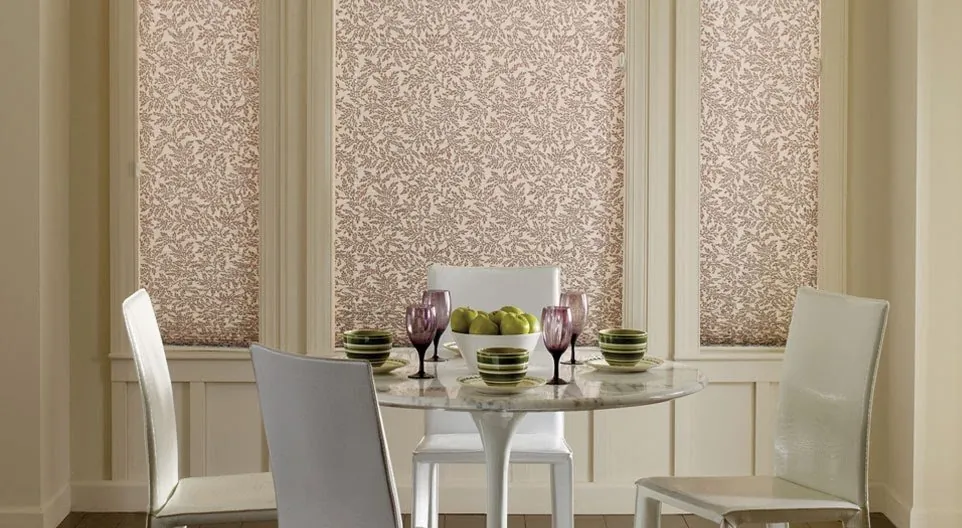
Light filtering for living spaces
Daytime privacy with a soft, even glow. The fabric lights up rather than showing the room behind it.
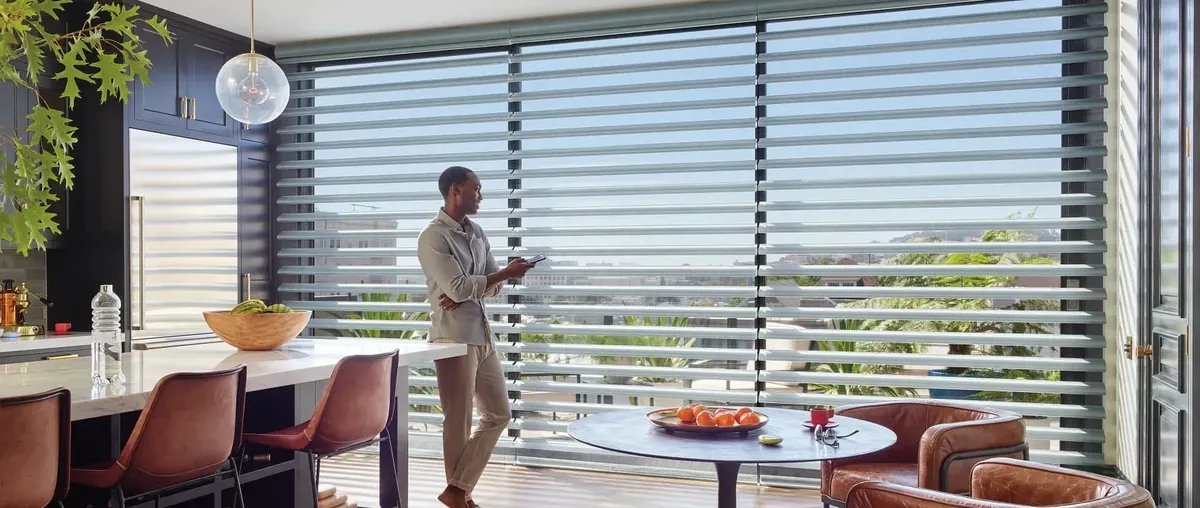
PowerView for out-of-reach glass
Motors move a whole wall of shades together, from a phone, a remote or a daily schedule.
Antique openings along Washington Street and the Nook
An old cape or Federal house was framed long before standard window sizes existed. Each opening was made to suit the wall it sat in, and over the years many have moved a little as the house settled. Two windows side by side in the same parlor can differ by a noticeable amount in width or height, and neither is likely to be perfectly square.
Small openings like these suit a roller shade better than almost any other treatment. A slatted blind or a folded fabric shade stacks up at the top when raised and can block a good share of a short window. A roller winds into its tube, so a raised shade takes very little of the glass. In a room where the windows are already small, that difference is easy to see.
The thick walls of an antique house often leave a deep reveal around the sash. That depth lets us tuck the headrail inside the opening, so the casing and any old panelled reveal stay on show. Where the reveal is shallow, or where window hardware sits in the way, an outside mount on the face of the trim is the cleaner answer, and we will say so at the visit rather than force a fit.
Every one of those windows gets measured on its own: across the top, the middle and the sill, and down both sides and the center. The shade is then made to the narrowest point so it rolls freely without catching the frame.
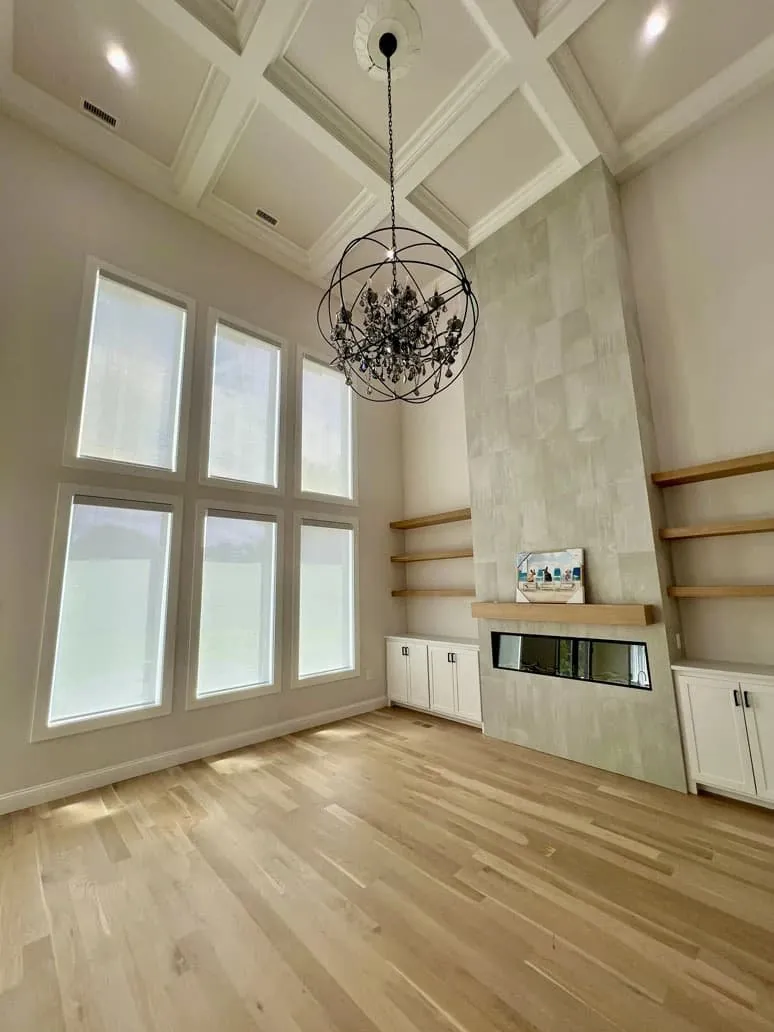
Heavily glazed rooms on Powder Point
The rooms that face the water on Powder Point are a different project entirely. A wide run of glass looking over the bay brings in a great deal of light, and the light bounces. Sun off open water arrives from a low angle and from below the horizon line, so it reaches deep into a room and lands on screens, tables and faces.
This is where solar screen fabric earns its place. A screen is woven with small open spaces, and the share of open space, called the openness factor, sets the balance between view and glare. A tighter weave blocks more glare and gives more daytime privacy, at the cost of a softer view. A more open weave keeps the water crisp and clear while still taking the edge off the brightness.
Color plays its part too. Darker screen fabrics tend to give the clearer view out, because the eye looks through them more easily. Lighter fabrics reflect more of the sun and read brighter from inside. We bring both so you can stand in your own room at the time of day that bothers you most and compare them against the actual view.
A screen is a daytime fabric. After dark, with the lights on inside, it lets you be seen from outside. Rooms that need privacy at night as well can pair a screen with a second, opaque shade on the same window, or use a banded shade that closes fully.
Newer houses on wooded inland lots
Away from the water, many of the larger newer houses stand on lots thick with trees. The light in these rooms changes with the seasons more than with the hour. In summer the leaves shade the windows and rooms can feel dim. In winter the branches are bare and the low sun reaches far into rooms that were dark a few months earlier.
For those houses we often steer toward light filtering fabrics rather than screens or blackout. A light filtering roller keeps a room bright on a shaded summer day while still giving you privacy from the road or the neighbors, and in winter it softens the low sun without shutting it out. The fabric choice here is about keeping the rooms pleasant all year, not fighting one strong source of glare.
These houses also tend to have the tall foyer windows, transoms and stair landing glass that are hard to reach. That is where PowerView motorization comes in, which we cover further down.
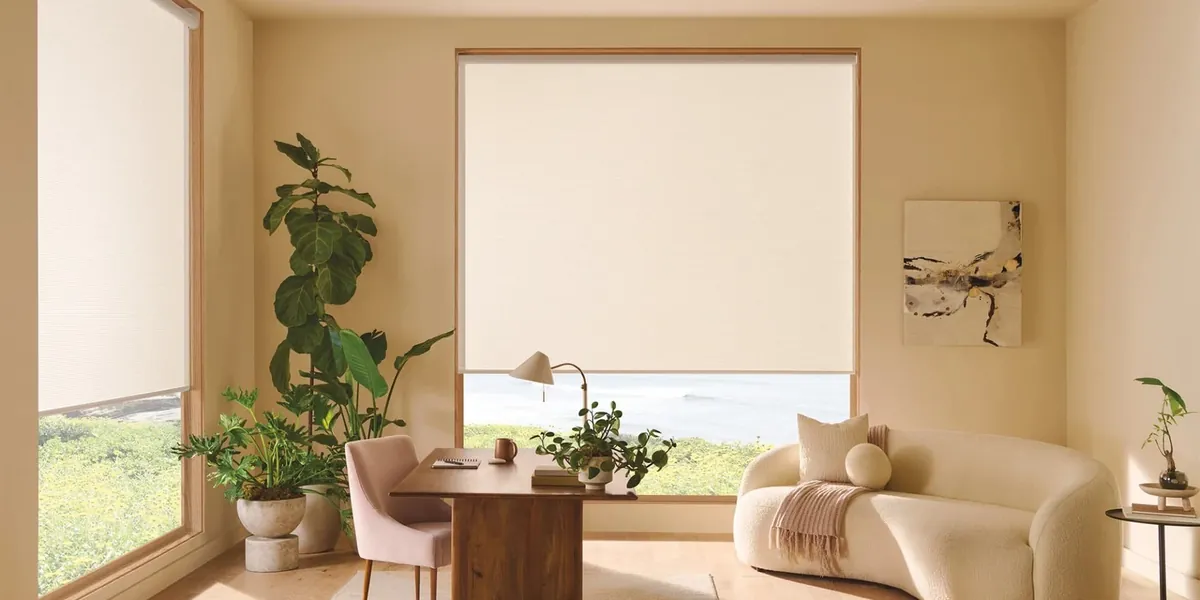
Opacity, from soft glow to full dark
Roller fabrics fall along a range, and choosing the right point on it room by room is most of the work at a consultation.
- Sheer and screen fabrics keep the view and soften glare. Good for a water-facing living room or a kitchen.
- Light filtering fabrics give privacy and diffuse the light. The usual choice for family rooms, studies and dining rooms.
- Room darkening fabrics dim a room well for afternoon naps or a television wall.
- Blackout fabrics block the light through the fabric itself, for bedrooms and media rooms.
Two things decide how dark a room actually gets. The first is the fabric. The second is the mount. An inside mount leaves a narrow gap at each side where light can slip past, which hardly matters in a living room but shows in a bedroom at dawn. An outside mount that overlaps the trim closes those gaps. In an antique house with a handsome casing, we talk through that trade before anything is ordered.
A house that mixes old and new
Plenty of the houses we fit with roller shades in Duxbury are not one era at all. An antique cape may have a large modern addition at the back, with a family room built around sliders and big glass, while the front rooms keep their small original sash. The challenge is to make the whole house feel considered without forcing the same fabric onto windows that need very different things.
One way is to keep a single color family through the house and change only the opacity: a light filtering weave in the old front rooms, a screen of the same tone in the addition, blackout in the bedrooms. From outside, the windows read as one house. Inside, each room gets the fabric it needs.
Another is to let the front of the house take a patterned Alustra fabric that suits its age, and keep the addition clean and plain. Both approaches work. We lay the samples out side by side at the visit so you can see them together.
Some homeowners in older houses also mix treatments: shutters in a front parlor, rollers in the rest of the house. If that interests you, our plantation shutters in Duxbury page covers how shutters handle old openings, and cellular shades in Duxbury are worth a look for the coldest rooms.
What to expect when we come to your house
Most roller orders begin with a visit, because a fabric sample means much more against your own glass and your own view. Our vans carry the Designer and Alustra collections, so we can bring the showroom to you.
- You request a consultation online or with the call button, and we set a time that works.
- We walk the house with you, starting with the rooms that bother you most, whether that is glare, privacy or light at night.
- You hold screen, light filtering and blackout samples up to your own windows and compare them in the real light.
- We look at each opening and talk through inside or outside mounts, lift options and motorization where it helps.
- We measure every window carefully, checking width, height and depth at several points.
- You receive a free estimate for the shades you are considering, and you take your time deciding.
If you want help with color and fabric across a whole room, ask about our interior design consultations. You can also read a fuller account of what happens at an in-home consultation before we arrive.
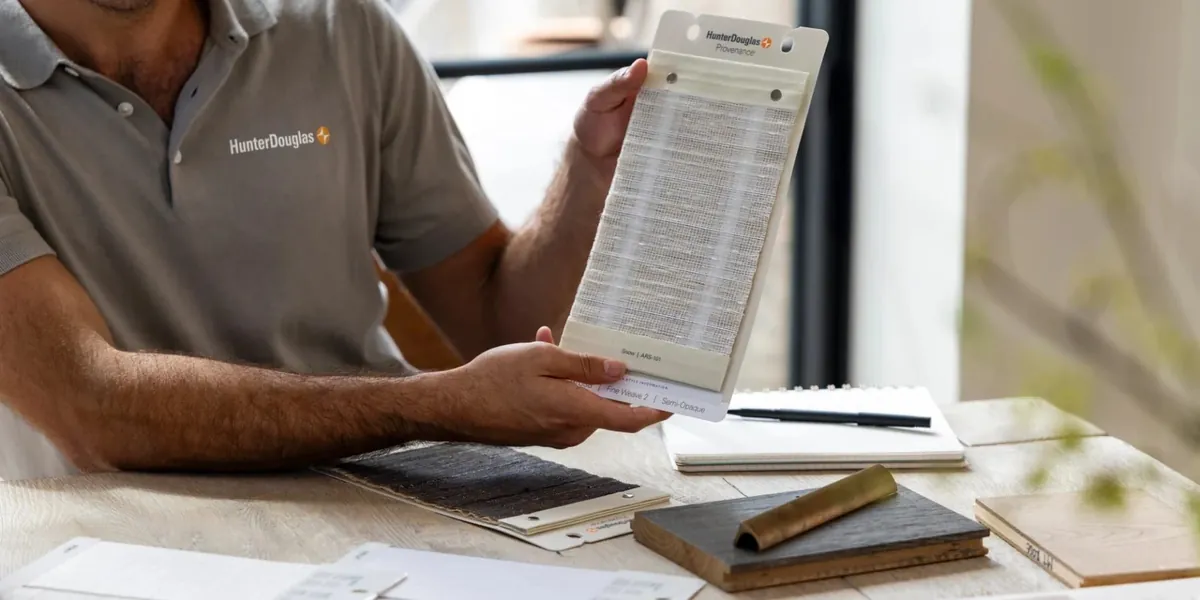
Designer or Alustra
Both collections come from Hunter Douglas and both work the same way at the tube. The difference is in the fabric and the finish.
Designer Roller covers the everyday range well: plain and lightly textured fabrics across every opacity, from sheer through blackout. Designer Screen is the solar screen family, with a choice of openness factors and colors. Designer Banded is the stripe shade, with two layers that slide past each other to open and close the view.
Alustra is the premium tier, with more elaborate weaves, textures and patterns. It suits a room where the shade is meant to be seen and admired, such as the front parlor of a Federal house or a dining room where the window is the focal point. The Alustra Woven Textures roller brings a natural woven look to a roller format.
Many orders combine the two. You can see more about each on the Designer Roller, Designer Screen and Alustra pages, or the full roller shades range.
Motorizing the shades you cannot reach
A foyer transom, a run of clerestory glass over a water-facing room or a window above a soaking tub all have one thing in common: no one wants to stretch for them every day. PowerView motorization puts a quiet motor inside the roller tube, and the shade moves from a handheld remote, an app on your phone or a schedule you set once.
Schedules are especially useful on Powder Point glass. You can set the screens to lower as the afternoon sun swings onto the water and rise again in the evening, whether or not anyone is home. Groups let one tap move every shade in a room, so a long wall of rollers stops at the same height.
At the visit we plan how each motor is powered and where any connection needs to go, and we look at which windows actually benefit. Not every window needs a motor. The ones that are hard to reach, or the ones you would like to move together, usually do. Our page on motorized blinds in Duxbury goes into the controls in more depth.
Measuring and certified installation
A roller shade only looks built in if it is made to the opening, and in a house where no two windows match, that takes patience.
- We measure width at the head, center and sill, and height on the left, the center and the right.
- We check the reveal depth along the top of each opening and note any hardware, locks or cranks in the way.
- We confirm the mount, fabric, lift and roll direction with you for each window before ordering.
- Once the shades arrive, our certified Hunter Douglas installers fix the brackets into solid framing, level every headrail and test each shade through its full travel.
- Before we leave, we show you how each lift works and how to set any PowerView schedules.
Getting each step right matters most with roller shades in Duxbury’s antique houses, where a small error is easy to see on a small window.

Why buy from a Gallery dealer
Blinds & Designs is a Hunter Douglas Gallery dealer, a designation Hunter Douglas gives dealers who meet its standards. For a Duxbury house that means the full Designer and Alustra roller ranges from one place, along with screens, banded shades and PowerView.
Our installers hold Hunter Douglas certification, so the shades go up the way the maker intends. We also carry Hunter Douglas blinds, shutters, cellular and roman shades and drapery, so an old front parlor and a new glass addition can be planned at one visit. If a shade needs attention years from now, we handle blind and shade repairs too.
To see everything we offer in town, visit our Duxbury page.
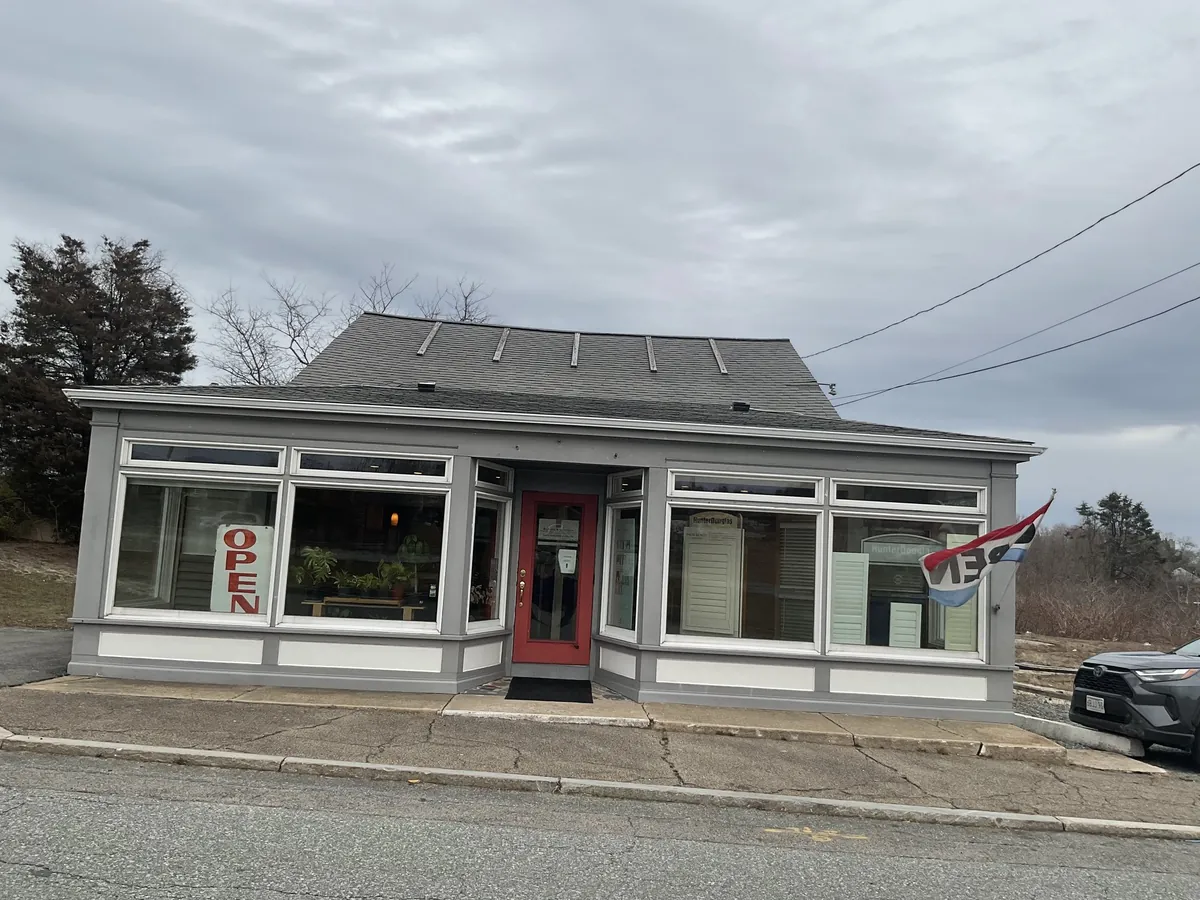
The Sagamore showroom
Our nearest showroom to Duxbury is in Sagamore. If you would like to look at roller fabrics before or after a home visit, the Sagamore showroom page has the address and opening hours.
Most Duxbury customers still find the home visit the most useful step, because the bay light, the trees and your own trim are only at your house.
Questions from Duxbury
Will a roller shade fit the small windows in my antique cape?
Almost always. Rollers can be made very small, and because the fabric winds into the tube, a raised shade takes up little of a short window. Where the reveal is deep enough, the shade sits inside the opening and the casing stays in view. Where it is shallow, we mount on the trim instead.
What openness should I choose for a room facing the water?
It depends on what bothers you more, the glare or losing the view. A tighter screen cuts more glare and gives more daytime privacy. A more open weave keeps the view sharper. We bring several openness factors so you can compare them at your own window in the bright part of the day.
Do solar screens give privacy at night?
No. Screens give daytime privacy, but once your lights are on inside, people can see in. For a room that needs night privacy, pair a screen with an opaque shade on the same window, or choose a banded shade that closes fully.
Can every shade in a big glass room move together?
Yes, with PowerView motorization. The shades can be grouped so one tap on a remote or the app moves the whole wall, and you can set schedules to lower them when the afternoon sun is strongest.
How does the estimate work?
After we measure your windows at the visit, you receive a free estimate for the shades you are considering. There is no pressure to decide on the day.
Ready when you are
The best way to choose roller shades in Duxbury, MA, is to hold the fabrics up at your own windows, in your own light. Request a consultation and we will bring the Designer and Alustra samples to you, measure every opening and give you a free estimate. If you would rather talk first, use the call button, or stop by the Sagamore showroom.