
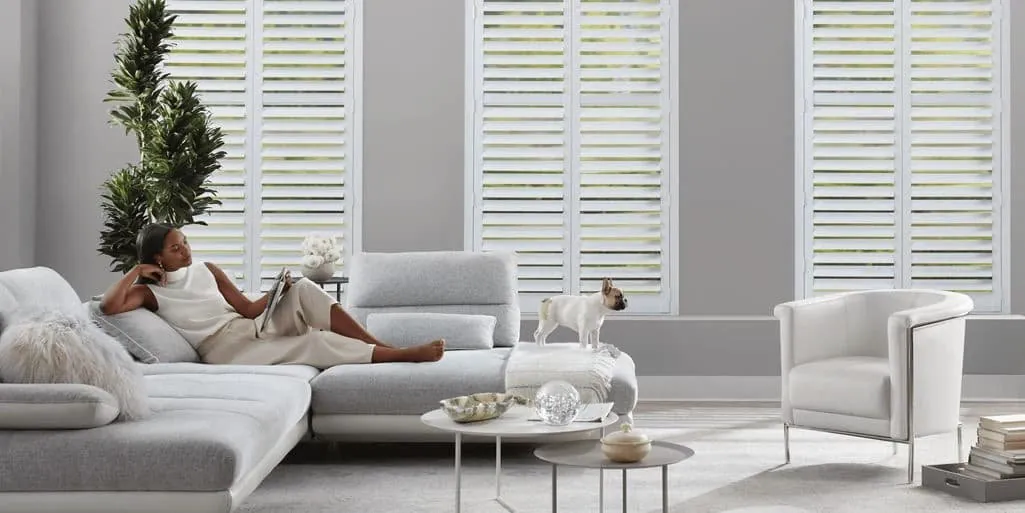
From the smallest sash to the newest colonial
Upton spreads out. Houses sit well back from the road on large lots, with long drives and deep front yards, and the density is low enough that a neighbor’s house may be a field away. Within that open landscape there are two very different kinds of house.
The oldest are antique colonials and farmhouses, and some of them have the smallest original window openings you will find anywhere in the area. Little panes of glass in thick walls, sized for a time when glass was precious and heat was hard to keep. Then, off Route 140, come the newer colonials: two full stories, symmetrical fronts, and windows of a generous, standard size.
Plantation shutters in Upton, MA, have to work for both. On a very small antique opening, the challenge is scale: every part of the shutter must shrink to suit the window. On a newer colonial the challenge is consistency across a lot of glass, often ten or more windows on the front and sides alone.
Because the houses stand so far back, street-level privacy matters less than it does in a village. The questions are mostly about light, proportion and how the house looks.
Where shutters go in an Upton house
Room by room, these are the windows that usually start the conversation.
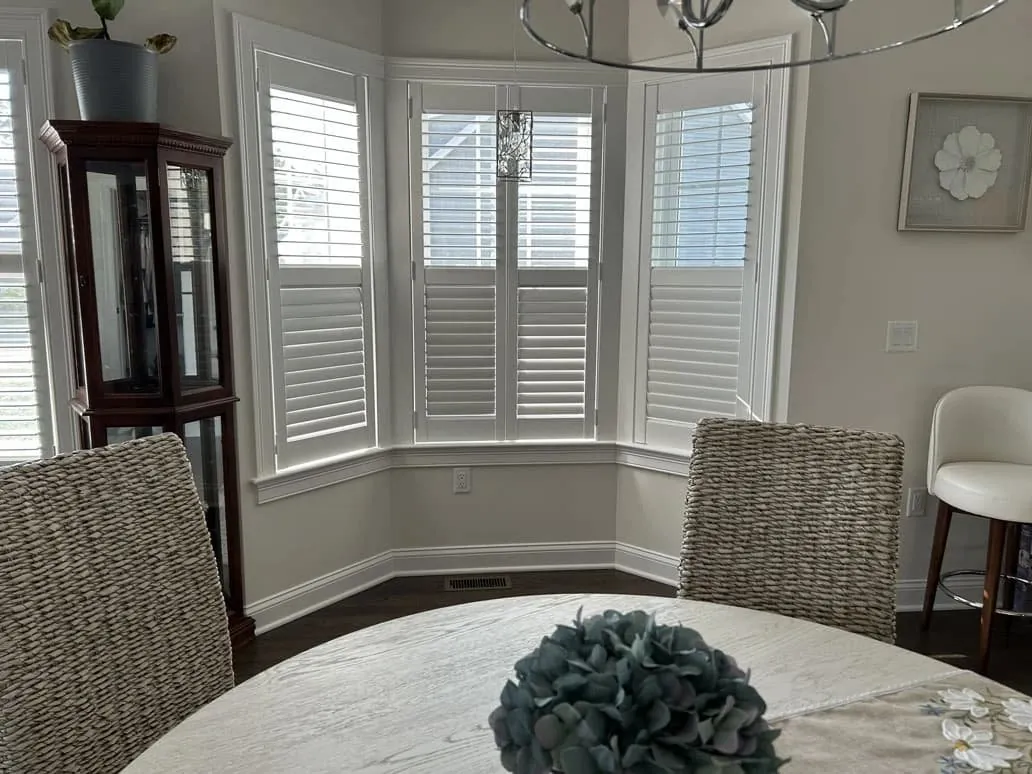
Dining rooms with a bay
Lower-height panels on a dining bay keep the morning sun off the table and leave the top of each window open to the yard.
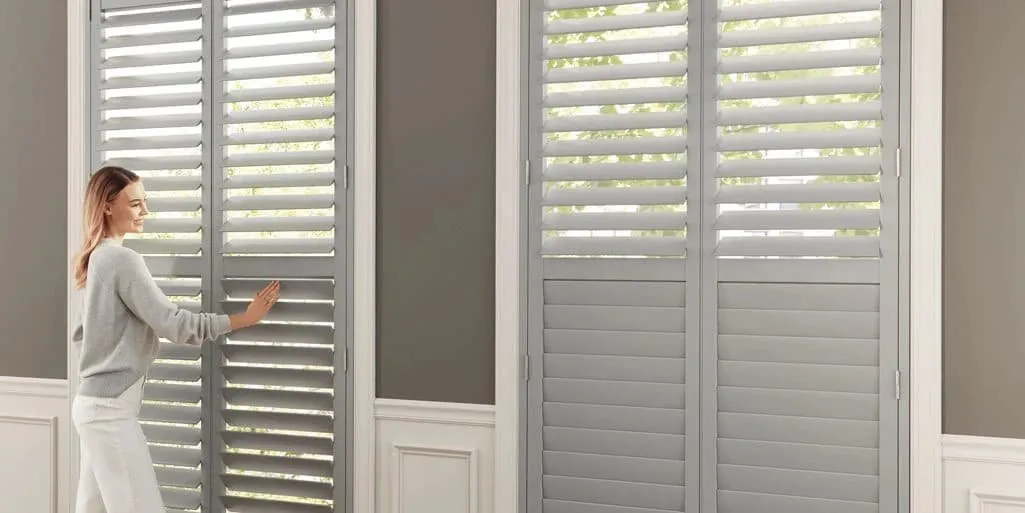
Front rooms in an antique house
On the smallest original openings, a single panel with fine louvers keeps the shutter in scale with the window.
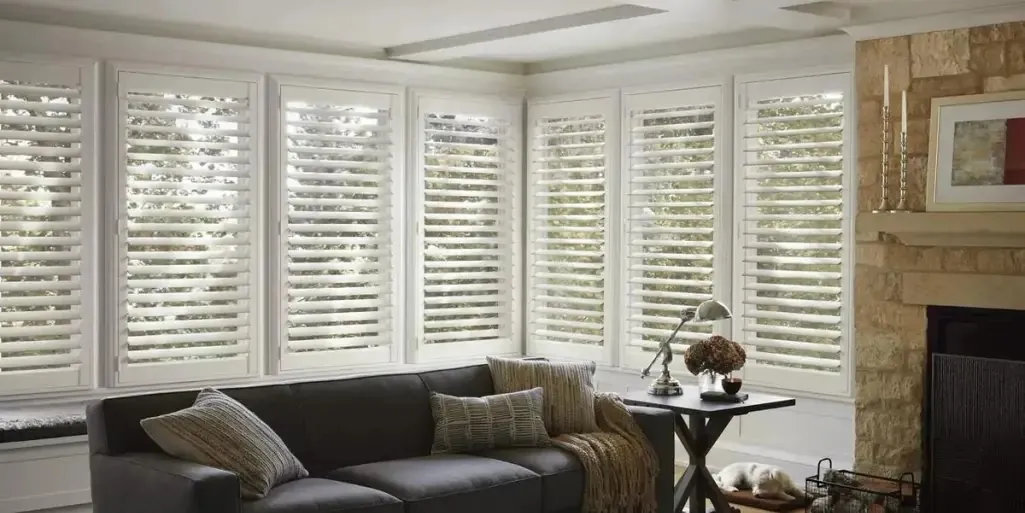
Family rooms off the kitchen
The newer colonials often put their biggest windows here. Wide louvers keep the view across the back lot when tilted open.
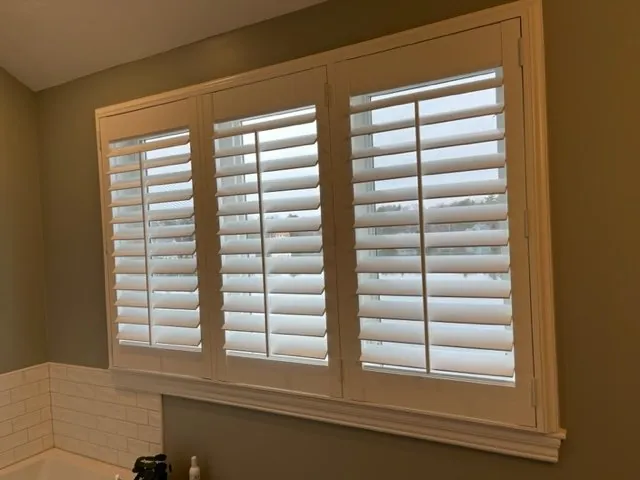
Bathrooms
Even on a big lot a bath window needs closed louvers. Palm Beach is one of the collections to compare for a bath.
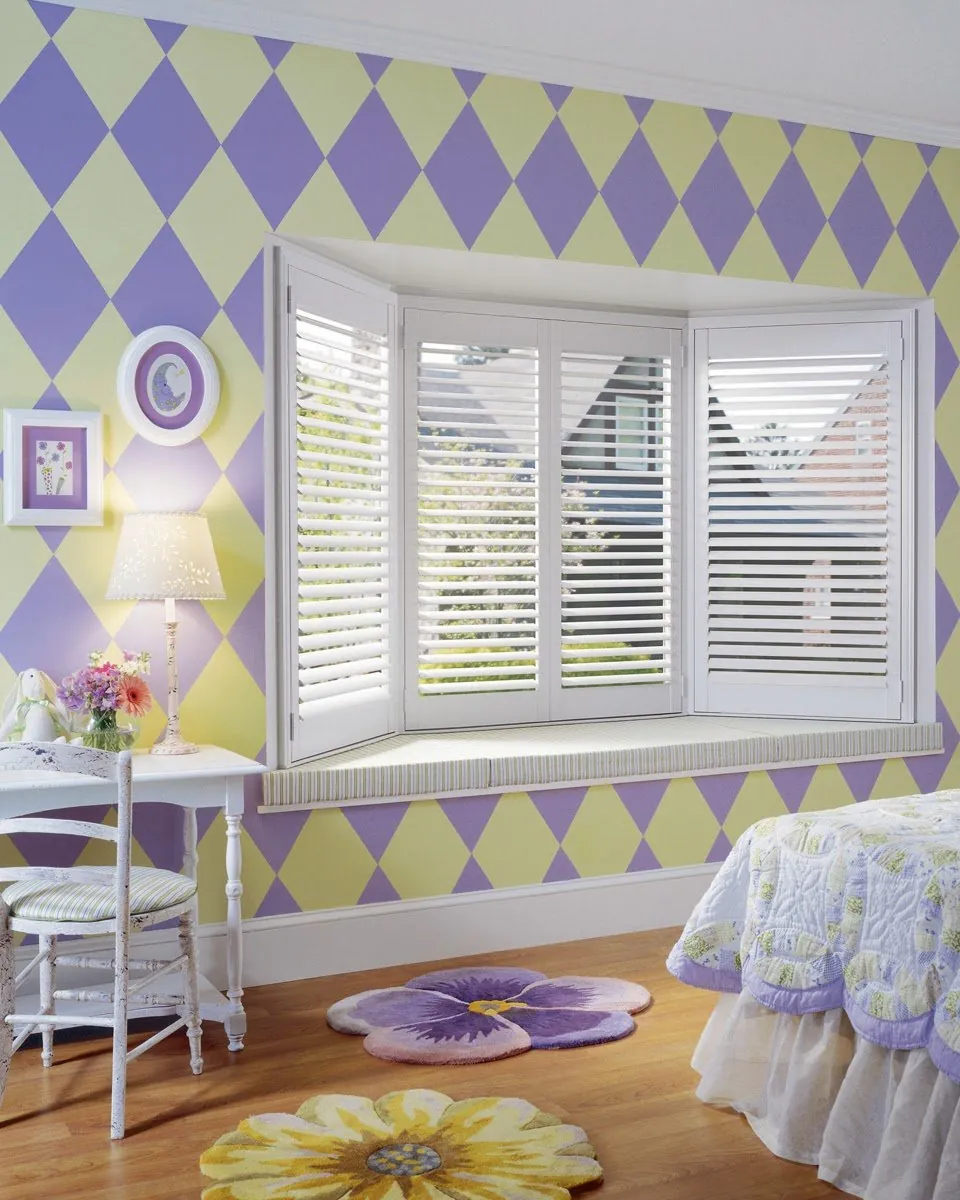
Children’s rooms and window seats
Closed louvers help a bedroom stay darker on early summer mornings, and panels can be set so a window seat stays usable.
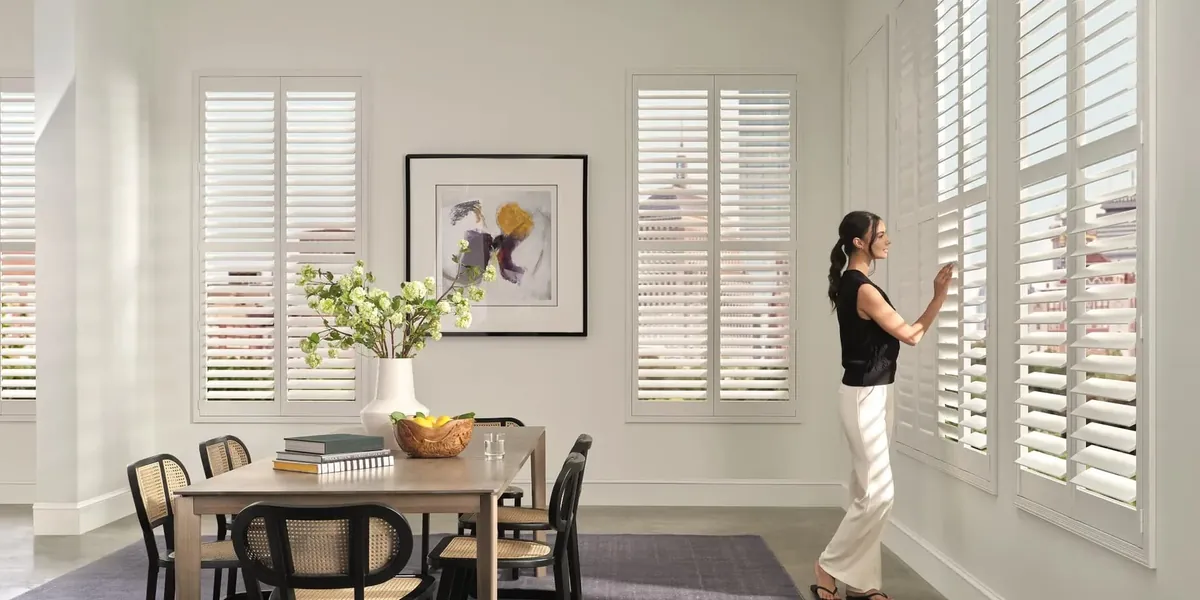
Formal rooms with original trim
Where the old woodwork is the best thing in the room, a Heritance finish held against the casing is worth a look.
Tiny openings and getting the scale right
The very small windows in Upton’s oldest houses make a shutter’s proportions obvious. On a big window, a slightly heavy frame or a wide louver goes unnoticed. On an opening not much wider than a hand span or two, the same frame can eat a third of the glass.
So we work down in size. The frame style is chosen to be as slim as the opening allows. The louver is usually the slimmest size, so that even a short panel carries several blades and does not look like a few slats across a hole. And on most of these windows a single panel beats a pair, because two panels on a tiny opening means two stiles meeting in the middle of almost no glass.
These windows are also set into thick walls, and many have had a long time to move. A small opening can still be noticeably out of square. Each one gets measured at more than one point and checked corner to corner before the frame is planned, so the panel sits evenly when closed. Our page on shutters for older windows explains the approach in more depth.
Thick walls help in one way: the recess is usually deep enough for an inside mount, which keeps the antique casing visible and still lets the blades swing. Where a recess is too shallow, or too crooked, the alternative is a frame mounted over the casing. On the very smallest windows we often bring both frame samples, because the difference in how much glass each one leaves is easier to see than to explain.
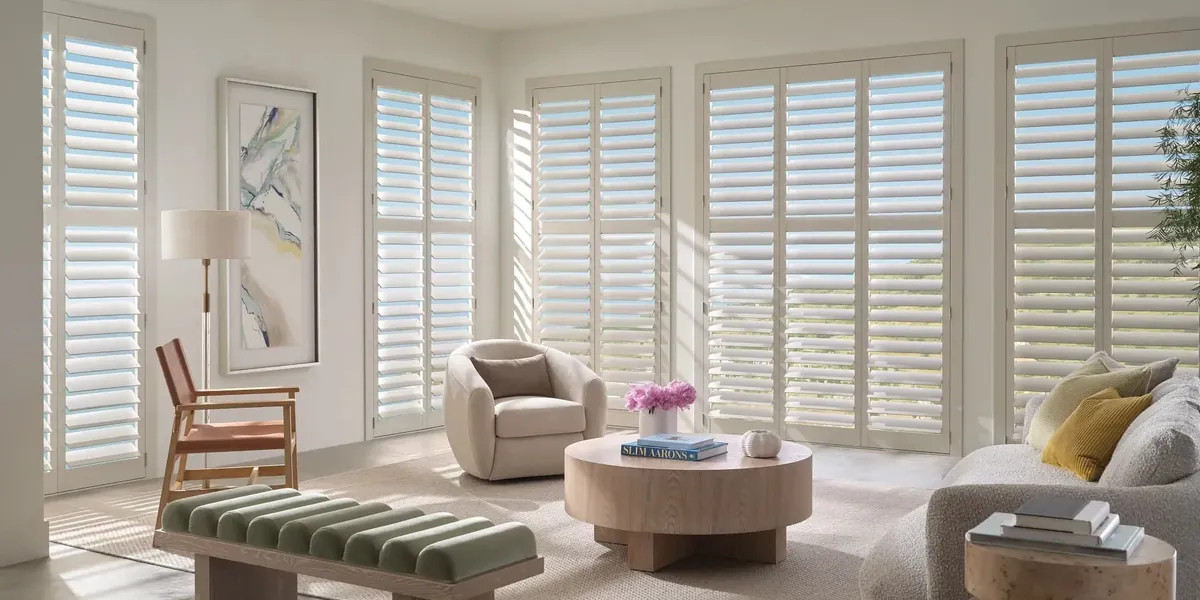
Should every small window get a shutter?
Not always, and we will say so. Some of the smallest antique openings are lovely bare, especially high in a gable or tucked beside a chimney, and they let in little enough light that nothing needs controlling. Others face a bedroom where morning light matters, or a bath where privacy does, and those are worth shuttering even when they are tiny.
The rooms decide. A front parlor with three small windows may get shutters on all three for a matched look, while a little stair window nearby is left as it is. We walk the house with you and talk through each one rather than assuming every opening needs covering.
The same goes for windows that sit behind something already: an old interior shutter pocket, a built-in cupboard or a deep window seat. Sometimes the right answer is to work around a feature the house already has rather than cover it, and we would rather tell you that than sell a panel that hides it.
The newer colonials off Route 140
The colonials built off Route 140 are a different job entirely. Two stories of symmetrical windows, standard sizes repeating across the front, and openings that are square and true. Fitting is straightforward, so the planning goes into making sure the whole house looks consistent.
On a symmetrical front, every window seen from the drive should carry the same louver size, the same frame and the same color, with any rails set at one height. That sounds obvious, but it is easy to lose when rooms are done one at a time over several years. We usually plan the front elevation as a set, even if the rooms behind it are ordered in stages.
At the back, things loosen up. Family rooms and kitchens facing the yard often have the largest windows in the house, and wide louvers keep the outlook across the lot when they are tilted open. Bedrooms upstairs can follow the front or go their own way, as long as the windows facing the road match.
Upstairs in the antique houses
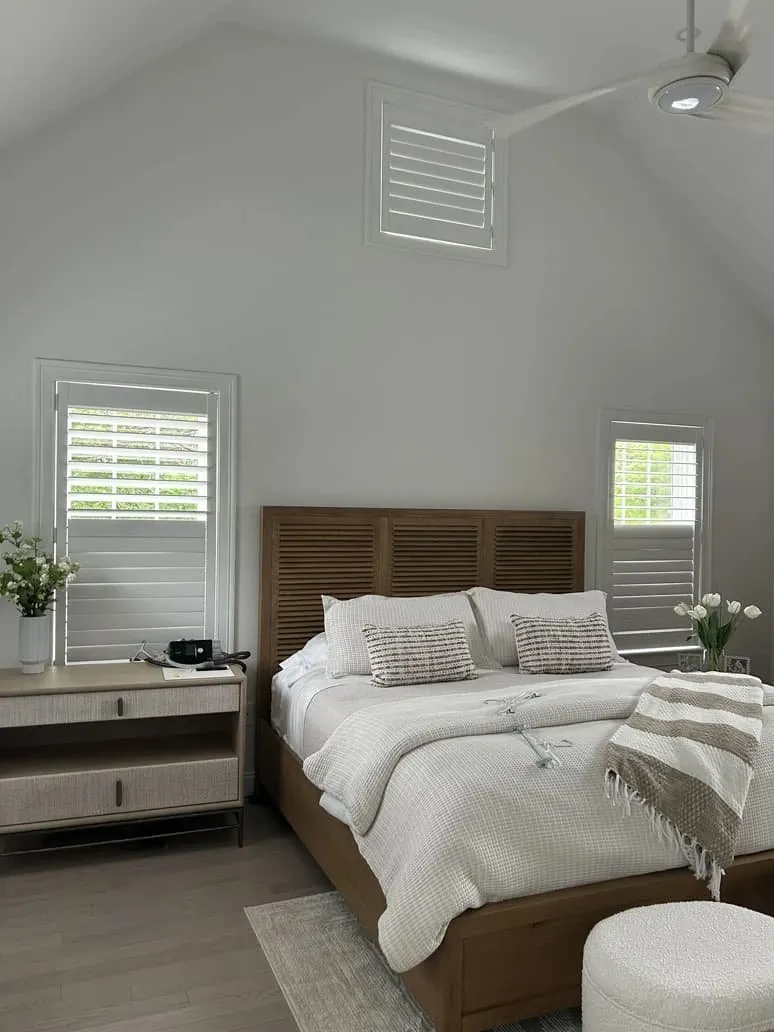
The second floor of an old farmhouse or colonial can be the trickiest part of an Upton project. Bedrooms under the eaves often have small openings, sometimes set low in the wall or close to a sloping ceiling, and the floors and walls have moved more up there than anywhere else in the house.
A shutter still works, but it needs planning in person. The panel must swing without catching the slope, and the frame must sit true even when the wall beside it does not. On the smallest bedroom windows a single panel that opens fully lets in summer air and leaves the little glass there is completely clear. When we plan plantation shutters in Upton for an upstairs like this, we usually measure every bedroom window before deciding on a louver size, so the whole floor matches.
Kitchens in the newer colonials
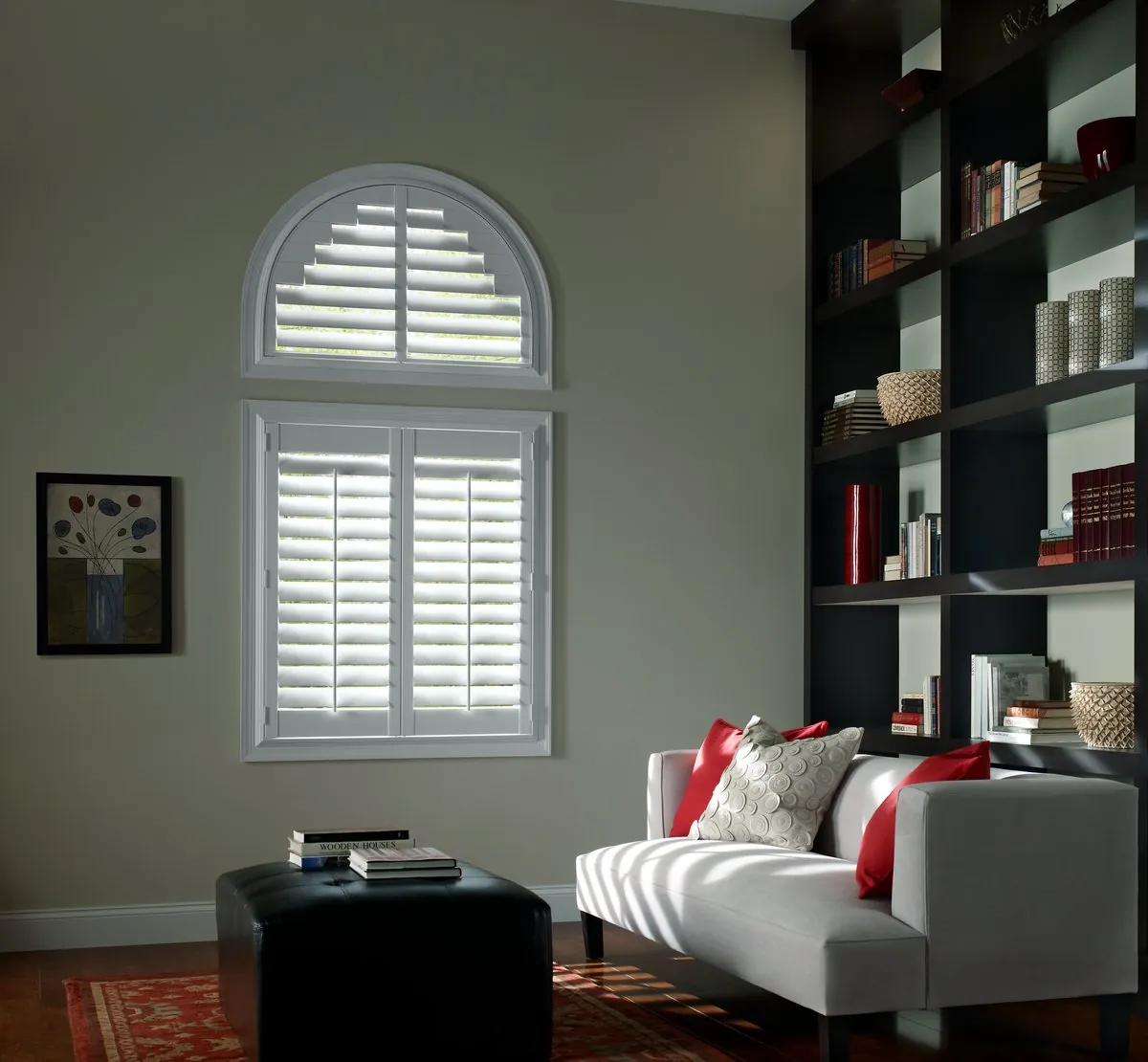
Kitchens in the colonials off Route 140 tend to face the back yard, with a window over the sink and sometimes a second window or a pair beside the table. Those are among the most used windows in the house, and the sun on them changes through the day.
A sink window often gets shutters on its bottom sash only, which takes the glare off the worktop and keeps the upper glass bright. Beside the table, full-height panels with a rail let you angle the lower louvers against the afternoon sun while keeping the upper ones open. Plantation shutters in Upton kitchens are often chosen at the same visit as the family room next door, so the louver size and color carry through the open-plan space.
What a deep setback changes
A house set far back from the road has less need for privacy at the front than a house near the sidewalk. Nobody passing on foot is looking straight into the living room. That frees the louvers for other jobs: managing sun, softening glare on a screen, or simply opening fully for the view down the front lawn.
It also means the shutters are seen from a distance. From the road, what shows is a band of color behind each pane, not the detail of the louvers. So the outside impression comes mostly from color and consistency, while the louver size and frame style matter more from inside the room.
For plantation shutters in Upton on a deep lot, this often leads to wider louvers than people expect on the front windows, because privacy is not the priority and the view is.
Sun on an open lot
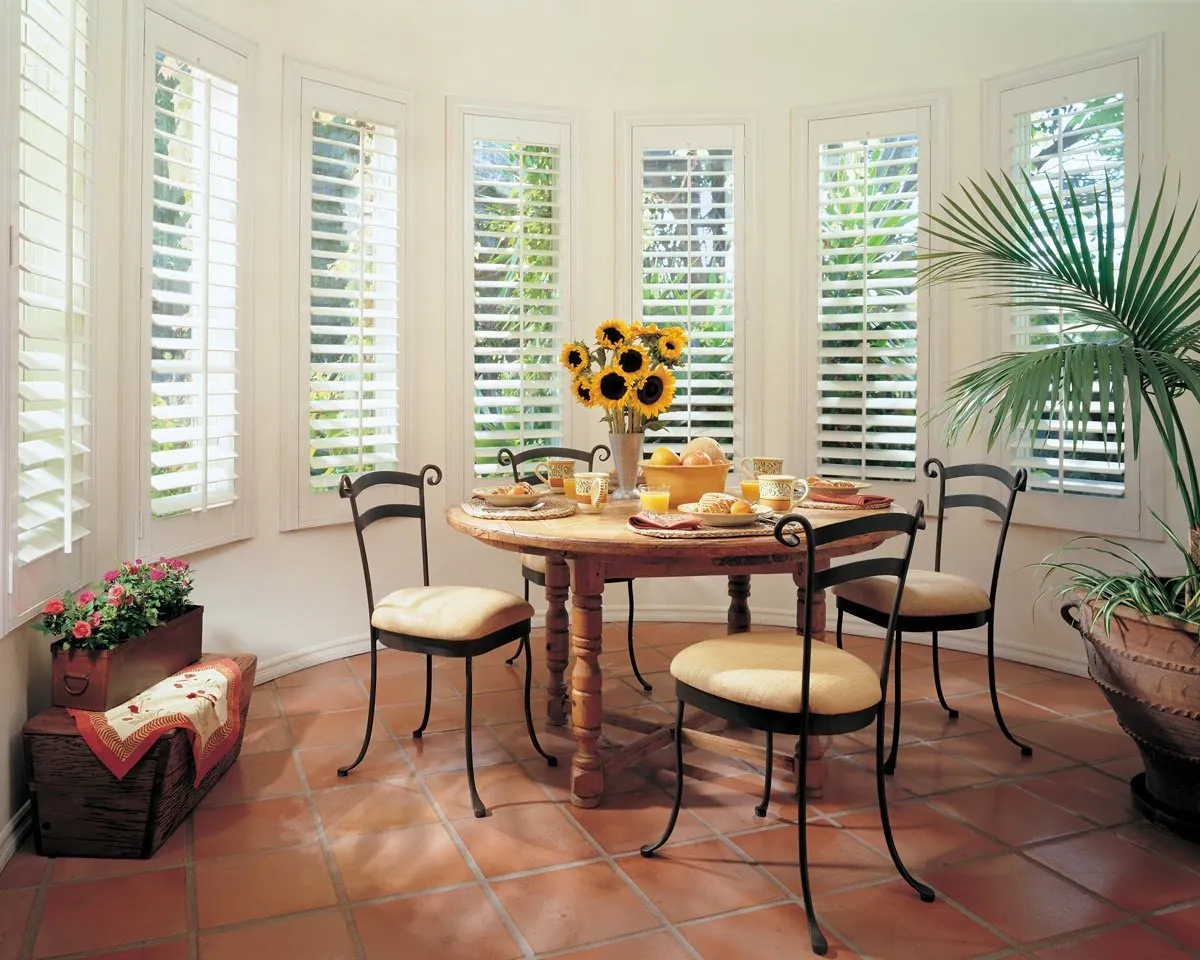
With few neighbors and plenty of open ground, many Upton houses take sun on more than one side, with little to shade them. A west-facing family room can be bright and warm late in the day. Louvers handle that in small steps. Tilt the blades slightly and the sun strikes their faces and reflects upward, so the room stays light but the glare stops reaching the sofa or the floor. Tilt them further as the sun drops.
A rail part way up a tall panel adds another option: the upper louvers open for daylight and the lower ones angled against the low sun. It is a flexible arrangement and it suits the larger windows of the newer colonials well.
Rooms on the north side of the same house rarely need this. Their light is even and soft all day, so the louvers there can be left open and the panels chosen mainly for looks and for privacy at night. Planning each side of an Upton house for the light it actually gets is better than giving every window the same treatment.
The three collections and how people choose
Every Upton visit brings the same three Hunter Douglas shutter collections. Here is how the choice often goes in town, though your own preference at the window is what counts.
- Palm Beach: frequently compared first for baths and kitchens.
- NewStyle: often chosen for the long runs of matching windows on a newer colonial.
- Heritance: the one people hold against original woodwork in the antique houses.
The three differ in appearance, finish and color choice. Rooms can mix them freely, provided the windows on view from the drive agree.
Louver size by house type
- Very small antique openings: the slimmest louver, so the panel carries enough blades.
- Ordinary rooms in the antique houses: slim or middle, chosen with the panel count.
- Bedrooms in the newer colonials: a middle size suits most.
- Front windows on a deep lot and family rooms at the back: wide louvers, for the clearest view.
Doing the house in stages
Not everyone shutters a whole house at once, and on a big colonial with many windows it is often sensible to start with the rooms that matter most. The risk is a front elevation that ends up mismatched when later rooms are added.
We avoid that by planning the front as a set at the first visit, even if only some windows are ordered then. The louver size, frame style, rail height and color are written down, so the next rooms follow without guesswork. Rooms at the back can be decided later with more freedom.
How a consultation runs
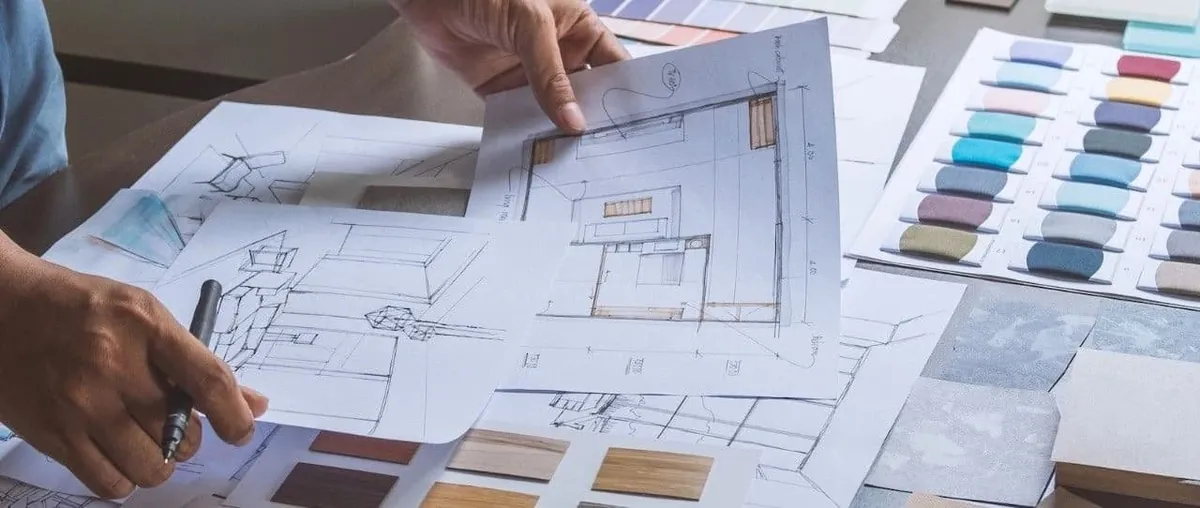
Every louver size and finish in all three lines travels in the van, and that is how we bring the showroom to you. Here is the usual shape of an Upton visit.
- Book through the website form or tap the call button to set a date.
- We walk the house with you and look at the oldest, smallest windows and the largest newer ones.
- Sample panels go up at the glass so you can compare louver sizes and see how much a frame covers on a tiny opening.
- We measure each window, check its depth and note any that are out of square.
- We talk through which windows should match, especially across the front.
- You get a free estimate, with no pressure to decide on the day.
Read more on our in-home consultations page, or see what happens on installation day once your shutters are made.

Color for old and new
In the antique houses, trim has usually been painted many times over, and the white of one room may not match the next. A bright white shutter can look stark against mellowed casing; a softer white or off-white usually settles in better. Rooms with stripped or unpainted woodwork are where a stained finish is worth trying.
The newer colonials tend to have crisp, consistent trim, and a clean white shutter suits them almost every time. If you would like a color instead, the front windows are where it should be consistent. Finish samples come along so the judging happens by daylight in your rooms. Choosing plantation shutters in Upton, MA, for an antique house and a newer one can lead to quite different color decisions even on the same road.

Franklin is our closest showroom
Of our showrooms, Franklin is the one closest to Upton, and it is a good first stop if you like to look around before booking anything.
That said, a tiny antique opening is hard to imagine from a distance. The decision tends to come once a real panel is propped in your own window, which is why the measuring, the final choice and the fitting all take place at the house.
What Gallery status means
As a Hunter Douglas Gallery dealer, Blinds & Designs can offer the whole shutter range, from Palm Beach through Heritance, in every louver size and finish. Planning comes from people who move between tiny antique sash and brand-new colonial windows week in, week out.
Our installers carry Hunter Douglas certification, and every estimate is free. Interior design consultations help when a whole room needs rethinking, and existing blinds and shades can be repaired rather than replaced.
The rest of our Upton work is on the Upton page. For bedrooms where a soft fabric suits better than louvers, see cellular shades in Upton.
Questions from Upton
Can you fit a shutter to a very small antique window?
Yes. We use the slimmest frame the opening allows, a slim louver and usually a single panel, so the shutter stays in scale. Each opening is measured at several points first.
Does every small window in an old house need a shutter?
No. Some small gable or chimney-side windows look best bare. We go through the house with you and suggest shutters only where the room needs them.
How do I keep a newer colonial’s front looking consistent?
Plan the front windows as a set: same louver size, frame and color, with rails at one height. The rooms behind can be ordered in stages.
My house is set far back from the road. Do I still need privacy louvers?
Probably less at the front. Many people choose wider louvers there for the view, and keep privacy for bedrooms and baths.
What does the estimate cost?
Nothing. Estimates are free after we measure at your house.
When you are ready to look
Shutters are easiest to choose with samples in the actual window, whether that is a tiny antique opening or a wide colonial front window. Ask for a consultation and Palm Beach, NewStyle and Heritance samples travel out to you, followed by careful measuring and a free estimate. The call button is there for anything quick, and the Franklin showroom is the place to start if you would rather browse first. Our main plantation shutters page has more on each collection.