
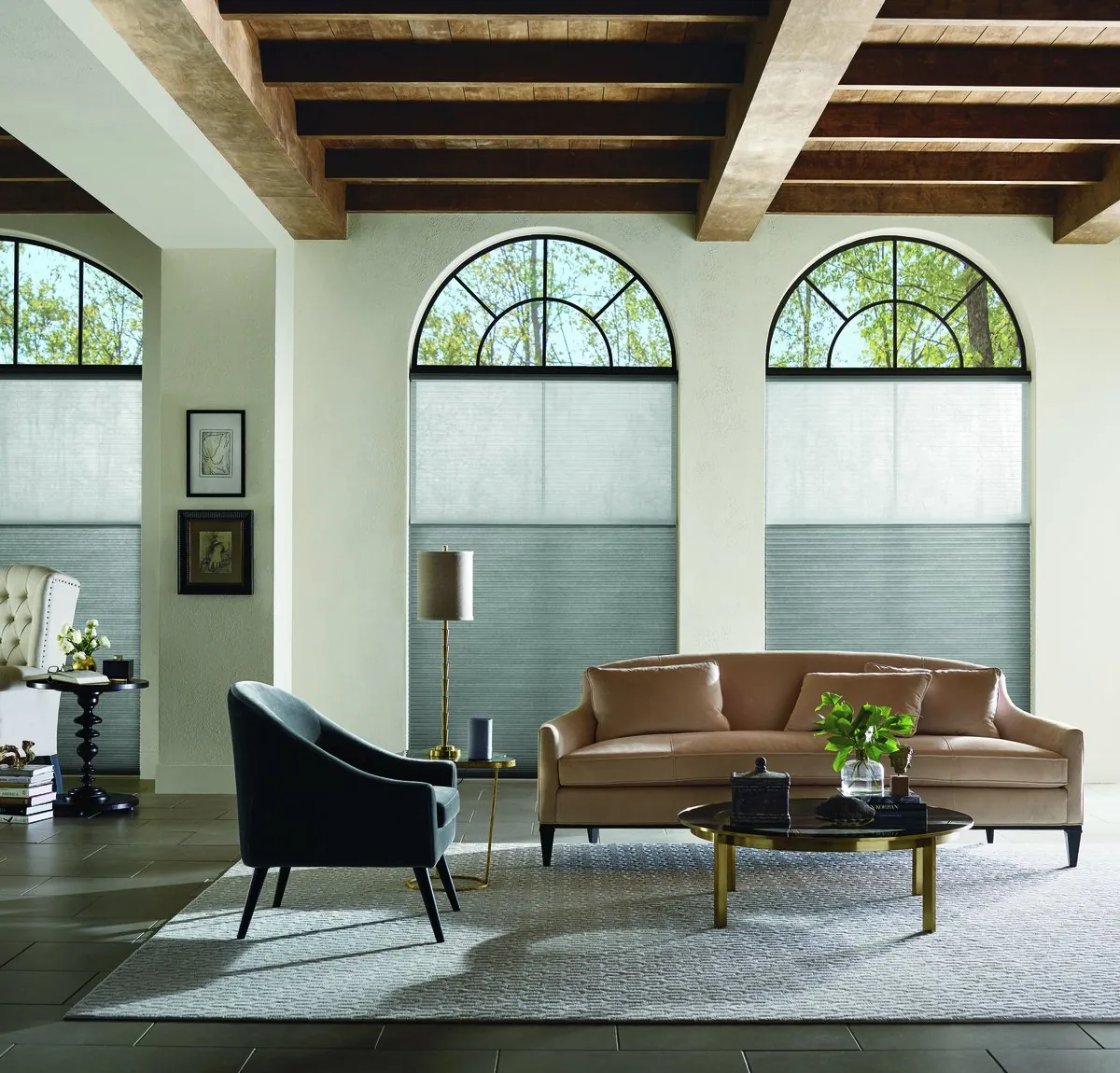
Close-packed houses and a cold wind off the bay
Quincy packs a lot of housing into its streets. Across Wollaston and North Quincy, two- and three-families stand side by side with tall, narrow sash on every floor. Out on Squantum the houses turn to shingle, and on the Squantum and Houghs Neck sides they take the weather straight off the water. Near the center, older buildings have been turned into condominiums, each unit with its own handful of windows. Each of these asks something different of a window covering, which is why we plan cellular shades in Quincy, MA, house by house rather than by catalog.
The common thread is heat. Tall old sash, single rooms with windows on two sides and exposed walls facing the bay all let warmth slip away in winter. A honeycomb shade answers that with its shape: the fabric forms a band of closed cells, and lowered against the glass those cells hold a cushion of air that barely moves. The room keeps more of its warmth, and the seat by the window stops feeling like the coldest place in the flat.
Privacy is the other thread. When the house next door is only a driveway away, side windows look straight into the neighbors’ rooms, and the shade has to deal with that too.
Honeycomb shades in three Quincy settings
How the Hunter Douglas honeycomb range is usually put to work in a Wollaston flat, a Squantum shingle house and a condominium near the center.
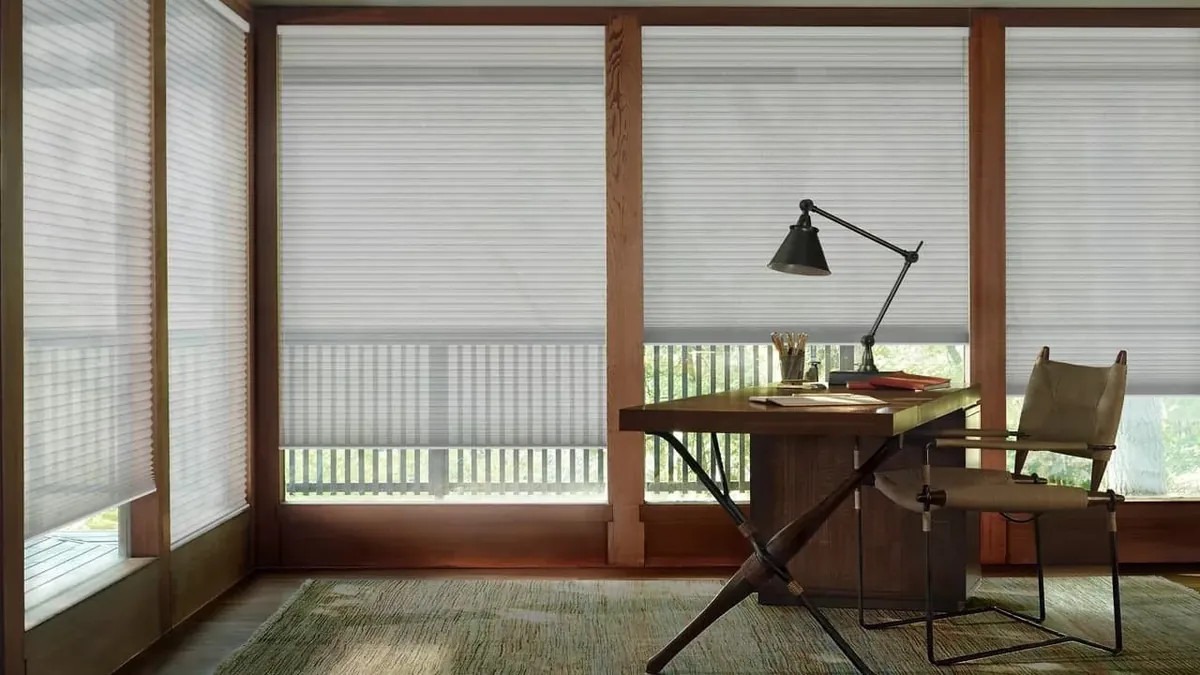
Tall sash in a two- or three-family
Narrow shades made to each tall window, holding warmth in a flat where every room has glass and screening the view across the driveway.
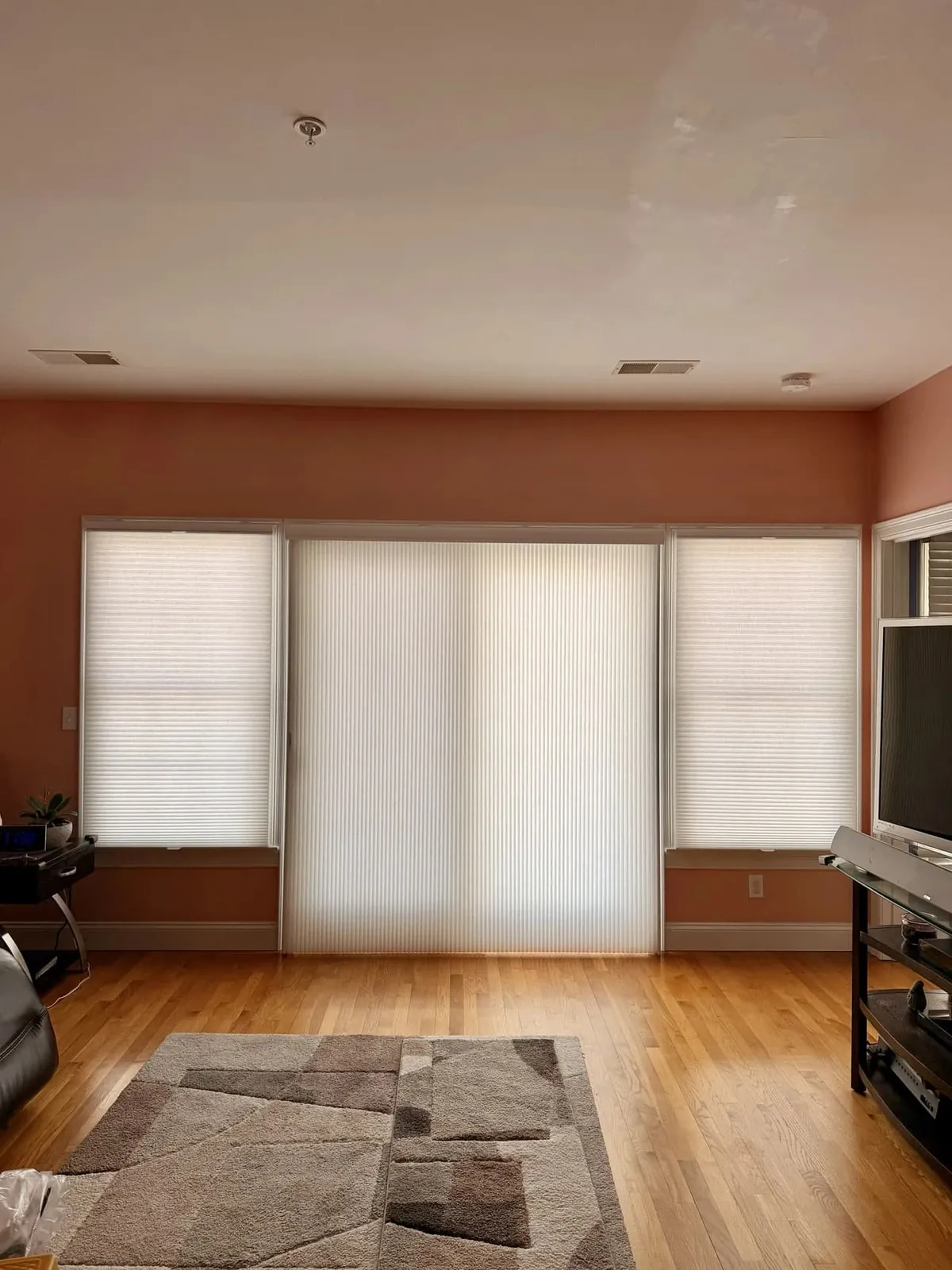
Shingled houses on the water side
On Squantum and Houghs Neck, shades that soften the strong light off the bay and keep the rooms warmer when the wind comes in off the water.
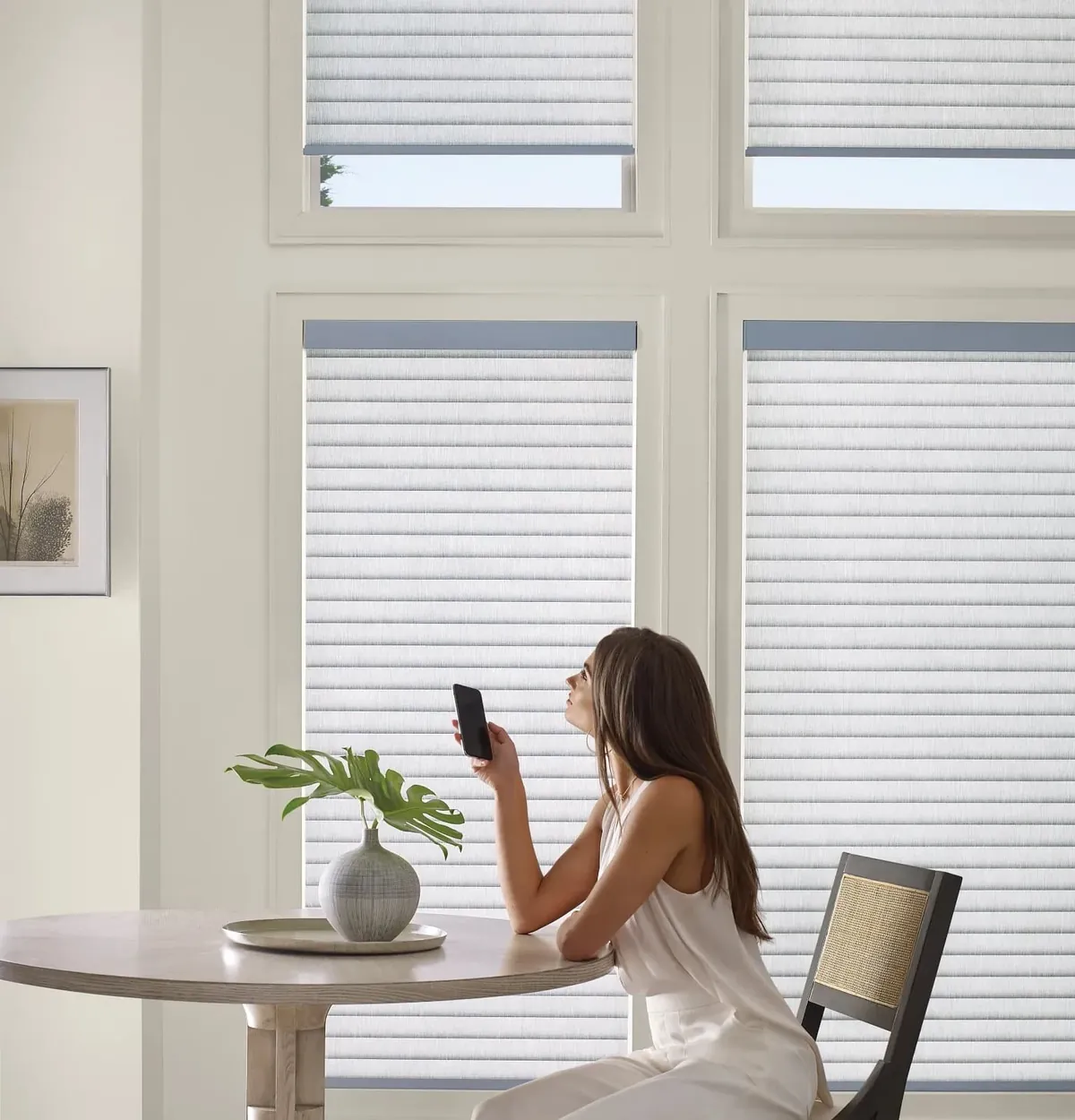
Motorized Blinds and Shades in Quincy
Honeycomb shades on PowerView, moved from a remote, the app or a schedule. Useful in a condominium with windows behind built-in furniture.
Wollaston and North Quincy: one floor, many windows
A flat in a Wollaston two-family or a North Quincy three-family is a whole home on one level, with windows front, back and down one or both sides. The sash is tall and narrow, often original or replaced to the same shape, and in many flats nearly every room has at least one window on an outside wall. That makes the flat bright, and it makes it cold when the wind picks up.
Honeycomb shades suit these windows well because they can be made narrow and tall without looking pinched. Each opening is measured on its own, since a building that has stood this long seldom has two windows exactly alike. Where the frame has room for the headrail, the shade sits within the casing and disappears when raised. Where it does not, often because of old sash hardware or a shallow replacement frame, the shade is mounted just above the window with a slight overlap at the sides.
For a household on one floor, getting the living room, the kitchen and the bedrooms in one fabric family keeps the flat feeling calm. The back bedroom and the bathroom on the side can take a denser fabric for privacy, while the front room keeps a lighter one that lets the daylight through.

The driveway between you and next door
In the denser parts of Quincy, the side windows of one house often face the side windows of the next across a narrow driveway. In daytime that means looking into each other’s kitchens; at night, with lamps on, more than either household would want.
A light-filtering honeycomb fabric is the usual answer for daytime. Lowered, it glows with daylight while blurring the view into the room, so you are not living with the lights on just to have some privacy. For bedrooms and bathrooms on the driveway side, a denser fabric gives full privacy after dark. We bring both kinds and look across the driveway from inside your own rooms before suggesting either.
The front rooms on a busy street face a similar question. In a first-floor flat, people walk past within a few paces of the window. A shade at a mid-height through the day, with a lighter fabric, keeps the room bright without putting it on display.
Upstairs, downstairs and the stair hall
Two- and three-families share more than a roof. The front and back stair halls usually have tall windows of their own, often the coldest windows in the building because nobody heats the stairs. Those windows are easy to forget and well worth covering: a honeycomb shade on a stair window makes the hall noticeably warmer for everyone in the house.
If you own the building and live in one unit, matching the street side of every flat in one outward color makes the front of the house look tidy and consistent. Inside, each flat can still choose its own fabric. Measuring two or three units in one trip is straightforward if you mention it when booking, and each household can sit in on the choices for its own rooms.
Shingled houses on Squantum
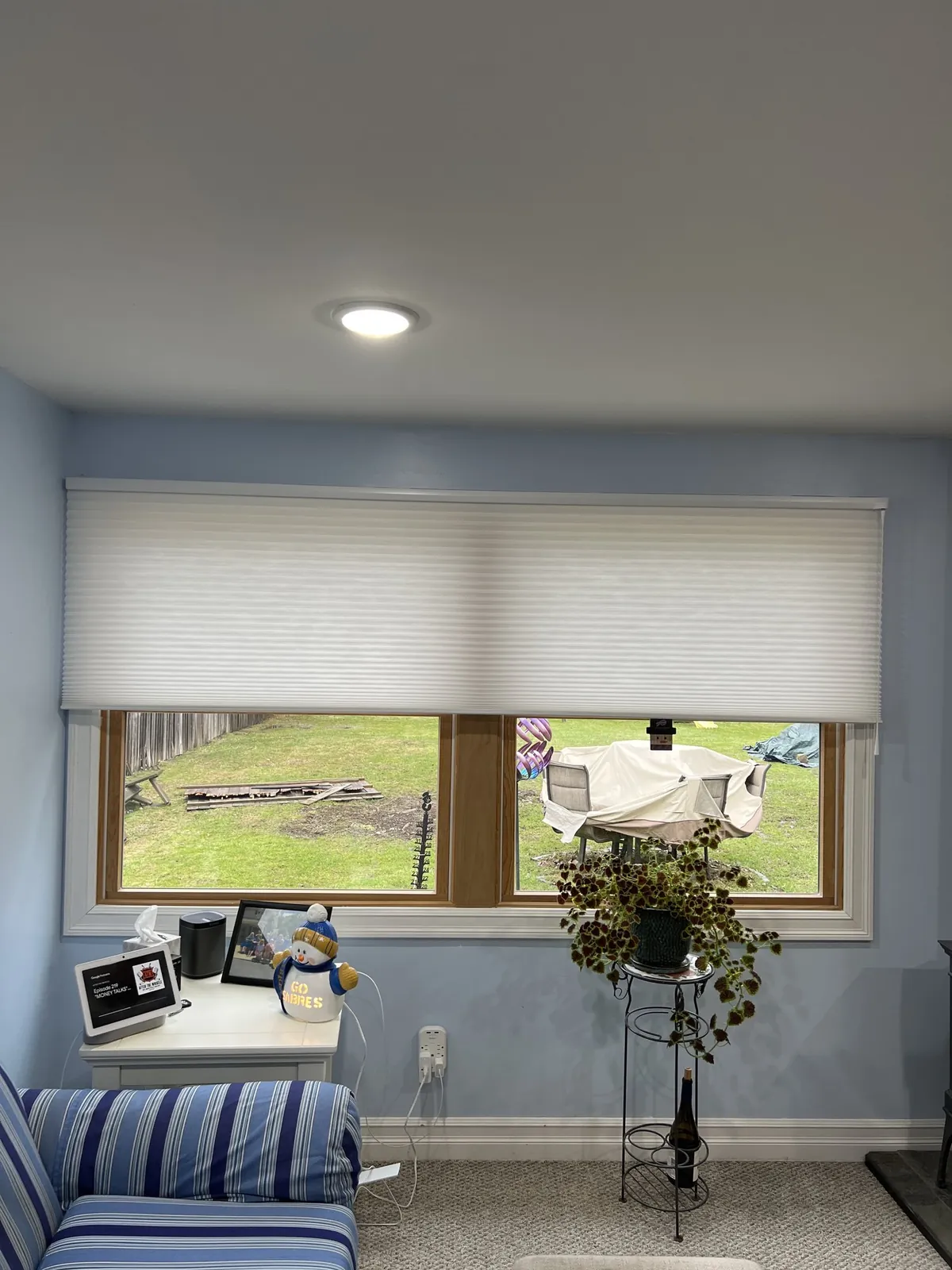
Squantum’s shingled houses have a character of their own: varied windows, rooms angled toward the water, and walls that face the weather directly. On the exposed sides, the wind off the bay finds every cold pane in winter, and in summer the light off the water can be very bright in the afternoon.
For those houses we think about each side separately. The water side wants a fabric that takes the glare off the bay without shutting out the view or the light. A light-filtering honeycomb softens that brightness evenly, so the room stays usable at the time of day the sun hits the water. The landward side, often closer to neighbors, leans more toward privacy. The bedrooms, wherever they face, benefit from a denser fabric that keeps the room dim early in the morning.
Shingle houses often have a mix of window sizes, including small square windows, narrow lights beside doors and the odd window in a gable. Every honeycomb shade is made to its own opening, so the odd sizes get the same finish as the main windows. Choosing cellular shades in Quincy for a Squantum house is often about drawing that variety of windows into one look.
Houghs Neck and the exposed side
Houghs Neck sits out in the water with exposure on more than one side, and houses there feel the wind on their seaward walls. The cold on a winter night is the main reason honeycomb shades come up in conversation on the Neck.
Lowered at dusk on the exposed side, the shades hold a layer of still air against the glass and keep more of the room’s warmth inside. On a bright summer day, the same shades slow the heat coming through the glass on the sunny side. We talk through how strong the light is on each wall and suggest fabrics accordingly, holding samples at the windows so you can see how each one behaves in the light off the water.
The kitchen at the back of the flat
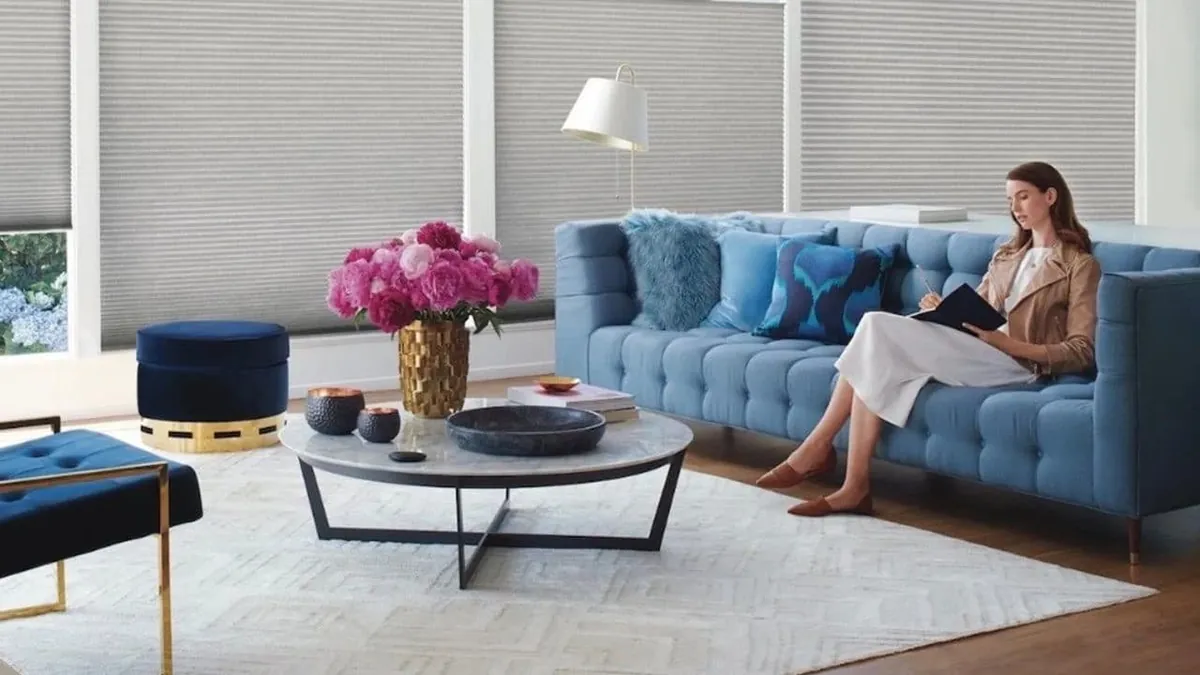
In a Wollaston or North Quincy flat, the kitchen is usually at the back of the floor, often with a window over the sink, another beside the table and a door onto a back porch or stair. It is the room where a household spends its mornings, and in winter it is where the cold from the back of the building is felt first.
A honeycomb shade over the sink needs to rise well clear of the faucet and stay out of the way of daily cooking. Raised, the shade stacks into a slim band at the head of the window, so the glass is nearly all clear. Lowered on a winter evening, it takes the chill off the room. A fabric that lets light through suits most kitchens, because the room stays bright while the view into it from the back porches of the neighboring houses is softened. Picking cellular shades in Quincy kitchens in the same fabric family as the living room keeps the whole flat feeling connected, even where the windows differ in size.
Condominium conversions near the center
Near the center, older buildings have been converted into condominiums. A unit may have a few large windows from the building’s earlier life, a newer kitchen window, and a bedroom with a single opening onto a courtyard or the street. Units in the same building can differ quite a lot.
Two practical points come up. First, if your association has guidance about how windows look from outside, bring it to the visit, and we can choose a fabric whose outward color fits. Second, in a smaller space, a consistent fabric through the whole unit makes the rooms feel larger and calmer. Honeycomb shades are slim when raised, so they do not crowd a window or a small room.
Where a window sits behind built-in shelving or a kitchen counter, PowerView motorization moves the shade from a remote or an app, so nobody needs to lean across to reach it.
Why the honeycomb holds heat
Turn a cellular shade on its side and you see what makes it work: hollow cells running across the window, one above another. Lowered, the shade traps air in those cells, and air that cannot circulate does a poor job of carrying heat. That slows the warmth escaping through the glass in winter and slows the sun’s heat coming in through the summer.
In a Quincy flat, where windows are on several walls and the rooms are compact, the effect is easy to feel. The chill near the glass softens, and the radiators do not have to fight so hard. Our guide to cellular shades and winter heat explains this in plain terms.
How we work in Quincy: at your home
Quincy is served by our Canton shop-at-home service, so the consultation always happens where you live. Vans carry the samples, which means we can bring the showroom to you. In a flat on a busy street or a shingle house facing the bay, that is the only way to see how a fabric looks in your actual light.
- Get in touch through Request a Consultation, or use the call button, and set a time.
- We arrive with Duette and Applause samples in lighter and denser fabrics and a range of colors.
- You show us which rooms feel coldest, brightest or most overlooked.
- We hold samples at the windows on each side of the house, so you can compare the driveway side with the street side, or the water side with the land side.
- Each window is measured and its frame checked for depth.
- You get a free estimate, and you decide in your own time.
For a two- or three-family, tell us how many units you would like measured. If you want help with color and the rest of the room, ask about our interior design consultations.
Choosing a honeycomb line
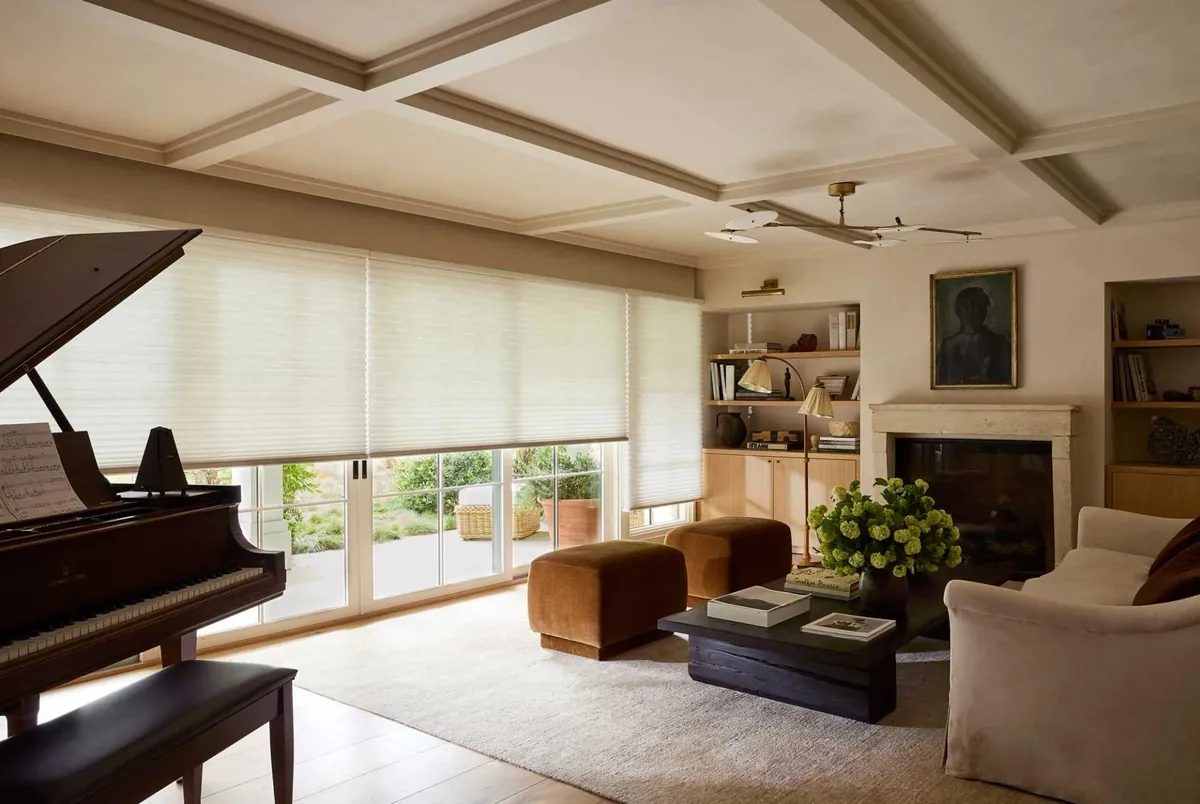
Hunter Douglas makes two honeycomb lines, Duette and Applause. Their cells hold air in the same way; the difference is in the fabric ranges and the look of each. Duette’s collection is the larger, with more textures and colors, and it is often the pick for a front room or a water-facing living room where the shade is part of the view. Applause has a palette of its own that suits bedrooms, kitchens and the repeating tall sash of a two-family flat.
Plenty of orders for cellular shades in Quincy combine both. Seeing them side by side at your window makes the choice straightforward. See Duette honeycomb shades and Applause honeycomb shades, or the main cellular shades page.
Motors for tall windows and busy flats
With PowerView, a honeycomb shade can be raised and lowered from a remote, the app on your phone, or on a schedule. In a Wollaston flat, a schedule can drop the driveway-side shades every evening at dusk and raise the living room shades in the morning. In a condominium, a shade behind a counter or a built-in is no longer a stretch to reach. On a water-facing house, shades on the bright side can lower through the hottest part of a summer afternoon on their own.
You can start with a single room and add more later. If you might want motors in future, mention it at the visit so the shades you choose now are ready for them. We plan how each motor is powered while we are in the house.

From measurements to installation
- Each opening is measured across at three heights and down at three points, because old sash is rarely square.
- Frame depth is checked, and any sash hardware or latches near the front are noted.
- The mount and fabric for each window are agreed with you before the order goes in.
- Our certified Hunter Douglas installers fit the shades, fixing each bracket firmly and levelling each headrail.
- They test every shade, set up any PowerView remotes and schedules, and show you how it all works.
Because each shade is made to its own window, it fills the opening neatly and leaves only small gaps at the sides.

A Gallery dealer that comes to Quincy
Blinds & Designs is a Hunter Douglas Gallery dealer. Our installers carry Hunter Douglas certification, and the same company measures, orders and hangs your shades. In practice that gives a Quincy flat, shingle house or condominium the whole honeycomb range, every Duette and Applause fabric and PowerView, at one consultation.
Other rooms can be planned at the same time. We carry Hunter Douglas blinds, shutters, roller and roman shades and drapery: roller shades in Quincy can suit a bright water-facing room, and custom blinds in Quincy are a practical choice for a kitchen. Everything we offer locally is on our Quincy page.
To see Hunter Douglas products before the visit, our nearest showroom is the Franklin showroom.
Questions from Quincy
Will honeycomb shades fit the tall, narrow sash in my Wollaston flat?
Yes. They can be made narrow and tall without looking pinched. We measure each window separately and check the frame depth, mounting above the window where an inside mount would be too tight.
My side windows face the next house across a driveway. What works?
A light-filtering fabric keeps the room bright by day while blurring the view in. On bedrooms and bathrooms facing the driveway, a denser fabric gives privacy after dark.
We live on Squantum and the light off the water is strong. What do you suggest?
A light-filtering honeycomb softens glare evenly while keeping the room bright and the view usable. We look at each side of the house separately and hold samples at the windows that catch the most light.
Can all the units in our three-family be measured at once?
Yes. Tell us how many units when you book, and we will measure them in one trip. Each household can choose its own fabric.
Do you charge for the estimate?
No. The estimate is free and follows the measuring.
Starting your Quincy project
From a Wollaston flat with tall sash to a shingle house on the water, the best choice shows itself once the samples are at your window. Ask for a consultation and we will visit with the honeycomb range, measure each window and give you a free estimate for cellular shades in Quincy, MA. If you would like to talk first, the call button is the quickest way.