
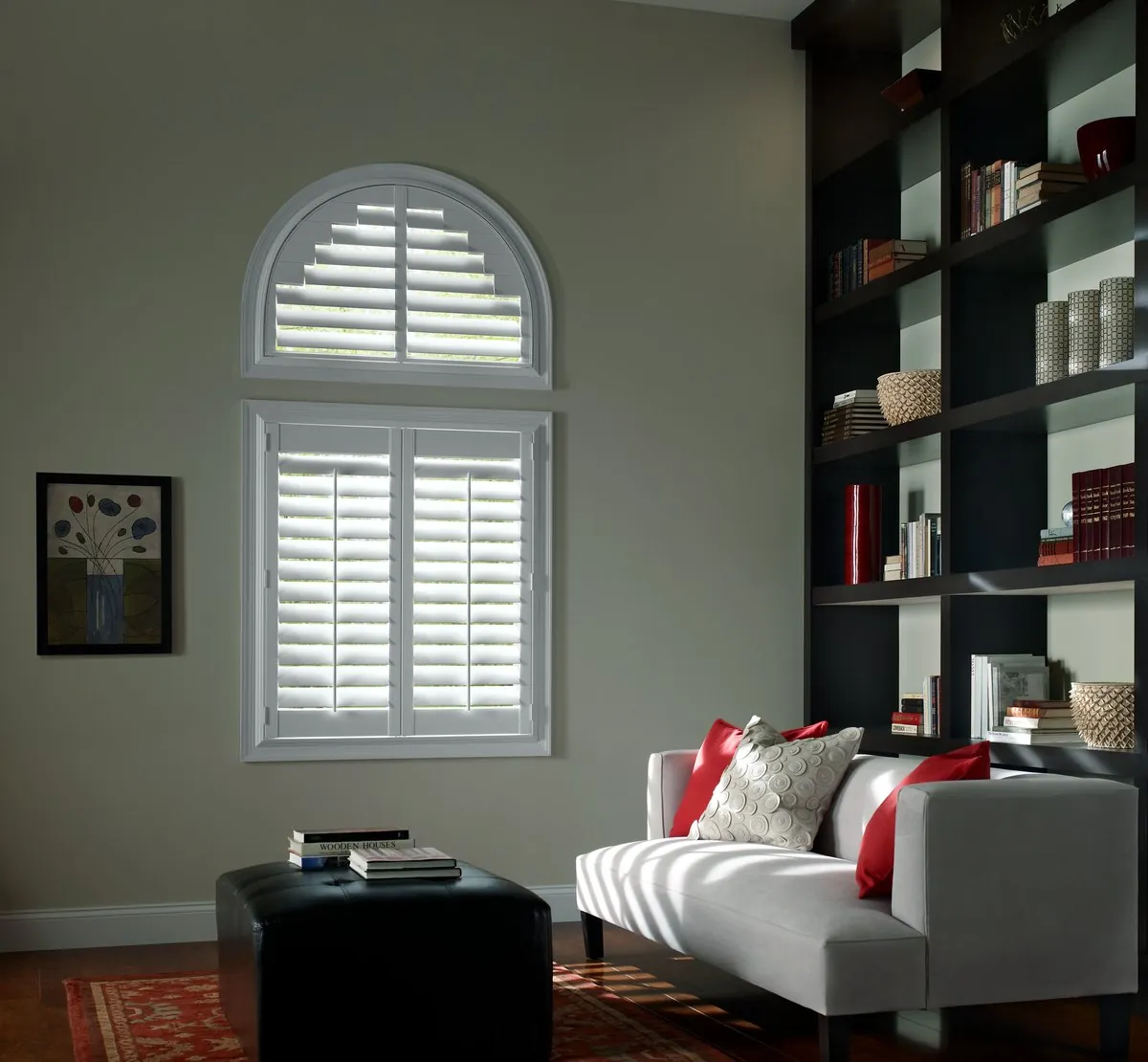
Small old sash and big water views under one town line
Duxbury asks more of a shutter than most towns do, because its houses pull in two directions. Along Washington Street and down toward the Nook stand antique capes and Federal houses whose original window openings are small, some of them very small, set into walls that have been standing a long time. Out on Powder Point the rooms that face the water are glazed heavily, with wide runs of glass meant to take in the bay. Inland, on wooded lots, larger newer houses have generous modern windows and tall family rooms. Fitting plantation shutters in Duxbury, MA, means treating each of these as its own problem.
On an antique cape the goal is a shutter that respects a small opening and an old casing. On a Powder Point living room it is a shutter that can open almost out of sight so the water stays in view. In a newer house among the trees it is about consistency from room to room and a clean look from the street.
Hunter Douglas gives us three collections to work with, plus a long list of louver widths, frame profiles and panel layouts. The work is in matching them to the window in front of you.
Plantation shutters in Duxbury, MA: the choices that shape the fit
Every shutter we order is built to its own opening. These are the features we talk through most often in Duxbury houses, and we bring working samples of each.
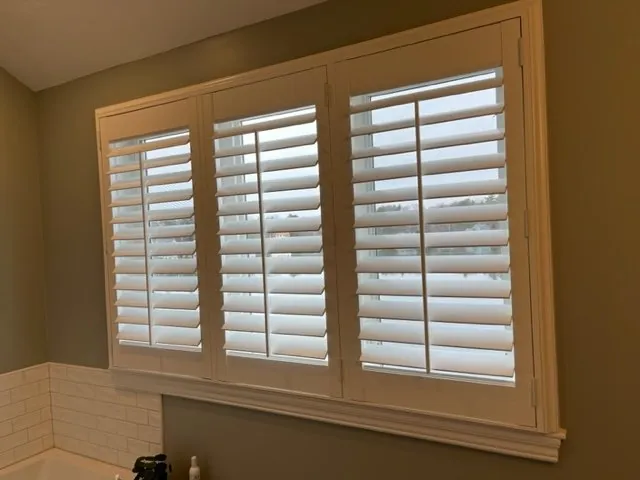
Palm Beach for damp rooms
Polysatin rather than wood, so steam from a shower or a kitchen kettle does not trouble it. The natural pick for bathrooms and for rooms near the water.
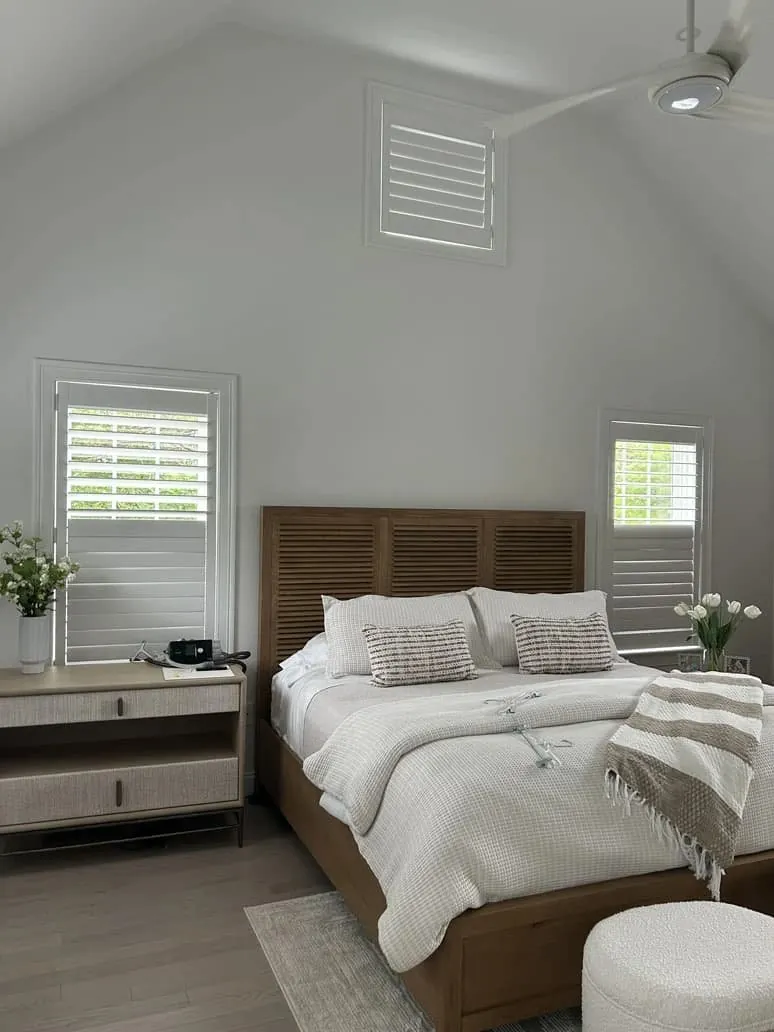
Narrow louvers for antique sash
A slim louver stays in scale with a small Federal or cape window, where a wide blade would look heavy and hide too much glass.
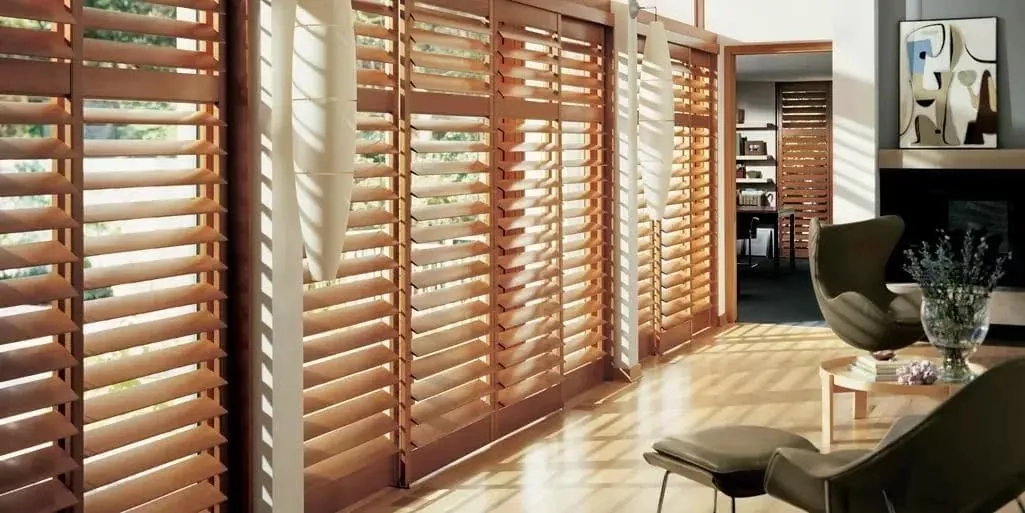
Wide louvers for the view
Fewer blades across the glass and more open space between them, which is what a water-facing room on Powder Point wants.
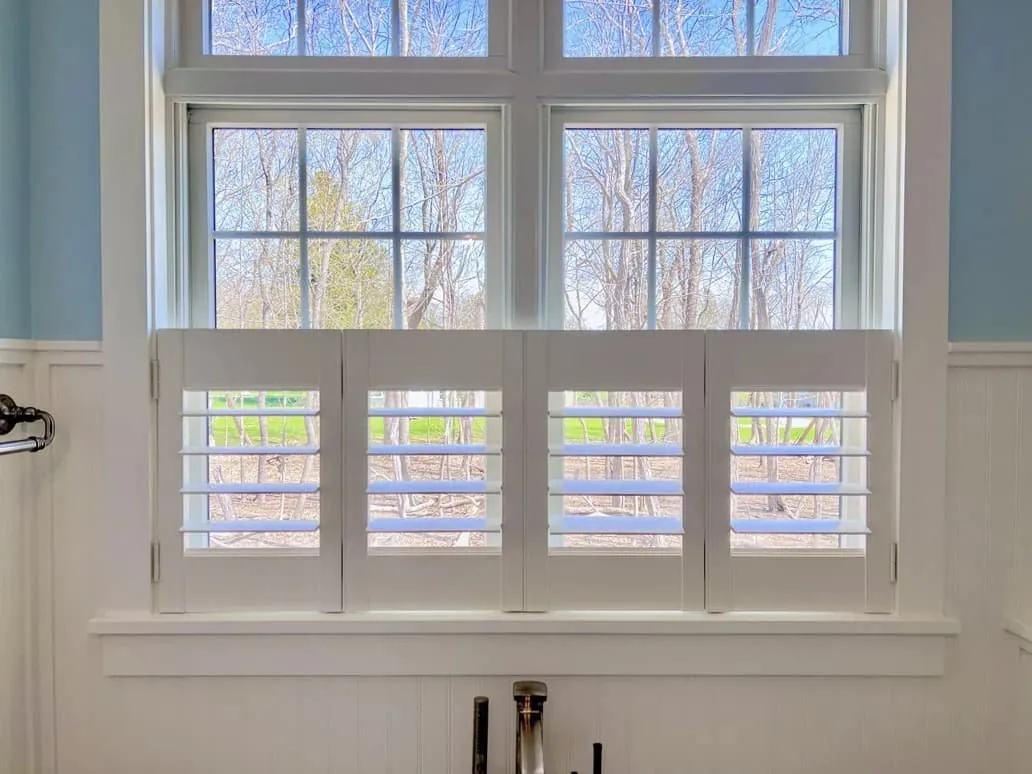
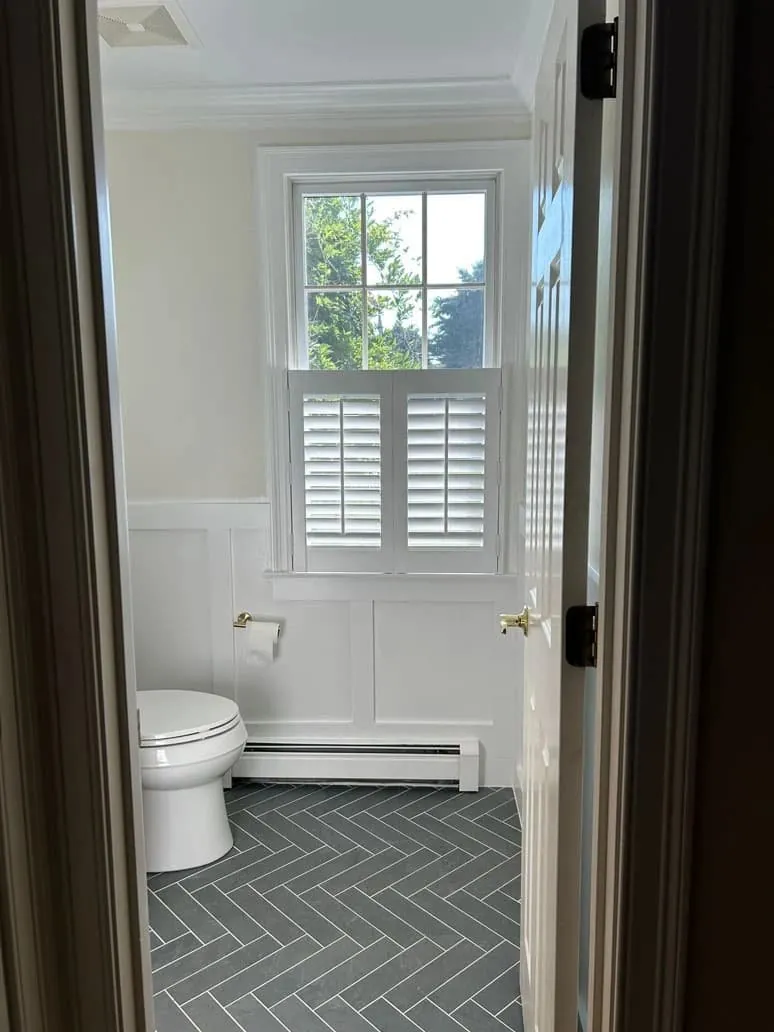
Cafe panels over a sink
Shutters on the lower sash only, so the top of the window stays open to the sky while the counter stays private.
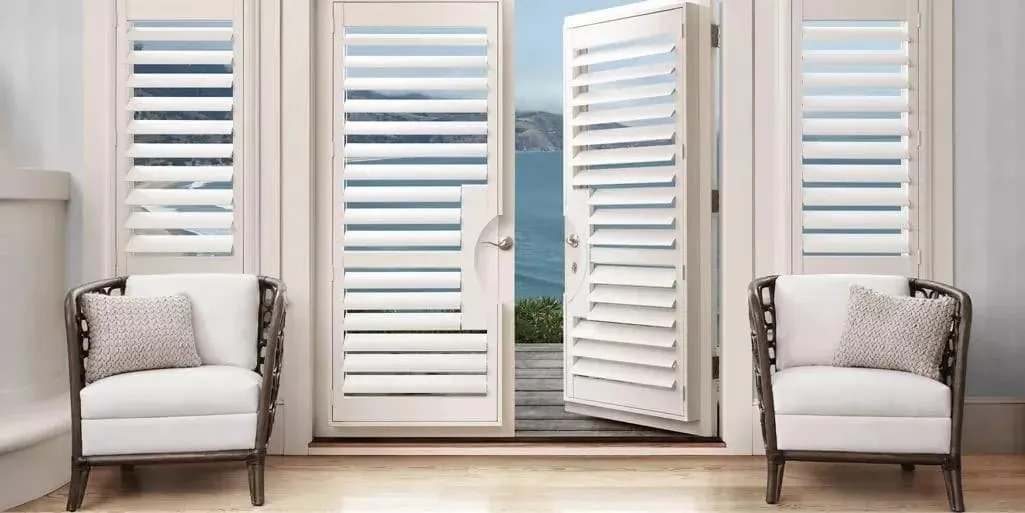
Shutters on French doors
Door panels mounted so the louvers clear the handle and the door swings freely, matched to the windows beside it.
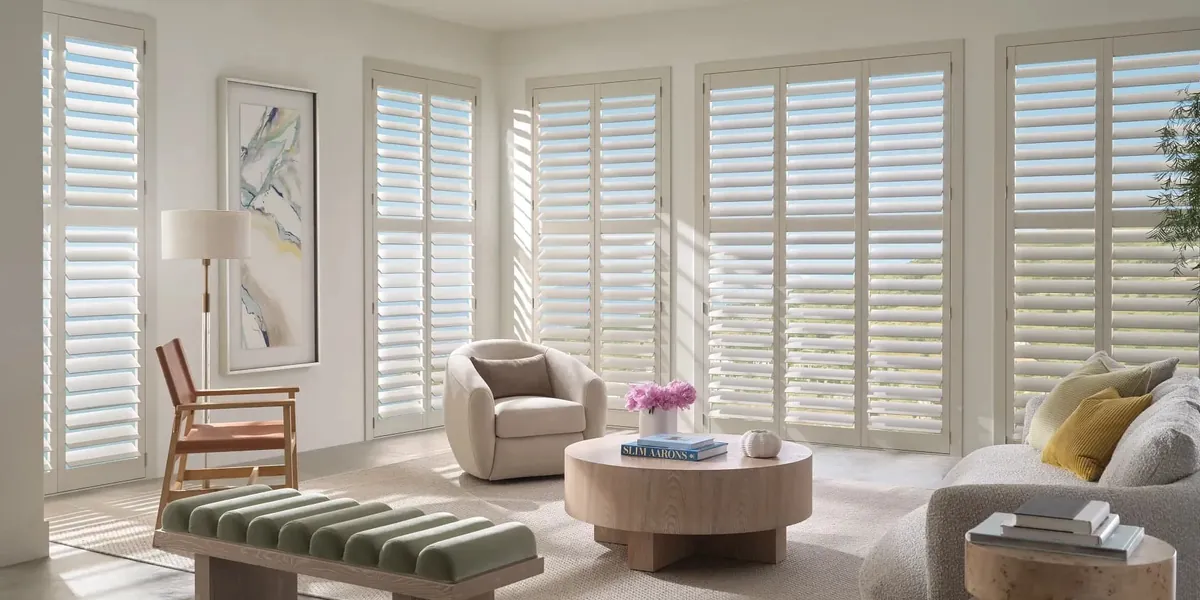
Heritance hardwood
Real wood, painted or stained. Often the choice for a restored front parlor where the trim and floors are the point of the room.
Antique capes along Washington Street
The capes near the center and along Washington Street were built with windows sized for their time: modest openings, often small panes, and casings that have been painted many times over. In some rooms the window is barely wider than a pair of shutter panels. That small scale is what makes these houses so pleasing from the street, and it is also why a careless shutter can spoil a room.
The first decision is the louver. A narrow blade keeps the proportions right on a small sash and lets more blades fit the height, so the shutter looks deliberate rather than squeezed. The second is the frame. A slim frame set inside the opening hides as little glass as possible and keeps the casing in full view, which matters when that casing is original. Where the opening is shallow or a sash lock sits in the way, we look at a low-profile frame that sits just proud of the reveal instead.
Panel layout matters on a small window too. A single panel that swings fully clear can be better than a pair that meet in the middle, because a center stile on a tiny opening blocks the view more than you would expect. We sketch the options at your window so you can see the difference before anything is ordered.
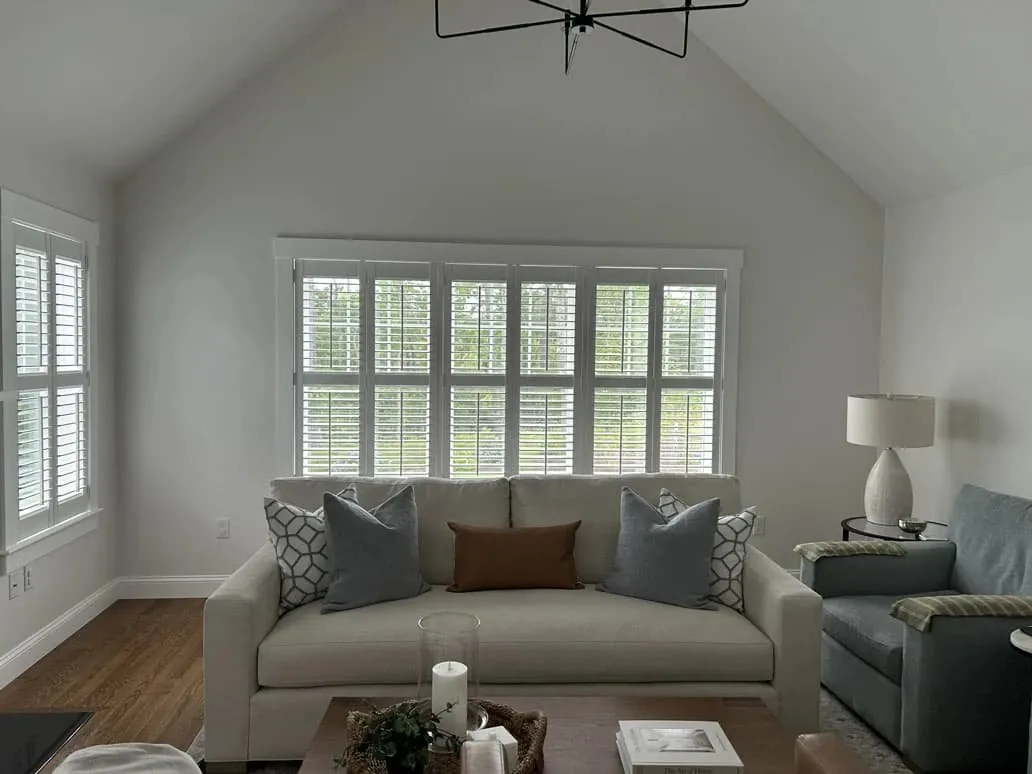
Federal houses near the Nook
The Federal houses toward the Nook tend to be taller and more formal than the capes, with symmetrical fronts and well-proportioned double-hung windows. Many have deep interior trim and window reveals with room to spare. A plantation shutter is a natural fit in a house like this, and the goal is for it to look as though it has always been there.
For these rooms Heritance is the usual answer. It is genuine hardwood, so it takes paint the same way the trim does, and it can be stained if the room has been restored to its original wood. A divider rail set at the line of the meeting rail on the sash lets the top and bottom louvers work separately, so the shutter echoes the shape of the window behind it. A hidden tilt, where the louvers move from inside the panel edge rather than by a rod down the front, keeps the face clean and quiet.
Old houses settle. A window that looks square often is not, and a shutter frame has to give the panels a true seat to swing from. We measure the width in several places and the height on both sides before we commit to an inside mount. If the opening has moved too far, a frame with a slightly deeper profile can take up the difference so the panels still meet in a straight line. Our guide to shutters for older windows explains this in more detail.
Powder Point rooms built around the water
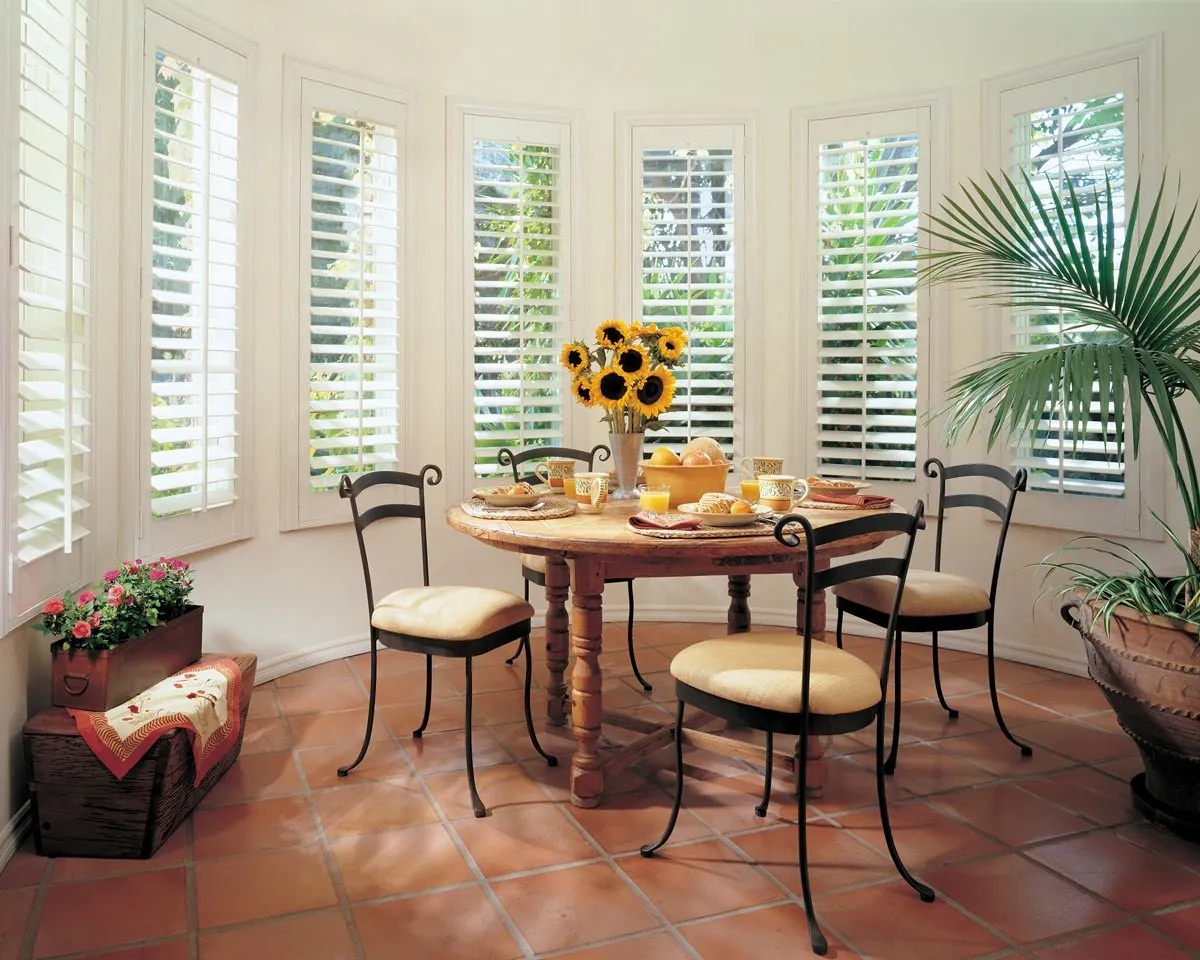
Out on Powder Point the houses face the bay, and the rooms that look onto it are glazed heavily: big windows, glass doors, sometimes a corner where two walls of glass meet. Light comes in from the sky and again off the water, and on a bright afternoon it fills the room from more than one angle.
Shutters handle this kind of light better than most coverings because the louvers can be aimed. Tilt them up and the light off the water is thrown onto the ceiling, so the room stays bright without glare across the sofa or a screen. Tilt them down for privacy from the shore path while still seeing out. Close them and the room goes calm. When you want nothing in the way, the panels swing back against the wall and the whole view is open.
A wide louver is almost always right here, because it gives the clearest view when the blades are open. On a long run of glass we split the opening into several panels so each one stays light enough to swing easily, and we hinge them in pairs or folding sets so they stack neatly at the sides. On the glass doors out to a deck, panels are mounted so the door handle still works and the door swings without catching.
Salt air, sun and the right material
Houses this close to the water live with damp air in summer and strong sun on the glass most of the year. Material choice counts for more here than it does inland.
Palm Beach shutters are made from polysatin, a solid material with no wood inside to swell. They suit bathrooms and kitchens anywhere, and they are a sound choice for any Powder Point room that stays open to the sea air through the warm months. A damp cloth keeps them clean.
Heritance hardwood is the pick for a formal room where the wood itself matters, and it is well suited to the drier, interior rooms of an antique house. NewStyle sits between them: a composite with the look of a painted wood shutter, often chosen for bedrooms and family rooms across a whole house.
Many of the plantation shutters in Duxbury, MA, that we plan end up as a mix. The parlor takes Heritance, the bathrooms Palm Beach and the upstairs NewStyle, all in one white and one louver size so the house looks consistent from outside.
Newer houses on wooded lots inland
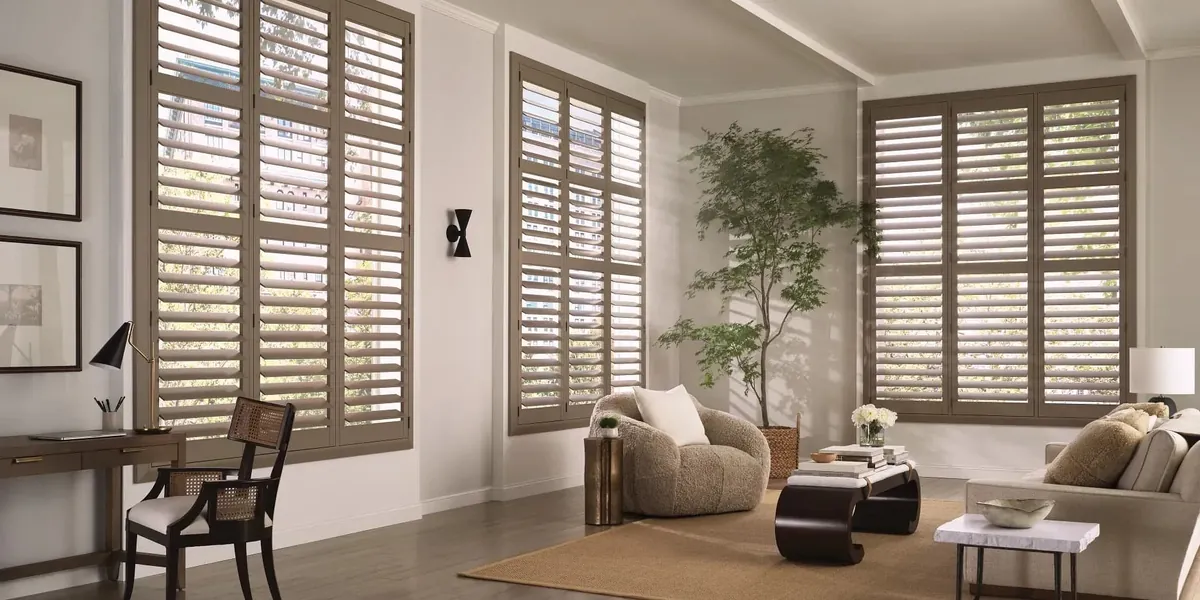
Away from the water and the old village, many Duxbury houses sit on wooded lots, set back from the road among tall trees. They are larger, newer and built to modern standards, with square openings, generous windows and often a family room that rises well above the first floor.
Square, well-built openings make for easy inside mounts and clean lines. The question in these houses is usually less about fit and more about consistency and scale. A whole-house order in one collection gives every room the same finish and the same louver, so the house looks tidy from the street and calm inside. Wide louvers suit the bigger windows and keep the view of the trees open.
Wooded lots also bring changing light. A room that is dim in the morning under the trees can catch a hard band of low sun in late afternoon when it slips between the trunks. Louvers let you close down just the part of the window where that sun lands, or tilt the whole panel to soften it, without plunging the room into darkness.
Tall family rooms and shaped windows
Some of the newer houses have a two-story family room with tall windows below and a transom, half-round or angled window above. Shutters can follow most of these shapes. Arched tops and half-rounds can have a shutter made to their curve, with the louvers either fixed or set to tilt. Angled windows at the top of a gable can take a panel cut to their slope.
We will be straightforward about the limits. A shaped window high above the floor is usually best with fixed louvers, since no one will reach it to tilt them. And if you want to open and close a very high window every day, a motorized shade may serve you better than a shutter, which we can talk through at the same visit. Most tall rooms end up with operable shutters on the lower windows, where you sit and live, and a fixed or different treatment above.
Frames, panels and the way they open
The frame finishes the window as much as the shutter does. On an inside mount it sits within the opening and lets the casing show. On an outside mount it fixes to the wall around the window, which suits shallow openings, windows with cranks in the way and any case where a casing is missing and the frame needs to stand in for trim. Frame profiles range from plain and slim to moulded designs that echo traditional trim.
Panels can hinge singly, in pairs, or in folding sets that stack against the side of a wide opening. For a slider or a very wide window, panels can run on a track and slide past one another instead of swinging into the room. Each of these is decided window by window, and each one changes how much of the glass you see when the shutter is open.
Light and privacy on a village street
Several of the old houses near the center stand close to the road, with front rooms only a short walk from the sidewalk. A divider rail answers that well: keep the lower louvers closed for privacy at eye level and tilt the upper ones open for daylight. Cafe-style panels on the lower sash alone do a similar job with even more sky showing. At night, with the panels closed, the room is private and the shutter reads from outside as a neat white line in every window. That tidy look from the street is one of the reasons plantation shutters in Duxbury, MA, suit the historic houses so well, since the shutter sits behind the old glass without changing the face of the house.
Bedrooms want something else again. A shutter with a close-fitting frame and the louvers shut darkens a room on a summer morning far better than most soft coverings, and it does it without a cord or a fabric to fade.
How we plan shutters at your home
Because the houses here are so different from one another, we start at your house. Our vans carry samples, so the collections, finishes and louver widths come to you.
- Request a consultation online or with the call button, and we set a time that suits you.
- We walk the house together and note which windows matter most: the water side, the street side, the damp rooms.
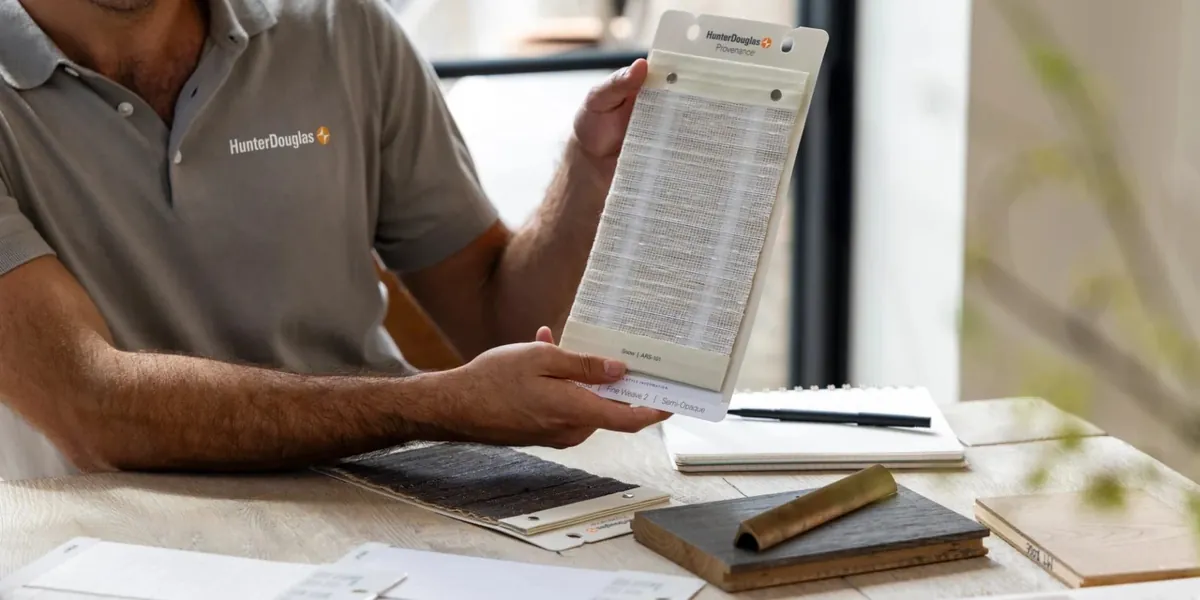
- You hold Palm Beach, NewStyle and Heritance samples against your own trim and see them in your own light.
- We decide louver size, frame and panel layout for each opening, and talk through divider rails and hidden tilt.
- We measure every window for width, height, depth and square, then give you a free estimate to think over at your own pace.
- When the shutters arrive, certified Hunter Douglas installers set the frames, hang the panels and adjust the louvers so they close evenly.
If you want help with the rest of a room, ask about our interior design consultations at the same visit.
A Gallery dealer for Duxbury shutters
Blinds & Designs is a Hunter Douglas Gallery dealer, so all three shutter collections and their finishes are available through one consultation. That matters in a house that needs hardwood in one room and polysatin in the next.
Every shutter is fitted by an installer certified by Hunter Douglas. On an antique opening that has settled, or a long run of glass on the water, that skill is what makes the panels meet cleanly and the louvers close in a straight line. We also handle blind and shade repairs, and we carry Hunter Douglas shades, blinds and window covering automation for the rooms where shutters are not the answer.
For other windows in town, see cellular shades in Duxbury or roman shades in Duxbury, or everything we offer on our Duxbury page. Our main plantation shutters page covers the full range.
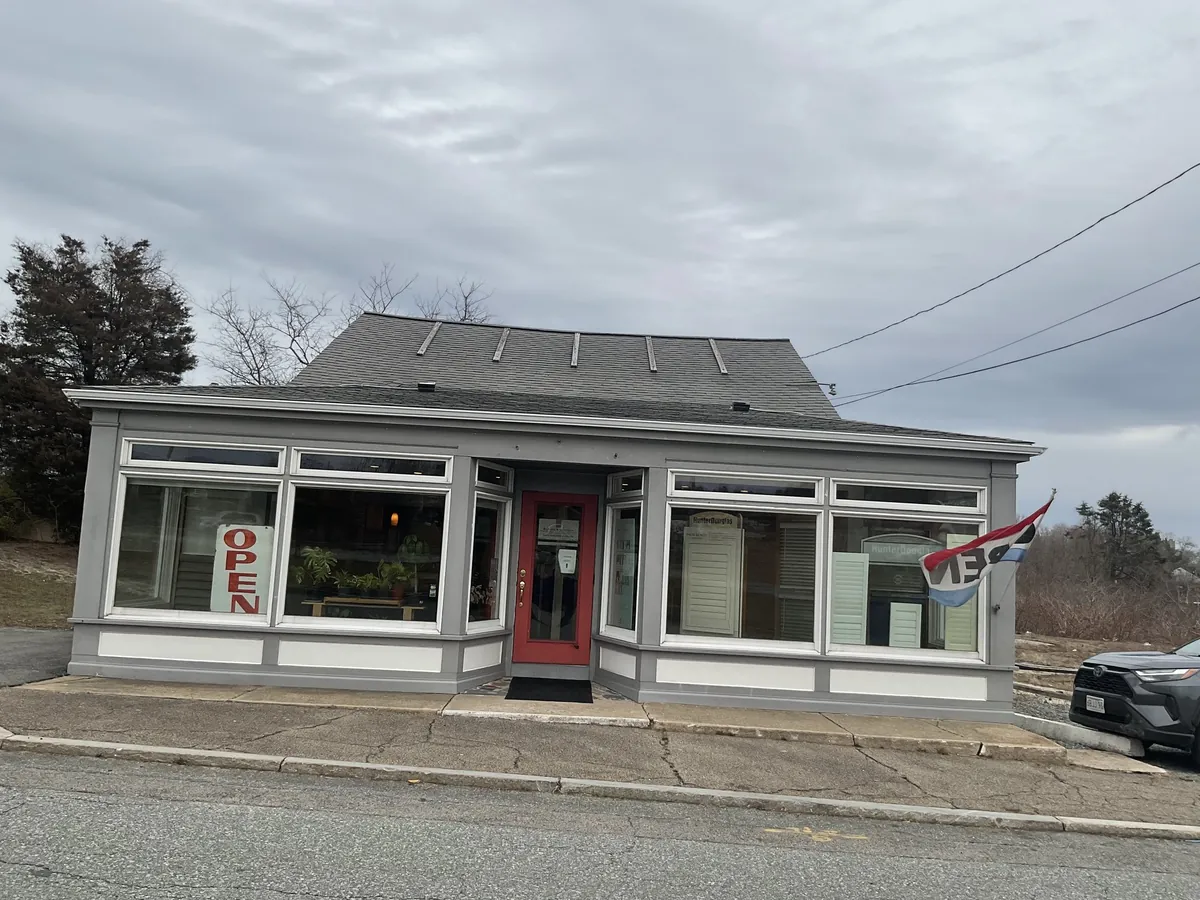
The Sagamore showroom, or samples at your door
Our nearest location to Duxbury is the Sagamore showroom, a straightforward drive down the coast. Stop in if you would like to talk shutters before we visit.
Most Duxbury customers, though, start at home, because a shutter has to be judged against your own casing, your own wall color and your own light. We bring the samples to you and measure while we are there.
Questions from Duxbury
Can shutters fit the very small windows in an antique cape?
Yes, in most cases. We use narrow louvers and slim frames so the shutter stays in proportion, and on the smallest openings a single panel often works better than a pair. We measure depth carefully first, because old sash hardware can leave less room than an inside mount needs.
Which collection suits a water-facing room on Powder Point?
Palm Beach is the strongest choice where sea air and damp are part of the room, because its polysatin material has no wood to swell. Wide louvers keep the view as open as possible when the blades are tilted.
Will a shutter hide the original trim in my Federal house?
Not if it is mounted inside the opening. An inside mount sits within the reveal and leaves the casing on show. Heritance can also be painted to match the trim exactly or stained to suit restored wood.
What do you do with an arched or half-round window?
Most can take a shutter made to their shape. High shaped windows usually have fixed louvers, since they are out of reach, while the windows below get operable panels.
Is the estimate free?
Yes. After we measure, you receive a free estimate for the shutters you are considering, with no pressure to decide on the day.
Start with your own windows
The best way to judge plantation shutters in Duxbury, MA, for your own house is to see the samples against your own trim and light. Request a consultation and we will bring all three Hunter Douglas collections to you, measure each opening and give you a free estimate. You can also use the call button, or stop in at the Sagamore showroom.