
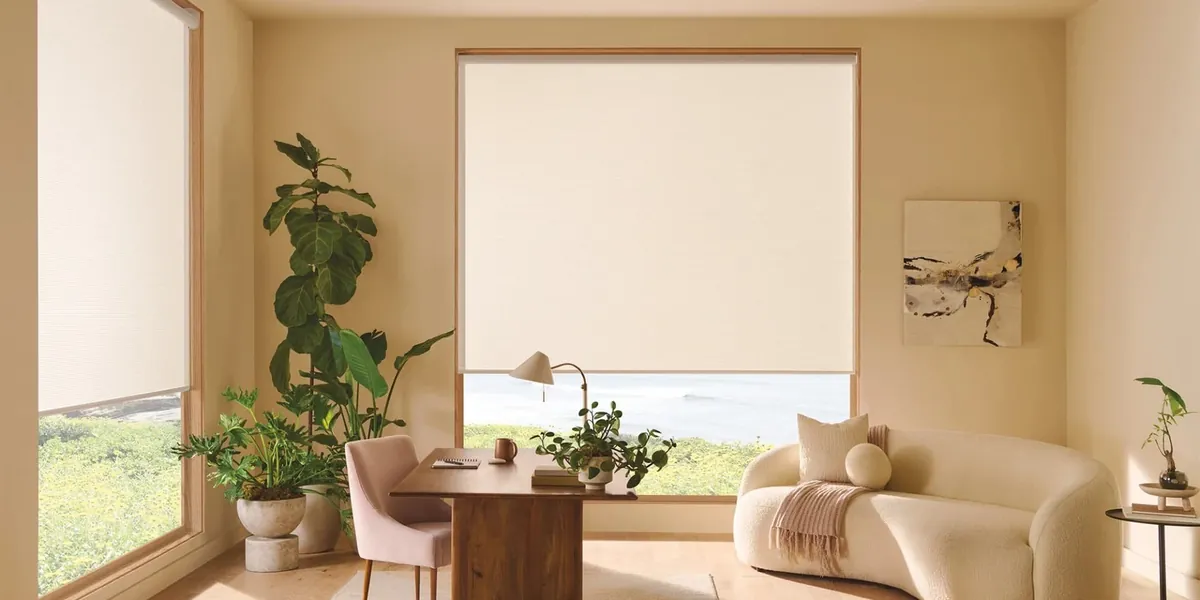
Shingle, harbor light and the open Atlantic
Cohasset houses sit closer to open water than most on the South Shore. The shingled homes around the village and the harbor look out over boats and moorings, and the larger properties out along Jerusalem Road face the ocean head on, with nothing between the glass and the horizon. Planning roller shades in Cohasset, MA, starts with that exposure.
Ocean light is not the same as inland light. It arrives low across the water early and late, it bounces off the surface through the middle of the day, and it reaches deep into rooms that would be shaded anywhere else. A window that frames a view of the sea is also a window that lets in a lot of glare, and the two have to be balanced rather than traded away.
That is where a roller earns its place. Lowered, a solar screen softens the brightness while the water stays in sight. Rolled up, the shade tucks out of the way and the view is whole again. In the village, where houses stand nearer each other and nearer the lane, the same simple shade can do a quieter job: privacy by day and a clean line under the trim.
Three ways to dress a Cohasset window
Most roller shades in Cohasset, MA, come down to one of three choices: a screen that keeps the water in view, a woven texture for a front room with character, or a softer folded shade where a roller is not quite the right look. Each card links to its own page.
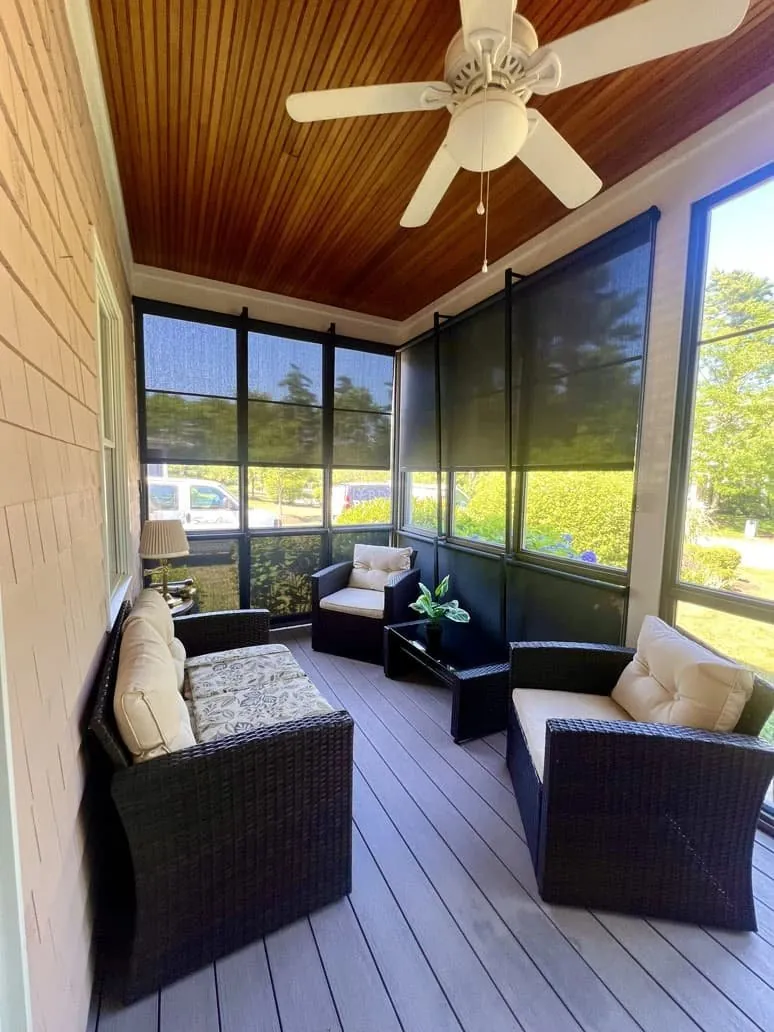
Designer Screen
Solar screen cloth for the ocean side of the house. It cuts glare off the water and leaves the outlook in place.
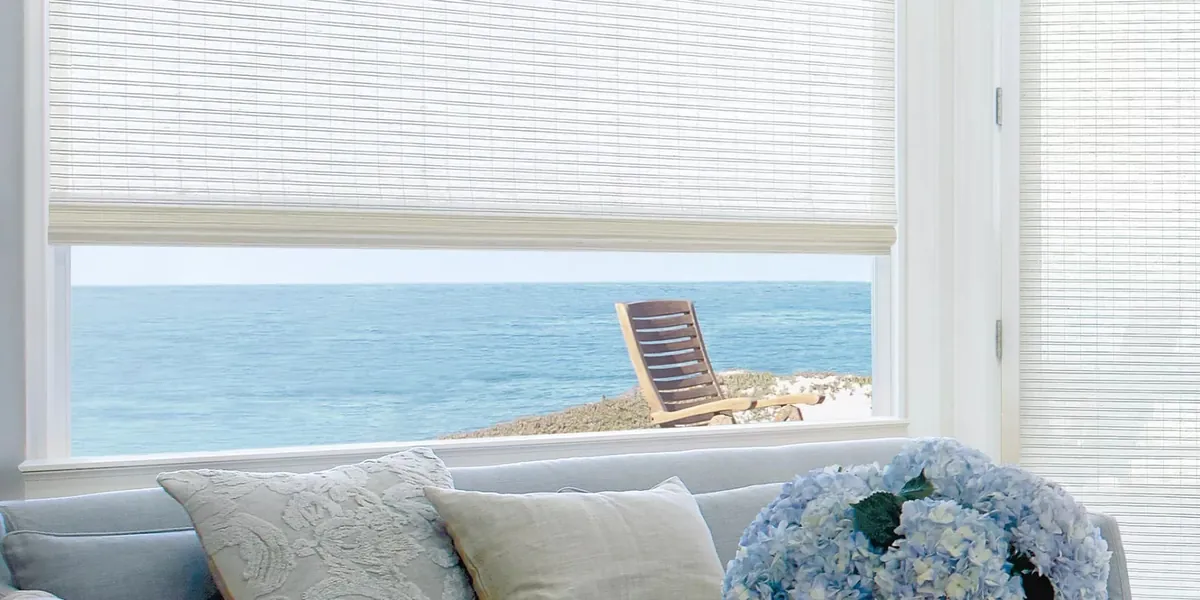
Alustra Woven Textures
A roller with a natural, woven look that sits easily in a shingled house beside painted trim and wide boards.
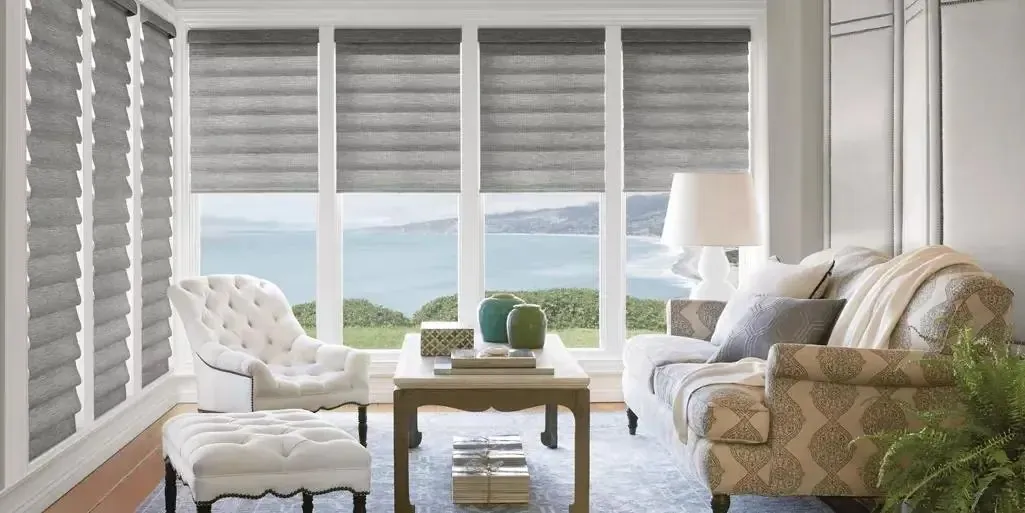
Roman Shades in Cohasset
For a room that wants folds of fabric rather than a flat panel, compare our Roman shades for the same windows.
The houses out along Jerusalem Road
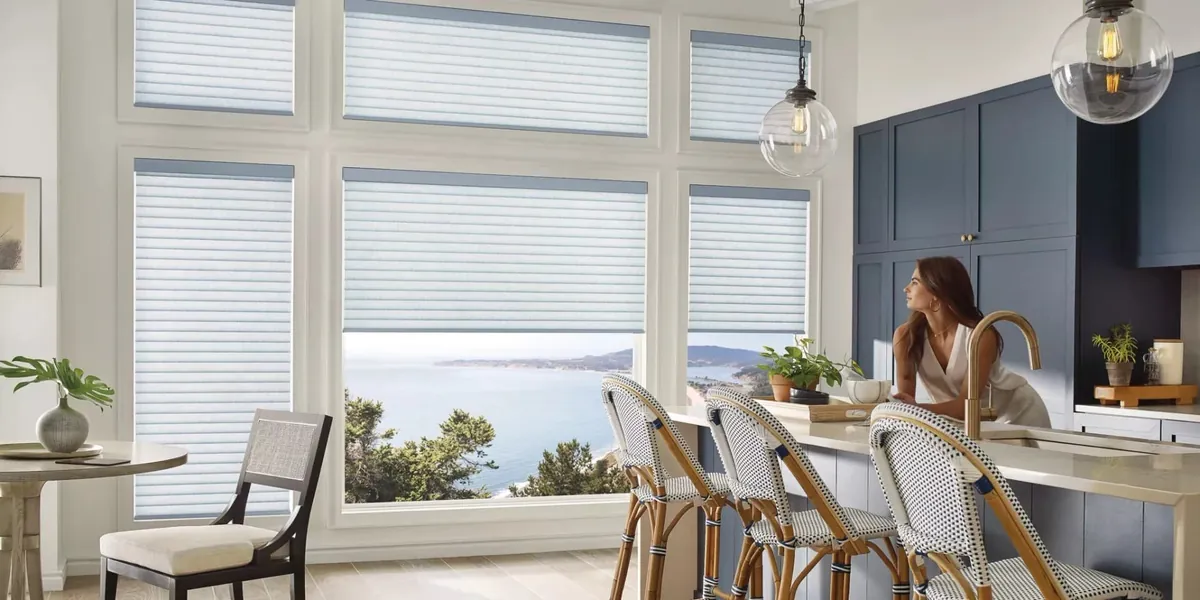
The properties along Jerusalem Road are the most exposed in town. Many are large, with wide window walls, porches and upper rooms placed to take in the ocean. In those houses the glass faces the weather and the sun at the same time, and a window covering has to live with both.
The rooms that face the water are usually the main living spaces: a great room, a kitchen with a long view, a bedroom on the upper floor with windows on more than one wall. Owners want to keep those views for most of the day. They also want to sit in the room in the afternoon without squinting at the glare coming off the sea.
A solar screen roller is often the first answer for these rooms. It reads as a soft veil from inside, the horizon and the water still visible, while it takes the hard edge off the brightness. Wide window walls can take a row of matched shades, each one covering its own section of glass, so you can lower the sunniest side and leave the rest open.
Upstairs, the same house may need a different cloth. A primary bedroom facing east over the ocean gets the first light of the day straight off the water. A room darkening or blackout roller handles that, and it can be paired with a screen on another window in the same room for daytime use.
Salt air reaches everything
Constant salt air is part of living on this stretch of coast, and it touches the hardware of a house as much as the shingles. Window coverings are no exception. Anyone choosing new shades for a house this close to the ocean should raise it.
We talk it through at your windows. Which rooms catch the wind off the water, which windows are opened most in summer, and where a shade will hang closest to an open sash all matter when we plan where each roller goes and how it is fitted. A shade on a protected inland wall of the house lives a different life from one beside a porch door that stands open half the season.
It is one more reason a home visit is the right way to choose shades in Cohasset. We see the house, the exposure and the way the windows are used, rather than guessing from a list of sizes.
Shingled houses around the village and the harbor
Closer in, around the village and the harbor, the houses are mostly shingled, many of them older, with windows sized to their rooms and trim that has been painted many times over. These homes have a lot of character, and a window covering there should look as if it belongs.
A roller suits these windows because it asks so little of the room. Mounted inside the frame, it leaves the trim fully visible. Raised, it all but disappears. In a living room with a harbor view, a light filtering cloth in a soft white or a stone color keeps the room bright and lets the boats and the water stay part of the picture.
Rooms on the lane side are a different matter. Houses in the village sit near each other and near the street, so the windows facing the road or a neighbor often need privacy more than glare control. A slightly denser cloth gives you that during the day without turning the room dim. At night, when the lights are on, a light filtering or room darkening fabric keeps the house private where a screen would not.
Woven textures are popular in these houses. A roller from the Alustra Woven Textures collection brings a natural, slightly rough surface that sits well beside old wood and white paint, and it gives a front room a warmth that a plain cloth does not.
Formal village houses where drapery is expected
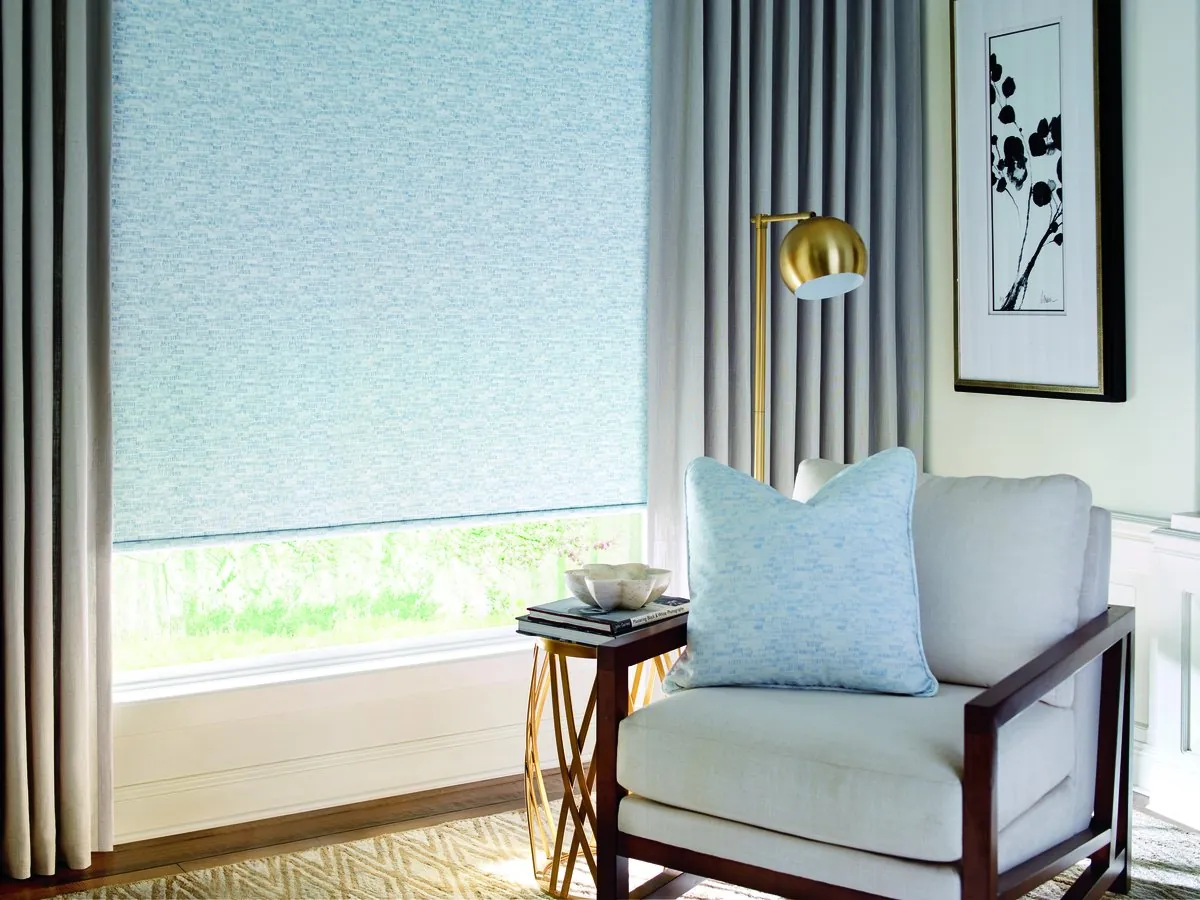
Some of the village houses are formal, with proper front parlors, dining rooms and tall windows dressed the way those rooms have always been dressed: with drapery. In those homes the question is rarely roller or drapery. It is how the two work together.
The usual answer is a roller mounted close to the glass, with the drapery in front. The roller does the daily work of raising and lowering for light and privacy. The drapery frames the window, softens the room and draws across in the evening. Each layer has its own job, and neither has to do everything.
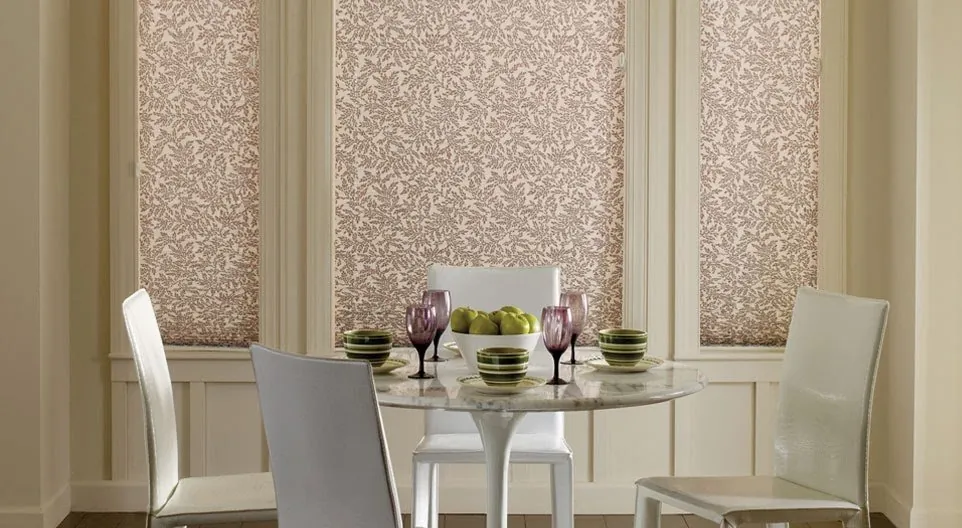
When a roller sits behind drapery, its cloth is normally chosen to step back. A plain fabric in a tone close to the trim or the wall lets the drapery lead. A patterned roller can work in the right room, a study or a dining room where the drapery is plain, but in most formal rooms the shade is meant to be felt rather than seen.
In a formal bedroom, a blackout roller under drapery gives real darkness, with the panels drawn for a finished look at night. In a dining room, a light filtering roller lowered at supper softens the view from the street while the room still glows from outside.
Reading a screen’s openness near the water
Solar screen fabric is woven with small openings. How open the weave is decides how much you see through it and how much glare it stops, and on the water side of a Cohasset house it is the single most important choice.
- A more open weave keeps the clearest view of the water and lets in more daylight, with less glare control.
- A tighter weave takes more of the brightness off the room and adds daytime privacy, with a softer, hazier view.
- Darker colors are easier to see through, because the cloth fades from the eye against a bright sky.
- Lighter colors brighten the room and blend with white trim, with the outlook a little more veiled.
For a great room facing the open ocean, a darker screen with a moderate weave often strikes the best balance between view and comfort. For a harbor-side front room close to the lane, a tighter screen in a lighter tone adds daytime privacy. A screen does not hide a lit room at night, so after dark a second layer or a different cloth handles privacy.

Light filtering to blackout, room by room
Designer and Alustra rollers run from light filtering through room darkening to blackout, and a house that takes roller shades in Cohasset, MA, usually needs several of those in different rooms. Sorting them by how each room is used makes the choice simple.
Living rooms and kitchens with a water view are where screens and light filtering cloth do best. They keep the room open and bright and take the edge off the sun. Bedrooms on the ocean side, where the morning light comes in strong off the water, usually call for room darkening or blackout. A guest room used only in summer might take a lighter cloth so the house feels bright when it is empty.
A home office is a case of its own. A desk facing the window and a screen on the desk mean glare matters more than anywhere else. A tight solar screen or a light filtering cloth takes the reflections off without shutting out the view that made you put the desk there.
Bathrooms and stair halls are smaller decisions, but they still count. A bathroom near the lane wants privacy first. A stair window lighting the middle of the house wants light kept moving, so a soft light filtering cloth is usually right.
Porches, sunrooms and the water side
Many Cohasset houses have a sunroom, a glassed-in porch or a back room that is mostly windows, and those rooms are often the ones that face the water. They are bright from morning to evening and hard to sit in on a summer afternoon without some shade.
A row of screen rollers, one for each window, turns that room into somewhere you can use all day. Lower the shades on the sunniest side and the glare drops while the view stays. Raise them all at dusk and the room opens up again. Because each window has its own shade, you can follow the sun around the room through the day.
In a sunroom, color matters more than usual, because every shade is seen at once. Matching rollers in one fabric and tone give the room a calm, even look from inside and a tidy face from the water. Choosing roller shades in Cohasset, MA, for a sunroom is usually about that consistency as much as the cloth.
PowerView on the ocean side
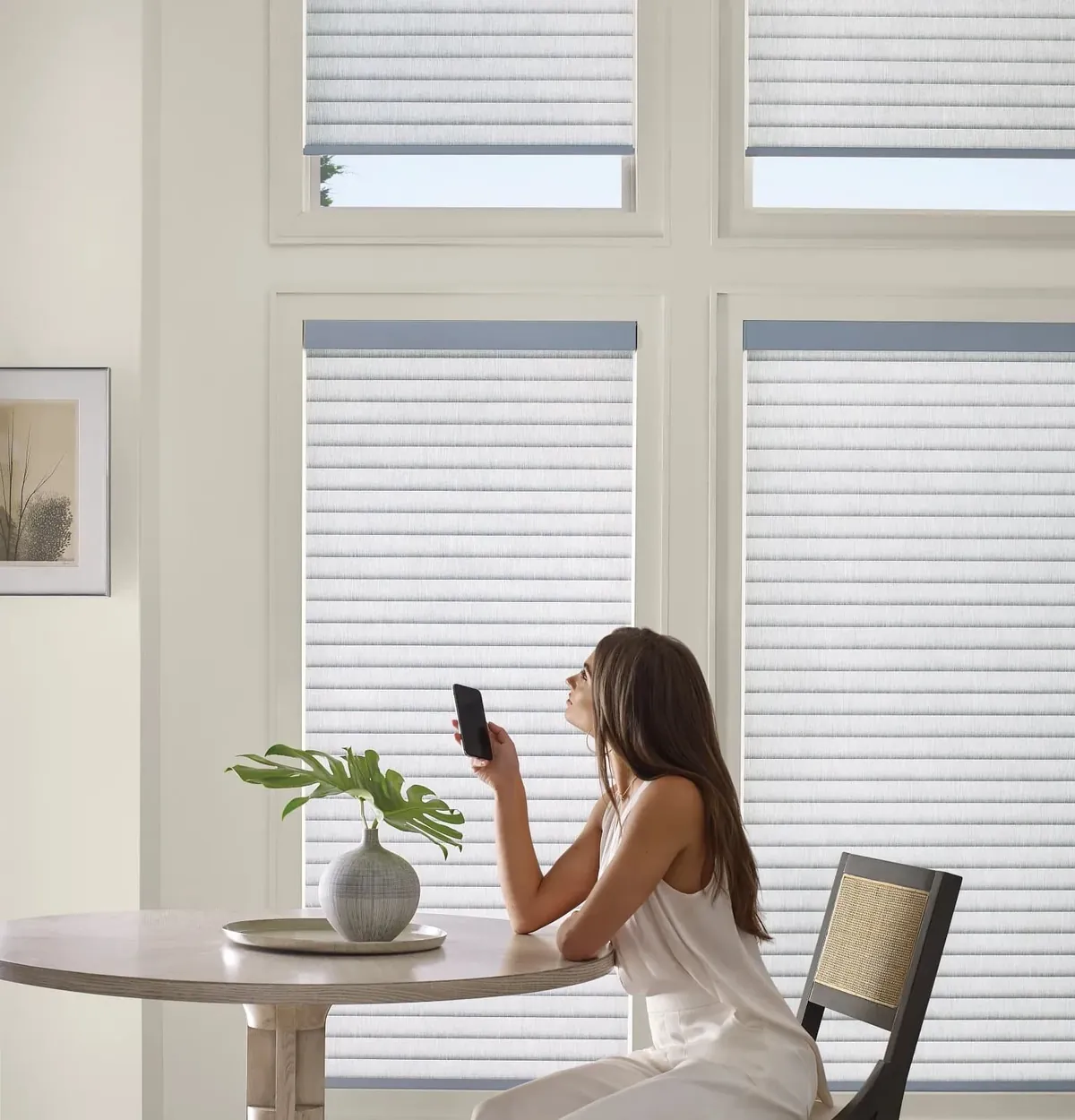
Large window walls, high upper rooms and long runs of glass facing the sea are where Hunter Douglas PowerView motorization makes the most sense. When a room has many shades, raising and lowering each one by hand becomes a chore, and the shades on the highest windows are hard to reach at all.
With PowerView, a roller answers to a remote or an app on your phone, and it can follow a schedule. Screens on the water side can lower together during the brightest part of the afternoon and rise again later. Bedroom blackout rollers can open at the time you choose. A whole great room can move as one scene with a single tap.
Motorization is planned at the visit, window by window, and we plan how each motor is powered with you then. For more on what motorized shades can do around the house, see our page on motorized blinds in Cohasset, and the guide to how motorized shades are controlled explains the controls in plain language.
Designer or Alustra in a Cohasset house
Hunter Douglas makes two families of roller shade. Designer is the broader of the two, with plain, textured and patterned cloth, solar screens and banded fabrics, light filtering through blackout. It covers almost any room in the house, from a kitchen on the harbor side to an upstairs bedroom.
Alustra is the more refined collection. In a formal village living room or a great room on Jerusalem Road, an Alustra fabric can bring the kind of texture and finish that holds its own beside good trim, fine furniture and drapery. The Alustra Architectural line suits the cleaner, larger window walls of the newer properties.
Plenty of houses use both: Alustra in the rooms where guests are received, Designer in the bedrooms, kitchen and back rooms. Seeing the two side by side at your own window is the easiest way to decide, and our roller shades overview covers every line in the range.
How a home visit runs
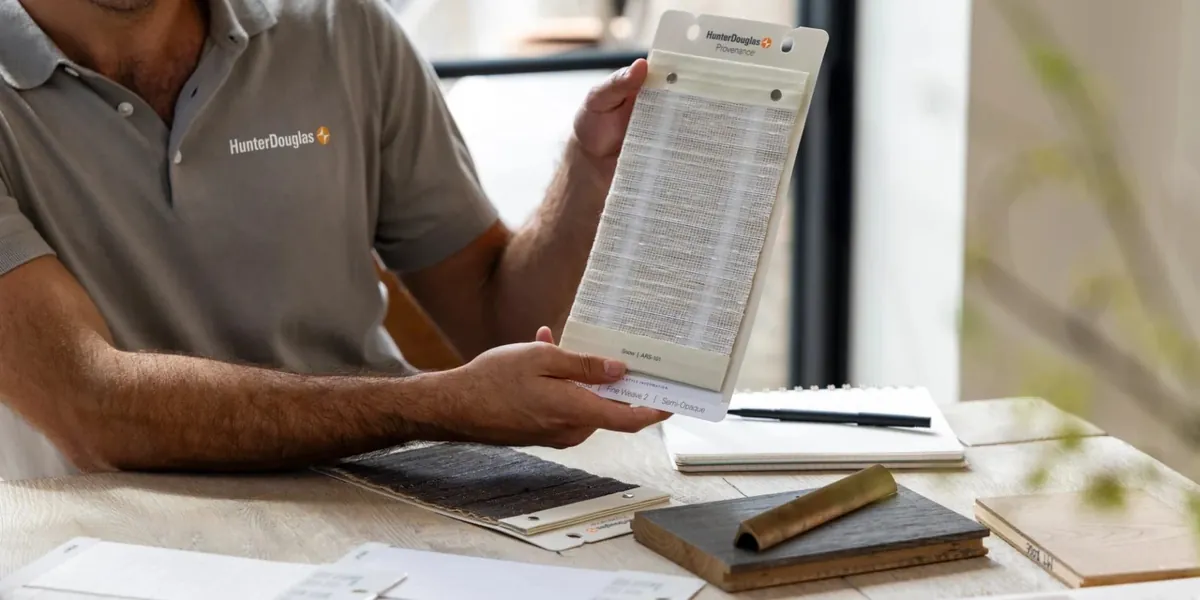
Cohasset sits in our shop-at-home territory, so we come to you. A consultant drives out with a van of samples, and you judge each fabric in your own light, against your own walls and trim. Our Canton shop-at-home page explains how the territory works.
- Request a consultation online or use the call button, and tell us which rooms you have in mind.
- We come to the house with samples and look at each window, its exposure and how the room is used.
- We go through screen openness, fabric and color with you at the glass, including any drapery you plan to keep.
- You receive a free estimate, with no obligation to go ahead.
- Once you decide, your shades are put up with certified Hunter Douglas installation.
If you would like help with the whole room rather than just the windows, ask about our interior design consultations. The guide to what happens at an in-home consultation covers the visit in more detail.
A Gallery dealer for the harbor and the coast
Blinds & Designs is a Hunter Douglas Gallery dealer. For a Cohasset house that means the whole Hunter Douglas range in one place: every Designer and Alustra roller, solar screens, PowerView motorization, and the shades, blinds, shutters and drapery that might suit other rooms.
The same company that helps you choose looks after the fitting, with certified Hunter Douglas installation. If a shade you already own needs attention, we welcome blind and shade repair too.
Most roller shades in Cohasset, MA, are chosen at home, because the ocean light is what decides the cloth. If you would like to see shades in a showroom as well, the nearest is our Franklin showroom. For everything we offer in town, see our Cohasset page, or read about us as your Hunter Douglas dealer in Cohasset.
Questions from Cohasset
Our house faces the open ocean. Will a screen still let us see the water?
Yes. A solar screen is woven with small openings, so the water and the horizon stay in view while the glare drops. A more open weave and a darker color keep the clearest view.
Can a roller go behind the drapery in our formal front room?
Yes. In many village houses the roller sits close to the glass and handles light and privacy, while the drapery frames the window in front and draws across in the evening.
We are near the harbor and get a lot of salt air. Should we mention it?
Please do. We look at which windows catch the wind off the water and how each room is used when we plan where every shade goes and how it is fitted.
Do I need to go to a showroom to choose?
No. Cohasset is in our shop-at-home territory, so we bring samples to your house. If you would like to visit a showroom as well, the closest is in Franklin.
Is there a charge for the estimate?
No. Estimates are free, with no obligation.
Start with the window that faces the water
In most Cohasset houses one room sets the agenda: the one that looks straight out to sea and is too bright to sit in by mid afternoon. That is a good place to begin. Request a consultation and we will bring the screens and rollers to that window, show you how each weave changes the view, think through the drapery in the formal rooms and the salt air on the exposed side, and leave you a free estimate for the whole house. The call button at the top of the page reaches us too.