
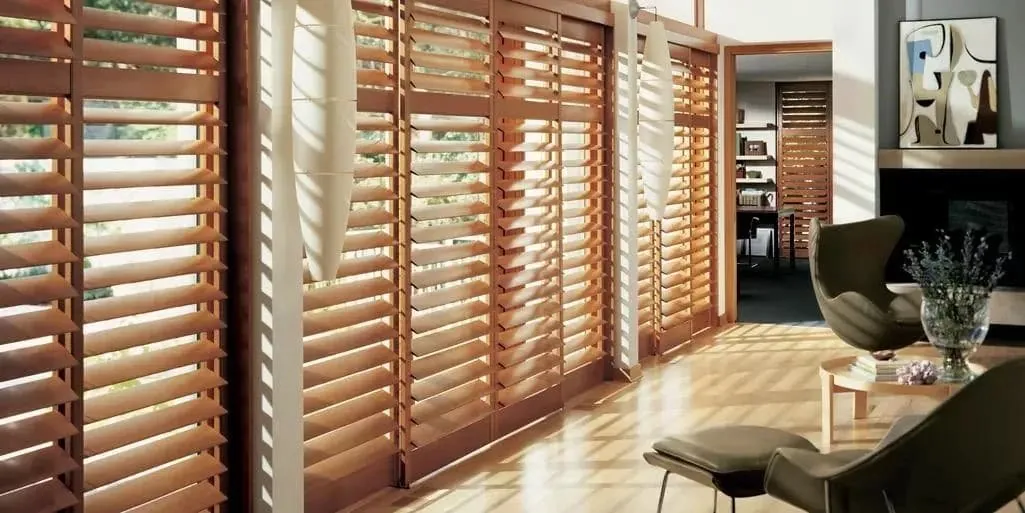
Open ground on every side
West Bridgewater is about as spread out as towns in this part of the state get. Farmhouses and capes sit on large lots, newer colonials are dotted between them, and in many places the nearest house is a field or a long yard away. There is very little to stand between a window and the sky.
That openness is the defining feature for a Hunter Douglas dealer in West Bridgewater. Rooms here tend to take daylight through several walls at once, and with no neighboring houses or close trees to screen them, the sun reaches straight in from the moment it rises until it sets. A living room can be bright and cheerful at breakfast and uncomfortable to sit in by late afternoon, simply because nothing outside softens the light.
So the conversation in most rooms is less about who can see in and more about managing light: how much, from which direction, and when. We have that conversation in your house, holding samples from the van at your own windows while the sun does what it does every day.
Six Hunter Douglas services in West Bridgewater
Each card below opens a West Bridgewater page for that product. These are the services that come up most in the town’s farmhouses, capes and newer colonials.
Custom blinds
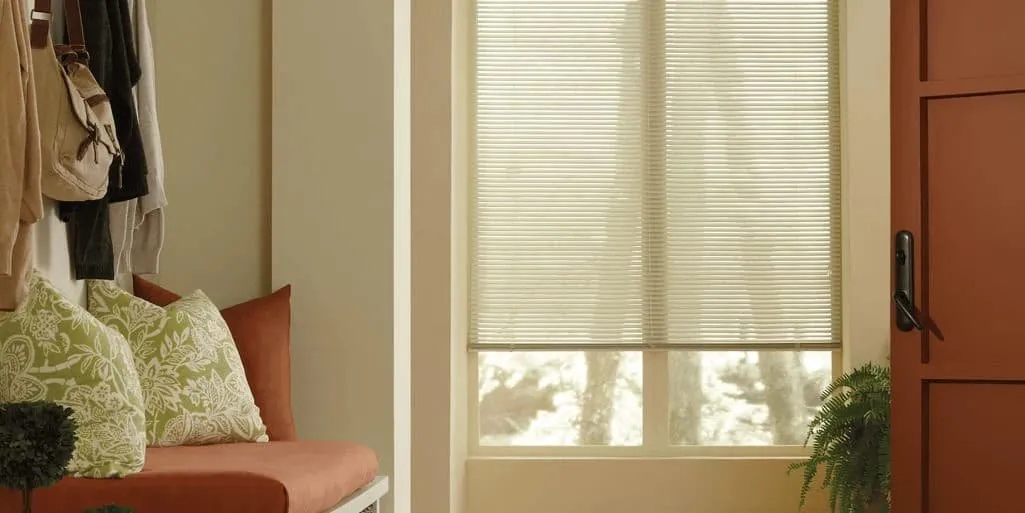
Blinds in wood, faux wood, metal or vertical form, angled to steer the sun.
Cellular shades
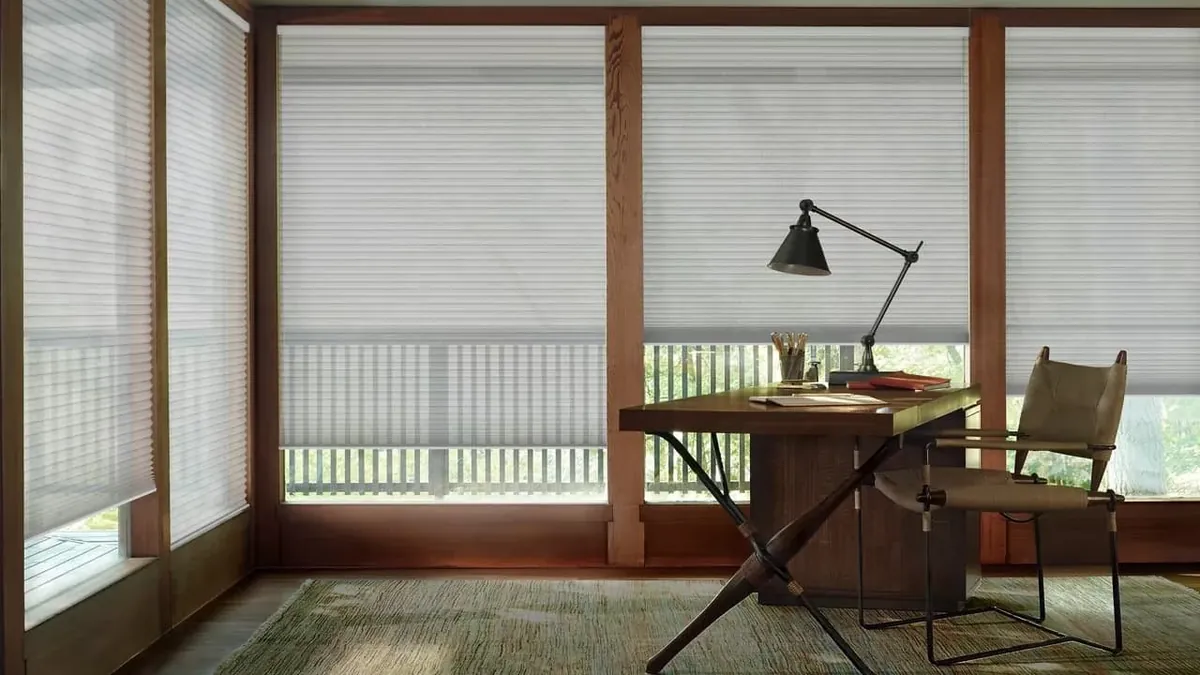
Duette and Applause in light-filtering through to darker fabrics.
Roller shades
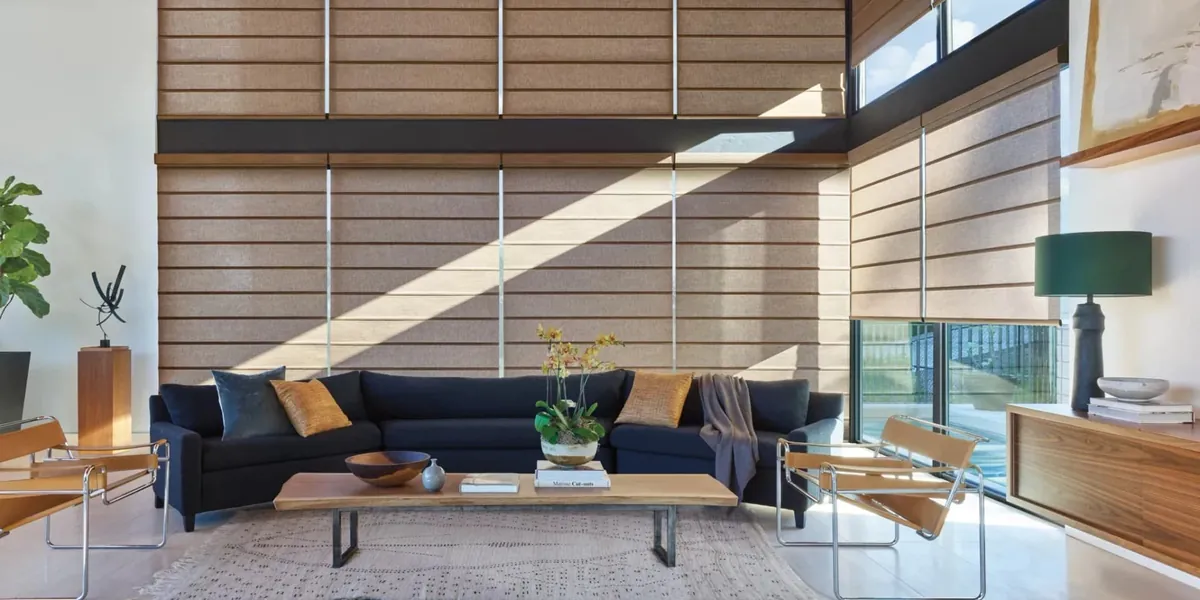
Designer screens and Alustra fabrics that keep the field in view while easing glare.
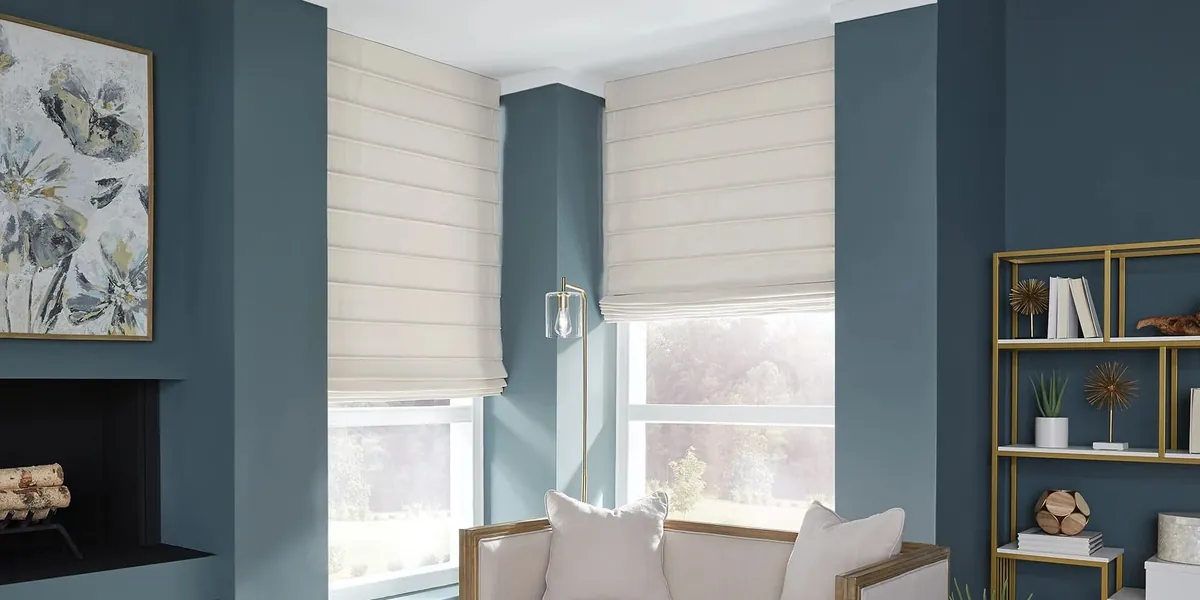
Roman shades
Vignette and Carole Fabrics, soft folds for farmhouse parlors and bedrooms.
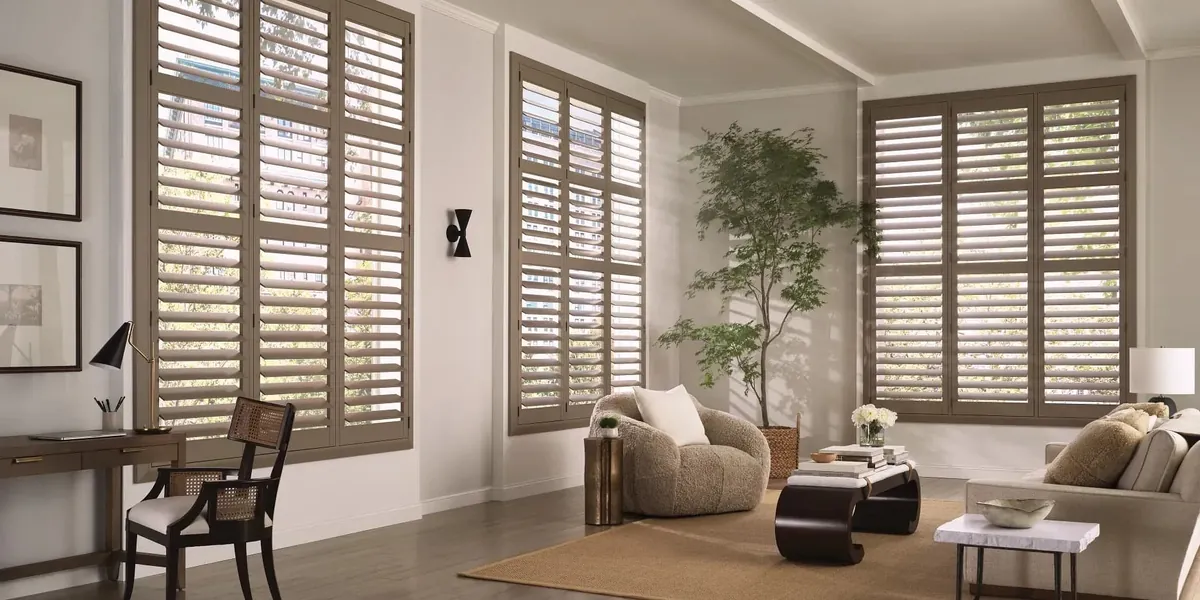
Plantation shutters
Palm Beach, NewStyle and Heritance, with louvers you tilt as the sun moves.
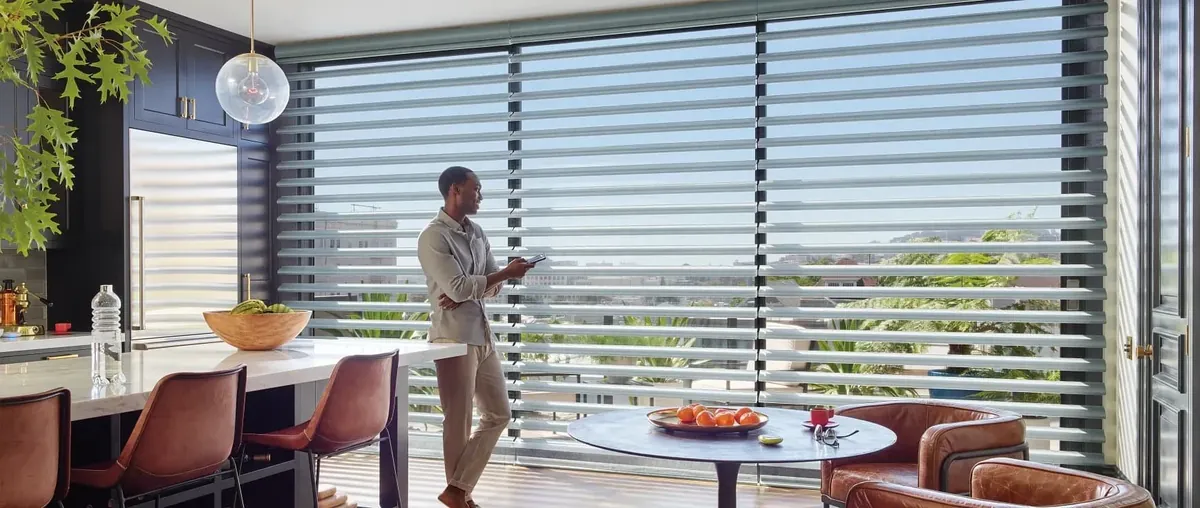
Motorized blinds
PowerView groups and schedules for a house with windows on every wall.
Following the sun around a room
In a tightly built town, most rooms have one window wall and the light arrives from one direction. In West Bridgewater it is common for a room to have windows on two or three sides, and for each of them to face open ground. That means the light in a single room changes character several times a day.
Morning
East-facing windows catch the first sun, low and bright, often straight across a bed or a breakfast table. Bedrooms on that side may want a darker fabric so the room does not wake you before you are ready. A kitchen on the east may welcome the light but want the glare taken off the counters.
Midday
With the sun high, south-facing windows pour light onto floors and furniture. This is usually the most pleasant time in a room, but a large south window with no shade from outside can still feel bright enough to want softening. Sheers and light-filtering honeycomb are popular here because they keep the room luminous without the hard edge.
Late afternoon
West-facing windows take the low sun at the end of the day, and with no trees or houses in the way it comes straight in at eye level. This is where solar screen roller shades earn their place. The weave cuts the glare while you still see out across the yard or field. Shutters with the louvers tilted down do a similar job with a more permanent look.
Evening
Once lamps go on, a lit room on a large, dark lot can be seen from a long way off. On a quiet road that may not bother you, but most households want the option to close up at night. A covering that is easy to lower in the evening and easy to raise again in the morning matters more here than how dense it is at noon.
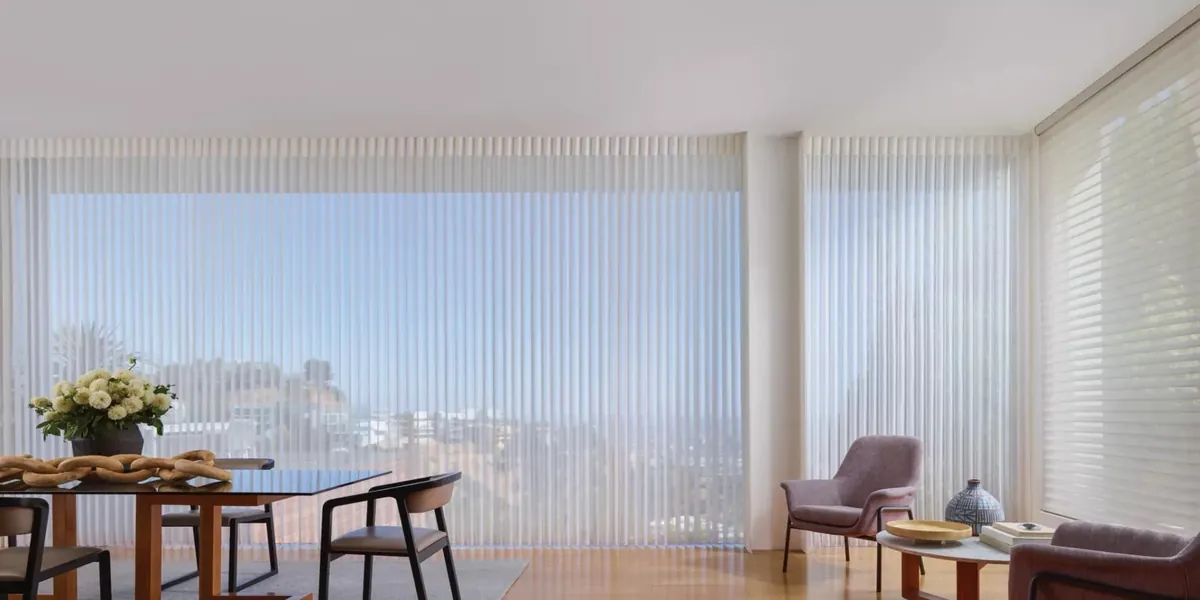
Farmhouses on large lots
West Bridgewater’s farmhouses are often the oldest houses in town, and many sit close to the road with their fields stretching out behind. They tend to have smaller sash in the main house, sometimes with later additions that brought larger windows in a kitchen or family room.
Those older windows bring trim and sills worth showing off. Mounting a covering inside the frame keeps the woodwork visible and lets the window keep its character. Wood blinds and shutters suit the weight of older trim; Roman shades bring a softer finish to a parlor or bedroom. In the later additions, where the windows are bigger and often face the fields, the light becomes the main concern, and a sheer or solar screen may make more sense than anything heavy.
Because farmhouse rooms were often built at different times, a single thread of color or wood tone through the house helps the windows look like they belong together, even when the products differ.
Capes with room around them
A West Bridgewater cape on a large lot has a lot of sky around it. Downstairs windows in the living room and kitchen are standard openings, so nearly every Hunter Douglas product fits. Upstairs, bedrooms sit under the roof slope with dormers.
The dormers on a cape out here often face open ground rather than a neighbor’s wall, which means strong morning or evening light can reach straight into a bedroom. A darker fabric inside the dormer recess helps those rooms rest. Downstairs, the living room may have windows on two walls; matching the covering color across both while choosing a lighter fabric on the shadier side keeps the room even.
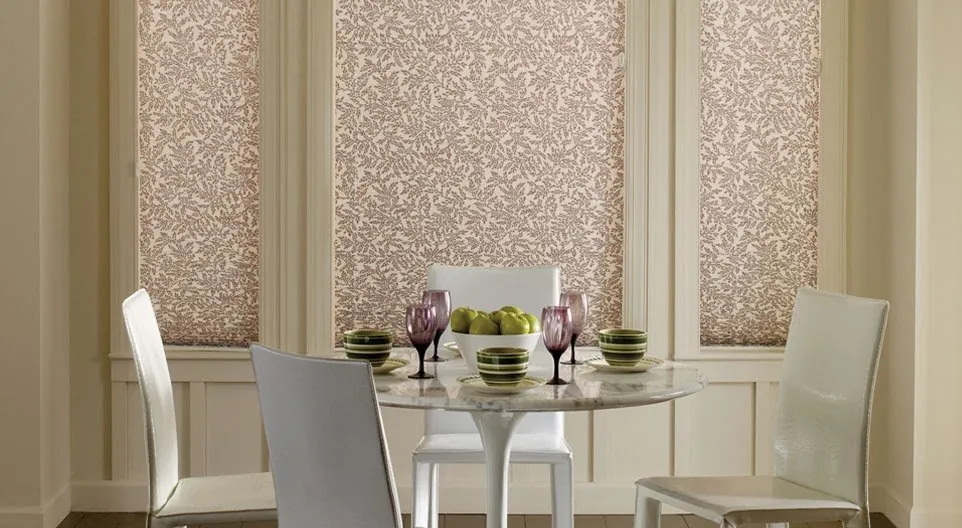
Newer colonials scattered between
The newer colonials in West Bridgewater sit on large lots too, often with generous windows and sometimes a run of glass across the back facing the yard. Two stories means two rows of windows on the front, and a consistent color across both floors keeps the house looking orderly from the road.
Inside, the back of a newer colonial is where light management matters most. A family room with a wall of windows or a slider to a deck may face west across open ground. Solar screen fabrics, sheers and vertical coverings that travel sideways all have a role. Upstairs bedrooms face the same open sky and often want darker fabrics. A tall foyer window over the stairs is hard to reach and a natural fit for motorizing.
Glare, comfort and choosing an openness
When a window looks out over a field, the view is usually worth keeping. That makes solar screen roller shades one of the most useful products in West Bridgewater. Their fabrics come in different weaves: a more open weave keeps more of the view and lets in more light, while a tighter weave cuts more glare at the cost of some clarity.
There is no single right answer. A home office facing west may want a tighter weave to keep glare off a screen. A family room facing a pretty field may want a more open one to keep the outlook. We bring a range of weaves in the van and hold them up at your window, so you can see the difference for yourself. Our guide to choosing fabric for a sunny room explains the choices in more depth.
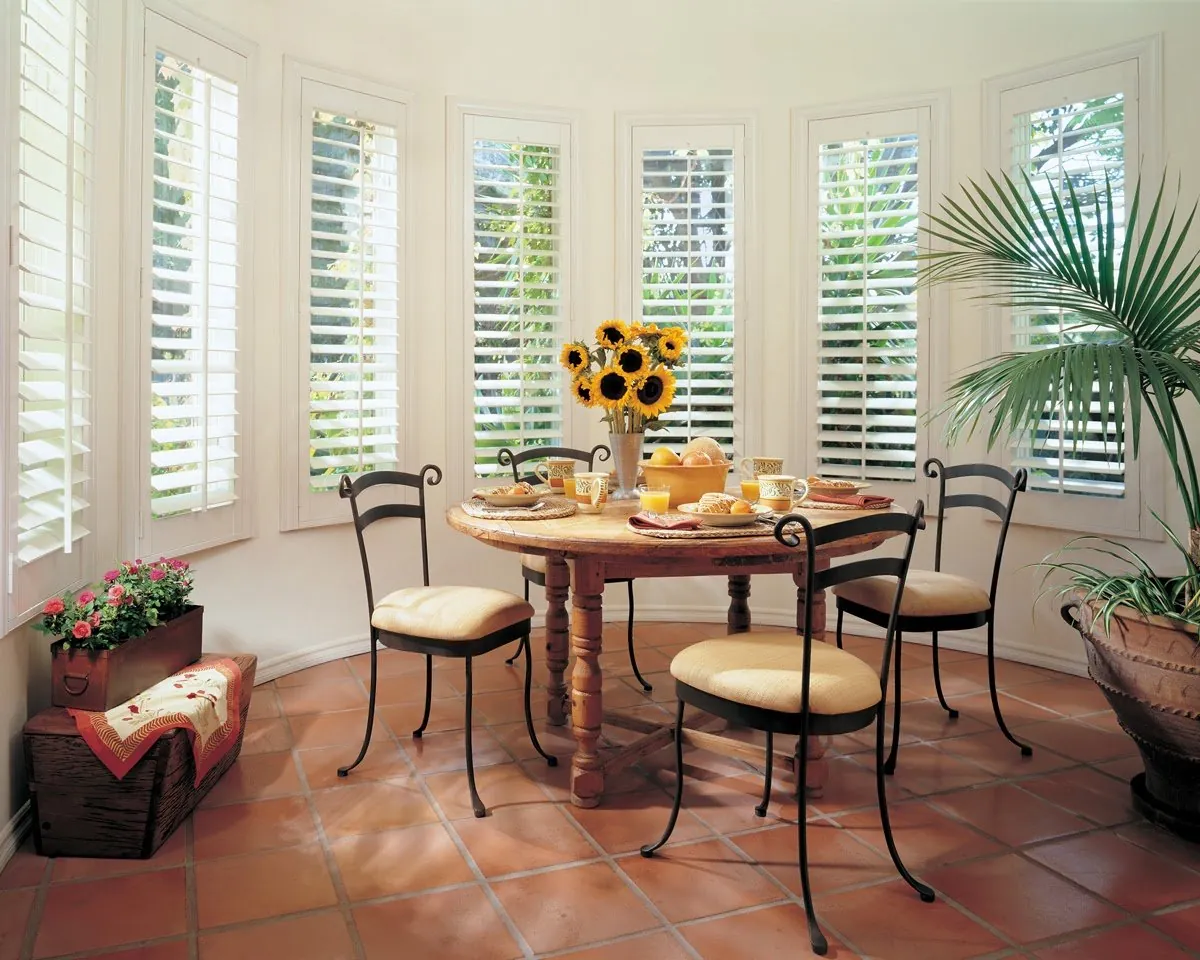
Low winter sun, high summer sun
The angle of the sun shifts through the year, and on an open West Bridgewater lot you feel every bit of that shift. In winter the sun stays low and travels a short arc across the southern sky, so it reaches deep into rooms that barely see it in July. A south-facing living room that is pleasantly lit in summer may have sun lying across the sofa all afternoon in January. In summer the arc is long and high, and the east and west windows take the brunt of it at the start and end of long days.
Planning for both seasons is part of the job. A sheer or a light-filtering honeycomb on a south window can tame the winter sun without darkening the room. A solar screen on a west window handles the long summer evenings. We ask how each room feels at different times of year, because a sample held up on one autumn afternoon only tells part of the story. That habit of planning by season is one of the more useful things a Hunter Douglas dealer in West Bridgewater can bring to a house this exposed.
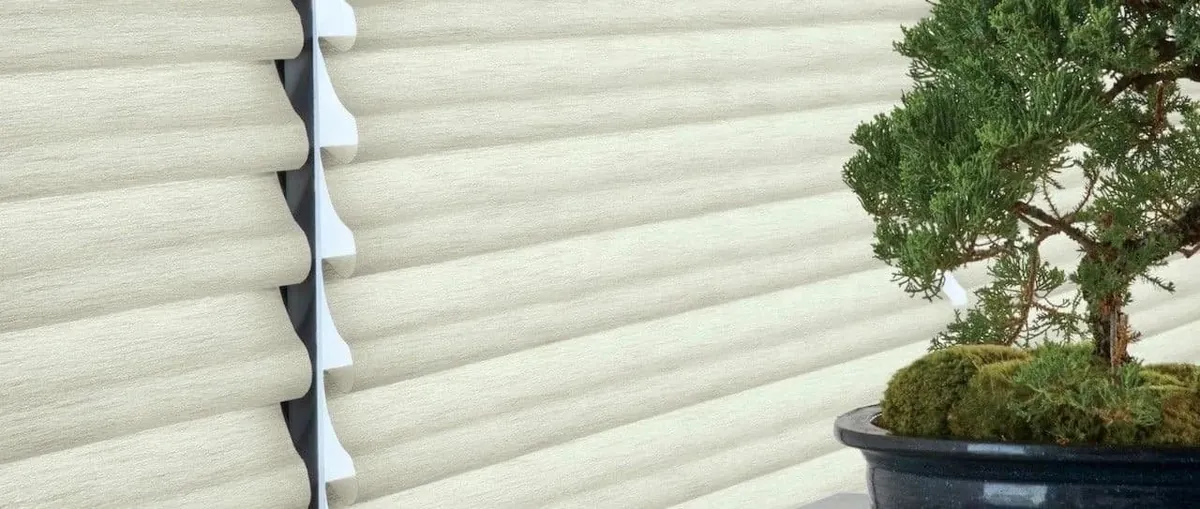
Kitchens, mudrooms and the back door
On a farmhouse or a cape set on a big lot, the back door is often the one everyone uses. It opens into a mudroom or straight into the kitchen, and the windows around it see constant traffic, muddy boots and wet coats. These are not places for anything fussy.
Faux wood blinds suit a busy room and tilt for light without being raised. A simple roller shade in a light-filtering fabric keeps a kitchen window bright and uncluttered. On the door itself, a covering that fits close to the glass and moves with the door avoids anything swinging loose. The kitchen window over the sink often faces the yard or a field, with the view being the reason it is there, so we keep that in mind when suggesting fabrics. As a Hunter Douglas dealer in West Bridgewater, we look at how a room is actually used before we suggest anything for it.
PowerView for a house with windows everywhere
A house that takes light from every side has a lot of windows to open and close. Walking the whole ground floor twice a day to adjust each covering gets old quickly. This is where PowerView makes a real difference.
With PowerView, shades can be grouped by room or by direction and moved together from a remote or the app. You can set a schedule so the east bedrooms open at a set time in the morning and the west-facing family room lowers in the late afternoon. A tall stair window or a high window over a door can be worked without a ladder. Because PowerView works across many Hunter Douglas families, a solar screen in the family room and a honeycomb shade in the bedroom can still be run together. We plan how each motor is powered at the visit, and our guide to how motorized shades are controlled covers the controls.
Why one dealer for the whole house
A house that faces open ground in every direction rarely suits a single product throughout. The west family room may want a solar screen, the east bedrooms honeycomb, the farmhouse parlor shutters and the kitchen a faux wood blind. Choosing a Hunter Douglas dealer in West Bridgewater who carries the complete range means all of that comes from one maker, through one consultation, with one measurement and one installation visit.
It also means colors can be coordinated across very different products, so the house looks considered from inside and from the road. And because we are not tied to any single product, we can tell you honestly when a simpler option will do the job just as well.
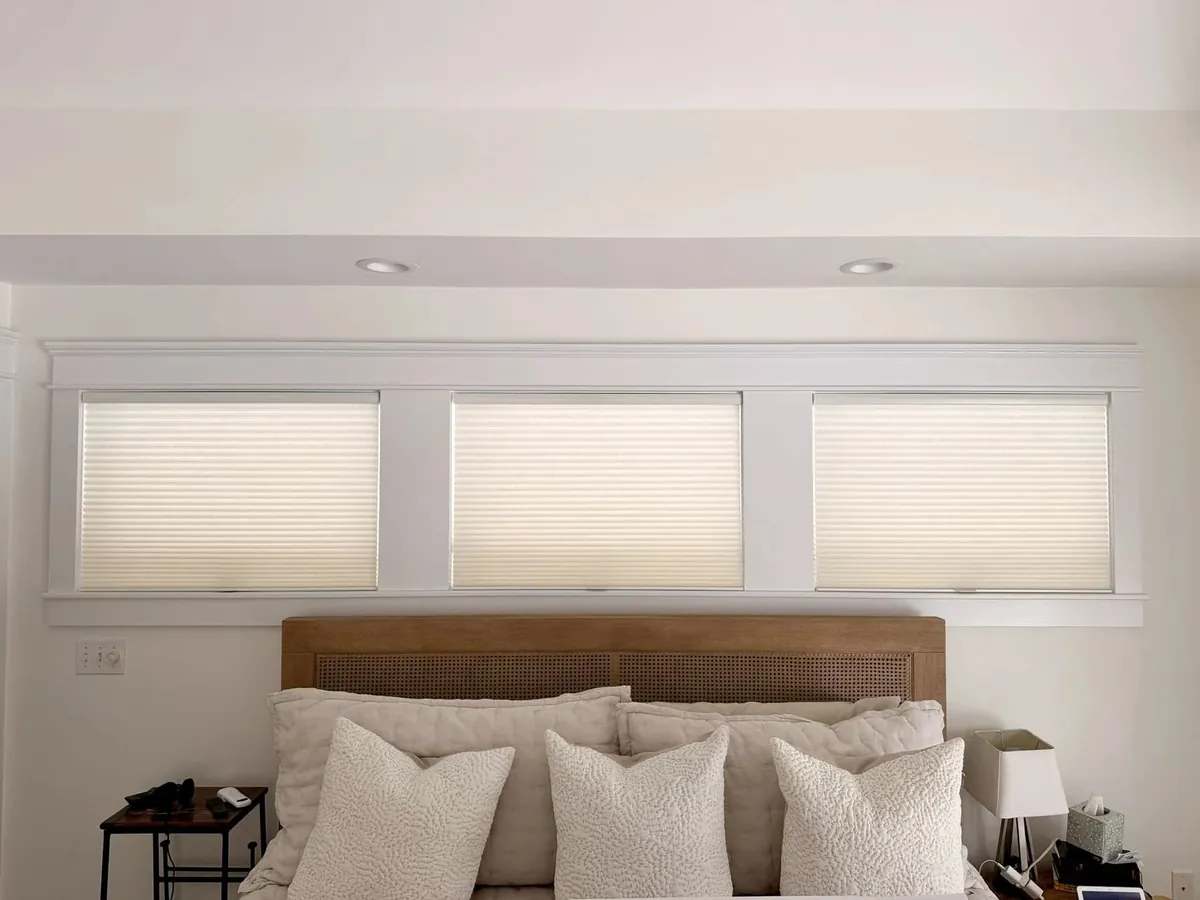
Your consultation, start to finish
West Bridgewater is part of the shop-at-home territory we serve from Canton, so the consultation happens at your house. Our Canton shop-at-home page explains how that works. On the day:
- The van arrives with fabrics, solar screen weaves, slats and louver samples.
- You show us the rooms that bother you most, and we ask which way each one faces and when it gets too bright.
- We try samples at the windows, ideally with the sun on them, so you see real conditions.
- We discuss mounting, operation and whether PowerView would make life easier.
- We measure each window we are quoting, including the older sash in a farmhouse.
- You receive a free estimate for products and certified installation, to consider in your own time.
There is more on what happens at an in-home consultation. For help with color and fabric across a whole room, ask about our interior design consultations.
If something you own needs repair
West Bridgewater houses sometimes come with Hunter Douglas coverings that have worked hard against all that sun. If a shade has stopped raising, a blind is stuck or a motor has gone quiet, show us at the visit. We welcome blind and shade repair on coverings you already own and will tell you plainly whether repair or replacement makes more sense.
Installation day
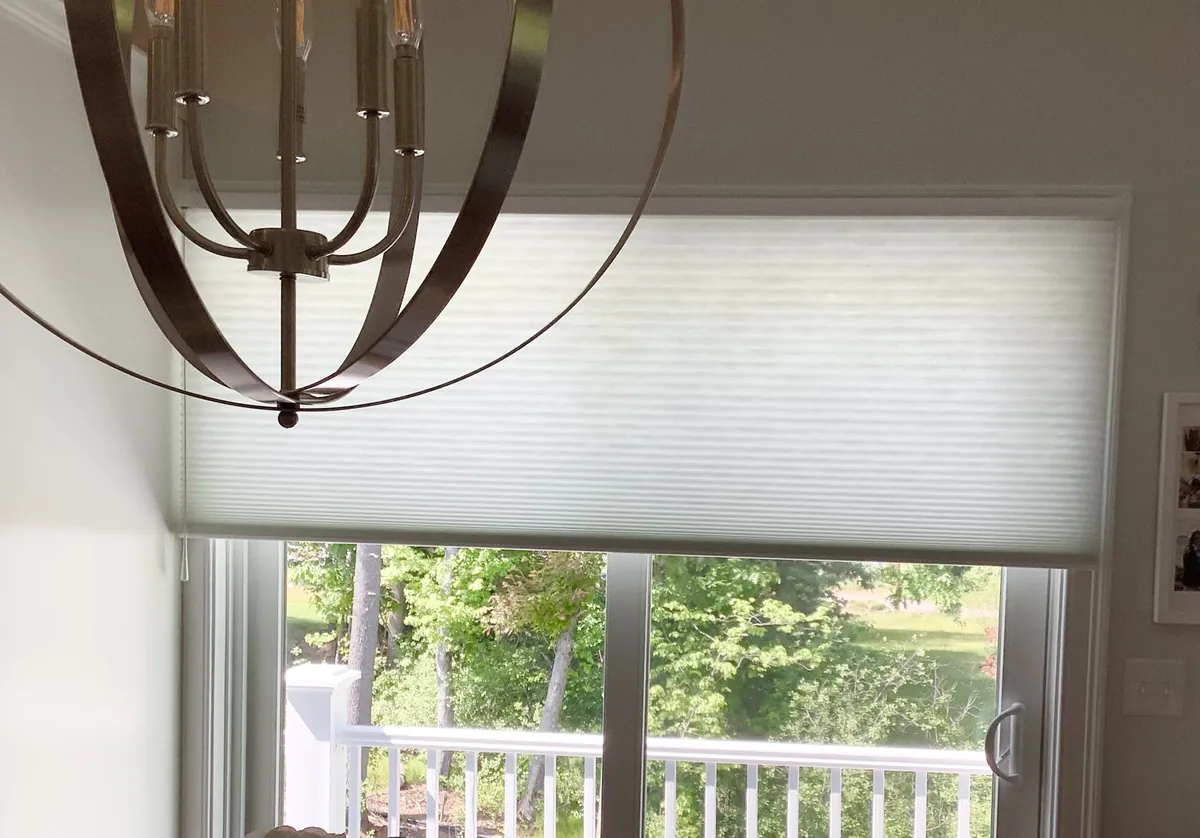
When Hunter Douglas has made your coverings to our measurements, our certified installers come back to fit them. Each covering is matched to its window, brackets are fixed level and secure, and each shade, blind or shutter is hung and adjusted until it runs straight. Older farmhouse frames get extra attention where they have settled. Every covering is tested through its full movement, and PowerView motors are paired and grouped the way we planned. The installers then show you how everything works and leave the rooms tidy. See what happens on installation day for more.
Certified installation from a Gallery dealer
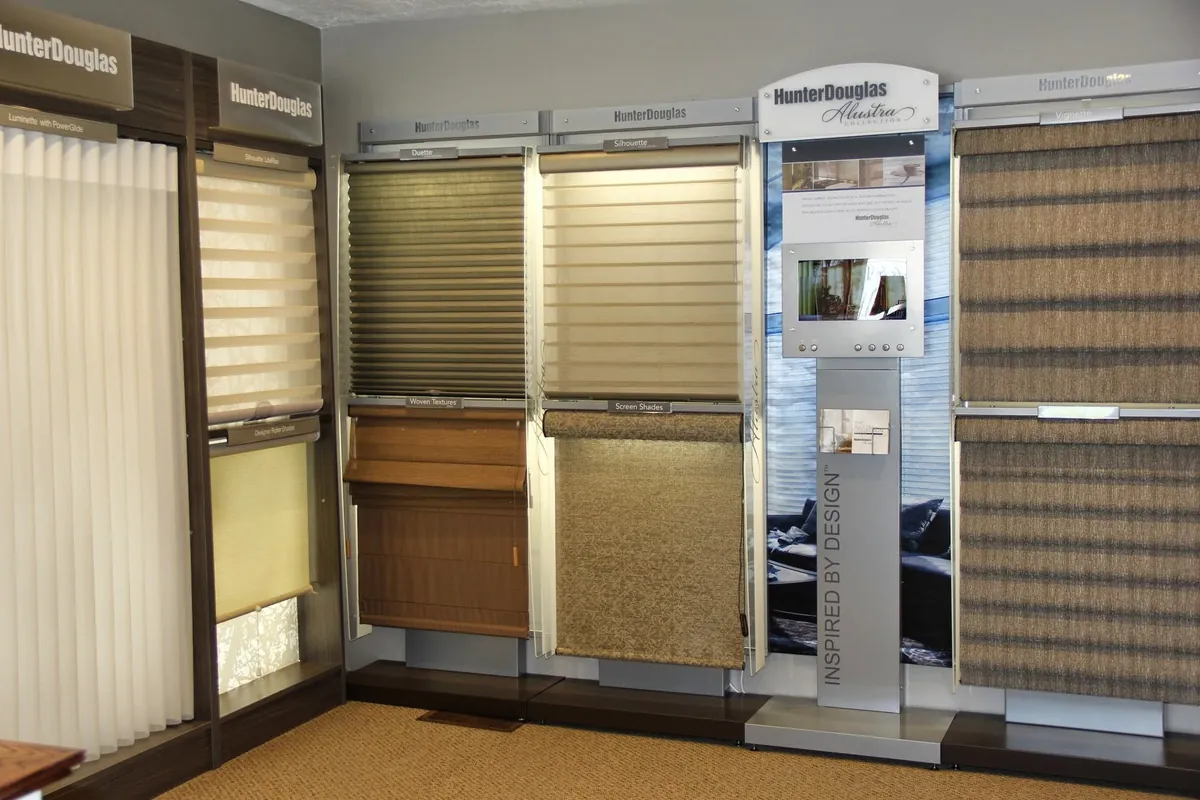
Blinds & Designs is a Hunter Douglas Gallery dealer, and Hunter Douglas certifies our installers. Those two facts sit behind everything we do in West Bridgewater, from the first sample to the last bracket.
They mean every Hunter Douglas family is available at one consultation: solar screens and sheers for the bright rooms, honeycomb for the bedrooms, shutters and wood blinds for older trim, and PowerView to tie it together. A Hunter Douglas dealer in West Bridgewater with certified installers can also make sure each product is fitted the way it is designed to work. Browse the Hunter Douglas catalog for lines and colors, or see our main Hunter Douglas page.
The nearest showroom
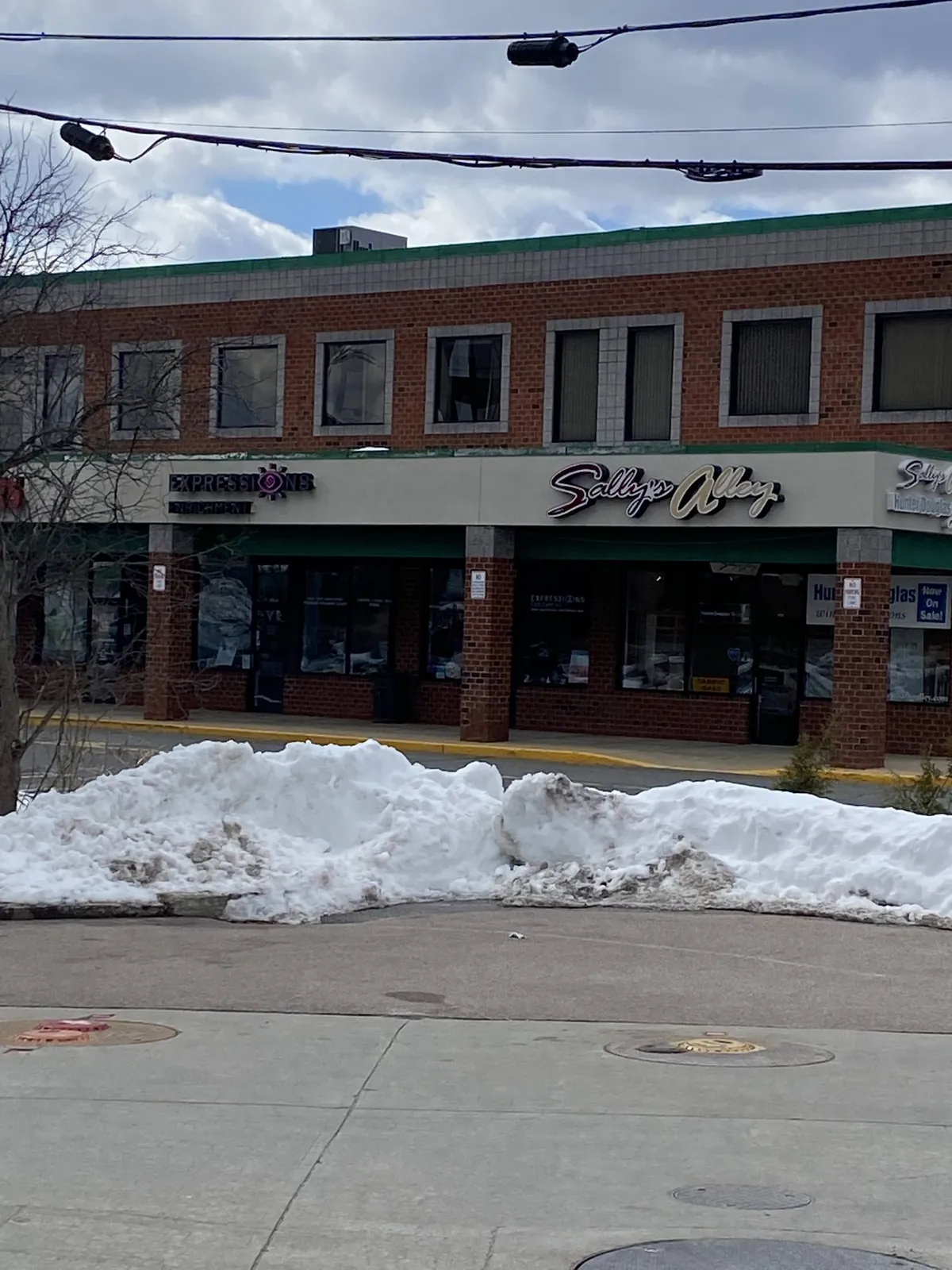
Most West Bridgewater projects begin with samples brought to the house. If you would also like to see Hunter Douglas products in a showroom, the nearest is our Franklin location, and North Dartmouth is another option. Details are on the Franklin showroom page.
All of our services in town are listed on the West Bridgewater page.
Questions from West Bridgewater
Our living room gets sun from three sides. Where do we start?
With the side that causes the most trouble, usually the west in late afternoon. We match colors across all the windows while choosing the fabric for each wall based on the light it gets.
We want to keep our view of the field. What works?
Solar screen roller shades are designed for this. A more open weave keeps more of the view; a tighter weave cuts more glare. We bring several so you can compare at the window.
Is motorizing worth it in a house with lots of windows?
Often, yes. PowerView lets you group shades by room or direction and move them together from a remote, the app or a schedule.
Do shutters suit an older farmhouse?
They can. Shutters suit the weight of older trim, and we measure each window separately because farmhouse frames often vary.
Does the estimate cost anything?
No. The estimate for products and certified installation is free, however many windows are on your list.
Let the samples come to you
A farmhouse parlor with old sash, a cape bedroom that catches the first light or a colonial family room facing west over open ground: whatever the room, the first step is the same. Request a consultation and we will bring the samples to West Bridgewater, look at your windows with the sun on them and leave you a free estimate. If you would like to talk first, the call button at the top of the page reaches our Canton team.