
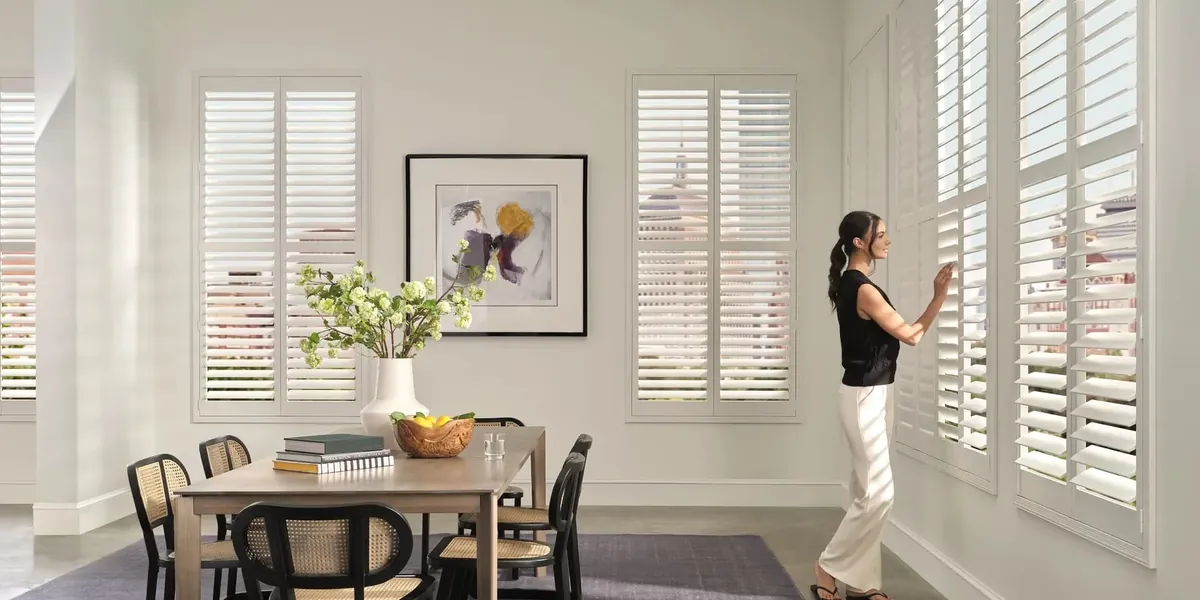
From the bay to the Sound in one town
Barnstable runs the full width of the Cape, from the marshes along Cape Cod Bay to the beaches on Nantucket Sound. That is a wide range of houses and an even wider range of light. On the north side, Route 6A passes antique capes and Federal houses with small, deep-set sash, many of them inside a historic district where the look of the house is taken seriously. Closer to the bay, larger and newer houses open up to the water with much bigger glass. Planning plantation shutters in Barnstable, MA, means taking each of those houses on its own terms.
Exposure changes just as much. A cape tucked behind old trees on 6A may get little direct sun at all, while a house on the bluff above the bay can take full western light every evening. Two houses in the same town can need completely different louvers, frames and materials.
Shutters cope with that range because they are made for each window. The same collection can be built with a narrow louver and a slim frame for an antique sash, or with a wide louver and multi-panel layout for a wall of new glass, and the finished house still looks considered from the road.
Plantation shutters in Barnstable, MA, window by window
These are the windows we see most often in Barnstable houses, and the shutter that usually suits each one. We bring samples for every one of them.
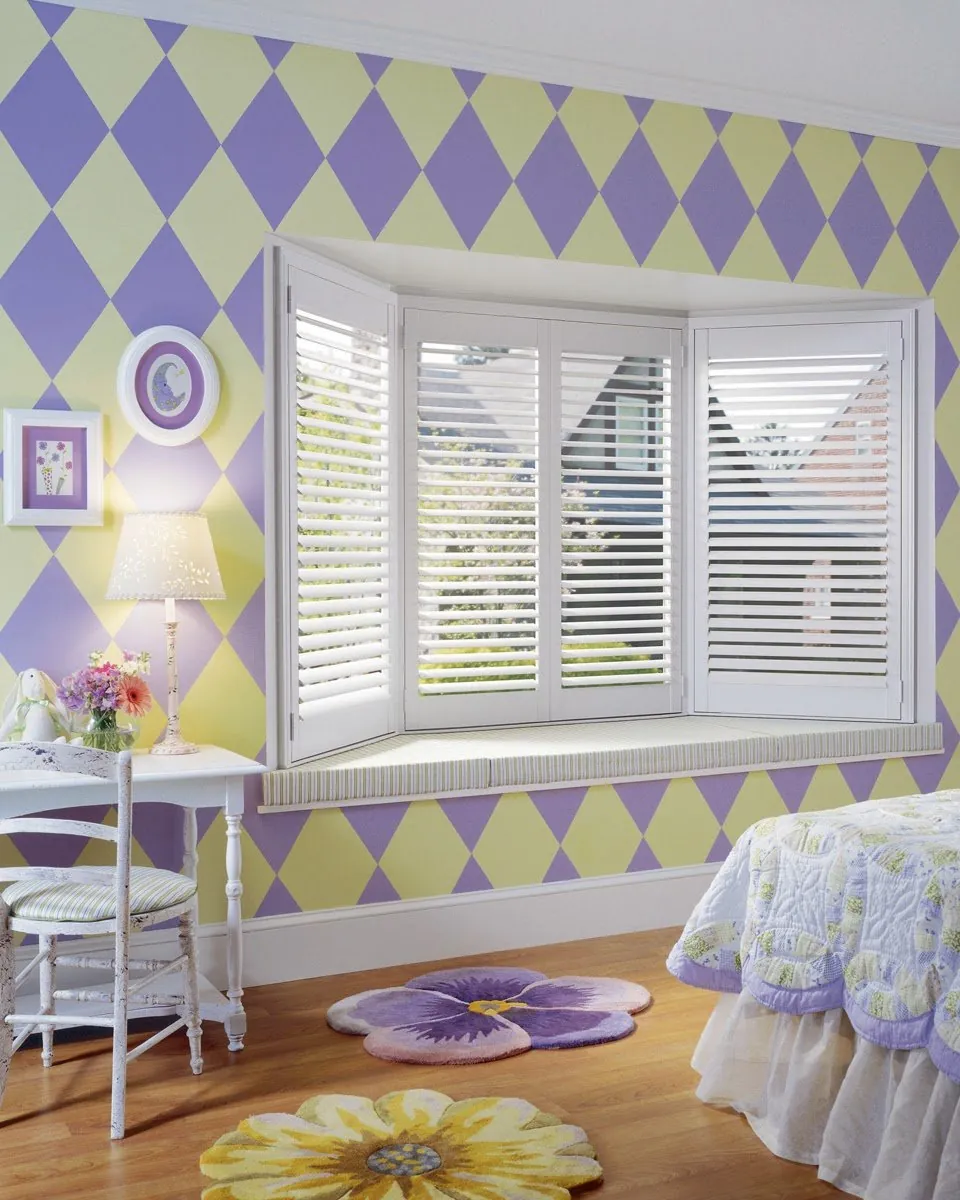
Deep-set antique sash
Thick old walls often give enough depth for an inside mount. A narrow louver keeps the panel in step with small panes.
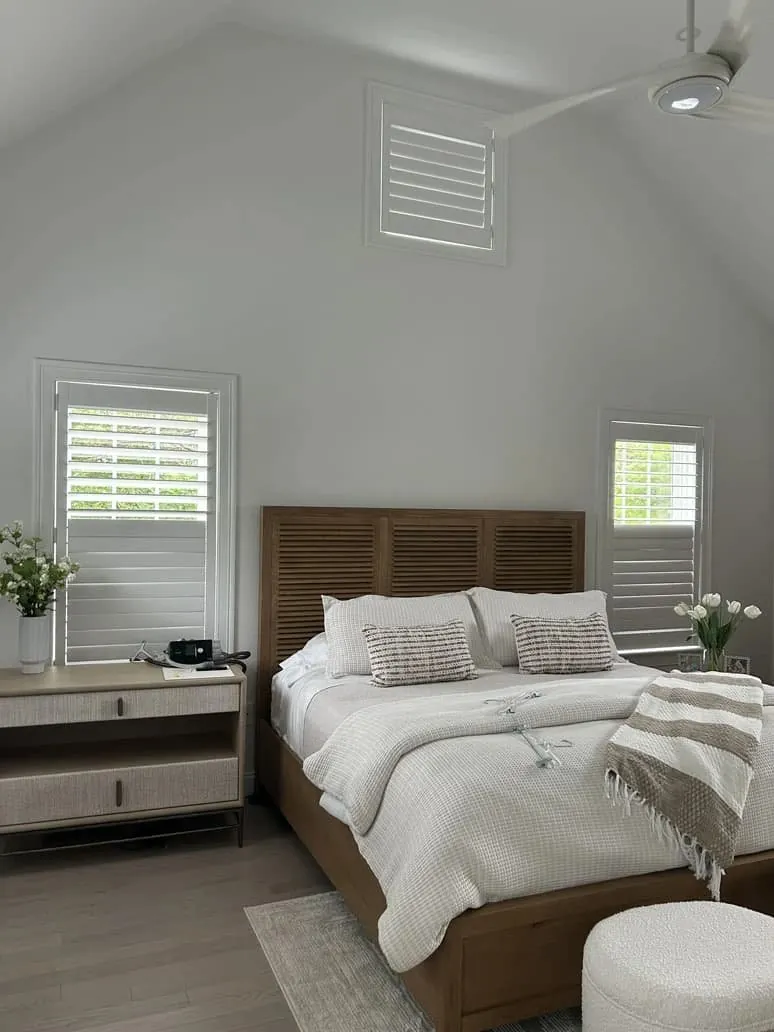
Gable and upstairs windows
Upper rooms under a pitched roof can take shaped panels for angled or high windows, so the whole room matches.
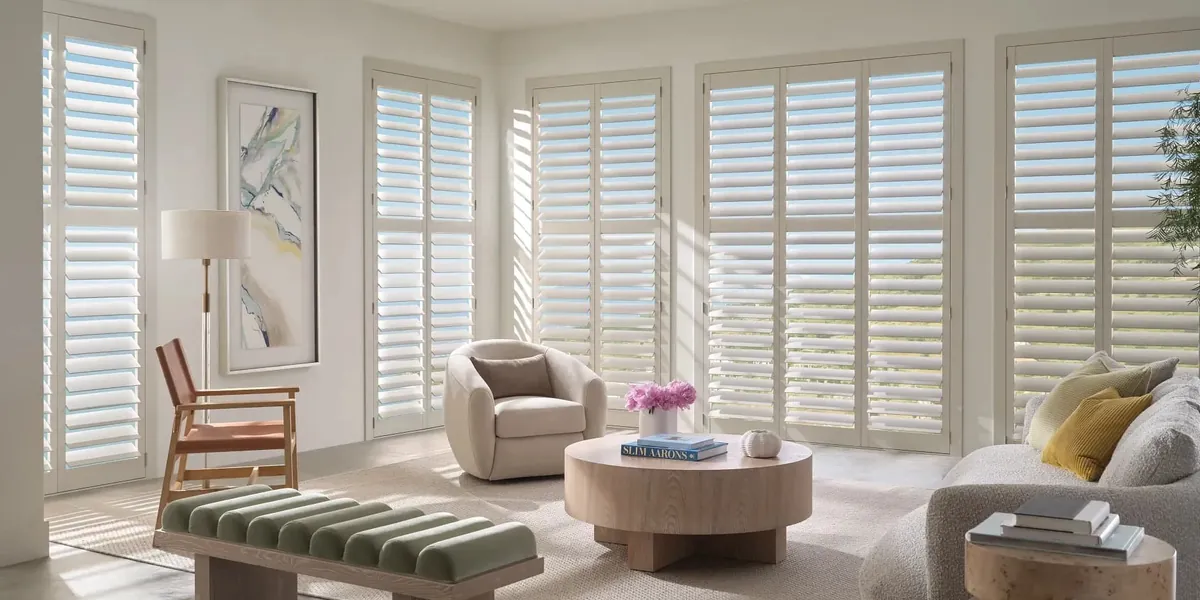
Walls of glass
Wide louvers and hinged panels that fold back to the wall keep a long run of windows open to the view.
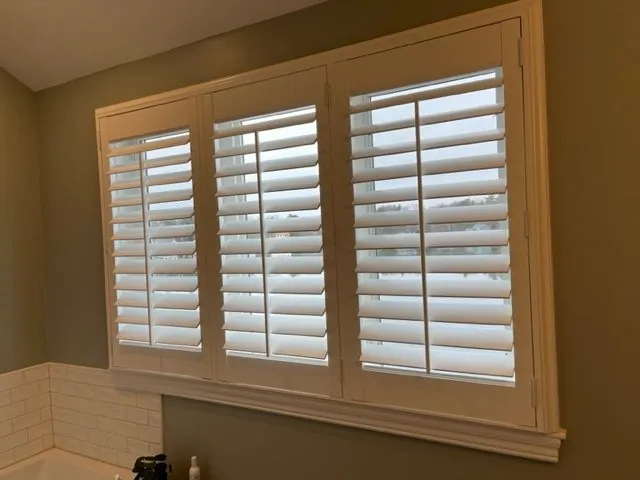
Bathrooms and kitchens
Palm Beach polysatin has no wood to swell with steam, so it is the usual choice wherever water is close by.
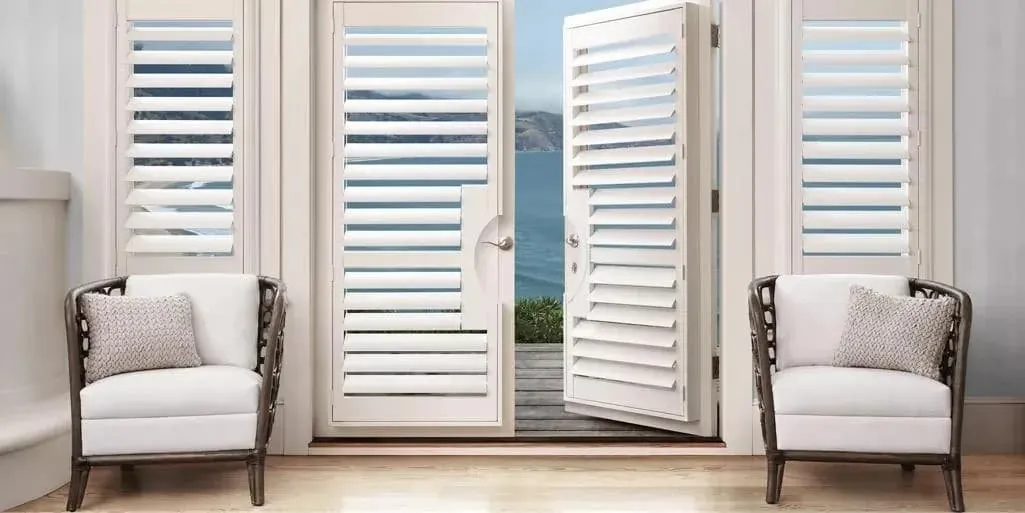
Doors to the deck
French doors take panels fixed to the door itself; a slider takes panels that glide aside on a track.
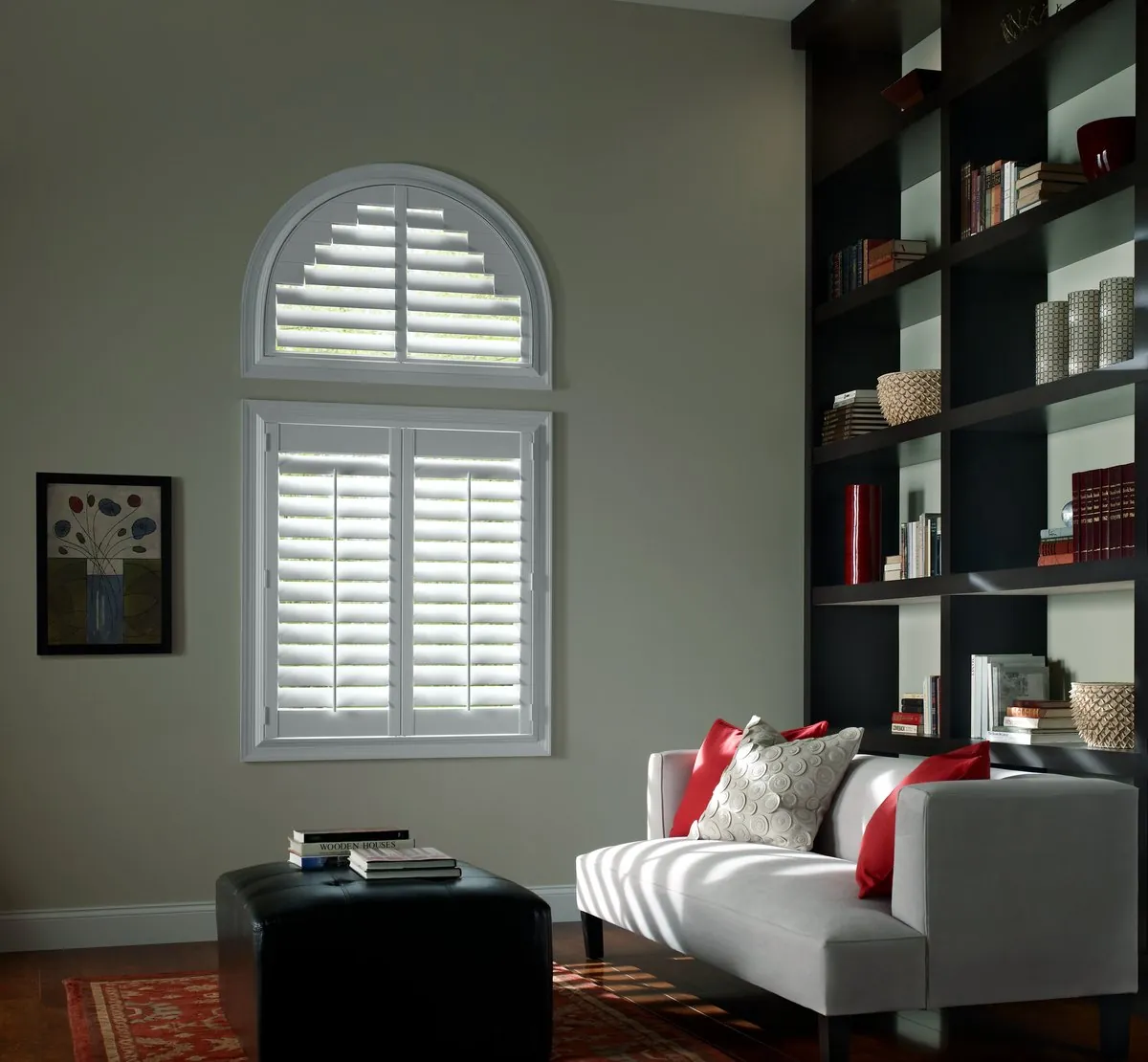
Arched and shaped tops
A fanlight or arched landing window can take a shutter made to its curve, above a rectangular shutter or on its own.
Along the Old King’s Highway
The stretch of Route 6A through Barnstable Village, Cummaquid and West Barnstable holds some of the oldest houses on the Cape. Full and half capes sit low to the ground under steep roofs, with small windows set close under the eaves. Their sash are often divided into many small panes, and the walls are thick enough that each window sits well back from the face of the room.
Those deep openings are one of the few things about an antique house that make fitting easier. There is usually room for a frame to sit inside the opening, so the shutter lives within the wall and the trim around it stays on show. The challenge is everything else. Old houses lean and settle, sills slope, and the opening may be a little wider at the top than the bottom. Layers of paint can build up on the stops.
The answer is patient measuring and a frame chosen to suit. We take measurements at several points across each opening and check it for square before we recommend anything. On an opening that has moved a good deal, a frame with a light outside edge can sit over the irregularities while still looking slim. Inside a front room on 6A, the aim is always a shutter that looks like it has been there as long as the window.
Small panes, small louvers
Proportion matters most in a small window. A wide louver in a little cape window looks heavy and crowds the glass, and when it is tilted open the slats seem to fill the opening. A narrow louver does the opposite: it reads as fine and traditional, and it lines up more comfortably with the sash bars behind it.
The same thinking applies to the frame and the panel. A slim frame takes up less of the glass, which matters when the window is small to begin with. A single panel that swings open fully often suits a narrow opening better than a pair that meets in the middle. For the tilt, some owners like the traditional rod down the face of the louvers; others prefer a hidden tilt at the side, which leaves the small panel uncluttered.
In rooms under the roof, where knee walls cut into the space, the windows may be no taller than they are wide. Shutters can be built for openings that small, and getting them right makes those upstairs rooms feel finished rather than forgotten. Our page on shutters for older windows has more on fitting antique openings.
Federal houses in the village
Mixed among the capes along the highway are the taller Federal and Greek Revival houses, with two full stories, symmetrical fronts and windows set in neat rows. Their windows are taller and narrower than a cape’s, and the rooms behind them often have higher ceilings, moulded casings and sometimes paneled reveals.
A tall Federal window suits either a divider rail or tier-on-tier panels. With a divider rail, the louvers above and below tilt separately, so you can close the bottom half against the road and keep the top open for light. With tier-on-tier, the top and bottom are separate sets of panels, and you can fold the upper ones fully open while the lower ones stay shut. In a formal front room, setting the split at the same height as the meeting rail of the sash makes the shutter look like part of the window.
Heritance hardwood is the usual material for these rooms. It can be painted to match old trim exactly or stained to suit a restored floor, and it brings real wood into a house that is built from it. Where a reveal has paneled sides, we can set the frame so the panels remain visible when the shutters are folded back.
What the historic district expects
Much of the north side of town sits within a historic district, and owners there tend to care a great deal about how their windows look from the road. Any rules that apply to your property are for you to confirm with the town, and our work is always inside the window, not on the exterior. Still, it helps to know how shutters read from outside.
Seen through old glass, a painted shutter in white or a soft off-white looks quiet and traditional. There is no fabric pattern at the pane and no headrail across the top of the sash, just the lines of the louvers following the lines of the window. Many owners choose the same finish for every street-facing window, even where the rooms behind are very different, so the front of the house stays consistent.
We pay attention to the small things that show from the road: frames set evenly in each opening, divider rails at matching heights from window to window, and louvers that close in a straight line. Those details are what make a set of shutters look settled in an old house.
Bay-side houses with bigger glass
Toward the bay the houses change completely. Newer, larger houses sit on lots above the marsh or the beach, built to take in the view. Great rooms have tall windows and transoms, kitchens open onto decks through wide sliders or French doors, and bedrooms have big windows that face the water.
Wide louvers suit these windows. When open, fewer slats cross the glass, so the view stays clear. When tilted, they turn the evening sun toward the ceiling. A wide window is divided into panels hinged together that fold back neatly at each side, and a door gets panels mounted to the door or on a sliding track. Transoms over the main windows can take fixed shutters that continue the louver line, or be left bare so the upper glass keeps bringing in sky on gray winter days.
These houses often have a mix of materials too: NewStyle in the bedrooms and main rooms for its even painted finish, Palm Beach in the baths and in any room right on the water, and Heritance where you want real wood, perhaps in a study or a dining room. All three come in matching whites, so the house looks unified from the water and from the road.
How exposure shifts across town
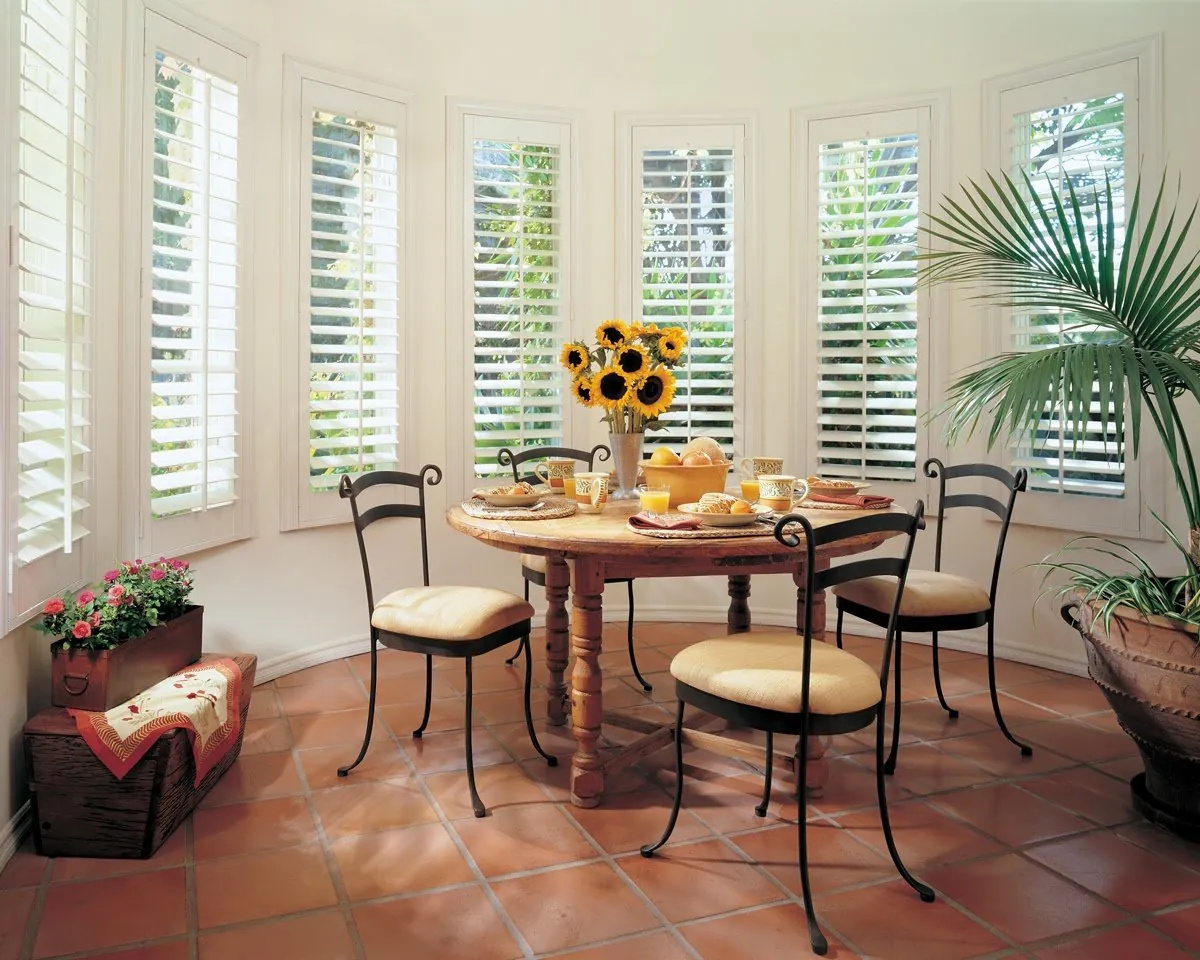
Because Barnstable reaches from one shore of the Cape to the other, the same street can be quiet and shaded at one end and wide open to the sun at the other. A north-facing cape on 6A may need shutters mainly for privacy and warmth on winter nights. A house on the bluff facing west over the bay needs them to manage hard evening light. A cottage near the Sound takes a bright southern exposure all day.
Shutters adapt to all three without changing the look of the house. On a shaded window you fold the panels right back to let in every bit of daylight. On a sunny one you tilt the louvers to bounce the light. On a privacy window you close the lower panels and leave the upper ones open. When we visit, we note which way each room faces and how much sun reaches it, then suggest a louver size and layout for each.
For plantation shutters in Barnstable, MA, that is often the most useful part of the consultation. Once we have walked the house, the right collection and layout for each room usually becomes clear.
Living with shutters through a Cape year
A good deal of the housing on both sides of town is lived in all year, and shutters earn their place in every season. On a January night, closing the panels in a 6A front room puts a solid layer between the old glass and the chair beside it, and the room holds its warmth better than it does with the glass bare. In spring and autumn, with the louvers tilted, the low sun reaches into the room without hitting the furniture straight on. In August, panels closed through the afternoon keep a bay-side great room cooler and spare the floors from the strongest light.
Day to day they ask very little. The louvers stay where you set them, there are no cords to wind or fabric to wash, and a soft cloth run along the slats now and then keeps them clean. In a house that welcomes family for the summer, that simplicity matters: guests can open and close a shutter without being shown how. For many owners who ask about plantation shutters in Barnstable, MA, that easy care is as much of a reason as the look.
Matching the collection to the room
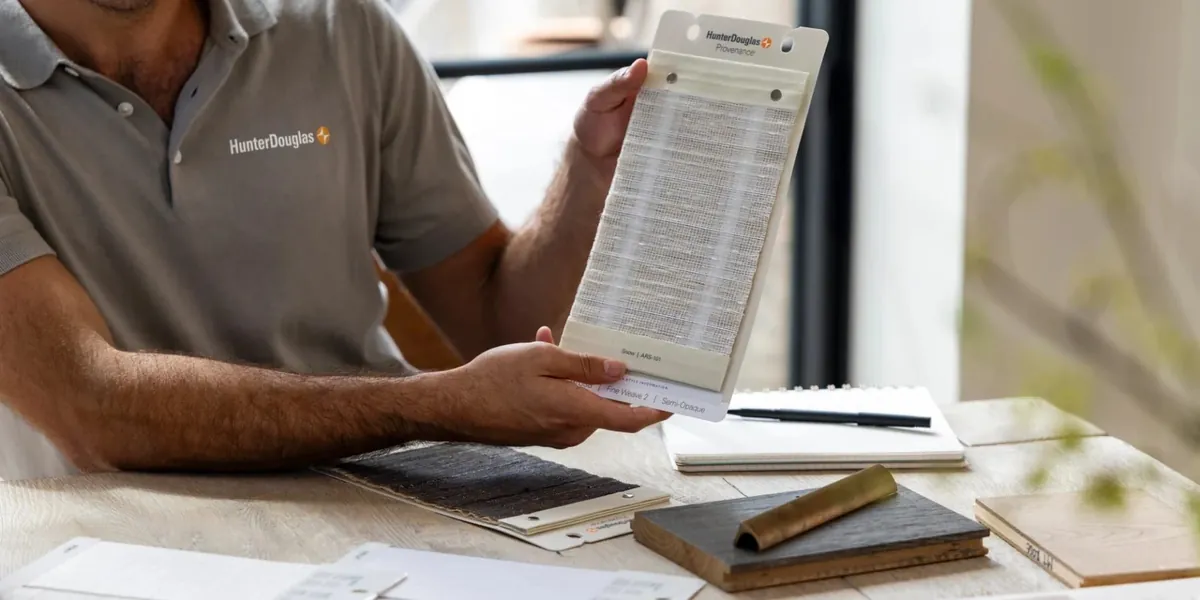
Hunter Douglas makes three shutter collections, and each has rooms where it does its best work.
Palm Beach is polysatin, solid through with no wood core. It does not swell or warp in damp air or steam, which makes it right for bathrooms, kitchens and rooms facing the water. It is also a sensible choice for an antique house with a damp cellar-level room.
NewStyle is a hybrid composite with the look of painted wood. It keeps an even, crisp finish across many windows, so it is the common choice for bedrooms and the main living spaces in a newer house.
Heritance is real hardwood, painted or stained. It suits formal rooms and older houses where genuine wood matters, and it can be made in shaped tops for arches and fanlights.
Because the collections can be ordered in matching finishes, a house can use whichever one suits each room without the street ever seeing a difference.
A consultation at your house
Shutters are chosen most easily in your own rooms, at your own windows. Our vans carry samples of each collection, louver size and frame, so we can bring the showroom to you. Here is the usual order of things.
- Request a consultation online or with the call button, and we agree a time.
- We walk the house with you, noting which way each room faces and how you use it.
- You compare Palm Beach, NewStyle and Heritance samples against your trim, floors and furniture.
- We measure each opening at several points, check for depth and square, and agree the mount.
- You get a free estimate, with no pressure to decide on the spot.
- Our certified Hunter Douglas installers fit the finished shutters, adjust each panel and show you how everything works.
Our page on what happens at an in-home consultation explains the visit in more depth.
A Gallery dealer for old capes and new houses
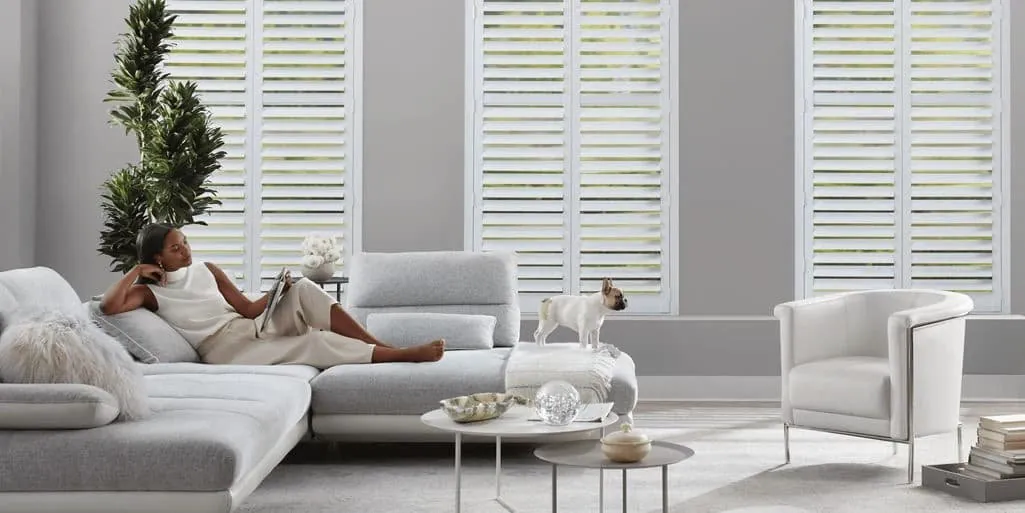
Blinds & Designs is a Hunter Douglas Gallery dealer, so the full shutter line is available in one place: every collection, louver size, color and frame. That matters in a town with houses as different as Barnstable’s, where a 6A cape and a bay-side house rarely want the same thing.
Our installers are certified by Hunter Douglas. A shutter depends on its frame being set square and its panels hung true, and an antique opening that has shifted over the years needs a careful hand to fit well.
If other rooms need something softer, see cellular shades in Barnstable or roman shades in Barnstable, or every service on our Barnstable page. Our plantation shutters page covers the whole collection.
Sagamore, our nearest showroom
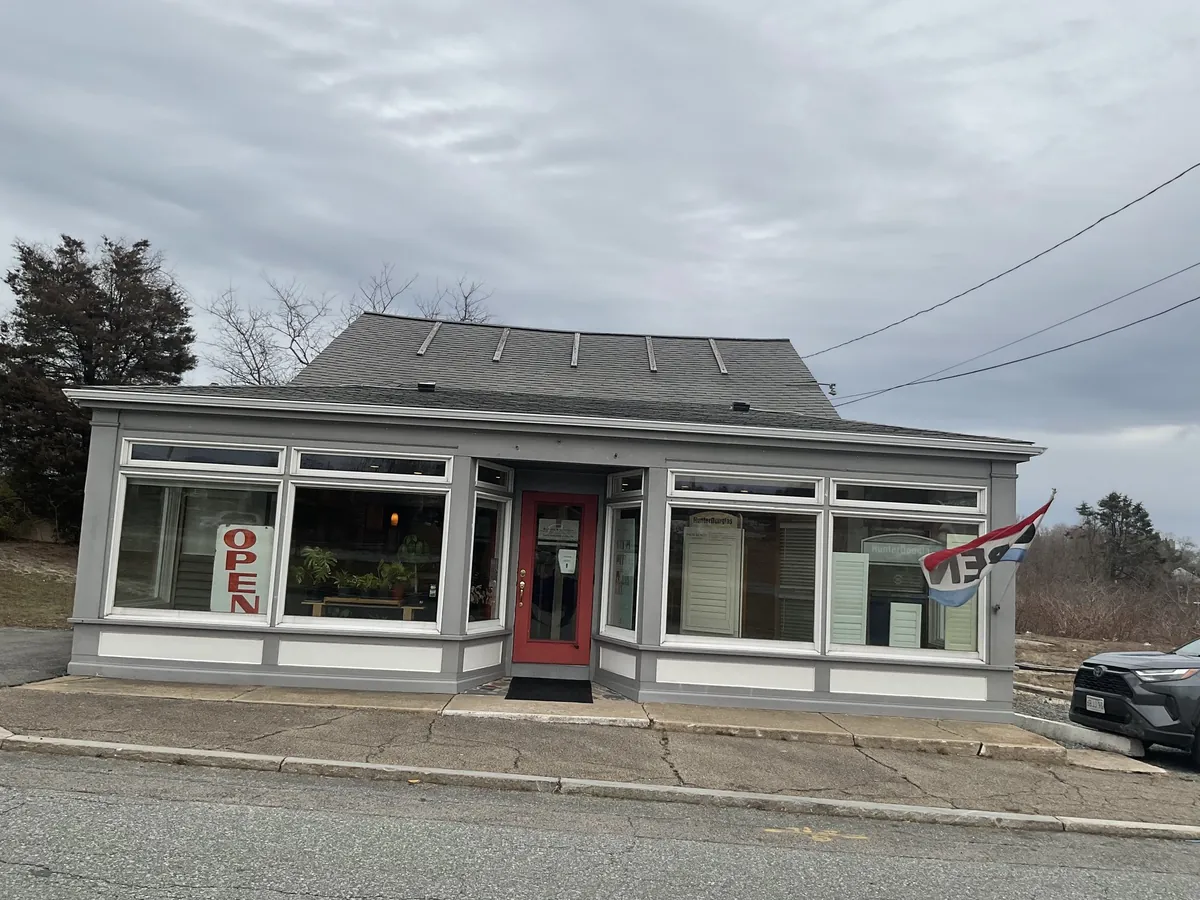
The Sagamore showroom is the closest of our locations to Barnstable, a straight run west along 6A or Route 6 to the bridge.
Even so, shutters are measured at the house, because each one is made for a particular opening. Many customers begin with an in-home consultation, so we can look at the windows, the trim and the light at the same time.
Questions from Barnstable
Can shutters fit the small windows in an antique cape?
Yes. A narrow louver and a slim frame keep the shutter in proportion, and thick old walls often allow an inside mount. We measure at several points because old openings are rarely square.
Do shutters suit a house in the historic district?
They are a traditional interior treatment and look quiet from the street, especially in white or off-white. Check any rules for your property with the town; we fit everything inside the window.
What works on a big bay-side window?
Wide louvers and several hinged panels that fold back to the wall. When open, the view stays clear, and when tilted, the evening sun is turned up toward the ceiling.
Can I use hardwood in some rooms and polysatin in others?
Yes, and many houses do. Heritance, NewStyle and Palm Beach come in matching finishes, so the house looks consistent from outside.
Is the estimate free?
Yes. After we measure, you receive a free estimate for the shutters you are considering. Request a consultation to book a visit.
Your first step
Start with the room that matters most, whether that is a front parlor on 6A or a great room facing the bay. Request a consultation and we will bring samples to your house, measure the windows and give you a free estimate for plantation shutters in Barnstable, MA. You can also use the call button with a question, or visit the Sagamore showroom.