
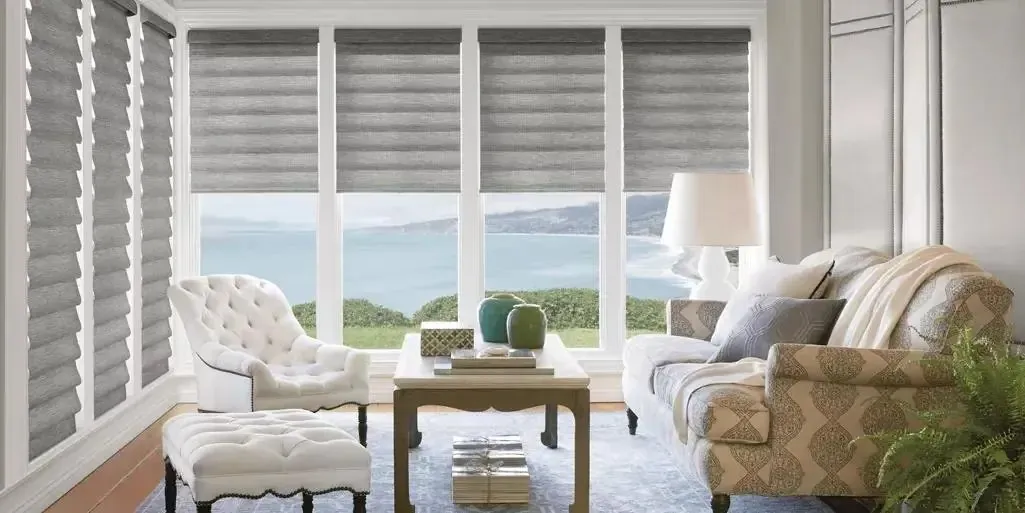
Built around the harbor view
Along the harbor and out toward Minot and Peggotty Beach, Scituate’s shingled houses are arranged around one thing: what you can see from the window. Living rooms face the moorings, kitchens look across the water, and upstairs bedrooms have windows placed for a glimpse of the sea. Any shade that goes on that glass has to respect the view first, which is the starting point for roman shades in Scituate, MA.
It is also one of the most exposed stretches of the South Shore. Wind off the ocean, spray, low winter sun and summer glare all arrive at the same windows the view comes through. A good folded shade handles that without getting in the way: raised, it is a slim band above the glass; lowered, it takes the edge off the light; and in the evening it gives a lit room some privacy from the harbor and the street.
Inland, the newer colonials have less exposure and no water view, and the choices there are about comfort and style. We cover both on this page, because many Scituate houses need a bit of each.
Where a folded shade earns its place
Three kinds of room come up again and again when we bring samples to Scituate. Here is what each usually needs.
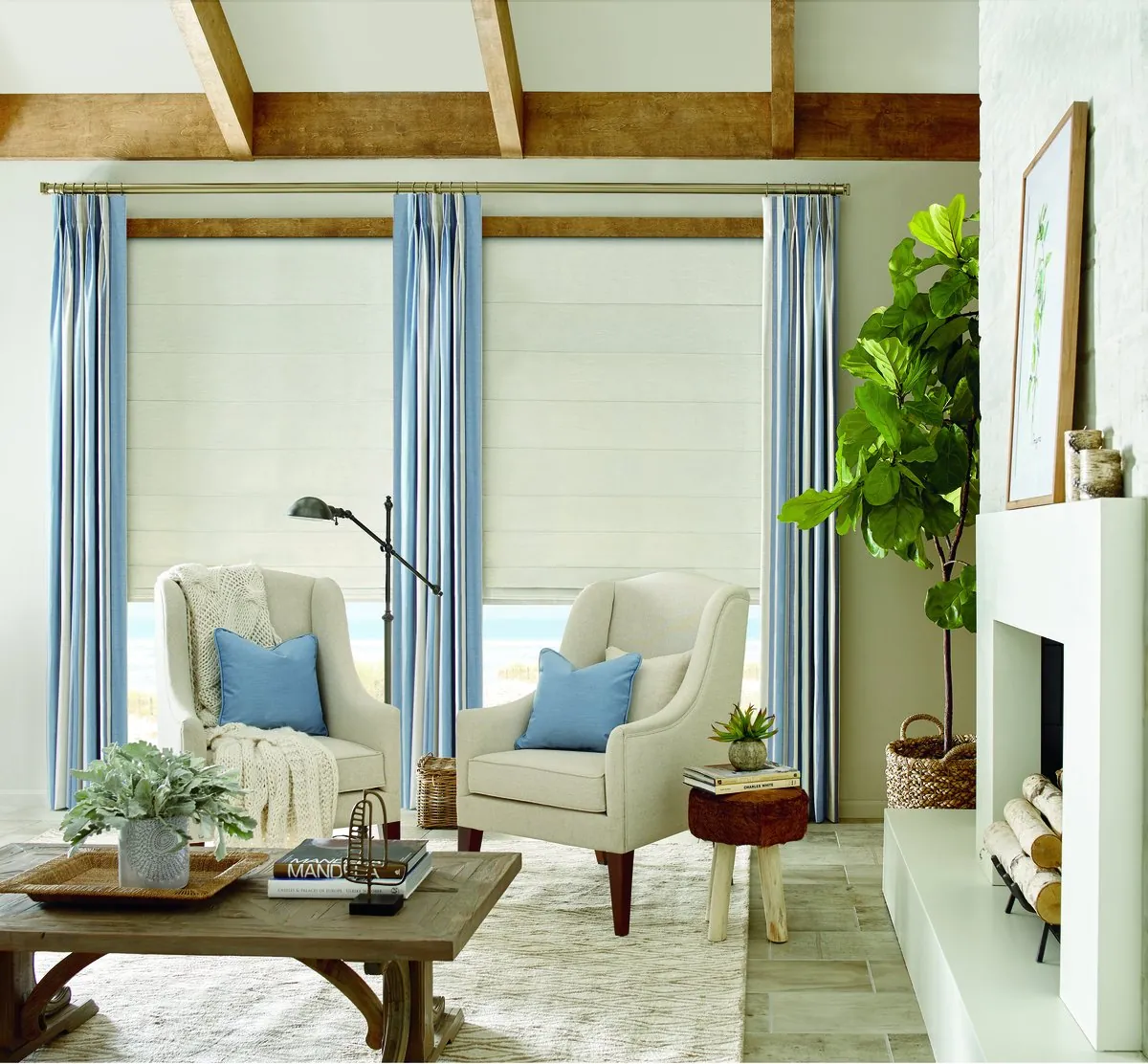
The harbor room
The main room facing the water. A shade that disappears when raised and filters the glare when lowered, often paired with drapery panels for a softer frame.
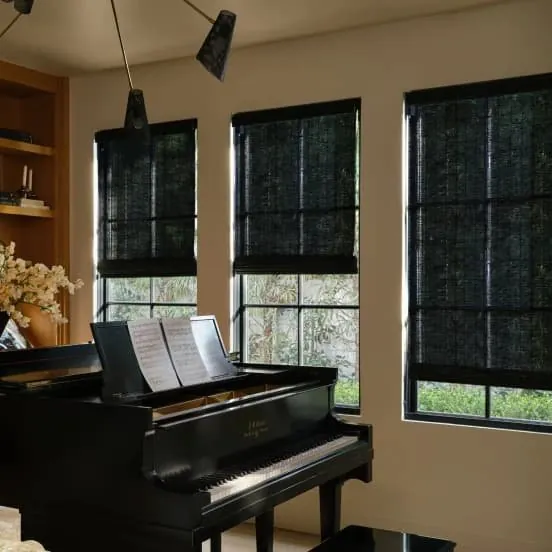
Beach-side bedrooms
Early sun off the ocean and close neighbors at the beach. A room-darkening lining for sleep that also screens the room at night.
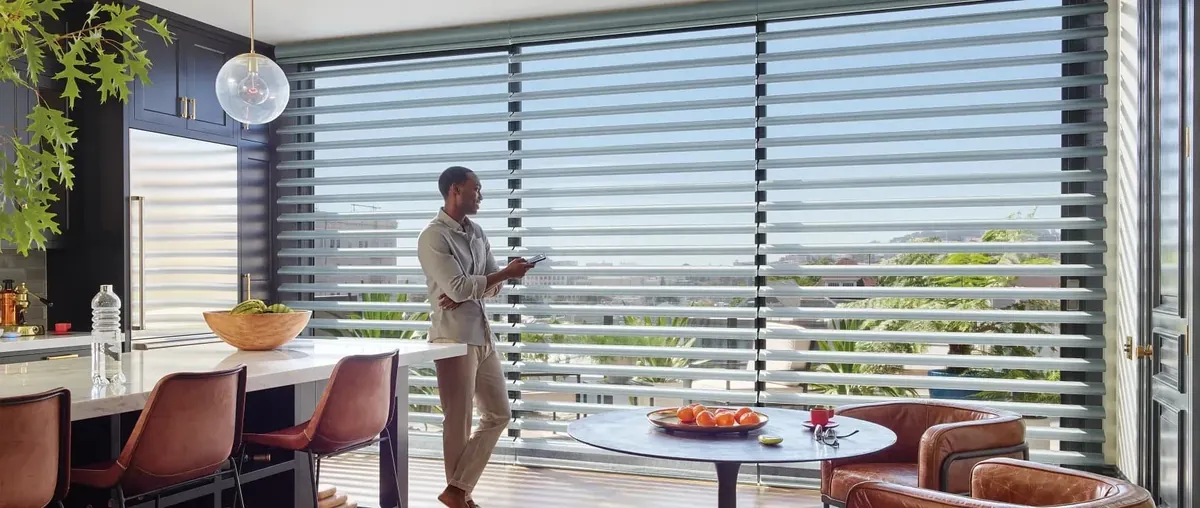
Inland colonials
Regular modern windows and larger rooms, where matched shades and PowerView on the high glass make life easy.
Shingled houses along the harbor
The shingled houses near the harbor come in every shape: older capes and gambrels, larger shingle-style houses with porches and gables, and many that have been added to over the years. Their windows are equally varied. A single house might have small paned sash on the street side, a wide window or a row of windows facing the harbor, and a dormer or two under the roof.
The harbor side is where the planning matters. Wide openings are best split into two or three shades sharing a top line, so each one lifts easily and you can lower one section against the sun while keeping the rest open to the moorings. Mounting the headrails high, at the top of the frame or just above it, means the raised fabric clears the glass entirely, and nothing interrupts the view.
On the street side, the smaller sash in an older shingled house suits a flat fold mounted inside the frame. It keeps the trim visible, looks right with the period of the house and gives the front rooms privacy from passers-by.
Out to Minot and Peggotty Beach
Toward Minot and Peggotty Beach, the houses sit closer to the water and often closer to each other. Many are shingled cottages and beach houses, some enlarged, with windows facing the ocean on one side and neighbors on the others. The light here is the brightest in town, bouncing off sand and surf as well as coming straight from the sky.
That brightness changes the fabric choice. On the ocean side, a light-filtering fabric diffuses the glare into an even, comfortable light without making the room dim, and you lower it only as far as the sun demands. On the side windows facing a neighbor, a filtering or lined fabric gives daytime privacy too. Bedrooms facing east take the first light very early, and a room-darkening lining lets you choose when the day begins.
Because these rooms take so much sun, color choice matters. Pale and natural colors age well on an ocean window; deep colors are best kept for the rooms facing inland.
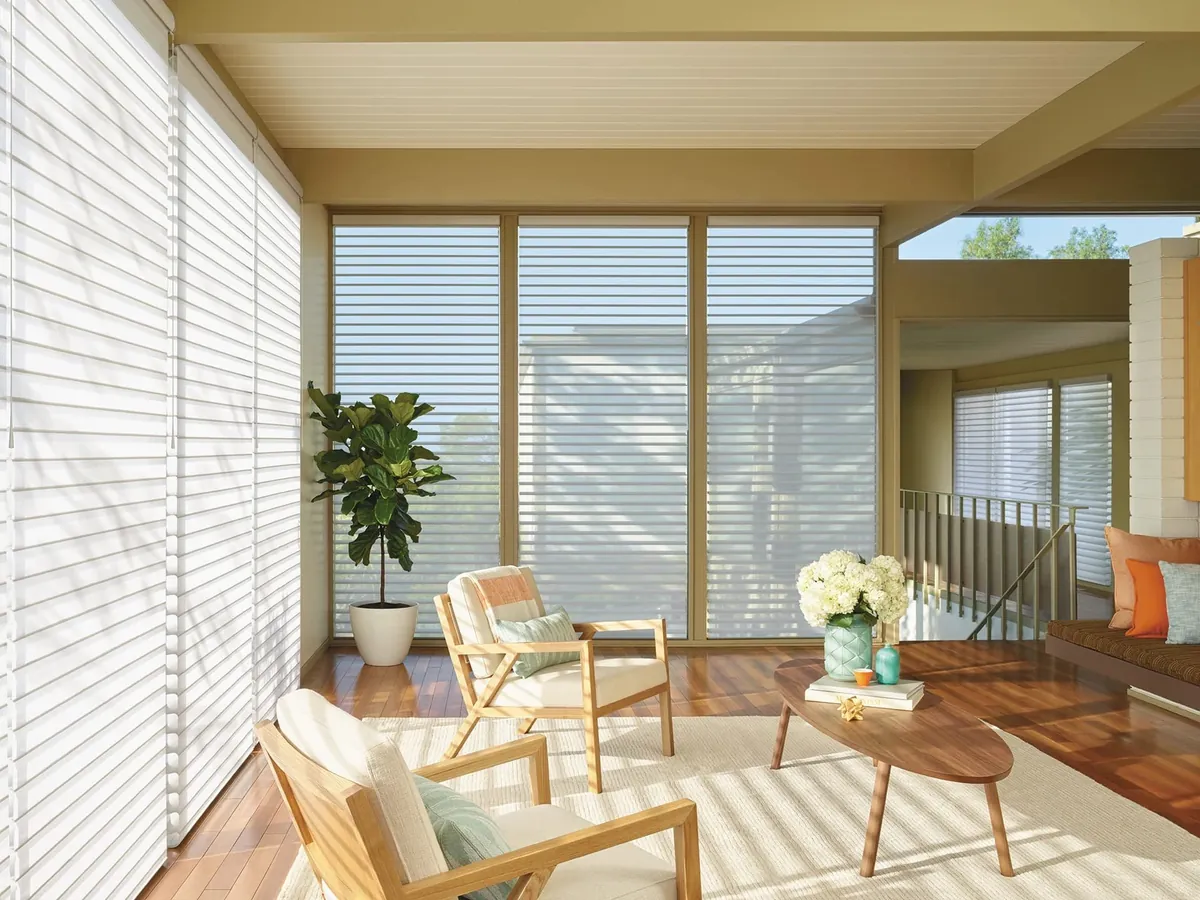
How the house looks from the water
A harbor house is seen from two sides: from the street, like any house, and from the water, by everyone on the moorings, the town pier and the far shore. Shingled houses look their best when the windows read cleanly from both directions, and shades play a bigger part in that than people expect.
From outside, what you see of a lowered shade is its back, or its lining. If every window on the harbor side has a different lining color, or a mix of lined and unlined fabrics, the house can look patchy from the water at dusk. Choosing one lining color for every window on the water side, usually a soft white or ivory that sits well with weathered shingles and white trim, keeps the elevation calm whatever fabrics face into the rooms. Vignette helps here too, because its back is clean, with no cords showing through the glass.
We bring this up at the visit for every set of roman shades in Scituate harbor houses, since it is easy to overlook when you are choosing fabric from inside.
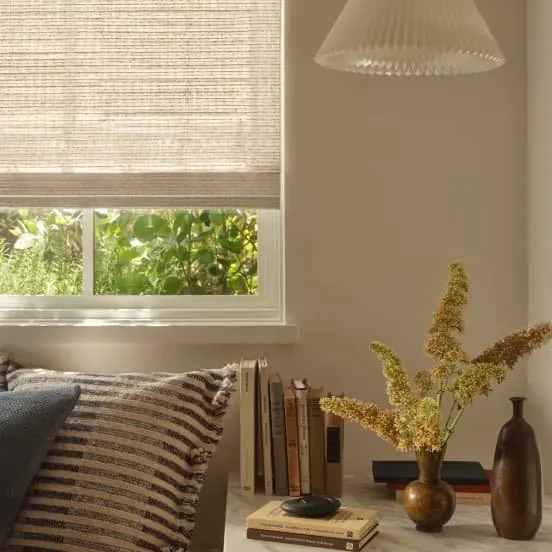
Upstairs under the shingles
The upper floors of a shingled house are full of character and awkward windows: dormers set into the roof, small windows in the gable ends, and bedrooms with sloping ceilings that leave little wall above the glass. These rooms often have the best views in the house, looking over the rooftops to the harbor or the sea.
Dormer windows suit an inside mount, tucked into the recess so the sloping walls stay clean. A flat fold or Vignette keeps the raised stack small on a short window, and a darkening lining makes an east-facing bedroom far more restful in high summer. Where a dormer is very shallow, an outside mount on the face of the recess can work instead. For roman shades in Scituate, MA, attic bedrooms, we measure each dormer carefully, because no two are quite alike.
Living with the weather
Scituate’s shoreline takes the full force of nor’easters and winter wind, and the houses along it feel it through their windows. On a cold, windy night, the glass on the ocean side is the coldest surface in the room, and sitting near it can feel chilly even with the heat on.
A lined roman shade lowered at dusk puts a layer of fabric between the room and that cold glass. Mounted inside the frame, close to the window, it covers the opening from edge to edge and makes the window end of the room more comfortable. A heavier lining adds to the effect in a bedroom or a reading corner.
Salt and spray are part of life near the water too. Vignette keeps its mechanism inside the headrail, and a cordless sewn shade has no cord lock at the side, so less hardware sits exposed near a window opened for the summer breeze. When the shades are installed, brackets go into solid wood rather than plaster, so a shade on a window that rattles in a storm stays firmly in place.
The harbor after dark
The view from a harbor room is just as striking at night, with boat lights and the lights of the far shore on the water. But a lit room with big windows is visible from a long way off, from the harbor, the road and the houses opposite. In the evening most people want at least part of the window covered.
The answer is often a light-filtering fabric that screens the room once the lamps are on while still letting you see out at the brightest lights beyond. Where full privacy is needed, a lined fabric does the job. Some prefer to lower only the shades on the street side, leaving the harbor windows open to the night.
PowerView can handle this automatically. A schedule can lower the street-side shades at dusk, raise the harbor shades at sunrise, and move a whole wall at once when you want the view back. Motorized blinds and shades explains PowerView more fully; powering the motors is settled with you on site.
Pairing shades on the widest glass
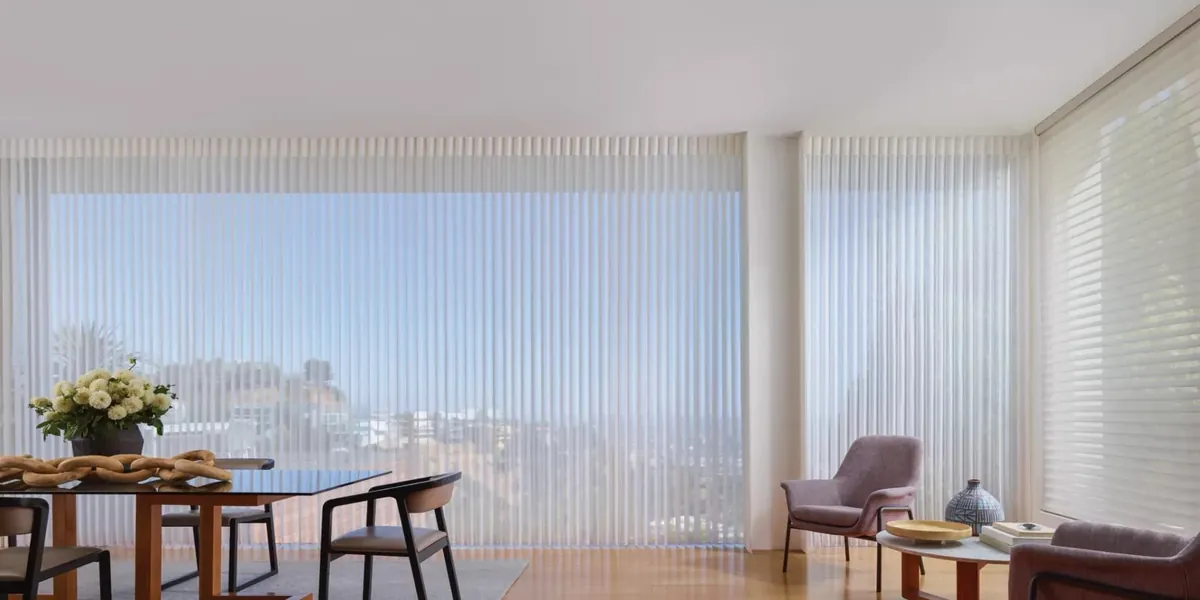
Some harbor rooms have very large windows or walls of glass, where a folded shade on every pane would look heavy. In those rooms, we sometimes suggest a sheer Hunter Douglas shade on the widest glass and roman shades on the smaller windows beside it, in matching colors so the room reads as one design.
The sheer softens the light and keeps a hazy view of the water even when lowered, while the roman shades bring the texture and warmth of fabric to the rest of the room. It is a common approach in rooms built around a view, and we bring samples of both so you can see them together at your own windows.
Gables, porches and odd openings
Shingle-style houses love an unusual window: a small square in a gable, a narrow window beside a chimney, a half-round over a door, a porch with windows on three sides. A folded shade needs a rectangular opening of reasonable size to work well, so not every one of these is a candidate.
We will tell you honestly which windows suit a roman shade and which are better left bare or treated another way. A small gable window high in a wall may need nothing at all; a narrow chimney-side window may suit a Hunter Douglas option made for slim openings; an enclosed porch with many windows may be best with matching shades set at one height. The aim is a house where every window looks considered, not one where every window has the same treatment for its own sake.
Newer colonials inland
Away from the harbor and the beaches, Scituate’s newer colonials sit inland, with regular modern windows, larger rooms and less exposure to the weather. Fitting is straightforward, and inside mounts are possible almost everywhere.
Here, roman shades in Scituate are about making the rooms feel finished. Printed Carole Fabrics cloth suits a dining room; a long family room wall takes identical Vignette shades stopped level; bedrooms get darkening linings in colors of their own. High windows in a two-story entry or family room are a natural place for PowerView.
With no ocean glare to manage, you have more freedom with color inland, and richer tones hold up well on windows shaded by trees.
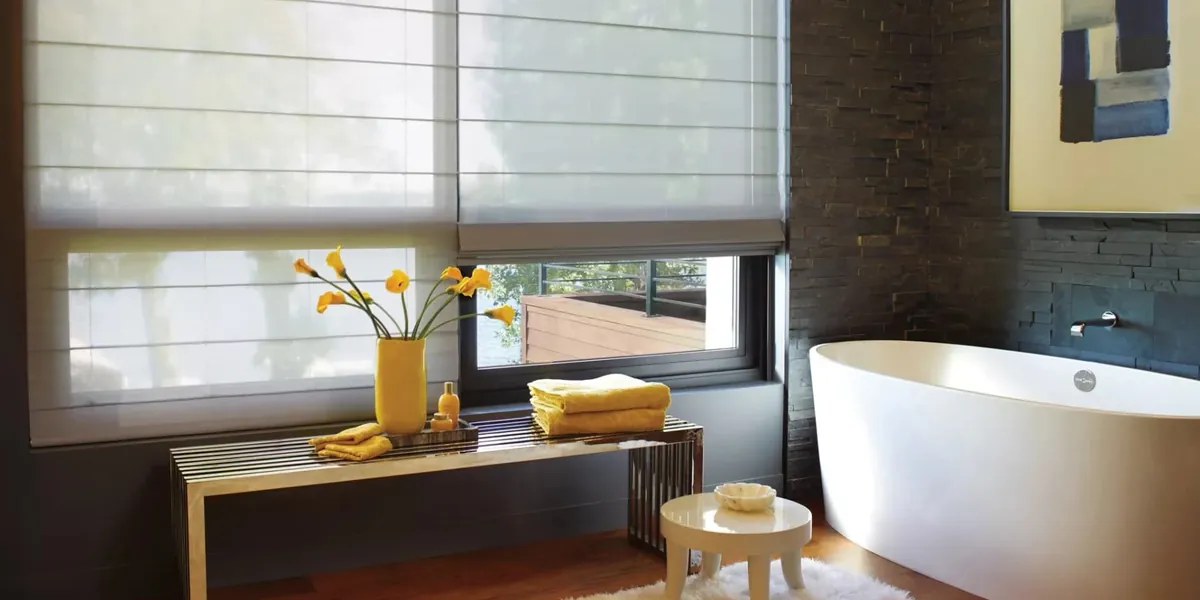
Kitchens and baths near the water
Kitchens in harbor houses often have the best view in the house, with a window over the sink looking straight out at the water. That window is opened, closed and splashed constantly, and reaching over the sink for a cord is awkward. A cordless sewn shade lifted from its bottom rail, or a Vignette with nothing on the back, is easiest to live with, and a textured fabric shrugs off the odd mark.
Bathrooms need privacy at all hours but also benefit from the bright light near the shore. A sheer face fabric with a privacy lining gives both, and fitting it within the window opening keeps the fabric away from splashes at the tub or basin.
Vignette or Carole Fabrics for a harbor house
Both are Hunter Douglas roman shades, and many Scituate houses use both.
Vignette suits the harbor side. Its tiers are formed in the material, so they hang evenly at any height, nothing runs down the back to show from the water, and the fabric winds away into the headrail so the raised shade takes up very little of the glass. It works smoothly with PowerView, which helps on rooms where the shades move many times a day as the light shifts across the harbor.
Carole Fabrics suits the rooms where the cloth matters most. Each shade is stitched to order from a decorator fabric, folded flat or soft, with a lining chosen for the room. The library is broad enough to pick up the colors of a coastal interior, a rug or a set of cushions, and to coordinate with drapery panels in a formal living room.
You can read more on our Vignette and Carole Fabrics roman shades pages, and see every option on the main roman shades page.
When we visit
With a view to protect and weather to manage, it pays to choose at the window. The vans carry our samples, so the showroom comes to your harbor room.
- Book through Request a Consultation, or use the call button to pick a time.
- We bring Vignette and the Carole Fabrics books, with sheer, filtering and darkening linings and every lift.
- We start at the windows facing the water and talk about how the light changes there through the day.
- You see each fabric against your own view, raised and lowered, and judge how much of the harbor it leaves.
- Every opening is measured, harbor runs are planned with shared top lines, and a mount and lift agreed for each.
- We send a free estimate for the rooms you want to cover, and you take whatever time you need.
For help with color and fabric throughout the house, ask about our interior design consultations. When the shades are ready, installers certified by Hunter Douglas fit each one, line up the harbor runs and show you how everything works.

What Gallery status means here
Hunter Douglas gives Gallery status to dealers who meet its standards, and Blinds & Designs holds it. For a Scituate house that puts every folded shade option within one appointment, from Vignette to the Carole Fabrics library, each lining and lift, and PowerView.
Certified installation, design help and repairs to existing blinds and shades come with it. For other rooms, see cellular shades in Scituate, roller shades in Scituate, or everything we offer on our Scituate page.
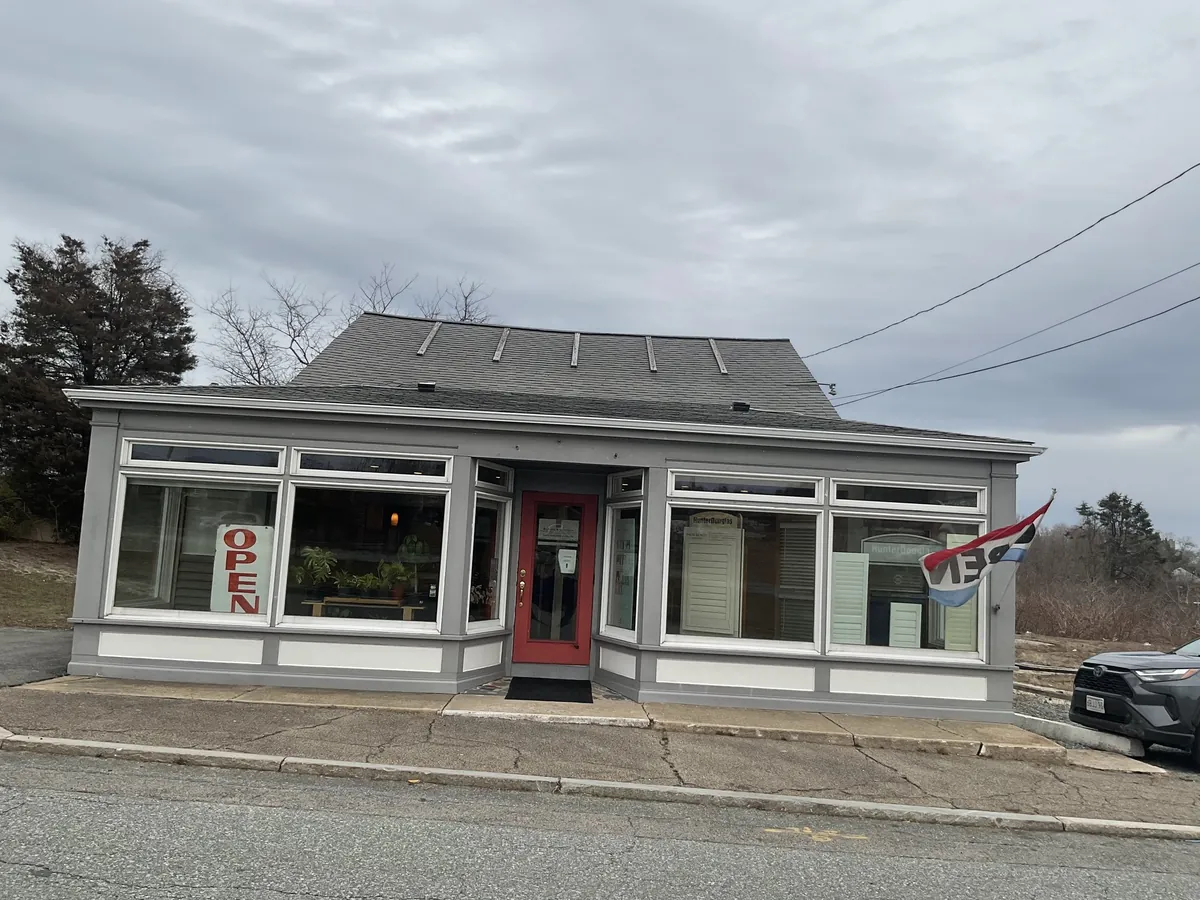
The Sagamore showroom
Closest to Scituate among our locations is Sagamore, where you are welcome to work the shades yourself.
For a harbor house, a home visit is usually where the real decision happens, because no showroom can show you a fabric against your own view of the water.
Questions from Scituate
Will roman shades block our harbor view?
Only when lowered. Mounted at the top of the frame or just above it, a raised shade clears the glass and leaves the view untouched. Lowered part way, it cuts the glare while the moorings stay in sight.
Our beach house faces east. How do we keep the bedrooms dark in summer?
A room-darkening lining behind a Carole Fabrics shade, or a Vignette in a darkening fabric, keeps the room dim until you raise it. An inside mount close to the glass narrows the gaps at the sides.
Will the shades stand up to the weather near the water?
Inside the house, the main concerns are sun and salt air. Lighter colors and a lining help the fabric, and Vignette and cordless shades keep hardware enclosed.
Can we close the street side at night but keep the harbor side open?
Yes. Each window has its own shade, and PowerView can lower the street-side shades on a schedule while the harbor windows stay open.
Do you charge for the estimate?
No. After measuring, we send you a free estimate for the shades you want.
See the fabric against your view
Choosing roman shades for Scituate, MA, harbor and beach houses is easiest with the samples at your own windows and the water behind them. Book a consultation and we will bring the range, measure every opening and send a free estimate. The call button works too, or call in at the Sagamore showroom.