
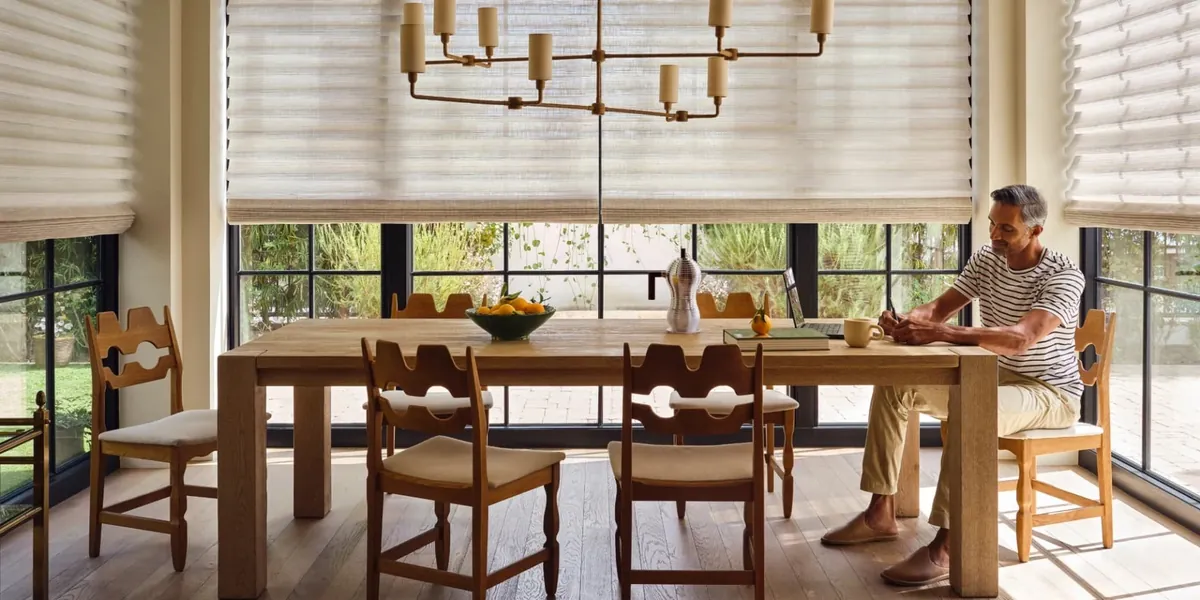
Three eras of house in one town
Few towns put so many kinds of house side by side. Along the Blackstone, the mill-era housing keeps its original narrow openings, set close to the neighbors. Out on the rural roads, antique farmhouses stand on their own land with old sash and thick walls. And off Route 16, newer colonials bring larger, regular windows and open rooms.
That variety is exactly why roman shades in Uxbridge, MA, work so well. A roman shade is made to the one window it hangs in, so it can be slim and tailored on a river-side sash, soft and warm in a farmhouse parlor, and crisp and orderly across a run of colonial windows. The same two lines, Vignette and Carole Fabrics, in the same two styles, flat and folded, cover all three.
What changes from era to era is what the shade has to do: privacy in the close-set mill housing, light and proportion in the farmhouses, and consistency in the colonials.
Roman shade choices in Uxbridge
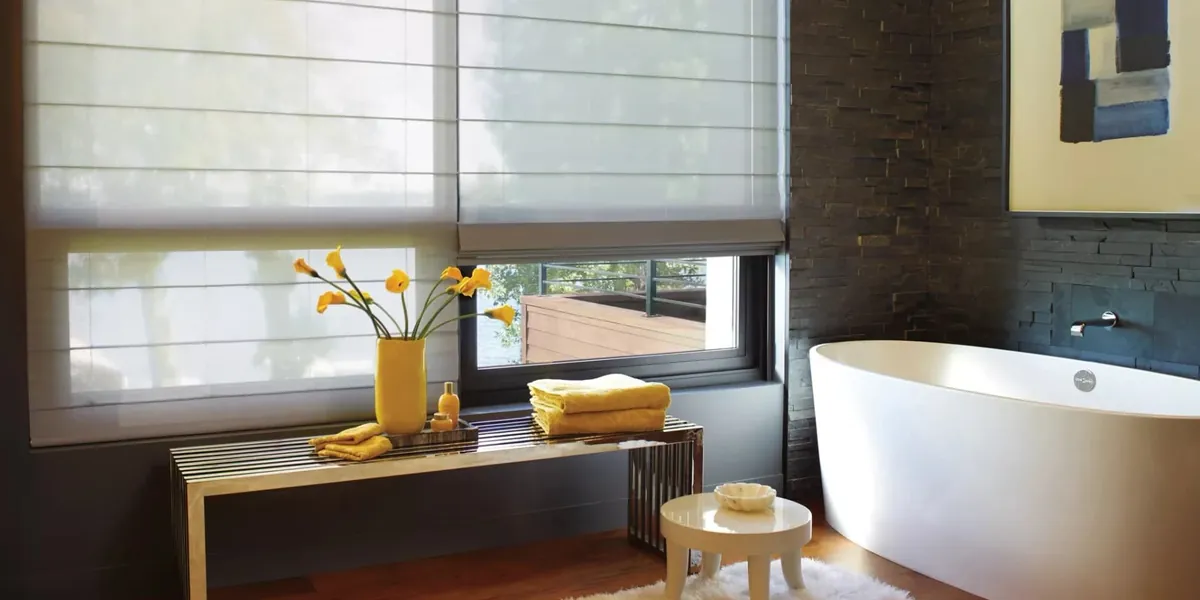
Vignette, flat and folded
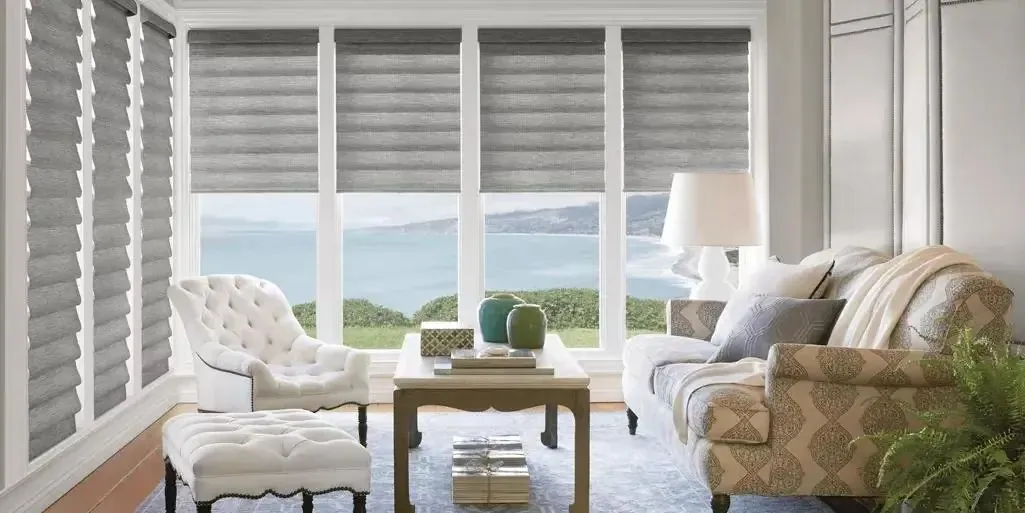
Hunter Douglas Vignette in both styles. Tidy on a narrow mill-era sash and clean across a colonial’s regular windows.
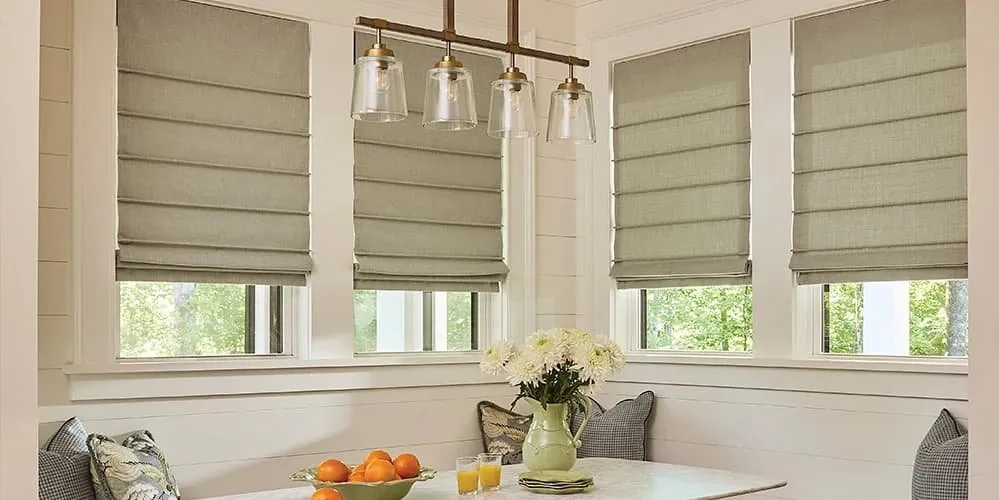
Carole Fabrics, flat and folded
Carole Fabrics roman shades in both styles, with colors and patterns that feel at home in an old farmhouse room.
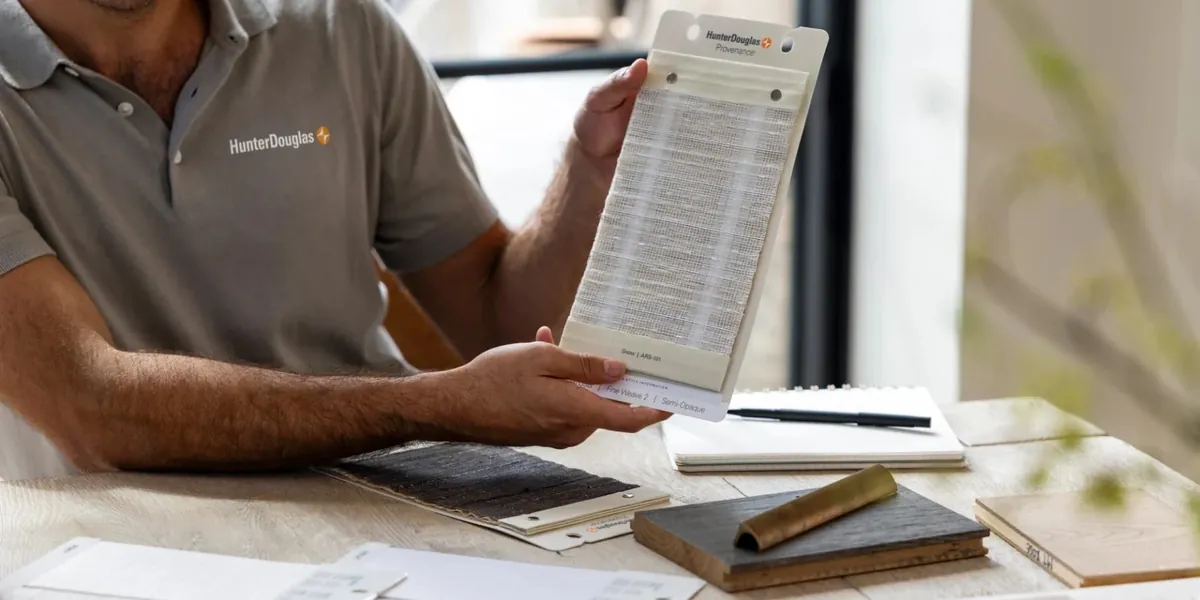
Samples in your own rooms
Our vans carry the swatches, so you choose with your own light, walls and neighbors in view.
Era one: mill-era housing along the Blackstone
The houses nearest the river were built for the mills, close together and practical. Their original openings are narrow, and many still have the old sash and casings. The house next door is often only a driveway away, so a side window can face a neighbor’s window directly, and the front rooms may be close to the road.
Here the shade’s first job is privacy. A roman shade covers the glass in a single, unbroken panel, which is ideal on a window that faces another window. The fabric decides how much it hides. A lighter fabric blurs the view and keeps the room bright, which suits a kitchen or a stair landing. A fuller fabric hides the room completely, which is what you want in a bedroom or a front room used after dark.
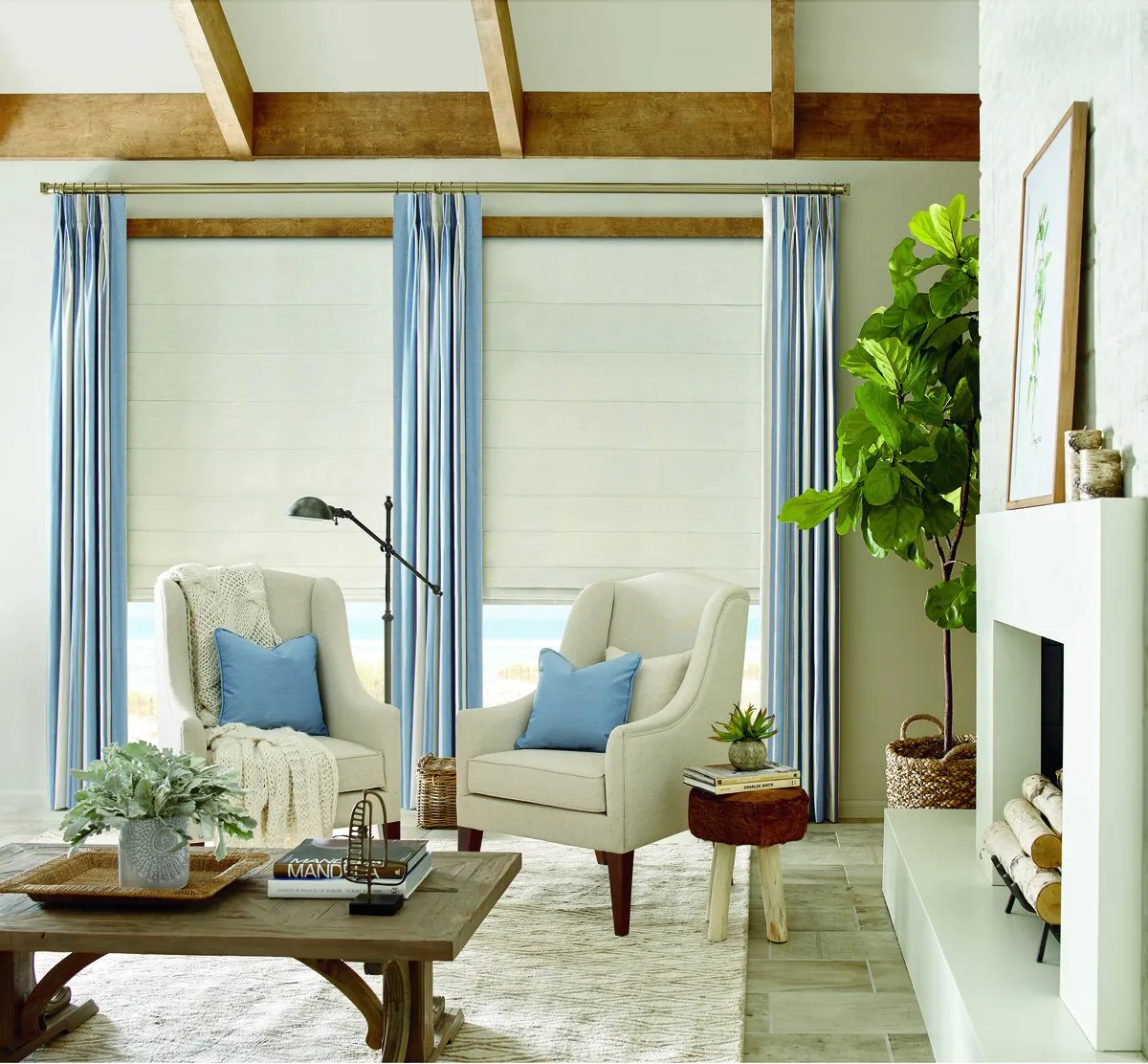
The narrow openings also call for a compact shade. A flat style folds into tight pleats as it rises, so the raised shade takes up very little of a slim window. Where the casing is worth showing, the shade sits inside the frame. Where the frame is shallow or out of true, it can sit on the face of the casing just above, which also closes the thin gaps of light down each side.
Era two: antique farmhouses on the outer roads
Further out, the antique farmhouses sit on open land, often well back from the road. Their walls are thick and their old sash small, and their rooms can feel dim even on a fine day, because the windows let in only so much light.
In these houses, privacy is seldom the main concern during the day. Light is. The aim is a shade that looks right against wide old trim and rises fully clear of the glass, so the small windows give the room everything they can. A flat style in a pale, light fabric does that well. Lowered, it softens strong sun without darkening the room. Raised, it is a slim band at the top.
On the smallest farmhouse windows, fixing the headrail on the wall above the frame lets the folded fabric rest over the wall, so not a sliver of glass is lost. If the trim is a feature you want fully visible, an inside mount is the alternative, with the fold sitting at the very top of the glass. We look at both options at each window.
Night is different. A lit farmhouse on open land is easy to see from the road, so the front rooms often take a fuller fabric, lowered in the evening.
Era three: newer colonials off Route 16
Off Route 16 the houses are newer and the windows come in predictable sizes, frequently doubled up or ganged along a wall. Rooms are larger, plans more open, and the road is usually far enough off that cover is simple. In these homes the shade becomes part of a scheme for the entire house.
A straightforward scheme might be one roman style throughout, an airy cloth on the ground floor and a heavier one in the bedrooms. Or a crisp flat look in most rooms with a soft folded shade saved for the dining room or the main bedroom. Whichever you pick, holding one outward color across the front sash keeps the house looking composed from the road.
Long runs of glass are best split into individual shades that halt on one line. That keeps each one light to lift and lets you drop only the shades on the sunny end. In a big colonial, roman shades in Uxbridge often come with PowerView, simply because of the number of windows involved.
Kitchens in all three eras
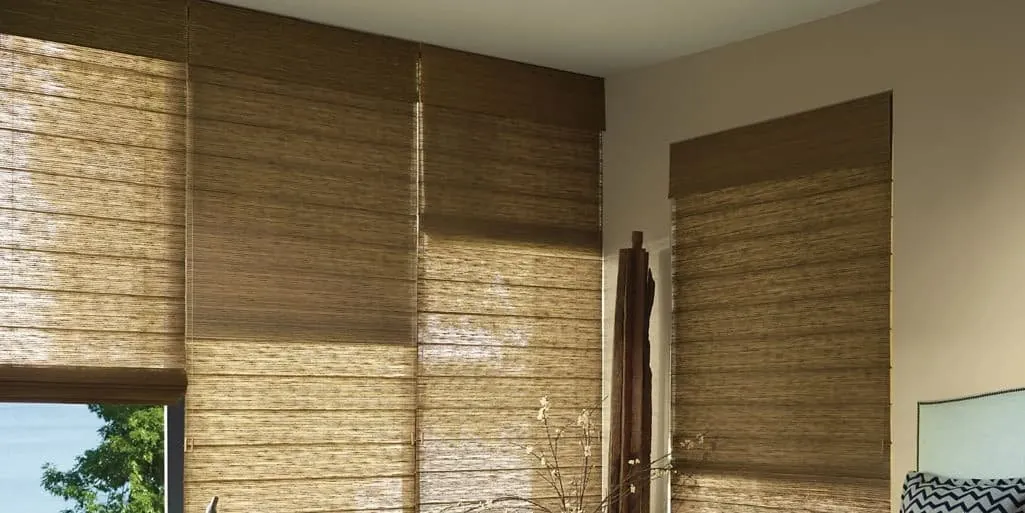
The kitchen shows the three eras at their most different. In a river-side mill house it is usually small and at the back, with one window facing the building next door. In a farmhouse it may be the oldest room in the house, with low ceilings and a deep-set sash over a sink. In a Route 16 colonial it is open to a family room, with a run of windows or a slider looking out to the yard.
Each wants something different. The mill-house kitchen needs an airy cloth that hides the neighbor without stealing the light. The farmhouse kitchen needs a slim, flat shade that clears the small sash entirely when it is raised. The colonial kitchen needs shades that match the family room beside it, so the open space reads as one. For roman shades in Uxbridge kitchens, we always check how far you reach over the counter before choosing the mount.
Bedrooms in all three eras
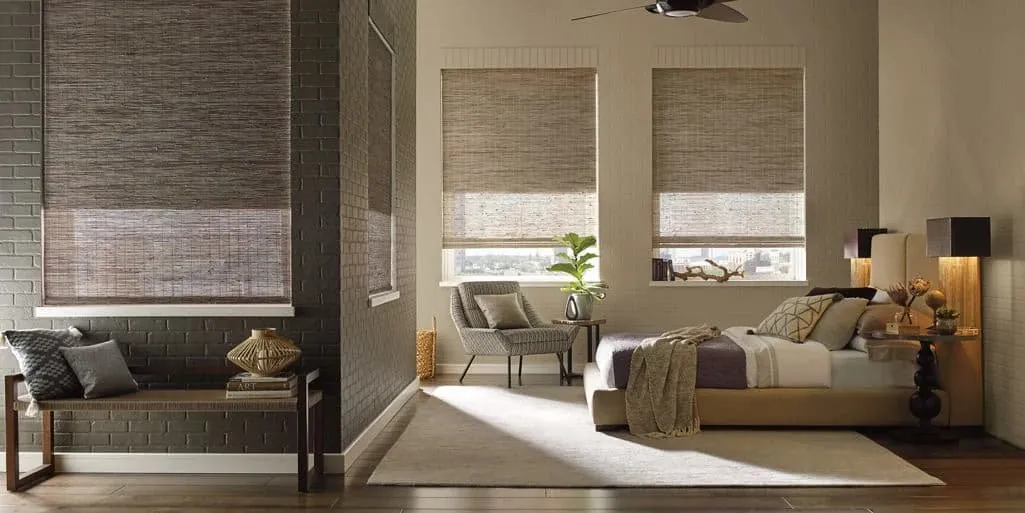
Bedrooms are where a heavier cloth earns its place in every kind of house, though for different reasons. By the river, the window opposite is often close enough to see into. In a farmhouse, the sunrise can flood a small east room far earlier than you would like. In a colonial, a bedroom over the garage or at the back may catch the low evening sun.
A dense fabric in a flat style is the usual answer in the older houses, where the openings are small. In a colonial bedroom with larger windows, a folded style in the same weight gives a softer look while still keeping the room dark.
Living rooms in all three eras
The front room is where the eras look most alike from the street and most different inside. In a mill house it is narrow, close to the sidewalk and lit by one or two slim sash. In a farmhouse it may be a low-ceilinged parlor with small, deep-set windows and wide trim. In a colonial it is broad and bright, often with a pair of windows on the front and a larger one at the side.
For roman shades in Uxbridge front rooms, the mill house usually wants a medium-to-dense cloth for evenings, the farmhouse parlor a pale cloth that keeps the small room from feeling closed in, and the colonial a pair of matching shades that keep the front of the house symmetrical. A pattern can shine in any of them, but it carries the most weight in the smallest room, so it is worth trying at the window first.
Halls and stairways
Every era has its awkward window: a slim sash halfway up a mill-house stair, a tiny farmhouse window on a landing under the eaves, a tall colonial window over the front entry. They are hard to reach and easy to leave bare, but a bare stair window glows toward the road after dark. A light cloth gives cover without dimming the stair, and PowerView spares you leaning over a railing to reach it.
Matching the shade to the era
Here is a quick way to see how the choices usually line up.
- Mill houses: compact flat folds on the narrow sash, denser cloth for bedrooms and street rooms, airy cloth in the kitchen.
- Farmhouses: flat folds in pale, light cloth to keep small rooms bright, with a denser choice on rooms that face the road at night.
- Route 16 colonials: either style, often flat everywhere with a folded feature room, and one outward color on the front.
Treat this as a sketch. Our consultant adjusts it once the light in your actual rooms has been seen. Your own habits matter as much as the house: a room you read in every afternoon may want a different cloth from the same room in a house where it is hardly used.
How the two styles differ
Each of our roman lines, Vignette and Carole Fabrics, is made in a flat style and a folded style. The difference is clearest with the shade lowered.
Flat shades hang as one smooth sheet, so a print or a weave reads clearly. As they lift, they gather into crisp horizontal pleats, giving the smallest fold of the two. That makes flat the natural choice for the slim openings near the river and the little farmhouse sash.
Folded shades keep a cascade of rounded loops down their face even when fully lowered. They feel fuller and softer and take a little more room at the head when raised, so they suit bigger glass, a colonial bedroom, a dining room, or a single special window in a farmhouse parlor.
Color for old rooms and new
The eras differ in color, too. Farmhouse rooms with warm, uneven plaster and mellowed floors suit creams, oatmeal and soft natural tones. Mill houses vary widely depending on how they have been updated. Colonials, with brighter white walls, often look best with cooler grays and clean whites.
Choose in the room where the shade will hang. A swatch against your own wall, in your own daylight, tells you more than any card.
PowerView across the eras
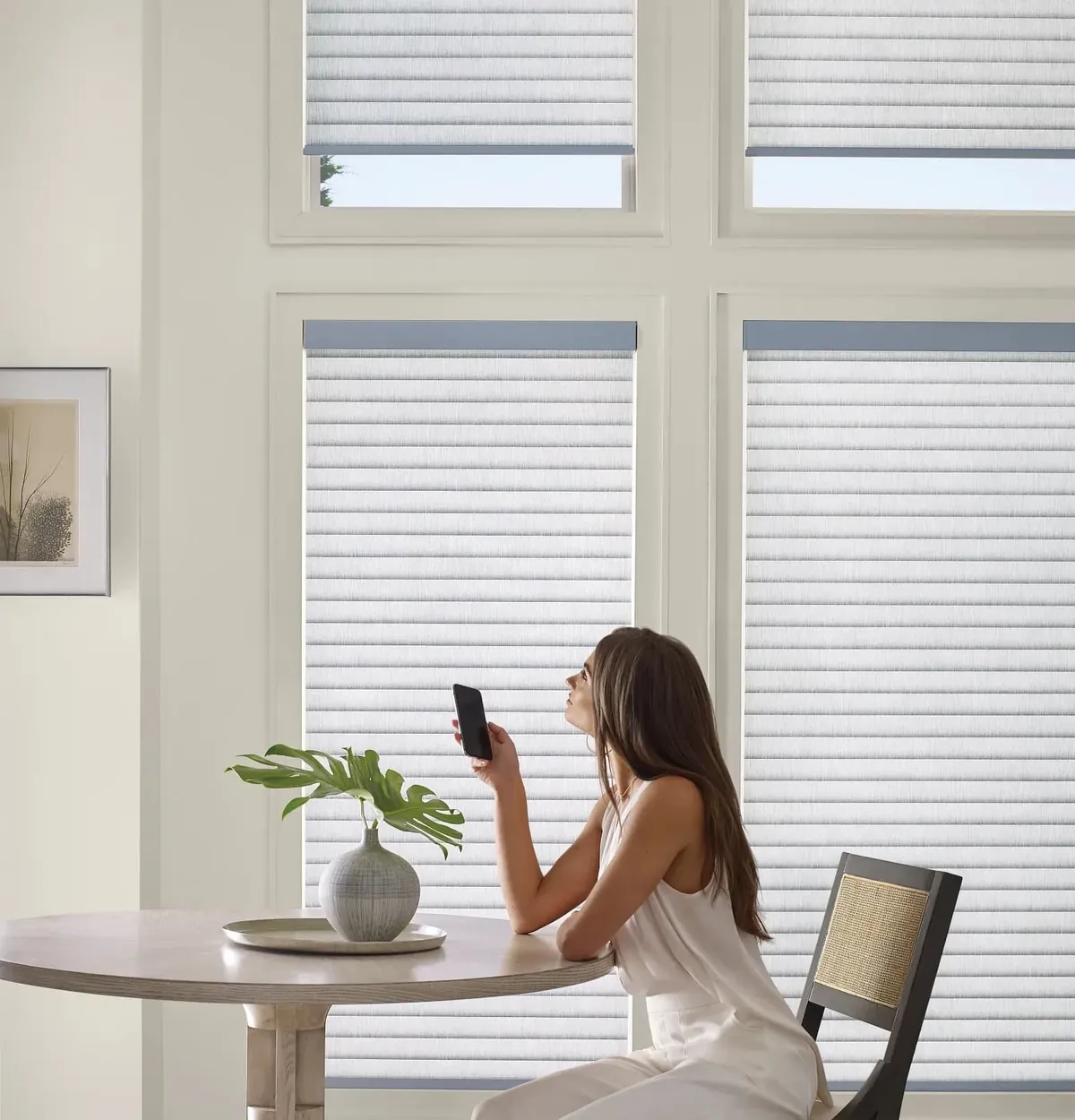
Each era has its own reason to motorize. By the river, it lets the street-facing shades come down by themselves at dusk. In a farmhouse, it reaches the window over a steep stair or above a built-in cupboard. In a Route 16 colonial, it saves walking the whole house twice a day.
PowerView works from a handheld remote or a phone, can gang shades by room or by side of the house, and runs on whatever timetable you set. Powering each motor is worked out window by window at the appointment. More detail sits on how motorized shades are controlled.
The appointment, step by step
With three kinds of house in one town, seeing the windows in person makes all the difference. Swatches ride along in our vans, so the choosing happens at home.
- Pick a date through Request a Consultation, or tap the call button.
- A consultant comes with both roman lines, both styles and cloth from sheer-light to dense.
- You tour the house together, covering which way each room faces and when it gets used.
- Swatches are laid flat on the glass so color, glow and cover can be judged in place.
- Each window is measured, along with frame depth, trim and any old latch or pulley.
- A written estimate is left with you at no charge, and the timing of any decision is yours.
An interior design consultation can join the same appointment if color across a room needs pulling together. The visit is described on what happens at an in-home consultation.

Taking measurements in old houses and new
Mill-house and farmhouse sash have usually drifted: frames tip, sills sag, and stops wear many coats of paint. Readings are taken across the width at three heights, down the drop at three points, and into the frame wherever a rail could be fixed. Should a frame be too far off true for an inside fit, a casing mount is drawn up and shown to you first.
Colonial openings are more regular but still get the full set of readings, since an exact fit always looks better than a near one.
Hunter Douglas certified installers hang every shade, levelling each rail and running it full travel before handing it over. See what happens on installation day for the order of events.
A Gallery dealer for every era
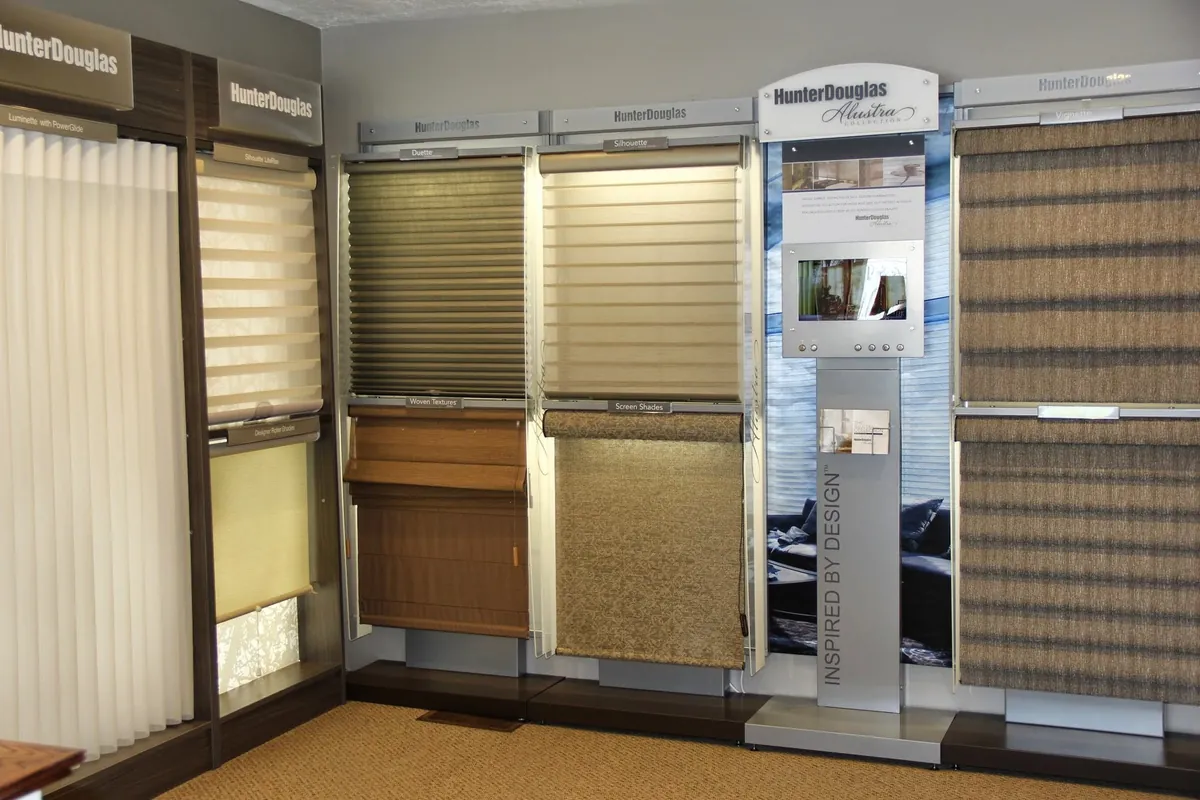
Blinds & Designs is a Hunter Douglas Gallery dealer, with Hunter Douglas certified installers doing the fitting. For an Uxbridge home, that means every Vignette and Carole Fabrics option, measured and hung by one firm.
When a room is better suited to honeycomb shades, blinds or shutters, the broader Hunter Douglas family is on hand at the same appointment. Shades and blinds you already have can come to us for repair. Franklin is the closest of our showrooms, open to drop-in visitors during its hours.
All our services in town are listed on the Uxbridge page, and the roman shades page covers the whole range.
A house with more than one era
Some Uxbridge homes mix eras under one roof: a farmhouse with a newer wing, or a mill house with replacement sash in a few rooms and originals elsewhere. Roman shades take that in stride, because each is built for its own opening.
The secret is a shared thread. One cloth color, or one style, carried through old and new parts makes them feel like a single home. Larger windows in an addition can wear the folded style while the old sash keep the flat one, and the shared fabric still links them. For roman shades in Uxbridge, MA, a joined-up plan like this is drawn room by room during the appointment.
Questions from Uxbridge
We live in a mill-era house by the river. How do we get privacy from the house next door?
A dense cloth closes the room off fully, which is right for bedrooms and rooms used after dark. In a kitchen or on a stair, an airy cloth blurs the view and keeps the light.
Our farmhouse windows are small and the rooms are dim. Will a shade make it worse?
Not when chosen with care. A flat shade in pale, light cloth folds tightly, and a rail fixed above the frame keeps the whole pane clear when lifted.
Can every shade in our Route 16 colonial look the same from outside?
Yes. One style and one outward color across the front, with cloth weight changing between living spaces and bedrooms, is a common plan.
Our house has an old part and a newer addition. Can the shades tie them together?
Yes. A shared cloth color or style across both parts keeps them connected, even where the openings differ.
Do you charge to measure and quote?
No. Measuring and the written estimate are both free.
Your next step
Whichever era your house comes from, the right roman shade is simplest to pick at your own window. Ask for a visit through Request a Consultation: both roman lines come to you, every window is measured and a free estimate is left behind. A question first? Tap the call button, or call in at our Franklin showroom.