
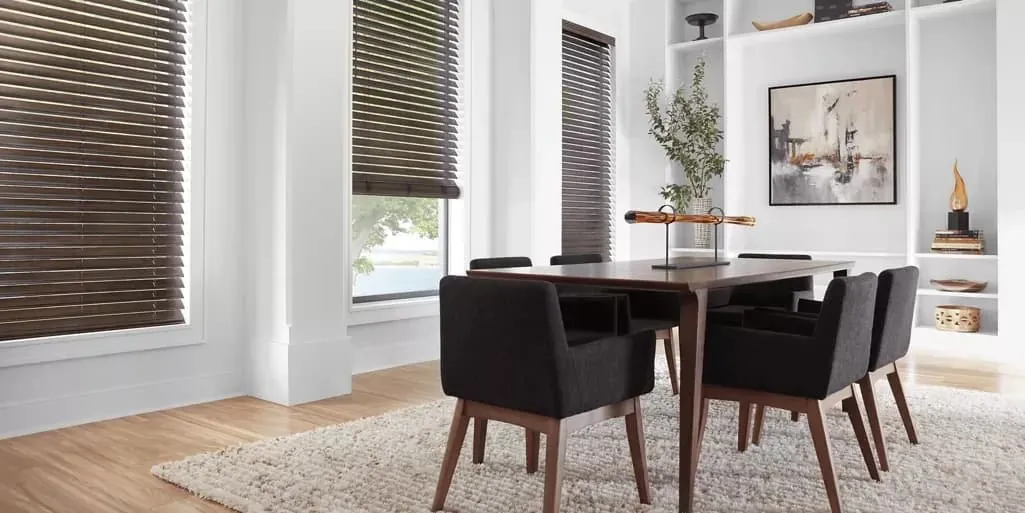
Generous houses, generous glass
Osterville’s houses are some of the largest on the Cape. Shingled homes sit on wide lots around the village and out toward Wianno and Oyster Harbors, many of them finished to a high specification and used mostly in the warmer months. Their windows are as ambitious as the rest of the house: walls of glass facing the water, rows of tall double-hungs across formal rooms, French doors onto terraces and porches. Choosing custom blinds in Osterville, MA means working at that scale while keeping every detail right.
Three things come up again and again in these houses. The glass facing the water takes intense light and steady salt air. The formal rooms usually call for drapery, so whatever goes on the window has to work beneath it. And because many houses sit closed for part of the year, the coverings have to protect fine interiors when nobody is home.
Blinds earn their place in all three situations. They give precise control over light and privacy with a turn of a wand or a tap on a phone, they sit neatly inside a frame beneath side panels or full drapery, and their hard slats stand up to sun in a closed house far better than many fabrics.
Four ways we dress an Osterville window
Every blind is built to the measurements we take at your windows, from the Hunter Douglas range. Here are the four we use most in these houses, with samples of each in our vans.
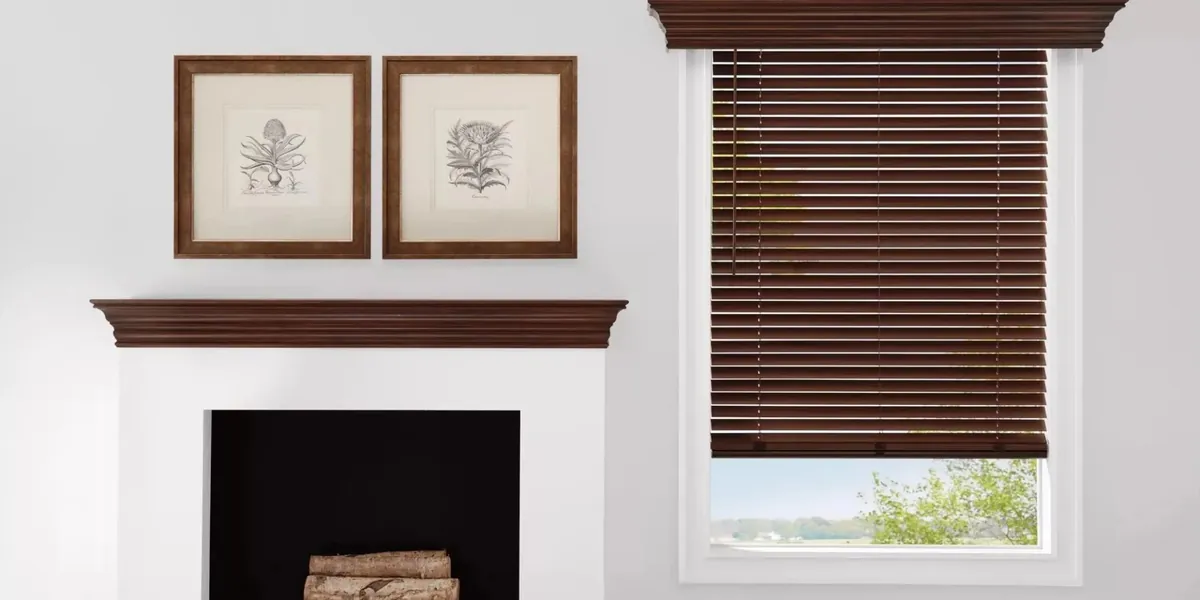
Wood blinds with a cornice
Hardwood slats with a matching cornice or valance give a library, study or dining room a finished, furnished look that sits well with fine millwork.
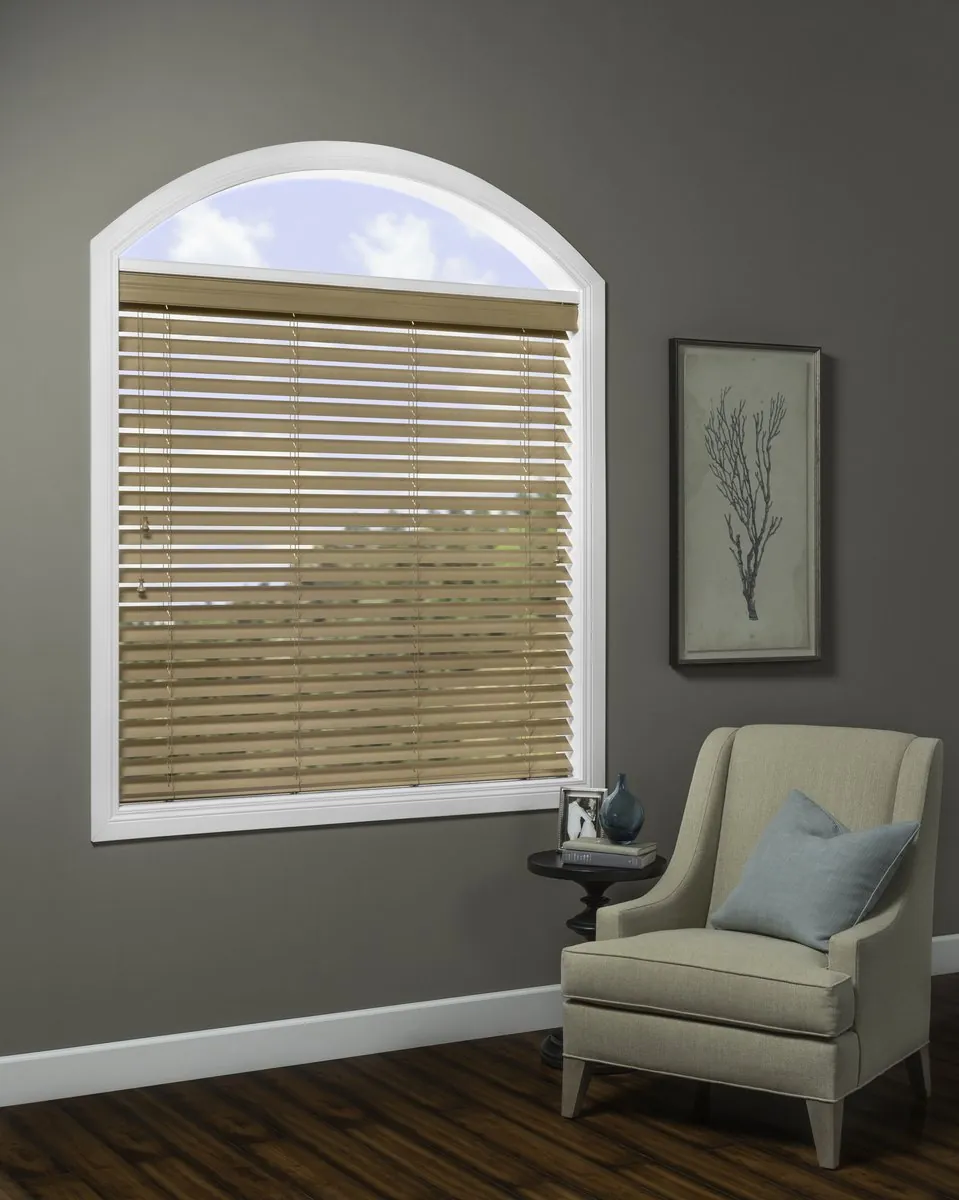
Wood on shaped windows
Arched and specialty windows are common in larger houses. A blind can cover the rectangle below while the arch stays open to the sky.
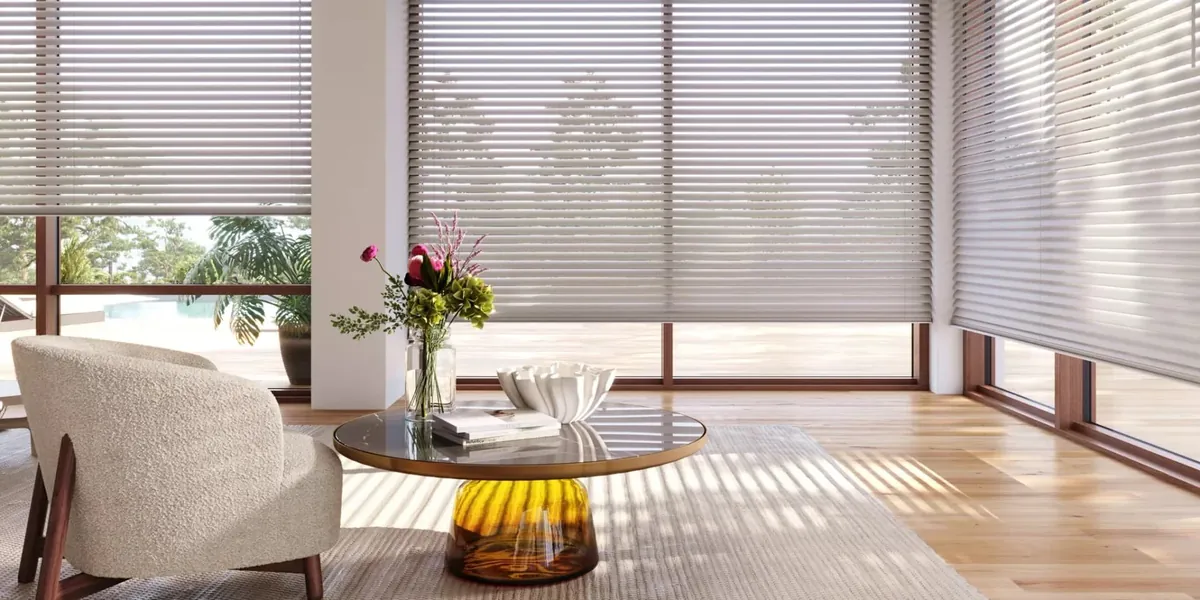
Faux wood for the water side
The look of painted wood in a slat that ignores salt, damp and steam. Right for sunrooms, baths, kitchens and porches near the harbor.
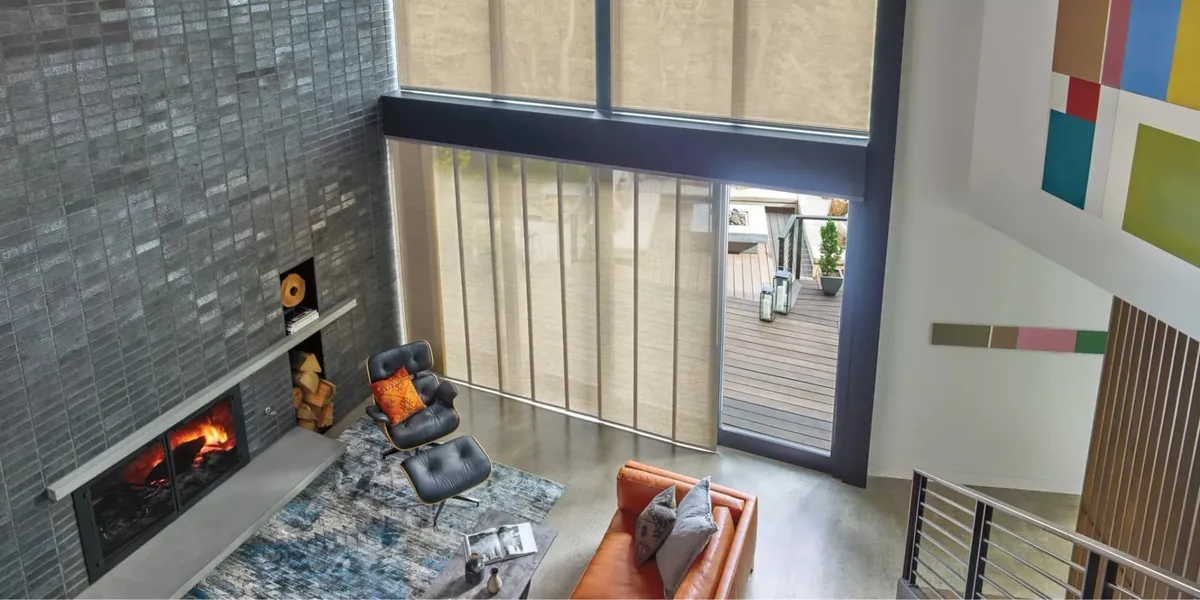
Verticals for terrace doors
Gliding panels or vertical vanes for wide sliders and glass doors, drawn aside to step out and turned to manage glare off the water.
Walls of glass facing the water
The rooms that face Nantucket Sound, West Bay or the harbor are often walls of glass: a living room with floor-to-ceiling windows, a sunroom glazed on three sides, a primary bedroom with doors onto a balcony. They are the reason the house was built, and they are also the hardest rooms to keep comfortable on a bright summer day.
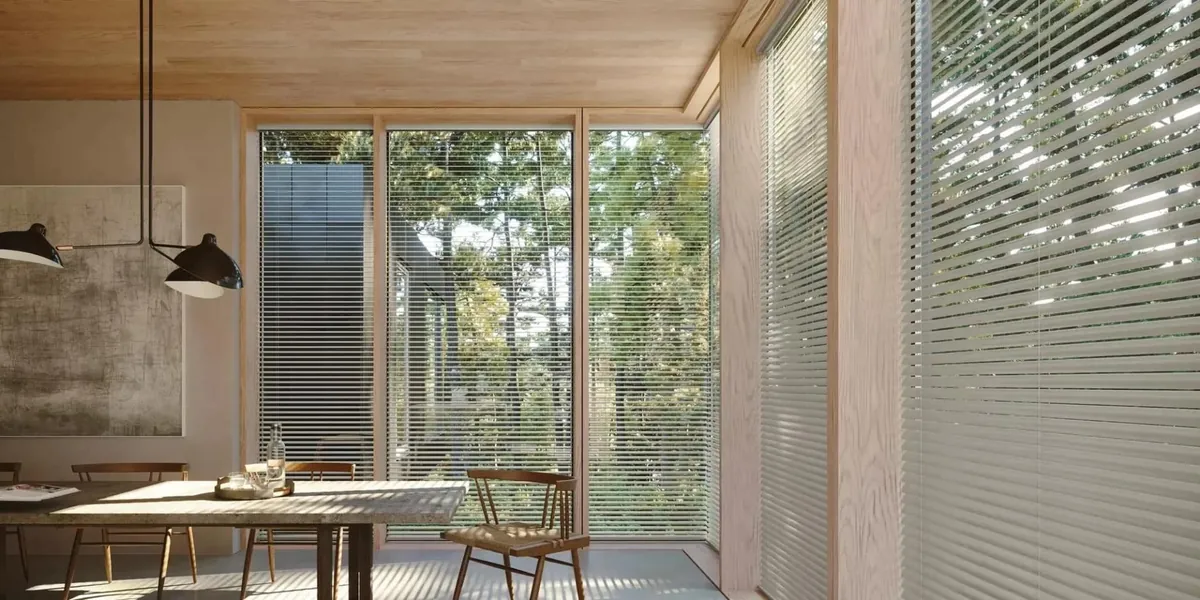
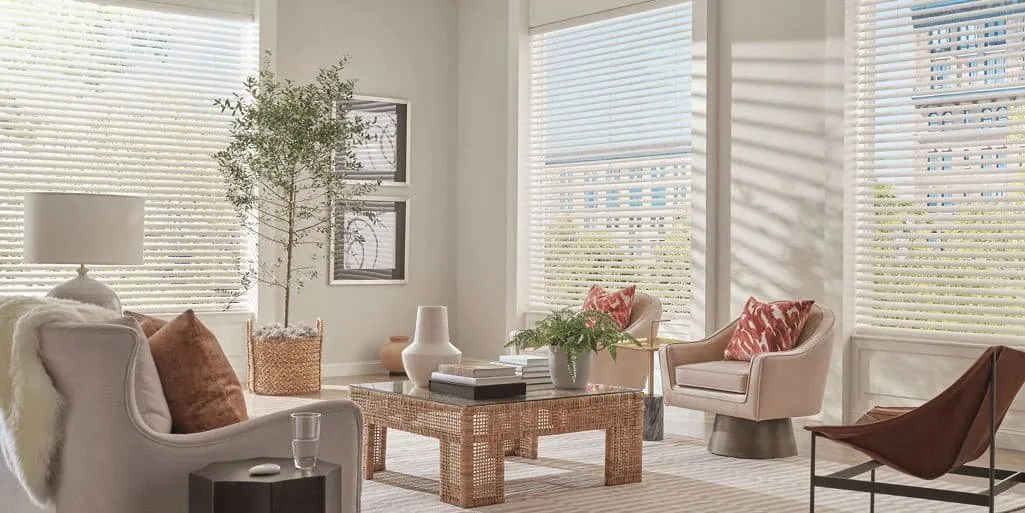
On that much glass, one blind per window is usually the answer, rather than one huge blind across the span. Separate blinds can be raised in sections, so the center stays open to the view while the ends are shaded. Where a single opening is very wide, two or three blinds share one headrail so they line up perfectly yet still move on their own. Wide slats suit the scale of these rooms: in proportion with tall glass, compact when raised and clear to look through when tilted open.
Glare is the daily problem on the water side. Light reflects up off the water, so it reaches the ceiling and the far wall as well as the floor. Tilt the slats upward and direct light is sent to the ceiling and spread softly through the room. A white or pale neutral slat reflects heat back toward the glass and keeps its color longest in strong sun, which matters on windows that take the full force of a summer afternoon.
Blinds beneath drapery in the formal rooms
In many Osterville houses the living room, dining room and library are dressed formally, with drapery framing each window. Drapery brings color, softness and proportion, but on its own it gives only two settings: open or closed. A blind mounted inside the window, beneath the drapery, adds the fine control drapery cannot.
The combination works well. During the day the drapery stays open as a frame, and the blind behind it is tilted to manage light and privacy. In the evening the drapery is drawn for warmth and atmosphere. Because the blind sits inside the frame, it does not compete with the drapery hardware above, and when raised it tucks almost out of sight.
Color is usually chosen to recede. A slat painted to match the window trim almost disappears behind the drapery, while a stained wood that picks up the floors or the furniture can add warmth. If you are planning both at once, our interior design consultations look at fabric, color and blind together so the room comes out as one design.
Salt and sun at Wianno
Out toward Wianno the houses face the open Sound, and they take the weather head on. Wide porches catch the breeze, windows stand open for weeks in summer, and salt settles on every surface near the glass. Over time, salt can work at exposed metal and mark untreated wood.
For rooms that face the water or get opened often, we lean toward faux wood or aluminum. Faux wood keeps the painted-wood look, does not swell in damp air and wipes clean with a cloth. Aluminum gives the slimmest profile for a narrow window or a door. A cordless lift removes the hanging cord and its lock, leaving less to wear and a cleaner look. Real wood stays in the drier interior rooms, and keeping one color across the materials means the house looks consistent from the beach.
Porches that have been enclosed with glass are common here, and they are a natural place for blinds. A blind made for each window, all lined up at the top, gives the porch a finished look and lets you shade the sunny end in the afternoon while leaving the rest open to the breeze.
Privacy at Oyster Harbors
Oyster Harbors is a private island of large houses, many with long frontage on the water and the boats that come and go in front of them. Privacy here is less about neighbors and more about the water: in the evening, with lamps on, a wall of glass can make a room visible from far out in the harbor.
A blind turns that around in a moment. Close the slats at dusk and the room is private, however much glass it has. During the day, tilting the slats so the rounded side faces in blocks a downward or sideways view while keeping the room bright. Wide slats tilted flat give back the full view when you want it.
The docks and moorings in front of these houses bring their own glare as well. Light flashes off the water and off white hulls through much of the day, and a room facing the channel can be dazzling by mid-morning. Slats angled upward catch that flicker and turn it into an even, soft light across the ceiling, so you can sit by the glass and read without squinting while the boats still come and go in view below.
One touch for the whole house
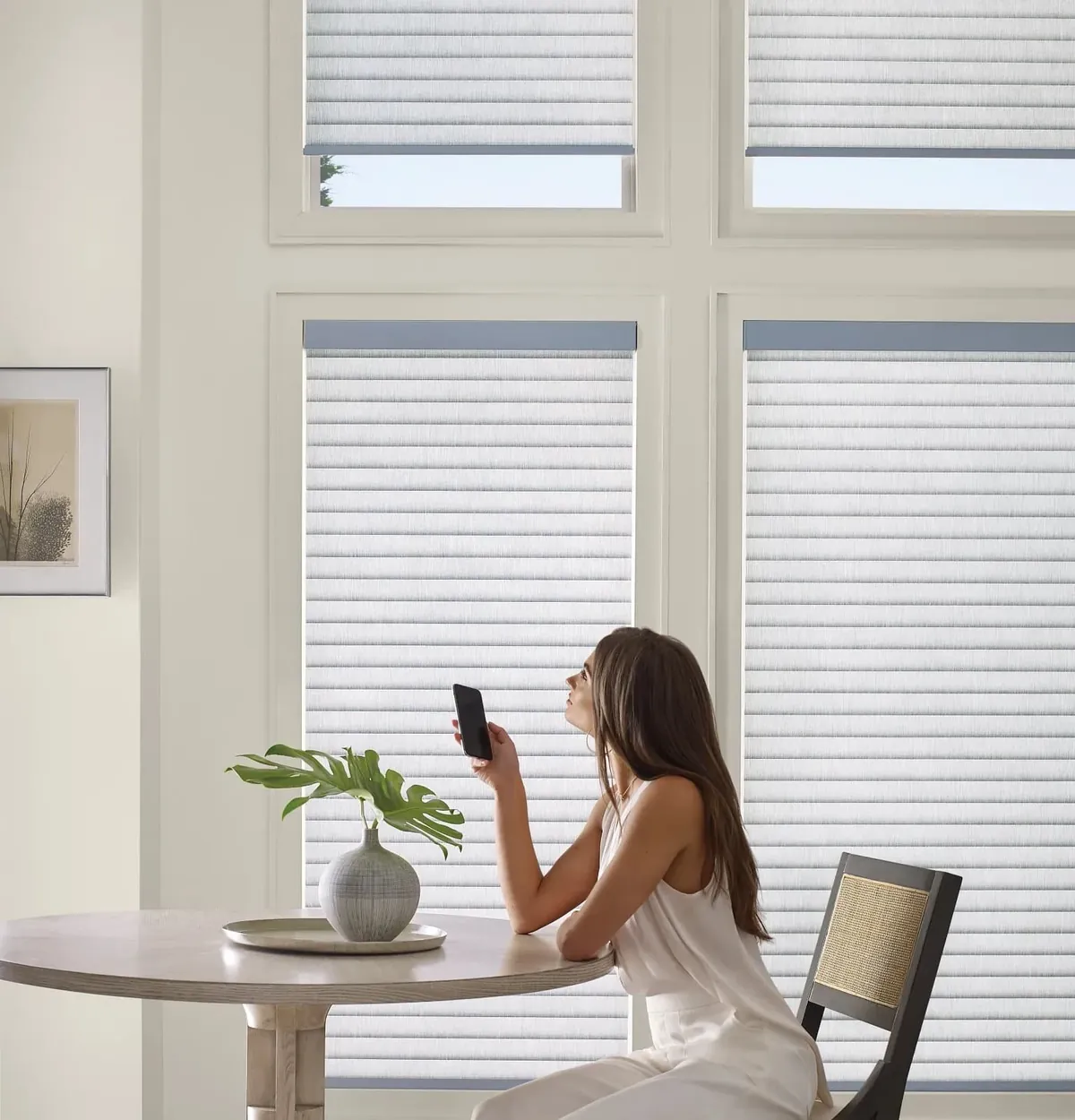
For a large seasonal house, Hunter Douglas PowerView turns a long walk from room to room into a single tap. Slats turn and blinds rise on command from a handheld remote, a keypad by the door or the app, and they can be grouped into scenes, so one command opens the whole water side in the morning or closes every bedroom at night.
Schedules are the other half of it. The blinds on a sunny elevation can close automatically through the hottest part of the day, protecting floors, rugs, upholstery and art, and open again as the sun moves round. When the house is closed for weeks at a time, the same schedule keeps the sun off the interiors and makes the house look lived in from the water. Motor positions, power and controls are planned on site, room by room. Our page on motorized blinds in Osterville has more detail.
Finishes for a high-specification interior
In a house finished with custom millwork, painted panelling and fine floors, the details of a blind show. A few choices make the difference.
- Slat color matched to the trim: a painted slat in the same white or cream as the window casing makes the blind read as part of the architecture.
- Stain matched to the floors or furniture: a wood slat that picks up a walnut floor or a mahogany desk ties the window into the room.
- Cornices and valances: a matching top treatment hides the headrail and gives an outside-mounted blind a tailored finish.
- Slat width: wider slats look right on tall windows in large rooms; narrower ones suit small panes in a powder room or a stair window.
- Controls: a discreet tilt wand, a cordless lift or motorization, so there are no cords on show.
Each of these can be decided window by window, and we bring samples of finishes and slat sizes so you can see them against your own woodwork.
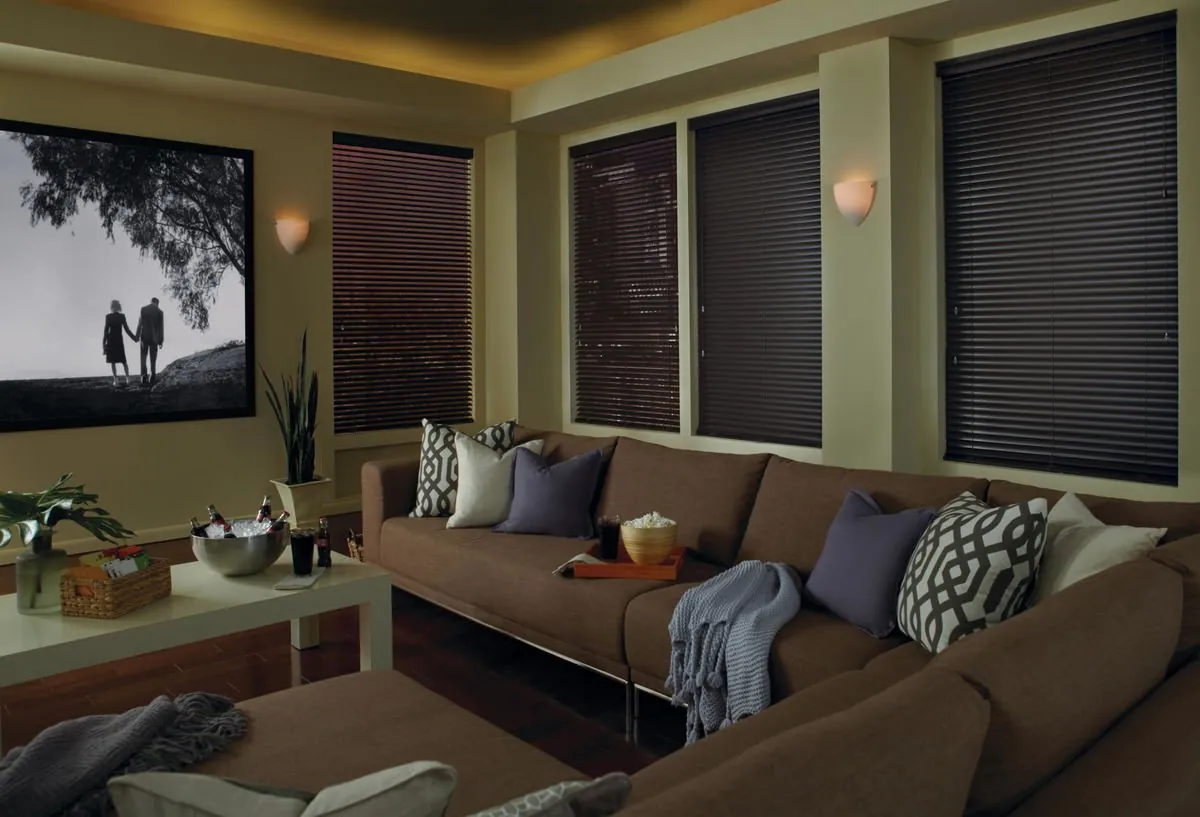
Media rooms and bedrooms that need real darkness
Big summer houses fill with guests, and the rooms they use most after the living room are the bedrooms and, increasingly, a media room or a bunk room over the garage. Both need darkness on demand. Summer sunrise comes early over the Sound, and a bedroom facing east toward the water can be bright long before anyone wants to be awake.
A wood or faux wood blind in a darker color, made to the exact width of the frame and closed tight, takes a room close to dim. For a media room, slats tilted downward cut the glare on a large screen while letting a little light reach the ceiling, so the room never feels shut in. In guest rooms used only a few weeks each summer, a closed blind between visits also keeps the sun off the bedding and furniture. Choosing custom blinds in Osterville bedrooms with darkness in mind is one of the simplest ways to make a busy summer house more restful.
Stair halls, landings and two-story entries
Larger shingled houses often have a grand stair with a tall window on the landing, a two-story entry with glass above the front door, or a gallery hallway lined with windows on the upper floor. These are some of the most visible windows in the house and some of the hardest to reach.
Motorization is the natural answer for anything above head height. With PowerView, a landing window or an entry transom is tilted from a remote or simply included in a morning or evening scene, so nobody needs a ladder. For windows within reach, a cordless lift keeps a stair hall free of hanging cords, which also matters in a house full of visiting children.
Because these windows are seen from the front door, the street and the water, consistency counts. We usually match the slat color and width on the stair and entry windows to the formal rooms either side, so the custom blinds in Osterville houses read as one considered design from every approach.
Guest houses and pool houses
Larger lots often hold more than one building: a guest house, a pool house or a carriage house above the garage. These spaces tend to be used hard in summer and closed the rest of the year, and they are often damper than the main house.
Faux wood and aluminum are the practical choices here, because they cope with humidity, wet swimsuits and long weeks shut up. Matching the slat color to the blinds in the main house keeps the whole property consistent. Planning custom blinds in Osterville for every building at once also means a single consultation, a single estimate and one installation visit.
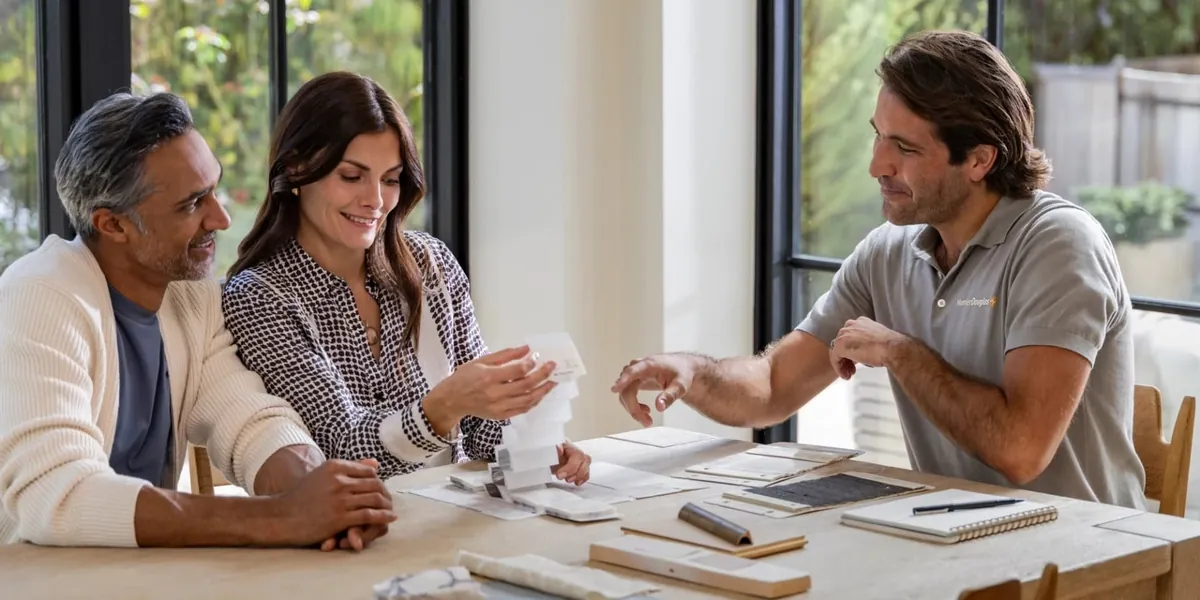
From first call to finished windows
The process is the same whether we are dressing a single room or every building on the lot.
- Request a consultation through the form or with the call button, and we find a date when someone can let us in.
- Samples of every slat material ride in the van, and the tour of the house begins on the water side.
- You compare slat colors and finishes against your millwork, and we talk through motorization for the high or hard-to-reach windows.
- Every opening is measured for width, height and depth at several points, with any drapery hardware noted.
- A free estimate arrives for the windows on your list, itemised room by room.
- On fitting day, Hunter Douglas certified installers set each headrail level, cycle every blind and every motor, and show the household how the controls work.
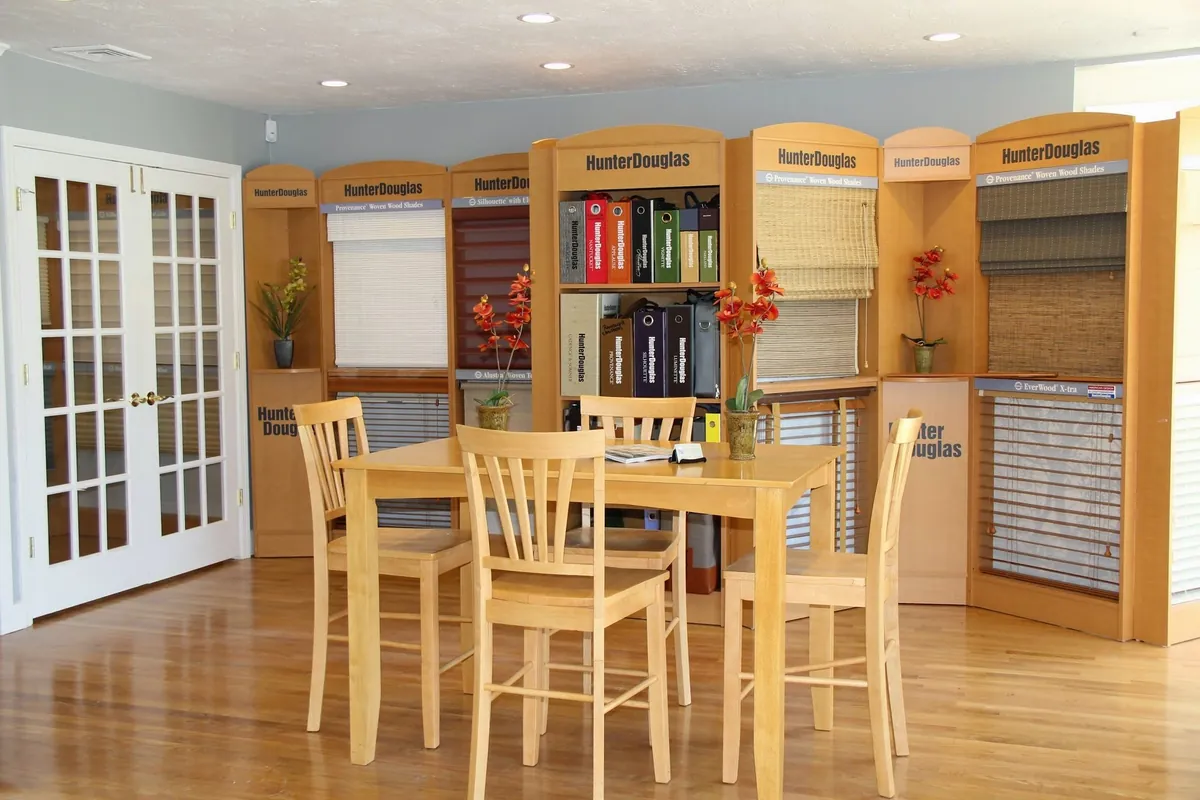
Our vans carry samples of the whole range, so we can bring the showroom to you. You can read more about what happens at an in-home consultation, and see each material on our wood blinds, metal blinds and vertical blinds pages or the main custom blinds page.
The Gallery dealer for Osterville houses
Hunter Douglas gives its Gallery designation to dealers who meet its standards, and Blinds & Designs is one. For a house built to a high standard, that matters: every blind, slat, finish and control in the range is available through us, along with PowerView, and our installers are certified by Hunter Douglas.
We also repair blinds and shades you already own, and we carry Hunter Douglas shades and shutters, so a large house can be planned in one go. For other rooms, see plantation shutters in Osterville or roman shades in Osterville, or everything we offer in the village on our Osterville page.
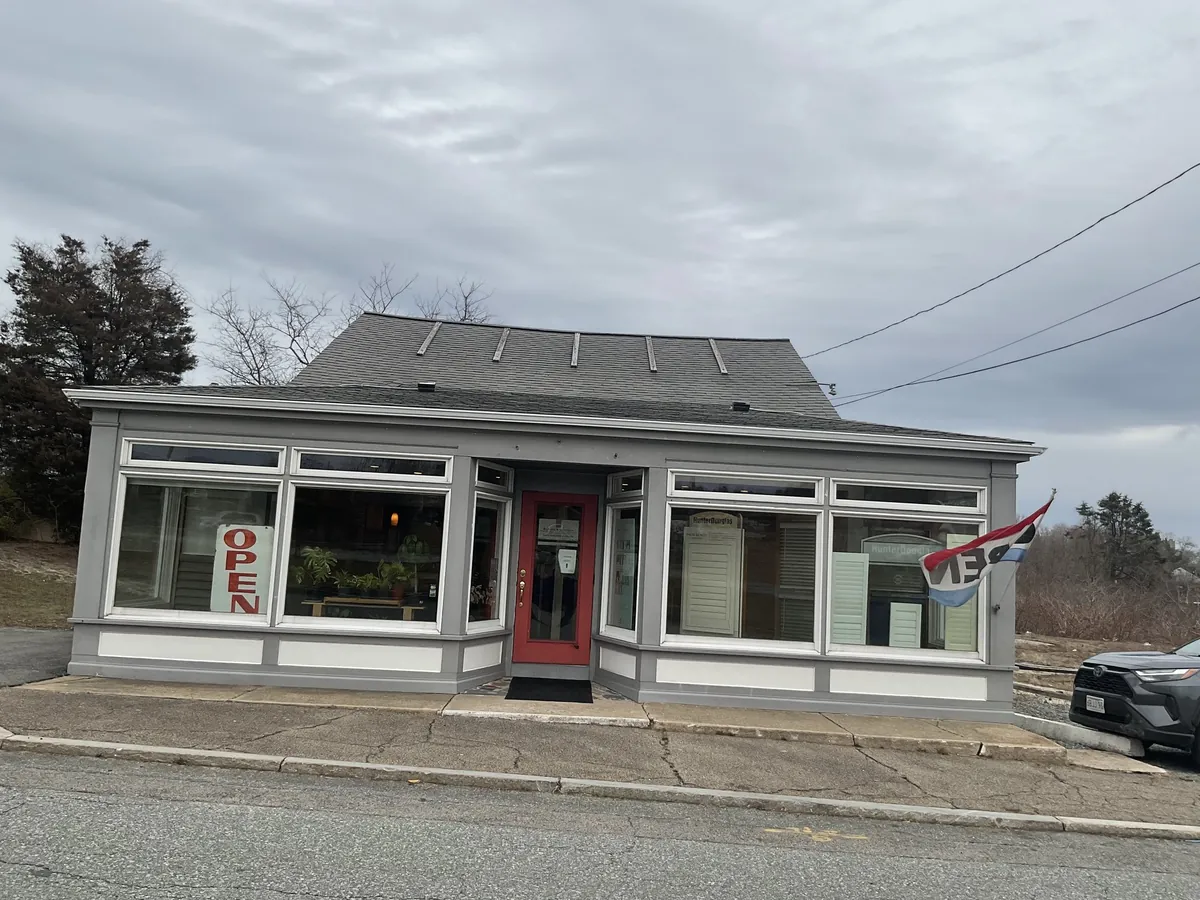
Closest showroom: Sagamore
Our Sagamore showroom is the nearest to Osterville, at the Cape end of the Sagamore Bridge, if you would like to see the range before we visit.
Most Osterville projects still come down to the house itself, because a slat or a finish is best judged against your own millwork and your own view. Whether you start in the showroom or at home, custom blinds in Osterville, MA are measured, estimated free of charge and installed by our certified team.
Questions from Osterville
Can blinds work under the drapery in our formal rooms?
Yes, and it is a common pairing. An inside-mounted blind handles light and privacy during the day, while the drapery frames the window and is drawn in the evening.
What do you suggest for a wall of glass facing the water?
Usually one blind per window, or two or three sharing a headrail on a very wide opening, so you can open the center and shade the ends. Wide slats in a pale color handle the glare and keep their color best.
Which blinds stand up to salt air at Wianno?
Faux wood and aluminum, with a cordless lift. Keep real wood for the drier interior rooms and match the color across both so the house looks consistent.
Can the blinds run on their own while the house is closed?
With PowerView, yes. Schedules open and close the blinds through the day, protecting the interiors and making the house look lived in.
Does the estimate cost anything?
No. Once every window is measured, the estimate is free.
When you are ready
A house like yours deserves blinds chosen at its own windows. Request a consultation and we will bring the full range of samples, measure every opening and give you a free estimate. To talk first, use the call button to reach our Sagamore showroom.