
Rooms with light from more than one side
Halifax is a town of larger lots and plenty of space between houses. Capes and ranches are spread around Monponsett Pond, a good number of them right on the shore, while the newer colonials are mostly found off Plymouth Street. Because the houses stand apart, their rooms were free to have windows on more than one wall. A living room might take light from the front, the side and the back. A kitchen might look out over the yard on two sides and the pond on a third.
That is lovely to live in and a little harder to dress. A room lit from three sides changes all day, as the sun works its way round the house. A shade that is perfect on the east window at breakfast may be the wrong one on the west window by late afternoon. Planning those rooms well is where a Hunter Douglas dealer in Halifax, MA proves useful: looking at each wall in its own light and making the whole room work together.
Blinds & Designs holds Gallery status with Hunter Douglas, so nothing in the catalog is off the table, and the people who hang your shades are installers Hunter Douglas has certified.
What we bring to a Halifax house
For a Hunter Douglas dealer in Halifax, these six families do most of the work. Tap a card to read our page on that product for Halifax houses.
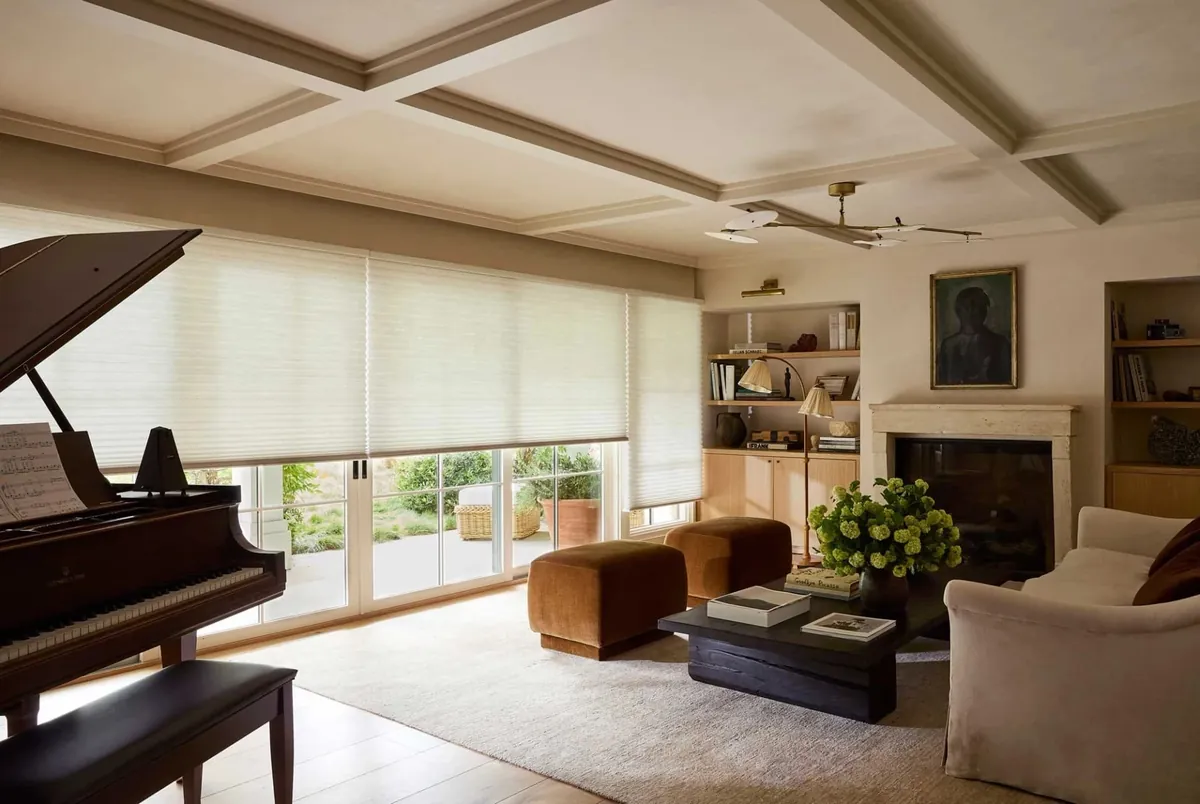
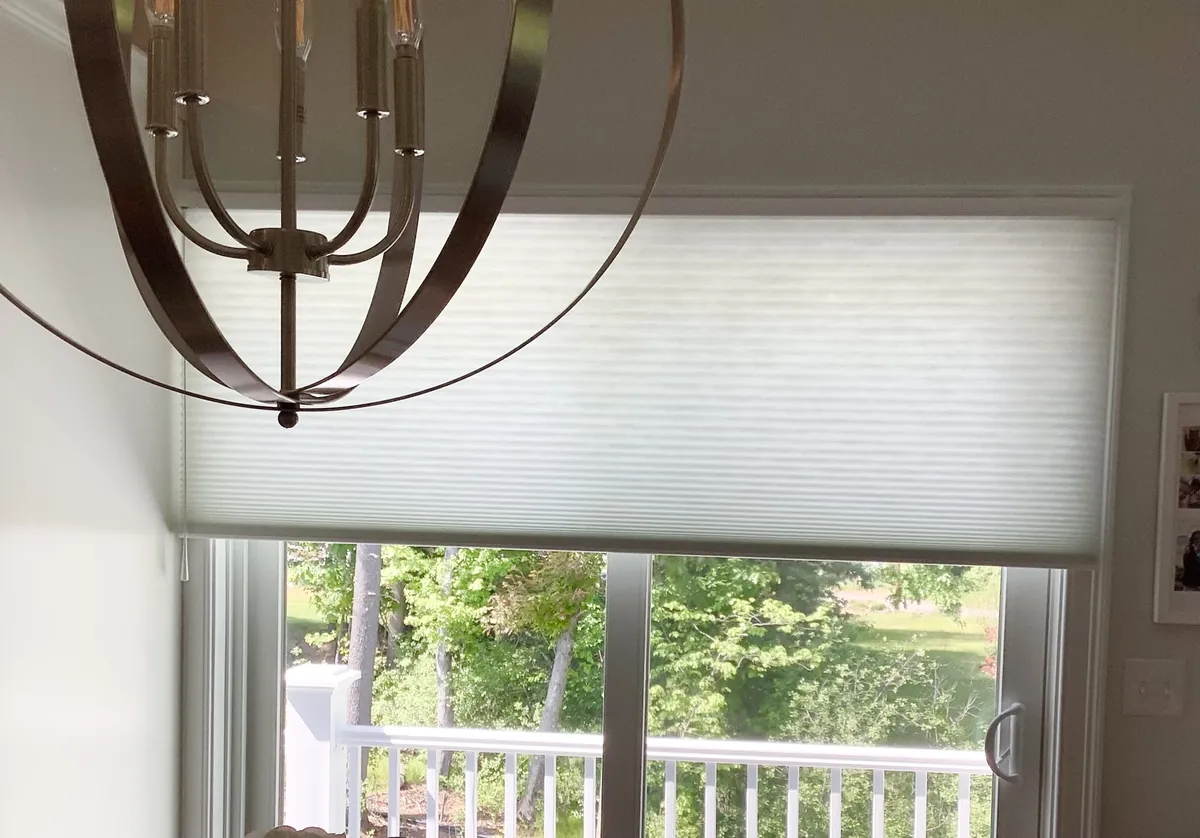
Honeycomb, Duette or Applause
The cells hold still air at the glass, which helps a room with several exposures stay comfortable through the day.
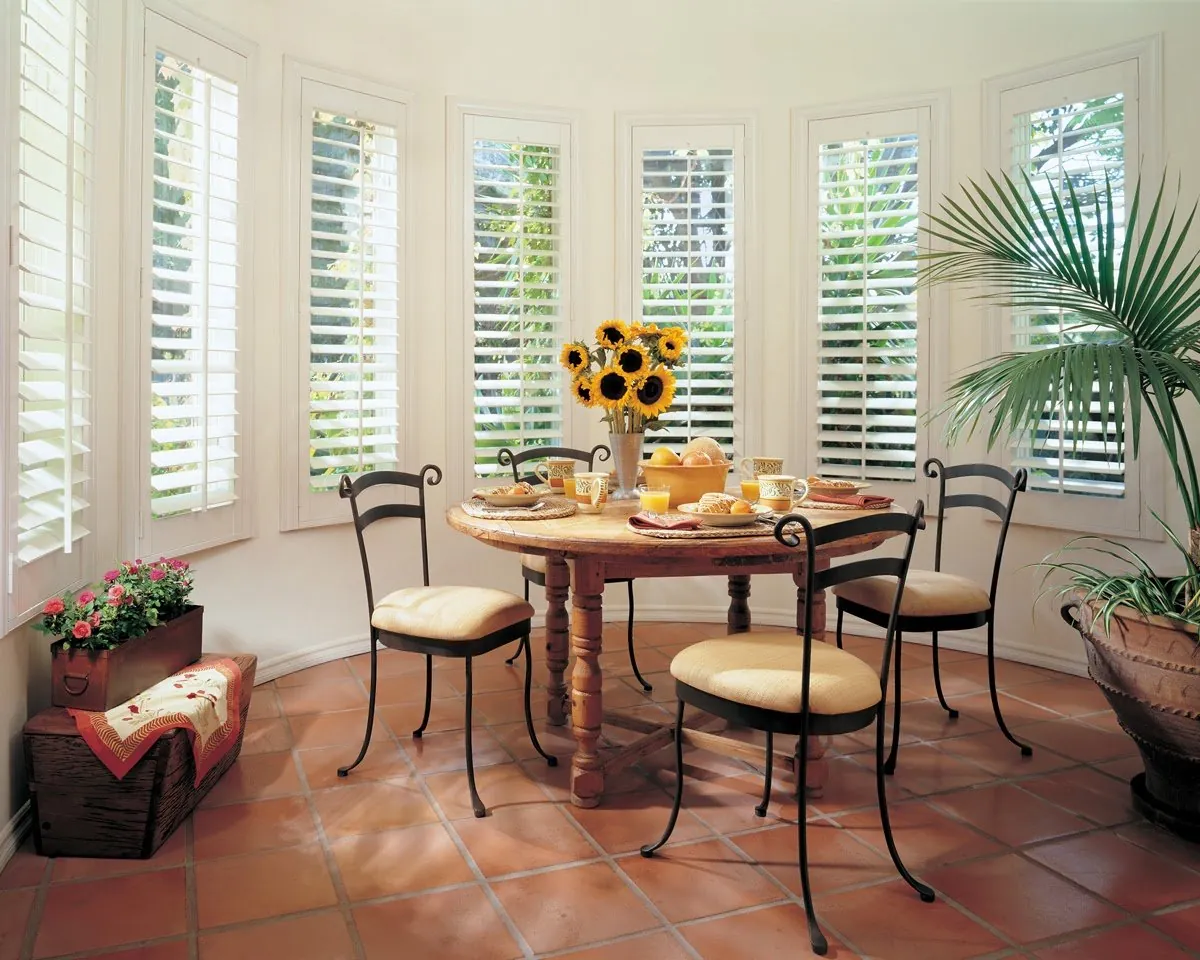
Shutters for bays and corners
Heritance wood, NewStyle hybrid or Palm Beach polysatin, made panel by panel for a bay so the curve opens as one piece.
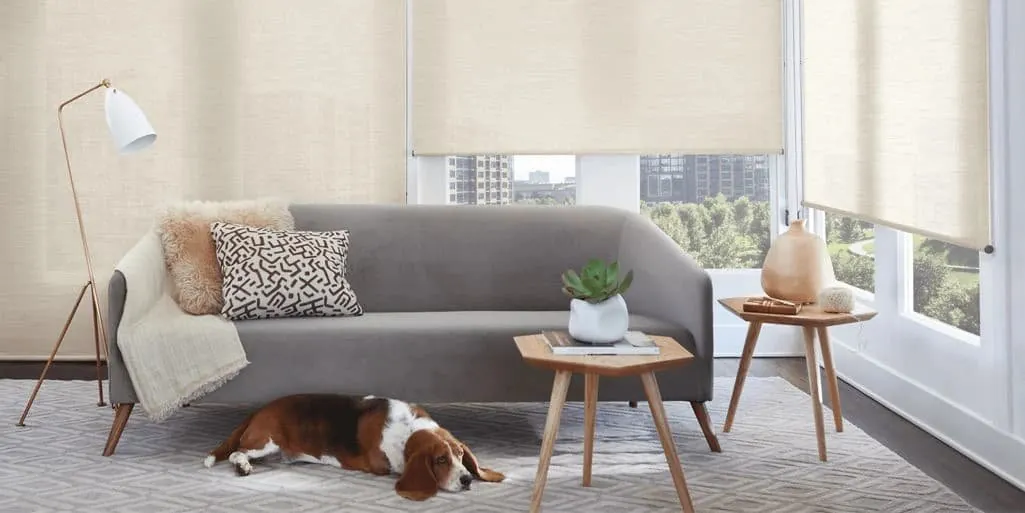
Screens and rollers
Designer Screen, Designer Roller and Alustra fabrics for the wall that faces the pond and its glare.

Sheer shades
Silhouette or Pirouette for a corner room that should glow rather than glare.
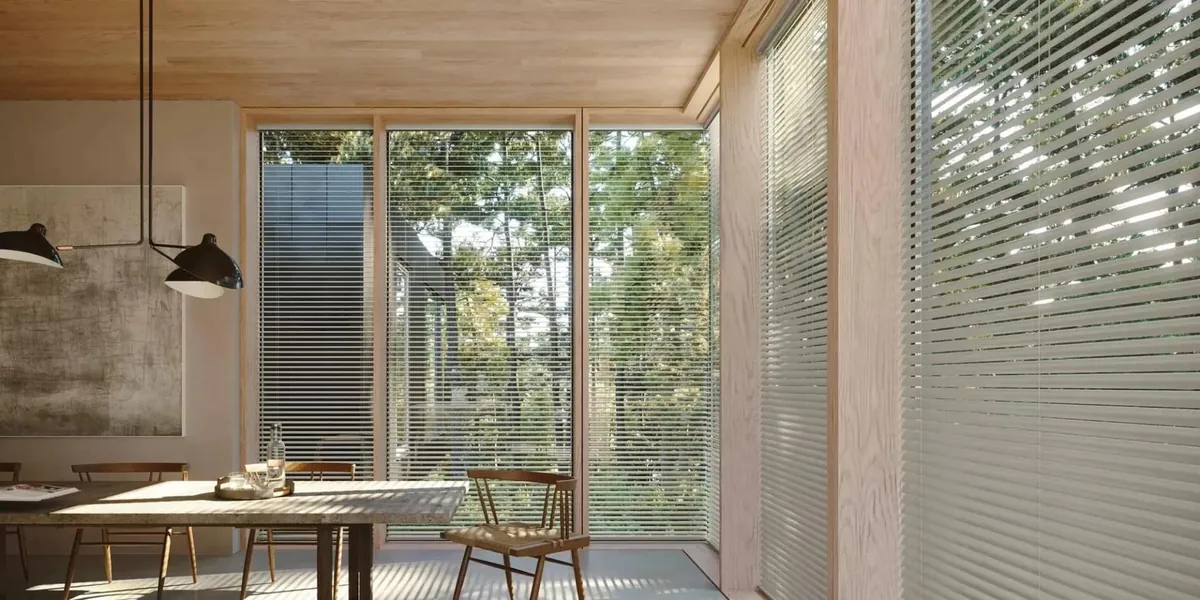
Metal, wood and faux wood blinds
Slim metal, Parkland wood or EverWood faux wood slats, angled to put the light exactly where you want it.
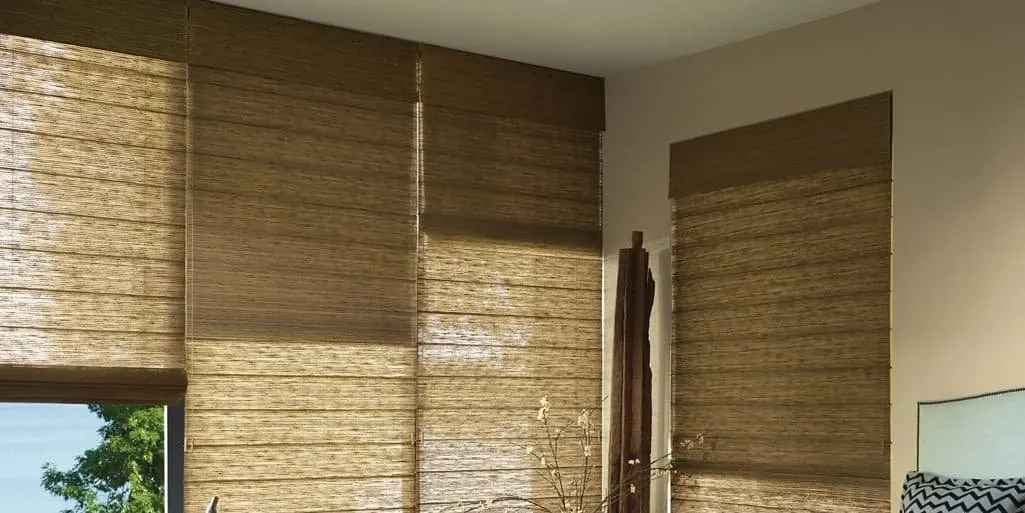
Roman and woven shades
Soft folds from Vignette or Carole, or the texture of a natural weave, for a den or dining corner.
Following the sun round a corner room
Picture a Halifax living room with windows on the east, south and west walls. At breakfast the east window takes low, bright sun straight in. Around midday the south glass is the one doing the work, with a high sun and strong light on the floor. By late afternoon the west window is the problem, with sun low enough to reach across the room and glare on any screen. Each wall needs something at a different hour.
There are two ways to handle that, and most rooms use a bit of both.
The first is to choose one product that adapts. Light-filtering honeycomb, sheers and screens can each be dropped on whichever wall has the sun, while the others stay open. With every window in the same product and color, the room looks calm and even, and only the position of each shade changes through the day.
The second is to let the walls differ a little. The east window in a bedroom-facing corner might take a room-darkening fabric, while the west wall of the same room gets a screen shade that cuts glare without closing the view. As long as the products share a color and their rails sit at matching heights, the room still reads as one.
We work it out at your windows, at the times of day that matter to you. For a longer comparison, see our sun and glare guide.
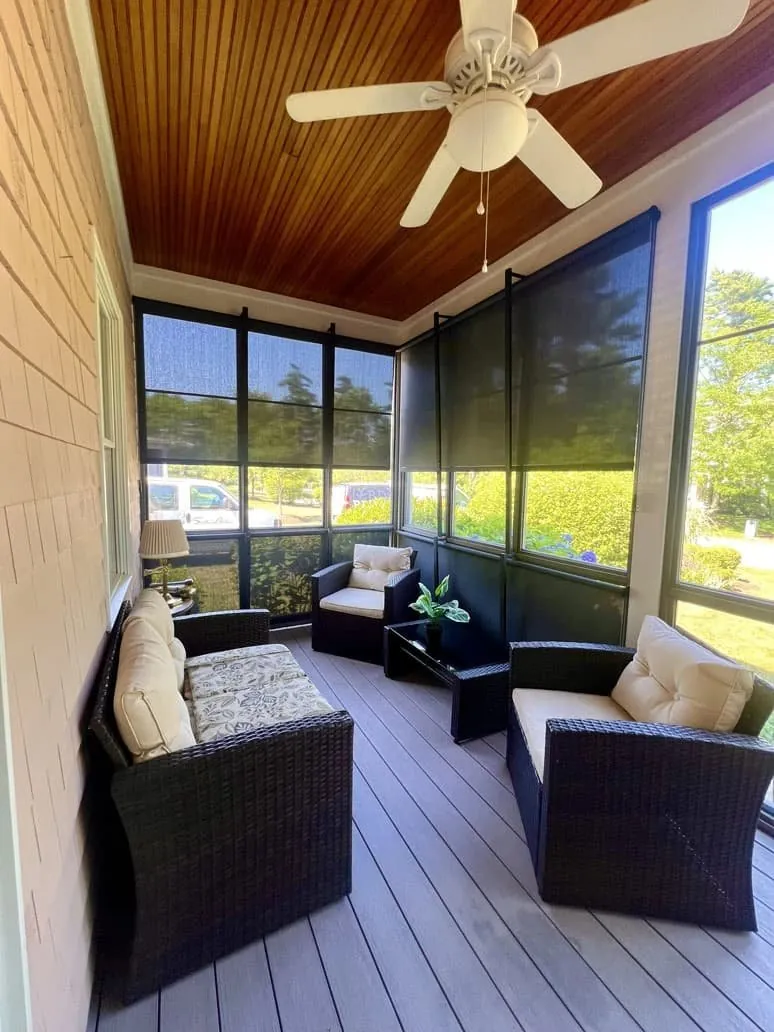
Living on Monponsett Pond
The houses with frontage on Monponsett Pond face the water for good reason, and their pond-side rooms usually have the biggest glass in the house, from broad picture windows and deck sliders to screened porches. Reflected sun from the pond arrives from below as well as from above, so glare can be stronger than the position of the sun alone would suggest.
The rule in these rooms is simple: keep the view. Screen shades are the most direct way, cutting glare at the glass while the pond stays in sight, with the openness of the weave deciding how much you see. Sheer shades soften the light into an even glow. Sliders are best with something that travels sideways, such as Luminette or a vertical Duette, parked clear when the door is in use.
Screened porches and three-season rooms are worth mentioning on their own. They take the sun on several sides and are used most in summer, when the low evening light off the pond can make them hard to sit in. Solar screen shades around a porch cut that light and add some privacy from the water, while you still see out.
Capes on bigger lots
The capes around the pond have the classic shape: a symmetrical front with a door in the middle, regular double-hung windows downstairs and dormers upstairs. On a larger lot, many have been added to over the years, with a den off the back, a glassed-in porch or a room over the garage. Those additions are often where the light from several sides comes in.
The original rooms usually suit an inside-mounted shade or shutter, so the casing stays on show and the front elevation looks orderly. The upstairs dormers are slim and sit right beside the bed, which suits a room-darkening honeycomb shade that stacks slim when raised. The additions, with bigger glass and more exposures, are where we look hardest at sun and glare.
Keeping the old part and the new part of a cape looking related is a matter of choosing products that share a color and a style. A painted shutter can run through both, Heritance in the original rooms and NewStyle in the addition, or the same honeycomb color can carry from room to room.
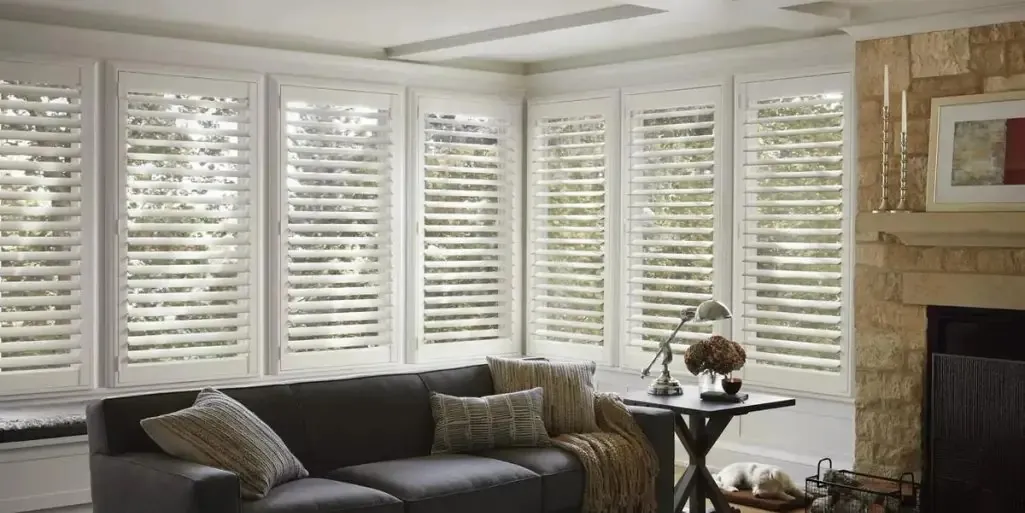
Ranches with windows on several walls
Ranches in Halifax are often set well back on wide lots, and their main rooms run the depth of the house, with windows front and back. It is common to see straight through a living room, from the road-side picture window to the yard door at the back, and an end kitchen often has glass on two walls.
That through-light is part of the charm, and it suits a consistent plan. A single line in a single color across the house gives a tidy outside view, and the opacity can change behind it: glowing fabric in the family rooms, blackout in the bedrooms. A wide front window can be split into two or three shades sharing one rail. The back door takes a side-stacking shade, and the sink window a moisture-proof choice such as faux wood slats or polysatin shutters.
Newer colonials off Plymouth Street
The colonials built more recently stand taller, two full floors, and the back usually opens up through a family room glazed across most of its width. A tall entry hall or a vaulted great room with upper windows is common. On bigger lots they are often oriented to catch the sun, so the back of the house can be very bright.
These houses are straightforward to fit, since the frames are true and have depth to spare. The thinking goes into light and reach. A family room facing south or west benefits from screen or sheer shades. Tall windows benefit from PowerView, so they move without a pole. Bedrooms upstairs get room-darkening fabrics. Throughout, a consistent color on every street-facing window keeps the front of the house even.
Privacy when the nearest house is far away
Low density changes the privacy question. On a larger lot, with trees between you and the next house, many windows do not need to be covered for privacy at all during the day. That frees up the choice. You can pick a product for light and comfort first and only think about privacy at night or in the rooms that face the road.
It also means the view from inside matters more, because there is more to look at: the yard, the woods, the pond. Products that stay open or nearly open for long stretches yet still earn their place when lowered, make sense here. Sheer shades, screen shades and top-down, bottom-up honeycomb all fit that description. At night, with the lamps on, a light-filtering fabric glows from outside rather than showing the room, which is usually enough for a house set back from the road.
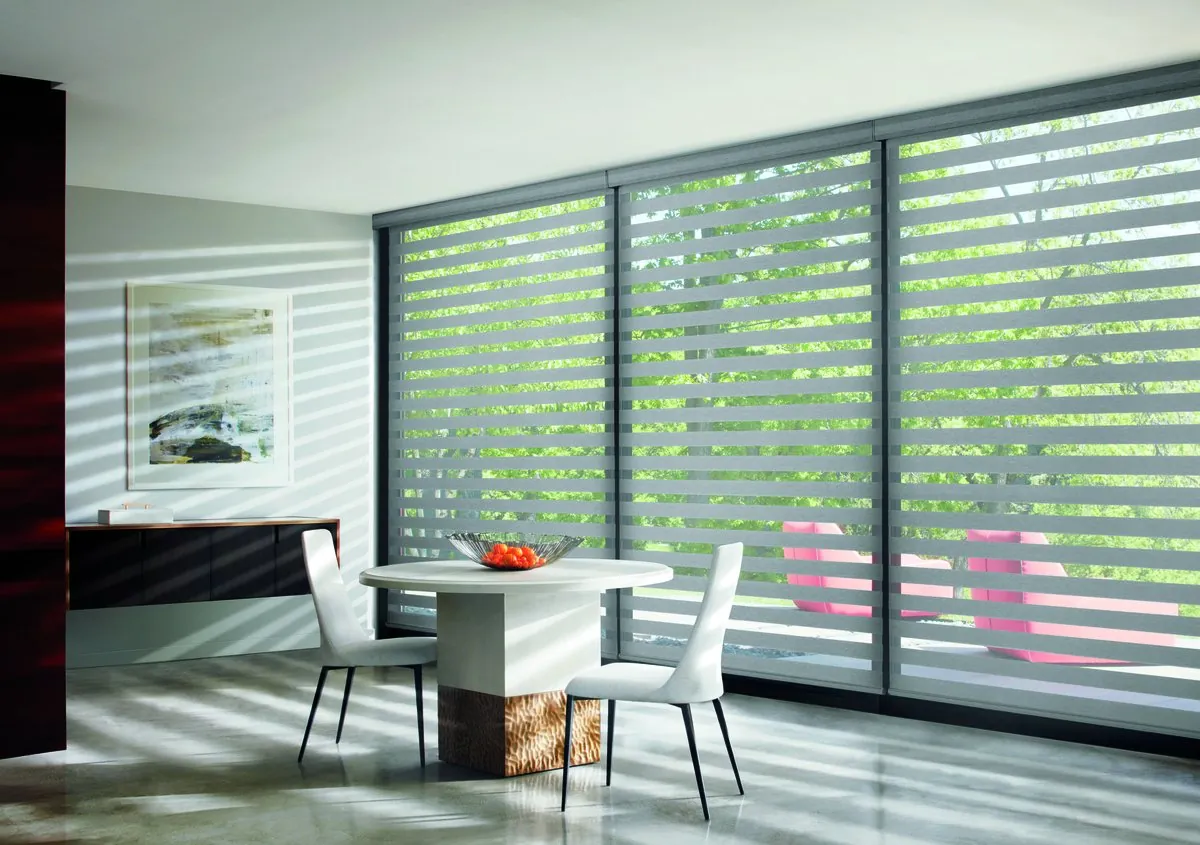
Corner bedrooms and two-wall kitchens
Two rooms in a Halifax house tend to show the multi-sided light most clearly. The first is the corner bedroom. With a window on each outside wall, it can be bright at dawn from one side and warm in the late afternoon from the other. Blackout honeycomb on the window that sees the sunrise and a light-filtering version of the same color on the other wall lets you sleep in without living in a cave all day. If both windows face the morning, both go dark, and a top-down option on one of them keeps a slice of sky for reading.
The second is the kitchen at the end of a ranch or cape, glazed on two walls and often looking toward the yard or the pond. One window usually sits over the sink, where steam and splashes call for faux wood slats or polysatin shutters. The other may be over a table or a counter, free for a softer Roman fold or a woven shade. Keeping the two in one color family ties the room together even though the products differ.
A Hunter Douglas dealer in Halifax will often suggest cafe shutters on the lower sash of a kitchen that faces the road, with the upper glass left bare. On a quiet lot it gives just enough cover for the evening and leaves the morning light alone.
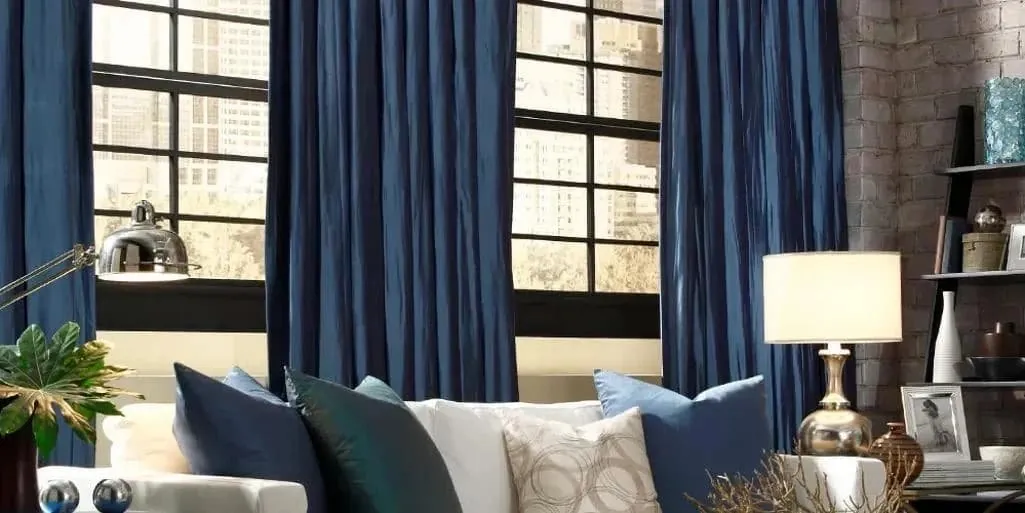
Drapery on a long wall of glass
Where a pond room or a colonial family room has a long run of windows, drapery panels at each end can soften a room that would otherwise be all hard edges. The panels frame the glass rather than cover it, and a working shade behind them does the daily job of handling the sun. In colder months, drawing the panels across in the evening adds one more layer between the room and the glass. We bring Carole fabrics alongside the shade samples so you can see the two together.
Planning a room with many windows
A room with windows on three sides can look busy if each window is treated differently. We keep it calm with a few simple habits.
- Tops in a line. Headrails go up at one level around the room, even where the windows are a touch different.
- Bottoms in a line. Partway down, every bottom rail stops at the same mark.
- Shared color. Even where the walls get different products, they share a color so the room reads as one.
- Grouped control. With PowerView, shades on one wall can move together, or the whole room at once.
As your Hunter Douglas dealer in Halifax we plan these details before anything is ordered, window by window, so the finished room looks considered.
How the consultation runs
A corner room can only really be judged from inside it, so the samples travel to you in our vans and go up on each wall in turn.
- Book through Request a Consultation, or tap the call button.
- We begin wherever the light gives you the most trouble, usually the pond side or a three-sided room.
- Each sample is tried on each wall, so you see the same fabric in morning, midday and evening light.
- Every opening is measured, and the rail heights for each room are agreed with you.
- A free estimate follows, and there is no rush to answer.
Color and fabric for a whole room can be covered in one of our interior design consultations, and the visit itself is laid out in our in-home consultation guide.
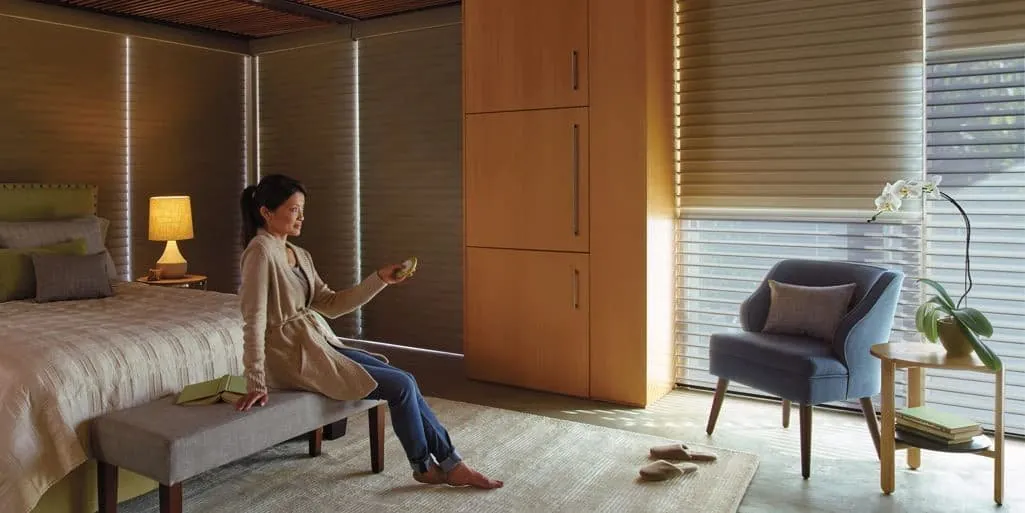
Automation that follows the sun
In a room with light from three sides, PowerView can do what you would otherwise do by hand all day. On a timed scene the east shades come down for the morning sun, the south shades take over at midday and the west shades close before the late afternoon glare. In the evening they all rise again, or close for the night.
You can tie shades together by wall, by room or for the whole house, and run them from the app, a handheld remote or a switch on the wall. Honeycomb, roller, screen and sheer lines can all be motorized. Which motors, where the switches go and how each is powered gets settled at the visit, and motorized blinds in Halifax covers it further.
Certified installation
Hunter Douglas certifies our installers, and in a house full of windows you can see the difference in the straight lines: rails level around a three-sided room, a split picture window rising in step, a side-stacking shade parking well away from the door handle. In a bay, each panel is set so the curve shuts cleanly. Motorized shades are paired and their timed scenes loaded before the van leaves.
Every shade is run up and down while you watch, and you get a quick lesson on each one. Should something wear or break down the road, we repair blinds and shades you already own; see blind and shade repair.

Why a Gallery dealer for a Halifax house
Hunter Douglas reserves the Gallery title for dealers who meet its standards, and Blinds & Designs is one of them. In a house where one room may need four different answers, that breadth is the point: screens for the pond, honeycomb upstairs, shutters in the breakfast bay and sheers on the slider, all in one plan from one visit.
Estimates cost nothing, the fitting is certified, and design help with color and fabric is there if you want it. Carole drapery is part of the range as well, described on custom drapery in Halifax.
The whole brand is laid out on our Hunter Douglas page, and the rest of our Halifax work on the Halifax page. Sagamore is the closest of our showrooms.
Halifax window questions
How do I handle a room with windows on three sides?
Either one adaptable product throughout, such as light-filtering honeycomb or a screen shade lowered on whichever wall has the sun, or slightly different products per wall that share a color and headrail height. Both keep the room calm.
What keeps the pond in view while cutting the glare?
A screen fabric or a sheer with vanes. Because the pond bounces light upward, we test several weaves at the window before you pick one.
What suits a screened porch?
Solar screen shades lowered around the porch cut the low evening sun and add privacy from the water while you still see out.
Can shades on different walls move together?
Yes. With PowerView, shades can be grouped by wall or by room and run on a schedule that follows the sun.
Is the estimate free?
It is. Once the windows are measured you get an estimate at no cost, and nothing commits you.
Bring the samples to your windows
Ask for a visit through Request a Consultation and the samples come to you, wall by wall, with every window measured and a free estimate to follow. Prefer a conversation first? The call button rings the Sagamore showroom. Pond cottage or Plymouth Street colonial, a Hunter Douglas dealer in Halifax, MA can make every side of the room work.