
Bays, transoms and odd sizes downtown
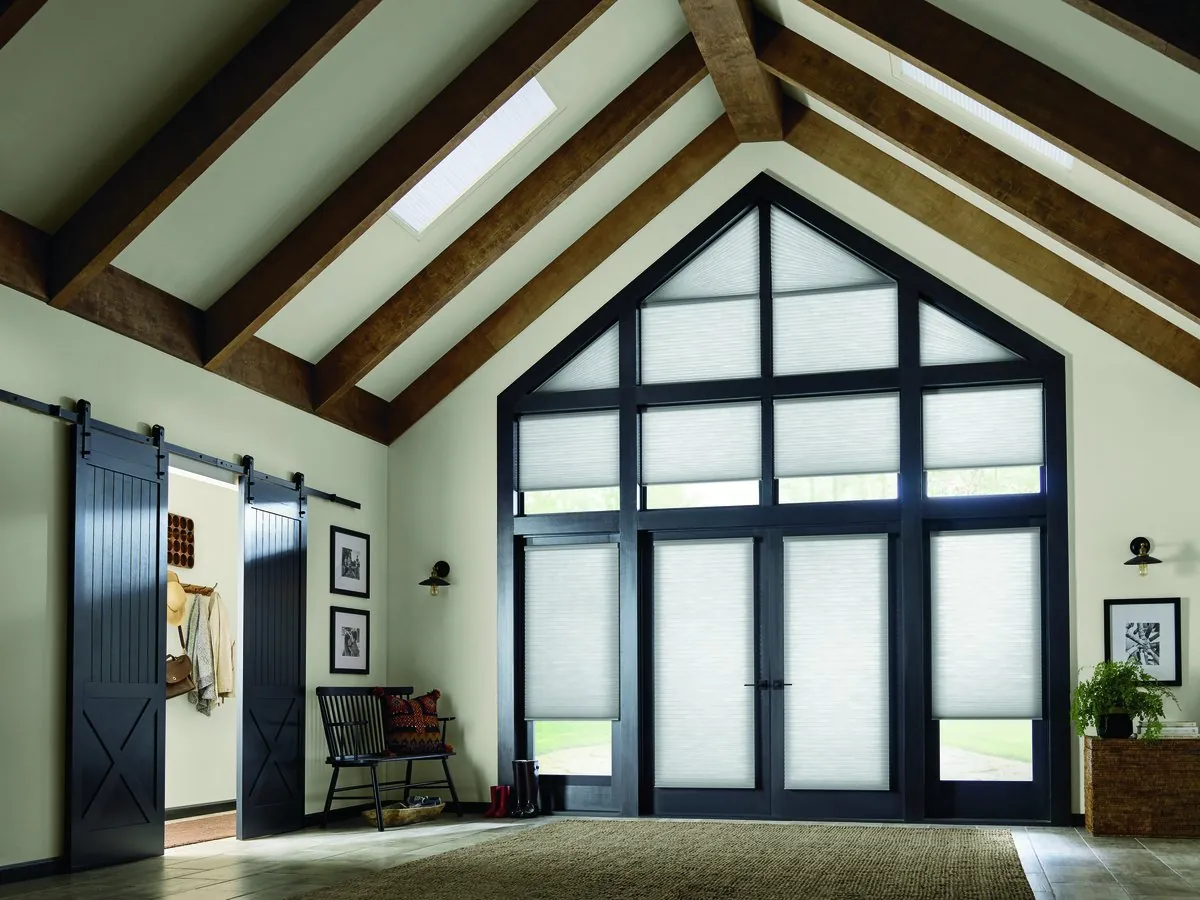
The Victorians and colonials around downtown and up on Oak Hill were built with windows that refuse to come in stock sizes. A three-sided bay pushes out from the front parlor. A transom sits over the entry door or above a pair of tall sash. Side lights flank the front step. Every one of those openings has its own width and height, and none of them matches the window next to it. That is the starting point for cellular shades in Attleboro, MA: a shade made to the measure of one particular opening, not cut down from a standard size.
Honeycomb shades are a natural fit for that work. They are made to order for each window, they can be very narrow or quite wide, and every panel in a bay can be its own shade on its own headrail. When you raise them together, the bottom rails line up across the whole bay.
There is a practical reason as well. Old bays and tall sash leak warmth, and the hollow cells in a honeycomb shade hold a layer of still air against that glass, so the parlor holds its heat after dark instead of feeling cold near the window.
Cellular shades in Attleboro, MA, for three kinds of house
The housing changes as you move across town, and so does the first question we ask at the window.
Downtown and Oak Hill bays
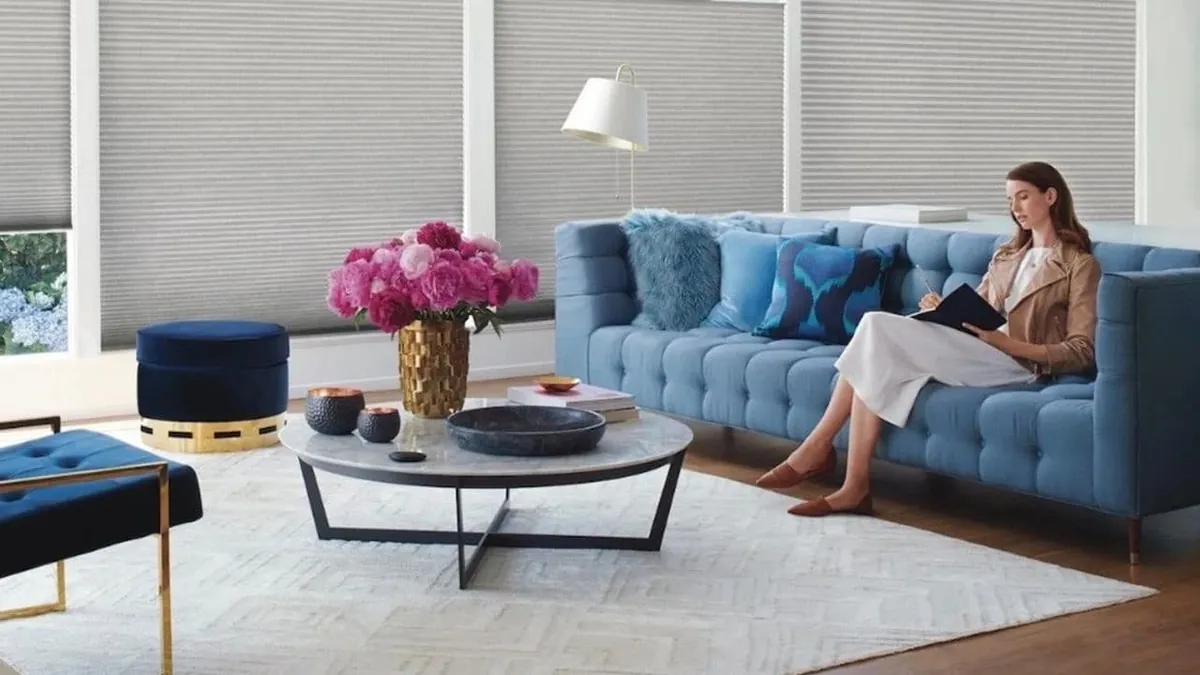
Each bay panel gets its own Duette or Applause shade, measured separately, with the headrails set at one height so the bay reads as a single window.
Split-levels off Route 123
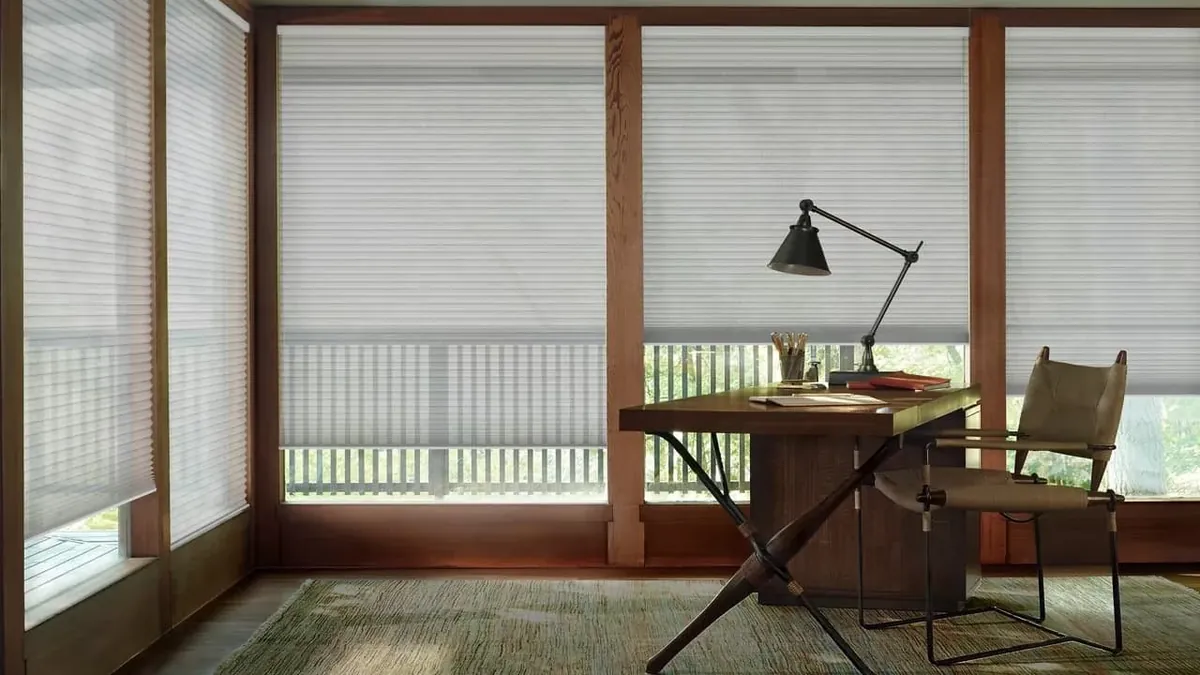
Half-level layouts put windows at several heights. We match fabric and stopping points so the rooms look related from one landing to the next.
South Attleboro ranches
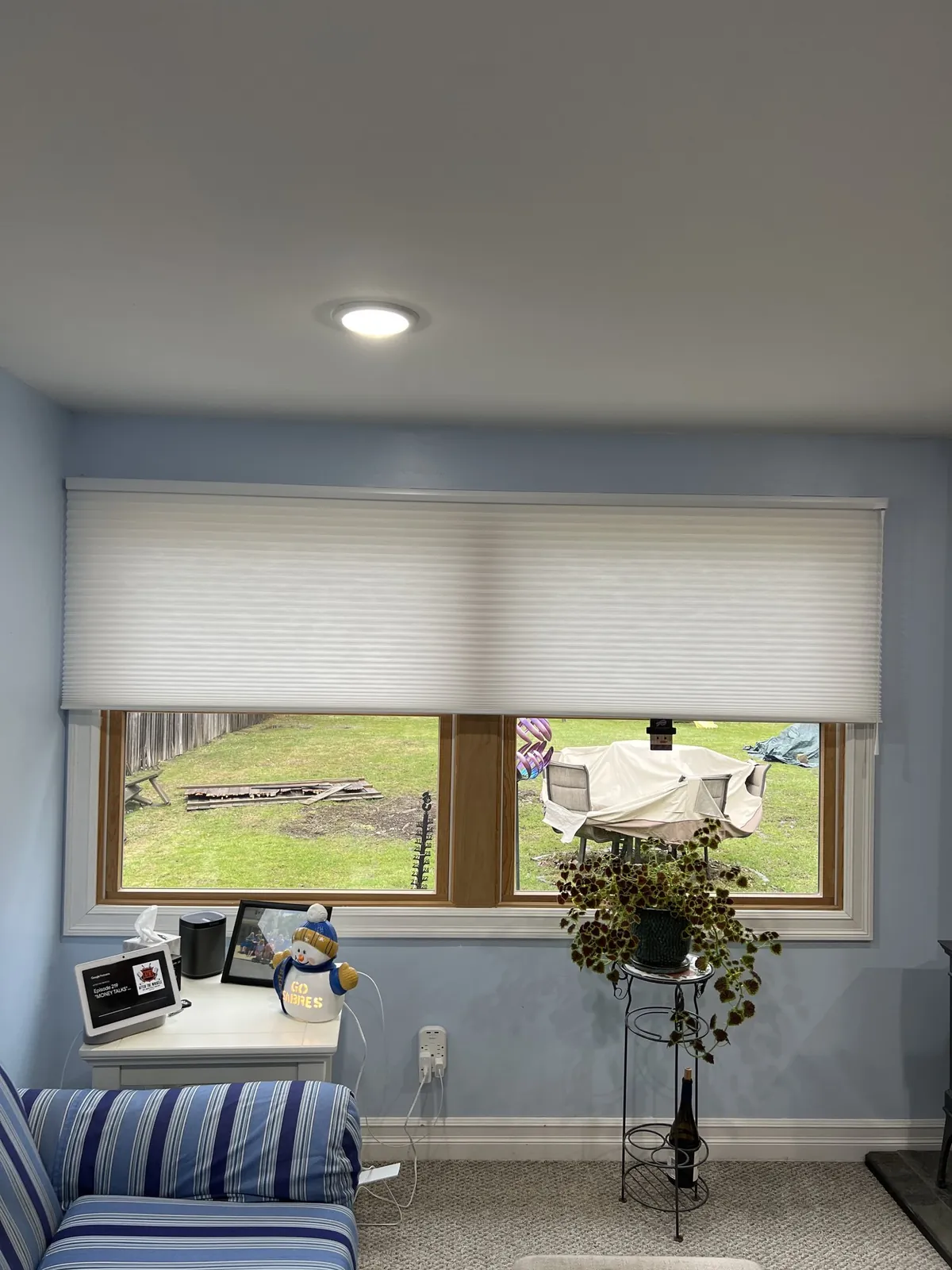
Wide picture windows and long bedroom glass, split into two or three shades where one would be too wide, all moving together if you want.
What the cells are doing in winter
Look at a honeycomb shade from the end and you see why it works. The fabric is folded and joined into rows of closed tubes that run the full width of the window. When the shade is lowered, those tubes fill with air, and because the air has nowhere to go, it barely moves. Cold from the glass has to cross that still layer before it reaches the room.
In an older Attleboro house, where a bay might have three or five panes facing the weather and a transom adds more glass overhead, that layer makes the difference between a corner you avoid in January and a window seat you actually use. In summer the effect runs the other way: lower the shade on a sunny afternoon and less of the heat coming through the glass makes it into the room.
Getting a bay right
A bay is three windows pretending to be one. The center panel is usually wider than the two angled side panels, and in an old house the angles themselves are seldom exact. If the shades are measured carelessly, the side shades sit at slightly different heights from the center one, and the bay looks crooked every time you raise them.
We measure each panel on its own, check the depth of every frame, and set all the headrails to one line. Where the side panels are shallower than the center, which happens often with trim that has been built up over the years, we work out a mount that keeps the line consistent across all three. The result is a bay where every shade stops at the same height and the woodwork between the panels stays on show.
Colonials with a formal front
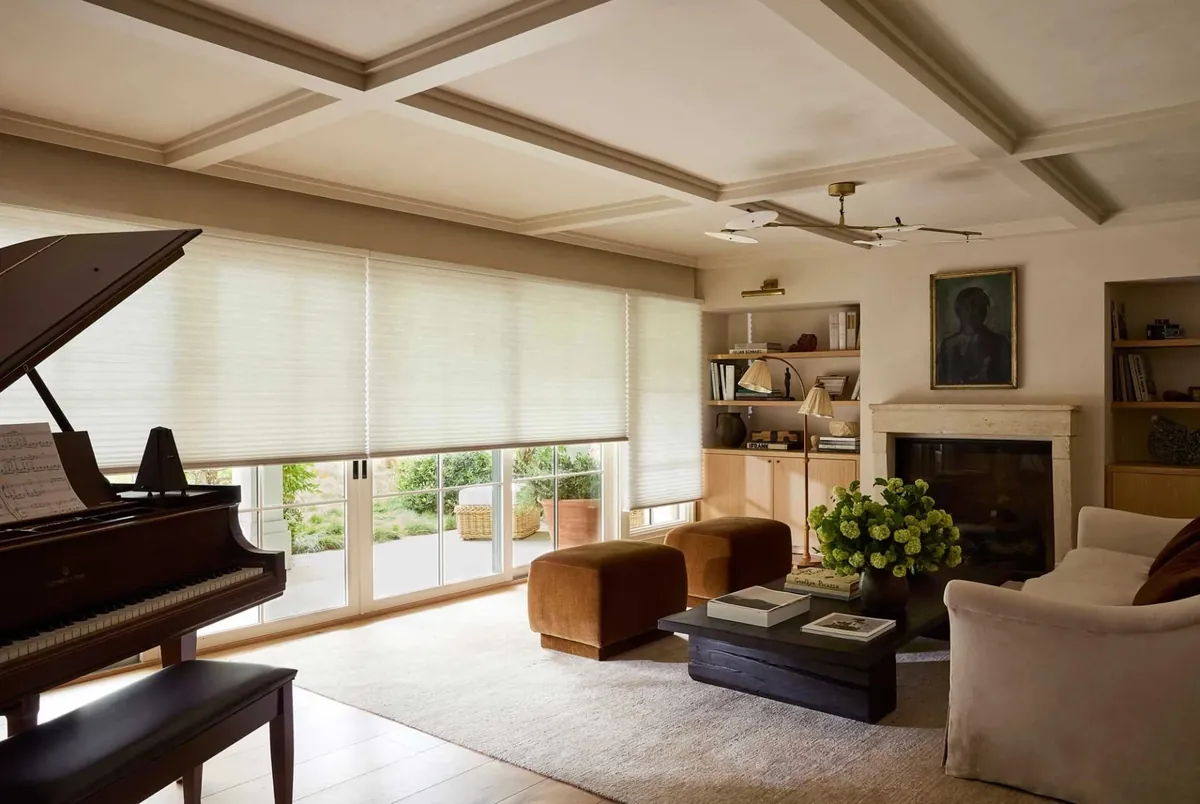
Not every older house near downtown is a Victorian. The colonials on Oak Hill and the surrounding streets tend to have a symmetrical front: a center door, often with its own transom or a fanlight above, and matching windows on either side, upstairs and down. That symmetry is the whole point of the facade, and coverings that stop at different heights spoil it quickly.
With honeycomb shades the fix is simple. We set every front window to the same mount and the same headrail height, choose one fabric color for the street side, and the house keeps its balance whether the shades are up, down or halfway. Inside, the rooms behind those matching windows can still differ. The front parlor can take a light-filtering fabric while the room across the hall, used as a study or a guest bedroom, takes a darker one in the same outward color. Many orders for cellular shades in Attleboro start with exactly that front elevation, then move to the back rooms once the household has seen how the first few shades look in place.
Transoms and side lights
Transoms are the windows people forget until the afternoon sun comes through one and lands in their eyes. Over a front door, a transom brings light into the hall, and plenty of households want to keep it that way. Over a pair of tall sash in a parlor, though, it can let in a lot of glare and a fair amount of cold.
We measure every transom during the visit and talk through the choice with you. A rectangular transom can take its own honeycomb shade, made to its exact size, so it can be lowered on bright days and left open the rest of the time. Others are best left clear, and we will tell you when that is the case. Narrow side lights by the front door are treated the same way: each one measured, each one decided on its merits.
Split-levels and their staggered rooms
The split-levels built off Route 123 in the middle of the last century bring a different puzzle. The living room sits a half-flight up from the entry, the bedrooms another half-flight above that, and the family room a half-flight down. Windows land at four or five different heights, and from the street the house can look patchy if every room has a different covering.
Honeycomb shades help tie a split-level together. A single fabric color on the street side keeps the front of the house calm, while each room can still take the opacity it needs. The large living room window often wants a light-filtering fabric, the bedrooms a room-darkening one, and the lower family room, which tends to be the dimmest room in the house, a pale fabric that holds on to as much daylight as possible.
Motorizing the high and awkward windows
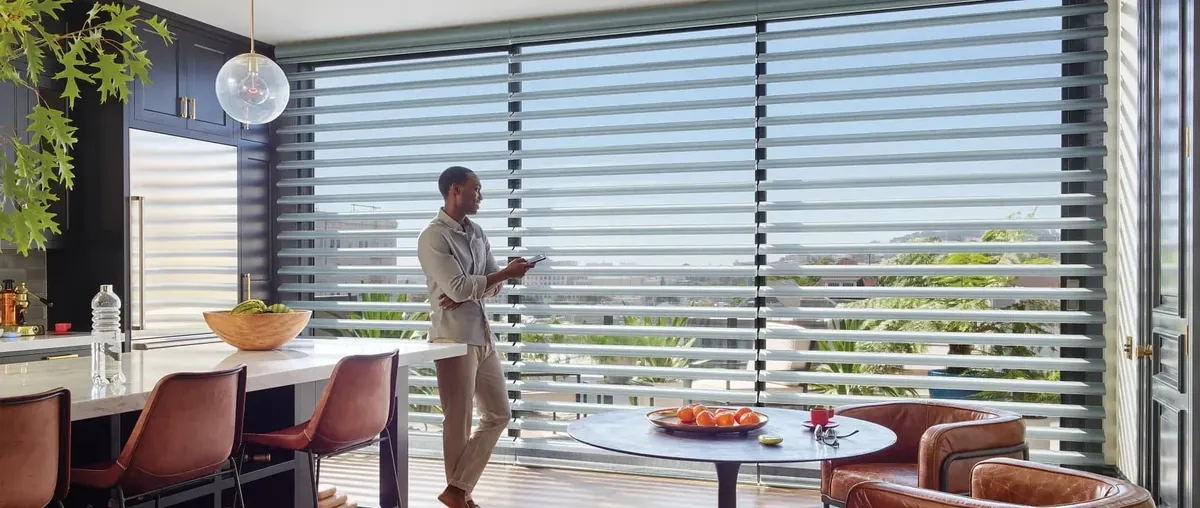
Most split-levels have at least one window over the stairs that is hard to reach, and some of the older downtown houses have tall upper sash or a high transom that needs a ladder. PowerView motorization takes care of those. Each shade can be raised or lowered from a phone or a remote, grouped with others so a whole room moves at once, or set to a schedule that lowers the bedroom shades at dusk and opens the living room in the morning.
We look at where each motorized shade will be powered during the visit, window by window, so the plan fits the room before anything is ordered.
Ranches in South Attleboro
South Attleboro has plenty of single-story ranches, and their windows are simple in shape but big. A living room picture window, a sliding door to the yard and long, low bedroom windows add up to a lot of glass on one level. In summer that glass brings heat into every room at once. In winter it chills the same rooms.
On a picture window we usually divide the width into two or three honeycomb shades on a shared headrail, so they can move as one or separately. The slider gets a vertical honeycomb shade that draws to the side, and the bedroom windows take a fabric chosen for how much morning light you want. On a ranch it is common to do the whole house in one order, because every room is on the same level and the windows tend to share sizes.
The rooms at the back of a South Attleboro ranch often face the yard and get the full afternoon sun. That is where a honeycomb shade does its summer job, slowing the heat through the glass so the kitchen and family room are easier to use at the end of the day.
Choosing fabric for each room
Rather than picking a favorite color and using it everywhere, it works better to decide what each room needs from the window first.
- A parlor with a bay: a light-filtering fabric that keeps the room bright and blurs the view from the street.
- A west-facing family room: a shade that can come down in the late afternoon and take the edge off the glare without blacking the room out.
- Children’s bedrooms: a room-darkening fabric for naps and early summer mornings.
- The lower level of a split-level: the palest light-filtering fabric you like, to make the most of limited daylight.
Top-down, bottom-up shades are worth a look in the parlor and the street-facing bedrooms. Lowering the shade from the top opens the upper glass to the sky while the lower glass stays private.
Duette or Applause for an Attleboro house
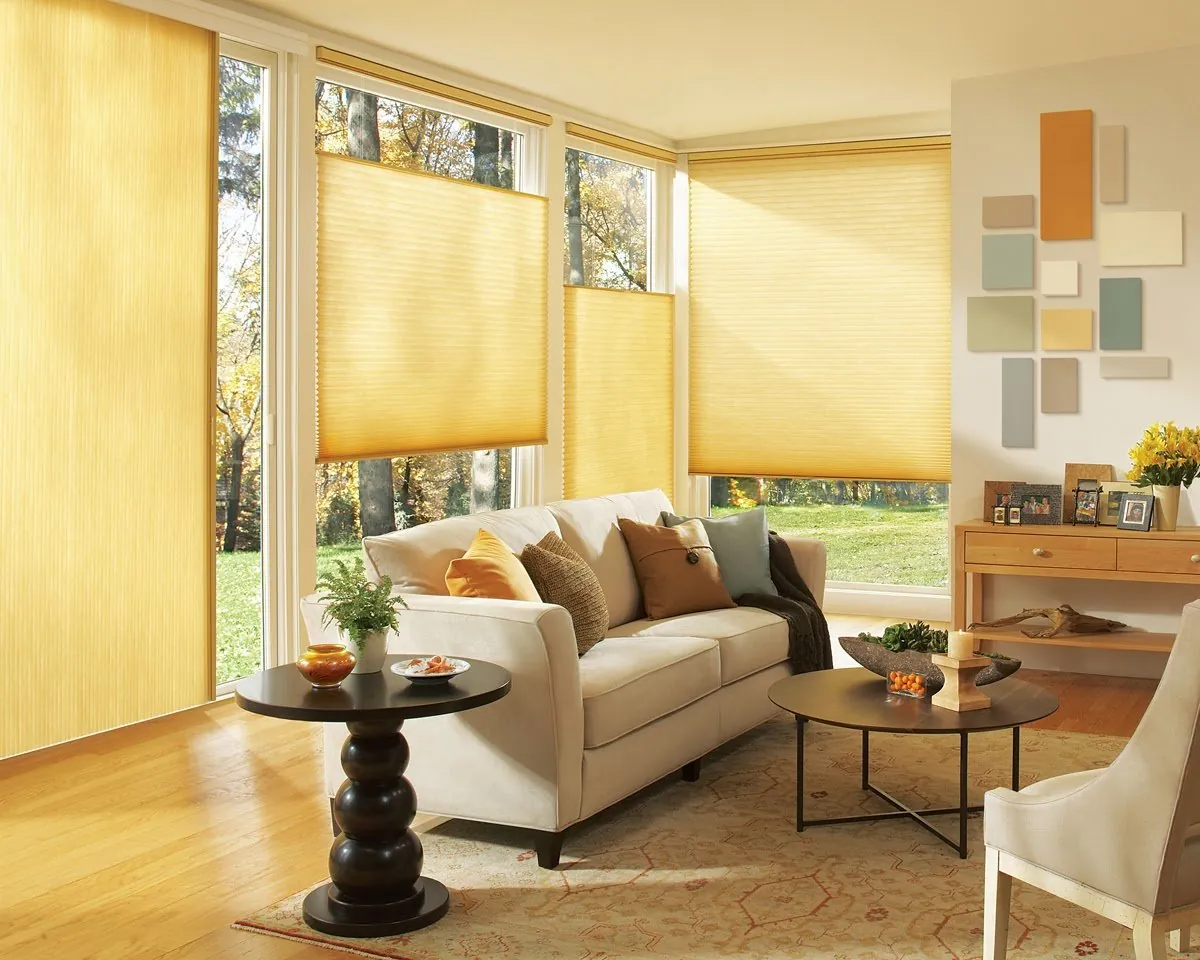
Duette and Applause are both Hunter Douglas honeycomb shades, and the cells work the same way in both. The real differences are the fabrics, the textures and the range of sizes each one offers. Duette has the larger selection, including the vertical shade for a slider, which makes it the usual choice for bays and odd openings. Applause has a palette of its own and covers standard windows well.
It is normal for an order of cellular shades in Attleboro to include both lines: Duette in the bay and the tall parlor sash, Applause in the kitchen and back bedrooms. Our Duette honeycomb shades and Applause honeycomb shades pages go into each line, and the main cellular shades page shows how the range fits together.
Before we come to measure
A home visit runs more smoothly when you have thought about a few things beforehand. None of them is required, but they save time.
- Walk the house and note the rooms that feel coldest in winter or brightest in the afternoon.
- Look for the odd openings: the bay, any transoms, side lights, a window over the stairs.
- Decide which rooms need darkness for sleep and which need daylight.
- Think about whether any high windows would be easier with PowerView.
- Request a consultation online or with the call button, and we will agree a time.
At the visit we bring the honeycomb samples in our van, so we can bring the showroom to you. You hold fabrics against the glass, we measure every opening, and you get a free estimate with no pressure to decide that day. More detail is on our page about what happens at an in-home consultation.

Samples at your own windows
A fabric that looks warm and creamy under shop lights can look gray on a north window and almost golden on a west one. That is why the samples come to the house. Seeing a Duette fabric against your own trim, beside your own wall color, at the time of day you use the room, settles the choice far faster than a catalog does.
If you want broader help with a room, our interior design consultations look at color, fabric and the other window treatments alongside the shades. Some customers fold that into the same visit, especially when a parlor or a living room is being redone from scratch.
Measuring and fitting, panel by panel
Made-to-measure work only looks built in when the numbers are right. On Attleboro’s older houses we take nothing for granted.
- Every opening is measured on its own, including each bay panel, transom and side light.
- Width is checked at the top, middle and bottom, and the smallest figure is used for an inside mount.
- Height is checked at both sides and the center.
- Frame depth is noted for each window, along with anything in the way of the headrail.
- You confirm the mount, fabric and opacity for each window before the order is placed.
- Our certified Hunter Douglas installers fit the shades, line up the headrails across a bay, and show you how each one works.
You can read more about what happens on installation day before the shades arrive.

The Gallery dealer behind the work
Blinds & Designs is a Hunter Douglas Gallery dealer. Hunter Douglas gives that name to dealers who meet its standards, and for an Attleboro house with a bay and a transom it matters, because you see the whole honeycomb range rather than a short list that may not include the right size or fabric.
Your shades are fitted by installers certified by Hunter Douglas, and the people who measure are the people who install. We also repair blinds and shades you already own. Beyond honeycomb we carry Hunter Douglas blinds, shutters, roller and roman shades and drapery. For other rooms, see roman shades in Attleboro, motorized blinds in Attleboro, or our Attleboro page for everything we offer in town.
Seeing the shades before the visit
The Franklin showroom is the closest of our locations to Attleboro. If you like to see shades in person before anyone measures, it is a good first stop, and the Franklin showroom page has the details. Bring a phone photo of the bay or the transom you are thinking about; it helps to have the shape in front of you while you look.
Most Attleboro customers skip that step and start at home, because the samples travel to the house anyway. Either way, the estimate is free.
Questions from Attleboro
Can each panel of my bay window have its own shade?
Yes, and that is usually how we do it. Each panel is measured on its own, and the headrails are set to one line so the shades stop at the same height when raised together.
What can be done with the transom over my front door?
A rectangular transom can take its own honeycomb shade made to its size, so you can lower it on bright days. Many people prefer to leave a front door transom open for light, and we talk through both options at the visit.
Our split-level has windows at different heights. Will it look patchy?
Not if the street side shares one fabric color. Inside, each room can take a different opacity, light-filtering in the living room and room-darkening in the bedrooms, while the house still looks consistent from outside.
Is it worth motorizing just one or two windows?
Often it is. A window over the stairs or a high transom is exactly where PowerView earns its place, and you can add more shades to the same system later.
How is the estimate handled?
After we measure, you receive a free estimate for the shades you chose. There is no obligation, and you can take as long as you like to decide.
Book a visit for your windows
The surest way to choose cellular shades in Attleboro, MA, is with real fabric in your hand at the bay, the transom and the bedroom window you have been meaning to deal with. Request a consultation and we will bring the Duette and Applause samples, measure each opening and leave you with a free estimate.