
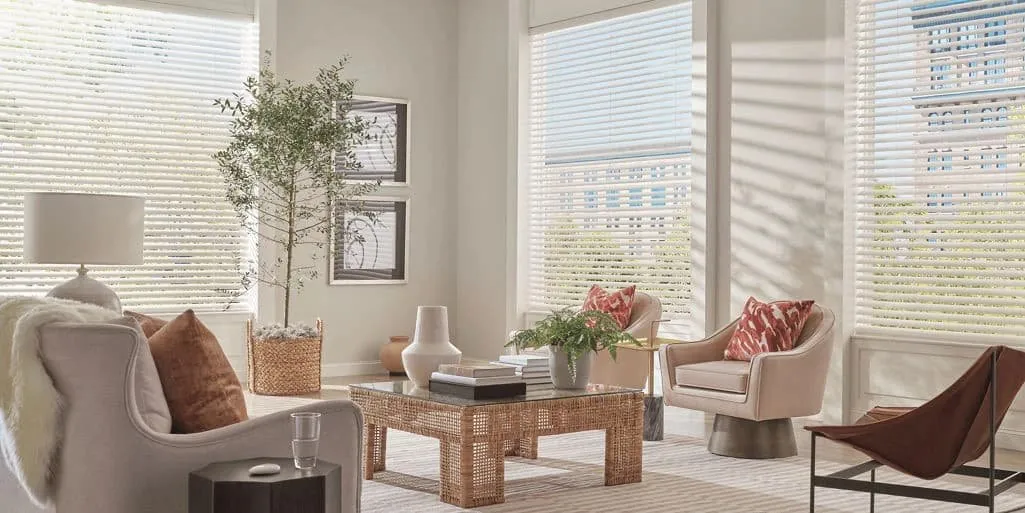
Privacy comes first on close-set streets
Much of Brockton was built tight. Victorians, two-families and three-families stand a short walk apart, often with a porch a few steps from the sidewalk and a neighbor’s side windows looking straight across a narrow driveway into yours. In houses laid out like that, the first job a window covering has is to stop the street and the house next door from seeing in. That is the everyday reason custom blinds in Brockton, MA, make sense: tilt the slats and the sidewalk view closes, while daylight still finds its way into the room.
The windows themselves bring a second problem. The older houses have tall, narrow double-hung sash under high ceilings, and those proportions rarely match anything sold off a shelf. A blind a little too wide rubs the casing. One a little too short leaves a bright strip at the sill that anyone walking past can see through. Built to the measurements of each opening, a blind fills its frame properly and lines up with the others on the same wall.
Toward the edges of the city the houses spread out. Post-war ranches sit on their own lots with wider, lower windows and more room between neighbors, and there a blind is chosen more for light and comfort than for screening. We plan both kinds of house the same way, standing at your windows with Hunter Douglas samples in hand.
Custom blinds in Brockton, MA, in four materials
Every blind we order is made to the sizes we take at your house. These are the Hunter Douglas families we carry to a Brockton visit, each suited to a different kind of window.
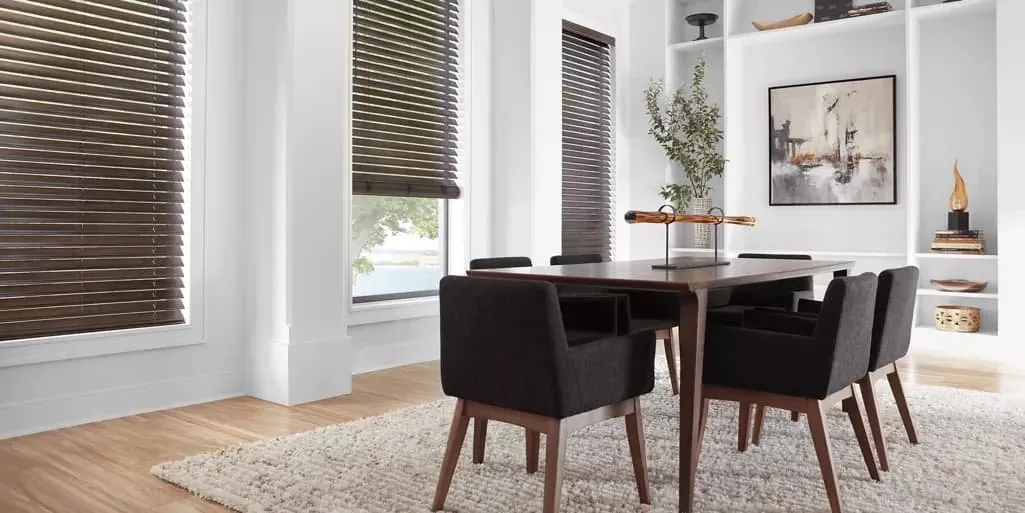
Parkland Wood Blinds
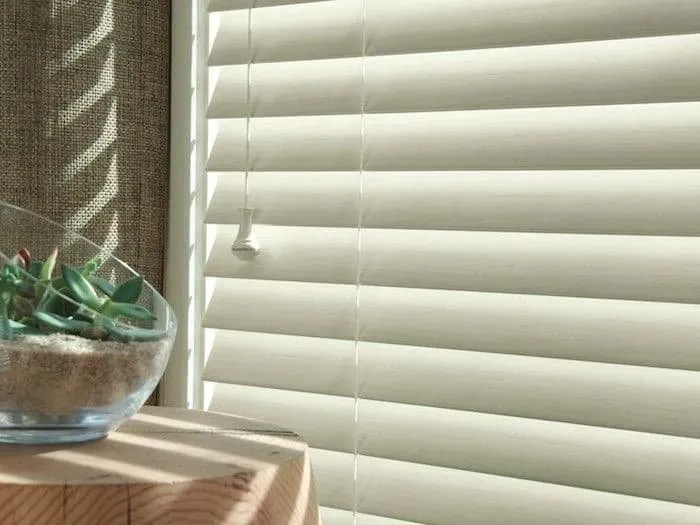
Wood slats for the parlor or dining room of a Victorian, where the floors and trim are already wood and a tall window can carry something with weight.
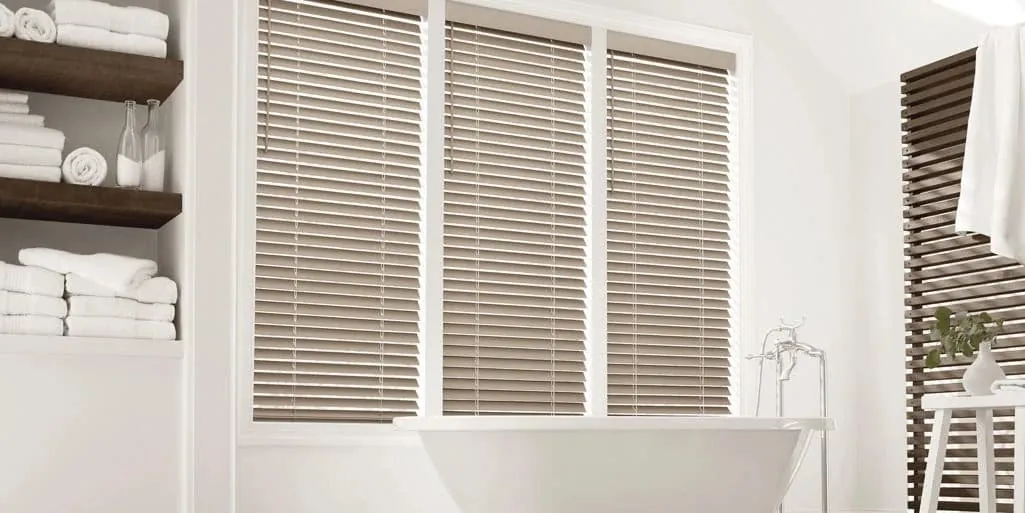
EverWood Alternative Wood Blinds
The look of a wood blind in a faux wood slat, often picked for the kitchens and baths of a two-family so every unit matches.
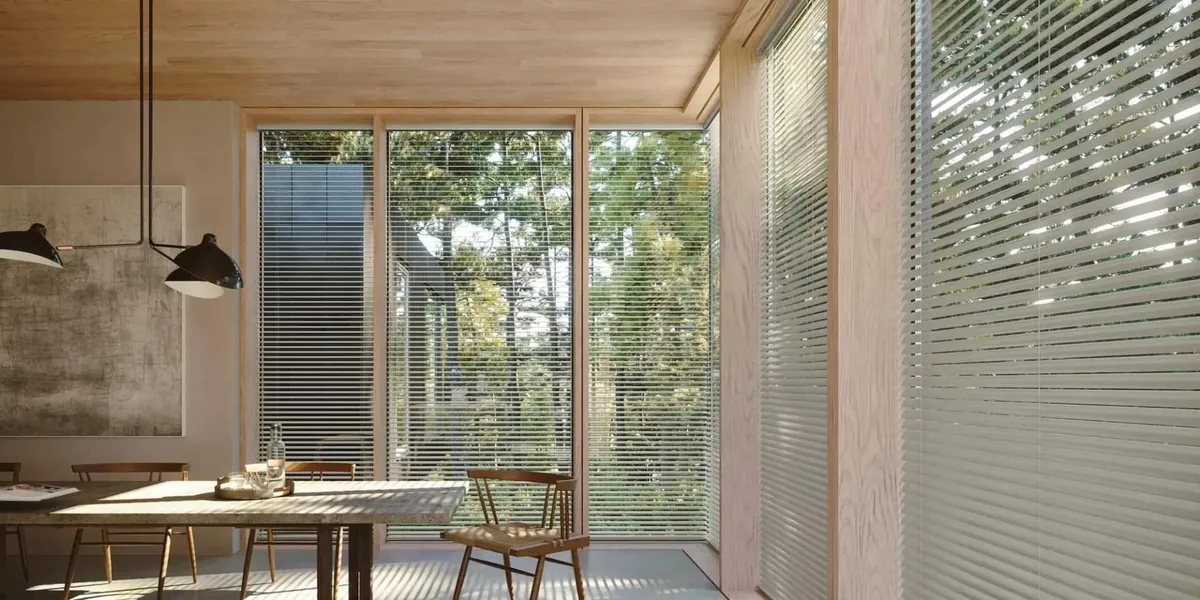
Metal Blinds
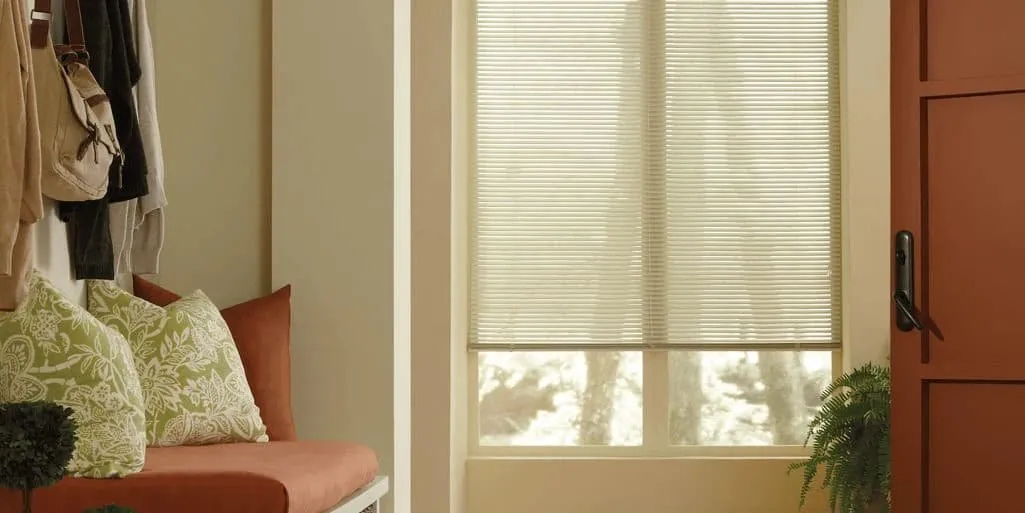
Slim aluminum slats with a compact headrail, for shallow frames, the glass in a back door and the run of small windows on an enclosed porch.
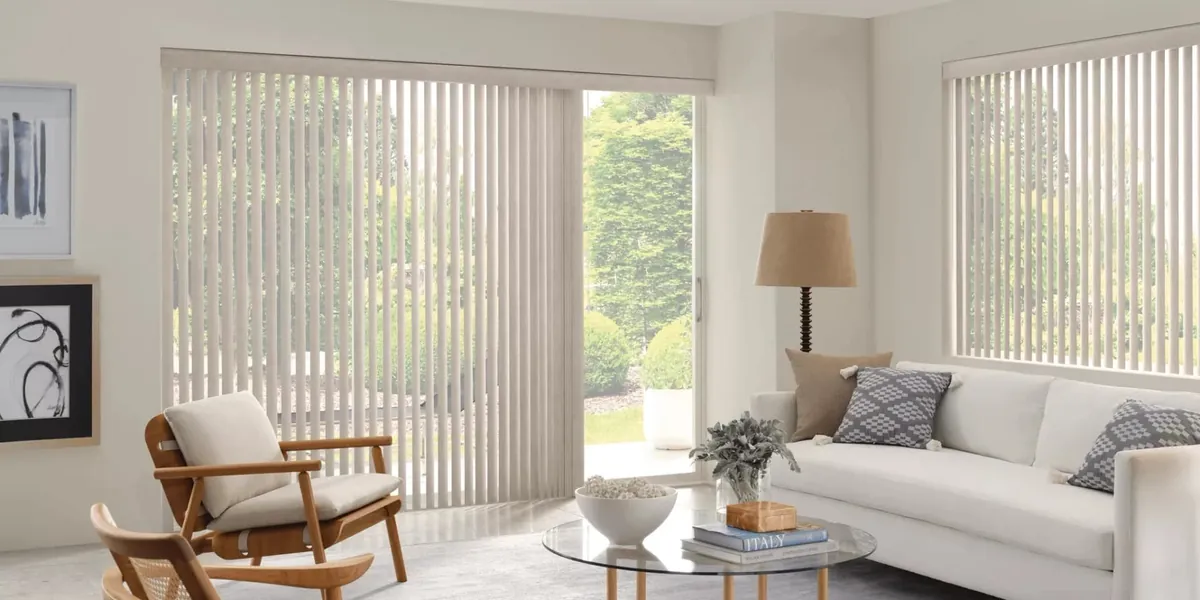
Vertical Blinds
Vanes that hang from the top and draw to one side, the usual answer for the slider a ranch has out to its deck or yard.
Tall, narrow sash under a high ceiling
The classic Brockton Victorian window is taller than it is wide by a long way. Each sash is narrow, the head casing sits well above eye level, and the ceiling above that sits higher still. Proportions like these change how a blind behaves.
The first thing to settle is the mount. Inside the frame, a blind tucks behind the casing and leaves the woodwork on show, which suits a house where the trim is part of the character. That only works if the frame is deep enough to hold the headrail, so we check every opening rather than assuming. Where a frame is shallow, or the sash has been replaced and the jamb is now thinner, an outside mount above the casing is the tidy alternative.
The second thing is what happens at the top. A horizontal blind gathers its slats at the head when it is raised, and on a long drop that bundle can cover a band of glass. Slat width makes a real difference here. A narrower slat stacks shorter, which keeps more of the upper sash clear on a window this tall. A wider slat looks bolder in a big room but gathers deeper. We hold both up to your actual window so you can see the trade before you decide.
The third is the line across the wall. In a front room with three tall sash in a row, the headrails should sit at one height and the slats should tilt together, or the street sees a ragged set of windows. That is one more reason the measuring is done opening by opening.
Two- and three-families: one building, several homes
A good share of the city’s housing is the stacked multi-family, with a separate home on each floor and every floor showing its windows to the same street. When the blinds are planned floor by floor with no thought for the others, the building can end up with white on one level, wood tone on the next and something else on top.
If you own the whole building, or you are coordinating with the other units, a single color on the street side keeps the front looking settled from the sidewalk. Each floor can still choose its own material inside, and its own colors on the windows that face the back. Faux wood is a common pick across a whole building because one slat color can run from the kitchen to the bedrooms without a second thought.
If you only own one floor, matching what is already on the floors above and below is often the quiet choice. Bring us a photo of the neighbors’ windows from outside, or point them out when we arrive, and we will show you the closest Hunter Douglas colors.
Tilting slats against the sidewalk view
The slat is what makes a blind so useful on a busy street. With the slats tilted so the inside edge points up, someone on the sidewalk looks up at a closed face while the room still takes in light bounced off the ceiling. Tilt them the other way and you see out and down without being seen as easily from a passing car. Close them fully and the room goes private.
On a first-floor window a few steps from the porch, most of the day is spent somewhere in between. A slight tilt hides the room and keeps the lamp off. On the upper floors, where the house next door is the closer neighbor, the side windows usually stay angled while the front ones open wider. Being able to set each window by hand like this is the main reason a blind still suits a Brockton front room better than a shade that is simply up or down.
Kitchens, back halls and the rear stairs
The back of an older Brockton house is a different world from the front. Kitchens sit at the rear, often with a window over the sink, a door out to a back porch with glass in its upper half, and sometimes a narrow window beside the back stairs that serve the upper floors. These are working windows. They get opened, splashed and brushed past many times a day.
Faux wood is the usual pick at the sink, because it carries the look of the wood blinds at the front in a slat that is not real wood. The door glass needs a blind shallow enough to clear the handle and the frame as the door swings, which is where a metal blind with its compact headrail tends to fit best. The stair window, often tall and set awkwardly above the treads, may be worth motorizing so nobody has to lean across the stairs to reach it.
Colors against clapboard, shingle and painted trim
From the sidewalk, a blind is part of the house. On a Victorian with painted clapboard and contrasting trim, white or cream slats usually disappear behind the glass and let the trim do the talking. A darker wood tone can suit a shingled house or one with deep green or brown trim, where white would look stark against the sash.
We suggest settling the street color first, room by room afterward. Ordering custom blinds in Brockton, MA, for a whole house is easier once the front is decided, because every street-facing window then follows one rule and the rooms at the back are free to choose. Samples held against the outside of the glass, as well as the inside, help here more than any color chart.

A visit to your house with the samples
Brockton is part of our shop-at-home territory run from Canton, so the planning happens in your rooms rather than across a counter. A sample tells you far more against your own trim and your own light.
- Request a consultation online, or use the call button if you want to ask something first.
- We arrive with a van of Hunter Douglas samples, wood and faux wood through to metal and vertical.
- We walk the house with you, starting with the street-facing rooms where privacy matters most.
- At each window you compare slat widths and colors against the casing and the walls.
- We settle mounts, the tilt you want and any windows that need motorized control.
- Every opening is measured, and you get a free estimate to read through in your own time.
If you would like help with the room as a whole, an interior design consultation can be part of the same visit.
Bays, porches and the odd-sized window
Victorians love a bay. A three-sided bay in a front parlor gives each of its sash its own blind, and the three have to agree: one headrail height, one slat, one color, so the bay reads as a single feature from the street. The angles where the sash meet leave small gaps between blinds, and we plan the widths so those gaps are as even as possible.
Enclosed porches are their own puzzle. Many have a long row of small windows on three sides, some of them close to the floor and some set into old storm framing. A metal blind with a compact headrail fits those shallow openings well, and a run of them in one color gives a porch a calm, finished look.
Then there are the windows nobody planned: a small window on a stair landing, a narrow one beside a chimney, a pantry window that is wider than it is tall. Each gets its own blind made to its own size, so nothing hangs short or sits crooked. Those small openings are often the ones a stock blind handles worst, and the ones a measured blind handles without fuss, matched in color to the rooms around them.
Motorized control for sash you cannot reach
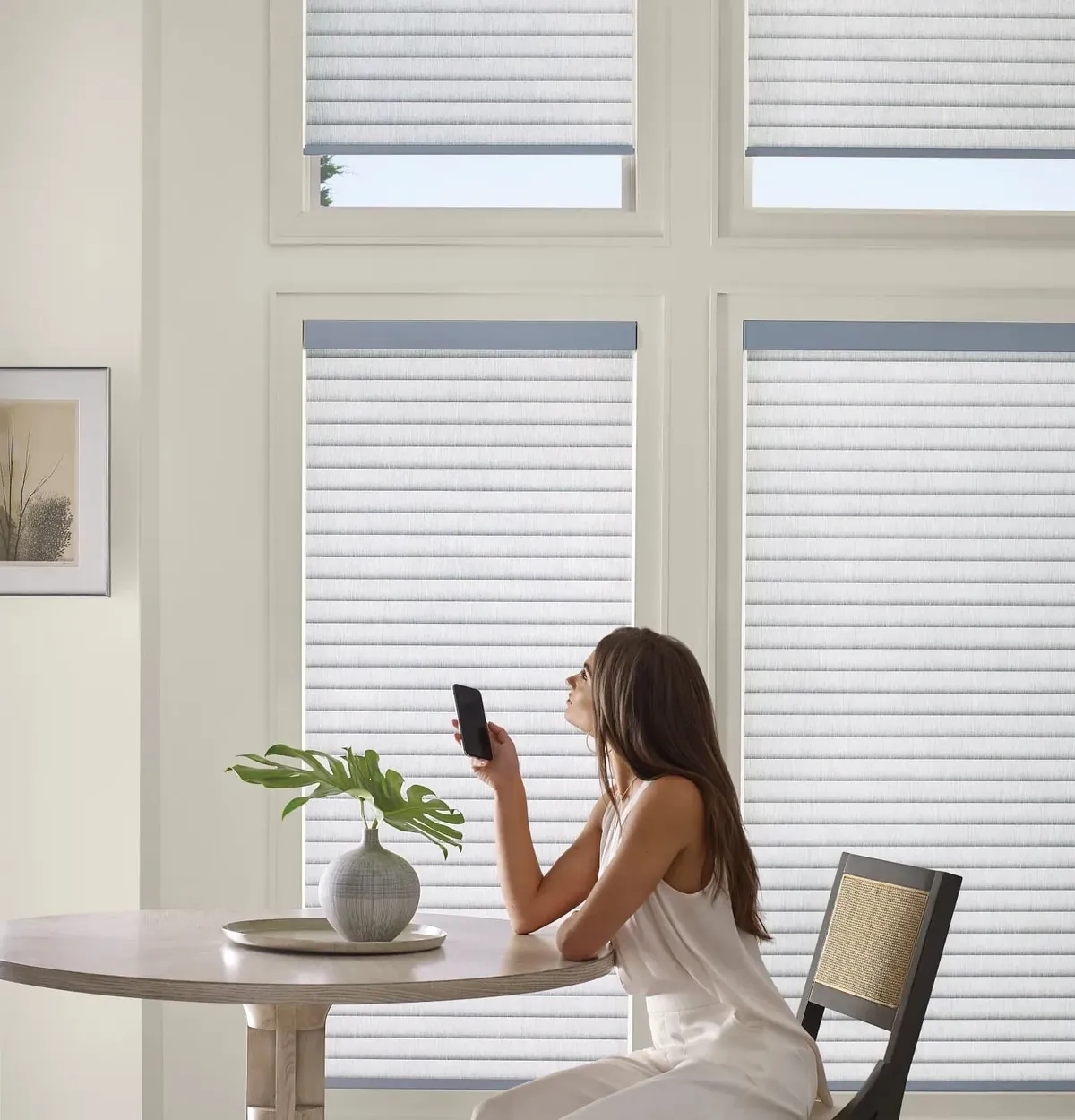
High ceilings mean the top of a tall sash can sit out of easy reach, and the window behind a sofa or over a radiator is awkward even when it is not tall. Motorized control solves both. With Hunter Douglas PowerView, a blind can be raised, lowered and tilted from a remote or from an app on your phone, and set on a schedule that closes the front windows at dusk.
On a street where privacy matters, that schedule is worth a lot. The front-room blinds can tilt shut at the same time every evening whether anyone is home or not. We plan how each motor is powered at the visit, window by window. Our guide to how motorized shades are controlled covers the remote, the app and schedules in more detail.
The ranches toward the city line
The post-war ranches on the outskirts ask different questions. Their windows are wider and lower, often with a picture window in the living room and a slider out to a deck at the back. With more space between houses, privacy is less pressing, and daylight and glare take over as the main concerns.
A wide picture window can take a single blind or a pair, depending on its width and on whether you want to raise one side alone. The slider almost always takes a vertical blind, which draws aside so the door opens freely and the vanes turn to soften the afternoon sun. Kitchens and baths in these houses often go to faux wood, and bedrooms to a darker slat color that makes a closed room feel dimmer. For custom blinds in Brockton, MA, on a ranch, the order usually comes together quickly because so many sizes repeat from room to room.
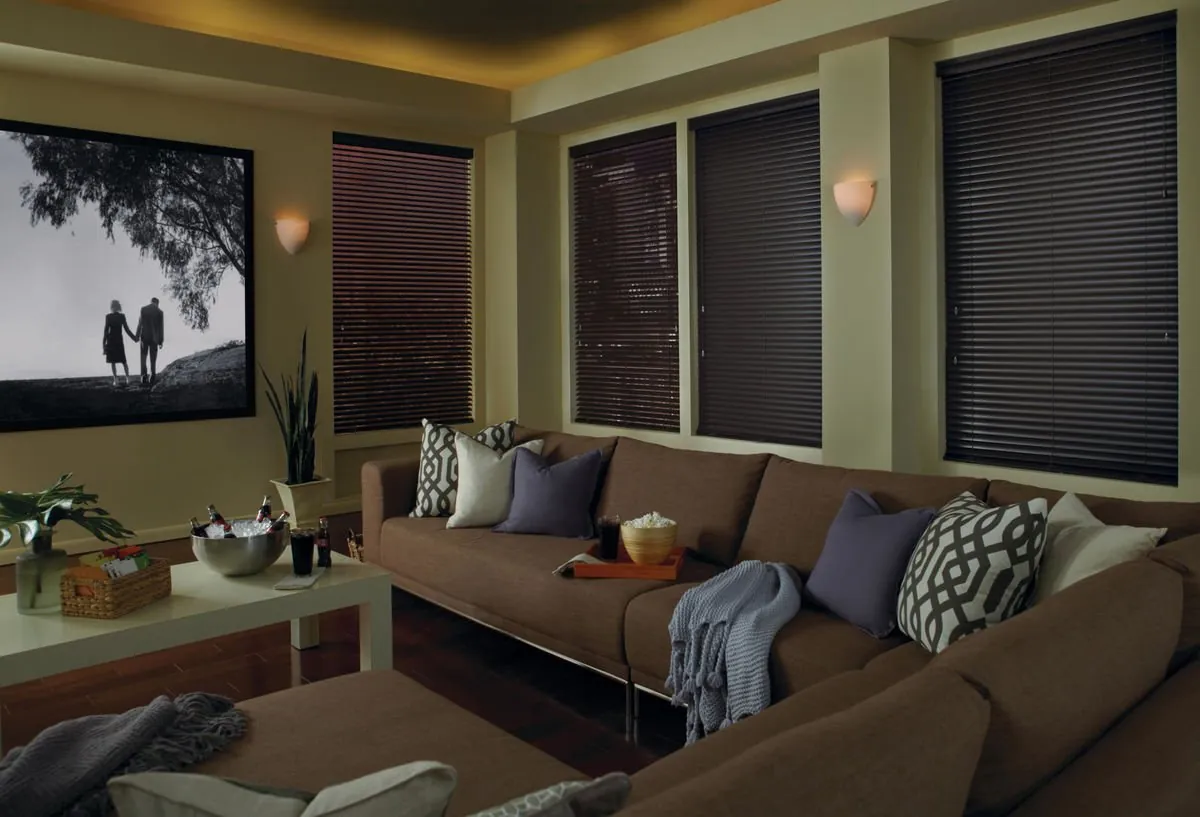
Darker rooms: bedrooms and a room with a screen
A bedroom on the street side of a two-family takes the glow of streetlights as well as the morning sun. A deeper slat color, closed, takes the edge off both, and an outside mount that overlaps the frame slightly cuts the bright line that can show around a blind set inside a narrow casing.
A family room with a television has the same question in daytime. Partly tilted slats stop glare on the screen while leaving enough light to move around. With motorized control, one tap can close every blind in the room together.
Which material goes where
Most houses end up with more than one kind of blind. A simple way to think about it:
- Wood for the rooms with the best trim and the most presence: parlor, dining room, main bedroom.
- Faux wood for kitchens, baths, back halls and any unit where every window should match.
- Metal for shallow frames, door glass and small porch windows.
- Vertical for sliders and the widest runs of glass.
Wood and faux wood come in matching colors, so the street sees one set of windows even when the rooms behind use different materials. If you are weighing blinds against shades for a particular room, our guide on shades or blinds may help.
A Gallery dealer working from Canton
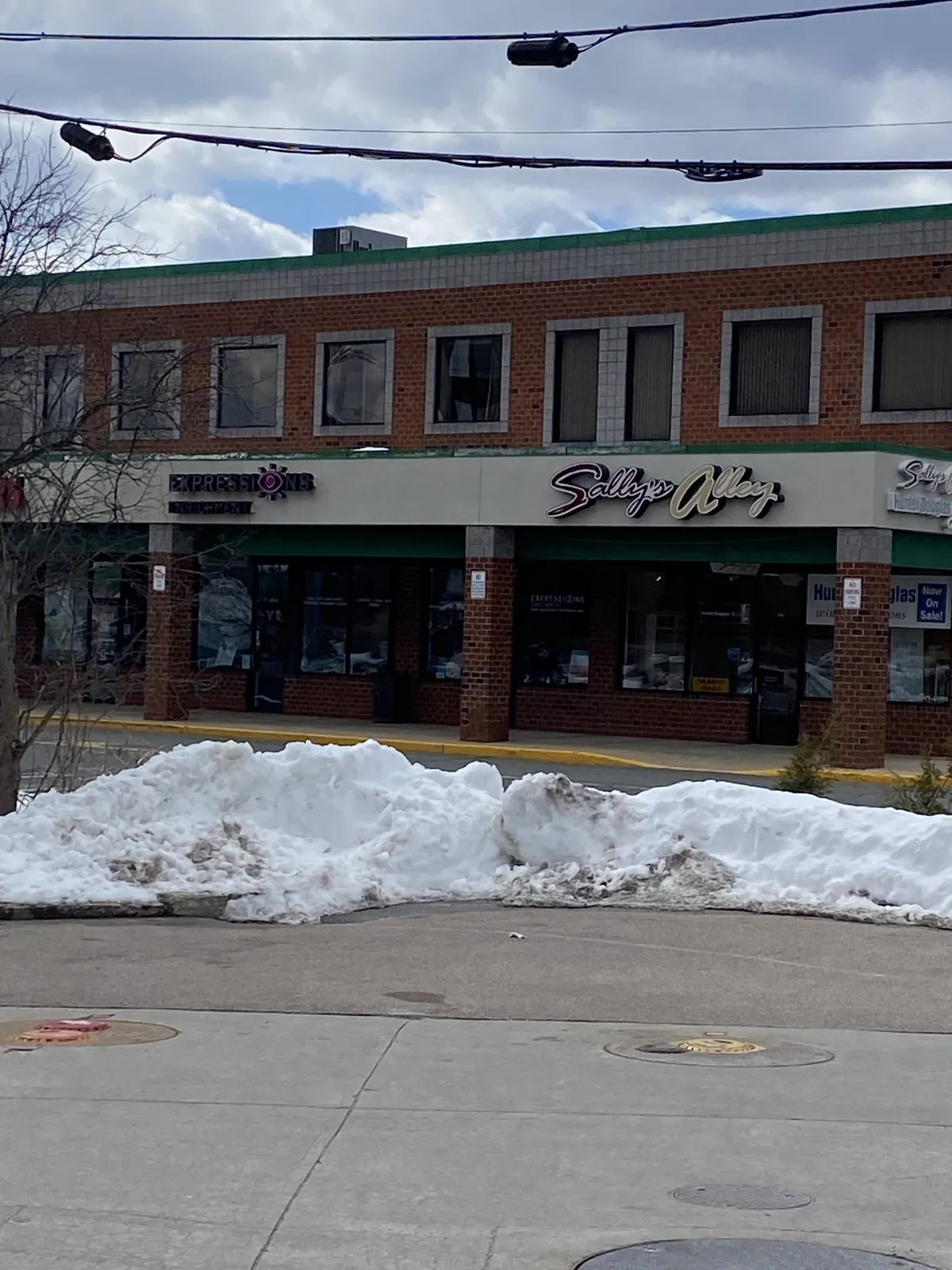
Blinds & Designs is a Hunter Douglas Gallery dealer, and our installers hold Hunter Douglas certification. For Brockton we lead with the in-home visit, because samples belong next to the glass they will cover. If you would also like to see Hunter Douglas products on a showroom floor, the nearest is our Franklin showroom.
Estimates are free. Interior design consultations, motorized control and window covering automation are all available through us, and we repair blinds and shades you already own. The full range of blinds is on our custom blinds page, and every service we offer in the city is on our Brockton page, including cellular shades in Brockton and plantation shutters in Brockton.
Questions from Brockton
My Victorian has very tall, narrow windows. Will a raised blind hide the top of the glass?
A raised horizontal blind gathers at the head, so some glass is covered. A narrower slat stacks shorter, and an outside mount above the casing can lift the bundle clear of the upper sash. We show you both at the window.
We live on the second floor of a two-family. Should our blinds match the other units?
It is your choice, but matching the street-facing color across floors keeps the front of the building tidy. Point out the other floors when we arrive and we will bring the closest Hunter Douglas colors.
Which blind works on a sliding door?
A vertical blind is the usual choice. The vanes draw aside so the door opens freely, and they turn to soften the sun when the door is closed.
Can I control the blinds on a high window without a ladder?
Yes. With PowerView, a blind can be raised, lowered and tilted from a remote or an app, and set on a schedule. We plan how each motor is powered at the visit.
Is there a charge for the estimate?
No. Once we have measured, the estimate is free.
Your next step in Brockton
Pick the room that bothers you most, whether it is the front parlor everyone can see into or the back bedroom that lights up at dawn, and start there. Request a consultation and we will bring the full range of custom blinds in Brockton, MA, to your door, measure each opening and leave you a free estimate. If a quick question comes first, the call button will reach us.