
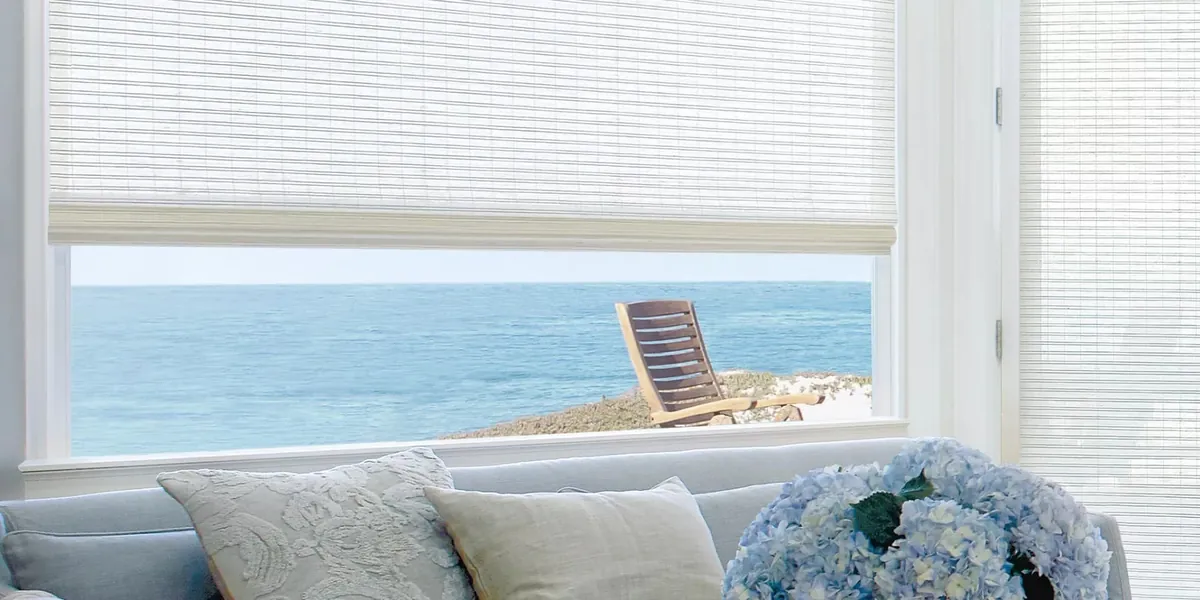
Harbor light, salt air and houses of every age
Fairhaven asks a lot of a window covering. On the streets around Poverty Point and Oxford Village you find Victorians with tall sash and fussy trim, and shingled cottages set close to the lane. Drive out along Sconticut Neck and the houses flatten into mid-century ranches with broad panes turned toward the water. Choosing a Hunter Douglas dealer in Fairhaven, MA, is really choosing someone who can read all three kinds of house and pick the right product for each opening.
Two conditions shape almost every recommendation we make here. The first is the harbor itself. Salt rides in on the breeze and settles on anything metal near a window left open through July and August, so the way a product is built and how much of its hardware is exposed both matter. The second is the sunrise. Rooms on the eastern side catch low, bright light bouncing off the water, and a kitchen or breakfast nook can be uncomfortable to sit in until the sun climbs.
Because we carry the complete Hunter Douglas line as a Gallery dealer, we never have to bend one product to fit a window it does not suit. A Victorian bay, a cottage bathroom and a ranch slider can each get the treatment that works best for them.
What a Hunter Douglas dealer in Fairhaven puts on your windows
Every family below comes to your house as samples in our van. These are the ones Fairhaven windows call for most, with links to the pages where we cover each one in town.
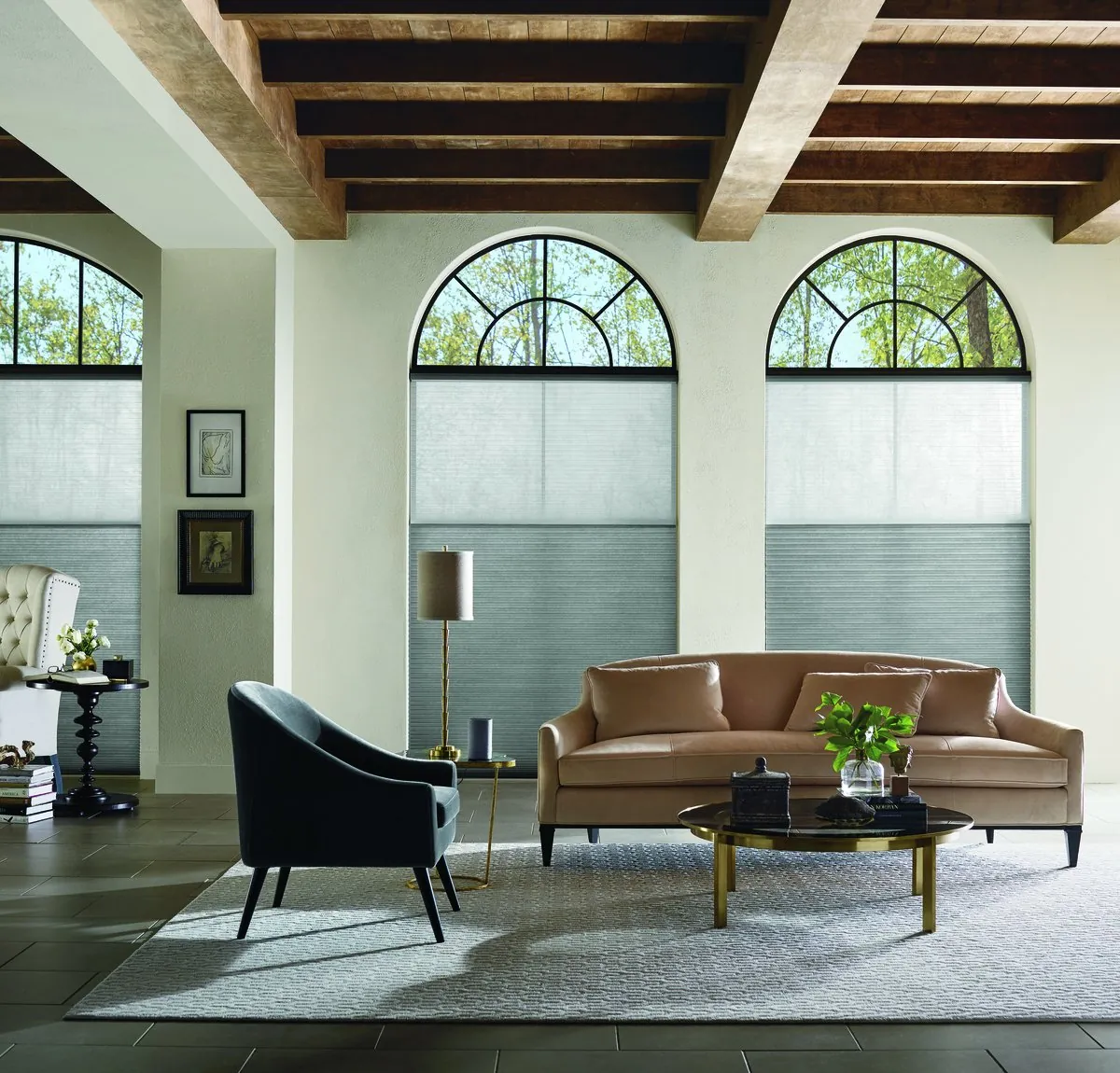
Honeycomb shades
Duette and Applause hold a layer of air in every cell, which keeps a drafty Victorian front room comfortable in January.
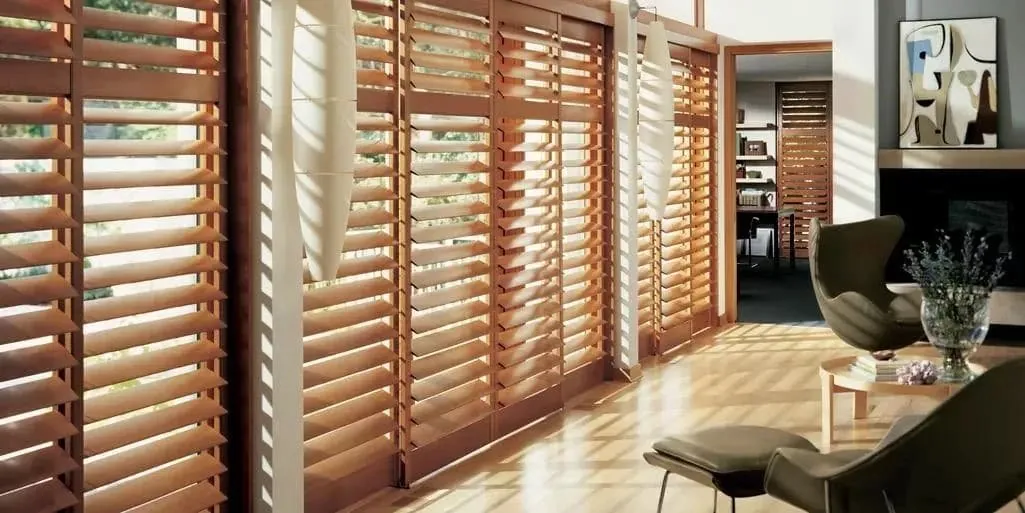
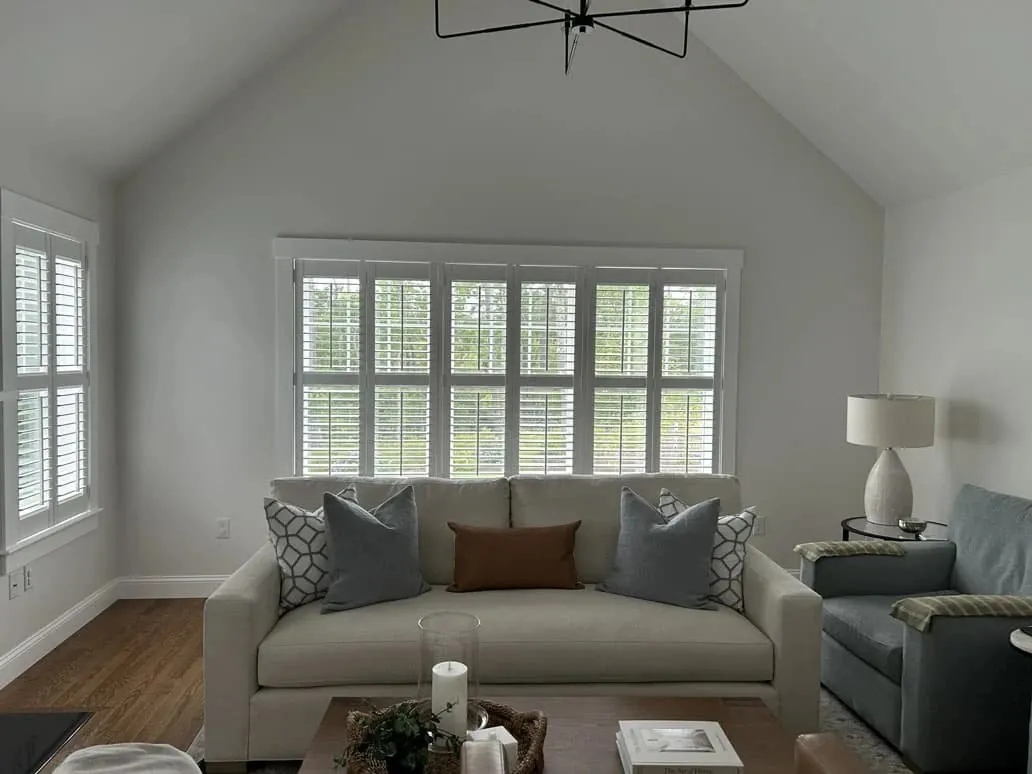
Plantation shutters
Palm Beach, NewStyle and Heritance, built to each opening, so the louvers can tip the morning glare up toward the ceiling.
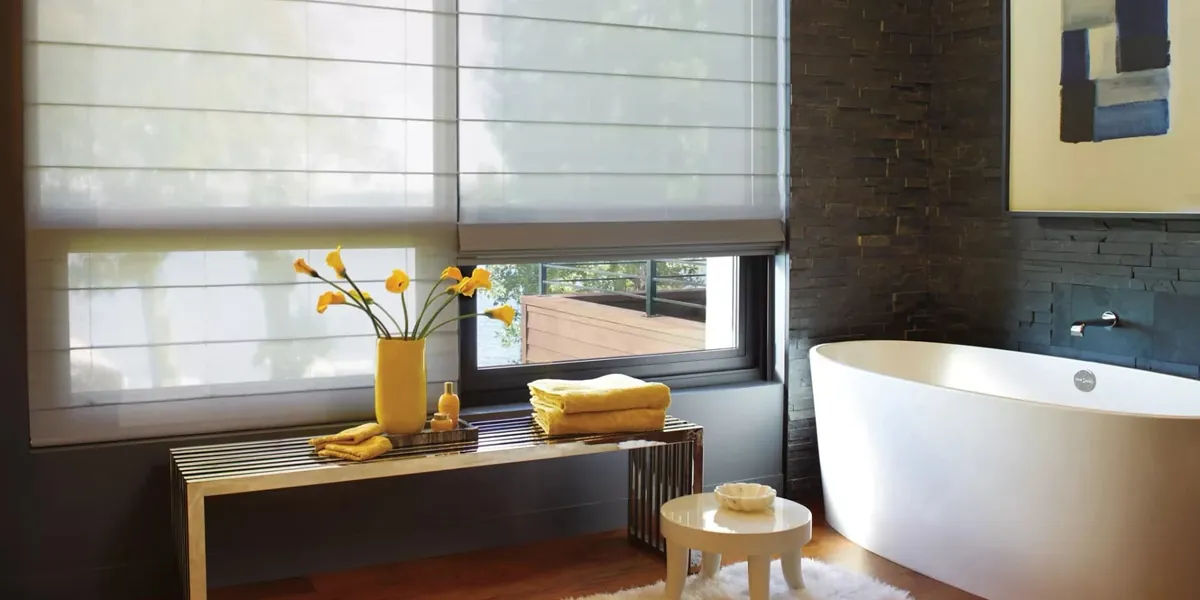
Roman shades
Vignette and Carole fabrics in flat or soft folds. A gentle fit for cottage bedrooms and bathrooms near the lane.
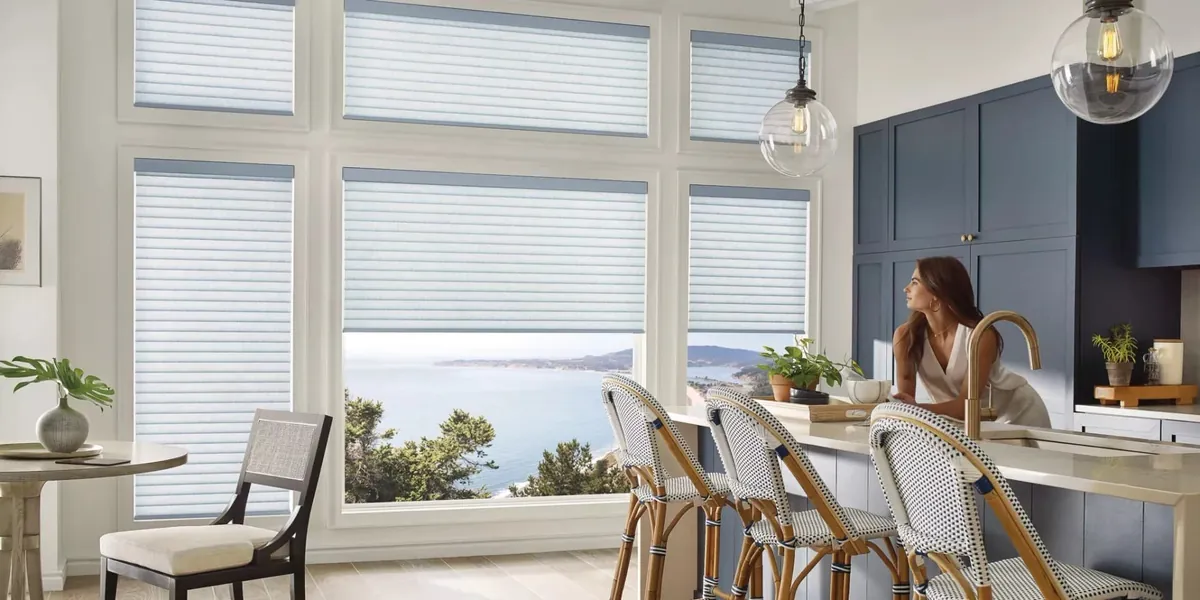
Roller and screen shades
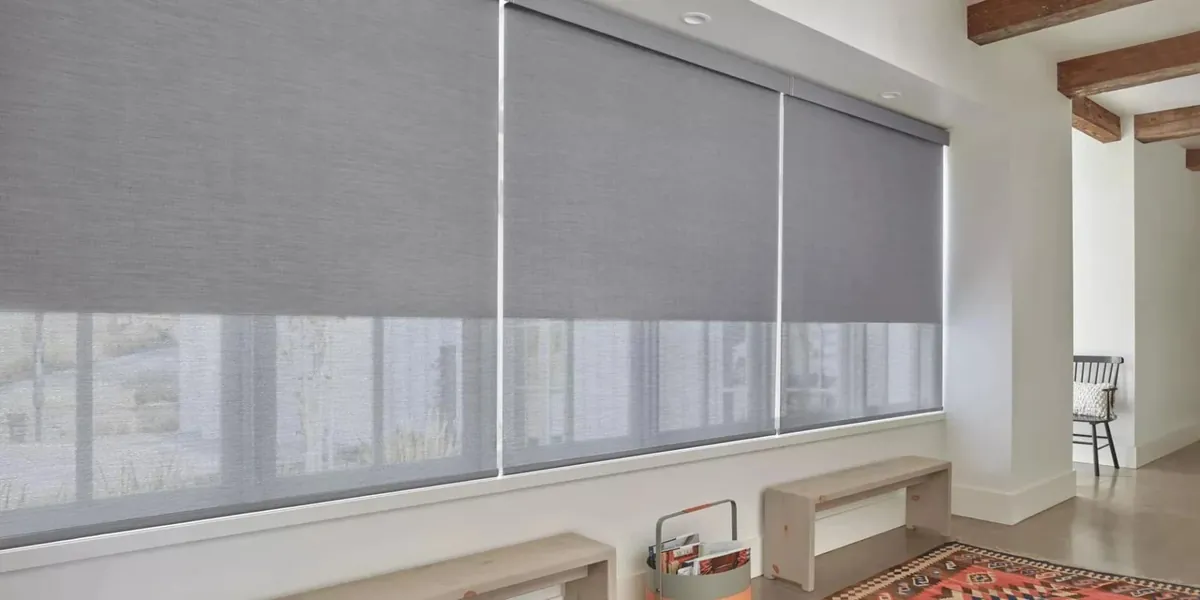
Designer and Alustra rollers, plus screen fabrics that soften a harbor sunrise without hiding the water.
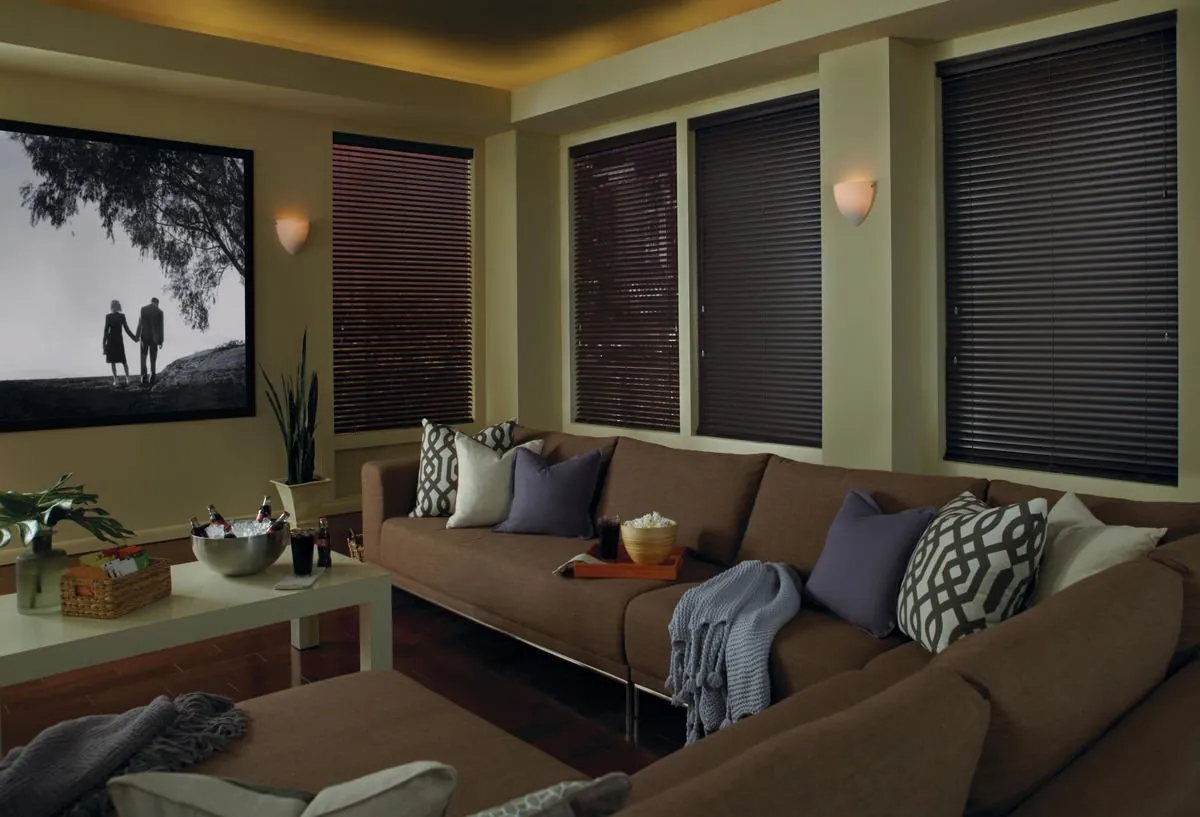
Wood and faux wood blinds
Parkland, EverWood, metal and Aria blinds for dens, offices and any room you want truly dim.
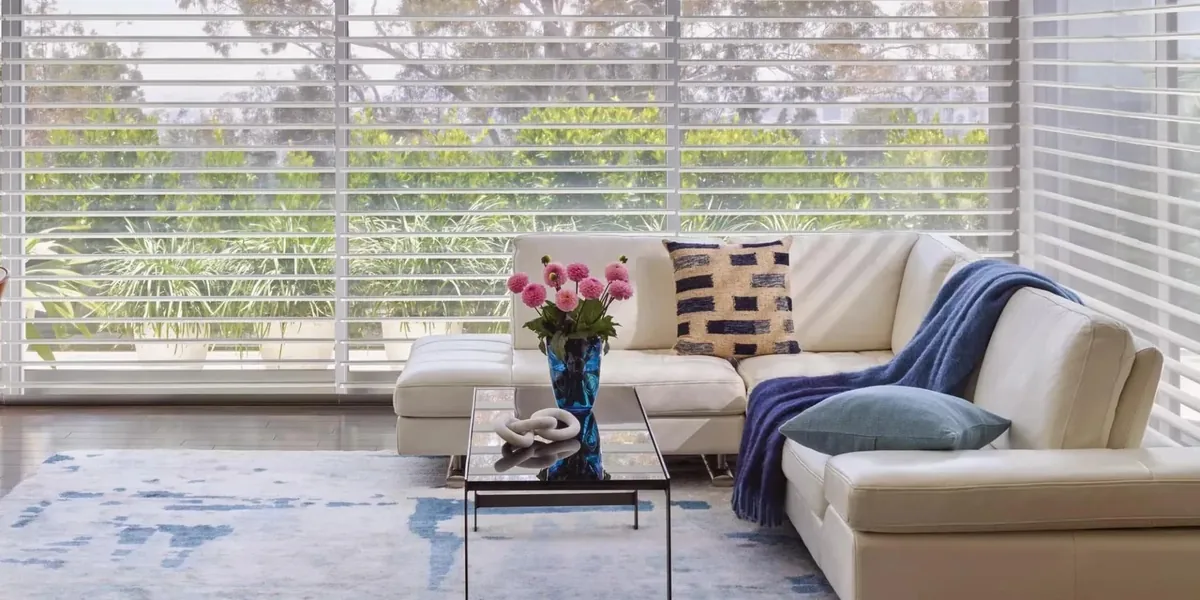
Sheer shades
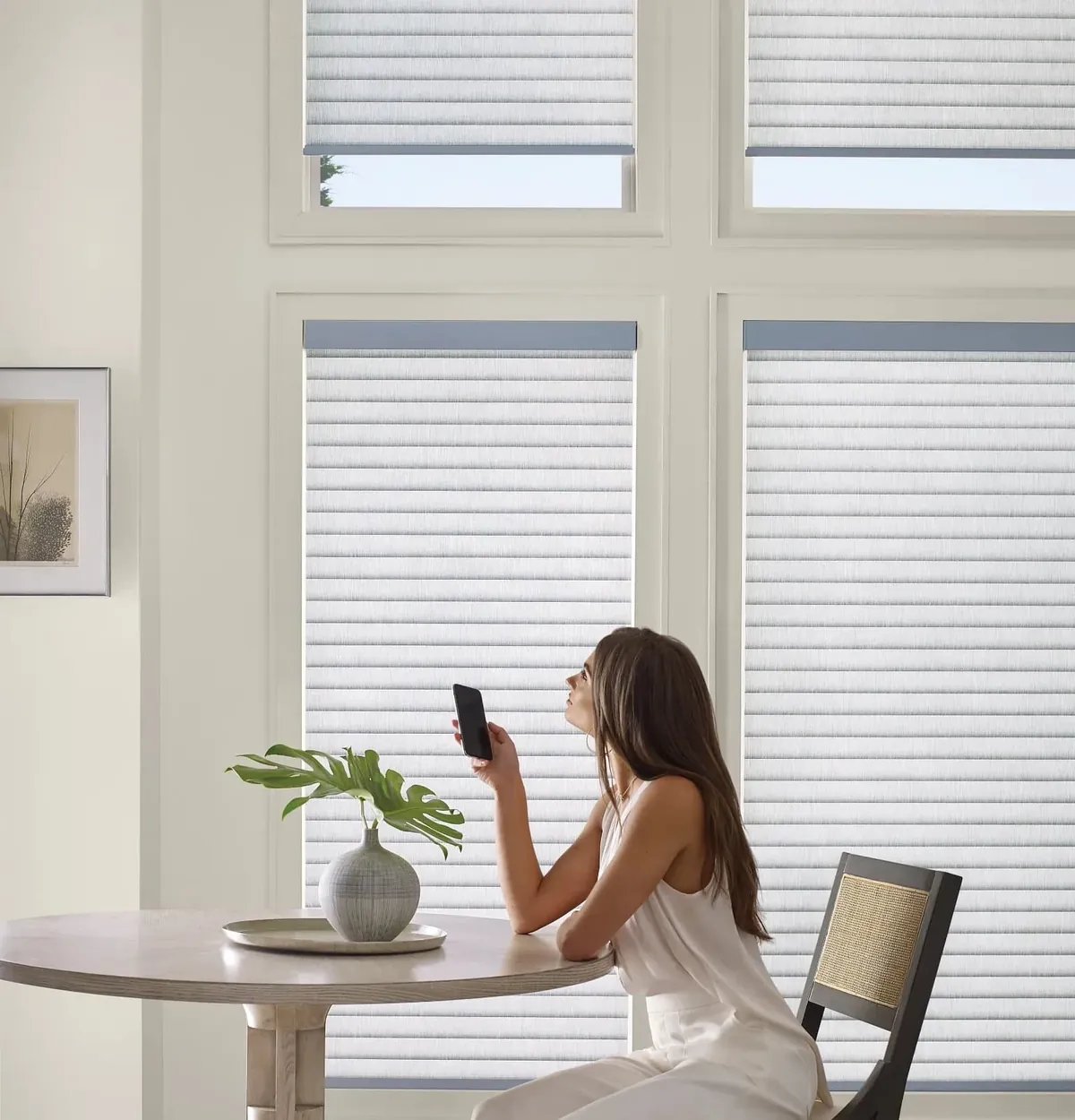
Silhouette, Pirouette, Luminette and Nantucket turn a strong sunrise into an even, soft light across the room.
Why the brand name is only half the answer
Hunter Douglas builds every shade, blind and shutter to order, to measurements somebody local has to take. That person also decides which product goes on which window and how it will be mounted. When an order disappoints, it is almost never the fabric. It is a shutter frame that fights a crooked casing, a shade ordered for a depth the window does not have, or a heavy blind hung where a light one would have done better.
So the dealer you choose carries as much weight as the logo on the headrail. Blinds & Designs is a Hunter Douglas Gallery dealer, a status Hunter Douglas gives to the dealers it trusts with its whole range, and our installers are certified by Hunter Douglas. Those two facts are the core of what we offer a Fairhaven house: honest advice across every line, and fitting done to the maker’s own standard.
They also mean you are not limited to whatever a shop happens to stock. If a Duette shade is right for the parlor and a Palm Beach shutter is right for the bathroom next to it, you get both, from the same people, on the same visit.
The Victorians near Poverty Point and Oxford Village
The older parts of town are full of windows that someone has spent real effort keeping. Tall double-hung sash with wavy glass, deep casings with layers of paint, bays that bulge out toward the street and narrow side lights beside the front door. A good treatment for these rooms works with that trim instead of covering it.
Where the window allows it, an inside mount is usually our first suggestion. The headrail tucks into the opening and the casing stays fully on show. Honeycomb and Roman shades stack tightly when raised, so on a tall Victorian window very little of the glass is lost. Shutters are the other natural choice, and a Heritance or NewStyle frame set inside a deep old opening can make it look as if the shutters came with the house.
Old windows are rarely square, though, and the hardware that holds the sash can steal the depth a headrail needs. We measure each opening in several places and check the depth across the top before suggesting a mount. When an inside mount would be too tight, we will say so and suggest a slim outside mount instead. For bays, each window gets its own shade or shutter panel so the whole bay lines up when it opens and closes together.
Shingled cottages close to the lane
Fairhaven’s cottages bring a different problem. The rooms are small, the windows are often on two or three walls, and the house may sit only a few steps from people walking by. Privacy matters as much as light, and a bulky treatment makes a small room feel smaller.
Top-down, bottom-up honeycomb shades are a quiet favorite here. You lower the top of the shade to let in sky and daylight while the bottom half stays covered from the sidewalk. Sheer shades do something similar in a different way: in daytime you see out through the soft fabric while someone outside sees very little, and when you close the vanes the room is fully private. In a cottage bathroom, café-style shutters on the lower sash keep things private and leave the top glass open to the light.
Light colors and slim headrails help a small room breathe. We bring samples so you can compare how each one looks against shingle-era trim and painted walls, rather than picking from a picture.
Ranches out on Sconticut Neck
Further down the Neck, the windows get bigger and the rooms get longer. A typical ranch here has a wide picture window in the living room, a slider to the yard or deck, and long horizontal bedroom windows. That glass is a large part of why the house feels cold in winter and hot on a summer afternoon.
For the picture window, the question is usually how to keep the view when the treatment is raised. Designer roller shades roll up into a slim cassette and almost disappear. Silhouette sheers raise into a narrow headrail and, when lowered, let you look out through soft fabric. For warmth, a Duette shade split into two or three sections on one headrail can cover a wide window and still move as one.
Sliders are where many ranch owners get stuck. A vertical honeycomb shade or a Luminette sheer draws to the side so you can step through the door without lifting anything. Vertical blinds are still available for those who prefer them, now in fabrics and vane styles that look far less dated than the ones many of these houses started with.
A morning sun that comes off the water
The east side of Fairhaven looks back across the harbor, and the morning light arrives low and doubled by its reflection. Breakfast rooms, kitchens and east bedrooms are where homeowners notice it most. The answer depends on what you want from the room.
- Soften it. A sheer or a light-filtering honeycomb spreads the sunlight evenly so it does not land in a hard patch on the table.
- Cut the glare, keep the view. A screen roller shade lets you see the boats and the far shore while it takes the edge off the brightness.
- Block it. Room-darkening honeycomb fabrics or closed wood blinds keep a bedroom dim until you decide to get up.
- Redirect it. Shutter louvers or blind slats tilted upward bounce the light onto the ceiling so the room stays bright without the glare.
Strong daily sun off salt water also fades some fabrics faster than others. When you are choosing, we point out which colors and materials hold up best on a window that faces the harbor every morning.
Dormers, stairwells and the awkward windows
Every older house has a few windows nobody quite knows what to do with. In a Fairhaven Victorian it is often the tall stairwell window halfway up the stairs, out of reach from either floor, or the arched window in a gable that lets light pour into a landing. Cottages tend to have dormers, where the window sits deep in a small alcove and the ceiling slopes in on both sides. Ranches have their own versions: a narrow clerestory over the kitchen cabinets, or a window wedged behind the sink.
These are the openings where the right product matters most, because a poor choice gets noticed every day. A honeycomb shade can be built for an arch or left open at the top so the curve stays visible. A dormer usually wants something that stacks very small, such as a cellular or roller shade on an inside mount, so the little window is not swallowed when the shade is up. For the stairwell and the clerestory, motorization is often the simplest answer, since nobody wants to lean over a banister with a pole.
When you are walking us around the house, show us these windows first. They tend to decide which products make sense for the rest of the room.
Keeping hardware happy near the harbor
Salt air is patient. Over a few summers it will find any bare metal near a window that stays open, and cord locks, exposed brackets and loose metal parts are the first to show it. That is one reason we often steer harbor-side rooms toward products whose working parts are enclosed in the headrail.
Cordless lifts help too. With no cord hanging at the side, there is nothing to tangle, fray or corrode, and the shade lifts with a light push on the bottom rail. Shutters made from Palm Beach polysatin stand up well to damp air and are a sensible choice for bathrooms and rooms close to the water.
For high or hard-to-reach windows, PowerView motorization takes the lifting away completely. Shades move from a remote, the app on your phone, or on a schedule, so the east rooms can close before sunrise and open again when the light settles. We talk through how each motor is powered and where any power connection sits on a window that sees sea air.
How a project runs, from the first call to the last bracket
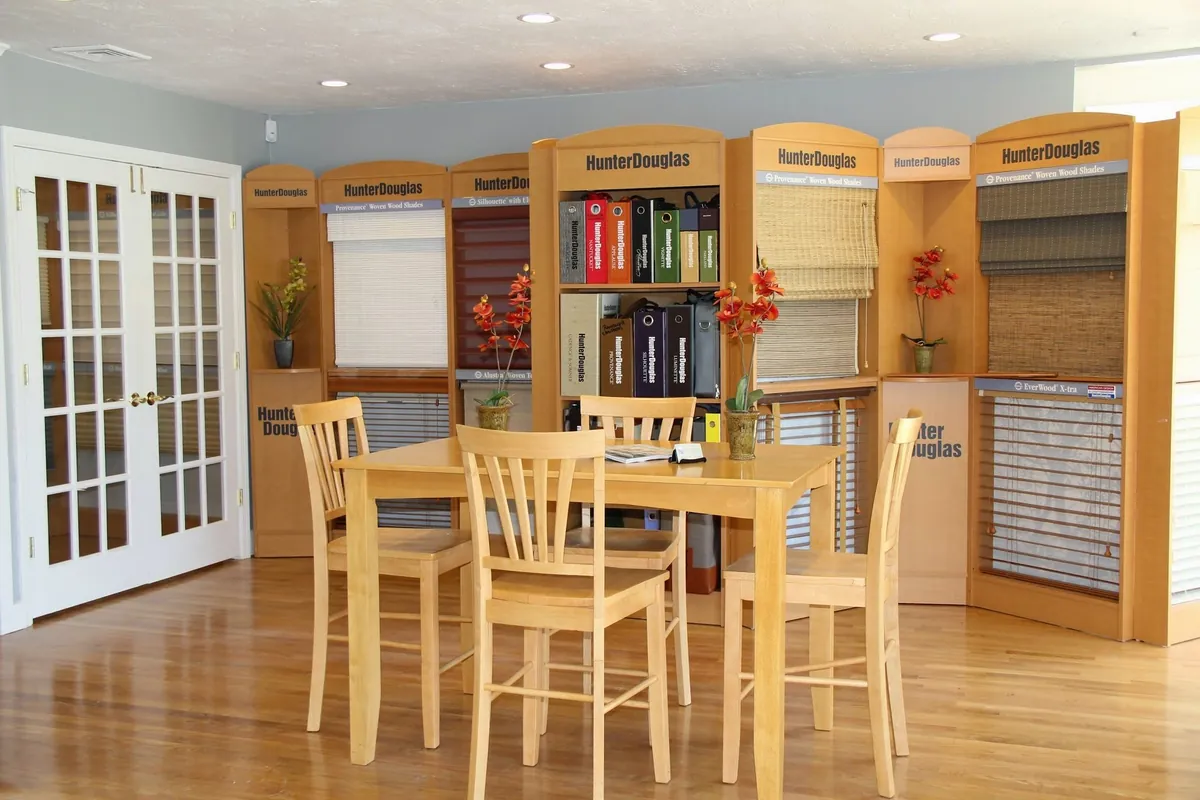
Most Fairhaven projects start at home, because a sample only tells the truth in your own light. Our vans carry samples across the Hunter Douglas range, so we can, as we like to say, bring the showroom to you.
- Request a consultation online, or use the call button, and pick a time that suits you.
- We walk the rooms with you and listen to what bothers you about each one: the cold parlor, the bright kitchen, the bedroom that faces a neighbor.
- You hold real fabrics, slats and louvers up to your own windows and see them against your trim and walls.
- We measure every opening and check the depth for each mount.
- You get a free estimate covering the products and the installation, and you take whatever time you need to decide.
- Hunter Douglas builds the order to our measurements.
- A certified installer fits each piece, checks that it runs smoothly and shows you how to use it.
If you want help beyond the windows, our interior design consultations look at color, fabric and layering for the whole room. You can also read about what happens at an in-home consultation before we arrive.
Mixing products room by room
Few Fairhaven houses end up with one product throughout, and that is part of the value of working with a Hunter Douglas dealer in Fairhaven who carries the full range. A Victorian might take Heritance shutters in the front parlor, Duette shades in the bedrooms, Palm Beach shutters in the damp bathroom and a Vignette Roman shade over the kitchen sink. A ranch might combine a Designer roller on the picture window with a vertical honeycomb on the slider.
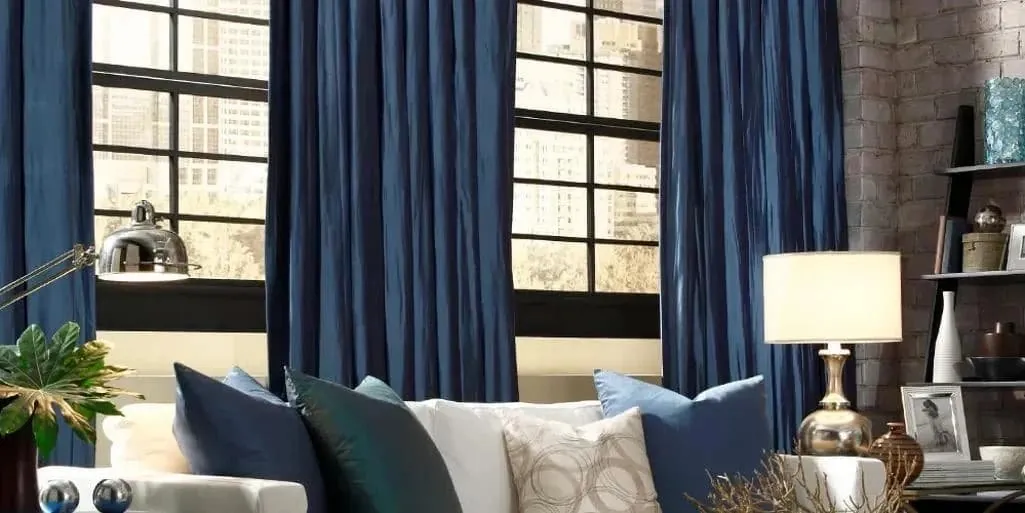
The trick is to keep the house looking like one house from the street. We think about that as we go, matching colors on the street-facing windows even when the products behind them differ. Drapery can tie a room together as well, layered over a shade for softness. Our custom drapery in Fairhaven page covers that side of things.
Lines that look alike, and how to choose
Part of our job is explaining the differences between products that seem identical in a catalog photo. A few that come up in Fairhaven houses again and again:
- Duette or Applause. Both are honeycomb shades. They differ in fabric collections and options, so the choice usually comes down to the look and the features a given window needs, such as top-down, bottom-up or room-darkening.
- Heritance or Palm Beach. Heritance is real hardwood that can be painted or stained, often chosen for a Victorian parlor. Palm Beach is polysatin, which shrugs off steam and sea air, so it suits bathrooms and harbor rooms.
- Silhouette or Pirouette. Both soften daylight with fabric vanes. Silhouette suspends its vanes between two sheer layers, while Pirouette lays soft vanes over a single sheer for a more open look.
We bring the contenders together so you can feel and compare them at the window where they will hang, which settles most of these questions in a few minutes. If you are still torn after that, we usually suggest trying the two products in different rooms rather than forcing one choice on the whole house.
Gallery status and certified installers, in plain terms
Being a Hunter Douglas Gallery dealer is the strongest thing we can tell you about our business, and it has a practical meaning. You get the full family of shades, blinds, shutters and drapery, plus PowerView motorization, from one source, with advice that compares them fairly.
Certified Hunter Douglas installation is the other half. The people who fit your order are trained by Hunter Douglas to install its products, which shows in the small things: a level headrail on a sloping old frame, a shutter that closes snugly, a motorized shade paired and tested before anyone leaves.
And the relationship does not end on installation day. If a shade you already own stops lifting properly, we welcome blind and shade repair in Fairhaven, and we can add automation to suitable products later through our motorized blinds in Fairhaven service.

Design help for a whole house
A whole-house order raises questions that a single window never does. Should the street side match? Which rooms want darkness and which want daylight? Where does motorization actually earn its place? Our design consultations help you answer those before anything is ordered.
We can sit at your kitchen table with fabric books and finish samples, or you can visit the North Dartmouth showroom, the nearest of our locations to Fairhaven, a short drive across the river.
For an overview of everything we do here, see our Fairhaven page, or step up to the main Hunter Douglas dealer page for more on the brand and its product families.
Questions from Fairhaven
What does being a Gallery dealer change for me?
It means we work with the whole Hunter Douglas family rather than a handful of lines. You can compare shades, shutters, blinds and drapery side by side and choose the best fit for each window, instead of the best fit from a short list.
Can shutters go on the bay window of an old Victorian?
Usually, yes. Each window in the bay gets its own shutter panel, built to its measurements, so the bay looks even when the louvers open. If a casing is too shallow or out of square for an inside mount, we suggest a frame mounted on the trim instead.
Which products cope best with salt air near the harbor?
Products with their working parts enclosed in the headrail, cordless lifts and Palm Beach polysatin shutters all handle damp, salty air well. We point out the best options for each harbor-facing room when we visit.
Do your installers work on every order?
Yes. Every order is fitted by our own installers, who are certified by Hunter Douglas.
Is there a charge for the estimate?
No. Estimates are free. Request a consultation and we will measure, show you samples and give you a free estimate for the products you like.
Pick the first step that suits you
If you already know which rooms need attention, request a consultation and we will bring samples to your windows and measure. If you would like to talk it through first, the call button reaches us directly, and a good Hunter Douglas dealer for Fairhaven houses should be happy to answer questions before any visit. And if you would rather see the products before anyone visits, the North Dartmouth showroom is close by. However you start, you are working with a Hunter Douglas dealer in Fairhaven whose own certified installers finish the job.