
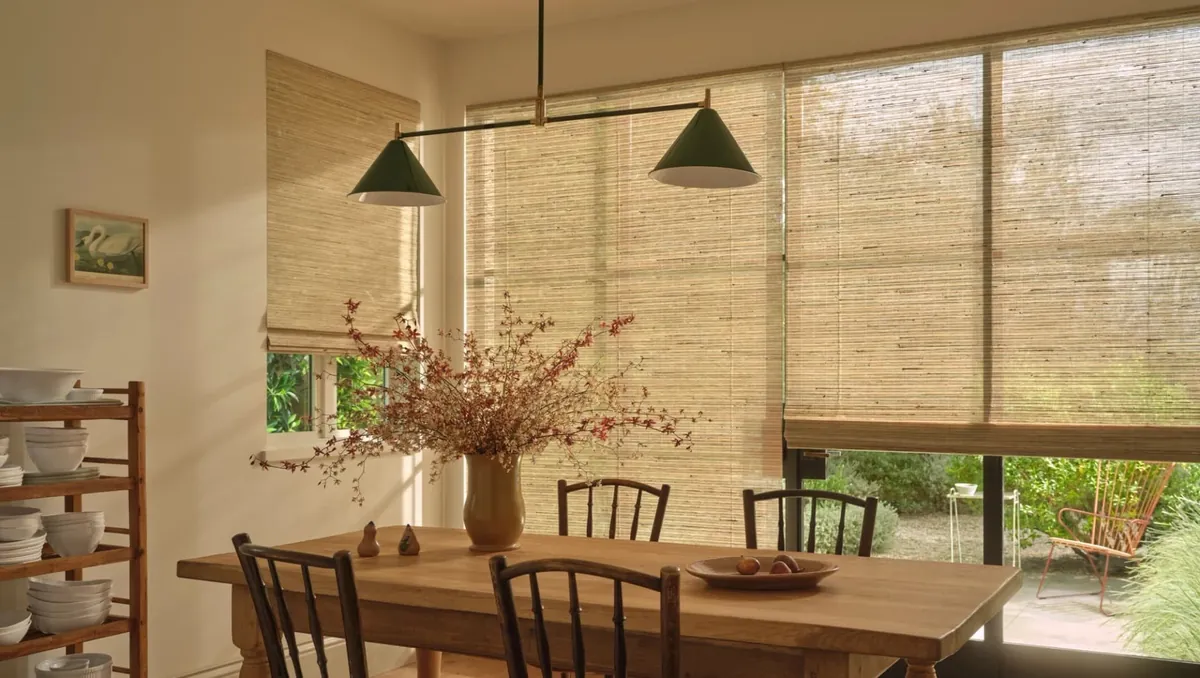
Rooms lit from two and three sides
Halifax houses tend to stand on their own. Capes and ranches sit on larger lots around Monponsett Pond, newer colonials are spaced out along the roads off Plymouth Street, and with so few neighbors close by, builders put windows wherever the light was good. The result is a town full of rooms that take daylight from two or three sides at once: a living room with a picture window to the front and a pair of windows to the side, a kitchen with glass over the sink and a slider to the yard, a corner bedroom bright from first light.
Those rooms are a pleasure, but they make shading harder than a room with one window. The sun is always coming in from somewhere, and it moves from one wall to the next as the day goes on. Planning roman shades in Halifax, MA, is mostly about that movement: which window needs cover at which hour, and how to make three or four different windows in one room look like a single, considered design.
Folded fabric shades suit the job. Each window gets its own shade, so you can lower the one taking the sun and leave the others open, and with the same fabric and fold on every window the room still looks calm.
Following the sun around a Halifax room
A useful way to plan a room with windows on several sides is to take each direction in turn. Here is how we usually think about them.
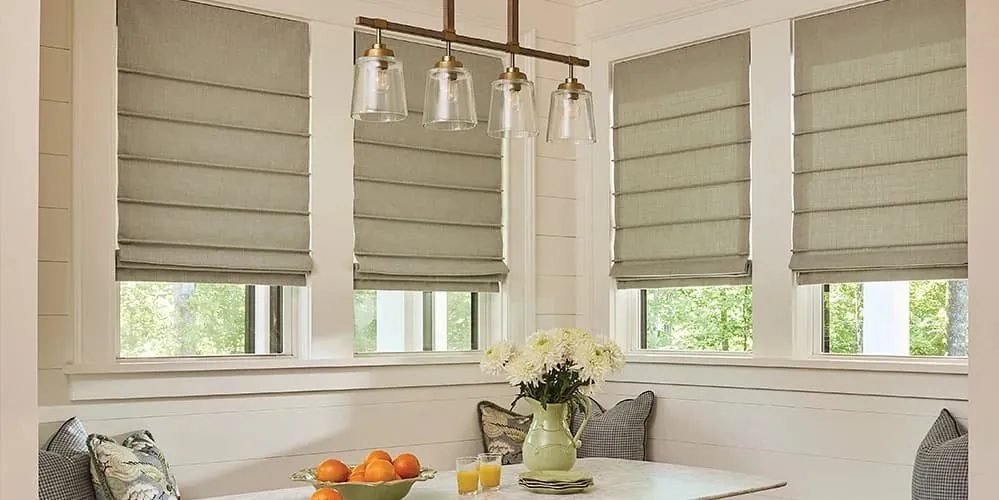
East windows, morning light
Kitchens and breakfast corners facing east get strong, low sun early. A light-filtering fabric softens it without losing the bright start to the day; bedrooms on this side take a room-darkening lining.
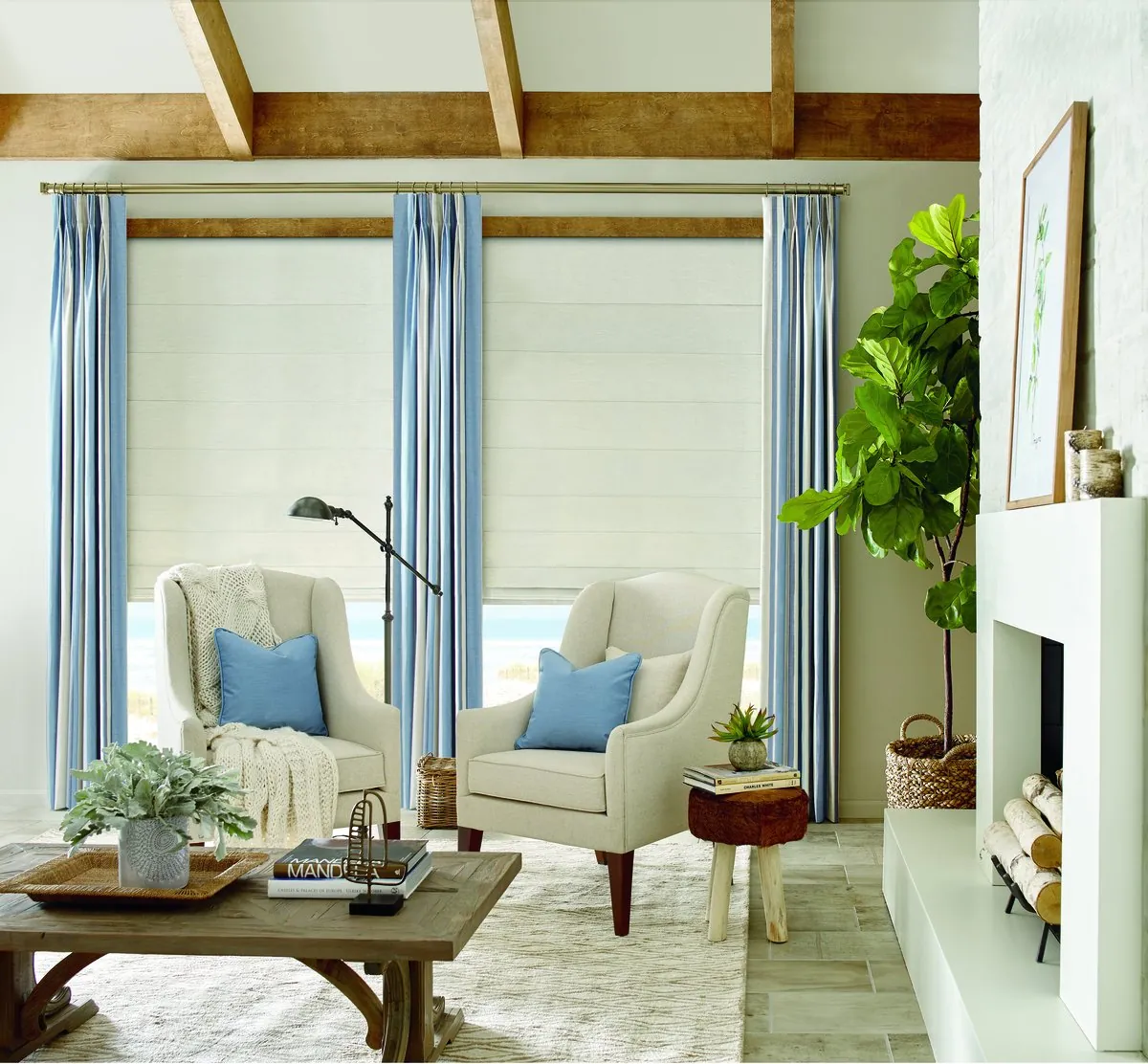
South windows, all-day light
The steadiest light in the house, and the hardest on fabric color. A lined shade in a lighter neutral holds its look and keeps the room comfortable at midday.
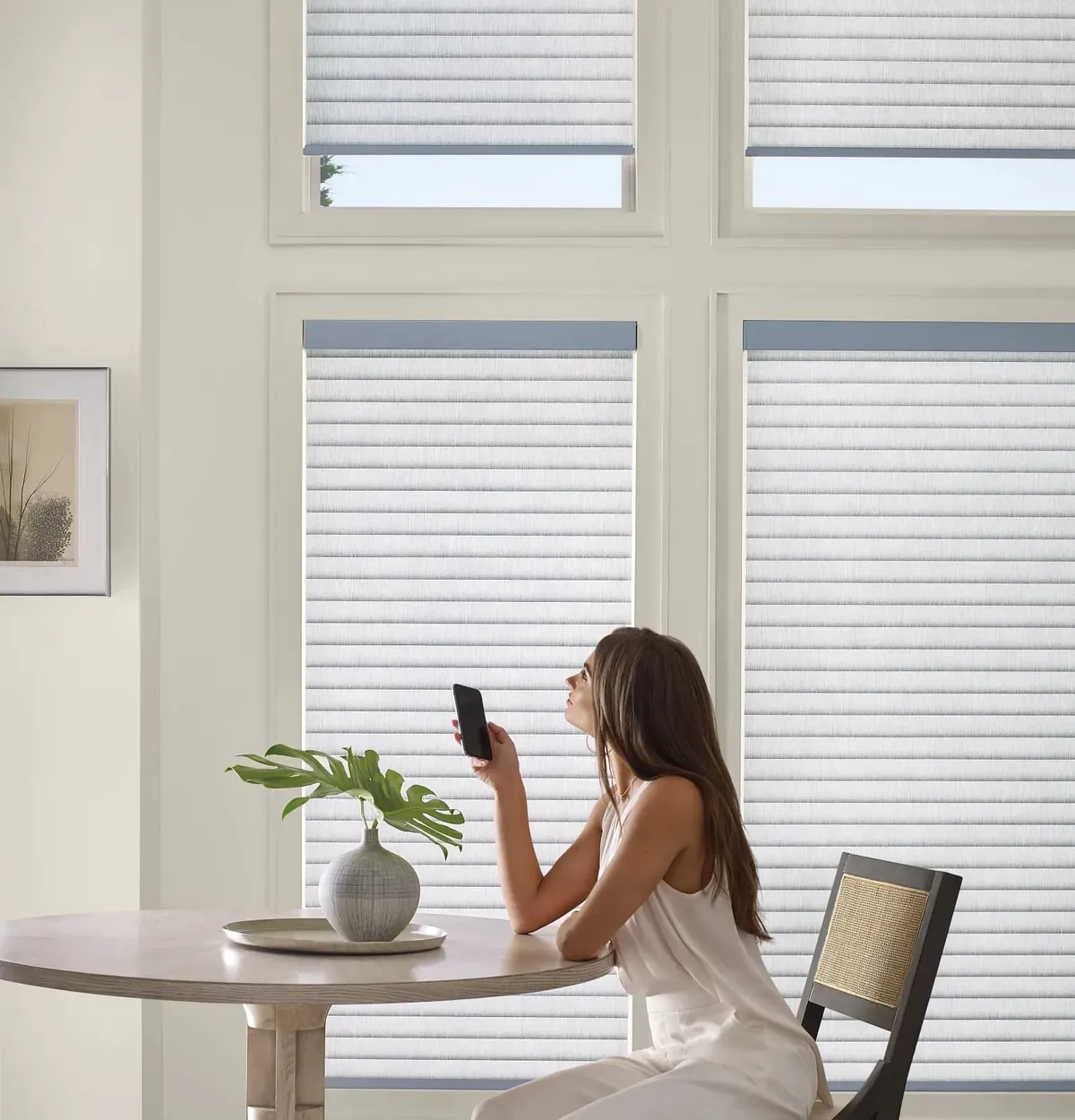
West windows, late heat
Late sun on the west side sits low and brings the most heat. PowerView can lower these shades on a schedule before the glare arrives and raise them again at sunset.
Capes near Monponsett Pond
The capes around the pond are classic small houses: a central door with a window either side, a kitchen at the back, and bedrooms tucked under the roof with dormer windows. On a pond lot, the back of the house often faces the water, and that is where the best light and the biggest windows usually are.
Downstairs, the front windows of a cape are a pair of simple double-hungs that suit a flat-fold roman shade perfectly. Mounted inside the frame, the shade leaves the trim clean and lines up neatly on either side of the door. At the back, facing the pond, the windows may have been enlarged or a slider added over the years, and that side of the house is where glare off the water comes in.
Upstairs, the dormers need careful planning. They are short windows in a recess with sloping walls, and the stack of a sewn shade can take a noticeable share of the glass. A lighter fabric, a flat fold and a headrail set as high as the recess allows all help. Vignette winds its cloth around a roller in the headrail, so a dormer keeps more of its glass.
Ranches on bigger lots
Halifax’s ranches spread out on their lots, with every main room on one level and windows on most walls. A typical ranch has a picture window in the living room, side windows at the gable ends, and a run of bedroom windows along one side.
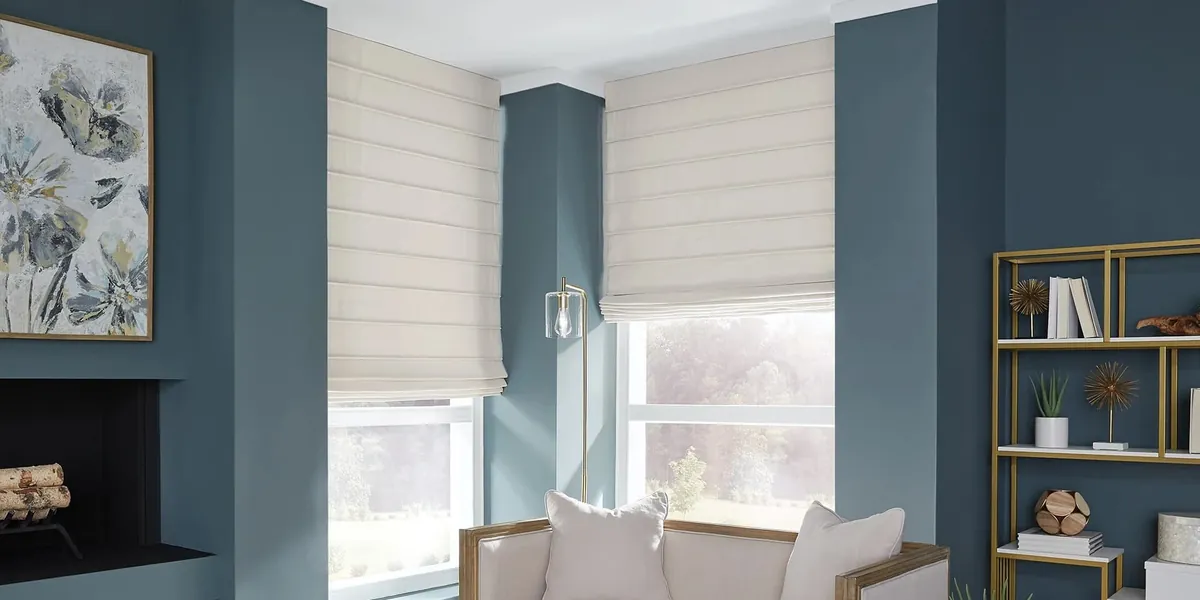
A ranch living room is often the clearest example of a room lit from several sides. The picture window faces the road or the pond, and a smaller window or two at the end of the room faces another way. With roman shades on every window, in the same fabric and fold, set at the same height, the room looks finished, and each shade still moves on its own as the sun comes round.
A very wide picture window is easier to live with as a pair or trio of shades sharing one top line than as a single heavy panel. Each section lifts without effort and can drop on its own when the sun reaches that end. Bedroom windows in a ranch are usually wide and set high, which suits a folded shade well, and a room-darkening lining keeps a corner bedroom dim when the light arrives from two directions at once.
Colonials off Plymouth Street
The newer colonials off Plymouth Street are larger houses with more glass: generous double-hungs in the formal rooms, a family room lined with glass, a kitchen with a slider or French doors, and plenty of bedrooms upstairs. Corner rooms are common, so many rooms take light from two sides.
Fitting is simple in these houses. The windows are square and modern, so inside mounts work almost everywhere. That leaves the choices to style and use. Upstairs corner bedrooms are where the two-sided light is felt most, and a room-darkening lining on both walls is often the first thing people ask for. Downstairs, a dining room can carry a printed Carole Fabrics cloth, while the family room’s long bank of windows usually suits Vignette, every shade stopped at one level.
In a two-story entry or family room, upper windows are out of reach, and PowerView is the practical answer. See motorized blinds and shades for how PowerView works; motor power is something we settle with you on site.
Corner rooms that look like one design
When a room has three or four windows of different sizes on different walls, the shades can either pull it together or make it look busy. A few simple rules keep it calm.
- One fabric and one fold for the whole room. Different windows, same look.
- A shared top line. Where windows differ in height, mounting the headrails at a common height makes them read as a set.
- A shared raised height. When the shades are up, the stacks line up across the room.
- Shades that move separately. Each window has its own shade, so you only lower the one taking the sun.
We plan each room as a whole at the consultation, measuring every window and showing you how the shades will line up before anything is ordered. For roman shades in Halifax corner rooms, that planning is what makes the difference between a room that looks considered and one that looks patched together.
Monponsett Pond and a second source of sun
Houses on the Monponsett shore have a light source most Halifax houses lack: the pond itself. Sunlight glances off open water and arrives through the lake-side windows at a shallow angle, bright patches dancing on the ceiling, a glint across the television, a hot stripe on the kitchen table. It changes with the wind and the season, gentle on a gray morning and fierce on a calm July afternoon.
You do not want to shut it out completely, because the shimmer is half the reason to live on the water. What works is a shade that takes the edge off. A light-filtering Carole Fabrics cloth, or a Vignette in a filtering weight, diffuses that glancing light into an even glow. Dropped just to the level of the glint, it stops the dazzle while the upper glass still frames the trees on the far bank. Since that bounce comes and goes, roman shades in Halifax pond houses tend to move more often than any others in town, which is a good reason to choose an easy lift.
Fabric on the water side ages faster too. A window that takes sun twice over will bleach a deep color sooner, so on the lake side we usually suggest softer tones and a protective lining, keeping richer colors for the road-facing rooms.
Sliders, French doors and the windows beside them
On a big lot the back of the house usually opens straight onto the yard. Ranches have a slider off the kitchen or the family room, colonials often have French doors to a deck, and pond houses may have both. Those doors sit right beside the windows you are shading, so they need to be part of the plan.
A folded shade is not the natural choice for a slider, because a shade that lifts vertically has to be raised all the way every time someone steps outside. French doors can take a shade mounted on each door leaf, which moves with the door, though a deep handle can get in the way of the fabric. Where a door is in constant use, we often suggest a different Hunter Douglas product for the door itself, chosen in a fabric and color that sit happily with roman shades in Halifax rooms on the windows either side. The room still reads as one design, and nobody has to fight a shade on the way to the yard.
Whatever goes on the door, we plan its top line to match the window shades beside it. When the shades are raised, the whole wall of glass looks clean and even, and when they are lowered against the evening sun, the colors match from corner to corner.
Privacy on a quiet lot
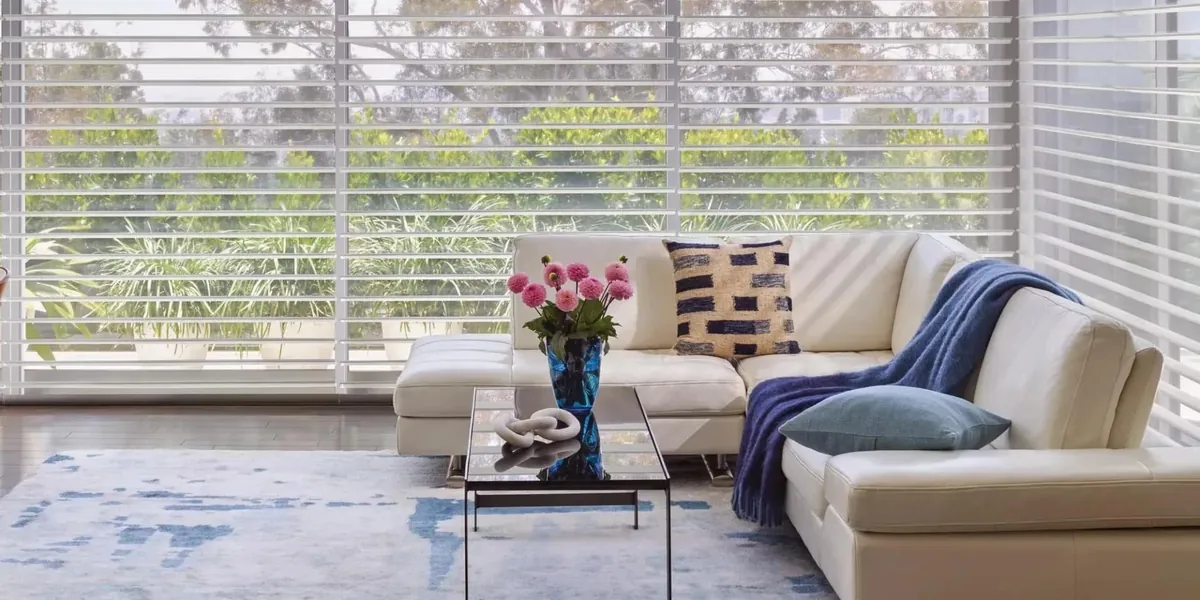
With larger lots and few close neighbors, many Halifax rooms do not need much privacy during the day. That is a freedom: you can choose a sheer or lightly filtering fabric that lets in plenty of light and keeps the view of the yard or the pond.
Evening is different. With lamps on inside and darkness outside, a lit room is visible from a long way off, even on a quiet road. A shade that is sheer by day can be lined to give privacy at night, or you can choose a light-filtering fabric that screens the room at all hours. Bedrooms on the road side, and bathrooms anywhere, usually want a lining.
If you want both, a light, open look by day and full privacy at night, PowerView can lower the shades automatically at dusk, so the house closes itself up as the lights go on.
Vignette and Carole Fabrics for rooms with many windows
The two Hunter Douglas lines we fit both work in multi-window rooms, but in slightly different ways.
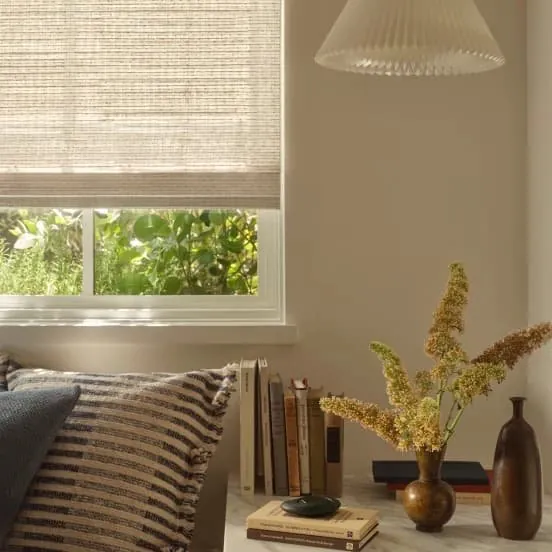
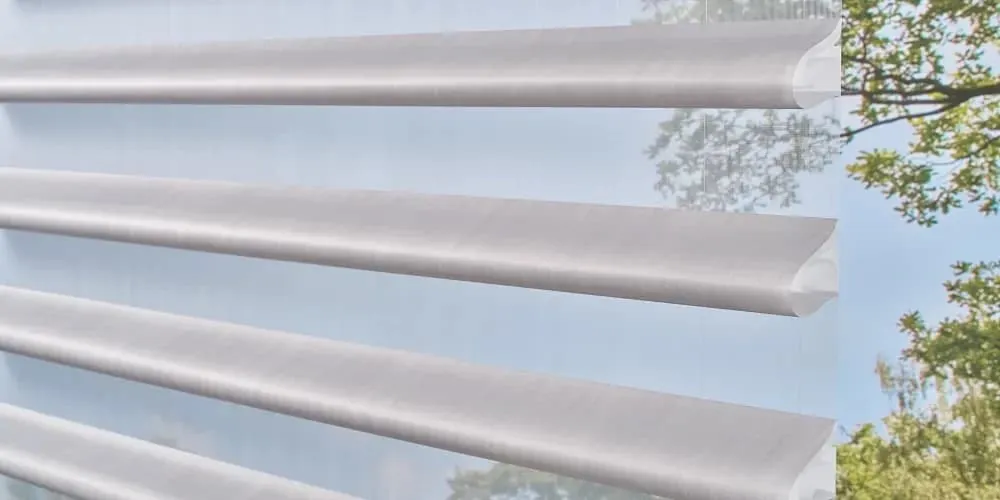
Vignette keeps every shade looking the same. Its pleats are built into the material, so each fold is even from top to bottom wherever the shade stops, and there are no cords running down the back. It rolls up into a slim headrail, which matters on short dormers and on windows next to each other where a big stack would look heavy. Because it is so consistent, a row of Vignette shades across a corner room looks tidy at any height.
Carole Fabrics shades are sewn for each window from a decorator fabric you choose. The range of patterns, weaves and colors is far wider, so they can coordinate with upholstery, cushions or curtains. In a cape’s front room or a colonial dining room, where the shade is part of the decoration, that choice is often the deciding factor.
You will find more on the Vignette and Carole Fabrics roman shades pages, while the roman shades page brings the whole range together.
Letting a schedule chase the sun
A room with windows on three sides needs its shades moved several times a day if you want to keep the glare out and the light in. Most of us will not do that by hand. PowerView makes it automatic.
With motorized shades, each window or group of windows can have its own schedule: east shades raise at breakfast, south shades drop a little at midday, west shades come down before the late sun and everything lowers at dusk. A remote or the app handles anything outside the routine. In a house on a big lot, where you may be out in the yard or on the water much of the day, the shades keep working without you. We plan how each motor is powered during the consultation.
Your in-home consultation
Rooms lit from several sides are best seen in person, at the time of day the light causes trouble. Our vans carry samples, so the showroom comes to you.
- Pick a time through Request a Consultation, or reach us with the call button.
- We arrive with Vignette and Carole Fabrics samples in sheer, light-filtering and room-darkening weights, plus the lift options.
- You walk us through each room and tell us when the light is a problem and from which side.
- We hold fabrics up at windows on each wall so you can see how they handle the light from every direction.
- We measure every window and plan shared top lines and raised heights for each room.
- A free estimate follows for the windows you want to dress, with nothing to sign on the day.
For help choosing fabric and color across the whole house, ask about our interior design consultations. When the order arrives, installers certified by Hunter Douglas hang every shade to the planned top line, run each one up and down, and walk you through the controls.
Gallery dealer, certified installers
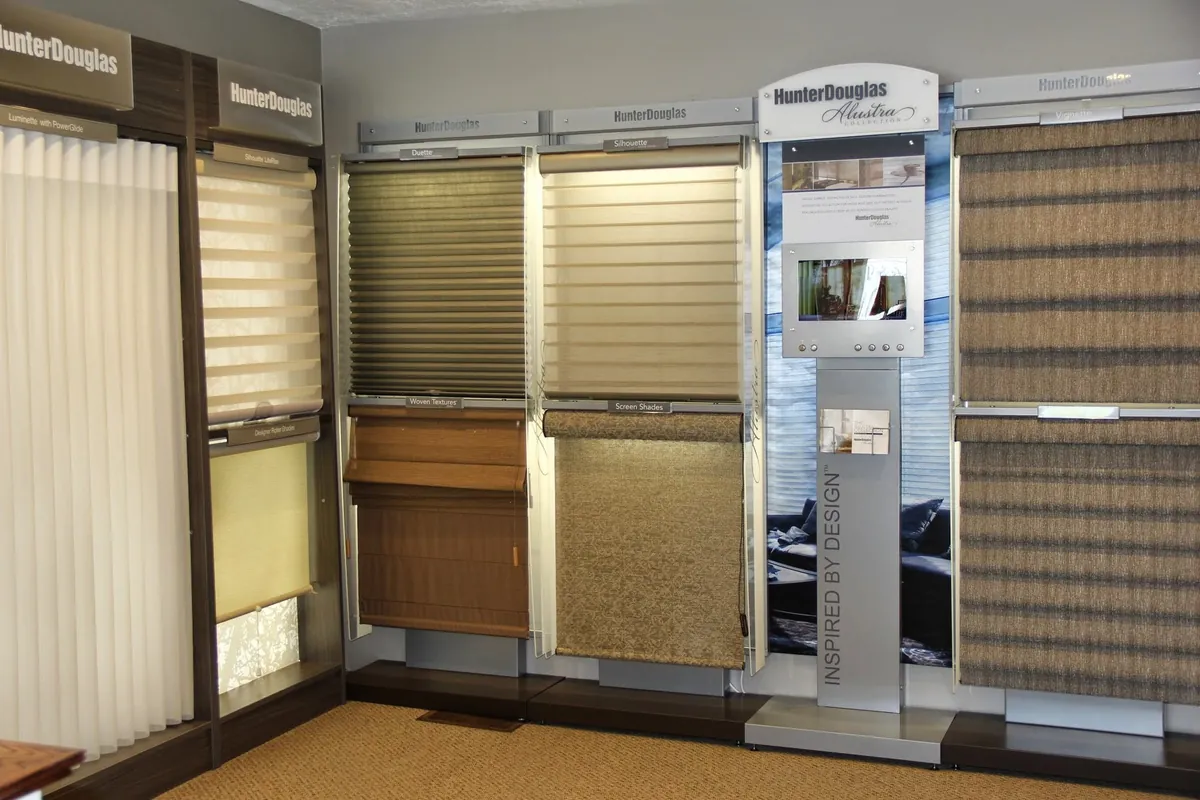
Blinds & Designs holds Hunter Douglas Gallery dealer status, the title the brand reserves for dealers who meet its standards. For a Halifax house, that means the whole folded shade family through one company, including every Vignette fabric, the Carole Fabrics library, each lift and PowerView.
Hunter Douglas has certified our installers, and we also repair blinds and shades you already own. If other rooms need attention, see cellular shades in Halifax, roller shades in Halifax, or all our services on the Halifax page.

Help pulling a house together
When every room has windows on more than one wall, it helps to plan the whole house at once. Our interior design consultations look at color, fabric and how one room flows into the next.
You can also see shades working at the Sagamore showroom, the nearest of our locations to Halifax.
Questions from Halifax
Our living room has windows on three walls. Should every window have the same shade?
The same fabric and fold, yes, so the room looks calm. Each window still gets its own shade, so you can lower the one taking the sun and leave the others open.
Our house faces Monponsett Pond. How do we cut glare without losing the view?
Lower a filtering shade just to the height of the glint and the dazzle stops while the far bank stays in view. Fully up, it tucks away above the glass.
Will a roman shade fit the dormers in our cape?
Usually, yes. Mounted inside the recess, a flat fold or a Vignette shade gathers into a slim band, leaving most of the short window open.
Can the shades follow the sun automatically?
With PowerView, each side of the house can have its own schedule, so east, south and west shades lower and raise at the right times without you.
What does the estimate cost?
Nothing. After we measure, you get a free estimate for the shades you are considering.
See the light in your own rooms
Roman shades in Halifax, MA, are easiest to choose in the rooms they will hang in, with the sun coming from wherever it comes. Request a consultation and we will bring the samples, measure every window and send a free estimate. You can also use the call button, or visit our Sagamore showroom.