
Tiny old windows, big newer ones
Upton spreads out. Its antique colonials and farmhouses stand on large lots with deep setbacks from the road, and off Route 140 a newer generation of colonials has filled in some of the open land. The houses are far apart, and the windows in them could hardly be more different. In the oldest houses, the original openings are very small, sometimes no more than a few panes across. In the newer colonials, whole walls of the family room are glass.
That spread is what a Hunter Douglas dealer in Upton, MA plans around. With a tiny antique window, the question is how to dress it without taking away the little daylight it lets in. With a tall newer one, it is how to manage the sun pouring through it.
Because the houses sit well back and far apart, privacy from the road is rarely the problem it is in a village. That frees most rooms to be chosen for light, comfort and looks first.
Hunter Douglas families for Upton windows
Working with a Hunter Douglas dealer in Upton gives you the full range under one roof. The cards below each lead to that family’s Upton page.
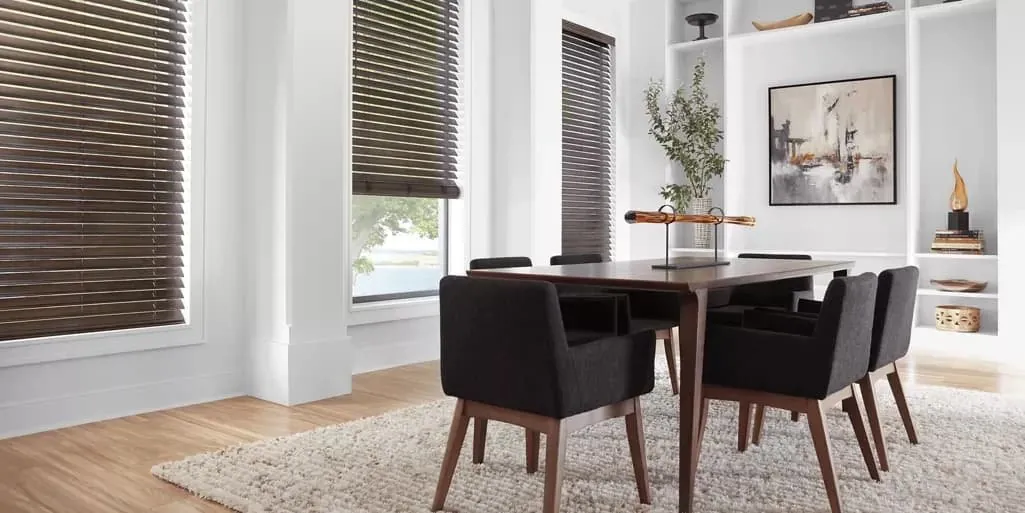
Custom blinds in wood and metal
Custom blinds in wood, faux wood, metal and vertical styles. Material and the way they operate are the two choices that matter most.
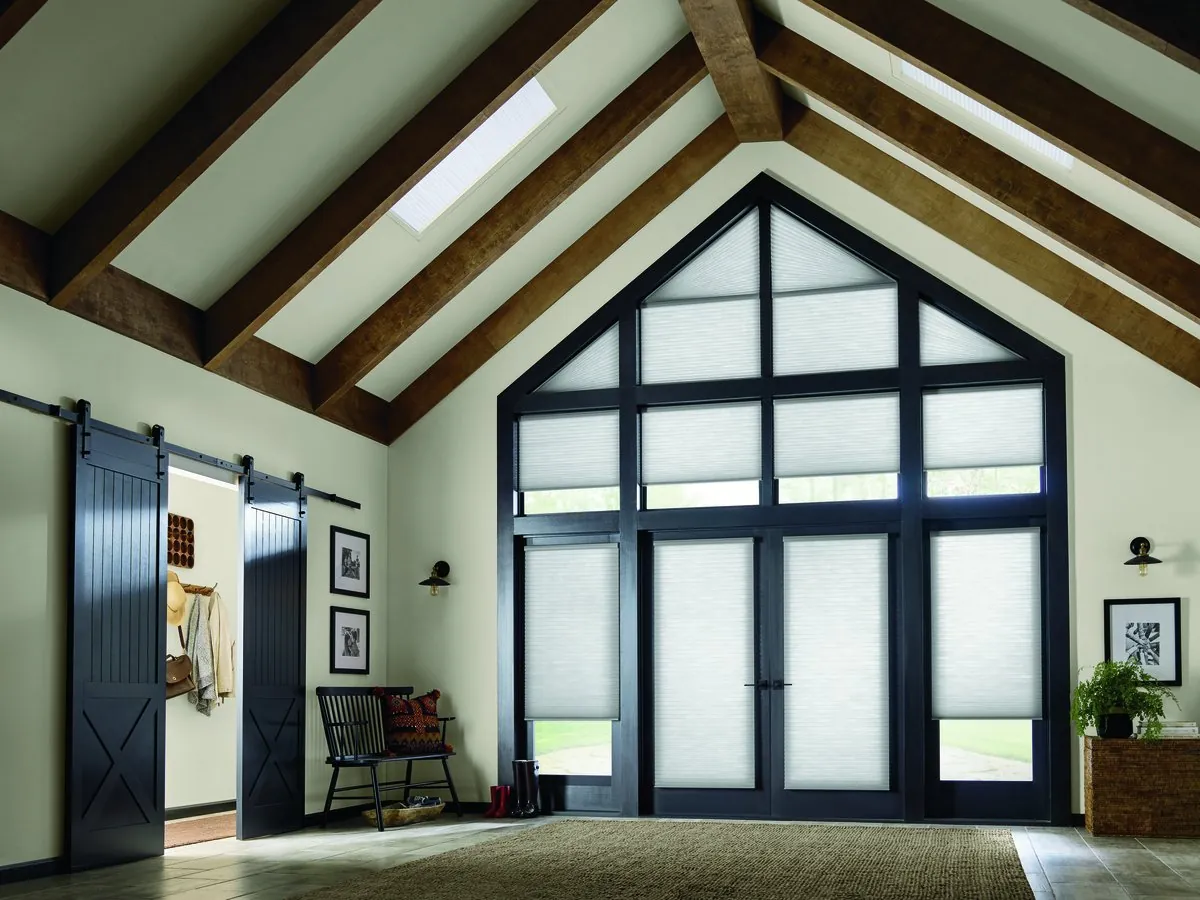
Cellular honeycomb shades
Duette and Applause. Each cell holds a pocket of air, and that is why a room with honeycomb shades holds its heat.
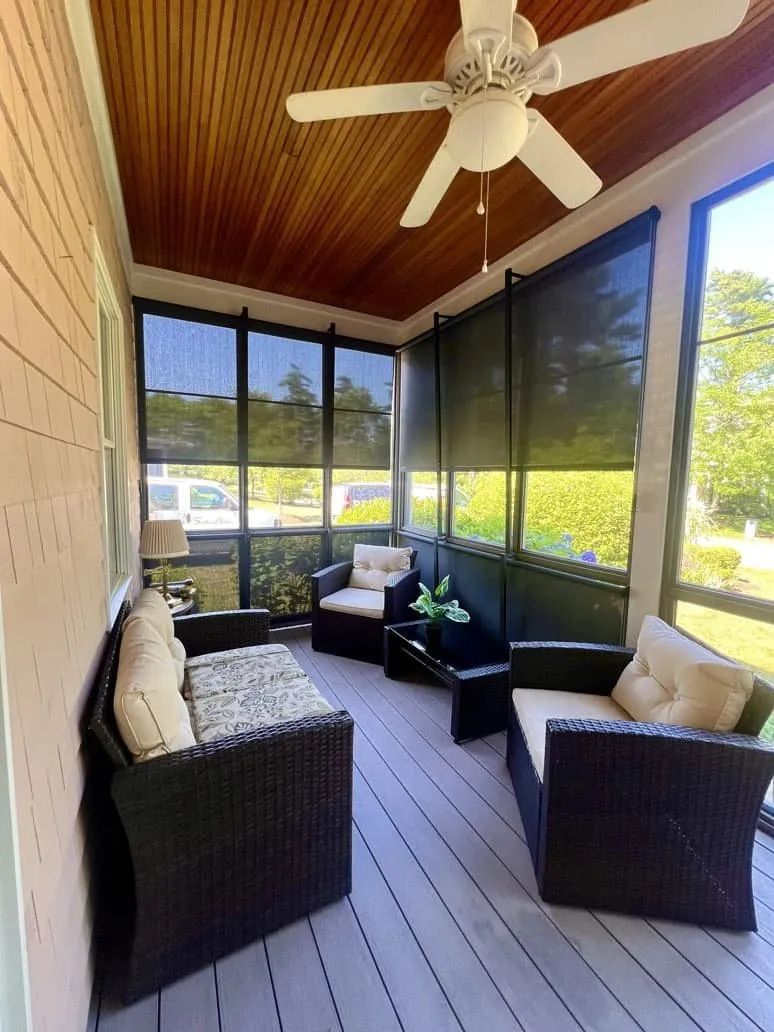
Roller and solar screen shades
Designer and Alustra roller shades and solar screens. Pick the openness for the view you want to keep and the glare you want gone.
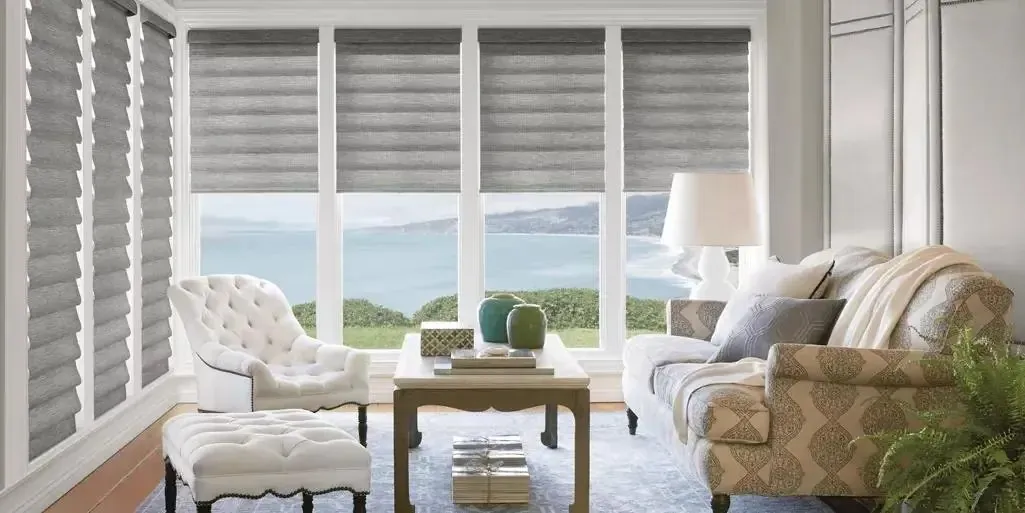
Roman shades in fabric
Vignette and Carole Roman shades, flat or folded, for a parlor, a dining room or a main bedroom.
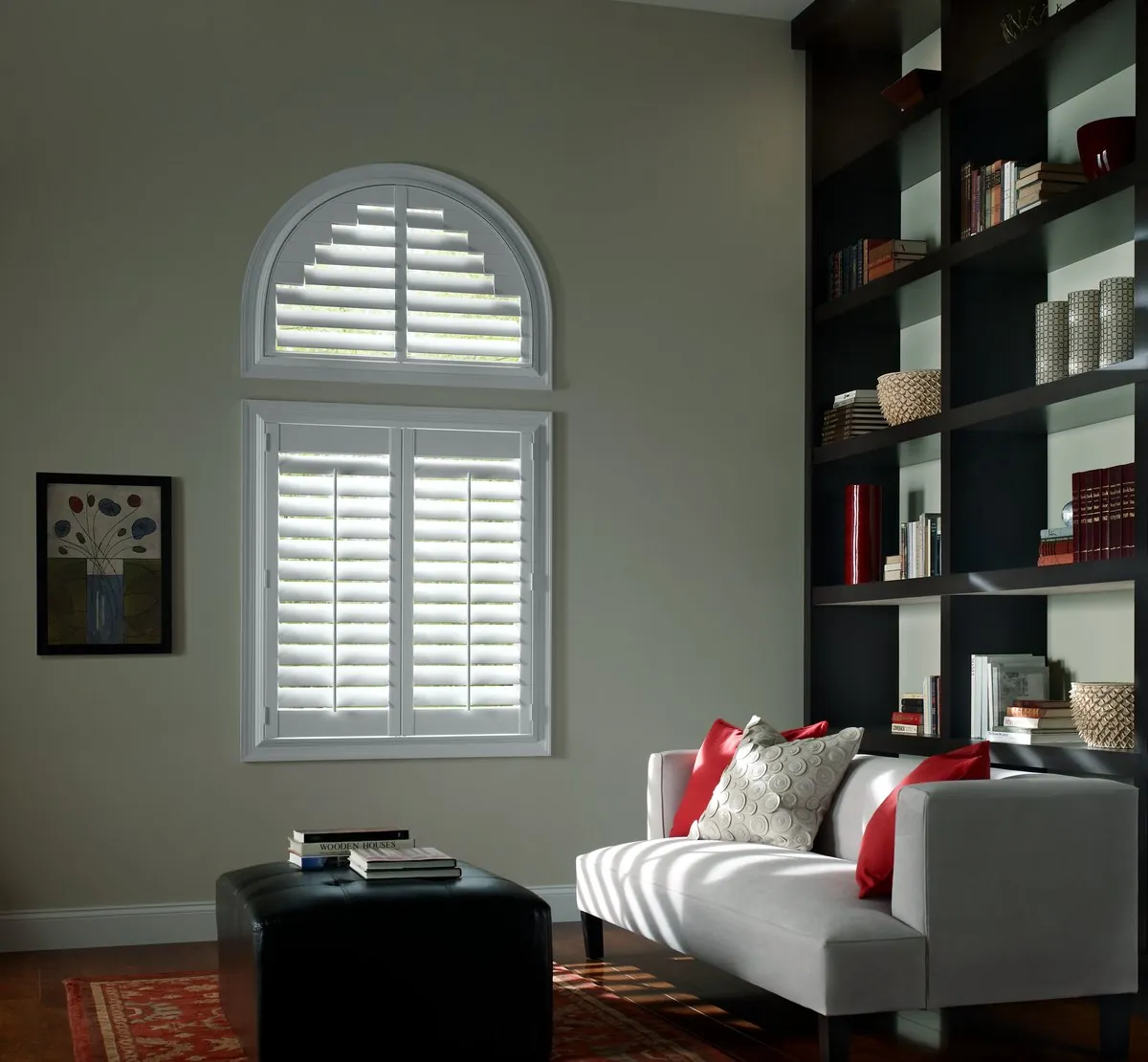
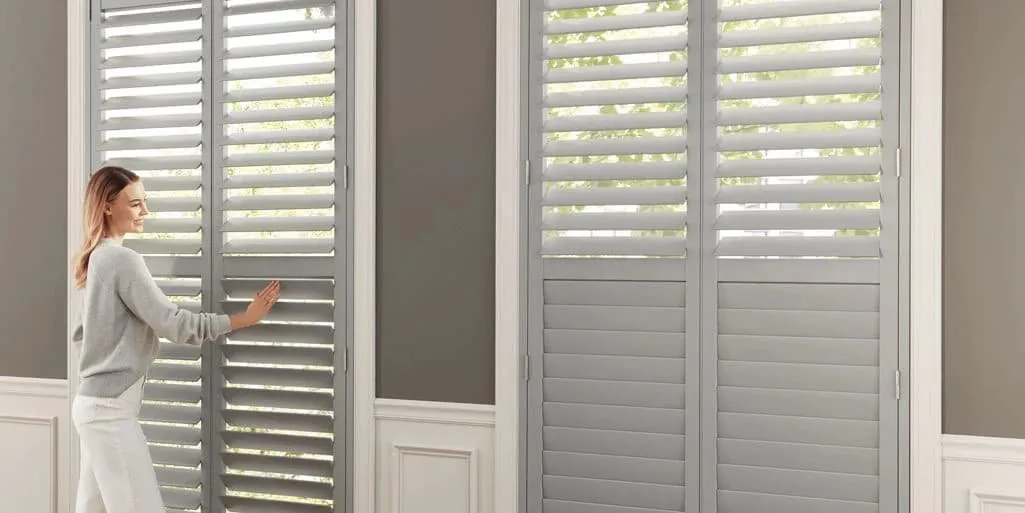
Plantation shutters for old and new
Palm Beach, NewStyle and Heritance shutters. Louver size and frame style are matched to each window, small or tall.
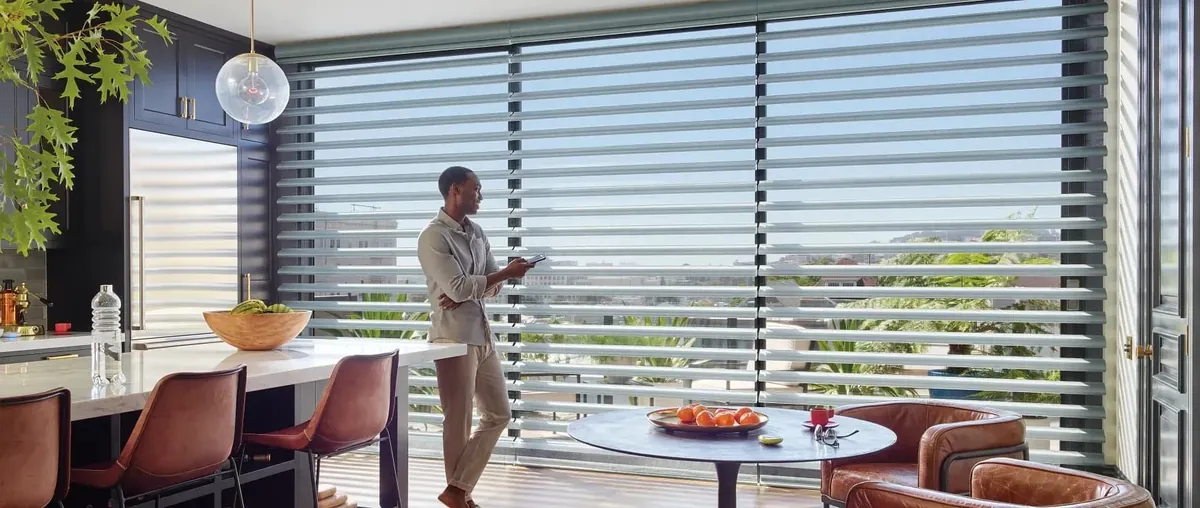
Motorized PowerView shades
Control from a remote or an app, plus schedules that lower and raise shades without anyone touching them.
Making the most of a very small opening
The smallest windows in Upton’s antique houses can be little more than a few panes of glass set in a thick wall. They were sized for the building methods of their time, and the rooms behind them are often darker than a modern room would be. The last thing such a window needs is a covering that blocks more light than it must.
As a Hunter Douglas dealer in Upton, we start with the covering’s size when raised. On a tiny window, a deep headrail or a thick stack of fabric at the top can cover a real share of the glass even when the shade is fully up. So we look at how much of each product would sit in front of the glass when open, and we bring samples to hold up against the frame so you can see the difference for yourself.
Mounting matters too. On a tiny window set in a deep wall, a covering inside the recess keeps the old trim on show. On one with very little depth, mounting on the face of the trim, a little above the opening, lets the covering clear the glass completely when raised. That one choice can make a small room noticeably brighter.
Fabric is the third lever. A light-filtering or sheer fabric still passes daylight when lowered, so a small window gives privacy at night without leaving the room dim by day.
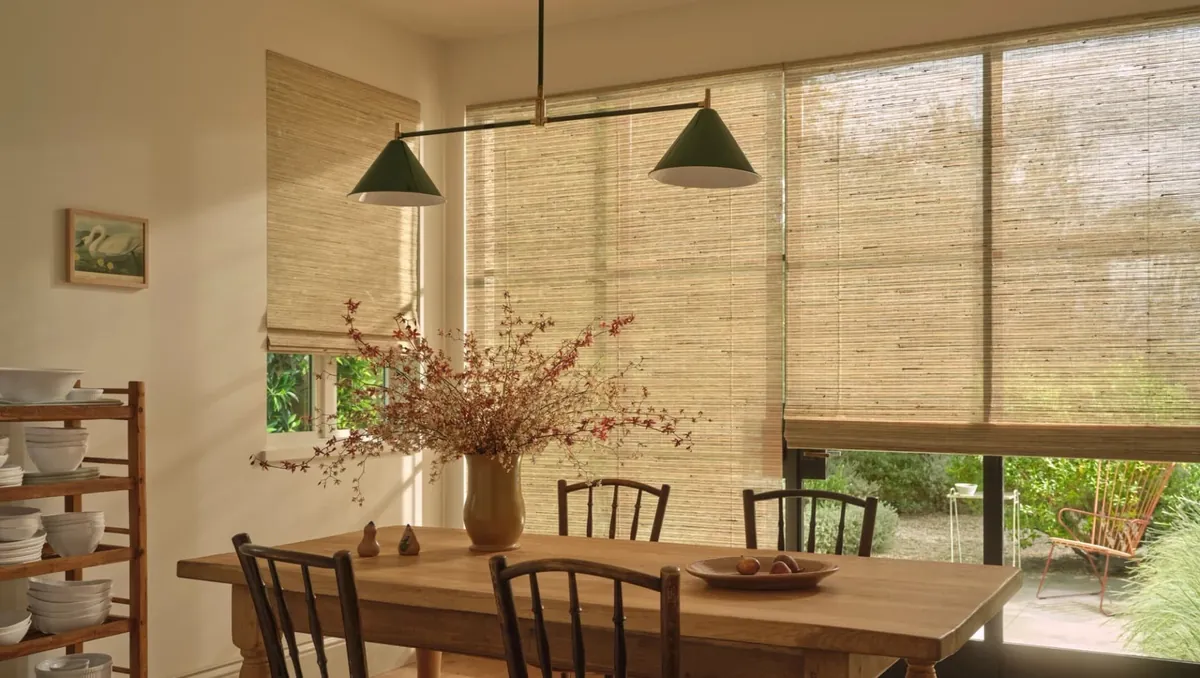
Measuring an antique frame
An Upton farmhouse has had a very long time to settle, and its small window frames have settled with it. On an opening only a few panes wide, a covering that is slightly off shows at once, so a single measurement is never enough.
We read each frame at its head, its middle and its sill, and from top to bottom on both jambs and down the center. We gauge how deep the recess runs and check for any latch or pulley that stands out from the sash. The figures go on a sheet for each window, because in an old house the bedroom window and the one beside it are rarely the same size, however alike they look.
Deep setbacks, and choosing for light first
With houses set far back from the road on large lots, the view in from the street is often nothing at all. That changes the order of questions a Hunter Douglas dealer in Upton asks at a consultation. In a village, privacy comes first. On a deep Upton lot, we usually start with light.
Which rooms get the morning sun across the field? Which ones take the late afternoon glare? Is there a room you want bright all day, and one you want dark for a television or sleep? The answers point to different families: a screen shade for a sunny family room, a room-darkening honeycomb for a bedroom, a sheer for a sitting room where you want the light softened but not blocked.
Privacy still matters at night. Out in low-density country, a lit room stands out in the dark, and any window that faces a neighbor’s house or the road will show the room once the lamps are on. A light-filtering fabric covers that while still glowing softly from outside.
Newer colonials off Route 140
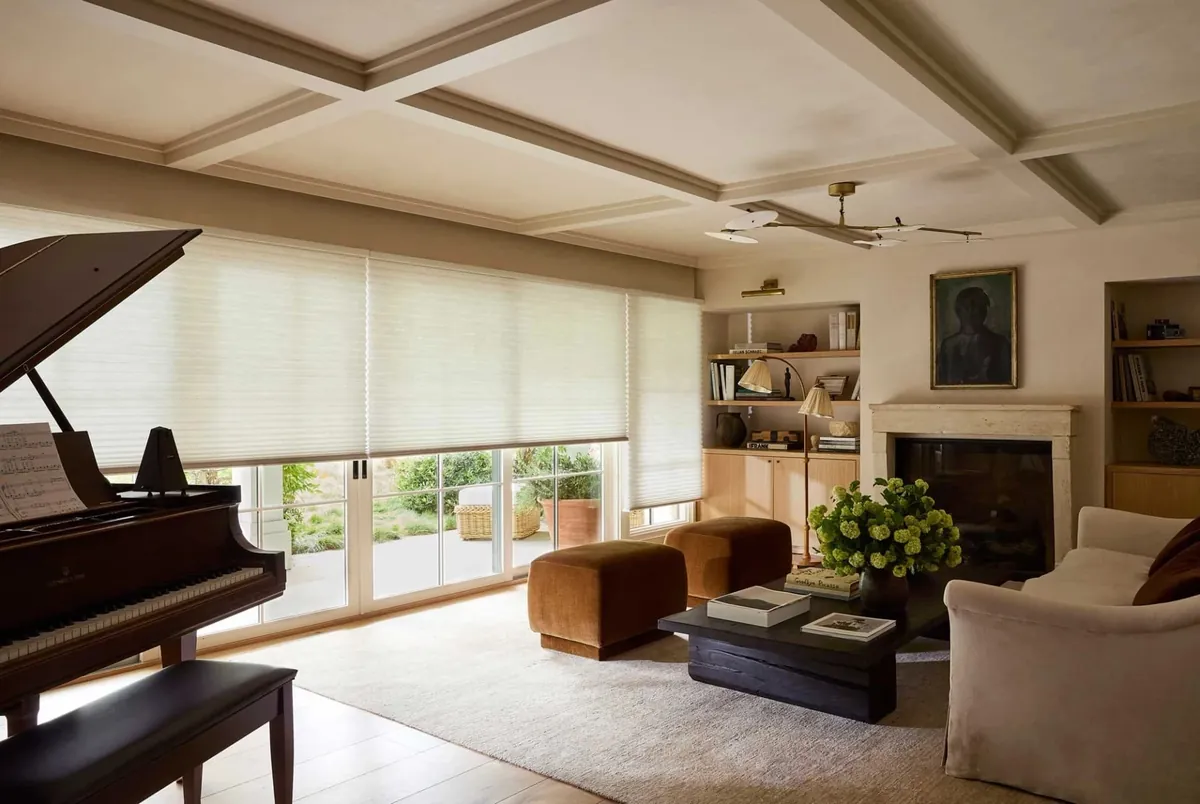
Off Route 140 the houses are a generation younger and built to a different plan: bigger rooms, higher ceilings, standard-sized windows, and often a family room with tall glass and a deck reached through a slider. Almost any Hunter Douglas product will fit these openings. The concerns are the strength of the sun, the heat it brings and the windows you cannot reach.
A family room facing south or west on an open lot can be very bright by mid-afternoon. A solar screen shade takes the glare off while leaving the view of the yard, with the fabric’s openness deciding the balance. Upstairs bedrooms in these houses tend to get room-darkening honeycomb shades. The slider is its own case, needing a covering that travels sideways off the door, and we bring more than one style of that to compare.
Views worth keeping across a big lot
On a large Upton lot, many windows look out over lawn, fields, stone walls or woods, with nothing man-made in sight. Those outlooks are part of why the house sits where it does, and a covering that hides them all day would be a shame.
For those windows we usually start with fabrics that keep the view: a solar screen that cuts glare without blocking the outlook, or a sheer that softens the light while still showing the land beyond. Where privacy matters only at night, a shade can stay fully raised all day and come down at dusk. On a window you never need to close, a simple covering for glare alone may be all that is required.
Two-story foyers and great rooms
Tall glass in a foyer or great room is a common feature of the newer Upton colonials, and it raises two questions. How do you reach it, and how do you treat a window that is seen from both floors?
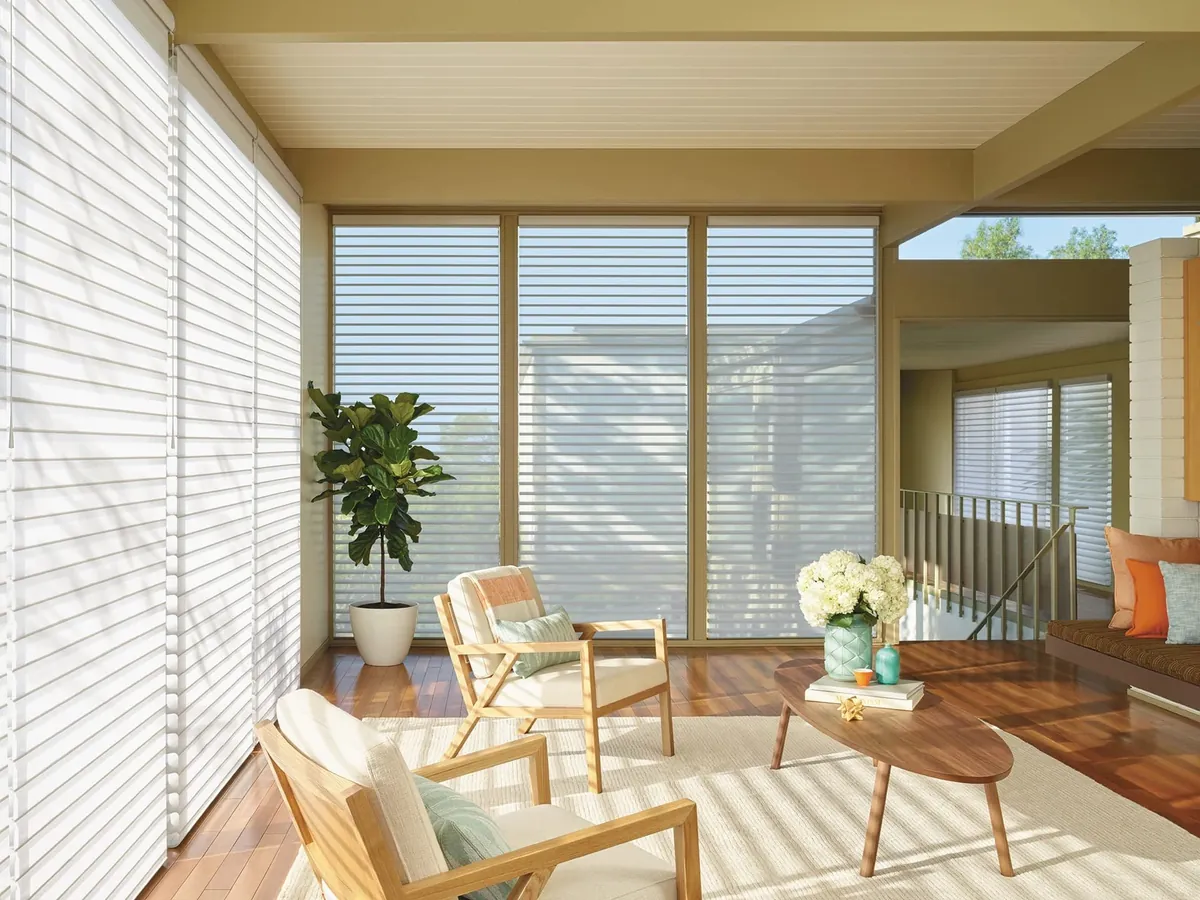
Reach is answered by motorization. PowerView lets you raise and lower a high shade from a remote, an app or a schedule, so the upper windows are as easy to use as the lower ones. A schedule can close the high glass before the afternoon sun hits it.
The look is a design question. From the upstairs landing you see the top of the covering as well as its face, so headrails and fabrics need to look tidy from above. We often suggest one product across all the tall windows in the room, so the whole wall reads as one piece.
Low ceilings and small bedrooms in the oldest houses
The upper rooms of an antique Upton colonial often have low ceilings and very small windows, sometimes set close to the floor. In rooms like these, a covering that is too large or too heavy dominates the wall.
We keep things slim. A honeycomb or flat Roman shade fitted inside the recess sits within the window rather than over it, and a room-darkening fabric closes the room for sleep. For a guest room used only now and then, a light-filtering fabric that lets the room stay bright between visits is often the better choice, with a room-darkening shade kept for the bedrooms that are used every night.
Keeping an antique room comfortable
The small sash in an old Upton house can still feel cold to sit beside in midwinter, and in the newer colonials, broad glass lets in a lot of summer sun. In both cases the honeycomb shade does the heavy lifting. Its cells hold air against the glass, and that pocket of still air is why a room with Duette or Applause shades holds on to its heat after sunset. Lowered on a summer afternoon, the same shade stops an upstairs room from turning stuffy.
Shutters on a very small window
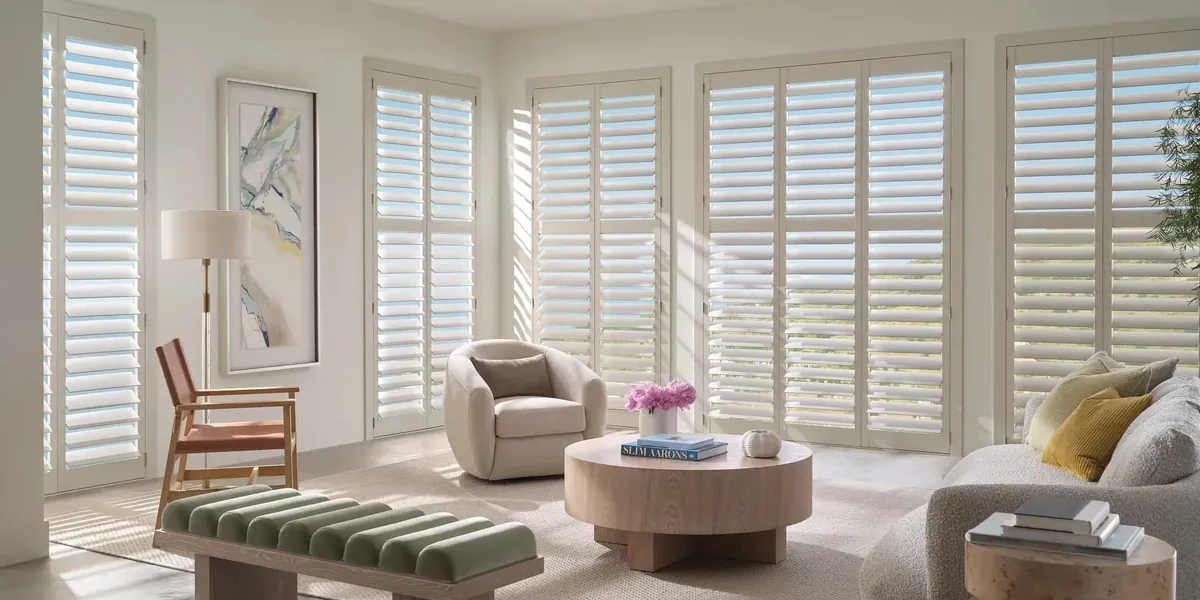
People often ask whether shutters can go on the tiniest antique windows. Often they can, and a painted panel set inside a deep recess can look as though it came with the house. The things we check first are whether the recess is deep enough for the louvers to tilt freely, and whether a louver size suited to small panes still leaves the window looking right.
On the newer colonials, shutters do a different job, giving a run of tall windows a tailored, built-in look. The three Hunter Douglas lines are Palm Beach, NewStyle and Heritance, and we bring samples of each so you can compare frame styles on your own windows.
A consultation in your own rooms
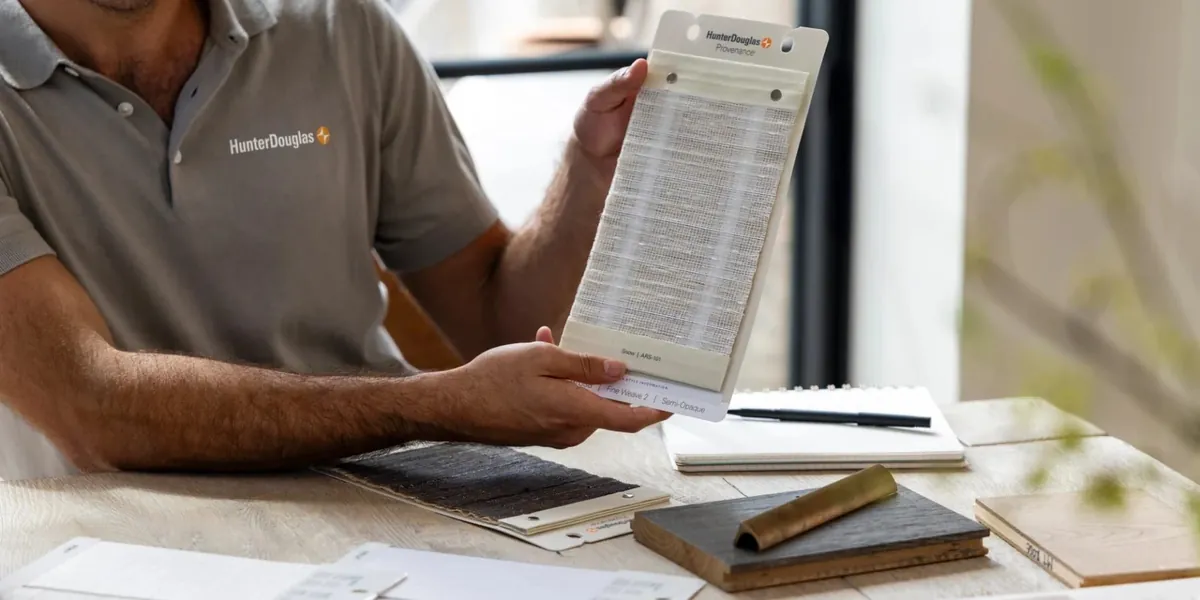
On a big lot each room’s light is its own, so we do the choosing where you live. The van is stocked with samples from right across the Hunter Douglas range, which means we can bring the showroom to you, however far back from the road the house sits.
- Fill in Request a Consultation, or press the call button to speak to the Franklin showroom.
- We fix a day and drive out with samples matched to your rooms.
- We go through the house noting which way each room faces and what it needs.
- You hold samples to your windows, including the very smallest antique ones.
- Each window gets measured, with several readings on the oldest frames.
- A free estimate follows, with no hurry to decide.
- Hunter Douglas makes the order to our figures, and our certified installers come back to fit it.
There is more on the in-home consultations page, and an interior design consultation can help pull colors and fabrics together.
Night skies and lit windows
Upton’s low density means proper darkness at night, and that changes how a lit room looks from outside. A window that nobody can see into by day becomes a bright frame after dusk, visible from the road or the next house a long way off.
For most rooms, a light-filtering shade lowered in the evening is all it takes: the room glows softly from outside and nothing inside is clear. Bedrooms usually get a room-darkening fabric, which also helps on summer mornings when the sun comes up across open land well before the alarm.
Choosing a style for an Upton house
An antique colonial or farmhouse looks its best when the coverings stay modest and let the small panes and wide trim lead. Soft whites, linen-look Roman shades, woven woods and painted shutters suit those rooms. The newer colonials take more color and pattern, such as a banded shade in the family room or a crisp roller in a study. Seen across a deep lot, a house reads as one shape, so a single pale color facing out on every front window keeps it looking calm.
Motorization for a house with tall glass
PowerView makes most sense in the Route 140 colonials, with their high foyer glass and bright family rooms. A schedule can drop the west-side shades each afternoon and raise them after sunset, and a remote or an app moves any of them from your chair. We plan how each motor is powered at the visit. More is on the motorized blinds in Upton and window covering automation pages.
Porches, sunrooms and garden rooms
Large lots often come with rooms that look out on the land: a sunroom added to a farmhouse, a screened porch, a garden room off a newer kitchen. These rooms tend to have more glass than walls and take the full sun.
Solar screen shades suit them well, cutting glare while keeping the view of the garden or field. On a screened porch, a darker screen fabric can make the space usable on a bright afternoon. Where a sunroom doubles as a sitting room in the evening, a light-filtering fabric gives privacy once the lamps are on.
Why a Gallery dealer
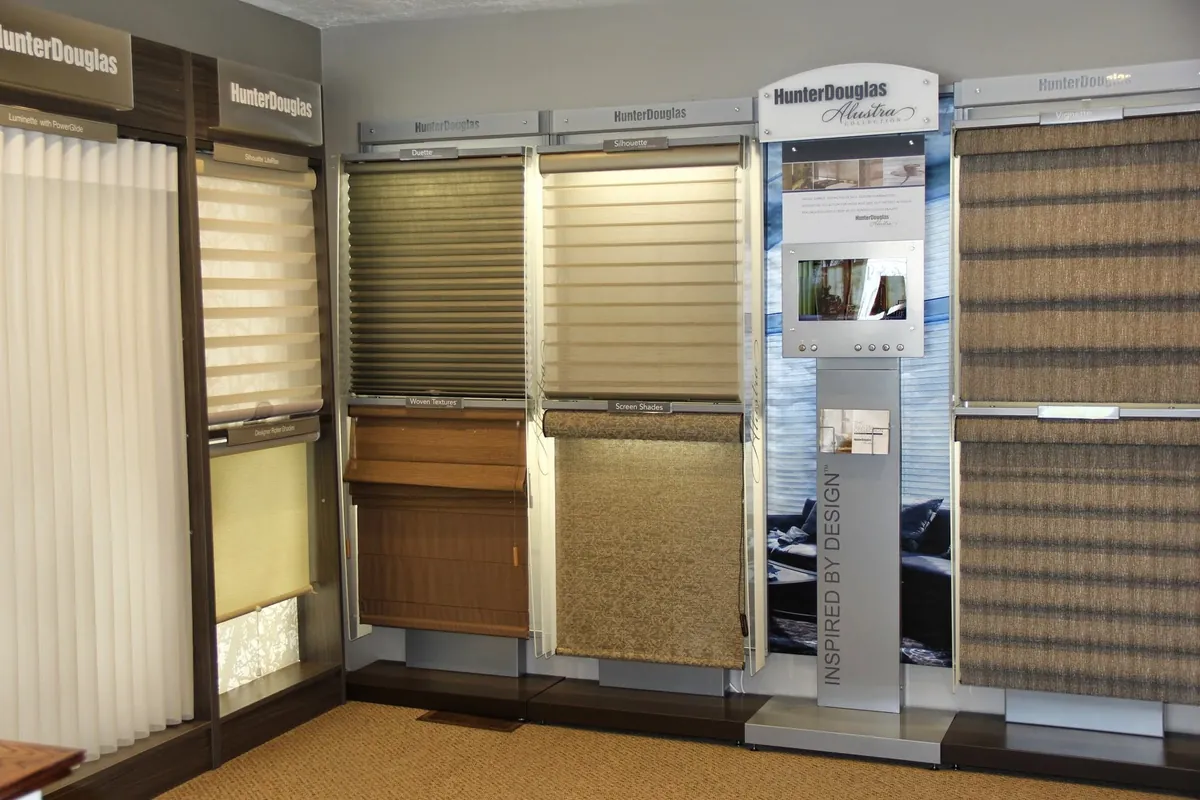
A Hunter Douglas Gallery dealer has every family to hand, and that is what we bring to an Upton house: the full run of shades, blinds in wood, faux wood, metal and vertical styles, Palm Beach, NewStyle and Heritance shutters, drapery and PowerView.
Our own installers, certified by Hunter Douglas, fit everything we sell. In an old farmhouse frame that has moved, they true up every bracket, clear every latch and work each product before they head off.
See the main Hunter Douglas page for more, and the Hunter Douglas online catalog for the lines in full.
Visiting the Franklin showroom from Upton
Our nearest showroom to Upton is in Franklin, and you can call in to go over a project face to face before we come out.
The choosing is still best done at home, against a small antique window or a broad colonial one, and you get a free estimate once everything is measured.
The address and hours are on the Franklin showroom page, and the Upton page lists all we offer in town.
Questions from Upton
My antique house has tiny windows. Will a covering make the rooms darker?
Not if it is chosen well. We look at how much of each product sits in front of the glass when raised and how it is mounted, and we suggest light-filtering fabrics that still pass daylight when lowered.
Do I need privacy on windows set far back from the road?
Often less by day, but a lit room shows from a distance after dark. A light-filtering fabric gives privacy at night and still lets light in.
How do you handle a two-story foyer window?
PowerView lets you raise and lower a high shade from a remote, an app or a schedule. We also choose a covering that looks tidy from the landing above.
Which covering helps a cold room in winter?
A honeycomb shade. The air held in its cells is why a room keeps more of its heat with the shades lowered.
Will I be charged for the estimate?
No. Estimates cost nothing, and the fitting is done by our Hunter Douglas certified installers.
Your next step
Request a consultation with your Hunter Douglas dealer in Upton and we will drive out with the samples, measure everything from the smallest antique opening to the tallest foyer glass, and leave a free estimate. If you would like to talk first, the call button reaches the Franklin showroom.