
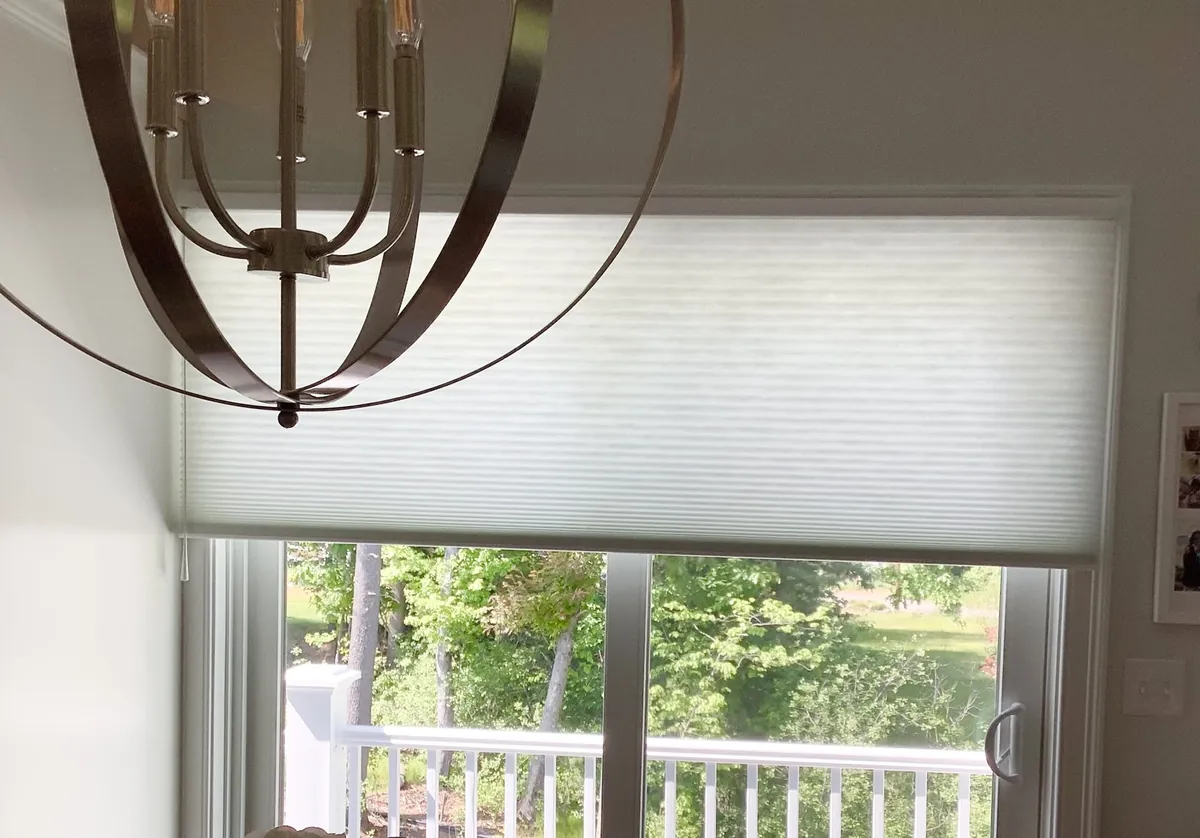
From Padanaram to Russells Mills
Dartmouth is home ground for us: our North Dartmouth showroom is here, and the houses around it are the ones we know best. That matters, because the town covers a lot of different building. Padanaram has older colonials and shingled capes near the harbor. The streets off Faunce Corner and Slocum Road are full of ranches from the sixties and seventies. Out toward Russells Mills the farm properties still have deep-set nineteenth-century sash in thick walls. Good window treatments in Dartmouth, MA, start with knowing which of those you are dealing with.
Then there is the water. Rooms in South Dartmouth that face Apponagansett Bay take a hard afternoon glare, the kind that bleaches a rug and makes a screen impossible to read by four o’clock. A west window on the bay needs a different answer from a north window on a farmhouse.
You can come in and see the products first, or we can bring the showroom to you and work at your own windows. Most projects use a bit of both.
Window treatments in Dartmouth, MA: every service in town
Each of these has its own Dartmouth page. Use them to read up on one product, or ask us to plan the whole house.
Custom blinds for Dartmouth
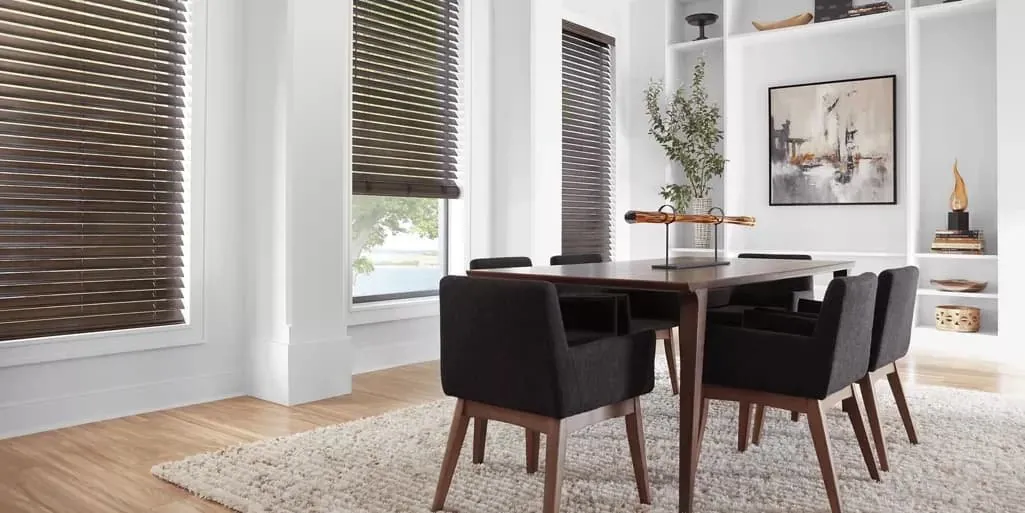
Wood, faux wood, metal and vertical blinds. Wood slats suit a Padanaram dining room; faux wood copes with a ranch kitchen.
Honeycomb warmth
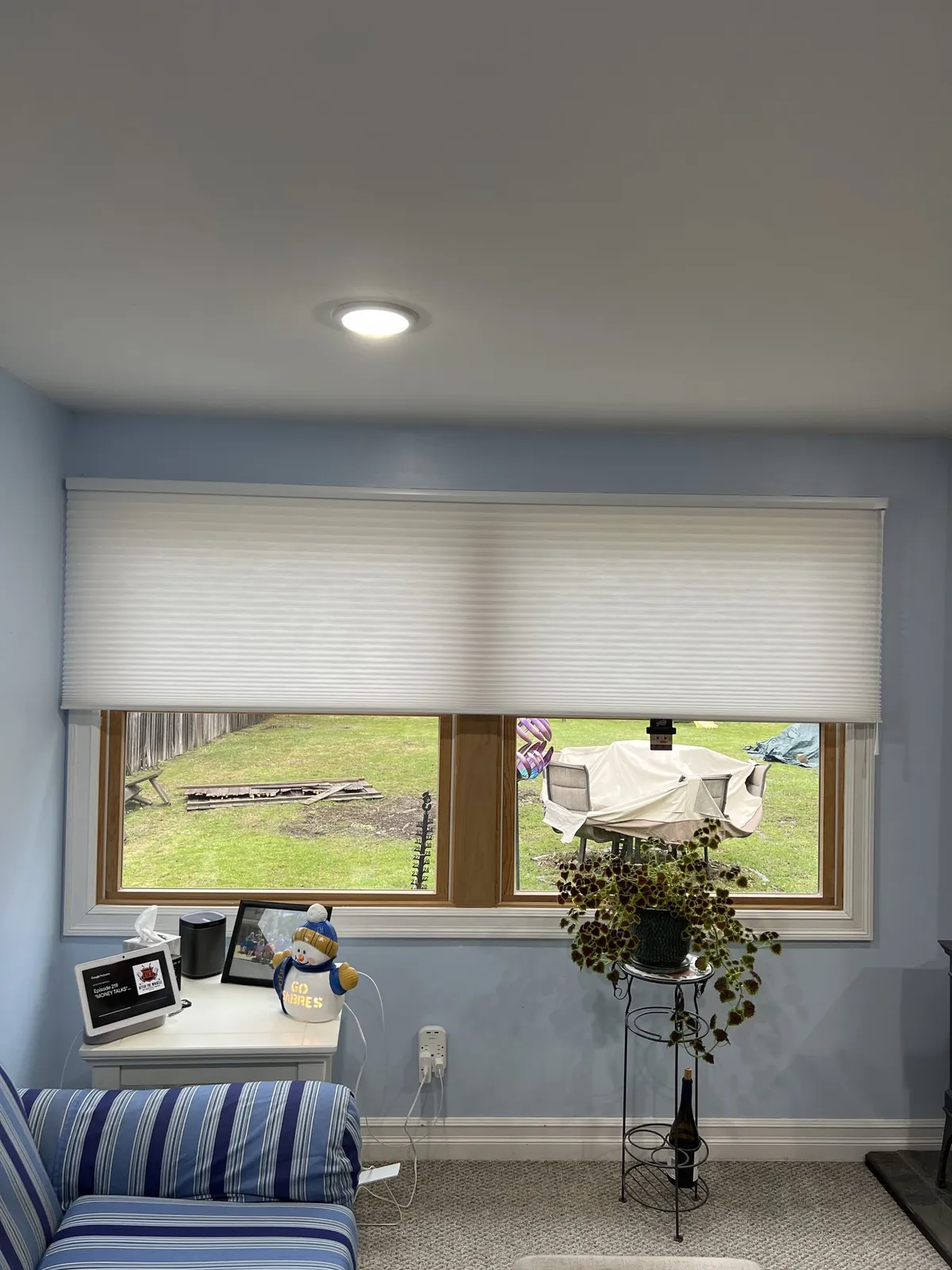
Duette and Applause cellular shades, whose cells hold still air against the glass. A natural fit for drafty farmhouse sash.
Rollers and solar screens
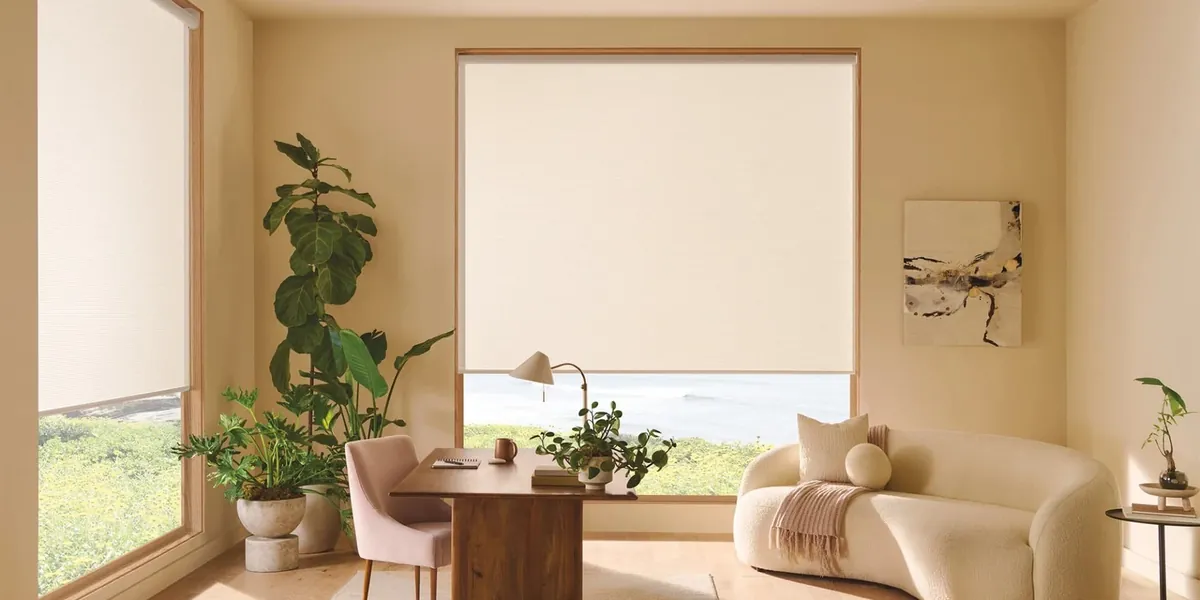
Designer and Alustra rollers, with screen fabrics that take the edge off the afternoon glare from the bay while you keep the view.
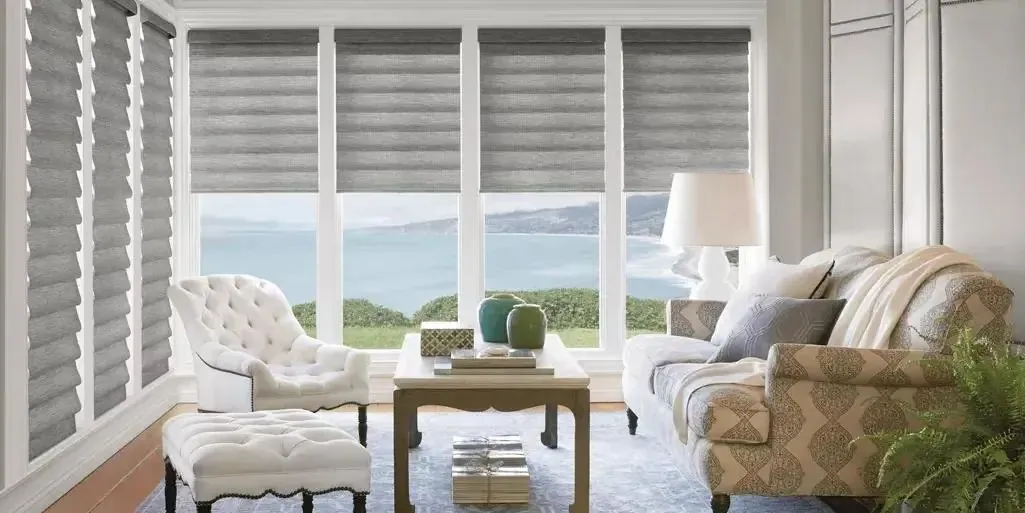
Roman shades
Vignette and Carole Fabrics romans, flat or softly folded, for a colonial living room or the bedroom of a shingled cape.
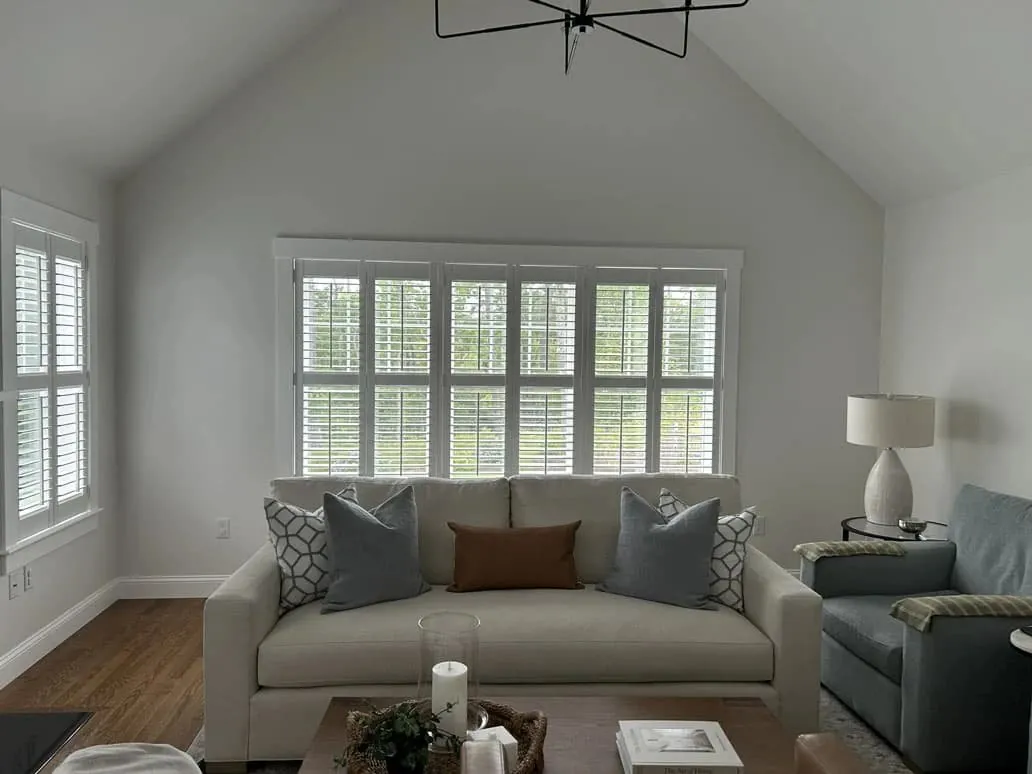
Shutters
Palm Beach, NewStyle and Heritance plantation shutters, with frames that can work around the deep reveals of old walls.
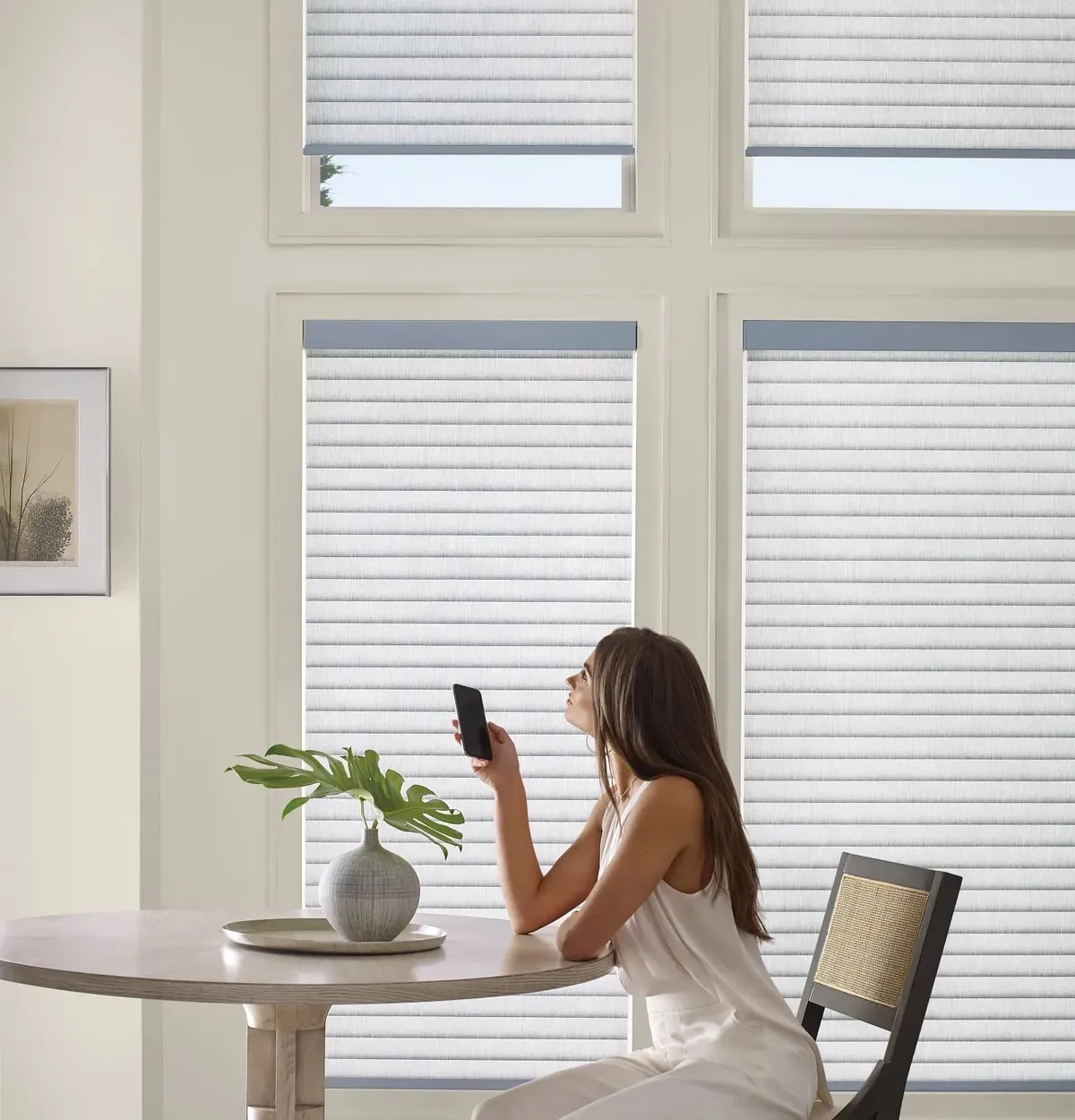
Motorized shades and blinds
PowerView from a phone, remote or schedule, so west-facing shades on the bay come down before the afternoon sun arrives.

Your Hunter Douglas dealer
A Hunter Douglas Gallery dealer based in town, with certified Hunter Douglas installation on every order.
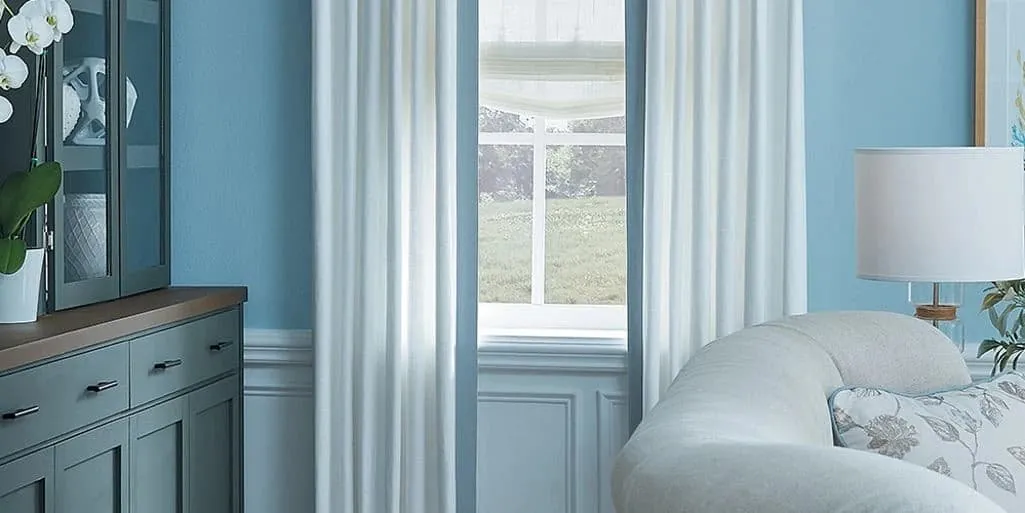
Drapery
Hunter Douglas drapery for a formal room, on its own or layered over a shade for warmth and a softer frame.
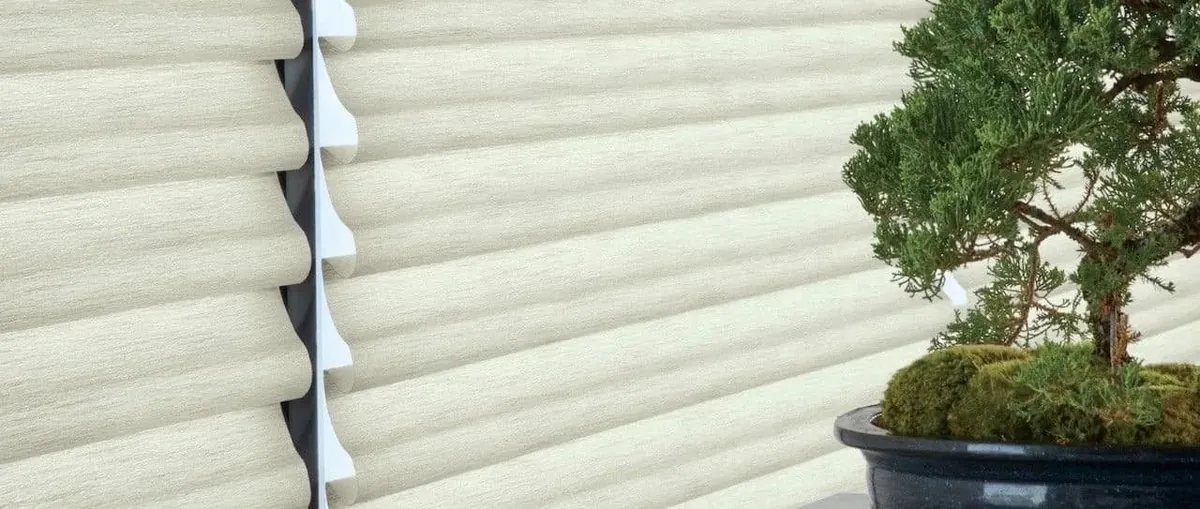
Repairs
A tired cord or a lift that sticks on a blind or shade you already own. Bring the question to us and we will take a look.
Padanaram colonials and shingled capes
The older houses near Padanaram village were built with modest, evenly spaced windows: double-hung sash, usually six or more panes to a sash in the oldest, set into painted wood casings. The rooms are not huge, and the windows do a lot of the work of making them feel bright.
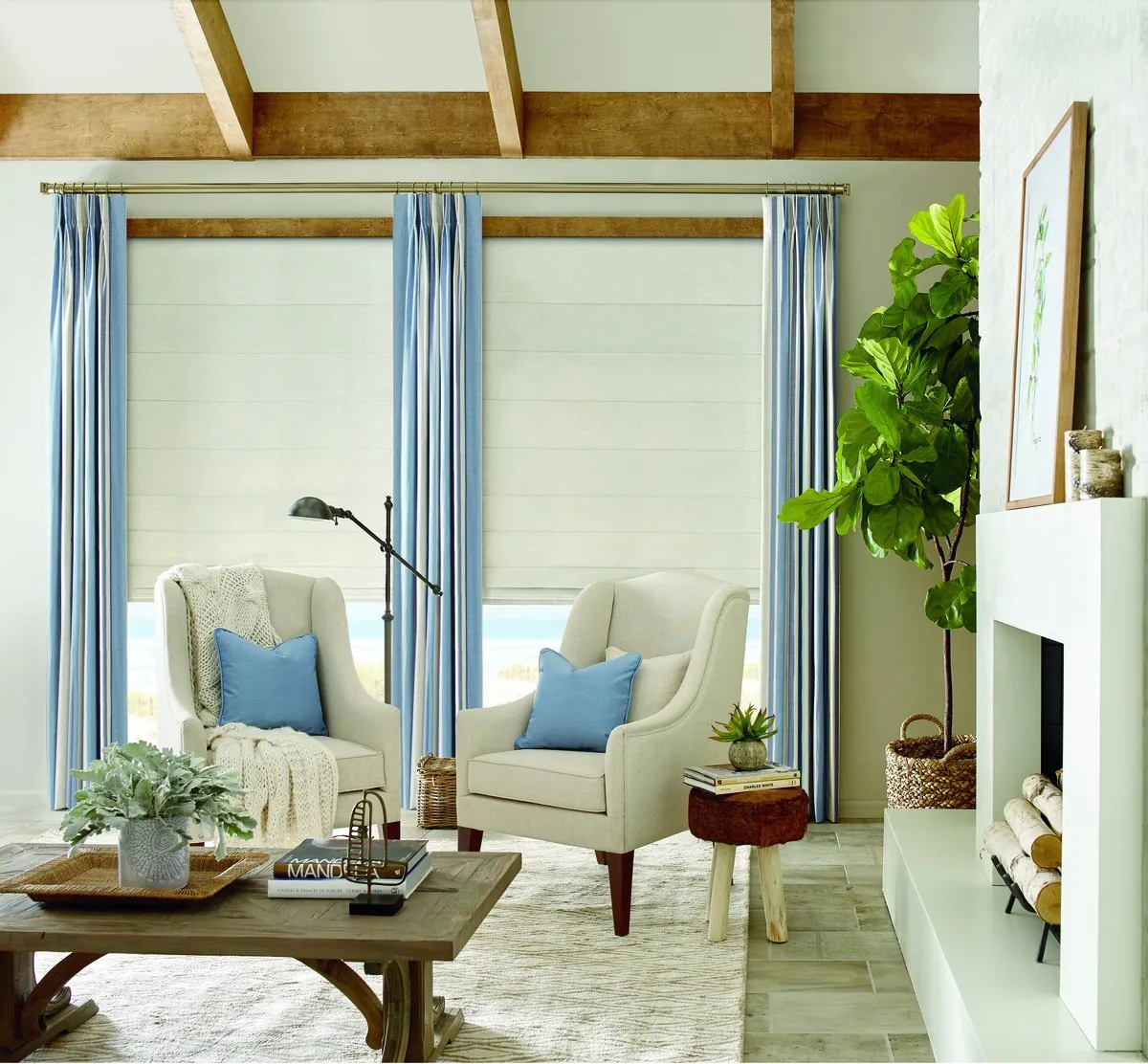
That suggests treatments that disappear when they are open. A roman shade stacks neatly at the head of the window. Honeycomb and pleated shades pull up to a slim band. Plantation shutters, swung back against the wall, leave the whole window clear, and closed with the louvers open they keep the light while screening a room that sits close to the lane.
Shingled capes bring their own windows: dormers upstairs with sloped ceilings either side, and small gable windows that are rarely the same size twice. Every one is measured on its own. Honeycomb and roller shades can be made narrow enough for a dormer, and a cordless lift keeps a shade in a tight dormer from leaving a cord dangling over the bed.
For the harbor side of the village, where a room may look across the moorings, the questions shift to glare and view, which we come to below.
The ranches off Faunce Corner and Slocum Road
The neighborhoods around Faunce Corner and along Slocum Road filled up with ranch houses in the sixties and seventies. They are practical houses with plenty of glass: a big living room window to the front, a slider or patio door to the back, and long horizontal windows in the bedrooms.
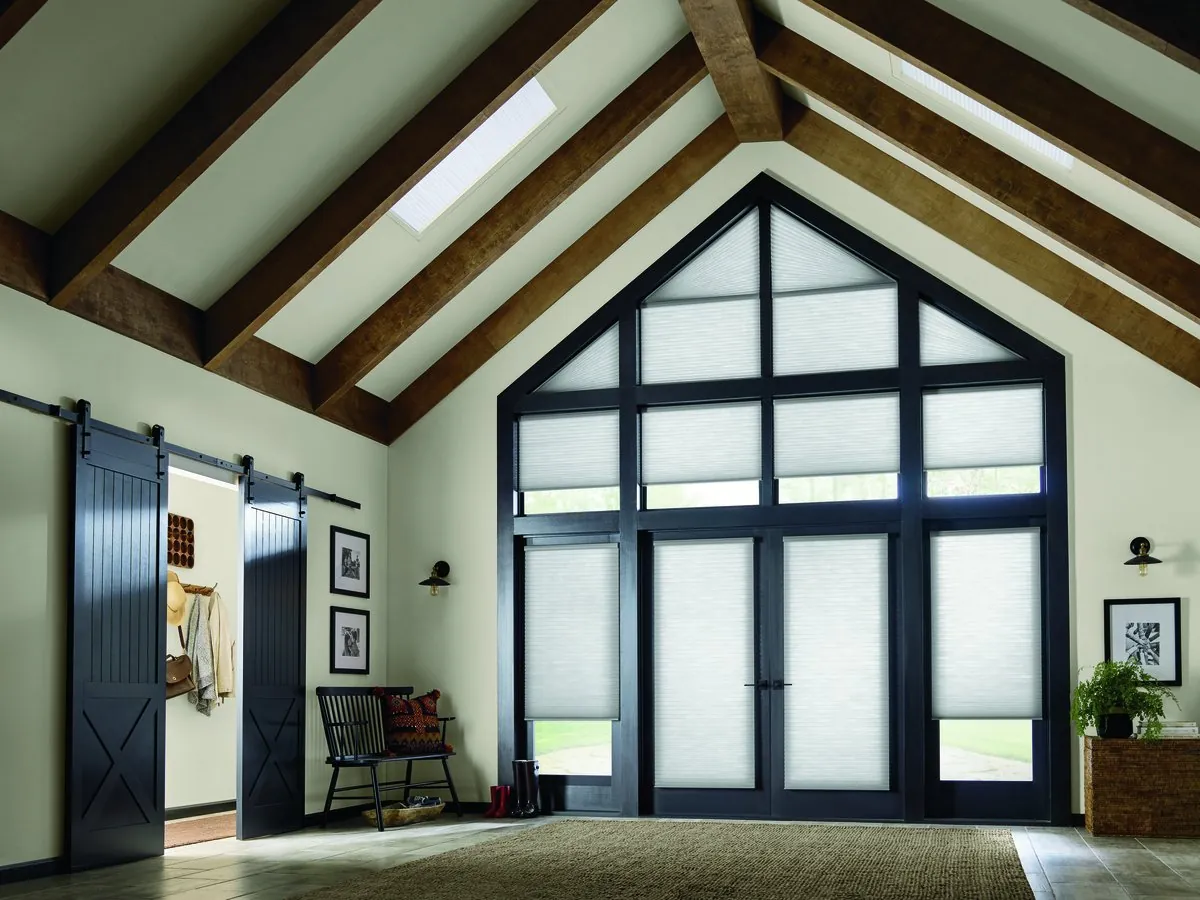
That glass is often the part of the house that has not been touched since it was built, or has been replaced with standard sizes. Either way, treatments for a ranch tend to be about comfort and ease. Honeycomb shades take the chill off a big front window in winter and slow the heat in summer. Rollers give a clean, uncluttered line that suits the low, wide rooms. Faux wood blinds hold up in a kitchen or a bathroom.
Patio doors in these houses usually lead straight onto a deck or yard. Vertical blinds, a vertical honeycomb shade or gliding panels all move to one side so the door stays easy to use, and each has its own look. We bring samples of all three.
A ranch is also a simple house to motorize. With every room on one floor, a set of PowerView shades on a single schedule can open the house in the morning and close it at dusk.
Farmhouses out toward Russells Mills
The farm properties in the south of town are a different world. Many have thick walls and deep-set sash from the nineteenth century, sometimes with interior shutters long gone and only the pockets left. The window reveal, the depth from the face of the wall to the glass, can be generous, which opens up options a shallow modern frame never could.
A deep reveal is a gift for an inside mount. Shutters can sit fully within the opening, so they read as part of the wall. Honeycomb shades and romans tuck inside with room to spare. Wood blinds look at home against old painted trim and suit the plain, sturdy feel of a farmhouse.
The catch with old sash is that nothing is square. Frames have moved over a long life, and the top of an opening can be wider or narrower than the bottom. We measure at the top, middle and bottom, check the diagonals and plan around what we find. Where a frame is badly out, a shutter frame can be scribed to fit, and a shade can be sized to the tightest point so it never rubs.
Older farmhouses also tend to be cold by the window. A cellular shade lowered at dusk holds a band of still air against the glass, and a heavier drapery panel over it closes off a draft in the coldest rooms.
South Dartmouth rooms on Apponagansett Bay
Houses that face west across Apponagansett Bay take the afternoon sun low and strong, reflected up off the water. It is the glare that makes you squint at the dinner table and fades a sofa over a few summers.
The answer depends on how you use the room. If the view is the point, a solar screen roller is often the first choice: the fabric cuts the glare while you still see the boats. A more open weave keeps more view, a tighter one blocks more glare, and holding two or three at the window on a sunny afternoon settles it quickly. Sheer shades such as Silhouette soften the light and keep a hazy view, then close for privacy at night. Banded shades let you line up the sheer stripes for light or the solid ones for shade.
For a bedroom on the bay side, room-darkening fabric is the usual answer, sometimes with a screen shade in front on a double bracket so you have both. Motorized shades on a schedule can lower themselves every afternoon whether anyone is home or not, which also protects the floors and furniture.
Bedrooms that need real darkness
Not every bedroom faces the bay, but plenty of them catch light they would rather not: a street lamp outside a ranch on a busy road, early sun through an east dormer, or the long summer evenings when it is still bright at bedtime. Window treatments in Dartmouth, MA, bedrooms usually come down to how dark you want the room and how much of the window you are willing to cover.
A room-darkening honeycomb shade blocks most of the light and keeps the window warm in winter. A blackout roller fitted closely inside the frame goes further, and side channels close the gaps at the edges where light tends to creep in. For a dormer or a small cape window, an outside mount that overlaps the trim by a little does the same job without a channel.
If you prefer to sleep with some light, a light-filtering fabric gives a soft glow rather than darkness. Many couples settle the question with a top-down, bottom-up shade or a double bracket that holds a sheer and a darkening shade on the same window, so each can be used as the day requires. Cordless lifts are worth asking about for any room a child sleeps in, because they leave no cord hanging by the bed.
The showroom down the road, or samples at your door
Being in town gives you a choice most places do not. Some Dartmouth customers like to start at the North Dartmouth showroom to get a feel for the Hunter Douglas range, then have us come to the house. Others go straight to an in-home visit. Here is how a project usually runs either way.
- Request a consultation online or by the call button, or stop by the showroom first if you would like to look around.
- We set a time to visit your house, and our van brings the samples, so we can bring the showroom to you.
- At the house we go room by room, talking about what each window needs: warmth, glare control, privacy, or just a better look.
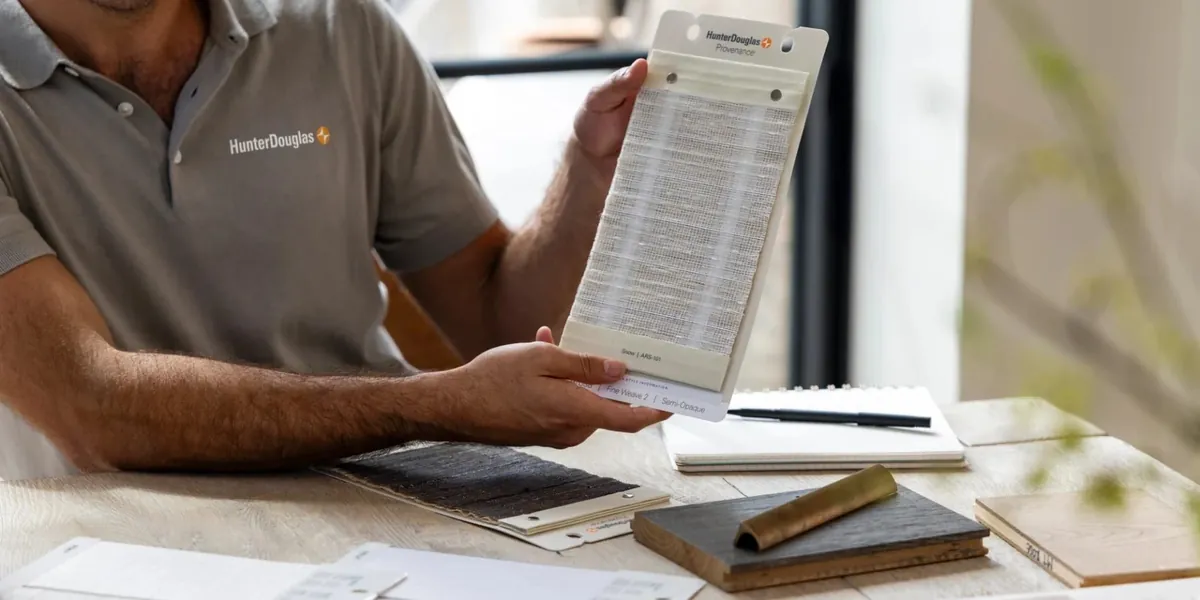
- You hold real fabrics and louver samples up to your own windows, in the light you actually live with.
- We measure every window and note the depth, the trim and anything in the way.
- You receive a free estimate and take your time deciding.
- Once you order, our certified Hunter Douglas installers fit everything and show you how it works.
If color and fabric are the hard part, an interior design consultation can be part of the same visit.
Pulling a Dartmouth house together
A lot of houses here have been added to over time: a family room built on to a cape, a sunroom on the back of a colonial, a ranch with a new primary suite. The new rooms have bigger, more modern windows than the old ones, and the challenge is making the two halves feel like one house.
We usually suggest keeping one thing the same throughout, such as a white or neutral color facing the glass so the house looks consistent from outside. Inside, each room can have what suits it. Shutters in an old front room can sit beside rollers in the new family room, and honeycomb shades in the bedrooms, without the house looking pieced together.
Sunrooms are a frequent request. Glass on three sides, sometimes overhead too, makes them bright, hot in summer and cold in winter. Honeycomb shades handle the temperature swing; screen shades handle glare; motorized shades handle the high or hard-to-reach panels. Planned together, the room becomes usable year round.
Additions are also where window sizes change most. An old cape may have narrow sash in the original rooms and a wide bank of casements in the new family room, with a step down between them. We plan window treatments for Dartmouth houses like these as one job, so the headrail heights line up where the rooms meet and the colors carry through, even when the products differ from one side of the step to the other. Doing it in one visit also means one set of measurements, one free estimate and one installation day rather than three.
If you are not sure where to begin, our guides on choosing between shades and blinds and shades for sun and glare are a good place to start.
Repairs, and the blinds you already have
Not every visit is about something new. If a cord has frayed, a lift has stopped holding or a headrail has come loose, we are happy to look at the blinds and shades you already own. Sometimes a repair is all a window needs. When it is time to replace, we can talk through what would suit the room now.
Repairs are also a good moment to rethink a room you have lived with for a while. A child’s bedroom becomes an office, a dining room becomes a family room, and the window covering that suited one use may not suit the next. Our blind and shade repair page has more.
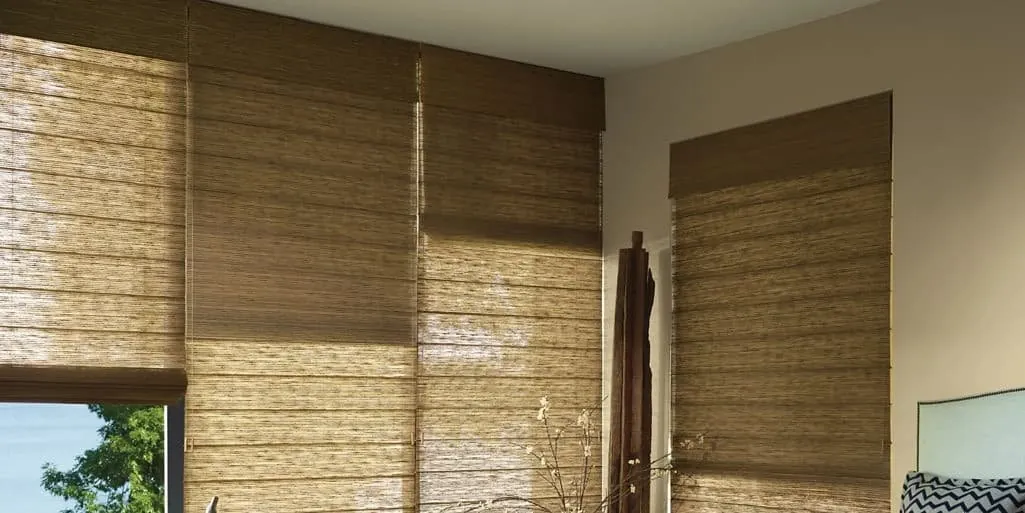
Sheers and woven wood for a softer room
Some rooms call for something gentler than a blind or a crisp roller. A colonial living room with painted panelling, a cape bedroom under the eaves, a family room that looks out over a field: these often suit a treatment that filters the light rather than blocking it.
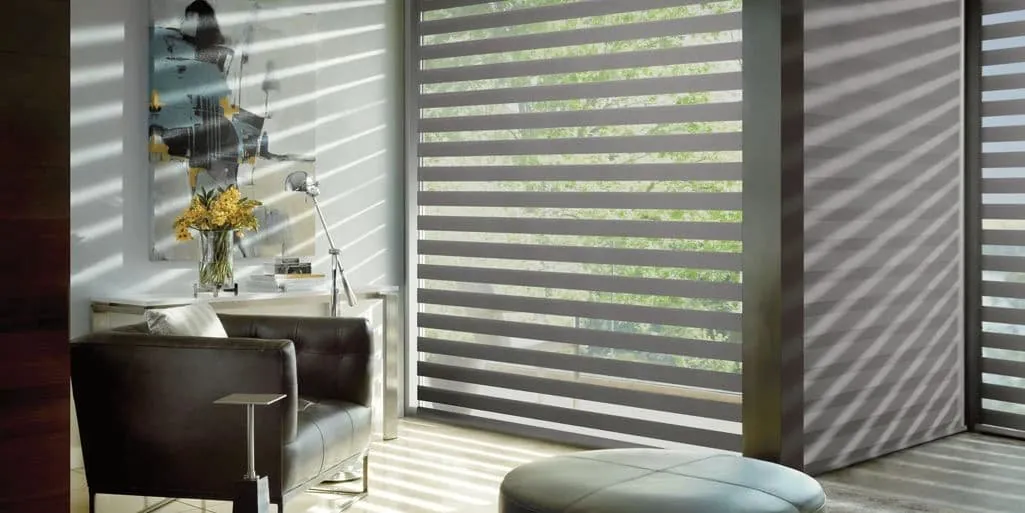
Sheer shades are the obvious place to start. Silhouette has soft fabric vanes suspended between two sheer layers, so the light comes through diffused and even. Pirouette has softer vanes on a single sheer backing that fold open flat. Luminette works side to side, which makes it a good choice for a patio door in a ranch where you want the look of drapery and the control of a vertical vane. All three let you see out during the day and close for privacy at night.
Woven wood shades bring texture instead. The natural fibers suit the plain lines of a farmhouse and the beachy feel of a shingled cape. They can be lined for more privacy or left unlined to let the weave glow in the sun.
Both work well layered with drapery in a formal room, and both can be motorized like the rest of the range. Our sheer shades and woven wood shades pages go into the details.
What a Gallery dealer means for your house
Blinds & Designs is a Hunter Douglas Gallery dealer, and every Hunter Douglas line is available through us: honeycomb, roller, roman, sheer and woven shades, wood, faux wood, metal and vertical blinds, Palm Beach, NewStyle and Heritance shutters, drapery and PowerView motorization.
Our installers are certified by Hunter Douglas. The same company that measures your windows orders and installs the product, and handles repairs if something needs attention later.
See more on our Hunter Douglas page, or browse every product from the window treatments overview.
Questions from Dartmouth
Should I visit the showroom or have you come to the house?
Either works, and many people do both. The showroom is a good way to see the range. An in-home visit is the only way to see a fabric in your own light and to get your windows measured, and it ends with a free estimate.
What works on the deep old sash in a Russells Mills farmhouse?
Deep reveals suit an inside mount. Shutters, honeycomb shades, roman shades and wood blinds can all sit inside the opening. Because old frames are rarely square, we measure at several points and size each piece to fit.
How do I deal with the afternoon glare off Apponagansett Bay?
Solar screen roller shades cut glare while keeping the view, sheer shades soften it, and room-darkening fabric shuts it out in a bedroom. Motorized shades can lower themselves on a schedule every afternoon.
Is a ranch house worth motorizing?
Ranches are among the easiest houses to motorize, with every window on one floor. A set of PowerView shades can open and close the whole house on one schedule, or be run from your phone or a remote.
What does the estimate cost?
Nothing. After we measure, you get a free estimate for everything you are considering, with no pressure to decide that day.
Start with a visit
Planning window treatments in Dartmouth, MA, is easiest with samples in your own rooms and someone who knows the houses here. Request a consultation and we will come to you, measure every window and leave a free estimate. Or use the call button, or drop in at the North Dartmouth showroom.