
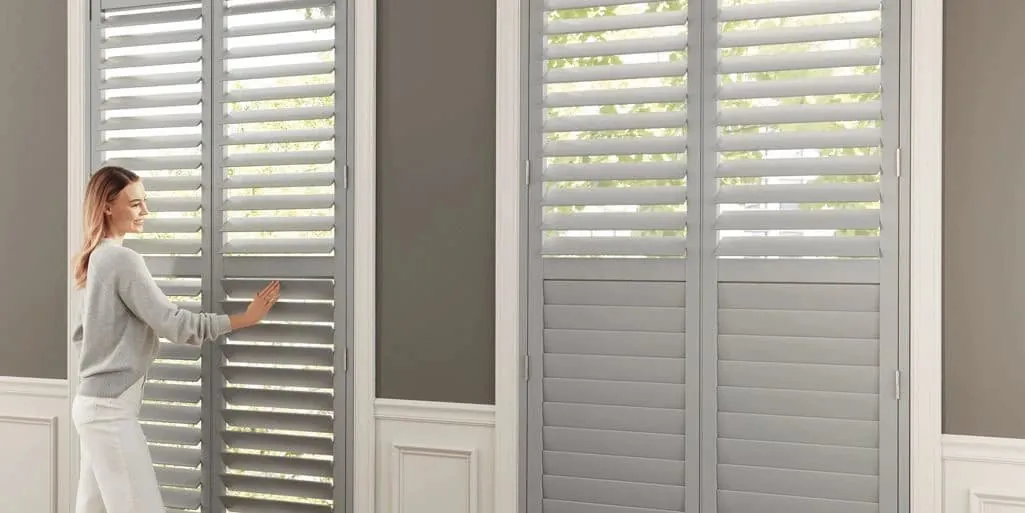
Slim old sash and soaring foyer glass
Mansfield’s houses stretch across a wide range of ages, and the windows follow suit. The Victorians near the center have tall, narrow sash, the kind that makes a room feel taller than it is. Across the subdivisions, post-war ranches give way to large newer colonials, and the newest of those builds open their front halls with two stories of glass. Plantation shutters in Mansfield, MA, need to look right on a slender window you can almost span with your arms and on an entry wall that climbs past the landing.
The two ends of that range ask for opposite skills. A slim old sash is a matter of proportion and patience: keeping the louvers in scale and fitting a frame inside an opening that is rarely true. The tall foyer glass is a matter of planning: deciding which parts of the window need to move and which can be set once and left alone.
In between, the ranches and the bulk of the colonials are steady, regular houses where one well-chosen louver width can carry the whole place.
Where the planning goes in a Mansfield house
Every house is different, but in town most of our shutter conversations begin in one of three places.
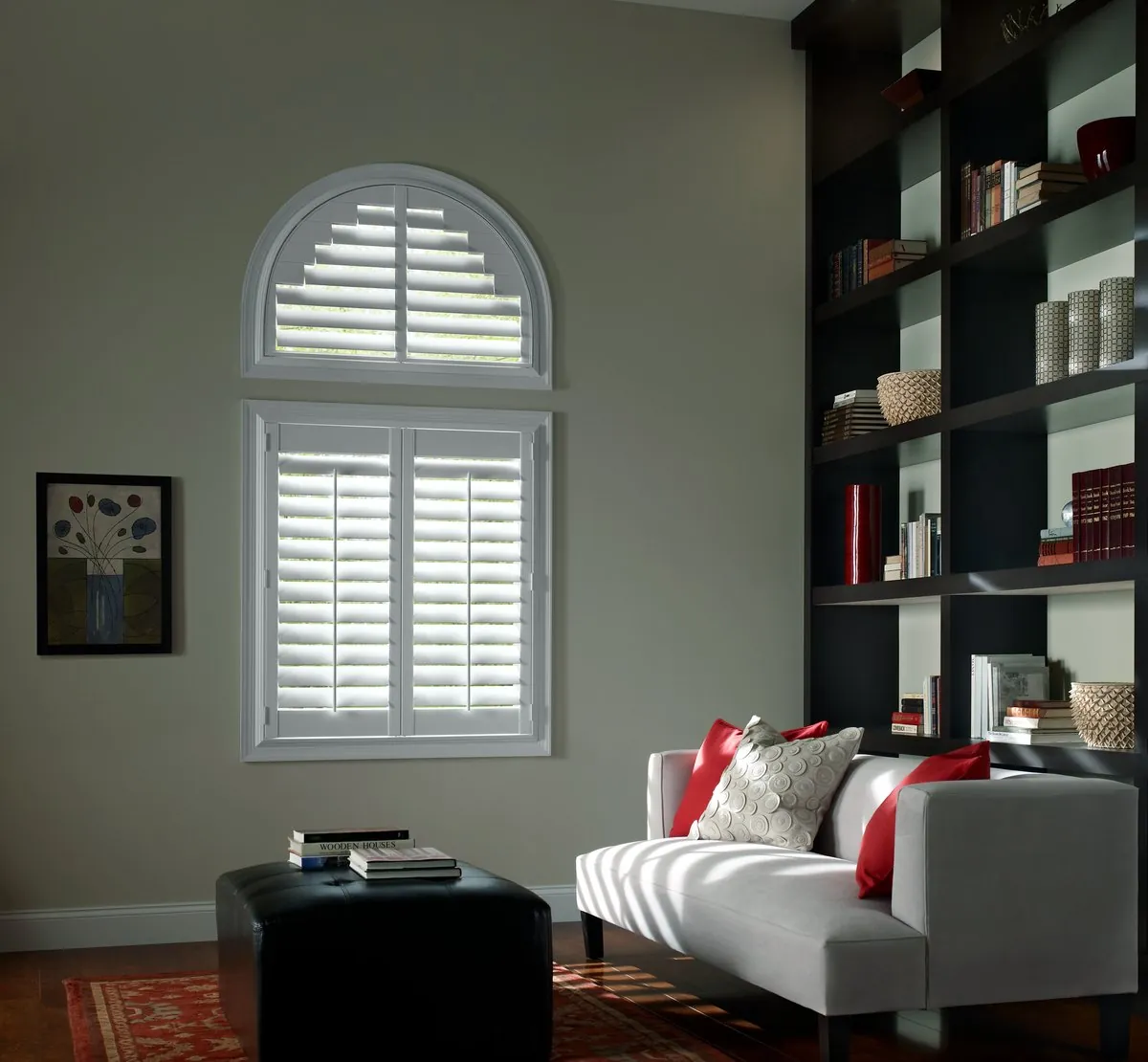
The Victorian front room
Tall, slender sash, often in pairs. A narrow louver and a divider rail keep each panel in proportion with the glass.
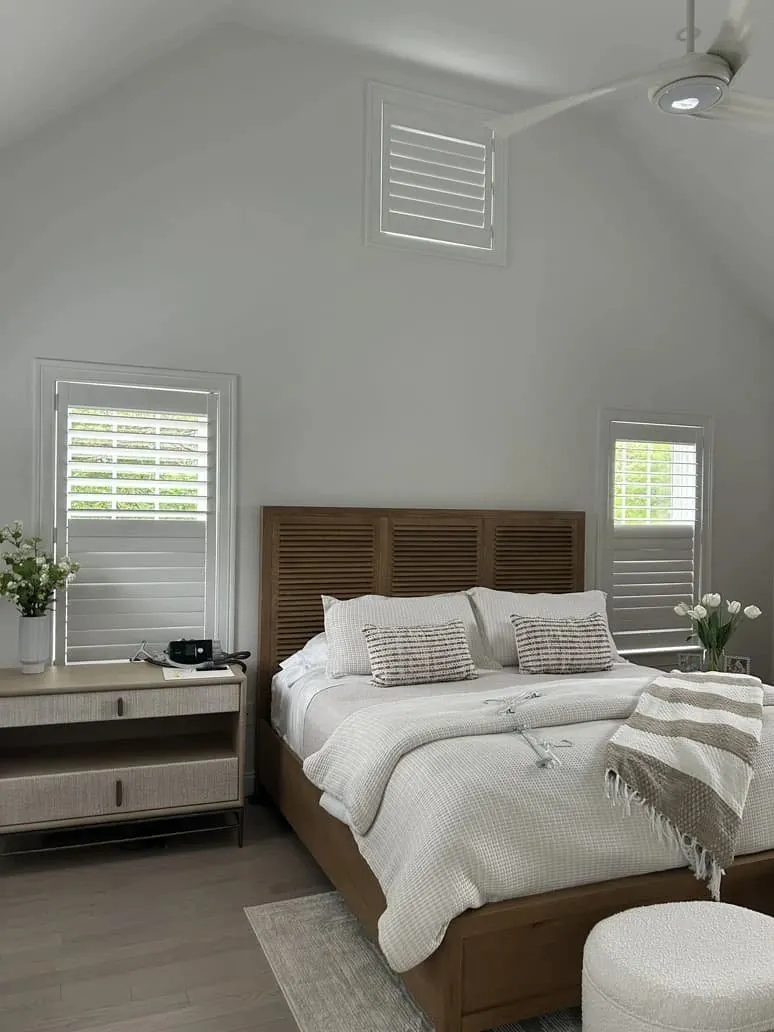
The two-story entry
Glass high above the door. We split it into tiers so the lower panels work from the floor and the upper ones are set at a comfortable angle.
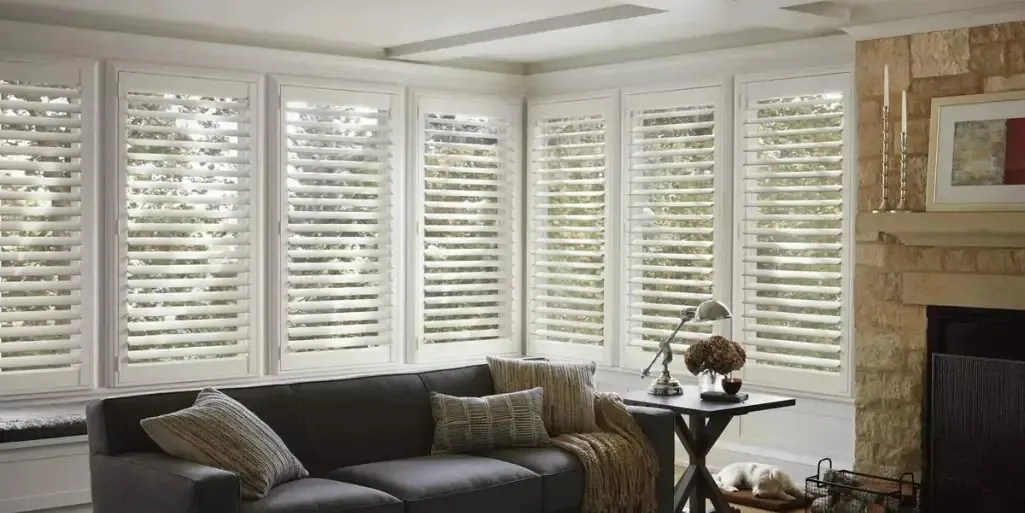
The subdivision living room
Plenty of standard windows in large rooms. One louver width and one color across the front keep the house looking calm from the street.
Keeping a slim sash in proportion
The tall, narrow windows in the Victorians near the center are lovely, and they are easy to spoil. Put a broad louver on a window that slim and the blades look heavy, with only a few of them stacked up the glass. Put a frame that is too bulky around it and the casing, often the best woodwork in the room, disappears.
So we start with scale. A narrow louver gives the panel more blades and a finer look. A divider rail partway up stops the louvers from running in one long column, and it lets the lower section stay shut for privacy while the upper section opens. On most of these windows a pair of panels works best, each one narrow enough to fold back neatly against the jamb.
Then comes fit. Older openings have usually moved. Each opening is measured across at several heights and up each jamb, and the frame is built to absorb whatever the window has drifted, so a pair of panels still closes along a straight line. If the stops or a sash lock crowd the opening so much that the blades cannot rotate, a slim frame fixed to the casing is the safer route, and we will say so plainly. The checks are covered in more depth in our guide to shutters for older windows.
Covering two stories of foyer glass
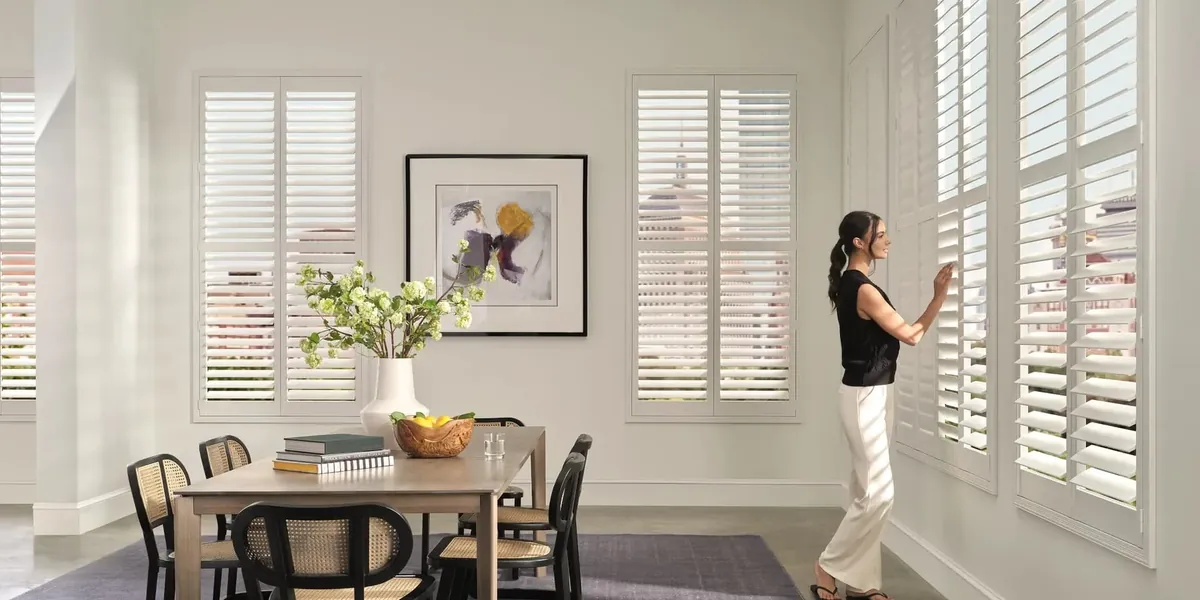
In the newest colonials, the front hall often rises the full height of the house, with a tall window or a stack of windows above the door and sometimes a half-round on top. From the landing it is a striking view out. From the street at night, with the hall lights on, it is a clear view in.
Glass on that scale is best handled in stacked sections. The bottom section, the one a hand can reach while standing in the hall, swings open and adjusts as normal. The sections above can swing as well, though most households choose to lock those blades at one angle that lets light through and blocks the view, since nobody will be adjusting them often. Divider rails keep each panel from looking like an endless ladder of blades.
An arched top light can take a panel cut to its curve, either with blades radiating outward or a plain filled insert. Some owners prefer to leave the arch bare and shutter only the rectangular glass below; that works well when the top light is decorative. Where you want the uppermost glass to change through the day with no ladder involved, PowerView motorization on a Hunter Douglas shade is the alternative for that one window, with shutters everywhere else. We plan how each motor is powered at the visit and lay out both routes side by side before anything is settled.
The post-war ranches
The ranches across the older subdivisions are among the easiest houses in town to shutter. The openings are square and regular, the walls are a standard depth, and the rooms sit on one level.
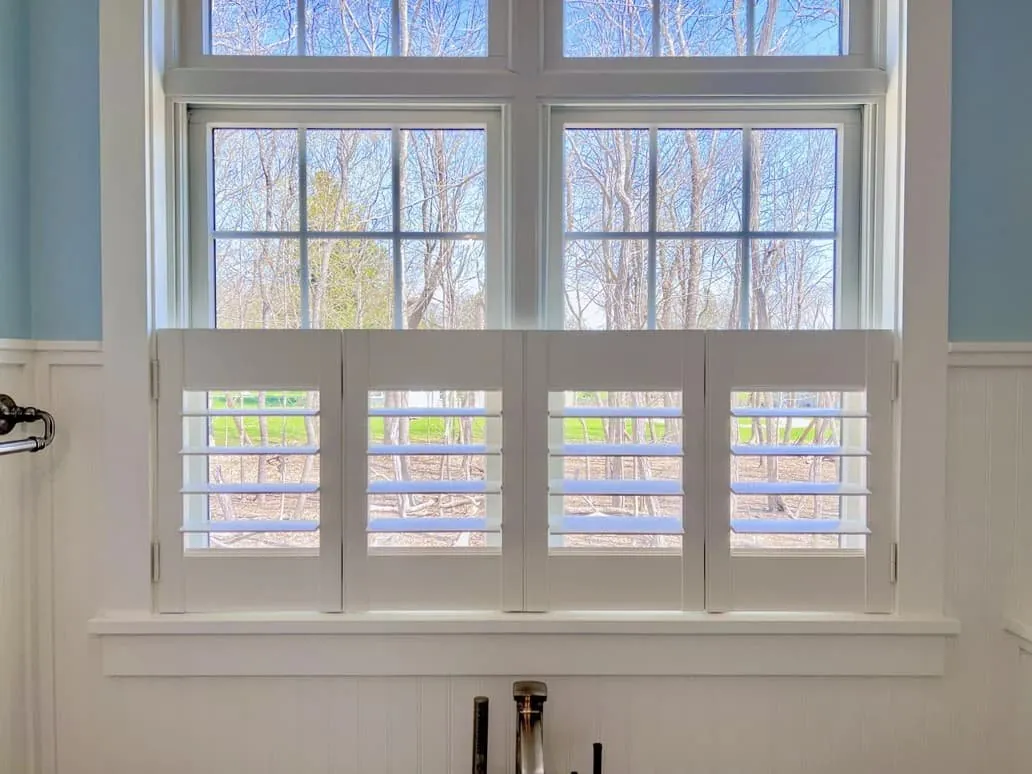
The front picture window is the one that needs thought. Rather than a single wide panel, we divide it into several that hinge together and fold back in pairs. You can open the center and leave the sides shut, or fold everything away on a warm afternoon. A broad louver suits those long, low proportions and gives a clearer view out.
The bedroom windows along the hall tend to share a size, so one layout covers the lot. Since everything is reachable from the floor, these are houses where the simple, hand-worked shutter makes most sense.
Begin with the street side
Many shutter orders in town begin with the rooms that face the street, because they are seen from outside and used every evening. In a Victorian near the center that means the front parlor and the room above it. In a subdivision colonial it means the living room, the dining room and the foyer.
Starting there fixes the big decisions early. The louver width, the frame and the color chosen for the front become the pattern the rest of the house follows, and we keep a note of them so later orders match. Once the front rooms are done, the family room, the kitchen and the bedrooms can follow on whatever timetable suits you. Planning plantation shutters in Mansfield, MA, that way spreads the work out without leaving the house looking unfinished from the road.
Large colonials across the subdivisions
The bigger colonials have more windows, larger rooms and, often, plain builder trim. That combination calls for a few decisions made once and repeated.
First, the louver width for the street side. It shows from outside on every window across both floors, so we pick one and keep it. Second, the frame. Flat builder casings often look better with a decorative frame, which adds a profile around the edge and gives the shutter the look of millwork. Third, the color, settled in the room you see most and carried through.
At the back of the house, the family room may have a long run of windows or a pair of doors to the yard. There the louver can step up a size, because that room is seen from inside and the view counts more than matching the front. For doors that swing, panels can be mounted to move with them.

Louver widths at a glance
Blade width is what the eye catches first on a finished shutter, and Mansfield’s mix of houses uses the whole range.
- Narrow louvers for the slim Victorian sash near the center and for small upstairs windows. They keep a fine, light look.
- Medium louvers for standard bedroom and kitchen windows in the ranches and colonials. A dependable all-round choice.
- Wide louvers for the ranch picture window, the colonial family room and the lower tier of a two-story entry. Tilted open, they give the clearest view.
Tilt control is the companion choice. A tilt rod on the face of the panel is easy to reach and traditional to look at. A concealed tilt works the blades from the side and keeps the front plain. Both are reliable; it comes down to taste.
Privacy at the front, glare at the back
Near the center, the Victorians sit fairly close to the street, and their front rooms are on view from the sidewalk once the lamps come on. In the subdivisions the setbacks grow, though the façades still look across the road at the neighbors’ fronts.
Louvers deal with that neatly. Angle the blades a touch downward and the room looks out without being looked into. Angle them upward and the light bounces off the ceiling, which keeps the space bright yet screened. With a divider rail, the lower blades stay shut and the upper ones open, which is ideal on a tall front sash.
The back of a big colonial often faces west or south across the yard, and the family room can fill with low sun late in the day. Angling the louvers cuts the glare off screens and floors without closing the room off. Taming that afternoon sun is often the main reason to choose plantation shutters in Mansfield, MA, for the back rooms as well as the front.
Painted or stained
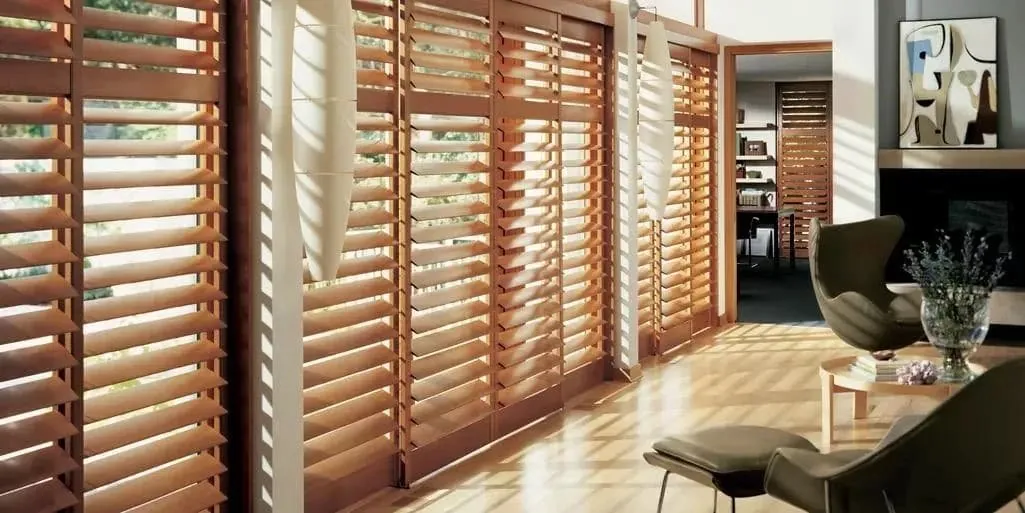
Most shutters in town are painted, and white leads by a distance: it lifts a room and suits almost any trim. In the Victorians, though, many coats of paint on the casings may have turned it a soft cream, and a warm white or off-white usually sits better beside it than a bright one.
Some of the older houses near the center still have natural wood trim. That is where Heritance comes in. It is a hardwood shutter that can be stained, so it can pick up the tone of the casing and the floor instead of standing apart from them. In a newer colonial, a stained Heritance shutter in a study or dining room can add warmth to a room of plain white trim.
We bring finish samples to look at in your rooms, once in daylight and once under your own lamps.
Bedrooms upstairs
The upstairs of a large Mansfield colonial usually holds the main bedroom and several smaller ones, each with one or two standard windows. Bedrooms raise their own questions: how dark the room gets in the morning, whether a window faces a neighbor’s house, and how easily a younger child can reach the controls.
Closed fully, a shutter shuts out most of the morning light and all of the view. A divider rail lets the top louvers open for air and daylight while the lower ones stay closed. A hidden tilt leaves no rod on the face of the panel for small hands to swing on. Where a room needs real darkness for sleep, we may suggest pairing the shutter with a different covering, or using one in that room instead, and we will show you how each looks.
Choosing plantation shutters in Mansfield, MA, for the bedrooms usually comes down to louver width and tilt. A medium louver suits most upstairs windows, and matching the street-side bedrooms to the rooms below keeps the front of the house consistent.
Collections for every room
Hunter Douglas makes three shutter collections, all in the same louver widths and frame styles, so they can be mixed in one house without any visible change from room to room.
Palm Beach goes where there is water and steam: the bathrooms, the sink window, a mudroom by the garage. NewStyle handles most of the house, from the ranch bedrooms to the colonial family room. Heritance is the hardwood choice for front rooms and for anywhere a stained finish suits the trim.
More on each: Palm Beach, NewStyle and Heritance, with all three compared on the main plantation shutters page.
How we measure a tall or settled opening
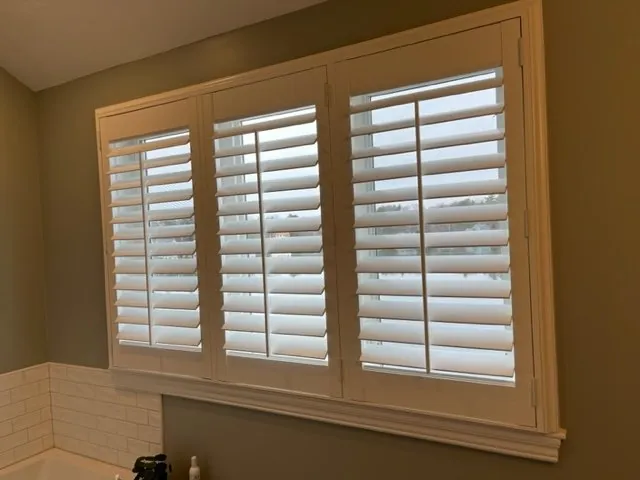
Most windows take a few minutes to measure. The slim old sash and the foyer glass take longer, and this is how we go about them.
- Widths are taken high, low and in between, and heights along each jamb and down the middle.
- We check the diagonals to see whether the opening has racked out of square.
- We note the depth and anything in the way: sash locks, stops, cranks or a sill that sticks out.
- On tall glass, we mark where the tiers will break so rails line up with the window’s own divisions.
- For a shaped top, we take the curve itself so the panel follows it exactly.
Each of those numbers shapes the frame. It is why we measure every window ourselves at the house rather than working from a sketch, and why the estimate you receive afterwards is free and based on your actual openings.

Franklin showroom or your front hall
The nearest of our showrooms to Mansfield is the Franklin showroom. Plenty of Mansfield households begin with a trip there.
Most shutter decisions, though, are best made at home. Sample vans make the trip to your house, because we can bring the showroom to you: louver widths to hold against a slim sash, colors to set beside your trim, frames to try on a builder casing.
Either way, we measure at your house before anything is ordered.
Gallery status and the people who fit the panels
As a Hunter Douglas Gallery dealer, Blinds & Designs can offer every shutter collection, louver size, frame and finish without sending you elsewhere for part of the order. The installation crews hold Hunter Douglas certification, which matters most on a slim Victorian sash: frames are trued up even inside a crooked opening, panels are hung to close along a clean center line, and each blade is tested before the crew packs up. Should a shutter or shade in the house ever need fixing down the line, we take on blind and shade repairs too.
If another room suits something softer or darker, look at roman shades in Mansfield, custom blinds in Mansfield or motorized blinds and shades, or see all our services on the Mansfield page. Our interior design consultations can help pull a room together.
Questions from Mansfield
Will shutters overwhelm the narrow windows in my Victorian?
Not with the right louver. A narrow blade and a slim frame keep the shutter light, and a divider rail breaks up the height. If the depth is too shallow for an inside mount, a slim outside frame protects the look.
How do you handle the tall glass above my front door?
Stack it in sections. The bottom panels swing and adjust from the hall floor, those above usually keep their blades locked at one angle, and a shaped panel can follow an arch at the top. A motorized shade on the high glass is another option.
Can one louver width work across a whole colonial?
Often, yes, at least across the street side. The family room at the back can step up to a wider louver if it has a long run of glass.
What can I do about late sun in the family room?
Tilt the louvers up to cut glare while keeping the room bright, or close them fully when the sun drops toward the horizon. A divider rail lets you treat the top and bottom of a tall window separately.
Do you charge for the visit and measurements?
We measure every window on your list and give you a free estimate, and nothing obliges you to order.
When you are ready
Book a consultation and judge plantation shutters in Mansfield, MA, on your own sash and foyer glass. Samples of each collection come with us, every opening gets measured, and the estimate we leave is free. The call button reaches us too, and the Franklin showroom is the nearest place to browse.