
One town, three very different windows
Plymouth covers more ground than any other town in Massachusetts, and its houses cover just as much range. In the historic center, antique colonials have small sash set deep into thick walls. In the Pinehills, large newer houses are built around modern glass that runs two stories high. Between the two, post-war ranches line the roads with broad picture windows and sliders. No single treatment answer fits all of that, which is why we look at each house on its own when we plan cellular shades in Plymouth, MA.
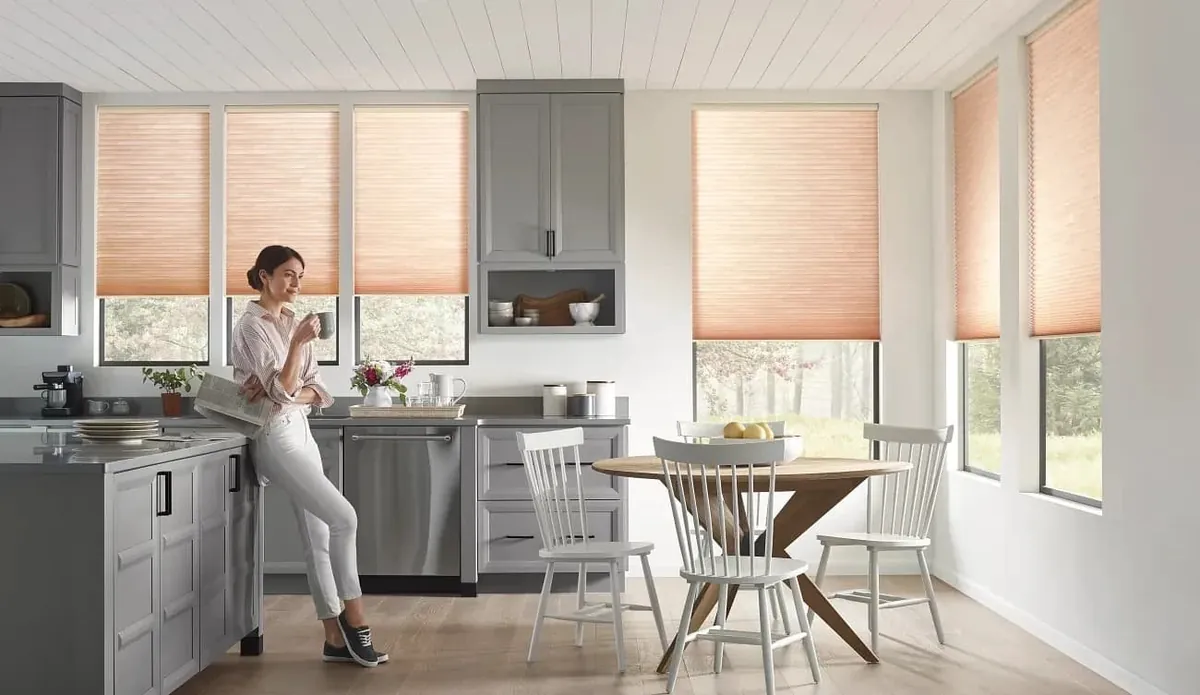
What honeycomb shades bring to every one of those houses is the same basic benefit. Each cell is a pocket of air that barely moves, and a shade full of them, lowered over a window, sets a quiet barrier between the cold glass and the room. In an antique colonial that makes a draughty parlor more comfortable. In a Pinehills great room it tames the heat and the chill that come with a wall of glass. In a ranch it helps a big picture window behave.
How the shade is built, mounted and operated is what changes from one house to the next, and that is where most of our time goes.
Matching the shade to the house
Duette and Applause, the honeycomb collections from Hunter Douglas, can be built for any of these windows, so cellular shades in Plymouth, MA, start with the house rather than the catalog. Here is how we usually approach each kind.
Antique colonials in the center
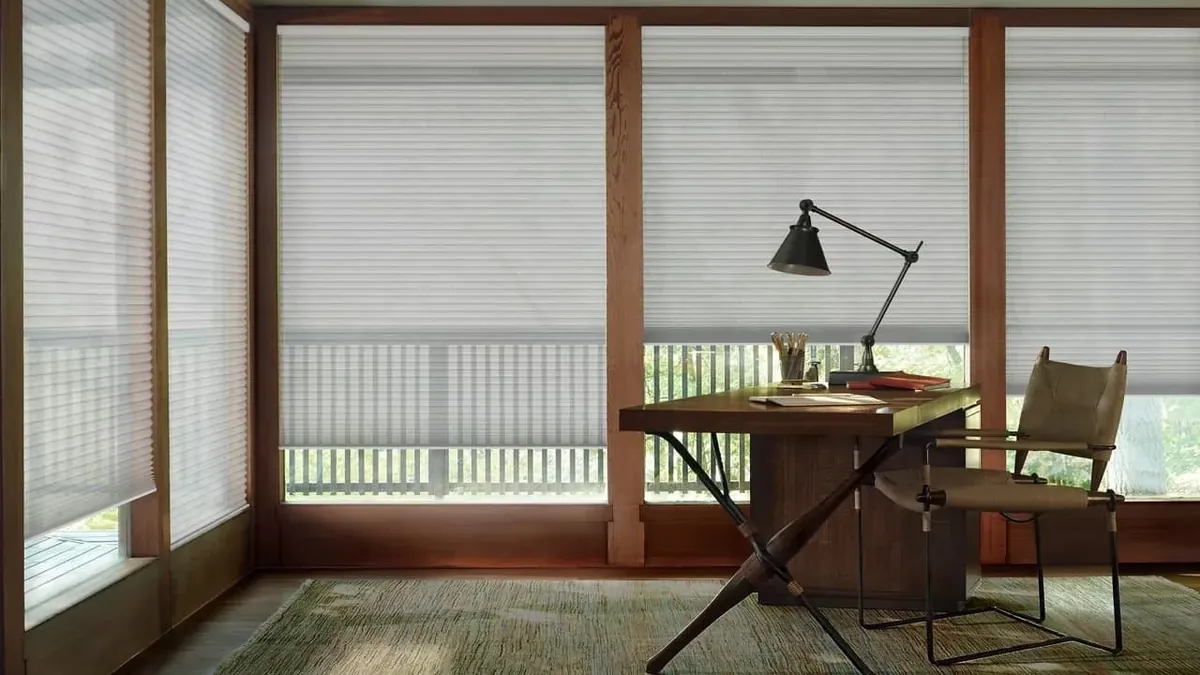
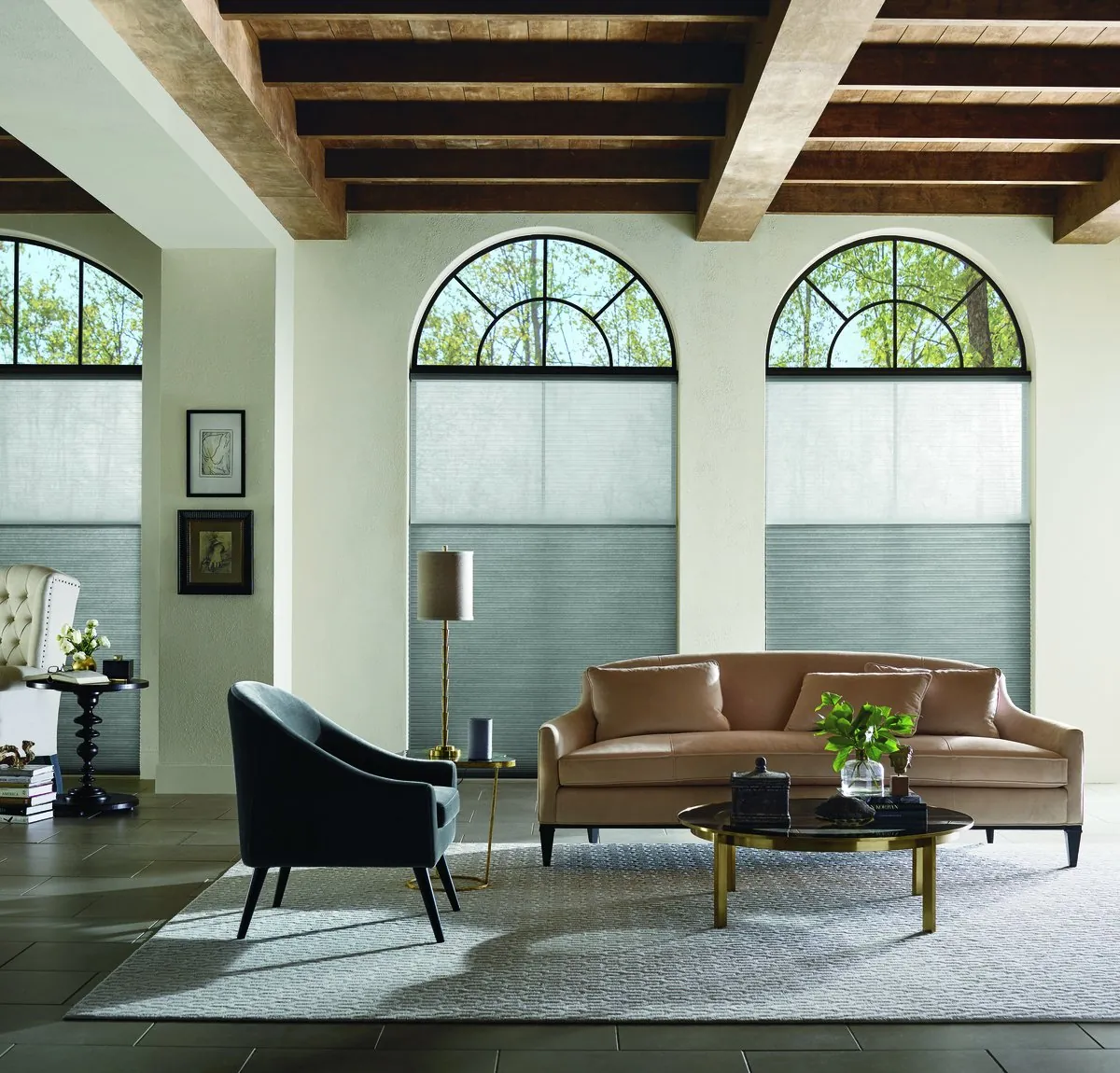
Small, deep-set sash suits a shade tucked into the reveal, leaving old casings visible and the stack nearly hidden when raised.
Post-war ranches
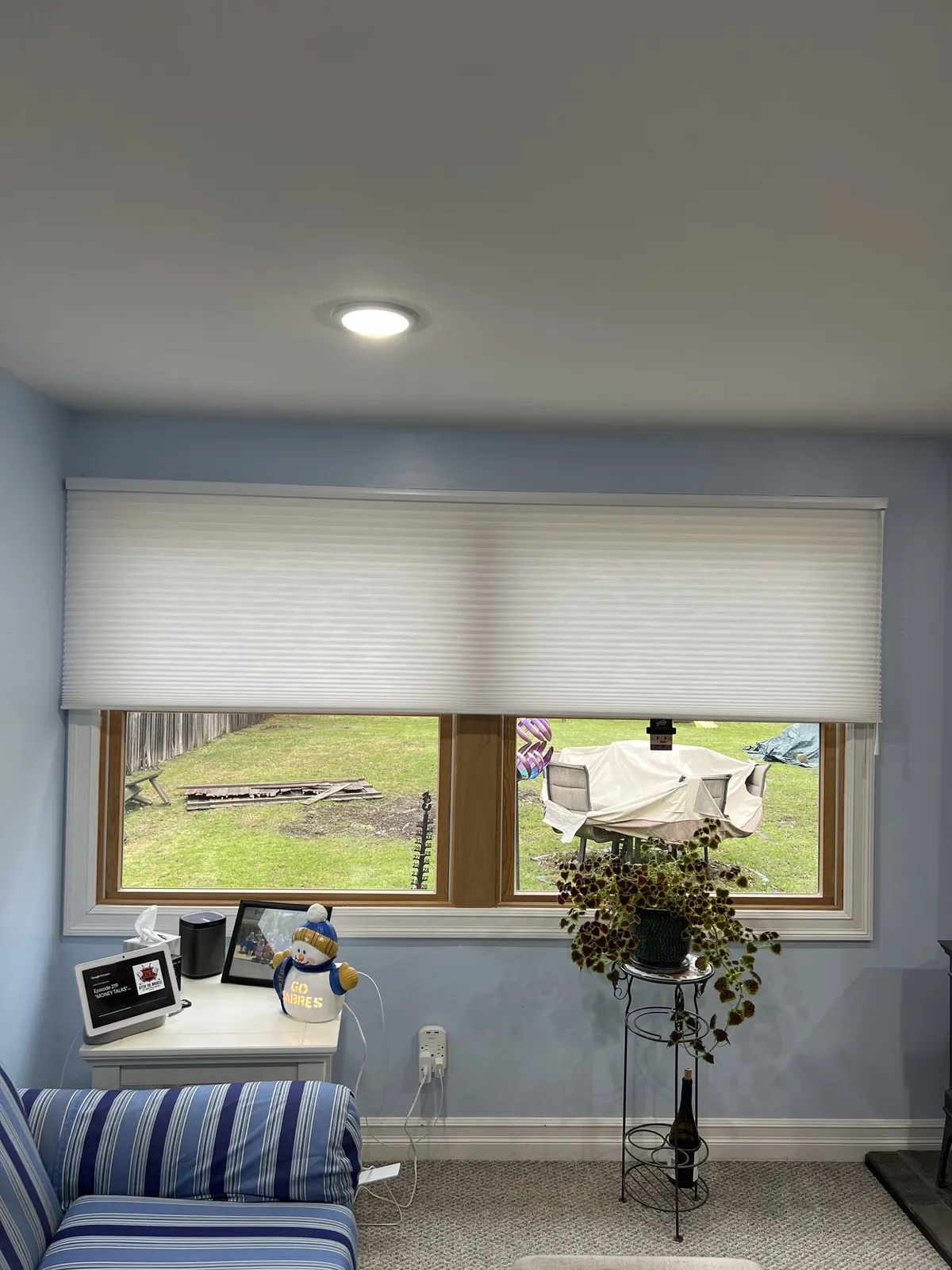
Wide picture windows split into sections on one headrail, and a vertical honeycomb for the slider to the yard.
Pinehills glass
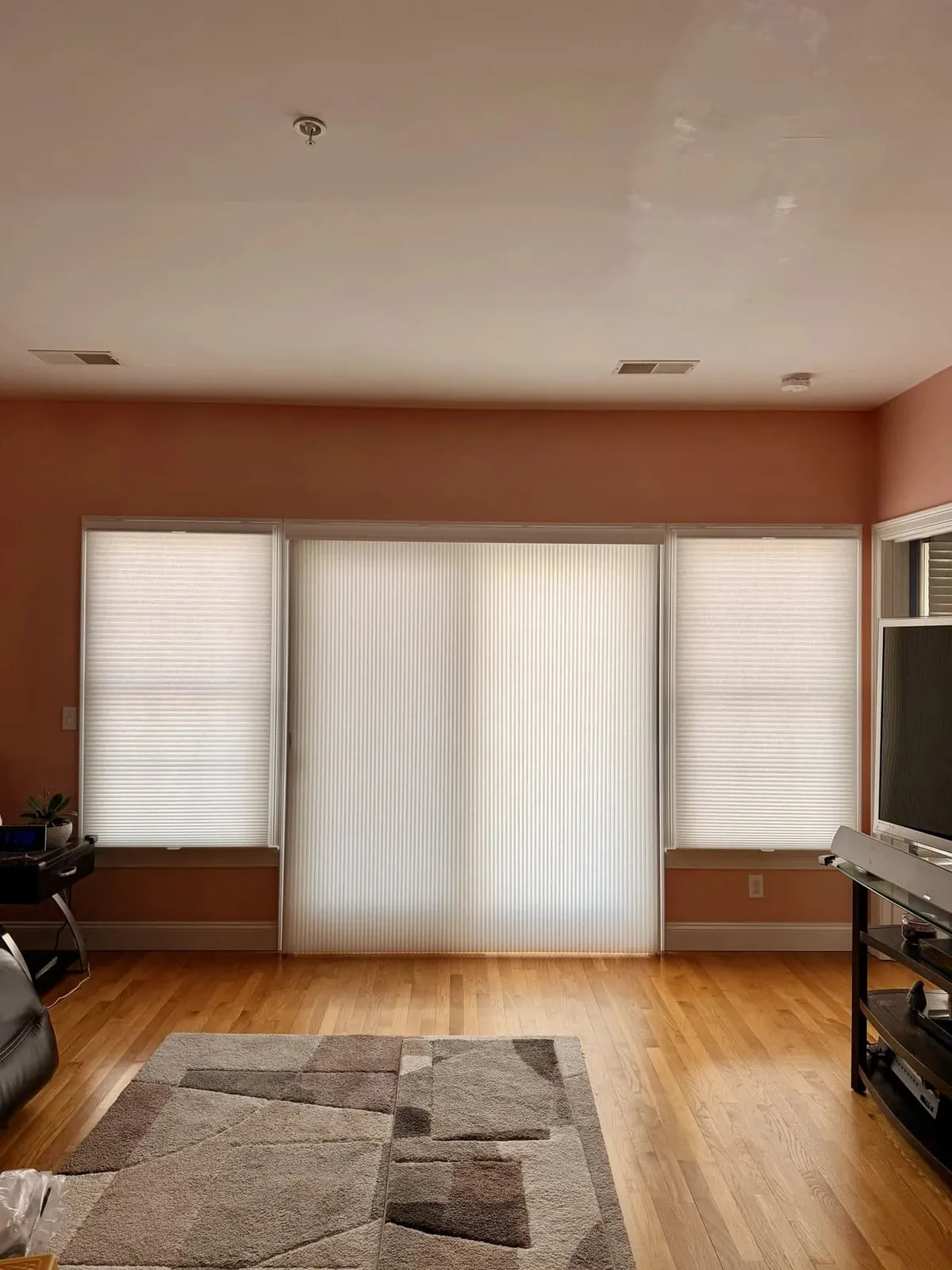
Tall and wide openings, transoms and doors, all in one fabric, with PowerView for the panes nobody can reach.
Small, deep-set sash in the historic center
The oldest streets of Plymouth hold antique colonials whose windows were made small on purpose, set into walls thick enough that the sash sits well back from the room. That depth is a gift for a honeycomb shade. With room in the reveal, the headrail fits inside the opening, the fabric hangs just in front of the glass, and the casing, the sill and the deep jamb all stay in view.
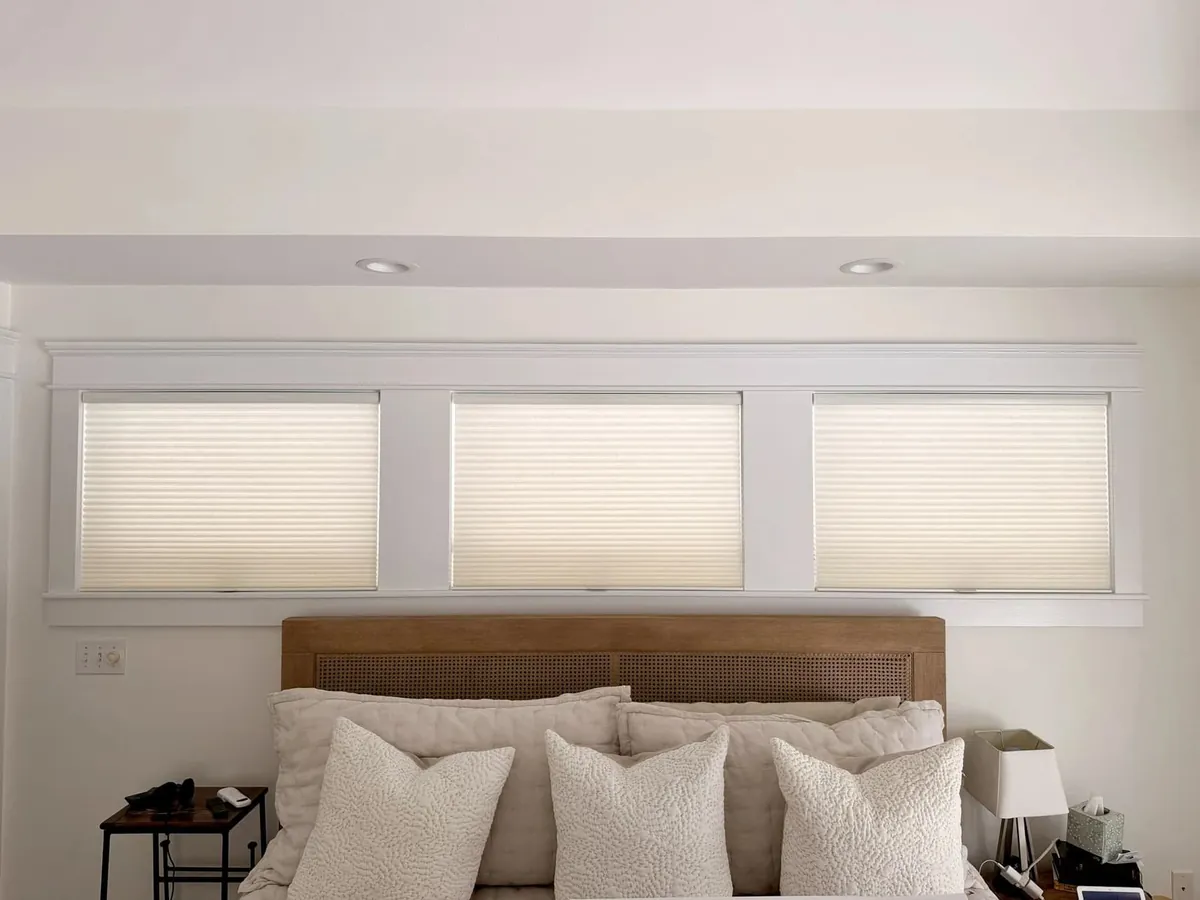
Small panes and small openings also mean every inch of daylight counts. A honeycomb shade raised to the top shrinks to a slim band, so the window gives up very little light even when the shade is in use. Lowered, a light-filtering fabric lets the room stay bright while screening it from the sidewalk. For the bedrooms upstairs, where the windows are smaller still, a room-darkening fabric gives a proper night’s dark without heavy curtains crowding a low ceiling.
Old houses are seldom square, and the deep reveals in these colonials often taper or lean a little. We take widths at the top, middle and bottom of every opening, check the depth at each corner, and build each shade to its own window. Where a reveal leans too far for a clean inside fit, we say so and suggest the mount that will look straightest.
These are also the coldest windows in town on a January night, single glazing set into old frames. Choosing a fabric with a second cell inside the first, such as a Duette Architella, gives a thicker layer of trapped air, and our article on cellular shades and winter heat goes into why that helps.
Two-story glass in the Pinehills
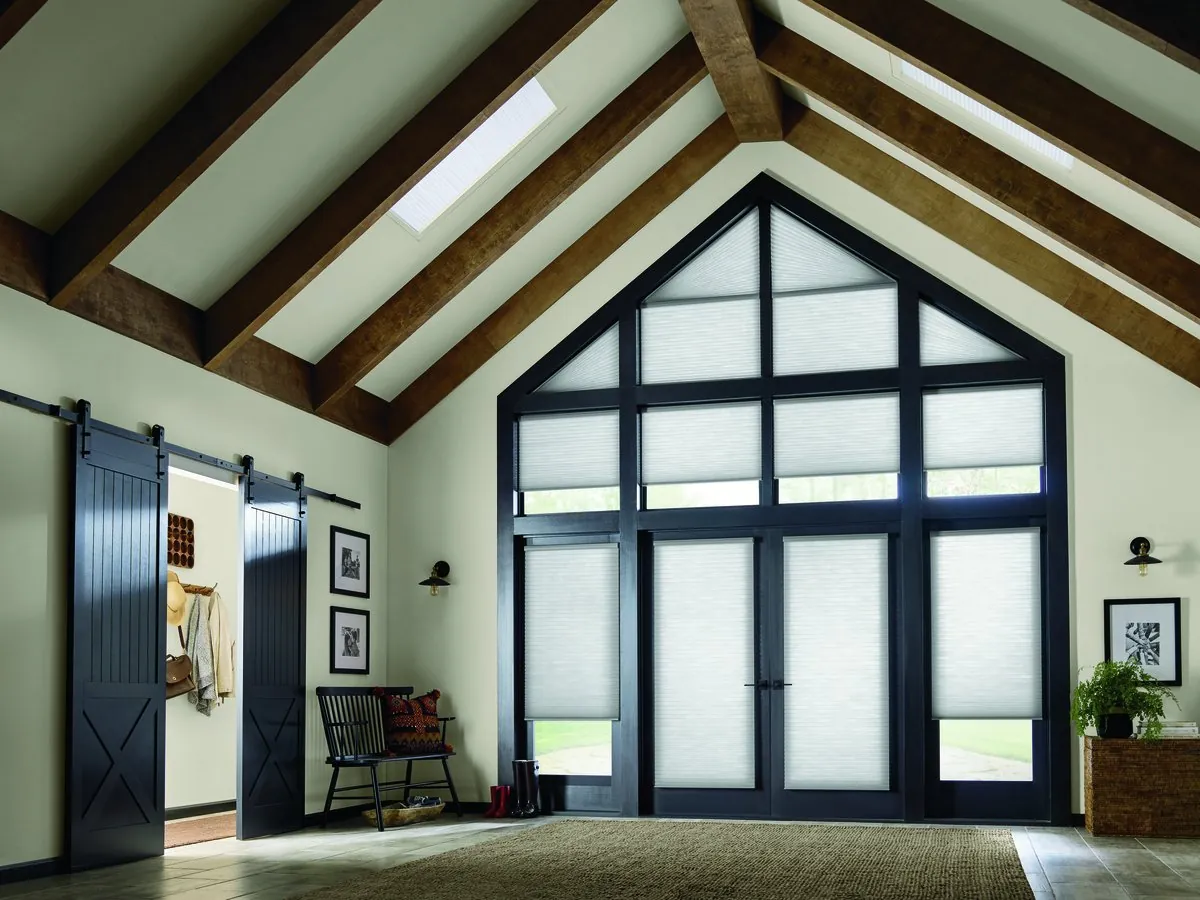
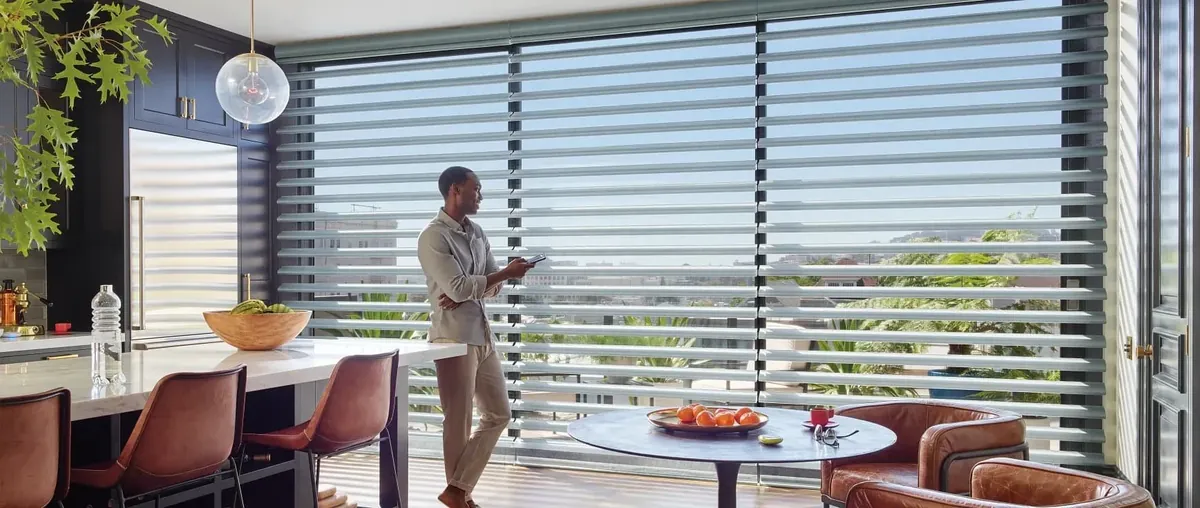
The Pinehills are a different world. The houses are large and new, designed with tall windows stacked over one another, glass that runs from the floor to a high ceiling, transoms over doors and corner windows that wrap a room. That much glass makes a room feel open to the woods and the light, and it also means strong sun in the afternoon, heat in summer and a chill near the glass in winter.
Honeycomb shades handle tall glass better than most treatments. They can be made large, and several can be lined up on a wall so the pleats and the bottom rails align across every pane. Upper and lower windows can each take a shade in the same fabric, so the wall reads as one surface whether the shades are up or down. Shaped and angled windows at the top of a gable can take specialty honeycomb shades as well.
A sheer or light-filtering fabric keeps the view of the trees and lets daylight fill a big room while cutting glare. For a room that faces west, a Duolite design gives you a sheer shade and a darkening shade on the same headrail, ready for bright afternoons and dark evenings. From outside, the backing of every honeycomb shade is a plain neutral, which keeps a large facade calm.
Motorizing windows nobody can reach
The upper row of windows in a two-story room is out of reach by hand, and that is where PowerView motorization comes in. Every motorized shade can be raised or lowered from a phone app, a handheld remote or a wall control, singly or in groups.
The real benefit is in scheduling. You can set the great room shades to lower on summer afternoons when the sun swings round, and lift again in the evening. You can have bedroom shades close at dusk and open at a set time in the morning. In a big house with many windows, grouping shades by room or by side of the house saves a lot of walking.
We plan the motors and their power with you during the consultation, window by window, because a high window and a window by the door often need different solutions. Our page on motorized blinds and shades covers how the controls work, and the guide on how motorized shades are controlled goes further.
The ranches in between
Between the old center and the newer developments, much of Plymouth is post-war ranches. They sit low on their lots with one big living room window, a run of bedroom windows set high on the wall, and a slider out to the back. Many have had replacement windows fitted over the years.
For a ranch, honeycomb shades are mostly about comfort and simplicity. A large living room window loses a lot of warmth on winter nights; a honeycomb shade closed at dusk slows that down. In summer, a light-filtering fabric lowered in the afternoon keeps the room bright and slows the heat coming through. We often split a wide picture window into two or three shades on one headrail, so you can raise one section for the view and keep the others down.
The slider takes a vertical honeycomb that runs side to side and stacks compactly at one end. And because replacement windows can have shallow frames, we check the depth of each before choosing between an inside mount and an outside mount fixed just above the window.
Why still air keeps a room warm
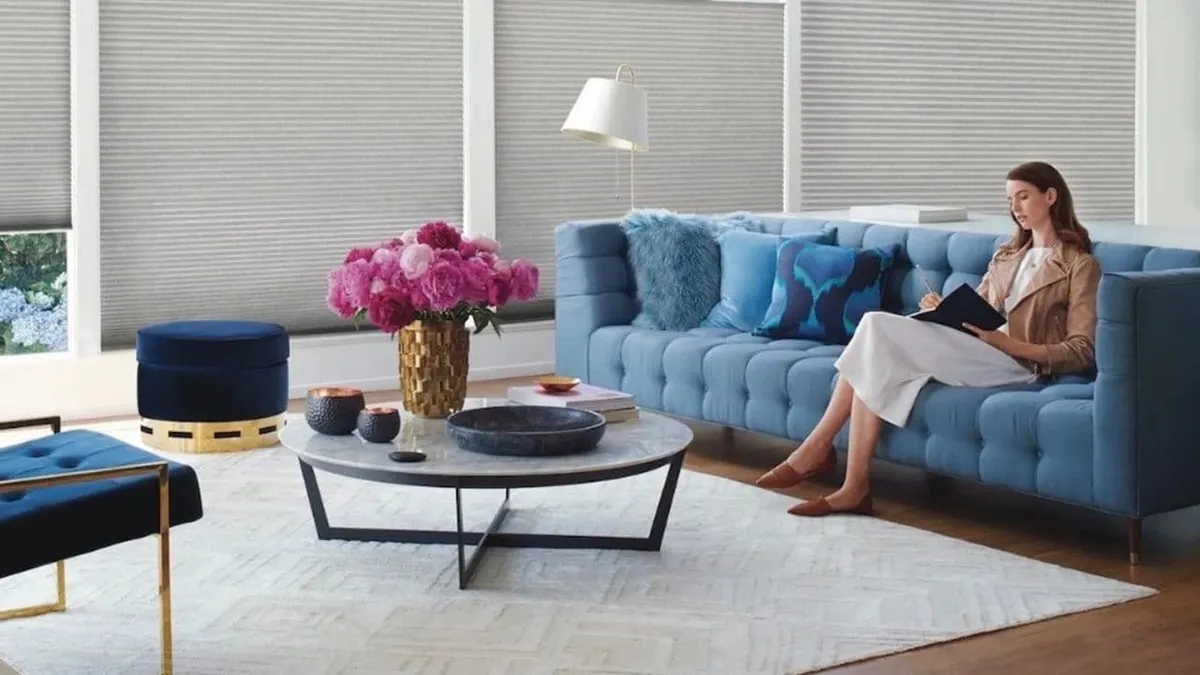
The principle behind a honeycomb shade is simple enough to explain at the kitchen table. Heat moves easily through glass and through air that is free to circulate. It moves slowly through air that is trapped and still. A honeycomb shade is a curtain of tiny trapped-air chambers, so when it is down, the warmth from your heating has to work much harder to reach the cold pane, and the cold has to work harder to reach you.
That is why the shade feels warmer the closer it fits. An inside mount in a deep antique reveal, or an outside mount that overlaps a ranch window’s frame, leaves less room for air to slip around the edges. Double-cell fabrics add a second row of chambers, and Architella puts a smaller cell inside each larger one. We do not quote figures, because every house and every window is different, but the coldest rooms are where the difference is easiest to feel.
Sun across a big town
Picking cellular shades in Plymouth means thinking about orientation before color. Plymouth is large enough that the light in one house can be nothing like the light in another. A colonial near the water takes reflected brightness off the harbor. A Pinehills house set among trees gets dappled light that changes through the day. A ranch on an open lot may take full sun on every side. Which way each room faces matters more than the town it is in.
So we choose fabric room by room. East-facing bedrooms that catch the first light usually want room-darkening honeycomb. West-facing living rooms that take the late sun suit a heavier light-filtering fabric, or a Duolite. North-facing rooms, which never get direct sun, can take a lighter fabric that lets in as much daylight as possible. A top-down, bottom-up shade earns its place almost anywhere, letting you cover the lower window while the top stays open.
Lifting and lowering
In a Plymouth house, the right lift often changes from one floor to the next.
- On the small sash of an antique colonial, cordless lift keeps a little window clean. There is nothing to hang at the side, which matters in a child’s room or near a pet.
- On a tall living room window, where the bottom rail would end up out of reach when raised, a retractable cord draws itself back into the headrail as you lift.
- On high glass in the Pinehills, or any window you cannot reach easily, PowerView does the work with an app, a remote or a schedule.
We go through each window with you rather than choosing one system for the whole house. A colonial might end up with cordless shades upstairs and a cord on the tall front windows, while a Pinehills house pairs cordless bedrooms with motors on every pane of the great room. Mixing them costs you nothing in looks, because the shades share the same fabric and pleat.
Duette, Applause or both
Hunter Douglas makes honeycomb shades in two collections. Duette is the wider one, with the largest fabric library, very large and specialty shapes, Architella and Duolite, and the Vertiglide shade for sliding doors. Applause is a smaller collection with its own colors and textures, and it suits the everyday windows of most houses very well.
In Plymouth, the split often follows the house. A Pinehills great room with tall and shaped glass usually calls for Duette. A ranch or the back bedrooms of a colonial may be well served by Applause. We bring both, so you can compare them at the same window. Our Duette honeycomb shades and Applause honeycomb shades pages explain each, and the cellular shades page covers the range.
What happens when we visit
Choosing cellular shades in Plymouth is easiest in your own rooms, because the light and the windows vary so much from one house to the next. Our vans carry samples, so we bring the showroom to you.
- You ask for a visit through Request a Consultation or the call button.
- We tour the house with you and listen to what bothers you in each room: cold, glare, privacy or heat.
- You hold fabrics against your own windows, from the smallest sash to the tallest pane, and watch how each one changes the light.
- We measure every window and check depth, hardware and, for tall glass, how the shades should line up.
- We talk through lift and PowerView options.
- You get a free estimate and decide in your own time.
If you want broader design help with color and fabric across a room, ask about our interior design consultations. More detail on the visit is in what happens at an in-home consultation.
Measuring deep sash and tall glass
The two ends of Plymouth’s housing need different care when we measure.
- In an antique colonial, we check how deep each reveal is and whether it tapers, then take three widths and three heights so the shade clears the tightest point.
- In a Pinehills room, we work out with you where each shade will break, so the pleats and bottom rails line up across stacked and side-by-side windows.
- In a ranch, we check whether replacement frames leave room for an inside mount, and plan an outside mount where they do not.
- In every house, we agree mount, fabric and lift for each window before anything is ordered.
When the shades arrive, Hunter Douglas certified installers from our team fit them, square and level each one, test every lift and motor, and show you how it all works.
Sagamore is our nearest showroom
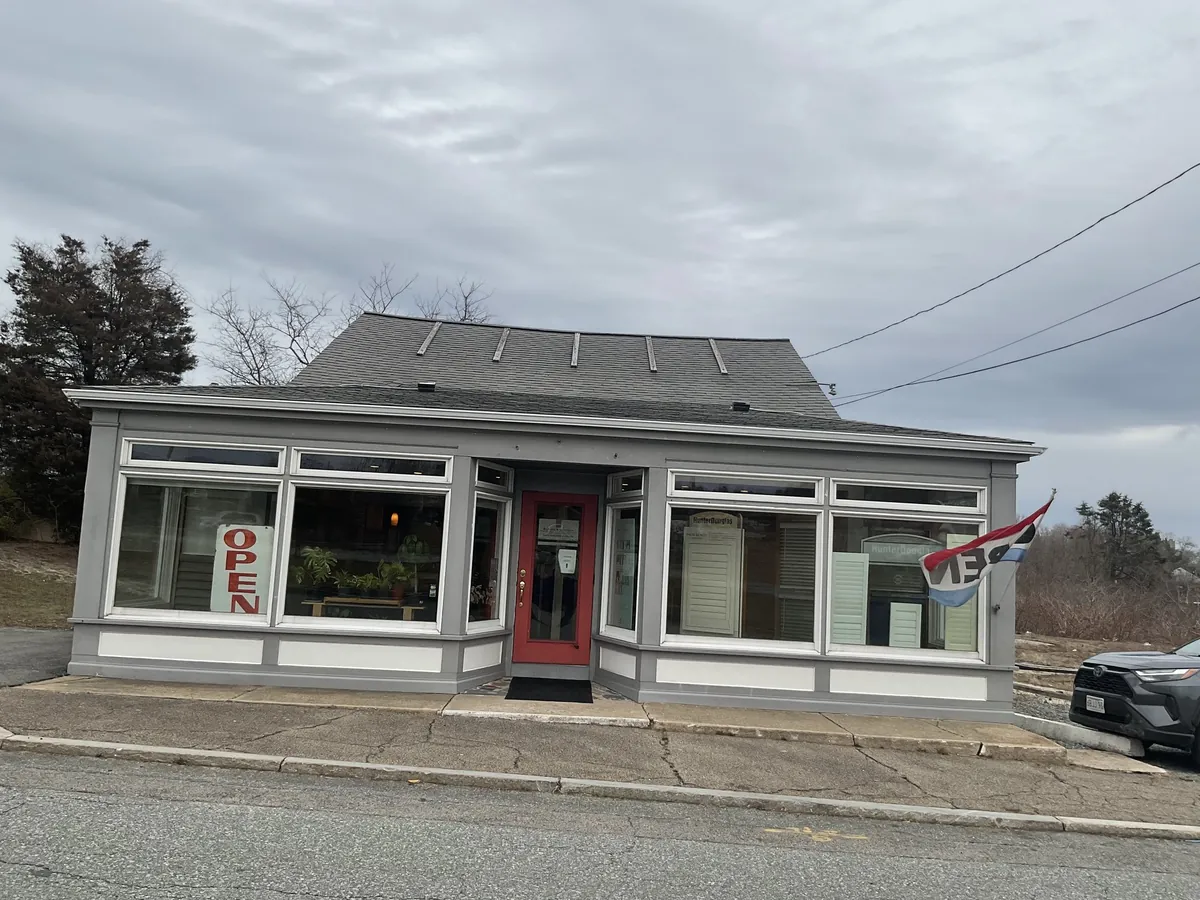
For Plymouth, the nearest of our showrooms is the Sagamore showroom on Cranberry Highway, south toward the canal. Come and handle Duette and Applause fabrics yourself if you would like to see them before a visit.
A few phone photos of your windows help a great deal, especially for a Pinehills wall of glass or a set of small antique sash. We can talk through what you have and then arrange to measure at the house.

Why a Hunter Douglas Gallery dealer
Blinds & Designs is a Hunter Douglas Gallery dealer, a title Hunter Douglas reserves for dealers who meet its standards. For a town with houses as varied as Plymouth’s, that matters: the whole honeycomb collection is open to you, from tiny sash shades to very large and shaped ones.
Our installers are certified by Hunter Douglas, which shows on tall glass and on old, uneven reveals alike. Estimates are free, interior design consultations are available, and we take on repairs of blinds and shades you already have in the house.
For other rooms, see plantation shutters in Plymouth, or everything we offer in town on the Plymouth page.
Questions from Plymouth
Will a honeycomb shade fit the deep, small sash in my antique colonial?
Usually very well. Deep reveals leave room for an inside mount, so the shade sits within the opening and the trim stays visible. We measure each window at several points, since old reveals often taper.
How do you cover a two-story wall of glass?
With a set of honeycomb shades made to line up across every pane, in one fabric, so the wall reads as one surface. The upper windows usually take PowerView, so you can operate them from a remote, an app or a schedule.
Which fabric should I choose for a west-facing great room?
A heavier light-filtering fabric, or a Duolite design with a sheer and a darkening layer on one headrail. Both soften the late sun and keep the room usable.
My ranch has a big picture window. Can it take one shade?
It can take one shade or be split into two or three on a single headrail, so you can raise one section for the view while the others stay down.
Do you charge for the estimate?
No. The estimate is free once we have measured your windows. Request a consultation and we will bring samples to the house.
Book your visit
The best way to choose cellular shades in Plymouth, MA, is with real fabric at your own windows, whether they are antique sash or Pinehills glass. Request a consultation and we will bring the samples, measure the house and give you a free estimate. You can also use the call button, or drop in to the Sagamore showroom.