
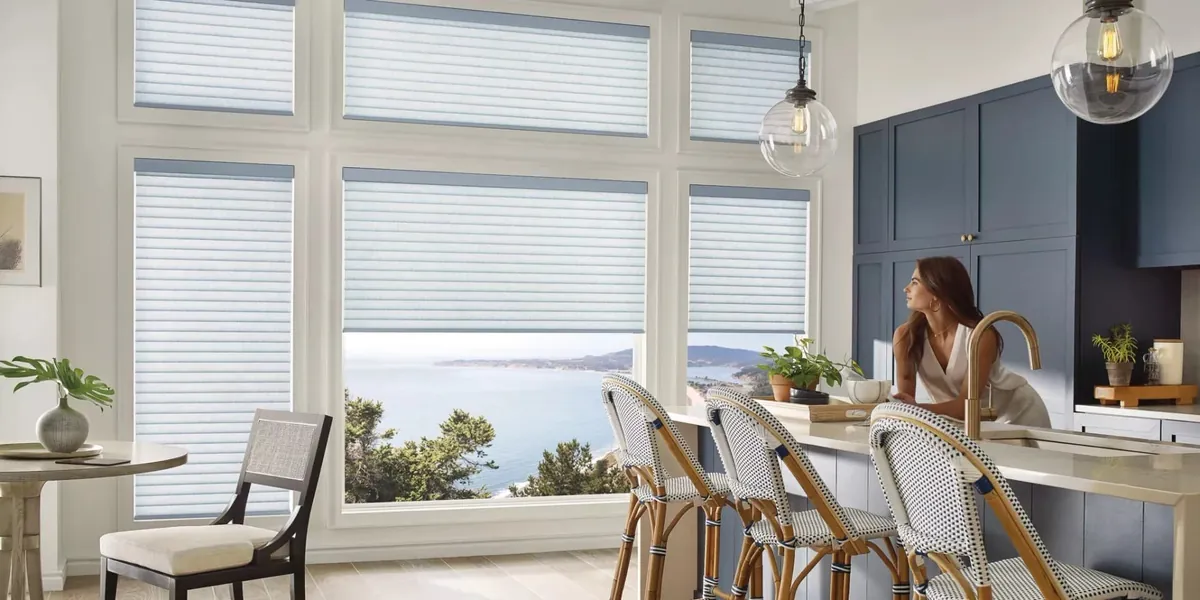
Water on both sides of the island
Portsmouth sits at the top of an island, and that one fact shapes almost every window in town. With the bay on both sides, most houses have a bright face that looks over the water and a quieter face that looks inland or toward the neighbors. The kitchen might be flooded with afternoon glare while the bedroom across the hall stays dim all day. When we plan roller shades in Portsmouth, RI, we treat those two sides as two separate jobs, even inside one small cottage.
The houses themselves vary a lot. Island Park and Common Fence Point are full of compact cottages set close together, many of them added to and reworked over the years. Off East Main Road the streets fill with newer colonials built to standard window sizes. Toward Carnegie Abbey the houses get larger, with long runs of glass aimed at the view.
A roller shade suits all three because it is the simplest shade there is: one flat panel of fabric that rolls up out of sight. What changes from house to house is the fabric, the openness and the way it is mounted.
Roller shades in Portsmouth, RI: the fabrics and lines we bring
Every one of these comes along in the van as a real sample, so you can test it against your own water view rather than a picture.
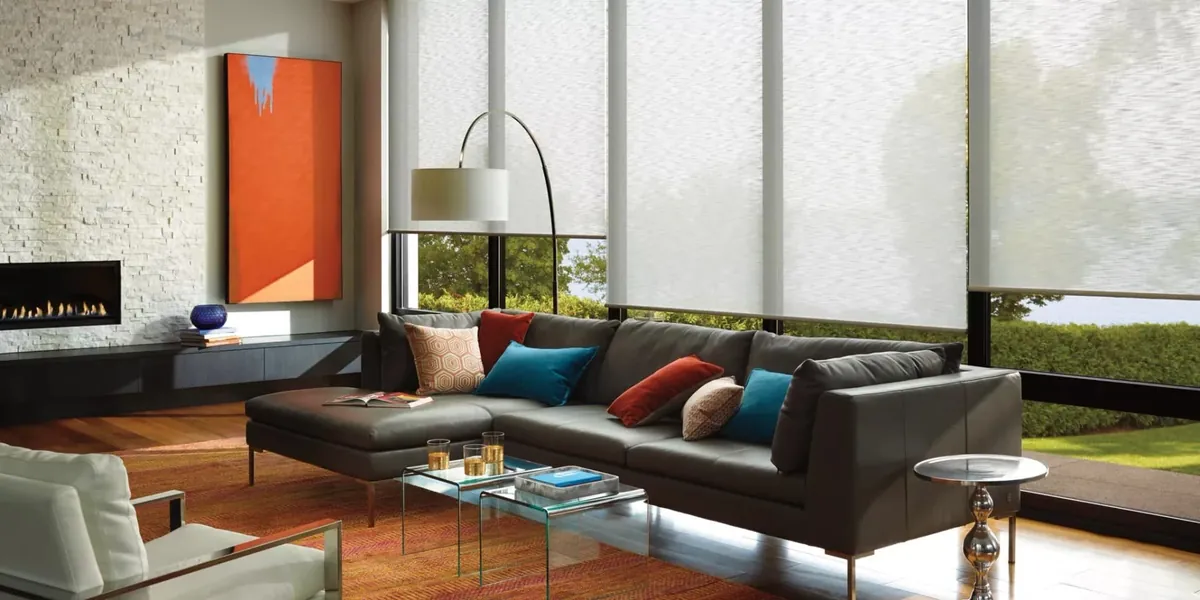
Designer Roller, light filtering
A soft fabric that keeps the room bright and blocks the view in from outside. Our starting point for living rooms on the shaded side.
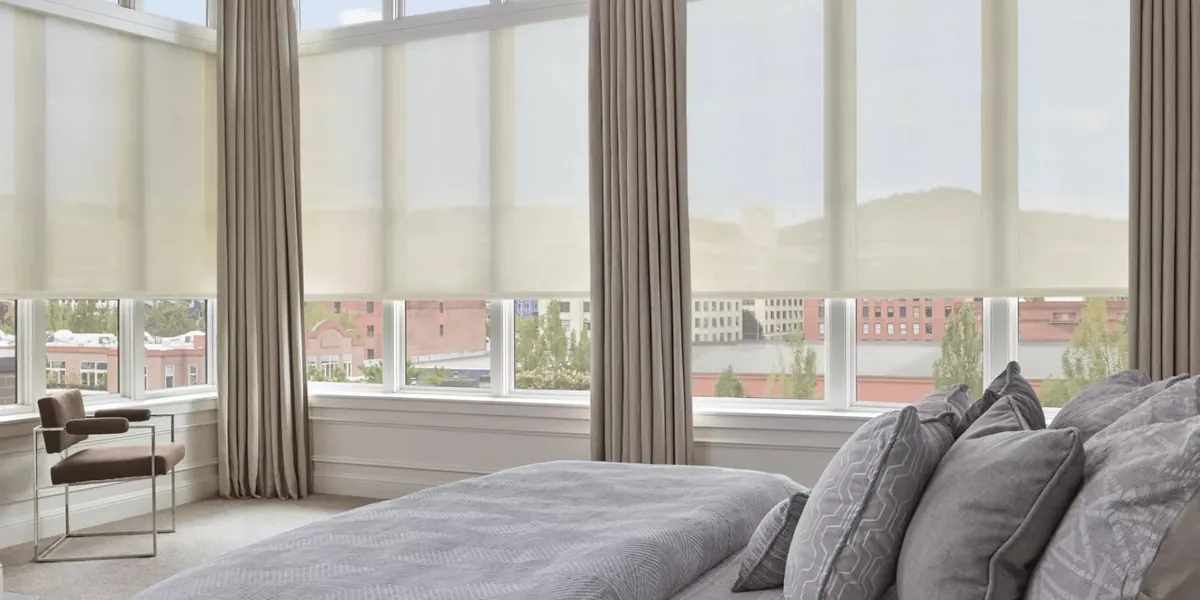
Designer Screen for the water side
An open weave that cuts glare off the bay while you still see the boats and the far shore through it.
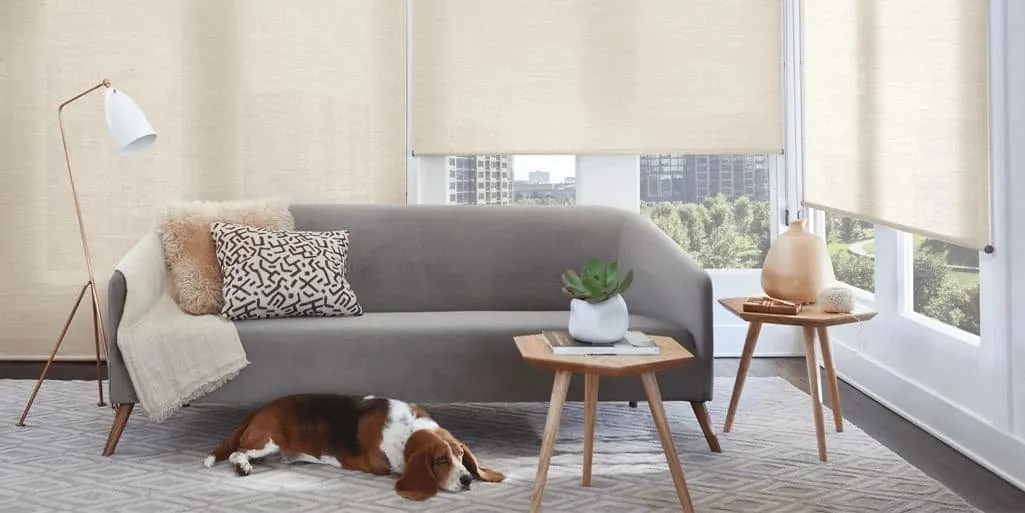
Blackout for early bedrooms
A fully opaque fabric for bedrooms that catch first light over the water, so the room stays dark until you choose otherwise.
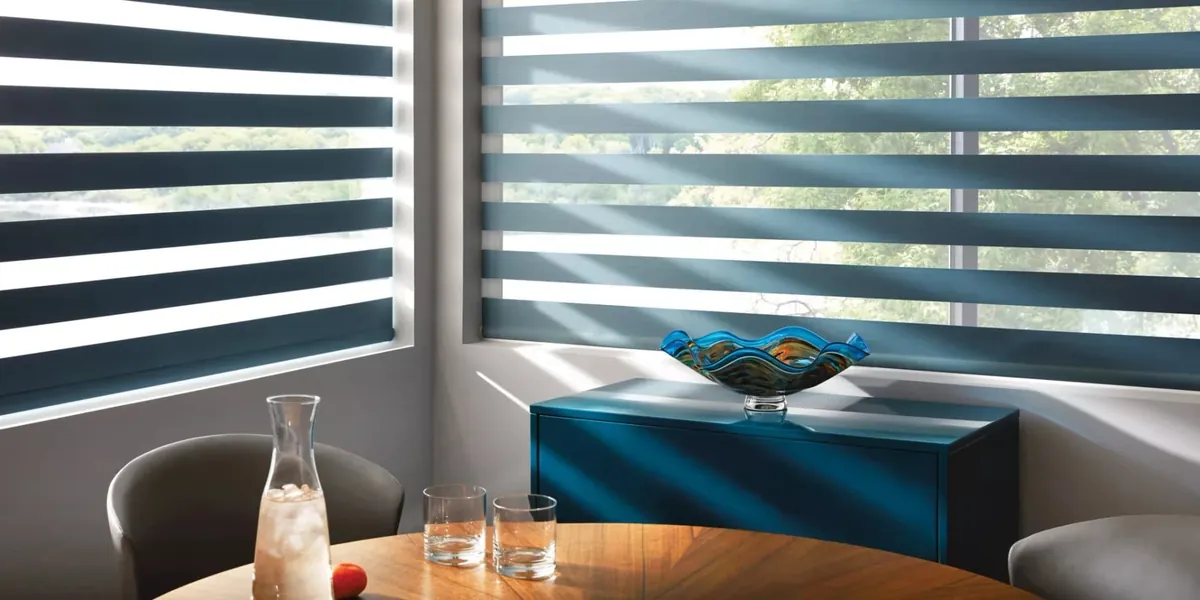
Designer Banded
Sheer and solid stripes that slide past each other, so one shade moves from open view to privacy without being raised.
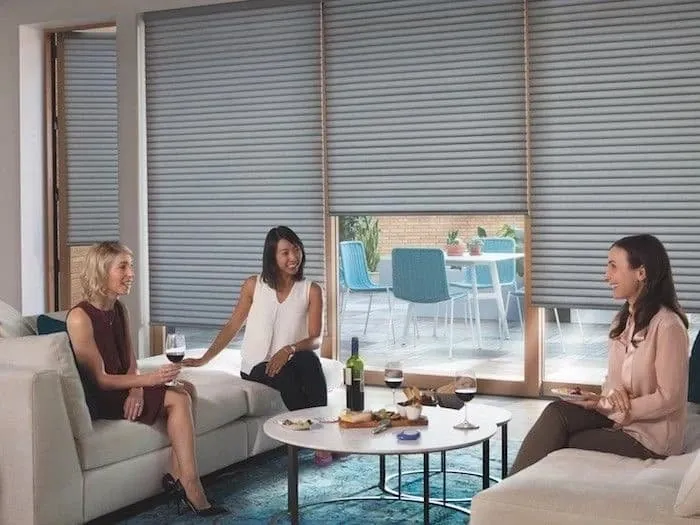
Sonnette cellular roller
A roller with a curved, cellular fabric face. Softer to look at than a flat roller, and a good match for patio doors.
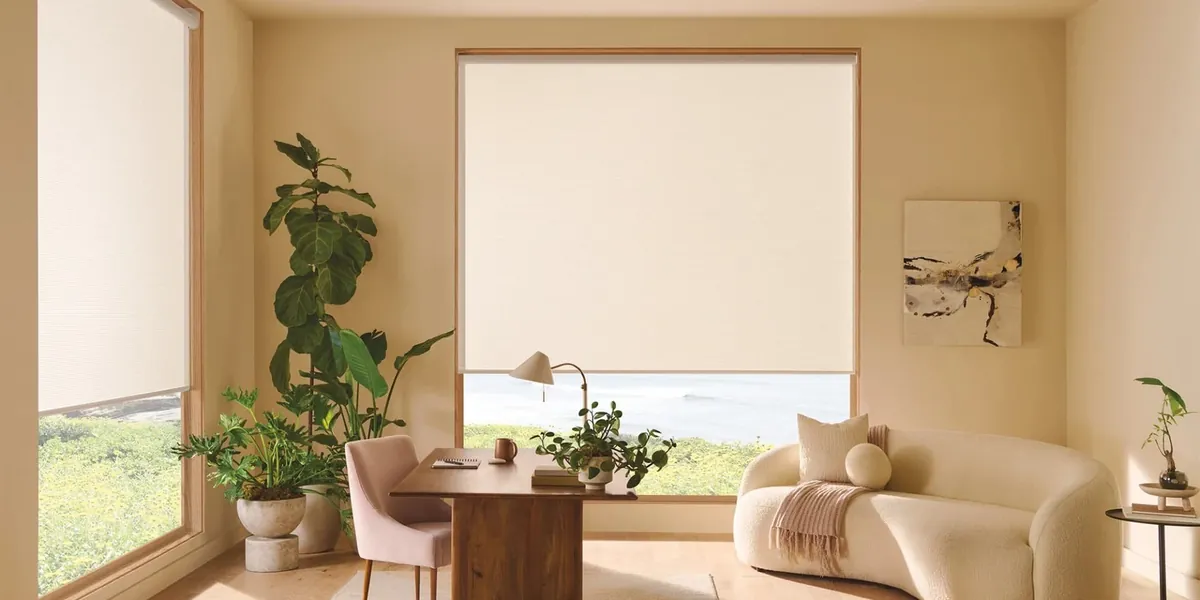
Alustra for the larger rooms
Hunter Douglas’s finest roller fabrics and finishes, for the big view rooms in the newer houses on the island.
One house, a bright side and a shaded side
Stand in the middle of almost any house here at four in the afternoon and you can feel the difference between the two faces. On the water side the sun comes in low and hard, bouncing off the bay and straight into your eyes. On the inland side the light is flat and soft. If you put the same shade on every window, one side will be too dark or the other will be too bright.
So we plan by elevation. The water-facing windows usually get a screen fabric, chosen for how much glare it cuts and how much of the view it keeps. The shaded side usually gets a light filtering roller that gives daytime privacy without darkening the room further. Bedrooms on either side get whatever lets you sleep.
From the street it still looks like one house. We keep the outward color of every shade the same, or close, so the windows read as a matching set from the road while the room side of each shade does its own work. That matters on a lot where the house can be seen from the water as well as the road.
Island Park and Common Fence Point cottages
The cottages at the north end of the island are a world of their own. Many began life as small seasonal places and have been winterised, extended or lifted over time, so a single house can have three or four different window types: an original small double-hung, a newer casement in an addition, a slider out to a deck, maybe a picture window someone added to face the water.
Roller shades handle that mix without looking like a patchwork. The same fabric can go on every one of those windows, and because a roller is so plain it does not draw attention to the fact that the windows themselves do not match. Raised, it rolls into a slim tube at the top of the frame, which is a real help in a small room where every inch of glass counts.
These cottages also sit close together. Your living room window may look straight into your neighbor’s kitchen. A light filtering fabric gives you privacy in daylight without shutting out the sun, and a top-mounted roller that drops just over the lower sash lets light in above eye level.
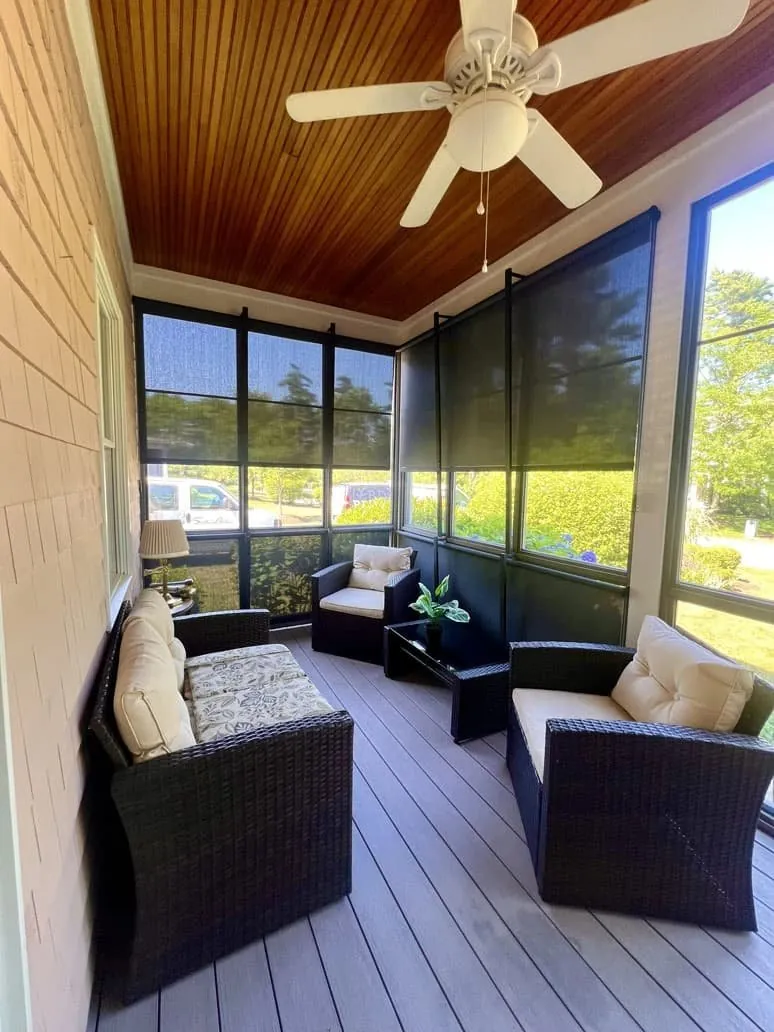
How much of the bay do you want to see
Solar screen fabrics are woven with tiny openings, and the size of those openings is called the openness. It is the single most important choice on a water-facing window, because it decides two things at once: how much of the view you keep and how much glare you stop.
A more open weave keeps the view crisp. You see the water, the shoreline and the boats, with the harsh edge taken off the light. A tighter weave cuts more glare and gives more daytime privacy, but the view softens into shapes. Color plays its part too. A darker screen fabric is usually easier to see through, because it absorbs light instead of glowing with it. A lighter screen fabric reflects more sun and looks brighter from inside.
None of this comes across in a brochure. We hold screen samples of different openness at your window at the time of day the glare bothers you, so you can see for yourself where the line sits between keeping the view and keeping the sun out of your eyes.
Colonials off East Main Road
Away from the shore, the newer neighborhoods off East Main Road are mostly colonials and capes with standard double-hung windows, a family room at the back and bedrooms upstairs. These houses are the easiest in town to fit, and also the ones where a whole-house order makes the most sense.
Because the windows tend to repeat, we can usually inside mount every shade so the white trim stays in full view. The front of the house gets one consistent look. The back rooms, where you actually live, get fabrics chosen room by room: light filtering in the family room, blackout in the bedrooms, perhaps a screen on a sunny breakfast nook.
Children’s rooms deserve a word. A cordless roller, or a motorized one, leaves no loop of cord hanging by the window. It is the setup we suggest for any room a young child sleeps or plays in.
Garages turned into playrooms, finished basements with half windows at ground level and the home offices tucked over a garage are all common in these newer houses too. Each has its own small problem, whether that is a window you can barely reach, a screen glare on a computer or a neighbor’s floodlight at night, and each has a roller fabric that answers it.
Fabric that copes with island sun
Sun off open water is strong, and it is reflected as well as direct, so a water-facing window takes more light in a day than the same window inland. Over time that light is hard on any fabric. When we choose roller shades in Portsmouth for a bright elevation, we lean toward fabrics and colors that hold their look in steady sun, and we point out the ones better kept for the shaded side.
Texture is worth a thought as well. A flat, smooth roller fabric looks crisp and modern on the big glass of a newer house. A woven texture, such as the fabrics in the Alustra Woven Textures range, gives a cottage room a softer, more relaxed feel without giving up the clean roll of a roller. We bring both so you can see them in your own rooms.
What a home visit looks like
Most of our work on the island starts in your own rooms, where the light is the light you live with. Our vans carry samples, so we bring the showroom to you.
- You request a consultation online or with the call button, and we set a time.
- We arrive with roller, screen, banded and blackout samples in a range of colors and textures.
- We walk the house with you, starting on the water side and then the shaded side.
- You hold samples at the glass and look out through them, so you can judge the view and the glare yourself.
- We measure each window and check the depth for an inside mount.
- You get a free estimate for the shades you are weighing, with no pressure to decide on the spot.
If the project is bigger than shades, ask about our interior design consultations, where we look at color, fabric and the room as a whole. Our page on what happens at an in-home consultation goes into more detail.
Larger houses toward Carnegie Abbey
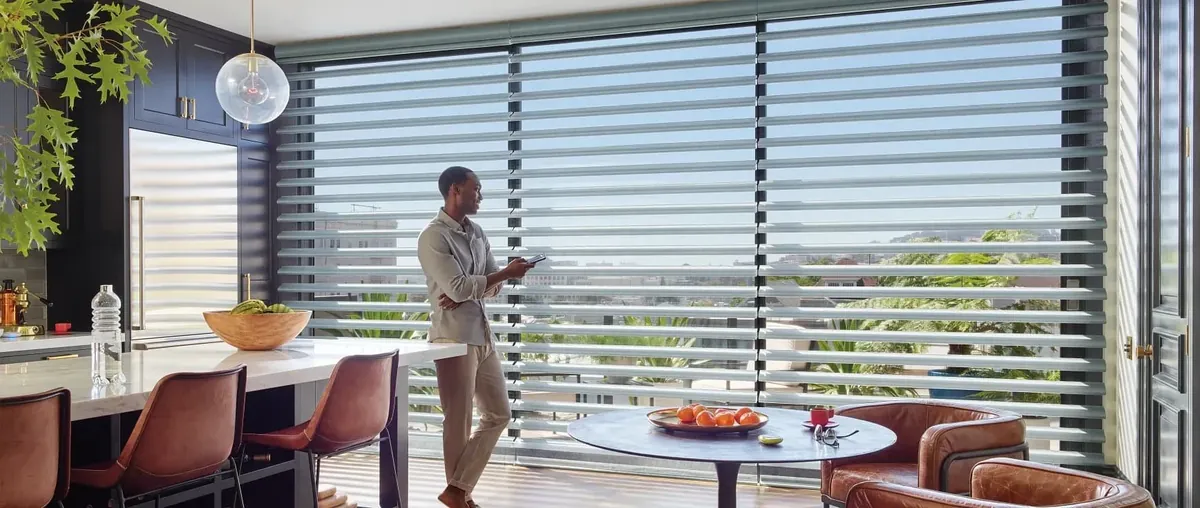
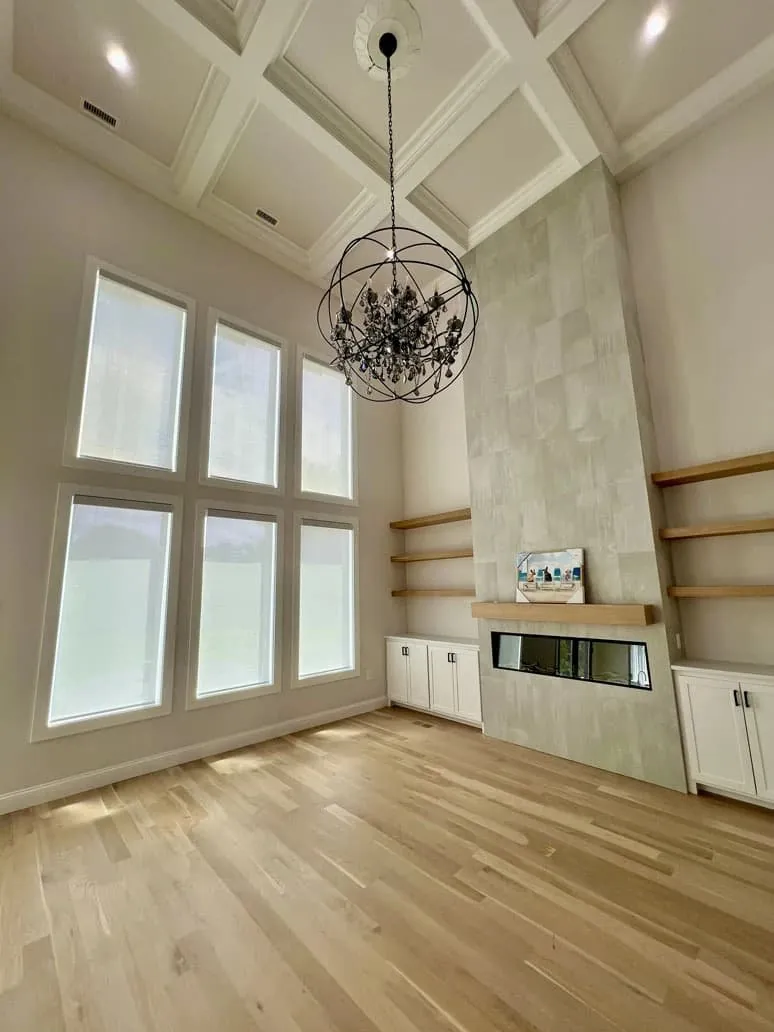
Toward the south of town, near Carnegie Abbey, the houses get bigger and the glass gets taller. Great rooms with two stories of windows, walls of sliders opening to terraces, and clerestory windows that nobody can reach without a ladder. These rooms are where roller shades shine, because a roller can be made very wide and very tall and still roll up neatly.
The tallest windows are the reason most of these houses end up motorized. PowerView lets you raise and lower every shade from your phone, a remote or a wall switch, and set them on schedules: the water-side screens drop as the afternoon sun comes around, then rise again at dusk so you get the evening view back. Shades can be grouped, so one tap moves a whole wall together and lines every hem up at the same height. We plan how each motor is powered at the visit.
For a run of windows separated by narrow mullions, we often put several shades on one connected system so they move as one. A fascia or cassette across the top hides the rolled fabric and gives a long wall a clean, finished line.
Big houses also tend to have rooms used at very different hours: a home theater that wants full darkness at midday, a guest suite empty for weeks at a time, a sunroom that overheats on summer afternoons. Schedules and scenes in the app let each of those rooms look after itself, which is one less thing to think about when the house is busy or when it is shut up for a stretch.
Blackout for rooms that face the sunrise
On the east side of the island the sun comes up over the water, and an east-facing bedroom lights up very early in summer. A blackout roller fixes that. The fabric itself lets no light through, so the only light left comes around the edges.
How much edge light you get depends on the mount. Inside the frame there is a slim gap down each side. Mounted on the trim and overlapping the opening, the gap mostly disappears. Side channels close it further. We talk through which matters more to you, a crisp inside mount or the darkest possible room, before anything is ordered.
A popular answer for a main bedroom is two shades on one bracket: a screen shade in front for the daytime view and a blackout behind for sleeping. You lower whichever one the hour calls for. Dual roller shades in Portsmouth bedrooms that face the water solve the day and the night with one tidy headrail.
Measuring and certified installation
A roller shade has nowhere to hide a bad measurement. The fabric is one flat panel, so if the frame is out of square, a wide gap opens at one side or the fabric rubs and wanders as it rolls. In the reworked cottages, where frames have been altered more than once, we measure the width at the top, middle and bottom and the height on both sides, and we check the depth at several points along the head.
Once the shades arrive, our certified Hunter Douglas installers fit them, set each bracket into solid framing, check that the fabric rolls straight and the hem sits level, and show you how everything works. Near salt water we also look at where cords, chains and exposed hardware would sit on a window you like to open, and suggest a cordless or motorized lift where that keeps things simpler.
If you are curious about the rest of the island, we also fit cellular shades in Portsmouth, plantation shutters in Portsmouth and more, all collected on our Portsmouth page. The main roller shades page covers the whole range.
A Hunter Douglas Gallery dealer for island houses
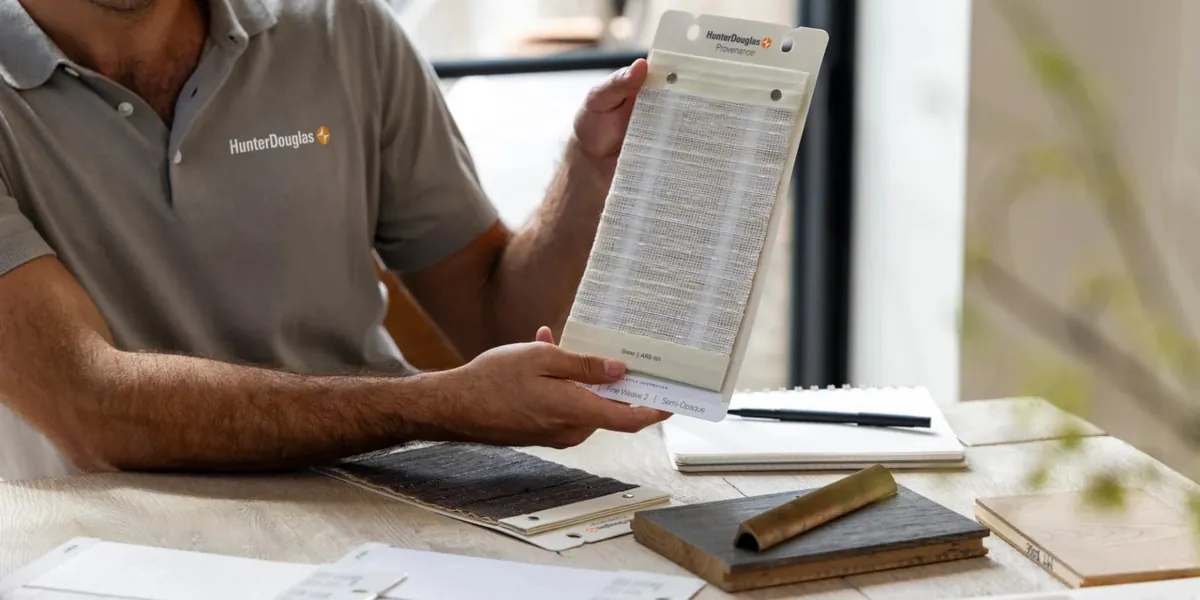
Blinds & Designs is a Hunter Douglas Gallery dealer, a designation Hunter Douglas gives to dealers who meet its standards. For a house on the island that means the whole roller family in one place: Designer Roller, Designer Screen, Designer Banded, Sonnette and Alustra, with every fabric, openness, lift and PowerView option.
Our installers are certified by Hunter Douglas, so the shades go up the way the maker intends. We also handle blind and shade repairs on window coverings you already own, and we carry Hunter Douglas blinds, shutters, cellular and roman shades and drapery, so one consultation can cover every room.
For homes on this side of the water, our nearest showroom is in North Dartmouth. Many island customers simply let the samples come to them.
Questions from Portsmouth
Can I keep my water view and still cut the glare?
Yes. That is what a solar screen roller is for. Its open weave takes the hard edge off the sun while you look through it at the bay. The more open the weave, the clearer the view; the tighter, the more glare it stops. We bring several so you can compare them at your own window.
Will one fabric work on both sides of my house?
It can, but it rarely works best. The water side usually needs a screen to handle glare, while the inland side is better with a light filtering fabric. We keep the outward color consistent so the house still looks uniform from outside.
My cottage has several different window types. Is that a problem?
Not at all. A roller can be made for a small double-hung, a casement, a picture window or a slider. Using one fabric across all of them makes the windows look more unified than they are.
How do I reach shades on very tall windows?
PowerView motorization raises and lowers them from your phone, a remote or a wall switch, and can run them on a schedule. We plan how each motor is powered during the visit.
Is the estimate free?
Yes. After we measure, you receive a free estimate for the shades you are considering. Request a consultation and we will arrange a time to bring samples to the house.
Your next step on the island
The quickest way to know which roller shades in Portsmouth, RI, suit your house is to look through the samples at your own windows, on the bright side and the shaded side. Request a consultation and we will bring the full range, measure each opening and give you a free estimate. Prefer to talk first? Use the call button, or come and see us at the North Dartmouth showroom.