
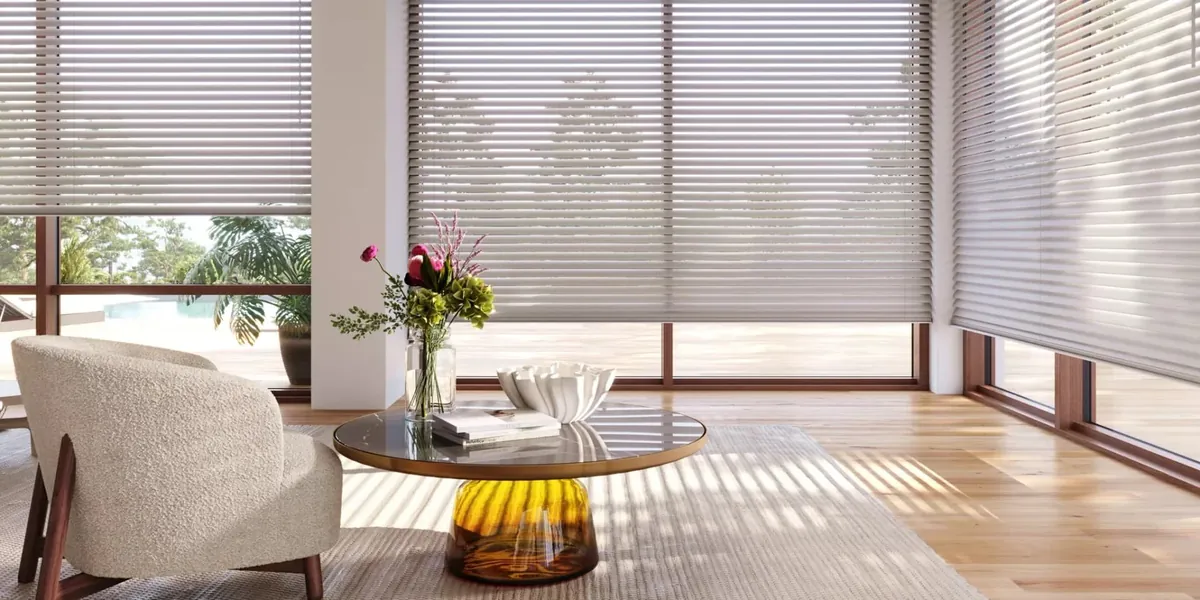
Rooms with windows on every side
Freetown spreads out. Capes and ranches sit well apart on big wooded lots, from the roads around Assonet village out toward the state forest, and down by the Taunton River there are houses built to face the water. With so much room around each house, the rooms are rarely boxed in by a neighbor’s wall. A living room often has windows on two or three sides, and a corner bedroom gets light from both. That is the starting point for custom blinds in Freetown, MA.
Light from several directions is lovely, but it changes through the day. The east windows are bright at breakfast, the south windows through the middle of the day and the west windows in the late afternoon, so the same room can need different things from each wall at different hours. A blind on each window, set separately, lets you follow the sun around the room.
The trees add their own pattern. On a wooded lot the light comes and goes as the leaves move, bright one minute and shaded the next, and in winter, when the leaves are down, rooms that were cool all summer suddenly get full sun.
Blinds for Freetown’s capes, ranches and river houses
Every material below comes in our vans as a sample, and the planning of custom blinds in Freetown usually lands on a mix of them, room by room.
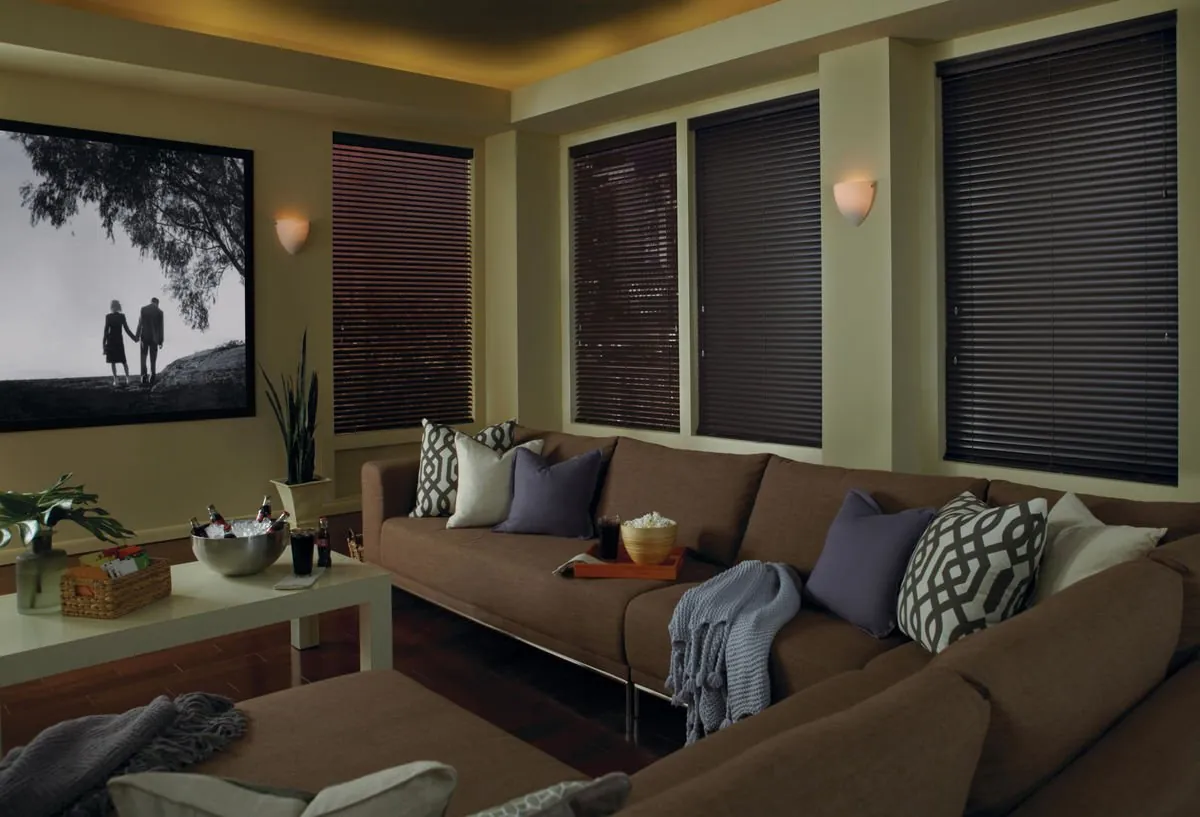
Wood blinds
Parkland real wood in stains and paints, for living rooms, dens and bedrooms. Darker slats suit a family room where the television competes with the sun.
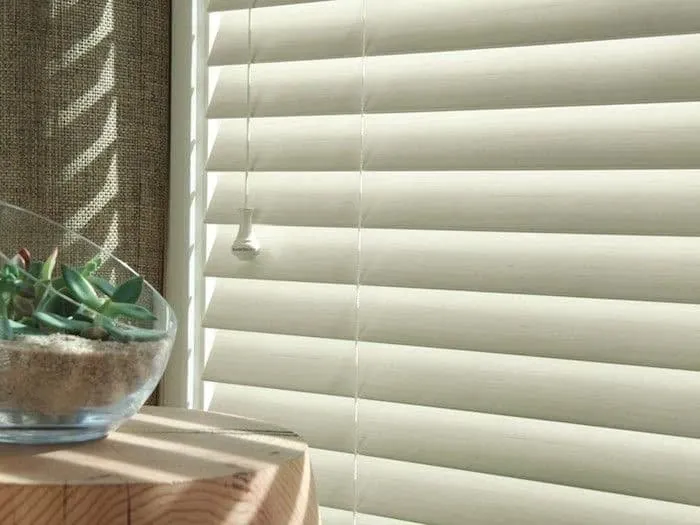
Faux wood blinds
EverWood faux wood passes for painted timber and stands up to steam and splashing. Ideal over a sink, in a bath or next to the washer.
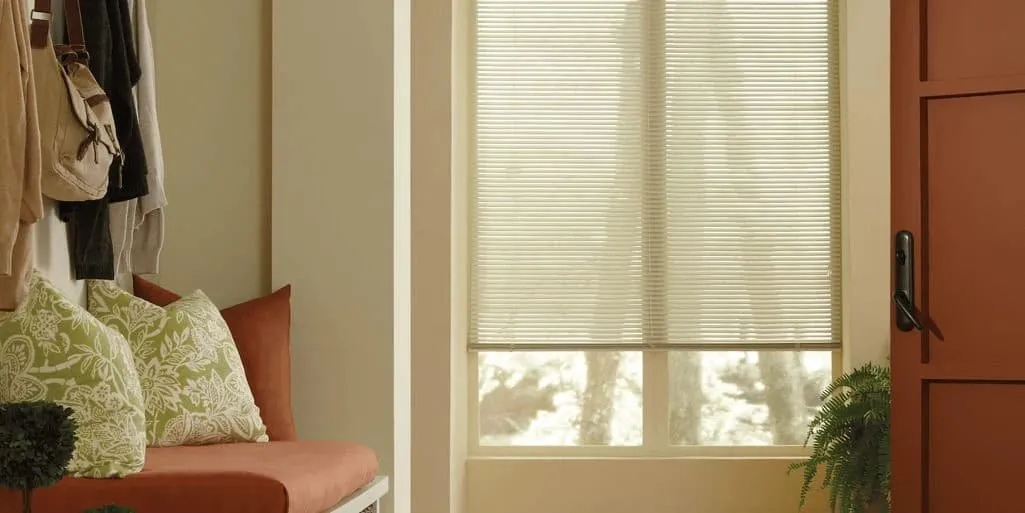
Metal blinds
Aluminum blinds with slim slats and a compact headrail, for a back entry, a small window by the door or a shallow frame.
Vertical blinds
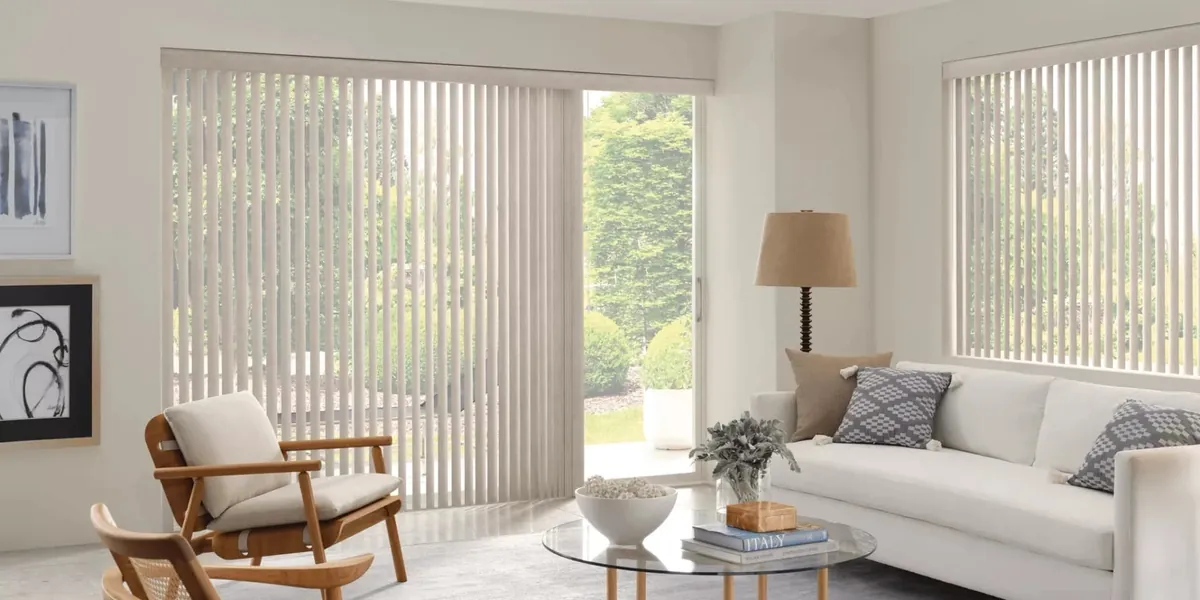
Made for the glass door onto a deck in the trees, gathering to one side when you go out.
Blinds under the trees
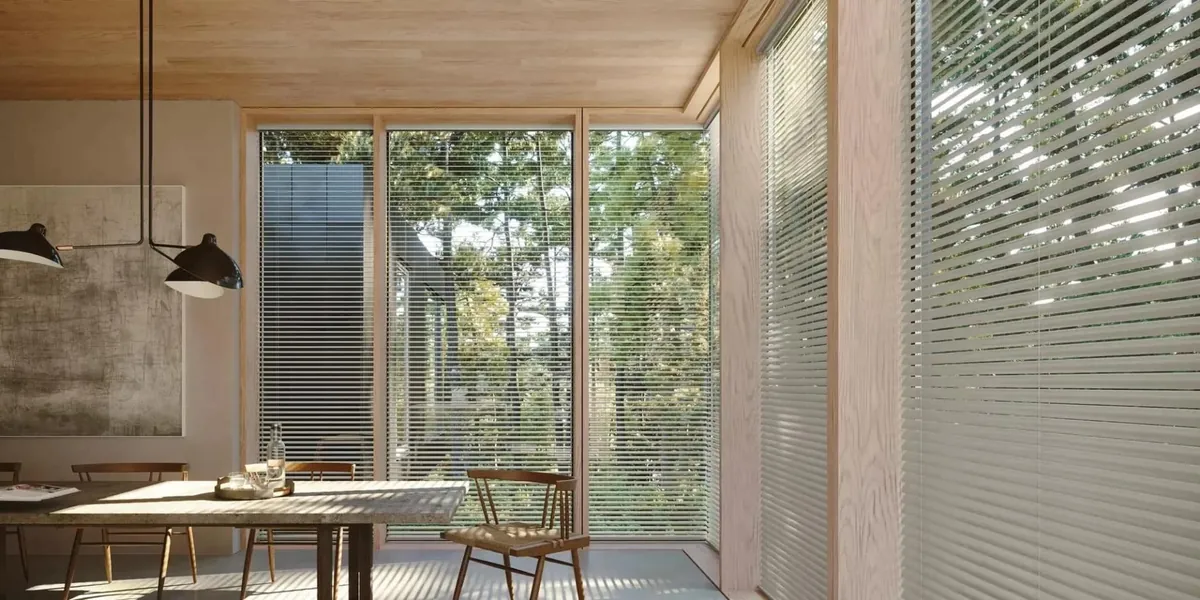
On a wooded lot, open slats let the green view and the moving light through without the glare of a bare window.
PowerView motorization
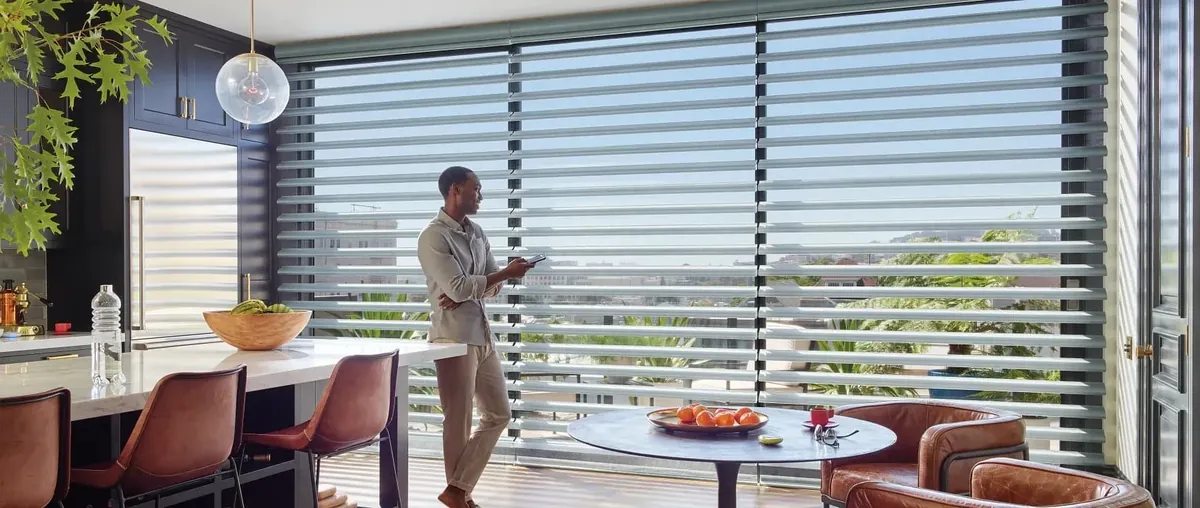
When a room has a blind on every wall, tilting them all from your phone, a remote or a schedule saves a walk around the room.
Following the sun around a corner room
The corner rooms in a Freetown ranch or cape are often the favorite rooms in the house: a living room at the end of the building with windows on the front, side and back, or a main bedroom tucked in a corner with a window on each outside wall. They are bright and airy, and they are the hardest rooms to get right with one kind of window covering.
Blinds suit them because each window can do its own job. In the morning you might tilt the east blinds up to soften the early light and leave the west blinds fully open to the shady side. By late afternoon the room has turned, so you open the east side and tilt the west blinds against the sun as it drops through the trees. Nothing else gives you that kind of control at such a fine level.
To keep a corner room looking calm, all the blinds should match in color and slat width and hang at the same height. We measure every window so the headrails line up, even when the openings are not quite the same size. Where two windows meet at a corner, we leave just enough room for each blind to tilt freely without catching on its neighbor.
Capes in the woods toward Assonet
Many of the older capes around Assonet and along the wooded roads toward the forest have the classic layout: a center door, front rooms on either side, a kitchen at the back and bedrooms upstairs under the roof. The windows are mostly double-hung, modest in size, and in the older houses not always square.
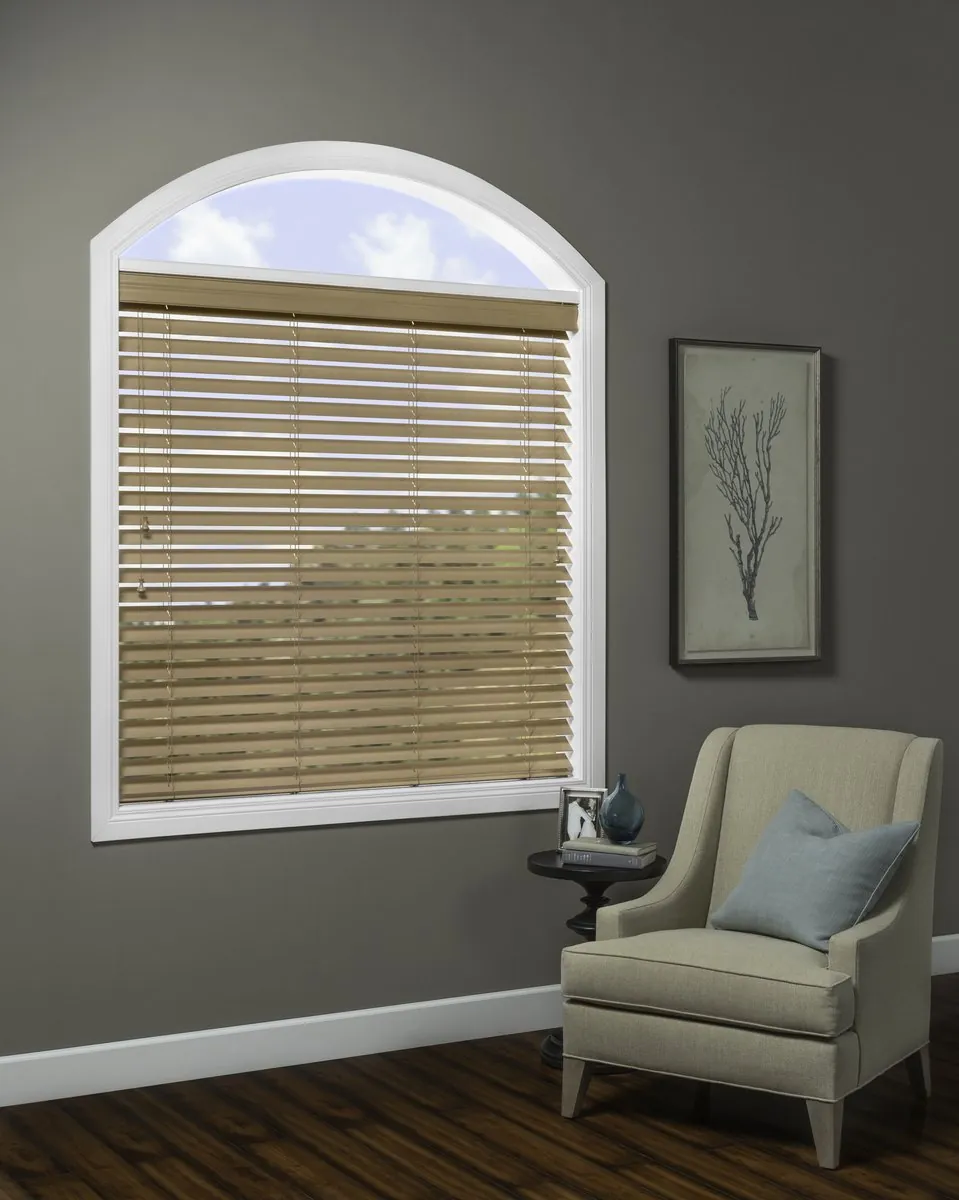
On the ground floor, the front rooms face the road but often sit far enough back behind the trees that privacy is not a big concern. Here a blind is mostly about the light and about how the room feels in the evening, when you want the windows covered and the lamps on. Real wood blinds in a warm stain give the front parlor of a cape a comfortable, finished look that fits the age of the house.
Upstairs, the bedrooms under the roof are usually lit by dormers. Those little windows sit back in the slope of the roof and catch the first light. A slim headrail and a small slat suit them, since the gathered slats take up only a sliver of glass when the blind is up. For a child’s room or a guest room, a darker slat or a routeless blind, with no cord holes, keeps the morning light out longer.
Old cape frames are measured in three places across and three up. If one has settled out of true, fixing the blind to the casing may serve better than tucking it inside, and we talk that through with you first.
Ranches on the big wooded lots
Freetown’s ranches are long, single-story houses, and their windows follow the shape: a broad window at the front of the living room, a short window above the kitchen sink, bedrooms strung along one end, and a glass door at the back that opens onto a deck among the trees.
The back door gets more use than any other glass in the house, in and out to the grill, the dog and the garden. Verticals hang from a track above it, and the whole set slides clear of the opening in one movement. Turned edge on, the vanes let the yard show through; turned flat, they shut out the late sun slanting in between the trunks.
The broad front window is better as a set of two or three blinds than as one. A single blind that wide is a weight to haul up every morning. Separate blinds, mounted side by side so their slats meet in a line, can be raised or angled one at a time, so the end of the window facing the sun can be shaded while the rest stays clear.
Along the bedroom end, the windows tend to be broad and sit up near the ceiling. A wider slat suits that shape, because fewer slats mean a slimmer bundle at the top when the blind is up, and cordless lift means you can raise it standing beside the bed without hunting for a cord.
River houses on the Taunton
Down along the Taunton River the houses face the water, and the rooms on that side have more glass than the rest of the house. The light off the river is bright and changeable, with reflections that move across the ceiling and glare that comes in under any overhang.
Blinds are a good match for a river room because the slats can be tilted to catch the reflected light and send it upward, keeping the room bright without the glare. With slim aluminum slats or a wide faux wood slat, the view of the water between the slats stays open. Raised, the window is clear for the evening light.
Being close to the water also means more damp in the air, especially in a lower-level room or a porch that has been enclosed. In those rooms we suggest faux wood or aluminum over real wood, because they hold their shape and wipe clean. Custom blinds in Freetown river houses tend to be planned this way: the material set by how damp the room gets, and the slat color set by how much light comes off the water.
Winter sun when the leaves come down
One thing people with wooded lots often notice in their first year in a house is how much the light changes with the seasons. In summer, the trees shade the windows and the rooms stay cool and dim. Then the leaves fall, and windows that never saw direct sun suddenly have it pouring across the floor all winter afternoon.
That is a good reason to choose a covering that can do both. A blind left open in summer lets in what light the trees allow. In winter, tilted against the low sun, it stops the glare on a screen or across the dinner table while still letting the warmth of the sun into the room. Real and faux wood slats in lighter colors keep a room bright even when they are tilted partly closed.
Dark woods after sunset
On a big wooded lot with no streetlights, night falls hard. Once the lamps are on inside, every uncovered window turns into a black mirror, and a living room with glass on three sides can feel exposed even when there is nobody for a long way in any direction. For a lot of households, that is when covering the windows moves to the top of the list.
Closing the slats flat solves it in a second. The room feels enclosed and calm, the reflections are gone, and the light from the lamps stays in the room rather than spilling out into the trees. A routeless slat, with no cord holes, closes tightest, and cloth tapes down the front add a softer, finished look in a den or a bedroom. For corner rooms, setting every blind closed from a phone or a schedule means the whole room is covered at dusk without a walk around the walls. It is a small thing, but it is one of the reasons custom blinds in Freetown houses get used every single evening.
How a home visit works
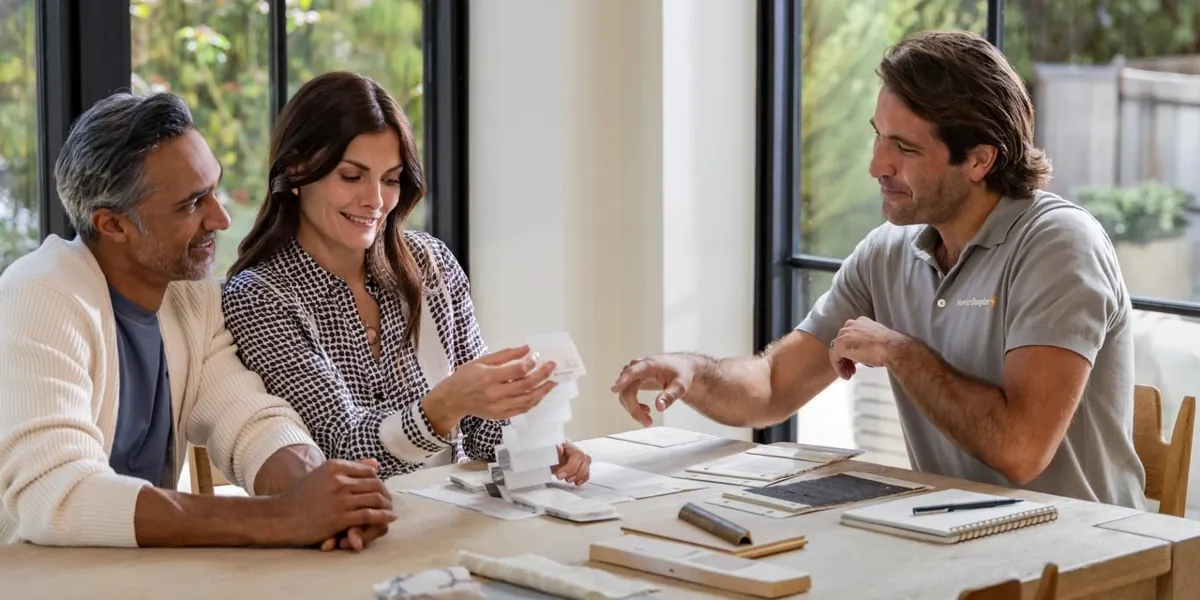
In most Freetown houses, the choosing happens in their own living room. A color on a printed card tells you little about how it will sit beside your window casing, under your trees, on the wall that faces the afternoon. Because our vans are stocked with samples, the showroom comes up your driveway instead.
- Book through Request a Consultation or the call button, at a time that fits your week.
- The consultant arrives with real slats in every material, plus working examples of the lift and tilt controls.
- Together you go room by room, looking at which way each wall faces and what happens in that room through the day.
- Samples go up against the glass on the bright side and the shaded side, and the short list gets shorter.
- Every opening is measured at several points, and the depth of each frame is noted.
- A free estimate follows for what you picked, and the decision stays yours to make in your own time.
The same visit can cover the wider room if you like. Our interior design consultations look at color, fabric and the other coverings in the space. More on how it all runs is in the guide to what happens at an in-home consultation.
Lift and tilt choices
After the slat comes the question of how you will work it. Most Freetown households now go cordless: a gentle push or pull on the bottom rail moves the blind, and nothing dangles by the glass for small hands or a curious cat. On a window tucked behind a couch it also means one less thing to reach for.
The slats angle with a slim wand at the side. For glass that is awkward or high, like the top of a cathedral ceiling or a dormer you lean over a desk to touch, motorized blinds in Freetown are worth a look: the blinds move from a phone, a handheld remote or a timer. In a corner room with blinds on three walls, one tap that sets every blind is a genuine pleasure.
Slat color on a wooded lot
On a lot surrounded by trees, the light coming into the house is often tinted green in summer and gray in winter, and that changes how a slat color reads. A white blind can look slightly cool, and a warm stain can look darker than it does in the sample book.
That is another reason we bring the samples to you. Holding a few colors up at the window, at the time of day you use the room most, shows you how each one looks in that light. Many people settle on a soft white or a light natural wood, which stay bright in shady rooms and look clean against the green outside.
Fitting the blinds
Our installers are certified by Hunter Douglas, and on fitting day they fix each bracket into framing, not just plaster, so every headrail sits true. They work each blind up and down and through its tilt, check that corner blinds clear one another, and walk you through the controls before packing up.
What the Gallery name means for your order
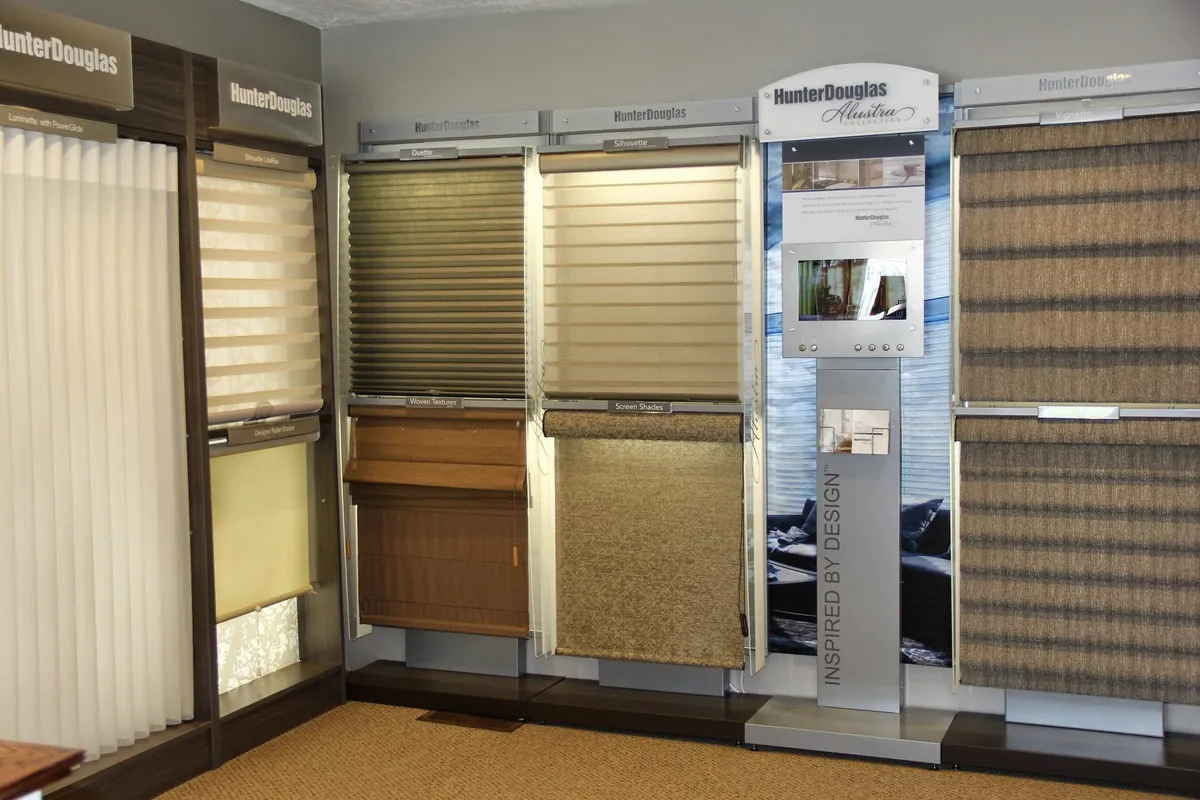
Hunter Douglas gives the Gallery dealer title dealers who meet its standards, and Blinds & Designs is one of them. For a Freetown house that means the entire blind collection is open to you in one conversation: Parkland real wood, EverWood faux wood, aluminum and vertical styles, every lift choice and PowerView control.
From the measuring visit to the last screw, it is one company handling your order. Later on, if a cord frays or a slat cracks, we take on blind and shade repairs too.
Browse the full blind collection on our Hunter Douglas blinds page, or read about vertical blinds for your slider. Thinking about other rooms? See roman shades in Freetown and cellular shades in Freetown, or every service we bring to town on the Freetown page.
Questions from Freetown
My living room has windows on three walls. How do I stop the room looking busy?
Use matching blinds in one color and slat width, with the headrails set at the same height. Each blind still tilts on its own, so you can follow the sun around the room, but the walls look calm and even.
What should go on the slider at the back of my ranch?
Verticals, in most houses. The set slides clear of the opening when you want to step out and angles shut against the evening sun. A soft vertical shade is the other option we bring along.
Which blind suits a river house where the air is damp?
Faux wood or aluminum, since neither minds moisture and both clean with a cloth. Save real wood for the drier rooms upstairs.
My wooded lot is shady in summer and bright in winter. What works for both?
Blinds are ideal for that. Leave them open in summer to let in what light the trees allow, then tilt them against the low winter sun to cut glare while still letting warmth in.
Do you charge to measure and quote?
The estimate costs nothing. We measure, then give you a free estimate for the blinds you picked.
Start with a visit to your house
Samples at your own windows are what make custom blinds in Freetown, MA, easy to choose. Ask for a consultation and we will drive the range out to you, take every measurement and hand you a free estimate. If you would sooner look first, the North Dartmouth showroom is our closest location to Freetown, and the call button reaches us if you have a question.