
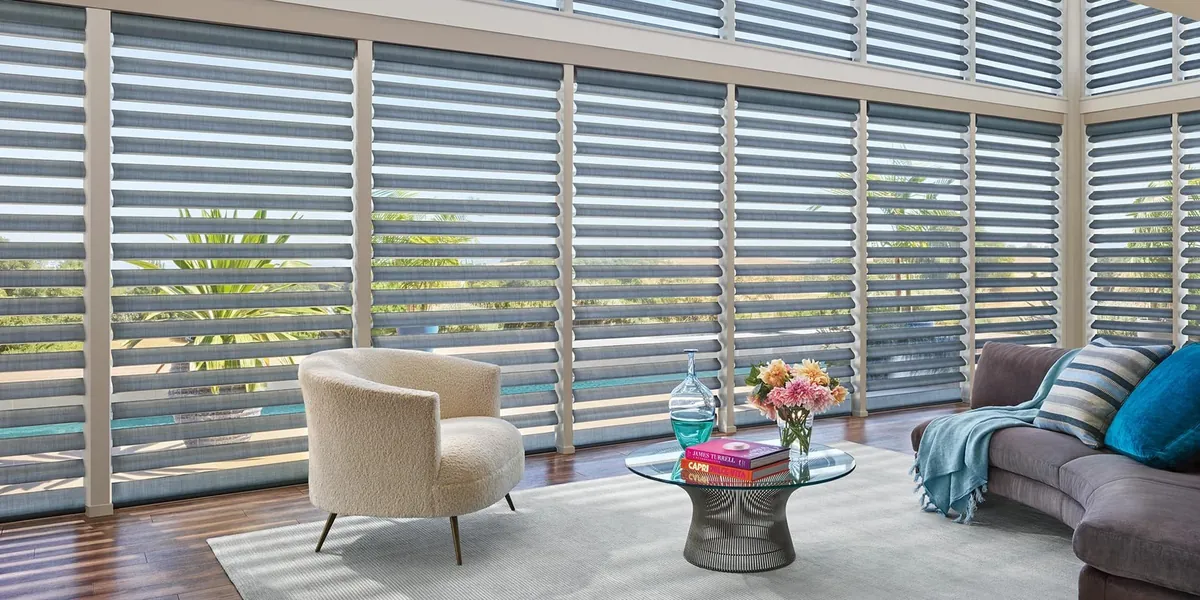
Long glass under tall trees, planned in your own rooms
Around Lake Massapoag, houses sit deep on wooded lots: colonials, and mid-century contemporaries built with long runs of glass and sills that come down low toward the floor. You might expect rooms with that much glass to be flooded with light. Often they are not. Heavy tree cover and deep setbacks mean many rooms are darker than their window area suggests, and that one fact shapes most of our advice on window treatments in Sharon, MA.
It is also why we start almost every project here at your house rather than in a showroom. A fabric that looks bright under store lighting can look gray in a room shaded by oaks, and a long window wall is easier to plan when we are standing in front of it. Our consultants come to you with a van full of samples, so you choose in the light you actually live with.
Whether the house is a colonial or a contemporary, the goal is the same: keep as much daylight as the trees allow, give privacy at night, and make long glass look tidy.
Sharon services, each with its own page
Every card leads to one part of our window treatments in Sharon, MA, on its own page, where the colonials and contemporaries around the lake get a closer look.
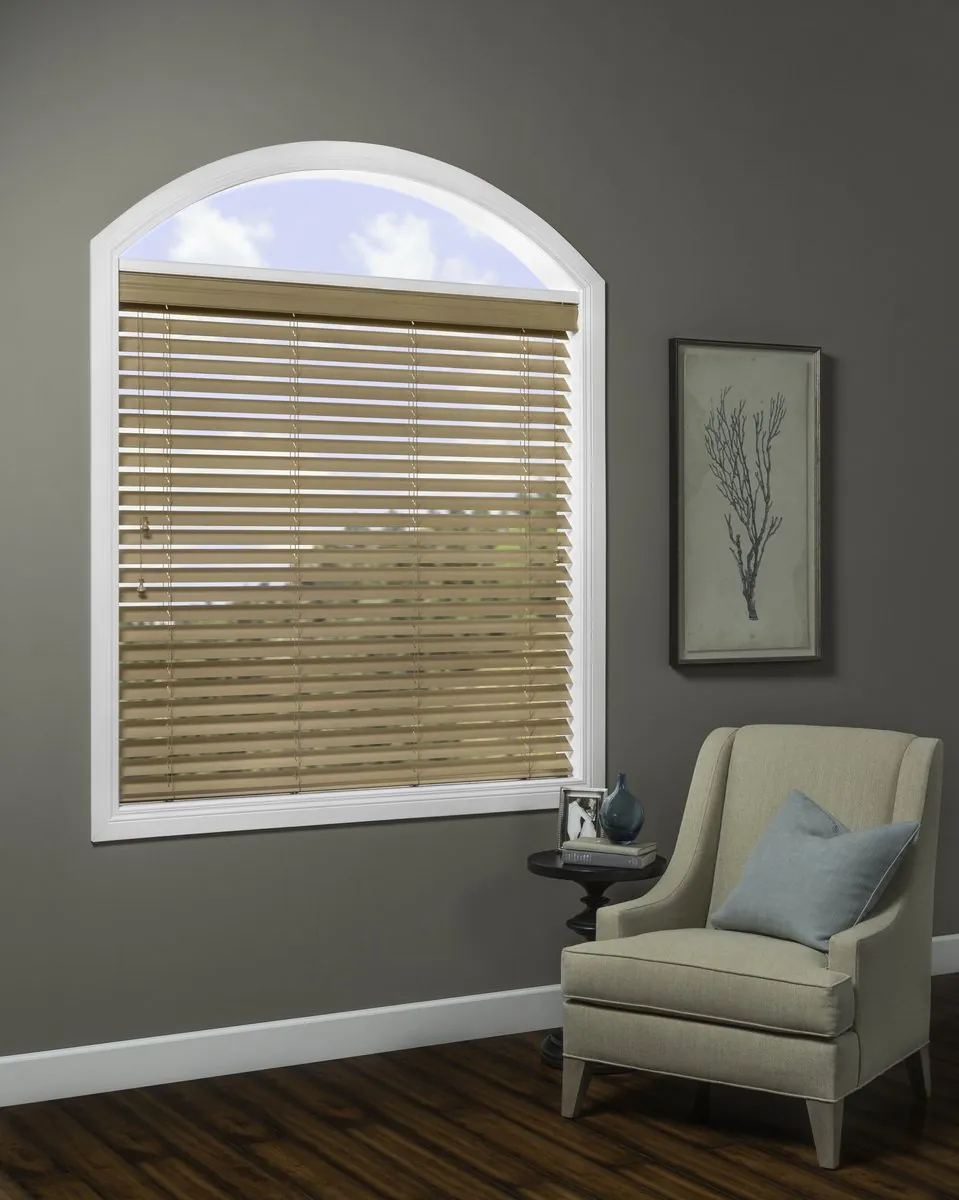
Custom blinds in Sharon
Wood, faux wood, metal and vertical blinds. Tilt the slats up to bounce scarce daylight onto the ceiling.
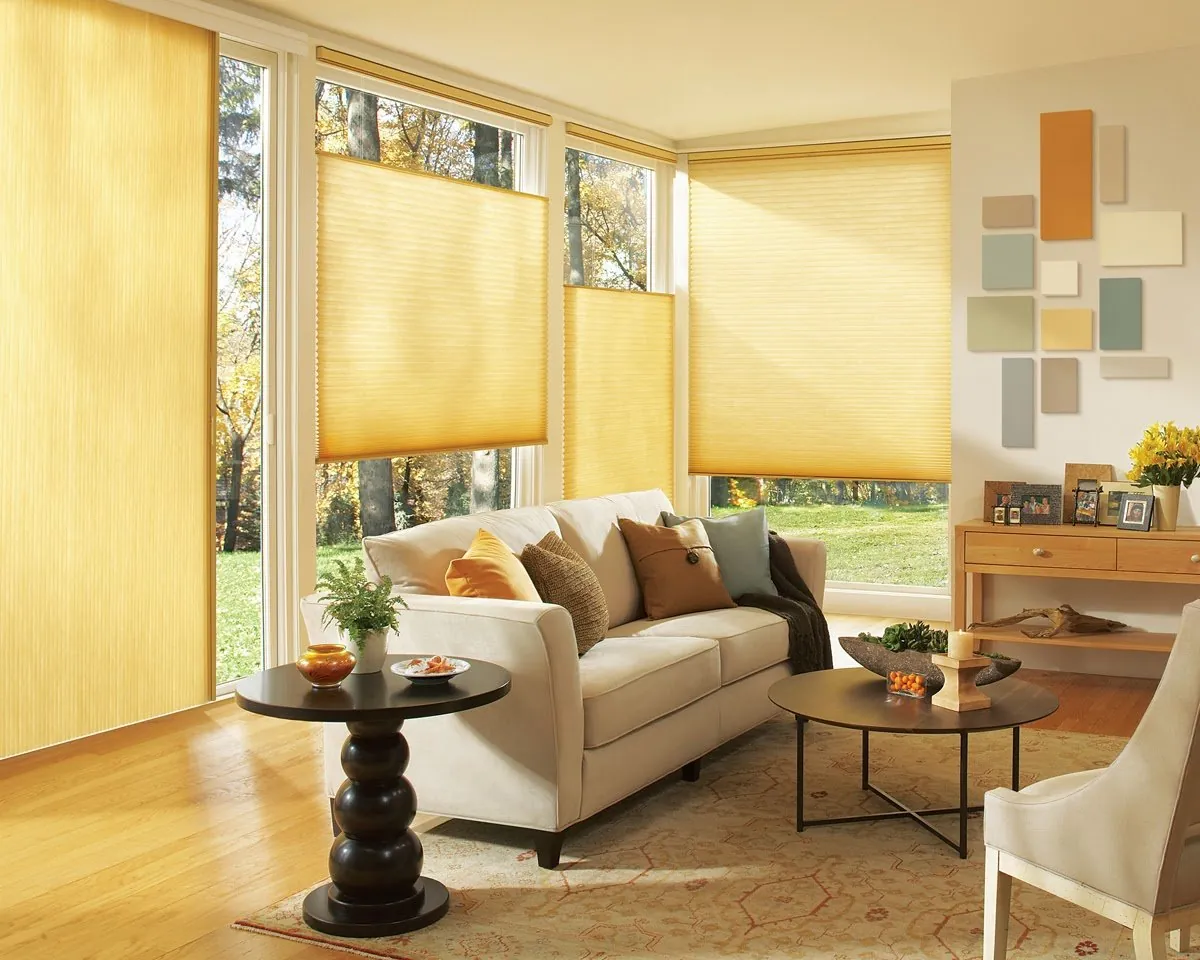
Cellular shades in Sharon
Duette and Applause. The cells hold air at the glass, and light-filtering fabrics keep a shaded room bright.
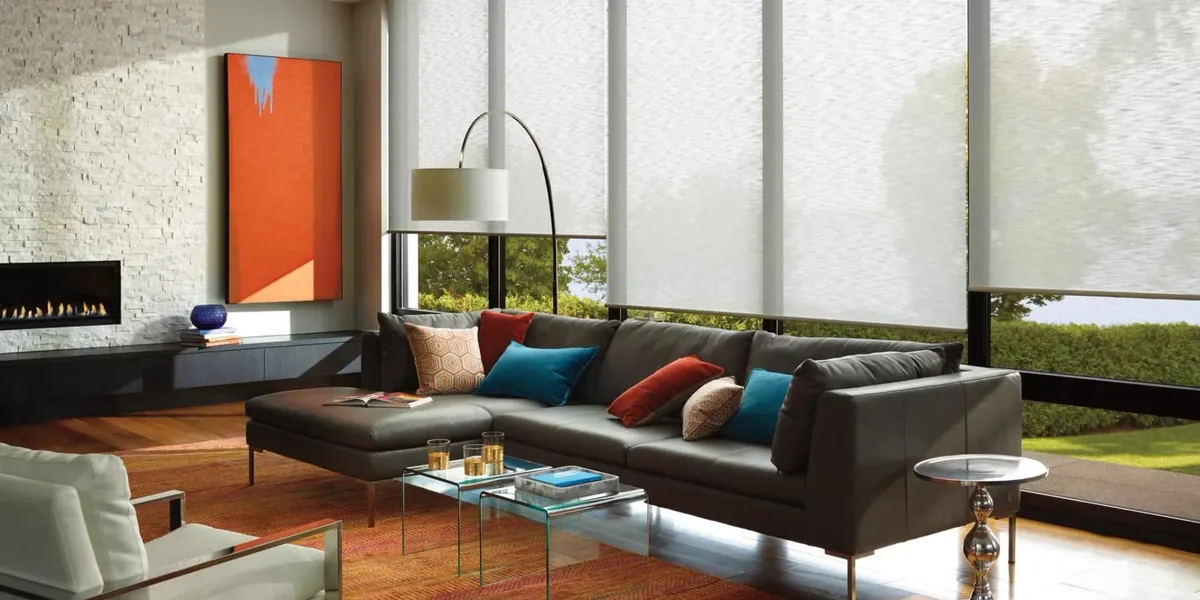
Roller shades in Sharon
Designer and Alustra rollers and screens, clean-lined across a long run of contemporary glass.
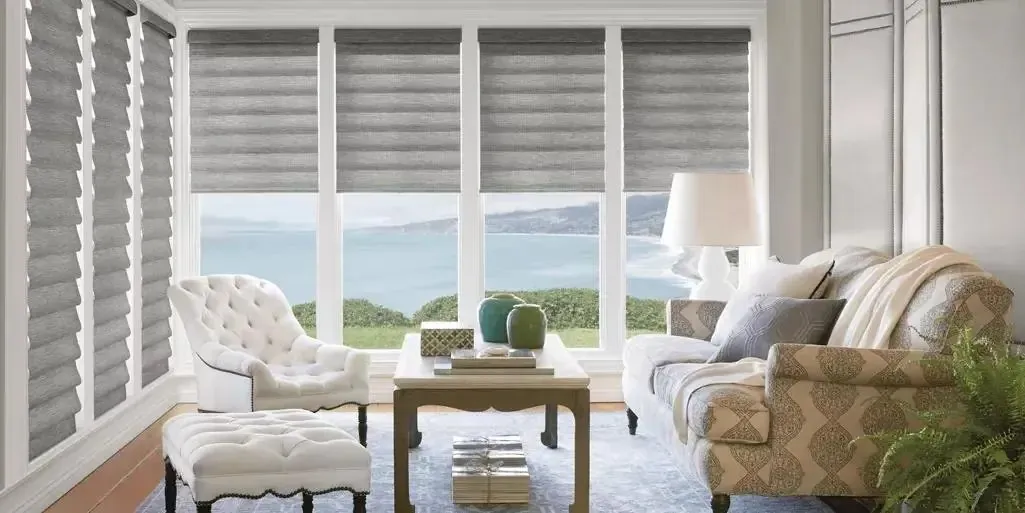
Roman shades in Sharon
Flat and folded romans from Vignette and Carole Fabrics, for a colonial’s living or dining room.
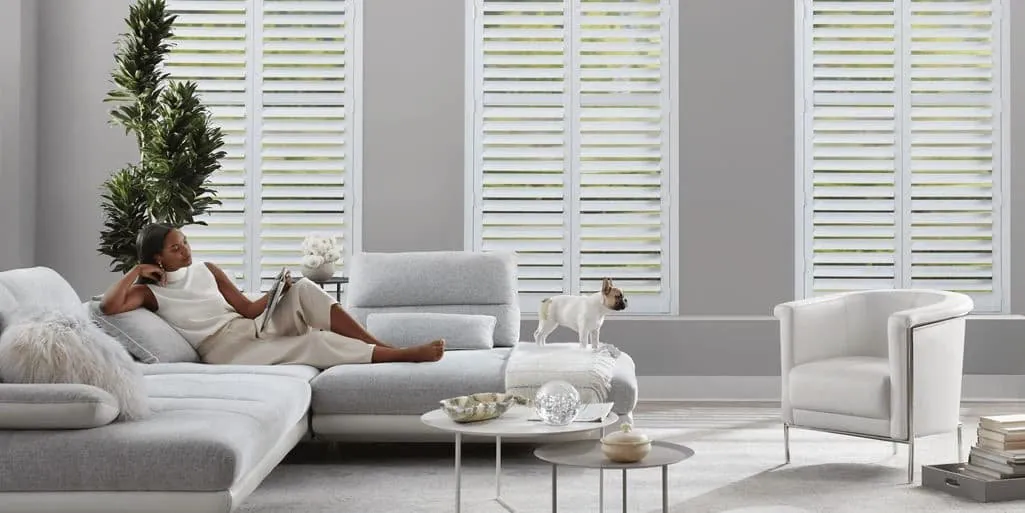
Plantation shutters in Sharon
Palm Beach, NewStyle and Heritance, with the louver size and frame matched to each window.
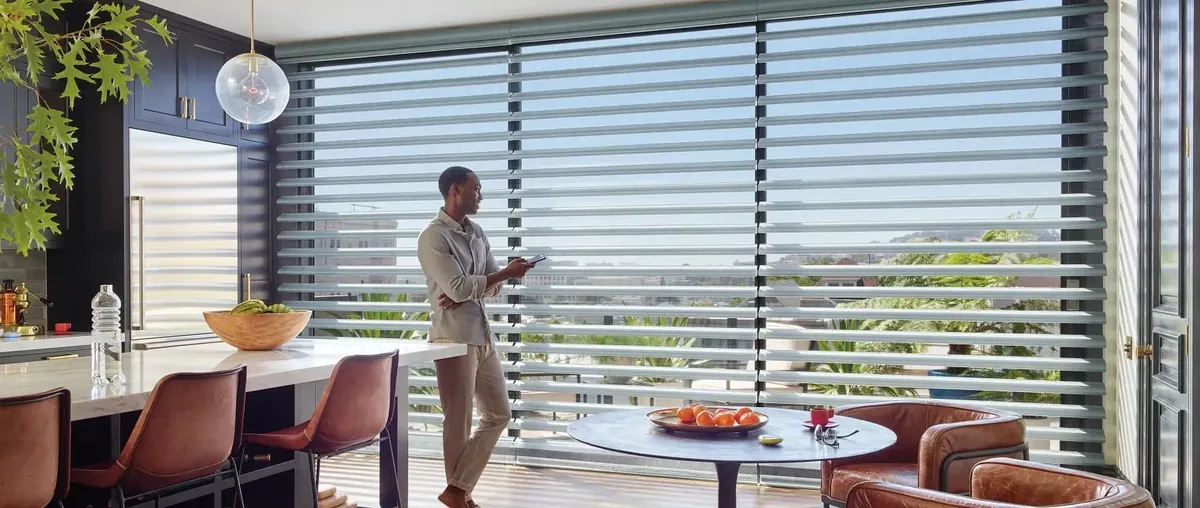
Motorized blinds and shades in Sharon
PowerView moves a whole window wall together, from a remote, the app or a schedule.

Hunter Douglas dealer in Sharon
A Hunter Douglas Gallery dealer, and every order hung by certified Hunter Douglas installers.
The consultation comes to you
For Sharon, an in-home consultation is the natural place to begin. Our shop-at-home service is run from neighboring Canton, and the Canton shop-at-home page explains how it works. In short: you pick a time, and a consultant drives out with a van carrying samples. We can bring the showroom to you, which suits a house where the light is shaped so much by the trees.
Here is how the visit runs.
- You book a time through Request a Consultation.
- The consultant arrives with samples of fabrics, slats and finishes.
- We walk the house with you, noting which rooms are shaded, which face the lake or the road, and where the long runs of glass are.
- Samples go up against your own windows, morning or afternoon, so you see how each fabric looks in that room.
- Every window is measured, including each section of a long run.
- You get a free estimate, room by room, to consider in your own time.
- Hunter Douglas makes the order, and certified installers come back to hang it, test it and show you any PowerView controls.
More about the visit is in what happens at an in-home consultation, and our in-home consultations page covers the service in general.

Why the rooms are darker than the glass suggests
A wooded lot filters the sun long before it reaches the house. Add a deep setback, with the house well back from the road among the trees, and even a living room with a long wall of windows can feel dim on a summer afternoon. The canopy is the main source of shade, and it changes through the year.
That turns the usual window covering question around. In a sunny house, the job is to cut glare. Here, for much of the year, the job is to keep every bit of daylight while still giving privacy when it is needed. That leads to some clear habits:
- Choose light colors. Pale fabrics and white or soft neutral finishes reflect light back into the room.
- Pick coverings that clear the glass. A shade that lifts fully out of the way, or a blind whose slats tilt open, leaves the window free.
- Use light-filtering or sheer fabrics for the daytime, so the room stays bright when the shade is down.
- Save room-darkening fabric for the bedrooms, where it belongs.
- Think about the bare season. When the leaves fall, low winter sun can reach deep into the house, and a light-filtering fabric or a screen handles that glare without darkening the room.
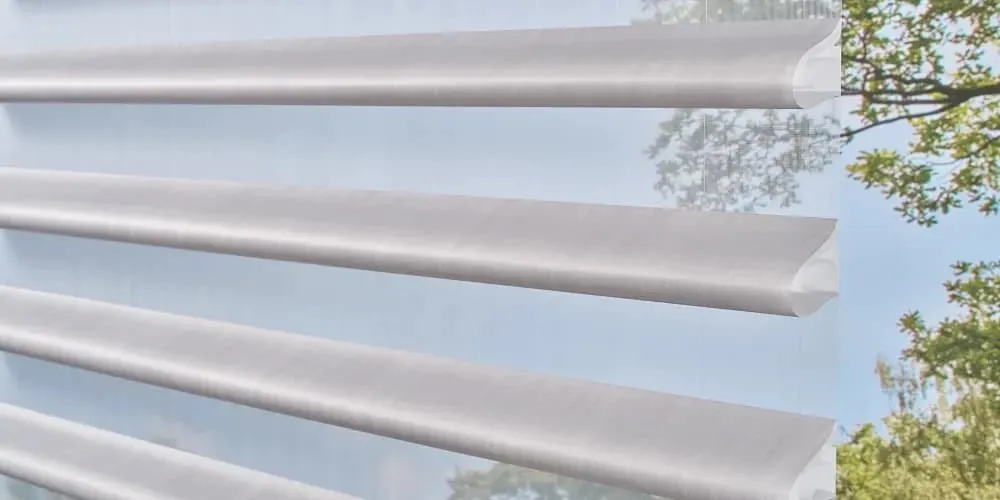
Long runs of glass in the mid-century contemporaries
The mid-century contemporaries around the lake were built to look out at the trees, with long runs of glass across a living room or along a hall. Covering a run like that well takes some planning.
The first question is how to divide it. A run of several windows can take one covering per window, which lets you raise one and leave the next down, or fewer, wider coverings where the frames allow. Either way, we line up the headrails and set the bottoms to the same height so the run reads as one clean line when lowered.
The second is the look. Contemporary houses usually suit simple, flat lines: a roller, a honeycomb or a sheer shade with fabric vanes. Each stacks neatly at the top and keeps the architecture in charge.
Where a run of glass turns a corner, as it often does in a contemporary living room, the two sides need to meet cleanly. We plan where each shade stops so the corner does not show a gap of light or a clash of headrails, and we keep the fabric and height identical on both walls. Seen from the middle of the room, the glass should look as though it was always meant to be covered that way.
The third is control. Raising and lowering many shades along a long run, one by one, soon becomes a chore. PowerView lets the whole run move together from a remote, your phone or a schedule, and you can still move any single shade on its own. Our guide to how motorized shades are controlled goes into the options.
Low sills and what they mean
Many of the windows in these houses come down low, close to the floor. That brings the outdoors right into the room, and it changes a few things about how a covering should work.
With a low sill, the lower part of the glass is at seated height, so privacy matters from a sofa or a chair as well as standing. It also means the glass is visible from outside at a lower level. A shade that lowers from the top, leaving the upper glass covered and the lower part open, or the opposite, gives you choices across the day. Shutters split into upper and lower panels work in the same way on a colonial’s windows.
Low sills also mean furniture often sits close to the glass. We check what is in front of each window so the covering clears it when lowered, and so it is easy to reach when raised.
Colonials on wooded lots
The colonials around Sharon are more traditional: two stories, rooms on either side of a center hall, evenly spaced windows. Under heavy trees, their front rooms can be quite shaded too. A light-filtering honeycomb or a sheer shade keeps those rooms bright and private. Shutters suit a colonial’s front windows beautifully, and their louvers can be tilted up to send what daylight there is onto the ceiling.
Consistency helps from the road. A single color facing the glass on every front window, and coverings of matching height on windows of matching size, keeps the facade calm even when the rooms behind use different products. That is a good starting rule for window treatments in Sharon, MA, on a colonial.
Upstairs, a colonial’s bedrooms often look straight into the branches. In leaf, that gives them shade and privacy from the road; in winter, the bare trees let in more light and more view from outside. A covering that works in both seasons, such as a light-filtering honeycomb paired with a darker fabric for sleep, saves you rethinking the room twice a year.
Facing Lake Massapoag
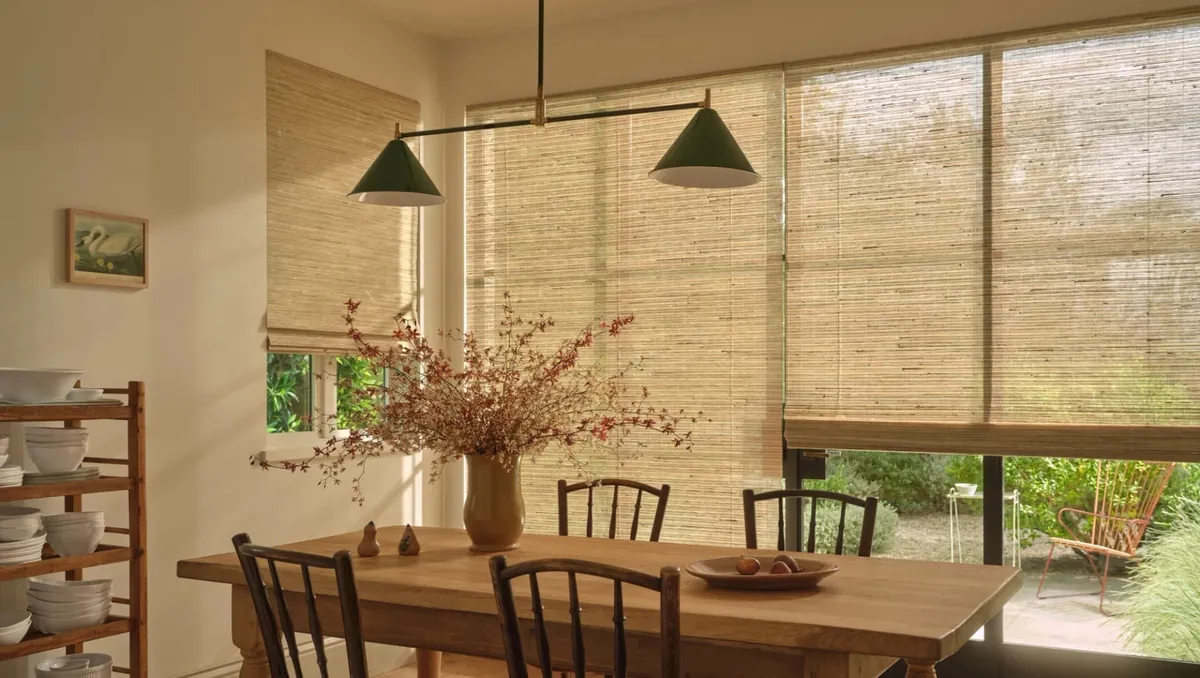
Houses with a view toward Lake Massapoag have a reason to keep the glass open. The covering should protect the view, not hide it. A sheer shade with fabric vanes softens the light and leaves the outlook almost untouched when open, then closes for privacy at night. A solar screen cuts glare off the water on bright days while keeping the view; the openness you choose decides how much you see. For bedrooms on the lake side, a room-darkening fabric keeps early summer light out.
On the long glass of a contemporary facing the water, a PowerView group can lower in the late afternoon if the sun comes off the lake, and rise again after sunset. Window treatments in Sharon, MA, for a lakeside room nearly always start with keeping the view.
Deep setbacks and evening privacy
With the houses set far back among the trees, daytime privacy from the road is seldom a worry. Evening is different. A lit room with a long run of glass shows clearly through the trees after dark, sometimes from a good way off. Every window facing the road or a neighbor needs a covering that closes fully at night.
We plan each window for both times of day: open or lightly covered by day to keep the light, closed in the evening for privacy. A PowerView schedule can handle the switch for you at dusk.
Sliders and doors to the deck
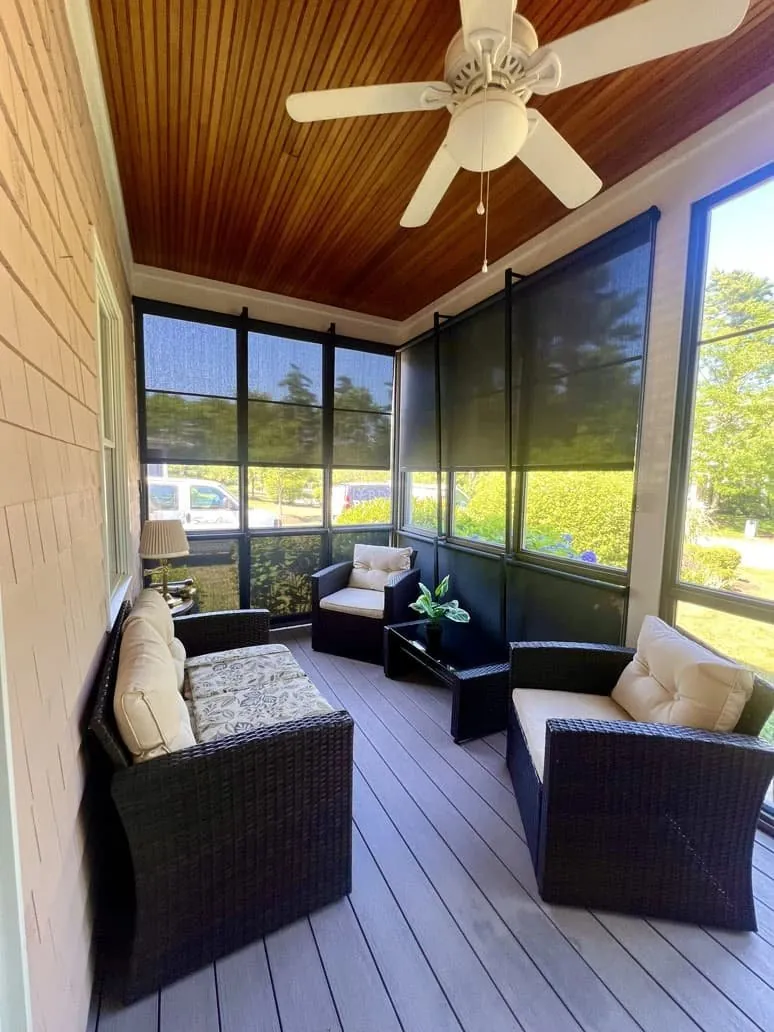
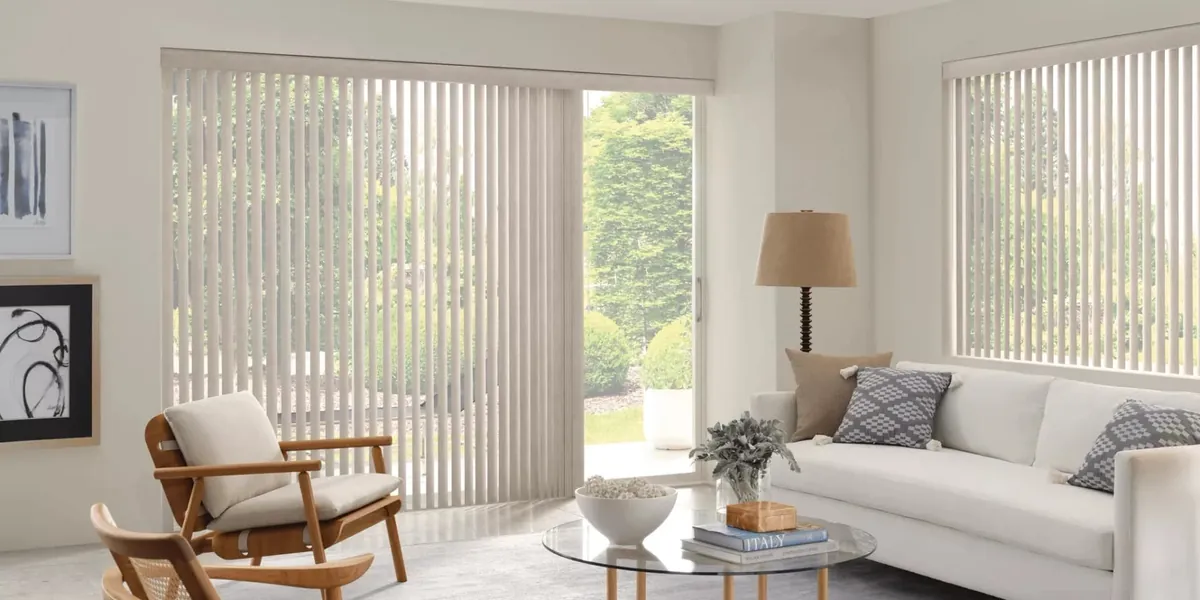
Plenty of houses near the lake step out to a deck or patio. Glass that slides sideways wants something that parts the same way, so verticals or a vertical honeycomb are the usual pick, unless you would rather have a shade that rolls up out of sight above the frame. Hinged French doors are simpler still: each door carries its own shade or shutter and swings open with it. When the slider sits in the middle of a contemporary’s window wall, its covering is chosen to match the shades on either side, so the whole wall reads as a single piece.
Comfort in every season
All that glass has a cost in winter. Sit near a long window wall on a cold evening and you feel the chill coming off it. Honeycombs earn their place here: drop them as it gets dark and the air trapped in their cells acts as a buffer between you and the cold pane. Bring a whole run down together, by hand or through PowerView, and the room feels warmer for it. There is more in the guide to cellular shades and winter heat. In summer, the trees do much of the shading, and the coverings can stay up for most of the day.
Choosing color in tree-filtered light
Light that has come through a canopy of leaves is not the same as open sunlight. In summer it carries a green cast, and on gray days under heavy trees it can be quite cool and flat. A fabric color you liked in a brochure can look different once it hangs in a shaded room, which is the strongest argument for choosing at home with the samples against your own glass.
As a general guide, warmer whites and soft neutrals tend to hold up well in shaded rooms, while very cool grays can look heavier than expected. Fabric texture shows more in low light too, so a woven or a soft fabric adds interest without needing a strong color. Seeing the swatches in the room, morning and afternoon if possible, is the surest way to judge. Color choices are a quiet but real part of window treatments in Sharon, MA, and our interior design consultations can help pull them together across the whole house.
Kitchens, baths and bedrooms
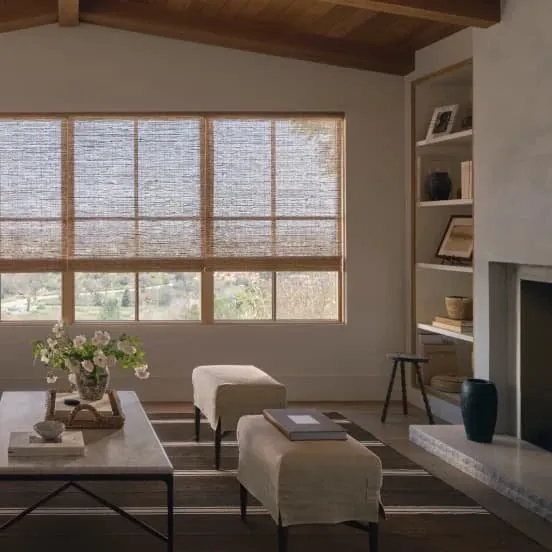
Kitchens in these houses often look out to the woods, and a roller or faux wood blind that clears the glass keeps that view. If the window is a reach across a counter, a motor solves it. Baths need privacy at eye level: cafe shutters on the lower sash, or faux wood blinds that tilt and close.
Bedrooms are the one place where darkness matters more than light. A room-darkening honeycomb or roller, sized to fit the frame closely, keeps the room dark, and a lighter shade or one that lowers from the top keeps it pleasant by day. Window treatments in Sharon, MA, for bedrooms usually settle on that pairing.
If you have existing blinds or shades that need fixing, mention them at the visit. We offer blind and shade repair on coverings you already own, and we will tell you straight whether a repair or a new covering makes more sense.
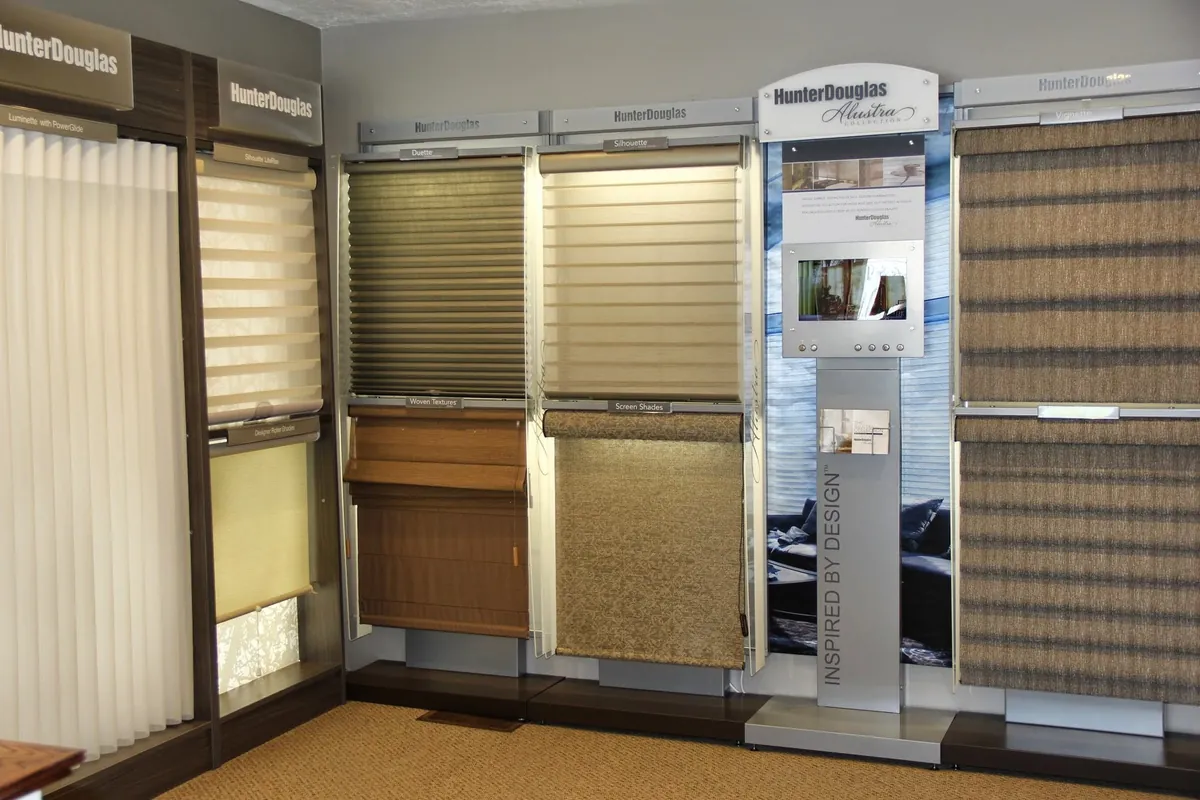
What a Gallery dealer brings to a Sharon house
A contemporary with long glass, a colonial with shaded front rooms, a lakeside bedroom that wakes too early: each wants something different. Blinds & Designs is a Hunter Douglas Gallery dealer, so one consultant can plan every window from the full Hunter Douglas range.
Installation is done by installers Hunter Douglas has certified. Around that, one company covers the home visit, the free estimate, design advice, automation and any repairs.

Prefer to see a showroom first?
Most Sharon projects start at home, but if you would like to see the range in person, the nearest Blinds & Designs showroom is in Franklin. North Dartmouth is our main showroom, farther south.
Even after a showroom visit, the long glass and shaded rooms here are best decided in the house itself, with samples against your own windows.
Questions from Sharon
We have so many windows, yet the rooms feel gloomy. Why, and what helps?
The trees filter the light before it reaches the glass. Pale fabrics, light-filtering or sheer shades, and coverings that lift fully out of the way all help, with room-darkening fabric kept for the bedrooms.
How do you cover a long run of windows?
We line up the headrails and set the bottoms to one height so the run reads as one line. Each window can have its own shade, and PowerView can move them all together.
Our sills are very low. Does that change anything?
Yes. Privacy matters at seated height, so a shade that lowers from the top or a shutter split into upper and lower panels gives more control. We also check that the covering clears any furniture near the glass.
Do we need to visit a showroom?
No. Most projects here start with an in-home consultation, and the van brings the samples to you. The Franklin showroom is the nearest if you would also like to visit.
Is there a charge for the estimate?
None. Once each window has been measured, the estimate is yours at no cost.
Start at home
Request a consultation and choose a time, and a consultant will bring the samples to your house among the trees. We will measure every window, long runs and low sills included, talk through the light in each room and leave you a free estimate. For a question before then, the call button reaches us.
For the full range in one place, start with our window treatments page.