
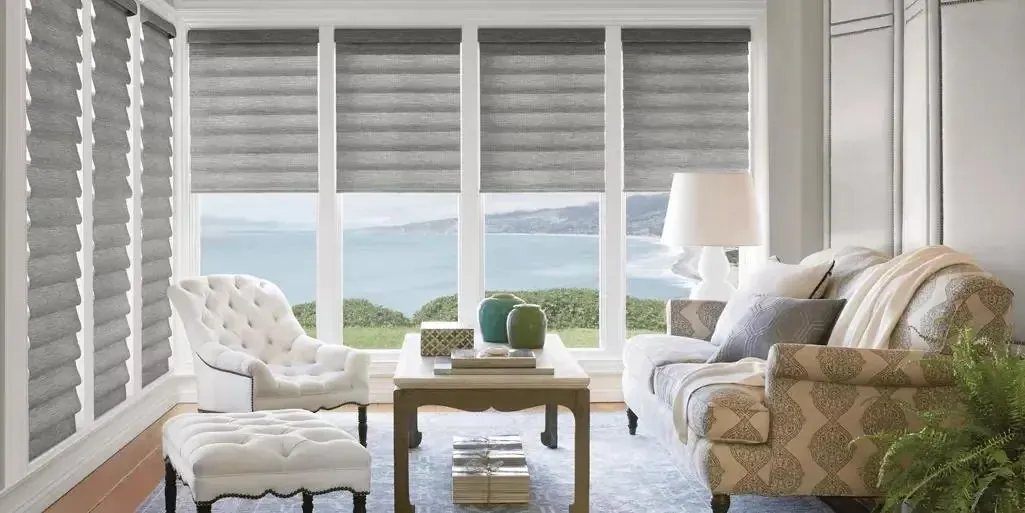
Formal rooms and wide openings
Around Milton Village and up against the Blue Hills, the houses are big: large colonials and Victorians with tall sash, generous ceilings and a run of formal rooms at the front. Many of them have double-width openings, two windows set together in one wide frame, and living and dining rooms built on a scale that has traditionally called for drapery. Planning roman shades in Milton, MA, starts with that sense of scale. A shade that looks right on a modest window can look lost in a room like this.
Fabric shades suit these houses because they bring the softness of drapery to the window itself. A well-made folded shade inside a tall sash gives a formal room a finished look on its own, and it pairs naturally with side panels where the room asks for more. The job is to get the proportion right: the width on a doubled opening, the fold spacing on a long drop, and a fabric weight that holds its shape across a broad panel.
The lower village is a different picture, with post-war houses and more ordinary windows. We cover both with Hunter Douglas Vignette and Carole Fabrics roman shades in flat and folded styles, and we bring every sample to your house.
Roman shades in Milton, MA, sized for the room
The styles below are the ones we show most often in Milton’s bigger houses. All of them come to you on the sample van.
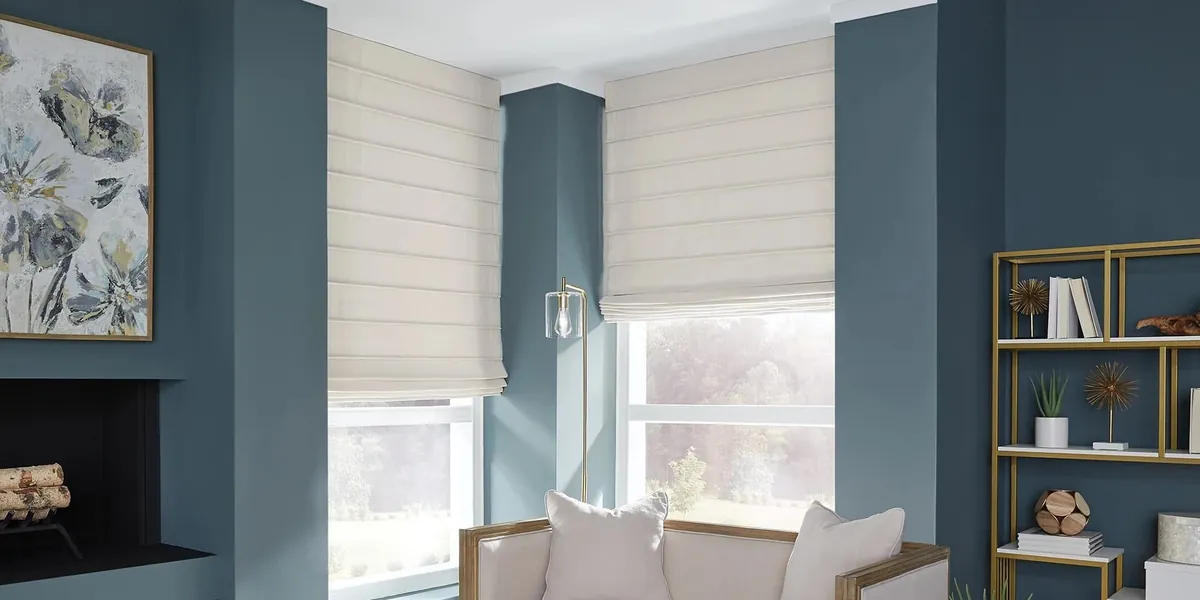
A tailored flat style for formal rooms
Carole Fabrics made up as a smooth panel. It keeps a formal living room orderly and lets a patterned fabric read clearly across a wide window.
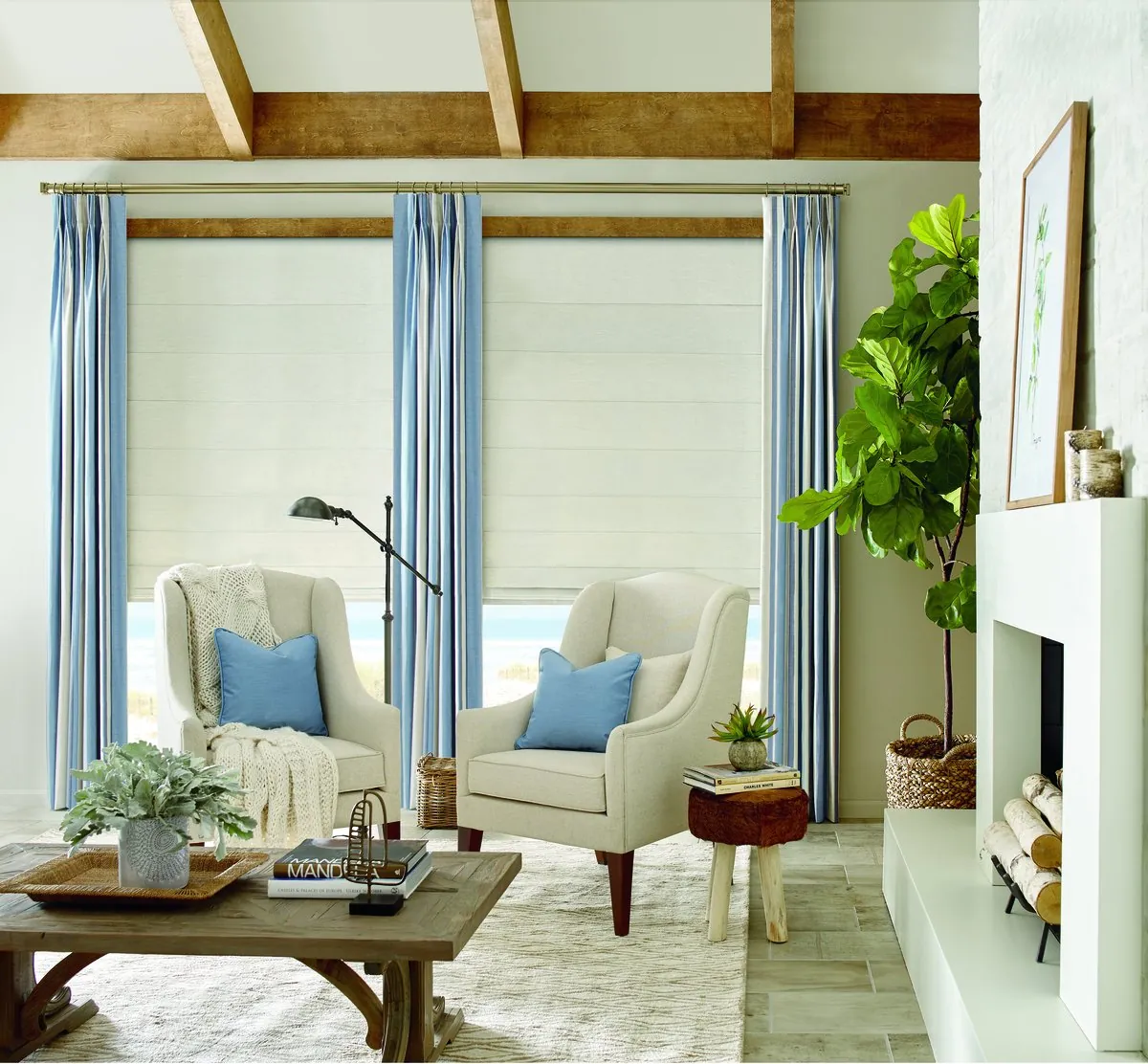
Shades layered with drapery
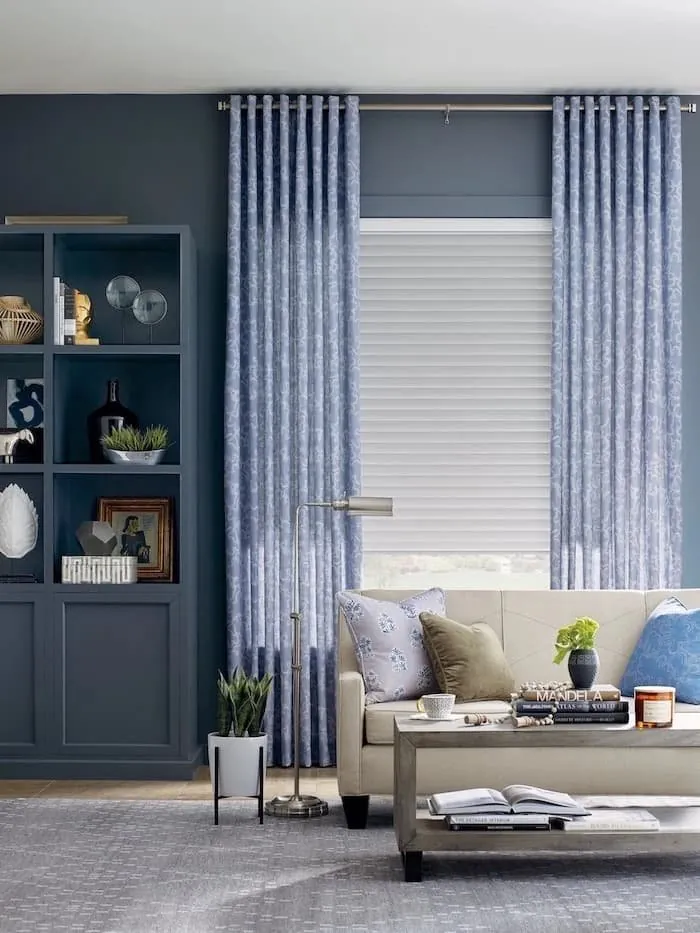
A roman shade inside the frame, with Hunter Douglas drapery outside it. The classic answer for a drapery-scale room.
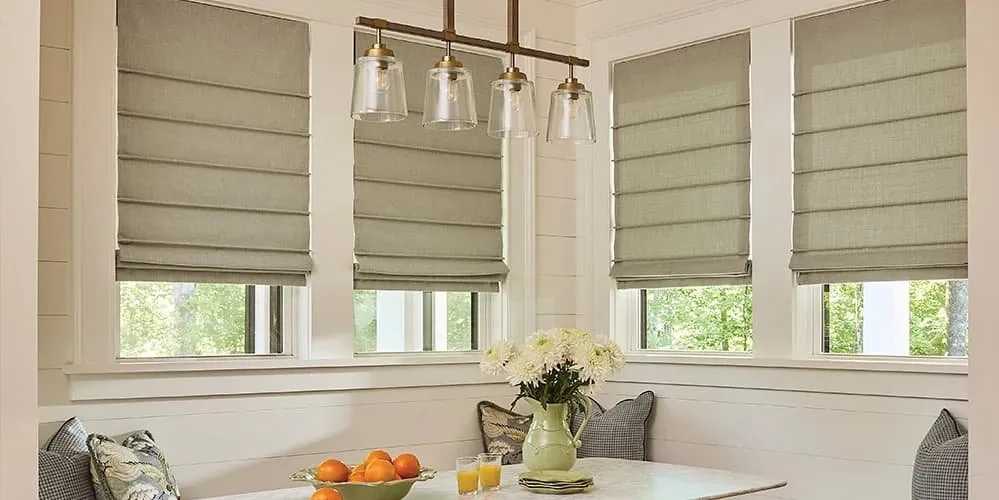
Vignette for the lower village
Neat, regular folds that suit the simpler rooms of a post-war house, or a kitchen and family room at the back of a larger one.
Double-width openings: one shade or two
A double-width opening is two windows side by side in one frame, separated by a narrow mullion. It is common in Milton’s large houses, and it raises a real choice. One wide fabric shade across the whole opening gives a single, calm panel of fabric, which can look grand in a formal room. Two shades, one per window, give you the option of lowering one side and not the other, and each shade is lighter and easier to raise.
The choice usually comes down to how the room is used and how the fabric looks. A patterned flat style reads beautifully as one wide panel, because the pattern runs straight across without a break. A folded style, with its soft loops, can look heavy across a very wide span, and often looks better as a pair. In a room where the sun strikes one half of the opening in the afternoon, two shades are more practical, because only the sunny side needs to come down.
We measure doubled openings carefully, because the mullion and the trim around it decide where a split should fall. When two shades sit side by side, we align their hems and match their fold spacing so the pair reads as one design from across the room.
Drapery-scale rooms
Some Milton rooms were built for curtains: high ceilings, long walls, tall windows and a fireplace on the end wall. In a room like that, a fabric shade can work alone, but it also makes a good partner for drapery. The shade inside the frame handles the everyday work of light and privacy. Panels outside the frame, rarely drawn, add height and frame the window, and soften a large room in a way that a shade on its own cannot.
When we plan the two together, the fabrics are chosen as a pair. A plain shade can sit behind a patterned panel, or a patterned shade behind a plain one; matching both exactly can look flat in a big room. The shade also needs to clear the drapery hardware when it is raised, so we plan the mounting height of each at the same time. Hunter Douglas drapery comes on the same visit, so you can see both fabrics together at the window.
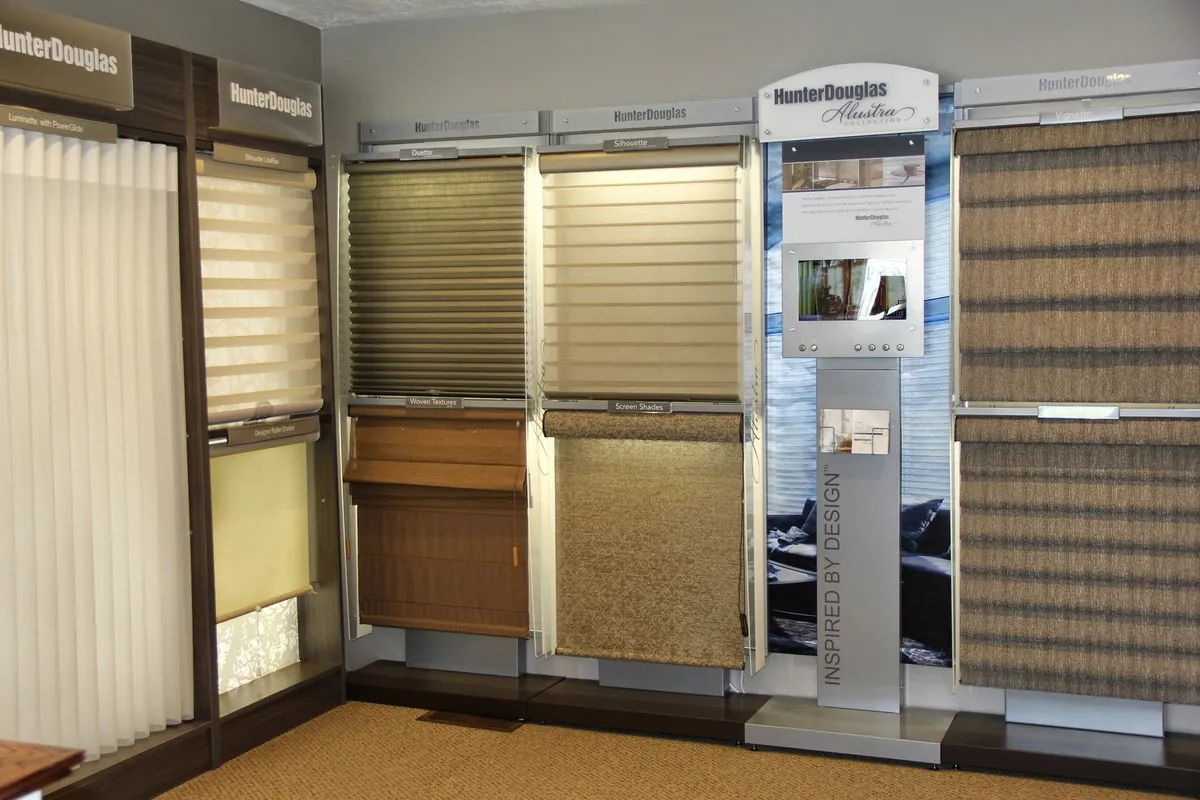
Tall sash in Milton Village
The colonials and Victorians around Milton Village have the long, slim sash windows of their era. A long window gives a roman shade room to fall, so the folds can be spaced generously when the shade is down and the raised stack takes only a small share of the glass. That leaves more daylight in the room when the shades are up, which matters in deep rooms with high ceilings.
Plenty of these houses keep the casings they were built with, some of them deep and finely detailed. Hiding that woodwork behind a headrail would be a shame, so our first choice on a deep frame is to tuck the shade within the opening. On a shallow frame, or one crowded by old sash hardware, the headrail moves up onto the face of the trim instead, just high enough that the raised fabric clears the top pane. Every opening gets its own set of measurements; in a house this old, the window on the left of the fireplace is seldom quite the twin of the one on the right.
Formal front rooms also face the street, and in the evening they are on view. A fabric shade lowered fully gives the room privacy once the lamps come on, and during the day it can rest at the same height on every front window, so the facade looks composed.
Houses up against the Blue Hills
The houses that sit up against the Blue Hills tend to have their main rooms facing the woods and the rising ground. Those windows are as much about the outlook as the light. A roman shade lowered partway covers the top of the glass, where the sun comes in, and leaves the lower part open to the view. On a bright afternoon, that is often all a room needs.
Because there may be less traffic passing these windows than on a village street, the call for privacy is lower and the call for daylight and view is higher. That points toward lighter fabrics in the main rooms, saved for evenings rather than lowered all day. Bedrooms, of course, are a different matter, and a heavier fabric there is common.
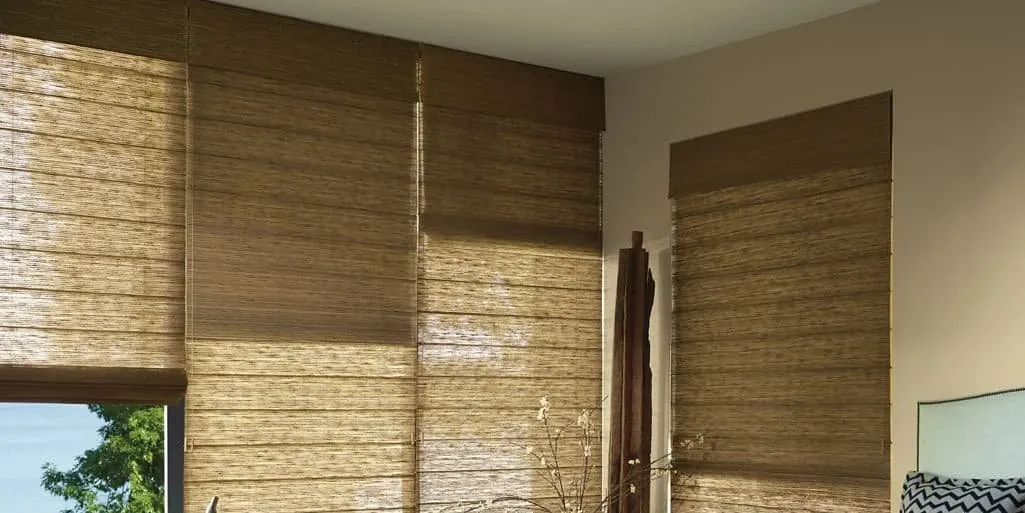
Post-war houses in the lower village
In the lower village, the post-war houses have simpler, standard openings and rooms of a more everyday size. Here the question of scale goes away, and fabric shades are chosen for comfort and style. Vignette, with its tidy folds, is a natural fit in a living room or bedroom, and a plain Carole flat style suits a kitchen or a home office.
A post-war house in the lower village may sit only a short walk from a large Victorian in the village, yet its windows ask for something quite different: less about proportion and trim, more about everyday light and a tidy, matching look. These houses are quick to measure and straightforward to fit, and because many windows share a size, a consistent look across the whole house is easy to achieve. We cover them in the same visit and with the same care as a large Victorian.
How we work in Milton
Milton falls inside our shop-at-home territory, run from Canton. For houses with as many rooms and windows as some here, that is the sensible way to shop: the samples come to the house, and you see each fabric where it will hang.
- Send a request through the Request a Consultation form, or use the call button.
- We arrange a visit, and you tell us whether it is one room, the formal rooms at the front, or the whole house.
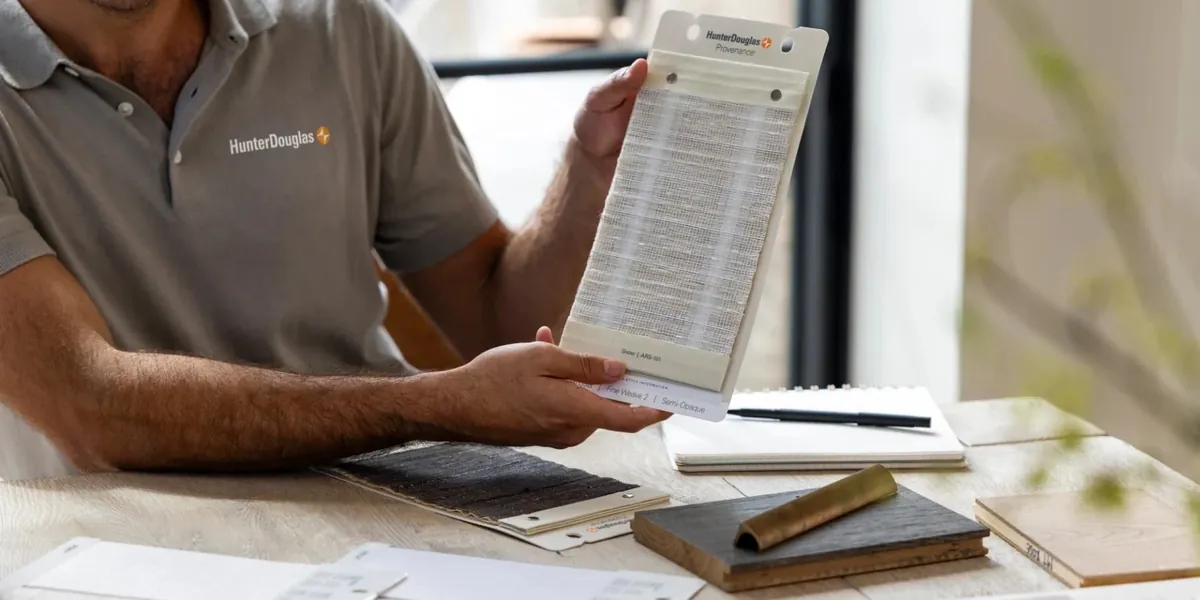
- A consultant arrives with Vignette, Carole Fabrics and Hunter Douglas drapery samples.
- In each room we compare fabrics at the window, and on doubled openings we talk through one shade or two.
- Every opening is measured, including the trim and any drapery hardware that the shade has to clear.
- A free estimate follows, set out room by room, so you can phase the work if you prefer.
For a fuller picture of the visit, our guide to what happens at an in-home consultation answers the usual questions, and the window measuring terms explained guide decodes the words you will hear when we measure.

Bedrooms and the upper floors
Upstairs in a large colonial, the rooms change character. Bedrooms are quieter and more private, often with windows on two walls and sometimes a smaller window tucked under the eaves. Here the formal concerns of the ground floor give way to comfort: how dark the room gets at night, how the morning light arrives, and whether a fabric feels restful. A folded style in a soft, plain fabric suits a primary bedroom well, and Vignette works neatly in a guest room or a child’s room.
Upper floors also see more sky. With nothing to shade them, east-facing bedrooms can be bright very early in the morning, and west-facing rooms can stay warm well into the evening. A heavier fabric on those windows makes a real difference to how the room feels. On a staircase window or a landing, where the light is welcome but the glass faces a neighbor or the street, a lighter fabric gives privacy without losing the daylight that makes a stair feel safe. Roman shades in Milton, MA, upstairs and down, can share one family of fabrics so the house feels connected from floor to floor.
Fabric weight on a broad panel
The wider and taller the shade, the more the fabric matters. A light, loosely woven fabric can look lovely on a small window but may not hold crisp folds across a broad opening. A fabric with more body keeps its shape and hangs straight. For roman shades in Milton, MA, on wide or doubled openings, we steer toward fabrics that will look as good on the window as they do in the sample book, and we tell you plainly if we think a choice will struggle at that size.
Color and pattern scale change with size too. A small print that looks pretty on a swatch can turn into a blur across a large panel, while a larger print reads clearly from across a big room. In a formal room with drapery, pattern usually belongs on one layer, not both. Our guide to choosing fabric for a sunny room is useful for the south and west-facing rooms.
Interior design help for the formal rooms
A formal living room or dining room in a large Milton house often involves more than the windows: wall color, upholstery, rugs and the drapery all need to work together. Our interior design consultations bring those decisions into one plan, so the shades and panels are chosen with the rest of the room rather than in isolation. It is a natural step for a big room, and it can happen on the same visit.
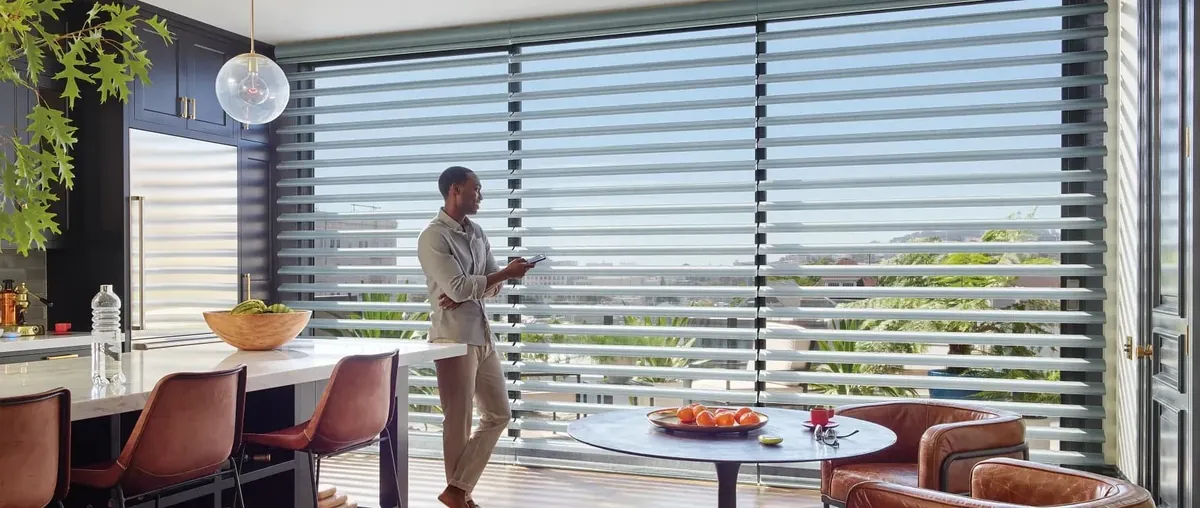
Motorizing a wide set of shades
A formal living room with five or six tall sash, a doubled opening on the end wall and a window high over the stair is a lot of shades to tend by hand twice a day. PowerView takes that chore away. Grouped together, the shades along one wall come down as a set when evening arrives, or rise in the morning before anyone is downstairs. You can move them from a handheld remote, from the PowerView app, or let a schedule do it. We plan how each motor is powered at the visit. The motorized blinds in Milton page goes further into automating the rest of the house, and the guide to how motorized shades are controlled sets out the remote, app and timetable choices.
Fitting shades in a big old house
A big Victorian is not a quick fit. High windows mean ladders on stair landings, horsehair plaster resists a drill, and on a doubled opening the two headrails must finish at precisely matching heights or the pair looks wrong from the doorway. That is where certified Hunter Douglas installation earns its place: the installer levels each rail to the room rather than to a frame that may have settled, then runs every shade from top to bottom and back. Where a shade lives behind drapery panels, the installer checks that fabric and hardware pass each other cleanly. Read what happens on installation day for a walk through the visit.
Other rooms may suit other products. Bedrooms often take cellular shades in Milton, and a bathroom or a breakfast room may suit plantation shutters in Milton. Our Milton page lists every service we offer in town.
Why a Gallery dealer matters in a large house
Blinds & Designs is a Hunter Douglas Gallery dealer. In a house with formal rooms, doubled openings and many different window sizes, that matters, because the whole Hunter Douglas range is available to choose from: every Vignette and Carole Fabrics roman shade, Hunter Douglas drapery for the big rooms, and blinds, shutters and other shades where a room suits them.
Estimates are free, and if an existing blind or shade in the house needs attention, our blind and shade repair service will look at it.
Most Milton projects begin with a visit to the house. If you would rather start at a showroom, our nearest is in Franklin.
Questions from Milton
Should a double-width window have one roman shade or two?
Either can work. One wide shade gives a single panel of fabric, which suits a pattern; two shades let you lower one side at a time and are lighter to raise. We show you both options at the window.
Can I have roman shades and drapery on the same window?
Yes, and it suits Milton’s larger rooms. The shade sits inside the frame for light and privacy, and drapery panels hang outside it for height and softness. We plan both together.
Will a fabric shade hold its shape on a very wide window?
With the right fabric, yes. On wide or doubled openings we recommend fabrics with enough body to hang straight and fold crisply.
Where do we choose the fabric?
At home. Milton is part of our shop-at-home area, which means the consultant brings the sample books into your formal rooms. Franklin is the closest of our showrooms if you would also like to call in there.
Is there a charge for the estimate?
No. The estimate is free, set out room by room so you can phase the work.
Bring the samples to your formal rooms
A swatch on a table tells you very little about how a fabric will look across a doubled opening under a high ceiling. Seeing it there tells you almost everything. Use the Request a Consultation button and a consultant will drive the samples out to you: Vignette, Carole Fabrics and Hunter Douglas drapery, enough to try in the parlor, the dining room and the bedrooms upstairs. Every opening gets measured, the one-shade-or-two question gets settled at each wide window, and a free estimate is written up before the visit ends. Your roman shades in Milton, MA, are planned around the rooms you already love. Questions before booking? The call button connects you.