
Old colonials by the bay, newer streets off Route 3
Kingston’s houses fall into two broad groups. Near the village and along the bay, antique colonials stand on the older streets, with tall double-hung windows, wide trim and rooms arranged around central chimneys. Inland, off Route 3, the town is mostly post-war ranches and newer subdivisions, where windows come in standard sizes and the hardware on them is modern. Choosing custom blinds in Kingston, MA works best when the house sets the brief.
On the bay side, the morning is the issue. Rooms that face the water take the sun as soon as it rises, low and bright, reflected off the bay and straight into kitchens, breakfast rooms and bedrooms. For an hour or two it can be hard to sit at the table or sleep in.
Inland, the windows are easier to fit but have their own details. Newer windows carry tilt latches, cranks and grilles that a blind has to work around, and the frames are not always as deep as the ones in an old house.
Choosing custom blinds in Kingston, MA
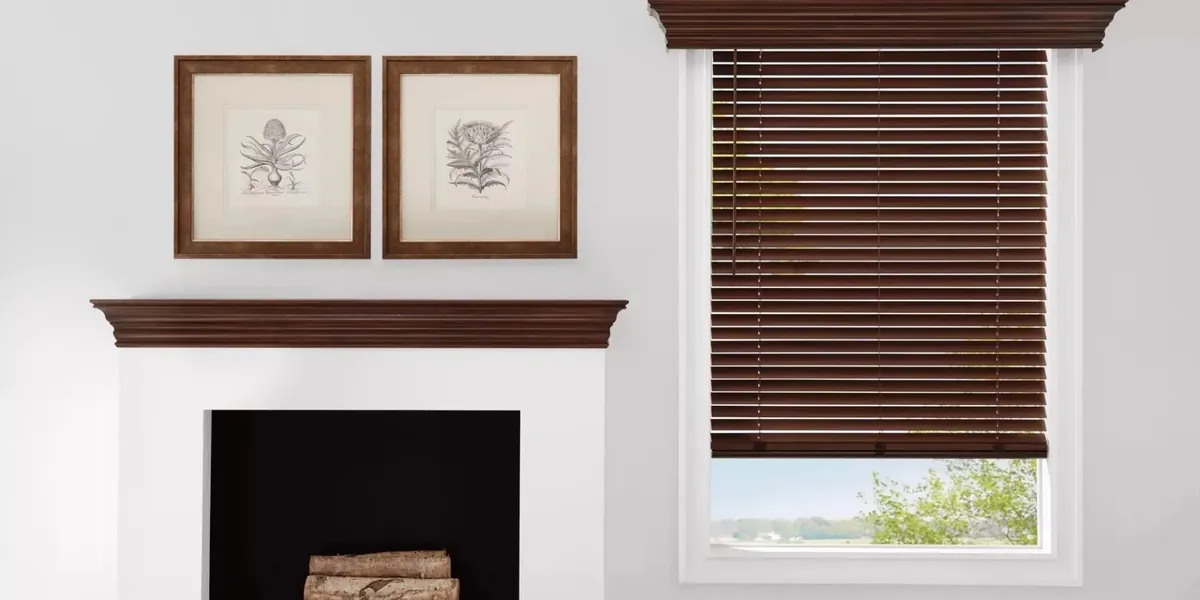
Every blind we sell comes from the Hunter Douglas range and is built to the size we measure at your window. These are the three we fit most often in Kingston, with wood blinds for the formal rooms of the old colonials, and we bring samples of all of them to your door.
Faux wood for busy rooms
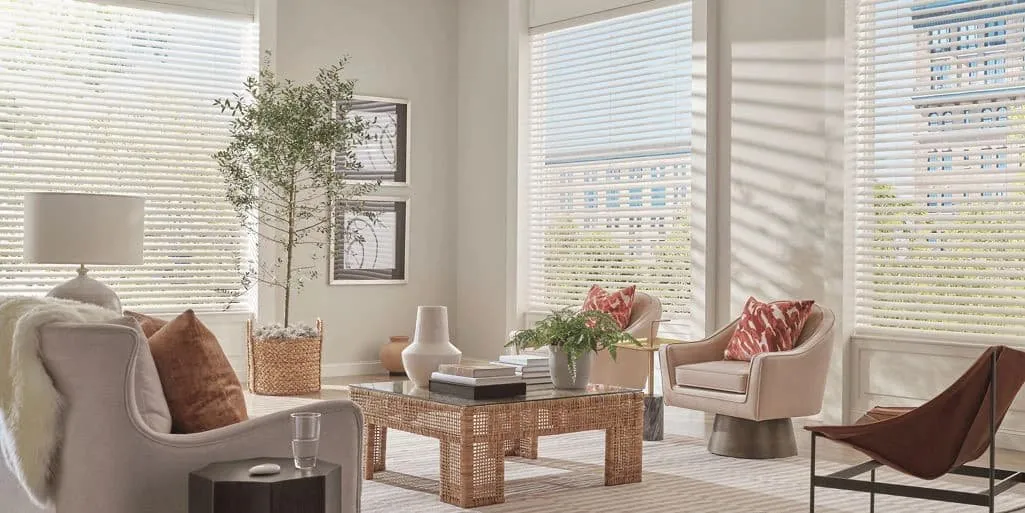
Looks like painted wood, stands up to steam and sun, and wipes clean. A sound choice for kitchens, baths and bright bay-facing rooms.
Metal for compact windows
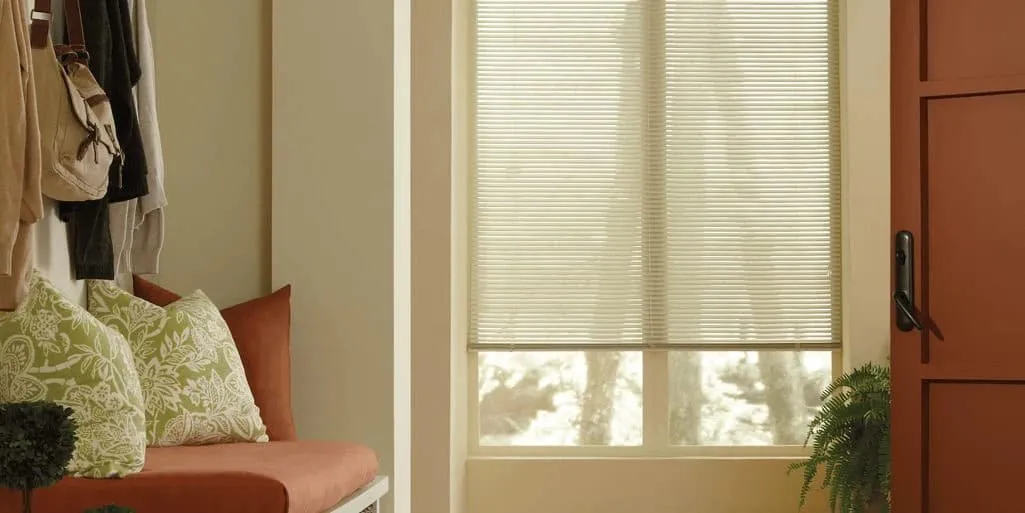
Slim aluminum slats with a neat headrail, for side lights, entry windows and the smaller openings of a ranch or a newer house.
Gliding panels for wide doors
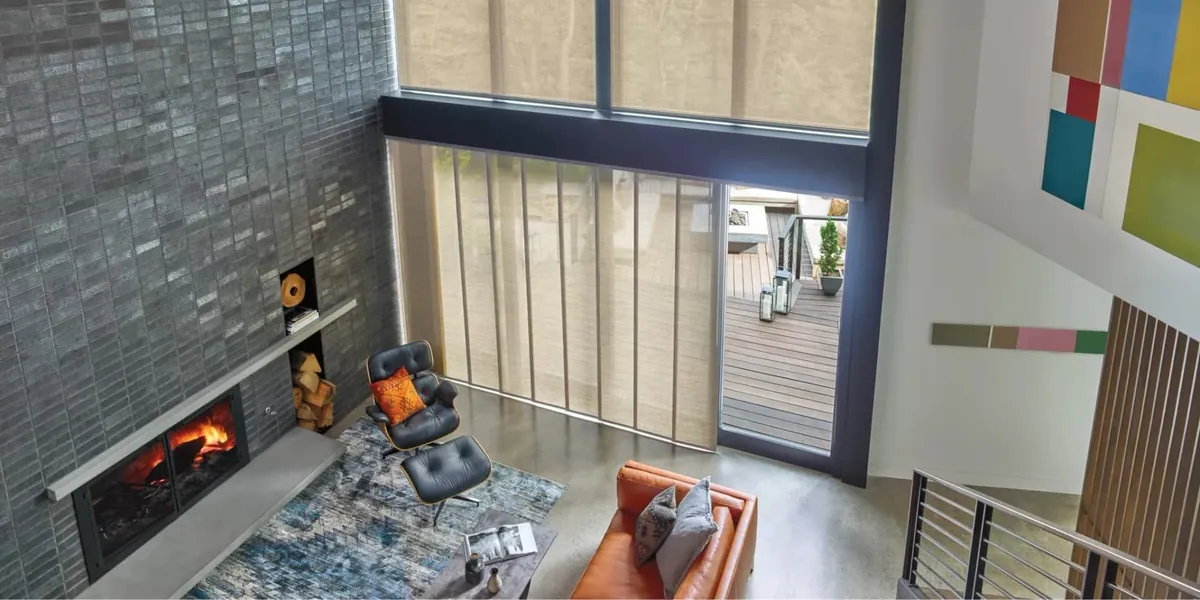
Wide fabric panels that slide on a track and stack to one side, for the slider to a deck or patio in an inland house.
Morning glare off the bay
The rooms on the water side of the old village houses face roughly east across Kingston Bay. When the sun comes up it rises over the water, and for the first part of the day its light arrives almost horizontally, doubled by the reflection off the bay. It reaches right across a kitchen to the far wall and into the eyes of anyone at the table.
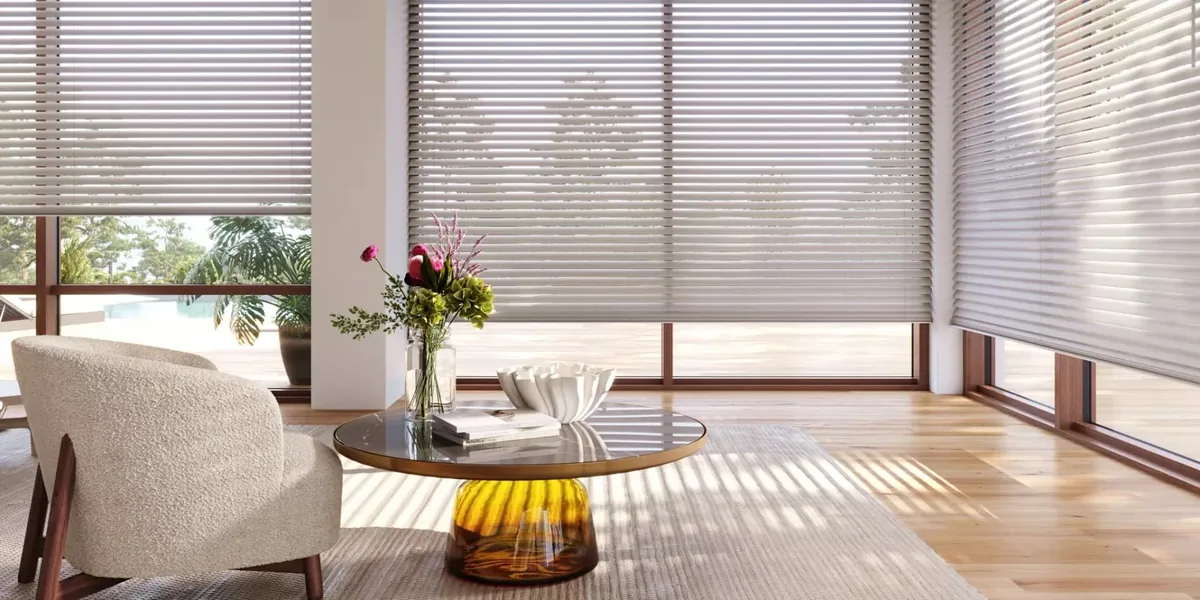
Blinds are well suited to that kind of light because they can be tilted rather than simply opened or closed. With the slats angled upward, the low beam strikes the slats and is sent up to the ceiling, so the room fills with soft light instead of a hard shaft. Close the slats a little further and the glare is gone while the room stays usable. By mid-morning, as the sun climbs, you can open them again and have the view. On a gray day you may not need to touch them at all, which is part of why a blind suits a room whose light changes so much from one morning to the next.
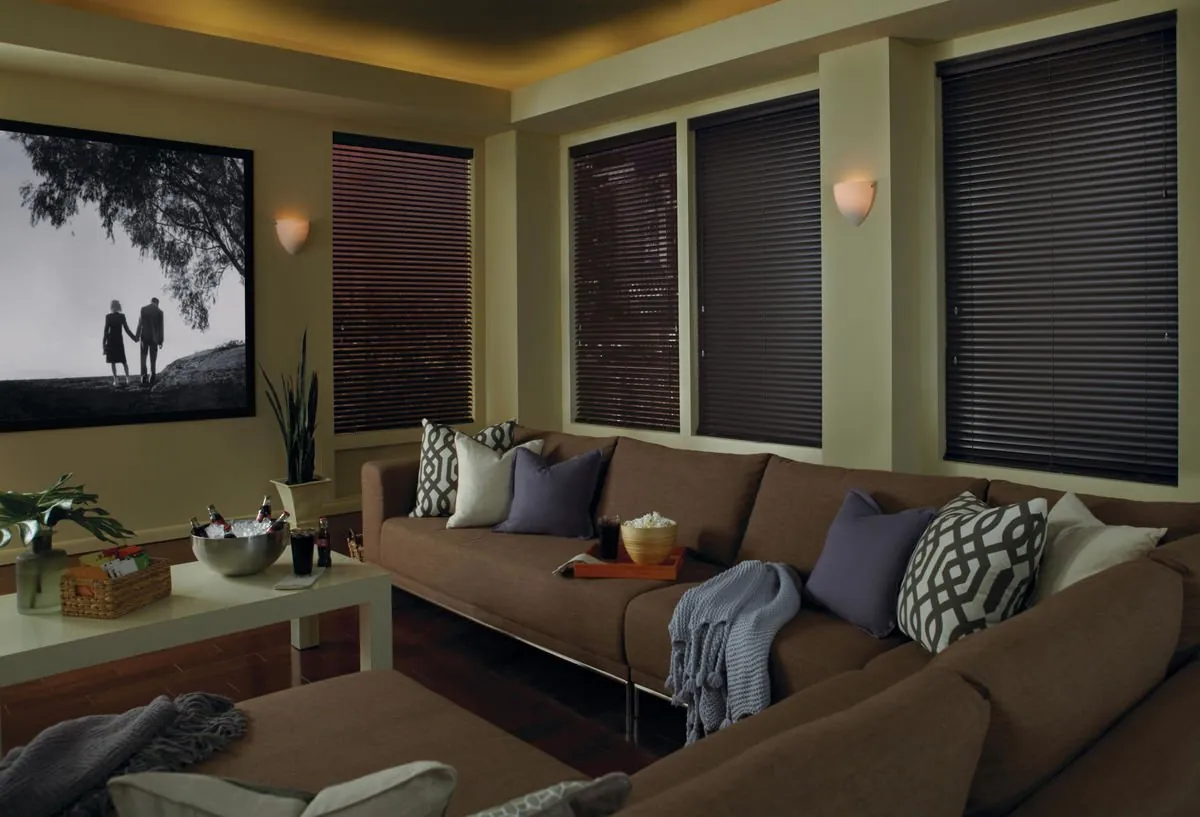
Bedrooms on the bay side are a different matter: there, the aim is usually to keep the early light out until you want it. A deeper-colored wood or faux wood blind that closes tightly does that well, especially mounted outside the frame so it overlaps the edges.
Front doors, side lights and entry halls
Old colonials and newer houses alike often have narrow glass beside the front door: side lights in a colonial’s formal entry, or a tall slim window beside the door of a newer colonial in an inland subdivision. They let light into the hall, and they also let anyone on the step see straight in.
A narrow aluminum blind is a neat answer. Its slim slats and compact headrail suit a window only a hand or two wide, and tilted closed it gives the hall privacy while still letting daylight through. In a formal colonial entry, painting the side light blinds the same color as the trim lets them disappear against the woodwork, so the doorway still looks as it was meant to from the street and from the stairs. Because each blind is made to its own opening, even an unusually tall, thin side light gets a proper fit.
Antique colonials near the village
The colonials on the old streets near the village and the bay are some of the most handsome houses in town. Their fronts are formal and symmetrical, their windows are tall double-hungs set in wide, often moulded trim, and the front rooms have high ceilings.
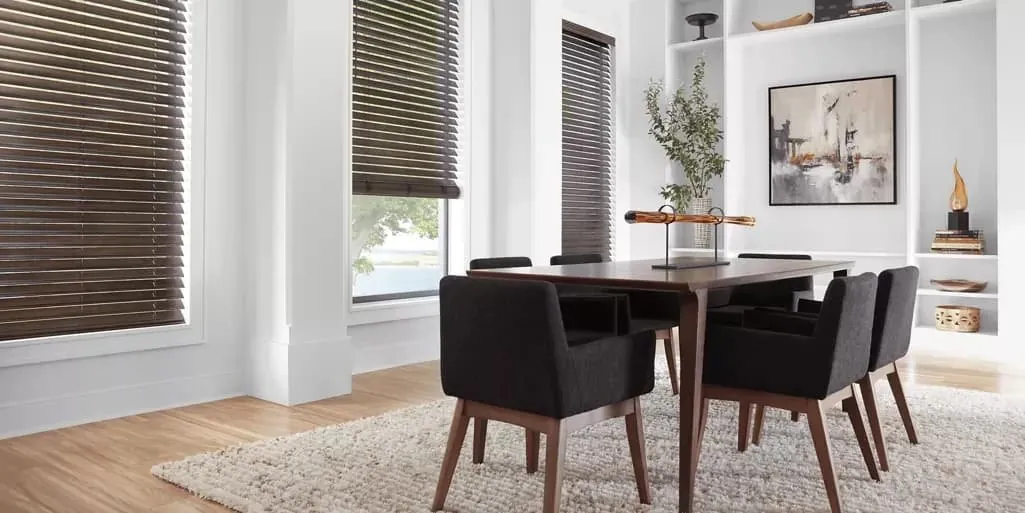
A blind in one of those rooms should respect the trim. An inside mount, with the headrail within the opening, leaves the casing fully visible and lets the blind tuck away when raised. Real wood, stained to suit the floors or painted to match the trim, has the right weight for a formal room. On the street-facing windows, one color and one slat width throughout, with every blind raised to an even height, keeps the front of the house looking calm.
Old frames need checking. Window openings in an antique house have settled and are rarely square, and sash cords, pulleys, interior storms and painted-over stops all take up room. We measure each one carefully, and where an inside mount will not sit right, we mount on the casing and add a valance for a finished look.
Post-war ranches inland
Inland, the ranches built after the war are single-story houses with a picture window in the living room, a kitchen with a window over the sink, a hallway of bedrooms, and often a slider or a back door to the yard. Their windows are a standard size and repeat through the house, and their frames are square.
That makes them simple to fit well. The picture window can take two or three blinds side by side, each lifting separately so you can shade one end and leave the other open. Bedrooms suit slats that close tightly. The kitchen and bath suit faux wood. A slider gets vertical blinds or gliding panels that stack to one side.
Many ranches have had their windows replaced at some point, and the new ones often carry modern hardware, which brings us to the next point.
Newer subdivisions and modern window hardware
The newer subdivisions off Route 3 have the most up-to-date windows in town, and modern windows have features that older ones do not. Double-hung sash often tilt inward for cleaning, using latches on the top rail. Casements open with a crank handle at the sill. Many windows have grilles set between the panes, and some have a slim frame with less depth than an old wooden one.
Each of those affects a blind. The tilt latches and the sash lock need room to work, so a headrail has to sit far enough back or high enough that it does not block them. A crank handle can get in the way of a blind’s bottom rail, so on casements we measure for the handle and may suggest a mount that clears it. Where a frame is shallow, a low-profile headrail or a mount on the face of the frame keeps the blind from sticking out.
None of this is a problem once it is planned for. We look at the hardware on each window during the visit and measure with it in mind, so the blinds and the windows both work as they should.
Replacement windows in old houses
Plenty of antique colonials near the village have had some or all of their windows replaced over the years. That can change what a blind needs. A replacement sash set into an old frame sometimes sits further forward than the original, which reduces the depth for an inside mount. It can also bring modern hardware, such as tilt latches, into a house that otherwise looks entirely old.
We treat each window as its own case. Where the depth is still there, an inside mount keeps the old trim on show. Where the replacement has used it up, a blind mounted on the casing with a matching valance gives a tidy result. Either way, we make sure the blind clears the latches and locks so the window still tilts and opens.
When we plan custom blinds in Kingston houses with a mix of old and new windows, we keep the color and slat size the same throughout, so the front looks consistent even where the mounts differ.
Bay side and street side in one house
An old colonial near the water has two very different faces. The street side is formal and public, and its windows are seen by everyone passing. The bay side is private and bright, and its windows exist mainly for the view and the morning light.
It is fine for the blinds on each side to do different jobs. On the street side, consistency and privacy come first: one color, one height, slats that close for privacy in the evening. On the bay side, it is all about controlling glare while keeping the view, so slimmer slats that tilt easily and stack neatly are worth considering.
Keeping the color the same on both sides ties the house together, even if the material or slat size changes.
Color and finish
Color choice in Kingston often follows the house. In an antique colonial with wide pine floors and painted trim, white or cream painted wood blends with the woodwork, and a warm stain can echo the floors in a dining room or study. In a ranch or a newer house, white or soft gray faux wood looks clean and modern and suits most paint colors. In a bedroom facing the bay, a darker finish helps keep the early light out.
We bring a wide range of finishes and hold them against your own trim, on the bay side and the street side, so you can see how each looks in your own light before you choose.
Ranch kitchens and open plans
Many of the inland ranches have been opened up inside, with the wall between kitchen and living room taken out so that one long room runs the width of the house. That leaves a mix of windows in a single space: the sink window, a picture window, perhaps a slider to the deck, all visible from one spot.
In a room like that, consistency matters more than usual. Faux wood over the sink, wood or faux wood on the picture window and vertical blinds on the slider can all share one color, so the room reads as a whole. Planning custom blinds in Kingston ranches this way makes an opened-up house look intentional rather than patched together.
The consultation
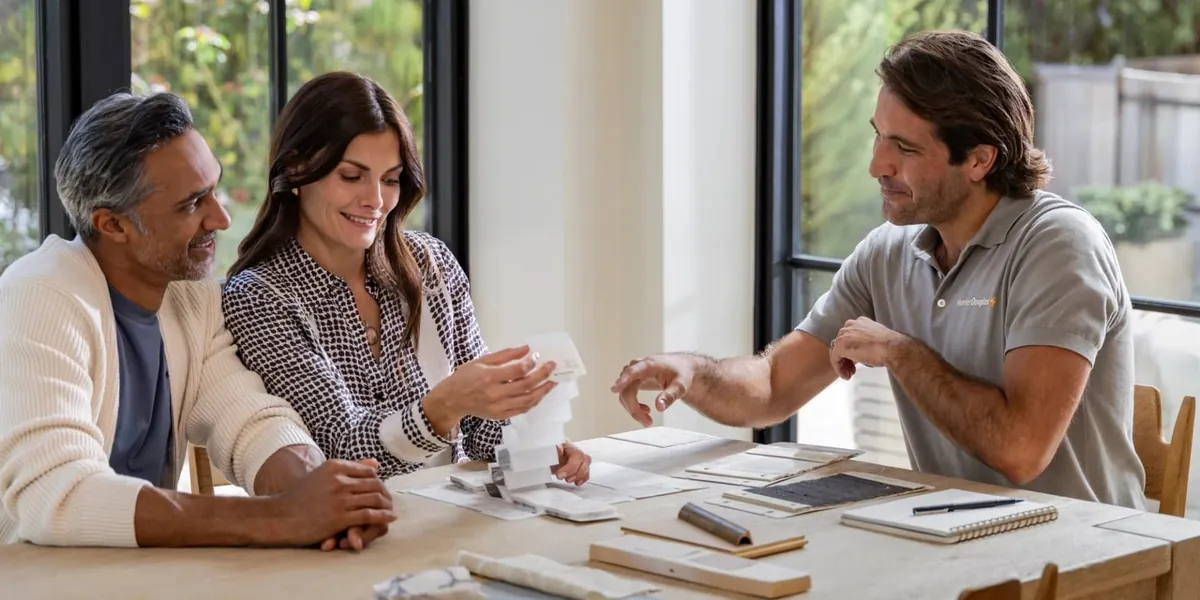
Our vans come loaded with samples of every blind material, so we can bring the showroom to you. In a Kingston colonial, that lets you see a wood slat against the very trim it will sit beside; in a newer house, it lets us check the window hardware with the blind sample in hand.
We start with the rooms that matter most to you, often the bay-side kitchen or a bedroom that wakes you early, and move through the house. We talk about how each room is used, look at the light, and work out which material and mount suit each window. Interior design consultations can be part of the visit if you would like help with color or with how blinds work beside drapery or shades. Our page on what happens at an in-home consultation explains more.
You leave with a free estimate for the blinds you are considering, and there is no need to decide on the spot.
Measuring, step by step
- We take the width at the top, middle and bottom of each opening, and make inside-mounted blinds to the narrowest.
- We take the height on the left, center and right, so any slope in an old sill is caught.
- We check the depth of each frame and note tilt latches, sash locks, crank handles, storms and anything else the blind must clear.
- We agree the mount, material, color, slat size and control for each window with you.
- Once the blinds arrive, our certified Hunter Douglas installers fix the brackets into solid wood, level every headrail, test each tilt and lift against the window hardware, and show you how everything works.
Careful measuring is what lets custom blinds in Kingston colonials hang straight in old frames and work smoothly alongside modern hardware. Our page on window measuring terms explains the vocabulary.
PowerView for early mornings
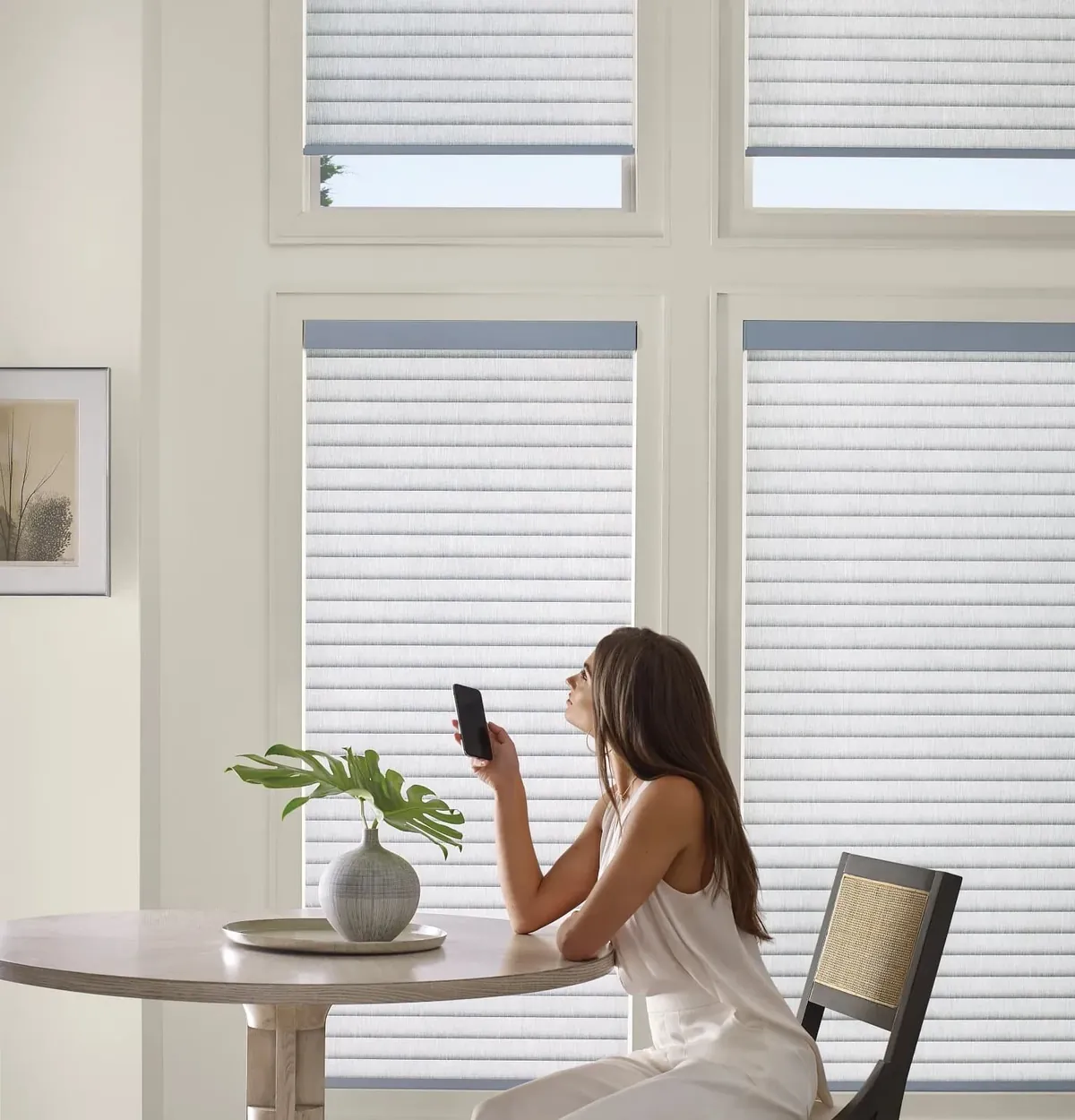
Hunter Douglas PowerView motorization lets your blinds tilt and lift from a remote or an app, and it suits Kingston’s bay-side rooms particularly well. Set the blinds to tilt against the glare as the sun rises, then open fully once it has climbed, and the kitchen is comfortable from the first cup of coffee without anyone getting up to adjust them.
Motorization also solves windows that are hard to reach, such as a high window over a stair or tall glass in a newer house’s two-story entry. We go through how the motors are powered and where controls go during the visit. See motorized blinds in Kingston for more.
For each material in depth, see our wood blinds, Parkland, metal blinds and vertical blinds pages, or our main custom blinds page.
Visit us in Sagamore
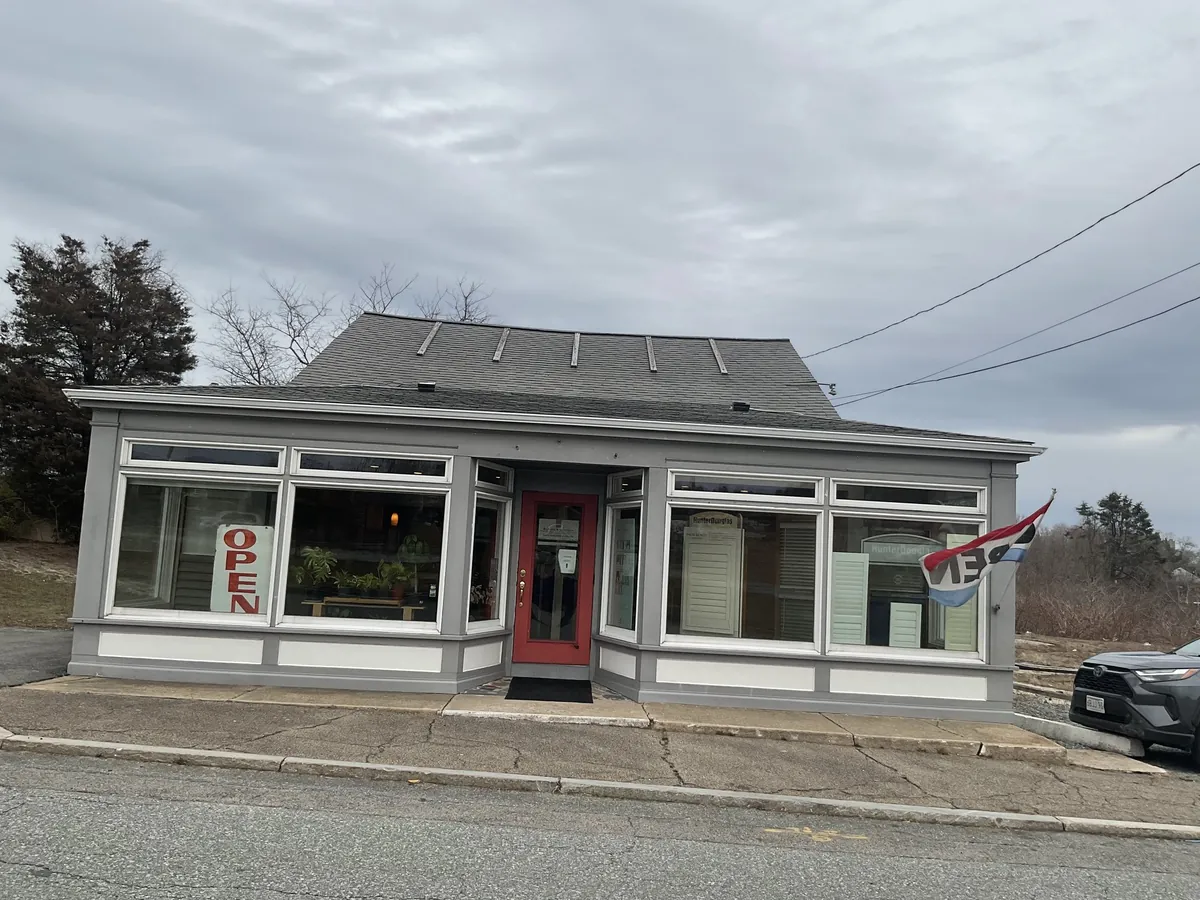
Our Sagamore showroom, down Route 3 at the canal, is the nearest to Kingston if you would like to see the blinds in person.
Blinds & Designs is a Hunter Douglas Gallery dealer, the designation Hunter Douglas gives dealers who meet its standards. You have the full range of Hunter Douglas blinds to choose from, plus shades, shutters and drapery, and our installers hold Hunter Douglas certification. For blinds you already own, we provide blind and shade repair.
For other rooms, see plantation shutters in Kingston or cellular shades in Kingston, or everything we offer in town on our Kingston page.
Questions from Kingston
How do I deal with morning glare in a bay-facing kitchen?
Tilt the slats upward so the low sun is sent to the ceiling instead of across the table. A PowerView schedule can do this automatically as the sun rises.
Will blinds block the tilt latches on my newer windows?
Not if they are measured for it. We note the latches, locks and cranks on each window and set the headrail where it will not interfere.
My antique colonial has replacement windows. Can I still have an inside mount?
Sometimes. A replacement sash may sit further forward and reduce the depth. We measure each window, and where the depth is not there we mount on the casing with a valance.
What suits a bay-side bedroom?
A deeper-colored wood or faux wood blind that closes tightly, ideally mounted outside the frame to cut the light at the edges.
Is the estimate free of charge?
Yes. After we measure, you get a free estimate for the blinds you are considering.
Take the next step
Whether you live in an old colonial by the bay or a newer house off Route 3, the best way to choose is at your own windows. Request a consultation and we will bring samples, check every window and leave you with a free estimate. Or use the call button to reach our Sagamore showroom.