
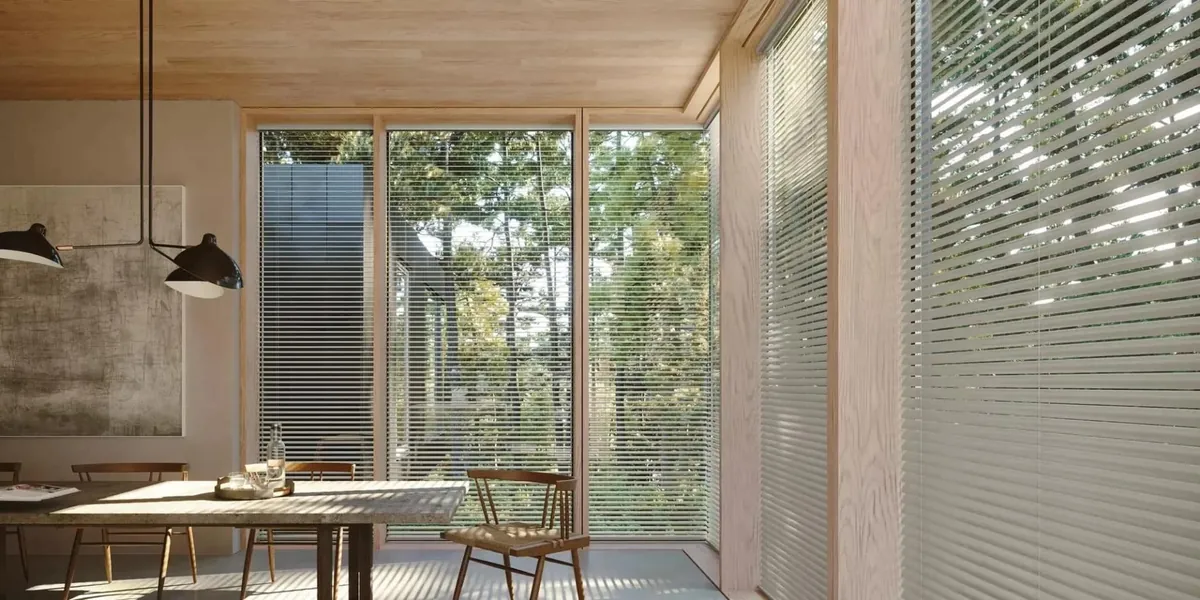
Wooded lots, deep setbacks and very different windows
Wrentham’s houses tend to sit well back from the road. The large newer houses off Route 1A and around Lake Pearl stand on generous wooded lots, often at the end of a long drive, with walls of modern two-story glass looking into the trees. Around the common the antique colonials are closer together and far older, with tiny original openings that let in only a little light. Any plan for window treatments in Wrentham, MA, has to account for both.
The setting changes the usual questions. With a deep setback and woods all round, privacy from the street matters less in many of the newer houses, and light, view and heat matter more. In the antique houses near the common, the challenge is the opposite: making the most of very small panes without losing what little daylight they give.
Everything we offer is Hunter Douglas, fitted by certified Hunter Douglas installers. The cards below lead to each service’s own page for the town, and the sections after them deal with the houses.
What we do for Wrentham homes
Here are the window treatments in Wrentham, MA, that we offer, each with a page for the town. Pick the service you are curious about, or request a consultation and we can talk through every room at once.
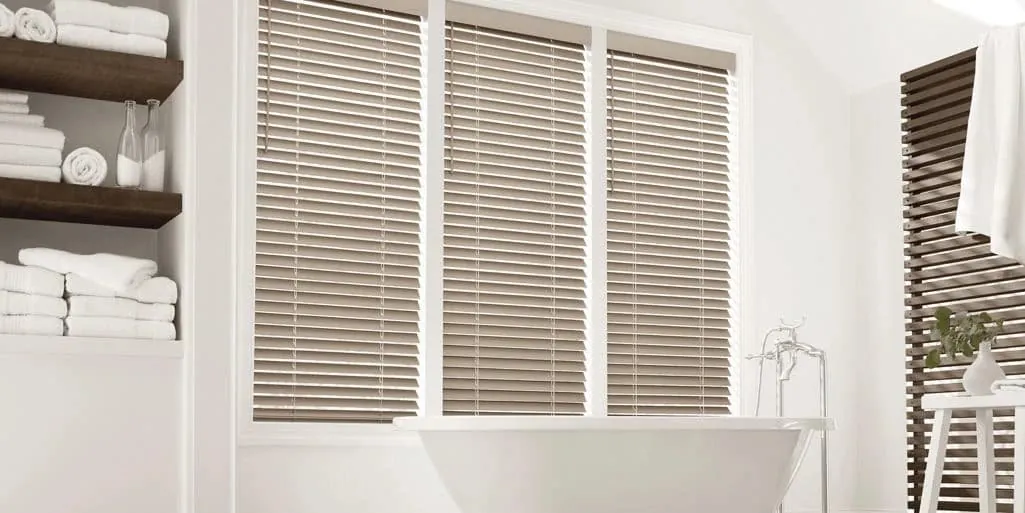
Custom Blinds in Wrentham
Blinds in wood, faux wood, metal and vertical styles. Tilting slats are a handy way to manage the shifting light that falls through trees.
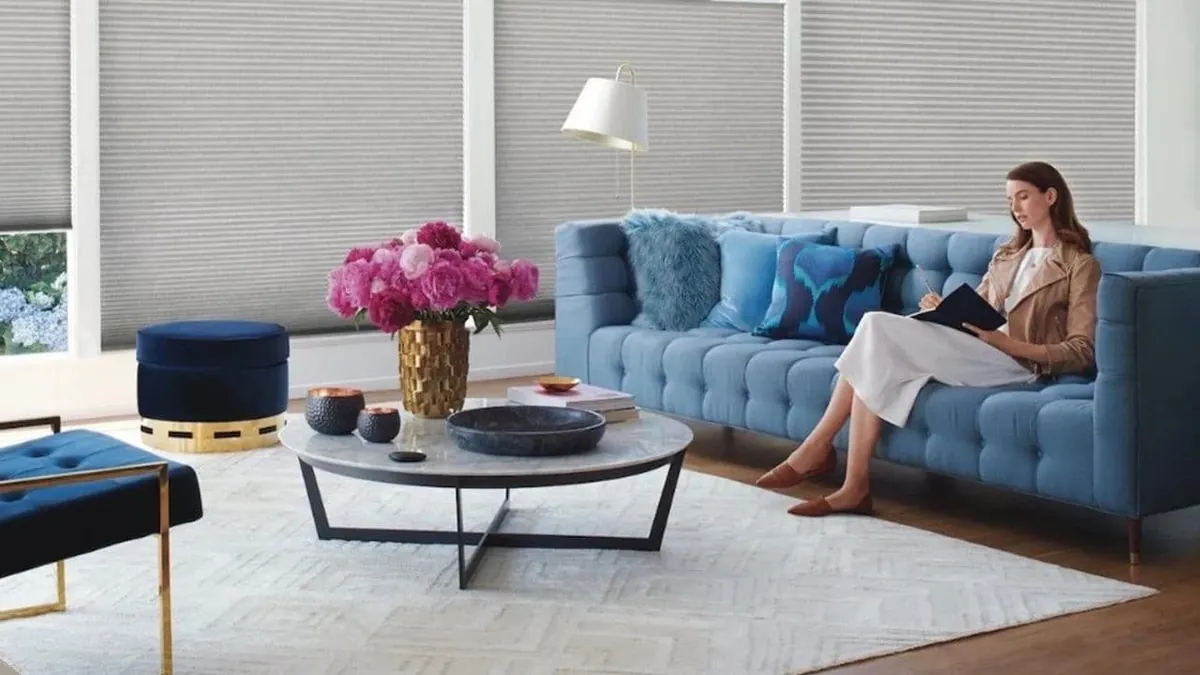
Cellular Shades in Wrentham
Honeycomb shades, Applause or Duette. The still air in each cell eases the chill of a big glass wall in January and the heat of it in August.
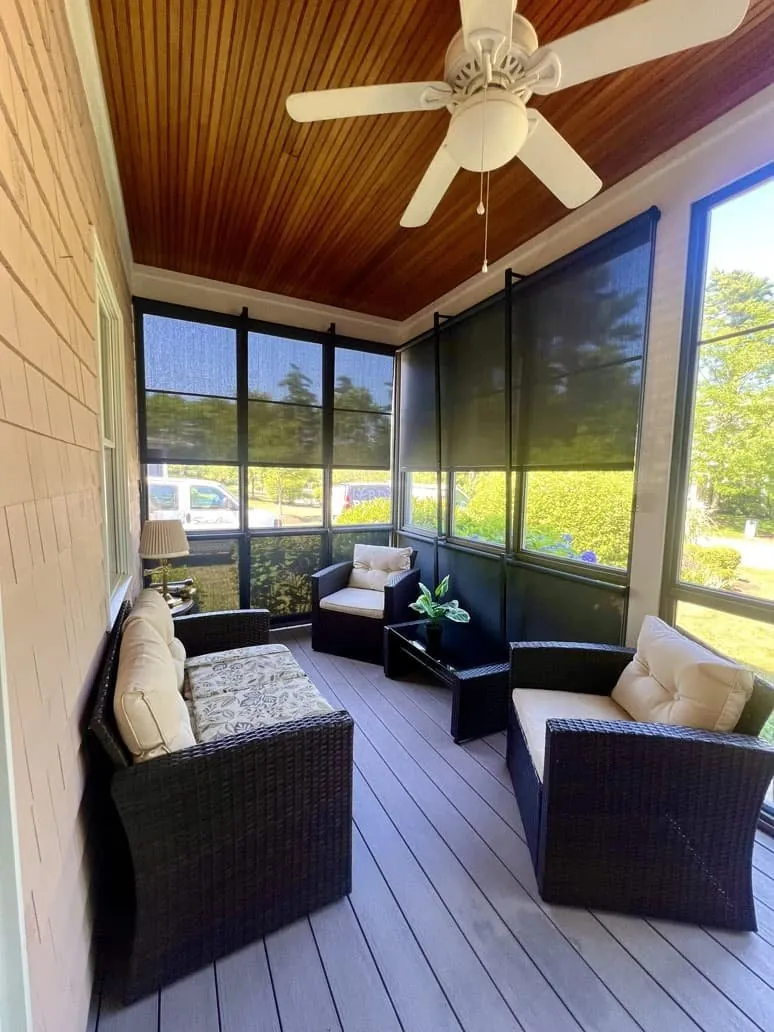
Roller Shades in Wrentham
Rollers and solar screens from the Designer and Alustra lines. A screen cuts glare off the lake while you keep looking out.
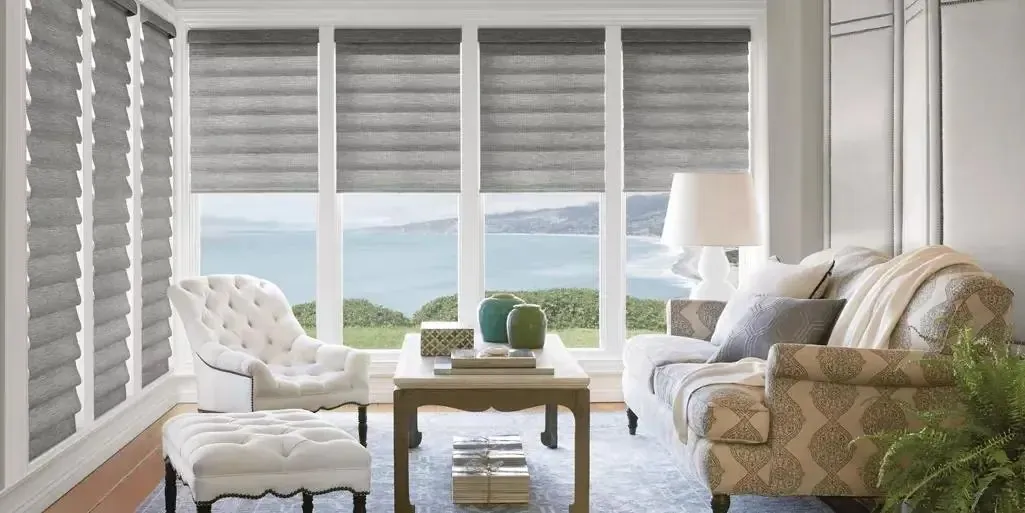
Roman Shades in Wrentham
Fabric folds from Carole Fabrics and Vignette, suited to a sunroom by the water or the front parlor of an old colonial.
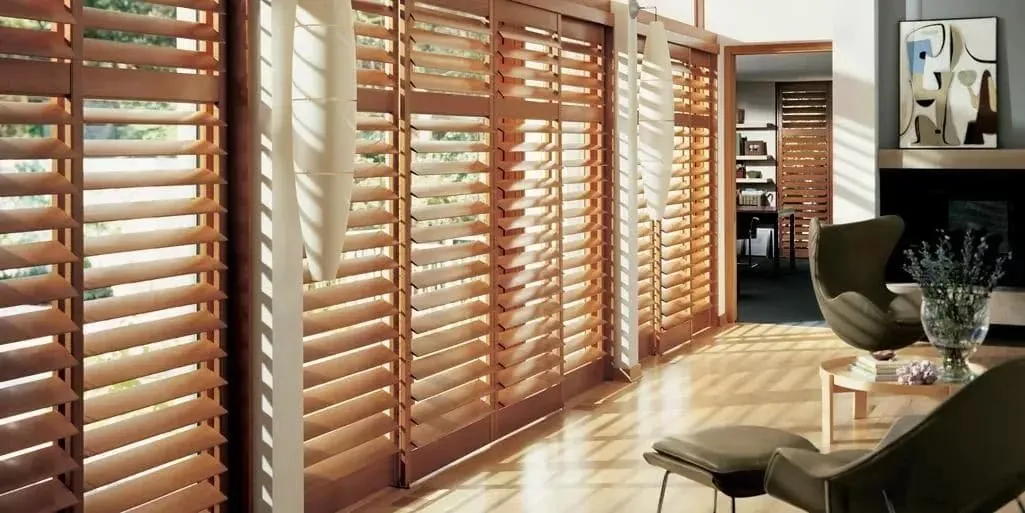
Plantation Shutters in Wrentham
Shutters in painted or stained finishes, from Heritance hardwood to NewStyle and Palm Beach. Stain sits well against a wooded view.
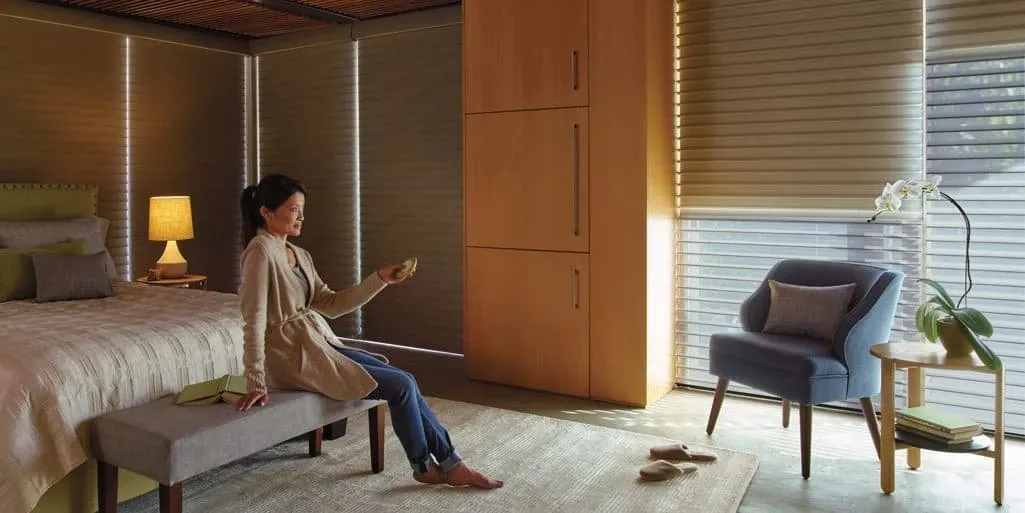
Motorized Blinds and Shades in Wrentham
PowerView brings two-story glass within reach. Use a remote, an app or a daily schedule that follows the sun.
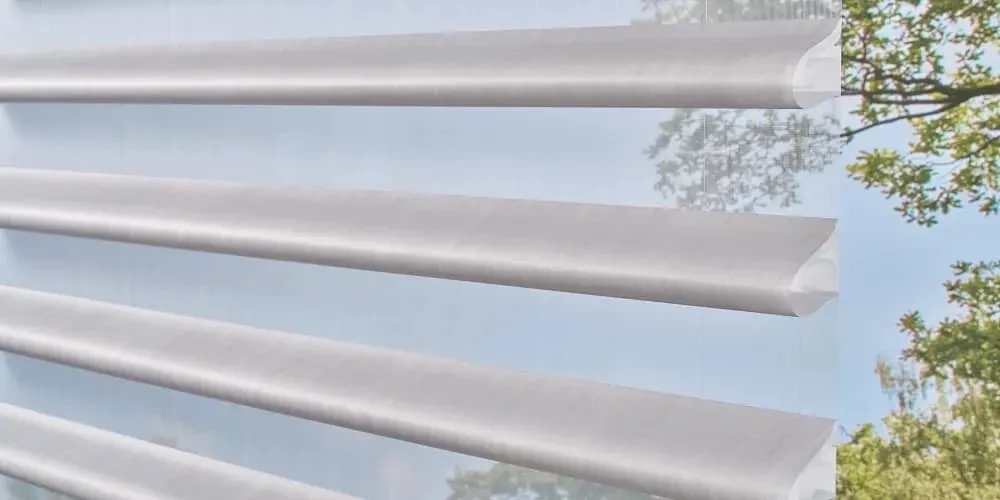
Hunter Douglas Dealer in Wrentham
As a Gallery dealer we offer the complete Hunter Douglas range, with certified installation on every order.
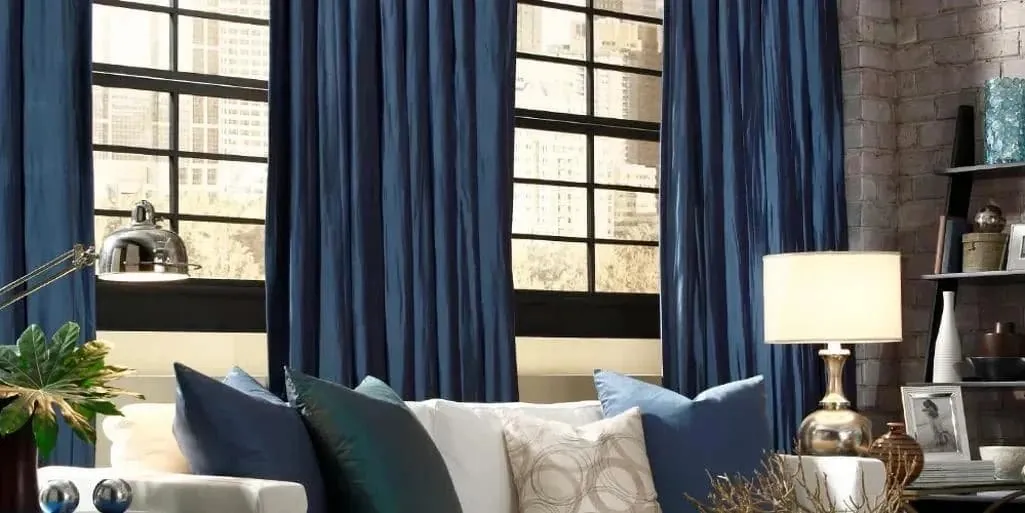
Custom Drapery in Wrentham
Tall drapery panels give a great room some softness and scale, and draw across for evenings and winter nights.
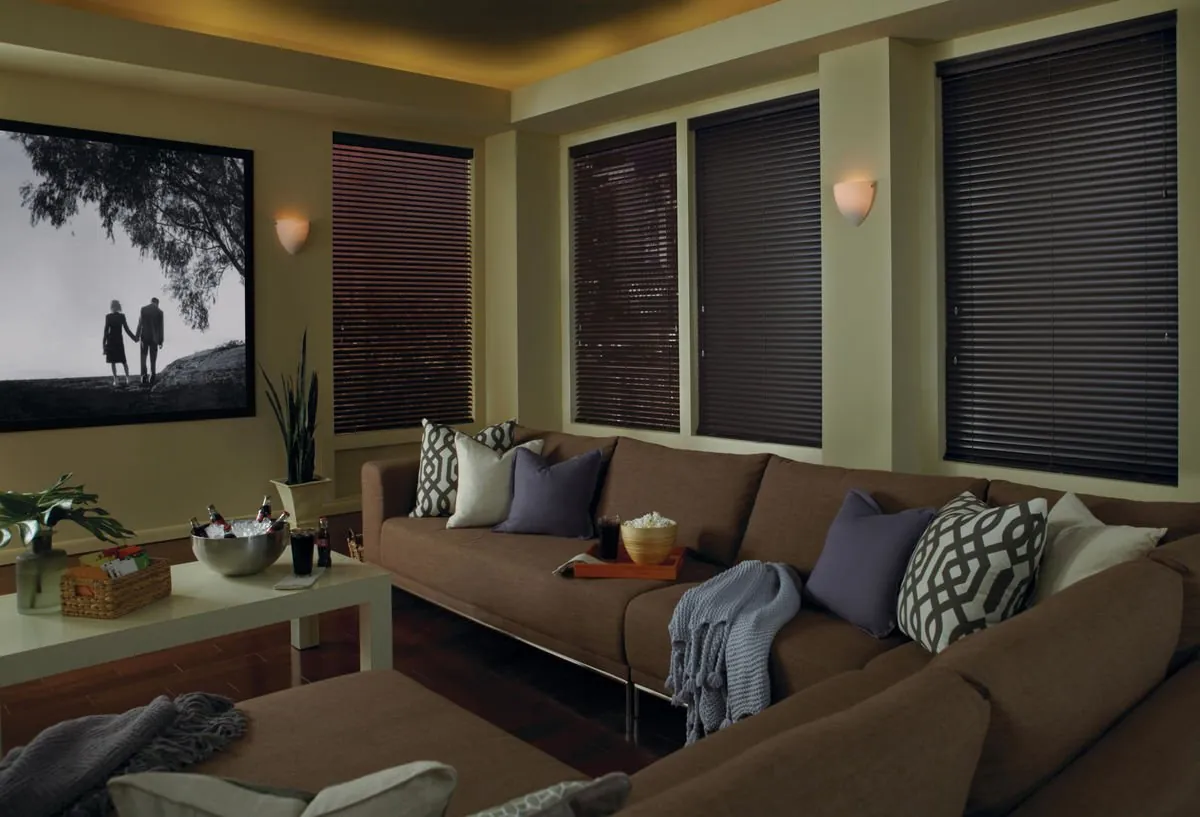
Blind and Shade Repair in Wrentham
A blind or shade you already own that has stopped working properly. We are glad to look at it.
Leaves on, leaves off
Houses in the woods live with light that changes through the year. From late spring to autumn the canopy shades the windows, and rooms that face the trees get soft, moving, dappled light. Then the leaves drop, and the same rooms suddenly take low winter sun straight across the floor, and anyone on the drive can see in.
That swing is worth planning for. A covering that is perfect in July, when you want every bit of light through the leaves, may be too thin in December, when bare branches let the sun stream in at eye level. A few ways to handle it:
- Adjustable light. Blinds, shutters and sheer shadings let you tilt the slats or vanes, so you can open up in summer and angle them against the low winter sun.
- Two layers. A light-filtering shade for the season of leaves, with drapery or a heavier shade to draw when the woods open up.
- Top-down, bottom-up shades. Cover the lower glass in winter, when the drive is visible through the trees, while still letting light in over the top.
- Schedules. PowerView can raise and lower shades at different times through the year, so a west room closes earlier in winter, when the sun sets lower and sooner.
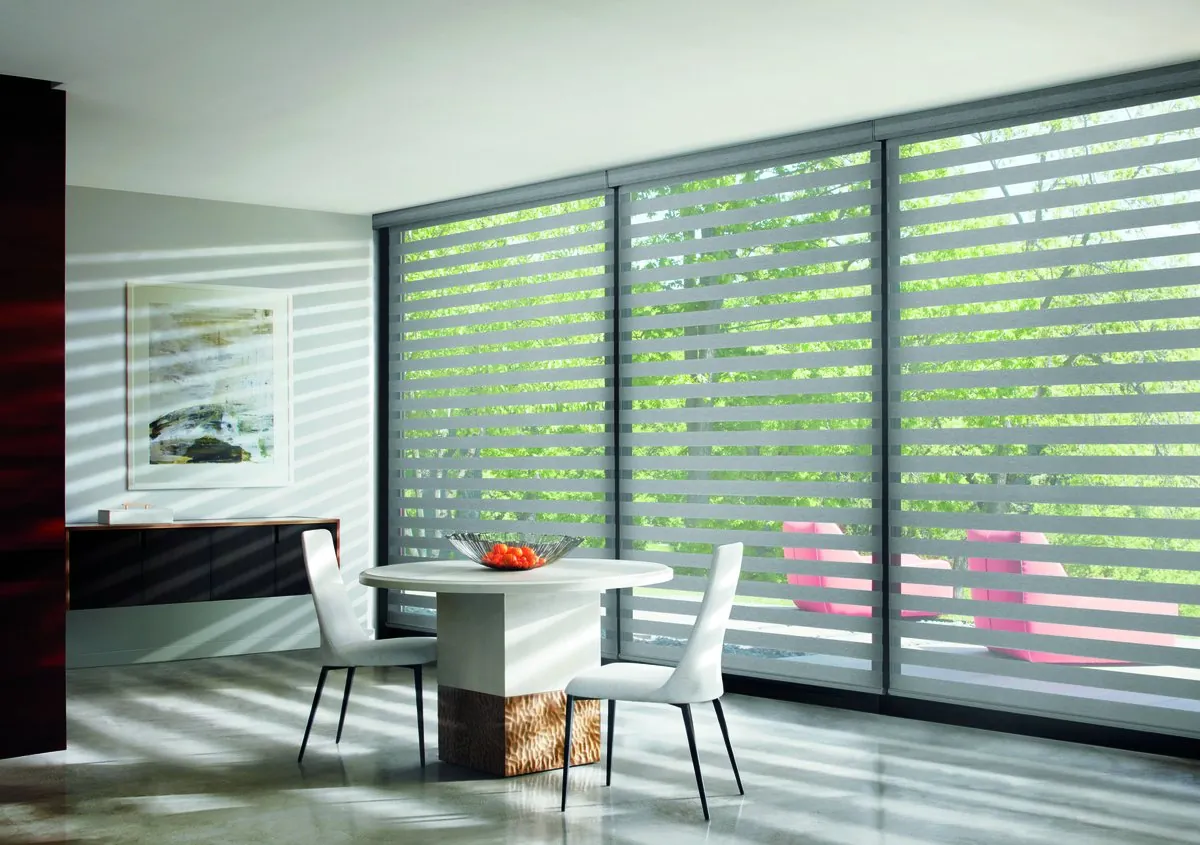
Glass that faces Lake Pearl
The houses around Lake Pearl are built for the view, and their main rooms usually open onto the water with wide windows or sliders. Water brings its own light. On a bright afternoon the sun bounces off the lake and into the room from a low angle, so the glare can be worse than the direct sun itself, and it lands on screens and faces rather than the floor.
Solar screen shades are made for this. The weave cuts the glare and some of the heat while you can still see out to the water, and the openness of the fabric decides the balance: a more open weave keeps a clearer view, a tighter one controls more glare. We bring screen samples in several openness levels so you can look out at the lake through each one and choose.
Rooms that face the water often have sliders as well as windows. Vertical honeycomb shades, gliding panels or vertical blinds move sideways, so the slider stays easy to use when you head down to the shore.
Great rooms and two-story glass
Many of the newer houses on wooded lots off Route 1A have a great room with modern two-story glass, sometimes a full wall of it facing the trees. It is the room that sells the house and the hardest one to furnish around a window.
Large, high glass needs a covering that hangs flat and straight over a long drop: honeycomb shades, rollers, banded shades and sheer shadings all suit. Because the upper windows are well out of reach, we nearly always suggest PowerView motorization. A single remote or a scene in the app can lower the whole wall together, so the shades line up rather than stopping at different heights.
If the upper windows are shaped, with an angled or arched top, you can leave them bare and cover only the rectangles below, or cover them too with a specialty shade. Both are common, and we show you what each looks like before you decide.
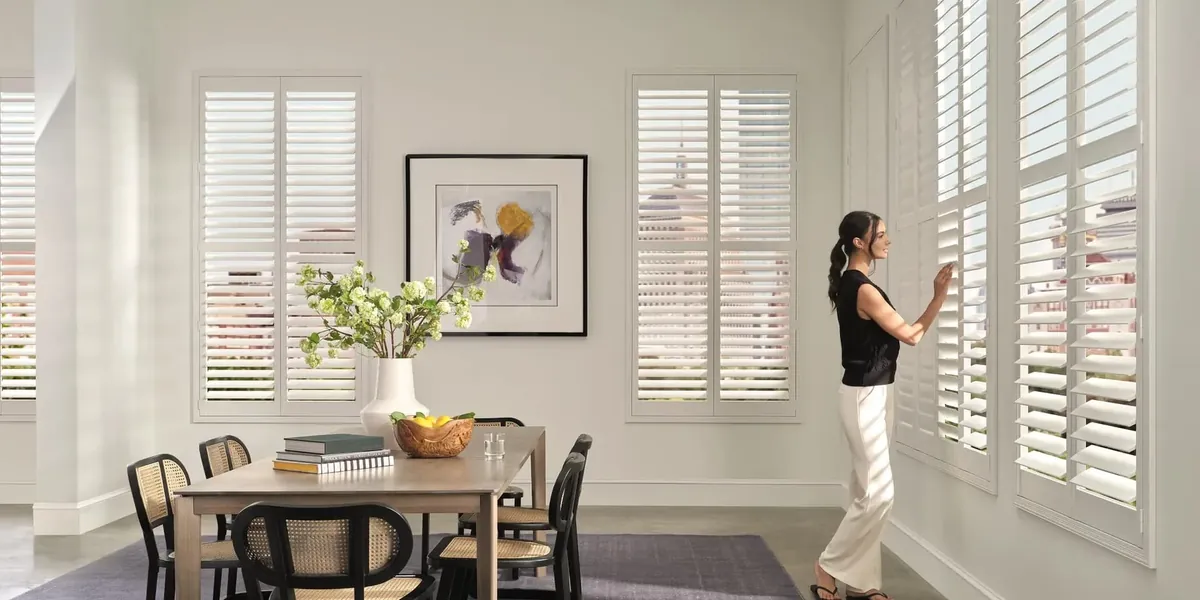
Heat behind a glass wall
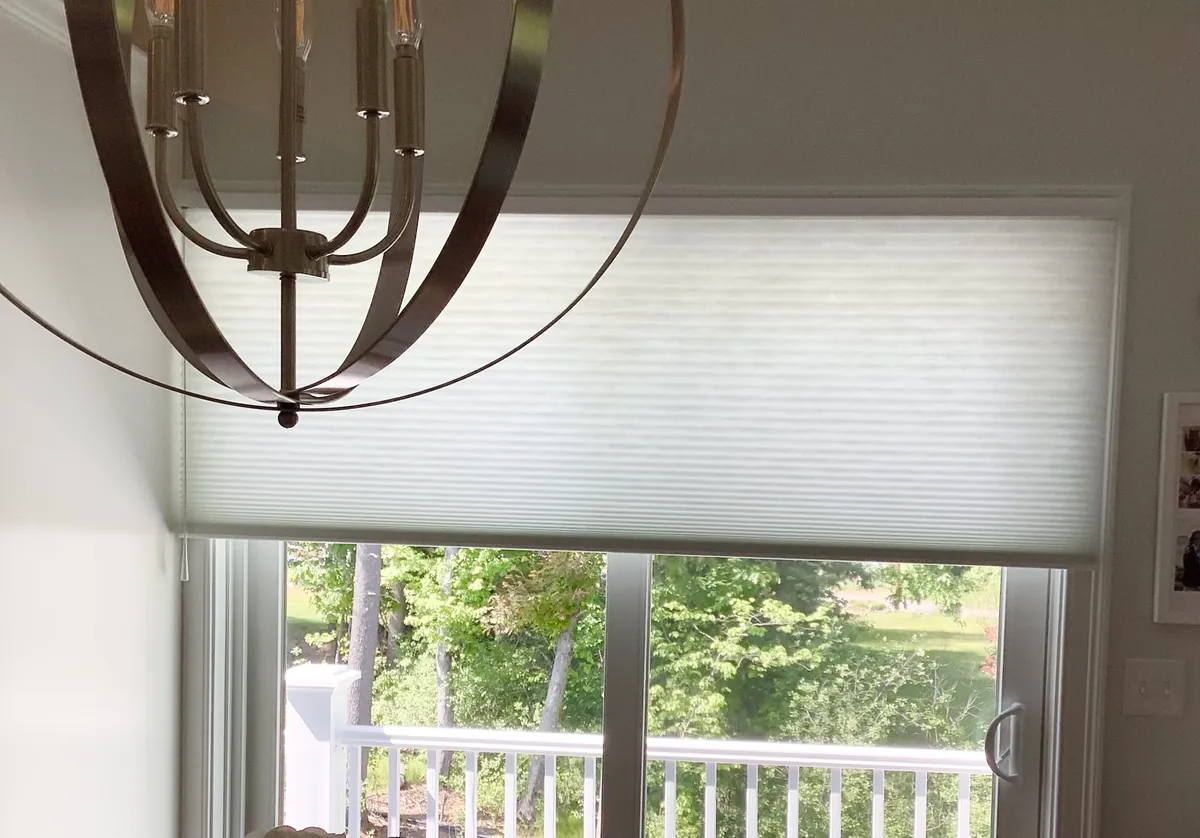
A two-story wall of glass facing south or west gathers a surprising amount of heat on a sunny afternoon, even with trees around it, and loses a lot of warmth on a still winter night. Honeycomb shades are the strongest answer to both. Each cell holds a layer of still air between the glass and the room, which slows heat moving in either direction. Lowered on a summer afternoon, they keep the great room more comfortable; lowered at dusk in January, they help keep the warmth in.
If you want to keep the view while cutting the heat, a solar screen does part of the job, and a top-down, bottom-up honeycomb shade lets you leave the upper glass open to the treetops while shading the seating area. With PowerView, the shades can lower themselves in the afternoons you are out and rise again before you are home. When we choose window treatments in Wrentham for a great room, comfort through the seasons is usually as big a question as looks.
Color against the woods
When the view outside is mostly trees, the colors of the window coverings sit right beside a wall of green in summer and gray and brown in winter. Bright white can look stark against bare branches, so many wooded houses lean toward warmer whites, natural linens, stained wood and woven textures that sit comfortably with the outdoors.
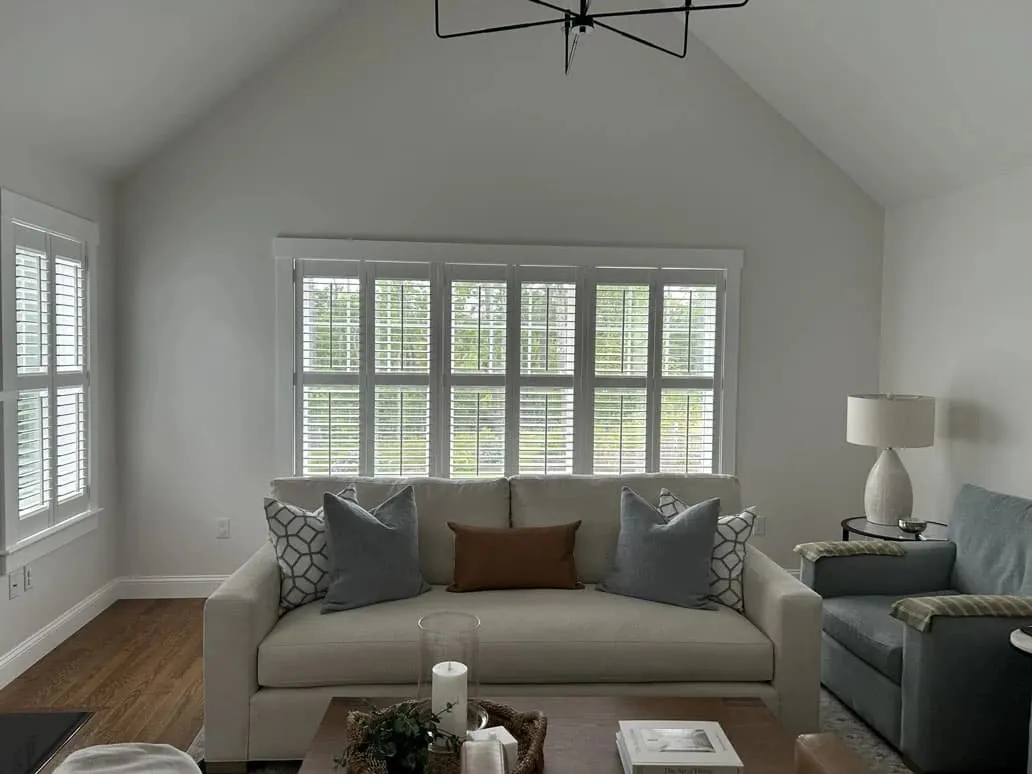
Stained wood shutters and blinds, woven wood shades and natural-weave roman shades all suit a room that looks into the trees. In the antique colonials around the common, painted shutters in a soft white match the original trim, and a linen roman shade suits a low-ceilinged front room. We bring samples in a range of colors so you can see them against your own view.
Porches and sunrooms by the lake
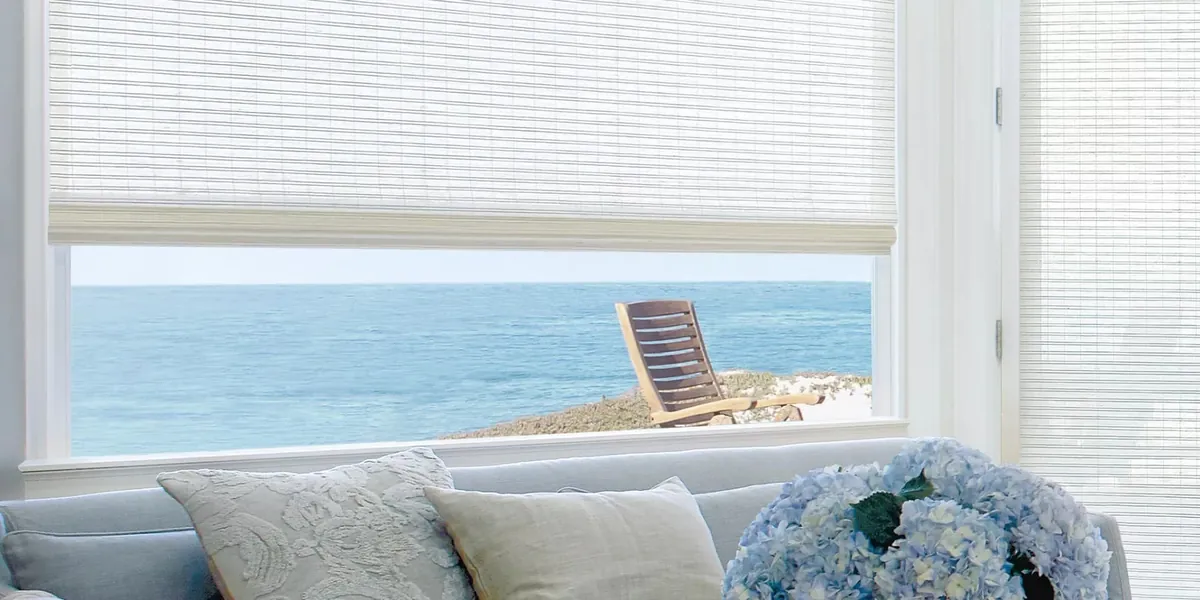
If your house by Lake Pearl has a screened porch or a sunroom facing the water, that room is mostly windows and takes the full force of the afternoon sun. Solar screens are the usual answer on a porch, because they cut glare and heat while keeping the breeze and the view. In a sunroom, a light-filtering honeycomb or a roman shade in a sun-friendly fabric keeps the room usable through the brightest part of the day.
Because a sunroom has so many windows, motorization makes life easier here too: one button lowers the whole room. We look at how the room is used, morning coffee or evening reading, before suggesting what goes on each window.
Tiny original openings around the common
The antique colonials around the common are a different world from the houses in the woods. Many of their original windows are very small, with narrow frames that have settled over the years. Here every inch of glass counts, so we look first at how much a covering takes up when it is raised.
A honeycomb shade or a roller can clear almost all of the glass. Shutters never cover the glass when the panels are open. Roman shades, with their deeper stack, sometimes go up as an outside mount just above the frame so the folds sit on the wall. We measure each opening at several points and check the depth, because an old frame is rarely square, and suggest an outside mount on the casing where an inside one would not sit properly.
These houses also tend to sit closer to the road and to each other than the newer ones, so privacy comes back into the picture. Light-filtering fabrics keep a front room private by day, and shutters let you angle the louvers to block the view at eye level while still letting light in.
When the street is far away
A deep setback changes what you need from a window. In many of the newer houses on big lots, nobody can see in from the road, so the front windows can stay open far more of the day. That frees you to choose coverings mainly for light and comfort rather than for privacy.
Bedrooms still need to be dark, of course, and most homes want something to draw at night. But it is common in these houses to pick sheer shadings or light-filtering honeycomb shades for the main rooms, to keep the view of the trees, and to save room-darkening fabrics for the bedrooms.
The exception is any window that faces a neighbor across a shared drive, or the drive itself in winter. We walk round the house with you and look at the sight lines from outside before suggesting a fabric for those rooms.
A home visit, room by room
In a wooded house the light moves so much, hour to hour and month to month, that a swatch judged anywhere else can mislead you. That is why the vans are loaded with samples: we can bring the showroom to you.
- Use the Request a Consultation form, or the call button, to fix a day.
- The consultant brings fabric books, blind slats, shutter corners, drapery swatches and motor controls up the drive.
- Together we begin wherever the problem is worst, usually the great room or the lake side.
- Swatches are pressed against the glass, so the trees or the water behind them do the judging.
- Openings are measured, high glass included, and any antique frame is checked for square and depth.
- A free estimate comes next, and the timing of the decision is entirely yours.
Pulling color, fabric and furniture together in a big open room is its own skill, and our interior design consultations cover it. The guide to what happens at an in-home consultation explains the visit at more length.
Fitting the high glass
Once your order arrives, our certified Hunter Douglas installers come back to fit it. On two-story glass that means the right equipment to reach the upper windows safely and brackets set into solid framing, so each shade hangs level and stays put over a long drop. Motors are paired to remotes or the app and tested before the installers leave, and any schedules you want are set up with you.
On the antique windows near the common, installation is about fitting each covering neatly within a frame that may not be square. The installers shim and adjust as needed so the covering sits straight even when the window does not.
Drapery in a great room
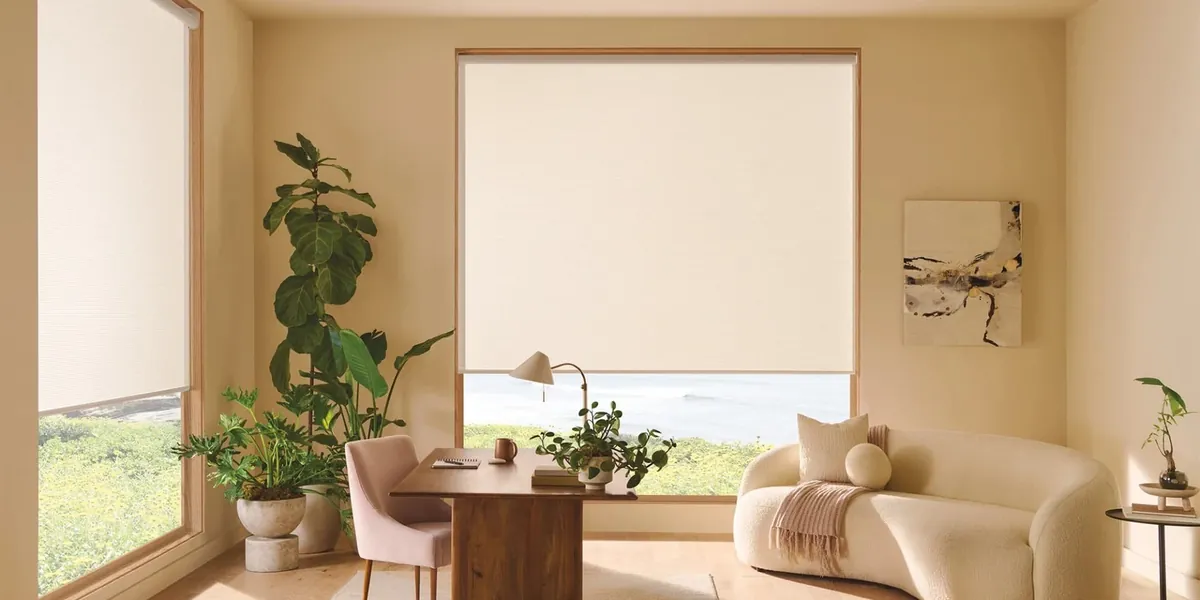
A great room with a wall of glass can feel stark at night, when the windows turn black. Drapery panels either side of the glass add warmth and scale and soften the echo in a tall room. Drawn across, they also hold in heat on a winter evening. Paired with a shade underneath, they give you light control for the day and full cover for the night. Our custom drapery in Wrentham page goes into panel styles and fabrics.
Repairs on coverings you own
Slipping lift cords, a tilt mechanism that has seized, a lakeside motor that no longer listens: plenty of tired coverings can be brought back. Repair work on things you already own is something we are happy to take on, and where a fix would cost more than it is worth, you hear that from us up front. Details are on the blind and shade repair in Wrentham page.

A Hunter Douglas Gallery dealer for the whole house
Hunter Douglas grants Gallery status dealers who meet its standards, and Blinds & Designs is among them. Tiny antique sash by the common or a wall of glass among the oaks, nothing in the catalog is out of bounds: honeycomb, screen, roller, roman, sheer and woven shades, slatted blinds, shutters, drapery and PowerView.
Our installers hold Hunter Douglas certification. Add free estimates, interior design consultations, automation and repairs, and one firm covers your window treatments in Wrentham from start to finish.
Our nearest showroom is in Franklin
Franklin is next door, and our Franklin showroom with it. Swing by ahead of a home visit carrying a phone snap of the great room or a rough sketch of an odd-shaped window, and we will talk it through.
The final decision still tends to happen at home, since sunlight through the oaks or off the lake is the true judge. Address, hours and phone are on the showroom page itself.
Questions from Wrentham
My house is surrounded by trees. Do I still need shades in the main rooms?
Often yes, but for different reasons. When the leaves drop, low winter sun and the view from the drive both come into play. Adjustable coverings such as blinds, shutters or sheer shadings let you open up in summer and close down in winter.
What cuts the glare off Lake Pearl without blocking the view?
A solar screen shade. Its weave reduces glare and heat while you can still see out. We bring samples in different openness levels so you can compare the view through each one.
How do I cover a two-story wall of glass?
With shades that hang flat over a long drop, such as honeycomb, roller or sheer shades, usually with PowerView motorization so the whole wall can be lowered together from a remote or the app.
Will anything fit the tiny windows in my antique colonial?
Yes. Honeycomb shades and rollers can be made very small and clear almost all of the glass when raised, and shutters can be built to fit an opening that is not square. We measure each window carefully first.
Is there a charge for the estimate?
None. Once the windows are measured, the estimate is free, and it is yours to mull over for as long as you like.
Your next step
A wall of glass among the trees or one small window by the common, the way in to new window treatments in Wrentham, MA, is the same: request a consultation. Samples come up the drive, each window gets measured, and a free estimate follows. Would a quick chat help first? The call button reaches us, and the Franklin showroom is close by.
Our window treatments page lays out every shade, blind, shutter and drapery line we sell.