
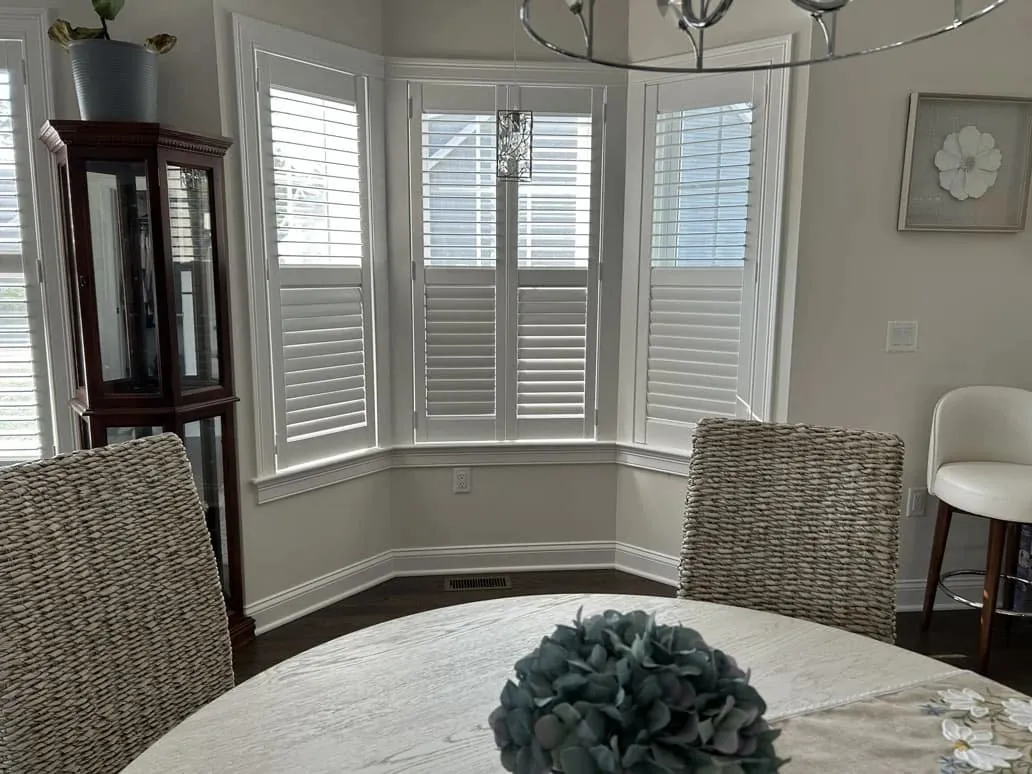
Bays and transoms that will not take a stock size
The older Victorians and colonials near downtown and up on Oak Hill were built with features that make window coverings interesting: bays that push out from the dining room or parlor, and transoms of glass above doors and windows. Neither comes in a standard size. A bay is three or more windows at angles, each a touch different from its neighbor, and a transom can be a long low strip or a half-round arch.
That is the plainest reason to use a Hunter Douglas dealer in Attleboro, MA rather than buying off a shelf. Every product we sell is made to order, to measurements we take ourselves, so a bay can be dressed as one piece and a transom can get a covering cut to its exact shape, or be left open if that suits the room better.
Blinds & Designs is a Hunter Douglas Gallery dealer, and our installation is certified by Hunter Douglas. The split-levels off Route 123 and the ranches of South Attleboro have simpler windows, and we cover them further down.
Pick a product to start with
Each card opens our page for that product in Attleboro.
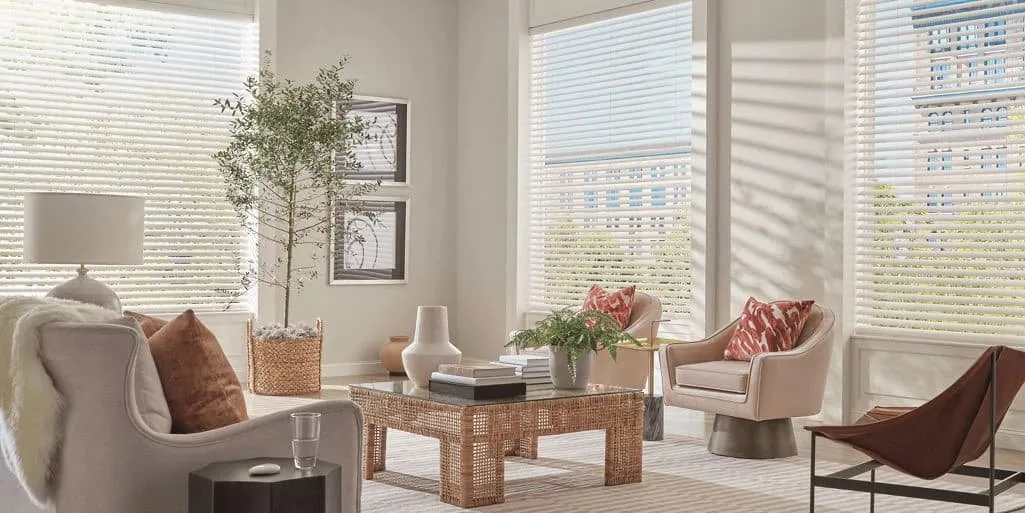
Custom blinds
Wood, faux wood, metal and vertical blinds. Choose the material first, then how the slats move.
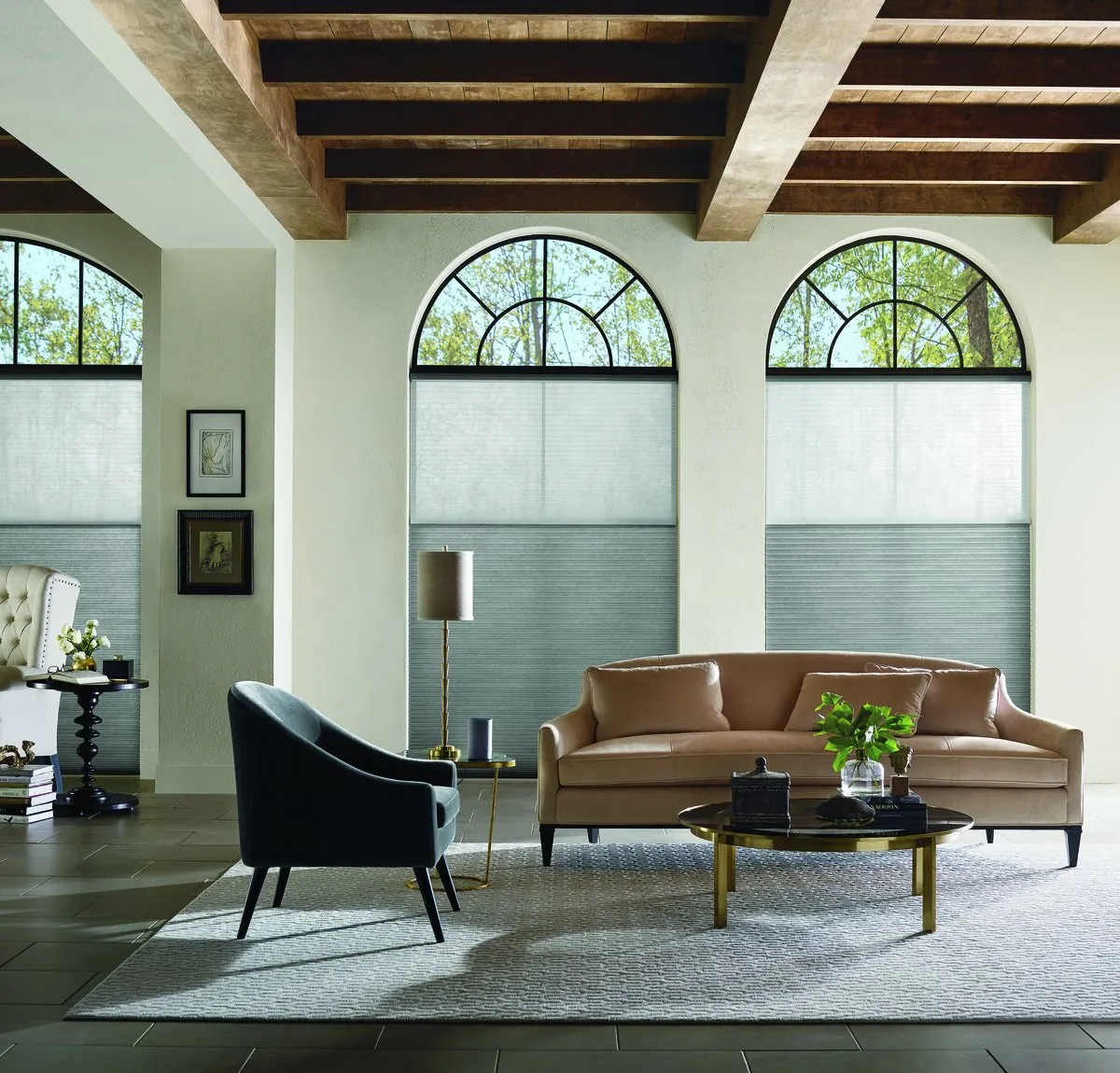
Cellular shades
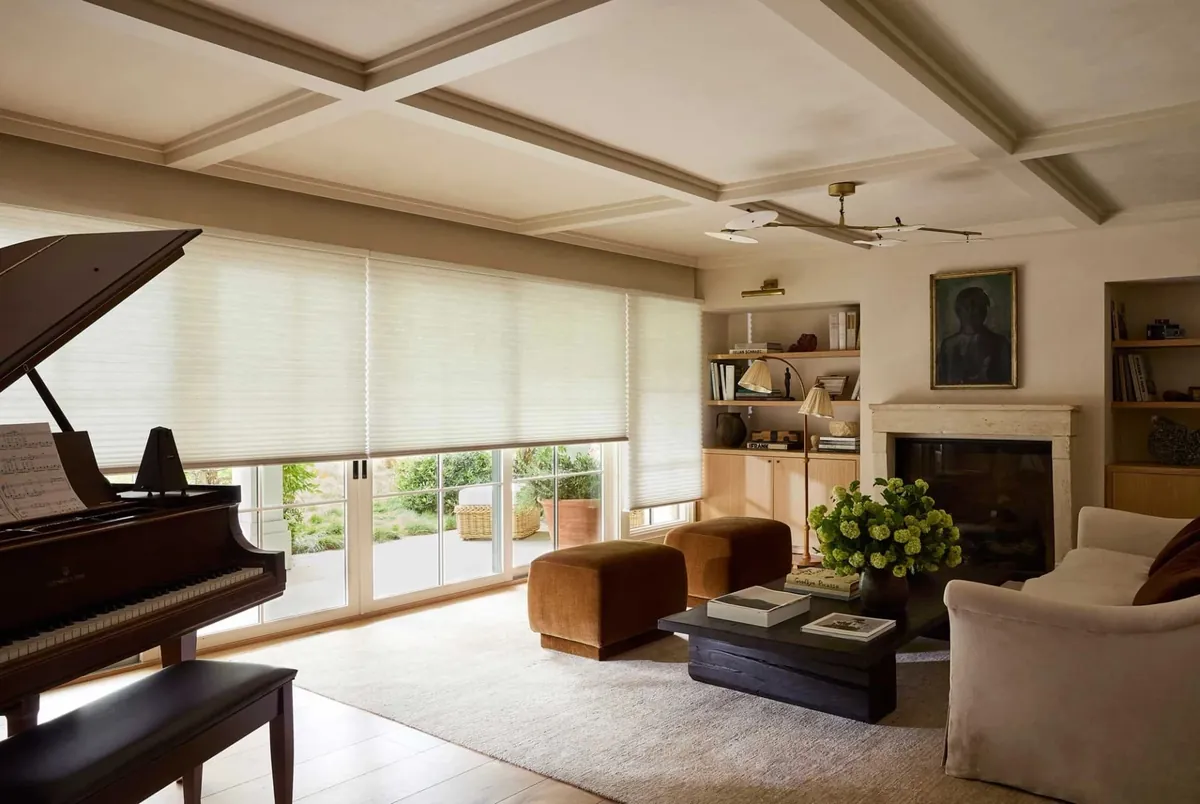
Duette and Applause honeycomb. Air held in each cell is what keeps a room warmer near the glass.
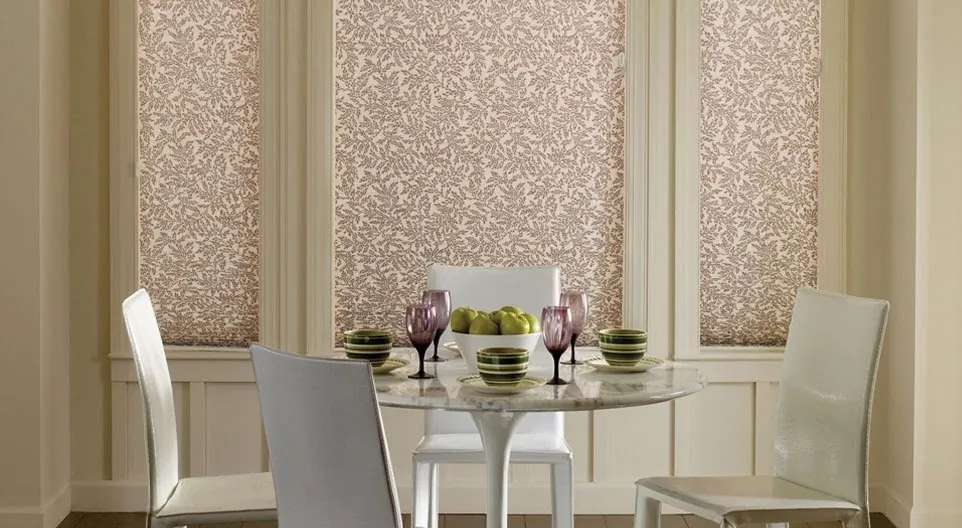
Roller shades
Designer and Alustra rollers and screens, where openness decides how much view and glare come through.
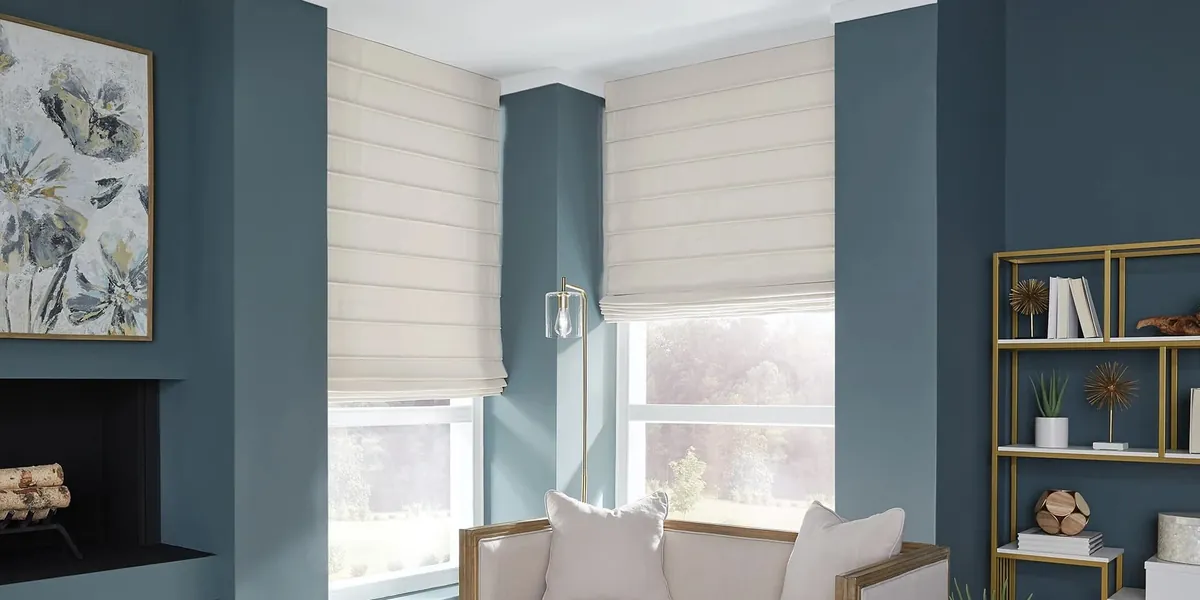
Roman shades
Vignette and Carole Roman, flat or folded, a soft way to finish a bay.
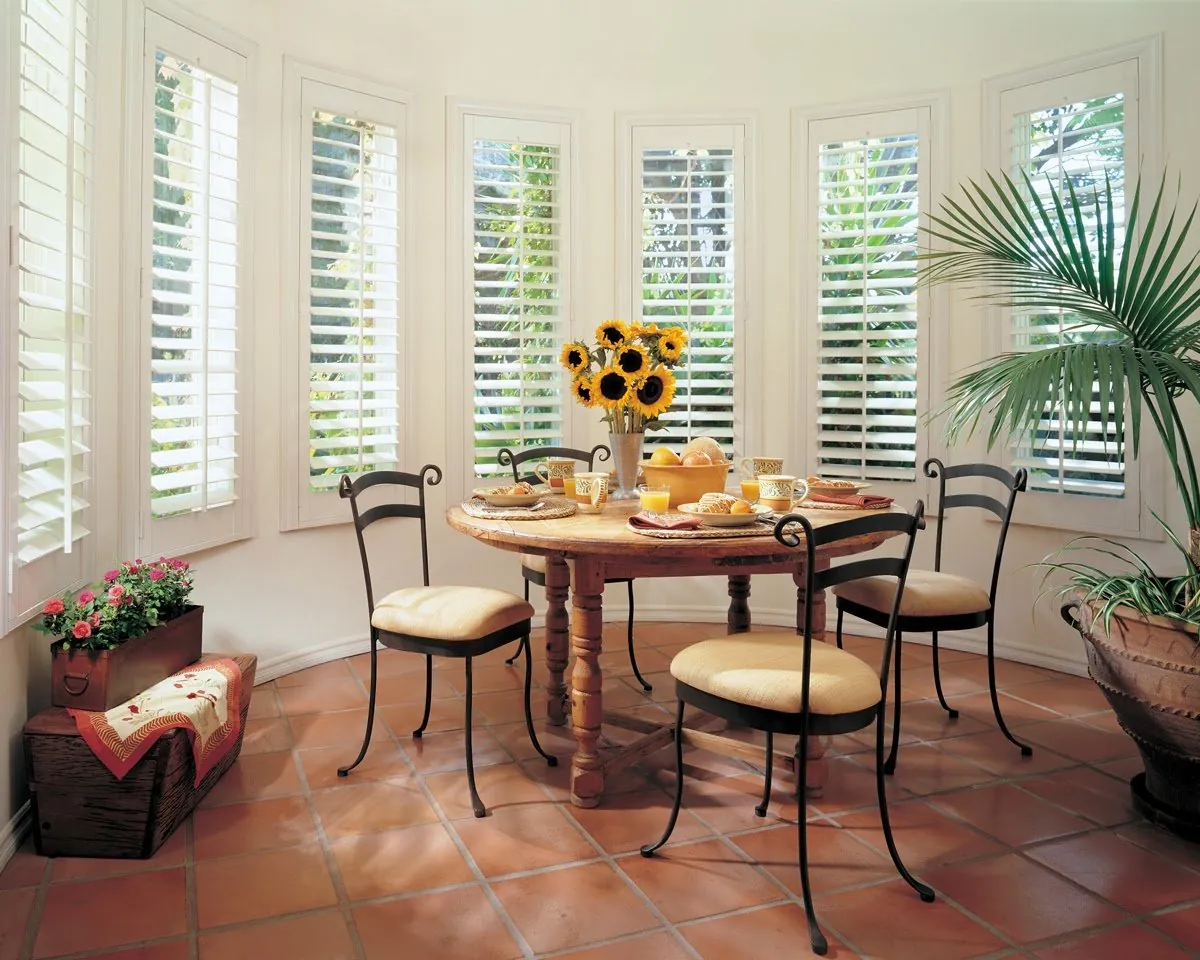
Plantation shutters
Palm Beach, NewStyle and Heritance, with louver size and frame style chosen per window.
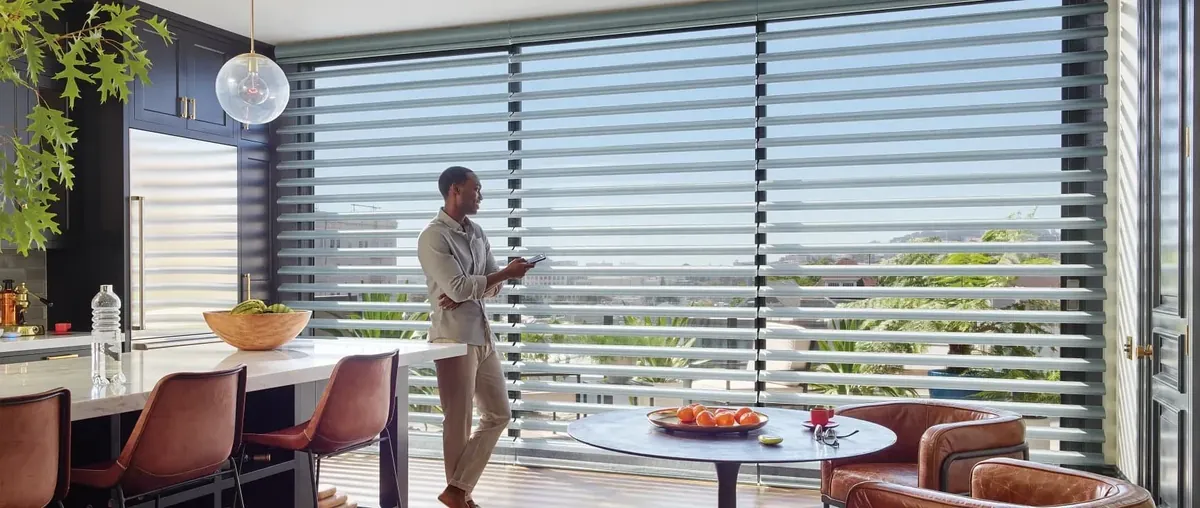
Motorized blinds and shades
PowerView control from an app, a remote or a daily schedule.
Downtown and Oak Hill: what the older houses ask for
Around downtown and on the slopes of Oak Hill, the Victorians and colonials share a few traits that shape every decision. Ceilings are high, so windows are tall. Trim is generous, often with wide casings and deep sills. And because these houses have been lived in and repainted for a long time, frames are not always square any more.
None of that is a problem, as long as it is measured for. We check each opening at the top, the middle and the bottom, and on both sides, before we decide whether a product will sit inside the casing or be mounted outside it. On a wide, handsome casing, many people want the trim to show, so an inside mount is the first choice where the depth allows it.
The tall proportions matter too. A product that gathers into a big bundle at the top hides part of a tall window every time it is raised. Honeycomb and roller shades raise into a slim stack; shutters swing clear altogether. Those are the products we tend to show first for the older houses here.
Bay windows, one angle at a time
A bay is the feature people most often ask about in these neighborhoods. Planning one takes a little more care than a flat wall of windows, and the order we work in looks like this.
- Measure each window on its own. The center window and the two side windows of a bay are rarely identical, and the angles between them vary from house to house.
- Decide where the products stop. Every headrail should sit at one height and every bottom edge should finish on one line, so the bay reads as a single curve of glass.
- Check the seat or the sill. If the bay has a window seat, the covering must clear the cushion. If it has a deep sill, we decide with you whether the product sits inside on the sill or outside over the whole recess.
- Choose the product for the room. Shutters make a bay look built in. Roman shades soften it. Honeycomb keeps it bright and slim.
Café shutters, covering only the lower half of each window, are a favorite in dining room bays because they give privacy at table height and leave the upper glass open to the sky.
Transoms: cover, match or leave open
Transoms are the other signature of the older houses here. Some sit above the front door, some above interior doors, and some run across the top of the main windows in a front room. They were made to let light deep into the house, and in many rooms that is still the best thing they can do.
So the first question is whether a transom needs anything at all. Often the answer is no. When it does, usually because low sun hits a room at the wrong time of day or a bedroom has to be dark, there are three sensible routes:
- Match the window below. A honeycomb or roller made to the transom’s size, in the same fabric as the shade beneath, so the two look like one.
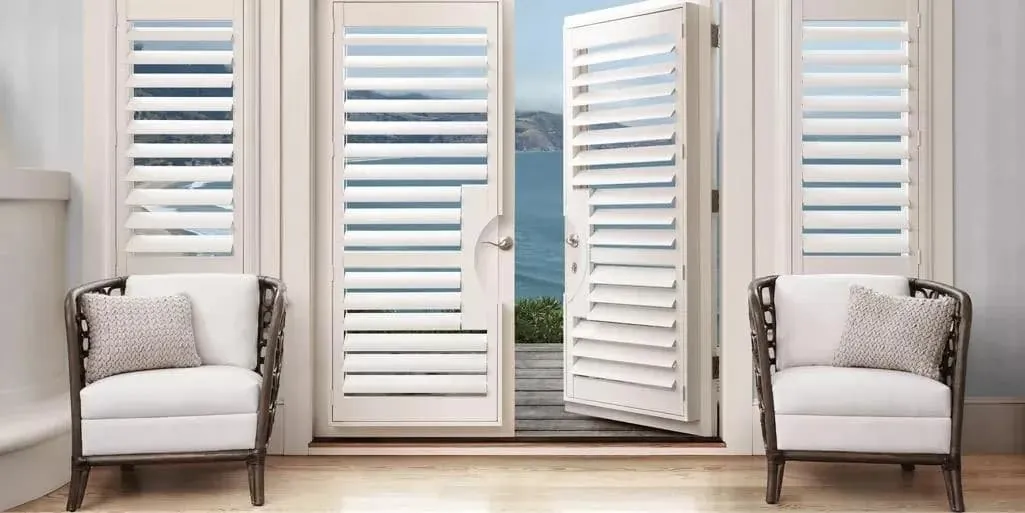
- Match the shutters. A shutter panel built to the transom when the window below has shutters.
- Motorize it. A transom over a tall window is out of reach for most people, and a PowerView shade moves from a phone or remote instead.
Half-round transoms over doors can be left clear or fitted with a shutter shaped to the arc. We show you the room both ways before you decide, because leaving the glass open is often the right call.
Colonials near downtown: rows of matching sash
The colonials among the older houses are calmer than the Victorians. Instead of a bay and a turret, they tend to have a symmetrical front with evenly spaced double-hung windows on both floors and a centered door, sometimes with a transom or sidelights. Inside, rooms are more regular, and windows on one wall usually share a size.
That regularity is a gift and a trap. It means a row of windows can be dressed identically, which looks crisp from the street. It also means any small difference shows: a shade that stops a little lower than its neighbor, or a shutter frame a shade wider. When we fit a colonial, matching heights and widths across the front is the detail we watch most closely.
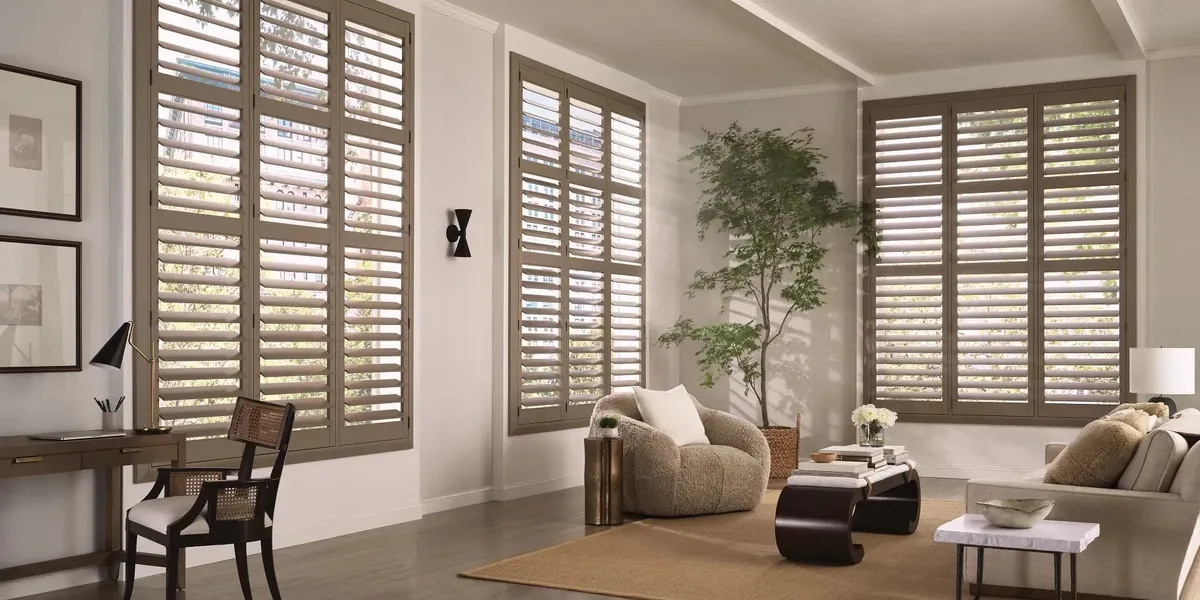
The style of the house suggests the product as well. Shutters with a traditional louver suit a colonial’s front rooms. Wood blinds from the Parkland line, in a slat sized to the window, give a classic look in a study or dining room. A Hunter Douglas dealer in Attleboro, MA can show you both at the window, with samples held up against your own trim.
Bedrooms in each kind of house
Bedrooms are where the three kinds of house here differ least, and where most people want the same thing: darkness at night and an easy way to let light in again in the morning.
In the older houses, the bedrooms are upstairs with tall sash and sometimes a small window tucked under the roof. A honeycomb in a darkening fabric fits a tall narrow window well, and on a frame that has moved out of square we may suggest mounting outside the casing to close the gaps at the edges. In the split-levels, the bedrooms sit on the upper level with standard windows, and almost any product fits inside the frame. In the South Attleboro ranches, bedrooms face the yard at ground level, so privacy in the evening matters as much as darkness. A bedroom that doubles as a home office during the day adds one more wish: soft, even light at the desk, which a sheer or a light honeycomb gives without closing the room off. Some people pair two fabrics in one room for exactly that reason, and we can show you how that looks before you choose.
As your Hunter Douglas dealer in Attleboro, MA, we help you weigh those needs room by room rather than picking one product for the whole house.
Split-levels off Route 123
The split-levels off Route 123 were built later and are laid out very differently. A short flight of stairs leads up to the bedrooms and down to a lower family room, and the living room usually has a big front window facing the street. The windows themselves tend to be standard modern units with square frames, which makes them simple to fit.
What these houses do ask for is consistency. From the street, a split-level shows windows at two or three different heights across its front, and coverings that look mismatched make that more obvious. We usually suggest one color family for every window that faces the road, even where the rooms inside use different products.
Inside, each level has its own needs. The upper bedrooms want darkness at night. The living room picture window wants daylight with a softer view in from the street, which suits a sheer shade or a roller with a gentle openness. The lower family room is often the spot for a slider to the yard, and a covering that moves sideways, such as vertical blinds or Luminette, suits a door that does the same.
Ranches in South Attleboro
Down in South Attleboro, single-story ranches set the pattern. Most rooms open straight off a central hall, the living room has a picture window, the kitchen sits at the back, and the bedrooms line one side. The windows are modern and regular, so almost any Hunter Douglas product fits inside the frame.
With fitting that easy, the time goes into choosing well:
- Living room. The largest window on the house and usually the one facing the road. Silhouette or Pirouette sheers, or a roller with a chosen openness, keep the room bright while easing glare.
- Bedrooms. Honeycomb in a darkening fabric is a popular choice, and the cells help a room hold its warmth on cold nights.
- Kitchen. EverWood faux wood blinds or a café shutter over the sink.
- Back door or slider. A vertical covering that draws to one side.
Because a ranch puts every window at eye level from the yard and the street, keeping the look consistent from outside is worth a moment’s thought here too.
Shades, blinds or shutters?
It is the question we hear first at many visits, and there is no single answer for a whole house. Shades, such as honeycomb, roller, roman and sheer, are fabric and give the softest look. Blinds, in Parkland wood, EverWood faux wood or metal, have slats that tilt, which gives fine control over light. Shutters are fixed to the frame and become part of the room, which suits a bay or a tall parlor window.
Many houses here end up with a mix: shutters in the bay, honeycomb in the bedrooms, a sheer in the living room. Our guide on how to choose between shades and blinds goes through it in more depth.
Sun, glare and the rooms that face it
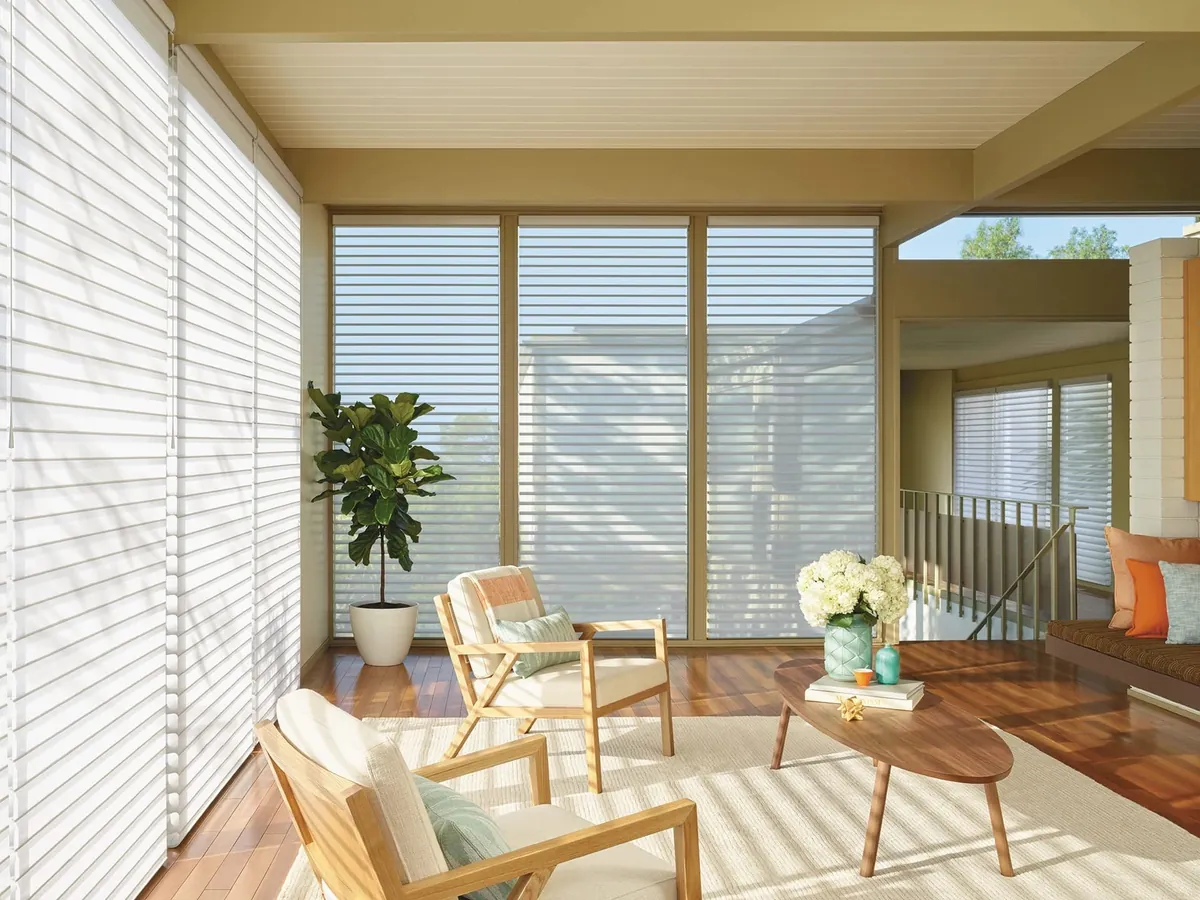
Light is usually what decides the fabric. A front room on Oak Hill that takes full afternoon sun needs something different from a north-facing bedroom in South Attleboro. With roller shades and solar screens, the openness of the weave is the key choice: a more open weave keeps more of the view, a tighter one cuts more glare. Sheer shades let you tilt soft vanes to the angle you want. Honeycomb softens light while holding air against the glass.
Seeing fabrics against your own windows is the only reliable test, which is why our vans carry samples to the house. Our guide to the best shades for sun and glare is a good primer before the visit.
Why the dealer matters as much as the brand
A Hunter Douglas product is only as good as the measurements it is made to and the way it is fitted. That is where a Hunter Douglas dealer in Attleboro earns the work, especially in a house with bays, transoms and frames that have settled.
As a Gallery dealer we can offer the whole Hunter Douglas family from one place, and our installation is certified by Hunter Douglas. You also get:
- In-home consultations, with sample vans, so we can bring the showroom to you
- Free estimates
- Interior design consultations for color and fabric across a room
- Window covering automation with PowerView
- Repairs on blinds and shades you already own, through our blind and shade repair service
PowerView for transoms and tall glass
PowerView lets Hunter Douglas shades move from a phone, a remote or a schedule. In the older houses here it suits the transoms nobody can reach and the tall sash in a front room. In a split-level, it suits a stairwell window seen from two floors. In a ranch, it is often about convenience, such as lowering every bedroom shade at once in the evening.
We talk through which windows are worth motorizing at the visit and plan how each motor is powered. Read how motorized shades are controlled for a plain guide to the remote, the app and schedules.

From the first call to the finished room
Here is how working with us usually goes.
- You get in touch. Use Request a Consultation, or the call button on this page.
- We visit. Our van brings samples, and we look at every room you want to talk about, bay and transom included.
- We measure. Each opening is measured by us, at several points, with the mount noted for each.
- You get a free estimate. Take your time with it.
- Hunter Douglas makes the order. Everything is built to the measurements we took.
- We install. Certified Hunter Douglas installation, with each product checked before we leave.
Our guide to what happens on installation day explains the last step, and if you want help pulling a room together, ask about interior design consultations.
Seeing products in Franklin
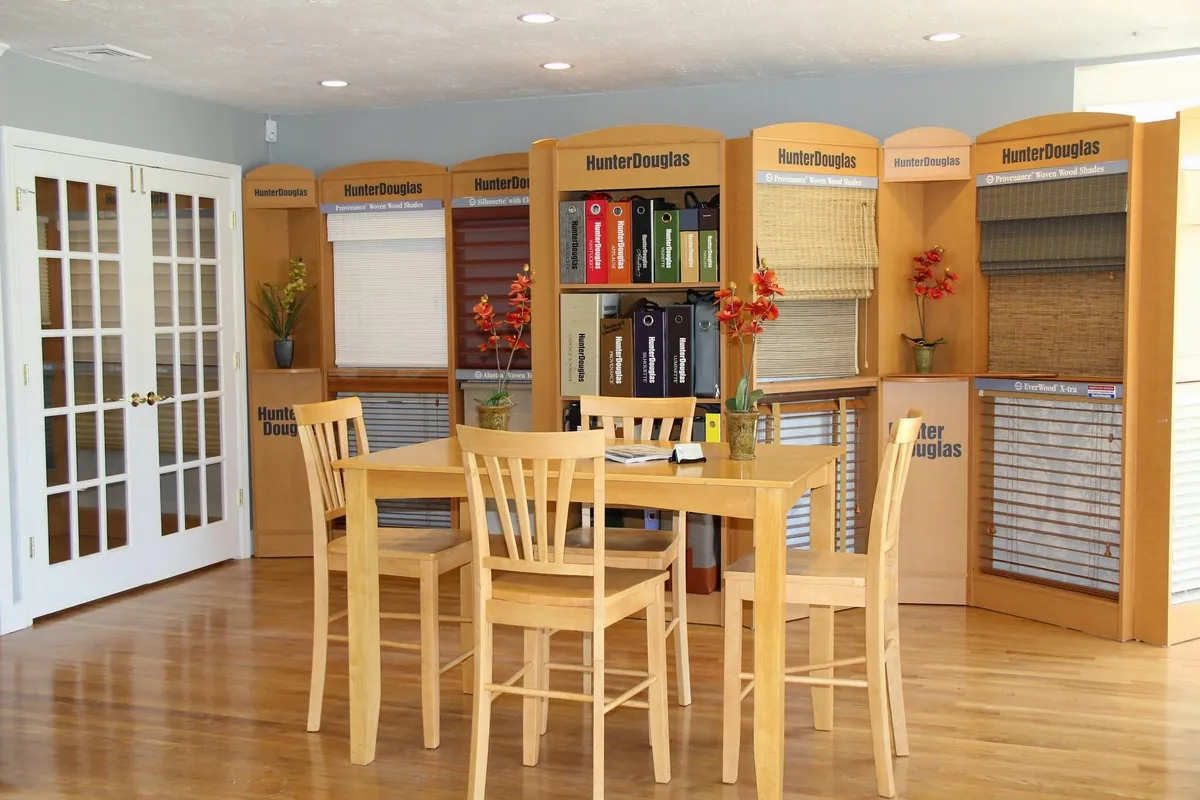
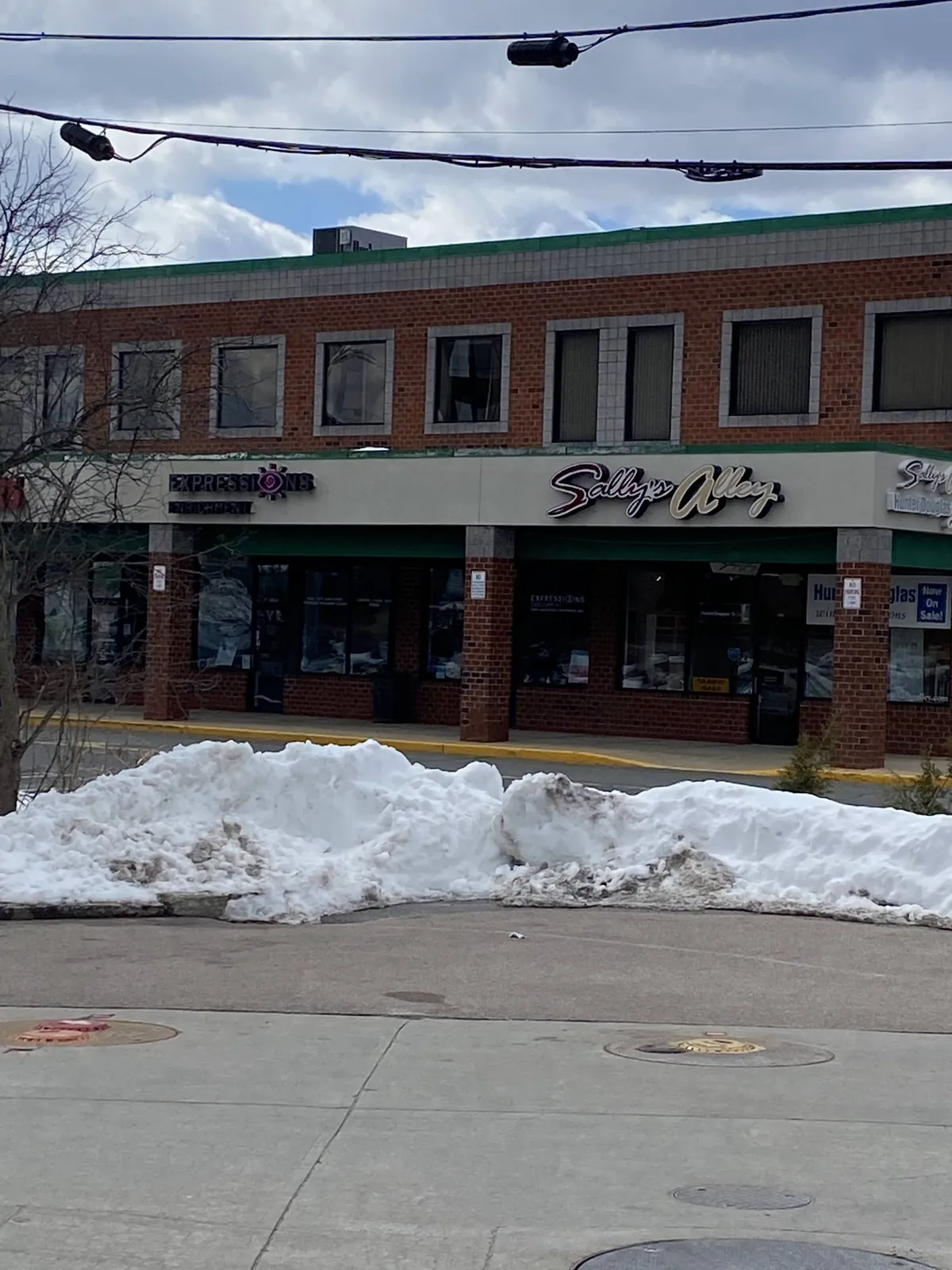
Franklin is our nearest showroom to Attleboro. Many people visit before or after we come out to measure, and some prefer to choose entirely at home. Whatever suits you is fine with us.
Learn more about the brand on our Hunter Douglas page, browse the Hunter Douglas catalog, or see every service we offer in town on our Attleboro page.
Questions from Attleboro
Should every window in a bay get its own shade?
Yes, each window gets a covering made to its own size, but we set them so the tops and bottoms line up. That way the bay looks like one window, not three.
Do I have to cover my transoms?
No. Many transoms look best left open, letting light into the room or hall. If one lets in sun at the wrong time, it can take a matching shade, a shutter panel or a motorized shade.
My split-level has windows at different heights. How do we keep it looking tidy?
We usually suggest one color family for every window facing the street, even if the rooms inside use different products. That keeps the front of the house calm.
Are South Attleboro ranches easy to fit?
Generally, yes. Their windows are modern with square frames, so most products sit neatly inside the casing.
Is there a charge for the estimate?
No. The estimate is free, and it is written for the windows we measured at your house.
Ready when you are
Whenever you want to start, request a consultation and we will come to the house with samples, measure each window, bay and transom, and leave you a free estimate. The call button reaches your Hunter Douglas dealer in Attleboro, MA too, and the Franklin showroom is the closest place to see products in person.